Interviews are opportunities to demonstrate your expertise, and this guide is here to help you shine. Explore the essential Power Distribution and Control Systems interview questions that employers frequently ask, paired with strategies for crafting responses that set you apart from the competition.
Questions Asked in Power Distribution and Control Systems Interview
Q 1. Explain the difference between a power transformer and a distribution transformer.
The key difference between power and distribution transformers lies primarily in their voltage levels and application. Power transformers operate at significantly higher voltage levels (hundreds of kilovolts) and are used in the transmission system to step-up voltage for efficient long-distance power transmission. They are typically very large and heavy-duty units. Distribution transformers, on the other hand, work at lower voltage levels (kilovolts and below) and are used in the distribution system to step-down voltage for local consumption by homes and businesses. They are smaller and more numerous than power transformers. Think of it like this: power transformers are the giants moving enormous amounts of electricity across vast distances, while distribution transformers are the smaller, more localized units delivering power to individual consumers.
For example, a large power transformer might step-up voltage from 230 kV to 765 kV for long-distance transmission, while a distribution transformer might step-down voltage from 13.8 kV to 240/120 V for residential use.
Q 2. Describe the function of a circuit breaker in a power system.
A circuit breaker is a crucial safety device in a power system. Its primary function is to automatically interrupt the flow of current when a fault occurs, such as a short circuit, overload, or ground fault. This prevents damage to equipment, fire hazards, and electrical shocks. Circuit breakers achieve this by using various mechanisms, including electromagnetic or thermal tripping, to open the circuit quickly and effectively. They are essential for protecting both the equipment within the power system and the people who interact with it. Imagine it like a fire sprinkler system in a building; it’s designed to automatically respond to a dangerous situation (fire) and quickly contain the damage.
Different types of circuit breakers exist, such as air circuit breakers, vacuum circuit breakers, and SF6 circuit breakers, each suited to different voltage and current levels.
Q 3. What are the different types of protective relays used in power systems?
Power systems employ a variety of protective relays to detect and respond to faults quickly and precisely. Some common types include:
- Overcurrent Relays: These relays operate when the current flowing through a line exceeds a predetermined threshold, indicating a potential fault like a short circuit.
- Differential Relays: These compare the current entering and leaving a protected zone (e.g., a transformer). Any significant difference points to an internal fault within the zone.
- Distance Relays: These measure the impedance to the fault location along a transmission line and trip the circuit breaker if the fault is within a pre-defined distance.
- Ground Relays: These detect ground faults, which are often caused by insulation failure or contact with the earth.
- Overvoltage and Undervoltage Relays: These protect against voltage levels exceeding or falling below safe operating limits.
The specific types of relays used depend on the complexity and criticality of the part of the power system being protected.
Q 4. Explain the principle of operation of a distance relay.
A distance relay measures the impedance between the relay location and the point of a fault on a transmission line. It works on the principle that the impedance seen by the relay changes depending on the fault’s location. The relay uses voltage and current measurements to calculate the impedance. If the calculated impedance falls within a predetermined range indicating a fault within a protected zone, the relay initiates a trip signal to the associated circuit breaker, isolating the faulted section. This ensures that faults are cleared quickly and efficiently, minimizing damage and service disruptions. It’s similar to measuring the distance to an object by analyzing the time it takes for a signal to travel to it and back.
Q 5. What is the purpose of a substation?
A substation serves as a crucial interconnection point in a power system, facilitating the transformation, switching, and protection of electrical power. They act as intermediate points between the high-voltage transmission system and the lower-voltage distribution system. Substations receive high-voltage power from transmission lines, step-down the voltage using transformers to lower-voltage levels suitable for distribution networks, and then distribute the power to local areas. In addition to transformers, substations contain switchgear (circuit breakers, isolators), protection relays, and other control equipment to ensure safe and reliable power delivery. Imagine it as a major highway interchange, where traffic (power) is directed, regulated, and managed efficiently.
Q 6. What are the different types of grounding systems used in power systems?
Several grounding systems are used in power systems, each with its own advantages and disadvantages depending on factors like soil resistivity and system requirements:
- Solid Grounding: The neutral point of the transformer is directly connected to the earth through a low impedance path. This system provides good fault current limiting and protection.
- Resistance Grounding: A resistor is inserted between the neutral point and ground, limiting the fault current to a safer level. This is useful where high fault currents could damage equipment.
- Reactance Grounding: A reactor is used instead of a resistor, offering similar advantages to resistance grounding but with different characteristics in terms of current limiting.
- Petersen Coil Grounding: A resonant coil neutralises the capacitive current of the system under fault conditions. This is effective for high-resistance grounding.
- Ungrounded (Isolated) System: The neutral point is not connected to ground. This requires special protection schemes, as ground faults are not immediately detected.
The choice of grounding system is critical for safety and reliable operation of the power system.
Q 7. Explain the importance of grounding in power systems.
Grounding is absolutely vital in power systems for several key reasons:
- Safety: Grounding provides a low-impedance path for fault currents to flow to the earth, protecting people and equipment from dangerous voltages and electrical shocks. It’s the primary safety mechanism in case of insulation failure or accidental contact.
- Overvoltage Protection: Grounding helps to stabilize voltage levels and limit the effects of surges and lightning strikes, preventing damage to sensitive equipment.
- Fault Location and Clearance: Grounding aids in faster detection and clearing of ground faults, minimizing downtime and damage. The path to ground allows for the fault to be quickly detected and isolated.
- System Stability: Proper grounding helps maintain the stability of the power system, minimizing the risk of cascading failures. This stability is crucial for reliable power delivery.
Think of grounding as a safety net; it’s essential to have in place to quickly and safely divert any dangerous energy away from sensitive equipment and personnel.
Q 8. What is a fault current and how is it calculated?
A fault current is the abnormally high current that flows through a power system when a fault, like a short circuit, occurs. Imagine a river – normally the water flows smoothly. A fault is like a dam breaking, causing a massive surge of water. Calculating fault current is crucial for designing protective equipment like circuit breakers which need to interrupt this surge before it damages the system.
The calculation involves applying Ohm’s law and considering the system’s impedance. It’s not a simple calculation and often involves specialized software. The key elements are:
- The source impedance: This represents the resistance and reactance of the power source (generator, transformer).
- The line impedance: This accounts for the resistance and reactance of the transmission lines and cables connecting the source to the fault point.
- The fault impedance: This represents the impedance at the fault location itself (e.g., the resistance of a bolted short circuit is very low).
The formula, simplified, is: Ifault = Vsource / Ztotal, where Ifault is the fault current, Vsource is the source voltage, and Ztotal is the total impedance (source + line + fault). However, in reality, it’s a more complex calculation involving symmetrical components and considering the different types of faults (as discussed in the next question).
For example, a three-phase bolted fault will generally result in the highest fault current, requiring the most robust protection. A single-line-to-ground fault will often have a lower fault current but still needs to be addressed promptly to prevent cascading failures and equipment damage.
Q 9. Describe different fault types in power systems (e.g., single-line-to-ground, three-phase).
Power system faults can be categorized based on how the phases are affected. Understanding these types is critical for designing protective relaying schemes.
- Three-Phase Fault: This is the most severe type, involving a short circuit between all three phases (A, B, C). It results in the highest fault current and requires immediate clearing.
- Line-to-Line Fault: A short circuit between two phases (e.g., A and B). The fault current is lower than a three-phase fault but still significant.
- Single-Line-to-Ground Fault: A short circuit between one phase and ground. This is a common fault type, and its severity depends on the system grounding method. It may cause less current initially than line-to-line or three-phase faults but can lead to dangerous overvoltages in the healthy phases.
- Double-Line-to-Ground Fault: A short circuit between two phases and ground. The fault current is usually higher than a single line-to-ground fault but lower than a three-phase fault.
Imagine a damaged wire in an electrical system. A three-phase fault is like all three wires touching, creating a large current flow. A single-line-to-ground fault is like one wire touching the ground, causing current to flow to the earth.
Q 10. Explain the concept of power system stability.
Power system stability refers to the ability of a power system to maintain synchronism between generators after a disturbance. Think of it like a group of dancers – if one dancer stumbles (a disturbance), the others need to adjust quickly to maintain the choreography (synchronism) and prevent the whole dance from falling apart. Losing synchronism can lead to widespread blackouts.
There are different types of stability:
- Rotor Angle Stability: This focuses on the ability of generators to maintain synchronism. It’s particularly important for large disturbances.
- Frequency Stability: This addresses the system’s ability to maintain frequency after a disturbance. Load shedding is a crucial method for maintaining frequency stability during large power imbalances.
- Voltage Stability: This refers to the ability of the system to maintain voltage levels within acceptable limits. Voltage collapse is a severe outcome of voltage instability.
Maintaining stability requires careful planning, design, and operation of the power system.
Q 11. What are the different methods for improving power system stability?
Several methods can improve power system stability. These methods aim to mitigate the effects of disturbances and enhance the system’s ability to recover.
- Fast-Acting Protective Relays: Rapidly isolate faults to minimize their impact on the system.
- Power System Stabilizers (PSS): These devices improve generator response to disturbances, helping maintain synchronism.
- Flexible AC Transmission Systems (FACTS): These devices provide voltage and reactive power support, enhancing system stability.
- Under Frequency Load Shedding (UFLS): Automatically shed loads during frequency drops to prevent a system collapse.
- Improved Transmission Line Design: Stronger, more efficient transmission lines help to reduce impedance and improve power transfer capability.
- Optimal Power Flow (OPF) Techniques: Mathematical tools used to determine the optimal generation dispatch, transmission line loading, and voltage levels, to enhance overall system stability.
For example, installing a PSS on a generator can significantly improve its ability to ride through disturbances, preventing it from losing synchronism. Similarly, FACTS devices can quickly compensate for voltage drops, thus preventing voltage collapse.
Q 12. What is SCADA and how does it work in power distribution?
SCADA (Supervisory Control and Data Acquisition) is a system for monitoring and controlling industrial processes, including power distribution. Think of it as the central nervous system of a power grid, providing real-time visibility and control capabilities.
In power distribution, SCADA systems collect data from remote devices (like substations, transformers, and circuit breakers) using communication networks. This data, such as voltage, current, and power factor, is transmitted to a central control room where operators monitor the system’s performance. Operators can remotely control various aspects of the power system, such as switching circuit breakers to isolate faults or adjust voltage levels.
SCADA systems use various communication protocols (Modbus, DNP3, etc.) to connect to remote devices. They display the real-time data through graphical user interfaces (GUIs), allowing operators to quickly identify and address issues. They often incorporate alarming systems to alert operators to abnormal conditions.
Imagine a vast network of sensors scattered across a city’s power distribution system. SCADA gathers the readings from these sensors and provides a comprehensive picture to operators in a central control room. It allows them to manage power efficiently and respond to incidents quickly.
Q 13. Describe the role of a PLC in power distribution and control systems.
Programmable Logic Controllers (PLCs) are integral components in power distribution and control systems. They’re essentially small computers designed for industrial automation. They act as the brain of many automated control processes.
In power distribution, PLCs perform a variety of tasks, including:
- Motor Control: Controlling motors used in switchgear, pumps, and other equipment.
- Protective Relaying: Implementing logic for fault detection and isolation. (Note: PLCs often work alongside dedicated protective relays for critical tasks.)
- Sequence of Operations: Controlling the startup and shutdown of equipment in a specific order.
- Data Acquisition and Monitoring: Collecting data from sensors and providing local control functionalities.
- Human-Machine Interface (HMI): Providing an interface for local operators to interact with the system.
For example, a PLC might be programmed to automatically switch to a backup generator in case of a power outage, ensuring continuous operation of critical equipment. Or, it can automate a complex sequence of operations during substation switching operations, ensuring safety and reliability.
Q 14. Explain the importance of communication protocols in power systems (e.g., Modbus, DNP3).
Communication protocols are essential for seamless data exchange between various devices in power systems. They define the rules and standards for transmitting data, ensuring compatibility and reliable communication.
Some common protocols include:
- Modbus: A widely used serial communication protocol for industrial devices. It’s relatively simple and easy to implement, making it suitable for many applications.
- DNP3 (Distributed Network Protocol 3): A more robust protocol designed specifically for utility applications. It offers features like error detection and correction, making it more reliable for critical power system communications.
- IEC 61850: A modern, object-oriented communication protocol designed for power system automation. It supports advanced functionalities like intelligent electronic devices (IEDs) and improved interoperability.
The choice of protocol depends on the application’s requirements. Modbus might suffice for simple monitoring tasks, while DNP3 or IEC 61850 is preferred for critical control applications requiring higher reliability and security. Using consistent protocols ensures devices can communicate effectively, enabling efficient monitoring and control of the entire power system.
Imagine a scenario where different parts of a power grid use incompatible communication protocols. This would lead to chaotic data exchange, potentially hindering efficient operations and compromising safety. Standardized protocols prevent this, making power system management much more efficient and reliable.
Q 15. What are the different types of power system protection schemes?
Power system protection schemes are crucial for ensuring the reliable and safe operation of electrical grids. They’re designed to detect faults and automatically isolate faulty components, preventing damage and ensuring the continued supply of power to healthy parts of the system. Different schemes target various fault types and system components.
- Overcurrent Protection: This is the most common type, using relays that detect excessive current flow indicating a short circuit or overload. Think of it as a circuit breaker in your home, but on a much larger scale. These relays can be further categorized into instantaneous, time-delayed, and inverse-time characteristics, each suited for different fault conditions.
- Differential Protection: This scheme compares the current entering and leaving a protected zone (like a transformer or generator). Any significant difference indicates an internal fault within that zone. It’s highly sensitive and fast-acting.
- Distance Protection: This method measures the impedance between the relay location and the fault. It’s particularly useful for long transmission lines where overcurrent protection might be slow to react due to distance.
- Busbar Protection: This protects the main busbars – the central connecting points in a substation – from faults. It typically involves multiple protection schemes working together to ensure complete coverage.
- Transformer Protection: Specific protection schemes are used to safeguard transformers from internal faults such as winding failures. These often utilize differential protection along with other techniques.
- Generator Protection: Generators require protection against various faults including overspeed, loss of excitation, and internal short circuits.
The choice of protection scheme depends on factors like the type of equipment, its voltage level, and the system’s overall configuration. A well-designed protection system is a layered defense, incorporating multiple schemes to ensure comprehensive fault coverage.
Career Expert Tips:
- Ace those interviews! Prepare effectively by reviewing the Top 50 Most Common Interview Questions on ResumeGemini.
- Navigate your job search with confidence! Explore a wide range of Career Tips on ResumeGemini. Learn about common challenges and recommendations to overcome them.
- Craft the perfect resume! Master the Art of Resume Writing with ResumeGemini’s guide. Showcase your unique qualifications and achievements effectively.
- Don’t miss out on holiday savings! Build your dream resume with ResumeGemini’s ATS optimized templates.
Q 16. Explain the concept of power factor correction.
Power factor correction aims to improve the efficiency of electrical systems by reducing the reactive power component and bringing the power factor closer to unity (1). In AC circuits, reactive power is power that flows back and forth without being consumed, like a spring constantly compressing and expanding. It doesn’t do any useful work but still stresses the system and increases energy losses.
Imagine a water pump. The useful work is pumping water (real power). If the pump’s mechanism is inefficient and vibrates excessively (reactive power), you’ll be wasting energy without getting the desired water flow. Power factor correction reduces this vibration and improves the efficiency of the pump (electrical system).
This is typically achieved by adding devices like capacitor banks or synchronous condensers to the system. These devices counteract the inductive reactance (common in motors and other inductive loads) that causes a low power factor. A higher power factor reduces the current flowing through the system for the same amount of real power, leading to lower energy losses, reduced equipment stress, and improved overall system efficiency.
Q 17. How do you calculate power factor?
Power factor (PF) is calculated as the ratio of real power (P) to apparent power (S):
Power Factor (PF) = Real Power (P) / Apparent Power (S)
Real power (P), measured in watts (W), represents the actual power consumed by the load and doing useful work. Apparent power (S), measured in volt-amperes (VA), is the total power supplied by the source, encompassing both real and reactive power. Reactive power (Q), measured in volt-ampere reactive (VAR), is the power that oscillates back and forth without doing any work.
The power triangle relationship is: S² = P² + Q², and the power factor can also be expressed as: PF = cos(θ), where θ is the phase angle between voltage and current. A lagging power factor (cos θ < 1) indicates an inductive load (like motors), while a leading power factor (cos θ > 1) suggests a capacitive load. A power factor of 1 indicates purely resistive load and maximum efficiency.
Example: If a load consumes 1000 W of real power and draws 1250 VA of apparent power, the power factor is 1000 W / 1250 VA = 0.8 (or 80%).
Q 18. What are the different types of power system studies?
Power system studies are crucial for planning, designing, operating, and maintaining electrical power systems. They utilize various analytical techniques to assess system performance and ensure reliability and stability. Common types include:
- Load Flow Analysis: Determines the voltage and current at various points in the system under normal operating conditions.
- Short-Circuit Analysis: Calculates the magnitude and duration of fault currents during short circuits.
- Transient Stability Analysis: Simulates the system’s response to large disturbances, such as faults or loss of generation.
- Harmonic Analysis: Analyzes the impact of non-sinusoidal waveforms on the system.
- Protective Relay Coordination Studies: Ensures that protective relays operate in a coordinated manner to isolate faults effectively.
- Power Quality Studies: Evaluate the quality of the power supply and identify potential issues such as voltage sags, swells, and harmonics.
These studies use sophisticated software and models of power system components to predict system behavior under different conditions, allowing engineers to identify potential problems and implement solutions proactively.
Q 19. Describe load flow analysis and its applications.
Load flow analysis, also known as power flow analysis, is a crucial power system study that determines the steady-state operating conditions of a power system. It calculates the voltage magnitude and phase angle at each bus (node) in the system, as well as the real and reactive power flows in each transmission line, under a given load condition. Imagine it as a map showing the distribution of electricity throughout a network.
Applications:
- System Planning and Expansion: It helps determine the optimal location and size of new generation and transmission facilities to meet future load demands.
- System Operation and Control: It’s used to monitor and control the system’s operation in real-time, ensuring that voltage levels and power flows remain within acceptable limits. It also helps in optimizing power generation dispatch.
- Fault Analysis: Load flow results provide the initial conditions for fault analysis studies, helping to determine the impact of faults on the system.
- Economic Dispatch: Helps to optimally allocate generation among various power plants to minimize operating costs while meeting the load demand.
Load flow analysis uses iterative numerical methods like the Newton-Raphson method to solve a set of nonlinear equations that describe the power system’s behavior. The results provide valuable insights into system performance, allowing engineers to make informed decisions about system design and operation.
Q 20. Explain the concept of short-circuit calculations.
Short-circuit calculations determine the magnitude and duration of fault currents that can flow during a short circuit (a low-impedance connection between phases or between a phase and ground). This is critical for selecting appropriate protective devices (circuit breakers, fuses, relays) that can safely interrupt these potentially damaging currents. A short circuit is like a sudden, massive surge of electricity, potentially causing overheating, fires, and equipment damage.
These calculations use simplified models of the power system to determine the fault current at various points in the system. Factors such as the system impedance, generator contributions, and transformer characteristics are considered. The calculation methods are typically based on symmetrical component analysis, using the per-unit system for easier calculations. Software tools are widely used for these complex computations.
Importance: Accurate short-circuit calculations are essential for ensuring the proper selection and coordination of protective devices to clear faults quickly and safely, minimizing the risk of equipment damage and system disruption. They also help determine the required fault current ratings of various components in the system.
Q 21. What are the safety precautions to be taken while working on high voltage equipment?
Working on high-voltage equipment presents significant risks of electric shock, arc flash, and burns. Therefore, strict safety precautions are mandatory:
- Lockout/Tagout Procedures: Always follow strict lockout/tagout procedures to ensure the equipment is completely de-energized and isolated before any work begins. This involves physically locking and tagging the circuit breakers or switches to prevent accidental energization.
- Personal Protective Equipment (PPE): Use appropriate PPE, including insulated gloves, safety glasses, arc flash suits, and safety shoes. The PPE must be regularly inspected and rated for the appropriate voltage level.
- Grounding and Bonding: Ensure the equipment is properly grounded to prevent dangerous voltage build-up. This is crucial to dissipate any residual charge and prevent electrical shock.
- Permit-to-Work System: Follow a formal permit-to-work system that outlines the required safety procedures and authorizations before starting any work.
- Proper Training and Qualification: Personnel working on high-voltage equipment must receive specialized training and hold the necessary qualifications and certifications.
- Emergency Procedures: Establish clear emergency procedures and ensure that all personnel are familiar with them, including how to respond to electrical shocks, arc flashes, and fires.
- Regular Inspections: Equipment and PPE should undergo regular inspections to identify and address potential hazards before any work is undertaken.
Working with high voltage is extremely dangerous. Adherence to safety regulations and procedures is not just recommended; it’s absolutely critical for the safety of personnel and the reliable operation of the power system.
Q 22. Explain the different types of insulators used in power transmission and distribution.
Insulators are crucial components in power systems, preventing current leakage and ensuring safe operation. They are categorized based on their material and application. Common types include:
- Porcelain Insulators: These are widely used due to their high mechanical strength, good dielectric properties, and resistance to weathering. They’re typically found in transmission lines and substations.
- Glass Insulators: Offering excellent dielectric strength and high resistance to contamination, glass insulators are also common, particularly where high voltage is involved. However, they can be more fragile than porcelain.
- Polymer Insulators: These are increasingly popular due to their lightweight nature, high strength-to-weight ratio, and hydrophobic properties (resisting water absorption), which helps prevent flashover. Different polymers, like silicone rubber, are used depending on the application.
- Composite Insulators: Combining the advantages of different materials (e.g., fiberglass core with a polymer housing), these insulators offer a balance of strength, durability, and resistance to environmental factors.
The choice of insulator depends on factors like voltage level, environmental conditions (pollution, humidity), and mechanical stresses. For example, in heavily polluted areas, insulators with hydrophobic coatings or sheds are preferred to prevent the build-up of conductive contaminants.
Q 23. What is the difference between AC and DC power systems?
The fundamental difference between AC and DC power systems lies in the direction of current flow. In AC (Alternating Current) systems, the current periodically reverses direction, typically 50 or 60 times per second (represented by a sinusoidal waveform). This allows for efficient transformation of voltage using transformers, enabling long-distance transmission with lower losses. Think of it like a water wave, constantly oscillating back and forth.
DC (Direct Current) systems, on the other hand, have a unidirectional current flow. This simplifies certain applications, particularly in electronics and charging batteries. Imagine a water pipe where water flows only in one direction. However, stepping up and down the voltage in DC systems is more complex and often less efficient than in AC systems.
Historically, AC dominated power transmission due to the efficiency of transformers. However, with advances in power electronics, DC transmission is gaining prominence, especially in long-distance high-voltage applications, where it offers advantages in terms of power flow control and stability.
Q 24. What are harmonics and how do they affect power systems?
Harmonics are multiples of the fundamental frequency (50Hz or 60Hz) in an AC power system. They are caused by non-linear loads, such as rectifiers, variable-speed drives, and switch-mode power supplies. These loads draw current in pulses or distorted waveforms, which are rich in harmonic content.
These harmonic currents can significantly impact power systems by:
- Overheating transformers and other equipment: Harmonic currents cause increased losses in equipment, leading to overheating and potential failure.
- Increased neutral current: Third-order harmonics (and their multiples) add up in the neutral conductor, potentially overloading it.
- Malfunction of protective relays: Harmonics can interfere with the operation of protective relays, leading to false tripping or delayed response.
- Voltage distortion: Harmonic currents distort the voltage waveform, affecting sensitive equipment.
Imagine a perfectly smooth sound wave being distorted with unwanted frequencies – that’s the effect harmonics have on a clean sinusoidal waveform.
Q 25. How do you mitigate the effects of harmonics in power systems?
Mitigating the effects of harmonics involves a combination of strategies:
- Using harmonic filters: Passive filters (tuned filters or high-pass filters) can be installed to absorb specific harmonic frequencies. Active filters offer more flexibility and adaptability.
- Employing power factor correction (PFC) capacitors: While not directly addressing harmonics, PFC capacitors can reduce harmonic distortion by improving the power factor.
- Proper load management: Distributing non-linear loads evenly across the system can minimize the impact of harmonics.
- Using harmonic-suppressing equipment: Some equipment, like advanced variable-speed drives, incorporates features to minimize harmonic generation.
- Improved power system design: Careful system design considering harmonic generation and propagation can minimize negative effects.
The choice of mitigation strategy depends on the severity of the harmonic problem, the cost, and the specific characteristics of the power system. Often, a combination of these techniques is implemented for effective harmonic control.
Q 26. Describe your experience with power system simulation software (e.g., ETAP, PSS/E).
I have extensive experience using ETAP (Electrical Transient Analysis Program) for power system modeling and analysis. I’ve utilized it to perform various studies, including short-circuit analysis, load flow studies, motor starting studies, and harmonic analysis. For example, on a recent project involving the expansion of a distribution substation, I used ETAP to model the system, analyze the impact of adding new feeders, and optimize the protection settings to ensure system stability and reliability.
While I’m proficient in ETAP, I also have familiarity with PSS/E (Power System Simulator for Engineering). My experience with PSS/E has primarily focused on large-scale transmission system studies, particularly stability analysis. In a previous role, I used PSS/E to simulate and analyze the impact of various contingencies on the grid stability, contributing to the development of a more resilient transmission system.
Q 27. Explain your experience with relay testing and commissioning.
My relay testing and commissioning experience includes both protective relay testing and commissioning of various substation equipment. I’m proficient in using different relay testing sets to perform primary and secondary injection tests. I have extensive experience testing various types of relays, including distance relays, differential relays, overcurrent relays, and transformer protection relays.
During commissioning, I ensure that all protective devices are properly configured and functioning according to the specifications. I also prepare comprehensive test reports, documenting all testing procedures and results. On a recent project, I oversaw the commissioning of a new 138kV substation, which involved testing and coordinating the integration of multiple protective relays, ensuring seamless operation and fault clearing capabilities.
I follow all relevant safety protocols and adhere to industry best practices throughout the testing and commissioning process. My attention to detail ensures the reliability and safety of the power system.
Q 28. Describe a challenging problem you faced in a power distribution project and how you solved it.
In a project involving the upgrade of a distribution network in a rapidly growing urban area, we encountered significant challenges due to unexpected high loads exceeding the original design capacity. This led to frequent voltage sags and interruptions, affecting customers and causing concern.
To address this, I first conducted a thorough load flow analysis using ETAP, identifying the areas with the most significant overloading. Then, I developed a phased approach to mitigation. This involved:
- Immediate short-term solutions: We implemented load shedding in critical areas using automatic load-control measures to alleviate immediate stress on the network.
- Medium-term upgrades: We upgraded existing transformers to higher capacities and installed capacitor banks to improve the power factor and voltage regulation.
- Long-term network expansion: We planned and implemented the construction of a new substation and added new feeders to redistribute the load, ensuring long-term capacity and resilience.
By employing a multi-pronged approach that combined immediate fixes with strategic long-term planning, we effectively addressed the overloading issue, significantly improving the reliability and stability of the distribution network. The project demonstrated the importance of adaptive problem-solving in dynamic situations and the effective use of simulation tools for proactive decision-making.
Key Topics to Learn for Power Distribution and Control Systems Interview
Ace your Power Distribution and Control Systems interview by mastering these key areas. Understanding both the theoretical underpinnings and practical applications will set you apart.
- Power System Analysis: Understand fundamental concepts like load flow analysis, fault analysis (symmetrical and unsymmetrical), and power system stability. Consider practical applications in grid management and system optimization.
- Protection and Control Schemes: Explore various relaying principles, protective devices (circuit breakers, relays), and their applications in preventing equipment damage and ensuring system reliability. Practice troubleshooting scenarios involving protective system malfunctions.
- SCADA and Automation: Familiarize yourself with Supervisory Control and Data Acquisition (SCADA) systems, their architecture, communication protocols (e.g., Modbus, DNP3), and their role in automated power system control and monitoring. Consider real-world applications in smart grids and distributed generation.
- Power Electronics and Drives: Understand the operation of power electronic converters (AC/DC, DC/AC) and their applications in motor control, renewable energy integration, and power quality improvement. Be prepared to discuss different drive types and their control strategies.
- Power Quality and Harmonics: Grasp the concepts of power quality issues (harmonics, voltage sags, surges), their causes, and mitigation techniques. Prepare to discuss the impact of non-linear loads on power systems and methods for harmonic filtering.
- Renewable Energy Integration: Understand the challenges and solutions involved in integrating renewable energy sources (solar, wind) into the power grid. Be prepared to discuss grid stability issues and methods for power flow control.
- System Design and Implementation: Gain familiarity with the process of designing and implementing power distribution and control systems, considering factors like safety, reliability, efficiency, and cost-effectiveness.
Next Steps
Mastering Power Distribution and Control Systems opens doors to exciting career opportunities in a rapidly evolving industry. To significantly increase your chances of landing your dream job, invest time in crafting a compelling and ATS-friendly resume that showcases your skills and experience effectively. ResumeGemini is a trusted resource to help you build a professional resume that stands out. They provide examples of resumes tailored to Power Distribution and Control Systems to give you a head start. Take advantage of these resources to present yourself as the ideal candidate.

Automation Engineer Resume Sample
Field Service Engineer Resume Sample
Commissioning Engineer Resume Sample
Electrical Designer Resume Sample
Electrical Engineer Resume Sample
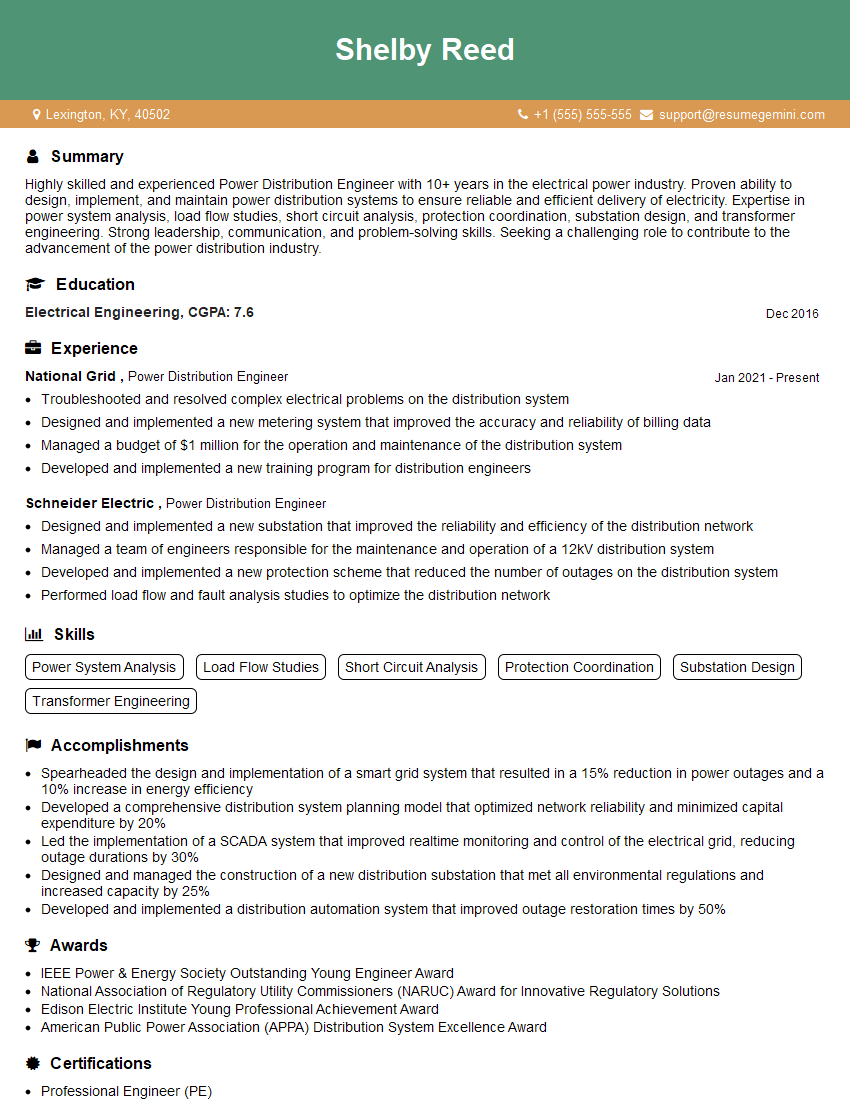
Power Distribution Engineer Resume Sample
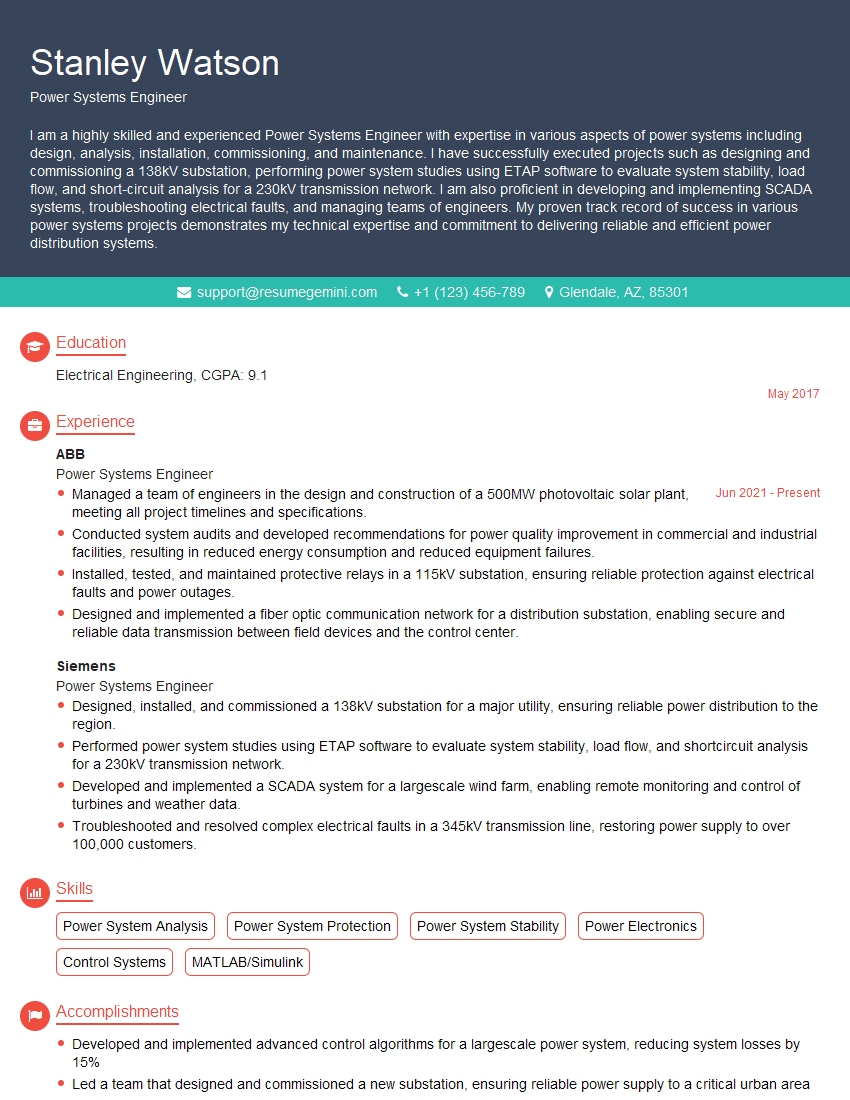
Power Systems Engineer Resume Sample
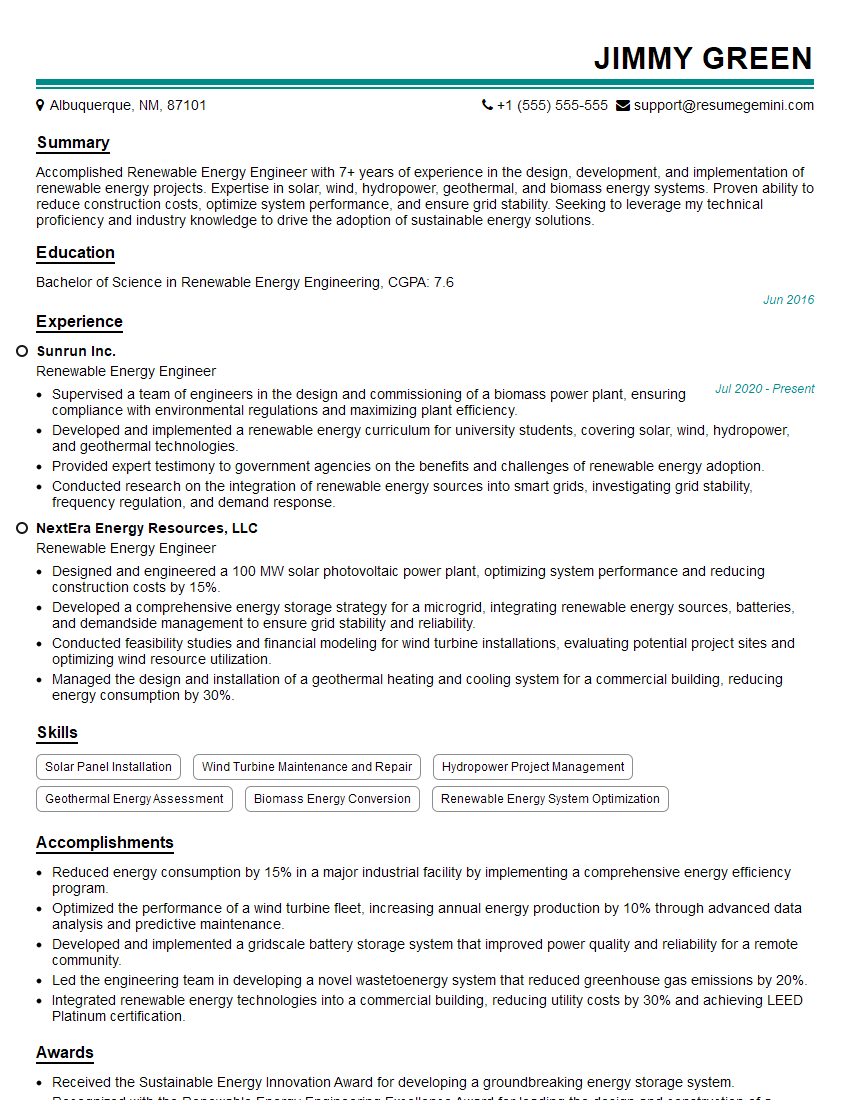
Renewable Energy Engineer Resume Sample
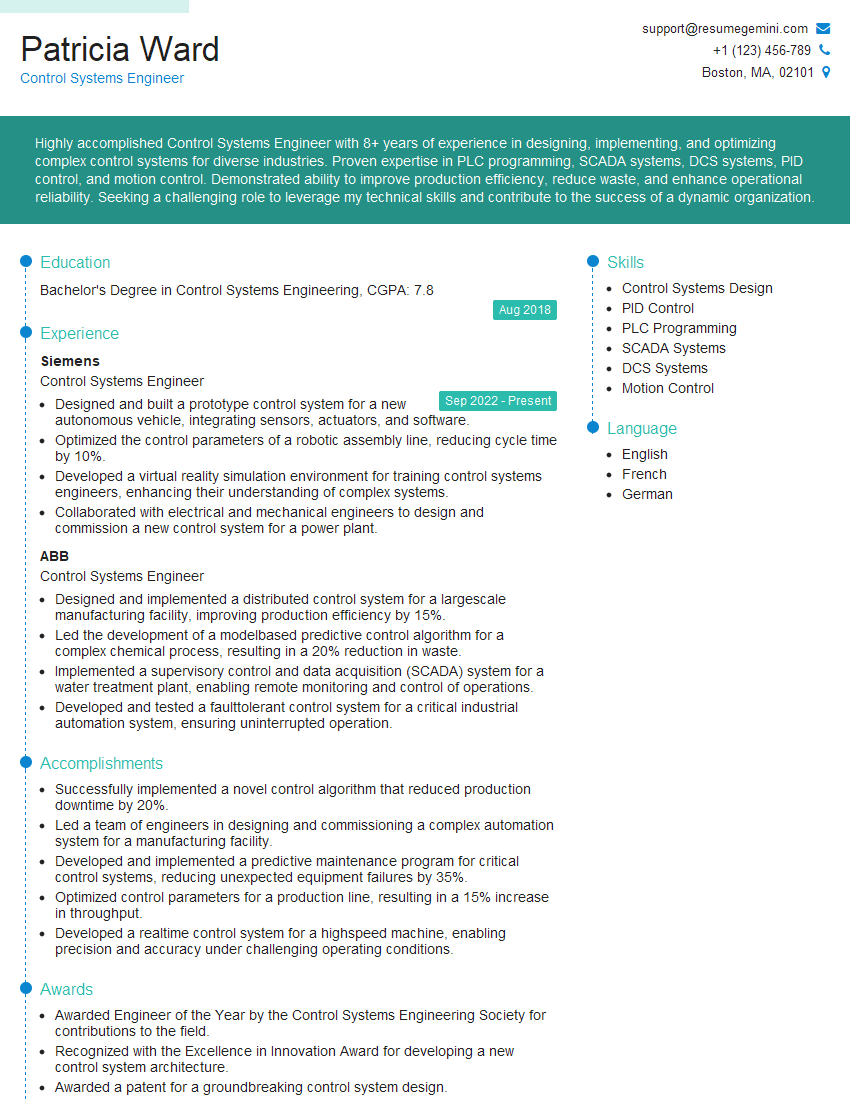
Control Systems Engineer Resume Sample
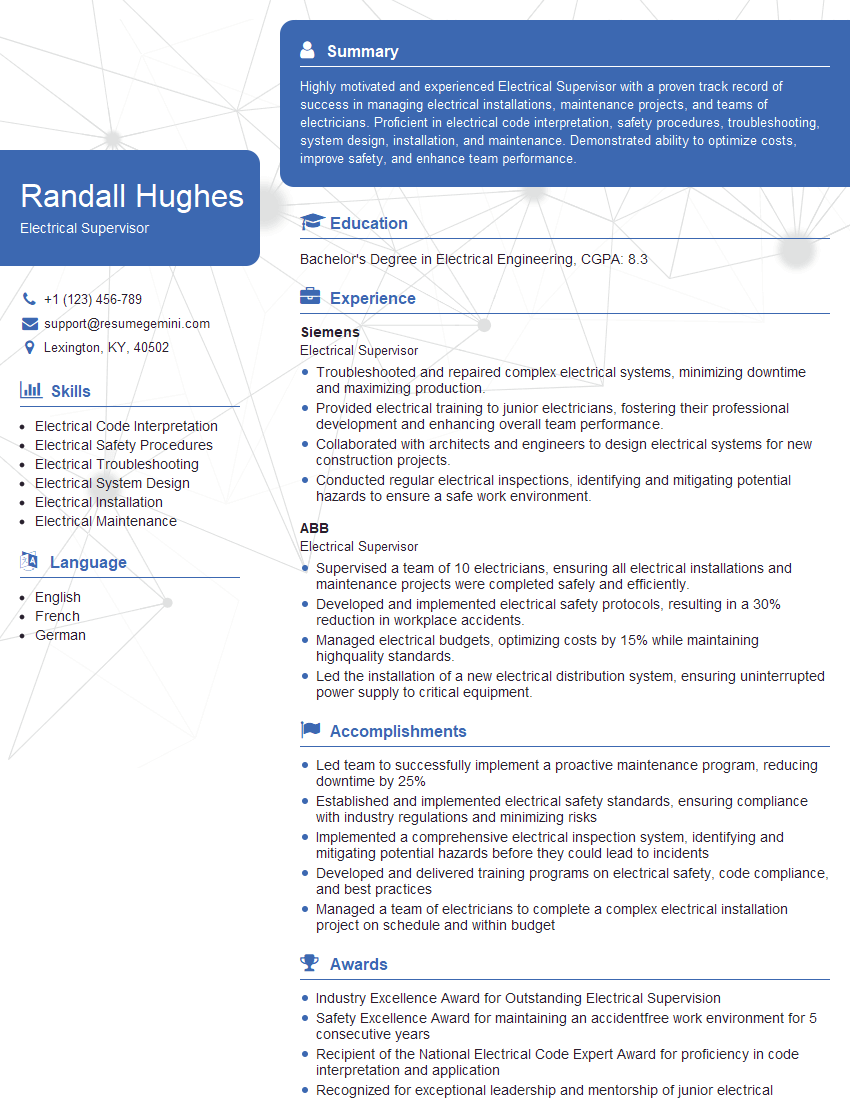
Electrical Supervisor Resume Sample
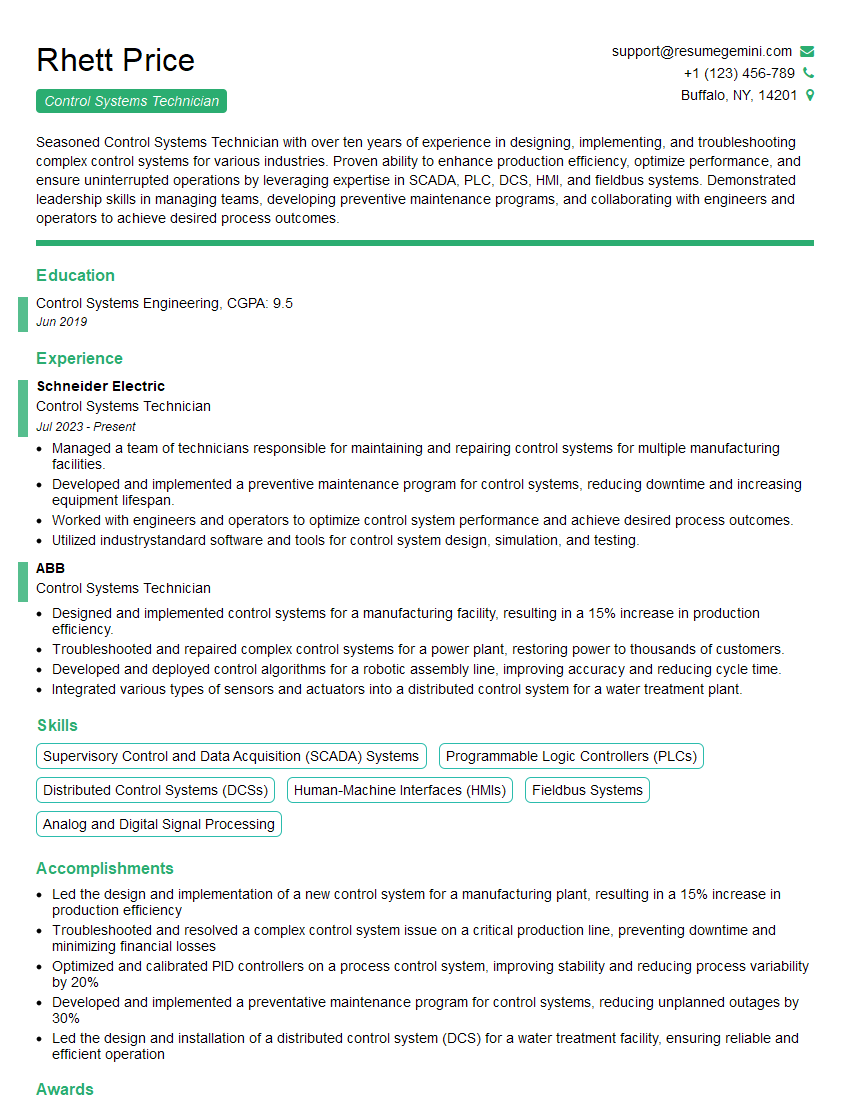
Control Systems Technician Resume Sample
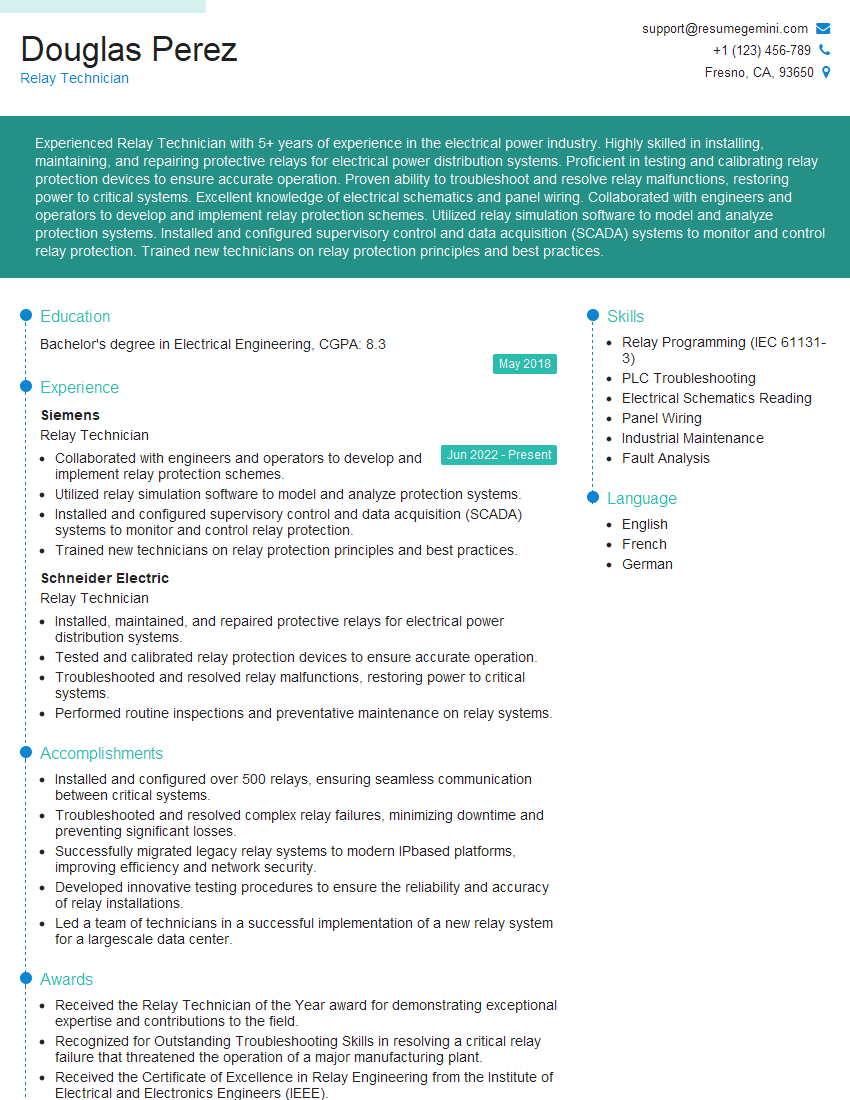
Relay Technician Resume Sample
Explore more articles
Users Rating of Our Blogs
Share Your Experience
We value your feedback! Please rate our content and share your thoughts (optional).
What Readers Say About Our Blog
To the interviewgemini.com Webmaster.
Very helpful and content specific questions to help prepare me for my interview!
Thank you
To the interviewgemini.com Webmaster.
This was kind of a unique content I found around the specialized skills. Very helpful questions and good detailed answers.
Very Helpful blog, thank you Interviewgemini team.