Are you ready to stand out in your next interview? Understanding and preparing for Wallpaper Repair interview questions is a game-changer. In this blog, we’ve compiled key questions and expert advice to help you showcase your skills with confidence and precision. Let’s get started on your journey to acing the interview.
Questions Asked in Wallpaper Repair Interview
Q 1. What types of wallpaper have you worked with (e.g., vinyl, fabric, grasscloth)?
Over the years, I’ve worked with a wide variety of wallpapers, each presenting its unique challenges and rewards. My experience encompasses the most common types: Vinyl wallpaper, known for its durability and washability; Fabric wallpaper, offering a luxurious texture and often a more delicate nature; and Grasscloth, a natural fiber wallpaper with a unique, textured look, requiring specialized handling. I’ve also worked with textured vinyl, non-woven, flocked, and even some specialty papers with metallic or other unique finishes. Understanding the properties of each type – from its thickness and backing to its sensitivity to moisture – is crucial for successful installation and repair.
Q 2. Describe your experience with wallpaper removal techniques.
Wallpaper removal is rarely straightforward. My approach is always tailored to the specific wallpaper type and the condition of the wall. For vinyl wallpapers, I often employ a scoring tool to weaken the adhesive bond before using a wallpaper steamer to loosen the paper. This process involves carefully steaming sections, allowing the steam to penetrate, and then gently peeling the wallpaper away. For more stubborn papers, or those with multiple layers, I might use a chemical wallpaper remover, following the manufacturer’s instructions meticulously. With delicate fabric or grasscloth wallpapers, I’m extremely cautious and often opt for a more manual approach using a scraper to avoid damaging the underlying wall. The goal is always to remove the wallpaper completely without causing significant damage to the wall underneath.
Q 3. How do you prepare a wall surface for wallpaper installation?
Preparing the wall is paramount for a successful wallpaper installation. It’s like preparing a canvas for a masterpiece! First, I ensure the wall is clean, free of dust, dirt, grease, or any loose paint or plaster. Any imperfections like holes or cracks need to be filled and sanded smooth. For surfaces that are too porous, I’ll apply a primer to ensure even adhesion of the wallpaper paste. This creates a consistent base for the wallpaper and prevents the paste from being absorbed unevenly, leading to bubbling or uneven application. The wall must also be completely dry before applying wallpaper; otherwise, moisture can compromise the adhesion and lead to mold problems.
Q 4. What are the common problems encountered during wallpaper installation?
Several common problems can plague wallpaper installation. Uneven surface preparation is a major culprit, leading to bubbling, wrinkling, or poor adhesion. Incorrect paste application, either too much or too little, can also cause problems. Improper pattern matching or inaccurate cutting can be visually jarring. Dealing with difficult corners and outlets requires precision and patience. And lastly, moisture issues, whether from a leaky pipe or excessive humidity, can cause the wallpaper to peel or mildew. My experience allows me to anticipate and address these issues proactively.
Q 5. How do you handle seams and pattern matching?
Seams and pattern matching are crucial for a professional finish. I carefully measure and cut each strip of wallpaper to ensure perfect alignment with the previous strip. For complex patterns, I’ll create a layout on the wall first, often using a pencil to mark the pattern repeat. This allows me to accurately match the design at the seams and avoid noticeable imperfections. For particularly challenging patterns, I may need to make adjustments at the seams, which requires careful trimming and blending to minimize visibility. Accurate cutting and precise matching are key to a seamless and aesthetically pleasing result.
Q 6. Explain your process for repairing a torn or damaged section of wallpaper.
Repairing a torn or damaged section depends on the type and extent of the damage. For small tears, I might carefully use wallpaper adhesive to mend the tear, gently pressing the edges together and smoothing out any wrinkles. For larger damages, I often need to cut out a section of the wallpaper, matching the pattern on a replacement piece. Precision is key here, ensuring that the color and pattern of the replacement match seamlessly with the surrounding wallpaper. This often involves working with a sharp utility knife and blending the edges to create an invisible repair. For significant damage, replacing the whole section is a better approach.
Q 7. What tools and materials do you typically use for wallpaper repair?
My toolkit for wallpaper repair is comprehensive. Essential tools include a sharp utility knife, a smoothing brush or roller, a seam roller, a measuring tape, a level, a wallpaper steamer (for removal), a paste brush or roller, various scrapers (plastic and metal), a sponge, and a bucket. Materials needed may include wallpaper adhesive, wallpaper remover, primer (if necessary), and replacement wallpaper that matches the existing pattern. Of course, appropriate personal protective equipment (PPE) like gloves and eye protection are a must.
Q 8. How do you measure and calculate the amount of wallpaper needed for a job?
Accurately measuring for wallpaper is crucial to avoid waste and ensure a seamless job. It’s more than just measuring the wall’s height and width; you need to account for pattern repeats, waste from cuts, and potential matching issues.
Step 1: Measure the Walls: Measure the height and width of each wall separately. Note any windows, doors, or other obstacles that will require cuts and reductions in your total square footage. It’s helpful to draw a quick sketch of each wall with measurements.
Step 2: Calculate the Total Area: Multiply the height and width of each wall to find the area of each wall. Add these areas together to get the total square footage of wall space.
Step 3: Account for Pattern Repeat: Most wallpapers have a repeating pattern. Check the label for the pattern repeat measurement (usually expressed in inches). This is how far the pattern repeats vertically. If the pattern repeat is, say, 24 inches, and your wall height is 96 inches, you’ll need four drops (96 inches / 24 inches = 4). This is crucial because you can’t just cut randomly; you must match the pattern for a visually consistent look.
Step 4: Add Waste Allowance: Add at least 10-15% to the total calculated area to account for matching patterns, trimming, and inevitable waste. This is especially important with complex patterns.
Example: Let’s say you have a wall 8 feet high and 10 feet wide. The area is 80 square feet. With a 24-inch pattern repeat and a 10% waste allowance: 80 sq ft + (80 sq ft * 0.10) = 88 sq ft.
Remember: Always round up to the nearest whole roll to ensure you have enough wallpaper.
Q 9. Describe your experience with different wallpaper adhesives.
My experience encompasses a wide range of wallpaper adhesives, each with its own strengths and weaknesses. The choice of adhesive depends largely on the type of wallpaper and the wall surface.
Paste-the-Wall Adhesives: These are applied directly to the wall, making the hanging process easier, especially for heavier wallpapers. They’re generally easier to clean up, but can require more precise wall preparation. They are ideal for beginners.
Paste-the-Paper Adhesives: These are applied directly to the back of the wallpaper. They offer more control during installation and are often better suited for delicate or textured wallpapers. However, they require a little more preparation, and the clean-up can be trickier.
Pre-Pasted Adhesives: These wallpapers come with an adhesive already applied; you simply activate it with water. They are convenient but tend to be more expensive and may not be as strong or durable as other options. They are good for quick projects.
Specialty Adhesives: For specific situations, such as heavily textured walls or difficult surfaces, specialized adhesives exist that provide enhanced adhesion and flexibility. I frequently use these for challenging installations.
In my practice, I always test the adhesive on a small, inconspicuous area first to ensure compatibility and prevent damage.
Q 10. What are the best practices for cleaning wallpaper after installation?
Cleaning wallpaper post-installation is crucial for preserving its beauty and longevity. The method depends on the type of wallpaper.
For Vinyl Wallpaper: This is highly durable and can usually be cleaned with a damp sponge or cloth. A mild soap solution is acceptable for tougher stains, but avoid harsh chemicals or abrasive cleaners that could damage the surface. Always test any cleaning solution on an inconspicuous area first.
For Non-Vinyl Wallpaper: This is more delicate and typically requires gentle dusting with a soft brush or cloth. Avoid using any liquid cleaners, as they can cause discoloration or damage.
General Best Practices: Always work from top to bottom to avoid smudging. Rinse the sponge or cloth frequently. Gently blot, don’t scrub. Avoid saturating the wallpaper. For stubborn stains, try a specialized wallpaper cleaning solution designed for the material type.
Important Note: Always refer to the wallpaper manufacturer’s instructions for specific cleaning guidelines. These instructions are crucial for preserving the integrity and the warranty if there is one.
Q 11. How do you deal with moisture damage to wallpaper?
Moisture damage to wallpaper is a serious issue, often leading to peeling, bubbling, mold, and mildew growth. The first step is to identify the source of the moisture. Is it a leak, high humidity, or condensation?
Addressing the Source: Repair any leaks promptly. Address condensation issues by improving ventilation. Reduce humidity with dehumidifiers if necessary.
Repairing the Damage: Once the moisture source is addressed, assess the extent of the damage. Minor bubbling might be fixed by carefully injecting adhesive under the affected area and smoothing it out. More extensive damage usually necessitates removing the affected wallpaper and replacing it. If mold or mildew is present, you’ll need to thoroughly clean the area with a mold and mildew remover, followed by proper drying before re-wallpapering. In severe cases, it might be necessary to treat the wall with a mold-resistant primer before applying new wallpaper.
Prevention: Proper ventilation is key to preventing moisture damage. Ensure adequate airflow in bathrooms and kitchens. Consider using moisture-resistant wallpapers in high-humidity areas.
Q 12. What are the different types of wallpaper borders and how are they applied?
Wallpaper borders add a decorative touch and can complement or contrast the main wallpaper. Several types exist:
Material: Borders come in vinyl, paper, fabric, and even metallic finishes. The choice depends on the overall design aesthetic and durability needs.
Pattern & Style: A vast array of patterns and styles is available, from floral and geometric to abstract and contemporary. Selecting a border that complements the wallpaper is essential.
Width & Length: Borders vary in width, from thin lines to wide bands. They are typically sold in rolls. Measure carefully to determine how many rolls you need.
Application: Application is similar to wallpaper. Prepare the wall surface, apply adhesive (following the manufacturer’s instructions), carefully position the border, and smooth out any air bubbles or wrinkles using a smoothing tool. Use a sharp utility knife to trim any excess. Ensure precise alignment, particularly if you’re using multiple borders.
Q 13. How do you address bubbling or peeling wallpaper?
Bubbling and peeling wallpaper are common problems, often caused by improper installation, moisture damage, or aging adhesive. Here’s how I approach these issues:
Bubbling: Small bubbles might be addressed by carefully piercing the bubble with a pin and injecting adhesive underneath using a syringe or small applicator. Then, gently smooth out the bubble using a clean cloth or smoothing tool. For larger bubbles, you might need to carefully lift the affected area, reapply adhesive, and smooth it back into place.
Peeling: If the wallpaper is only slightly peeling at the edges, adhesive may be sufficient. For more extensive peeling, carefully lift the affected area (being mindful not to tear the paper) and reapply adhesive. If the wallpaper is severely damaged or the adhesive is completely compromised, the section will need to be removed and replaced.
Important Considerations: Always assess the extent of the damage before attempting repair. If the problem is widespread, complete removal and replacement is often the more practical solution. This approach is also crucial if the wallpaper is particularly fragile.
Q 14. Describe your experience working with different wall textures.
Experience with varied wall textures is critical for successful wallpaper installation. Different textures require different approaches and sometimes necessitate specialized tools and adhesives.
Smooth Walls: These are the easiest to work with, requiring minimal preparation. A clean, dry surface is usually sufficient.
Slightly Textured Walls: These may require a light sanding to ensure a smooth surface for better adhesion. The right adhesive is crucial.
Heavily Textured Walls: These present the greatest challenge. Often, the wallpaper is more likely to show the texture underneath, and it may require a specialized primer or heavy-duty adhesive. The extra effort ensures the wallpaper will stick properly and hide imperfections.
Other Challenges: Walls with cracks or loose plaster need repair before wallpapering. Dirty walls must be cleaned thoroughly. I always carefully assess the wall’s condition before beginning the process. It’s essential to prepare the walls as necessary.
Q 15. What safety precautions do you take during wallpaper installation and repair?
Safety is paramount in wallpaper installation and repair. I always prioritize personal protective equipment (PPE), starting with safety glasses to protect my eyes from flying debris during stripping or cutting. A dust mask is essential, especially when dealing with older wallpaper that might contain asbestos (though I always test for this first). Gloves protect my hands from chemicals and sharp edges. Proper ventilation is crucial, especially when using adhesives or solvents, so I always work near open windows or utilize fans. Finally, I ensure the work area is clear of trip hazards and properly lit to prevent accidents.
For example, during a recent job in an older home, I discovered the wallpaper contained asbestos. I immediately halted the work, contacted the homeowner, and arranged for professional asbestos abatement before proceeding. This proactive approach ensured the safety of both myself and the homeowner.
Career Expert Tips:
- Ace those interviews! Prepare effectively by reviewing the Top 50 Most Common Interview Questions on ResumeGemini.
- Navigate your job search with confidence! Explore a wide range of Career Tips on ResumeGemini. Learn about common challenges and recommendations to overcome them.
- Craft the perfect resume! Master the Art of Resume Writing with ResumeGemini’s guide. Showcase your unique qualifications and achievements effectively.
- Don’t miss out on holiday savings! Build your dream resume with ResumeGemini’s ATS optimized templates.
Q 16. How do you manage challenging wall conditions, such as uneven surfaces or cracks?
Uneven walls and cracks present significant challenges. My approach involves a multi-step process. First, I thoroughly assess the wall condition, noting the severity of unevenness and cracks. For minor imperfections, I use a high-quality drywall compound to fill cracks and level small bumps, sanding it smooth afterward. For more significant issues, I may need to use joint compound and multiple layers to create a smooth surface. Before wallpapering, I apply a lining paper – a thin, strong paper – to bridge larger gaps and ensure the final wallpaper adheres properly. This acts as a buffer and prevents the wallpaper from accentuating the wall’s imperfections.
In one instance, I encountered a wall with significant undulation. Instead of attempting to fully smooth it, I opted for a thicker, textured wallpaper that could subtly mask the unevenness, producing a pleasing aesthetic result and saving considerable time.
Q 17. What is your experience with using a seam roller?
The seam roller is an indispensable tool. It’s crucial for creating seamless transitions between wallpaper strips. I use a seam roller with a firm, but not overly aggressive, pressure to ensure a strong bond without damaging the wallpaper. The roller’s smooth surface prevents marking or tearing, and I always work from the center of the seam outwards to ensure complete adhesion. I use a specialized seam roller for delicate papers and a more robust one for thicker vinyls.
Improper use of a seam roller can lead to wrinkles or bubbles. The key is to maintain consistent, even pressure across the seam and ensure the adhesive is fully activated before rolling. I also check regularly to ensure the roller is clean to avoid transferring any debris.
Q 18. How do you handle customer complaints or unexpected issues during a job?
Handling customer complaints requires patience and professionalism. I always listen attentively to the customer’s concerns, validating their feelings. I then carefully assess the issue, determining the cause and offering a viable solution. This might involve redoing a section of the work, offering a partial refund, or explaining the cause of the issue with a clear understanding of the limitations of the product or working environment. Open communication and transparency are key to resolving the situation amicably.
For example, if a client found a small tear after the installation, I would address it promptly, offering either repair or replacement. Clear communication and a willingness to find a fair solution are crucial to maintaining a positive relationship.
Q 19. What is your process for prepping wallpaper for a repair?
Prepping wallpaper for repair is critical. I start by carefully assessing the damaged area, determining the extent of the repair needed. Next, I carefully remove any loose or damaged sections of wallpaper, ensuring clean edges for patching. If the repair involves a match, I select a similar section of wallpaper from a spare roll (if available) to cut a patch. If no spare roll is available, I might need to get a very small additional amount from the supplier. The patch should slightly overlap the surrounding wallpaper. After applying a small amount of adhesive to the back of the patch, I carefully press it into place, smoothing out any wrinkles or air bubbles. Finally, I use the seam roller to secure the patch.
Matching patterns and textures is a key skill and requires careful planning and selection of the patch.
Q 20. Describe your experience with wallpaper stripping.
Wallpaper stripping is a physically demanding but essential part of the process. I use a variety of tools and techniques depending on the type of wallpaper. For vinyl wallpapers, I use a scoring tool to break the surface tension and then apply a wallpaper stripper solution, allowing sufficient time for the solution to penetrate the paper. I then use a scraper to remove the wallpaper carefully in strips. For tougher wallpapers, a steamer is crucial for softening the adhesive bond. Always test any stripper solution on an inconspicuous area first to check for damage to the underlying wall.
Safety is crucial during stripping. Always wear appropriate PPE and be mindful of potential asbestos or lead paint in older homes.
Q 21. What are the differences between paste-the-wall and paste-the-paper wallpapers?
The key difference lies in where the adhesive is applied. Paste-the-wall wallpaper has the adhesive pre-applied to the wall, making installation quicker and simpler. This also reduces the risk of getting adhesive on the visible side of the paper, ideal for delicate papers. Paste-the-paper wallpaper requires applying the adhesive to the back of the wallpaper itself, which is ideal for a more precise control over placement and for wallpapers which need longer drying time or a higher level of strength.
Paste-the-wall is generally preferred for beginners, while paste-the-paper offers more control to experienced installers.
Q 22. How do you ensure consistent pattern matching throughout a large installation?
Consistent pattern matching in large wallpaper installations is crucial for a professional finish. Think of it like assembling a giant jigsaw puzzle – each piece needs to fit perfectly. My approach involves meticulously measuring and marking each strip before cutting. I start by carefully aligning the first strip to a plumb line (more on that in the next answer!), ensuring it’s perfectly vertical. Then, I number each subsequent strip to maintain the correct sequence. For complex patterns, I often create a small ‘test’ layout on a spare piece of wallpaper before proceeding to the wall to double-check the repeat pattern and ensure a flawless match. This pre-planning minimizes waste and dramatically increases the accuracy of the pattern match, especially for patterns with large repeats.
- Pre-planning: I always review the pattern repeat and plan the layout beforehand, taking wall dimensions and window/door placements into account.
- Measuring and Marking: I carefully measure and mark the exact length required for each strip, avoiding cutting too short or too long.
- Strip Numbering: Numbering each strip prevents confusion and ensures the pattern continues flawlessly.
- Test Layout: Creating a small test layout is particularly important for intricate or large-repeat patterns.
Q 23. Explain your method for using a plumb bob to ensure straight wallpaper hangs
A plumb bob is an invaluable tool for ensuring perfectly straight wallpaper hangs. It’s basically a weight suspended on a string, creating a perfectly vertical line. Before applying the first strip of wallpaper, I use the plumb bob to create a straight vertical line along the wall, usually at a corner or a relatively unobstructed area. I mark this line lightly with a pencil. This line acts as a reference point for aligning the edge of the first wallpaper strip. This ensures the entire installation remains perfectly vertical. Think of it as the foundation of a house – a crooked foundation leads to a crooked house. Likewise, a crooked first strip will result in a whole wall of misaligned wallpaper.
- Establish a Plumb Line: Suspend the plumb bob to establish a vertical reference line.
- Mark the Wall: Lightly mark the plumb line on the wall with a pencil.
- Align Wallpaper: Carefully align the edge of the first wallpaper strip with the marked plumb line.
- Maintain Alignment: Use the aligned first strip as a guide for subsequent strips, ensuring everything remains perfectly vertical.
Q 24. How do you calculate the cost of materials for a wallpaper repair job?
Calculating material costs for a wallpaper repair job involves several factors. First, I precisely measure the area requiring wallpaper. This includes accounting for any awkward shapes or areas that might require extra material due to waste. Next, I factor in the cost per roll of the chosen wallpaper, considering its width and length. I then account for additional materials like primer, adhesive, and smoothing tools, factoring in any potentially needed additional rolls based on pattern matching. I also include a markup to cover expenses and profit. I’ll typically provide clients with a detailed breakdown of all the costs involved, showcasing transparency and ensuring mutual understanding.
Example: Let’s say a room requires 50 square feet of wallpaper, a roll covers 30 square feet, and costs $30. I would estimate 2 rolls are needed (50/30 ≈ 1.67), and then add in the additional material costs ($5) for a total cost that is then marked up to provide a profit. The breakdown would be presented clearly to the client.
Q 25. How do you clean up your workspace after completing a wallpaper job?
Cleaning up after a wallpaper job is as crucial as the job itself. It shows professionalism and respect for the client’s space. My cleanup process involves carefully removing any excess wallpaper scraps from the floor and walls. I meticulously clean up any spilled adhesive using a damp sponge, ensuring no sticky residue remains. All tools are thoroughly rinsed and cleaned. The workspace is then vacuumed to remove any lingering dust and debris, leaving the area neat and tidy. I always dispose of the waste responsibly, either recycling or discarding it appropriately. Leaving the workspace immaculate is a hallmark of a truly professional job.
- Waste Removal: Remove excess wallpaper scraps, carefully.
- Adhesive Cleanup: Clean up any spilled adhesive with a damp sponge.
- Tool Cleaning: Rinse and clean all used tools.
- Final Vacuuming: Vacuum the workspace to remove any remaining dust and debris.
- Responsible Disposal: Dispose of waste appropriately (recycling where possible).
Q 26. What are your preferred methods for cutting wallpaper?
Precision cutting is paramount for a flawless wallpaper installation. My preferred methods are using a sharp utility knife with a fresh blade and a metal straight edge. I often use a self-healing cutting mat to protect my work surface and keep the blade from getting dulled by hard surfaces. For intricate cuts around windows or corners, I employ a pair of sharp scissors for maneuverability and precision. Using the right tools and technique helps prevent tearing and ensures clean, straight cuts.
- Utility Knife & Straight Edge: This provides accuracy and clean cuts for straight lines.
- Sharp Scissors: Ideal for detailed cuts around obstacles.
- Self-Healing Cutting Mat: Protects the blade and work surface.
Q 27. What is your experience with various wallpaper designs (e.g., floral, geometric)?
My experience encompasses a wide variety of wallpaper designs, from classic florals to modern geometrics. Floral designs often require careful pattern matching and a keen eye for detail, especially with large repeat patterns. Geometric patterns demand precision in cutting and alignment to ensure the patterns meet seamlessly. I’ve worked with textured wallpapers, embossed designs, and metallic finishes, each requiring a nuanced approach to application and handling. The diverse experience helps me adapt to any design’s unique demands and challenges. It’s like having a large toolbox; I’m ready for whatever the client needs.
Q 28. Describe a time you had to troubleshoot a challenging wallpaper repair situation.
I once encountered a situation where the wall had significant unevenness, creating a challenging surface for wallpaper installation. Standard techniques resulted in bubbling and imperfections. To overcome this, I first used a lightweight spackle to fill in some of the larger imperfections, then sanded it down to create a smoother surface. After applying a specialized wall liner, the wallpaper adhered much better. This required extra time and problem-solving but ultimately resulted in a perfect final product. It reminded me that flexibility and adaptability are essential in this profession. Each job presents a unique set of circumstances, and finding creative solutions is key.
Key Topics to Learn for Wallpaper Repair Interview
- Understanding Wallpaper Types: Differentiate between various wallpaper materials (vinyl, non-woven, fabric, etc.), their properties, and suitability for different applications. Consider the impact of each type on repair techniques.
- Surface Preparation: Mastering techniques for properly preparing walls before repair, including cleaning, patching holes and cracks, and ensuring a smooth, even surface for optimal adhesion.
- Seam Repair Techniques: Learn various methods for seamlessly repairing torn or damaged seams, including using adhesive, patching material, and blending techniques to minimize visibility.
- Damage Assessment and Repair Strategies: Develop the ability to accurately assess the extent of damage and choose appropriate repair strategies, considering factors like the size and location of the damage, and the type of wallpaper.
- Matching Wallpaper Patterns and Textures: Understand techniques for matching existing wallpaper patterns and textures, including utilizing leftover wallpaper or sourcing replacement rolls. This demonstrates attention to detail and a commitment to high-quality work.
- Tools and Equipment Knowledge: Familiarize yourself with the common tools and equipment used in wallpaper repair, including their appropriate applications and safety procedures. This includes utility knives, seam rollers, brushes, and adhesives.
- Troubleshooting Common Issues: Develop problem-solving skills to address challenges like bubbling, peeling, and discoloration. Knowing how to identify the root cause and implement effective solutions is crucial.
- Health and Safety Practices: Demonstrate awareness of workplace safety procedures when using adhesives, solvents, and sharp tools. This shows responsibility and professionalism.
Next Steps
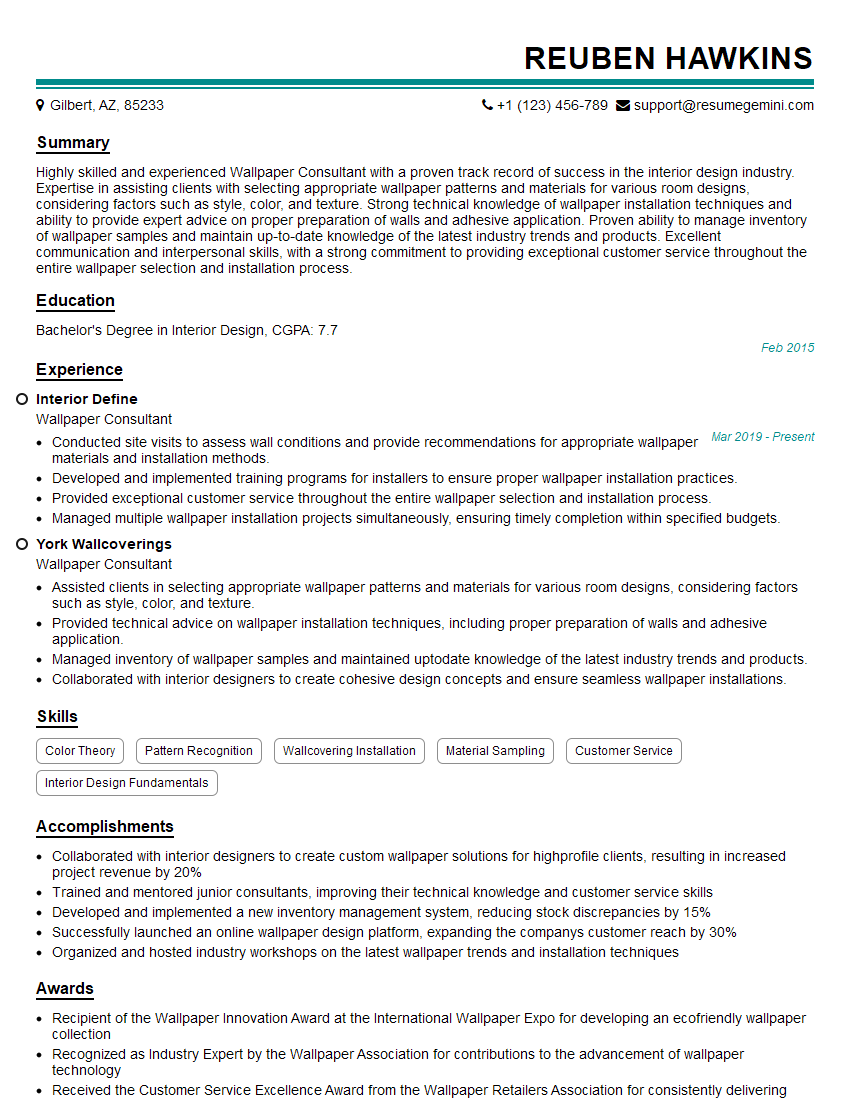
Mastering wallpaper repair opens doors to a rewarding career with opportunities for growth and specialization. A strong resume is your key to unlocking these opportunities. Creating an ATS-friendly resume that highlights your skills and experience is crucial for getting noticed by potential employers. Use ResumeGemini to build a professional and impactful resume that showcases your abilities effectively. ResumeGemini provides examples of resumes tailored to the Wallpaper Repair field to guide you in creating your own winning application.
Explore more articles
Users Rating of Our Blogs
Share Your Experience
We value your feedback! Please rate our content and share your thoughts (optional).
What Readers Say About Our Blog
To the interviewgemini.com Webmaster.
Very helpful and content specific questions to help prepare me for my interview!
Thank you
To the interviewgemini.com Webmaster.
This was kind of a unique content I found around the specialized skills. Very helpful questions and good detailed answers.
Very Helpful blog, thank you Interviewgemini team.