Cracking a skill-specific interview, like one for Ability to use music to promote social skills and communication, requires understanding the nuances of the role. In this blog, we present the questions you’re most likely to encounter, along with insights into how to answer them effectively. Let’s ensure you’re ready to make a strong impression.
Questions Asked in Ability to use music to promote social skills and communication Interview
Q 1. Explain the role of music in developing nonverbal communication skills.
Music plays a crucial role in developing nonverbal communication skills because it inherently relies on nonverbal cues for expression and understanding. Think about it – a musical phrase’s dynamics (loudness/softness), tempo (speed), and articulation (how notes are played) all convey emotion and meaning without words. We use similar nonverbal cues in everyday communication, like tone of voice and body language.
In music therapy, we leverage this by using activities like improvisational playing. For example, a client might learn to express anger through a forceful, fast tempo piece, then transition to a calmer, slower melody to represent relaxation. This helps them connect their internal emotional state with observable physical expressions and interpret those expressions in others. We also use activities involving movement and dance, which directly links musical expression to physical nonverbal communication.
- Mirroring: Clients can learn to mirror the nonverbal cues expressed through music, building empathy and understanding.
- Turn-taking: Improvisational music encourages turn-taking, a crucial aspect of social interaction.
- Emotional recognition: Learning to identify and express emotions through music helps clients better understand and respond to similar cues in others.
Q 2. Describe a specific music-based intervention you’ve used to improve social interaction.
I frequently use a group music intervention called “Collaborative Songwriting” to improve social interaction. In this activity, a small group of clients collaboratively creates a song, each contributing lyrics, melodies, or rhythms. This process encourages teamwork, negotiation, and active listening.
For instance, we might start with a simple chord progression. Each client can then suggest a lyric reflecting a personal experience or emotion. We then work together to craft a melody and rhythm that fits the overall song structure. This requires compromise, communication, and understanding of others’ perspectives. The final product is a song reflecting the group’s collective experience, reinforcing their sense of collaboration and shared identity.
The success of this intervention stems from the structured, yet flexible, nature of the activity. It provides a safe, creative outlet for self-expression, simultaneously fostering teamwork and communication skills. The final performance of the song further reinforces these skills through shared accomplishment and presentation.
Q 3. How would you adapt a musical activity to meet the needs of a child with autism?
Adapting musical activities for a child with autism requires careful consideration of their sensory sensitivities and communication preferences. We need to create a structured and predictable environment while allowing for flexibility and choice.
For example, if a child is sensitive to loud sounds, we might start with quieter instruments like xylophones or shakers. If they prefer repetitive actions, we could incorporate rhythmic activities with simple, repeated patterns. If they struggle with eye contact, we can focus on activities involving body percussion or movement, where visual cues are less crucial. Visual aids like color-coded charts representing musical concepts could prove highly beneficial.
Another key adaptation involves breaking down complex tasks into smaller, more manageable steps. Instead of jumping into a full-blown improvisation session, we might start with simple call-and-response exercises, gradually increasing the complexity as the child feels comfortable. Positive reinforcement, such as verbal praise or small rewards, is also crucial to build motivation and engagement.
Q 4. What are the key elements of a successful music therapy session focused on social skills?
A successful music therapy session focused on social skills necessitates a structured yet flexible approach, combining several key elements:
- Clear Goals: The session should have specific, measurable, achievable, relevant, and time-bound (SMART) goals relating to social skills improvement.
- Therapeutic Relationship: A strong therapeutic alliance built on trust and rapport is essential for fostering a safe and open environment.
- Structured Activities: Activities should be well-defined and adapted to the clients’ needs and abilities, progressively challenging their social interaction skills.
- Active Listening and Feedback: The therapist needs to actively listen to the clients’ verbal and nonverbal cues and provide appropriate feedback to help them learn and grow.
- Opportunities for Communication: The activities must provide ample opportunities for clients to communicate, both verbally and nonverbally, with each other and the therapist.
- Positive Reinforcement: Positive reinforcement is critical for maintaining motivation and celebrating achievements.
- Generalization: The therapist should help clients transfer the skills learned in the music therapy session to other contexts.
Q 5. Discuss different musical techniques used to improve emotional regulation and communication.
Various musical techniques can significantly improve emotional regulation and communication.
- Guided Imagery and Music (GIM): Clients listen to specially selected music to evoke imagery and explore emotions, promoting self-awareness and emotional regulation.
- Improvisation: Spontaneous music-making allows for free expression of emotions, providing a safe outlet for feelings that may be difficult to verbalize. The therapist can guide clients through different musical textures to help them explore and manage a range of emotions.
- Active Listening and Mirroring: The therapist actively listens to the client’s musical expressions and uses mirroring techniques to reflect their emotional state and facilitate communication.
- Rhythmic Activities: Structured rhythmic activities can help regulate breathing and heart rate, aiding in calming anxiety and promoting emotional stability.
- Songwriting: Writing and performing songs enables clients to externalize their emotions and experiences, facilitating both self-expression and communication with others.
For instance, a client struggling with anger might use a fast tempo and loud dynamics during improvisation, eventually learning to transition to calmer sounds as they regulate their anger.
Q 6. How do you assess a client’s musical abilities and preferences in relation to their social skills?
Assessing a client’s musical abilities and preferences in relation to their social skills requires a multi-faceted approach. It’s not just about technical proficiency; it’s about how they engage musically and how that engagement reflects their social interaction patterns.
Initial assessments might involve informal observation during free play with instruments, noting their engagement level, preferred instruments, and response to different musical styles. Formal assessments could include standardized musical aptitude tests or tailored observation scales evaluating their participation in group music activities. I also incorporate structured interviews and questionnaires to understand their musical background, preferences, and experiences with music in social settings.
Analyzing their musical behavior during group activities helps to reveal social skills: Do they readily participate? Do they demonstrate turn-taking or collaboration? Do they respond appropriately to others’ musical contributions? These observations, combined with formal and informal assessments, build a comprehensive picture of how music can be used to facilitate social skill development.
Q 7. Explain your approach to working with diverse populations in a music therapy setting.
Working with diverse populations requires cultural sensitivity and adaptability. I understand that musical preferences and expressions vary widely across cultures and that certain musical styles or instruments might hold specific significance within different communities.
My approach involves learning about a client’s cultural background and incorporating elements of their cultural music into therapy sessions where appropriate. This demonstrates respect and builds rapport, making them feel more comfortable and included. I also adapt my communication style to match their preferred communication patterns and cultural norms. For example, I might adjust my communication style for clients who are non-verbal or have limited verbal skills, using visual aids or non-verbal communication to enhance understanding.
Furthermore, I actively seek training and consultation to expand my understanding of different cultural contexts and to ensure that my approach is both culturally relevant and ethically sound. Adaptability and continuous learning are paramount when working with diverse communities.
Q 8. Describe your experience using music to facilitate group interaction and cooperation.
Music provides a powerful, non-threatening medium for fostering group interaction and cooperation. I’ve used various techniques, including group singing, improvisational music making, and composing collaborative pieces, to achieve this. For example, in a session with children on the autism spectrum, we started with simple call-and-response songs. This initially focused on turn-taking and listening skills. As their comfort level increased, we progressed to more complex activities like creating a class song together, where each child contributed a musical phrase or lyric. This collaborative process required active listening, negotiation, and compromise – all crucial social skills.
Another example involved adolescents struggling with communication. We used a structured improvisation exercise where each participant had to respond musically to the previous person’s idea, forcing them to listen attentively and build upon each other’s contributions. The shared creative experience fostered a sense of team spirit and boosted their confidence in interacting with peers.
Q 9. How do you measure the effectiveness of your music-based social skills interventions?
Measuring the effectiveness of music-based social skills interventions requires a multi-faceted approach. I use both qualitative and quantitative methods. Quantitative measures might include pre- and post-intervention assessments using standardized social skills scales, observing and quantifying improvements in communication behaviors such as eye contact, turn-taking, and verbal interaction during structured activities.
Qualitative data is equally important and includes observations of interactions within group settings, feedback from parents and teachers, and the individuals’ self-reports on their experiences. For instance, I might track changes in a child’s ability to initiate conversation, participate in group discussions, or demonstrate empathy. The combination of these methods provides a comprehensive picture of progress and allows for a more nuanced understanding of the impact of the intervention.
Q 10. What are the ethical considerations of using music in therapeutic settings?
Ethical considerations in music therapy are paramount. Maintaining client confidentiality is crucial. All sessions are conducted in a safe, respectful environment, ensuring client autonomy and informed consent. I carefully select musical materials to avoid culturally insensitive or potentially triggering content. For example, I always consider the individual’s background and preferences when choosing music. If a client expresses discomfort with a particular piece or activity, I immediately respect their decision and adjust the session accordingly.
Boundaries are clearly established from the outset, and I maintain professional relationships with clients, avoiding dual relationships or any conflicts of interest. Continuing education to stay current on best practices and ethical guidelines is also a crucial component of my work.
Q 11. How do you handle challenging behaviors during a music therapy session?
Challenging behaviors during music therapy sessions require a calm, patient, and individualized approach. My first step is to identify the underlying cause of the behavior. Is it related to sensory overload, frustration, anxiety, or something else? Once I understand the trigger, I can adapt the session accordingly. For instance, if a client is overwhelmed by the group’s energy level, I might reduce the intensity of the activity, provide a quiet break, or offer a different sensory experience.
I might utilize techniques like incorporating movement breaks to help regulate emotions or offer alternative musical activities tailored to their sensory preferences. Positive reinforcement and redirection are also very effective. Collaboration with other professionals, such as a psychiatrist or behavior therapist, may be necessary for clients with significant behavioral challenges. Documentation of these interactions is essential for informing future session planning and ensuring client safety.
Q 12. Discuss the importance of collaboration with other professionals (e.g., SLP, OT) in music therapy.
Collaboration is essential for optimal outcomes in music therapy, particularly when addressing social skills. Working with Speech-Language Pathologists (SLPs) allows us to combine music with targeted language development strategies. For example, we might use songs to practice articulation or expand vocabulary. Collaborating with Occupational Therapists (OTs) allows us to integrate music with fine motor skill development, sensory integration activities, or to address other challenges impacting social participation.
This collaborative approach allows for a holistic and individualized intervention that targets multiple aspects of a client’s needs. Regular communication and shared goals ensure a consistent and supportive therapeutic environment. In essence, we leverage each discipline’s expertise to maximize the impact of the therapy.
Q 13. Explain your understanding of different music therapy approaches (e.g., Nordoff-Robbins, Dalcroze).
My understanding of music therapy approaches includes a range of methods, each with its unique strengths. Nordoff-Robbins is a largely improvisational approach that focuses on the therapeutic relationship and the spontaneous expression of the client. It emphasizes using music to unlock potential and promote self-discovery. Dalcroze Eurhythmics emphasizes movement and improvisation, developing musicality and body awareness, which can significantly impact social skills such as coordination and timing within a group activity.
Other approaches, such as the psychodynamic approach, uses music to explore unconscious feelings and experiences, while the behavioral approach uses music to reinforce desired behaviors. I draw from various approaches and adapt my techniques to suit the unique needs of each individual or group. The selection is determined by the client’s needs, goals, and preferences.
Q 14. How do you integrate technology into your music therapy practice to enhance social skills?
Technology offers exciting opportunities to enhance music therapy and facilitate social skills development. I use music creation software, like GarageBand or Ableton Live, to create collaborative music projects where individuals can contribute their musical ideas and build on each other’s work. This encourages communication, cooperation, and creative problem-solving. Online platforms can facilitate virtual group sessions, making therapy accessible to a wider range of clients. Using apps that provide feedback on vocal quality or instrument playing can empower clients and help them track their progress over time.
Additionally, I use assistive technology, like adaptive instruments, to accommodate diverse abilities and ensure everyone can participate actively. These technologies foster a sense of inclusion and ownership within the therapeutic process, ultimately improving their social interaction within and outside the session.
Q 15. What are some common challenges encountered when using music for social skills development, and how do you address them?
Using music for social skills development is incredibly rewarding, but it’s not without its challenges. Some common hurdles include client resistance to participation, difficulty adapting techniques to varying abilities and learning styles, and managing emotional outbursts that can arise during sessions. For example, a client might find group singing overwhelming, or a child might become frustrated if they struggle to play an instrument.
Addressing these challenges requires a flexible and empathetic approach. To overcome resistance, I start by building rapport and letting the client choose activities. I offer a range of musical options, from listening to active participation, ensuring there’s something accessible and engaging. If a client is struggling with an activity, I modify it to suit their abilities; this might involve simplifying a song, providing more support, or changing the instrument. Managing emotional outbursts requires a calm and reassuring presence, potentially incorporating relaxation techniques through music, and readjusting the session’s pace and intensity. Regular assessment and adjustment of the therapy plan are crucial for success.
Career Expert Tips:
- Ace those interviews! Prepare effectively by reviewing the Top 50 Most Common Interview Questions on ResumeGemini.
- Navigate your job search with confidence! Explore a wide range of Career Tips on ResumeGemini. Learn about common challenges and recommendations to overcome them.
- Craft the perfect resume! Master the Art of Resume Writing with ResumeGemini’s guide. Showcase your unique qualifications and achievements effectively.
- Don’t miss out on holiday savings! Build your dream resume with ResumeGemini’s ATS optimized templates.
Q 16. Describe your experience with music improvisation and its application in social skill building.
Music improvisation is a powerful tool in social skill building. It fosters spontaneity, creativity, and collaboration. In my experience, I’ve used improvisation exercises in both individual and group sessions. For example, I might ask a client to create a musical response to a story I narrate or initiate a jam session with simple rhythms or melodies. This allows clients to express themselves non-verbally, experiment with different sounds, and learn to respond to others’ musical cues. This is especially beneficial for clients who struggle with verbal communication. The process of collaborative improvisation builds teamwork, turn-taking, and the ability to respond to others’ inputs within a structured yet flexible environment. This translates to improved communication and social interaction outside the therapy setting.
Q 17. How do you ensure client confidentiality and maintain professional boundaries within a music therapy setting?
Maintaining client confidentiality and professional boundaries is paramount. I strictly adhere to ethical guidelines established by professional organizations like the American Music Therapy Association (AMTA). Client information, including session notes and assessments, is stored securely, with access limited to authorized personnel. I never disclose confidential information without the client’s explicit consent, except when legally obligated to do so, for example, if there is a risk of harm to the client or others. Professional boundaries are maintained through establishing clear expectations at the beginning of therapy, including session structure, communication protocols, and limitations on the therapist-client relationship. Creating a safe and professional environment ensures clients feel comfortable and respected.
Q 18. What is your understanding of the impact of music on the brain and its relation to social development?
Music’s impact on the brain is profound and multifaceted, strongly influencing social development. Music engages multiple brain regions simultaneously, including those responsible for emotional processing, language, memory, and motor control. Exposure to music strengthens neural connections and enhances cognitive functions crucial for social interaction, such as empathy, communication, and social cognition. For instance, research suggests that music listening can improve emotional regulation and reduce stress, which are fundamental for positive social interactions. Participating in group music activities fosters teamwork, cooperation, and the development of social skills through shared experiences and mutual support. The rhythmic and melodic aspects of music can improve coordination and timing, essential for nonverbal communication and social interaction.
Q 19. Describe a situation where you had to adapt your music therapy techniques to suit a client’s specific needs.
I once worked with a client who had severe autism and displayed significant sensory sensitivities. Initially, the structured approach of traditional music therapy proved overwhelming. I adapted my techniques by using a sensory-based approach. Instead of focusing on formal musical exercises, we started with simple sensory exploration through sound textures and instruments that produced calming sounds like rain sticks or xylophones. Gradually, I introduced more structured activities, ensuring that the pace and complexity of the music were carefully controlled. This gradual adaptation, focusing on the client’s sensory preferences and comfort level, ultimately allowed us to build a strong therapeutic relationship and achieve positive outcomes in social engagement and communication.
Q 20. How do you build rapport and trust with clients in a music therapy context?
Building rapport and trust with clients involves creating a safe and non-judgmental space where they feel comfortable expressing themselves. This starts by actively listening to their needs and preferences. I begin each session with a friendly greeting and open-ended questions about their current experience. I let the client choose the music and instruments used, showing respect for their choices. I use nonverbal cues like gentle smiles, encouraging nods, and respectful body language to show empathy and understanding. Consistency and reliability in sessions also build trust. I always arrive on time and adhere to our agreed-upon plan. A non-judgmental and supportive attitude, combined with the natural therapeutic power of music, facilitates the development of a strong therapeutic relationship.
Q 21. Explain your experience in creating and implementing individualized music therapy plans.
Creating and implementing individualized music therapy plans requires a thorough assessment of the client’s strengths, weaknesses, goals, and preferences. This assessment involves various methods, including observation, interviews, standardized assessments, and informal musical interactions. For example, I might observe how a client interacts with others during a group music activity or assess their musical abilities and preferences. Based on this assessment, I collaboratively create a plan tailored to the client’s specific needs. This plan outlines the therapeutic goals, the musical activities used, the frequency and duration of sessions, and methods for evaluating progress. The plan is not static; it’s a dynamic document that is continually reviewed and adjusted based on the client’s progress and feedback. It requires creativity and flexibility to adapt to new challenges or adjust approaches as needed, always ensuring the plan remains relevant and effective.
Q 22. What are your strengths and weaknesses as a music therapist specializing in social skills?
My greatest strength lies in my ability to build rapport with clients of all ages and backgrounds, creating a safe and supportive environment where they feel comfortable expressing themselves musically. I excel at adapting music therapy techniques to individual needs and preferences, ensuring engagement and progress. For example, I recently worked with a nonverbal autistic child who responded beautifully to improvisational drumming, allowing him to express his emotions and interact socially in a way he hadn’t before. A weakness I’m actively working on is managing my time effectively when juggling multiple clients with varying needs and scheduling complexities. I am implementing a new client management system and prioritizing time-blocking techniques to mitigate this.
Q 23. Describe your understanding of evidence-based practices in music therapy for social communication.
Evidence-based practices in music therapy for social communication are crucial. This means using interventions supported by research demonstrating their effectiveness. For instance, group music therapy sessions utilizing structured improvisation exercises have shown significant improvement in social interaction skills in children with autism. These sessions often incorporate elements of turn-taking, active listening, and nonverbal communication through music. Another example is the use of songwriting to foster self-expression and communication skills. Clients collaboratively create songs, addressing specific social situations or emotions, enhancing their ability to understand and articulate their feelings. My work consistently incorporates such evidence-based methods, and I regularly consult research journals like the Journal of Music Therapy and Music Therapy Perspectives to stay updated on the latest findings.
Q 24. How do you maintain your professional development in the field of music therapy?
Maintaining professional development is paramount. I actively participate in continuing education workshops and conferences focused on social skills development and music therapy techniques. I’m currently pursuing certification in a specific therapeutic approach – Neurologic Music Therapy – to broaden my skillset and treat clients with neurological conditions impacting social communication. Furthermore, I regularly engage in peer supervision with other music therapists, discussing case studies and sharing best practices. This collaborative learning is invaluable for refining my approaches and expanding my knowledge base. Finally, I consistently review research publications and update my therapeutic strategies accordingly.
Q 25. What are your career aspirations within music therapy and social skills development?
My career aspirations center on establishing a specialized music therapy practice dedicated to social skills development. I envision creating a comprehensive program encompassing individual and group sessions, incorporating a variety of music therapy modalities and integrating technology to enhance client engagement. Long-term, I hope to contribute to the field by conducting research and publishing my findings on the effectiveness of music therapy in improving social communication, ultimately expanding the accessibility and impact of this valuable therapeutic approach.
Q 26. How do you address the impact of cultural diversity on music therapy interventions?
Cultural diversity is a crucial consideration in music therapy. I approach each client with sensitivity and respect, recognizing that musical preferences and cultural expressions of emotion vary widely. Before commencing therapy, I engage in a thorough cultural assessment to understand the client’s musical background and preferences. This involves discussions about their favorite genres, instruments, and musical experiences, ensuring that the therapeutic process is relevant and meaningful. I might incorporate traditional instruments or musical styles from their culture into sessions, creating a sense of familiarity and comfort. For example, if working with a client from a Latin American background, I might incorporate elements of Salsa or Samba rhythms to facilitate expression and engagement. This culturally sensitive approach fosters trust and maximizes the effectiveness of the intervention.
Q 27. Describe your experience working with different age groups and their unique social communication needs.
My experience spans working with diverse age groups, each presenting unique social communication challenges. With children, play-based music therapy is often effective, utilizing songs, games, and instruments to foster cooperation, turn-taking, and emotional expression. Adolescents may benefit from group music therapy involving songwriting or improvisation, addressing peer relationships, self-esteem, and conflict resolution. Adults might find solace and support in group music therapy focusing on emotional regulation, communication skills, and building social connections. For example, I’ve worked with elderly adults experiencing social isolation by leading sing-alongs that promote reminiscing, sharing, and creating a sense of community. Adapting my methods based on developmental stages and individual needs is paramount to successful outcomes.
Key Topics to Learn for Ability to use music to promote social skills and communication Interview
- Music Therapy Principles: Understand the theoretical foundations of using music to improve social interaction and communication. This includes exploring different therapeutic approaches and their effectiveness.
- Group Music Activities: Discuss your experience designing and facilitating group music sessions aimed at enhancing social skills. Consider examples of icebreakers, collaborative projects, and performance-based activities.
- Individualized Music Interventions: Explain how you tailor music-based interventions to meet the specific needs of individuals with varying communication challenges and social skill deficits. Showcase your ability to assess and adapt your approach.
- Communication & Collaboration through Music: Describe how music fosters communication, nonverbal expression, and teamwork. Provide examples of how you’ve used musical improvisation or composition to encourage collaborative problem-solving and communication skills.
- Assessment & Evaluation: Explain how you measure the effectiveness of your music-based interventions. Discuss methods for assessing progress in social skills and communication abilities.
- Ethical Considerations: Demonstrate awareness of ethical considerations when using music in therapeutic or educational settings, including confidentiality, informed consent, and cultural sensitivity.
- Adapting to Diverse Needs: Explain your approach to adapting music-based activities to meet the needs of individuals with diverse backgrounds, abilities, and learning styles.
- Technology Integration: Discuss your experience using technology (e.g., music software, recording equipment) to enhance music-based interventions and communication.
Next Steps
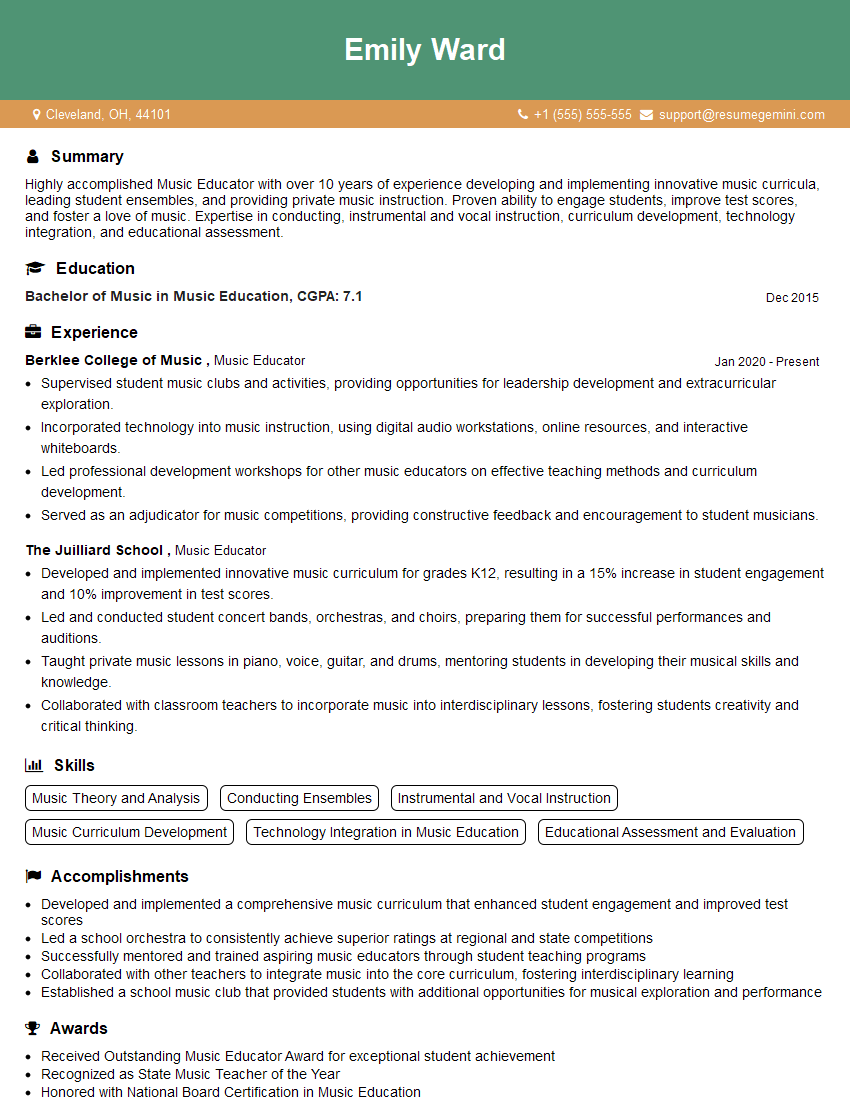
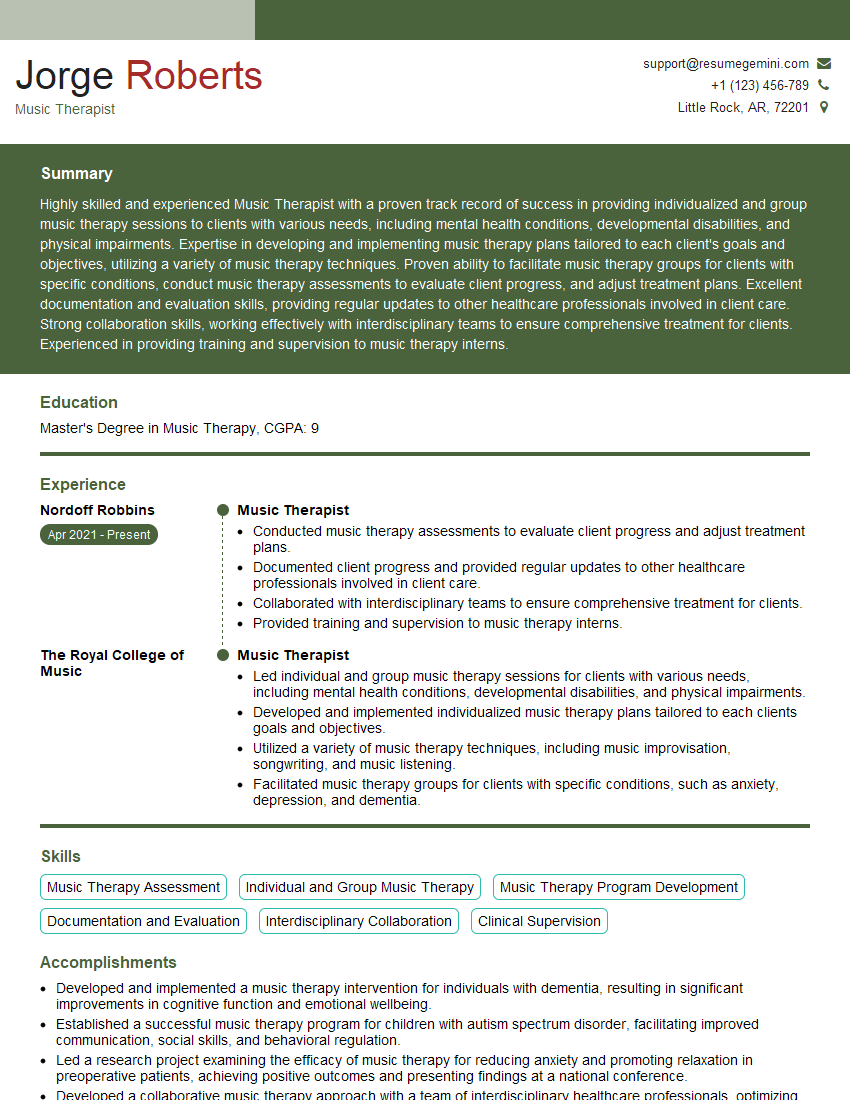
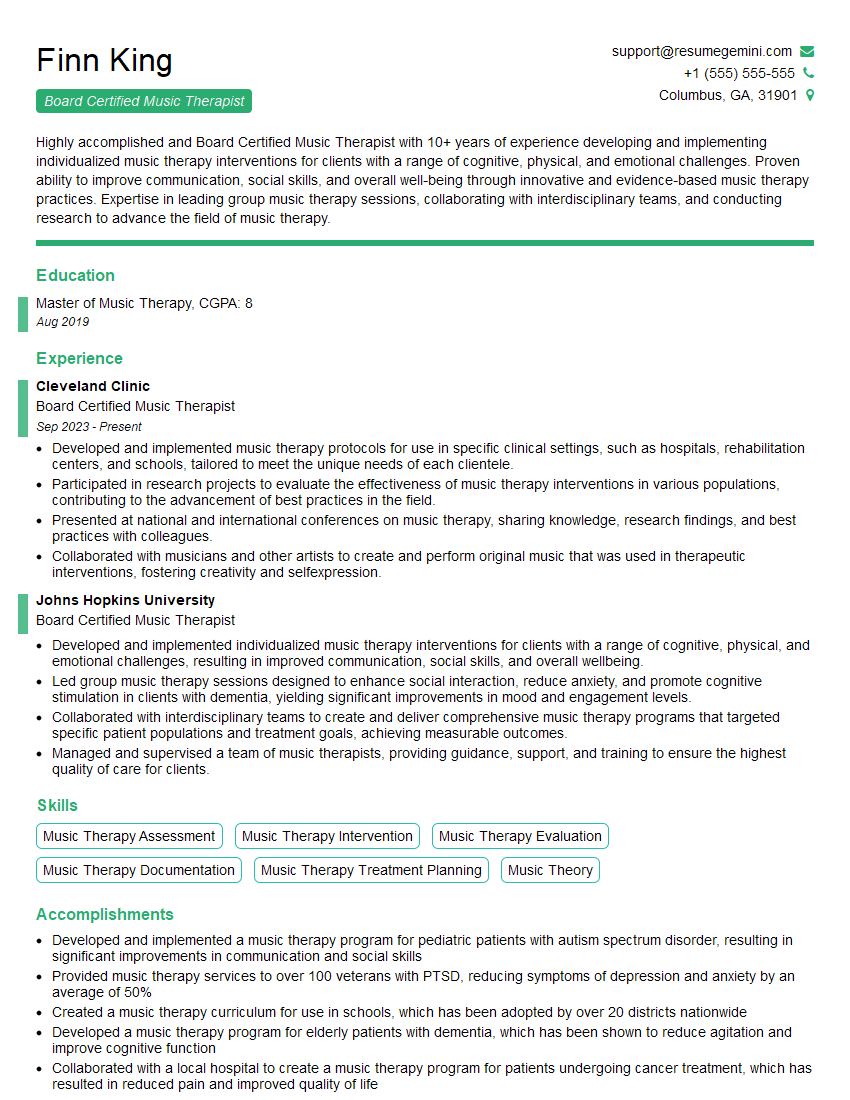
Mastering the ability to use music to promote social skills and communication is crucial for career advancement in fields such as music therapy, special education, and community engagement. A strong resume is your first step towards showcasing these valuable skills. Creating an ATS-friendly resume is essential for getting your application noticed by employers. We highly recommend using ResumeGemini to build a professional and effective resume that highlights your unique qualifications. ResumeGemini offers examples of resumes tailored to this specific skillset, helping you craft a compelling narrative that will impress potential employers.
Explore more articles
Users Rating of Our Blogs
Share Your Experience
We value your feedback! Please rate our content and share your thoughts (optional).
What Readers Say About Our Blog
To the interviewgemini.com Webmaster.
Very helpful and content specific questions to help prepare me for my interview!
Thank you
To the interviewgemini.com Webmaster.
This was kind of a unique content I found around the specialized skills. Very helpful questions and good detailed answers.
Very Helpful blog, thank you Interviewgemini team.