Cracking a skill-specific interview, like one for Adult Speech-Language Therapy, requires understanding the nuances of the role. In this blog, we present the questions you’re most likely to encounter, along with insights into how to answer them effectively. Let’s ensure you’re ready to make a strong impression.
Questions Asked in Adult Speech-Language Therapy Interview
Q 1. Explain your experience with assessing and treating dysphagia in adults.
Assessing and treating dysphagia, or swallowing disorders, in adults requires a multifaceted approach. It begins with a thorough clinical examination, including a detailed history of the patient’s swallowing difficulties, medical history (including neurological conditions, surgeries, and medications), and a physical assessment of their oral cavity, pharynx, and larynx.
I utilize various assessment tools, such as the Modified Barium Swallow Study (MBSS), Fiberoptic Endoscopic Evaluation of Swallowing (FEES), and clinical bedside swallow evaluations. The MBSS uses fluoroscopy to visualize the swallowing process, providing detailed information about the bolus transit time, pharyngeal residue, and the efficiency of the swallow. FEES is a less invasive procedure using a flexible endoscope to view the pharynx and larynx during swallowing. Bedside evaluations are crucial for initial screenings and ongoing monitoring, focusing on observation of oral-motor skills, cough, and vocal quality post-swallow.
Treatment plans are individualized and may include postural adjustments (e.g., head turns, chin tucks), dietary modifications (e.g., altering food consistency, increasing liquid viscosity), and oral-motor exercises to strengthen muscles involved in swallowing. I also collaborate closely with other professionals, such as dieticians, occupational therapists, and nurses, to provide comprehensive care. For instance, I might work with a dietitian to develop a safe and nutritious diet plan tailored to the patient’s specific swallowing difficulties, ensuring adequate nutrition and hydration. For example, a patient with reduced pharyngeal constriction might benefit from thickened liquids to improve bolus control and reduce aspiration risk. Ongoing monitoring and adjustments to the treatment plan are critical for successful outcomes.
Q 2. Describe your approach to managing aphasia in different stages of recovery.
Managing aphasia, a language disorder affecting communication, requires a staged approach that considers the individual’s unique recovery trajectory. The acute phase, immediately following the onset of aphasia (often stroke), focuses on stabilizing the patient’s medical condition and facilitating early communication. This often involves the use of simple gestures, visual aids, and alternative and augmentative communication (AAC) strategies. I might use strategies such as picture cards or simple communication boards.
In the subacute phase, intensive therapy begins, focusing on improving receptive and expressive language skills. We might employ various treatment techniques, including Melodic Intonation Therapy (MIT) for expressive aphasia, or Constraint-Induced Language Therapy (CILT) to promote spontaneous language use. MIT uses melodic patterns to facilitate speech production while CILT restricts the use of compensatory strategies to encourage natural language recovery. Regular assessment of progress using standardized tests is essential.
The chronic phase, which can last for years, involves maintaining communication skills and adapting strategies to the patient’s ongoing challenges. This may include ongoing speech therapy, participation in support groups, and the integration of technology-based AAC systems. For instance, an iPad-based AAC app might provide support for communication during activities that demand conversational skills.
A key principle throughout all phases is the focus on functional communication. The goal isn’t just to improve linguistic skills in isolation, but to enable the patient to participate meaningfully in everyday life.
Q 3. How do you differentiate between various types of apraxia of speech?
Apraxia of speech is a motor speech disorder characterized by difficulty planning and sequencing the movements necessary for speech production. Several types exist, and differentiating between them is crucial for effective treatment.
Apraxia of speech (AOS) is typically characterized by inconsistent errors in speech sound production, difficulty initiating speech, and groping movements of the articulators. The ability to understand and repeat commands or language may be intact, but the motor planning aspect of speech is significantly impaired.
Verbal apraxia is a type of apraxia that is more specific to speech and often co-occurs with AOS. It’s characterized by difficulty sequencing the sounds and syllables in words.
Oral apraxia involves difficulties in voluntary, non-speech movements of the oral structures, like sticking out the tongue or pursing the lips. This can often be observed during a physical oral-motor exam.
Differentiating these types often involves a comprehensive assessment using tasks that target various aspects of speech and oral motor function. The clinician observes the types of errors, their consistency and impact on articulation, and the presence of other co-occurring disorders to arrive at a differential diagnosis. For example, if a patient demonstrates inconsistent errors in sound production, along with difficulty planning and sequencing movements of the articulators, and understands language but can’t produce speech, this is more suggestive of AOS. In contrast, a person demonstrating impaired voluntary oral movements might be exhibiting oral apraxia.
Q 4. What are the common cognitive-linguistic deficits seen in adults post-stroke?
Adults post-stroke often experience a range of cognitive-linguistic deficits, the severity and combination of which vary widely depending on the location and extent of the brain damage. Common deficits include:
- Aphasia: As previously discussed, this encompasses various language disorders affecting comprehension, expression, reading, and writing.
- Apraxia of speech: Difficulty planning and sequencing the movements for speech.
- Dysarthria: Weakness or incoordination of the muscles involved in speech production, resulting in slurred or imprecise speech.
- Cognitive impairments: These may include difficulties with attention, memory, executive functions (planning, problem-solving), and processing speed. These cognitive deficits can significantly impact communication and overall rehabilitation.
- Dysphagia: Swallowing difficulties, as mentioned previously, due to weakness or incoordination of the swallowing muscles.
- Right Hemisphere Brain Damage (RHBD): This can lead to deficits in pragmatics (social aspects of communication), prosody (intonation and rhythm of speech), and visual-spatial processing. These individuals may exhibit difficulty understanding nonverbal cues or interpreting sarcasm.
The assessment process should comprehensively evaluate all these areas, recognizing that they often co-occur and influence each other. Treatment involves addressing these cognitive-linguistic deficits through targeted interventions such as cognitive rehabilitation exercises, language therapy, and swallowing therapy. For instance, exercises focusing on attention and working memory might improve a patient’s ability to follow instructions and participate actively in therapy.
Q 5. Describe your experience with implementing AAC strategies for adults with severe communication impairments.
Implementing AAC strategies for adults with severe communication impairments is a vital aspect of my practice. The selection of an AAC system depends greatly on the individual’s needs, abilities, and preferences. The process starts with a comprehensive assessment to determine their current communication strengths and weaknesses, including their cognitive abilities, motor skills, visual acuity, and literacy levels.
I consider various AAC options, including low-tech systems such as picture boards, communication books, or gesture systems, and high-tech systems such as speech-generating devices (SGDs) with voice output. For individuals with limited motor skills, we might explore eye-gaze technology or adaptive switches to operate the device. The goal is to choose a system that is functional, user-friendly, and empowering.
Training for both the patient and their caregivers is crucial. This involves teaching them how to use the system effectively, how to repair it if necessary, and strategies to integrate it into their daily lives. For example, I might work with a patient and their family on a systematic approach to communicate their daily needs using an SGD. We might introduce new vocabulary gradually and focus on real-life applications such as ordering food or asking for help.
It is important to foster communication confidence and autonomy; I emphasize collaboration between the patient, their family, and other professionals to create a supportive environment that empowers them to communicate effectively.
Q 6. How do you assess and treat voice disorders in adults?
Assessing and treating voice disorders in adults requires a detailed evaluation of voice quality, vocal function, and the underlying medical or psychological factors. The assessment begins with obtaining a comprehensive history about the patient’s voice problems, medical history, and lifestyle factors (e.g., smoking, occupational voice use). A perceptual voice evaluation is conducted to assess vocal quality (e.g., hoarseness, breathiness), loudness, pitch, and resonance.
Further assessment may include acoustic analysis (using sophisticated equipment to objectively measure vocal parameters), laryngeal imaging (using endoscopy to visualize the vocal folds), and electroglottography (assessing vocal fold vibration). This helps to identify the cause of the voice disorder—such as vocal fold nodules, polyps, paralysis, or neurological conditions.
Treatment plans are tailored to the specific diagnosis and may include:
- Vocal hygiene strategies: Educating the patient about strategies to reduce voice strain, such as hydration, appropriate speaking techniques, and avoiding voice overuse.
- Voice therapy techniques: Specific exercises to improve vocal function, strengthen vocal muscles, and modify vocal habits.
- Medical management: Referrals to an otolaryngologist (ENT) or other medical specialists may be necessary for medical interventions such as medication, surgery, or injections.
For example, a patient with vocal nodules might be taught to reduce vocal strain through strategies like proper breathing techniques and vocal rest. In contrast, a patient with vocal fold paralysis might require surgical intervention to improve vocal fold mobility, combined with voice therapy to maximize functional voice quality. Consistent monitoring and follow-up are essential for successful voice therapy.
Q 7. Explain your understanding of evidence-based practice in adult speech therapy.
Evidence-based practice (EBP) is the cornerstone of my approach to adult speech therapy. It involves integrating the best available research evidence with clinical expertise and patient values to make informed decisions about assessment, intervention, and management.
I regularly search for peer-reviewed research in reputable journals and databases (e.g., PubMed, ASHA journals) to stay updated on the most effective treatment approaches. This involves critically evaluating research methodologies, considering factors like sample size, study design, and generalizability before applying findings to clinical practice. This constant update is vital because research in speech-language pathology is constantly evolving.
Clinician expertise involves using my knowledge, skills, and experience to interpret the research evidence within the context of the patient’s individual needs. I consider factors such as their cognitive abilities, medical history, and cultural background, to tailor a treatment approach suitable for their specific circumstances. The patient’s values and preferences are also crucial components of EBP. I actively involve patients in shared decision-making, ensuring that the treatment plan aligns with their goals and expectations. For example, we will discuss goals and treatment options jointly, to ensure the process remains patient-centered.
EBP is not merely about applying the latest research; it is a continuous process of integrating research, clinical expertise, and patient preferences to provide the highest quality care.
Q 8. How do you incorporate family and caregivers into the treatment plan for an adult with communication disorders?
Family and caregiver involvement is paramount in adult speech-language therapy. It’s not just about treating the patient; it’s about supporting their communication within their entire support system. We achieve this through active collaboration, educating caregivers about the disorder, and empowering them with practical strategies to use at home.
- Regular communication: I schedule regular meetings with families to discuss progress, challenges, and adjustments to the therapy plan. This fosters a sense of shared responsibility and ensures everyone is on the same page.
- Education and training: I provide caregivers with specific techniques and strategies tailored to the patient’s communication needs. This might include teaching them how to use augmentative and alternative communication (AAC) devices, prompting strategies, or techniques for managing frustration during communication breakdowns.
- Home practice program: A crucial aspect is creating a structured home practice program involving activities that reinforce what is learned during therapy sessions. This ensures consistent practice and generalization of skills to real-life situations.
- Collaborative goal setting: We work collaboratively to establish realistic, achievable goals, considering both the patient’s capabilities and the caregiver’s capacity. This ensures buy-in and motivation from all parties involved.
For example, I worked with a patient with aphasia after a stroke. We involved his wife by teaching her specific techniques to help him express his needs and understand her instructions. This involved visual cues, simplified language, and patience. Her active participation dramatically improved his communication skills at home and reduced his frustration levels.
Q 9. Describe a challenging case you’ve handled and how you addressed it.
One challenging case involved a patient with severe apraxia of speech following a traumatic brain injury. He struggled significantly with motor planning for speech, resulting in highly unintelligible speech and significant frustration. He also exhibited emotional outbursts due to the communication difficulties.
My approach was multifaceted:
- Comprehensive assessment: We began with a thorough assessment to identify the specific aspects of his apraxia, including the types of sounds he could produce, the consistency of his errors, and his overall cognitive abilities.
- Targeted therapy: I developed a therapy plan focused on improving motor planning using intensive, repetitive practice with specific sounds and words. We incorporated techniques such as melodic intonation therapy and the use of visual cues to aid in motor planning.
- Addressing emotional needs: I collaborated with a psychologist to address his emotional outbursts, utilizing strategies such as relaxation techniques and cognitive behavioral therapy to manage his frustration and anger.
- AAC incorporation: We introduced an AAC device as a supplementary communication tool to allow him to express himself more effectively during periods when speech was challenging. This helped reduce his frustration and improve his quality of life.
Over time, his progress was gradual but significant. His speech intelligibility improved noticeably, his frustration decreased, and his overall quality of life enhanced. This highlights the importance of a holistic approach that addresses both the motor and emotional aspects of a communication disorder.
Q 10. What are your strategies for managing challenging behaviors in adult patients?
Managing challenging behaviors in adult patients requires a calm, empathetic, and structured approach. It’s crucial to understand the underlying cause of the behavior, which could range from frustration with communication difficulties to underlying cognitive or emotional issues.
- Behavioral analysis: I begin by thoroughly analyzing the behavior, identifying triggers, and the function of the behavior (e.g., attention-seeking, escape from a task). This is crucial for developing targeted interventions.
- Positive reinforcement: Focusing on positive reinforcement for desired behaviors is vital. I use praise, rewards, and other positive feedback to encourage appropriate communication and reduce reliance on challenging behaviors.
- Environmental modifications: Modifying the therapy environment can also be helpful. This might include minimizing distractions, structuring the therapy session in shorter, more manageable intervals, or providing visual supports to reduce anxiety.
- Collaboration with other professionals: In cases of severe or complex challenging behaviors, collaborating with other professionals such as psychologists, psychiatrists, or occupational therapists is crucial. A multidisciplinary approach often yields the best results.
- Communication strategies: Using clear and concise communication, simplifying instructions, and providing choices can help reduce frustration and challenging behaviors.
For example, I worked with a patient with dementia who exhibited aggressive outbursts during therapy sessions. We discovered that these outbursts occurred when he felt overwhelmed or confused. By breaking down the tasks into smaller steps, providing visual cues, and using a calm and reassuring tone, we significantly reduced the frequency of these outbursts.
Q 11. How familiar are you with different types of augmentative and alternative communication devices?
I’m very familiar with a wide range of augmentative and alternative communication (AAC) devices. My experience encompasses various types, including low-tech and high-tech options.
- Low-tech AAC: This includes picture exchange systems (PECS), communication boards, and simple symbol systems. These are often cost-effective and easy to use, making them ideal for individuals with mild to moderate communication difficulties.
- High-tech AAC: This includes voice output communication aids (VOCAs) such as tablets and speech-generating devices (SGDs). These offer more sophisticated features like text-to-speech, customizable vocabularies, and even synthesized voice options, providing flexibility for a range of needs.
I consider several factors when recommending an AAC system: the patient’s cognitive abilities, physical limitations, communication needs, and the family’s resources. The goal is to select a system that is user-friendly, functional, and enhances the patient’s communication abilities.
My experience includes training patients and families in the use of different AAC systems, and adapting the system to meet the evolving needs of the patient.
Q 12. Explain your experience with conducting oral-motor examinations.
An oral-motor examination is a crucial component of a comprehensive speech-language evaluation. It’s a systematic assessment of the structures and functions involved in speech production.
My procedure involves observing and evaluating several aspects:
- Facial symmetry: Assessing the symmetry of the face at rest and during movement.
- Strength and range of motion: Evaluating the strength and range of motion of the lips, tongue, jaw, and soft palate.
- Oral sensation: Checking the patient’s sensitivity to touch and pressure within the oral cavity.
- Dentition: Observing the condition of the teeth and dentures.
- Oral reflexes: Evaluating various reflexes such as the gag reflex and the suck-swallow reflex.
I use various techniques, including palpation (feeling the structures) and observation of spontaneous and elicited movements. The results of the oral-motor examination guide the development of appropriate therapy interventions, helping to determine the focus of therapy, whether it’s targeting articulation, swallowing, or other aspects of speech production.
Q 13. Describe your proficiency with different assessment tools used in adult speech therapy.
My proficiency extends across a broad range of assessment tools used in adult speech therapy. The selection of a specific tool depends on the suspected communication disorder and the individual’s unique needs.
- Aphasia assessments: I’m experienced with administering and interpreting various aphasia batteries, such as the Boston Diagnostic Aphasia Examination (BDAE) and the Western Aphasia Battery (WAB).
- Apraxia assessments: I utilize standardized assessments like the Apraxia Battery for Adults (ABA) to evaluate motor speech planning difficulties.
- Dysarthria assessments: I’m proficient in using assessments that evaluate the different types of dysarthria, focusing on the impact on intelligibility and functional communication.
- Cognitive-linguistic assessments: I utilize assessments to evaluate cognitive aspects that influence communication, such as memory, attention, and executive functions.
- Swallowing assessments: This includes clinical bedside evaluations and the use of instrumental assessments like videofluoroscopic swallow studies (VFSS) when indicated.
Beyond standardized tests, I use informal assessments, such as conversational samples and functional communication tasks, to gain a more holistic understanding of the patient’s communication abilities in real-world settings.
Q 14. How do you adapt your therapy techniques based on a patient’s cognitive abilities?
Adapting therapy techniques based on cognitive abilities is critical for effective treatment. Individuals with cognitive impairments may require modifications to the therapy approach to ensure they can understand and participate meaningfully.
My strategies include:
- Simplifying instructions: Breaking down complex instructions into smaller, more manageable steps, using clear and concise language.
- Visual aids: Incorporating visual cues, such as pictures, symbols, or written words, to aid comprehension and memory.
- Repetitive practice: Utilizing techniques that involve repetitive practice and spaced retrieval to facilitate learning and retention.
- Chunking information: Presenting information in smaller, digestible chunks to avoid cognitive overload.
- Errorless learning: Utilizing techniques that minimize errors during the learning process to enhance efficiency and reduce frustration.
- Multi-sensory techniques: Engaging multiple sensory modalities, such as auditory, visual, and kinesthetic, to enhance learning and memory.
For example, when working with a patient with mild cognitive impairment, I might adapt therapy sessions by using visual flashcards, simplifying grammatical structures, and reinforcing target words using multi-sensory activities. The goal is to maximize participation and promote successful learning within the patient’s cognitive limitations.
Q 15. Explain your understanding of the stages of swallowing.
Swallowing, or deglutition, is a complex process involving multiple stages. Think of it like a relay race where each team member has a specific job to ensure a smooth finish. These stages are:
- Oral Preparatory Phase: This is where the food is manipulated in the mouth. Saliva mixes with the bolus (the mass of chewed food), forming a cohesive ball ready for swallowing. For example, chewing a piece of steak requires significant manipulation to break it down.
- Oral Phase: This is the voluntary phase. The tongue propels the bolus posteriorly towards the pharynx (the throat). This is a precise movement; imagine trying to flick a small marble from your tongue to the back of your throat – it requires control and coordination.
- Pharyngeal Phase: This is an involuntary phase triggered by the bolus contacting the sensory receptors in the pharynx. The soft palate elevates to prevent food from entering the nasal cavity, the larynx (voice box) elevates and moves forward to protect the airway, and the epiglottis folds over to cover the trachea (windpipe). The pharyngeal muscles contract, moving the bolus down into the esophagus.
- Esophageal Phase: This is also involuntary. Peristaltic waves – rhythmic muscle contractions – propel the bolus down the esophagus and into the stomach. This is like a wave pushing the food down a tube.
Disruptions in any of these phases can lead to dysphagia, or swallowing difficulties.
Career Expert Tips:
- Ace those interviews! Prepare effectively by reviewing the Top 50 Most Common Interview Questions on ResumeGemini.
- Navigate your job search with confidence! Explore a wide range of Career Tips on ResumeGemini. Learn about common challenges and recommendations to overcome them.
- Craft the perfect resume! Master the Art of Resume Writing with ResumeGemini’s guide. Showcase your unique qualifications and achievements effectively.
- Don’t miss out on holiday savings! Build your dream resume with ResumeGemini’s ATS optimized templates.
Q 16. What are some common compensatory strategies used for dysphagia?
Compensatory strategies aim to improve swallowing safety and efficiency by modifying the way a person eats and drinks, rather than directly addressing the underlying cause of dysphagia. These strategies are often temporary measures used while undergoing therapy to improve swallowing function. Examples include:
- Dietary Modifications: Changing the texture of food (e.g., pureed, minced, or thickened liquids) to make it easier to swallow. A patient with reduced tongue strength might benefit from pureed foods.
- Postural Adjustments: Altering head and body positioning (e.g., chin tuck, head rotation) can help improve swallowing safety and reduce aspiration risk. The chin tuck helps to narrow the pharynx, improving bolus transit.
- Swallowing Maneuvers: Specific techniques, like the Mendelsohn maneuver (sustained elevation of the larynx), can strengthen muscles involved in swallowing. The Mendelsohn maneuver involves consciously holding the larynx up during swallowing to strengthen the muscles.
- Adaptive Feeding Equipment: Using specialized utensils or cups (e.g., weighted spoons, angled cups) can improve a person’s ability to manage food and liquids. A patient with tremors might benefit from a weighted spoon.
It’s crucial to remember that compensatory strategies should be used judiciously and under the guidance of a speech-language pathologist.
Q 17. Describe different types of aphasia and their associated symptoms.
Aphasia is an acquired language disorder that affects the ability to communicate. It’s usually caused by damage to the brain, often from stroke or traumatic brain injury. Different types of aphasia have distinct characteristics:
- Broca’s Aphasia (Non-fluent): Characterized by difficulty producing speech, although comprehension is relatively preserved. Speech is often slow, labored, and grammatically simplified. Imagine struggling to find the right words to express yourself, even though you understand what others are saying.
- Wernicke’s Aphasia (Fluent): Characterized by fluent but nonsensical speech. Comprehension is severely impaired. A person might speak in long sentences with made-up words, but not understand what is said to them.
- Global Aphasia: A severe form of aphasia affecting both speech production and comprehension. It’s a devastating condition impacting almost all aspects of communication.
- Conduction Aphasia: Relatively rare; characterized by impaired repetition and difficulty repeating words or phrases, despite having relatively intact comprehension and speech production. It’s like having a broken connection between understanding and speaking.
- Anomic Aphasia: Difficulty retrieving words, leading to frequent pauses and circumlocutions (talking around the word). Comprehension and speech fluency are usually preserved, but finding the right word is a challenge.
Symptoms vary widely depending on the type and severity of aphasia and the location of brain damage.
Q 18. How do you differentiate between fluent and non-fluent aphasia?
The key difference between fluent and non-fluent aphasia lies in the ease of speech production and the grammatical structure of their utterances.
- Fluent Aphasia: Speech is relatively effortless, with normal speech rate and intonation. However, the content of speech may be nonsensical or difficult to understand (like in Wernicke’s aphasia).
- Non-fluent Aphasia: Speech is slow, labored, and often halting, with reduced speech output. Grammatical structures are often simplified, but comprehension might be relatively better than in fluent aphasias (like in Broca’s aphasia).
Imagine a conversation: in fluent aphasia, the person speaks easily but doesn’t make sense; in non-fluent aphasia, the person struggles to speak but understands the conversation.
Q 19. Explain the role of swallowing therapy in preventing aspiration pneumonia.
Swallowing therapy plays a crucial role in preventing aspiration pneumonia. Aspiration pneumonia occurs when food, liquids, or saliva enters the lungs, leading to infection. Effective swallowing therapy aims to improve the safety and efficiency of the swallowing mechanism, thus reducing the risk of aspiration.
By improving the coordination and strength of the muscles involved in swallowing, therapy reduces the likelihood of material entering the airway. Techniques like strengthening exercises, postural adjustments, and swallowing maneuvers help restore safe swallowing. For example, if someone has reduced tongue strength and aspiration during swallowing, exercises can help strengthen their tongue and improve their ability to propel the bolus safely.
Ultimately, successful swallowing therapy reduces the risk of aspiration and, consequently, the risk of developing aspiration pneumonia, improving the patient’s overall health and quality of life.
Q 20. What are some common challenges faced while treating adults with neurological communication disorders?
Treating adults with neurological communication disorders presents several unique challenges:
- Cognitive Impairment: Many individuals with neurological conditions also experience cognitive deficits, such as attention problems or memory impairments, which can hinder their ability to learn and participate in therapy. It can be challenging to hold their attention and teach them new strategies.
- Physical Limitations: Weakness, paralysis, or reduced coordination can impact their ability to perform swallowing exercises or participate in speech therapy activities. Adapting exercises to suit their physical capabilities is essential.
- Emotional and Psychological Factors: The effects of a neurological disorder can be emotionally devastating. Depression, anxiety, and frustration can significantly impact their motivation and progress in therapy.
- Variability in Recovery: Recovery from neurological damage is often unpredictable. Progress can be slow, and setbacks are common, requiring flexibility and adaptation in the treatment plan.
- Comorbidities: Patients often have other health conditions that can interfere with therapy, such as medical conditions, medication side effects, and chronic pain.
Overcoming these challenges requires a highly individualized and holistic approach to treatment, encompassing not only the communication disorder but also the person’s overall physical, cognitive, and emotional state.
Q 21. How do you collaborate with other healthcare professionals (e.g., physicians, occupational therapists)?
Collaboration is paramount in managing adults with neurological communication disorders. I regularly collaborate with:
- Physicians (Neurologists, Pulmonologists): To obtain a comprehensive medical history, understand the underlying neurological condition, and discuss medical implications of dysphagia or aphasia. This ensures the safety and efficacy of the therapy plan.
- Occupational Therapists: To address any physical limitations that might affect swallowing or communication. For example, if someone has decreased hand strength, an OT can design adapted utensils to assist with eating.
- Registered Dieticians: To develop appropriate dietary recommendations based on the patient’s swallowing abilities and nutritional needs. This is crucial in ensuring proper nutrition while managing dysphagia.
- Nursing Staff: To monitor the patient’s swallowing and provide ongoing support during meals and between therapy sessions. This collaborative approach ensures consistent care and effective intervention.
- Family members and Caregivers: To educate them about the patient’s condition, provide strategies for managing communication and swallowing at home, and offer emotional support.
This team approach ensures holistic care, maximizing the patient’s potential for recovery and improving their quality of life.
Q 22. How do you document your assessment and treatment progress accurately?
Accurate documentation is crucial in adult speech-language therapy for tracking progress, informing treatment decisions, and ensuring accountability. I utilize a comprehensive, SOAP note (Subjective, Objective, Assessment, Plan) format, meticulously recording each session.
- Subjective: This section captures the patient’s self-reported experience, including their perception of their progress, challenges encountered, and any relevant personal updates. For example, “Patient reports increased confidence in social situations since implementing strategies discussed last week.”
- Objective: Here, I document measurable data obtained during the session, such as articulation accuracy rates (e.g., “90% accuracy on /s/ blends”), fluency measures (e.g., “3 stutters per 100 words”), or cognitive-linguistic test scores. I also note the patient’s performance on assigned homework.
- Assessment: This section integrates subjective and objective data to analyze the patient’s progress toward goals. I might write, “Patient demonstrates improved fluency, but still experiences challenges with anticipatory struggle during complex sentences.”
- Plan: The plan outlines the goals and strategies for the next session, including adjustments based on the assessment. For instance, “Continue practicing /s/ blends in increasingly complex sentence structures. Introduce techniques to manage anticipatory struggle.”
I also use standardized assessments, including detailed scoring, and incorporate technology like speech-language pathology software to record data and generate reports, further ensuring accuracy and efficiency.
Q 23. Describe your experience with different types of therapy techniques (e.g., restorative, compensatory).
My experience encompasses both restorative and compensatory therapy techniques, tailored to the individual needs of each patient.
- Restorative Therapy: This approach aims to improve underlying impairments. For example, I’ve worked with patients with aphasia using techniques like melodic intonation therapy (MIT) to improve speech prosody and fluency. In cases of dysarthria, I focus on exercises to improve muscle strength and coordination.
- Compensatory Therapy: This focuses on adapting communication strategies to compensate for persistent deficits. With patients struggling with severe aphasia, I might teach alternative communication methods, like using augmentative and alternative communication (AAC) devices, or strategies like using gestures and visual aids to enhance communication. For clients with dysphagia, I might teach compensatory swallowing techniques to reduce the risk of aspiration.
I often integrate both approaches, for example, using restorative techniques to improve articulation while simultaneously using compensatory strategies like using alternative phrasing to facilitate communication during challenging moments. The choice of techniques depends on the patient’s diagnosis, prognosis, and personal goals.
Q 24. What are your strategies for motivating patients to participate actively in therapy?
Motivating patients is essential for successful therapy. I use a multifaceted approach, focusing on building rapport, setting realistic goals, and making therapy engaging and relevant to their lives.
- Collaboration and Goal Setting: I work collaboratively with patients to establish achievable, functional goals that align with their priorities (e.g., improving communication with family, returning to work).
- Positive Reinforcement and Feedback: I consistently provide positive feedback on their progress, focusing on their strengths and celebrating even small victories.
- Personalized Therapy: I incorporate the patient’s interests and hobbies into therapy activities to make them more engaging. For instance, if a patient loves gardening, we might use gardening terms and scenarios in articulation drills.
- Real-World Application: We practice communication skills in simulated real-world situations (e.g., role-playing phone calls, ordering food in a restaurant). This makes the therapy directly applicable to their lives and improves motivation.
- Gamification and Technology: I often incorporate games, apps, and technology to enhance engagement and provide immediate feedback.
Ultimately, fostering a supportive and encouraging therapeutic relationship is key to motivating patients to actively participate.
Q 25. Describe your experience with using technology in speech therapy (e.g., telehealth, speech apps).
Technology plays a significant role in my practice. I have extensive experience using telehealth platforms for remote sessions and various speech apps to supplement in-person therapy.
- Telehealth: I utilize secure video conferencing platforms to provide remote therapy, enabling convenient access for patients with mobility issues or those living in remote areas. I ensure HIPAA compliance to protect patient confidentiality.
- Speech Apps: I use a variety of apps for practicing articulation, fluency, and language skills, providing patients with access to ongoing practice outside of therapy sessions. These apps often offer interactive exercises, progress tracking, and immediate feedback.
- Augmentative and Alternative Communication (AAC) Apps: For patients requiring AAC, I integrate various apps and software, offering individualized solutions based on their needs and preferences. I’m proficient in supporting the selection, training and adaptation of appropriate devices.
Technology allows for flexibility, personalized practice, and data-driven decision-making, leading to more effective and efficient therapy.
Q 26. How do you stay current with the latest research and advancements in adult speech therapy?
Staying current in the field is paramount. I actively engage in several strategies:
- Professional Organizations: I’m a member of the American Speech-Language-Hearing Association (ASHA) and regularly attend their conferences and workshops.
- Peer-Reviewed Journals: I subscribe to and regularly read peer-reviewed journals such as the Journal of Speech, Language, and Hearing Research and the American Journal of Speech-Language Pathology to stay abreast of the latest research findings.
- Continuing Education: I actively pursue continuing education courses and workshops to enhance my knowledge and skills in various areas of adult speech-language pathology.
- Online Resources: I utilize reputable online resources such as ASHA’s website and other professional organizations’ platforms to access updated guidelines, best practices, and emerging technologies.
This continuous learning ensures that I provide evidence-based, high-quality care to my patients.
Q 27. What are your salary expectations?
My salary expectations are in line with the average for experienced speech-language pathologists with my qualifications and experience in this region. I am open to discussing this further and am confident we can reach a mutually agreeable compensation package.
Q 28. Why are you interested in this specific position?
I am highly interested in this position because it aligns perfectly with my professional goals and passions. The opportunity to work with [mention specific patient population or aspect of the job that excites you, e.g., a diverse range of adult patients with neurological communication disorders, or a team that emphasizes collaborative care] is particularly appealing. The reputation of [mention organization’s reputation, e.g., this facility for its innovative approach to treatment and commitment to patient-centered care] further enhances my interest. I believe my skills and experience would be a valuable asset to your team, and I am eager to contribute to the continued success of [mention organization’s name].
Key Topics to Learn for Adult Speech-Language Therapy Interview
- Neurogenic Communication Disorders: Understanding aphasia, apraxia, dysarthria, and right hemisphere stroke communication deficits. This includes differential diagnosis and evidence-based treatment approaches.
- Cognitive-Communication Disorders: Addressing challenges in attention, memory, executive function, and problem-solving as they relate to communication. Explore practical assessment and intervention strategies.
- Traumatic Brain Injury (TBI): Knowledge of the various communication and cognitive impairments resulting from TBI, and the tailored interventions used in rehabilitation.
- Assessment and Treatment Planning: Mastering the process of conducting thorough assessments, developing individualized treatment plans, and using data to track progress. This includes familiarity with standardized tests and informal measures.
- Swallowing Disorders (Dysphagia): Understanding the anatomy and physiology of swallowing, different types of dysphagia, and the methods used to evaluate and treat swallowing difficulties. This may include instrumental assessments and interventions.
- Evidence-Based Practice: Demonstrating familiarity with research methodologies and the ability to apply current research to clinical practice. Be prepared to discuss recent advancements in the field.
- Ethical Considerations: Understanding and applying ethical principles in the context of adult speech-language pathology, including confidentiality, informed consent, and cultural sensitivity.
- Interprofessional Collaboration: Articulating your experience and understanding of working effectively with other healthcare professionals, such as physicians, occupational therapists, and physical therapists.
- Technology in Adult SLP: Demonstrate awareness of how technology is used in assessment and treatment, such as AAC devices, telehealth, and speech generating software.
- Case Management and Documentation: Discuss your experience in managing patient cases, writing clear and concise documentation, and collaborating with insurance providers.
Next Steps
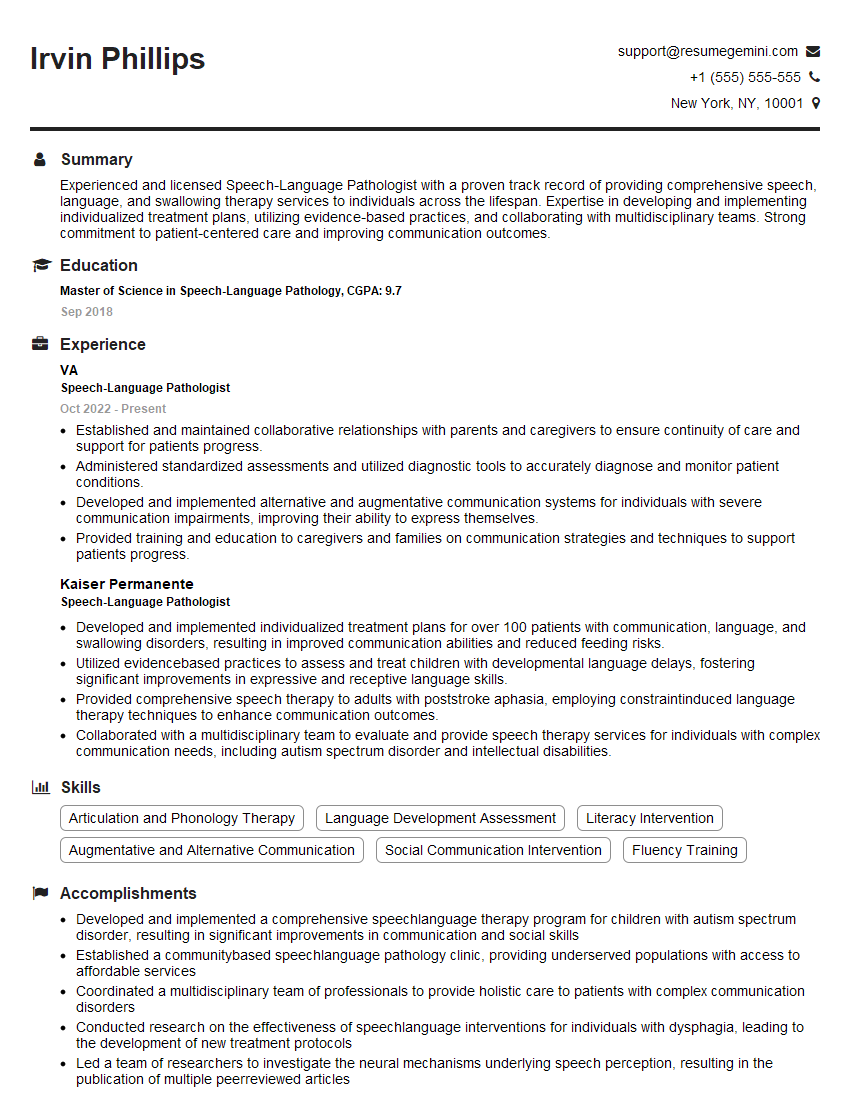
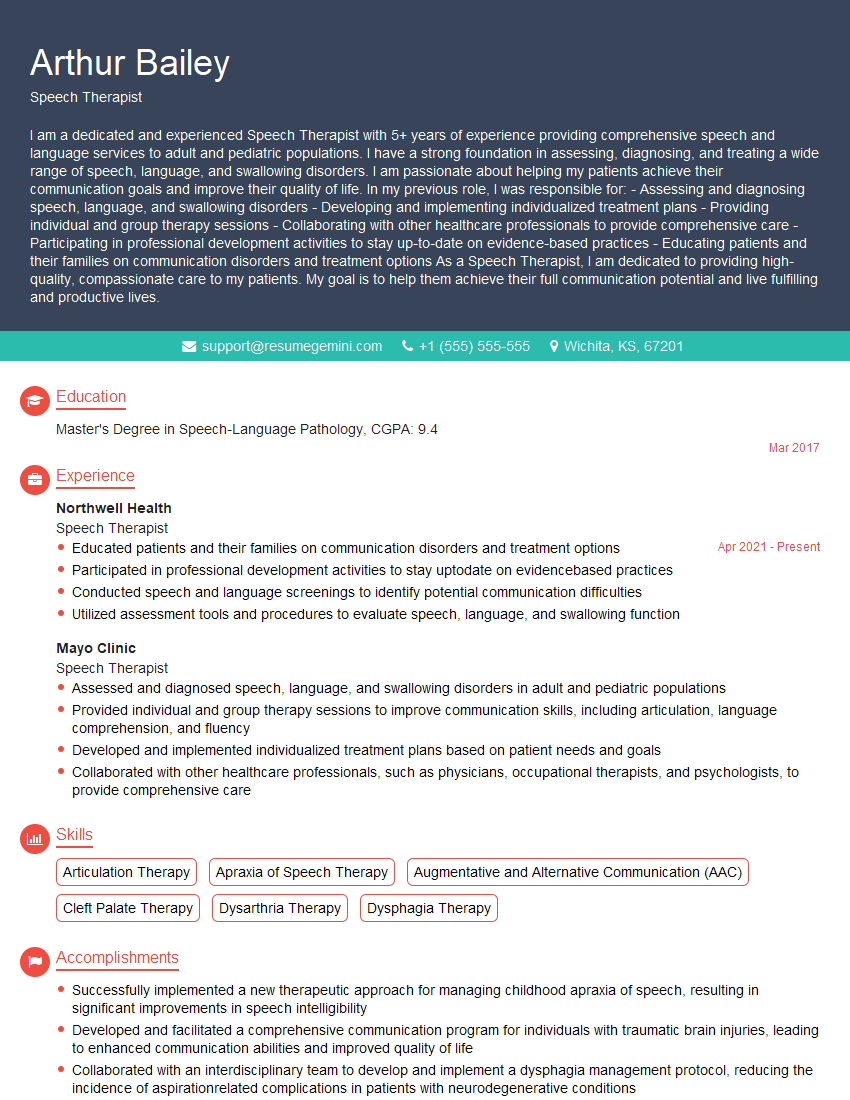
Mastering Adult Speech-Language Therapy principles opens doors to a fulfilling and impactful career, offering diverse opportunities for specialization and growth. To maximize your job prospects, invest time in crafting an ATS-friendly resume that showcases your skills and experience effectively. ResumeGemini is a trusted resource to help you build a professional and impactful resume, designed to get noticed by recruiters. Examples of resumes tailored to Adult Speech-Language Therapy are available to help guide you.
Explore more articles
Users Rating of Our Blogs
Share Your Experience
We value your feedback! Please rate our content and share your thoughts (optional).
What Readers Say About Our Blog
To the interviewgemini.com Webmaster.
Very helpful and content specific questions to help prepare me for my interview!
Thank you
To the interviewgemini.com Webmaster.
This was kind of a unique content I found around the specialized skills. Very helpful questions and good detailed answers.
Very Helpful blog, thank you Interviewgemini team.