The right preparation can turn an interview into an opportunity to showcase your expertise. This guide to Chemical Balancing interview questions is your ultimate resource, providing key insights and tips to help you ace your responses and stand out as a top candidate.
Questions Asked in Chemical Balancing Interview
Q 1. Balance the following chemical equation: Fe + O₂ → Fe₂O₃
Balancing the equation Fe + O₂ → Fe₂O₃ involves adjusting coefficients to ensure the number of atoms of each element is equal on both sides. We can’t change the subscripts within the chemical formulas.
- Start with the most complex molecule: Fe₂O₃ contains 2 iron (Fe) atoms and 3 oxygen (O) atoms.
- Balance iron (Fe): To balance the iron, place a ‘2’ in front of Fe on the reactant side: 2Fe + O₂ → Fe₂O₃
- Balance oxygen (O): Now we have 2 oxygen atoms on the left and 3 on the right. To balance, we need to find the least common multiple, which is 6. Place a ‘3’ in front of O₂ and a ‘2’ in front of Fe₂O₃: 4Fe + 3O₂ → 2Fe₂O₃
Therefore, the balanced equation is: 4Fe + 3O₂ → 2Fe₂O₃
Q 2. Explain the law of conservation of mass in relation to chemical balancing.
The law of conservation of mass states that matter cannot be created or destroyed in a chemical reaction. In simpler terms, the total mass of the reactants (the starting materials) must equal the total mass of the products (the substances formed). Chemical balancing ensures this law is obeyed by making sure the number of atoms of each element remains the same throughout the reaction.
Think of it like a perfectly balanced scale: Whatever you put on one side (reactants) must have an equivalent weight on the other (products). Chemical balancing is the process of ensuring this balance is maintained at the atomic level.
Q 3. What is stoichiometry and why is it important in chemical balancing?
Stoichiometry is the quantitative relationship between reactants and products in a chemical reaction. It’s essentially the math of chemistry. It allows us to calculate the amounts of reactants needed to produce a certain amount of product, or vice-versa. This is crucial in chemical balancing because it ensures that the reaction is not only balanced in terms of atom count but also in terms of the relative amounts of each substance involved.
In industrial settings, stoichiometry is essential for optimizing chemical processes. For example, a chemical plant manufacturing ammonia needs to know the precise ratio of nitrogen and hydrogen to maximize yield and minimize waste. Improper stoichiometry can lead to inefficient reactions, resource waste, and potential safety hazards.
Q 4. How do you balance a redox reaction using the half-reaction method?
Balancing redox reactions (reactions involving electron transfer) using the half-reaction method involves separating the overall reaction into two half-reactions: oxidation (loss of electrons) and reduction (gain of electrons). Here’s a step-by-step approach:
- Write the two half-reactions: Identify which species are oxidized and reduced.
- Balance atoms other than O and H: Balance all elements except oxygen and hydrogen in each half-reaction.
- Balance oxygen: Add H₂O molecules to balance oxygen atoms.
- Balance hydrogen: Add H⁺ ions to balance hydrogen atoms.
- Balance charge: Add electrons (e⁻) to balance the charge in each half-reaction.
- Make electron gain equal to electron loss: Multiply each half-reaction by a factor to ensure the number of electrons gained in reduction equals the number of electrons lost in oxidation.
- Add the half-reactions: Combine the balanced half-reactions, canceling out electrons and any other common species.
- Simplify: Simplify the equation by canceling out any common terms.
Example: Balancing the reaction: MnO₄⁻ + Fe²⁺ → Mn²⁺ + Fe³⁺ (in acidic solution)
This involves a detailed, step-wise process with numerous examples, which is beyond a concise answer’s scope. However, this outline provides a solid framework for balancing any redox reaction using the half-reaction method. Specialized textbooks and online resources offer comprehensive examples.
Q 5. Balance the equation: C₃H₈ + O₂ → CO₂ + H₂O
Balancing C₃H₈ + O₂ → CO₂ + H₂O involves a similar approach to balancing the iron oxide equation. It’s often best to start with carbon and hydrogen, and balance oxygen last.
- Balance Carbon (C): There are 3 carbon atoms in C₃H₈, so place a ‘3’ before CO₂: C₃H₈ + O₂ → 3CO₂ + H₂O
- Balance Hydrogen (H): There are 8 hydrogen atoms in C₃H₈, so place a ‘4’ before H₂O: C₃H₈ + O₂ → 3CO₂ + 4H₂O
- Balance Oxygen (O): Now count oxygen atoms: There are 10 oxygen atoms on the product side (3 x 2 + 4 x 1 = 10). Place a ‘5’ before O₂ on the reactant side: C₃H₈ + 5O₂ → 3CO₂ + 4H₂O
The balanced equation is: C₃H₈ + 5O₂ → 3CO₂ + 4H₂O
Q 6. Describe the steps involved in balancing a chemical equation.
Balancing a chemical equation is a systematic process:
- Write the unbalanced equation: Begin with the reactants on the left and products on the right, using the correct chemical formulas.
- Count atoms: Determine the number of atoms of each element on both sides of the equation.
- Balance elements one by one: Start with the most complex molecule and balance elements sequentially, adjusting coefficients (the numbers before the chemical formulas). Avoid changing subscripts within chemical formulas.
- Check for balance: Once you believe it’s balanced, verify that the number of atoms of each element is the same on both sides.
- Ensure smallest whole-number coefficients: If necessary, simplify coefficients to the smallest possible whole numbers.
It’s an iterative process; you might need to adjust coefficients multiple times to achieve a balanced equation.
Q 7. What are the common challenges encountered when balancing complex chemical equations?
Balancing complex chemical equations can present several challenges:
- Multiple elements: Equations with many different elements require meticulous attention to detail.
- Polyatomic ions: Treat polyatomic ions (like sulfate, SO₄²⁻) as a single unit when balancing. If they appear on both sides unchanged, you may not need to balance them individually.
- Redox reactions: Balancing redox reactions often necessitates the use of techniques like the half-reaction method, which adds layers of complexity.
- Fractional coefficients: Sometimes, you might end up with fractional coefficients initially. Multiply the entire equation by a factor to convert them to whole numbers.
- Non-integer stoichiometry: Certain complex reactions might not have a simple whole-number ratio of reactants and products. This is less common in introductory chemistry but frequently occurs in advanced chemical processes.
Practicing with a variety of equation types is key to overcoming these difficulties. Start with simpler equations, gradually increasing the complexity, and always double-check your work.
Q 8. How do you determine the limiting reactant in a chemical reaction?
Determining the limiting reactant is crucial in chemical reactions because it dictates the maximum amount of product that can be formed. The limiting reactant is the reactant that gets completely consumed first, thus stopping the reaction. To find it, we compare the mole ratios of the reactants to their stoichiometric coefficients in the balanced chemical equation.
- Step 1: Balance the chemical equation. This ensures the correct mole ratios between reactants and products.
- Step 2: Convert the given masses (or volumes for gases) of each reactant into moles using their respective molar masses (or the Ideal Gas Law).
- Step 3: Divide the moles of each reactant by its stoichiometric coefficient from the balanced equation. This gives the number of moles of product each reactant *could* produce.
- Step 4: The reactant that produces the least amount of product is the limiting reactant.
Example: Consider the reaction: 2H₂ + O₂ → 2H₂O. If we have 2 moles of H₂ and 1 mole of O₂, we divide moles of each reactant by its coefficient: H₂: 2 moles / 2 = 1; O₂: 1 mole / 1 = 1. In this case, both reactants could produce the same amount of water, so neither is truly limiting. However, if we had only 1 mole of H₂, then H₂: 1 mole / 2 = 0.5, making H₂ the limiting reactant.
Q 9. Calculate the theoretical yield of product given the balanced equation and reactant amounts.
The theoretical yield represents the maximum amount of product that can be formed from a given amount of reactants, assuming 100% conversion. It’s a calculated value based on stoichiometry and the limiting reactant.
- Step 1: Identify the limiting reactant (as described in the previous question).
- Step 2: Use the mole ratio between the limiting reactant and the product from the balanced equation.
- Step 3: Convert the moles of the limiting reactant to moles of product using the mole ratio.
- Step 4: Convert the moles of product to grams using its molar mass.
Example: Let’s use the balanced equation from the previous example: 2H₂ + O₂ → 2H₂O. If we start with 1 mole of H₂ (the limiting reactant), the mole ratio of H₂ to H₂O is 2:2 or 1:1. This means 1 mole of H₂ will produce 1 mole of H₂O. The molar mass of H₂O is approximately 18 g/mol, so the theoretical yield is 1 mole * 18 g/mol = 18 grams of H₂O.
Q 10. Explain the concept of molar mass and its role in stoichiometric calculations.
Molar mass is the mass of one mole of a substance, typically expressed in grams per mole (g/mol). It’s the sum of the atomic masses of all the atoms in a molecule or formula unit. In stoichiometry, molar mass acts as a conversion factor between the mass of a substance and the number of moles.
For example, the molar mass of water (H₂O) is approximately 18 g/mol (2 * 1 g/mol for H + 16 g/mol for O). This means that one mole of water weighs 18 grams. This allows us to easily convert between grams and moles, which is essential for calculating reactant amounts and product yields.
Q 11. How do you convert between moles, grams, and liters using stoichiometry?
Converting between moles, grams, and liters (for gases) uses molar mass, molar volume (for gases at STP), and Avogadro’s number. It’s the foundation of stoichiometric calculations.
- Moles to Grams: Use the molar mass. grams = moles * molar mass
- Grams to Moles: Use the molar mass. moles = grams / molar mass
- Moles to Liters (gases at STP): Use the molar volume (22.4 L/mol at Standard Temperature and Pressure). liters = moles * 22.4 L/mol
- Liters to Moles (gases at STP): Use the molar volume. moles = liters / 22.4 L/mol
Remember, these gas conversions only apply at standard temperature and pressure (STP), and the Ideal Gas Law (PV=nRT) is needed for other conditions.
Q 12. What is a mole ratio, and how is it used in chemical calculations?
A mole ratio is the ratio of the moles of one substance to the moles of another substance in a balanced chemical equation. It’s derived directly from the stoichiometric coefficients. Mole ratios are used as conversion factors in stoichiometric calculations to determine the relative amounts of reactants and products involved in a reaction.
Example: In the balanced equation 2H₂ + O₂ → 2H₂O, the mole ratio of H₂ to O₂ is 2:1, and the mole ratio of H₂ to H₂O is 2:2 (or 1:1). This means that for every 2 moles of H₂ consumed, 1 mole of O₂ is consumed and 2 moles of H₂O are produced.
Q 13. How do you handle fractional coefficients in balanced chemical equations?
Fractional coefficients in balanced chemical equations are perfectly acceptable, although they’re not always the most convenient to work with. They represent the relative amounts of reactants and products involved. To avoid them in practical calculations, you can simply multiply the entire equation by a whole number to make all coefficients whole numbers. This doesn’t change the mole ratios.
Example: The equation ½ N₂ + O₂ → NO can be multiplied by 2 to get N₂ + 2O₂ → 2NO. Both equations represent the same reaction and mole ratios, the second is just simpler for calculations.
Q 14. Balance the equation: NH₃ + O₂ → NO + H₂O
Balancing the equation NH₃ + O₂ → NO + H₂O requires adjusting coefficients to ensure the same number of atoms of each element on both sides of the equation.
The balanced equation is: 4NH₃ + 5O₂ → 4NO + 6H₂O
This process involves systematically adjusting the coefficients to match the number of nitrogen, hydrogen, and oxygen atoms on both the reactant and product sides. It often requires trial and error, or a systematic approach like starting with the most complex molecule.
Q 15. How does balancing equations relate to the ideal gas law?
Balancing chemical equations is fundamentally linked to the ideal gas law through stoichiometry. The ideal gas law (PV = nRT) relates the pressure (P), volume (V), number of moles (n), temperature (T), and the ideal gas constant (R). When we balance an equation, we determine the molar ratios of reactants and products. These molar ratios are crucial for using the ideal gas law. For example, if we know the volume of a gas produced in a reaction, we can use the balanced equation to determine the number of moles of that gas and subsequently use the ideal gas law to find its pressure or temperature under specific conditions.
Example: Consider the reaction 2H₂ + O₂ → 2H₂O. If we know the volume of hydrogen gas reacted at a given temperature and pressure, we can calculate its moles using the ideal gas law. The balanced equation tells us that 2 moles of H₂ react to produce 2 moles of H₂O. Therefore, we can determine the moles of water produced, and subsequently its volume, pressure, or temperature if two other variables are known.
Career Expert Tips:
- Ace those interviews! Prepare effectively by reviewing the Top 50 Most Common Interview Questions on ResumeGemini.
- Navigate your job search with confidence! Explore a wide range of Career Tips on ResumeGemini. Learn about common challenges and recommendations to overcome them.
- Craft the perfect resume! Master the Art of Resume Writing with ResumeGemini’s guide. Showcase your unique qualifications and achievements effectively.
- Don’t miss out on holiday savings! Build your dream resume with ResumeGemini’s ATS optimized templates.
Q 16. Explain how to balance equations involving polyatomic ions.
Balancing equations with polyatomic ions simplifies the process by treating the ion as a single unit. Instead of balancing each atom individually within the polyatomic ion, we balance the entire ion as a whole. This significantly reduces the number of variables we need to consider.
Steps:
- Identify polyatomic ions: Recognize groups of atoms that act as a single unit (e.g., sulfate (SO₄²⁻), nitrate (NO₃⁻)).
- Balance polyatomic ions as a unit: Treat the entire ion as one entity when balancing. Don’t break it down into individual atoms initially.
- Balance remaining atoms: After balancing the polyatomic ions, proceed to balance any remaining individual atoms.
- Check your work: Ensure the number of atoms of each element is equal on both sides of the equation.
Example: Balancing the equation: Al(OH)₃ + H₂SO₄ → Al₂(SO₄)₃ + H₂O
We treat (OH)₃ and (SO₄) as units. The balanced equation becomes: 2Al(OH)₃ + 3H₂SO₄ → Al₂(SO₄)₃ + 6H₂O
Q 17. Describe how to solve limiting reactant problems with excess reagents.
Solving limiting reactant problems involves identifying the reactant that limits the amount of product formed, even if other reactants are present in excess. The reactant that produces the least amount of product is the limiting reactant.
Steps:
- Balance the chemical equation: Ensure the equation accurately represents the stoichiometry of the reaction.
- Convert all given masses to moles: Use the molar masses of the reactants.
- Use stoichiometry to determine the moles of product each reactant could form: For each reactant, calculate the number of moles of product it could produce based on the mole ratios from the balanced equation.
- Identify the limiting reactant: The reactant that produces the smaller amount of product is the limiting reactant. The amount of product formed is determined by this reactant.
- Calculate the amount of product formed: Use the moles of product from the limiting reactant calculation to find the mass or other desired quantity of the product.
Example: If we have 10g of H₂ and 100g of O₂ reacting to form water (2H₂ + O₂ → 2H₂O), we would calculate the moles of H₂ and O₂, and use the stoichiometric ratios to determine which reactant produces the least moles of H₂O. That reactant is the limiting reactant and dictates the maximum amount of water that can be formed.
Q 18. Calculate the percent yield of a reaction given the actual and theoretical yield.
Percent yield is the ratio of the actual yield (the amount of product obtained experimentally) to the theoretical yield (the amount of product calculated stoichiometrically), expressed as a percentage. It indicates the efficiency of a reaction. A higher percent yield means a more efficient reaction.
Formula: Percent Yield = (Actual Yield / Theoretical Yield) x 100%
Example: If a reaction is expected to produce 100g of a product (theoretical yield), and 80g are actually obtained in the experiment (actual yield), the percent yield is (80g / 100g) x 100% = 80%.
Q 19. Balance the equation: KMnO₄ + HCl → KCl + MnCl₂ + H₂O + Cl₂
Balancing the equation KMnO₄ + HCl → KCl + MnCl₂ + H₂O + Cl₂ requires a systematic approach. It’s often helpful to balance elements that appear in only one reactant and one product first, then move to more complex elements.
The balanced equation is: 2KMnO₄ + 16HCl → 2KCl + 2MnCl₂ + 8H₂O + 5Cl₂
Q 20. How does chemical balancing apply to industrial processes?
Chemical balancing is paramount in industrial processes for optimizing efficiency and minimizing waste. Accurate stoichiometric calculations are essential for:
- Determining reactant ratios: Knowing the precise quantities of reactants needed to maximize product yield and avoid waste.
- Controlling reaction conditions: Adjusting parameters like temperature and pressure to favor desired product formation.
- Designing reactors: Reactor size and design are based on the stoichiometry of the reaction and desired production rate.
- Waste management: Accurate stoichiometry helps to predict the amount of byproducts and waste generated, allowing for efficient waste treatment strategies.
Example: In the Haber-Bosch process for ammonia synthesis (N₂ + 3H₂ → 2NH₃), precise control of the N₂/H₂ ratio is critical to maximize ammonia production and minimize energy consumption.
Q 21. How does balancing relate to environmental impact assessments?
Chemical balancing is crucial for environmental impact assessments. By accurately predicting the amounts of reactants and products involved in a reaction, we can estimate the quantities of pollutants or byproducts released into the environment. This allows for the development of cleaner technologies and pollution control strategies.
Example: In assessing the environmental impact of combustion processes, balanced chemical equations are used to determine the amounts of greenhouse gases (like CO₂ and NOx) produced, informing emission control technologies and regulations.
Q 22. What are the implications of an unbalanced chemical equation?
An unbalanced chemical equation violates the fundamental law of conservation of mass. It implies that mass is either created or destroyed during a chemical reaction, which is impossible. A balanced equation ensures that the number of atoms of each element is the same on both the reactant and product sides. The implications of an unbalanced equation are significant: it provides inaccurate stoichiometric ratios, leading to incorrect predictions of reactant amounts needed or product yields expected in a chemical reaction. This can have serious consequences in industrial processes, laboratory experiments, and even everyday life. For example, an incorrectly balanced combustion equation for a fuel could lead to insufficient oxygen supply, resulting in incomplete combustion and the production of harmful byproducts.
Consider the unbalanced equation for the combustion of methane: CH4 + O2 → CO2 + H2O. This suggests that one molecule of methane reacts with one molecule of oxygen. However, this is incorrect. A balanced equation, CH4 + 2O2 → CO2 + 2H2O, shows the correct stoichiometry – one molecule of methane requires two molecules of oxygen for complete combustion.
Q 23. Explain the difference between empirical and molecular formulas.
Both empirical and molecular formulas represent the composition of a compound, but they differ in the information they convey. The empirical formula represents the simplest whole-number ratio of atoms of each element in a compound. It shows the most reduced ratio. The molecular formula, on the other hand, shows the actual number of atoms of each element in a molecule of the compound. It represents the actual composition of a single molecule.
For example, consider glucose. Its empirical formula is CH2O, indicating a 1:2:1 ratio of carbon, hydrogen, and oxygen atoms. However, its molecular formula is C6H12O6, showing that a glucose molecule contains six carbon, twelve hydrogen, and six oxygen atoms. The molecular formula is a multiple of the empirical formula.
Q 24. How do you determine the empirical formula of a compound from its percent composition?
Determining the empirical formula from percent composition involves several steps. First, assume a 100-gram sample of the compound; this simplifies the percentage to grams. Then, convert the grams of each element to moles using its molar mass. Next, divide each mole value by the smallest mole value obtained to get the simplest whole-number ratio. If the ratios are not whole numbers, you may need to multiply by a small integer to obtain whole numbers.
Example: A compound is found to contain 40.0% carbon, 6.7% hydrogen, and 53.3% oxygen. Let’s determine the empirical formula.
- Assume 100g: 40.0g C, 6.7g H, 53.3g O
- Convert to moles:
- C: 40.0g / 12.01 g/mol = 3.33 mol
- H: 6.7g / 1.01 g/mol = 6.63 mol
- O: 53.3g / 16.00 g/mol = 3.33 mol
- Divide by smallest:
- C: 3.33 mol / 3.33 mol = 1
- H: 6.63 mol / 3.33 mol ≈ 2
- O: 3.33 mol / 3.33 mol = 1
- Empirical formula: CH2O
Q 25. What is the significance of balancing equations in determining reaction enthalpy?
Balancing chemical equations is crucial for determining reaction enthalpy (ΔH), which represents the heat change during a reaction at constant pressure. Enthalpy changes are reported per mole of reaction, as written. Therefore, an unbalanced equation will not represent the correct stoichiometry of reactants and products, leading to an incorrect calculation of ΔH. The enthalpy change is directly proportional to the stoichiometric coefficients in the balanced equation. Using an unbalanced equation will yield a ΔH value that doesn’t correspond to the actual energy change of the reaction.
For instance, if you incorrectly calculate the enthalpy change for the reaction using an unbalanced equation, your subsequent thermodynamic calculations, such as equilibrium constant calculations, would also be incorrect.
Q 26. How can you use chemical balancing to predict the products of a reaction?
While chemical balancing itself doesn’t predict the identity of products, it is essential for determining the relative amounts of reactants and products. You need a prior understanding of the reaction type (e.g., combustion, neutralization, redox) to predict the products. Once you have a tentative prediction of the products, you use the principle of conservation of mass to balance the equation. This helps verify the consistency of your predicted products based on the quantities involved.
For example, you might predict that reacting sodium metal (Na) with water (H2O) produces sodium hydroxide (NaOH) and hydrogen gas (H2). Then, you would balance the equation: 2Na + 2H2O → 2NaOH + H2. Balancing ensures that the number of atoms of Na, H, and O is the same on both sides, confirming the stoichiometric relationships between reactants and products, but doesn’t help you predict if NaOH and H2 are truly the products without prior knowledge of the reaction.
Q 27. Describe a situation where you had to solve a complex chemical balancing problem.
During my work on developing a new catalyst for ammonia synthesis, I encountered a complex balancing problem involving multiple redox reactions. The reaction system included nitrogen (N2), hydrogen (H2), ammonia (NH3), and various intermediate nitrogen-containing species adsorbed on the catalyst surface. Balancing this multi-step redox process required identifying the oxidation states of nitrogen in each intermediate, using half-reaction methods, and then carefully combining the individual half-reactions to obtain a balanced overall equation that represented the entire catalytic cycle. I used a matrix method to solve the system of linear equations generated by the balancing process, ultimately achieving a balanced equation crucial for understanding the reaction mechanism and optimizing the catalyst.
Q 28. How would you explain chemical balancing to someone without a science background?
Imagine a recipe for baking a cake. You need a specific ratio of flour, sugar, eggs, etc., to get the desired result. A chemical equation is like a recipe for a chemical reaction. Balancing the equation is like making sure you have the right amounts of each ingredient (reactants) to produce the desired outcome (products) without any ingredients left over. Just like you can’t make a cake with twice the amount of eggs and half the amount of flour, you can’t have more atoms of some elements on one side of a chemical equation than the other. Balancing ensures that the number of each type of atom remains constant throughout the reaction; it’s a fundamental principle of chemistry.
Key Topics to Learn for Chemical Balancing Interview
- Law of Conservation of Mass: Understanding the fundamental principle underlying all chemical balancing – that matter cannot be created or destroyed.
- Balancing Chemical Equations: Mastering the techniques for balancing equations using various methods (inspection, algebraic methods).
- Stoichiometry: Applying balanced equations to calculate reactant and product quantities, including mole ratios and limiting reactants.
- Types of Chemical Reactions: Familiarizing yourself with common reaction types (synthesis, decomposition, single/double displacement, combustion) and their balanced equation representations.
- Redox Reactions and Balancing: Understanding oxidation and reduction processes and mastering techniques for balancing redox equations (half-reaction method).
- Practical Applications: Consider real-world applications like industrial chemical processes, environmental chemistry, or pharmaceutical development, and how balancing equations plays a crucial role.
- Problem-Solving Strategies: Develop a systematic approach to tackling complex balancing problems, including identifying unknowns and checking for consistency.
- Understanding Reaction Mechanisms (Advanced): While not always required, a basic understanding of reaction mechanisms can significantly enhance your problem-solving capabilities and demonstrate a deeper understanding of the subject.
Next Steps
Mastering chemical balancing is crucial for success in various chemical-related roles, opening doors to exciting career opportunities and advancements. A strong understanding of this fundamental concept demonstrates a solid foundation in chemistry and problem-solving skills highly valued by employers. To maximize your job prospects, create an ATS-friendly resume that effectively highlights your skills and experience. ResumeGemini is a trusted resource to help you build a professional and impactful resume that will catch the eye of recruiters. We provide examples of resumes tailored to Chemical Balancing professionals to help you get started.
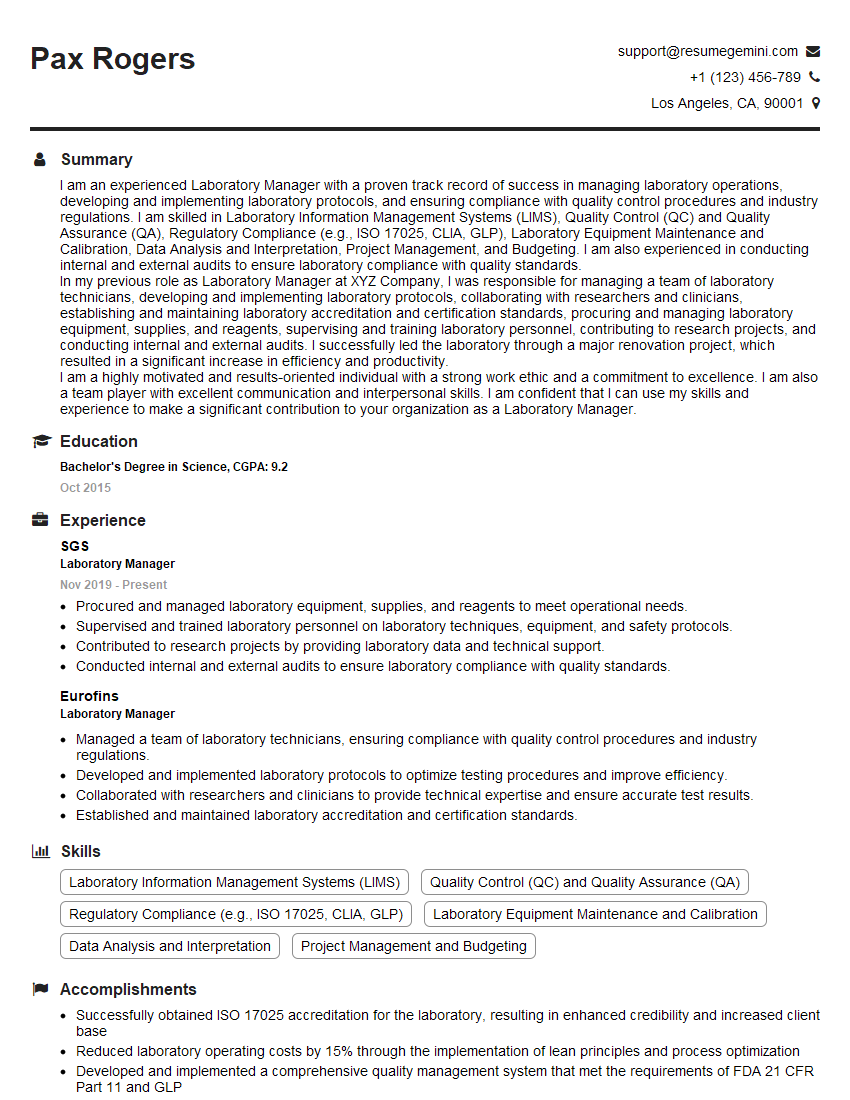
Laboratory Manager Resume Sample

Quality Assurance Manager Resume Sample
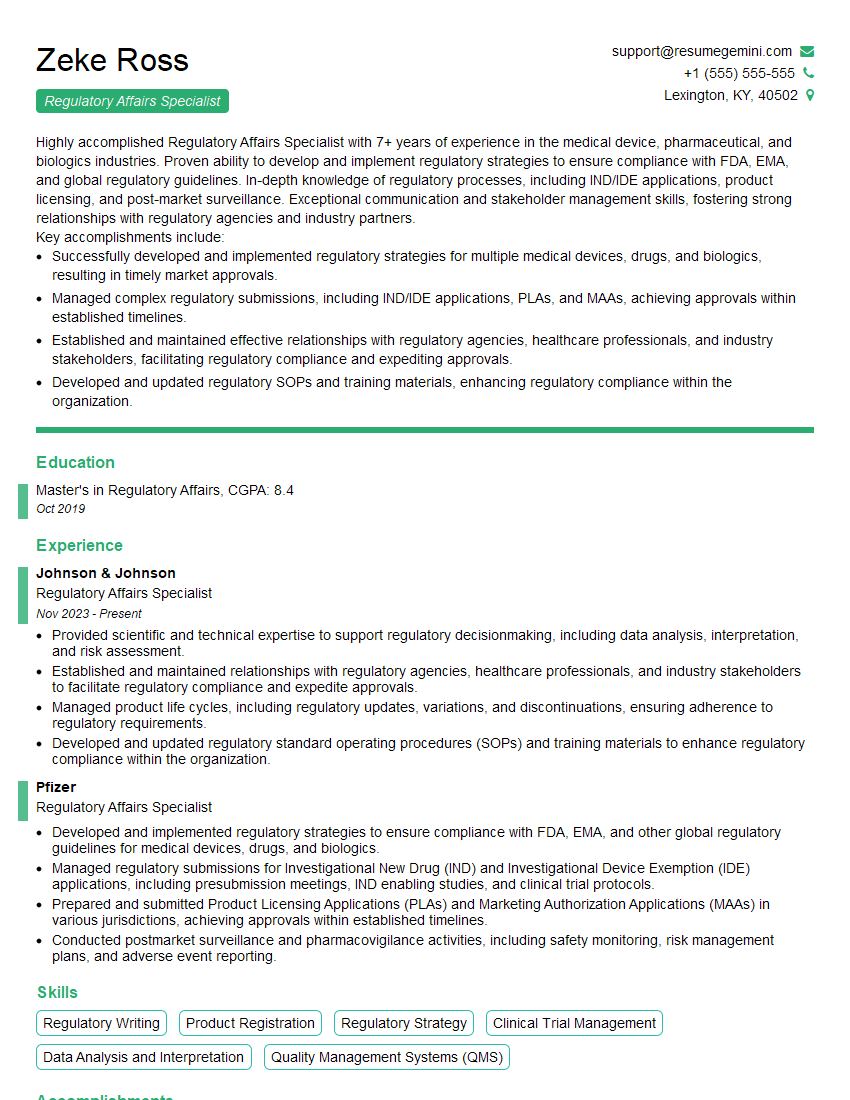
Regulatory Affairs Specialist Resume Sample
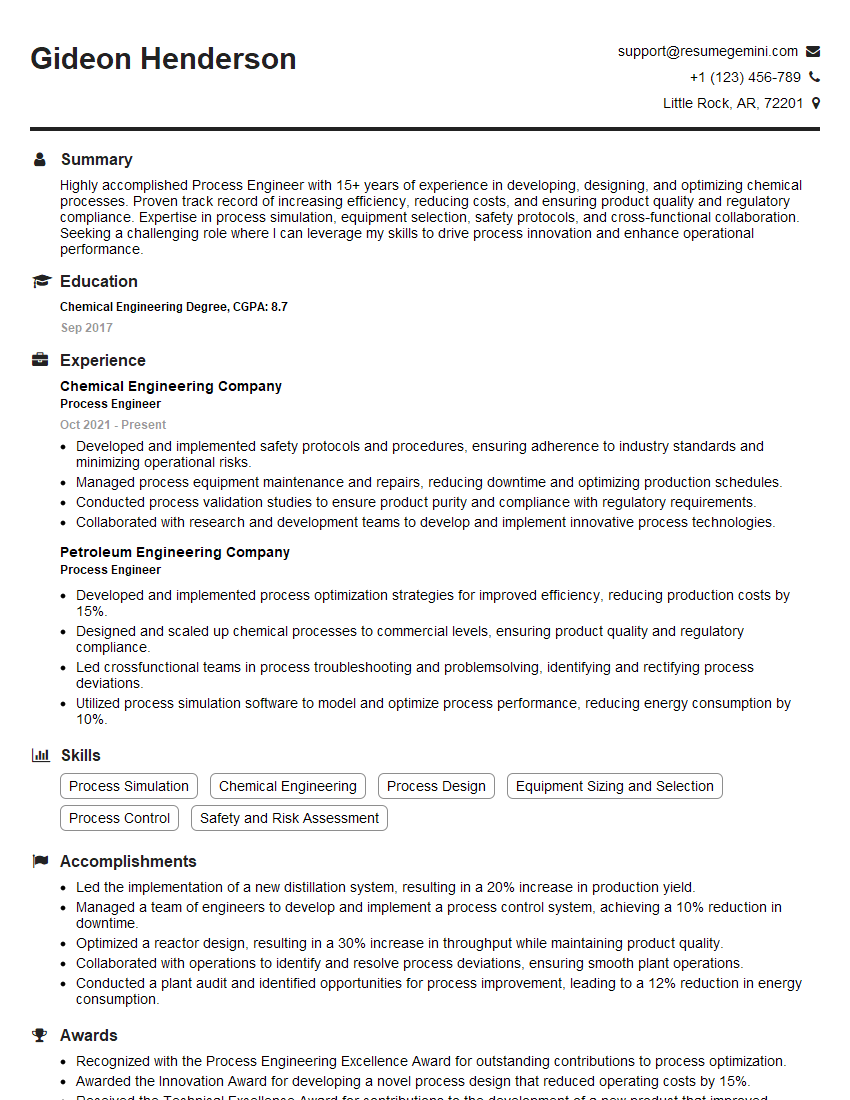
Process Engineer Resume Sample

Research Scientist Resume Sample
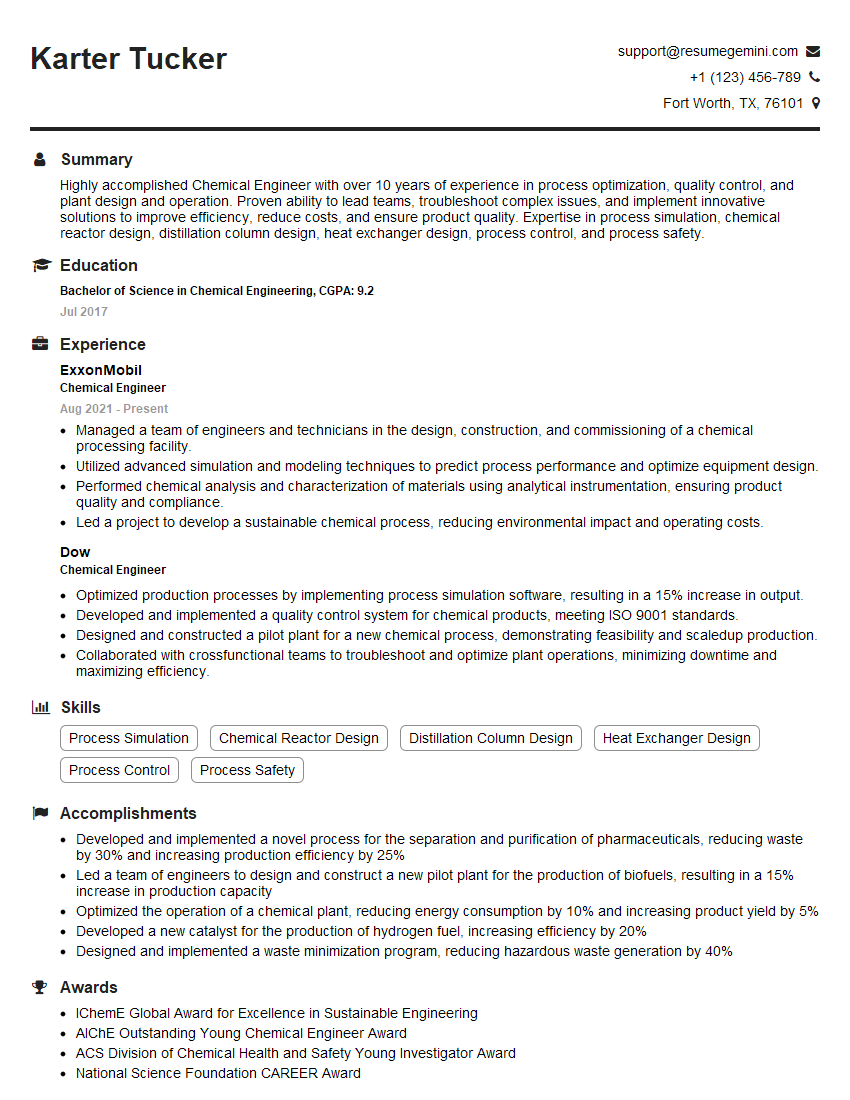
Chemical Engineer Resume Sample
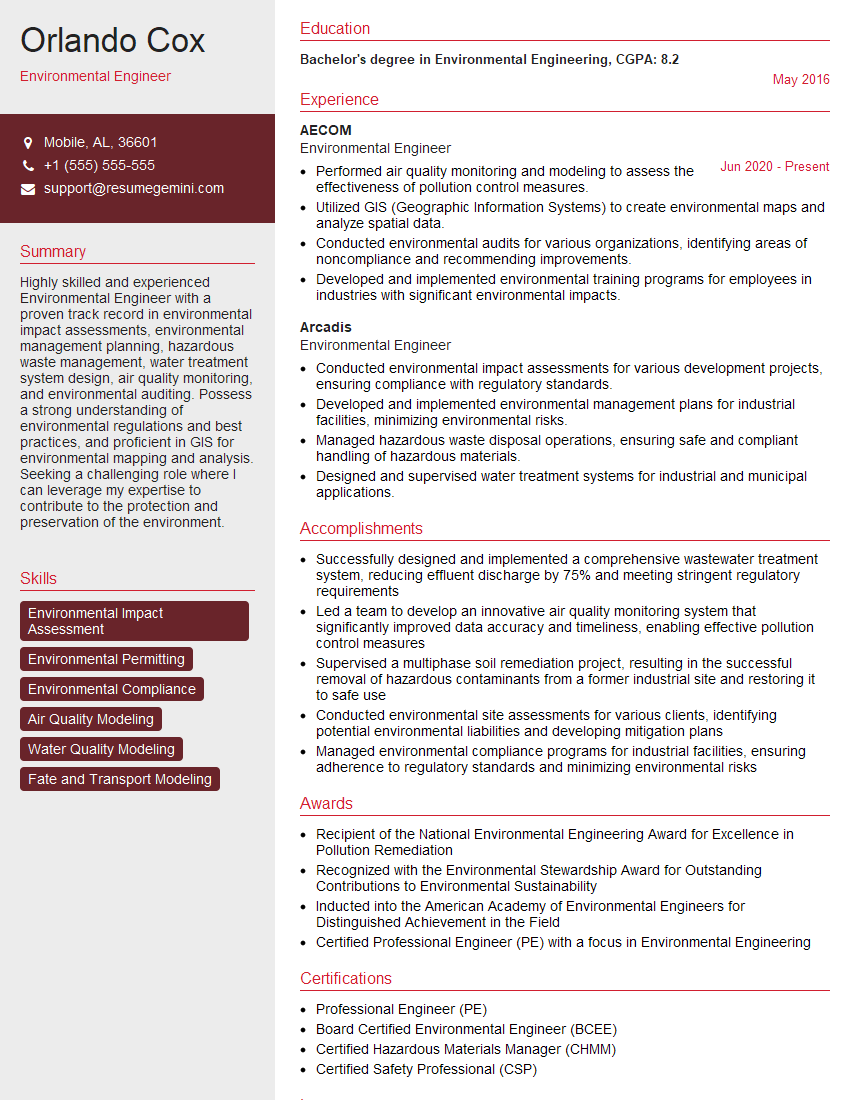
Environmental Engineer Resume Sample

Analytical Chemist Resume Sample
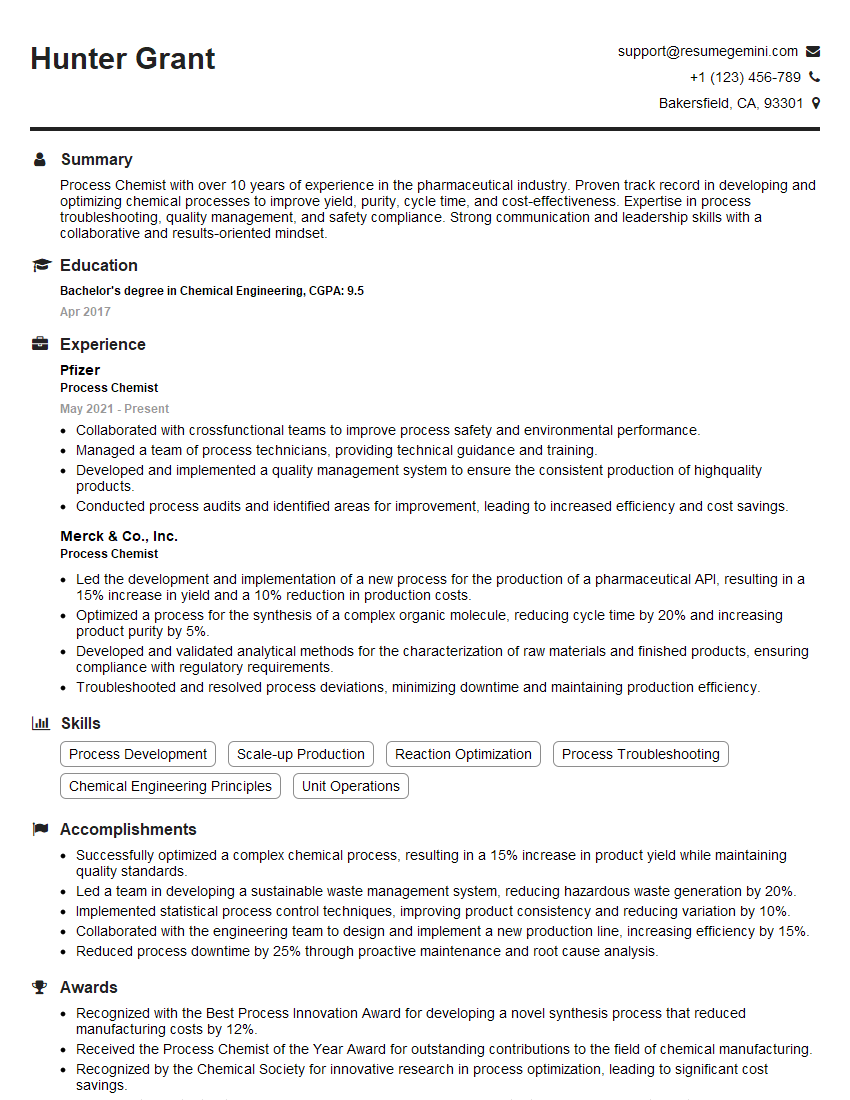
Process Chemist Resume Sample
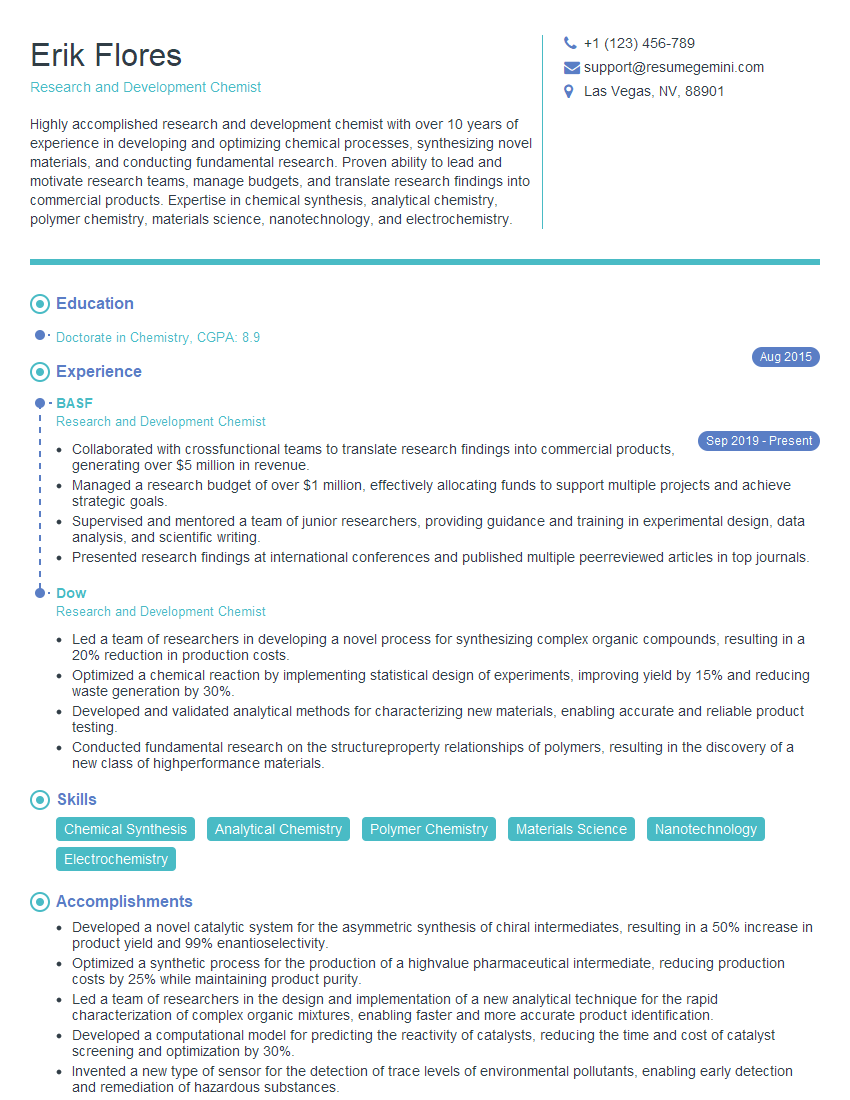
Research and Development Chemist Resume Sample
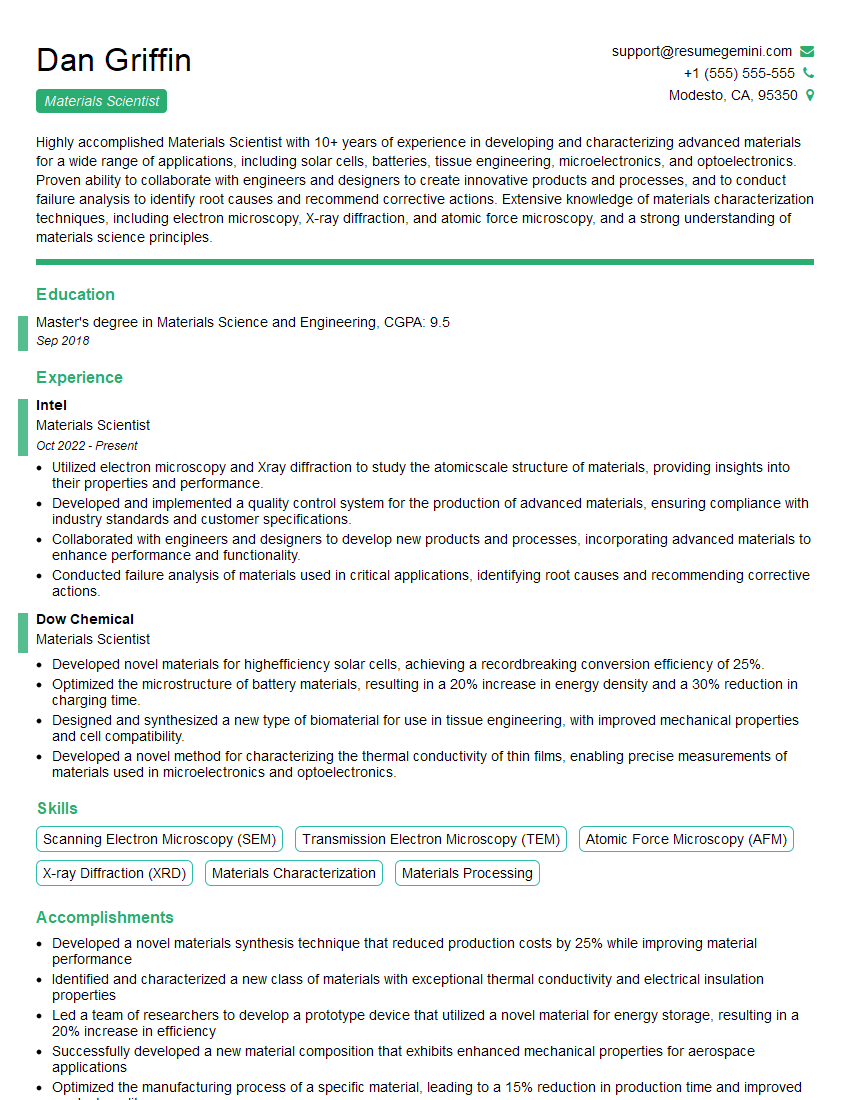
Materials Scientist Resume Sample
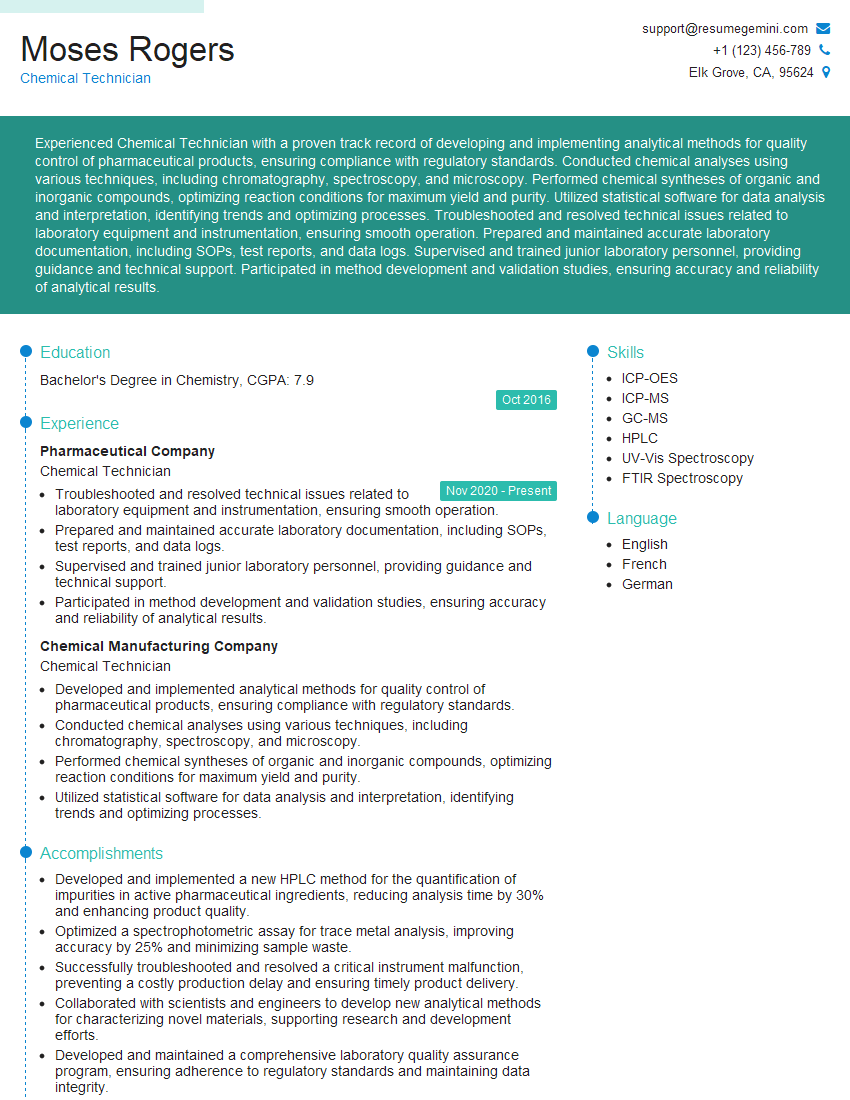
Chemical Technician Resume Sample
Explore more articles
Users Rating of Our Blogs
Share Your Experience
We value your feedback! Please rate our content and share your thoughts (optional).
What Readers Say About Our Blog
To the interviewgemini.com Webmaster.
Very helpful and content specific questions to help prepare me for my interview!
Thank you
To the interviewgemini.com Webmaster.
This was kind of a unique content I found around the specialized skills. Very helpful questions and good detailed answers.
Very Helpful blog, thank you Interviewgemini team.