Are you ready to stand out in your next interview? Understanding and preparing for Construction Management Certification (CMC) interview questions is a game-changer. In this blog, we’ve compiled key questions and expert advice to help you showcase your skills with confidence and precision. Let’s get started on your journey to acing the interview.
Questions Asked in Construction Management Certification (CMC) Interview
Q 1. Explain the different project delivery methods and their suitability for various projects.
Project delivery methods define how a construction project is organized and executed. The best method depends heavily on project size, complexity, and client needs. Common methods include:
- Design-Bid-Build: This traditional method separates design and construction. The owner hires a designer, then puts the design out to bid for a contractor. It’s simple to understand but can lead to communication gaps and cost overruns if design changes are needed after bidding. Example: Building a small residential house.
- Design-Build: A single entity is responsible for both design and construction. This improves communication and collaboration, often leading to faster project completion and potentially lower costs. However, it requires careful selection of the design-build firm. Example: A large commercial development.
- Construction Management at Risk (CMAR): A construction manager acts as the owner’s representative, overseeing the design and construction process. They manage the schedule and budget, and often assume some financial risk. This provides a high level of control for the owner. Example: Complex infrastructure projects like bridges or hospitals.
- Integrated Project Delivery (IPD): This collaborative approach involves all stakeholders – owner, designer, and contractor – working together from the project’s outset. It fosters early problem-solving and shared risk, leading to significant efficiency gains. Requires strong trust and collaboration between all parties. Example: High-performance buildings or complex renovations.
Choosing the right method involves careful consideration of factors such as risk tolerance, budget, timeline, and the complexity of the project. For instance, a simple project might suit Design-Bid-Build, while a complex project with high collaboration needs might benefit from IPD.
Q 2. Describe your experience with cost estimating and budgeting in construction projects.
Cost estimating and budgeting are crucial for successful project delivery. My experience involves developing detailed cost estimates using various methods, including parametric estimating (using historical data and project characteristics), unit-rate estimating (based on quantities and unit costs), and bottom-up estimating (breaking down the project into its smallest components). I’ve utilized software like Primavera P6 and Microsoft Project for cost tracking and analysis.
I always build in contingency for unforeseen issues. This might involve adding a percentage to the estimated cost to account for risks, or building specific contingency reserves for identified risks. Regular cost monitoring and reporting help keep the project on budget. For example, on a recent project involving the renovation of an old office building, I identified potential cost overruns related to asbestos abatement early in the process. By proactively allocating funds in the budget, we successfully managed the issue without disrupting the timeline.
Q 3. How do you manage project schedules and resources effectively?
Effective schedule and resource management involves meticulous planning and ongoing monitoring. I use critical path method (CPM) scheduling techniques to identify critical activities that impact the project timeline. This allows for proactive identification and mitigation of delays. Resource allocation involves assigning tasks to the appropriate teams with the necessary skills and equipment, considering availability and potential conflicts. I utilize project management software, such as Primavera P6 and Microsoft Project, to create and update schedules, track progress, and manage resources. Furthermore, I regularly hold progress meetings to review schedules, discuss challenges and adjust plans as needed. A key strategy is to proactively communicate schedule changes to all stakeholders.
For instance, in one project, we identified a potential delay due to a material shortage. By working closely with the supplier and adjusting the schedule, we successfully mitigated the impact on the overall project timeline. This involved re-sequencing some non-critical tasks and securing alternative material suppliers.
Q 4. What are your strategies for risk management and mitigation in construction?
Risk management is a proactive process aimed at identifying, assessing, and mitigating potential problems that could impact the project. My approach involves a systematic process:
- Identification: Brainstorming sessions with the project team to identify potential risks – technical, financial, environmental, legal, etc.
- Analysis: Assessing the likelihood and impact of each risk using qualitative and quantitative methods. This could involve using probability and impact matrices.
- Response Planning: Developing strategies to avoid, transfer, mitigate, or accept risks. This could involve creating contingency plans, purchasing insurance, or implementing stricter quality control measures.
- Monitoring and Control: Regularly monitoring for emerging risks and adjusting plans accordingly. This involves tracking key indicators and holding regular risk review meetings.
For example, on a recent project, we identified a high risk associated with inclement weather. We mitigated this risk by securing a weather insurance policy and building extra time into the schedule for potential delays. A robust risk management plan is crucial for keeping projects on track and within budget.
Q 5. Explain your understanding of quality control and assurance processes in construction.
Quality control (QC) and quality assurance (QA) are crucial for ensuring a project meets the required standards. QA focuses on preventing defects, while QC focuses on identifying and rectifying them. My approach integrates both aspects throughout the project lifecycle:
- QA: Establishing clear quality standards, implementing robust processes, and providing training to ensure adherence to those standards. This might involve reviewing designs, specifying materials, and establishing clear communication protocols.
- QC: Conducting regular inspections and tests to identify any deviations from the standards. This involves documenting findings, implementing corrective actions, and verifying the effectiveness of those actions. Detailed record-keeping is crucial.
Using a robust QA/QC system can prevent costly rework and ensure the project meets the required quality levels. For instance, on a recent project, our proactive QA measures ensured that all materials conformed to specified standards, preventing potential issues during construction. Our QC inspections identified a minor defect in the early stages of construction, allowing for prompt correction before it escalated into a larger problem.
Q 6. Describe your experience with contract administration and negotiation.
Contract administration and negotiation are vital for ensuring fair and efficient project execution. My experience includes drafting, reviewing, and administering various types of construction contracts, including lump-sum, unit-price, and cost-plus contracts. I’m adept at negotiating fair and balanced terms with subcontractors and suppliers. This includes understanding contract law and managing contract changes, always ensuring proper documentation and approvals. I maintain open communication with all parties to manage expectations and resolve any discrepancies. Effective contract administration helps prevent disputes and maintain positive relationships.
For example, in one project, we successfully negotiated a change order with a subcontractor that resulted in both cost savings and a faster completion time. This required careful review of the contract terms and strong communication skills to reach a mutually agreeable solution.
Q 7. How do you handle conflicts and disputes on construction projects?
Conflict resolution is a critical skill in construction management. My approach focuses on proactive communication and collaborative problem-solving. I encourage open dialogue between parties to understand their perspectives and find common ground. I believe in facilitating solutions rather than imposing them, focusing on mutually beneficial outcomes. If necessary, I leverage formal dispute resolution methods, such as mediation or arbitration, to reach a fair and binding agreement. Keeping detailed records of communications and decisions is crucial.
For example, in one case, a dispute arose between the contractor and a subcontractor concerning payment terms. Through facilitated discussions, we identified the root cause of the disagreement and collaboratively developed a revised payment schedule that satisfied both parties, avoiding costly and time-consuming litigation.
Q 8. What is your experience with safety management and regulatory compliance?
Safety is paramount in construction. My approach to safety management and regulatory compliance is proactive and multifaceted. It begins with a thorough understanding of all applicable OSHA regulations, local building codes, and client-specific safety protocols. I establish a robust safety program from the outset of a project, including pre-construction safety planning meetings, regular jobsite inspections, and comprehensive training for all personnel. This training covers topics like hazard identification, fall protection, personal protective equipment (PPE) usage, and emergency procedures. I utilize various tools like safety audits, incident reporting systems, and leading indicators to monitor safety performance and identify areas for improvement. For instance, on a recent high-rise project, we implemented a comprehensive fall protection plan exceeding OSHA requirements, which resulted in zero fall-related incidents throughout the construction phase. We also used daily safety huddles to encourage proactive hazard identification and reporting.
Furthermore, maintaining regulatory compliance involves meticulous documentation. This includes keeping accurate records of safety training, incident investigations, inspections, and corrective actions. This documentation is crucial not only for demonstrating compliance but also for continuous improvement and accident prevention. We leverage technology like mobile apps to streamline this process and ensure real-time access to safety information for everyone on site.
Q 9. Explain your approach to change management in construction projects.
Change management in construction is crucial because projects rarely proceed exactly as planned. My approach is built on proactive communication, meticulous planning, and a flexible mindset. I start by establishing a clear change management process documented in the project’s execution plan. This process outlines how changes are requested, reviewed, approved, and implemented, including the impact assessment procedure. Changes are documented, assessed for cost, schedule, and quality impact using a formal Change Order process. This transparency is vital to keep stakeholders informed and prevent misunderstandings.
For instance, on a recent renovation project, a design change was requested mid-construction. Instead of reacting hastily, we convened a meeting with all stakeholders—the client, architect, subcontractors, and my team—to evaluate the implications. We analyzed the impact on the schedule and budget, developed a revised plan, and secured client approval before proceeding. This collaborative approach minimized disruptions and ensured the project stayed on track.
Effective change management also involves strong leadership. I work to create a culture where team members feel empowered to report potential issues early on, enabling early mitigation of significant change impacts.
Q 10. How do you utilize technology to improve efficiency and productivity?
Technology plays a pivotal role in enhancing efficiency and productivity. I leverage various tools throughout the project lifecycle. For example, Building Information Modeling (BIM) software allows us to create and manage a digital representation of the project, facilitating better collaboration and coordination between stakeholders. We can detect clashes between different disciplines early on, avoiding costly rework. Cloud-based project management platforms enable seamless communication, real-time progress tracking, and centralized document management. This minimizes the reliance on paper and reduces the risk of lost or outdated information.
Furthermore, drone technology can be used for site surveys, progress monitoring, and safety inspections, providing high-resolution images and videos that can be easily shared. Finally, utilizing project management software helps to effectively track budget, resources, and timelines.
In a recent project, employing BIM software helped us to save significant time and resources by identifying and resolving potential clashes during the design phase, rather than during expensive on-site construction. Similarly, using a cloud-based platform reduced communication delays and improved collaboration among the project team members.
Q 11. Describe your experience with project procurement and subcontractor management.
My experience in project procurement and subcontractor management involves a systematic approach to ensure that projects are completed on time and within budget. I begin by developing a comprehensive procurement plan that outlines the selection process, contract types, and payment schedules. This plan clearly defines the scope of work for each subcontractor. I prioritize prequalification of subcontractors to ensure they have the necessary experience, capabilities, and financial stability. Then, a competitive bidding process is implemented to secure the best value for the project.
Once subcontractors are selected, I manage them effectively through regular meetings, progress reviews, and performance monitoring. This includes tracking their work against the schedule and budget, addressing any issues promptly, and ensuring compliance with safety and quality standards. Clear and concise contracts are fundamental to avoid ambiguity and disputes. For example, on a recent project, utilizing a prequalification system and detailed contracts helped to avoid significant delays and cost overruns caused by subcontractor performance issues. Regular communication and strong working relationships with our subcontractors were key to effective management.
Q 12. Explain your understanding of building codes and regulations.
Understanding building codes and regulations is essential for ensuring the safety and compliance of construction projects. My knowledge encompasses a wide range of codes, including those related to structural integrity, fire safety, accessibility, and energy efficiency. I understand the importance of staying current with code updates and amendments. I utilize various resources to remain informed, including online databases, professional organizations, and attending relevant workshops. In addition, I ensure all team members, including subcontractors, are knowledgeable about the applicable codes and regulations.
A thorough understanding of building codes is integrated into every stage of the project, from design to construction and final inspections. This includes conducting regular code compliance reviews and incorporating code requirements into the project specifications and drawings. Non-compliance can lead to project delays, fines, and even project failure. Therefore, rigorous adherence to codes and regulations is crucial for project success and the safety of building occupants.
Q 13. How do you monitor and control project costs throughout the project lifecycle?
Monitoring and controlling project costs is a continuous process that requires vigilance and proactive measures. My approach involves establishing a detailed budget at the beginning of the project, based on thorough cost estimation and risk assessment. This budget serves as a baseline against which actual costs are measured throughout the project lifecycle. Regular cost tracking and reporting are essential to identify potential cost overruns early on, enabling timely interventions to mitigate risks. This includes the utilization of Earned Value Management (EVM) techniques to assess project performance and forecast future costs.
Value engineering is another important aspect of cost control, where we explore ways to reduce costs without compromising quality or functionality. This often involves looking at alternative materials or construction methods. Regular meetings with the project team and stakeholders are conducted to review cost performance and discuss any necessary corrective actions. Transparent communication ensures everyone is aware of the project’s financial status, enabling proactive responses to prevent cost escalation.
Q 14. Describe your experience with project closeout and documentation.
Project closeout is a crucial phase that involves ensuring all aspects of the project are completed successfully. My approach to project closeout focuses on meticulous documentation, final inspections, and obtaining necessary approvals. This includes completing as-built drawings, which reflect the final construction details. I also ensure all warranties and guarantees are properly documented and distributed. This documentation helps to resolve any potential future issues and provides a record of the project’s successful completion. Financial closeout is another vital aspect, ensuring all payments are reconciled and outstanding invoices are settled.
We conduct a final walkthrough with the client to address any outstanding concerns or deficiencies. Once all requirements are met, we provide the client with the necessary documentation, including operation manuals, maintenance schedules and warranty information. A comprehensive project closeout report is compiled, summarizing the project’s progress, cost performance, and lessons learned. This serves as a valuable resource for future projects and helps in continuous improvement.
Q 15. What are your strategies for effective communication and teamwork on construction projects?
Effective communication and teamwork are the cornerstones of successful construction projects. My strategy involves a multi-pronged approach focusing on proactive communication, clearly defined roles, and fostering a collaborative environment.
- Proactive Communication: I utilize regular meetings – daily huddles, weekly progress meetings, and monthly stakeholder reviews – to keep everyone informed and address potential issues early. This includes using various communication channels tailored to the audience: email for formal updates, instant messaging for quick queries, and project management software for central document storage and task assignment.
- Clearly Defined Roles and Responsibilities: A well-defined Responsibility Assignment Matrix (RAM) ensures that everyone understands their tasks, dependencies, and reporting structure, minimizing confusion and overlap. This fosters individual accountability and streamlines the workflow.
- Collaborative Environment: I encourage open communication, active listening, and mutual respect among team members. I facilitate collaborative problem-solving sessions, encouraging input from all stakeholders, fostering a sense of shared ownership and commitment to project success. Conflict resolution is addressed promptly and fairly, ensuring a positive and productive atmosphere.
For example, on a recent high-rise project, daily huddles identified a potential material delay. By promptly communicating this to the subcontractors and adjusting the schedule, we avoided a significant project setback.
Career Expert Tips:
- Ace those interviews! Prepare effectively by reviewing the Top 50 Most Common Interview Questions on ResumeGemini.
- Navigate your job search with confidence! Explore a wide range of Career Tips on ResumeGemini. Learn about common challenges and recommendations to overcome them.
- Craft the perfect resume! Master the Art of Resume Writing with ResumeGemini’s guide. Showcase your unique qualifications and achievements effectively.
- Don’t miss out on holiday savings! Build your dream resume with ResumeGemini’s ATS optimized templates.
Q 16. How do you handle project delays and unforeseen circumstances?
Project delays and unforeseen circumstances are inevitable in construction. My approach involves proactive risk management, contingency planning, and a flexible problem-solving methodology.
- Proactive Risk Management: Before the project commences, we identify potential risks – weather delays, material shortages, regulatory changes – and develop mitigation strategies. This includes incorporating buffer time into the schedule and securing alternate material sources.
- Contingency Planning: We establish clear protocols for handling unexpected events. This involves pre-approved change order processes, established communication channels for reporting issues, and readily available resources to address unforeseen problems.
- Flexible Problem-Solving: When a delay occurs, I convene a problem-solving team involving key stakeholders to assess the situation, determine the root cause, and develop solutions. We analyze the impact on the schedule and budget, explore alternatives, and agree on a revised plan. This may involve fast-tracking certain tasks, implementing workarounds, or negotiating with stakeholders to manage expectations.
For instance, during a recent project, unexpected ground conditions caused a delay. By engaging a geotechnical expert, we quickly assessed the situation, developed a revised foundation plan, and communicated the updated timeline to stakeholders, minimizing disruption to the overall project.
Q 17. Explain your experience with sustainable construction practices.
Sustainable construction practices are integral to my approach. I focus on minimizing environmental impact, reducing waste, and improving building efficiency throughout the project lifecycle.
- Material Selection: I prioritize the use of recycled and locally sourced materials to reduce transportation costs and environmental impact. We select materials with high recycled content and low embodied carbon.
- Waste Management: Implementing a robust waste management plan, including waste reduction strategies, recycling programs, and responsible disposal methods, is crucial. This minimizes landfill waste and promotes resource conservation.
- Energy Efficiency: We incorporate energy-efficient design features, such as high-performance insulation, energy-efficient windows, and renewable energy sources, to minimize the building’s environmental footprint. LEED certification is often a target.
- Water Conservation: Utilizing water-efficient fixtures and implementing water management strategies during construction can significantly reduce water consumption.
In a recent project, we incorporated solar panels and rainwater harvesting systems, significantly reducing the building’s energy and water consumption, contributing to a more sustainable and environmentally responsible structure.
Q 18. Describe your understanding of earned value management (EVM).
Earned Value Management (EVM) is a powerful project management technique that integrates scope, schedule, and cost to provide a comprehensive assessment of project performance. It allows for early identification of variances and facilitates proactive corrective actions.
EVM utilizes three key metrics:
- Planned Value (PV): The budgeted cost of work scheduled to be completed at a given point in time.
- Earned Value (EV): The value of the work actually completed at a given point in time.
- Actual Cost (AC): The actual cost incurred to complete the work at a given point in time.
By comparing these metrics, we can calculate key performance indicators such as:
- Schedule Variance (SV) = EV – PV (Indicates whether the project is ahead or behind schedule)
- Cost Variance (CV) = EV – AC (Indicates whether the project is under or over budget)
- Schedule Performance Index (SPI) = EV / PV (Measures schedule efficiency)
- Cost Performance Index (CPI) = EV / AC (Measures cost efficiency)
Through regular EVM analysis, we can identify potential issues early on and take corrective actions to keep the project on track and within budget. For example, a negative CV and CPI could indicate cost overruns, prompting a review of cost estimates and a reassessment of the project’s budget.
Q 19. How do you use critical path method (CPM) scheduling?
The Critical Path Method (CPM) is a scheduling technique used to identify the critical path – the sequence of activities that determines the shortest possible duration of a project. It helps in efficient resource allocation and identifying potential delays.
My use of CPM involves:
- Activity Definition: Breaking down the project into individual tasks and defining their duration and dependencies.
- Network Diagram Creation: Developing a network diagram visually representing the sequence of activities and their interdependencies. This diagram uses nodes (circles) to represent activities and arrows to show dependencies.
- Critical Path Identification: Calculating the earliest and latest start and finish times for each activity to identify the critical path. Activities on the critical path have zero float (slack), meaning any delay on these activities will delay the entire project.
- Resource Allocation: Optimizing resource allocation, focusing on activities on the critical path to minimize project duration.
- Schedule Monitoring and Control: Regularly monitoring progress against the CPM schedule and making adjustments as needed. This involves tracking actual completion times and analyzing any deviations from the planned schedule.
For example, on a recent project, CPM analysis highlighted a critical path that included foundation work and structural steel erection. By prioritizing resources for these activities, we ensured timely completion and avoided potential delays.
Q 20. Explain your experience with project planning and design review.
Project planning and design review are crucial for successful project execution. My experience involves active participation in all stages, from initial conceptualization to final design approval.
- Pre-Construction Planning: This includes developing a detailed project plan, including scope definition, schedule development, budget allocation, risk assessment, and resource planning. It’s a collaborative effort, engaging all stakeholders to define the project goals and expectations.
- Design Review: I conduct thorough design reviews, examining the design documents for completeness, constructability, code compliance, and potential conflicts. This involves working closely with architects, engineers, and other design professionals to identify and address potential issues early on.
- Value Engineering: I actively participate in value engineering exercises, evaluating design options to optimize cost and functionality without compromising quality. This may involve exploring alternate materials, construction methods, or design solutions.
- Constructability Reviews: I assess the design for its constructability, ensuring that the design is feasible and can be efficiently built using available resources and technologies. This may involve suggesting design modifications to improve constructability.
For example, during a design review for a hospital project, I identified a potential conflict between mechanical, electrical, and plumbing systems, leading to design modifications that minimized conflicts and ensured efficient installation.
Q 21. Describe your proficiency in using construction management software.
Proficiency in construction management software is essential for efficient project management. I am adept at using various software platforms, including:
- Project Management Software (e.g., MS Project, Primavera P6): For scheduling, resource allocation, cost control, and progress tracking.
- Building Information Modeling (BIM) Software (e.g., Revit, Autodesk Navisworks): For 3D modeling, design coordination, clash detection, and quantity takeoff.
- Cost Estimation Software (e.g., Timberline, Sage 300 CRE): For developing accurate cost estimates and tracking project expenses.
- Document Management Systems (e.g., SharePoint, Bluebeam): For centralizing project documentation, facilitating collaboration, and ensuring version control.
I utilize these tools to enhance collaboration, improve communication, and optimize resource allocation. For instance, BIM software helped us identify and resolve potential clashes between different building systems on a recent project, preventing costly rework during construction. Project management software enables me to monitor project progress in real-time, proactively addressing any deviations from the planned schedule or budget.
Q 22. How do you ensure compliance with environmental regulations?
Ensuring compliance with environmental regulations is paramount in construction. It’s not just about avoiding penalties; it’s about building responsibly and sustainably. My approach is multifaceted and proactive.
- Pre-Construction Phase: I begin by conducting a thorough environmental site assessment, identifying potential risks and opportunities. This includes reviewing relevant permits and licenses, understanding local zoning regulations, and assessing potential impacts on surrounding ecosystems (e.g., wetlands, endangered species habitats).
- During Construction: I implement a robust environmental management plan. This plan outlines procedures for waste management (recycling, proper disposal), erosion and sediment control, air quality management (dust suppression), and noise pollution mitigation. Regular inspections and audits ensure adherence to the plan.
- Post-Construction: Even after completion, environmental responsibility continues. This includes proper site restoration, decommissioning of temporary structures, and ensuring long-term compliance with any post-construction requirements. I also document all environmental activities and maintain thorough records for future reference and audit purposes.
For example, on a recent project near a sensitive waterway, we implemented a detailed erosion control plan involving silt fences, vegetated buffers, and regular inspections to prevent soil runoff. This not only prevented environmental damage but also demonstrated our commitment to responsible construction to our stakeholders.
Q 23. What is your approach to conflict resolution between different stakeholders?
Conflict resolution is a crucial skill in construction management, where diverse stakeholders—clients, contractors, subcontractors, engineers, and regulatory bodies—often have competing interests. My approach centers around open communication, collaborative problem-solving, and a focus on finding mutually beneficial solutions.
- Early Identification: I actively monitor communication channels and project dynamics to identify potential conflicts early on, preventing them from escalating.
- Facilitated Communication: I create a safe space for open dialogue. This often involves bringing the conflicting parties together to clearly state their perspectives and concerns.
- Collaborative Problem-Solving: I guide the parties towards a collaborative solution through active listening, brainstorming, and negotiation. The goal is not to impose a solution, but to help the parties find a path forward that addresses everyone’s needs, at least partially.
- Documentation and Agreement: Once a solution is reached, it’s crucial to document it formally, ensuring everyone understands and agrees to the terms. This minimizes the chance of future misunderstandings.
- Mediation (if needed): If a conflict cannot be resolved internally, I am prepared to facilitate the involvement of a neutral third party mediator.
In one instance, a dispute arose between the general contractor and a subcontractor over payment. By facilitating open communication, I was able to identify the root cause—a misunderstanding in the contract specifications—and collaboratively negotiate a revised payment schedule that satisfied both parties.
Q 24. Explain your understanding of the different types of construction contracts.
Construction contracts are the backbone of any project, defining the responsibilities, obligations, and payment terms between parties. Several key types exist:
- Lump Sum Contracts: The contractor agrees to complete the project for a fixed price. This offers price certainty but necessitates very detailed specifications upfront. Changes can lead to disputes.
- Unit Price Contracts: The contractor is paid based on the quantity of work completed, using pre-agreed unit prices (e.g., cost per cubic yard of concrete). This is suitable for projects with variable quantities of work.
- Cost-Plus Contracts: The contractor is reimbursed for actual costs incurred, plus a predetermined fee or markup. This provides flexibility but requires careful cost tracking and may lead to higher overall project costs.
- Design-Build Contracts: A single entity is responsible for both design and construction. This can streamline the process and improve collaboration, but places greater responsibility on the single contractor.
- Construction Management at Risk (CMAR): The construction manager acts as an advisor during design and then takes on the responsibility of managing and completing the construction. CMAR blends the benefits of design-build and traditional approaches.
Choosing the right contract type depends on the project’s complexity, risk tolerance, and the client’s preferences. A thorough understanding of each contract type and its implications is essential for successful project execution.
Q 25. How do you measure project success?
Measuring project success goes beyond simply completing the project on time and within budget. It’s a holistic assessment encompassing various factors.
- On-Time Delivery: Meeting the agreed-upon project schedule is crucial.
- Within Budget: Staying within the allocated budget, minimizing cost overruns.
- Quality of Workmanship: Ensuring that the project meets the specified quality standards and client expectations.
- Client Satisfaction: Achieving a high level of client satisfaction with the final product and the overall project management process.
- Safety Performance: Maintaining a safe work environment with zero or minimal incidents.
- Environmental Compliance: Adhering to all environmental regulations and minimizing the project’s environmental footprint.
Success can be quantified through Key Performance Indicators (KPIs). For instance, we might track schedule adherence using earned value management techniques, or measure client satisfaction through post-project surveys.
Q 26. Describe your experience in leading and motivating construction teams.
Leading and motivating construction teams requires a blend of technical expertise, strong communication skills, and effective leadership styles. My approach focuses on creating a positive and productive work environment.
- Clear Communication: I ensure clear and consistent communication, setting expectations, providing regular updates, and actively soliciting feedback.
- Delegation and Empowerment: I delegate tasks effectively, empowering team members to take ownership and make decisions within their areas of responsibility.
- Recognition and Appreciation: I regularly recognize and appreciate individual and team achievements, fostering a sense of accomplishment and boosting morale.
- Conflict Resolution: I address conflicts promptly and fairly, ensuring a collaborative and respectful work environment.
- Mentorship and Development: I provide mentorship and support to team members, fostering their professional growth and development.
On a recent high-rise construction project, I fostered a strong team spirit by implementing regular team meetings, celebrating milestones, and actively seeking feedback to address concerns. This resulted in enhanced productivity and improved team cohesion.
Q 27. How do you handle stakeholder expectations and communication?
Managing stakeholder expectations and communication is critical for successful project delivery. My approach involves proactive communication, transparency, and regular engagement.
- Regular Updates: I provide regular updates to all stakeholders through various channels (e.g., email, meetings, project portals) keeping them informed about progress, challenges, and potential risks.
- Transparent Communication: I ensure transparency in all communications, addressing issues openly and honestly, even if it involves acknowledging potential setbacks.
- Active Listening: I actively listen to stakeholder concerns and address them promptly and effectively.
- Meeting Management: I conduct regular project meetings, involving key stakeholders to discuss progress, address issues, and make decisions collaboratively.
- Conflict Resolution: I address potential conflicts promptly and fairly, ensuring a collaborative and respectful communication environment.
For instance, on a large-scale infrastructure project, I established a dedicated communication portal that provided real-time updates, documents, and a forum for stakeholders to ask questions and provide feedback. This enhanced transparency and significantly improved stakeholder engagement.
Q 28. Explain your understanding of legal and ethical considerations in construction.
Legal and ethical considerations are fundamental aspects of construction management. Compliance is not only essential for avoiding legal repercussions but also for building trust and maintaining a positive reputation.
- Contract Law: A thorough understanding of contract law is essential for drafting, negotiating, and managing contracts. This ensures that all parties understand their rights and obligations.
- Building Codes and Regulations: Strict adherence to building codes and regulations is crucial for ensuring the safety and structural integrity of the constructed building. This includes complying with safety standards, accessibility requirements, and environmental regulations.
- Environmental Regulations: Compliance with environmental regulations is vital to prevent pollution and protect natural resources.
- Labor Laws: Understanding and complying with labor laws, including worker safety regulations, fair wages, and working conditions, is critical.
- Ethical Conduct: Maintaining ethical conduct in all aspects of the project, including transparency, fairness, and honesty, is essential for building trust with clients, stakeholders, and the community. This includes avoiding conflicts of interest and ensuring fair competition.
For instance, ensuring that all subcontractors are properly insured and comply with labor laws is not only legally required but also ethically responsible, protecting both workers and the project itself from potential liabilities.
Key Topics to Learn for Construction Management Certification (CMC) Interview
Ace your Construction Management Certification (CMC) interview by mastering these key areas. Remember, demonstrating practical application and problem-solving skills is crucial!
- Project Planning & Scheduling: Understand critical path method (CPM), Gantt charts, and resource allocation strategies. Be prepared to discuss real-world scenarios involving schedule delays and mitigation techniques.
- Cost Management & Budgeting: Explore cost estimating methods, budget control techniques, and variance analysis. Practice analyzing cost overruns and proposing solutions.
- Risk Management: Learn to identify, assess, and mitigate risks throughout the project lifecycle. Be ready to discuss risk response strategies and contingency planning.
- Quality Control & Assurance: Understand quality management systems, inspection processes, and the importance of adherence to building codes and standards. Consider examples of quality issues and their resolution.
- Contract Administration: Familiarize yourself with different contract types, change order management, and dispute resolution methods. Prepare to discuss contract interpretation and enforcement.
- Leadership & Teamwork: Highlight your experience in leading teams, managing conflict, and fostering effective communication. Showcase your ability to motivate and inspire others.
- Safety Management: Demonstrate understanding of OSHA regulations, safety protocols, and accident prevention strategies. Prepare to discuss your approach to creating a safe work environment.
- Technology in Construction Management: Discuss your familiarity with relevant software and technologies used in project management, such as BIM (Building Information Modeling) and project management software. Explain how these tools improve efficiency and collaboration.
Next Steps
Earning your Construction Management Certification (CMC) is a significant achievement that opens doors to exciting career opportunities and higher earning potential. To maximize your job prospects, a well-crafted resume is essential. An ATS-friendly resume, optimized for applicant tracking systems, significantly increases your chances of getting your application noticed.
ResumeGemini is a trusted resource to help you build a professional and impactful resume. We provide examples of resumes specifically tailored to highlight the skills and experience relevant to your Construction Management Certification (CMC). Use ResumeGemini to create a resume that truly showcases your qualifications and helps you land your dream job.
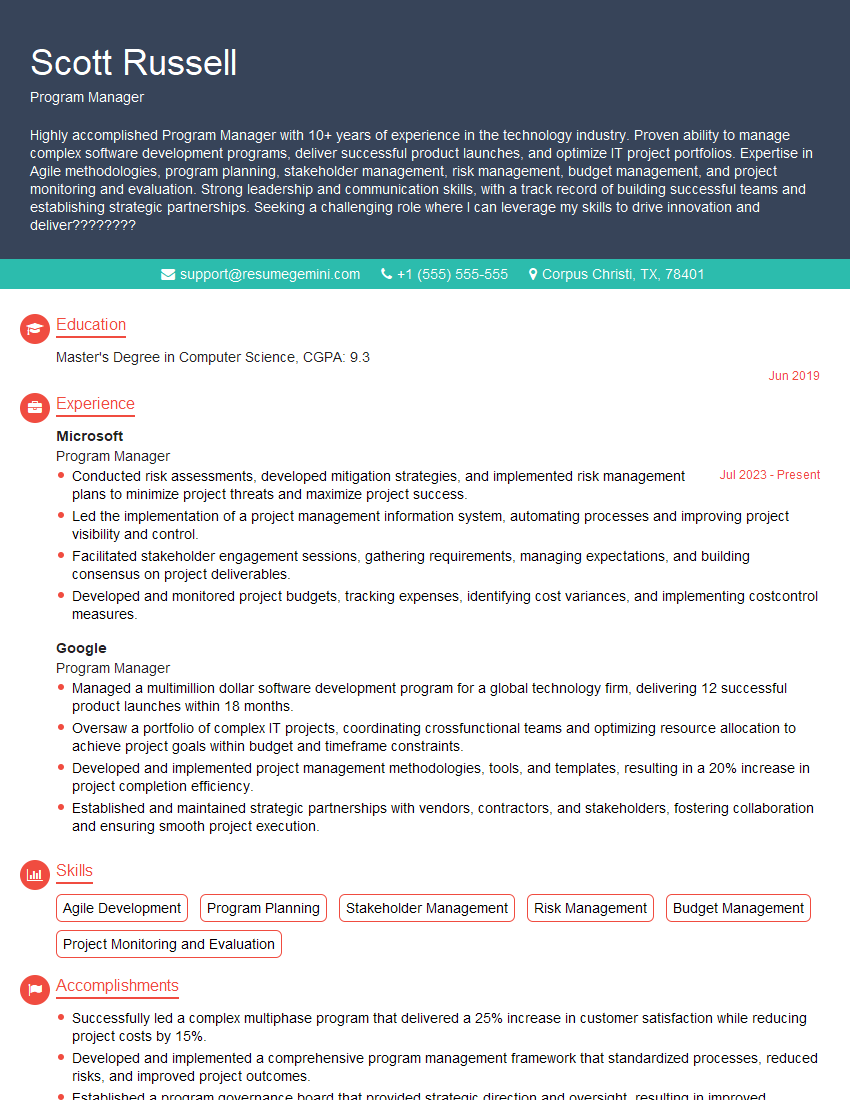
Program Manager Resume Sample
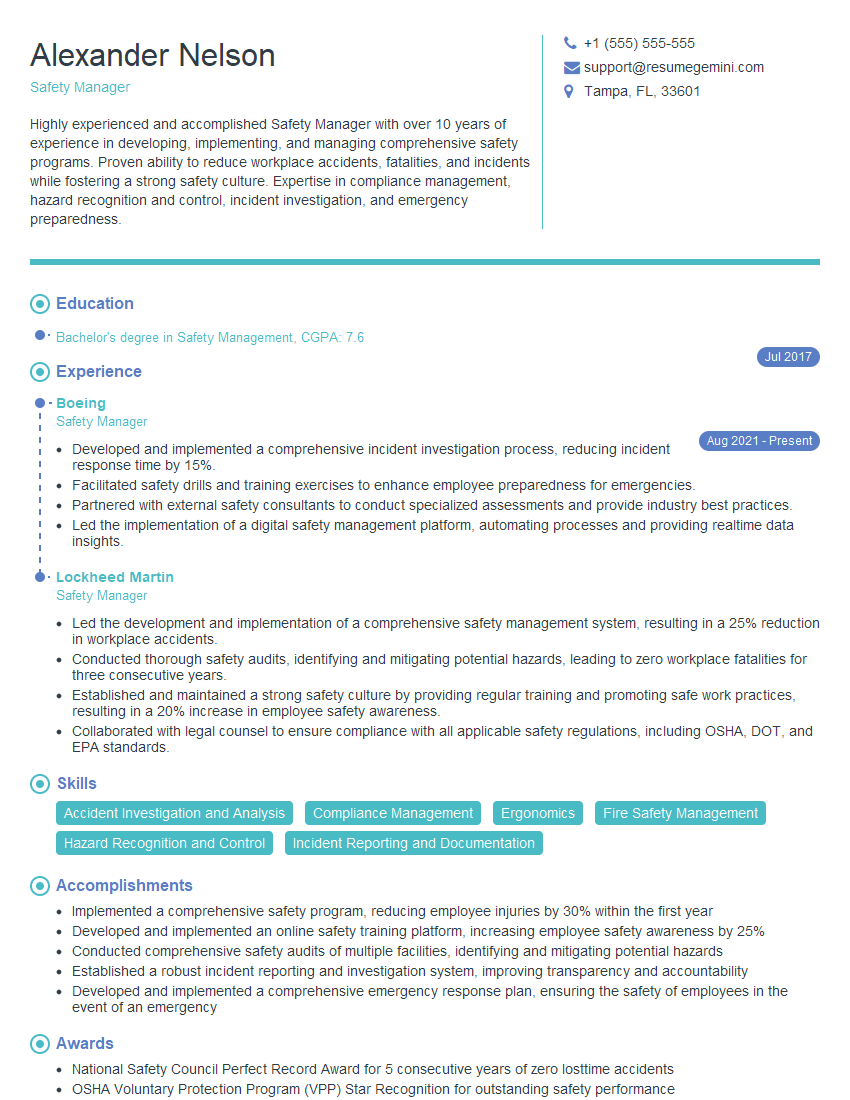
Safety Manager Resume Sample
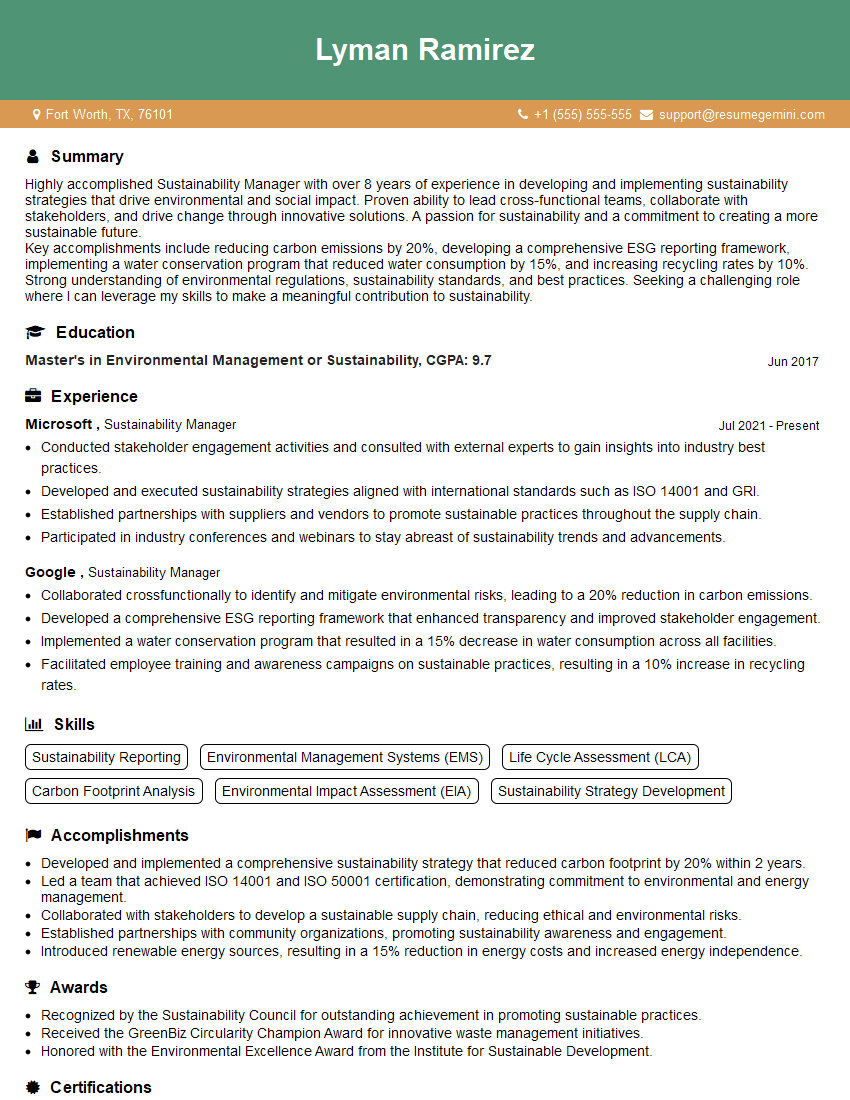
Sustainability Manager Resume Sample
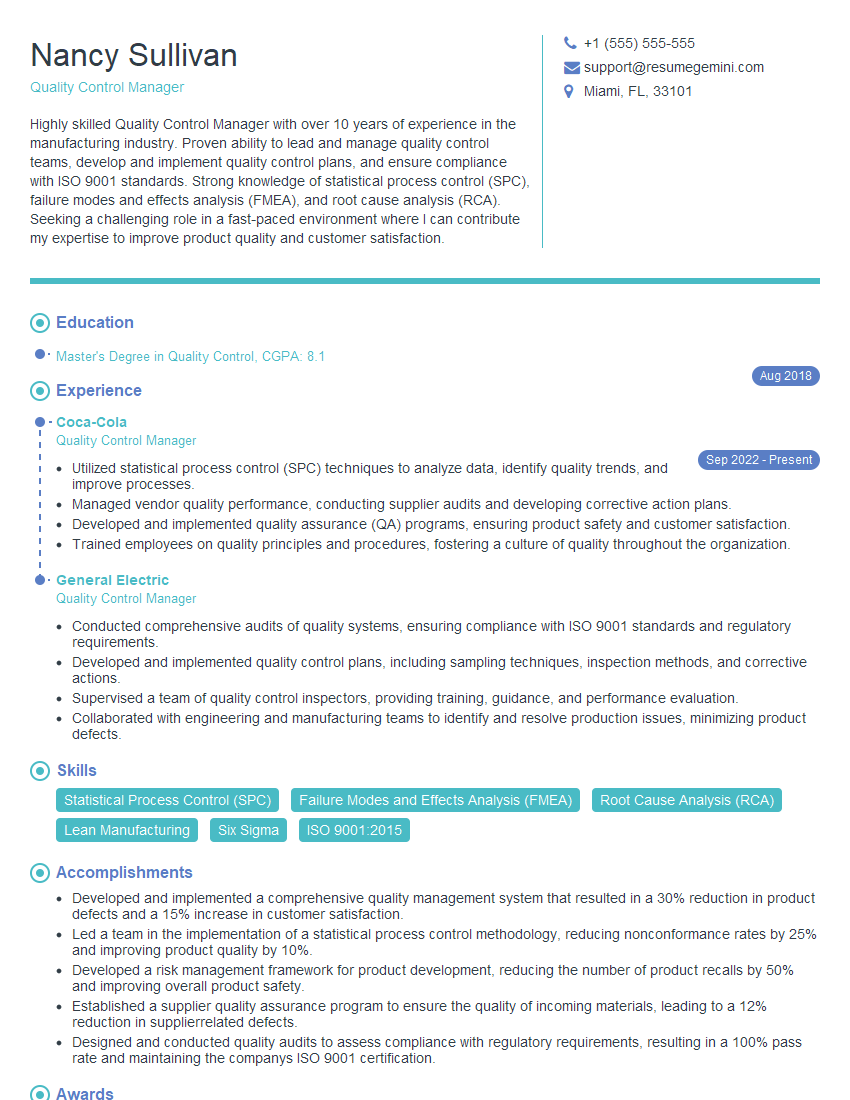
Quality Control Manager Resume Sample
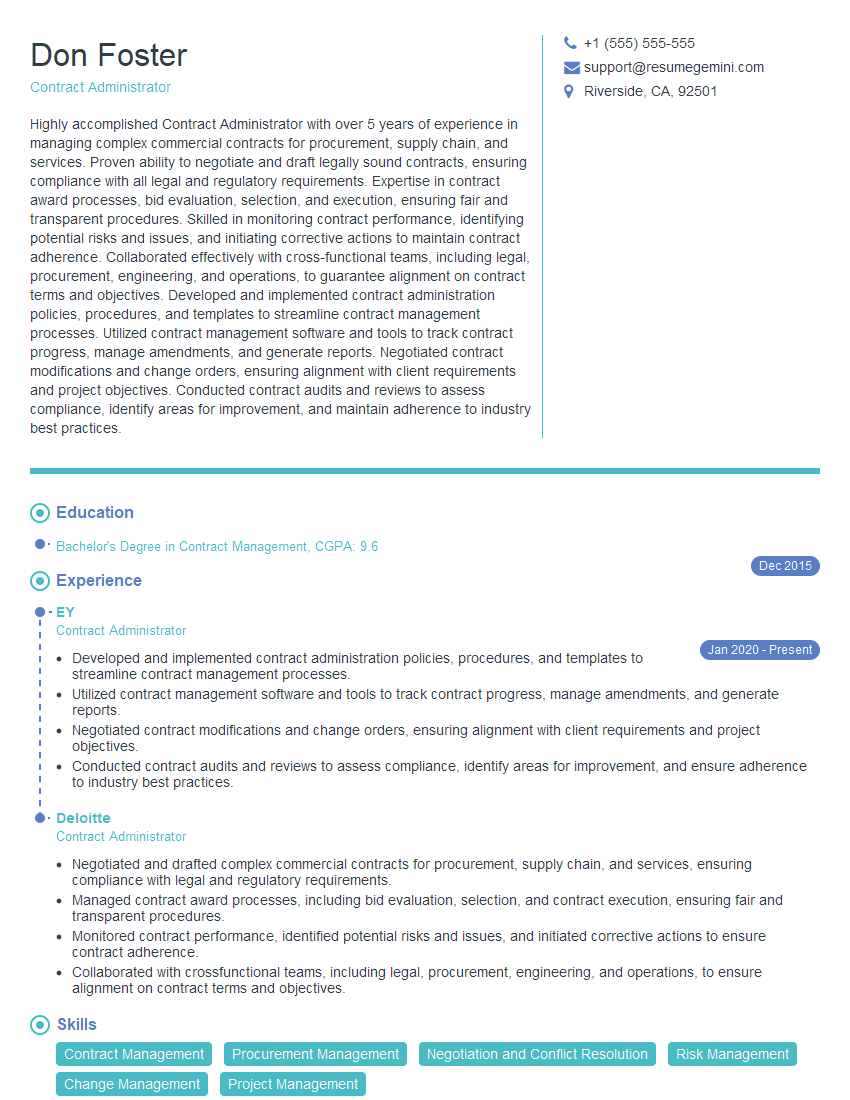
Contract Administrator Resume Sample

Procurement Manager Resume Sample
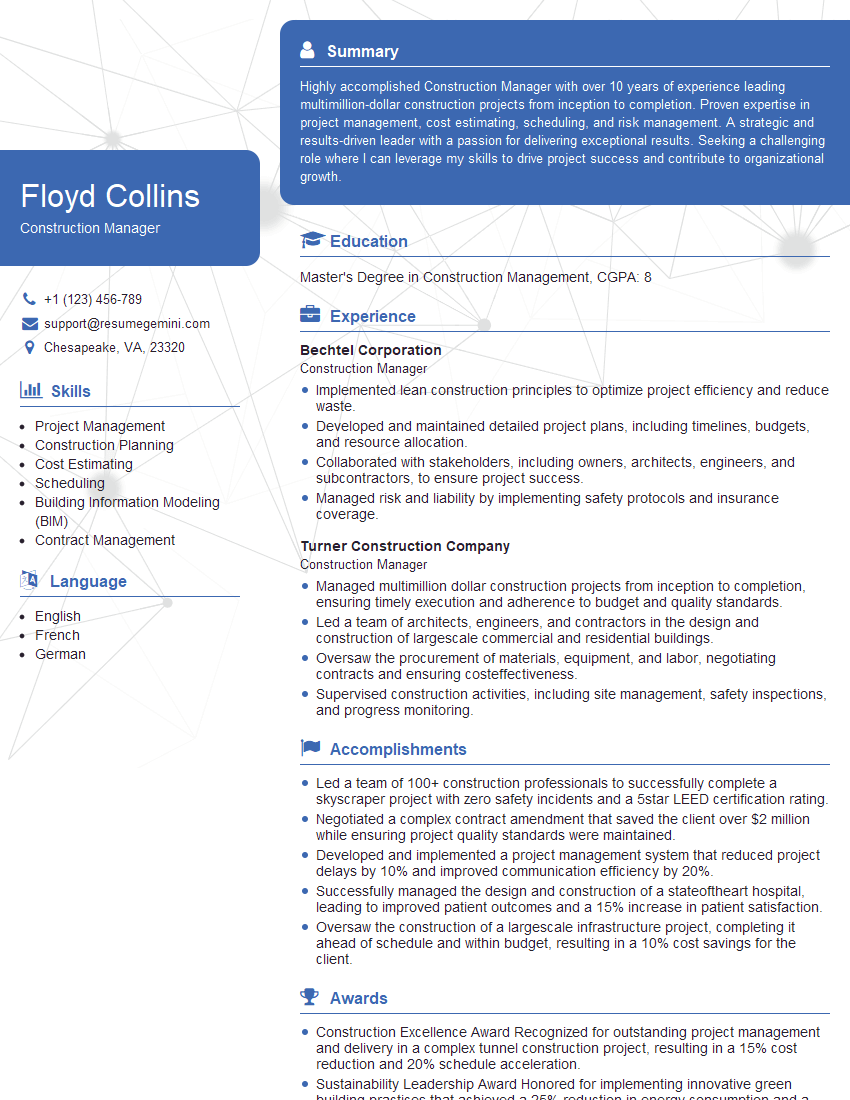
Construction Manager Resume Sample

Construction Superintendent Resume Sample
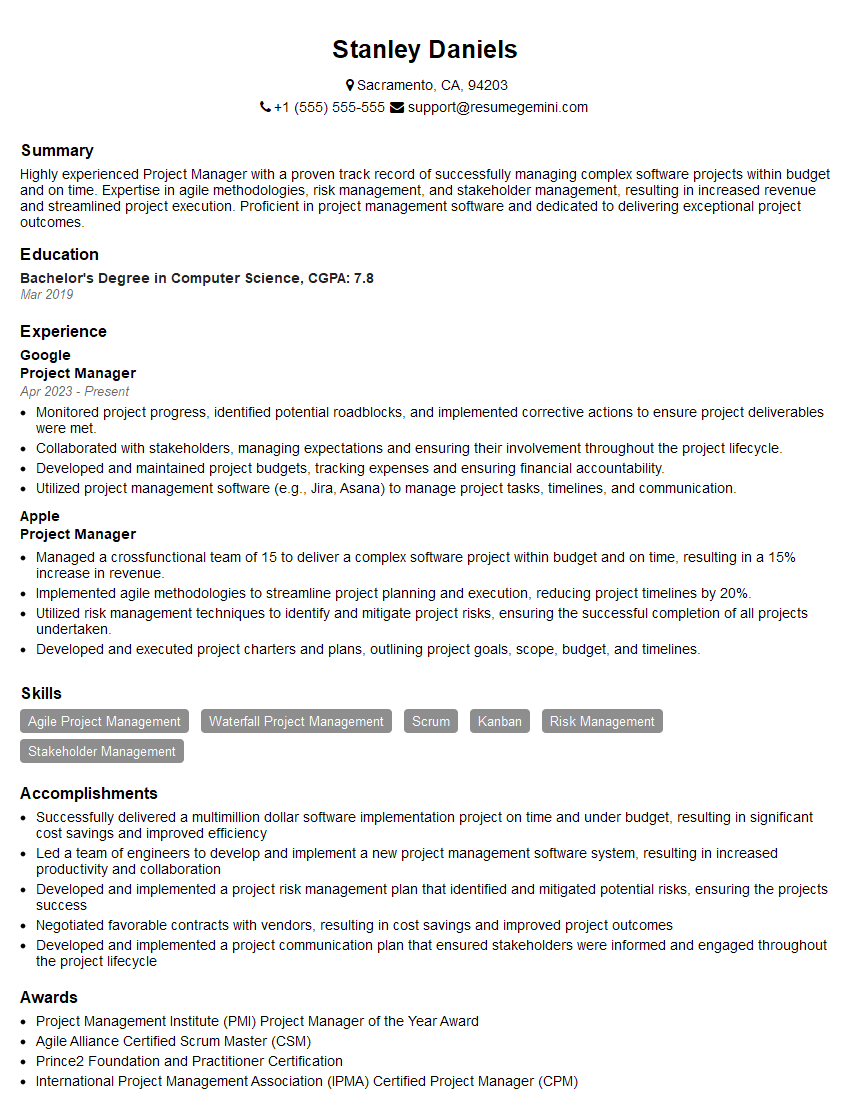
Project Manager Resume Sample

Project Engineer Resume Sample
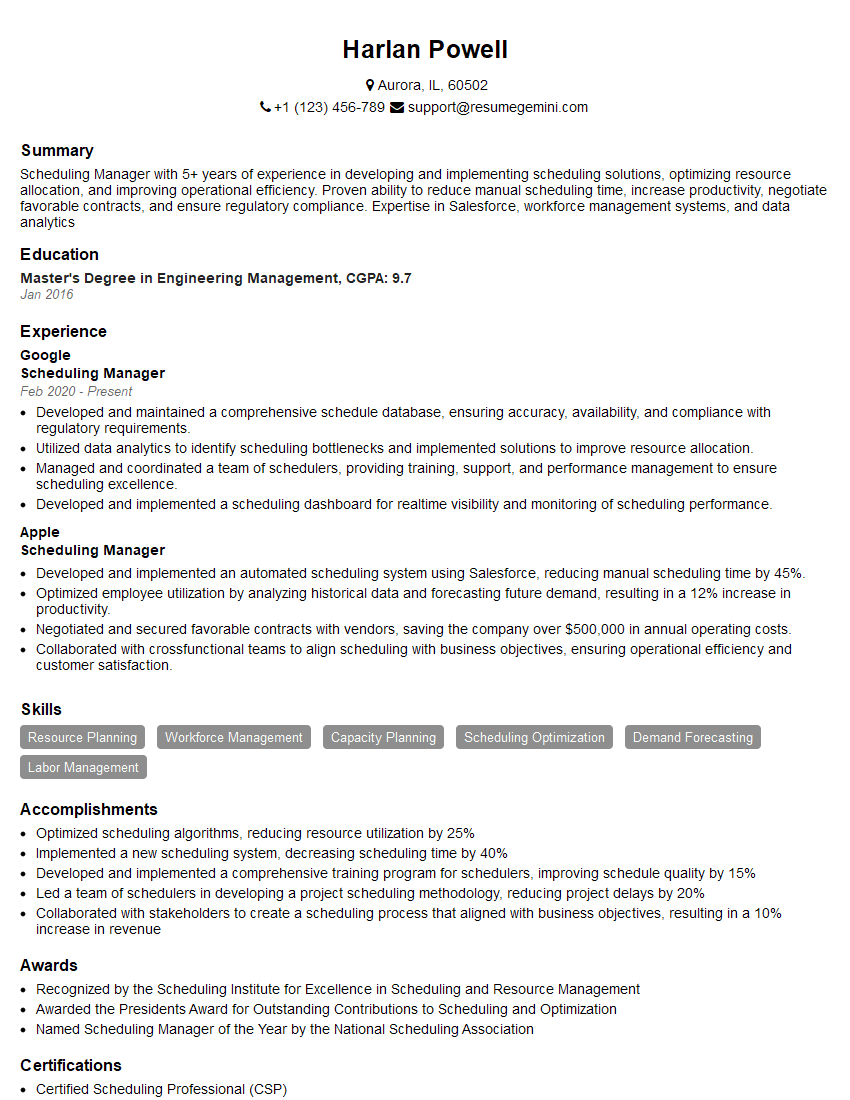
Scheduling Manager Resume Sample
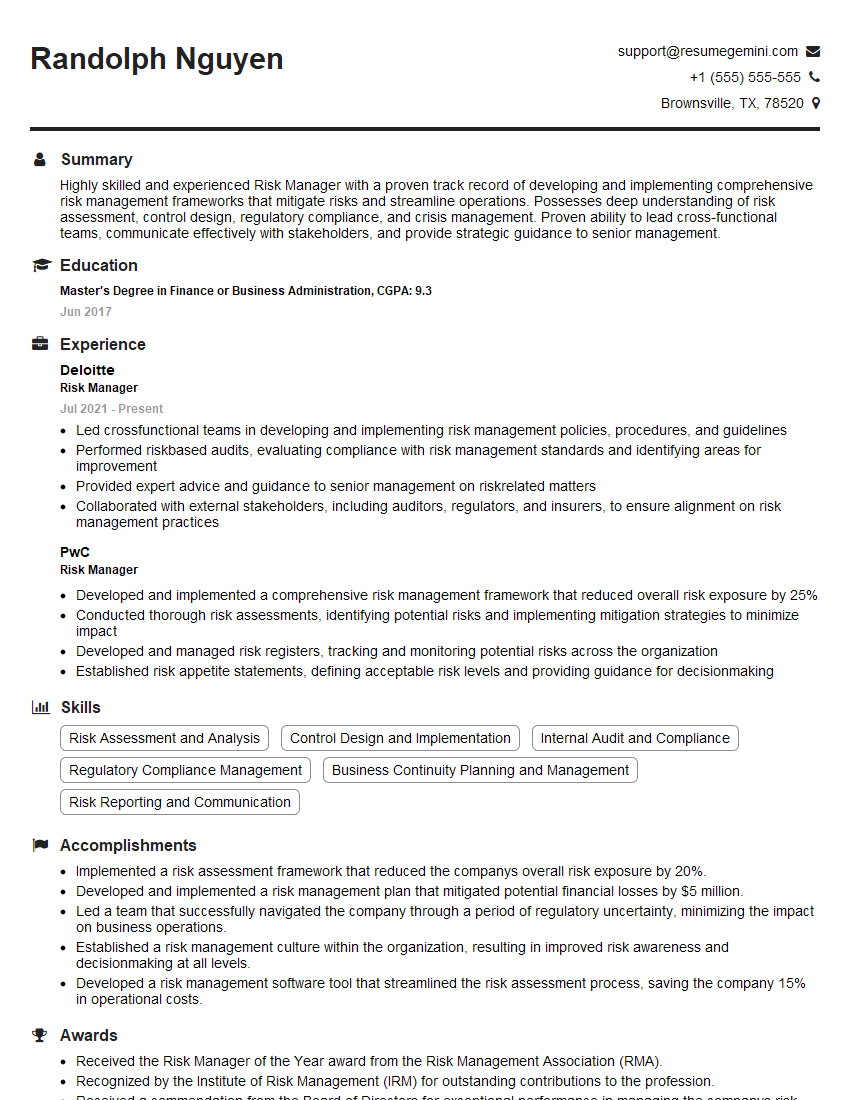
Risk Manager Resume Sample
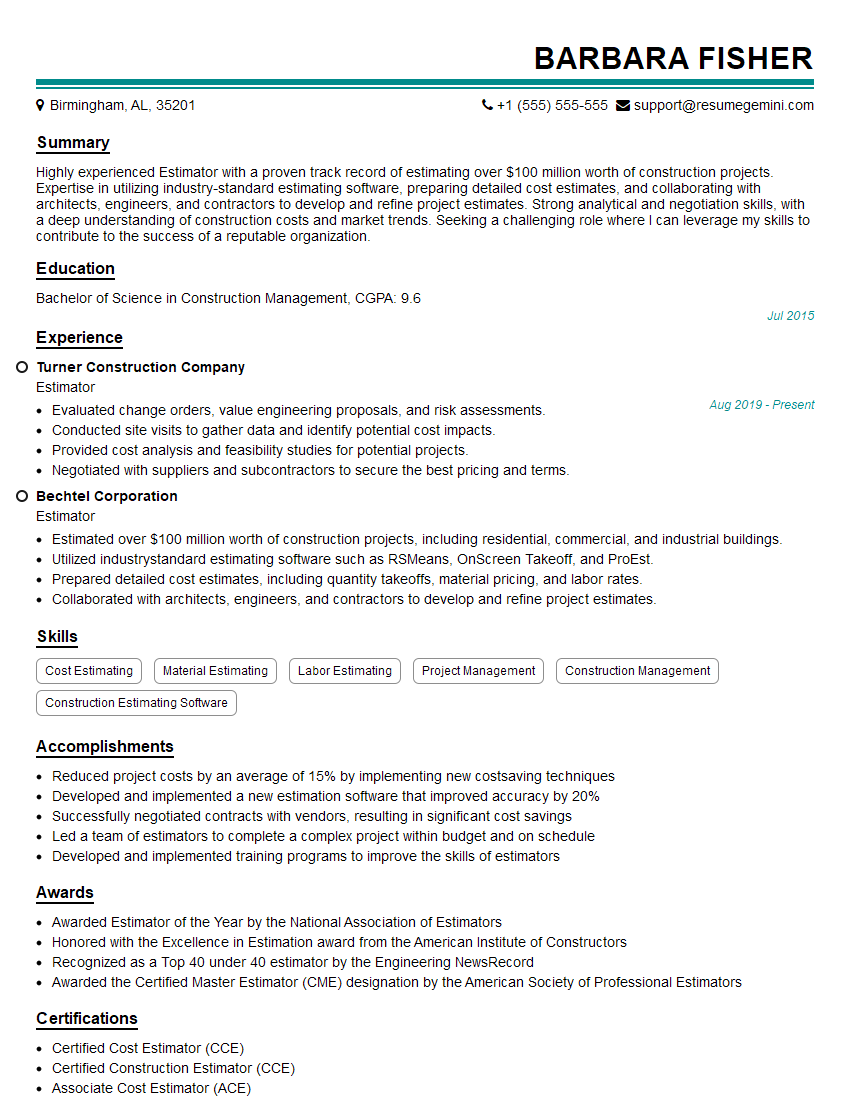
Estimator Resume Sample
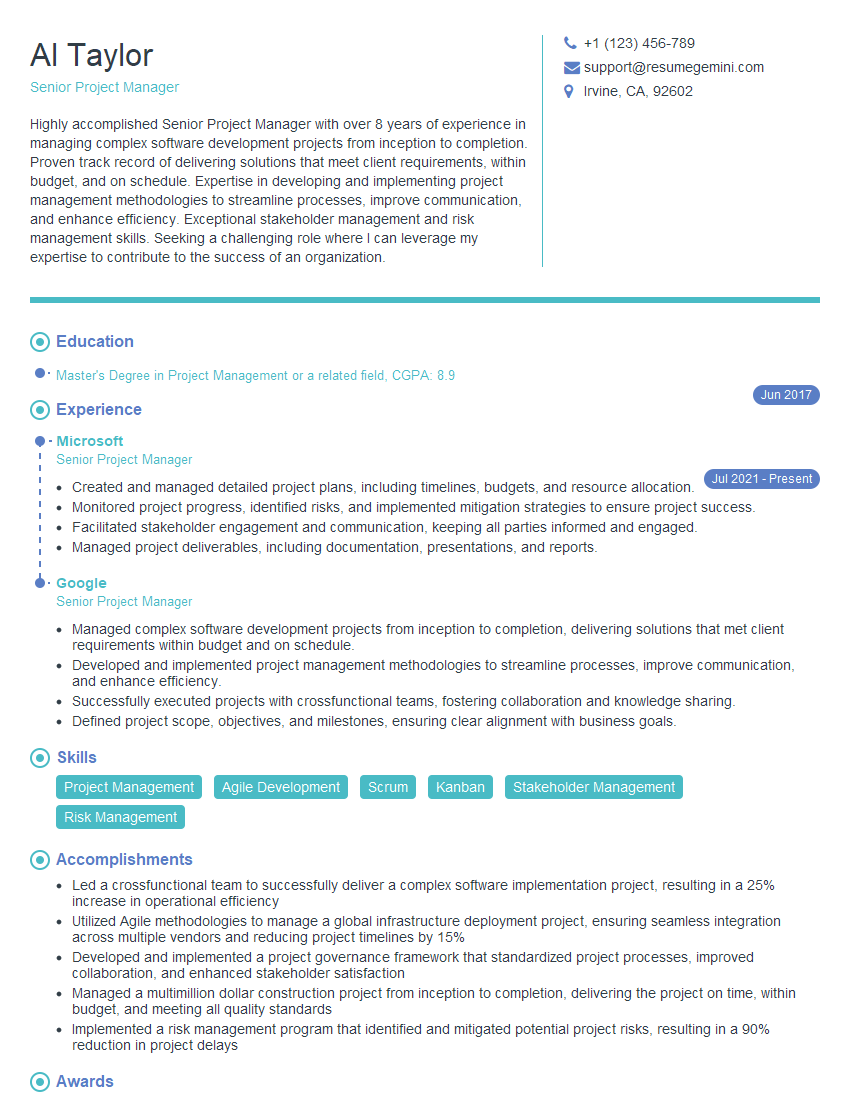
Senior Project Manager Resume Sample
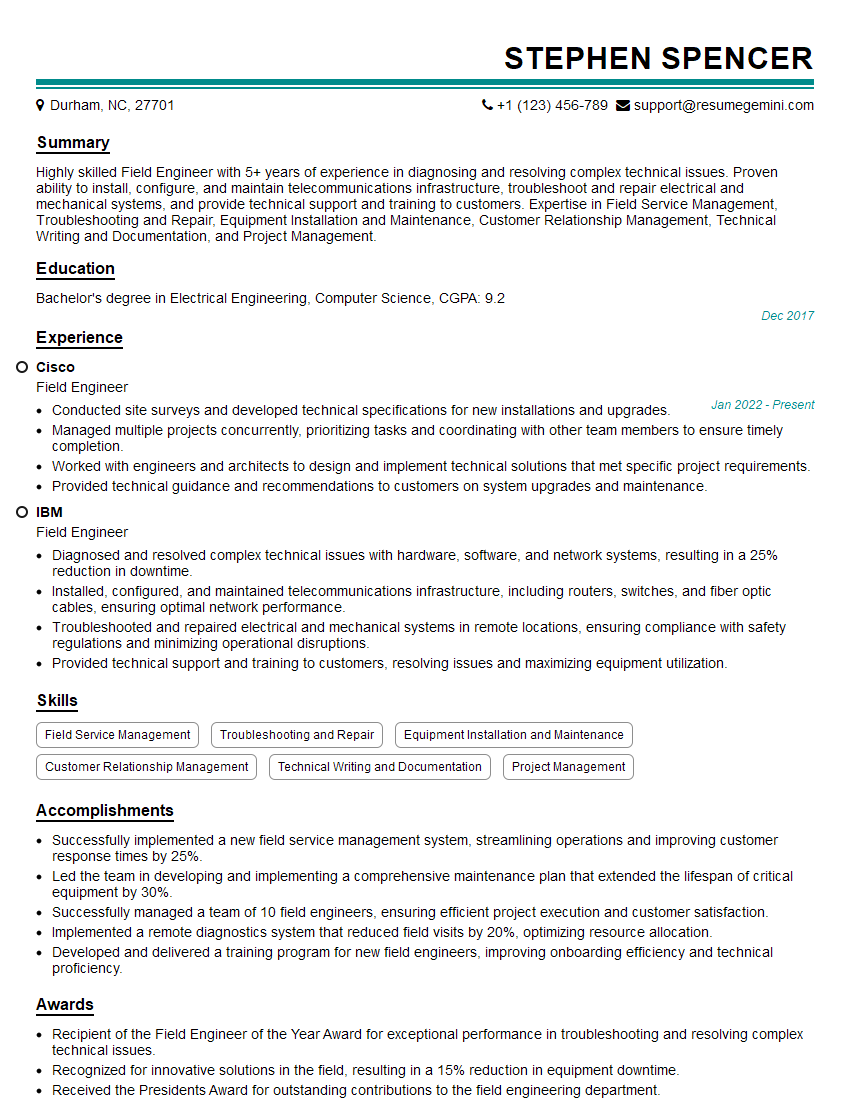
Field Engineer Resume Sample
Explore more articles
Users Rating of Our Blogs
Share Your Experience
We value your feedback! Please rate our content and share your thoughts (optional).
What Readers Say About Our Blog
To the interviewgemini.com Webmaster.
Very helpful and content specific questions to help prepare me for my interview!
Thank you
To the interviewgemini.com Webmaster.
This was kind of a unique content I found around the specialized skills. Very helpful questions and good detailed answers.
Very Helpful blog, thank you Interviewgemini team.