Unlock your full potential by mastering the most common Dysphagia Assessment and Management interview questions. This blog offers a deep dive into the critical topics, ensuring you’re not only prepared to answer but to excel. With these insights, you’ll approach your interview with clarity and confidence.
Questions Asked in Dysphagia Assessment and Management Interview
Q 1. Describe the different stages of a typical dysphagia assessment.
A comprehensive dysphagia assessment is a multi-step process aiming to identify the presence, location, and severity of swallowing difficulties. It typically involves these stages:
- Patient History: This crucial initial step involves gathering information about the patient’s medical history, including neurological conditions (stroke, Parkinson’s disease), surgeries, medications, and past or present swallowing problems. We also inquire about their diet, weight changes, and any symptoms like coughing or choking during meals.
- Clinical Examination: A thorough head and neck exam evaluates oral-motor function, including lip closure, tongue movement, jaw strength, and the patient’s ability to initiate a swallow. We assess cranial nerve function related to swallowing and observe for any signs of weakness or incoordination.
- Bedside Swallowing Assessment: This involves observing the patient’s swallowing of different consistencies of food and liquids, noting any coughing, choking, or difficulty managing saliva. It helps us quickly identify potential risks and guide further investigations.
- Instrumental Assessment: This is the key stage where we use sophisticated tools like a Fiberoptic Endoscopic Evaluation of Swallowing (FEES) or a Videofluoroscopic Swallow Study (VFSS) to visualize the swallow in detail and identify the precise location and cause of the swallowing problem. This gives us crucial information about the physiology of the swallow and guides our treatment plan.
- Treatment Planning and Implementation: Based on the findings from the previous steps, we create a personalized treatment plan, involving dietary modifications, swallow exercises, and in some cases, surgical intervention. We regularly monitor the patient’s progress and adjust the plan as needed.
Q 2. Explain the difference between oropharyngeal and esophageal dysphagia.
Oropharyngeal and esophageal dysphagia represent different stages of the swallowing process that can be affected. Imagine the swallow as a journey:
Oropharyngeal dysphagia affects the oral (mouth) and pharyngeal (throat) phases of swallowing. This is the initial stage, where food is prepared in the mouth, propelled backward, and moved into the esophagus. Problems here can include difficulty initiating a swallow, poor tongue movement, nasal regurgitation (food coming out of the nose), and aspiration (food entering the airway before or during swallowing).
Esophageal dysphagia, on the other hand, involves difficulties in the esophageal phase, where food moves down the esophagus to the stomach. Issues might include feeling food stuck in the chest, heartburn, or difficulty swallowing pills. This is often due to esophageal motility disorders or structural abnormalities like strictures or tumors.
A patient can experience both types of dysphagia simultaneously, making a comprehensive assessment vital for accurate diagnosis and management.
Q 3. What are the key clinical signs and symptoms of dysphagia?
Dysphagia manifests in a variety of ways, and recognizing these signs and symptoms is critical for early intervention. Key clinical signs and symptoms can include:
- Difficulty swallowing solids: This often progresses to liquids as the condition worsens.
- Coughing or choking during or after swallowing: This indicates possible aspiration (food entering the airway).
- Food sticking in the throat: A common symptom of esophageal dysphagia.
- Pain during swallowing (odynophagia): Usually suggests inflammation or irritation.
- Weight loss: This is a significant indicator, as patients may avoid eating due to fear of choking or discomfort.
- Excessive drooling: This points to potential oral-motor weakness.
- Recurrent pneumonia: Frequent lung infections may be a sign of chronic aspiration.
- Changes in voice quality after swallowing: Can indicate aspiration.
- Nasal regurgitation: Food coming out of the nose indicates issues with velopharyngeal closure.
The presentation of dysphagia varies depending on the underlying cause. For instance, a stroke patient might present with weakness on one side of their mouth, affecting tongue movement and swallowing coordination, while a patient with esophageal cancer might experience food impaction.
Q 4. How do you differentiate between aspiration and penetration during a swallow study?
Differentiating between aspiration and penetration during a swallow study is crucial for appropriate management. Both involve material entering the airway, but the location and timing differ significantly:
Penetration occurs when material enters the larynx (voice box) but does not pass below the vocal folds. It can trigger a cough reflex, but generally, it doesn’t reach the lungs. Think of it as the material reaching the entrance to the airway but not getting past the doorway.
Aspiration happens when material passes below the vocal folds, entering the trachea (windpipe) and potentially reaching the lungs. This can cause significant respiratory complications, including pneumonia. It’s like the material going past the doorway and into the house.
During a VFSS, the radiologist or speech-language pathologist carefully observes the movement of the bolus (food or liquid) to determine if penetration or aspiration occurs and the severity of the event.
Q 5. What are the various instrumental assessment techniques used in dysphagia evaluation (e.g., FEES, VFSS)?
Instrumental assessment techniques play a vital role in confirming a dysphagia diagnosis and guiding treatment. The most commonly used methods are:
- Videofluoroscopic Swallow Study (VFSS): This is a dynamic imaging technique using X-rays to visualize the swallow in real-time. It provides excellent detail of the movement of the bolus through the oral, pharyngeal, and upper esophageal phases. The patient swallows barium-mixed food or liquids, creating a contrast that is clearly visible on the X-ray.
- Fiberoptic Endoscopic Evaluation of Swallowing (FEES): FEES uses a thin, flexible endoscope inserted through the nose to visualize the pharynx and larynx during swallowing. It allows for direct visualization of the pharyngeal stage and the ability to assess laryngeal function and penetration/aspiration. FEES is advantageous because it can be done at the bedside and is generally less expensive.
- Ultrasound: This non-invasive technique uses high-frequency sound waves to image structures in the neck and throat during swallowing, providing information about tongue movement and hyoid bone excursion.
The choice of technique depends on the clinical scenario, patient’s condition, and available resources. Often, a combination of techniques is used for a comprehensive evaluation.
Q 6. Describe the advantages and disadvantages of FEES and VFSS.
Both FEES and VFSS offer unique advantages and disadvantages:
FEES (Fiberoptic Endoscopic Evaluation of Swallowing):
- Advantages: Portable, bedside procedure; allows for assessment of pharyngeal residue; can assess sensory testing; generally better tolerated by patients; less radiation exposure.
- Disadvantages: Limited view of oral cavity; cannot assess the entire esophageal phase; requires patient cooperation.
VFSS (Videofluoroscopic Swallow Study):
- Advantages: Shows the whole swallow from the oral cavity to the upper esophageal sphincter; provides excellent visualization of the bolus transit; shows the effect of different consistencies and compensatory strategies; allows for detailed analysis of oral, pharyngeal, and upper esophageal phases.
- Disadvantages: Uses ionizing radiation; less comfortable for some patients; not portable.
The best technique depends on the clinical question. For example, FEES might be preferred for patients with suspected pharyngeal weakness or sensory issues, whereas VFSS is more appropriate for assessing esophageal involvement or detailed analysis of the swallow phases.
Q 7. How do you interpret findings from a modified barium swallow study (MBSS)?
Interpreting findings from a Modified Barium Swallow Study (MBSS) requires expertise. The radiologist or speech-language pathologist will look for several key indicators, including:
- Oral Phase: Assessment of lip closure, mastication (chewing), bolus formation, and oral transit time. Delayed oral transit or incomplete bolus formation could indicate oral motor impairments.
- Pharyngeal Phase: Evaluation of timing and coordination of the pharyngeal swallow, including hyoid bone excursion, laryngeal elevation, and vocal fold closure. Delayed or absent swallow initiation, reduced laryngeal elevation, or aspiration are significant findings.
- Esophageal Phase: Assessment of esophageal transit time and the presence of any esophageal abnormalities such as strictures, diverticula, or motility disorders. Significant delay or failure of the esophageal peristalsis (muscular contractions that propel food down the esophagus) indicates an esophageal problem.
- Residue: The presence of barium residue after the swallow in the valleculae (spaces at the base of the tongue), pyriform sinuses (pockets at the sides of the pharynx), or esophagus indicates incomplete clearance, which can increase the risk of aspiration or the feeling of food stuck.
- Aspiration: Direct visualization of aspiration during the swallow and determination of the severity. This is often graded using a standardized scale.
Based on the identified impairments, the professional then forms a comprehensive report summarizing the findings and formulating recommendations, including dietary modifications and swallowing therapies.
Q 8. What are the common compensatory strategies used to improve swallowing safety and efficiency?
Compensatory strategies for dysphagia aim to improve swallowing safety and efficiency by modifying the way a person eats and drinks. These strategies don’t address the underlying cause of the swallowing difficulty, but rather help manage the symptoms. They are often used in conjunction with therapeutic exercises.
- Postural Changes: Altering head and neck posture can significantly impact swallowing. For example, the chin-tuck posture helps to narrow the airway and prevent food from entering the airway. Head turning to the weaker side can help direct the bolus (food or liquid) away from the weaker side of the throat. A head-back tilt can be useful for those who have difficulty clearing the mouth.
- Dietary Modifications: Changing the texture and consistency of food and liquids is crucial. This might involve offering thicker liquids (nectar-thick, honey-thick, pudding-thick) to improve control over the bolus. Pureed foods are easier to manage than solid foods for those with severe dysphagia.
- Swallowing Maneuvers: These are specific techniques to improve coordination and strength during swallowing. The Mendelsohn maneuver, where the patient holds their larynx elevated during swallowing, is commonly used to improve laryngeal elevation. The supraglottic swallow involves holding your breath before swallowing to close the airway. The effortful swallow involves increased tongue, lip and jaw strength.
- Environmental Modifications: This includes providing adequate lighting and minimizing distractions during mealtimes to ensure focused eating. Smaller, more frequent meals can also help reduce fatigue and improve swallowing safety. Using adaptive utensils can also assist some patients
For example, a patient with mild dysphagia might benefit from simply using a chin-tuck posture, while a patient with severe dysphagia may require a combination of dietary modifications, postural adjustments, and swallowing maneuvers.
Q 9. How do you counsel patients and their families about dysphagia and its management?
Counseling patients and families about dysphagia involves a compassionate and educational approach. It’s crucial to explain the condition in a way they understand, addressing their concerns and providing realistic expectations.
- Clear and Concise Explanation: Explain dysphagia in simple terms, avoiding medical jargon. Describe the impact on swallowing, eating, and overall health. Use visual aids if necessary.
- Collaborating with family: Include the family in the discussions, emphasizing their vital role in supporting the patient. Family members need to understand the dietary restrictions, the importance of adherence to the therapy plan, and how to recognize signs of aspiration.
- Strategies and Treatment Options: Discuss available treatment options, including compensatory strategies, therapy exercises, and potentially medical interventions. Emphasize the importance of consistent engagement in treatment.
- Realistic Expectations and Goals: Set realistic goals together, acknowledging that progress may be gradual. Celebrate even small achievements to maintain motivation.
- Emotional Support: Address the emotional impact of dysphagia, validating the patient’s feelings of frustration, anxiety, or depression. Referral to appropriate support services may be necessary.
- Addressing safety concerns: Explain how to prevent aspiration and choking and what signs to look out for, and what to do in an emergency.
For instance, I always start by asking the patient and family what their biggest concerns are and tailor my communication based on their needs and understanding. Then I systematically introduce the condition, its impact and the collaborative treatment plan. We jointly work towards a plan which respects the patients quality of life.
Q 10. Describe the different types of dysphagia diets and their consistencies.
Dysphagia diets are categorized by food consistency to ensure safe and efficient swallowing. These are usually recommended by a Speech Language Pathologist (SLP) and registered dietician.
- Regular Diet: This is a typical diet with no restrictions on food consistency.
- Dysphagia Pureed Diet (Level 1): Foods are completely smooth and homogeneous, like pudding or applesauce. No lumps or pieces are allowed.
- Dysphagia Mechanically Altered Diet (Level 2): Foods are moist and easily mashed, with minimal chewing required. Small, soft pieces are acceptable.
- Dysphagia Advanced Diet (Level 3): Foods require more chewing but still have a soft consistency. Avoids very hard or sticky foods.
- Liquid consistencies: Liquids are categorized into thin, nectar-thick, honey-thick, and pudding-thick based on their viscosity. This helps in managing the flow and control of liquids.
Think of it like a continuum: from easily manageable pureed foods to foods that require more chewing effort. The SLP carefully considers the patient’s specific swallowing difficulties and develops a personalized diet plan.
Q 11. Explain the role of nutrition in dysphagia management.
Nutrition plays a vital role in dysphagia management. Adequate nutrition is essential for overall health and well-being, especially in individuals with swallowing difficulties. Malnutrition is a significant concern for this population due to the limitations in food intake.
- Calorie and Nutrient Requirements: Maintaining adequate calorie and nutrient intake is crucial for preventing weight loss and complications. The dietician works with the SLP to develop a nutrition plan that addresses specific needs.
- Dietary Modifications: As mentioned earlier, modifying food textures and consistencies to improve swallowing safety and efficiency is key.
- Nutritional Supplements: In some cases, nutritional supplements may be necessary to supplement the patient’s diet and ensure they’re getting the necessary nutrients. These can range from high-calorie shakes to specialized formulas.
- Monitoring Weight and Nutritional Status: Regular monitoring of weight, nutritional intake, and overall health is vital to identify any potential nutritional deficiencies and adjust the plan accordingly.
For example, a patient with severe dysphagia may require high-calorie, nutrient-dense supplements alongside a modified diet to maintain their nutritional status and prevent complications.
Q 12. What are the common medical complications associated with dysphagia?
Dysphagia can lead to several medical complications if not properly managed. These complications arise from inadequate nutrition, aspiration, and other related factors.
- Aspiration Pneumonia: This is a common and serious complication, occurring when food or liquids enter the lungs, leading to infection.
- Dehydration: Difficulty swallowing liquids can lead to inadequate fluid intake and dehydration.
- Malnutrition: Reduced food intake due to swallowing problems can lead to weight loss, muscle wasting, and weakened immunity.
- Weight loss: A direct consequence of reduced food intake, which can further exacerbate the health issues caused by dysphagia.
- Pneumonia: This can be a frequent and severe complication arising from aspiration.
These complications highlight the importance of early diagnosis and comprehensive management of dysphagia to minimize the risk of these serious health issues.
Q 13. How do you collaborate with other healthcare professionals (e.g., physicians, nurses, dietitians) in the management of dysphagia?
Managing dysphagia requires a multidisciplinary approach, involving close collaboration with various healthcare professionals.
- Physicians: Physicians play a crucial role in identifying the underlying medical conditions contributing to dysphagia, prescribing medications, and addressing any related health issues. They are often the first point of contact for patients.
- Nurses: Nurses monitor patients’ nutritional status, hydration, and overall health. They assist with feeding and medication administration. They often work closely with the patient and family, monitoring for symptoms of aspiration or other complications.
- Dietitians: Dietitians work closely with SLPs and physicians to develop a nutrition plan tailored to the patient’s specific needs and swallowing abilities. They help determine the appropriate diet consistency and ensure adequate caloric and nutrient intake.
- Occupational Therapists: They may also be part of the team, especially if adaptive eating equipment is needed.
Effective communication and regular meetings amongst the healthcare team ensure a coordinated and comprehensive management plan.
Q 14. What are some common challenges in managing dysphagia in different populations (e.g., pediatrics, geriatrics)?
Managing dysphagia presents unique challenges in different populations due to varying physiological factors, cognitive abilities, and communication skills.
- Pediatrics: In children, dysphagia can be caused by various factors, including birth defects, neurological disorders, or developmental delays. Assessment and treatment can be challenging due to limited communication skills and the need for creative approaches to therapy. Building trust with the child is critical for successful therapy.
- Geriatrics: Older adults often experience age-related changes that impact swallowing, such as decreased muscle strength, reduced saliva production, and cognitive decline. Comorbidities are also more common in older patients, adding complexity to management. Sensitivity to their age-related limitations is critical during assessment and treatment planning. They are also frequently more fragile and susceptible to aspiration pneumonia.
Tailoring assessment and treatment approaches to the specific needs and capabilities of each population is essential for successful dysphagia management. A thorough understanding of developmental milestones and the effects of aging is crucial in this process.
Q 15. How do you adapt your assessment and treatment approaches based on patient-specific factors?
Adapting dysphagia assessment and treatment hinges on understanding the unique interplay of factors affecting each patient. We can’t treat everyone the same; a cookie-cutter approach simply won’t work. My assessment considers the patient’s medical history, current health status (including co-morbidities like Parkinson’s or stroke), cognitive abilities, nutritional needs, and, critically, their preferences and goals. For instance, a patient with advanced dementia will require a different approach than a patient recovering from a stroke who is highly motivated to regain independence in eating.
Medical History: A detailed history informs the likelihood of certain swallowing difficulties. For example, a history of head and neck cancer may indicate potential structural damage requiring a different treatment focus than someone with neurogenic dysphagia.
Cognitive Abilities: A patient with intact cognitive function can actively participate in therapeutic exercises and understand instructions, while those with cognitive impairments may need modified techniques and caregiver training.
Treatment Adaptation Example: A patient post-stroke with mild dysphagia might benefit from exercises like Mendelsohn maneuver and lingual exercises. In contrast, a patient with severe dysphagia following a head and neck cancer surgery may necessitate a different approach, including postural adjustments, diet modifications (pureed or thickened liquids), and possibly even non-oral feeding methods. The treatment plan is continuously adjusted based on their progress and responses.
Career Expert Tips:
- Ace those interviews! Prepare effectively by reviewing the Top 50 Most Common Interview Questions on ResumeGemini.
- Navigate your job search with confidence! Explore a wide range of Career Tips on ResumeGemini. Learn about common challenges and recommendations to overcome them.
- Craft the perfect resume! Master the Art of Resume Writing with ResumeGemini’s guide. Showcase your unique qualifications and achievements effectively.
- Don’t miss out on holiday savings! Build your dream resume with ResumeGemini’s ATS optimized templates.
Q 16. Describe your experience with different swallowing therapy techniques (e.g., exercises, maneuvers).
My experience encompasses a wide range of swallowing therapy techniques, tailoring them to each patient’s specific needs. I’m proficient in both traditional and more contemporary approaches.
- Exercises: I utilize various exercises targeting specific muscle groups involved in swallowing. This includes range-of-motion exercises for the tongue, lips, and jaw; strength-building exercises; and exercises to improve coordination and timing of the swallow. Examples include Masako maneuver (tongue-holding exercise), Shaker exercise (head-lifting exercise), and tongue-base exercises.
- Maneuvers: Swallowing maneuvers aim to modify the physiology of the swallow to improve safety and efficiency. These include the Mendelsohn maneuver (prolonged elevation of the larynx), the supraglottic swallow (holding breath before swallowing), and the effortful swallow (increased effort during swallowing). The choice of maneuver depends on the specific swallowing difficulties identified in the assessment.
- Other techniques: Beyond exercises and maneuvers, I incorporate thermal-tactile stimulation to improve oral-sensory awareness. I also work closely with speech-language pathologists (SLPs) and dieticians to optimize diet consistency and texture modifications.
Practical Example: I recently worked with a patient experiencing aspiration (food entering the airway) due to poor tongue control. We started with range-of-motion exercises and progressed to tongue-strengthening exercises, combined with the Masako maneuver to improve tongue base retraction. We monitored aspiration risk with videofluoroscopic swallow study (VFSS) throughout the process, adjusting the plan accordingly.
Q 17. How do you monitor treatment efficacy and make adjustments as needed?
Monitoring treatment efficacy is crucial for ensuring patient progress and safety. This is a continuous process, not a one-time assessment. I use a combination of methods to track progress and adjust the plan as needed.
- Clinical Swallowing Evaluation: Regular bedside assessments involve observing the patient’s swallowing during mealtimes, noting any signs of difficulty (coughing, choking, delayed swallow initiation).
- Instrumental Assessments: Instrumental assessments such as VFSS (videofluoroscopic swallow study) and FEES (fiberoptic endoscopic evaluation of swallowing) are periodically performed to visualize the swallow and assess aspiration risk objectively. These objective measures are crucial for tracking changes over time.
- Outcome Measures: I use standardized outcome measures, such as the Eating Assessment Tool (EAT-10), to quantify swallowing difficulties and track improvements. These help provide objective data on the patient’s progress.
- Patient Feedback: The patient’s subjective experience is also vital. Regular discussions about their comfort, satisfaction, and ability to eat and drink are crucial for guiding treatment decisions.
Adjustment Example: If an instrumental assessment shows persistent aspiration despite therapeutic exercises, the treatment plan may be adjusted to include dietary modifications (e.g., thicker liquids) or postural techniques. If the patient is experiencing fatigue or frustration with exercises, the intensity or frequency of the exercises might be reduced.
Q 18. What are the ethical considerations in dysphagia management?
Ethical considerations in dysphagia management are paramount and guide every decision. Patient autonomy, beneficence, non-maleficence, and justice are central principles.
- Informed Consent: Patients must fully understand the assessment and treatment procedures, including potential risks and benefits, before providing informed consent. This is especially important when considering invasive procedures like VFSS.
- Patient Preferences: Patient preferences and goals should always be prioritized. Treatment should align with the patient’s wishes, even if it means accepting some level of risk.
- Beneficence and Non-Maleficence: Treatment should aim to maximize benefits while minimizing harm. This includes carefully selecting treatment strategies and closely monitoring for adverse effects.
- Justice and Equity: Access to high-quality dysphagia care should be equitable for all patients, regardless of socioeconomic status, race, or other factors. This might involve advocating for resources and support for patients facing barriers to care.
Ethical Dilemma Example: A patient with advanced dementia and severe dysphagia may not be able to express their preferences. The ethical dilemma is balancing the need to maintain nutritional status with the potential risks and discomfort of various interventions. In such situations, careful consideration of the patient’s best interests, involving family and other healthcare professionals, becomes vital.
Q 19. How do you document your assessment and treatment plans according to professional standards?
Accurate and thorough documentation is essential for ensuring continuity of care, facilitating communication among healthcare providers, and meeting professional standards. My documentation adheres to the guidelines set by ASHA (American Speech-Language-Hearing Association) and other relevant professional organizations.
My documentation includes:
- Patient Demographics and History: Comprehensive background information relevant to swallowing difficulties.
- Assessment Findings: Detailed description of the clinical swallowing evaluation, including observations of oral motor skills, swallowing physiology, and presence of aspiration symptoms. The results of instrumental studies (VFSS, FEES) are also included.
- Diagnosis: Clear statement of the dysphagia diagnosis, including specific swallowing difficulties identified.
- Treatment Plan: Detailed description of the recommended interventions, including exercises, maneuvers, diet modifications, and compensatory strategies. This also includes the rationale for the chosen interventions and projected timelines.
- Progress Notes: Regular updates on the patient’s progress, response to interventions, any modifications made to the treatment plan, and any identified adverse effects.
- Discharge Summary: Summary of the assessment, treatment provided, progress made, and recommendations for ongoing care upon discharge.
Documentation Example: I would document the specific exercises prescribed, their frequency and duration, the patient’s tolerance, and any observed changes in their swallowing function after each therapy session. This provides a detailed record of the patient’s journey through therapy.
Q 20. Describe your experience with electronic health record (EHR) systems in documenting dysphagia care.
I’m experienced in using EHR (Electronic Health Record) systems for documenting dysphagia care. The specific system used varies, but my approach remains consistent, focusing on clarity, accuracy, and adherence to professional standards.
Benefits of EHRs: EHRs streamline documentation, improve communication among healthcare providers, enhance accessibility of patient information, and support evidence-based practice.
Challenges of EHRs: Sometimes, EHR systems can be cumbersome to navigate, leading to time constraints that can affect the detail of the notes. Template usage in some systems may also limit flexibility in documenting complex cases.
My Approach: I use standardized templates within the EHR when appropriate but also ensure that free-text sections allow for detailed descriptions of the assessment findings and patient-specific characteristics that don’t fit into pre-defined templates. I also ensure proper use of coding systems for billing and diagnostic purposes and maintain patient privacy and security in line with HIPAA regulations.
Q 21. Explain your understanding of evidence-based practice in dysphagia management.
Evidence-based practice (EBP) is the cornerstone of my approach to dysphagia management. It involves integrating the best available research evidence with clinical expertise and patient values and preferences.
Components of EBP:
- Best Research Evidence: I regularly consult peer-reviewed journals and research databases to stay updated on the latest findings on dysphagia assessment and treatment. This includes randomized controlled trials, systematic reviews, and meta-analyses to support the choices made for each patient.
- Clinical Expertise: My experience and judgment are integral to selecting appropriate assessments and treatments. I consider the patient’s specific circumstances and adjust interventions based on my clinical observations and understanding of the research.
- Patient Values and Preferences: The patient’s individual values, preferences, and goals are paramount in decision-making. A treatment plan should be tailored to meet the patient’s needs and expectations, ensuring patient participation and buy-in.
EBP in Action: For example, when choosing between different swallowing maneuvers, I would consider the research evidence supporting the effectiveness of each maneuver for specific swallowing disorders, my experience in applying these maneuvers in similar cases, and the patient’s willingness and ability to learn and perform the maneuver. EBP isn’t a rigid formula but a dynamic process of integrating evidence, experience, and patient needs to achieve the best possible outcomes.
Q 22. How do you stay current with the latest research and advances in dysphagia management?
Staying current in the rapidly evolving field of dysphagia management requires a multi-faceted approach. I prioritize continuous professional development through several key strategies.
- Membership in Professional Organizations: Active participation in organizations like the American Speech-Language-Hearing Association (ASHA) provides access to journals, conferences, and webinars featuring the latest research and best practices. I regularly attend ASHA’s annual convention and participate in their online continuing education offerings.
- Journal Reading and Literature Reviews: I dedicate time each week to reviewing peer-reviewed journals such as Dysphagia and Journal of Speech, Language, and Hearing Research, focusing on articles relevant to my clinical practice and areas of interest. I also regularly conduct literature reviews on specific topics to inform my clinical decision-making.
- Participation in Continuing Education: I actively seek out continuing education courses and workshops focusing on new assessment techniques, treatment modalities, and technological advancements in dysphagia management. This includes attending courses on FEES (Fiberoptic Endoscopic Evaluation of Swallowing), MBS (Modified Barium Swallow Study), and various therapeutic interventions.
- Networking with Colleagues: Engaging in discussions and sharing knowledge with other SLPs (Speech-Language Pathologists) and healthcare professionals specializing in dysphagia through professional networks and case conferences ensures I stay abreast of emerging trends and diverse perspectives on management strategies.
This combined approach ensures that my clinical practice remains evidence-based and informed by the most current research and best practices, ultimately improving patient care.
Q 23. Describe your experience with using different types of assistive devices for swallowing.
My experience encompasses a wide range of assistive devices used to improve swallowing safety and efficiency. I’ve worked with patients using various devices, tailoring their use to individual needs and conditions. The selection process always involves a thorough assessment of the patient’s specific swallowing difficulties, cognitive abilities, and overall health status.
- Adaptive Cutlery: I have extensive experience using weighted utensils and built-up handles to improve grip and control, particularly beneficial for patients with limited dexterity or tremors. For example, I helped a patient with Parkinson’s disease regain more independence during mealtimes by using weighted spoons.
- Specialized Cups and Bowls: I regularly employ non-spill cups, angled cups, and weighted bowls to minimize spills and improve mealtime efficiency for patients with motor impairments. This is often crucial in reducing aspiration risk.
- Swallowing Aids: I have experience using thickening agents to modify food consistency, making swallowing safer and easier. I have also utilized various types of bolus delivery systems, including spoons with controlled release mechanisms, to manage food transit.
- Electronic Swallowing Devices: While less common in my current practice, I am familiar with the principles and applications of electrical stimulation devices used in some dysphagia treatment protocols. My understanding of these cutting-edge devices allows me to make informed referrals when appropriate.
Beyond the devices themselves, my expertise lies in effectively teaching patients and their caregivers how to properly use these tools and integrate them into their daily routines. This hands-on training is crucial for achieving optimal outcomes and patient satisfaction.
Q 24. How do you address cognitive and behavioral factors that may impact swallowing function?
Cognitive and behavioral factors can significantly impact swallowing, often overlooked in assessments that focus solely on the physiological aspects. My approach integrates a holistic perspective, addressing these factors directly within the overall management plan.
- Cognitive Assessment: A comprehensive assessment includes evaluation of cognitive function, such as attention, memory, and executive function. This helps determine if cognitive deficits are contributing to swallowing difficulties, for instance, difficulty following instructions or remembering to chew thoroughly.
- Behavioral Strategies: If cognitive impairment is identified, I utilize strategies to compensate for these challenges. This might involve simplifying instructions, providing visual cues, or employing strategies like spaced retrieval training to improve memory recall regarding swallowing safety practices.
- Addressing Anxiety and Depression: Anxiety and depression frequently coexist with dysphagia, negatively affecting swallowing function. I often collaborate with mental health professionals to address these factors. A relaxed and less anxious state often facilitates improved swallowing.
- Adaptive Mealtime Strategies: I implement adaptive strategies tailored to address behavioral challenges, such as distraction during meals or aversions to certain textures or food types. For instance, we might use positive reinforcement to encourage participation in therapy or celebrate successes.
- Family/Caregiver Training: Educating family members and caregivers on how to support the patient’s cognitive and emotional needs during mealtimes is crucial for long-term success. This can include strategies for creating a calming mealtime environment and practicing patience and understanding.
By addressing these interwoven elements, I strive to create a more comprehensive and effective treatment approach that improves both the physiological and psychological well-being of my patients.
Q 25. Explain your experience in teaching and supervising students or other professionals in dysphagia management.
I have extensive experience in teaching and supervising students and other professionals in dysphagia management. My approach emphasizes both theoretical knowledge and hands-on clinical skills.
- Mentorship and Supervision: I provide individualized supervision to students and new clinicians, guiding them through the assessment and management of diverse dysphagia cases. This involves direct observation of their clinical skills, feedback on their performance, and collaborative discussion of challenging cases.
- Curriculum Development: I have contributed to the development of curriculum materials for graduate-level courses on dysphagia, encompassing various assessment techniques, treatment methodologies, and ethical considerations.
- Workshops and Presentations: I frequently conduct workshops and present at professional conferences, sharing my expertise and experience in dysphagia management with a broader audience. I recently presented on the use of telehealth in dysphagia assessment and management.
- Clinical Case Conferences: I actively participate in case conferences, providing opportunities for students and colleagues to present cases and receive feedback from experienced professionals. This fosters collaborative learning and promotes the sharing of best practices.
My goal is to cultivate future generations of competent and compassionate clinicians who are well-equipped to provide high-quality care to individuals with dysphagia. I believe in a supportive and interactive learning environment that promotes critical thinking and clinical reasoning skills.
Q 26. Describe your approach to managing patients with complex dysphagia conditions.
Managing patients with complex dysphagia requires a highly individualized and collaborative approach. My strategy involves a thorough assessment, comprehensive plan development, and ongoing monitoring.
- Multidisciplinary Collaboration: I work closely with other healthcare professionals, including gastroenterologists, neurologists, pulmonologists, and registered dieticians, to address the patient’s medical and nutritional needs holistically. For example, collaborating with a gastroenterologist is crucial for patients with gastroesophageal reflux disease (GERD) influencing dysphagia.
- Advanced Assessment Techniques: I utilize advanced assessment methods such as FEES and MBS to obtain detailed information about the patient’s swallowing physiology. This helps to pinpoint the exact nature of their swallowing difficulties, guiding tailored interventions.
- Tailored Treatment Plans: Treatment plans are highly individualized and may include strategies such as postural adjustments, compensatory swallowing maneuvers (e.g., Mendelsohn maneuver), exercises to improve strength and range of motion, and behavioral techniques to address cognitive and emotional factors.
- Regular Monitoring and Adjustments: I continuously monitor the patient’s progress, making necessary adjustments to the treatment plan based on their response and any changes in their condition. This may involve modifying dietary recommendations, adjusting treatment techniques, or introducing new interventions.
- Technology Integration: I am comfortable integrating technology to aid in assessment and treatment when necessary. This might include using telehealth platforms for remote monitoring or employing specialized software for data analysis and progress tracking.
Managing complex cases requires adaptability, persistence, and a strong commitment to collaboration. My focus remains on improving the patient’s quality of life, ensuring safety, and maximizing their ability to participate in mealtimes.
Q 27. How do you handle situations where there is a disagreement among healthcare professionals regarding a dysphagia management plan?
Disagreements among healthcare professionals regarding a dysphagia management plan are sometimes inevitable, but addressing them constructively is crucial for optimal patient care. My approach centers on respectful communication and collaborative problem-solving.
- Open Communication and Active Listening: I initiate a discussion with all involved professionals, encouraging each to express their perspectives and rationale. Active listening ensures that all viewpoints are considered and understood.
- Review of Evidence and Data: We collaboratively review the patient’s assessment data, including the results of instrumental studies like FEES or MBS, to objectively evaluate the strengths and weaknesses of each proposed approach. We may also review relevant literature to support or challenge different management strategies.
- Compromise and Consensus Building: Through open dialogue and evidence-based reasoning, we strive to find common ground and reach a consensus on the most appropriate management plan. This may involve integrating aspects of different approaches to create a more comprehensive strategy.
- Documentation and Follow-up: The agreed-upon management plan is meticulously documented, outlining the rationale for each decision and the roles and responsibilities of each professional. Regular follow-up meetings ensure ongoing communication and provide opportunities to adjust the plan as needed.
- Escalation if Necessary: In situations where consensus cannot be reached, I am prepared to escalate the matter to a higher level of authority, such as a case management team or medical director, to facilitate resolution and ensure the patient’s best interests are prioritized.
By fostering a culture of collaboration and evidence-based decision-making, I aim to resolve disagreements constructively, leading to a unified and effective management plan that benefits the patient.
Key Topics to Learn for Dysphagia Assessment and Management Interview
- Clinical Examination Techniques: Mastering bedside swallow evaluations, including observation of oral, pharyngeal, and laryngeal function. Understand the limitations and indications for various assessment methods.
- Instrumental Assessment: Develop a strong understanding of Fiberoptic Endoscopic Evaluation of Swallowing (FEES) and Videofluoroscopic Swallow Study (VFSS). Be prepared to discuss the advantages and disadvantages of each, and how to interpret the findings.
- Diagnosis and Differential Diagnosis: Practice differentiating between various causes of dysphagia (neurological, structural, etc.) and accurately identifying the underlying etiology.
- Treatment Planning and Intervention Strategies: Develop expertise in creating individualized treatment plans, encompassing compensatory strategies, restorative exercises, and the application of various therapeutic techniques.
- Management of Complications: Understand the management of common complications associated with dysphagia, such as aspiration pneumonia, dehydration, and malnutrition. Be prepared to discuss preventative measures.
- Patient Education and Family Counseling: Discuss the importance of effective communication with patients and their families, emphasizing clear explanations of diagnoses, treatment plans, and progress.
- Interprofessional Collaboration: Highlight your understanding of the importance of working collaboratively with other healthcare professionals, such as speech-language pathologists, physicians, nurses, and dieticians.
- Evidence-Based Practice: Demonstrate familiarity with current research and evidence-based guidelines in dysphagia assessment and management. Be ready to discuss relevant literature.
- Ethical Considerations: Understand and be able to discuss ethical dilemmas related to patient autonomy, informed consent, and end-of-life care in the context of dysphagia.
- Case Study Analysis: Practice analyzing hypothetical and real-world case studies, focusing on the diagnostic process, treatment planning, and evaluation of outcomes.
Next Steps
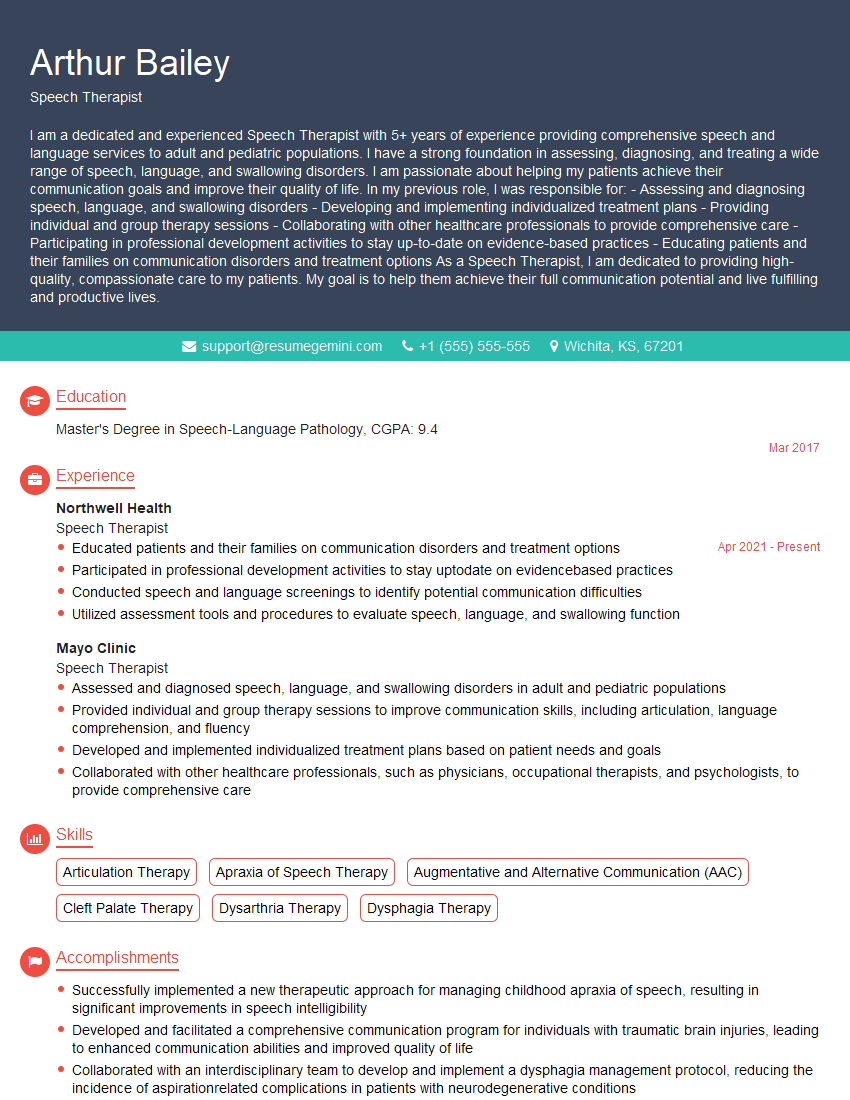
Mastering Dysphagia Assessment and Management is crucial for career advancement in speech-language pathology and related fields. A strong understanding of these concepts will significantly enhance your candidacy and open doors to exciting opportunities. To maximize your job prospects, create an ATS-friendly resume that effectively showcases your skills and experience. We highly recommend using ResumeGemini, a trusted resource for building professional resumes. ResumeGemini offers examples of resumes tailored to Dysphagia Assessment and Management to help you create a compelling application.
Explore more articles
Users Rating of Our Blogs
Share Your Experience
We value your feedback! Please rate our content and share your thoughts (optional).
What Readers Say About Our Blog
To the interviewgemini.com Webmaster.
Very helpful and content specific questions to help prepare me for my interview!
Thank you
To the interviewgemini.com Webmaster.
This was kind of a unique content I found around the specialized skills. Very helpful questions and good detailed answers.
Very Helpful blog, thank you Interviewgemini team.