Preparation is the key to success in any interview. In this post, we’ll explore crucial Electrical Equipment Testing and Calibration interview questions and equip you with strategies to craft impactful answers. Whether you’re a beginner or a pro, these tips will elevate your preparation.
Questions Asked in Electrical Equipment Testing and Calibration Interview
Q 1. Explain the difference between accuracy and precision in measurement.
Accuracy and precision are crucial aspects of measurement, often confused but distinctly different. Accuracy refers to how close a measured value is to the true or accepted value. Think of it like hitting the bullseye on a dartboard – a highly accurate measurement is very close to the center. Precision, on the other hand, refers to how close repeated measurements are to each other. It’s about consistency. Imagine all your darts clustering tightly together, but maybe slightly off-center; that’s high precision but low accuracy. A measurement can be precise without being accurate, and vice versa. For example, a faulty scale might consistently weigh an object as 101 grams when it actually weighs 100 grams. This is high precision (consistent readings) but low accuracy (far from the true weight). In electrical equipment testing, both are vital; you need consistent (precise) readings that are also close to the actual value (accurate) for reliable results.
Q 2. Describe the process of calibrating a digital multimeter.
Calibrating a digital multimeter (DMM) ensures its readings are accurate and reliable. The process generally involves using known precision voltage, current, and resistance sources. First, you’ll need a calibration standard, which is a device with traceable accuracy to national or international standards. For example, a precision voltage source that’s itself been recently calibrated by a certified lab. The DMM’s calibration procedure usually involves the following steps:
- Prepare: Turn on the DMM and allow it to warm up as per the manufacturer’s instructions.
- Connect: Connect the calibration standard’s output to the DMM’s input terminals.
- Adjust (if applicable): Some DMMs have internal calibration adjustments. Follow the manufacturer’s instructions to access and adjust these settings using the known standards.
- Compare: Compare the DMM’s reading to the known value from the calibration standard. The difference will indicate the error of the DMM.
- Record: Carefully record all readings and deviations from the known standards, and note the date and time of the calibration.
- Document: Complete a calibration certificate detailing the equipment used, procedures followed, results, and any necessary corrections or adjustments made. This is crucial for traceability.
If the DMM’s readings deviate significantly from the standard, further investigation is needed; the DMM might require repair or replacement.
Q 3. What are the common sources of error in electrical measurements?
Several factors can introduce errors in electrical measurements. These can be broadly categorized as:
- Instrument Errors: These arise from limitations in the measuring instrument itself, including inherent inaccuracies, aging components, or calibration drift. For instance, a poorly calibrated clamp meter might consistently read slightly lower than the actual current.
- Environmental Errors: Temperature, humidity, and electromagnetic interference (EMI) can significantly affect readings. High temperatures might affect resistance values, while EMI can introduce noise into voltage measurements.
- Human Errors: Incorrect connections, misreading of instruments, improper grounding, and even parallax error (reading a meter at an angle) can all contribute to inaccurate readings. It’s important to follow safety procedures and good measurement practices diligently.
- Load Errors: The act of measuring itself can sometimes alter the quantity being measured. For example, using a low-impedance voltmeter on a high-impedance circuit might cause significant loading error.
- Systematic Errors: These are consistent errors that occur in the same way every time. Examples include zero-offset error in a DMM or a consistently incorrect scaling factor.
Understanding these error sources is crucial for minimizing their impact and improving the accuracy and reliability of measurements.
Q 4. How do you handle discrepancies between measured values and expected values during calibration?
Discrepancies between measured and expected values during calibration are a common occurrence and require careful analysis. The first step is to investigate the potential sources of error, considering the points mentioned in the previous answer (instrument errors, environmental errors, etc.). Re-check the calibration process, ensuring the connections are secure and the equipment is operating correctly. If the discrepancy is within the instrument’s tolerance (specified by the manufacturer), the instrument might be acceptable. However, if it’s outside the tolerance, you need to investigate further. This could include:
- Recalibration: Performing the calibration process again to rule out procedural errors.
- Repair/Replacement: If the error persists after repeated checks, the instrument may require repair or replacement.
- Adjustment (if possible): Some instruments allow for internal adjustments to correct for small offsets. However, this must be done according to the manufacturer’s instructions and documented carefully.
Thorough documentation of all findings, including the steps taken to troubleshoot the discrepancies, is essential for maintaining calibration records and ensuring the accuracy of future measurements.
Q 5. Explain the importance of traceability in calibration.
Traceability in calibration is essential for ensuring the reliability and comparability of measurements across different locations, laboratories, and time periods. It establishes an unbroken chain of comparisons, linking the calibration of a measuring instrument to national or international measurement standards. Imagine a hierarchy: your DMM is calibrated against a secondary standard, which is calibrated against a primary standard at a national metrology institute (NMI), which in turn is linked to fundamental physical constants. This traceability assures that your measurements are consistent and comparable with others worldwide. It also helps in validating the quality of your measurements and the reliability of your testing processes. Without traceability, your measurement results might be unreliable and difficult to compare with others, significantly impacting quality control and compliance in various industries.
Q 6. What are the different types of calibration standards?
Calibration standards come in various forms depending on the quantity being measured. They can be classified as:
- Primary Standards: These are the highest level of standards, directly linked to fundamental physical constants or defined units. They are typically maintained by NMIs and rarely used in routine calibration.
- Secondary Standards: These are calibrated against primary standards and are often used to calibrate working standards.
- Working Standards: These are used in day-to-day calibration activities and are calibrated against secondary standards. These are the standards most frequently used in a typical calibration laboratory.
- Reference Standards: These are standards with very high accuracy and stability; they are often used for checking the accuracy of other standards.
The choice of standard depends on the required accuracy and the type of measurement being performed. For instance, calibrating a high-precision oscilloscope would require a more accurate standard than calibrating a basic multimeter.
Q 7. Describe the process of documenting calibration results.
Careful documentation of calibration results is crucial for maintaining traceability and ensuring the reliability of measurements. Calibration records should include:
- Instrument Identification: Unique serial number and model of the equipment calibrated.
- Calibration Date and Time: Exact date and time of the calibration procedure.
- Calibration Standard Information: Identifying information for the standards used, including their calibration certificates.
- Measurement Results: Detailed records of all measurements taken, including the date and time, test points, and measured values.
- Deviations from Standards: Any deviations from the expected values, expressed as percentages or absolute values.
- Corrective Actions: Any adjustments made or repairs performed during the calibration process.
- Calibration Certificate: A formal document summarizing all the above information. It should be signed and dated by a qualified technician.
- Technician Information: The name and qualifications of the technician who performed the calibration.
These records are essential for ensuring compliance with standards and regulations and for demonstrating the quality and reliability of measurements. They are also invaluable for troubleshooting any future issues and identifying trends in instrument performance over time.
Q 8. How do you select the appropriate test equipment for a specific task?
Selecting the right test equipment is crucial for accurate and reliable results. It’s like choosing the right tool for a job – a hammer won’t work for screwing in a screw! The selection process involves several key steps:
- Identify the parameter to be measured: What exactly needs to be tested? Voltage, current, resistance, power, frequency, insulation resistance? This dictates the type of equipment needed. For example, measuring insulation resistance requires a megohmmeter, while measuring AC current requires a clamp meter.
- Determine the required accuracy and resolution: How precise does the measurement need to be? A simple multimeter might suffice for basic checks, but high-precision measurements require calibrated instruments with lower uncertainty.
- Consider the range of the parameter: The equipment’s range must encompass the expected values. Attempting to measure a high voltage with a low-range multimeter could damage the equipment and be dangerous.
- Check the safety ratings: The equipment must be rated for the voltage and current levels being tested. This is paramount for safety. Always choose equipment with safety ratings exceeding the expected levels.
- Assess environmental factors: Temperature, humidity, and other environmental conditions can influence the performance of the equipment. Choose instruments appropriate for the operating environment.
- Evaluate the features and functionalities: Some instruments offer additional features like data logging, communication interfaces, and automated testing capabilities, which might enhance efficiency and data analysis.
For example, if I needed to test the insulation resistance of a high-voltage cable, I would select a high-voltage megohmmeter with appropriate safety ratings and a sufficiently high measurement range. If I needed to analyze complex waveforms, I’d select an oscilloscope with sufficient bandwidth and sampling rate.
Q 9. What safety precautions should be taken when working with high-voltage equipment?
Working with high-voltage equipment demands utmost caution. A single mistake can lead to severe injury or even death. Safety protocols must be rigorously followed:
- Lockout/Tagout Procedures: Before working on any high-voltage equipment, always follow established lockout/tagout procedures to isolate the power source completely. This prevents accidental energization.
- Personal Protective Equipment (PPE): Always wear appropriate PPE, including insulated gloves, safety glasses, and arc-flash protective clothing. The PPE must be rated for the voltage levels involved.
- Proper Training: Only trained and authorized personnel should work with high-voltage equipment. Training should cover safety procedures, equipment operation, and emergency response.
- Grounding and Bonding: Ensure proper grounding and bonding to eliminate potential hazards due to static electricity or stray currents.
- Use Insulated Tools: Use only insulated tools specifically designed for working with high-voltage systems. Inspect tools regularly for damage before each use.
- Emergency Preparedness: Have a clear emergency plan in place, including access to emergency personnel and first aid equipment.
- Work Permits: In many settings, work permits are required before any high-voltage work can commence. These permits ensure all safety precautions are in place.
Remember, safety is not just a guideline; it’s a mandatory requirement when working with high-voltage systems. It’s always better to err on the side of caution.
Q 10. Explain the concept of uncertainty analysis in measurement.
Uncertainty analysis in measurement quantifies the doubt associated with a measurement result. It acknowledges that no measurement is perfectly accurate; there’s always some degree of error. Think of it like aiming an arrow at a target – you might hit near the bullseye, but you’ll never hit the exact center perfectly.
Uncertainty arises from various sources:
- Instrument limitations: Every instrument has inherent limitations, such as resolution and accuracy. A digital multimeter, for example, might only display to a certain number of decimal places.
- Environmental factors: Temperature, humidity, and pressure can influence readings.
- Operator error: Human error in reading instruments or setting up tests introduces uncertainty.
- Calibration uncertainty: The calibration certificate of the instrument itself provides an indication of the uncertainty associated with its readings.
Uncertainty is expressed quantitatively, often as a range or standard deviation around the measured value. For example, a measurement might be reported as 100V ± 0.5V, indicating that the true value likely lies between 99.5V and 100.5V. Proper uncertainty analysis is critical for ensuring the reliability and validity of test results and ensuring compliance with standards.
Q 11. What is the purpose of a calibration certificate?
A calibration certificate is a crucial document that provides evidence that a piece of test equipment has been verified against a known standard. It’s like a passport for your instruments, showing its legitimacy and accuracy.
It contains essential information:
- Instrument identification: Model number, serial number, etc.
- Calibration date: The date the equipment was calibrated.
- Calibration results: The measured values against the standard, showing any deviations or errors.
- Uncertainty: The uncertainty associated with the calibration measurements.
- Calibration method: The procedures followed during the calibration process.
- Expiry date: The date the calibration is no longer valid.
- Accrediting body (if applicable): Accreditation indicates that the calibration was performed according to specific quality standards.
The certificate is essential for demonstrating compliance with regulations, ensuring the reliability of test results, and maintaining traceability to national or international standards.
Q 12. How often should test equipment be calibrated?
The calibration frequency of test equipment depends on several factors: the instrument’s criticality, usage frequency, environmental conditions, and the manufacturer’s recommendations. There’s no one-size-fits-all answer.
Generally, critical instruments used frequently in safety-critical applications might require annual calibration or even more frequently (e.g., every six months). Less critical instruments used infrequently might have a longer calibration interval (e.g., every two years). The calibration interval should be defined in a calibration schedule and documented appropriately.
Manufacturers usually provide recommendations for calibration intervals based on their instrument’s design and intended use. Following these recommendations is crucial for maintaining accuracy and reliability. A well-defined calibration schedule helps ensure that all instruments are calibrated within their specified intervals, ensuring consistent and reliable measurements.
Q 13. What is the difference between preventative and corrective maintenance?
Preventative and corrective maintenance are two distinct approaches to equipment upkeep, focusing on preventing problems versus fixing them after they occur.
Preventative Maintenance: This is proactive maintenance aimed at preventing equipment failure. It includes regular inspections, cleaning, lubrication, and calibration to ensure the equipment remains in optimal working condition. Think of it as regular car servicing – changing oil and checking tires to prevent breakdowns.
Corrective Maintenance: This is reactive maintenance performed after a failure occurs. It involves repairing or replacing faulty components to restore functionality. This is like calling a mechanic after your car breaks down on the highway.
Ideally, a balanced approach involving both preventative and corrective maintenance is best. A robust preventative maintenance program significantly reduces the need for corrective maintenance, leading to increased uptime, reduced downtime costs, and improved overall equipment reliability.
Q 14. Describe your experience with different types of electrical test equipment (e.g., oscilloscopes, multimeters, power analyzers).
Throughout my career, I’ve extensively used various electrical test equipment. My experience includes:
- Oscilloscopes: I’m proficient in using oscilloscopes for analyzing various waveforms, including AC and DC signals, determining signal frequency, amplitude, and rise/fall times. I’ve used oscilloscopes for troubleshooting circuits, analyzing transient events, and verifying signal integrity in a variety of applications, ranging from power electronics to communication systems. I’m familiar with both analog and digital oscilloscopes and various triggering modes.
- Multimeters: I routinely utilize multimeters for measuring voltage, current, resistance, capacitance, and diode continuity. I’m comfortable using both analog and digital multimeters and understand the limitations of each. I regularly use multimeters for basic circuit testing and fault finding.
- Power Analyzers: I have extensive experience using power analyzers to measure various electrical parameters, such as power, power factor, harmonic distortion, and current waveforms. I’ve used these instruments for energy efficiency assessments, load studies, and troubleshooting power quality issues. This experience includes working with different types of power analyzers, from single-phase to three-phase.
In addition to these, I’m also experienced with other equipment such as insulation testers, capacitance meters, LCR meters, and various specialized test equipment depending on the project’s specific requirements. My experience encompasses both manual and automated testing methodologies, emphasizing precision, accuracy, and safety in all operations.
Q 15. How do you troubleshoot faulty test equipment?
Troubleshooting faulty test equipment involves a systematic approach. Think of it like diagnosing a car problem – you wouldn’t just start replacing parts randomly! Instead, you’d begin with a visual inspection, checking for obvious signs of damage like loose connections, frayed wires, or burnt components.
Next, I’d consult the equipment’s manual. Manufacturers often provide troubleshooting guides and diagnostic procedures. This is crucial, as it helps identify potential issues specific to that model. If the manual suggests specific tests, I’d perform those using known good reference standards.
Then, I’d move to functional testing. This could involve using a calibrated reference standard to verify the output or input of the faulty device. For example, if I suspect a problem with a multimeter, I might use a precision voltage source and a high-accuracy resistor to check its voltage and resistance measurements. Discrepancies indicate the problem area.
If the problem persists, more advanced techniques may be necessary, including checking internal circuitry (if I have the necessary skills and safety precautions in place) or contacting the manufacturer for repair/calibration services. Remember safety is paramount! Always disconnect the power before working internally and use appropriate personal protective equipment (PPE).
Career Expert Tips:
- Ace those interviews! Prepare effectively by reviewing the Top 50 Most Common Interview Questions on ResumeGemini.
- Navigate your job search with confidence! Explore a wide range of Career Tips on ResumeGemini. Learn about common challenges and recommendations to overcome them.
- Craft the perfect resume! Master the Art of Resume Writing with ResumeGemini’s guide. Showcase your unique qualifications and achievements effectively.
- Don’t miss out on holiday savings! Build your dream resume with ResumeGemini’s ATS optimized templates.
Q 16. What are your experiences with different calibration methods?
My experience encompasses various calibration methods, each suited to different types of equipment and accuracy requirements. Calibration can be broadly categorized as comparison calibration and in-situ calibration.
- Comparison Calibration: This involves comparing the reading of the instrument under test (IUT) against a known standard with higher accuracy. For example, calibrating a digital multimeter using a precision voltage source and a calibrated resistor. This method is common for many electrical instruments.
- In-situ Calibration: This method calibrates the equipment while it’s installed in its operational environment. Think of calibrating a pressure sensor in a process control system without removing it. This is advantageous as it eliminates the uncertainty introduced by removing and reinstalling the equipment. However, it requires specialized equipment and techniques.
Beyond these core methods, we often employ techniques like multi-point calibration (measuring at multiple points across the instrument’s range) and two-point calibration (using only two points, often at the low and high ends of the range) to ensure complete coverage and efficient calibration.
Q 17. Explain your familiarity with relevant standards and regulations (e.g., ISO 17025).
I am thoroughly familiar with relevant standards and regulations, particularly ISO 17025 (General requirements for the competence of testing and calibration laboratories). This standard dictates the operational requirements for calibration labs, ensuring the quality and reliability of their services. Understanding ISO 17025 is vital for maintaining traceability, ensuring accurate results, and demonstrating competency.
My experience includes meticulous documentation of calibration procedures, adhering strictly to established work instructions, maintaining comprehensive records, and ensuring traceability to national or international standards. This includes detailed descriptions of the equipment used, calibration results, and any deviations from the standard procedure. Furthermore, I understand the importance of regular internal audits and proficiency testing to maintain compliance with ISO 17025.
Beyond ISO 17025, my knowledge base also extends to other relevant standards depending on the specific equipment and application, such as those relevant to safety standards (e.g., those covering high-voltage equipment) and industry-specific guidelines.
Q 18. Describe your experience with calibration software and databases.
I have extensive experience using various calibration software and databases. These systems streamline the entire calibration process, from scheduling and tracking to generating reports and managing certificates. My experience encompasses both dedicated calibration management software (CMMS) and general-purpose database applications like spreadsheets with custom formulas.
CMMS software often helps manage calibration schedules, alert us to upcoming due dates, and generate certificates of calibration. These systems generally provide a secure and centralized repository for calibration data, streamlining data management and reporting. I am proficient in using the software to manage calibration data, generate reports, and track the performance of the calibrated equipment over time.
Using such software significantly reduces human error and improves traceability. It ensures that all calibrations are performed according to schedule and that the results are accurately recorded and readily available for audits or analysis.
Q 19. How do you manage calibration schedules and deadlines?
Managing calibration schedules and deadlines requires a proactive and organized approach. I typically utilize a combination of calibration management software and physical calendars. The software helps with scheduling based on manufacturer’s recommendations and regulatory requirements. This software often automatically generates reminders and reports as due dates approach.
I also maintain a visual calendar to provide an overview of the calibration schedule. This visual aid helps me anticipate potential conflicts or bottlenecks and proactively adjust the schedule if necessary. Prioritization is key; critical equipment with shorter calibration intervals is prioritized over those with longer intervals.
Regular review of the calibration schedule is crucial, ensuring that all equipment is calibrated on time and that the schedules are updated to reflect any changes in equipment usage or regulatory requirements. Proactive communication with stakeholders is essential to avoid delays and ensure the calibration process remains efficient.
Q 20. What are your problem-solving skills when encountering unexpected results during testing or calibration?
Encountering unexpected results during testing or calibration requires a methodical problem-solving approach. My first step is to carefully review the entire process. This means checking the test setup, ensuring all connections are secure, verifying the calibration of reference standards, and reviewing the test procedure step-by-step. Often, a simple oversight is the root cause.
If the initial review doesn’t reveal the problem, I’d then investigate potential sources of error, such as environmental factors (temperature, humidity), equipment drift, or operator error. This might involve repeating the test under different conditions or having another technician repeat the test as a cross-check.
If the issue remains unresolved, further investigation could involve a more in-depth analysis of the equipment’s internal components (if appropriate and safe to do so) or consulting with the manufacturer’s technical support. Thorough documentation throughout this entire process is crucial, recording every step, observation, and hypothesis, for potential root cause analysis and future prevention.
Q 21. Explain your experience working with different types of sensors and transducers.
My experience encompasses a broad range of sensors and transducers, including but not limited to thermocouples, resistance temperature detectors (RTDs), pressure transducers, current and voltage transducers, and various types of flow sensors.
Working with these sensors requires a solid understanding of their operating principles and potential sources of error. For instance, understanding the effects of temperature on RTD measurements or the linearity of pressure transducers is essential for accurate calibration and interpretation of results.
I am experienced in selecting appropriate calibration methods and standards based on the sensor type and accuracy requirements. For example, calibrating a thermocouple would involve using a calibrated temperature source (e.g., a dry-block calibrator), while calibrating a pressure transducer might utilize a deadweight tester. Accurate sensor calibration is vital for reliable data acquisition in various applications, from industrial process control to scientific research.
Q 22. Describe your understanding of signal conditioning techniques.
Signal conditioning is crucial in electrical equipment testing and calibration because it prepares the measured signal to be accurately interpreted by the measuring instrument. Think of it as preparing a meal – you wouldn’t serve raw ingredients; you need to cook and season them to be palatable. Similarly, raw signals from sensors are often weak, noisy, or in an unsuitable format. Signal conditioning refines these signals to be suitable for measurement and analysis.
Common techniques include:
- Amplification: Boosting weak signals to a level detectable by the instrument. For example, a thermocouple producing a millivolt signal might need amplification to be read accurately.
- Filtering: Removing unwanted noise or interference from the signal. Imagine listening to a radio station with static; filtering removes that static to isolate the desired signal.
- Linearization: Converting a non-linear signal into a linear one for easier analysis. Some sensors have non-linear outputs, requiring this step for accurate readings. For instance, some temperature sensors have a non-linear relationship between temperature and output voltage.
- Isolation: Preventing ground loops and protecting sensitive equipment from high voltage surges. This is vital in industrial settings where electrical noise is prevalent. A common example is using an isolation amplifier to prevent noise from affecting precision measurements.
- Conversion: Transforming the signal from one type to another (e.g., analog-to-digital conversion (ADC) for computer processing). Every digital multimeter uses an ADC to convert the analog input signal into a digital value for display.
The choice of conditioning techniques depends entirely on the specific sensor, the application, and the requirements for accuracy.
Q 23. How do you ensure the integrity and confidentiality of calibration data?
Maintaining the integrity and confidentiality of calibration data is paramount for ensuring reliable test results and complying with industry regulations. I employ a multi-layered approach:
- Secure Data Storage: Calibration data is stored on password-protected servers with access control restrictions, preventing unauthorized access or modification. We often use redundant servers and regular backups to prevent data loss.
- Version Control: A version control system tracks all changes to calibration data, allowing for auditing and traceability. This is crucial for demonstrating compliance and identifying errors if they occur.
- Data Encryption: Data is encrypted both in transit and at rest using robust encryption algorithms. This protects the confidentiality of sensitive calibration data, especially when it is transmitted electronically.
- Audit Trails: Complete audit trails record every access, modification, or deletion of calibration data, ensuring accountability and transparency. This helps in identifying any unauthorized actions.
- Calibration Certificates: Formal calibration certificates are generated, containing all relevant data, including the instrument’s unique identification, calibration date, results, and traceability information.
- Regular Data Backups: Implementing offsite backups ensures that data is protected against loss from hardware failures or natural disasters.
Furthermore, we strictly adhere to all relevant standards and regulations, such as ISO 17025, which mandates rigorous data management practices.
Q 24. What experience do you have with automated testing systems?
I have extensive experience with automated testing systems, having been involved in the setup, programming, and maintenance of several systems over the years. These systems significantly improve efficiency and accuracy in calibration processes, particularly for high-volume testing.
My experience includes:
- Programming automated test sequences: I am proficient in programming languages like LabVIEW and Python, allowing me to develop customized test routines for various instruments and applications. For example, I’ve automated the calibration of multi-channel data acquisition systems.
- Integrating automated systems with data management software: This ensures seamless data flow from the test equipment to the database, improving data integrity and reducing manual data entry errors. I have experience using software such as LIMS (Laboratory Information Management Systems).
- Troubleshooting and maintaining automated systems: I’m skilled in diagnosing and resolving issues that arise within automated systems, ensuring uninterrupted testing operations. This involves everything from hardware troubleshooting to resolving software bugs.
- Developing and implementing automated calibration procedures: I have participated in streamlining calibration workflows, resulting in improved efficiency and reduced turnaround times. This includes the design and implementation of automated test fixtures.
The automation of calibration processes allows for reduced human error, increased throughput, and better overall traceability.
Q 25. Explain your understanding of statistical process control (SPC) as it relates to calibration.
Statistical Process Control (SPC) plays a vital role in calibration by enabling us to monitor and control the variability of the calibration process itself. Instead of just focusing on the individual instrument calibrations, SPC allows us to identify trends and potential problems within the overall calibration process.
In calibration, we use SPC techniques such as control charts (e.g., X-bar and R charts) to track key metrics like measurement uncertainty, calibration drift, and test equipment performance over time. These charts help us:
- Identify patterns: Detect trends or shifts in the calibration data that may indicate a problem with the calibration process, the equipment used, or the environment.
- Reduce variations: By analyzing the data, we can identify sources of variation and implement corrective actions to improve the consistency and accuracy of the calibration results.
- Prevent out-of-control situations: Control charts provide early warning signals of potential issues, allowing us to address them before they lead to inaccurate calibration results or compromised instrument performance.
- Improve process efficiency: By identifying and correcting issues, SPC contributes to a more efficient and reliable calibration process. This ultimately minimizes downtime and reduces costs.
For example, if a control chart shows a consistent upward trend in measurement uncertainty, it indicates that something might be wrong with the equipment used for calibration and warrants investigation.
Q 26. How do you maintain your technical knowledge and skills in this rapidly evolving field?
The field of electrical equipment testing and calibration is constantly evolving with new technologies and standards. To remain current, I employ a multifaceted approach:
- Continuing Education: I regularly attend industry conferences, workshops, and training courses to stay updated on the latest advancements in calibration techniques, instrumentation, and standards.
- Professional Organizations: I actively participate in professional organizations like IEEE and relevant calibration societies. This provides access to networking opportunities, publications, and ongoing professional development resources.
- Industry Publications and Journals: I read industry-specific publications and journals to keep abreast of the latest research, trends, and best practices. This helps me stay informed on emerging technologies and methodologies.
- Online Courses and Webinars: I leverage online resources such as online courses and webinars to supplement my knowledge in specific areas, broadening my expertise and keeping my skills sharp.
- Hands-on Experience: I actively seek out new and challenging projects that expose me to different equipment, technologies, and calibration methods. This practical application is crucial for solidifying my understanding.
This commitment to continuous learning ensures that I maintain a high level of competence and can effectively address the ever-changing demands of this dynamic field.
Q 27. Describe a challenging calibration project and how you overcame the difficulties.
One particularly challenging project involved calibrating a complex high-voltage power supply system in a demanding industrial environment. The system was critical for a large-scale manufacturing process, and any downtime would have significant financial consequences.
The challenges included:
- Limited access: The system was housed in a confined space with limited access for testing and calibration.
- High voltage hazards: Working with high voltages presented significant safety concerns.
- Complex circuitry: The system’s intricate design made troubleshooting and calibration a complex undertaking.
To overcome these difficulties, I implemented the following strategies:
- Thorough risk assessment: I performed a detailed risk assessment to identify and mitigate safety hazards associated with high-voltage work, adhering to strict safety protocols and using specialized safety equipment.
- Modular approach: I broke down the calibration process into smaller, more manageable modules, allowing for more efficient testing and troubleshooting.
- Remote monitoring system: I implemented a remote monitoring system to allow for safe observation and data acquisition during high-voltage testing, minimizing exposure to potential hazards.
- Collaborative problem-solving: I collaborated closely with the system’s engineers and operators to gain a comprehensive understanding of the system’s function and potential issues.
Through meticulous planning, diligent execution, and effective collaboration, the project was successfully completed on time and within budget, resulting in a fully calibrated and reliable high-voltage system.
Q 28. What are your salary expectations?
My salary expectations are commensurate with my experience and qualifications in the field of electrical equipment testing and calibration. Considering my extensive experience with automated systems, my expertise in statistical process control, and my proven ability to solve complex calibration challenges, I am seeking a competitive salary in the range of [Insert Salary Range Here]. However, I am open to discussing this further based on the specific responsibilities and benefits package offered.
Key Topics to Learn for Electrical Equipment Testing and Calibration Interview
- Safety Procedures and Regulations: Understanding and adhering to relevant safety standards (e.g., OSHA, IEC) during testing and calibration processes. Practical application includes demonstrating knowledge of lockout/tagout procedures and safe handling of electrical equipment.
- Measurement Uncertainty and Error Analysis: Grasping the concepts of accuracy, precision, and uncertainty in measurements. Practical application involves understanding how to minimize errors and assess the reliability of test results. This includes proficiency with statistical analysis techniques relevant to calibration data.
- Calibration Techniques for Various Instruments: Familiarity with calibration methods for different electrical instruments, such as multimeters, oscilloscopes, power meters, and insulation testers. Practical application includes describing the calibration process for specific instruments and explaining the underlying principles.
- Testing Procedures for Electrical Equipment: Knowledge of various tests performed on electrical equipment, including functional tests, insulation resistance tests, and dielectric strength tests. Practical application includes explaining the purpose and methodology of these tests and interpreting the results.
- Troubleshooting and Diagnostics: Ability to identify and diagnose faults in electrical equipment based on test results. Practical application includes describing systematic troubleshooting approaches and using diagnostic tools effectively.
- Documentation and Reporting: Understanding the importance of accurate and complete documentation of calibration and testing procedures, including generating calibration certificates and test reports. Practical application involves demonstrating proficiency in using calibration software and generating compliant documentation.
- Data Acquisition and Analysis: Proficiency in using data acquisition systems and software to collect and analyze test data. This includes understanding different data formats and utilizing appropriate analysis techniques to draw meaningful conclusions.
Next Steps
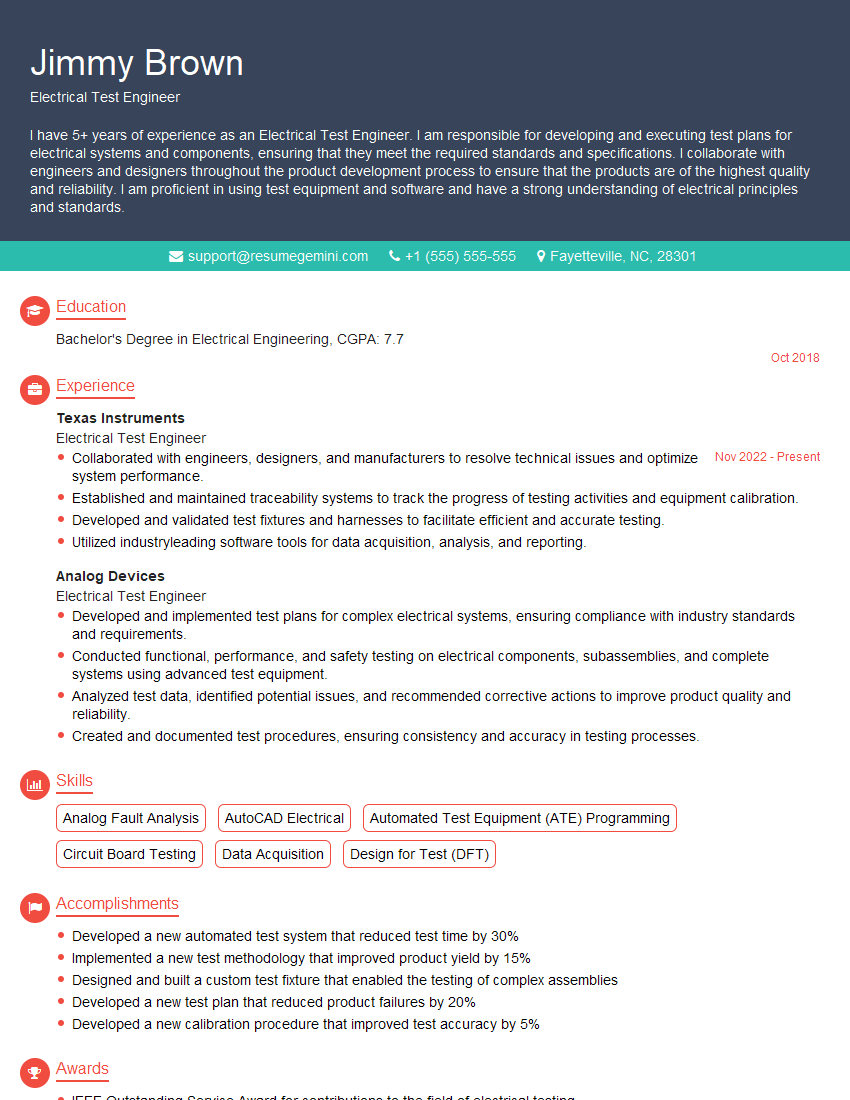
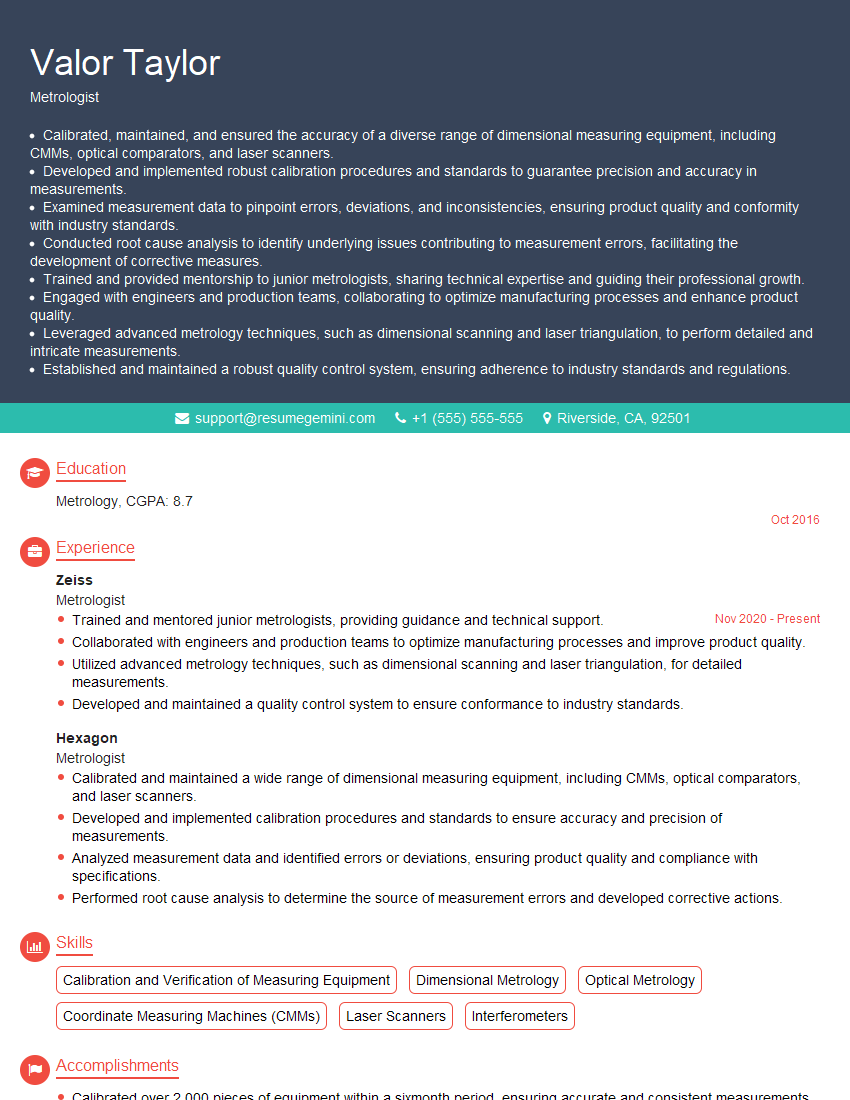
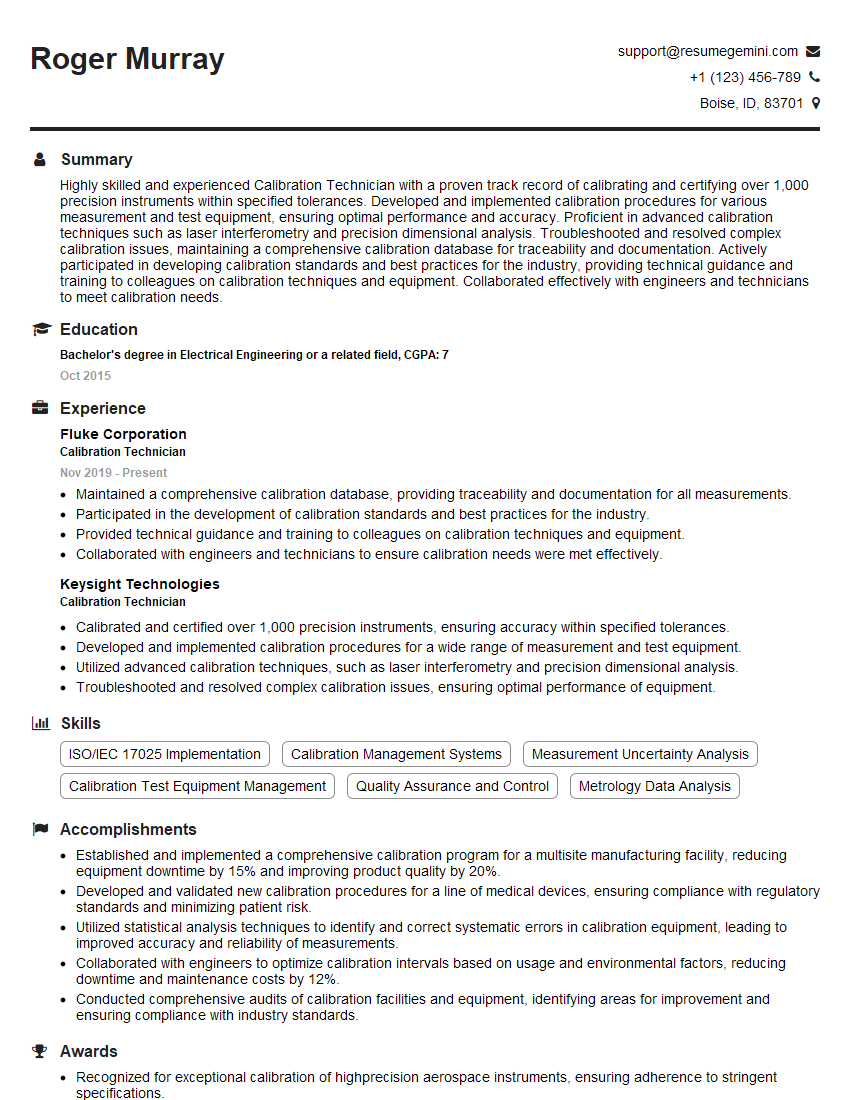
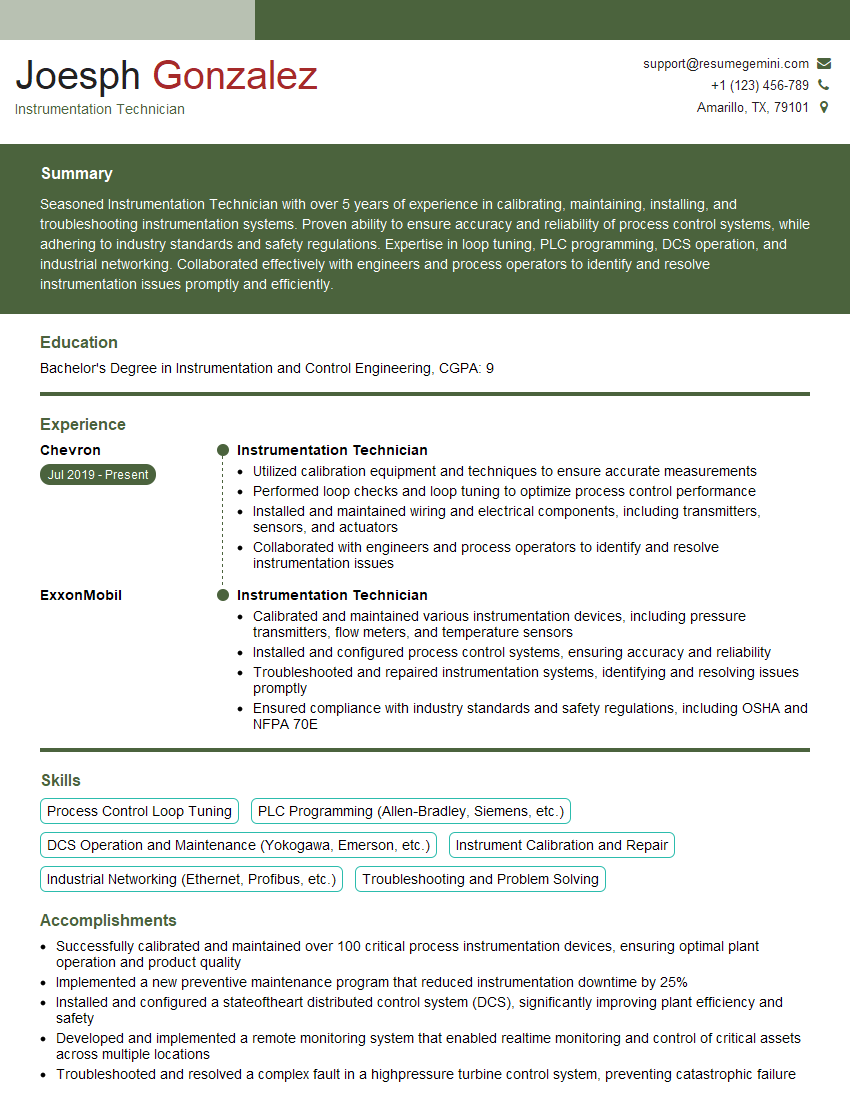
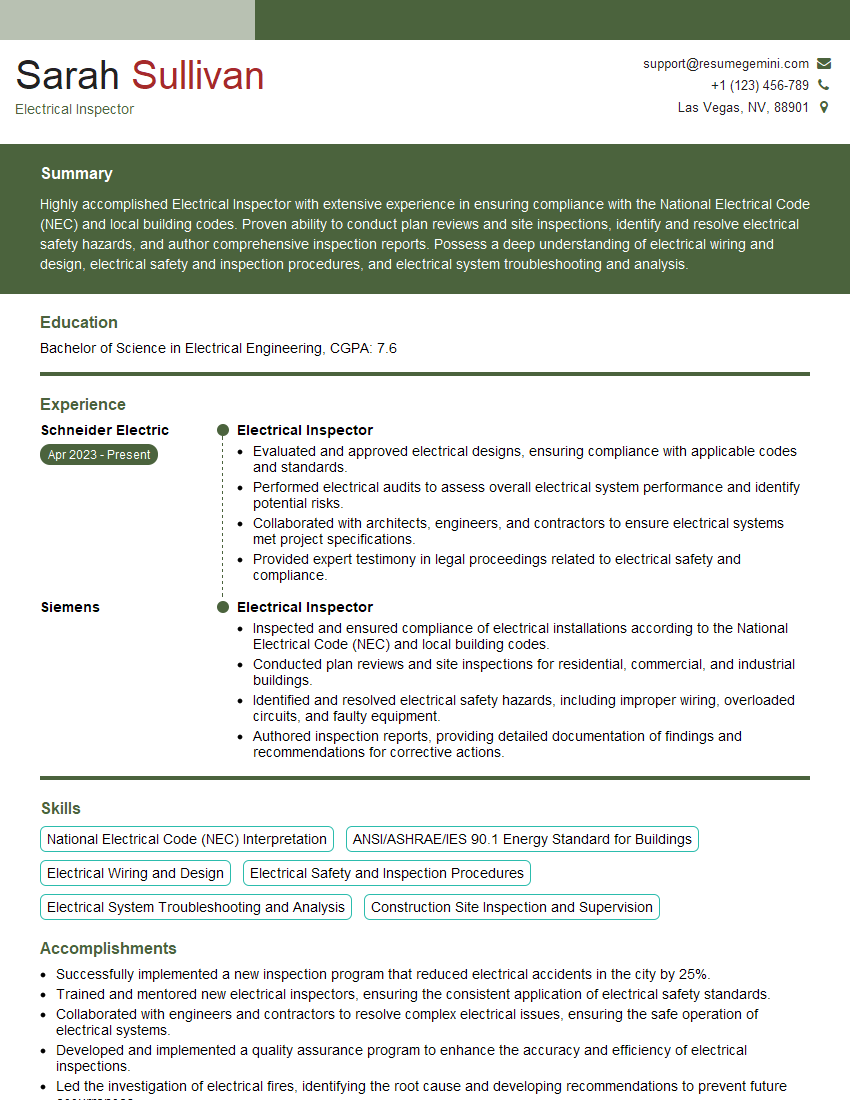
Mastering Electrical Equipment Testing and Calibration opens doors to exciting career opportunities in various industries, offering excellent growth potential and competitive salaries. A well-crafted resume is crucial for showcasing your skills and experience effectively to potential employers. Creating an ATS-friendly resume is key to getting your application noticed by Applicant Tracking Systems used by many companies. To help you build a powerful and effective resume, we recommend using ResumeGemini. ResumeGemini provides a user-friendly platform to create professional resumes, and we offer examples of resumes tailored specifically to Electrical Equipment Testing and Calibration to help you get started.
Explore more articles
Users Rating of Our Blogs
Share Your Experience
We value your feedback! Please rate our content and share your thoughts (optional).
What Readers Say About Our Blog
To the interviewgemini.com Webmaster.
Very helpful and content specific questions to help prepare me for my interview!
Thank you
To the interviewgemini.com Webmaster.
This was kind of a unique content I found around the specialized skills. Very helpful questions and good detailed answers.
Very Helpful blog, thank you Interviewgemini team.