Feeling uncertain about what to expect in your upcoming interview? We’ve got you covered! This blog highlights the most important Experience in working with power distribution systems interview questions and provides actionable advice to help you stand out as the ideal candidate. Let’s pave the way for your success.
Questions Asked in Experience in working with power distribution systems Interview
Q 1. Explain the difference between a radial and a meshed power distribution system.
The key difference between radial and meshed power distribution systems lies in their topology and how power flows. Imagine a radial system like the branches of a tree: power flows from a single source (the substation) along a single path to each consumer. If a fault occurs on any part of that branch, everything downstream loses power. A meshed system, on the other hand, is like a spiderweb; multiple paths exist between the source and consumers. If one path fails, power can still flow through alternative routes, providing much greater redundancy and reliability.
- Radial System: Simpler, less expensive to build initially, but less resilient to faults. A single fault can cause widespread outages. Common in rural areas with lower population density.
- Meshed System: More complex and expensive to build, but significantly more reliable. Faults are isolated more effectively, minimizing the impact on consumers. Common in urban areas and critical infrastructure sites where reliability is paramount.
For example, a small village might use a radial system, while a major city would almost certainly utilize a meshed system to maintain power supply during events like storms or equipment failures.
Q 2. Describe the role of protective relays in power distribution.
Protective relays are the nervous system of a power distribution system. They are sophisticated electronic devices that continuously monitor the electrical parameters of the system, such as current, voltage, and frequency. Their primary function is to quickly detect faults (like short circuits, ground faults, or overloads) and initiate the appropriate protective actions to isolate the fault and prevent damage to equipment and ensure safety. This isolation usually involves tripping circuit breakers.
Different types of relays are designed to detect specific types of faults. For instance, a distance relay measures the impedance to a fault and trips the breaker if the impedance is within a pre-defined range, while an overcurrent relay trips when the current exceeds a set threshold. The coordination of multiple relays is crucial to ensure that only the affected section of the system is isolated, while maintaining the power supply to other areas.
Think of them as highly trained security guards, instantly responding to any unusual activity to contain the threat and protect the rest of the system.
Q 3. What are the common causes of power outages in distribution systems?
Power outages in distribution systems can stem from a variety of causes, often intertwined and cascading. Some common culprits include:
- Severe Weather: Storms, high winds, lightning strikes, and ice accumulation can damage power lines, transformers, and other equipment.
- Equipment Failures: Aging infrastructure, faulty components (transformers, insulators, circuit breakers), and wear and tear contribute to outages.
- Tree Branches: Contact between tree branches and power lines is a frequent cause of outages, particularly during storms.
- Animals: Squirrels, birds, and other animals can cause short circuits by contacting power lines or equipment.
- Human Error: Accidents during construction, maintenance, or operation can lead to outages.
- Overloads: Unexpected surges in demand can overload the system, leading to equipment failure and outages.
Often, a single initiating event, such as a tree falling on a line, can trigger a cascade of failures leading to a larger outage if proper protective measures aren’t in place.
Q 4. How do you calculate voltage drop in a power distribution line?
Calculating voltage drop in a power distribution line is essential to ensure that the voltage at the load remains within acceptable limits. The voltage drop is primarily influenced by the line’s length, the current flowing through it, and the impedance of the conductor. The formula for calculating voltage drop is:
Voltage Drop (V) = I * Z
Where:
Iis the current flowing through the line (in Amperes).Zis the impedance of the line (in Ohms). This impedance is comprised of resistance (R) and reactance (X), often expressed as Z = R + jX, where ‘j’ is the imaginary unit. For simplification, we often use the total impedance. For a single phase circuit you could use Z=2*R.
The impedance (Z) itself depends on the conductor’s material, cross-sectional area, length, and operating temperature. These values are often found in manufacturer’s specifications or through lookup tables.
For three-phase systems, the calculation is slightly more complex, considering the phase configuration (e.g., delta or wye) and power factor. Specialized software tools or spreadsheets are often employed for these more complex calculations.
For example, let’s say we have a 100A current flowing through a 1000m long conductor with an impedance of 0.1 ohm/1000m. The total impedance is 0.1 ohms. Then Voltage Drop would be V = 100 * 0.1 = 10V.
Q 5. Explain the concept of power factor and its importance in distribution systems.
Power factor represents the efficiency of the electrical power usage in a system. It’s the ratio of the real power (used for actual work) to the apparent power (the total power supplied). It’s expressed as a value between 0 and 1 (or equivalently, as a percentage between 0% and 100%). A power factor of 1 indicates perfect efficiency, meaning all the supplied power is used for work. Values less than 1 indicate that some power is lost as reactive power, typically due to inductive loads (like motors and transformers).
Importance in Distribution Systems: A low power factor leads to several negative consequences:
- Increased Losses: Higher current flow for the same real power, resulting in greater resistive losses in transmission and distribution lines.
- Larger Equipment: Distribution equipment (transformers, cables) needs to be oversized to handle the higher apparent power, increasing costs.
- Reduced Efficiency: Overall efficiency of the system is reduced, leading to wasted energy and increased costs.
Power factor correction techniques, such as using capacitor banks, are employed to improve the power factor, reducing losses and improving the overall efficiency of the distribution system. Think of it like this: a low power factor is like driving a car with a leaky fuel tank; you’re wasting fuel (power) without getting the full benefit.
Q 6. What are the different types of transformers used in power distribution?
Several types of transformers are used in power distribution, each optimized for specific voltage levels and applications:
- Distribution Transformers: These are the workhorses of distribution systems, stepping down voltage from transmission levels (e.g., 115kV, 69kV) to lower voltage levels suitable for consumers (e.g., 120/240V, 480V). They are typically found on power poles or underground vaults.
- Pole-Mounted Transformers: Smaller, single-phase transformers mounted on utility poles, serving individual residential or small commercial customers.
- Pad-Mounted Transformers: Larger, three-phase transformers housed in weatherproof enclosures located underground, serving larger commercial or industrial customers.
- Substation Transformers: Larger, higher-capacity transformers located at substations, stepping down voltage from transmission lines to primary distribution levels.
- Autotransformers: These transformers have a single winding, with a common portion shared between the primary and secondary windings. They are sometimes used for voltage regulation or step-up/step-down applications within the distribution system.
The choice of transformer type depends on factors like voltage levels, capacity requirements, load characteristics, and environmental considerations.
Q 7. Describe the function of a circuit breaker in a power system.
Circuit breakers are safety devices designed to automatically interrupt the flow of electric current in the event of a fault or overload. They are essential components in power distribution systems, protecting equipment, and ensuring the safety of personnel.
Their function is to quickly and reliably open the circuit, isolating the faulty section from the rest of the system. This prevents damage to equipment, reduces the risk of fire, and minimizes the duration of power outages. Circuit breakers achieve this through various mechanisms, such as magnetic or thermal tripping mechanisms. Magnetic trips respond to high currents caused by short circuits, while thermal trips respond to overcurrents due to overloads.
Think of a circuit breaker as a sophisticated fire alarm; it detects a potential hazard (electrical fault or overload) and takes decisive action to prevent a larger problem.
Modern circuit breakers often incorporate features like remote monitoring and control, allowing for efficient system management and fault detection.
Q 8. Explain the principles of load flow analysis in power systems.
Load flow analysis is the process of determining the steady-state operating conditions of a power system. Think of it like figuring out how much electricity is flowing through each wire in a vast network at any given moment. It’s crucial for planning, operating, and controlling the power system efficiently and reliably.
The analysis involves solving a set of non-linear equations that represent the power balance at each bus (node) in the system. These equations consider the voltage magnitudes and angles at each bus, the impedance of the transmission lines, and the power injections (generation and load) at each bus. Several iterative methods, like the Gauss-Seidel or Newton-Raphson methods, are used to solve these equations.
For example, imagine a simple system with a generator, a load, and a transmission line connecting them. Load flow analysis would determine the voltage at the load bus, the current flowing through the line, and the power losses in the line, all under various load conditions. This information is crucial for ensuring the system operates within its limits and for optimizing power flow.
In practice, sophisticated software packages are used to perform load flow analysis on large-scale power systems, incorporating detailed models of generators, transformers, and transmission lines. The results guide decisions related to system planning, such as determining the optimal location and size of new generation units or transmission lines.
Q 9. What are the key considerations for grounding in a power distribution system?
Grounding in a power distribution system is vital for safety, equipment protection, and system stability. It provides a low-impedance path for fault currents to flow to the earth, preventing dangerous voltage buildup and protecting personnel and equipment.
- Safety: Grounding ensures that exposed conductive parts are at or near earth potential, minimizing the risk of electric shock.
- Equipment Protection: It limits the duration and magnitude of fault currents, preventing damage to equipment caused by overvoltages and excessive currents.
- System Stability: Grounding helps maintain system stability by preventing voltage imbalances and unwanted voltage surges.
Key considerations include the type of grounding system (e.g., solid grounding, resistance grounding, impedance grounding), the grounding electrode design (e.g., grounding rods, grids), and the grounding conductor size and material. The choice depends on factors such as voltage level, soil resistivity, and the type of fault protection used. For instance, a substation might utilize a sophisticated grounding grid to minimize impedance and effectively dissipate fault currents, while a residential system might rely on a simpler grounding rod.
Proper grounding design requires careful analysis of soil conditions and fault current levels to ensure effective fault clearing and personnel safety. Regular inspection and maintenance of the grounding system are also essential to ensure its continued effectiveness.
Q 10. How do you ensure the reliability of a power distribution system?
Ensuring the reliability of a power distribution system involves a multi-faceted approach that addresses various aspects of system design, operation, and maintenance.
- Redundancy: Incorporating redundant components, such as backup generators, parallel transmission lines, and multiple paths for power flow, ensures that the system can continue operating even if one component fails.
- Preventive Maintenance: Regular inspections, testing, and maintenance of equipment are crucial for preventing failures and ensuring optimal performance. This includes testing transformers, circuit breakers, and other critical components.
- Protective Relays and Circuit Breakers: These devices quickly detect and isolate faults, preventing them from cascading and causing widespread outages. The correct selection and setting of protective relays are vital for system reliability.
- System Monitoring and Control: Advanced monitoring systems allow for real-time observation of system conditions, enabling proactive identification and correction of potential problems. This might involve using SCADA (Supervisory Control and Data Acquisition) systems.
- Outage Management: Efficient outage management plans and procedures are crucial for minimizing the duration and impact of power outages. This includes having well-trained crews and readily available equipment for repairs.
For example, a utility company might implement a distributed generation strategy, incorporating multiple smaller generators throughout the distribution network instead of relying on a single large power plant. This enhances resilience by reducing the impact of localized failures.
Q 11. Describe different fault current protection schemes.
Fault current protection schemes are designed to detect and isolate faults in the power system quickly and safely. Several schemes exist, each with its strengths and weaknesses:
- Overcurrent Protection: This is the most common scheme, using overcurrent relays that trip circuit breakers when the current exceeds a predetermined threshold. It’s simple and reliable but can be slow to respond to some types of faults.
- Differential Protection: This scheme compares the currents entering and leaving a protected zone (e.g., a transformer). Any difference indicates a fault within the zone, triggering a rapid trip. It’s highly sensitive and selective.
- Distance Protection: This scheme measures the impedance between the relay location and the fault point. It’s effective for protecting long transmission lines and is less susceptible to inrush currents during motor starting.
- Pilot Protection: This scheme uses communication channels between relays at both ends of a line to detect faults. It provides extremely fast fault clearing and is very selective.
- Ground Fault Protection: This scheme specifically detects faults involving ground, often using current transformers to monitor ground currents. It’s crucial for safety and equipment protection.
The choice of protection scheme depends on various factors, including the type of equipment being protected, the fault current levels, and the desired speed of fault clearing. Often, multiple protection schemes are used in combination to enhance reliability and selectivity.
Q 12. What are the challenges of integrating renewable energy sources into the distribution grid?
Integrating renewable energy sources (RES), such as solar and wind power, into the distribution grid presents several challenges:
- Intermittency: RES generation is inherently intermittent, fluctuating with weather conditions. This variability makes it difficult to predict and manage power flow, potentially impacting grid stability.
- Voltage Regulation: The distributed nature of RES can cause voltage fluctuations and instability in the grid, especially in areas with high penetration of RES. Voltage regulation equipment is needed to mitigate this issue.
- Power Quality: RES can introduce harmonics and other power quality issues into the grid, requiring the use of filtering devices and appropriate grid design.
- Grid Infrastructure: The existing grid infrastructure may not be adequately designed to accommodate the bidirectional power flows associated with RES. Upgrades and modernization may be necessary.
- Protection Schemes: Traditional protection schemes may need to be adapted to handle the unique characteristics of RES integration. Fast and reliable protection is needed to prevent cascading failures.
For example, the unpredictable nature of wind power necessitates the use of advanced forecasting techniques and energy storage solutions to maintain grid stability. Similarly, the integration of large-scale solar farms might require upgrading the grid’s transmission capacity and implementing sophisticated voltage control systems.
Q 13. Explain the concept of smart grid technologies and their application in power distribution.
Smart grid technologies leverage advanced sensors, communication networks, and data analytics to enhance the efficiency, reliability, and sustainability of the power distribution system. Think of it as adding intelligence and automation to the traditional grid.
- Advanced Metering Infrastructure (AMI): Smart meters provide real-time data on energy consumption, allowing for better demand-side management and improved energy efficiency.
- Distribution Automation: Automated switches, reclosers, and capacitor banks allow for faster fault isolation and restoration, minimizing outage durations.
- Wide-Area Monitoring and Control: Comprehensive monitoring systems provide a real-time overview of the entire grid, enabling proactive management of system conditions and improved stability.
- Demand Response Programs: Smart grid technologies enable utilities to incentivize consumers to shift their energy consumption patterns, reducing peak demand and improving grid efficiency.
- Integration of Renewable Energy Sources: Smart grid technologies facilitate the seamless integration of RES by providing advanced forecasting, control, and grid management capabilities.
For instance, a smart grid might automatically reroute power around a faulty section of the network, reducing the impact of an outage. Or it might dynamically adjust voltage levels to accommodate changes in renewable energy generation, maintaining system stability.
Q 14. What are the safety procedures you follow when working on high-voltage equipment?
Safety is paramount when working on high-voltage equipment. A strict adherence to established safety procedures is non-negotiable.
- Lockout/Tagout Procedures: Before any work begins, the equipment must be completely de-energized and locked out, preventing accidental re-energization. A tag clearly identifying the worker and the work being performed must be attached.
- Personal Protective Equipment (PPE): Appropriate PPE, including insulated gloves, safety glasses, and arc flash protective clothing, must be worn at all times. The selection of PPE depends on the voltage level and the type of work being performed.
- Grounding and Bonding: Equipment must be properly grounded and bonded to prevent the buildup of static electricity and protect workers from electric shock.
- Permit-to-Work System: A formal permit-to-work system is typically required for high-voltage work, ensuring that all safety precautions are followed and the work is properly supervised.
- Training and Competence: Workers must receive adequate training and demonstrate competency before being allowed to work on high-voltage equipment. Regular refresher training is crucial to maintain skills and awareness of safety procedures.
- Emergency Response Plan: A well-defined emergency response plan must be in place, including procedures for handling electrical shocks, fires, and other potential hazards.
Ignoring these safety procedures can lead to severe injury or death. Safety should never be compromised.
Q 15. Describe your experience with SCADA systems in power distribution.
SCADA, or Supervisory Control and Data Acquisition, systems are the backbone of modern power distribution networks. They allow operators to monitor and control the entire system remotely, from a central location. My experience encompasses working with various SCADA platforms, including those based on IEC 61850 standards, which allows for interoperability between different vendor equipment. I’ve been involved in projects ranging from the design and implementation of new SCADA systems for greenfield projects to the upgrade and modernization of legacy systems in existing infrastructure. This involves tasks like configuring communication protocols (like Modbus, DNP3, and IEC 104), designing human-machine interfaces (HMIs) for intuitive monitoring and control, and developing alarm management strategies to ensure timely response to critical events. For example, in one project, we implemented a new SCADA system that reduced response times to power outages by 40% through improved alarm filtering and automated switching procedures.
I am also proficient in data analysis using SCADA data, helping optimize grid operations, predict equipment failures using predictive maintenance techniques and enhance overall grid reliability. This often involves integrating SCADA data with other sources, like weather data, to develop more comprehensive operational models.
Career Expert Tips:
- Ace those interviews! Prepare effectively by reviewing the Top 50 Most Common Interview Questions on ResumeGemini.
- Navigate your job search with confidence! Explore a wide range of Career Tips on ResumeGemini. Learn about common challenges and recommendations to overcome them.
- Craft the perfect resume! Master the Art of Resume Writing with ResumeGemini’s guide. Showcase your unique qualifications and achievements effectively.
- Don’t miss out on holiday savings! Build your dream resume with ResumeGemini’s ATS optimized templates.
Q 16. How do you troubleshoot faults in a power distribution system?
Troubleshooting faults in power distribution systems is a systematic process that combines technical knowledge with practical problem-solving skills. My approach typically involves these steps:
- Safety First: Always prioritize safety. De-energize the affected section before starting any physical inspection. Lockout/Tagout procedures are crucial.
- Data Acquisition: Gather information from SCADA systems, fault recorders, and other monitoring equipment to pinpoint the location and nature of the fault (e.g., overcurrent, undervoltage, ground fault).
- Visual Inspection: Conduct a thorough visual inspection of the affected equipment, looking for signs of damage like burnt conductors, damaged insulators, or loose connections.
- Testing and Measurement: Use specialized equipment like multimeters, insulation testers, and clamp meters to verify readings and identify the root cause of the fault. This might involve checking voltage, current, resistance, and insulation levels.
- Corrective Actions: Once the root cause is identified, implement the necessary repairs or replacements. This could range from tightening loose connections to replacing damaged equipment.
- Verification and Documentation: After completing the repairs, verify that the system is functioning correctly. Thorough documentation of the fault, the troubleshooting process, and the corrective actions taken is critical for future reference and analysis.
For example, I once investigated a recurring fault on a distribution feeder. Through meticulous data analysis and field testing, I discovered that the issue was caused by repeated lightning strikes affecting the surge arresters. Replacing the outdated arresters with more robust ones permanently solved the problem.
Q 17. Explain the importance of power system stabilization.
Power system stabilization is paramount for maintaining the stability and reliability of the entire power grid. Instabilities can lead to cascading outages, widespread blackouts, and significant economic losses. Think of it like balancing a bicycle – constant adjustments are needed to maintain equilibrium. Similarly, power systems require continuous adjustments to maintain frequency and voltage within acceptable limits, especially during disturbances like sudden load changes or faults.
Stabilization is achieved through various methods, including:
- Automatic Voltage Regulators (AVRs): These devices maintain constant voltage at generator terminals.
- Power System Stabilizers (PSS): These devices improve the dynamic stability of generators by providing supplementary excitation control.
- FACTS (Flexible AC Transmission Systems) devices: Devices like Static Synchronous Compensators (STATCOMs) and Static Synchronous Series Compensators (SSSCs) provide fast-acting voltage and power flow control.
- Load Shedding Schemes: These are emergency measures to quickly reduce demand during critical situations.
Without effective stabilization strategies, even minor disturbances can escalate into major system disruptions, highlighting the critical importance of robust stabilization techniques.
Q 18. What are the different types of insulators used in power transmission and distribution?
Insulators are crucial components in power transmission and distribution systems, preventing current flow to the ground and ensuring safety. The choice of insulator depends on voltage levels, environmental conditions (pollution, temperature), and other factors. Common types include:
- Porcelain Insulators: These are widely used due to their high mechanical strength, good dielectric strength, and resistance to weathering. They are commonly used in overhead lines.
- Glass Insulators: These offer similar properties to porcelain but are often more resistant to cracking due to thermal shock. They are commonly used for lower voltage applications.
- Polymer Insulators: These are increasingly popular due to their high strength-to-weight ratio, hydrophobicity (water repellency), and lower manufacturing cost. However, long-term performance in harsh environments needs to be carefully evaluated.
- Composite Insulators: These combine the advantages of different materials, often incorporating a fiberglass core for strength and a polymeric housing for insulation.
Selecting the appropriate insulator type is crucial for system reliability and safety. For example, in heavily polluted areas, polymer insulators with hydrophobic coatings are preferred to reduce the risk of flashover (electrical discharge across the insulator).
Q 19. Describe your experience with power system simulation software.
I have extensive experience with various power system simulation software packages, including ETAP, PSCAD, and PowerWorld Simulator. These tools are essential for planning, designing, and analyzing power systems. My work with these tools has included:
- Steady-State Analysis: Performing load flow studies to determine voltage profiles and power flows throughout the system.
- Transient Stability Analysis: Simulating the system’s response to faults and disturbances to ensure stability.
- Fault Analysis: Determining the impact of faults on system components and protective devices.
- Protection Coordination Studies: Ensuring that protective devices operate correctly to isolate faults and minimize disruption.
- Harmonics Analysis: Modeling the effects of harmonic currents on the system.
For instance, I used PSCAD to simulate the impact of a proposed renewable energy integration project on the overall grid stability. The simulation helped identify potential issues and allowed us to implement appropriate mitigation strategies before the project’s implementation. This kind of pre-emptive analysis prevents costly and time-consuming issues that might arise after construction is complete.
Q 20. Explain the concept of power system harmonics and their effects.
Power system harmonics are sinusoidal waves with frequencies that are integer multiples of the fundamental frequency (typically 50Hz or 60Hz). They’re caused by nonlinear loads like rectifiers, variable speed drives, and switch-mode power supplies. These loads draw non-sinusoidal currents, which contain harmonic components. These harmonic currents can have several detrimental effects:
- Overheating of equipment: Harmonic currents increase the RMS current, leading to increased losses and overheating in transformers, cables, and other components.
- Malfunctioning of sensitive equipment: Harmonics can interfere with the operation of sensitive electronic equipment, causing malfunctions or failures.
- Increased losses in transformers: Harmonics cause additional iron losses and eddy current losses in transformers.
- Resonance: Harmonics can cause resonance in the power system, resulting in excessive voltage or current magnitudes.
- Relay misoperation: Harmonic currents can affect the operation of protective relays, leading to incorrect tripping.
Mitigation techniques include using harmonic filters, selecting appropriate equipment with low harmonic generation, and improving power factor correction. I’ve worked on projects where we implemented harmonic filters to reduce harmonic levels and prevent equipment damage in industrial facilities.
Q 21. What are the different methods for voltage regulation in power distribution?
Voltage regulation is crucial for maintaining a stable and reliable power distribution system. Variations in voltage can damage equipment and impact the quality of service. Several methods are used for voltage regulation:
- Tap-Changing Transformers: These transformers have taps on their windings that allow the voltage ratio to be adjusted, thereby regulating the output voltage. They are relatively slow-acting but highly effective for long-term voltage control.
- Voltage Regulators: These devices automatically adjust the voltage at a specific point in the system using various techniques, such as buck-boost transformers or solid-state switching.
- Switched Capacitor Banks: These banks of capacitors are switched on or off to compensate for reactive power demand and regulate voltage.
- FACTS Devices: Devices like STATCOMs and SVCs (Static Var Compensators) provide fast and precise voltage regulation, particularly beneficial for dynamic load changes and improving power quality.
- Load Tap Changers (LTCs): Located on distribution transformers, LTCs adjust the turns ratio to maintain the voltage at the secondary winding.
The choice of method depends on factors like the voltage level, the size of the area to be regulated, and the desired response time. For example, in a large industrial facility with fluctuating loads, a combination of tap-changing transformers and STATCOMs might be used to achieve optimal voltage regulation.
Q 22. How do you perform load forecasting for a power distribution system?
Load forecasting in power distribution systems predicts future electricity demand. It’s crucial for reliable system operation, efficient resource allocation, and preventing outages. We use various methods, combining historical data analysis with advanced forecasting techniques.
- Historical Data Analysis: This involves examining past load patterns, considering factors like time of day, day of the week, season, and weather. Simple methods like moving averages can be used, but more sophisticated statistical models like ARIMA (Autoregressive Integrated Moving Average) are often preferred for greater accuracy.
- Regression Analysis: This statistical technique helps identify correlations between load demand and influencing factors. For example, we can model the relationship between temperature and electricity consumption for air conditioning use. This allows us to predict load based on weather forecasts.
- Machine Learning: Advanced techniques like neural networks and support vector machines are increasingly employed for improved forecasting accuracy. These models can capture complex non-linear relationships and adapt to changing patterns. For instance, a neural network can learn the impact of factors like economic activity and population growth on future load.
- External Data Integration: Incorporating external data, such as weather forecasts, economic indicators, and public holidays, greatly enhances the accuracy of predictions.
For example, in a project involving a large commercial district, we used a combination of ARIMA and regression analysis incorporating weather forecasts to predict peak demand during summer months. This allowed the utility company to optimize its generation scheduling and avoid potential overloads.
Q 23. Describe your experience with power system studies (short circuit, load flow, etc.).
Power system studies are essential for planning, designing, and operating power distribution systems safely and reliably. My experience encompasses a range of these studies, including short circuit, load flow, and harmonic studies.
- Short Circuit Studies: These determine the magnitude and duration of fault currents under various fault conditions (e.g., three-phase, single-line-to-ground). This is crucial for selecting appropriate protective devices like circuit breakers and fuses to ensure efficient fault clearing. I’ve utilized software packages like ETAP and EasyPower for these analyses, incorporating detailed system models including transformers, cables, and protective relays.
- Load Flow Studies: These analyze the steady-state operation of the system under normal operating conditions. They determine voltage levels, power flows in lines and transformers, and losses in the system. Load flow studies help assess the system’s ability to meet load demands and identify potential voltage violations. I’ve used these studies to optimize power factor correction, identify areas needing voltage regulation, and plan for system upgrades.
- Harmonic Studies: These assess the impact of non-linear loads (e.g., computers, variable speed drives) on the power system. Harmonics can cause overheating of equipment and interference with sensitive electronic devices. Harmonic studies help determine the level of harmonic distortion and specify appropriate mitigation measures, such as harmonic filters.
In one project, a load flow study identified potential voltage sags in a newly developed area. By strategically placing capacitor banks, we were able to mitigate the issue and avoid costly upgrades.
Q 24. What are the key performance indicators (KPIs) for a power distribution system?
Key Performance Indicators (KPIs) for power distribution systems reflect the efficiency, reliability, and safety of the system. Some critical KPIs include:
- System Average Interruption Duration Index (SAIDI): The average duration of interruptions per customer per year. Lower SAIDI indicates higher reliability.
- System Average Interruption Frequency Index (SAIFI): The average number of interruptions per customer per year. Lower SAIFI suggests improved system stability.
- Customer Average Interruption Duration Index (CAIDI): The average time it takes to restore power to a customer after an interruption. Shorter CAIDI implies efficient fault repair and restoration processes.
- Power Quality Metrics: These include measures of voltage sags, swells, and harmonics which affect the quality of electricity supplied to customers. Low values for these metrics indicate better power quality.
- Energy Losses: The percentage of generated power lost in transmission and distribution. Minimizing energy losses enhances efficiency and reduces costs.
- Operating Costs: This encompasses the costs of maintenance, repairs, and operation of the distribution system.
Monitoring these KPIs allows for proactive system management, identifying areas needing improvement and justifying investments in upgrades and maintenance.
Q 25. Explain the principles of distribution automation.
Distribution automation involves using advanced technologies to remotely monitor, control, and protect the power distribution system. This improves operational efficiency, enhances reliability, and reduces costs. The core principles are:
- Remote Monitoring: Sensors and smart meters collect real-time data on voltage, current, power, and other system parameters, transmitting this information to a central control system.
- Intelligent Control: Automated control systems use algorithms and software to analyze the data and make decisions to optimize system operation, such as switching on/off lines, adjusting voltage levels, and isolating faults.
- Advanced Protection: Sophisticated protection relays and fault locators quickly detect and isolate faults, minimizing the extent and duration of power outages. Protection schemes can automatically reconfigure the system around faults, enhancing resiliency.
- Data Analytics: Analyzing vast amounts of real-time and historical data improves system understanding and enables predictive maintenance, preventing potential issues before they occur.
A practical example is the use of automated fault sectionalizers which can isolate a faulted section of the network without interrupting power to the rest of the customers. This significantly improves restoration time compared to traditional manual switching operations.
Q 26. How do you manage the impact of distributed generation on the power distribution network?
Distributed generation (DG), such as rooftop solar panels and small wind turbines, significantly impacts power distribution networks. Managing this impact requires careful planning and coordination.
- Voltage Regulation: DG can cause voltage rises, especially near the point of connection. Voltage regulation measures such as voltage regulators and capacitor banks are often needed to maintain voltage levels within acceptable limits.
- Protection Coordination: DG introduces new protection challenges. Protective devices need to be properly coordinated to ensure that faults are cleared quickly and safely without interfering with the operation of the DG units.
- Power Flow Studies: These studies are crucial to evaluate the impact of DG on the power flow patterns in the distribution network. It helps in determining the capacity of the existing infrastructure to accommodate the DG output and identify areas that require upgrading.
- Grid Integration Studies: These studies assess the ability of the grid to handle the intermittent nature of some DG sources (e.g., solar and wind). These might include stability studies to ensure grid stability when DG is fluctuating.
- Reverse Power Flow Management: DG can cause reverse power flow, which requires appropriate measures to manage this flow to protect equipment and ensure stability. This might involve using advanced grid control schemes to maintain unidirectional power flow.
In one project, we integrated several solar farms into a rural distribution network. Detailed power flow and grid integration studies were performed to ensure safe and reliable operation, including upgrades to the substation equipment and protective relay settings.
Q 27. Describe your experience with the design and implementation of power distribution projects.
My experience spans the entire lifecycle of power distribution projects, from initial design and planning to implementation, testing, and commissioning.
- Design Phase: This involves developing the system architecture, selecting equipment, and creating detailed drawings and specifications. Software tools like AutoCAD and GIS are heavily utilized during this phase.
- Procurement: Sourcing and procuring equipment and materials based on the design specifications, ensuring cost-effectiveness and quality.
- Construction and Implementation: Overseeing the installation of equipment and infrastructure, following safety regulations and quality control procedures.
- Testing and Commissioning: Thoroughly testing the system to ensure it meets design requirements and safety standards before handing it over to the operator.
For instance, I led a project to upgrade a sub-transmission network serving a growing urban area. This involved designing and implementing new substations, upgrading existing lines, and implementing advanced protection schemes. We successfully completed the project on time and within budget while meeting all the performance requirements.
Q 28. What are the emerging trends in power distribution systems?
Several emerging trends are shaping the future of power distribution systems:
- Smart Grid Technologies: This involves the deployment of advanced metering infrastructure (AMI), communication networks, and distributed intelligence to enhance grid efficiency, reliability, and resilience.
- Increased Penetration of Renewable Energy: Integrating renewable sources like solar and wind power requires advanced grid management techniques to handle their intermittent nature and ensure grid stability.
- Microgrids and Distributed Energy Resources (DER): These systems enable localized generation and consumption, enhancing resilience and reducing reliance on the main grid.
- Artificial Intelligence (AI) and Machine Learning (ML): These technologies are being increasingly utilized for predictive maintenance, fault detection, and system optimization.
- Cybersecurity Enhancements: Protecting the power distribution system from cyber threats is becoming increasingly crucial to ensure reliable operation and prevent major disruptions.
- Electric Vehicle (EV) Integration: The widespread adoption of EVs poses significant challenges to the distribution grid, requiring upgrades to accommodate increased load and potential voltage fluctuations. This needs careful grid planning and the potential implementation of smart charging strategies.
These trends are creating a more complex and dynamic power distribution landscape, requiring advanced planning, innovative solutions, and robust cybersecurity measures.
Key Topics to Learn for Power Distribution Systems Interviews
- Power System Analysis: Understanding fundamental concepts like load flow analysis, fault calculations, and power system stability. Consider practical applications like analyzing system performance under various operating conditions and identifying potential vulnerabilities.
- Protection and Control Systems: Familiarize yourself with relay protection schemes, circuit breakers, and protective devices. Think about practical applications like designing protection schemes for specific power system components and troubleshooting protection system malfunctions.
- Substation Design and Operation: Gain a solid understanding of substation components, including transformers, switchgear, and busbars. Explore practical applications such as planning substation expansions and optimizing substation operations for efficiency and safety.
- Distribution System Planning and Optimization: Learn about load forecasting, capacity planning, and system upgrades. Consider practical applications such as developing a plan to meet future load growth and improving the reliability of the distribution system.
- Renewable Energy Integration: Understand the challenges and opportunities associated with integrating renewable energy sources (solar, wind) into existing power distribution systems. Explore practical applications such as designing grid-connected renewable energy systems and addressing grid stability concerns.
- Power Quality Issues: Become familiar with common power quality problems, such as harmonics, voltage sags, and transients. Explore practical applications such as identifying the causes of power quality problems and implementing mitigation strategies.
- SCADA and Smart Grid Technologies: Familiarize yourself with Supervisory Control and Data Acquisition (SCADA) systems and other smart grid technologies used in modern power distribution systems. Consider practical applications such as monitoring system performance in real-time and implementing automated control strategies.
Next Steps
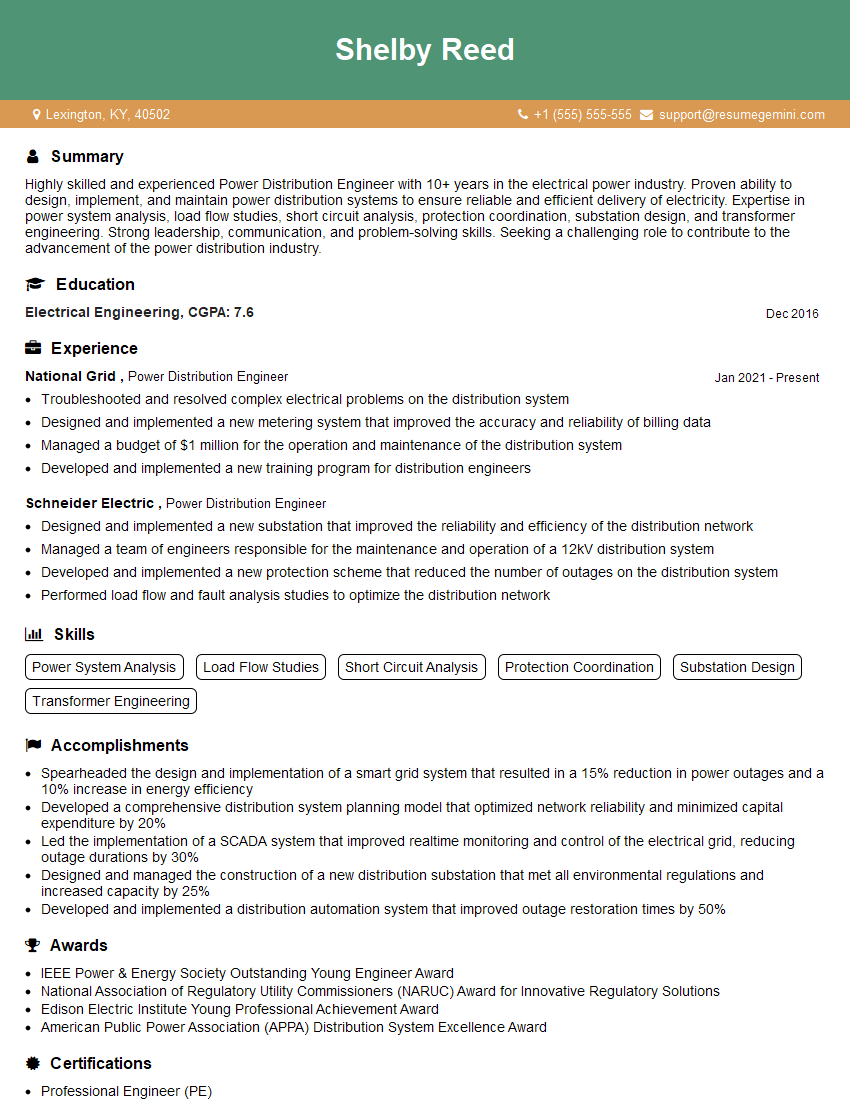
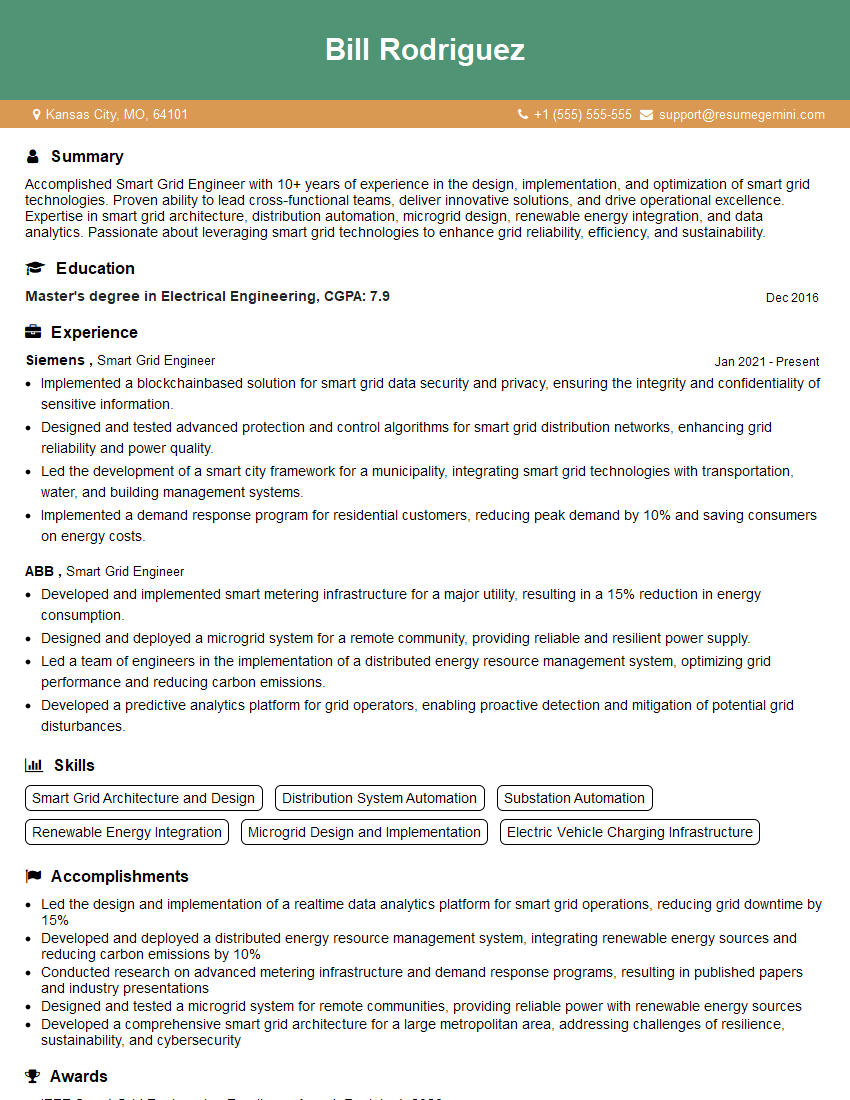
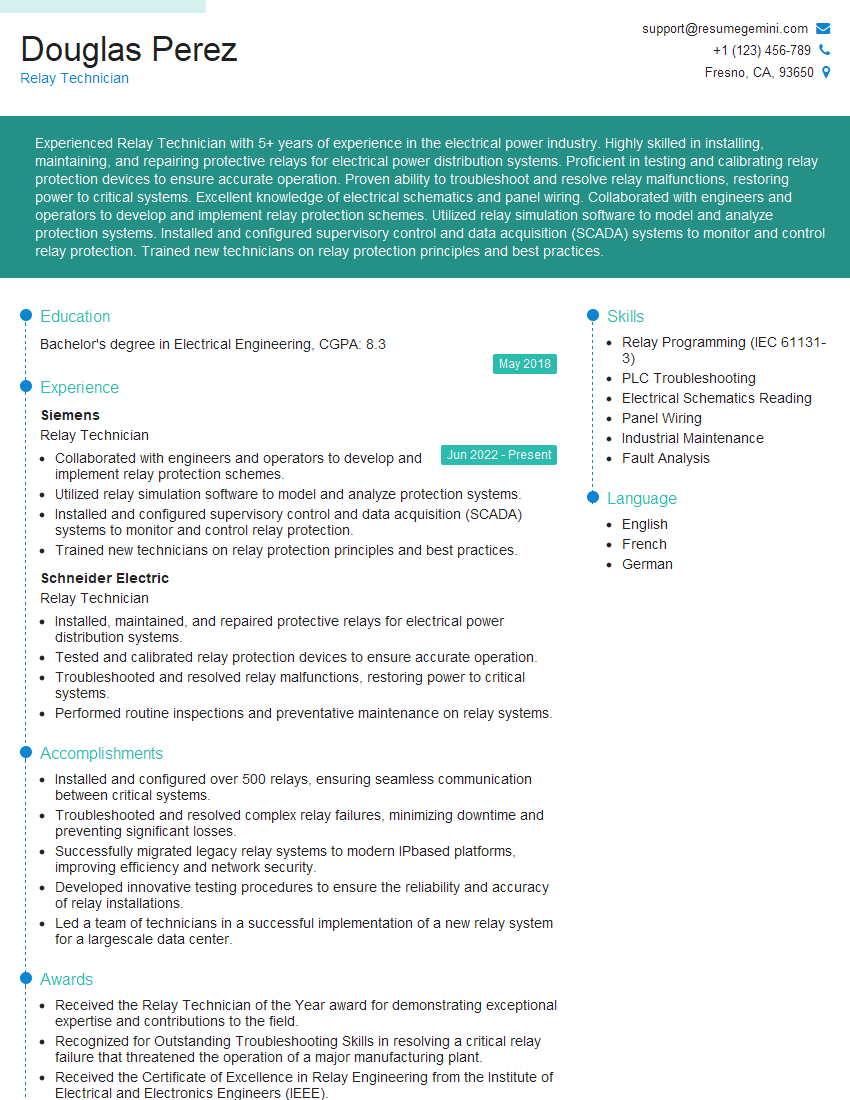
Mastering the intricacies of power distribution systems is crucial for career advancement in the energy sector, opening doors to exciting opportunities and higher earning potential. To stand out from the competition, crafting a compelling and ATS-friendly resume is essential. ResumeGemini is a trusted resource that can help you build a professional and effective resume tailored to highlight your expertise. Leverage ResumeGemini’s tools and resources to showcase your skills and experience. Examples of resumes tailored to power distribution systems experience are available to help guide your resume building process. Take the next step in your career journey – build your best resume with ResumeGemini today!
Explore more articles
Users Rating of Our Blogs
Share Your Experience
We value your feedback! Please rate our content and share your thoughts (optional).
What Readers Say About Our Blog
To the interviewgemini.com Webmaster.
Very helpful and content specific questions to help prepare me for my interview!
Thank you
To the interviewgemini.com Webmaster.
This was kind of a unique content I found around the specialized skills. Very helpful questions and good detailed answers.
Very Helpful blog, thank you Interviewgemini team.