Interviews are opportunities to demonstrate your expertise, and this guide is here to help you shine. Explore the essential Grief Education interview questions that employers frequently ask, paired with strategies for crafting responses that set you apart from the competition.
Questions Asked in Grief Education Interview
Q 1. Explain the Kübler-Ross model of grief and its limitations.
The Kübler-Ross model, also known as the five stages of grief, proposes that individuals experiencing loss progress through denial, anger, bargaining, depression, and acceptance. It’s a widely recognized framework, but it’s crucial to understand its limitations. It’s not a linear process; people don’t necessarily experience these stages in order, nor do they experience all of them. Some individuals might skip stages entirely, while others may cycle through them repeatedly. Furthermore, the model can be overly simplistic, failing to account for the diverse and complex ways individuals grieve. For instance, it doesn’t adequately address the impact of cultural differences or pre-existing mental health conditions on the grieving process. Thinking of it as a roadmap is misleading; it’s more accurate to consider it as a potential range of emotional responses.
For example, someone grieving the loss of a spouse might experience intense anger initially, followed by periods of bargaining (‘If only I had done this differently…’), then prolonged sadness, and eventually, a gradual acceptance of their new reality. However, another individual might predominantly experience a quiet sadness without overtly expressing anger or bargaining. The model provides a starting point for understanding grief but shouldn’t be treated as a rigid prescription.
Q 2. Describe different grief reactions and their potential manifestations.
Grief reactions are incredibly varied and depend on individual factors, the nature of the loss, and available support systems. Manifestations can be emotional, physical, cognitive, and behavioral. Emotional reactions include sadness, anger, guilt, anxiety, fear, and loneliness. Physical manifestations can range from fatigue and sleep disturbances to appetite changes, headaches, and even physical pain. Cognitive reactions may include difficulty concentrating, memory problems, and intrusive thoughts. Behaviorally, individuals may withdraw socially, experience changes in work performance, neglect self-care, or engage in risky behaviors.
For instance, someone grieving the loss of a child might experience overwhelming sadness, coupled with intense guilt and self-blame. Physically, they might experience exhaustion and insomnia. Cognitively, they might struggle to remember details from their life before the loss. Behaviorally, they may isolate themselves from friends and family. It’s important to remember that these reactions are normal responses to profound loss, even if they seem overwhelming or unusual.
Q 3. How do you approach working with individuals experiencing complicated grief?
Complicated grief is characterized by persistent and debilitating symptoms that interfere significantly with daily functioning. It’s not simply prolonged grief; it’s a distinct condition requiring specialized intervention. My approach involves a multi-faceted strategy. First, it’s crucial to build a strong therapeutic alliance based on trust and empathy. I use evidence-based therapies like Cognitive Behavioral Therapy (CBT) to help individuals identify and challenge maladaptive thought patterns and behaviors contributing to their distress. Trauma-informed care is also essential, acknowledging that the loss itself might have been traumatic.
Secondly, I collaborate with the individual to develop coping mechanisms and strategies for managing intense emotions. This might include mindfulness techniques, journaling, or engaging in activities that bring comfort or a sense of purpose. Finally, I encourage and support the building of a strong support network, connecting individuals with appropriate resources such as peer support groups or specialized bereavement services. Working with individuals experiencing complicated grief requires patience, sensitivity, and a collaborative approach, focusing on helping them find a pathway towards healing and integration of their loss.
Q 4. What are the ethical considerations in providing grief education?
Ethical considerations in grief education are paramount. Maintaining confidentiality is crucial; respecting the individual’s privacy and ensuring that information shared in a therapeutic setting is not disclosed without consent is paramount. Practitioners must avoid imposing their own beliefs or values on those they work with, respecting diverse cultural and religious perspectives on death and dying. It’s also essential to avoid making promises that cannot be kept and to acknowledge the limits of one’s expertise, referring individuals to other professionals when necessary.
Furthermore, maintaining professional boundaries is essential, avoiding dual relationships or exploiting the vulnerability of those experiencing grief. Continuous professional development is crucial to ensure practitioners stay abreast of the latest research and best practices in the field. Open and honest communication about the therapeutic process, including its limitations, is essential for building trust and fostering a collaborative therapeutic relationship.
Q 5. Discuss the impact of cultural and religious beliefs on grief.
Culture and religious beliefs significantly shape the expression and experience of grief. Some cultures may encourage open expressions of emotion, while others may emphasize stoicism or restraint. Religious beliefs may offer comfort and meaning through rituals, beliefs about the afterlife, and a framework for understanding loss. For example, in some cultures, elaborate mourning rituals are practiced, involving specific clothing, food, and social interactions. In contrast, other cultures may prioritize a more private and subdued approach to grieving.
Understanding these cultural and religious nuances is crucial for providing culturally sensitive grief support. It’s essential to avoid imposing one’s own worldview and instead create a safe and respectful space where individuals can grieve in ways that are meaningful to them. This involves educating oneself about different cultural and religious perspectives on death and dying and adapting one’s approach accordingly. For example, understanding the importance of specific rituals or traditions in a particular culture can inform how support is provided.
Q 6. How do you adapt your approach to grief support based on age and developmental stage?
Adapting my approach to grief support based on age and developmental stage is essential. Children grieve differently than adults; their understanding of death and loss is limited by their cognitive development. Young children may not fully grasp the concept of permanence, leading to confusion and inconsistent emotional responses. With adolescents, grief may be intertwined with identity formation and other developmental tasks, potentially impacting their self-esteem and future aspirations. Adults, particularly older adults, may have experienced multiple losses and may have different coping mechanisms and support systems. They may also grapple with existential questions about their own mortality.
My approach involves using age-appropriate language and activities. With younger children, play therapy, storytelling, and creative arts can be valuable tools. With adolescents, providing a safe space for expressing their feelings and validating their experience is crucial. With adults, focusing on building resilience, exploring meaning-making, and fostering social connections is key. I always tailor my approach to the individual’s unique needs and developmental context, adapting my techniques and communication style accordingly.
Q 7. Explain your experience facilitating grief support groups.
Facilitating grief support groups has been a profoundly rewarding aspect of my work. I’ve found that the shared experience of loss creates a powerful sense of connection and understanding among participants. Creating a safe and non-judgmental space where individuals can share their experiences, validate their emotions, and learn from one another is essential. I structure the groups around a theme or topic each session; this provides a framework for discussion while remaining flexible to address the immediate needs and concerns of the members. I use active listening and reflective techniques to facilitate sharing, while also ensuring that all members feel heard and respected. My role is not to ‘fix’ or solve problems but to support members in their own journey of healing.
I’ve witnessed firsthand the transformative power of peer support, where individuals find comfort and strength in knowing they are not alone in their grief. The group setting allows for a dynamic exchange of experiences and strategies for coping, creating a sense of community and hope. Ethical considerations, such as confidentiality and maintaining group cohesion, are always at the forefront of my facilitation style. Regular evaluation of the group’s progress and addressing any challenges that arise are crucial for maintaining a supportive and therapeutic environment.
Q 8. How do you assess the needs of grieving individuals and families?
Assessing the needs of grieving individuals and families is a multifaceted process requiring sensitivity, empathy, and a keen observational eye. It’s not a one-size-fits-all approach; each person experiences grief uniquely. My assessment begins with a thorough initial interview, focusing on understanding the nature of the loss, the individual’s relationship with the deceased, and their pre-existing coping mechanisms. I use a combination of techniques:
- Open-ended questions: Instead of asking ‘Are you sad?’, I might ask, ‘Can you tell me about how you’re feeling since [loss occurred]?’ This allows the individual to express their experiences in their own words.
- Active listening: I pay close attention not only to their words but also to their nonverbal cues – body language, tone of voice, and even silences. These cues can offer valuable insights into their emotional state.
- Grief assessments: Standardized questionnaires like the Texas Revised Inventory of Grief (TRIG) can provide a structured assessment of grief intensity and symptoms. However, I consider these tools supplemental to the qualitative data gathered through conversation.
- Family dynamics observation: If working with a family, I observe their interactions to understand their support systems, potential conflicts, and communication patterns. This helps tailor interventions to the family’s specific needs.
Finally, I collaboratively create a treatment plan, involving the individual or family in decision-making, ensuring their comfort and agency throughout the process. The goal is to build a supportive, collaborative relationship based on mutual trust and understanding.
Q 9. Describe your techniques for building rapport and trust with grieving clients.
Building rapport and trust with grieving clients is paramount. It’s about creating a safe and non-judgmental space where they feel comfortable expressing their vulnerabilities. My approach emphasizes:
- Empathy and validation: I actively listen and validate their feelings, letting them know their grief is normal and understandable. Phrases like ‘That sounds incredibly difficult’ or ‘I can only imagine how painful that must be’ can be incredibly helpful.
- Creating a safe space: This involves setting clear boundaries, ensuring confidentiality, and creating a comfortable environment. I might offer a beverage or adjust the lighting to promote relaxation.
- Self-disclosure (appropriately): In certain situations, sharing a relevant personal experience – not to minimize their grief, but to demonstrate shared humanity – can help build connection. This should always be done carefully and ethically.
- Establishing shared goals: Collaborative goal setting empowers the client and helps establish a sense of agency in their healing process. We work together to define what success looks like for them.
For example, I had a client who initially hesitated to open up. By sharing a brief, relatable anecdote about a personal loss – emphasizing my own struggles and subsequent healing – I was able to establish a more comfortable and trusting dynamic.
Q 10. How do you handle difficult conversations or emotional outbursts during grief counseling?
Difficult conversations and emotional outbursts are a natural part of grief counseling. My approach is guided by principles of safety and validation:
- Maintaining safety: If a client’s emotional distress poses a risk to themselves or others, prioritizing safety is paramount. This may involve collaborating with other professionals or emergency services.
- Validating emotions: I acknowledge and validate their feelings without judgment. Statements like ‘It’s understandable that you’re feeling this way’ can help de-escalate the situation.
- Providing a safe space for expression: I encourage the client to express their emotions fully, without interruption, unless their safety is at risk. This allows them to process their feelings more effectively.
- Adjusting the pace: If the session becomes overwhelming, I’ll adjust the pace by pausing, offering a moment of silence, or shifting to a less emotionally charged topic.
- Offering coping strategies: I might guide the client towards grounding techniques (deep breathing, focusing on senses) or encourage them to verbalize their feelings further.
For instance, if a client experiences an outburst, I might say something like, ‘I understand you’re feeling overwhelmed right now. Let’s take a few deep breaths together.’ Then, I’d gently guide the conversation back to the client’s experience.
Q 11. What are some common coping mechanisms for grief, and how do you support clients in utilizing them?
Grief coping mechanisms are diverse and individual. Some common strategies include:
- Social support: Connecting with friends, family, or support groups.
- Self-care: Engaging in activities that promote physical and mental well-being, such as exercise, healthy eating, or mindfulness practices.
- Creative expression: Journaling, painting, music, or other forms of creative outlet can help process emotions.
- Spiritual or religious practices: Prayer, meditation, or connection with faith community can provide solace and meaning.
- Professional support: Therapy, counseling, or support groups provide a safe space to process grief.
My role is to help clients identify which coping mechanisms are most effective for them and develop new strategies if needed. This might involve education on healthy coping techniques, role-playing, or assisting in accessing community resources.
For example, I might suggest a client who isolates themselves try joining a grief support group. Or I might guide a client struggling with sleep to implement relaxation techniques before bed. The goal is to empower them to develop a personalized toolkit of healthy coping strategies.
Q 12. Explain your understanding of trauma-informed grief therapy.
Trauma-informed grief therapy recognizes that grief can be significantly complicated by past trauma. It’s not simply about the current loss but also how past experiences influence the individual’s responses to grief. This approach emphasizes:
- Safety and trust: Creating a therapeutic relationship built on safety, respect, and collaboration is crucial. The therapist avoids triggering past trauma.
- Empowerment and choice: Clients are actively involved in the therapeutic process, making choices about the pace and direction of their healing.
- Recognizing the impact of trauma: The therapist acknowledges how past trauma may affect the individual’s ability to cope with grief, leading to more complex symptoms such as heightened anxiety, flashbacks, or dissociation.
- Body-awareness: Trauma often manifests physically. Mindfulness and somatic techniques may be incorporated to help clients connect with and regulate their bodily sensations.
- Collaboration: A trauma-informed approach might involve coordinating with other healthcare professionals, such as psychiatrists or trauma specialists, to address co-occurring conditions.
For instance, a client who experienced childhood abuse might struggle with intense feelings of abandonment after a loss. A trauma-informed approach would address both the present grief and the underlying trauma, helping the client develop healthier coping mechanisms and processing strategies.
Q 13. How do you integrate spiritual or religious beliefs into your grief counseling practice (if applicable)?
Integrating spiritual or religious beliefs into grief counseling is crucial when relevant to the client’s experience. My approach is always client-centered and respects their autonomy. I never impose my own beliefs.
If a client expresses strong religious or spiritual beliefs, I’ll actively listen and explore how those beliefs are impacting their grieving process. This might involve discussing:
- Meaning-making: How their faith helps them find meaning in the loss and navigate their grief.
- Spiritual practices: How prayer, meditation, or other rituals provide comfort and support.
- Community support: How their faith community offers emotional and practical support.
- Spiritual resources: Exploring relevant religious texts, hymns, or other resources that might provide comfort.
However, if a client does not express strong religious beliefs, I focus on secular approaches to grief processing, respecting their personal values and preferences. The key is maintaining respect, offering appropriate support, and focusing on the client’s individualized needs, beliefs, and cultural context.
Q 14. Describe a challenging case and how you navigated the situation.
I once worked with a family who lost their child unexpectedly in a tragic accident. The parents were struggling with intense guilt, anger, and profound sadness. The siblings, who were young, exhibited various behavioral and emotional challenges. This case was exceptionally challenging because of the sudden and traumatic nature of the loss, coupled with the complexity of the family dynamics.
My approach involved:
- Individual therapy: I provided individual sessions for each family member to address their specific needs and emotional responses.
- Family therapy: I facilitated family sessions to address communication challenges and support the family’s healing as a unit.
- Trauma-focused interventions: Given the traumatic nature of the loss, I incorporated trauma-informed techniques to help the family process their experiences and reduce the impact of trauma.
- Collaboration with other professionals: I worked closely with a psychiatrist to address medication needs and a child psychologist to support the children’s emotional and behavioral well-being.
- Long-term support: I provided ongoing support to the family, recognizing that grief is a long-term process and that setbacks are normal.
The success of this case depended on providing compassionate, individualized support while focusing on both the immediate needs and long-term healing of each family member. It underscored the importance of a collaborative approach involving various professionals and a commitment to long-term support for families facing profound loss.
Q 15. How do you manage your own emotional well-being while working with grieving individuals?
Working with grieving individuals is deeply rewarding but can also be emotionally taxing. Maintaining my own well-being is paramount, both for my effectiveness and my personal health. I employ several strategies. Firstly, self-care is non-negotiable. This includes regular exercise, mindfulness practices like meditation, and ensuring sufficient sleep. Secondly, I prioritize healthy boundaries. This means setting limits on my availability and avoiding taking on more clients than I can effectively support. I also ensure I have regular supervision with a senior colleague where I can process my own emotional responses to client cases in a safe and confidential environment. Finally, I actively engage in self-reflection, regularly journaling my experiences and identifying potential areas of burnout. Think of it like a pilot performing pre-flight checks; I need to be in optimal condition to guide my clients safely through their grief journey.
Career Expert Tips:
- Ace those interviews! Prepare effectively by reviewing the Top 50 Most Common Interview Questions on ResumeGemini.
- Navigate your job search with confidence! Explore a wide range of Career Tips on ResumeGemini. Learn about common challenges and recommendations to overcome them.
- Craft the perfect resume! Master the Art of Resume Writing with ResumeGemini’s guide. Showcase your unique qualifications and achievements effectively.
- Don’t miss out on holiday savings! Build your dream resume with ResumeGemini’s ATS optimized templates.
Q 16. What resources do you utilize to support your clients beyond individual sessions?
Supporting clients beyond individual sessions is crucial for comprehensive grief care. I utilize a range of resources, tailored to each client’s needs. This can include recommending support groups, connecting them with community resources such as bereavement centers or hospices, and suggesting relevant books and websites that offer coping strategies and information. For clients experiencing significant challenges, I might refer them to specialists like psychiatrists or grief therapists with specific expertise in trauma-informed care or complicated grief. In certain instances, I also utilize online platforms offering grief support programs or guided meditation exercises for self-management. The key is to build a personalized care plan that provides ongoing access to tools and support beyond our individual sessions.
Q 17. How do you ensure confidentiality and ethical practice in your work?
Confidentiality and ethical practice are foundational to my work. I adhere strictly to the professional code of ethics established by my governing body. All client information is kept strictly confidential, both in my physical files and in any electronic records. I use password-protected systems and comply with data protection regulations. Before starting therapy, I always obtain informed consent, clearly explaining my limitations and the boundaries of confidentiality. There are only a few exceptions to confidentiality, primarily mandated reporting situations such as suspected child abuse or threats of self-harm. These exceptions are clearly outlined upfront, leaving no room for ambiguity. I regularly review ethical guidelines and participate in continuing education to stay abreast of best practices, ensuring my actions remain both ethical and legally sound.
Q 18. What are the signs of complicated grief, and what interventions are appropriate?
Complicated grief is a prolonged and intense form of grief that significantly impairs a person’s functioning. Signs include persistent yearning for the deceased, intense emotional pain, and difficulty accepting the loss. Individuals may experience intrusive thoughts about the death, avoidance of reminders of the deceased, and significant disruptions to their daily life, including work, relationships, and self-care. Interventions may involve a combination of approaches, such as cognitive behavioral therapy (CBT) to challenge maladaptive thought patterns, trauma-focused therapy if trauma is involved, or acceptance and commitment therapy (ACT) to help individuals cope with difficult emotions and accept the loss. Medication, such as antidepressants, might be helpful in some cases, often in conjunction with therapy. For instance, a client struggling with intense guilt over a past disagreement with the deceased might benefit from CBT to reframe their thoughts and reduce self-blame.
Q 19. How do you differentiate between normal grief and pathological grief?
Differentiating between normal grief and pathological grief requires careful assessment. Normal grief involves a range of emotions, including sadness, anger, and guilt, but these emotions eventually lessen in intensity over time. Daily functioning may be temporarily impaired but generally returns to normal. In contrast, pathological grief, or complicated grief, is characterized by persistent and overwhelming symptoms that significantly interfere with daily life for an extended period, often beyond a year. The intensity of the emotions, the impact on functioning, and the presence of self-destructive thoughts or behaviors are key differentiating factors. It’s essential to remember that grief is subjective; what constitutes “normal” varies greatly depending on individual circumstances, cultural norms and prior experiences. A thorough assessment, considering the duration, intensity, and impact of grief symptoms on an individual’s life is crucial for accurate diagnosis and appropriate intervention.
Q 20. Explain your experience with different theoretical approaches to grief counseling.
My work draws upon several theoretical approaches to grief counseling. Attachment theory helps me understand how past attachment experiences influence an individual’s grieving process. Dual process model allows me to recognize the cyclical nature of grief, oscillating between loss-oriented and restoration-oriented coping. Cognitive behavioral therapy (CBT) is valuable in challenging maladaptive thought patterns and behaviors that exacerbate grief. For instance, a client continually replaying negative memories of the deceased might benefit from CBT techniques to restructure those memories and focus on positive aspects of their relationship. Finally, existential therapy helps clients find meaning and purpose in the face of loss. I integrate these models flexibly, adapting my approach to the individual needs and circumstances of each client. No single theory provides all the answers; a holistic and integrated perspective yields the most effective outcomes.
Q 21. Discuss your understanding of grief in children and adolescents.
Grief in children and adolescents differs significantly from adult grief. Younger children may not fully grasp the concept of death, expressing their grief through play or regressive behaviors. Adolescents, on the other hand, may exhibit anger, withdrawal, or risky behaviors. Their understanding of death is more mature, but their emotional regulation skills are still developing. My approach involves using age-appropriate language and activities to help them express their feelings. Creative therapies, such as art or music therapy, can be particularly helpful. It’s crucial to involve parents or caregivers in the process, providing them with support and guidance in helping their children grieve. Open communication, patience, and a safe space for expressing emotions are key components of effective grief support for young people. For example, a child might express their grief through drawing, allowing them to process their emotions visually without necessarily having to articulate them verbally. Similarly, a teenager might benefit from journaling or participating in peer support groups to facilitate emotional processing and peer connection.
Q 22. How do you work with families to support their collective grieving process?
Supporting families through collective grieving requires a nuanced understanding that grief is not a one-size-fits-all experience. Each family member will process loss differently, influenced by their relationship with the deceased, personality, coping mechanisms, and prior experiences with loss. My approach involves creating a safe and validating space for open communication and acknowledging the unique grief journey of each individual within the family unit.
Individualized Assessment: I begin by conducting individual interviews with each family member to understand their specific experiences, emotions, and needs. This allows me to tailor my support to their unique circumstances.
Family Meetings: I facilitate family meetings where members can share their feelings, memories, and concerns in a structured setting. This promotes mutual understanding and strengthens family bonds during a challenging time.
Conflict Resolution: Grief can exacerbate existing family tensions or create new ones. I help families navigate disagreements and find healthy ways to communicate and support one another.
Rituals and Traditions: I encourage the creation or continuation of meaningful rituals and traditions to honor the deceased and provide a sense of continuity and comfort. This could involve creating a memory box, writing letters to the deceased, or participating in a memorial service that reflects the family’s values.
Referral & Resource Provision: When necessary, I connect families with other professionals, such as therapists, support groups, or clergy, to provide additional support and resources.
For example, I once worked with a family who lost their matriarch. The children, each with their own unique relationship with their mother, expressed vastly different emotions and coping strategies. Through individual sessions and family meetings, we were able to acknowledge each person’s experience, fostering mutual respect and understanding and enabling them to support each other in their collective grief.
Q 23. Describe your experience providing grief education to community groups or organizations.
My experience in providing grief education to community groups and organizations encompasses a range of settings, from workshops in schools and churches to presentations for businesses and healthcare providers. I tailor my presentations to the specific audience and their needs, focusing on practical strategies for coping with loss and building resilience. This often includes interactive elements like discussions and group activities to encourage participation and create a safe space for sharing experiences.
Educational Workshops: I develop and deliver workshops on various topics related to grief and loss, including understanding the stages of grief, coping mechanisms, supporting grieving individuals, and understanding children’s grief.
Community Outreach: I partner with local organizations to provide grief education and support to specific populations, such as those impacted by natural disasters or sudden loss.
Corporate Training: I’ve worked with companies to train employees on providing grief support to colleagues and clients, particularly valuable in fields like healthcare, social work, and education.
A recent example involved conducting a workshop for a local hospice organization. The focus was on helping their staff better support families navigating end-of-life care and bereavement. We discussed practical communication strategies, ethical considerations, and self-care techniques to prevent burnout. The feedback was overwhelmingly positive, with many participants expressing a newfound confidence in their ability to provide compassionate support.
Q 24. What are your strategies for self-care and burnout prevention?
Working with grieving individuals can be emotionally demanding. Self-care and burnout prevention are essential for maintaining my own well-being and providing effective support to my clients. My strategies focus on a holistic approach, encompassing physical, emotional, and spiritual well-being.
Maintaining Boundaries: This includes setting clear professional boundaries, limiting my caseload to a manageable number, and avoiding bringing work stress home.
Regular Exercise and Healthy Diet: Physical activity and a balanced diet contribute significantly to stress management and overall well-being.
Mindfulness and Meditation: These practices help me manage stress and cultivate emotional resilience.
Seeking Supervision and Peer Support: Regular supervision with experienced colleagues provides a space to process difficult cases, discuss ethical dilemmas, and receive feedback on my practice.
Engaging in Hobbies and Activities: Pursuing personal interests outside of work provides a crucial balance and helps prevent burnout.
I view self-care not as a luxury, but as a necessity for sustaining my capacity to effectively support others. Regular reflection and self-assessment are key components of this process. Ignoring the need for self-care can lead to compassion fatigue and ultimately hinder my ability to provide quality services to my clients.
Q 25. How do you incorporate assessment tools in your grief counseling practice?
Assessment tools play a crucial role in my grief counseling practice, allowing for a comprehensive understanding of the client’s experience and needs. I use a combination of qualitative and quantitative methods, adapting my approach based on the client’s specific circumstances and preferences.
Clinical Interviews: These are fundamental to understanding the client’s history, current emotional state, and coping mechanisms. Open-ended questions encourage the client to share their experiences in their own words.
Standardized Questionnaires: Instruments such as the Texas Revised Inventory of Grief (TRIG) or the Grief Experience Inventory (GEI) provide a quantitative measure of grief intensity and symptoms, helping to track progress over time.
Symptom Checklists: These tools assess the presence and severity of various grief-related symptoms, such as sleep disturbances, anxiety, or depression. This information guides treatment planning and ensures appropriate interventions.
Qualitative Methods: This includes utilizing projective techniques (like drawing or storytelling) which can help clients who have difficulties articulating their emotions.
It’s important to note that assessment is an ongoing process. I regularly revisit and reassess the client’s needs, adjusting my approach as needed to ensure the effectiveness of the intervention. The results of these assessments inform my treatment plan and allow me to measure the client’s progress towards their goals.
Q 26. Explain your understanding of the impact of loss on physical health.
The impact of loss on physical health is significant and multifaceted. Grief is not just an emotional experience; it has profound physiological effects that can manifest in various ways.
Increased Risk of Cardiovascular Issues: Studies have shown a link between bereavement and an increased risk of heart attack and stroke. The stress of grief can elevate blood pressure and trigger inflammation.
Weakened Immune System: Grief can suppress the immune system, leaving individuals more vulnerable to infections and illness. This is partially due to the release of stress hormones.
Sleep Disturbances: Insomnia, nightmares, and other sleep disorders are common among grieving individuals, further impacting their physical and mental health.
Gastrointestinal Problems: Grief can manifest as digestive issues, such as changes in appetite, nausea, or irritable bowel syndrome.
Increased Risk of Chronic Illness: Long-term grief can increase the risk of developing chronic conditions like hypertension, diabetes, and certain types of cancer.
Understanding this connection is crucial for comprehensive grief care. It is essential to address both the emotional and physical manifestations of grief to promote holistic healing. This might involve referring clients to medical professionals or integrating relaxation techniques and stress-reduction strategies into the therapeutic process.
Q 27. How do you support clients dealing with ambiguous loss?
Ambiguous loss, a term coined by Pauline Boss, refers to a loss that is unclear, uncertain, or undefined. This differs from typical bereavement where the loss is clearly defined, like the death of a loved one. In ambiguous loss, the person may be physically present but psychologically absent (e.g., a loved one with dementia) or the person may be physically absent but their fate remains unknown (e.g., a missing person). This uncertainty intensifies the grieving process.
Supporting clients dealing with ambiguous loss requires a unique approach focused on validating their experience and helping them find meaning in the face of uncertainty.
Validation and Normalization: The first step is to acknowledge and validate the client’s experience, emphasizing that their feelings are normal and understandable given the ambiguity of the situation.
Exploring Ambiguity: We collaboratively explore the nature of the loss, identifying the sources of uncertainty and the impact it has on their life.
Rituals and Remembrance: Even in the absence of closure, creating rituals and ceremonies can help clients process their grief and honor their relationship with the missing or changed loved one. This could involve writing letters, creating a memory album, or participating in symbolic acts of remembrance.
Managing Uncertainty: Strategies for managing uncertainty are essential. This involves teaching coping mechanisms for dealing with anxiety, focusing on what they *can* control, and developing realistic expectations.
Finding Meaning: Helping the client find meaning and purpose in the face of this challenging situation is critical. This might involve exploring the legacy of the relationship, focusing on positive memories, or finding ways to honor the relationship despite the ambiguity.
For example, I worked with a woman whose son was missing. There was no closure, no body. We focused on creating a ritual of remembrance, writing letters to him as a way to express her love and longing. The process allowed her to acknowledge her grief without the need for definitive answers to questions that might never be answered.
Key Topics to Learn for Grief Education Interview
- Understanding the Grief Process: Explore the various stages and models of grief, including Kubler-Ross and its limitations, and the impact of individual differences on the grieving process.
- Types of Grief & Complicated Grief: Differentiate between normal grief, complicated grief, and traumatic grief, understanding their unique presentations and intervention strategies.
- Ethical Considerations in Grief Counseling: Discuss the ethical dilemmas faced by grief educators and counselors, including confidentiality, boundaries, and dual relationships.
- Grief Education Methods and Techniques: Examine different approaches to grief education, such as group therapy, individual counseling, workshops, and community-based programs. Consider the strengths and weaknesses of each.
- Practical Application: Case Studies & Role-Playing: Prepare to discuss hypothetical scenarios, demonstrating your ability to apply theoretical knowledge to real-life situations and offer appropriate interventions. Practice empathy and active listening skills.
- Cultural and Spiritual Considerations in Grief: Understand how cultural and religious beliefs influence grieving processes and adapt your approach accordingly. Demonstrate sensitivity and inclusivity.
- Working with Diverse Populations: Discuss your experience or understanding of working with diverse populations experiencing grief, considering age, gender, ethnicity, and other relevant factors. Highlight your ability to build rapport and provide culturally sensitive care.
- Grief and Loss in Children & Adolescents: If applicable to the role, demonstrate understanding of the unique challenges faced by children and adolescents in navigating grief and loss, and the specific interventions needed to support them.
- Assessment and Intervention Strategies: Discuss different assessment tools and techniques used to evaluate the needs of individuals experiencing grief and design appropriate intervention plans.
- Referral Networks and Collaboration: Explain your understanding of when and how to refer clients to other professionals, such as therapists, medical doctors, or clergy, showcasing your ability to work collaboratively within a multidisciplinary team.
Next Steps
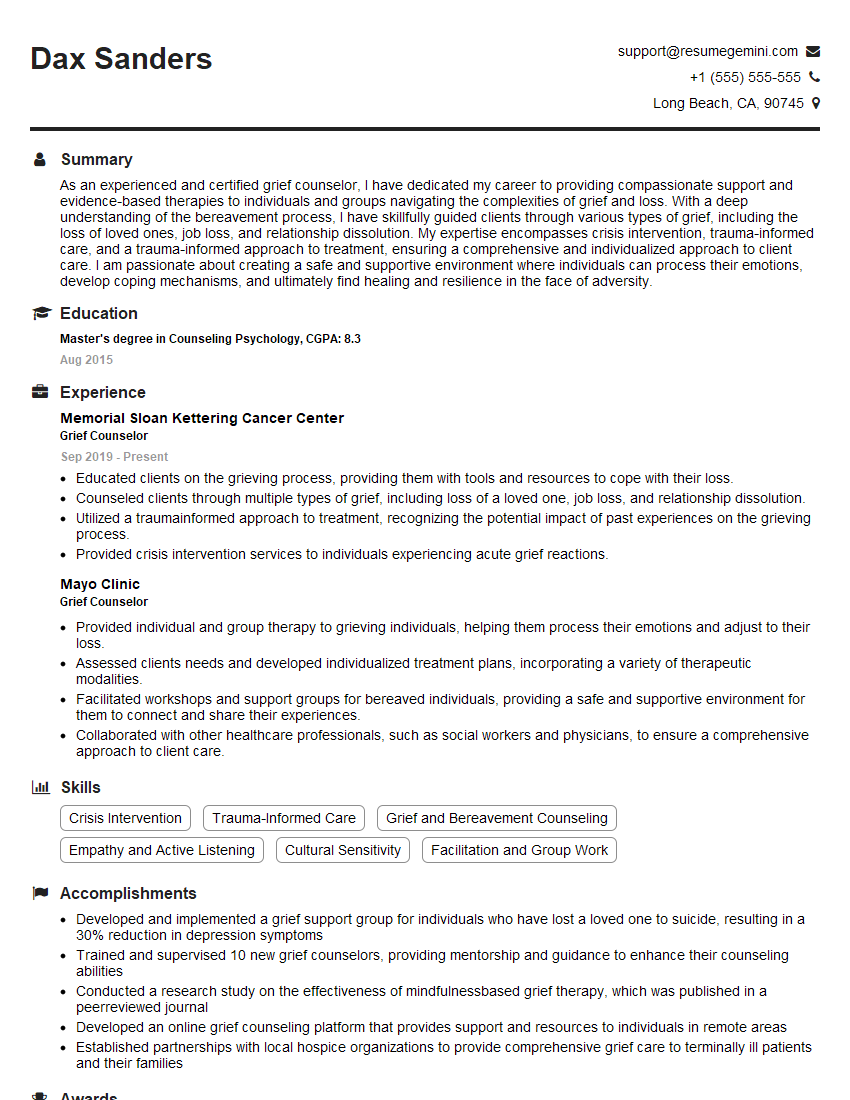
Mastering Grief Education opens doors to fulfilling and impactful careers, allowing you to make a real difference in the lives of others. A strong resume is crucial to showcasing your skills and experience to potential employers. To maximize your job prospects, create an ATS-friendly resume that highlights your relevant qualifications. ResumeGemini is a trusted resource for building professional resumes, and we offer examples tailored to the Grief Education field to help you get started. Invest in your future and craft a resume that reflects your expertise and passion for helping others navigate grief.
Explore more articles
Users Rating of Our Blogs
Share Your Experience
We value your feedback! Please rate our content and share your thoughts (optional).
What Readers Say About Our Blog
To the interviewgemini.com Webmaster.
Very helpful and content specific questions to help prepare me for my interview!
Thank you
To the interviewgemini.com Webmaster.
This was kind of a unique content I found around the specialized skills. Very helpful questions and good detailed answers.
Very Helpful blog, thank you Interviewgemini team.