Unlock your full potential by mastering the most common Museum Etiquette and Protocol interview questions. This blog offers a deep dive into the critical topics, ensuring you’re not only prepared to answer but to excel. With these insights, you’ll approach your interview with clarity and confidence.
Questions Asked in Museum Etiquette and Protocol Interview
Q 1. What are the key principles of museum artifact handling?
Museum artifact handling prioritizes preservation and safety. It’s all about minimizing the risk of damage, both accidental and intentional. Key principles include always using appropriate handling techniques, understanding the material’s fragility, and never touching artifacts directly without proper training and equipment.
- Never touch artifacts directly: Even seemingly sturdy items can be damaged by oils and acids present on our skin. Use provided tools or gloves.
- Support the artifact’s weight: Always provide adequate support from underneath, using appropriate padding. Imagine holding a newborn baby—gentle support is crucial.
- Avoid sudden movements: Handle objects slowly and smoothly to prevent accidental drops or impacts. Think of it like handling a priceless vase.
- Maintain stable conditions: Extreme temperature changes, humidity, or direct sunlight can damage artifacts. This is particularly important during transport.
- Use correct tools and equipment: Different materials require different handling approaches and specialized tools. Gloves, lifting devices, and specialized containers are often necessary.
Q 2. Describe the proper procedure for handling a fragile artifact.
Handling a fragile artifact requires meticulous care. The procedure involves careful assessment, using appropriate tools, and minimizing any risk of damage.
- Assess the artifact: Note its material (e.g., porcelain, paper, textiles), condition (e.g., cracks, stains, weak areas), and any specific handling instructions.
- Gather appropriate tools: This could include acid-free gloves, specialized lifting devices, a padded support, or a stable transport container.
- Support the artifact fully: Ensure the object’s weight is evenly distributed to prevent stress on vulnerable points. Always support from underneath, never from the top.
- Handle with extreme gentleness: Minimize contact and avoid any pressure or friction. Movements should be slow and deliberate.
- Document the handling process: Note any observations, including pre-existing damage, handling techniques used, and any issues encountered. This is vital for tracking condition over time.
For example, a delicate porcelain figurine would require cotton gloves, a padded cradle for support during transport, and very slow, controlled movements.
Q 3. How do you manage visitor flow and crowds in a busy exhibit hall?
Managing visitor flow in a busy exhibit hall is crucial for a positive visitor experience and artifact protection. Strategies include:
- Clear signage and wayfinding: Intuitive signage directs visitors through the exhibit, reducing congestion.
- Crowd control measures: Using stanchions or ropes to create designated pathways guides the flow and protects artifacts from accidental damage. Think of it like a well-managed theme park queue.
- Staff deployment: Strategic placement of staff members helps manage queues, answer questions, and ensure visitor safety.
- Timed entry tickets/reservations: Controlling visitor numbers through timed entry helps regulate crowds, especially during peak hours.
- One-way pathways: Directing visitors along a defined path minimizes congestion and backtracking.
- Designated quiet areas: Providing quiet zones for visitors who need a break from the crowd enhances overall visitor experience.
Q 4. Explain the importance of maintaining a quiet and respectful atmosphere in a museum.
Maintaining a quiet and respectful atmosphere is paramount for several reasons:
- Artifact preservation: Loud noises can vibrate delicate artifacts, causing potential damage.
- Visitor experience: A calm environment allows visitors to fully appreciate the exhibits and reflect on what they are seeing. Think of visiting a library—it’s a space for contemplation and learning.
- Respect for others: A quiet environment shows respect for fellow visitors who are trying to enjoy the experience.
- Enhanced focus: A calm environment allows for better concentration and understanding of information provided.
Encouraging quiet behavior through signage, staff guidance, and overall museum atmosphere creates a more enriching and positive experience for everyone.
Q 5. What is your approach to dealing with a disruptive visitor?
Dealing with a disruptive visitor requires a calm and professional approach, prioritizing de-escalation and maintaining safety.
- Assess the situation: Identify the nature of the disruption. Is it loud talking, running, or something more serious?
- Approach with empathy: Speak calmly and respectfully, acknowledging the visitor’s concerns or frustrations, if any.
- Explain museum rules and regulations: Politely remind the visitor of the expectations for behavior within the museum.
- Offer alternative solutions: If the visitor is causing unintentional disruption, offer alternative viewing spots or suggest quieter areas.
- Seek assistance if needed: If the behavior escalates or poses a threat to artifacts or other visitors, seek assistance from security personnel or museum management.
Remember to prioritize safety and de-escalation—maintaining a calm and professional demeanor is key.
Q 6. How do you handle a suspected theft or act of vandalism?
Suspected theft or vandalism requires immediate and appropriate action. The steps include:
- Secure the scene: Do not touch or disturb anything at the scene. The goal is to preserve evidence.
- Notify security personnel immediately: Security will assess the situation and take necessary measures.
- Document the incident thoroughly: Note the location, time, details of the incident, and witness information. Take photos if appropriate and safe.
- Contact law enforcement if needed: Depending on the severity of the incident, law enforcement may need to be involved.
- Review security footage: If available, security footage can help determine what happened.
This is a critical situation, and quick, measured actions are key. The priority is to preserve evidence and ensure the safety of the museum and its contents.
Q 7. Describe appropriate attire and behavior for museum staff.
Appropriate attire and behavior for museum staff aim to project professionalism, authority, and respect for the institution and its visitors.
- Professional attire: This often includes neat and clean clothing that reflects a professional image. Uniforms or specific dress codes are common, and typically avoid casual wear or items that could be distracting.
- Name tags: Clearly visible name tags facilitate visitor interactions and build trust.
- Knowledgeable and helpful demeanor: Staff should be well-informed about the museum’s collections and be prepared to assist visitors respectfully and effectively.
- Calm and respectful behavior: Staff should maintain a calm and respectful demeanor, even in challenging situations.
- Adherence to established procedures: Following established museum protocols and safety procedures is essential for consistent operation and preservation of artifacts.
Imagine a museum as a stage—staff are performers representing the institution. Professionalism in both attire and behavior enhances the visitor experience and contributes to the reputation of the museum.
Q 8. How do you address a visitor’s inquiry about an artifact’s history?
Addressing a visitor’s inquiry about an artifact’s history requires a balance of accuracy, clarity, and engagement. I begin by actively listening to the question, ensuring I understand their specific interest. Then, I draw upon my knowledge of the artifact’s provenance (its origin and history of ownership), its creation date and context, its materials and construction techniques, and its cultural significance. I tailor my response to the visitor’s level of understanding, avoiding overly technical jargon. For instance, if a child asks about a Roman coin, I might focus on the emperor depicted and the daily life it reflects. With an adult, I might delve into the numismatic details and historical events associated with the coin’s minting. If I don’t know the answer immediately, I’ll politely acknowledge that and offer to find the information from our research archives or suggest relevant resources like scholarly publications.
Example: A visitor asks about a particular painting. Instead of simply reciting facts, I might say something like, ‘This landscape painting is by Claude Monet, and it dates to his Impressionist period in the 1870s. Note the use of light and color; he was experimenting with capturing the fleeting effects of sunlight on water and foliage, a hallmark of his style. If you’d like to learn more about Impressionism, I can direct you to our library resources.’
Q 9. What are the protocols for handling media inquiries?
Handling media inquiries involves establishing clear protocols to protect the museum’s reputation and the integrity of its collections. We designate a specific spokesperson to ensure consistent messaging. All inquiries are logged and prioritized. Before granting interviews or providing information, we clarify the purpose of the media coverage, the target audience, and the proposed scope. We always strive to provide accurate and contextually appropriate information, while also respecting any sensitivities or restrictions related to certain artifacts or ongoing investigations. Image usage rights are explicitly addressed, and any interviews or filming require prior approval and may involve fees. We also review all final products before publication or broadcast to ensure factual accuracy and responsible representation of the museum and its collections.
Example: If a television crew wants to film a documentary on a specific exhibit, we’ll first discuss the access needed, the filming schedule, any special lighting or equipment requirements, and ensure the filming will not damage the artifacts. We will also need to establish clear parameters for what can be shown on camera.
Q 10. Explain your understanding of copyright and intellectual property related to museum artifacts.
Copyright and intellectual property rights related to museum artifacts are complex and multifaceted. For objects created after 1923 in the US (copyright laws vary by country), the copyright may still be in effect, belonging to the artist’s heirs or a copyright holder. We carefully examine the ownership and copyright status of every object in our collection. We respect and adhere to all existing copyrights, obtaining necessary permissions for reproduction or publication of images and information related to these items. For objects in the public domain, we still acknowledge their creators where possible, but reproduction is generally unrestricted. We actively work to clarify ownership for any works with unclear copyright status. Public domain materials, while free to use, should still be acknowledged with proper attribution. Our museum’s legal team assists in navigating these complexities.
Example: If we want to reproduce an image of a painting for our website, we will check if the copyright is still in effect. If so, we will contact the copyright holder to obtain permission and negotiate usage rights.
Q 11. How do you ensure the safety and security of museum collections?
Ensuring the safety and security of museum collections is paramount. This involves a multi-layered approach: We implement robust physical security measures, including climate-controlled storage, state-of-the-art alarm systems, 24/7 surveillance, and controlled access points. All staff and visitors are thoroughly briefed on security protocols. We maintain detailed inventory records of each object, including high-resolution images, condition reports, and provenance information. We conduct regular risk assessments to identify potential vulnerabilities and update our security plans accordingly. We also provide specialized training to our staff on handling, transporting, and exhibiting artifacts safely. Disaster preparedness planning is crucial, including protocols for natural disasters, fire, theft, and other emergencies.
Example: A regular security check involves verifying alarm systems, reviewing camera footage, and ensuring all access points are secure. In storage, artifacts are carefully cataloged, and environmental conditions such as temperature and humidity are rigorously monitored.
Q 12. What are the procedures for accepting donations or loans to a museum?
Accepting donations or loans involves a rigorous process to ensure the ethical and legal acquisition of objects. Potential donations are initially assessed by curatorial staff to determine their authenticity, condition, relevance to the museum’s collection, and overall value. We then engage in detailed discussions with the donor to establish the terms of the donation, including conditions of ownership, restrictions on display or use, and any associated documentation. For loans, we negotiate a loan agreement outlining the duration, conditions of handling and display, insurance coverage, transportation arrangements, and responsibility for any damage or loss. All acquisitions undergo a thorough cataloging process, which includes documentation, photographic recording, and conservation assessments. The museum’s legal team also reviews all acquisitions to ensure compliance with relevant laws and regulations.
Example: If someone wishes to donate a painting, the curator will examine its authenticity and condition, research its history, and assess its relevance to the existing collection. This process might involve consulting external experts. Then, a formal donation agreement is drafted and signed by both the donor and the museum.
Q 13. How do you maintain the proper environmental conditions for artifact preservation?
Maintaining proper environmental conditions is critical for artifact preservation. This entails controlling temperature, relative humidity, light levels, and air quality. We use sophisticated environmental control systems (HVAC) in our storage facilities and exhibition spaces, constantly monitoring these conditions with sensors and data loggers. Specific requirements vary depending on the material of the artifact; for example, organic materials like textiles and wood require lower humidity levels than metals or ceramics. Light exposure can cause fading and deterioration, so we use UV filters on windows and minimize artificial light. Regular air quality monitoring helps prevent particulate matter from settling on delicate objects. We also employ strategies such as integrated pest management to prevent infestations that can cause damage.
Example: For a collection of ancient Egyptian papyri, we maintain a temperature of 68°F (20°C) and a relative humidity of 45-50%, with minimal light exposure.
Q 14. What is your experience with emergency preparedness plans for museums?
My experience with emergency preparedness plans includes developing and implementing comprehensive protocols for various scenarios, such as fire, floods, earthquakes, and security breaches. These plans are detailed and regularly updated, incorporating best practices from the field. They specify procedures for evacuation, artifact protection (e.g., securing objects in transit cases, using emergency barriers), communication protocols with emergency services and stakeholders, and post-emergency recovery strategies. Regular drills and training exercises ensure that staff is familiar with these protocols. We also maintain robust insurance coverage and collaborate with local authorities and other museums to coordinate responses to large-scale emergencies. The plans are regularly reviewed and adapted based on lessons learned from previous incidents or changing risk assessments.
Example: Our fire evacuation plan details specific escape routes for different areas of the museum, designates roles for staff members, and specifies procedures for securing artifacts from a fire zone.
Q 15. How do you ensure accessibility for visitors with disabilities?
Ensuring accessibility for visitors with disabilities is paramount in creating an inclusive museum experience. This involves a multifaceted approach encompassing physical accessibility, programmatic accessibility, and communication accessibility.
- Physical Accessibility: This includes features like wheelchair ramps and elevators, accessible restrooms, audio-described tours for the visually impaired, tactile exhibits for the blind and visually impaired, and appropriate signage with braille and large print. We must adhere to ADA guidelines and regularly audit our facilities to ensure compliance.
- Programmatic Accessibility: This extends to offering accessible events and programs tailored to different disabilities. This can include sign language interpretation for deaf visitors, sensory-friendly hours for autistic visitors and those with sensory sensitivities (reducing loud noises and overcrowding), and providing assistive listening devices.
- Communication Accessibility: Clear and concise communication is crucial. This includes providing information in multiple formats (e.g., Braille, large print, audio, sign language), using plain language in all materials, and training staff to communicate effectively with visitors with various disabilities. We should also offer alternative formats for online content.
For example, at a previous museum, we implemented a sensory-friendly morning once a month, dimming the lights, reducing noise levels, and providing quiet zones. The response from families with autistic children was overwhelmingly positive, demonstrating the impact of thoughtful planning.
Career Expert Tips:
- Ace those interviews! Prepare effectively by reviewing the Top 50 Most Common Interview Questions on ResumeGemini.
- Navigate your job search with confidence! Explore a wide range of Career Tips on ResumeGemini. Learn about common challenges and recommendations to overcome them.
- Craft the perfect resume! Master the Art of Resume Writing with ResumeGemini’s guide. Showcase your unique qualifications and achievements effectively.
- Don’t miss out on holiday savings! Build your dream resume with ResumeGemini’s ATS optimized templates.
Q 16. Explain your approach to resolving conflicts between visitors or staff members.
Conflict resolution is a crucial skill in museum work. My approach prioritizes de-escalation, empathy, and a fair resolution for all parties involved.
- Active Listening: I begin by listening carefully to each person’s perspective, seeking to understand their concerns without interruption.
- Empathy and Validation: I acknowledge the feelings and frustrations of both parties, creating a safe space to express themselves. Even if I don’t agree with their perspective, I show respect for their viewpoint.
- Mediation: I guide the individuals towards a mutually acceptable solution. This may involve compromise or finding alternative ways to address their needs.
- Intervention and Enforcement: If the conflict escalates or involves disruptive behaviour, I’ll intervene firmly but calmly, reminding visitors of the museum’s rules. In severe cases, I may involve security personnel.
For instance, I once mediated a dispute between two visitors arguing over a viewing spot. By actively listening to both sides and suggesting an alternative location, I diffused the tension and ensured a positive experience for all.
Q 17. What is your understanding of museum deaccessioning policies?
Museum deaccessioning policies are the rules and procedures governing the removal of objects from a museum’s collection. These policies must be carefully considered, ethical, and transparent. The primary reasons for deaccessioning include:
- Lack of relevance to the collection’s focus: An item might not align with the museum’s mission or curatorial goals.
- Damage or deterioration beyond repair: Objects that are irretrievably damaged might be deaccessioned to avoid misleading the public.
- Duplicates: If a museum has multiple identical items, some might be removed to optimize storage and resources.
- Financial necessity: In rare cases, deaccessioning might be necessary to raise funds for essential needs such as preservation, acquisition of other objects, or maintenance of the building.
Deaccessioning must follow strict guidelines, often involving board approval and detailed documentation to ensure the process is ethical, transparent, and in compliance with all applicable laws and regulations. The proceeds from the sale of deaccessioned items are usually reinvested in the museum’s collections or operations, and the decision-making process should be carefully reviewed and documented.
Q 18. How would you handle a visitor who is touching or damaging an exhibit?
Handling a visitor who is touching or damaging an exhibit requires a calm and professional approach.
- Gentle Correction: I’d politely but firmly inform the visitor that they are touching an artifact that should not be touched, explaining the reasons (fragility, preservation, etc.).
- Explanation of Museum Policies: I’d reiterate the museum’s rules regarding the handling of exhibits, emphasizing the importance of preservation.
- Offer Alternatives: If appropriate, I might direct the visitor towards interactive displays or other suitable activities.
- Security Assistance: If the visitor is uncooperative or continues to damage exhibits, I would seek assistance from security personnel.
The key is to prevent further damage while maintaining a respectful and educational tone. I would never confront the visitor aggressively but would rather prioritize the preservation of the artifacts.
Q 19. What are the key ethical considerations in museum work?
Ethical considerations in museum work are fundamental. They guide our actions to ensure we act responsibly and transparently.
- Collection Care and Preservation: Proper storage, handling, and conservation techniques are paramount to protect artifacts for future generations. This includes appropriate environmental controls and regular monitoring of collections.
- Provenance Research: Museums must diligently investigate the origins and history of their collections, addressing concerns about looting, illegal trafficking, and ethical acquisition practices.
- Repatriation and Cultural Sensitivity: Museums have a responsibility to return objects to their rightful owners and to work in collaboration with indigenous communities and cultural groups to represent their histories and heritage respectfully and accurately.
- Transparency and Inclusivity: Museums should be open and transparent about their policies and decision-making processes, seeking to engage with diverse communities and address any biases in their collections and interpretations.
For example, ensuring accurate and culturally sensitive labeling of artifacts is crucial to avoid perpetuating stereotypes or presenting a skewed interpretation of history.
Q 20. Describe your understanding of risk management in museums.
Risk management in museums is a proactive approach to identifying, assessing, and mitigating potential threats to the institution’s collections, staff, visitors, and facilities.
- Collection Security: Implementing robust security systems to protect against theft, vandalism, and natural disasters (fire, flood, etc.). This includes environmental monitoring, alarm systems, and secure storage.
- Emergency Preparedness: Developing detailed emergency plans for various scenarios, including evacuations, fire safety, and natural disasters. Regular drills and training are essential.
- Staff Safety: Establishing protocols to ensure staff safety and well-being, including training on handling disruptive visitors or emergencies. This also includes addressing issues of workplace safety and harassment.
- Visitor Safety: Providing a safe and accessible environment for all visitors, ensuring appropriate signage, emergency exits, and crowd management strategies.
A thorough risk assessment is a cornerstone of this process, allowing museums to prioritize the most likely and most impactful threats and to allocate resources effectively. For example, a thorough risk assessment might highlight the need for investing in a new fire suppression system if the museum’s existing system is outdated.
Q 21. How would you respond to a visitor who challenges the museum’s interpretation of an artifact?
When a visitor challenges the museum’s interpretation of an artifact, it’s an opportunity for dialogue and engagement. My approach would be:
- Active Listening and Respect: I would listen carefully to the visitor’s perspective, acknowledging their viewpoint even if I disagree.
- Explanation of Curatorial Approach: I would explain the museum’s interpretation, referencing the evidence and scholarly research used to support it. I would emphasize the evolving nature of historical understanding.
- Presentation of Diverse Perspectives: I would acknowledge that different interpretations exist and present alternative viewpoints, demonstrating the complexity of history and different scholarly perspectives.
- Further Resources: I would offer additional resources, such as books, articles, or websites, that offer different perspectives or delve deeper into the subject.
For example, if a visitor questioned the narrative presented on a historical figure, I would invite them to consider various primary sources, highlighting the different interpretations available and acknowledge the limitations of historical accounts. The goal is to encourage informed discussion and critical thinking rather than a debate.
Q 22. What are different methods for communicating information clearly to visitors?
Communicating effectively with museum visitors requires a multi-faceted approach, leveraging diverse communication channels to cater to varied learning styles and accessibility needs. We need to ensure clarity, conciseness, and engagement.
Signage and Labeling: Clear, concise, and visually appealing labels alongside artifacts are crucial. For example, instead of simply stating “Roman Pottery,” a label might say, “Roman Pottery: Amphora for Wine Storage (1st Century CE). This vessel demonstrates the advanced techniques of Roman ceramic production.” Using images, maps, and timelines alongside text enhances understanding.
Audio Guides and Multimedia: These allow for deeper dives into specific topics and cater to different learning preferences. Imagine an audio guide that incorporates soundscapes of ancient Rome alongside the description of a Roman artifact, providing an immersive experience.
Interactive Exhibits: Hands-on exhibits, touchscreens, and games can make learning more engaging, particularly for younger visitors. A touchscreen kiosk explaining different types of Roman architecture with interactive models would be a great example.
Docent-Led Tours: Trained guides can offer tailored experiences, answering specific questions and facilitating discussions, catering to the specific interests of the tour group. For example, a docent could explain the social context surrounding a particular piece of art, making it more meaningful for visitors.
Website and Social Media: Providing pre-visit information, accessibility details, and post-visit resources via the website and social media expands engagement beyond the physical museum experience.
Q 23. What techniques do you employ for effective visitor engagement?
Effective visitor engagement goes beyond simply presenting information; it’s about fostering a connection and creating a memorable experience. Key techniques include:
Storytelling: Framing exhibits around compelling narratives makes information more relatable and memorable. For instance, instead of just displaying a collection of tools, we could tell the story of the craftsman who used them, bringing the objects to life.
Interactive Elements: Incorporating elements that encourage participation, like quizzes, polls, or hands-on activities (when appropriate for artifact preservation), creates a more active learning experience.
Thought-Provoking Questions: Encouraging visitors to reflect on the exhibits’ themes, connecting them to their own lives and perspectives, strengthens engagement. For example, placing a prompt like “How does this artwork relate to your own experiences?” near a piece can spark reflection.
Personalized Experiences: Offering tailored tours or programs, based on age group, interests, or accessibility needs, caters to a wider range of visitors.
Feedback Mechanisms: Gathering visitor feedback via surveys or suggestion boxes provides invaluable insights for improvement and helps create a visitor-centric museum.
Q 24. How do you incorporate diverse perspectives into museum exhibits and programming?
Incorporating diverse perspectives is fundamental to creating inclusive and representative museums. This requires a conscious effort throughout the entire museum process:
Diverse Representation in Exhibits: Showcasing the histories and contributions of various cultures and communities is crucial. This might involve featuring works from underrepresented artists, sharing multiple perspectives on historical events, or highlighting the cultural significance of artifacts from different parts of the world.
Community Partnerships: Collaborating with community groups and cultural organizations ensures that exhibits reflect the lived experiences and perspectives of diverse populations. This could involve co-curating exhibitions, hosting community events, or developing educational programs in partnership with relevant communities.
Inclusive Language and Accessibility: Using inclusive language in all museum materials and ensuring accessibility for visitors with disabilities are essential aspects of creating an inclusive environment. Providing transcripts for audio-visual materials, tactile displays, and appropriate signage are key elements.
Diverse Staff: A diverse staff brings a range of perspectives to exhibit development, programming, and visitor engagement. This fosters a more representative and inclusive museum.
Q 25. What is your understanding of the importance of preserving cultural heritage?
Preserving cultural heritage is paramount because it connects us to our past, informs our present, and shapes our future. It’s not just about preserving objects; it’s about preserving stories, traditions, and identities.
Historical Understanding: Artifacts and cultural materials provide tangible links to the past, allowing us to learn from previous generations’ experiences, successes, and failures.
Cultural Identity: Cultural heritage is integral to individual and collective identity. Preserving it helps maintain a sense of belonging and continuity for communities.
Social Cohesion: Shared cultural heritage can foster social cohesion and understanding between different groups.
Economic Benefits: Museums and cultural heritage sites contribute significantly to tourism and economic development.
Future Generations: Preservation ensures that future generations can access and appreciate their cultural legacy.
Q 26. How do you balance the needs of visitors with the preservation of museum artifacts?
Balancing visitor needs with artifact preservation requires a delicate yet crucial approach. It involves implementing strategies that minimize risk while maximizing accessibility and engagement.
Controlled Access: Restricting direct contact with delicate artifacts, using barriers or ropes, prevents damage from accidental touching.
Environmental Controls: Maintaining appropriate temperature, humidity, and light levels protects artifacts from deterioration. This often involves specialized climate control systems.
Regular Monitoring and Maintenance: Artifacts require regular inspection and conservation to address any damage or deterioration.
Rotating Exhibits: Minimizing the exposure of artifacts to light and environmental stressors by rotating exhibits protects them from long-term damage.
Educational Programs: Educating visitors on the importance of artifact preservation encourages respectful behavior and fosters a sense of responsibility towards the museum’s collection.
Q 27. How familiar are you with relevant museum accreditation standards?
I am intimately familiar with various museum accreditation standards, including those set by the American Alliance of Museums (AAM) in the US, and similar organizations internationally. My understanding encompasses best practices for collections management, visitor services, education, and overall institutional governance. These standards provide a framework for ensuring high professional standards, ethical practices, and the long-term sustainability of museums.
Specifically, I’m well-versed in standards concerning:
Collections Care: This includes proper storage, handling, documentation, and conservation of artifacts.
Visitor Experience: Ensuring a welcoming and informative environment for visitors of all backgrounds and abilities.
Financial Management: Responsible budgeting, fundraising, and resource allocation.
Governance and Ethics: Adherence to ethical standards and transparent governance practices.
Understanding and implementing these standards ensures a museum’s long-term success and its ability to fulfill its mission responsibly.
Q 28. Describe your experience managing volunteers or interns in a museum setting.
I have extensive experience managing both volunteers and interns in museum settings, fostering a positive and productive work environment. My approach centers on clear communication, effective training, and providing opportunities for growth and development.
Clear Roles and Responsibilities: I provide each volunteer or intern with a detailed job description, outlining their responsibilities and expectations. This minimizes confusion and maximizes efficiency.
Thorough Training: I deliver comprehensive training, covering relevant museum procedures, safety guidelines, and ethical considerations. This ensures individuals feel prepared and confident in their roles.
Mentorship and Support: I provide ongoing mentorship and support, offering guidance, feedback, and opportunities for skill development. This fosters a sense of belonging and encourages growth.
Recognition and Appreciation: I regularly acknowledge and appreciate the contributions of volunteers and interns, fostering a positive and motivated team.
Opportunities for Advancement: Whenever possible, I offer opportunities for advancement, allowing individuals to develop their skills and expand their roles within the museum. This could involve leading tours, assisting with research, or helping with special projects.
For example, during my time at the City Museum, I oversaw a team of 15 volunteers, successfully organizing their contributions to various departments, leading to a significant improvement in visitor experience.
Key Topics to Learn for Museum Etiquette and Protocol Interview
- Visitor Interaction: Understanding and applying appropriate communication styles with diverse museum visitors, including children, elderly individuals, and those with disabilities. Consider practical scenarios such as handling inquiries, addressing complaints, and ensuring a welcoming atmosphere.
- Artifact Handling and Conservation: Safe and ethical practices related to handling museum artifacts, including understanding the importance of minimizing physical contact and adhering to established procedures for object movement and display. Explore potential challenges like accidental damage and how to respond effectively.
- Security and Safety Protocols: Implementing and adhering to security procedures, including visitor monitoring, emergency response plans, and theft prevention strategies. Think critically about scenarios such as suspicious behavior, security breaches, and evacuation procedures.
- Gallery Etiquette and Presentation: Maintaining a professional demeanor and appearance while working in a museum environment. Understanding the importance of appropriate dress, communication, and maintaining a quiet and respectful atmosphere for visitors. Consider the impact of your actions on the visitor experience.
- Ethical Considerations and Best Practices: Understanding the ethical responsibilities of museum professionals, including issues related to cultural sensitivity, collection management, and provenance research. This includes navigating complex situations related to potentially controversial artifacts or exhibits.
- Teamwork and Collaboration: Demonstrating effective teamwork and communication skills within a museum setting, including collaboration with colleagues, volunteers, and external stakeholders. Consider how you would handle disagreements or conflicts within a team.
Next Steps
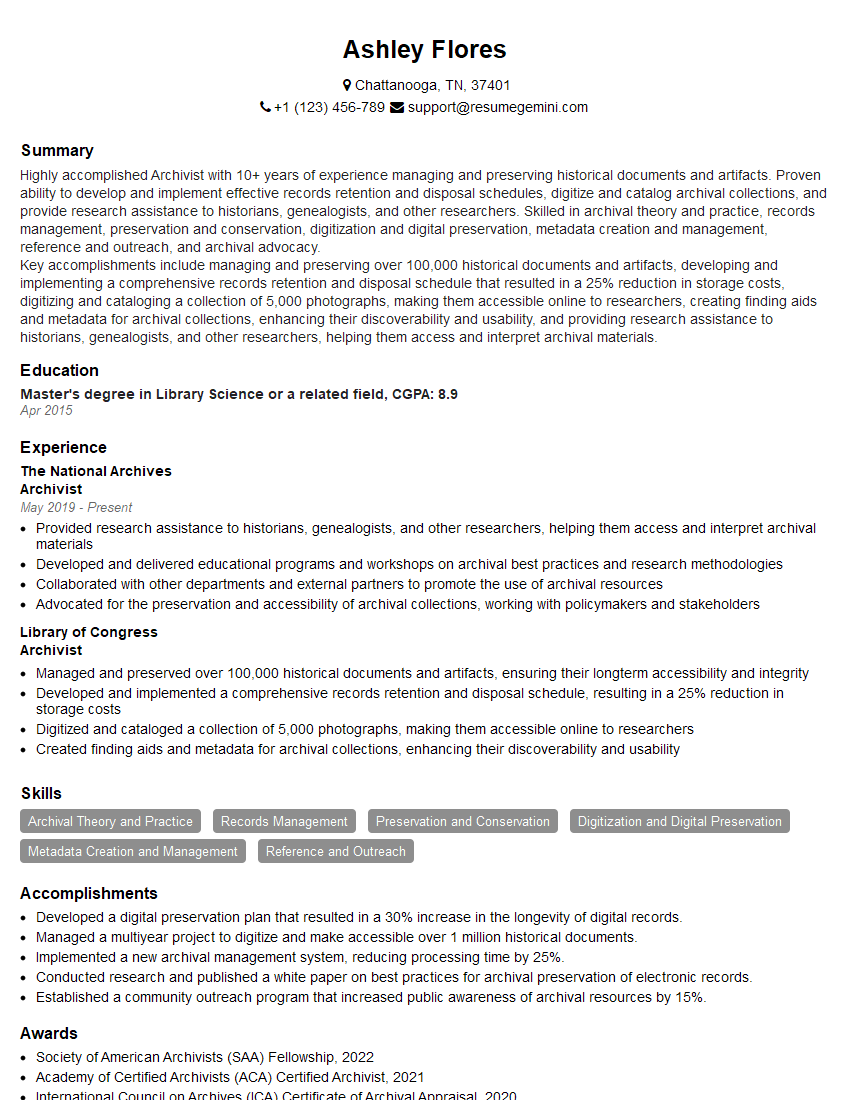
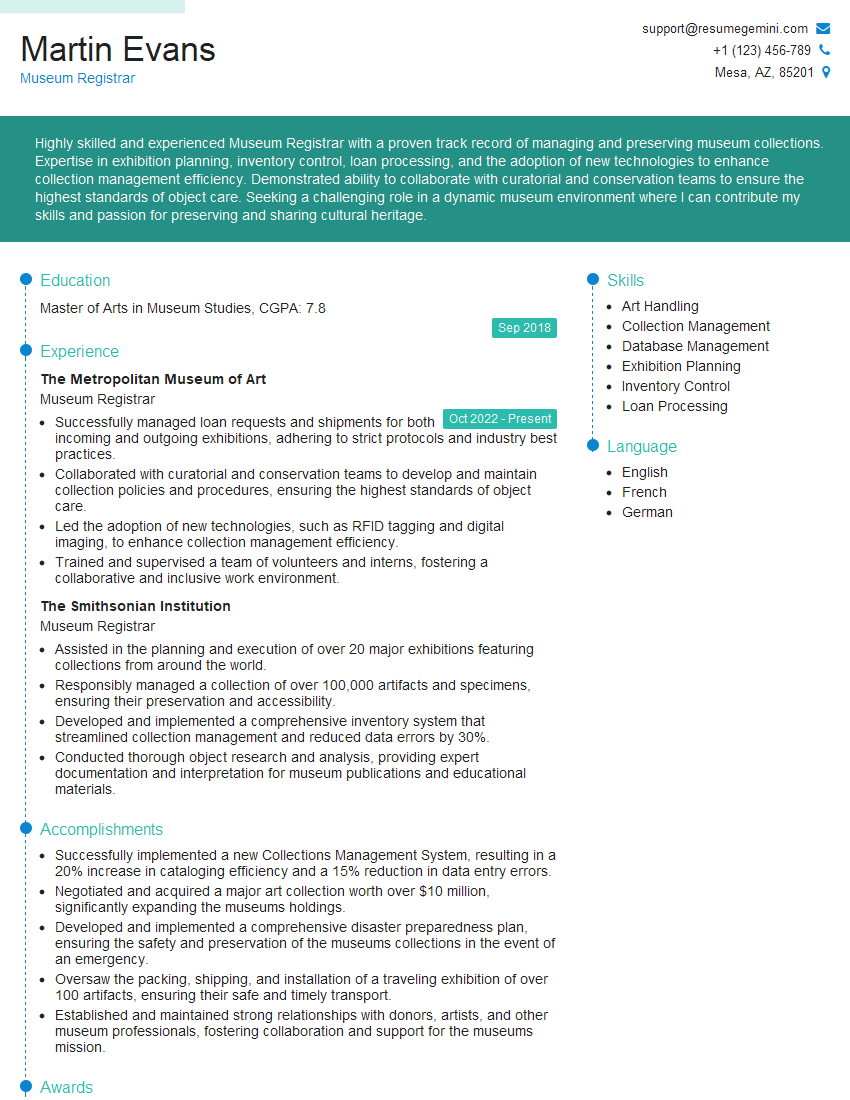
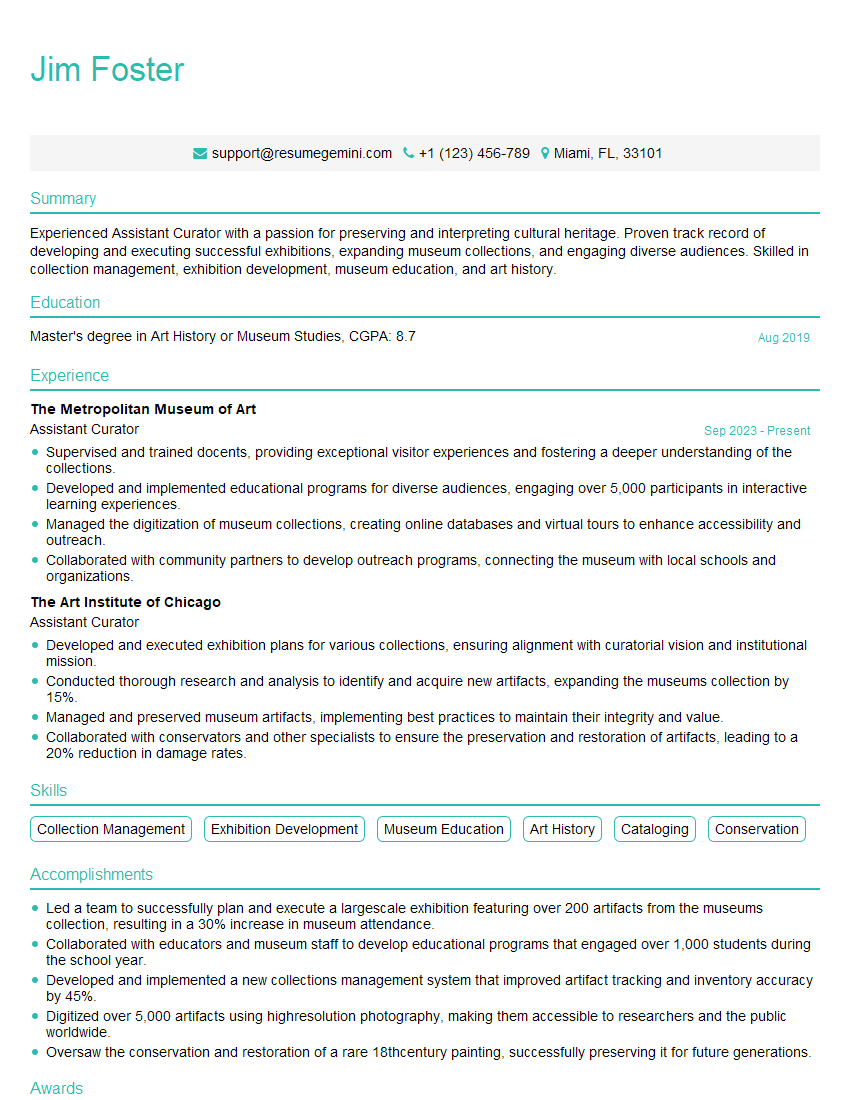
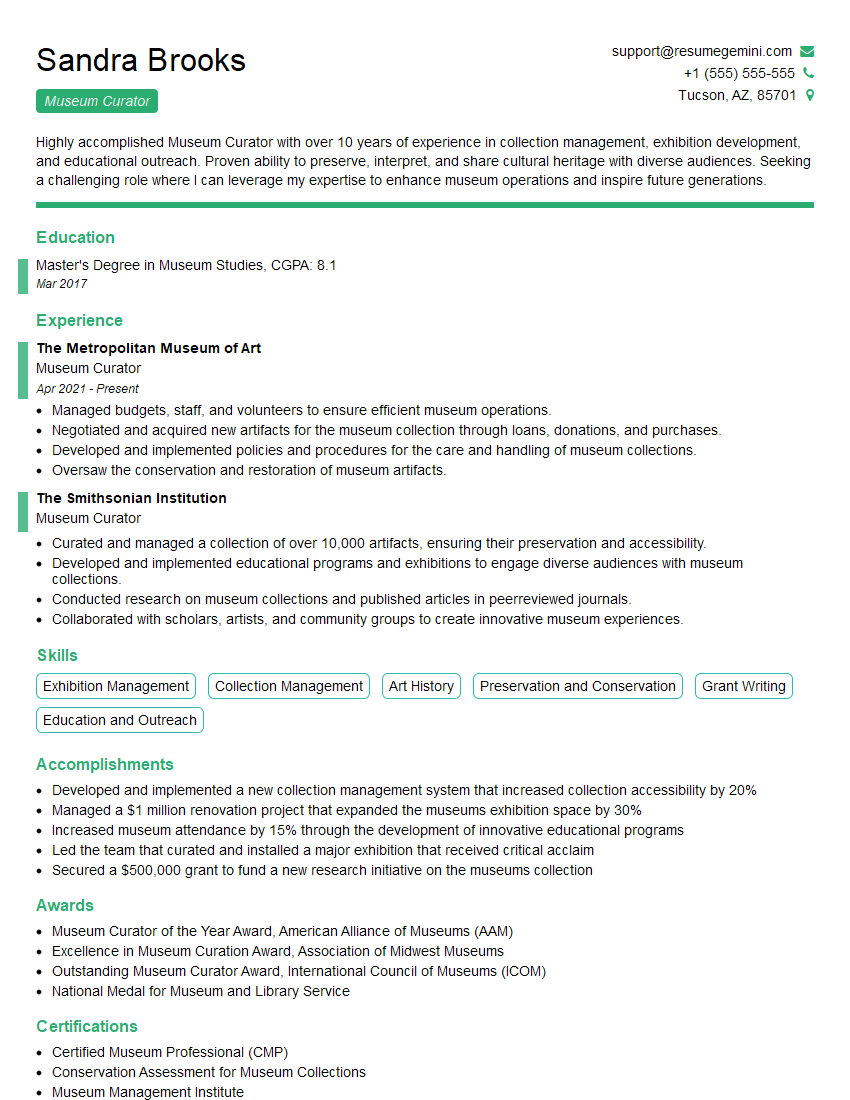
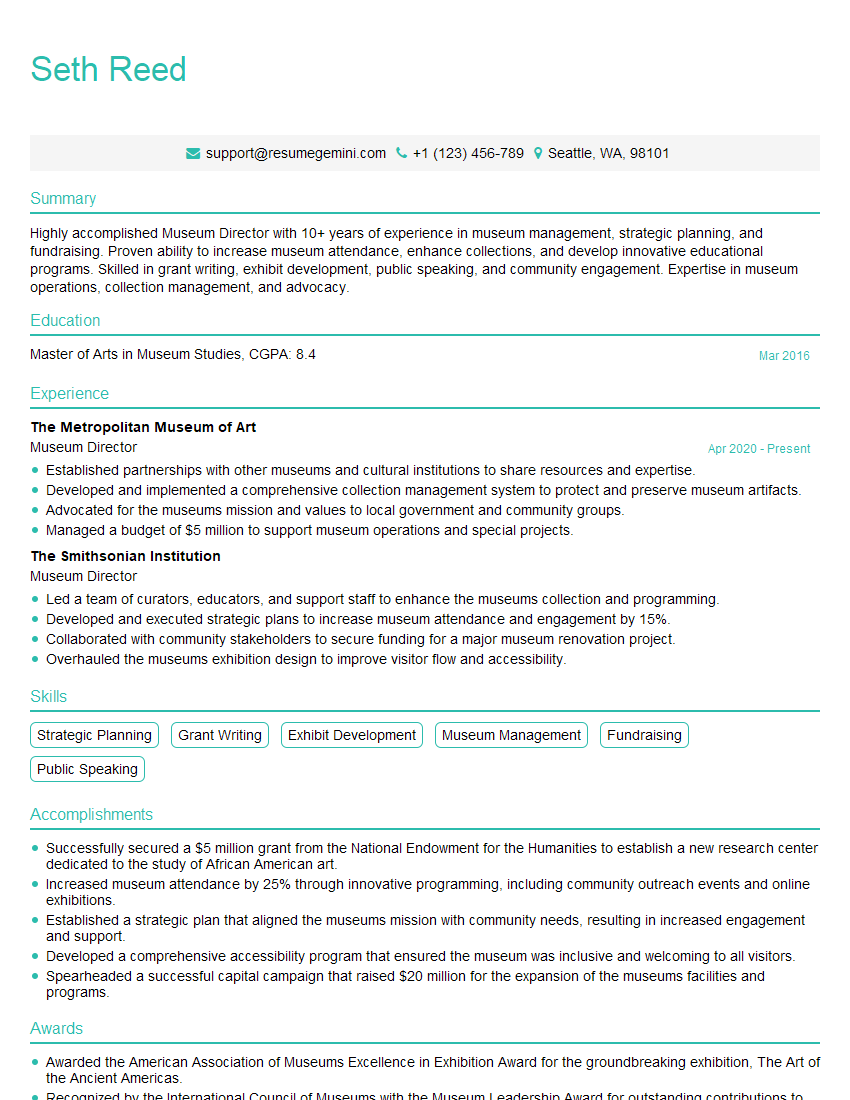
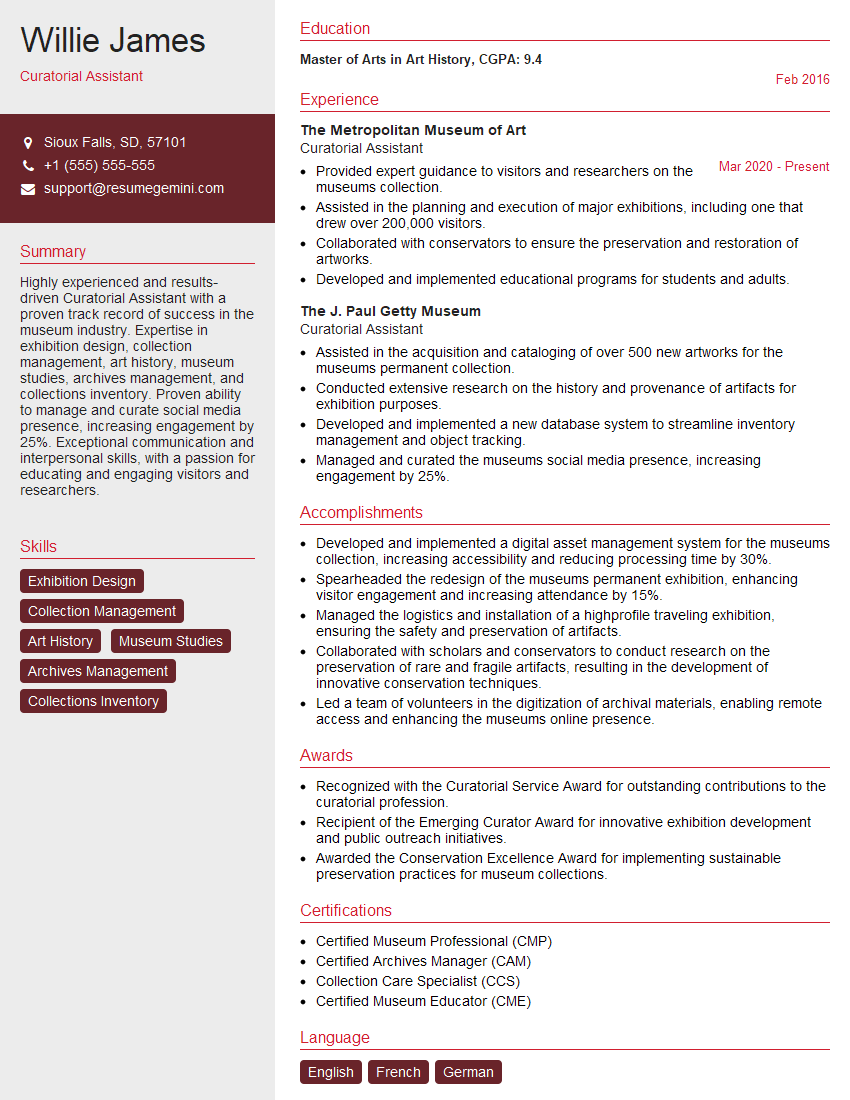
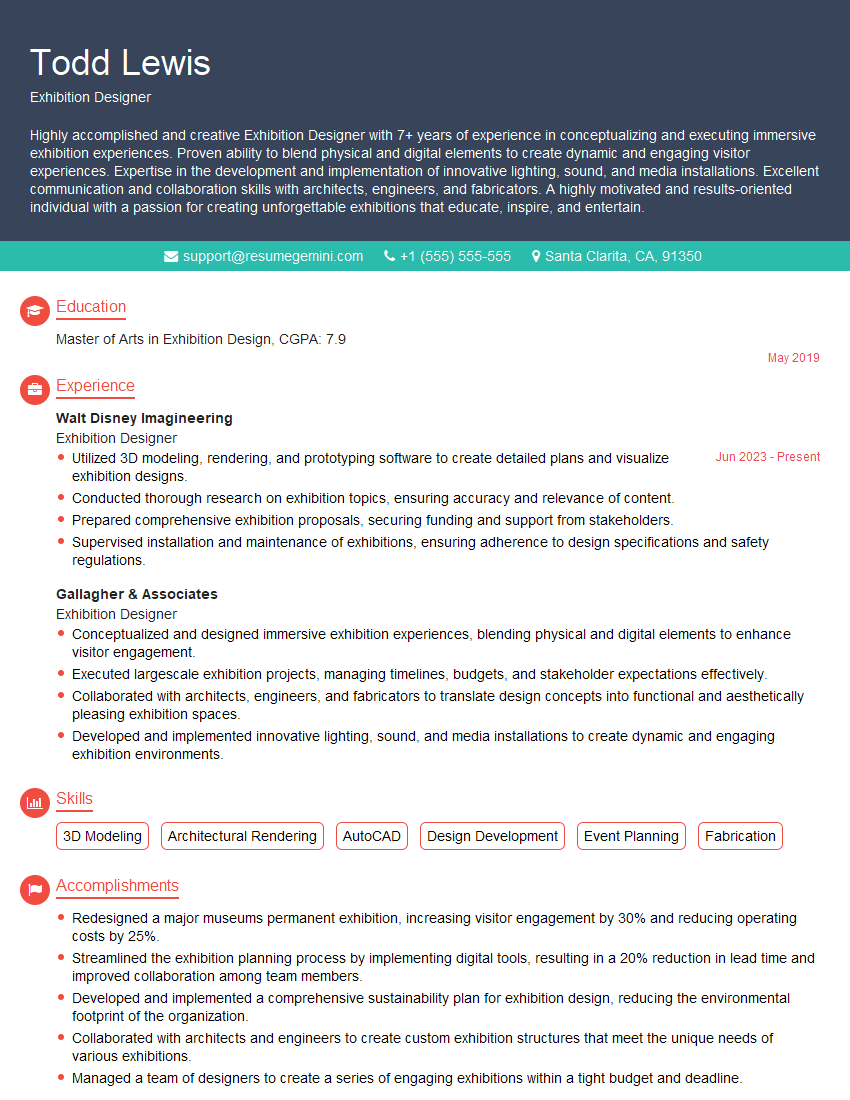
Mastering Museum Etiquette and Protocol is crucial for career advancement in the museum field. It demonstrates professionalism, commitment to ethical practices, and a deep understanding of the visitor experience. This knowledge is highly valued by employers and will significantly enhance your job prospects. To maximize your chances of securing your dream role, focus on building an ATS-friendly resume that showcases your skills and experience effectively. ResumeGemini is a trusted resource that can help you craft a compelling and impactful resume. We provide examples of resumes tailored to Museum Etiquette and Protocol roles to guide you in creating a professional and effective application.
Explore more articles
Users Rating of Our Blogs
Share Your Experience
We value your feedback! Please rate our content and share your thoughts (optional).
What Readers Say About Our Blog
To the interviewgemini.com Webmaster.
Very helpful and content specific questions to help prepare me for my interview!
Thank you
To the interviewgemini.com Webmaster.
This was kind of a unique content I found around the specialized skills. Very helpful questions and good detailed answers.
Very Helpful blog, thank you Interviewgemini team.