Cracking a skill-specific interview, like one for Musician and Performer, requires understanding the nuances of the role. In this blog, we present the questions you’re most likely to encounter, along with insights into how to answer them effectively. Let’s ensure you’re ready to make a strong impression.
Questions Asked in Musician and Performer Interview
Q 1. Describe your experience with different musical genres.
My musical journey has spanned a wide range of genres, allowing me to develop a versatile skillset. I’ve worked extensively in jazz, where improvisation and nuanced phrasing are paramount. This experience honed my ear and my ability to listen and respond dynamically to other musicians. I also have significant experience in classical music, which instilled in me a deep appreciation for structure, precision, and technical mastery. My work with pop and rock artists has allowed me to explore more contemporary styles, focusing on songwriting and catchy melodies. This diversity has been invaluable, enriching my understanding of musical expression across the board.
For instance, my jazz experience directly informed my approach to pop songwriting, allowing me to blend harmonic complexity with catchy hooks. Similarly, the discipline of classical training has made me a more technically proficient musician overall, impacting my performance in any genre.
Q 2. What instruments do you play proficiently?
I’m proficient on several instruments, each contributing uniquely to my musical palette. My primary instrument is the piano, providing a solid foundation in harmony, rhythm, and melody. I also play the guitar, which I primarily use for songwriting and accompanying vocals. My skills on bass guitar complement my piano skills, giving me a deeper understanding of rhythmic structures and harmonic foundations. I also have working knowledge of percussion instruments like drums and congas, enhancing my rhythmic sensibility and allowing me to add dynamic textures to my arrangements.
For example, my piano skills allow me to quickly arrange and compose music, while my guitar and bass skills allow me to effectively translate those arrangements for various ensembles.
Q 3. What software or DAWs are you familiar with?
I’m highly familiar with several industry-standard Digital Audio Workstations (DAWs), including Logic Pro X, Ableton Live, and Pro Tools. My expertise extends beyond basic recording and editing; I’m proficient in mixing, mastering, and sound design. I understand the nuances of signal flow, equalization, compression, and other essential audio processing techniques. I also have experience with various virtual instruments and effects plugins, allowing me to create and manipulate sounds in diverse and imaginative ways.
For example, in a recent project, I used Ableton Live’s session view to quickly sketch out ideas, then moved to Logic Pro X for detailed mixing and mastering. My familiarity with these different DAWs allows me to choose the best tool for each stage of the production process.
Q 4. Explain your approach to practicing and improving your skills.
My practice regimen is a blend of focused technical exercises and creative exploration. I begin each session with targeted exercises designed to improve specific skills. This could include scales, arpeggios, or improvisational exercises based on specific harmonic progressions. Following this warm-up, I dedicate time to learning new repertoire or composing new material. I believe that consistent, deliberate practice is essential for continuous improvement.
I regularly record myself playing to identify areas needing improvement. Analyzing my own performance recordings helps pinpoint technical flaws or stylistic inconsistencies. Further, I incorporate feedback from peers and mentors into my practice routine.
Q 5. How do you handle performance anxiety?
Performance anxiety is a common challenge for musicians, but I’ve developed several coping mechanisms. Thorough preparation is key – the more confident I am in my material, the less anxious I become. I also incorporate mindfulness and relaxation techniques, such as deep breathing and meditation, into my pre-performance routine. Positive visualization, picturing myself performing successfully, also helps to alleviate my anxiety.
On the day of a performance, I focus on staying hydrated and well-rested. I engage in light physical activity, to help reduce tension and improve circulation. I find connecting with my fellow musicians before the performance to be very helpful in building a sense of teamwork and shared purpose.
Q 6. Describe your experience with live performances.
I have extensive experience performing live in diverse settings, from intimate club gigs to larger concerts and festivals. I’ve performed as a solo artist, as part of various bands, and as an accompanist for vocalists. These experiences have taught me the importance of stage presence, audience engagement, and adaptability. My performances are characterized by a dynamic interplay between technical proficiency and emotional expression.
For example, during a recent outdoor festival performance, I had to adapt my setlist and sound check due to unexpected weather conditions. This required flexibility and quick thinking, skills essential to navigating the unpredictable nature of live performances.
Q 7. How do you adapt your performance to different audiences?
Adapting to different audiences is a crucial aspect of successful performance. I consider the context of the performance, the audience’s demographics, and the overall atmosphere. This informs my setlist choices, my stage presence, and my communication with the audience. I might adjust the energy level of my performance, tailor my anecdotes to connect with specific audiences, or choose songs that are more relevant to the occasion.
For instance, a performance at a corporate event would require a different approach than a performance at a music festival. I might opt for a more polished and professional demeanor in a corporate setting, while adopting a more energetic and interactive style at a music festival.
Q 8. How do you collaborate effectively with other musicians?
Effective collaboration hinges on clear communication, mutual respect, and a shared artistic vision. It’s not just about playing your part well; it’s about understanding the roles of all musicians involved and how they contribute to the overall sound. I start by having open discussions about the project’s goals – what kind of sound we are aiming for, the desired mood, and the individual contributions. This often involves listening to examples of music we all like to establish a common ground. We then divide tasks efficiently, perhaps assigning specific sections or focusing on particular aspects, like harmonies, improvisations, or rhythms, based on individual strengths. Regular rehearsals are essential, where we actively listen to each other, provide constructive feedback (I’ll discuss this further in the next answer), and make adjustments as needed. For example, when working on a jazz piece, I’ll have a separate conversation with the rhythm section regarding their approach to the groove before we tackle the solo sections. After that, we can incorporate that into our broader collaborative practice. A collaborative spirit of compromise and willingness to experiment is absolutely crucial – sometimes the best ideas arise from unexpected suggestions.
Q 9. What is your approach to songwriting or composition?
My songwriting process is quite organic; it doesn’t always follow a strict formula. Sometimes, a melody comes to me first – a simple phrase that I’ll develop and layer with chords. Other times, the lyrical content is the driving force, and the music evolves around the words. I find that sketching out ideas on a piano or guitar is invaluable; it allows me to quickly capture a fleeting musical thought. I often use a looping workstation to experiment with different rhythms and textures. Once I have a basic framework, I meticulously refine the arrangement, paying close attention to dynamics, phrasing, and overall structure. For instance, when writing a ballad, I might start with a sparse arrangement, gradually building the layers to create a sense of emotional intensity. I always review and revise, seeking balance and emotional depth in the final product. Occasionally, I’ll work with a lyricist, and the collaborative process brings unique perspectives to the project.
Q 10. Describe your understanding of music theory.
My understanding of music theory is extensive, extending beyond the basics of scales, chords, and rhythms. I have a deep understanding of harmony, counterpoint, form, and orchestration. I can read and write music fluently, which allows me to analyze complex scores and understand the compositional choices made by other composers. For example, I can readily analyze a Bach fugue, understanding the interplay of voices and the intricate harmonic progressions. I also possess a strong grasp of different musical styles and their unique theoretical underpinnings. This knowledge allows me to create arrangements and compositions that are both innovative and well-grounded in musical tradition. It also makes it easier to communicate with other musicians who may have different theoretical approaches. I view music theory not as a rigid set of rules, but rather as a toolbox that allows me to express myself more effectively. It enhances improvisation, allows me to understand chord substitutions and progressions with confidence, and generally improve my compositional skills.
Q 11. How do you handle constructive criticism?
Constructive criticism is vital for growth. I approach it with an open mind, actively listening to the feedback and considering its validity. I don’t take it personally; instead, I try to understand the perspective of the critic. I ask clarifying questions if something is unclear. For example, if someone says ‘the bridge feels too abrupt,’ I’ll ask them to explain what they mean specifically and what they suggest might make it smoother. Sometimes, the feedback might be subjective, reflecting personal preference, and I might choose not to act on it. But often, constructive criticism helps me identify areas needing improvement and refine my work. After receiving feedback, I review my work and make edits accordingly. If it’s a large-scale project, I might use a detailed revision tracking system, but generally, I’ll document any changes made and note the feedback that led to them, so I can learn from future projects. I strive to incorporate the helpful comments into my process to continually hone my skill and artistic expression.
Q 12. What is your preferred method for recording music?
My preferred recording method depends on the project. For smaller projects or demos, I might use a home studio setup with a digital audio workstation (DAW) like Logic Pro X or Ableton Live. This allows for flexibility and creative control. I typically use high-quality microphones and audio interfaces to capture clear, detailed recordings. I pay close attention to microphone placement and room acoustics. For larger projects or recordings requiring a higher level of professional polish, I prefer working in a professional studio with an experienced engineer. They bring expertise in signal processing, mixing, and mastering which enhance the end product, and it helps to have that extra set of ears to catch anything I’ve missed. The professional studio environment also allows for better access to superior instruments and equipment. Regardless of the method, I prioritize capturing a natural and expressive performance.
Q 13. Explain your experience with music production techniques.
My experience with music production techniques is extensive. I’m proficient in using DAWs to record, edit, mix, and master audio. I’m familiar with various signal processing techniques, including equalization (EQ), compression, reverb, and delay. I understand the importance of gain staging and how it affects the overall sound. I’m skilled in using plugins and virtual instruments to enhance recordings and create unique soundscapes. For example, I might use a compressor to control the dynamics of a vocal track, ensuring consistency and impact. I also use EQ to shape the tone of instruments, making them sit better in the mix. I also understand the principles of mixing and mastering, understanding the importance of balance, clarity, and overall sonic coherence. I know that these aspects can heavily impact the final listening experience for a listener. My production skills allow me to translate my musical ideas into a professional-sounding final product.
Q 14. How do you maintain your equipment and instruments?
Maintaining my equipment and instruments is paramount. Regular cleaning and preventative maintenance are key to their longevity. I keep my instruments in a climate-controlled environment to avoid damage from humidity or temperature fluctuations. For example, my acoustic guitar requires regular adjustments to the truss rod and action to maintain optimal playability. I also have my instruments serviced regularly by qualified technicians, addressing issues before they become major problems. My electronic equipment, including microphones, audio interfaces, and computers, also require cleaning and regular software updates. I also back up all my audio files regularly to a secure location. I believe in investing in quality equipment that is well-maintained, as this translates to superior sound quality and reliable performance. This is a proactive strategy that protects my investment, and it ensures that I can always focus on the music itself.
Q 15. Describe your experience with stage presence and performance techniques.
Stage presence is the ability to captivate an audience through your physicality, energy, and connection. Effective performance techniques involve a combination of musical skill, showmanship, and audience engagement. My experience has spanned various venues, from intimate coffee shops to larger concert halls, allowing me to adapt my approach accordingly.
- Intimate settings: I focus on direct eye contact, storytelling, and creating a conversational atmosphere. I might share anecdotes between songs, fostering a personal connection.
- Larger venues: My approach becomes more dynamic, utilizing the space effectively through movement and visual cues. I work to maintain energy throughout the performance and use lighting and sound effects to enhance the overall experience.
I regularly practice techniques like breath control, vocal projection, and dynamic movement to ensure consistent performance quality. I also analyze recordings of my performances to identify areas for improvement, continually refining my stagecraft.
Career Expert Tips:
- Ace those interviews! Prepare effectively by reviewing the Top 50 Most Common Interview Questions on ResumeGemini.
- Navigate your job search with confidence! Explore a wide range of Career Tips on ResumeGemini. Learn about common challenges and recommendations to overcome them.
- Craft the perfect resume! Master the Art of Resume Writing with ResumeGemini’s guide. Showcase your unique qualifications and achievements effectively.
- Don’t miss out on holiday savings! Build your dream resume with ResumeGemini’s ATS optimized templates.
Q 16. How do you manage your time effectively when juggling multiple projects?
Juggling multiple projects requires meticulous planning and prioritization. I employ a combination of tools and strategies to manage my time effectively.
- Detailed Scheduling: I utilize a digital calendar and project management software to schedule rehearsals, recording sessions, performances, and administrative tasks. Deadlines are clearly defined and prioritized.
- Time Blocking: I dedicate specific blocks of time to particular activities, minimizing distractions. This allows for focused work and prevents task-switching.
- Delegation: When possible, I delegate tasks that don’t require my direct expertise, freeing up time to concentrate on core aspects of my projects.
- Regular Breaks: I incorporate short breaks throughout the day to avoid burnout and maintain focus. Regular exercise also helps me stay energized and productive.
For example, when working on a new album alongside live performances, I might schedule studio time in the mornings and dedicate afternoons to promotional activities or rehearsals.
Q 17. How do you promote your music or performances?
Music promotion is crucial for reaching audiences. My strategy involves a multi-pronged approach utilizing both traditional and digital methods.
- Social Media Marketing: I maintain active profiles on platforms like Instagram, Facebook, and YouTube, sharing updates, behind-the-scenes content, and music snippets to engage followers. Targeted advertising campaigns are also employed.
- Website and Email List: My website serves as a central hub for information, offering music downloads, upcoming show dates, and a way for fans to subscribe to my email list for updates.
- Public Relations: I actively seek out opportunities for media coverage, sending press kits to relevant publications and reaching out to music bloggers and reviewers.
- Live Performances: Gigs are essential for direct audience interaction and building a loyal following. I aim to play in diverse settings and collaborate with other artists to expand my reach.
- Streaming Platforms: I ensure my music is available on major streaming services like Spotify and Apple Music to maximize accessibility.
Consistent engagement with my audience across all platforms is vital for building a strong online presence and fostering a loyal fan base.
Q 18. Are you familiar with music copyright and licensing?
Yes, I am familiar with music copyright and licensing. Understanding these legal frameworks is essential for protecting my creative work and ensuring fair compensation.
Copyright protects the musical composition and lyrics, granting exclusive rights to the creator. Licensing allows others to use copyrighted music under specific terms and conditions, often involving payment of royalties.
I’m familiar with organizations like ASCAP and BMI that handle the collection and distribution of royalties for music used in public performances, broadcasts, and other licensed uses. I always ensure that I have the necessary licenses when using samples or covering other artists’ work, and I register my own compositions for copyright protection.
Q 19. Describe your experience with improvisation.
Improvisation is a core element of my musical practice. It involves spontaneously creating music in real-time, responding to musical cues and collaborating with fellow musicians.
My experience with improvisation has strengthened my musical intuition and responsiveness. It has also honed my ability to adapt to unexpected situations and create dynamic musical experiences. I often incorporate improvisation into my live performances, fostering a sense of spontaneity and interaction with the audience.
For example, in a jazz setting, I might build a solo around a chord progression, responding to the energy of the other musicians and the audience’s reaction.
Q 20. What are your strengths as a musician/performer?
My strengths as a musician and performer include a strong work ethic, adaptability, and a passion for connecting with audiences. I am a proficient instrumentalist, vocalist, and composer with a solid understanding of music theory and performance techniques.
- Technical Proficiency: I possess a high level of skill on my chosen instruments and possess a strong vocal technique.
- Creative Vision: I am able to conceptualize and execute original musical ideas effectively.
- Audience Engagement: I excel at building rapport and creating memorable experiences for my listeners.
- Collaboration: I enjoy and excel at working collaboratively with other musicians.
Q 21. What are your weaknesses as a musician/performer?
While I strive for excellence, I acknowledge areas where I can continue to grow. One area is self-promotion; while I’m comfortable performing, actively marketing my work sometimes feels less intuitive. I’m actively working on improving my business skills in this area.
Another aspect I am consistently working on is managing performance anxiety, especially in high-pressure situations. Through mindfulness techniques and focused practice, I am steadily improving my ability to control nerves and deliver consistently strong performances.
Q 22. How do you handle technical difficulties during a performance?
Handling technical difficulties during a performance requires a blend of preparedness, quick thinking, and a calm demeanor. My approach is threefold: proactive prevention, reactive problem-solving, and audience engagement.
Proactive Prevention: Before any show, I conduct a thorough soundcheck, ensuring all equipment – microphones, instruments, amplifiers, and any digital audio workstations (DAWs) – is functioning correctly. I have backup equipment readily available, including extra instrument strings, cables, and even a backup instrument if feasible. I also familiarize myself with the venue’s sound system and stage setup.
Reactive Problem-Solving: If a problem arises during a performance (e.g., a microphone cuts out), I assess the situation quickly. Is it a simple fix, like adjusting a cable? Can I improvise musically to bridge the gap until it’s resolved? I’ve trained myself to troubleshoot common issues swiftly, but I also have a reliable sound engineer on standby who can address more complex technical issues.
Audience Engagement: Addressing any technical hiccups with humor and transparency can actually enhance the performance. A simple, “Apologies, folks, seems we’ve got a slight technical glitch,” followed by a brief pause for repair, often generates audience empathy and keeps the energy positive. I might even use the unexpected pause to engage with the audience informally, creating a more personal connection.
Q 23. Describe your experience with music education or teaching.
My experience in music education spans over 10 years, encompassing private instruction, group workshops, and masterclasses. I’ve worked with students of all ages and skill levels, from beginners to advanced musicians. My teaching philosophy centers on fostering a love for music, alongside developing technical proficiency. I believe in creating a supportive and encouraging environment where students feel comfortable exploring their musicality and pushing their creative boundaries.
I’ve taught various instruments, including guitar, piano, and ukulele, tailoring my approach to each student’s learning style. I use a combination of traditional methods, incorporating modern techniques and technologies. This includes using online platforms for sheet music sharing, recording exercises for self-assessment, and even incorporating video tutorials to supplement in-person lessons. I particularly enjoy seeing students achieve their individual musical goals, whether it’s mastering a difficult piece or confidently performing in front of an audience.
Q 24. How do you stay updated on current trends in the music industry?
Staying updated on current music industry trends is crucial for any performer. My strategies include:
- Regularly listening to a wide variety of music: I actively explore different genres, both mainstream and underground, to understand evolving sounds and production techniques.
- Following industry publications and blogs: I subscribe to several music industry publications, blogs, and podcasts that cover news, trends, and best practices.
- Attending industry conferences and workshops: These events offer valuable networking opportunities and insights into the latest developments.
- Engaging with online communities: Active participation in online forums and social media groups dedicated to music allows for discussion, knowledge sharing, and understanding evolving preferences.
- Analyzing successful artists: I pay attention to successful artists, studying their marketing strategies, their musical evolution, and their engagement with their fanbase.
By combining these strategies, I ensure I remain informed and adapt my approach accordingly, staying relevant and competitive in the dynamic music world.
Q 25. What are your career goals as a musician/performer?
My career goals are multifaceted. In the short term, I aim to secure consistent high-profile gigs, building my reputation and expanding my fanbase. I want to explore collaborations with other musicians and producers, pushing my creative boundaries and expanding my musical style.
Looking long-term, I aspire to release a critically acclaimed album that showcases my artistic vision. I’m also keen on using my platform to give back to the community, potentially through music education initiatives or charity performances. Ultimately, I aim to become a respected and influential figure in the music industry, known for both my musical talent and my positive impact.
Q 26. What is your salary expectation for this role?
My salary expectation for this role depends heavily on the specifics of the position, including the responsibilities, the number of performances, travel requirements, and the overall compensation package. I am open to discussing a competitive salary that aligns with my experience and the market value for similar roles. I am confident I can bring significant value to your organization, and I am eager to explore compensation options further.
Q 27. How would you describe your personal brand as a musician?
My personal brand as a musician is built on authenticity, passion, and connection. I strive to create music that resonates with listeners on an emotional level. My stage presence is energetic and engaging, aiming to foster a sense of community and shared experience with the audience. My online presence reflects this authenticity, showcasing both the professional and personal aspects of my musical journey.
I prioritize high-quality musical content and consistent interaction with my audience. I am not afraid to experiment with different styles and sounds, demonstrating my musical versatility. I see my brand as an ongoing evolution, constantly adapting and growing alongside my artistic development.
Q 28. Describe a time you had to overcome a significant challenge in your music career.
One significant challenge I faced was securing my first major performance at a renowned music festival. I had spent months honing my skills, perfecting my setlist, and meticulously crafting my marketing materials. Despite this preparation, securing a spot felt like an uphill battle. Many rejections left me feeling discouraged, but I persevered.
I decided to change my approach. Instead of simply submitting applications, I began networking more actively, reaching out to festival organizers and making personal connections. I also refined my proposal, highlighting my unique selling points and demonstrating a clear understanding of the festival’s audience and brand. This more strategic and targeted approach finally paid off, leading to a successful performance that opened numerous opportunities. This experience taught me the importance of persistence, adaptability, and strategic networking in navigating the complexities of the music industry.
Key Topics to Learn for Musician and Performer Interview
- Musical Proficiency: Demonstrate a deep understanding of your instrument(s) or vocal technique, including theory, scales, and musical styles relevant to your specialization. Be prepared to discuss your strengths and areas for continued development.
- Performance Skills: Articulate your experience in performing solo and collaboratively. Highlight your stage presence, ability to connect with an audience, and adaptability to different performance settings. Prepare examples showcasing your versatility.
- Repertoire & Style: Discuss the breadth and depth of your musical repertoire, emphasizing pieces that demonstrate your technical abilities and artistic expression. Explain your stylistic preferences and influences.
- Collaboration & Teamwork: If applicable, detail your experience working with other musicians, including your approach to rehearsals, communication, and conflict resolution within a group setting. This is crucial for orchestral, band, or ensemble roles.
- Professionalism & Work Ethic: Discuss your punctuality, reliability, and commitment to professionalism. Highlight instances showcasing your dedication to your craft and your ability to meet deadlines and expectations.
- Marketing & Self-Promotion: If applicable, demonstrate an understanding of self-promotion strategies for musicians and performers. This might include social media presence, networking, and building a personal brand.
- Technical Skills (depending on the role): Depending on the specific role, you might need to discuss your proficiency with recording software (e.g., Pro Tools, Logic Pro), music notation software (e.g., Sibelius, Finale), or specific audio/visual equipment.
Next Steps
Mastering the art of Musician and Performer interview preparation significantly impacts your career trajectory, opening doors to exciting opportunities and fulfilling engagements. A strong, ATS-friendly resume is your first impression – it’s crucial for showcasing your skills and experience effectively to potential employers. To enhance your resume and maximize your chances, consider leveraging ResumeGemini. ResumeGemini provides a trusted platform to create professional, impactful resumes, and offers examples tailored specifically to the Musician and Performer field. Invest the time to craft a compelling narrative that reflects your unique talents and ambitions – your future career awaits!
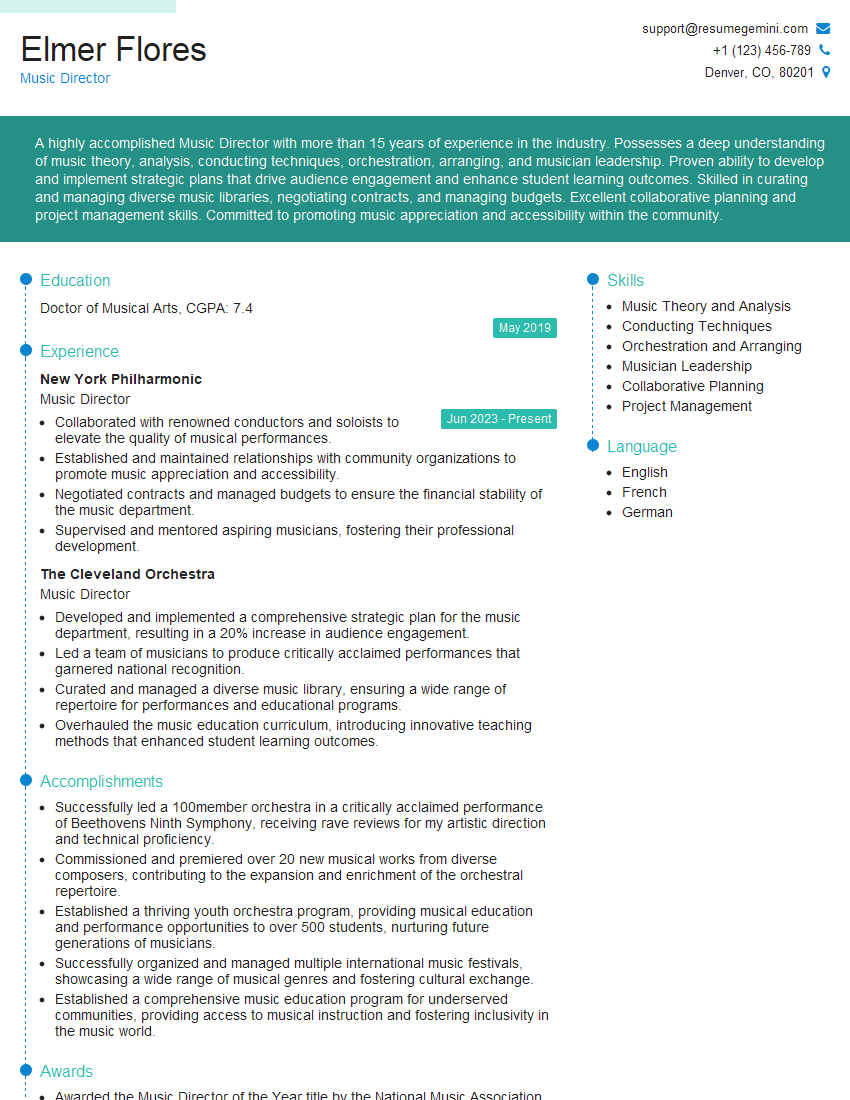
Music Director Resume Sample
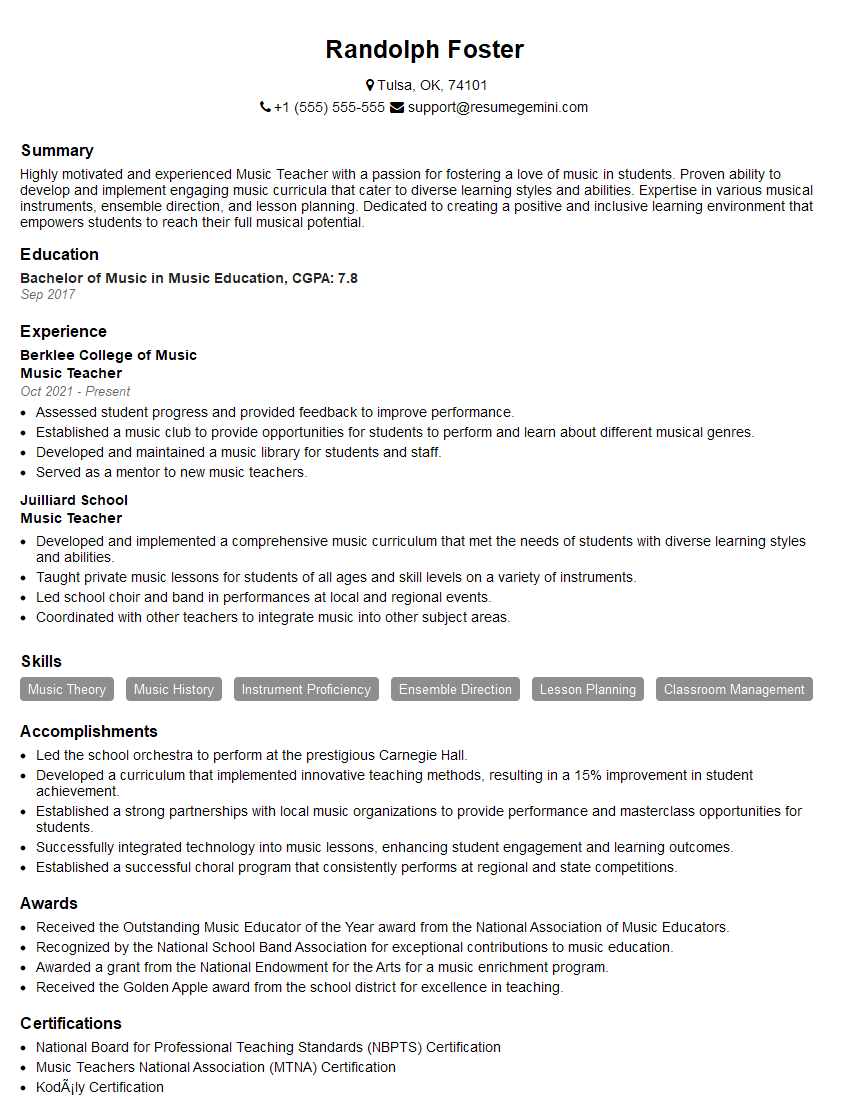
Music Teacher Resume Sample
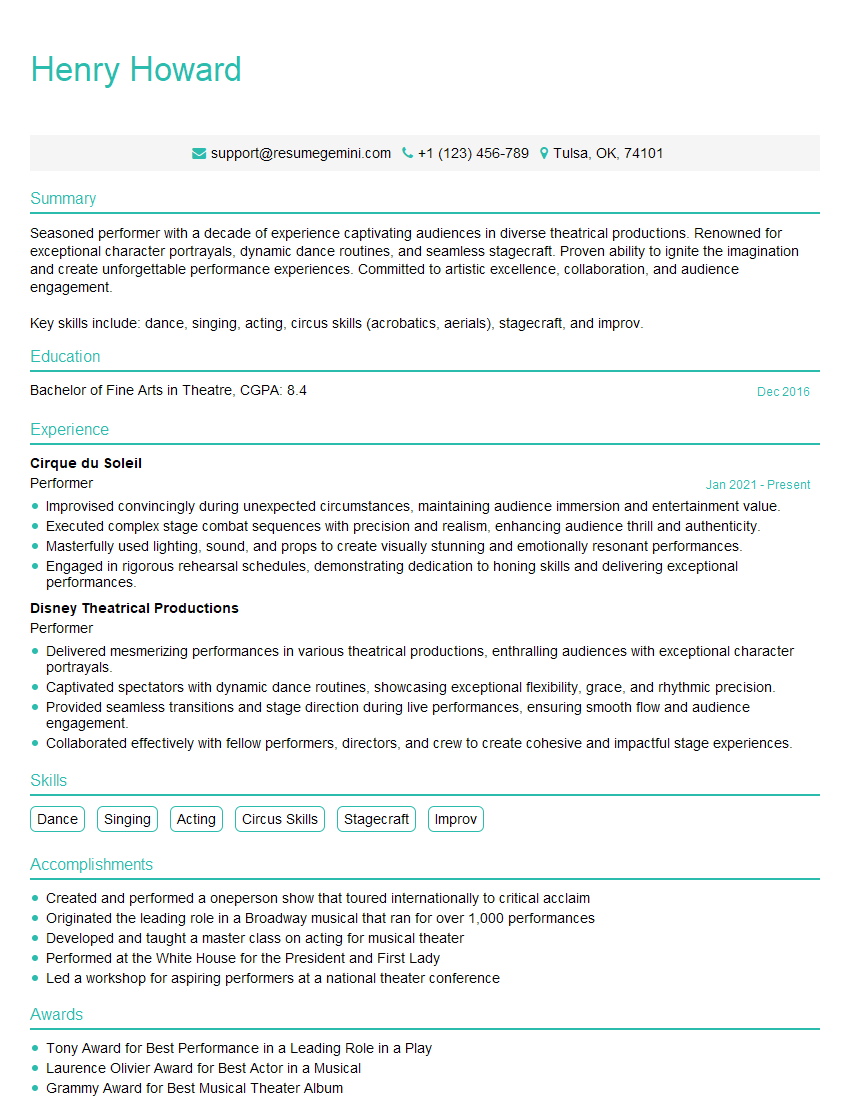
Performer Resume Sample
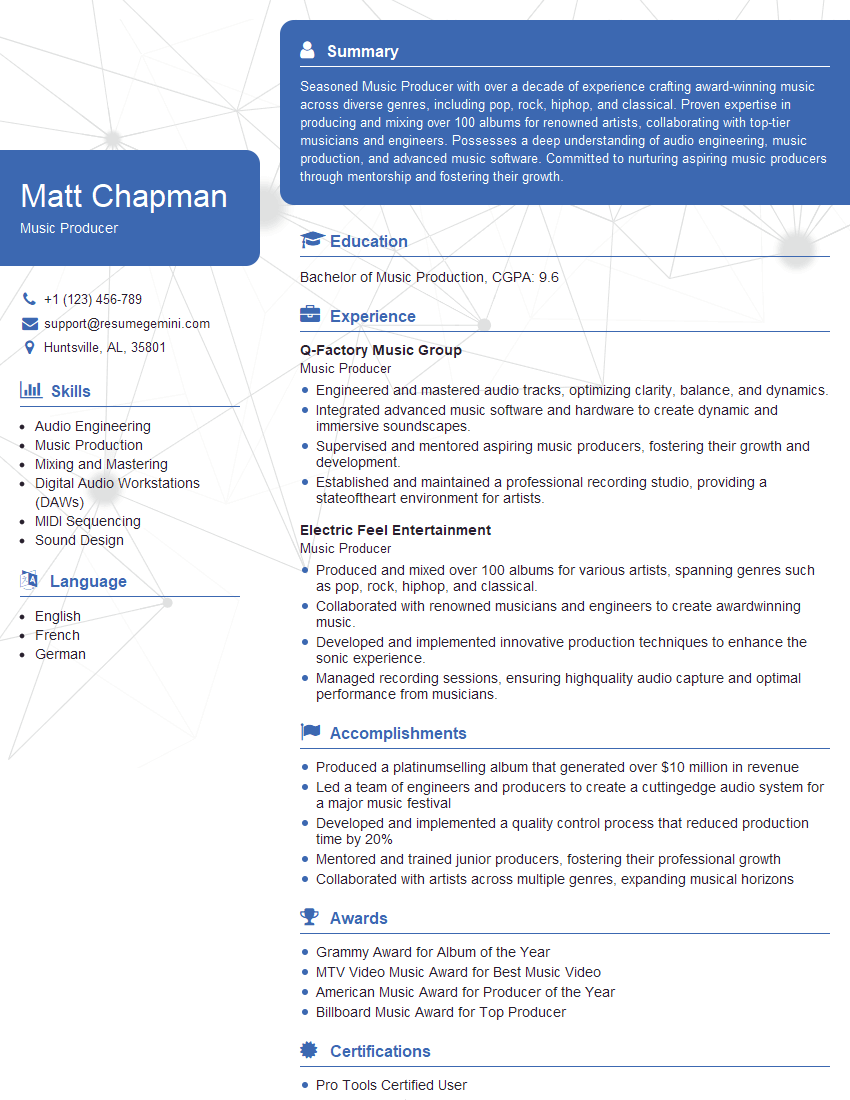
Music Producer Resume Sample
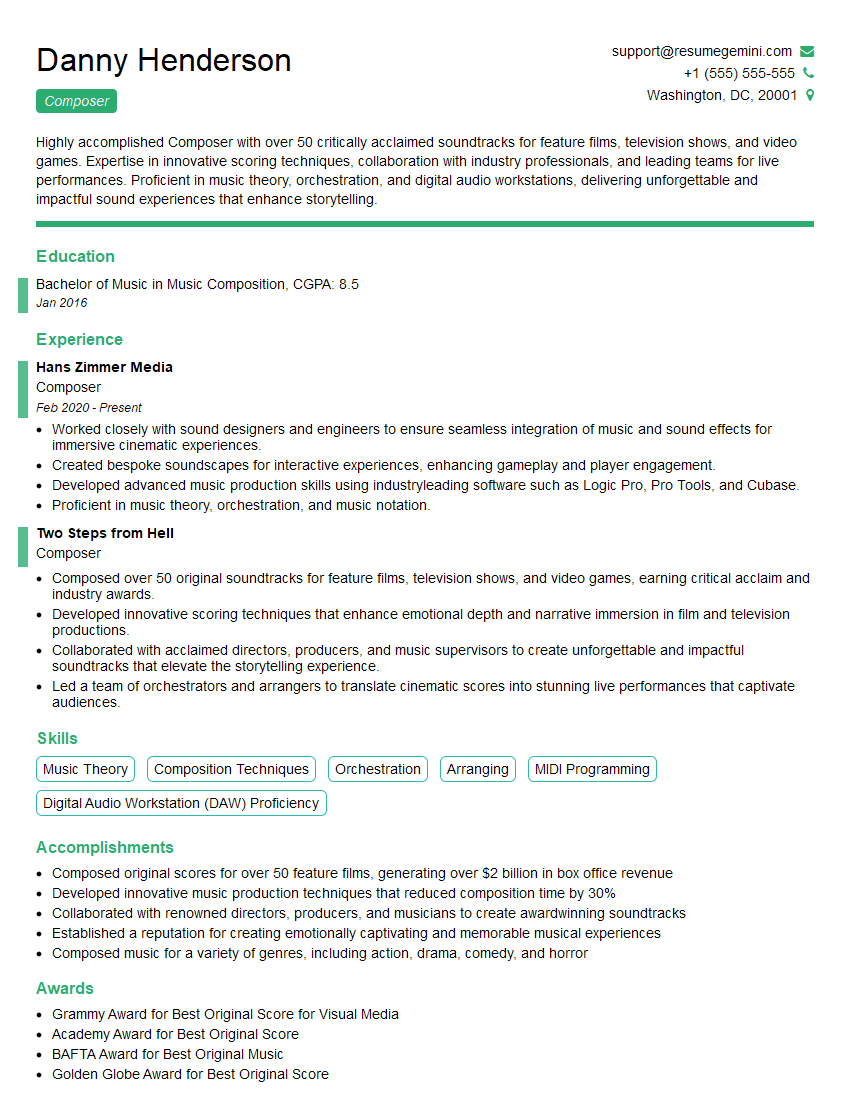
Composer Resume Sample
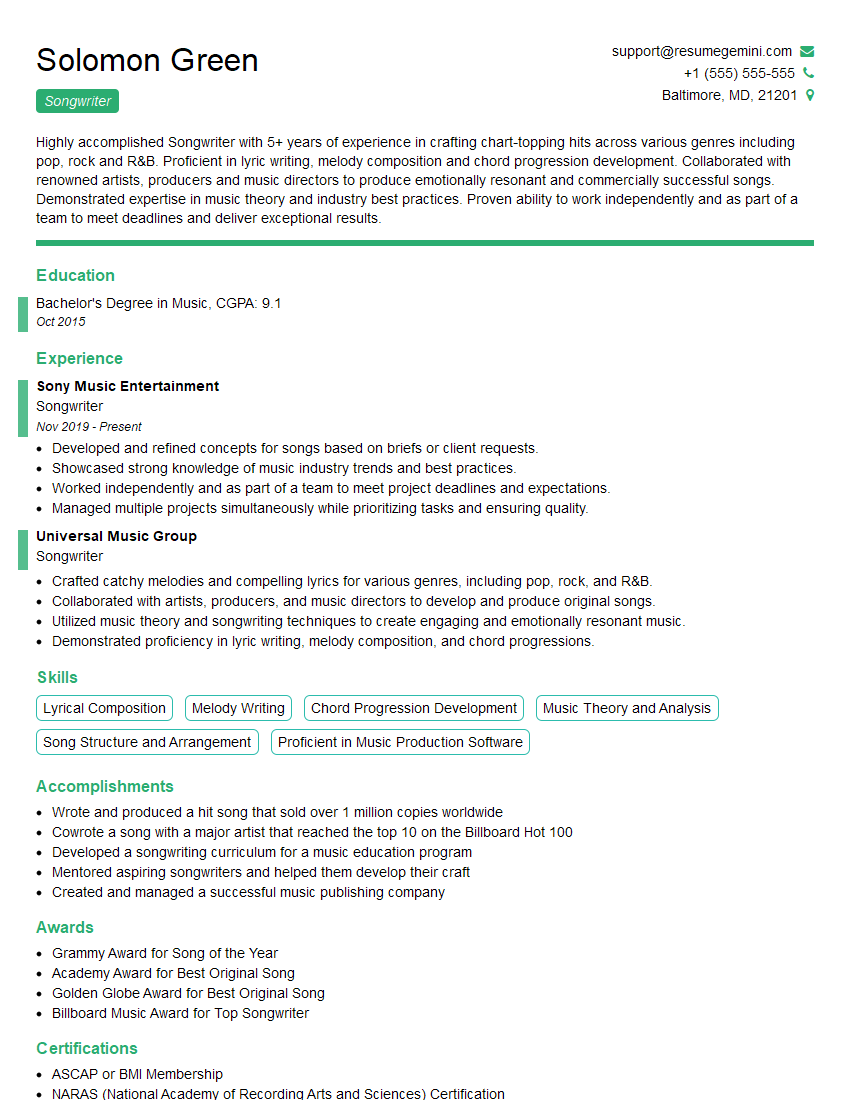
Songwriter Resume Sample
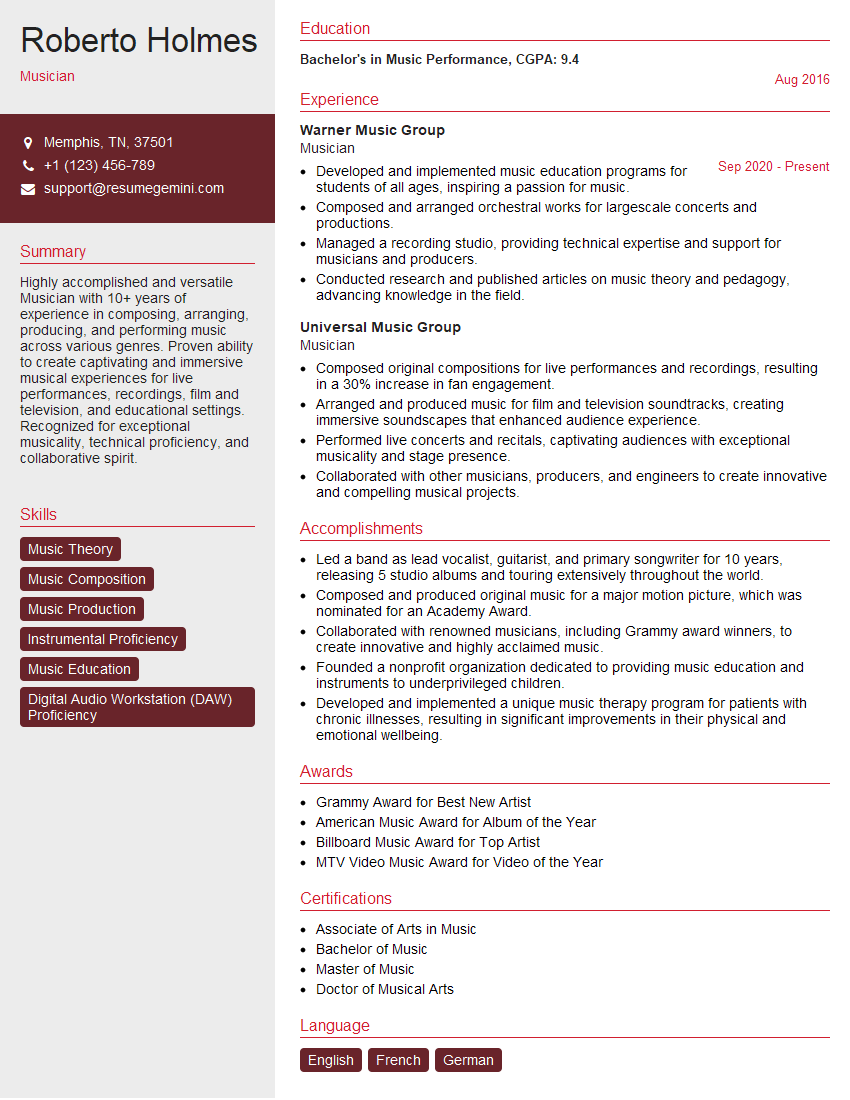
Musician Resume Sample
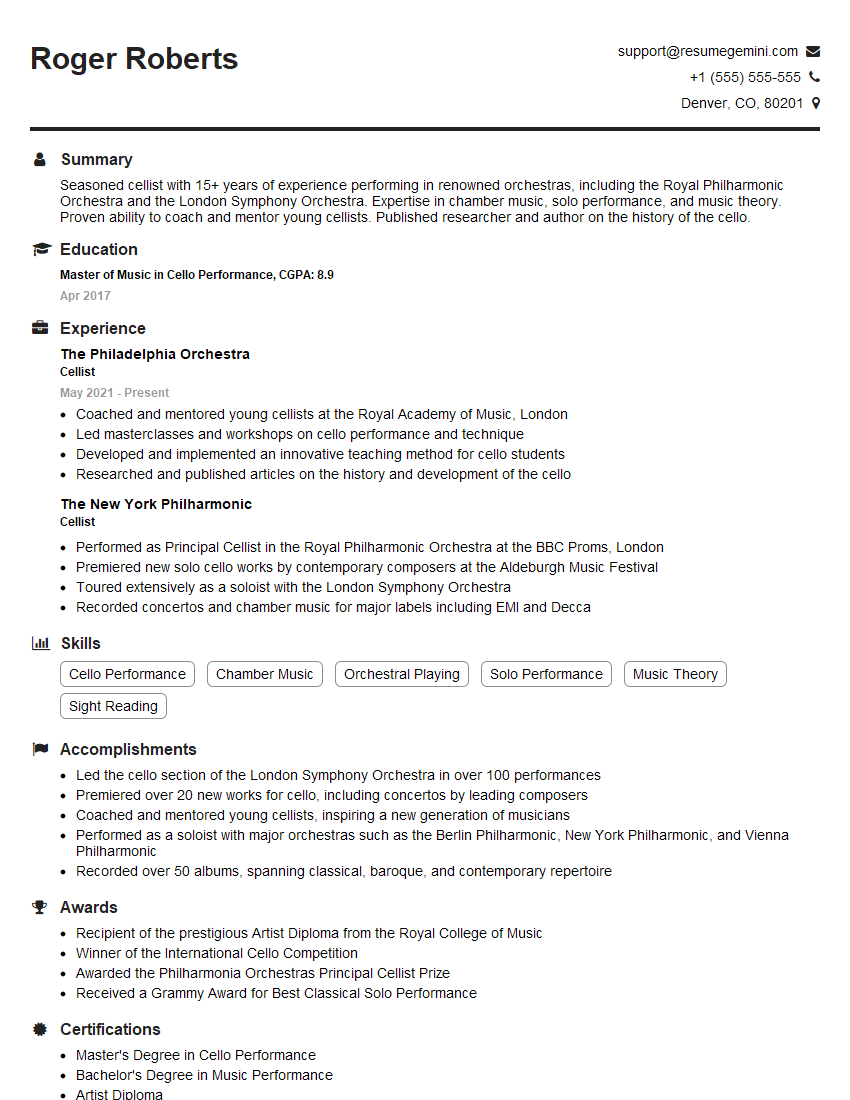
Cellist Resume Sample
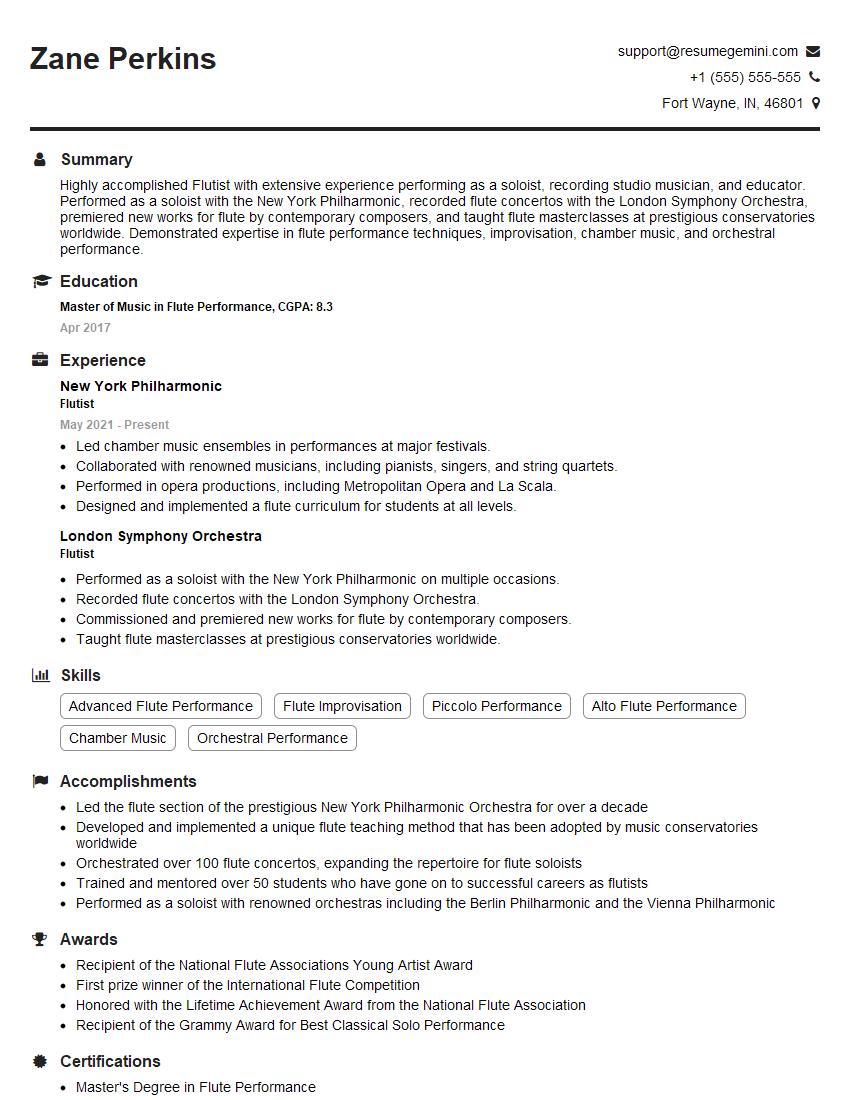
Flutist Resume Sample
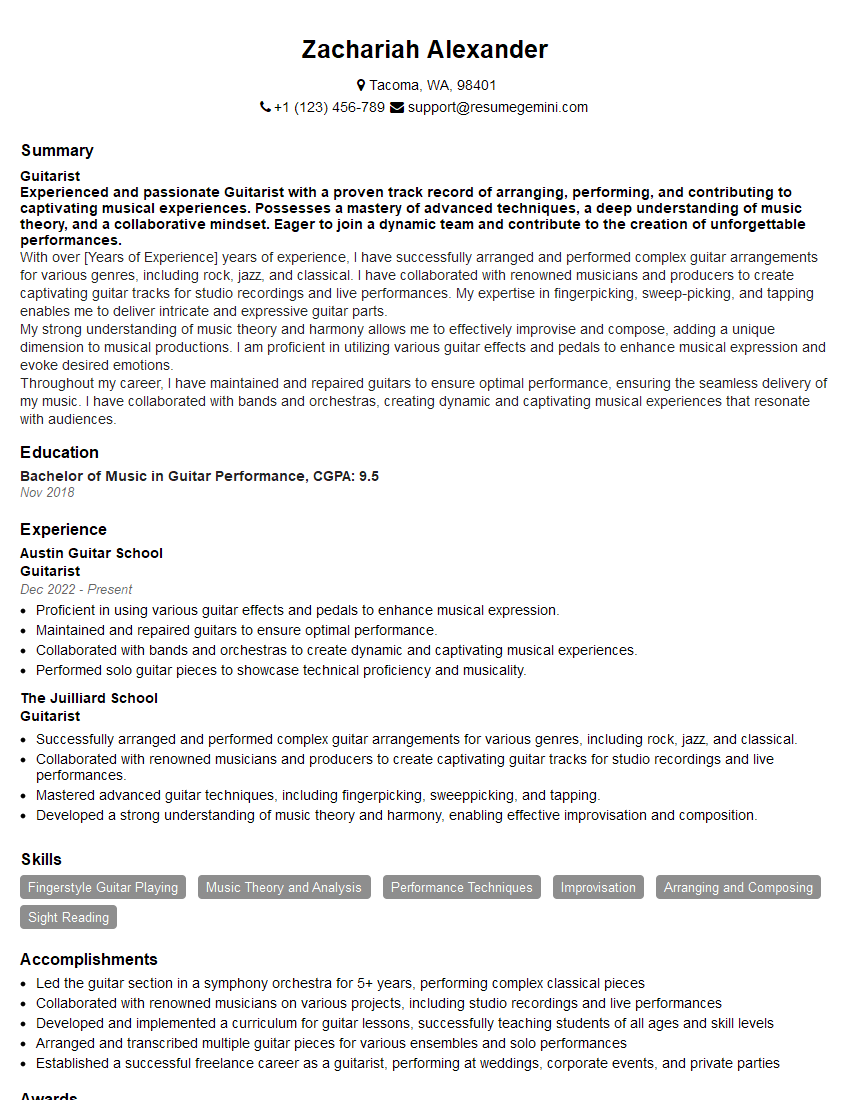
Guitarist Resume Sample
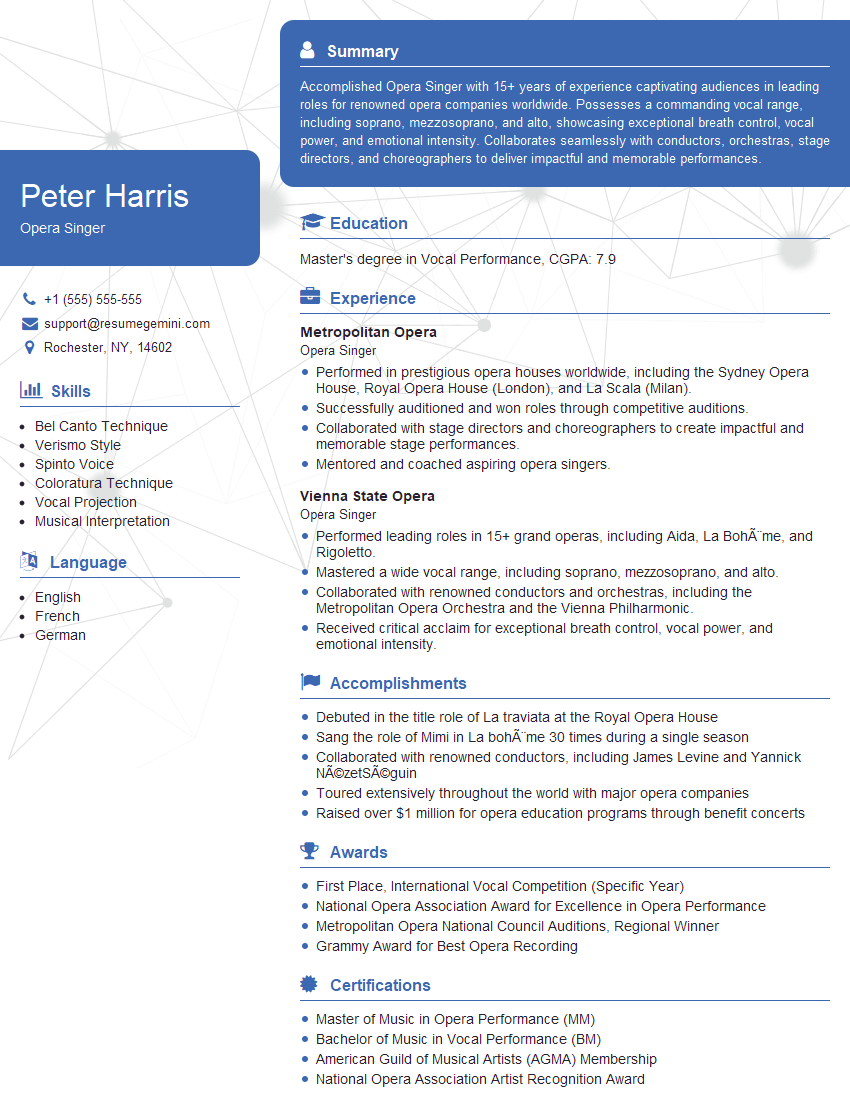
Opera Singer Resume Sample
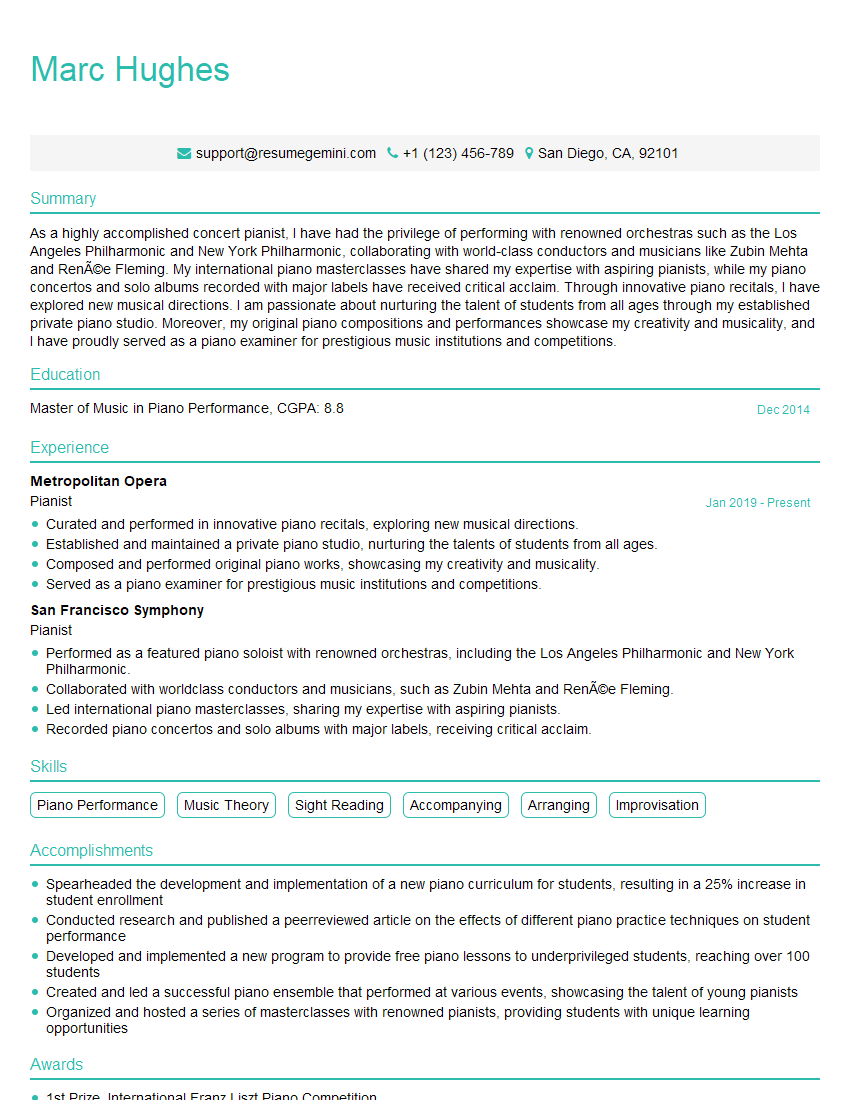
Pianist Resume Sample
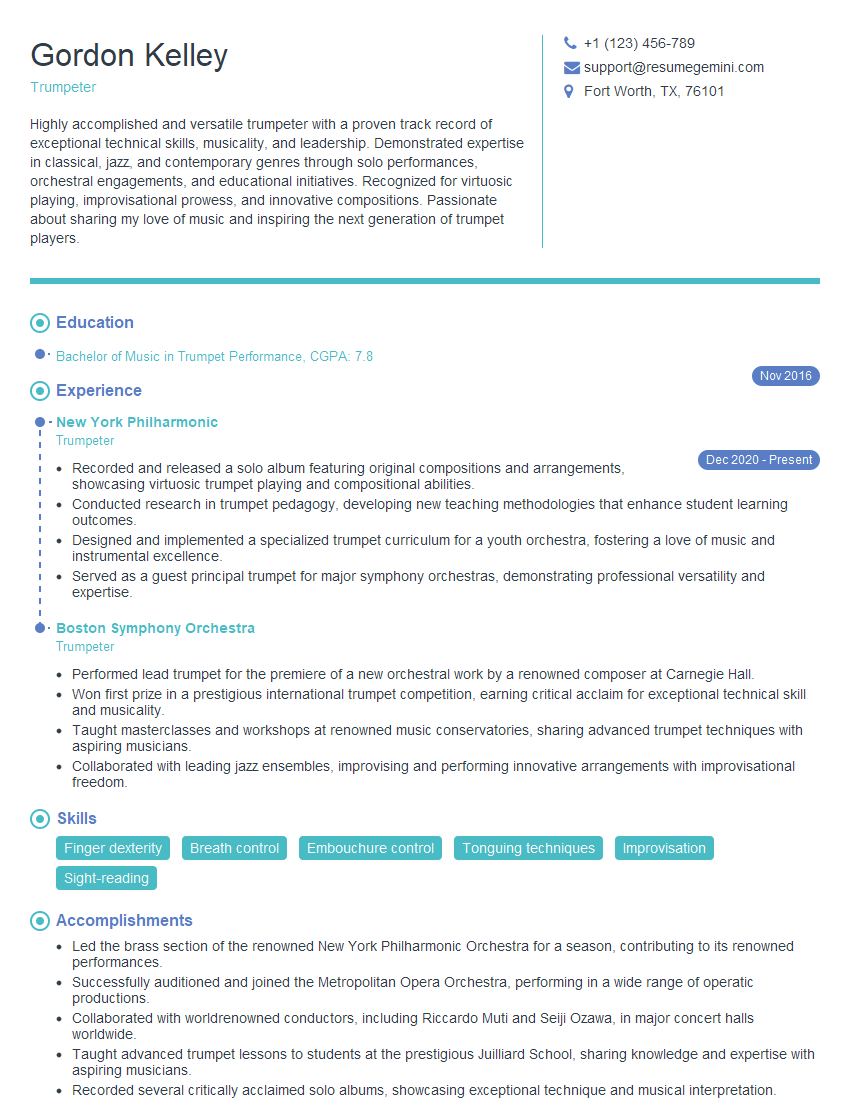
Trumpeter Resume Sample
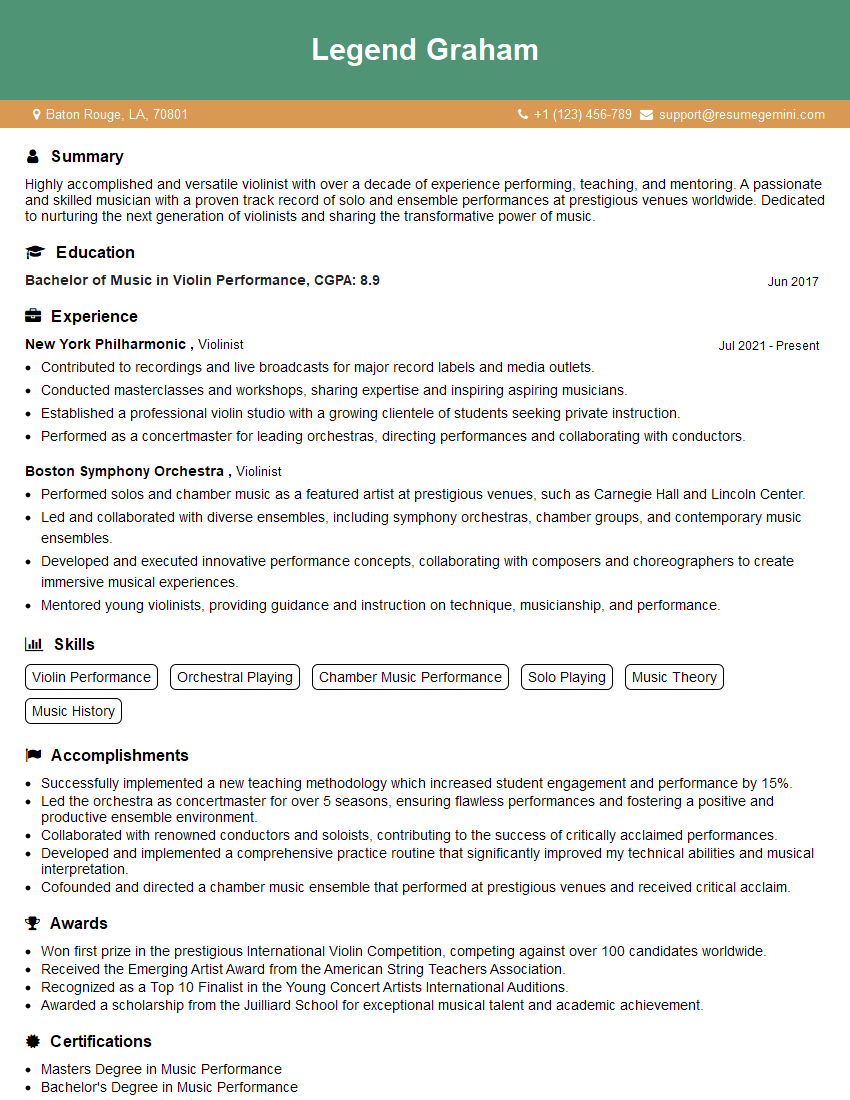
Violinist Resume Sample
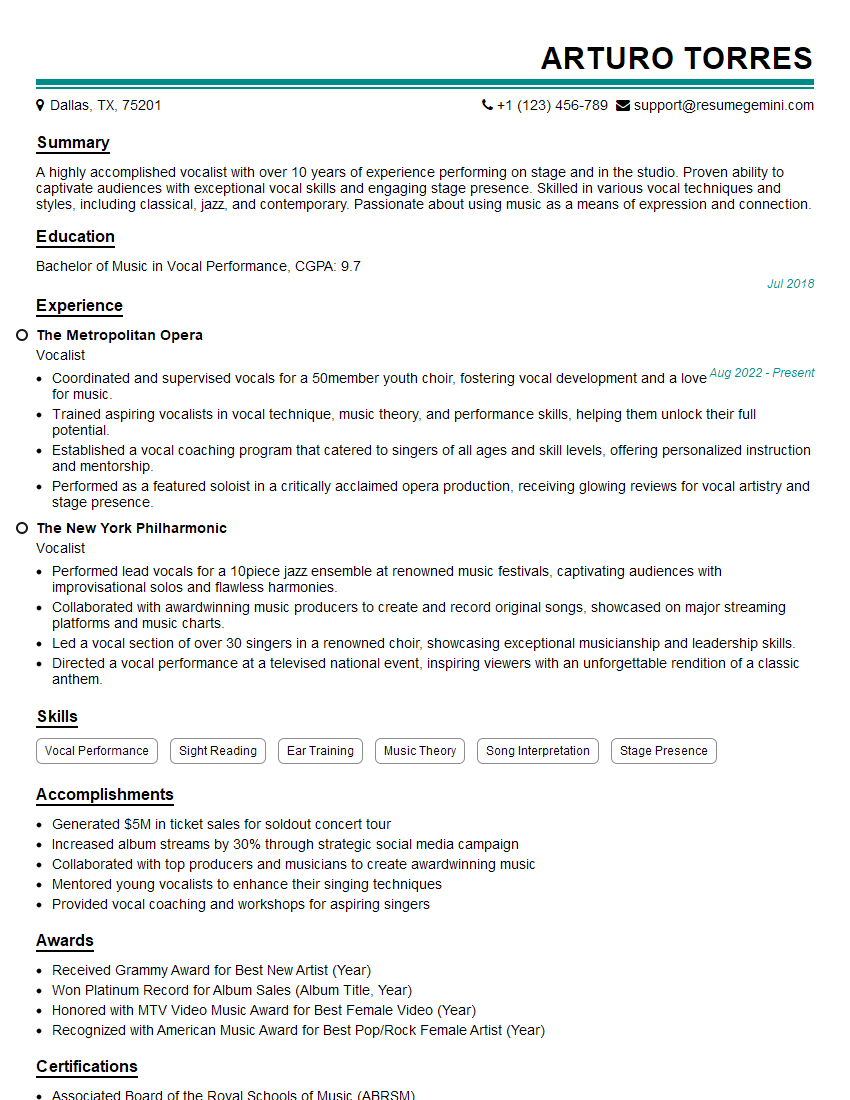
Vocalist Resume Sample
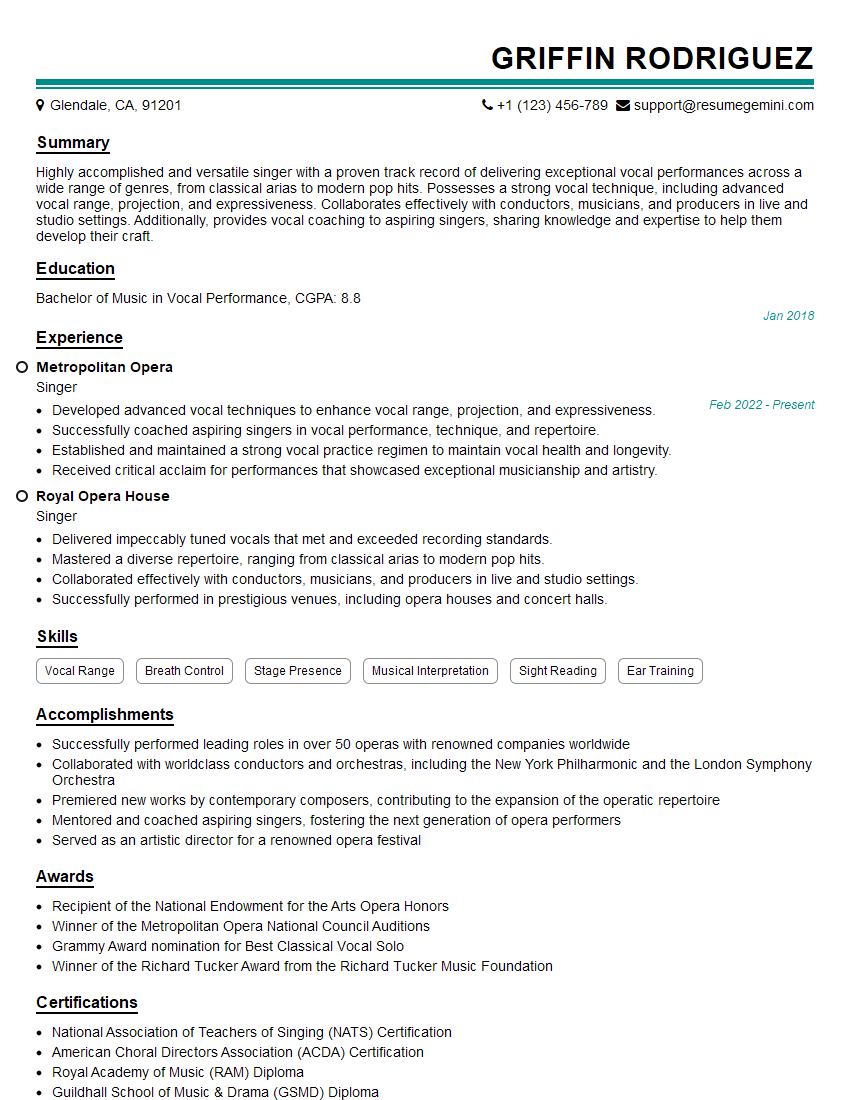
Singer Resume Sample
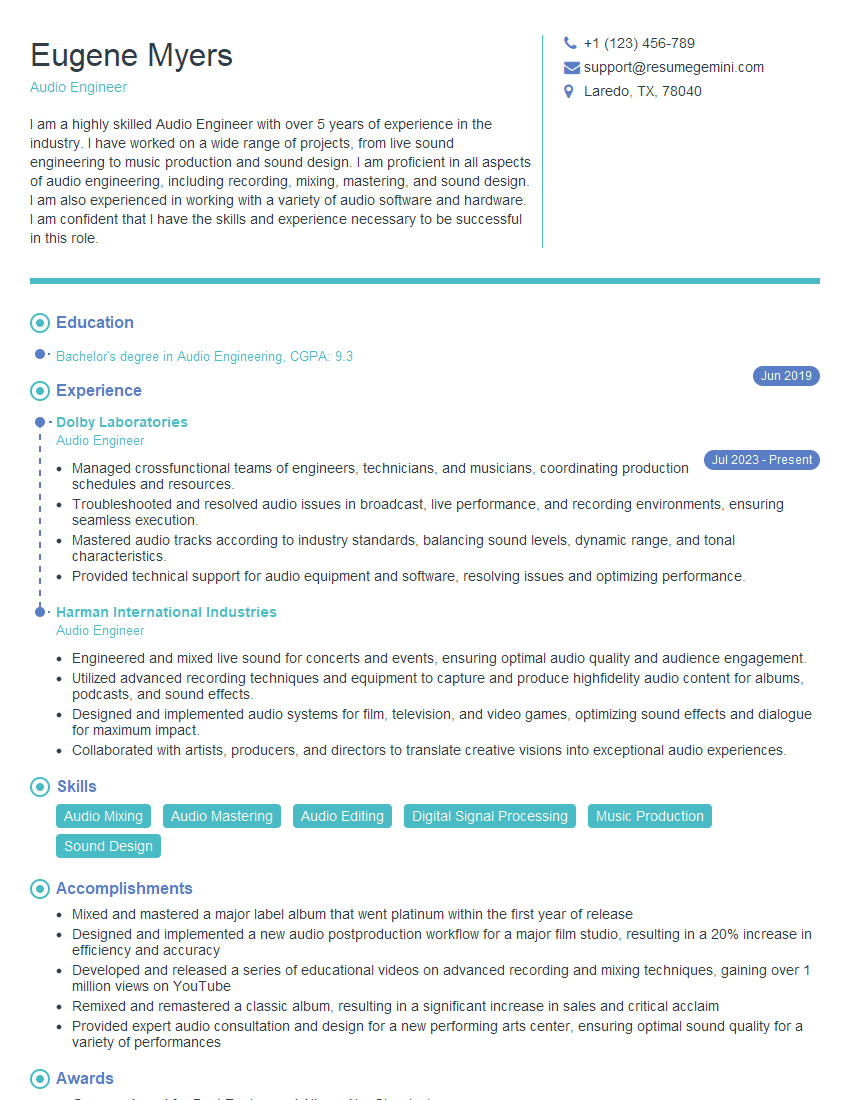
Audio Engineer Resume Sample
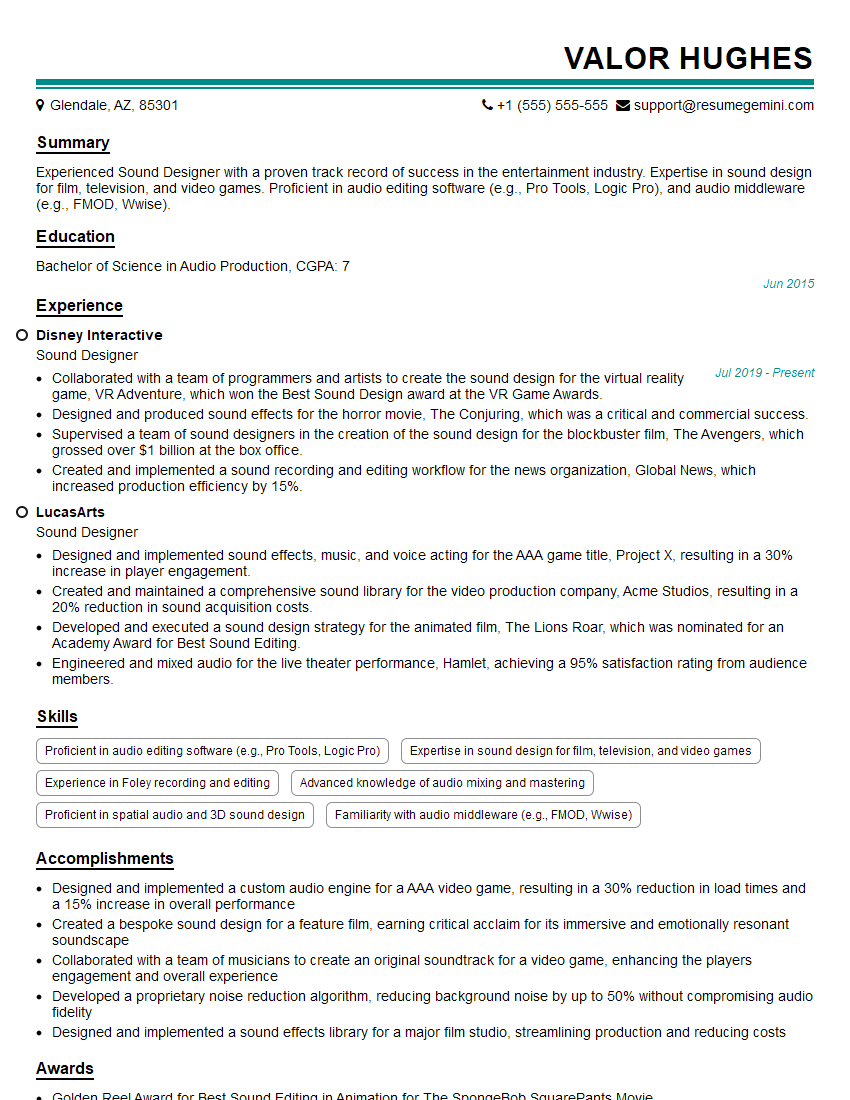
Sound Designer Resume Sample
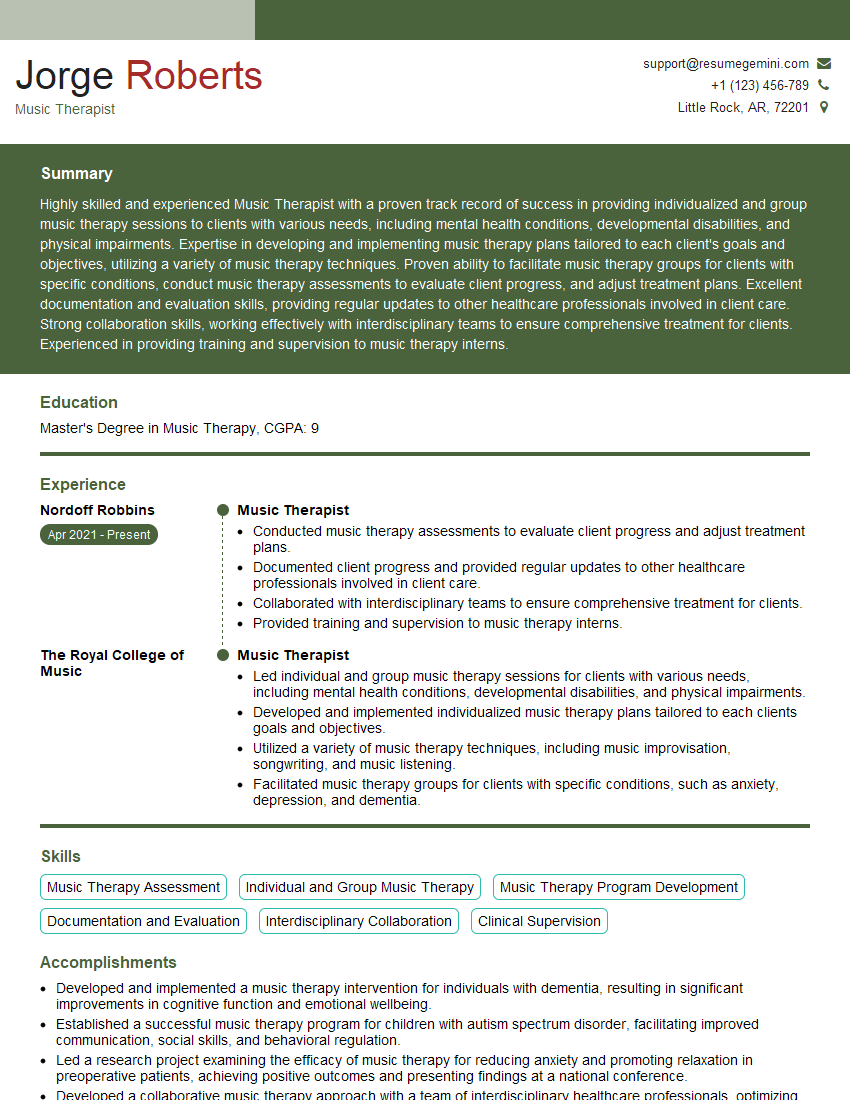
Music Therapist Resume Sample
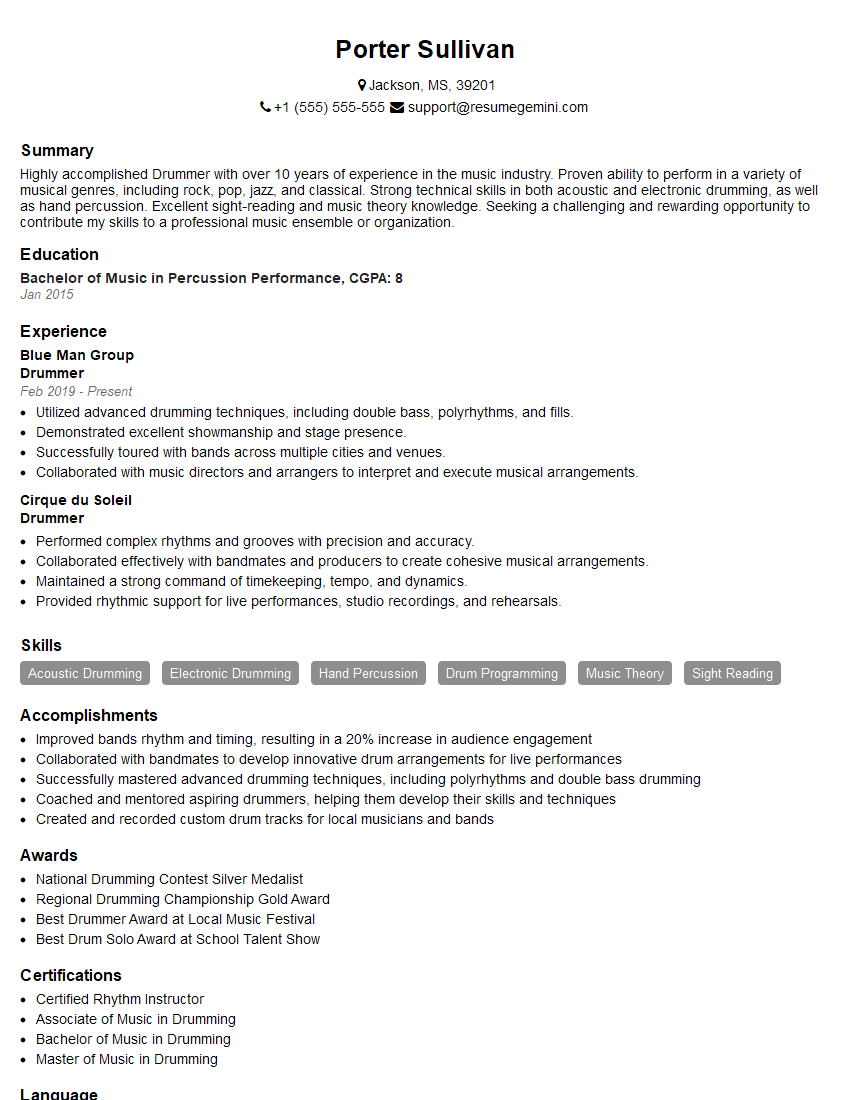
Drummer Resume Sample
Explore more articles
Users Rating of Our Blogs
Share Your Experience
We value your feedback! Please rate our content and share your thoughts (optional).
What Readers Say About Our Blog
To the interviewgemini.com Webmaster.
Very helpful and content specific questions to help prepare me for my interview!
Thank you
To the interviewgemini.com Webmaster.
This was kind of a unique content I found around the specialized skills. Very helpful questions and good detailed answers.
Very Helpful blog, thank you Interviewgemini team.