The thought of an interview can be nerve-wracking, but the right preparation can make all the difference. Explore this comprehensive guide to Power Market Fundamentals interview questions and gain the confidence you need to showcase your abilities and secure the role.
Questions Asked in Power Market Fundamentals Interview
Q 1. Explain the difference between a bilateral contract and a pool-based market.
Bilateral contracts and pool-based markets represent two fundamentally different approaches to electricity trading. A bilateral contract is a direct agreement between two parties – a power generator and a buyer (like a utility or large industrial consumer) – for the sale and purchase of electricity at a pre-agreed price and quantity over a specified period. Think of it like a private deal between two individuals. The terms are negotiated directly, and the transaction occurs outside of a centralized market.
In contrast, a pool-based market operates through a central exchange or market operator (like an Independent System Operator or RTO). Generators submit their offers to sell electricity at various prices, and buyers submit their bids to purchase. The market operator then matches supply and demand to determine the market-clearing price and allocate electricity. This is more like an auction, with transparency and competition setting the price.
The key differences lie in price discovery (negotiated vs. market-based), transparency (low vs. high), and risk (higher for bilateral contracts, as they lack the price certainty of a market). For example, a large factory might secure a long-term, fixed-price contract (bilateral) to ensure stable energy costs, while a smaller consumer relies on the spot market prices in a pool-based system.
Q 2. Describe the role of Independent System Operators (ISOs) and Regional Transmission Organizations (RTOs).
Independent System Operators (ISOs) and Regional Transmission Organizations (RTOs) are crucial entities responsible for the reliable operation of the bulk power system within their respective regions. While the names differ slightly, their functions are largely similar. They act as neutral parties, ensuring fair and efficient electricity markets.
Their roles encompass:
- Managing the electricity grid: They oversee the flow of electricity across high-voltage transmission lines, ensuring grid stability and reliability.
- Operating the electricity market: They run the wholesale electricity market, facilitating the buying and selling of electricity among generators and buyers.
- Ensuring grid security: They monitor the system in real-time, anticipating and preventing potential problems such as blackouts. This includes managing reserves and responding to unexpected events (like generator outages).
- Planning for future grid needs: They develop long-term plans to meet future electricity demand and ensure the grid’s capacity to accommodate new generation resources and growth.
Think of them as air traffic controllers for the electricity system, guiding the flow of energy to ensure safe and efficient delivery. Their operation is critical for a functioning power market and reliable electricity supply.
Q 3. What are locational marginal prices (LMPs) and how are they determined?
Locational Marginal Prices (LMPs) are the prices of electricity at various points or locations within a power grid. They reflect the marginal cost of supplying electricity at each location, taking into account factors like generation costs, transmission congestion, and losses. Instead of a single price for electricity, LMPs provide a more granular and geographically precise pricing structure.
LMPs are determined through the market clearing process conducted by ISOs/RTOs. They run optimization models that consider the network constraints (transmission line capacities), generation offers, and demand bids. The model finds the most economical way to meet the system’s demand, considering all constraints. The resulting prices at each location are the LMPs. A higher LMP in one area might indicate congestion on the transmission lines feeding that area, while lower prices might be seen in regions with ample generation capacity. For example, a sudden spike in demand in a specific region could lead to higher LMPs in that area, reflecting the extra cost of bringing additional generation resources online or managing congestion.
Q 4. Explain the concept of energy arbitrage and provide an example.
Energy arbitrage is the practice of buying energy at a low price and selling it at a higher price to profit from price differences over time or across different locations. It leverages price fluctuations to generate profit. This strategy requires flexibility in energy storage or the ability to shift consumption patterns.
Example: Imagine a power plant with energy storage capabilities (like a pumped hydro plant or a battery storage system). If electricity prices are low at night (due to lower demand), the plant could purchase and store energy. During peak hours when electricity prices are high, they can sell the stored energy, making a profit from the price difference. Similarly, arbitrage can occur geographically, with traders buying electricity in a low-priced region and selling it in a high-priced region, accounting for transmission losses and costs.
Q 5. How does renewable energy integration impact power market dynamics?
The integration of renewable energy sources, such as solar and wind power, significantly impacts power market dynamics. These resources are intermittent and variable, meaning their output fluctuates based on weather conditions. This intermittency poses several challenges:
- Forecasting challenges: Accurately predicting renewable energy generation is difficult, making it challenging to balance supply and demand.
- Increased need for flexibility: To compensate for the variability of renewable energy, power systems need more flexible resources (e.g., fast-responding gas plants, energy storage) to quickly adjust output to match fluctuations in renewable generation.
- Impact on pricing: The fluctuating supply of renewable energy can lead to price volatility, particularly during periods of low or high renewable generation.
- Grid infrastructure upgrades: Integrating large amounts of renewable energy might require investments in grid infrastructure to accommodate the distributed nature of many renewable energy resources.
However, renewable energy integration also brings benefits: it can reduce reliance on fossil fuels, lower greenhouse gas emissions, and potentially create new market opportunities for ancillary services (e.g., frequency regulation provided by flexible resources).
Q 6. Describe the various types of power plants and their characteristics.
Power plants can be categorized based on their primary energy source and generating technology. Some key types include:
- Fossil Fuel Plants: These include coal, natural gas, and oil-fired plants. They are typically large-scale, baseload generators, though natural gas plants offer greater flexibility. They contribute significantly to greenhouse gas emissions.
- Nuclear Plants: These plants use nuclear fission to generate electricity. They have high capacity factors (meaning they consistently produce power), but are associated with concerns about nuclear waste disposal and safety.
- Hydroelectric Plants: These utilize the potential energy of water stored in reservoirs to generate electricity. They are renewable, but their construction can impact the environment.
- Renewable Energy Plants: These include solar photovoltaic (PV) plants, concentrated solar power (CSP) plants, wind turbines, and geothermal plants. They are generally cleaner than fossil fuel plants but face intermittency challenges.
- Combined Cycle Gas Turbines (CCGT): These plants combine gas turbines with steam turbines for higher efficiency.
Each plant type has specific characteristics regarding capacity, efficiency, cost, emissions, and environmental impact, influencing their role in the power system.
Q 7. What are some key challenges in balancing supply and demand in a power system?
Balancing supply and demand in a power system is a continuous challenge, requiring precise coordination and management. Key challenges include:
- Intermittency of Renewable Energy: The unpredictable nature of solar and wind power makes it difficult to precisely forecast generation, requiring flexible resources to compensate for fluctuations.
- Unexpected Outages: Generator or transmission line failures can disrupt supply and require quick responses to prevent blackouts.
- Rapid Demand Changes: Demand can fluctuate significantly throughout the day and year, requiring adaptable generation resources and demand-side management strategies.
- Maintaining Grid Stability: The frequency and voltage of the electricity grid must be kept within strict limits; imbalances can lead to cascading failures.
- Transmission Constraints: Limitations on transmission line capacity can restrict the flow of electricity, leading to localized supply shortages or high prices.
Addressing these challenges requires sophisticated forecasting, real-time grid monitoring, flexible generation resources, demand-side management programs, and robust emergency response plans. ISOs/RTOs play a critical role in managing these complexities to maintain grid reliability and ensure a stable electricity supply.
Q 8. Explain the concept of capacity markets and their purpose.
Capacity markets are designed to ensure sufficient electricity generation capacity is available to meet future demand, even during peak periods or unexpected outages. Think of it like an insurance policy for the power grid. Instead of relying solely on the energy market (which prices electricity based on immediate supply and demand), capacity markets incentivize power plants to remain operational and available, even if they aren’t generating power at every moment. This helps prevent blackouts and maintains grid reliability.
These markets work by procuring capacity from generators through auctions or bilateral contracts. Generators bid the price they require to keep their plants available, and the system operator selects the bids needed to meet a pre-determined capacity requirement. This ensures enough generation capacity is on standby to handle unforeseen circumstances. For example, if a major power plant unexpectedly goes offline, the reserve capacity procured through the capacity market can step in to prevent widespread outages. The prices paid for this capacity are typically less than the cost of a major blackout.
Q 9. What is the impact of demand response programs on power markets?
Demand response programs (DRPs) significantly impact power markets by influencing both supply and demand. DRPs incentivize consumers and businesses to adjust their electricity consumption in response to real-time price signals or grid conditions. This can involve shifting energy usage to off-peak hours (reducing peak demand), using energy-efficient appliances, or even temporarily curtailing energy use during emergencies.
The impact is twofold: firstly, DRPs reduce the overall peak demand, thus lowering the need for expensive peaking power plants that only operate during high demand periods. This can lead to lower electricity prices for consumers in the long run. Secondly, DRPs provide a flexible and responsive resource for grid operators, which can help balance supply and demand in real-time. Imagine a sudden heatwave increasing demand – DRPs can quickly curtail consumption from participating customers, preventing potential grid instability. This flexibility is increasingly valuable in a renewable-energy-dominated grid, where generation is intermittent.
Q 10. Describe the different types of ancillary services and their importance.
Ancillary services are essential support services that ensure the reliable operation of the power system. They are distinct from the primary energy supply and are crucial for maintaining grid stability and security. These services are procured by grid operators through various markets.
- Regulation: Provides fast-responding power to balance real-time variations in supply and demand, maintaining frequency stability. Think of it as a precise fine-tuning mechanism keeping the power system’s tempo steady.
- Spinning Reserves: Immediately available generation that can quickly respond to unexpected generator outages or sudden demand increases. It’s like having a backup band ready to jump in if the main act has a problem.
- Non-Spinning Reserves: Generation that can be brought online quickly (within minutes) in response to emergencies. This is the ‘second-string’ ready to play, just needing a few minutes of preparation.
- Black Start Capability: The ability of selected generators to start up without relying on the existing grid, crucial for restoring power after a widespread blackout. This is like having a self-sufficient generator to kickstart the entire system.
- Voltage Support: Maintaining the voltage levels within acceptable limits throughout the transmission system. It’s like ensuring the right pressure in a water pipe network.
The importance of ancillary services is paramount; without them, the grid would be highly vulnerable to instability and potential blackouts. They’re the invisible support system ensuring the lights stay on.
Q 11. Explain the concept of congestion management in power transmission systems.
Congestion management in power transmission systems addresses the issue of limited transmission capacity. When the flow of electricity exceeds the capacity of a transmission line, it causes congestion. This leads to price differences between different locations on the grid, impacting market efficiency and potentially leading to reliability problems.
Congestion management aims to alleviate these constraints through various mechanisms:
- Pricing Mechanisms: Congestion pricing reflects the scarcity of transmission capacity, influencing power flows and encouraging efficient dispatch of generation. Higher prices in congested areas discourage power flow into those areas.
- Operational Strategies: Grid operators use real-time monitoring and control to adjust generation dispatch and manage flows, mitigating congestion. This might involve reducing generation in certain areas or rerouting power through alternative transmission paths.
- Transmission Expansion Planning: Investing in new transmission lines and infrastructure upgrades is a long-term solution to address capacity limitations. This reduces congestion in the long run.
Think of it like traffic management on highways; if a highway is congested, tolls might be increased (pricing) or drivers might be directed to alternative routes (operational strategies). Similarly, transmission expansion projects (planning) add capacity like building new highways to relieve the bottleneck.
Q 12. How are power market regulations designed to ensure reliability and competition?
Power market regulations are crucial for ensuring both reliability and competition. They aim to create a level playing field for generators, transmission owners, and consumers while maintaining system integrity.
Key regulatory aspects include:
- Independent System Operator (ISO) Oversight: ISOs are responsible for operating and managing the grid in a fair and impartial manner, ensuring reliability and grid stability.
- Market Design and Rules: Clear rules and guidelines define how markets operate, ensuring transparency and preventing manipulation. This includes rules for bidding, dispatch, and pricing.
- Grid Access and Interconnection: Regulations ensure fair and non-discriminatory access to the transmission grid for all market participants.
- Reliability Standards: Strict standards dictate the reliability performance of power systems, with penalties for failing to meet them. This incentivizes participants to maintain system integrity.
- Consumer Protection: Regulations ensure competitive pricing and consumer protection, preventing monopolies and exploitation.
These regulations work together to create a framework that is competitive but also safe and reliable, preventing market failures and ensuring everyone has access to affordable and reliable electricity. The balance between fostering competition and ensuring reliability is a key challenge for regulators.
Q 13. What are some key risk factors in power markets?
Power markets face several key risk factors that can significantly impact profitability and system stability:
- Fuel Price Volatility: Fluctuations in fuel prices (coal, natural gas, oil) directly impact generation costs and profitability.
- Regulatory Changes: Changes in environmental regulations or market rules can drastically affect investment decisions and market dynamics.
- Demand Uncertainty: Unpredictable changes in electricity demand, especially due to weather events or economic fluctuations, can lead to price volatility and reliability issues.
- Renewable Energy Intermittency: The intermittent nature of renewable energy sources (solar, wind) poses challenges for grid management and forecasting.
- Cybersecurity Threats: Power systems are increasingly vulnerable to cyberattacks, potentially disrupting operations and causing significant damage.
- Geopolitical Events: Global events and conflicts can have a significant impact on fuel supplies and market prices.
Managing these risks requires sophisticated risk management strategies, including hedging, diversification, and robust cybersecurity measures. A thorough understanding of these risks is critical for successful participation in power markets.
Q 14. Describe different power market forecasting techniques.
Power market forecasting involves predicting future electricity demand and supply, enabling effective grid management and market operations. A variety of techniques are used, each with its strengths and weaknesses:
- Econometric Models: Statistical models that use historical data and economic indicators to predict demand. These are often sophisticated and capable of capturing long-term trends.
- Time Series Analysis: Statistical methods used to analyze historical electricity consumption patterns and predict future values based on these trends. Techniques like ARIMA (Autoregressive Integrated Moving Average) are commonly used.
- Machine Learning (ML): ML algorithms, such as neural networks and support vector machines, can be trained on large datasets to predict demand with high accuracy. They can capture non-linear relationships and complex patterns.
- Agent-Based Modeling (ABM): Simulates the behavior of individual agents (consumers, generators) to model aggregate demand and supply. This can capture complex interactions and market dynamics.
The choice of forecasting technique depends on factors such as data availability, forecasting horizon, and required accuracy. Often a hybrid approach, combining multiple methods, provides the most robust and accurate forecasts.
Q 15. How are transmission constraints modeled in power market simulations?
Transmission constraints, the limitations on the amount of power that can flow through transmission lines, are crucial in power market simulations. They are modeled using a variety of techniques, primarily focusing on representing the physical limitations of the grid.
One common method is using DC power flow approximations. This simplifies the complex AC power flow equations, making the calculations faster, but sacrificing some accuracy. It uses a linearized model to estimate power flows and voltage angles across the transmission network. Constraints are then represented as limits on power flow on individual lines and transformers. Think of it like modeling a water pipe network: the pipes have a maximum flow rate, and exceeding it leads to pressure problems (voltage instability in the electrical system).
More sophisticated models employ AC optimal power flow (OPF). This method solves the full AC power flow equations, resulting in a more accurate representation of the grid’s behavior, including voltage magnitudes and phase angles. It’s computationally more intensive but necessary for accurate representation of complex grid behavior, especially under stressed conditions. Constraints are incorporated as limits on voltages, currents, and power flows, ensuring realistic operation.
These models are typically incorporated into market clearing algorithms, which find the optimal dispatch of generation to meet demand while respecting these constraints. Violation of constraints can result in cascading outages, so their accurate modeling is critical for reliable market operation.
Career Expert Tips:
- Ace those interviews! Prepare effectively by reviewing the Top 50 Most Common Interview Questions on ResumeGemini.
- Navigate your job search with confidence! Explore a wide range of Career Tips on ResumeGemini. Learn about common challenges and recommendations to overcome them.
- Craft the perfect resume! Master the Art of Resume Writing with ResumeGemini’s guide. Showcase your unique qualifications and achievements effectively.
- Don’t miss out on holiday savings! Build your dream resume with ResumeGemini’s ATS optimized templates.
Q 16. Explain the role of market participants in power markets.
Power markets are bustling ecosystems with several key players. Their interactions drive the price discovery mechanism and ensure reliable electricity supply. Let’s look at some main participants:
- Generators: These are power plants (e.g., coal, nuclear, solar, wind) that produce electricity and sell it into the market.
- Load Serving Entities (LSEs): These are often utilities or large electricity consumers who purchase electricity on behalf of their customers. They buy power from the market to meet their end-users’ demand.
- Independent System Operators (ISOs) or Regional Transmission Organizations (RTOs): These are crucial entities responsible for the reliable and efficient operation of the grid. They manage the market, dispatch generation resources, and ensure grid stability.
- Transmission Owners: They own and maintain the high-voltage transmission lines that move electricity across vast distances. They are compensated for transmission services.
- Market Participants (Traders): These are often energy companies or financial institutions that engage in buying and selling electricity for profit, often speculating on price fluctuations.
- Energy Storage Providers: These participants offer energy storage services, helping balance supply and demand and improve grid stability.
The interactions between these players, driven by supply and demand, determine electricity prices. The ISO/RTO plays a central role, ensuring that enough electricity is available at all times while managing the constraints of the transmission network.
Q 17. What are the different types of energy storage technologies and their applications?
Energy storage technologies are vital for integrating renewable energy sources and improving grid flexibility. They come in different forms, each with unique applications:
- Pumped Hydro Storage: This is a mature technology using excess energy to pump water uphill, then releasing it to generate power when needed. It’s highly efficient and suitable for large-scale applications, but geographically constrained.
- Battery Storage (Lithium-ion, Flow Batteries): Lithium-ion batteries offer high power density and are well-suited for shorter-duration applications, like providing grid services or backup power. Flow batteries excel in longer-duration applications, but are less powerful.
- Compressed Air Energy Storage (CAES): This technology stores energy by compressing air, releasing it to drive turbines. It’s suited for long duration storage, but has relatively low efficiency.
- Thermal Energy Storage: This involves storing energy as heat (e.g., molten salt) and later converting it back to electricity. Suitable for concentrated solar power plants.
Applications span from grid-scale stabilization (frequency regulation) to residential backup power. The choice of technology depends on factors like duration of storage needed, power output requirements, cost, and environmental impact. The increasing penetration of renewables is driving a rapid expansion of energy storage deployment.
Q 18. Describe the impact of deregulation on power markets.
Deregulation of power markets has had a profound impact, shifting from vertically integrated monopolies to more competitive structures. Prior to deregulation, utilities controlled generation, transmission, and distribution, often resulting in less efficient and innovative solutions.
Key impacts include:
- Increased Competition: Deregulation fostered competition among generators, leading to potentially lower prices and more diverse energy sources.
- Improved Efficiency: Competitive markets incentivize generators to operate more efficiently to lower their costs and remain competitive.
- Greater Consumer Choice: Consumers may have more options to choose their electricity supplier, potentially leading to better rates and services.
- Increased Investment in Renewables: Deregulated markets have stimulated investment in renewable energy sources, as they can now compete with traditional generation.
- Challenges in Grid Management: The increased complexity of a deregulated market requires sophisticated grid management to ensure reliable operation and security.
However, it’s crucial to note that deregulation isn’t without challenges. Issues like ensuring market transparency, mitigating market power, and ensuring grid reliability are ongoing concerns that regulators address.
Q 19. What are some common power market trading strategies?
Power market trading strategies are diverse and sophisticated, aiming to profit from price fluctuations and market inefficiencies. Here are some common strategies:
- Arbitrage: This involves buying electricity at a low price in one market and selling it at a higher price in another, exploiting price differences.
- Spread Trading: This focuses on the difference between prices in two different markets or time periods (e.g., day-ahead versus real-time). Traders profit from the spread widening or narrowing as anticipated.
- Price Forecasting: Sophisticated models are used to predict future electricity prices, enabling traders to strategically buy or sell to capitalize on expected price movements.
- Basis Trading: This exploits the price difference between a physical commodity (electricity) and a financial derivative based on that commodity.
- Capacity Trading: Involves trading capacity contracts, securing future access to generating capacity or transmission infrastructure.
Successful power trading requires deep understanding of market dynamics, sophisticated forecasting models, risk management expertise, and timely execution. It’s a high-stakes environment with both significant potential gains and considerable risks.
Q 20. Explain the role of real-time pricing in power markets.
Real-time pricing (RTP), also known as locational marginal pricing (LMP) in many markets, reflects the actual cost of electricity at a specific location and time. This differs from fixed-rate pricing, where consumers pay a consistent rate regardless of demand. RTP changes dynamically based on supply and demand.
The role of RTP is multifaceted:
- Incentivizes Demand Response: High prices during peak demand encourage consumers to reduce their electricity consumption, helping to balance supply and demand.
- Improves Grid Efficiency: By reflecting the true cost, RTP allows for better allocation of resources and encourages efficient generation dispatch.
- Integrates Renewables: As renewable generation is often intermittent, RTP helps incorporate them by reflecting their fluctuating availability.
- Enhances Market Transparency: RTP provides greater visibility into the actual cost of electricity, promoting market efficiency and fairness.
While RTP offers advantages, it also presents challenges for consumers. Uncertainty in electricity costs can lead to unpredictable bills, necessitating effective demand-side management strategies and potentially leading to increased cost burdens for those who can’t readily adapt.
Q 21. How are power markets affected by seasonal variations?
Seasonal variations significantly impact power markets due to fluctuating electricity demand and renewable energy generation. Think about heating and cooling requirements: winter brings increased heating demand, and summer, air conditioning.
Impact on Demand:
- Higher demand in winter and summer: Increased heating and cooling needs lead to peak demand during these seasons, driving up prices.
- Lower demand in spring and fall: Moderate temperatures result in lower demand for heating and cooling, leading to lower electricity prices.
Impact on Renewable Generation:
- Solar generation peaks in summer: Longer daylight hours lead to higher solar output, potentially impacting pricing depending on system capacity.
- Hydro generation varies with water levels: Seasonal rainfall affects reservoir levels impacting available hydropower.
- Wind generation can vary across seasons: Weather patterns affect wind speeds; some seasons may experience more consistent, higher wind speeds.
These seasonal effects are considered by market participants when making trading decisions, influencing energy procurement strategies, and impacting price forecasts. Market operators must also account for these variations in planning grid operations to ensure reliable electricity supply throughout the year.
Q 22. What is the role of environmental regulations in power markets?
Environmental regulations play a crucial role in shaping power markets by incentivizing cleaner energy sources and reducing emissions. These regulations often take the form of carbon taxes, cap-and-trade systems, or renewable portfolio standards (RPS). For example, a carbon tax directly increases the cost of fossil fuel-based electricity generation, making renewable energy sources like solar and wind more competitive. An RPS mandates a certain percentage of electricity generation must come from renewable sources, driving investment and development in these sectors. The impact is a shift in the merit order (discussed in the next question), with cleaner, but potentially more expensive, sources gaining market share.
In practice, this means power generators need to adapt to meet these stricter environmental standards. This might involve investing in carbon capture technologies, switching to cleaner fuels, or even retiring older, less efficient plants. This transition influences investment decisions, electricity prices, and the overall structure of the power market.
Q 23. Explain the concept of a merit order dispatch.
Merit order dispatch is the process of scheduling electricity generation based on the cost of each generating unit. Simply put, the power system operator will prioritize the cheapest sources of power first to meet demand. This cost is typically the marginal cost of generation, which represents the cost of producing one additional unit of electricity. This cost varies depending on the fuel source (e.g., natural gas, coal, nuclear, renewables), the efficiency of the power plant, and other factors.
Imagine a bakery needing to produce 100 loaves of bread. They have different ovens with varying costs to operate. They’ll start with the cheapest oven until its capacity is reached, then move to the next cheapest, and so on. This is analogous to how a merit order dispatch works in power markets.
Factors such as transmission constraints, and minimum generation requirements for certain plants, can cause deviations from a purely cost-based dispatch. However, the fundamental principle remains the same: prioritizing the lowest-cost options first.
Q 24. Describe different types of power purchase agreements (PPAs).
Power Purchase Agreements (PPAs) are contracts between electricity generators and buyers specifying the terms under which electricity will be sold. There are several types, each with different risk and reward profiles:
- Bilateral PPAs: These are agreements between a single buyer and a single seller. They offer flexibility in terms and pricing but carry higher risk for both parties.
- Corporate PPAs: Businesses directly purchase renewable energy from generators, often to meet sustainability goals and hedge against price volatility.
- Virtual PPAs (VPPA): These agreements allow buyers to receive the environmental benefits of renewable energy without direct physical delivery of the electricity. The buyer and seller agree on a price based on the index price of the region, while the seller keeps the physical electricity.
- Standard PPAs: These agreements are standardized to reduce transaction costs and simplify contracting.
The choice of PPA depends on the specific needs and risk tolerance of both the buyer and seller. For instance, a large industrial consumer might prefer a long-term PPA to lock in stable energy prices, while a smaller customer might opt for a shorter-term agreement for more flexibility.
Q 25. What are some ethical considerations in power market operations?
Ethical considerations in power market operations are paramount. Transparency and fairness are key. This includes:
- Market manipulation: Preventing any attempts to artificially inflate or deflate electricity prices. This could involve strategic withholding of supply or coordinated buying/selling.
- Data security and privacy: Protecting sensitive consumer data and grid operational data from unauthorized access or misuse.
- Environmental responsibility: Balancing the need for reliable energy with environmental protection. This involves responsible resource management and reducing greenhouse gas emissions.
- Fair access: Ensuring equitable access to electricity for all consumers, particularly vulnerable populations.
Robust market oversight and enforcement are critical to maintaining ethical standards. This might involve independent audits, transparent pricing mechanisms, and strong regulatory frameworks to address potential conflicts of interest and prevent unethical practices.
Q 26. Explain the impact of new technologies on power markets (e.g., smart grids).
New technologies are revolutionizing power markets. Smart grids, for instance, use advanced sensors, communication networks, and data analytics to improve grid efficiency, reliability, and resilience. This allows for better integration of renewable energy sources, demand-side management (DSM), and improved grid stability. The integration of distributed generation (DG), like rooftop solar, is another major development transforming the landscape by decentralizing electricity production.
Electric vehicles (EVs) and battery storage are also impacting power markets by creating new sources of demand and enabling better grid management. The increasing adoption of these technologies presents opportunities for new business models, services, and market players.
Smart grids allow for dynamic pricing, where electricity prices reflect real-time supply and demand. This incentivizes consumers to shift their energy consumption to off-peak hours, reducing peak demand and improving grid efficiency. Such a system necessitates investment in infrastructure and advanced metering infrastructure (AMI).
Q 27. Discuss the role of data analytics in optimizing power market operations.
Data analytics plays a vital role in optimizing power market operations. The massive amounts of data generated by smart meters, weather stations, and power plants can be analyzed to improve forecasting, optimize dispatch, and enhance grid management.
For example, machine learning algorithms can be used to predict electricity demand more accurately, helping system operators plan generation and avoid power outages. Predictive maintenance can also be applied to power plant equipment, reducing downtime and improving efficiency. Advanced analytics can detect and prevent market manipulation by identifying unusual trading patterns or anomalies in price data.
Real-time data analytics enables better integration of renewable energy sources by predicting fluctuations in solar and wind power generation. This information allows operators to adjust their dispatch plans accordingly, ensuring grid stability despite the intermittent nature of renewable energy.
Q 28. How do you handle uncertainty and volatility in power market forecasting?
Uncertainty and volatility are inherent in power market forecasting due to unpredictable factors such as weather patterns, economic conditions, and unforeseen events. To handle these challenges, a multi-faceted approach is required:
- Probabilistic forecasting: Instead of providing a single point forecast, probabilistic methods provide a range of possible outcomes along with their probabilities. This provides a more realistic representation of the uncertainty involved.
- Ensemble forecasting: Combining forecasts from multiple models improves accuracy and robustness. Different models might use different data sets or algorithms, leading to a more comprehensive prediction.
- Scenario planning: Developing various scenarios to account for different potential outcomes, for example, high demand, low renewable generation, and extreme weather events. This allows for planning various contingency strategies.
- Real-time adjustments: Implementing a robust system for real-time monitoring and adjustment of dispatch plans based on actual data. This allows for quick responses to unforeseen events.
These techniques allow for better risk management and more resilient grid operations, even in the face of uncertainty. For example, if a storm is predicted to reduce wind power generation, the system operator can adjust their dispatch plan to compensate by increasing generation from other sources.
Key Topics to Learn for Power Market Fundamentals Interview
- Electricity Market Structure: Understand different market designs (e.g., bilateral, pool-based, hybrid) and their implications for pricing and trading.
- Power Generation Technologies: Familiarize yourself with the characteristics and economics of various generation sources (e.g., thermal, renewable, nuclear) and their impact on market dynamics.
- Electricity Pricing and Forecasting: Grasp the principles of electricity pricing, including locational marginal pricing (LMP), and the methods used for short-term and long-term price forecasting.
- Transmission and Distribution Systems: Learn about the role of transmission and distribution networks in power market operations and the challenges of grid management.
- Market Regulation and Policy: Understand the regulatory framework governing power markets, including market rules, capacity markets, and environmental regulations.
- Risk Management in Power Markets: Explore various risk management techniques used in power trading, including hedging strategies and portfolio optimization.
- Data Analysis and Modeling: Develop your skills in analyzing market data and using models to simulate market behavior and optimize trading strategies. This includes understanding and applying relevant statistical methods.
- Renewable Energy Integration: Understand the challenges and opportunities associated with integrating increasing amounts of renewable energy into the power grid and its effects on market dynamics.
- Wholesale Power Market Operations: Familiarize yourself with the practical aspects of power trading, scheduling, and dispatch.
Next Steps
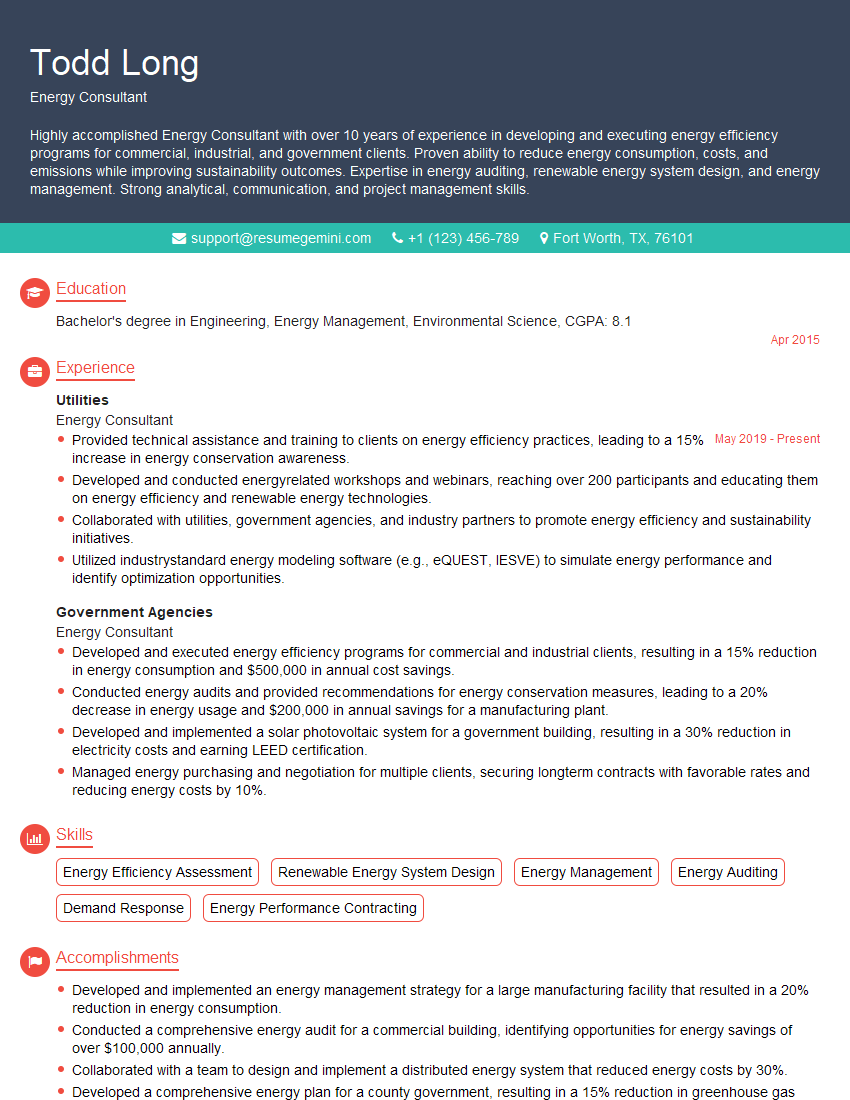
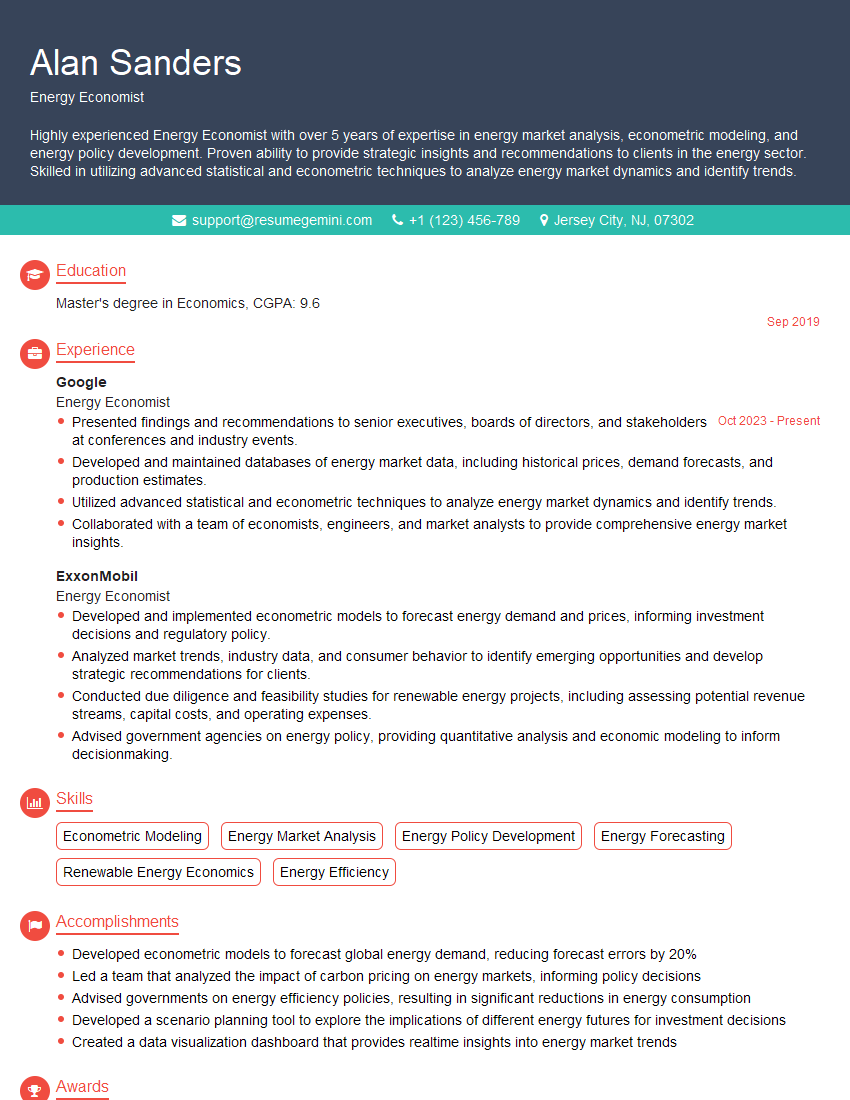
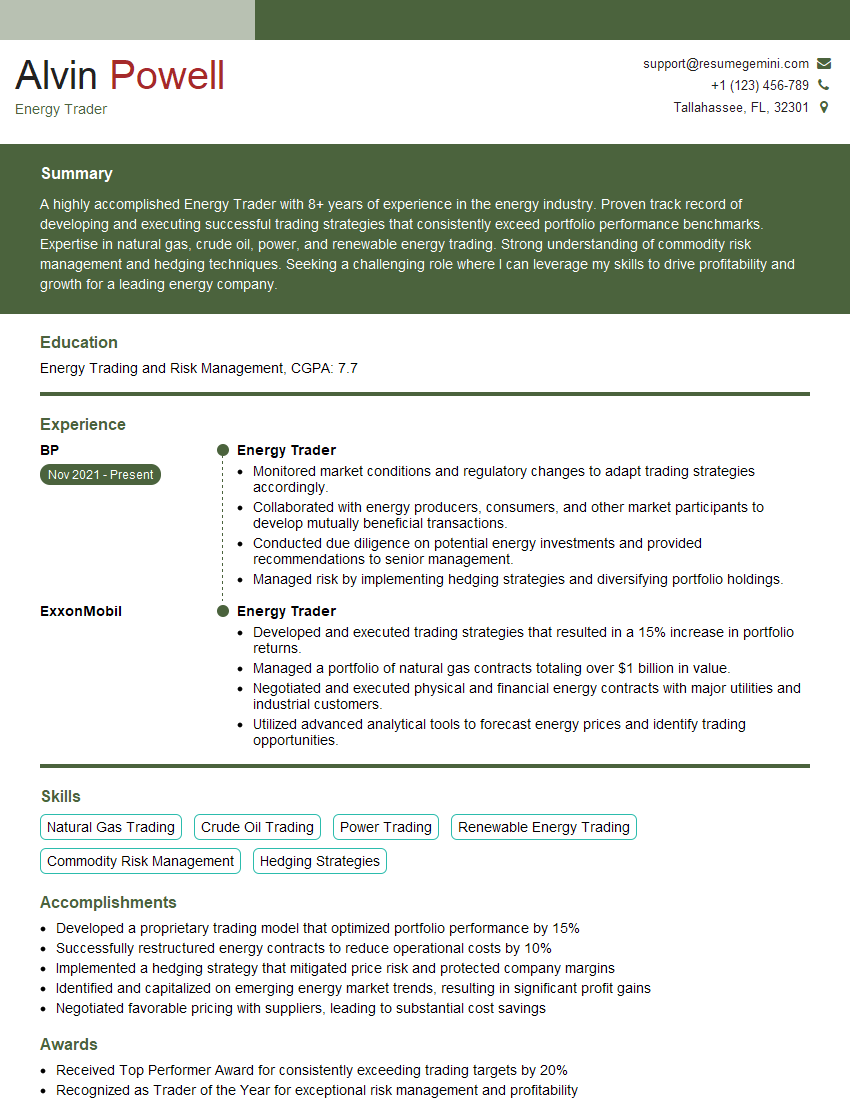
Mastering Power Market Fundamentals is crucial for career advancement in the energy sector, opening doors to exciting roles with significant responsibility and impact. A strong understanding of these concepts will significantly improve your interview performance and demonstrate your readiness to contribute effectively. To maximize your job prospects, invest time in creating an ATS-friendly resume that clearly showcases your skills and experience. ResumeGemini is a trusted resource that can help you build a professional and impactful resume. We provide examples of resumes tailored to Power Market Fundamentals to guide you. Take advantage of these resources to present your qualifications effectively and secure your dream role.
Explore more articles
Users Rating of Our Blogs
Share Your Experience
We value your feedback! Please rate our content and share your thoughts (optional).
What Readers Say About Our Blog
To the interviewgemini.com Webmaster.
Very helpful and content specific questions to help prepare me for my interview!
Thank you
To the interviewgemini.com Webmaster.
This was kind of a unique content I found around the specialized skills. Very helpful questions and good detailed answers.
Very Helpful blog, thank you Interviewgemini team.