Are you ready to stand out in your next interview? Understanding and preparing for Power Market Operations interview questions is a game-changer. In this blog, we’ve compiled key questions and expert advice to help you showcase your skills with confidence and precision. Let’s get started on your journey to acing the interview.
Questions Asked in Power Market Operations Interview
Q 1. Explain the difference between a day-ahead and real-time energy market.
The day-ahead and real-time energy markets are sequential stages in the process of matching electricity supply and demand. Think of it like ordering a pizza: the day-ahead market is like pre-ordering your pizza for tomorrow, specifying the type and quantity. The real-time market is like adjusting your order at the last minute based on unexpected changes – maybe you got extra hungry, or some friends dropped by.
The day-ahead market is a wholesale electricity market where generators and load-serving entities (LSEs) submit bids and offers for the next day’s electricity supply 24-hours in advance. These bids and offers specify the quantity of electricity and the price at which they are willing to buy or sell. The ISO/RTO (Independent System Operator/Regional Transmission Operator) then uses an optimization algorithm to clear the market, determining the optimal dispatch schedule that minimizes cost while meeting demand and observing system constraints.
The real-time market, also known as the operating reserve market, operates on a much shorter time frame (typically 5-15 minute intervals). It addresses unforeseen changes in supply or demand, such as unexpected generator outages or sudden surges in electricity consumption due to a heatwave. Real-time markets use automatic generation control (AGC) to keep the system in balance. Prices in the real-time market can fluctuate significantly based on the real-time balance between supply and demand.
Q 2. Describe the role of an ISO/RTO in power market operations.
An ISO/RTO is a crucial player in power market operations, acting as the neutral referee and system operator. Imagine them as air traffic controllers for the electricity grid. Their primary role is to ensure the reliable operation of the bulk power system, balancing electricity supply and demand in real-time. They accomplish this through several key functions:
- Market Operation: They manage the day-ahead and real-time energy markets, ensuring fair and efficient competition among market participants.
- System Operation: They monitor the power grid in real-time, ensuring system stability and reliability. This includes managing voltage, frequency, and ensuring sufficient reserves are available to meet unexpected changes.
- Transmission Planning: They plan and maintain the transmission infrastructure, ensuring adequate capacity to transport electricity from generation sources to consumers.
- Enforcement: They enforce market rules and regulations, ensuring compliance by all participants.
Essentially, the ISO/RTO ensures the lights stay on by efficiently and reliably coordinating the complex interplay between electricity generation, transmission, and consumption.
Q 3. How do you manage real-time imbalances in the power grid?
Managing real-time imbalances is critical for grid stability. An imbalance – where generation doesn’t exactly match demand – can lead to frequency deviations, voltage instability, and even blackouts. We address these using a multi-layered approach:
- Automatic Generation Control (AGC): This is the primary mechanism for maintaining real-time balance. AGC continuously adjusts the output of generators to match the fluctuating demand. Think of it as a sophisticated thermostat for the power grid.
- Operating Reserves: We maintain various types of reserves (spinning, non-spinning, and supplemental) to quickly respond to unexpected imbalances. Spinning reserves are online and ready to increase output immediately; others are available within a few minutes. These are like having backup generators ready to kick in if the primary power source fails.
- Load Shedding (as a last resort): In extreme cases of severe imbalance where reserves are insufficient, controlled load shedding – interrupting power supply to select customers – may be necessary to prevent widespread outages. This is a last resort measure, aiming to protect the integrity of the entire system.
Effective real-time imbalance management requires sophisticated monitoring systems, predictive algorithms, and well-defined operating procedures to ensure system reliability and prevent cascading failures.
Q 4. What are the key factors influencing electricity prices?
Electricity prices are a complex interplay of several key factors. Think of it as a delicate balancing act between supply and demand, with several external forces influencing the scales.
- Fuel Costs: The cost of fuel (coal, natural gas, oil, etc.) directly impacts generation costs and electricity prices. Higher fuel prices generally lead to higher electricity prices.
- Demand: Peak demand periods (e.g., hot summer afternoons) typically drive up prices due to limited generation capacity. Low demand periods generally see lower prices.
- Supply: Availability of generation resources (power plant outages, renewable energy intermittency) significantly affects prices. Limited supply leads to higher prices.
- Transmission Congestion: Physical limitations in the transmission network can restrict the flow of electricity, leading to price differences between different locations (this is where LMP comes into play).
- Environmental Regulations: Policies aimed at reducing carbon emissions or promoting renewable energy can influence generation costs and electricity prices.
- Geopolitical factors: Global events and political instability can impact fuel prices and the availability of generating resources.
Understanding these factors is crucial for effective forecasting and managing risk in the electricity market.
Q 5. Explain the concept of locational marginal pricing (LMP).
Locational Marginal Pricing (LMP) is a sophisticated pricing mechanism reflecting the cost of supplying electricity at specific locations on the grid. Instead of a single price for electricity across the entire system, LMP accounts for variations in supply, demand, and transmission constraints at different points. Think of it like real estate: the price of a house depends heavily on its location. Similarly, the price of electricity varies based on its location on the grid.
The LMP at a specific location is determined by the incremental cost of serving one more megawatt-hour (MWh) of electricity at that location. This includes the cost of generation, transmission losses, and congestion costs. LMP is calculated by the ISO/RTO using optimization algorithms that consider the network’s physical constraints.
For example, a location experiencing transmission congestion (limited transmission capacity) may have a higher LMP than a location with ample capacity, even if the generation cost is similar. This reflects the scarcity of electricity at the congested location. LMP creates price signals that incentivize efficient resource allocation and investment in transmission infrastructure.
Q 6. Describe your experience with energy scheduling and optimization.
Throughout my career, I’ve extensively utilized advanced energy scheduling and optimization techniques. I have experience with various software packages and models including (mention specific software and models if applicable, for example: PLEXOS, PROMOD, etc.), using them to create optimal generation schedules that meet customer demand while maximizing profitability and minimizing operating costs. This involved incorporating real-time market information, forecasts, and operational constraints into the optimization models.
One notable project involved optimizing the generation schedule for a large portfolio of renewable energy assets. This required sophisticated forecasting techniques to handle the intermittent nature of renewable resources, combined with real-time market participation to maximize revenue capture. We developed a proprietary algorithm that integrated weather forecasts, load forecasts, and real-time price signals to dynamically adjust the generation schedule, resulting in a significant increase in profitability.
In another project, I assisted a utility company in optimizing their reserve capacity procurement strategy, reducing their reserve costs by strategically acquiring different types of reserves (spinning, non-spinning, etc.) to maintain sufficient operational flexibility and grid stability.
Q 7. How do you ensure compliance with power market regulations?
Ensuring compliance with power market regulations is paramount. It’s not just about adhering to the rules; it’s about safeguarding market integrity and consumer protection. My approach involves a multi-pronged strategy:
- Thorough Knowledge of Regulations: Staying updated on all relevant federal and state regulations, including those concerning market participation, data reporting, and environmental compliance, is critical.
- Robust Internal Controls: Implementing and maintaining robust internal controls and procedures for all market transactions, data management, and operational activities ensures compliance and prevents potential errors or violations.
- Data Integrity and Reporting: Accurate and timely data reporting is fundamental. This involves rigorous data validation and regular audits to ensure data integrity and accuracy in all market submissions.
- Regular Compliance Audits: Undergoing regular internal and external audits ensures continuous monitoring and identification of any potential compliance issues. This proactive approach allows for timely corrective actions.
- Training and Education: Continuous training and education for all personnel involved in market operations, emphasizing the importance of compliance and best practices.
A strong compliance program not only mitigates potential penalties but also fosters a culture of ethical behavior and strengthens market trust.
Q 8. What are the common risks associated with energy trading?
Energy trading, while potentially lucrative, carries significant risks. These can be broadly categorized into market risks, credit risks, and operational risks.
- Market Risk: This encompasses price volatility, where unexpected price swings can lead to substantial losses. For instance, a sudden drop in electricity prices due to an unforeseen increase in renewable generation can wipe out profits on previously purchased contracts. Another aspect is basis risk, the difference between the price at a trading hub and the actual price received at a delivery point. This can occur due to transmission congestion or local supply imbalances.
- Credit Risk: This is the risk that a counterparty in a trade (buyer or seller) will default on their obligations, failing to make payments as agreed. This risk is particularly relevant in over-the-counter (OTC) markets, where contracts are negotiated directly between parties rather than through a centralized exchange.
- Operational Risk: These risks stem from internal processes or external events impacting trading operations. Examples include errors in trading algorithms, failures in communication systems, inaccurate forecasting of energy demand, and unexpected generator outages. A sudden outage of a major power plant can trigger a cascade of events affecting the entire market.
Effective risk management strategies include diversification, hedging using financial instruments (e.g., futures contracts), robust risk monitoring systems, and strict adherence to trading protocols.
Q 9. Explain your understanding of power system stability and control.
Power system stability and control are crucial for maintaining a reliable and efficient electricity supply. Stability refers to the system’s ability to remain in a steady operational state, even after disturbances. Control involves the mechanisms used to regulate generation and load, ensuring balance between supply and demand.
There are two main types of stability:
- Frequency Stability: This refers to the system’s ability to maintain its nominal frequency (typically 50Hz or 60Hz). A sudden loss of generation can cause frequency to drop, potentially leading to cascading outages if not quickly corrected. Automatic Generation Control (AGC) systems are employed to quickly adjust generation to restore frequency.
- Voltage Stability: This focuses on maintaining voltage levels within acceptable limits. Low voltage can damage equipment, while high voltage presents safety hazards. Voltage control is achieved through various means, including tap-changing transformers and reactive power compensation devices.
Control strategies involve sophisticated control systems, such as SCADA (Supervisory Control and Data Acquisition) and EMS (Energy Management Systems), which monitor system conditions and send commands to generating units and other devices to maintain stability. For instance, an EMS might automatically shed load in an emergency to prevent a system collapse.
Q 10. How do you forecast energy demand and generation?
Forecasting energy demand and generation is vital for efficient power market operations. Accurate forecasts allow for optimized scheduling of generation resources, minimizing costs and maximizing reliability.
Demand forecasting relies on various factors, including:
- Historical data: Past energy consumption patterns provide a strong baseline.
- Weather forecasts: Temperature is a major driver of demand, particularly for heating and cooling.
- Economic indicators: Economic activity can influence industrial and commercial demand.
- Special events: Major sporting events or holidays can create surges in demand.
Advanced statistical methods like time series analysis and machine learning algorithms are frequently used to create more accurate forecasts. For example, a Recurrent Neural Network (RNN) could be trained on historical data to predict future demand based on various input parameters.
Generation forecasting involves predicting the output of various power plants, including traditional thermal plants, nuclear power plants, and renewable energy sources. For renewable energy sources like solar and wind, sophisticated weather models are crucial due to their inherent variability. Output from these models is then incorporated into the overall generation forecast.
Q 11. Describe your experience with energy market modeling and simulation.
My experience with energy market modeling and simulation encompasses the use of various software tools and methodologies to analyze market dynamics and assess the impact of different policies or operational strategies.
I have utilized tools such as:
- Power flow software (e.g., PSS/E, PowerWorld): To simulate the behavior of the power grid under various operating conditions.
- Market simulation platforms (e.g., PLEXOS): To model the interactions between generators, consumers, and the electricity market.
- Optimization algorithms (e.g., linear programming, mixed integer programming): To determine optimal generation dispatch and trading strategies.
Through these simulations, I have conducted analyses such as:
- Capacity expansion planning: Determining the optimal mix of generation resources to meet future demand.
- Market design evaluation: Assessing the impact of different market rules on competition and efficiency.
- Risk assessment: Quantifying the potential financial impact of various market events.
For instance, I used PLEXOS to simulate the impact of increasing renewable penetration on market prices and dispatch patterns, which was critical in guiding investment decisions.
Q 12. How do you handle unexpected events, such as generator outages, in real-time operations?
Handling unexpected events in real-time operations requires a quick response and a well-defined emergency plan. A generator outage, for example, can trigger a cascade of events, leading to frequency deviations and voltage instability if not addressed promptly.
My approach involves:
- Real-time monitoring: Continuously monitoring system conditions using SCADA and EMS systems to quickly detect anomalies.
- Emergency response protocols: Having pre-defined procedures to address various contingencies, such as generator outages, transmission line failures, or sudden surges in demand.
- Load shedding: As a last resort, selectively shedding load to prevent a complete system collapse. This typically involves disconnecting less critical loads in a controlled manner.
- Communication coordination: Maintaining clear communication with all relevant parties, including system operators, generators, and load-serving entities.
For example, during a sudden loss of a major generator, the EMS might automatically dispatch reserves from other generating units while simultaneously notifying the market operator and other stakeholders. Load shedding might be initiated if frequency continues to decline despite these actions.
Q 13. Explain the impact of renewable energy sources on power market operations.
Renewable energy sources like solar and wind power have significantly impacted power market operations, presenting both challenges and opportunities.
Challenges include:
- Intermittency: The unpredictable nature of solar and wind power makes forecasting generation difficult, leading to potential supply imbalances.
- Integration issues: Integrating large amounts of intermittent generation requires upgrades to the transmission grid and advanced control systems.
- Market design changes: Existing market mechanisms may need adjustments to efficiently accommodate renewable energy sources.
Opportunities include:
- Reduced emissions: Renewable energy sources contribute significantly to reducing greenhouse gas emissions.
- Cost reduction: The cost of renewable energy has fallen dramatically in recent years, making it a competitive energy source.
- Enhanced grid flexibility: Renewable energy sources can contribute to improved grid flexibility and resilience.
Market operators are adapting to these changes by implementing advanced forecasting techniques, investing in grid infrastructure, and developing new market mechanisms, such as capacity markets and ancillary services markets, to better integrate renewable energy sources and maintain grid stability.
Q 14. Describe your experience with energy trading strategies and risk management.
My experience with energy trading strategies and risk management involves utilizing various approaches to optimize profitability while mitigating potential losses.
Trading strategies include:
- Arbitrage: Exploiting price differences between different markets or time periods.
- Spread trading: Trading the price difference between two related commodities (e.g., electricity and natural gas).
- Basis trading: Trading on the difference between physical prices and futures prices.
- Hedging: Using derivative instruments to reduce exposure to price volatility.
Risk management involves:
- Value-at-Risk (VaR) analysis: Estimating the potential maximum loss over a given time horizon and confidence level.
- Stress testing: Simulating the impact of extreme market events on the trading portfolio.
- Diversification: Spreading investments across different markets and commodities.
- Limit orders: Setting maximum buy and sell prices to control risk.
For example, I once developed a hedging strategy using futures contracts to protect a power plant’s revenue against price fluctuations. This involved analyzing historical price data, constructing a suitable hedging model, and then executing trades to offset the risk. The strategy was thoroughly backtested before implementation and proved effective in reducing financial exposure during a period of significant price volatility.
Q 15. What are the key performance indicators (KPIs) you use to measure success in power market operations?
Success in power market operations hinges on several key performance indicators (KPIs). These metrics provide a holistic view of efficiency, profitability, and grid reliability. They can be broadly categorized into:
- Financial KPIs: These measure the economic performance, including things like profit margins, revenue from energy sales, and cost of operations. For example, tracking the Return on Investment (ROI) for new generation assets or the cost per MWh of energy delivered is crucial.
- Operational KPIs: These focus on the efficiency and reliability of the system. Examples include the system’s load factor (how consistently the generation is utilized), the frequency of unplanned outages, and the speed of restoring power after outages. A low frequency of unplanned outages speaks to excellent operational efficiency and proactive maintenance.
- Market KPIs: These demonstrate performance within the competitive electricity market. Examples include market share, successful bidding in auctions, and the ability to forecast energy prices accurately, which directly impacts profitability.
- Sustainability KPIs: Increasingly important are metrics related to environmental impact, such as carbon emissions per MWh, renewable energy integration rate, and the percentage of energy sourced from sustainable sources. This aligns with the growing emphasis on decarbonizing the power sector.
By closely monitoring these KPIs, we can identify areas for improvement, optimize strategies, and ensure that our power market operations are both profitable and responsible.
Career Expert Tips:
- Ace those interviews! Prepare effectively by reviewing the Top 50 Most Common Interview Questions on ResumeGemini.
- Navigate your job search with confidence! Explore a wide range of Career Tips on ResumeGemini. Learn about common challenges and recommendations to overcome them.
- Craft the perfect resume! Master the Art of Resume Writing with ResumeGemini’s guide. Showcase your unique qualifications and achievements effectively.
- Don’t miss out on holiday savings! Build your dream resume with ResumeGemini’s ATS optimized templates.
Q 16. How do you use market data to make informed decisions?
Market data is the lifeblood of informed decision-making in power market operations. We use it to anticipate market trends, optimize our bidding strategies, and manage risks. My approach involves a multi-step process:
- Data Acquisition and Cleaning: We collect data from diverse sources, including real-time grid data, weather forecasts, market price indices, and competitor information. Crucially, this data undergoes rigorous cleaning to handle missing values and outliers, ensuring its reliability.
- Data Analysis: We use statistical methods and forecasting models (like ARIMA or machine learning algorithms) to analyze historical trends, seasonal patterns, and correlations between various market variables. This helps us to forecast electricity demand, generation output, and prices with reasonable accuracy.
- Decision Support: The analyzed data informs several decisions, including:
- Bidding Strategies: We optimize our bids in energy markets to maximize revenue while maintaining operational constraints.
- Unit Commitment Scheduling: We determine the most cost-effective way to dispatch generating units to meet anticipated demand.
- Risk Management: We use forecasting to identify and mitigate potential risks, like price volatility and supply disruptions.
- Continuous Monitoring and Improvement: The accuracy of our forecasts is continuously evaluated, and the models are refined based on actual market outcomes. This iterative process ensures that our decisions are grounded in the most up-to-date and reliable information.
For example, anticipating a heatwave using weather data allows us to proactively increase our generation capacity and adjust our bidding strategies to capitalize on higher energy prices.
Q 17. Describe your experience with power market data analysis and reporting.
My experience in power market data analysis and reporting spans over [Number] years, during which I’ve worked with extensive datasets to create insightful reports and visualizations. I’m proficient in various analytical tools, including statistical software packages like R and Python, as well as data visualization tools like Tableau and Power BI.
A recent project involved analyzing hourly load data over a five-year period to identify patterns in electricity consumption. Using time series analysis, we were able to predict peak demand with remarkable accuracy, enabling us to optimize unit commitment schedules and prevent costly over-generation or supply shortages.
I have also developed comprehensive reporting dashboards that track key market indicators such as prices, volumes, and operational efficiency. These dashboards provide real-time insights for strategic decision-making and improve operational transparency.
Q 18. How do you ensure the accuracy and reliability of power market data?
Ensuring data accuracy and reliability is paramount. We employ a multi-layered approach:
- Data Validation: We implement rigorous data validation checks at each stage of the data pipeline, from data acquisition to storage and analysis. This includes range checks, consistency checks, and plausibility checks.
- Data Source Verification: We use multiple, independent data sources to cross-validate information and identify potential discrepancies. This helps to identify and correct errors promptly.
- Data Governance Framework: We have established a robust data governance framework with clear roles and responsibilities, data quality standards, and documented procedures. This guarantees data integrity and consistency throughout the organization.
- Regular Audits and Reviews: We conduct regular audits and reviews of our data processes and systems to detect and address any issues that might compromise data accuracy and reliability.
- Data Security Measures: Implementing robust data security measures to protect against unauthorized access and manipulation, such as encryption and access control lists.
Think of it like building a sturdy house; each layer, from the foundation to the roof, contributes to the overall stability and reliability. Similarly, our multi-layered approach ensures that our power market data is accurate and trustworthy.
Q 19. What are the challenges associated with integrating renewable energy into the power grid?
Integrating renewable energy sources, such as solar and wind power, presents unique challenges to the power grid due to their inherent intermittency and variability.
- Intermittency and Forecasting Challenges: Solar and wind generation are dependent on weather conditions, resulting in unpredictable power output. Accurate forecasting is crucial but remains a challenge, potentially leading to imbalances between supply and demand.
- Grid Stability Issues: The fluctuating nature of renewables can destabilize the grid frequency and voltage. Sophisticated grid management systems and energy storage solutions are required to maintain grid stability.
- Transmission and Distribution Infrastructure: Integrating large amounts of renewable energy often requires upgrades to transmission and distribution infrastructure to accommodate the geographically dispersed nature of many renewable resources.
- Market Design and Pricing Mechanisms: Existing electricity markets may not be adequately designed to handle the variability of renewables. New market mechanisms are needed to fairly compensate renewable generators and ensure grid reliability.
- Curtailment: At times, excess renewable generation may need to be curtailed to prevent grid instability, leading to lost revenue for renewable generators.
Addressing these challenges requires a combination of advanced forecasting techniques, smart grid technologies, energy storage solutions, and innovative market designs.
Q 20. Explain your understanding of different energy storage technologies and their role in power market operations.
Energy storage technologies are crucial for managing the intermittency of renewable energy sources and improving the efficiency of power grids. Different technologies offer various advantages and disadvantages:
- Pumped Hydro Storage (PHS): This mature technology uses excess electricity to pump water uphill, storing potential energy. When demand is high, the water flows downhill, generating electricity. PHS offers large-scale storage capabilities but requires suitable geographical locations.
- Battery Storage (Lithium-ion, etc.): Batteries offer fast response times and high efficiency, making them ideal for frequency regulation and peak shaving. However, their lifespan and cost remain challenges.
- Compressed Air Energy Storage (CAES): This technology compresses air during off-peak hours and uses it to drive turbines during peak demand. CAES offers a large storage capacity but is less efficient than other technologies.
- Thermal Energy Storage (TES): TES stores energy as heat or cold, which can be used later to generate electricity or provide heating/cooling services. This technology is suitable for applications with long-duration storage needs.
In power market operations, energy storage technologies enable grid operators to:
- Increase grid reliability by smoothing out fluctuations in renewable energy generation.
- Reduce reliance on fossil fuels by shifting renewable energy generation to periods of high demand.
- Improve market efficiency by creating arbitrage opportunities.
The choice of storage technology depends on various factors, including scale, cost, response time, and application requirements.
Q 21. How do you manage uncertainty in energy markets?
Uncertainty in energy markets stems from unpredictable factors like weather, fuel prices, and consumer demand. Effective management involves a combination of strategies:
- Forecasting and Prediction: We employ sophisticated forecasting models, incorporating various data sources, to predict future energy prices and demand. These forecasts, while not perfect, provide a basis for making informed decisions.
- Hedging and Risk Management: Financial instruments like futures and options contracts can be used to hedge against price volatility and mitigate financial risks. We utilize these tools to protect our revenue stream.
- Portfolio Diversification: Having a diverse portfolio of generation assets (e.g., thermal, renewable, etc.) reduces our exposure to specific risks. Diversification protects us from risks associated with single-source dependence.
- Real-time Operations and Control: Advanced control systems and algorithms dynamically adjust power generation and dispatch in real-time to respond to changing market conditions and grid demands. This ensures grid reliability and efficient operation.
- Scenario Planning: We use scenario planning to assess potential impacts of different uncertain events on our operations and develop contingency plans to address them. This prepares us for a wide range of possibilities.
Imagine sailing a ship; we can’t perfectly predict the weather, but we use weather forecasts, navigation tools, and safety measures to navigate successfully. Similarly, in power market operations, we use various tools and strategies to manage the uncertainty and navigate the market effectively.
Q 22. Describe your experience with different market designs and their impact on price formation.
Power market designs significantly influence price formation. Different designs prioritize various objectives, such as efficiency, fairness, and security. For example, a pure bilateral market, where generators and consumers directly negotiate contracts, can lead to highly variable prices reflective of localized supply and demand. In contrast, a pool-based market, like a day-ahead or real-time market, aggregates supply and demand through a central clearinghouse, usually resulting in a single market-clearing price for each hour. This price reflects the overall system-wide balance of supply and demand.
Independent System Operators (ISOs) often employ hybrid models, combining aspects of both. For instance, they might have a day-ahead market where participants submit bids, followed by a real-time market to adjust for unforeseen events. The day-ahead market price provides price signals for generators, allowing them to plan their operations effectively and anticipate revenue streams. The real-time market addresses short-term imbalances, resulting in price fluctuations reflecting the urgency of supply/demand issues. The impact on price formation also depends on market rules, including reserve requirements, capacity markets, and transmission constraints. A well-designed market minimizes price volatility while ensuring reliable energy supply. My experience includes working with both pool-based and bilateral market structures, analyzing their performance metrics, and contributing to regulatory compliance efforts. For example, I worked on a project to evaluate the impact of integrating renewable energy sources into a primarily pool-based market, which required careful consideration of the variability of renewable generation and its effect on price predictability.
Q 23. Explain your understanding of congestion management in power transmission systems.
Congestion management in power transmission systems is crucial for grid stability and efficient operation. Congestion occurs when the flow of electricity on a transmission line exceeds its capacity. This can lead to power outages, reduced system reliability, and increased operational costs. Managing congestion involves several strategies. First, we employ flow-gate management, imposing limits on power flow through congested lines to prevent them from overloading. These limits are calculated using advanced power flow simulations and optimization techniques. Second, we utilize congestion pricing, where market participants pay a price premium for using congested transmission lines. This mechanism incentivizes efficient resource allocation by rewarding generators closer to demand centers. Third, we leverage FACTS devices (Flexible AC Transmission Systems), like Static Synchronous Compensators (STATCOMs) and Static Synchronous Series Compensators (SSSCs), which can enhance transmission capacity and control power flow. My experience involves the development and implementation of advanced congestion management systems, including market-based mechanisms to incentivize load shifting and reduce congestion costs. For instance, I’ve worked on implementing a real-time congestion management system that adapts to changing conditions through real-time optimization and forecasting techniques. This involved not just technical implementation but also significant coordination with stakeholders across the power system.
Q 24. How do you ensure the efficient operation of the power grid?
Efficient grid operation requires a multifaceted approach. It starts with accurate forecasting of electricity demand and generation. This allows us to anticipate potential imbalances and adjust generation schedules accordingly. Real-time state estimation, using data from SCADA (Supervisory Control and Data Acquisition) systems, provides a dynamic picture of the grid’s current operating state, which is crucial for identifying and addressing any issues promptly. Automatic generation control (AGC) maintains the frequency and voltage within acceptable limits, ensuring reliable power supply. Maintaining an appropriate level of spinning and non-spinning reserves is critical for addressing unexpected events such as generator outages or sudden changes in demand. Furthermore, effective communication networks are indispensable for ensuring coordination among various grid operators and market participants. Finally, ongoing maintenance and upgrades to transmission and generation infrastructure are essential for ensuring long-term grid reliability and efficiency. My experience involves leading teams responsible for implementing and optimizing these processes, developing advanced control algorithms, and creating comprehensive emergency response plans. We use a combination of predictive and reactive control strategies, working closely with stakeholders to ensure seamless integration and cooperation.
Q 25. What are the ethical considerations involved in power market operations?
Ethical considerations are paramount in power market operations. Transparency in market rules and procedures is essential to ensure fair competition and prevent market manipulation. Data security and privacy are also critical; protecting sensitive information related to grid operations and market participants is essential. Fairness in access to the grid and the market should be ensured, preventing discrimination against certain generators or consumers. Environmental considerations are becoming increasingly important, with a need to balance economic efficiency with sustainability goals and to promote the integration of renewable energy sources. Reliability and safety are fundamental, with a commitment to providing a secure and reliable electricity supply to all consumers. Ensuring equity in access to electricity, particularly for low-income communities, is crucial. My experience involves participating in ethical review boards and contributing to the development of market rules and guidelines that reflect these values. For instance, I was involved in an initiative to develop a more transparent auction mechanism for allocating transmission capacity, aiming to minimize potential biases and ensure fair access for all market participants.
Q 26. Describe a time you had to solve a complex problem in power market operations.
During a severe heatwave, unexpected high demand strained our grid resources. Several generation units experienced unplanned outages, resulting in a significant deficit of power supply. This situation threatened widespread blackouts. My role involved coordinating with stakeholders, including system operators, generators, and load-serving entities, to implement emergency response protocols. The steps involved included:
- Rapid Assessment: We quickly assessed the severity of the supply deficit and potential impact areas.
- Demand-Side Management: We initiated load shedding programs in a controlled manner, prioritizing essential services.
- Emergency Resource Mobilization: We secured additional generation capacity from various sources, including emergency backup generators and neighboring power systems.
- Real-Time Monitoring: We continuously monitored system frequency and voltage, using advanced tools to ensure grid stability.
- Communication and Coordination: Maintaining clear communication with all stakeholders was crucial to effectively manage the crisis.
Through proactive management and close collaboration, we averted a major blackout. This experience underscored the importance of contingency planning, effective communication, and the ability to adapt to unforeseen circumstances in real-time.
Q 27. How do you stay up-to-date with changes and trends in the power market?
Staying up-to-date in the dynamic power market requires a multi-pronged approach. I regularly attend industry conferences and workshops to learn about the latest technologies and regulatory developments. I actively participate in professional organizations, such as IEEE and FERC, engaging with peers and experts in the field. I subscribe to industry publications and journals, keeping abreast of current research and trends. I monitor regulatory developments closely, staying informed on proposed changes that may impact market operations. I actively engage in online communities and forums to discuss emerging challenges and innovative solutions with others. Furthermore, I leverage online resources and databases to access market data and industry reports. Finally, I maintain a network of colleagues and experts from various organizations and backgrounds who share information and best practices. This constant engagement with industry trends ensures I can effectively adapt to the evolving landscape and anticipate future challenges.
Key Topics to Learn for Power Market Operations Interview
- Electricity Market Fundamentals: Understanding electricity pricing mechanisms, market clearing processes (e.g., Day-Ahead, Real-Time markets), and different market participant roles (generators, load-serving entities, etc.). Practical application: Analyzing market price forecasts and their impact on generation scheduling.
- Transmission and Distribution Systems: Knowledge of power flow analysis, congestion management, and the role of transmission and distribution networks in market operations. Practical application: Troubleshooting network constraints and optimizing power dispatch to minimize losses.
- Renewable Energy Integration: Understanding the challenges and opportunities presented by integrating renewable energy sources (solar, wind) into the power grid and their impact on market dynamics. Practical application: Modeling the variability of renewable generation and its influence on market pricing.
- Energy Forecasting and Scheduling: Proficiency in load forecasting techniques and optimal generation scheduling algorithms. Practical application: Developing strategies to balance supply and demand in real-time, minimizing operational costs and ensuring grid reliability.
- Market Data Analysis and Reporting: Ability to interpret market data, identify trends, and generate insightful reports. Practical application: Using market data to improve forecasting accuracy and optimize trading strategies.
- Regulatory Landscape: Familiarity with relevant regulations and policies governing power markets. Practical application: Understanding how regulatory changes impact market operations and participant behavior.
- Power System Stability and Control: Understanding the principles of power system stability and the role of control systems in maintaining grid reliability. Practical application: Analyzing system stability under various operating conditions and implementing corrective actions.
Next Steps
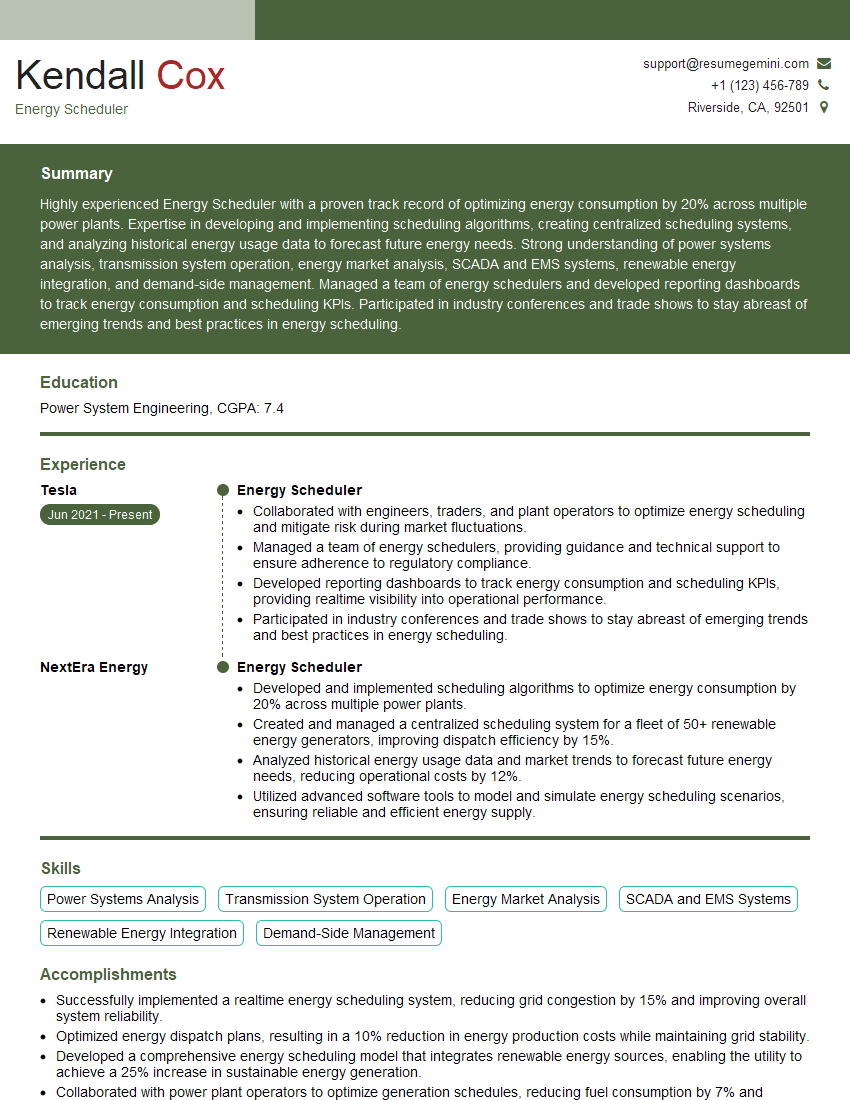
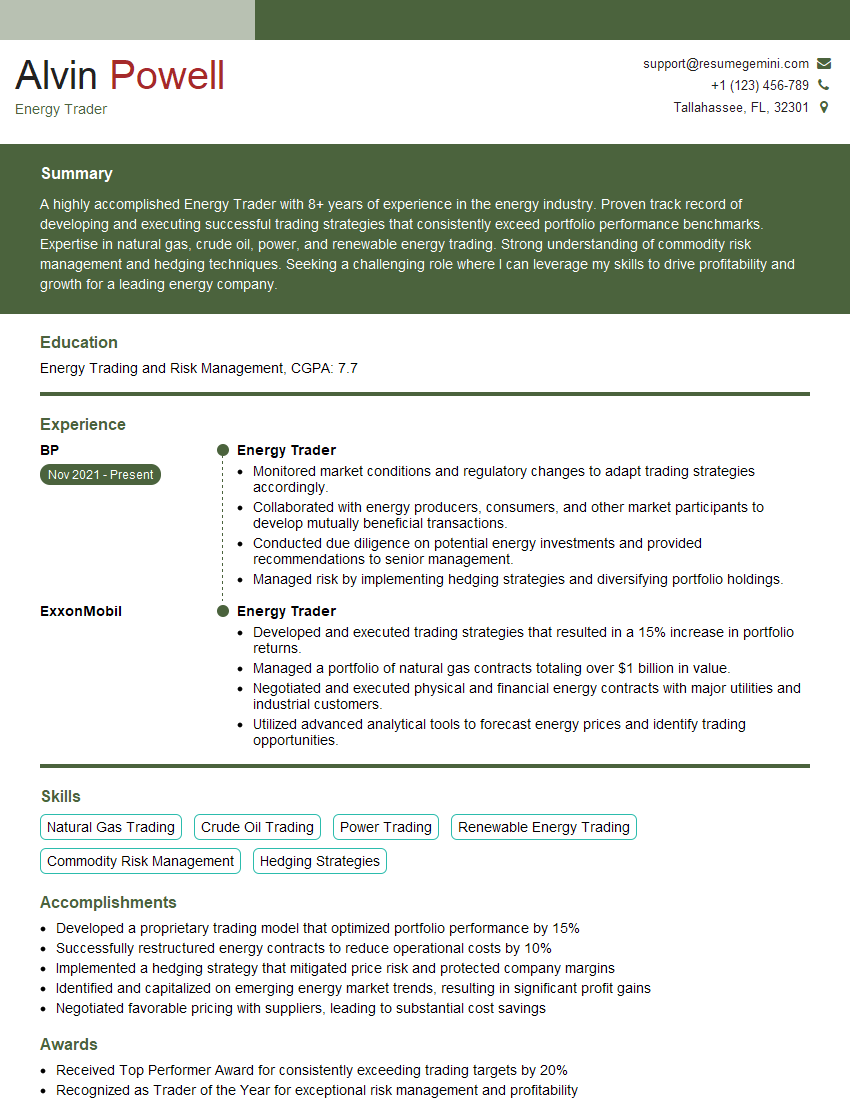
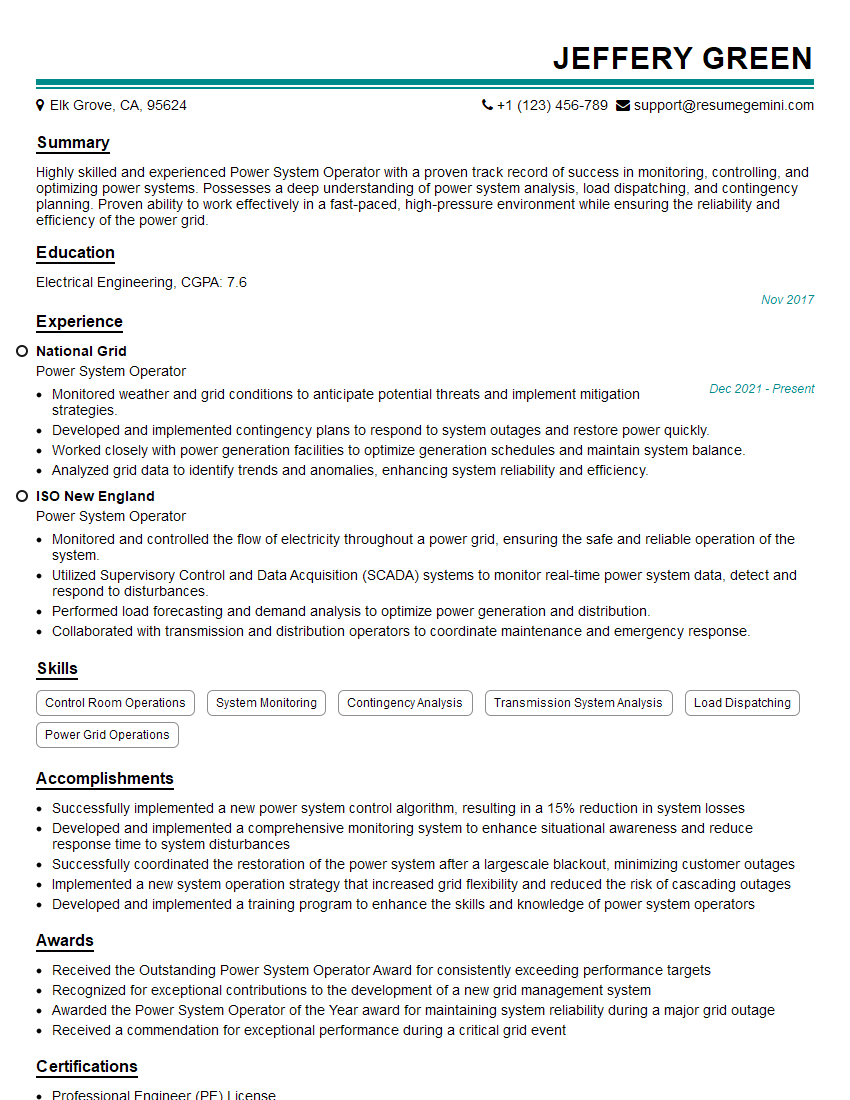
Mastering Power Market Operations opens doors to exciting and impactful careers in the energy sector, offering opportunities for professional growth and significant contributions to a sustainable energy future. To maximize your job prospects, it’s crucial to present your skills and experience effectively through a well-crafted, ATS-friendly resume. ResumeGemini is a trusted resource to help you build a professional resume that highlights your qualifications and catches the eye of recruiters. Examples of resumes tailored to Power Market Operations are available to guide you. Invest in your future – create a resume that reflects your expertise and ambition.
Explore more articles
Users Rating of Our Blogs
Share Your Experience
We value your feedback! Please rate our content and share your thoughts (optional).
What Readers Say About Our Blog
To the interviewgemini.com Webmaster.
Very helpful and content specific questions to help prepare me for my interview!
Thank you
To the interviewgemini.com Webmaster.
This was kind of a unique content I found around the specialized skills. Very helpful questions and good detailed answers.
Very Helpful blog, thank you Interviewgemini team.