The right preparation can turn an interview into an opportunity to showcase your expertise. This guide to Project Management (PMP/Agile) interview questions is your ultimate resource, providing key insights and tips to help you ace your responses and stand out as a top candidate.
Questions Asked in Project Management (PMP/Agile) Interview
Q 1. Explain the difference between Agile and Waterfall methodologies.
Waterfall and Agile are two fundamentally different project management methodologies. Waterfall follows a linear, sequential approach, where each phase must be completed before the next begins. Think of it like a waterfall – once the water goes over the edge, it can’t go back. Agile, on the other hand, is iterative and incremental. It emphasizes flexibility and collaboration, adapting to changing requirements throughout the project lifecycle. Imagine building with LEGOs – you start with a general idea, but you continuously refine and adjust your design as you go.
- Waterfall: Well-defined requirements upfront, rigid phases (requirements, design, implementation, testing, deployment, maintenance), less flexibility, suitable for stable projects with clear objectives.
- Agile: Iterative development, frequent feedback loops, adaptable to change, collaborative teamwork, suitable for complex projects with evolving requirements.
For example, building a house using Waterfall would involve meticulously planning every detail before starting construction, whereas Agile would involve building sections, getting feedback, and adjusting the plan based on those insights. One approach isn’t inherently better than the other; the best choice depends on the project’s nature and context.
Q 2. Describe your experience with Scrum framework.
I have extensive experience working within the Scrum framework, having served as both a Scrum Master and a Development Team member on multiple projects. My experience encompasses all Scrum events: Sprint Planning, Daily Scrum, Sprint Review, and Sprint Retrospective. I’ve facilitated effective Sprint Planning sessions, ensuring the team understands the Sprint Goal and selects appropriate tasks. I’ve actively participated in Daily Scrums, fostering open communication and identifying impediments. I’ve also led Sprint Reviews, presenting completed work to stakeholders and gathering feedback. Finally, I’ve guided productive Sprint Retrospectives, enabling the team to reflect on its performance and identify areas for improvement.
In one project, we were developing a new e-commerce platform. Using Scrum, we delivered functional increments every two weeks. This allowed us to adapt to changing market needs and incorporate user feedback swiftly. By using the Scrum board to visualize work, we were able to track progress transparently and identify potential risks early on. The regular retrospectives were invaluable in improving our teamwork and processes. For example, we discovered that our testing process was inefficient and implemented automated tests to improve quality and reduce time spent on manual testing.
Q 3. How do you handle conflicting priorities in a project?
Conflicting priorities are inevitable in project management. My approach involves a structured process for resolving them:
- Identify and Document: Clearly identify all conflicting priorities, documenting their source (stakeholder requests, changing business needs, etc.) and their relative importance.
- Prioritization Framework: Use a prioritization framework like MoSCoW (Must have, Should have, Could have, Won’t have) or a weighted scoring system to rank priorities objectively. Consider factors like business value, risk, and dependencies.
- Stakeholder Collaboration: Facilitate open communication with stakeholders to explain the trade-offs involved in prioritizing certain tasks over others. Transparency is critical.
- Negotiation and Compromise: Work collaboratively with stakeholders to find mutually acceptable solutions. This may involve adjusting deadlines, re-scoping the project, or finding creative alternatives.
- Decision Making and Documentation: Document the final prioritization decisions and communicate them to the entire team. Regularly review and update priorities as needed.
For instance, if a project has conflicting priorities between delivering a feature early for a key customer and fixing a critical bug, a weighted scoring system might be used to determine that the bug fix takes precedence due to the risk of losing customer trust if left unresolved.
Q 4. What is your preferred risk management approach?
My preferred risk management approach is a proactive, iterative process that combines qualitative and quantitative analysis. I don’t believe in a ‘one size fits all’ approach, and tailor my strategy to the project’s specifics.
The process typically involves:
- Risk Identification: Brainstorming sessions, checklists, SWOT analysis, and reviewing past project experiences to identify potential risks.
- Qualitative Risk Analysis: Assessing the likelihood and impact of each identified risk using probability and impact matrices. This helps prioritize risks.
- Quantitative Risk Analysis: Using statistical techniques (e.g., Monte Carlo simulation) to determine the potential financial impact of significant risks. This may not always be necessary for smaller projects.
- Risk Response Planning: Developing strategies to mitigate, avoid, transfer, or accept identified risks. This involves creating contingency plans.
- Risk Monitoring and Control: Regularly monitoring identified risks and their impact throughout the project lifecycle and making adjustments to the risk response plan as needed.
For example, in a software development project, a key risk might be the unavailability of a critical third-party API. The response might involve developing a fallback mechanism, negotiating service level agreements with the API provider, or finding an alternative API. The chosen response would then be tracked as part of ongoing risk monitoring.
Q 5. Explain your understanding of the critical path method (CPM).
The Critical Path Method (CPM) is a project management technique used to identify the longest sequence of tasks in a project network diagram. This longest sequence determines the shortest possible duration to complete the project. Any delay on tasks within the critical path directly impacts the overall project completion date. Tasks not on the critical path have some scheduling flexibility (float) without affecting the overall project duration.
To illustrate, consider a project with tasks A, B, C, and D. A and B are independent and take 5 days each. C depends on A and takes 3 days, and D depends on B and takes 7 days. E depends on C and D and takes 2 days. The critical path is A-C-E (5+3+2 = 10 days), while B-D-E (5+7+2=14 days) is the critical path. This means the project will take at least 14 days. Understanding the critical path allows focusing resources and attention on those time-sensitive tasks to ensure on-time project completion.
Q 6. How do you create and maintain a project schedule?
Creating and maintaining a project schedule involves several key steps:
- Work Breakdown Structure (WBS): Decompose the project into smaller, manageable tasks.
- Task Sequencing and Dependencies: Determine the order in which tasks must be completed and identify dependencies between tasks.
- Task Duration Estimation: Estimate the time required to complete each task. This can involve using expert judgment, historical data, or three-point estimation techniques.
- Schedule Development: Use project management software (like MS Project or Jira) or other tools to create a visual representation of the schedule. This could be a Gantt chart or a Kanban board.
- Critical Path Analysis: Identify the critical path using CPM to highlight the most time-sensitive tasks.
- Baseline Schedule: Establish a baseline schedule, which serves as a benchmark for tracking progress and deviations.
- Schedule Monitoring and Control: Regularly monitor progress against the baseline schedule, identifying and addressing any schedule variances.
- Change Management: Implement a formal change management process to handle requests for changes to the project schedule.
Maintaining the schedule is an ongoing process that involves regular updates, communication with the team and stakeholders, and proactive adjustments based on progress and identified risks.
Q 7. Describe your experience with project budgeting and cost control.
My experience with project budgeting and cost control encompasses the entire budget lifecycle, from initial estimation to final reporting. I’m proficient in various budgeting techniques, including top-down, bottom-up, and activity-based budgeting. I use Earned Value Management (EVM) to track project performance against the budget and identify variances early on.
In practice, I begin by creating a detailed budget, breaking down costs into different categories (labor, materials, equipment, etc.). I then establish a cost baseline and use EVM metrics (like Planned Value (PV), Earned Value (EV), and Actual Cost (AC)) to monitor cost performance. Any significant variances from the baseline are thoroughly investigated and corrective actions are implemented. Regular budget reviews are conducted with stakeholders to keep them informed and obtain their input. I also use forecasting techniques to predict future costs and adjust the budget as needed.
For example, in a recent project, we identified a cost overrun in the software testing phase. By carefully analyzing the cause (inadequate initial testing effort estimation), we adjusted the remaining budget, implemented more efficient testing methods and avoided further escalation. This required clear and proactive communication with stakeholders to ensure buy-in on the revised plan.
Q 8. How do you manage stakeholder expectations?
Managing stakeholder expectations is crucial for project success. It involves proactively understanding their needs, communicating regularly, and managing their involvement appropriately. Think of it like a carefully orchestrated symphony – each stakeholder is an instrument, and you, the conductor, need to ensure they play their part harmoniously to create a beautiful outcome.
My approach involves several key steps:
- Identify and analyze stakeholders: I begin by meticulously identifying all stakeholders – from clients and sponsors to team members and end-users. I then analyze their interests, influence, and expectations, often using a stakeholder register or a power/interest grid.
- Develop a communication plan: This plan outlines how and when I will communicate with different stakeholder groups. This includes the frequency, method (e.g., email, meetings, presentations), and content of communication. Regular updates, both formal and informal, are essential.
- Set clear expectations: I clearly define project goals, deliverables, timelines, and potential risks. This is often done through a project charter or a detailed project plan. Transparency is paramount.
- Manage expectations proactively: If changes occur (and they inevitably do), I immediately communicate these changes to stakeholders, explaining the impact and taking steps to mitigate any negative consequences. Regular progress reports and status meetings are invaluable here.
- Obtain buy-in and commitment: Through open communication and collaboration, I strive to gain buy-in and commitment from stakeholders. Addressing their concerns and actively seeking their input makes them feel valued and invested in the project’s success.
For example, in a recent software development project, I used regular sprint demos to showcase progress to the client, ensuring they were kept informed and their expectations were aligned with the evolving product. This prevented any surprises and maintained a positive, collaborative relationship.
Q 9. What are your strategies for conflict resolution within a project team?
Conflict is inevitable in any team project. However, effectively managing conflict is essential for productivity and team morale. My approach centers on proactive communication, active listening, and finding mutually agreeable solutions. I view conflict not as a negative, but as an opportunity for growth and improved understanding.
My strategies include:
- Early identification and prevention: I encourage open communication and create a safe environment where team members feel comfortable expressing their concerns. Regular team meetings, one-on-one check-ins, and clear communication channels help prevent conflicts from escalating.
- Active listening and empathy: When a conflict does arise, I focus on active listening – understanding each person’s perspective without judgment. This builds trust and helps to de-escalate the situation.
- Facilitation and mediation: If necessary, I facilitate a constructive discussion to help the conflicting parties find a common ground. This might involve brainstorming solutions, compromising, or agreeing on a course of action that addresses everyone’s needs.
- Focus on the issue, not the person: I keep the discussion centered on the specific problem at hand, rather than attacking individuals. This ensures the conversation remains productive and respectful.
- Documentation and follow-up: Any agreements or decisions made are documented and followed up on to ensure the resolution is implemented effectively.
In one instance, a disagreement arose between two team members over the best technical approach. Instead of taking sides, I facilitated a collaborative discussion where both members presented their arguments and explored potential compromises. We ultimately found a hybrid approach that incorporated the best aspects of both suggestions, resulting in a superior solution and strengthened teamwork.
Q 10. Describe a time you failed in a project. What did you learn?
In a previous project, I underestimated the complexity of integrating a third-party API. This led to significant delays and cost overruns. While I had thoroughly planned other aspects of the project, I failed to allocate sufficient time and resources for this crucial integration. This was a valuable learning experience, emphasizing the importance of thorough risk assessment and contingency planning.
My key learnings from this experience include:
- Thorough risk assessment: A more comprehensive risk assessment, including identifying potential integration challenges with third-party systems, would have been crucial. This could have involved conducting more thorough testing and simulations prior to implementation.
- Contingency planning: Having a well-defined contingency plan for dealing with unexpected integration issues would have allowed for a more effective response. This might have included having backup solutions or allocating additional buffer time.
- Communication and transparency: Communicating the challenges openly and transparently with stakeholders could have helped manage expectations and maintain trust. Early communication would have reduced the negative impact of the delays.
- Improved resource allocation: Better resource allocation and clear task assignments would have prevented the project from becoming overburdened when integration issues arose.
This failure highlighted the critical need to anticipate potential problems, plan for setbacks, and communicate effectively throughout the project lifecycle. Since then, I have significantly improved my risk assessment and contingency planning skills, incorporating lessons learned into every project I undertake.
Q 11. How do you use project management software (e.g., Jira, Asana)?
Project management software is essential for effective project execution. I have extensive experience using tools like Jira and Asana to manage tasks, track progress, and facilitate collaboration. They are indispensable for maintaining organization and transparency across projects, regardless of their size or complexity.
My use of these tools typically involves:
- Task management: Creating and assigning tasks, setting deadlines, and tracking progress using Kanban boards or other visual methods.
- Collaboration and communication: Using features such as comments, @mentions, and integrated chat to facilitate communication and collaboration within the team.
- Progress tracking: Monitoring task completion rates, identifying bottlenecks, and proactively addressing potential delays.
- Reporting and analytics: Generating reports on project progress, resource utilization, and other key metrics to inform decision-making.
- Integration with other tools: Connecting project management software with other tools, such as code repositories (e.g., Git) or communication platforms (e.g., Slack), to streamline workflows.
For example, in a recent Agile project using Jira, I utilized Scrum boards to visualize the workflow, track sprint progress, and manage backlog items. This allowed the team to maintain a transparent view of the project status and effectively manage changes.
Example Jira query: project = 'Project X' AND status in (Open, 'In Progress') ORDER BY due ASC
This code snippet shows a simple JQL (Jira Query Language) query used to find all open and in-progress issues in a specific project, ordered by due date.
Q 12. Explain your experience with different project reporting techniques.
Effective project reporting is critical for stakeholder communication, progress monitoring, and informed decision-making. I utilize various techniques tailored to the specific project and audience. My experience encompasses several reporting methods:
- Status reports: These provide a concise overview of project progress against the plan, highlighting key achievements, challenges, and risks. I often utilize Gantt charts to visualize the schedule and progress.
- Burndown charts (Agile): In Agile projects, burndown charts visually represent the remaining work versus time, aiding in sprint planning and identifying potential roadblocks.
- Progress reports: These delve into specific aspects of the project in more detail, providing quantitative and qualitative data on performance.
- Executive summaries: These are high-level summaries providing a quick overview of project status and key findings for senior management.
- Risk registers: These documents identify, analyze, and track potential project risks, allowing for proactive mitigation strategies.
- Issue logs: These document any problems encountered during the project, their resolution, and subsequent impact.
The choice of reporting technique depends on the audience. For instance, executive summaries are ideal for senior management, whereas detailed progress reports are better suited for project teams or clients. I strive to ensure reports are clear, concise, and readily understandable.
Q 13. How do you measure project success?
Measuring project success goes beyond simply completing the project on time and within budget. True success considers a variety of factors, aligning with the project’s initial objectives and stakeholder expectations. I typically employ a multifaceted approach:
- Meeting objectives: Did the project achieve its defined goals and deliverables? This is often measured through key performance indicators (KPIs) specified in the project charter.
- Time and budget adherence: Was the project completed within the allocated timeframe and budget? Variance analysis helps to identify and understand any deviations.
- Stakeholder satisfaction: Are stakeholders satisfied with the project’s outcomes and the process? This can be assessed through surveys, feedback sessions, and ongoing communication.
- Quality of deliverables: Do the project deliverables meet the required quality standards? This is often measured through quality assurance processes and testing.
- Return on investment (ROI): Did the project generate a positive return on investment? This is particularly important for projects with a clear financial objective.
For example, in a recent marketing campaign project, success was measured not just by the number of leads generated (a KPI), but also by the client’s overall satisfaction with the campaign design and its impact on brand awareness. A comprehensive success metric considers both quantitative and qualitative aspects.
Q 14. How do you handle scope creep?
Scope creep, the uncontrolled expansion of project scope, is a common project management challenge. It can lead to delays, budget overruns, and ultimately, project failure. My approach to managing scope creep is proactive and involves clearly defining the scope upfront and establishing a robust change management process.
My strategies include:
- Clearly defined scope statement: A detailed and unambiguous scope statement, outlining all deliverables and their boundaries, is the cornerstone of preventing scope creep. This often includes a work breakdown structure (WBS).
- Change control process: Establishing a formal process for requesting, evaluating, and approving changes to the project scope. This ensures all changes are documented, assessed for their impact, and approved by relevant stakeholders.
- Regular scope reviews: Conducting regular reviews of the project scope to identify any potential deviations or emerging needs. Early detection allows for timely intervention.
- Communication and transparency: Keeping stakeholders informed about any potential scope changes and their implications. Transparency ensures everyone is aware of the situation and can contribute to finding solutions.
- Prioritization and negotiation: If changes are deemed necessary, prioritizing them based on their value and impact. Negotiating with stakeholders to manage expectations and avoid uncontrolled expansion.
In one project, a client requested a significant addition to the scope mid-project. Using the established change control process, we documented the request, evaluated its impact on time and budget, and presented the findings to the client. We then negotiated a solution that incorporated some of the desired features while minimizing disruption to the original project plan.
Q 15. What are some key metrics you track in project management?
Tracking key metrics is crucial for effective project management. It allows us to monitor progress, identify potential issues early, and make data-driven decisions. The specific metrics I track depend on the project’s nature and goals, but some common ones include:
- Schedule Performance Index (SPI): Measures how efficiently the project is progressing against the schedule. An SPI of 1 indicates the project is on schedule; less than 1 indicates behind schedule; more than 1 indicates ahead of schedule. For example, if the budgeted cost of work performed is $10,000 and the planned value is $10,000, the SPI is 1.0.
- Cost Performance Index (CPI): Measures the efficiency of the project’s cost management. A CPI of 1 indicates the project is on budget; less than 1 indicates cost overruns; more than 1 indicates cost underruns. For example, if the earned value is $10,000 and the actual cost is $8,000, the CPI is 1.25, signifying cost savings.
- Burn-down Rate: Tracks the remaining work to be completed. This is particularly useful in Agile methodologies. A consistent burn-down rate indicates a predictable project trajectory.
- Defect Rate: Measures the number of defects identified in the project deliverables. A high defect rate might point to quality control issues that need to be addressed.
- Customer Satisfaction: Assessing client happiness is paramount. Regular feedback helps ensure the project meets client expectations and makes necessary adjustments.
By regularly monitoring these metrics and analyzing trends, I can proactively address risks and ensure the project stays on track, within budget, and to the client’s satisfaction.
Career Expert Tips:
- Ace those interviews! Prepare effectively by reviewing the Top 50 Most Common Interview Questions on ResumeGemini.
- Navigate your job search with confidence! Explore a wide range of Career Tips on ResumeGemini. Learn about common challenges and recommendations to overcome them.
- Craft the perfect resume! Master the Art of Resume Writing with ResumeGemini’s guide. Showcase your unique qualifications and achievements effectively.
- Don’t miss out on holiday savings! Build your dream resume with ResumeGemini’s ATS optimized templates.
Q 16. What is your experience with sprint planning and retrospectives?
Sprint planning and retrospectives are cornerstones of Agile project management. I have extensive experience facilitating both.
Sprint Planning: Involves the team collaboratively defining the goals and tasks for the upcoming sprint. This includes selecting user stories from the product backlog, breaking them down into smaller, manageable tasks, estimating effort, and assigning responsibilities. I ensure everyone understands the sprint goals, dependencies, and their individual contributions. I use techniques like story mapping to visually represent the user stories and their relationships. For example, recently, we used story mapping to clearly understand the user flow in a new mobile application and break down user stories based on the user journey.
Sprint Retrospectives: These meetings are dedicated to reflecting on the past sprint’s successes and challenges. The team collaborates to identify areas for improvement in processes, teamwork, and tools. We use various techniques such as the ‘Start, Stop, Continue’ framework to structure our discussion. This allows for honest feedback and continuous improvement. A recent retrospective resulted in identifying a bottleneck in our code review process, leading to a streamlined workflow that reduced review times by 30%.
Q 17. Explain your understanding of burn-down charts.
A burn-down chart is a visual representation of the work remaining in a project against time. It’s primarily used in Agile methodologies to track the progress of a sprint or the entire project. The chart plots the remaining work (usually in story points or hours) on the vertical axis and time (usually days) on the horizontal axis. The chart shows a line that ideally slopes downward, representing the completion of work over time.
Ideally, the burn-down chart will show a steady downward trend. Significant deviations from the expected line can indicate potential problems such as scope creep, unforeseen obstacles, or inaccurate estimations. Regularly reviewing burn-down charts helps to identify and mitigate risks before they impact the project significantly. For instance, if the line flattens or even starts to curve upwards, it’s a clear signal to investigate the cause and take corrective actions, like adjusting the sprint backlog or addressing team impediments.
Q 18. How do you prioritize tasks within a project?
Prioritizing tasks is a critical skill in project management. I employ several methods depending on the project’s context and constraints:
- MoSCoW Method: Categorizes tasks into Must have, Should have, Could have, and Won’t have. This helps prioritize based on business value and necessity.
- Prioritization Matrix (e.g., Eisenhower Matrix): Organizes tasks based on urgency and importance (high/low). This ensures urgent and important tasks are tackled first.
- Value vs. Effort Matrix: Plots tasks based on their business value and the effort required to complete them. Focus is placed on high-value, low-effort tasks first.
- Dependency Analysis: Identifying task dependencies to ensure tasks are sequenced logically. For example, the design needs to be completed before development can start.
I often combine these methods to ensure a comprehensive prioritization process. For example, in a recent project, we used the MoSCoW method to define the must-have features and then applied the value vs. effort matrix to prioritize the development of the ‘should have’ features, ensuring we delivered the maximum value with the available resources.
Q 19. Describe your experience with Kanban boards.
Kanban boards are visual tools used to manage workflow. They are particularly valuable in Agile methodologies and lean project management. They provide a clear overview of the project status, tasks in progress, and bottlenecks. I’ve used Kanban boards extensively to improve team collaboration and workflow efficiency.
A typical Kanban board comprises several columns representing different stages of a workflow (e.g., To Do, In Progress, Testing, Done). Tasks are represented as cards and moved across the board as they progress through the workflow. This visual representation improves transparency and allows for easy identification of bottlenecks or areas needing attention. For instance, if a column, like ‘Testing’, consistently has a large backlog, it points to a potential issue in the testing process that needs to be addressed. The Kanban board facilitated quick identification of these bottlenecks which helped streamline the workflow, ultimately resulting in faster delivery.
Q 20. How do you ensure project quality?
Ensuring project quality is a continuous process, not a one-time activity. My approach involves a multi-pronged strategy:
- Defining Quality Standards: Clearly defining quality attributes and metrics early in the project lifecycle. This could include functional requirements, performance benchmarks, and usability criteria.
- Regular Quality Checks: Implementing regular reviews and inspections at different project stages. This might include code reviews, design reviews, and user acceptance testing.
- Defect Tracking and Management: Establishing a system for tracking and managing defects found during testing or user feedback. This involves analyzing the root cause of defects to prevent recurrence.
- Continuous Improvement: Regularly reviewing the quality management process itself to identify areas for improvement. Retrospectives and post-project reviews are crucial for learning and improvement.
- Tools and Technologies: Employing suitable testing tools and technologies to improve the efficiency and thoroughness of the quality assurance process.
For example, in a recent project, we integrated automated testing into our development process which significantly reduced the time and effort dedicated to manual testing, while simultaneously ensuring higher test coverage.
Q 21. Explain your experience with change management processes.
Change management is an integral part of project management. Projects rarely proceed exactly as initially planned; changes are inevitable. Effective change management involves a structured process to assess, approve, and implement changes while minimizing disruption.
My experience includes utilizing various change management methodologies, such as the following:
- Formal Change Control Process: Establishing a formal process for requesting, evaluating, and approving changes. This usually involves a change control board that reviews the impact of proposed changes before authorizing their implementation.
- Impact Assessment: Thoroughly assessing the impact of any proposed changes on the project schedule, budget, and scope. This includes identifying potential risks and developing mitigation strategies.
- Communication: Keeping stakeholders informed about all changes, their impact, and the project’s overall status. Transparent communication is vital to manage expectations and maintain buy-in.
- Configuration Management: Tracking and managing all changes to the project’s deliverables and documentation. This ensures that everyone is working with the latest version of the project artifacts.
In a recent software development project, a major change request necessitated a thorough impact assessment which revealed a potential delay. By proactively communicating this to stakeholders and agreeing to a revised timeline, we successfully navigated the change without significant disruption.
Q 22. What is your approach to team building and motivation?
My approach to team building and motivation is multifaceted and focuses on creating a collaborative, supportive, and high-performing environment. I believe in fostering a culture of trust and open communication where every team member feels valued and respected.
- Early Team Building Activities: I initiate icebreakers and team-building exercises at the project’s start to build rapport and foster a sense of camaraderie. This helps in understanding individual strengths and communication styles. For example, I might use a personality test to help team members understand each other better or organize a collaborative problem-solving activity.
- Regular Check-ins and Feedback: I hold regular one-on-one meetings with each team member to discuss their progress, challenges, and aspirations. I actively solicit feedback on the project management process and look for ways to improve team dynamics. This includes both positive reinforcement and constructive criticism, delivered in a timely and tactful manner.
- Clear Goals and Roles: Clearly defined roles, responsibilities, and project goals are crucial. This eliminates ambiguity and allows team members to focus on their contributions. Using a RACI matrix (Responsible, Accountable, Consulted, Informed) helps visualize roles and responsibilities, minimizing misunderstandings.
- Recognition and Rewards: Recognizing and rewarding accomplishments, both big and small, is essential. This could be through public acknowledgment, team celebrations, or other suitable incentives depending on the organizational context. Acknowledging effort as much as outcome is also vital.
- Addressing Conflicts Proactively: I believe in addressing conflicts promptly and constructively. This might involve facilitating mediation between team members or adjusting team dynamics as needed. The focus is always on finding solutions that benefit the project and the team.
Ultimately, my goal is to empower each team member to contribute their best, fostering a sense of ownership and pride in the project’s success.
Q 23. How do you deal with a team member who is underperforming?
Addressing underperformance requires a careful and empathetic approach. It’s not about blame, but about identifying the root cause and finding solutions.
- Initial Observation and Informal Check-in: I’d start by observing the underperforming team member’s work more closely. A casual conversation might reveal immediate issues – lack of clarity on tasks, resource constraints, or personal problems.
- Formal Performance Discussion: If the informal approach doesn’t yield results, I schedule a formal meeting. This discussion is focused on specific instances of underperformance, using data and examples. It’s crucial to create a safe space for the team member to express their challenges and concerns. I would avoid accusatory language and instead focus on collaboratively finding solutions.
- Identifying Root Cause: Together, we’d work to identify the root cause of the underperformance. Is it a skill gap? Lack of support? Burnout? Personal issues? Understanding the root cause is key to finding the right solution.
- Action Plan and Support: Once the root cause is identified, we develop an action plan with clear, achievable goals and deadlines. This could involve providing additional training, assigning a mentor, adjusting workload, or offering necessary resources. I’d regularly check in to monitor progress and provide ongoing support.
- Documentation and Escalation: Throughout this process, I’d maintain detailed documentation of the conversations and the action plan. If the underperformance persists despite the interventions, I’d escalate the issue to management to ensure appropriate action is taken. This could involve performance improvement plans or other HR interventions.
The key is to be proactive, supportive, and document everything, following company policy and procedures.
Q 24. Describe your experience with different project communication methods.
Effective communication is vital in project management. My experience encompasses various methods, tailored to the project’s needs and team dynamics.
- Daily Stand-up Meetings (Agile): In Agile projects, daily stand-ups provide concise updates and identify any roadblocks. This fosters transparency and promotes quick problem-solving. They are efficient and keep everyone informed.
- Weekly Team Meetings: Weekly meetings are useful for providing more detailed progress reports, discussing risks, and making decisions. They also offer an opportunity for team bonding and knowledge sharing.
- Email and Instant Messaging: Email is ideal for formal communication and documentation, while instant messaging (Slack, Microsoft Teams) allows for quick exchanges and real-time collaboration. Appropriate use of both is important.
- Project Management Software (e.g., Jira, Asana): These platforms provide centralized communication, task management, and progress tracking. They enhance transparency and ensure all team members are on the same page. They are essential for tracking progress visually.
- Status Reports: Regular status reports, often presented visually, provide a high-level overview of the project’s progress to stakeholders. This may include Gantt charts, burn-down charts, or other visual representations.
- Face-to-face meetings: These are invaluable for building rapport, resolving complex issues, and brainstorming solutions. They are particularly crucial when dealing with sensitive topics or when non-verbal cues are important.
My choice of communication method depends heavily on the project’s context, audience, and the urgency of the information. I strive for clarity, consistency, and accessibility across all methods.
Q 25. How do you handle project closure and post-project review?
Project closure and post-project review are crucial for learning and improvement.
- Formal Project Closure: This involves documenting the project’s completion, finalizing deliverables, and conducting a final handover to the client or stakeholders. This often includes final documentation and sign-off.
- Lessons Learned Workshop: A dedicated workshop brings the project team together to discuss what went well, what could be improved, and what lessons were learned. This is facilitated to ensure a constructive and inclusive discussion.
- Post-Project Report: A comprehensive report summarizing project performance against planned objectives, including cost, schedule, and scope, is prepared. This might include key metrics, success factors, and areas for improvement.
- Data Analysis: Analyzing project data (e.g., Earned Value Management data) helps quantify performance and identify trends for future projects. This data analysis helps to inform future decision-making.
- Stakeholder Feedback: Gathering feedback from stakeholders is essential to understand their perspective on the project’s success. Surveys and interviews can be used to gather this feedback. This helps identify areas for improvement that might have been missed by the team.
By thoroughly documenting the project’s lifecycle, we can learn from both successes and failures, ensuring continuous improvement in future endeavors.
Q 26. Explain your understanding of Earned Value Management (EVM).
Earned Value Management (EVM) is a project management technique that integrates scope, schedule, and cost to provide a comprehensive assessment of project performance. It uses three key metrics:
- Planned Value (PV): The authorized budget assigned to scheduled work to be accomplished for an activity or work breakdown structure component. It represents the budget planned for work up to a given point in time.
- Earned Value (EV): The value of work performed expressed in terms of the budget authorized for that work. It reflects the value of completed work at a given point in time.
- Actual Cost (AC): The actual cost incurred in accomplishing the work performed.
These metrics allow for calculating key performance indicators (KPIs) such as:
- Schedule Variance (SV): EV – PV. A positive SV indicates ahead of schedule, while a negative SV indicates behind schedule.
- Cost Variance (CV): EV – AC. A positive CV indicates under budget, while a negative CV indicates over budget.
- Schedule Performance Index (SPI): EV / PV. An SPI greater than 1 indicates ahead of schedule; less than 1 indicates behind schedule.
- Cost Performance Index (CPI): EV / AC. A CPI greater than 1 indicates under budget; less than 1 indicates over budget.
EVM provides valuable insights into project health and allows for proactive intervention if variances are identified. For instance, if the CPI is consistently below 1, it alerts the project manager to potential cost overruns, allowing for corrective action to be taken.
Q 27. How familiar are you with different Agile frameworks (e.g., Scrum, Kanban, XP)?
I am familiar with several Agile frameworks, including Scrum, Kanban, and Extreme Programming (XP). My understanding extends beyond simply knowing their names; I have practical experience applying them to different project contexts.
- Scrum: I’m proficient in using Scrum’s iterative approach, involving sprints, daily stand-ups, sprint reviews, and retrospectives. I understand the roles of the Scrum Master, Product Owner, and Development Team. I’ve used Scrum for projects requiring frequent adaptation and stakeholder involvement.
- Kanban: I understand Kanban’s focus on visualizing workflow and limiting work in progress (WIP). I’ve used Kanban for projects needing continuous flow and improved efficiency. Its visual nature makes it simple to understand the workflow.
- Extreme Programming (XP): While I haven’t used XP extensively in its pure form, I understand its emphasis on technical practices like test-driven development (TDD), pair programming, and continuous integration. Many of its principles are incorporated into my Agile approach.
My selection of an Agile framework depends on the project’s complexity, team size, and stakeholder needs. I can adapt and integrate elements from different frameworks to create a hybrid approach best suited for the project’s unique requirements.
Q 28. Describe a time you had to make a difficult decision in a project.
In a previous project, we faced a critical decision regarding a significant software component. The initial development approach was proving inefficient, leading to delays and escalating costs. The decision was whether to continue with the existing method, which risked project failure, or to refactor the component, incurring additional costs and a delay in delivery.
The team and I analyzed the situation thoroughly, evaluating the potential risks and benefits of each option. We considered several factors:
- Technical Debt: The existing code was complex and difficult to maintain. Continuing down this path would worsen the technical debt, impacting future development and maintenance.
- Project Timeline: Refactoring would cause a delay, but continuing with the current approach would likely lead to even greater delays and potential project failure.
- Cost Implications: Refactoring would increase costs in the short term, but potentially save costs in the long run by improving maintainability and reducing future risks.
- Stakeholder Impact: We needed to clearly communicate the options and their implications to stakeholders, managing their expectations effectively.
After careful deliberation and considering all stakeholders’ input, we opted for refactoring the component. This involved transparent communication with stakeholders, a revised project plan, and a concerted team effort to complete the refactoring efficiently. Though the decision added short-term costs and a delay, it ultimately resulted in a more robust and maintainable software system, avoiding a potential catastrophic failure. The project ultimately was a success despite the initial setbacks. It taught me the importance of making tough decisions based on sound analysis and transparent communication.
Key Topics to Learn for Project Management (PMP/Agile) Interview
- Project Initiation & Planning: Understand the critical path, stakeholder analysis, risk management planning, and developing a comprehensive project charter. Practical application: Describe how you’d initiate a project with unclear requirements and manage stakeholder expectations.
- Agile Methodologies (Scrum, Kanban): Master the principles of iterative development, sprint planning, daily stand-ups, sprint reviews, and retrospectives. Practical application: Explain your experience with Agile frameworks and how you’ve adapted them to different project contexts.
- Risk Management & Issue Resolution: Learn to identify, assess, and mitigate project risks proactively. Develop strategies for resolving conflicts and handling unforeseen challenges. Practical application: Describe a situation where you successfully mitigated a significant project risk.
- Resource Management & Team Leadership: Explore effective techniques for allocating resources, building high-performing teams, and motivating individuals. Practical application: Explain your approach to managing a team through periods of high stress and conflicting priorities.
- Communication & Stakeholder Management: Understand the importance of clear, concise communication and actively managing expectations across all stakeholder groups. Practical application: Describe your experience in communicating project updates to various stakeholders with different communication styles.
- Project Monitoring & Control: Master techniques for tracking progress, managing budget, and ensuring projects stay on schedule. Practical application: Explain how you’ve used different tools and techniques to monitor project performance and identify potential deviations from the plan.
- Project Closure & Documentation: Understand the processes involved in formally closing a project, including lessons learned and final documentation. Practical application: Describe your experience in conducting post-project reviews and capturing key learnings for future projects.
Next Steps
Mastering Project Management (PMP/Agile) principles is crucial for career advancement, opening doors to leadership roles and higher earning potential. A well-crafted, ATS-friendly resume is your key to unlocking these opportunities. Invest time in building a resume that showcases your skills and experience effectively. ResumeGemini is a trusted resource to help you build a professional and impactful resume. Examples of resumes tailored to Project Management (PMP/Agile) roles are available to guide your process, helping you present yourself as the ideal candidate.
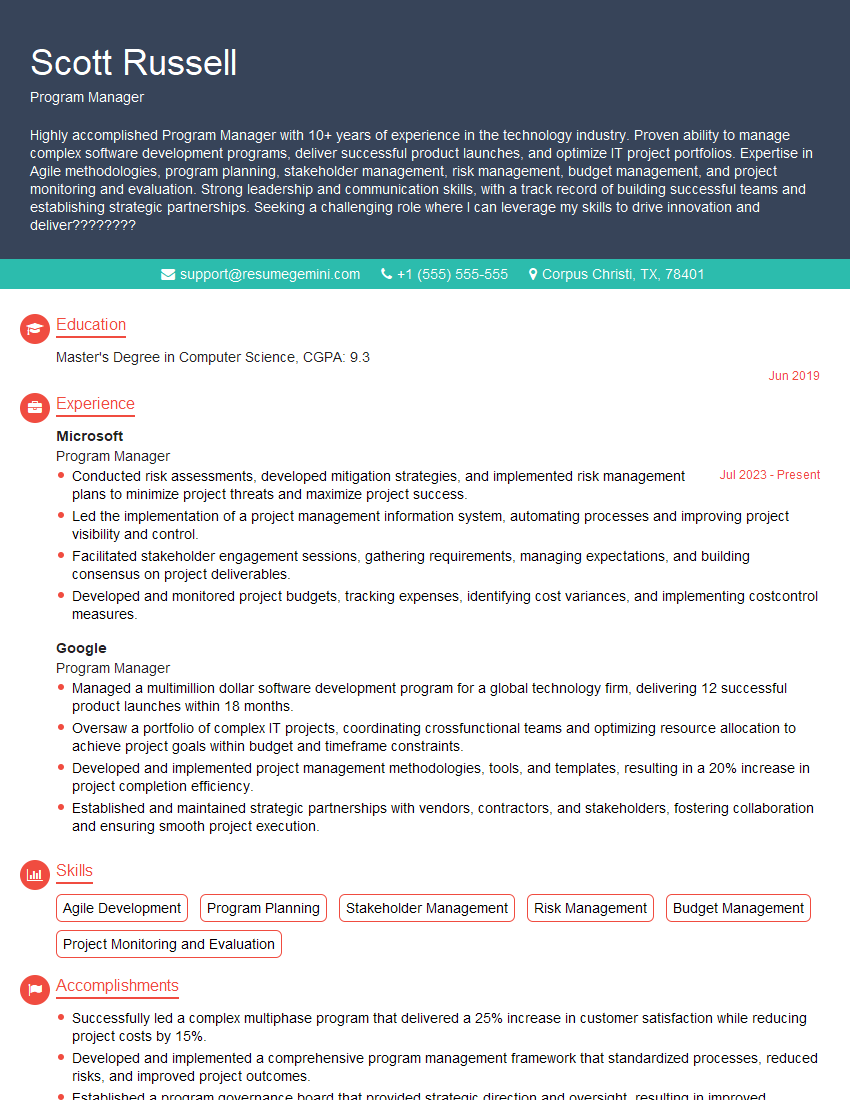
Program Manager Resume Sample
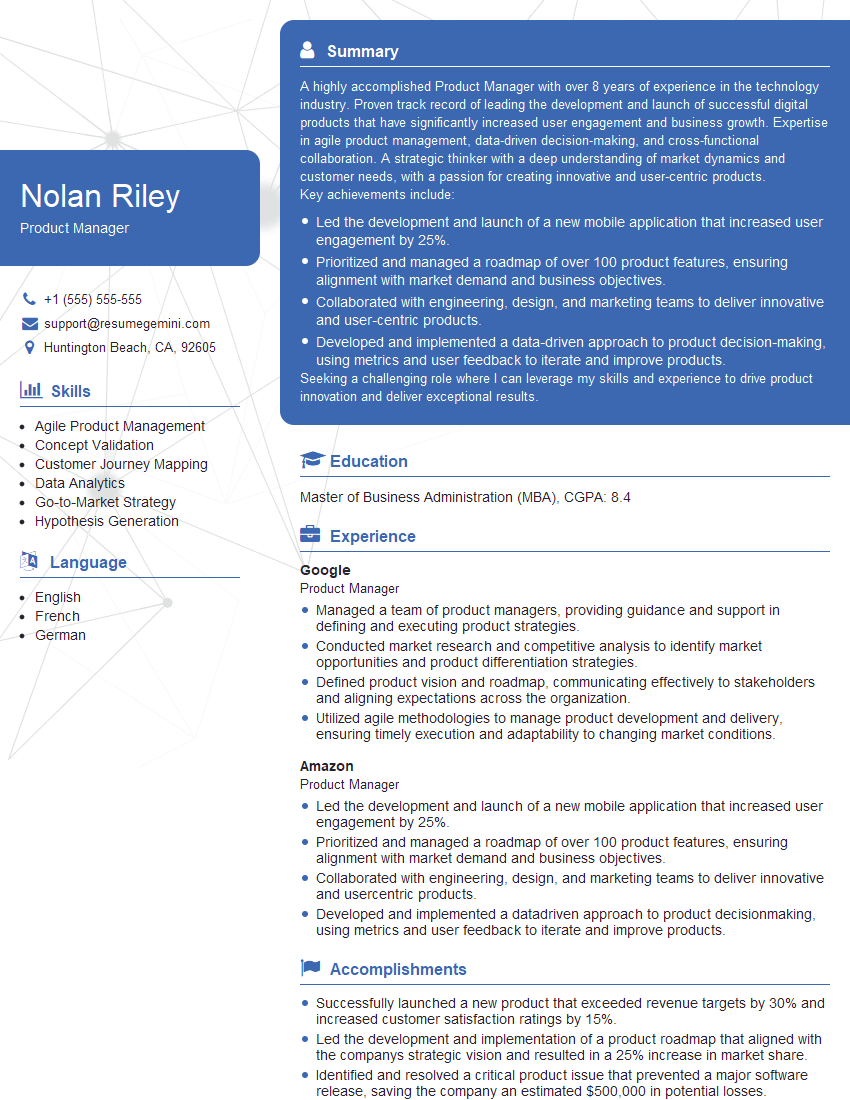
Product Manager Resume Sample
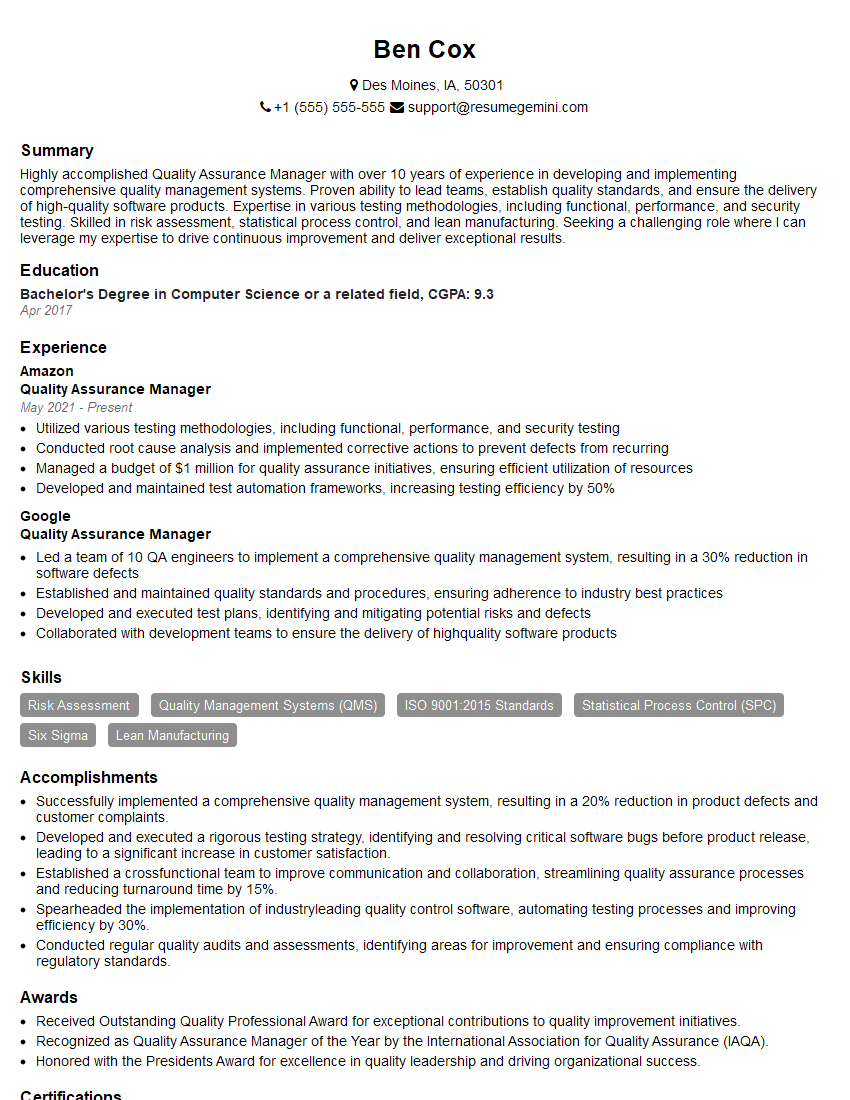
Quality Assurance Manager Resume Sample
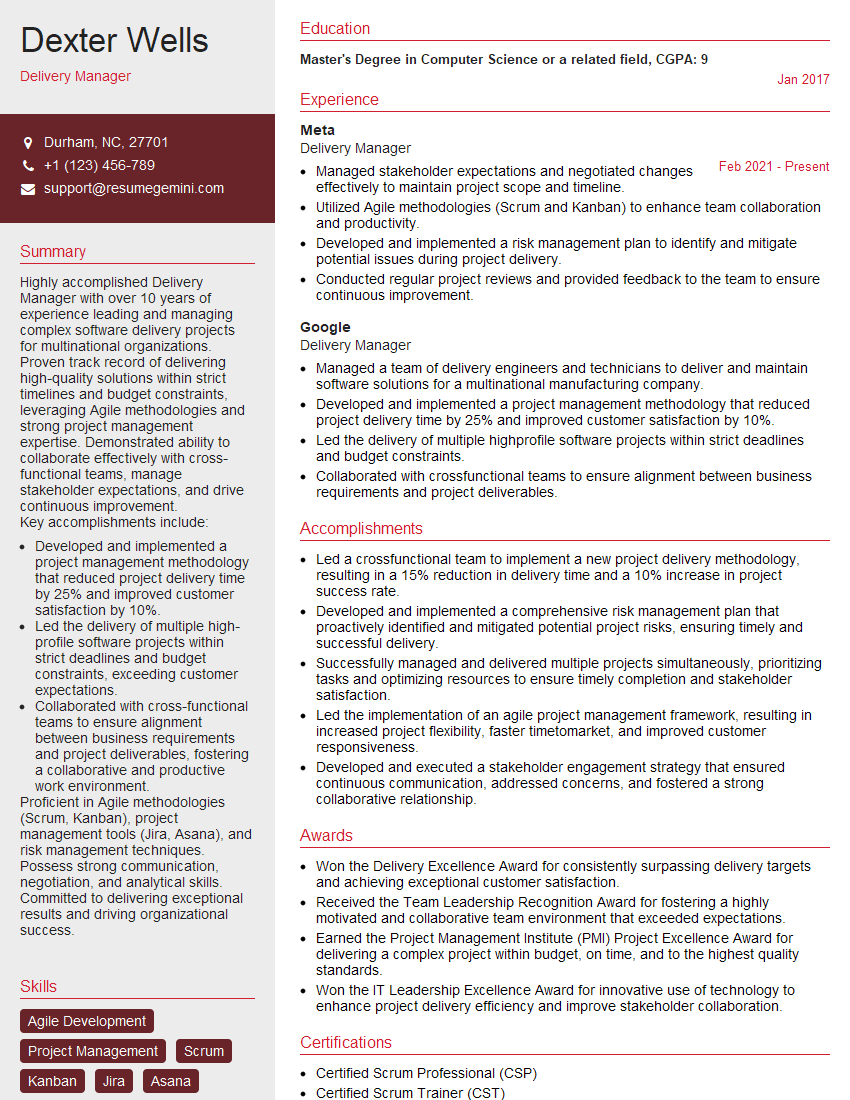
Delivery Manager Resume Sample
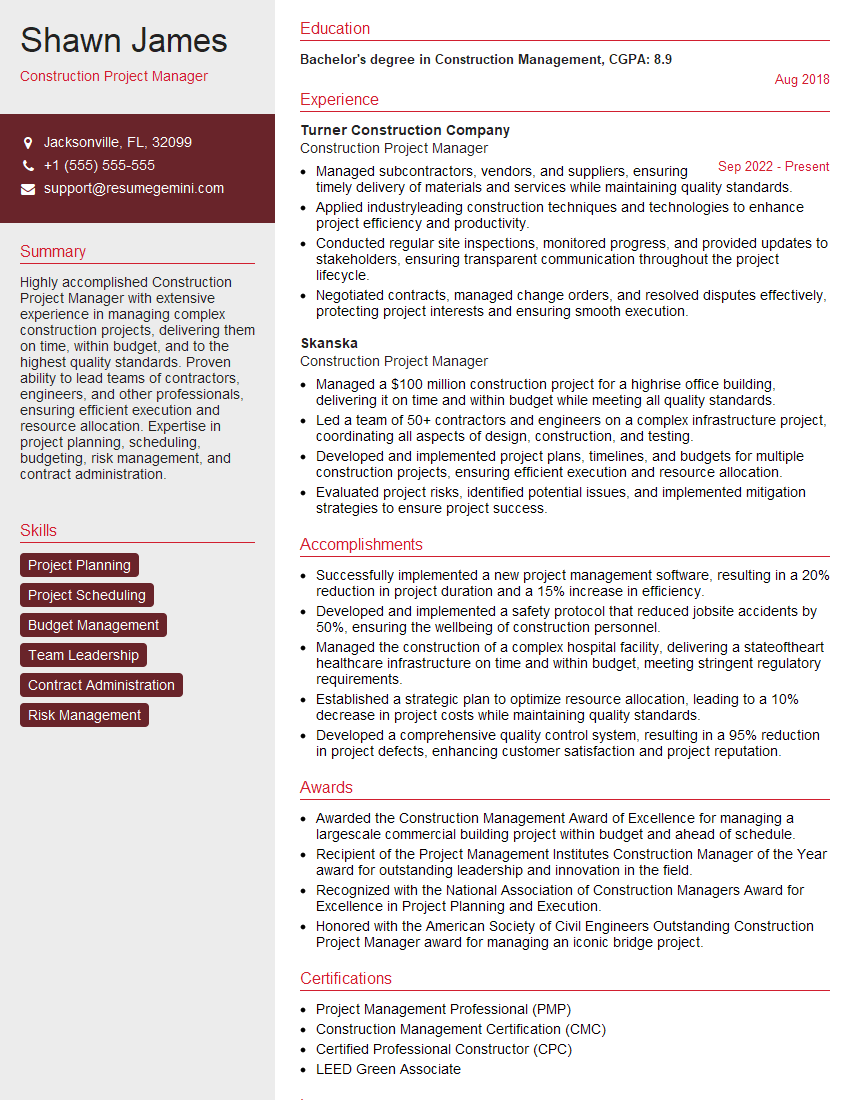
Construction Project Manager Resume Sample

Project Manager Resume Sample
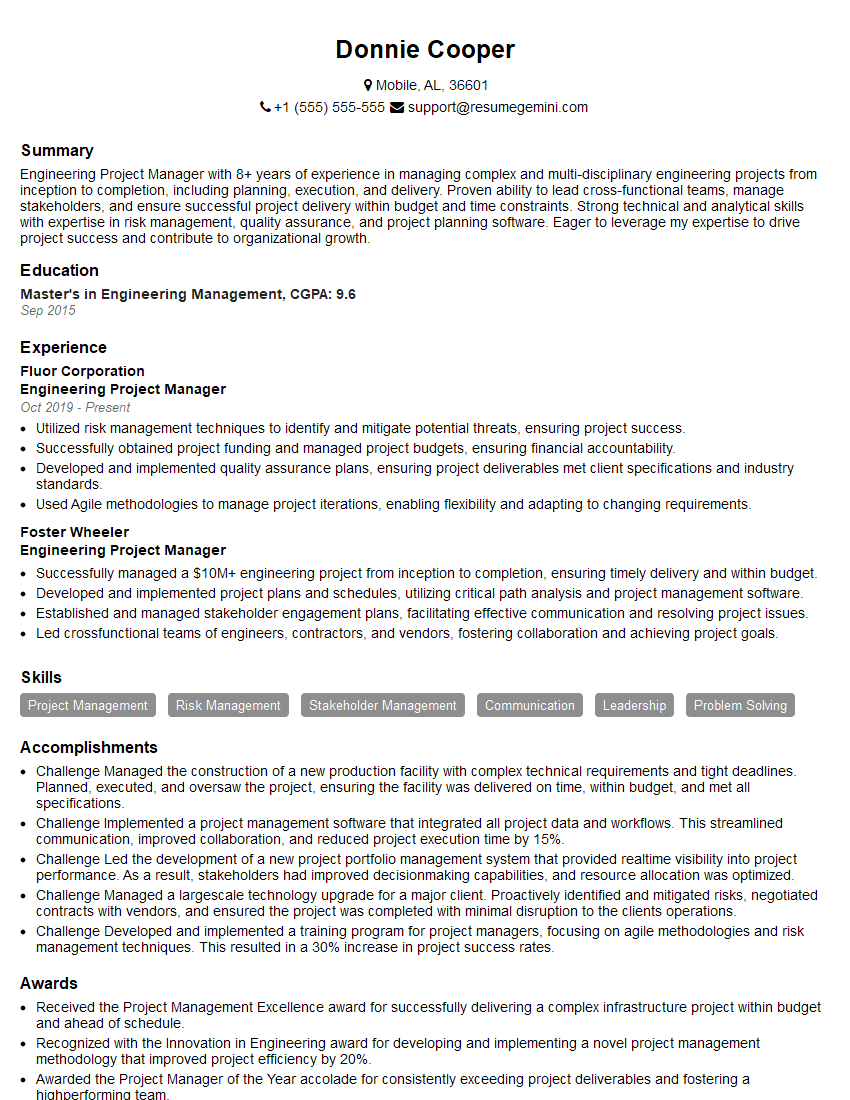
Engineering Project Manager Resume Sample
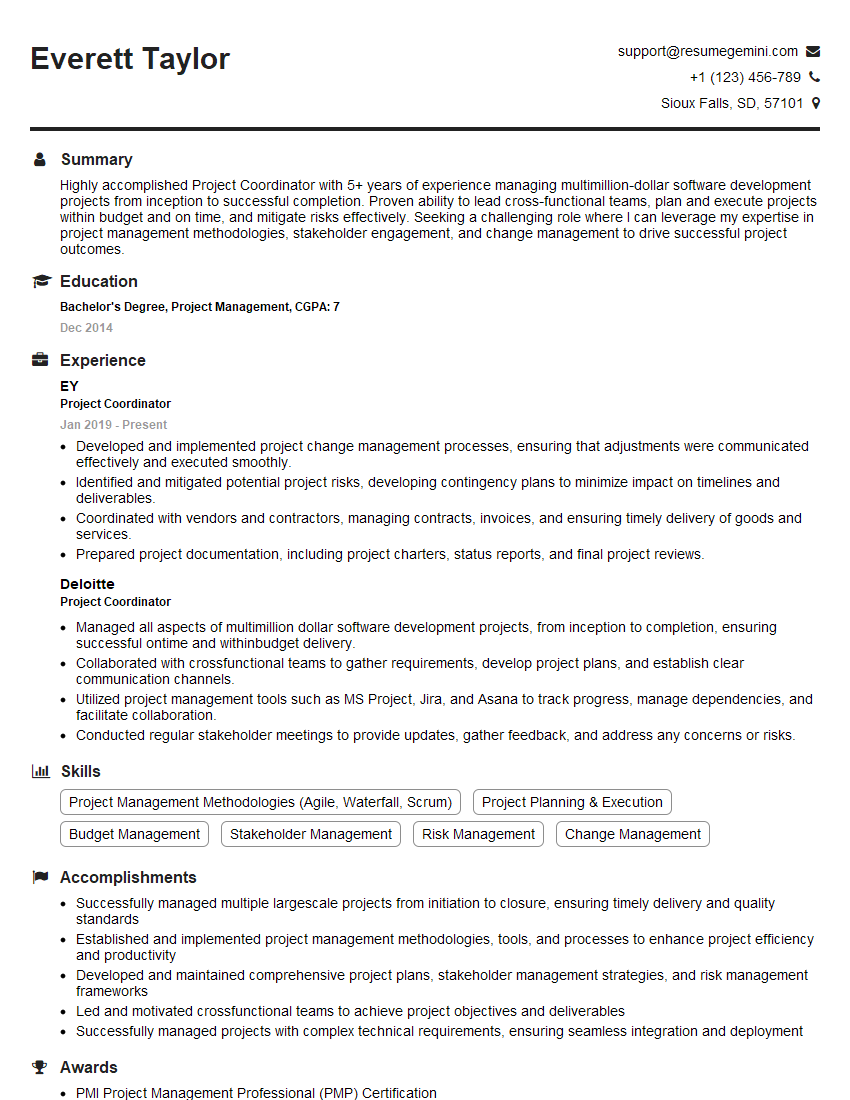
Project Coordinator Resume Sample
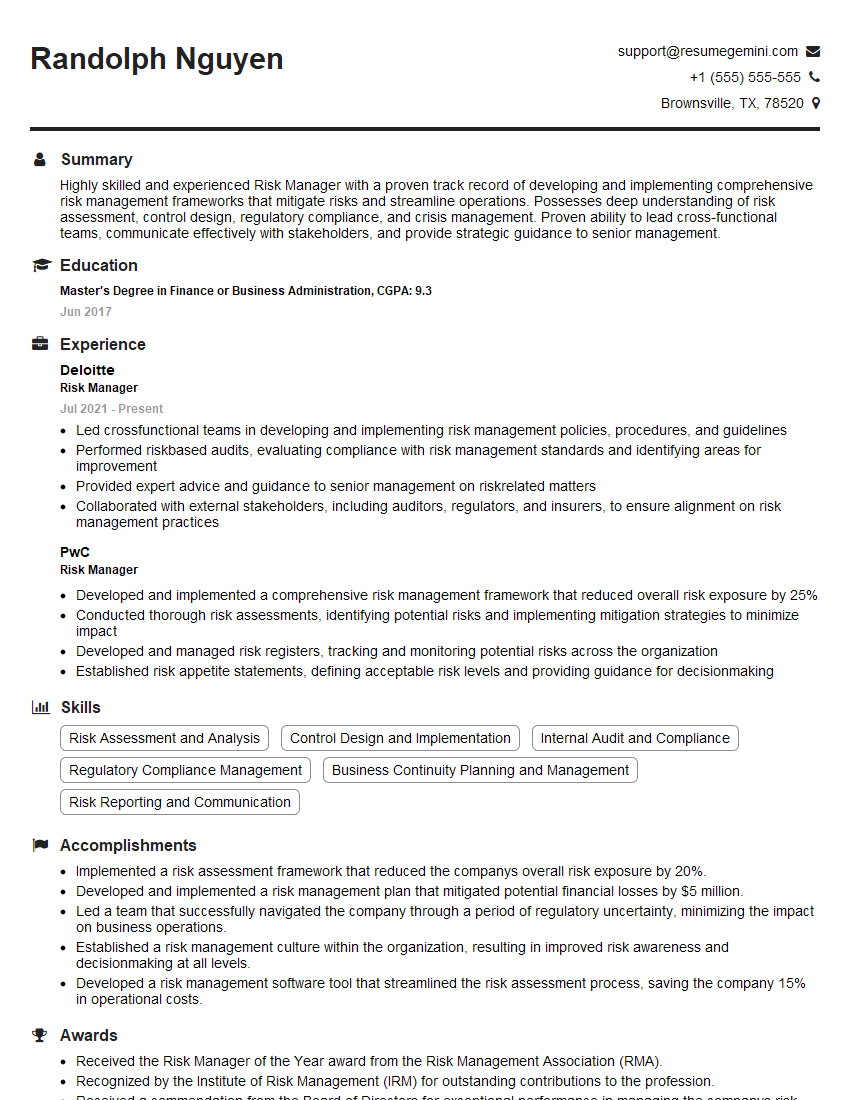
Risk Manager Resume Sample
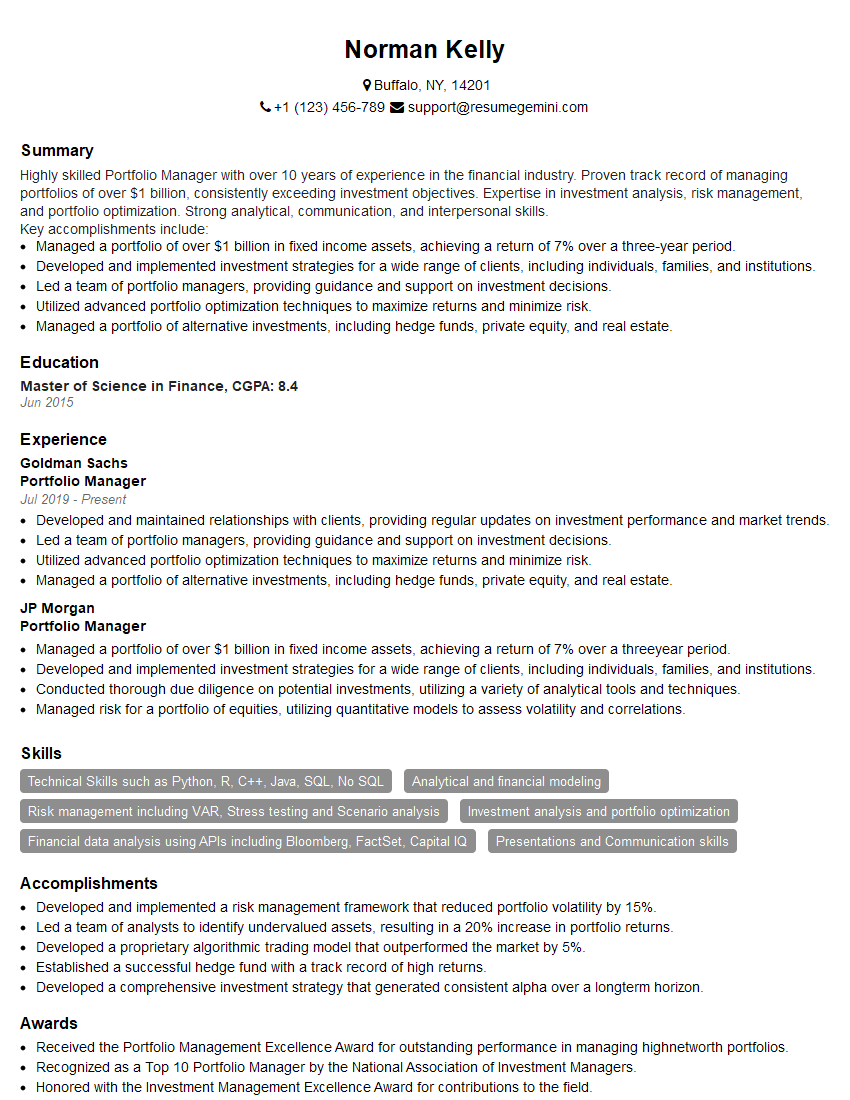
Portfolio Manager Resume Sample
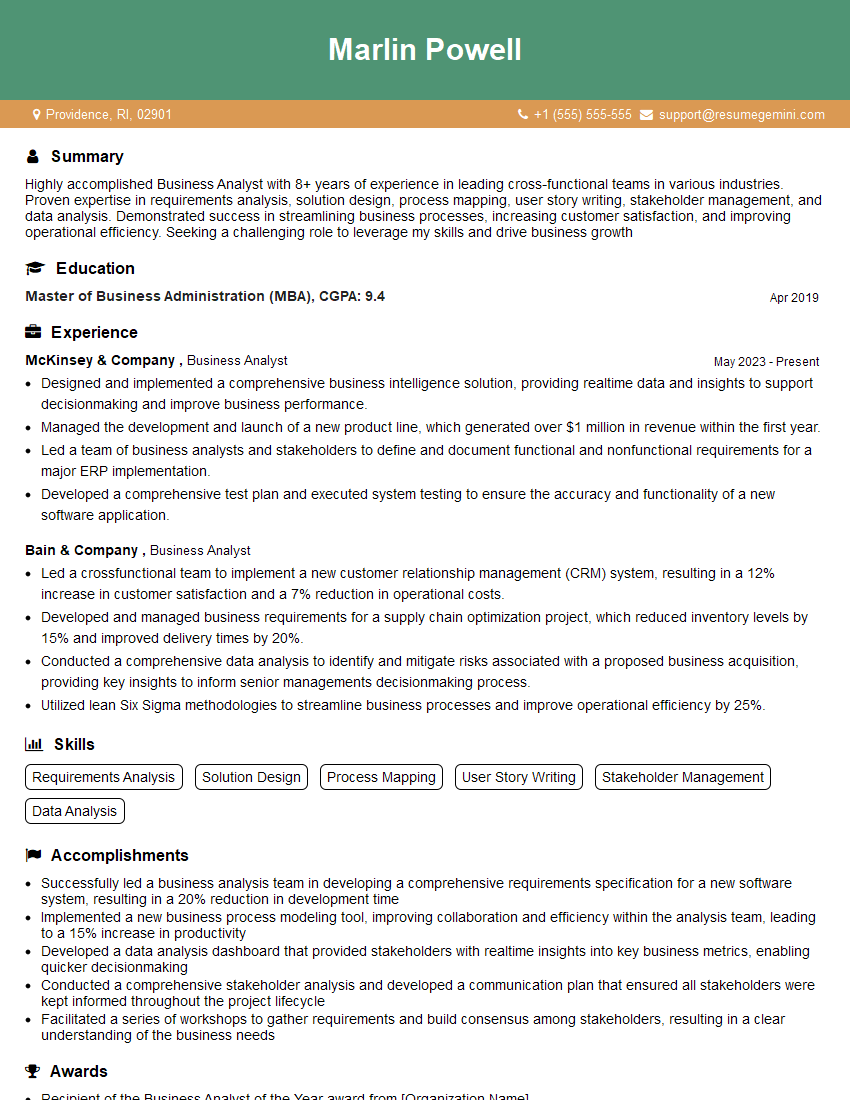
Business Analyst Resume Sample
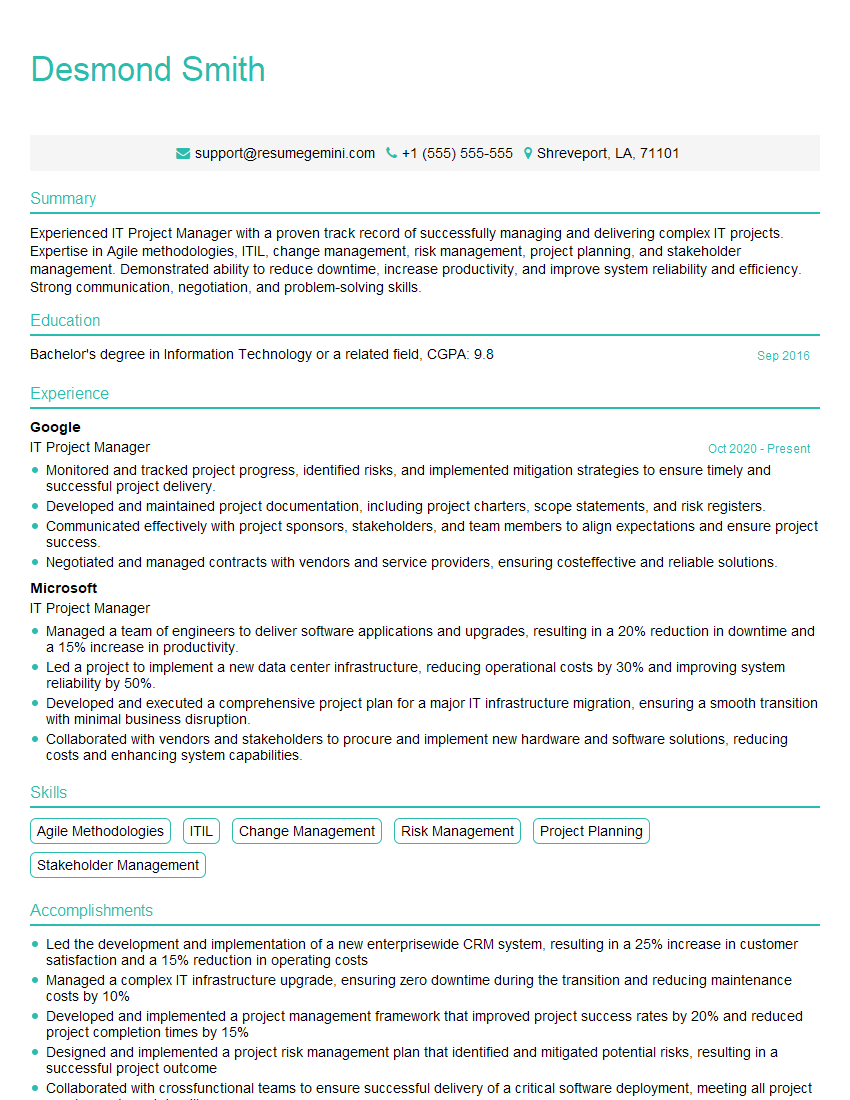
IT Project Manager Resume Sample
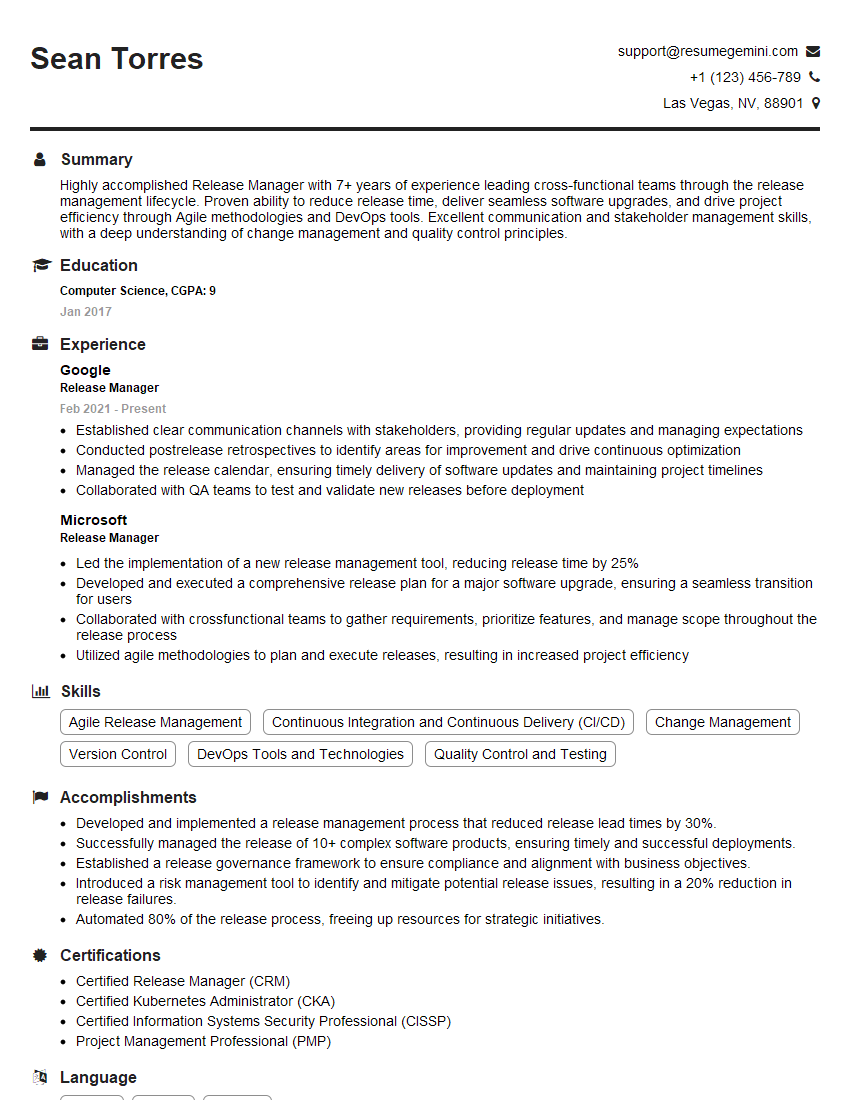
Release Manager Resume Sample
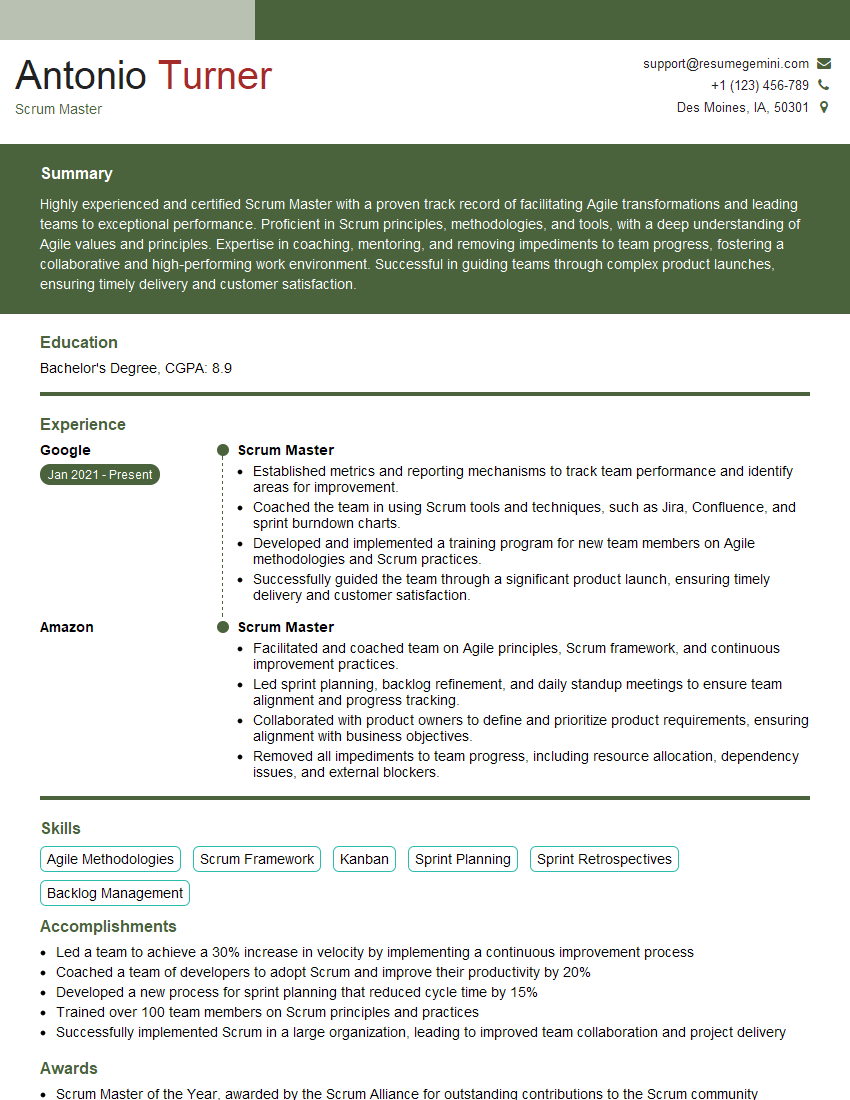
Scrum Master Resume Sample
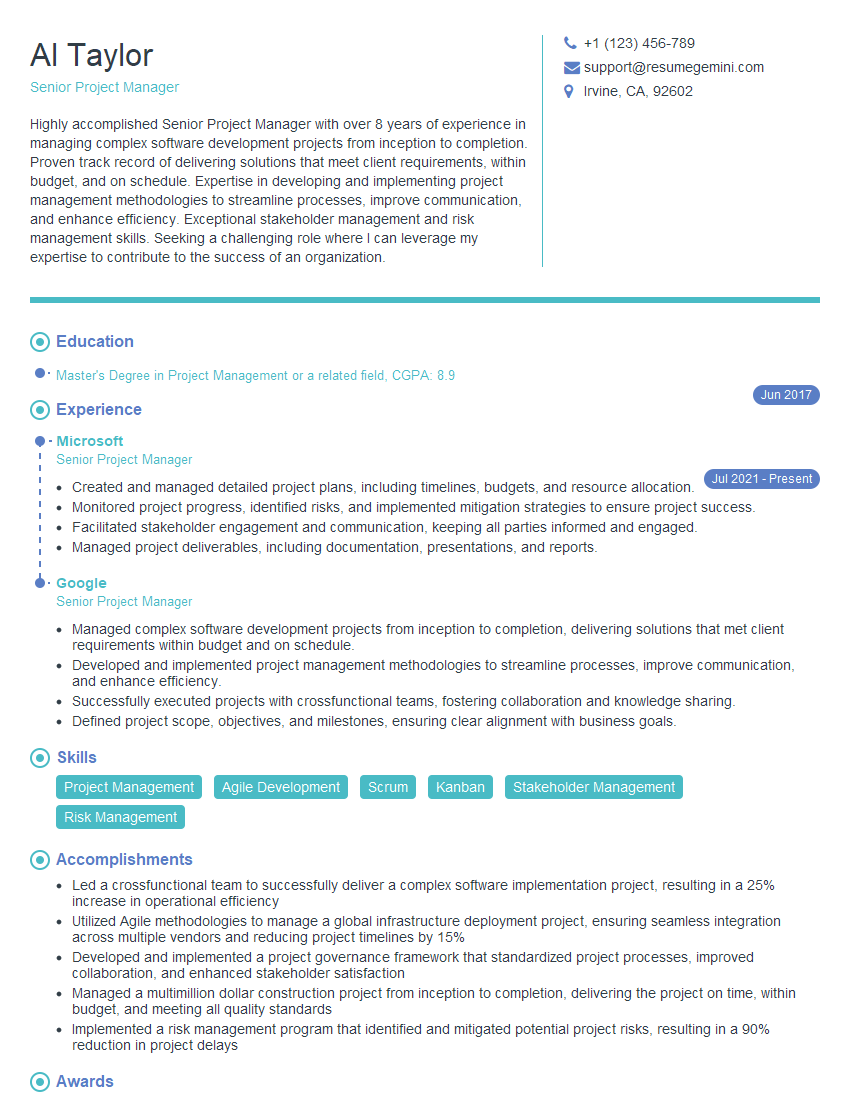
Senior Project Manager Resume Sample
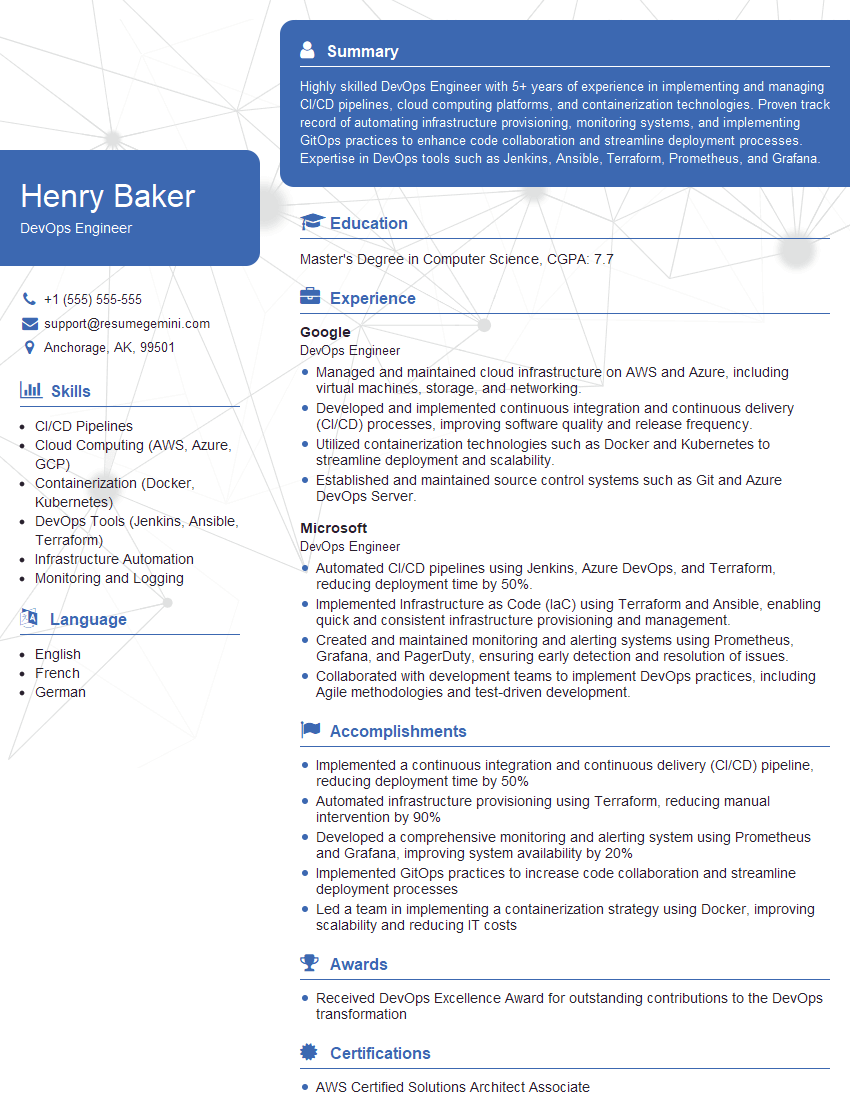
DevOps Engineer Resume Sample
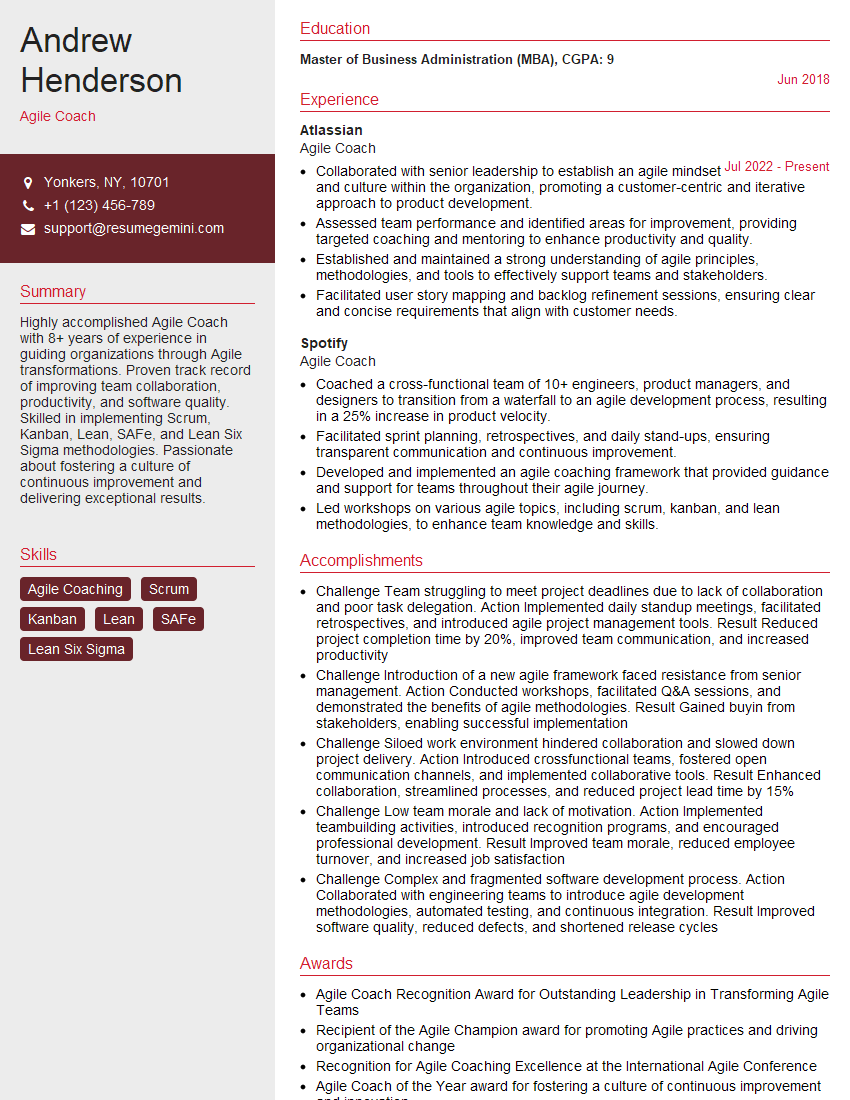
Agile Coach Resume Sample
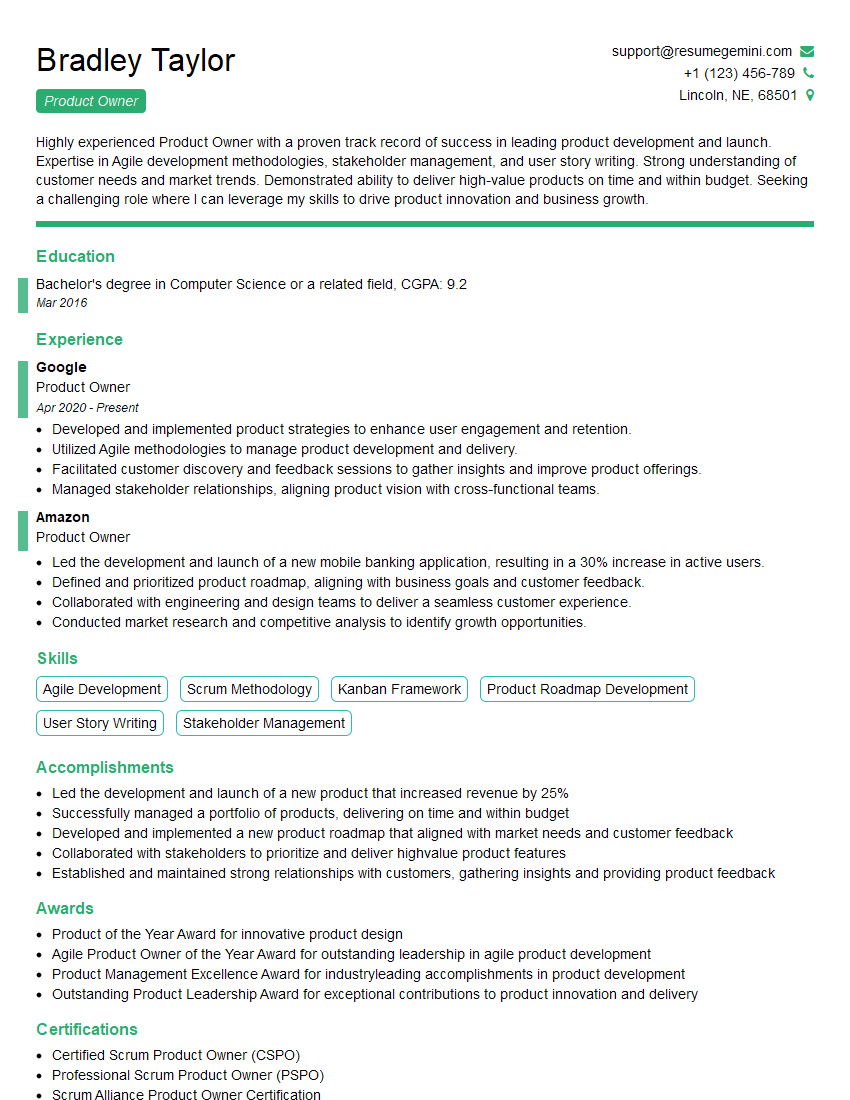
Product Owner Resume Sample
- Program Manager
- Product Manager
- Quality Assurance Manager
- Delivery Manager
- Construction Project Manager
- Project Manager
- Engineering Project Manager
- Project Coordinator
- Risk Manager
- Portfolio Manager
- Business Analyst
- IT Project Manager
- Release Manager
- Scrum Master
- Senior Project Manager
- DevOps Engineer
- Agile Coach
- Product Owner
Explore more articles
Users Rating of Our Blogs
Share Your Experience
We value your feedback! Please rate our content and share your thoughts (optional).
What Readers Say About Our Blog
To the interviewgemini.com Webmaster.
Very helpful and content specific questions to help prepare me for my interview!
Thank you
To the interviewgemini.com Webmaster.
This was kind of a unique content I found around the specialized skills. Very helpful questions and good detailed answers.
Very Helpful blog, thank you Interviewgemini team.