Every successful interview starts with knowing what to expect. In this blog, we’ll take you through the top Solar Panel Troubleshooting interview questions, breaking them down with expert tips to help you deliver impactful answers. Step into your next interview fully prepared and ready to succeed.
Questions Asked in Solar Panel Troubleshooting Interview
Q 1. Explain the process of diagnosing a faulty solar panel.
Diagnosing a faulty solar panel involves a systematic approach combining visual inspection with electrical measurements. First, I’d visually inspect the panel for obvious problems like cracks, hotspots (discolored areas), or debris accumulation. This initial check can often pinpoint simple fixes like cleaning or identifying damaged cells. Then, I move to electrical testing. I’d use a multimeter to measure the open-circuit voltage (Voc) and short-circuit current (Isc) of the panel under direct sunlight. Comparing these readings to the manufacturer’s specifications reveals if the panel is underperforming. A significant deviation suggests a problem. For example, if the Voc is significantly lower than expected, it could indicate cell damage or shading. A low Isc might signal wiring issues or a problem with the panel’s connections. Further testing may involve checking for diodes failures within the panel itself using a more advanced technique involving individual cell measurements.
For instance, I once worked on a system where a panel was producing significantly less power than others. Visual inspection revealed nothing. However, after testing, I discovered one cell within the panel was exhibiting extremely low voltage due to microscopic cracking, barely visible to the naked eye. This highlights the importance of both visual and electrical testing. If the issue persists after these steps, more sophisticated diagnostic tools, like infrared cameras to detect hotspots, might be employed.
Q 2. How do you identify and troubleshoot issues with solar inverters?
Troubleshooting solar inverters begins with checking for error codes displayed on the inverter’s screen. These codes often provide a clear indication of the problem. Next, I’d verify the AC and DC disconnects are properly switched on and examine the wiring connections for any loose or damaged wires, especially looking for corrosion or overheating signs. A multimeter is crucial here to check for proper voltage at the input (DC side) and output (AC side) of the inverter. An absence of DC voltage indicates a problem upstream (panels or cabling), while an absence of AC voltage points to a fault within the inverter itself. Measuring the ground connections is equally critical for ensuring electrical safety. I’d also check the inverter’s cooling system for any blockages or excessive heat.
I remember an instance where an inverter was tripping repeatedly. The error code indicated an overcurrent fault. After checking the wiring, I found a loose connection that created intermittent contact. Tightening the connection resolved the issue completely. This incident emphasized the importance of thoroughly inspecting all connections and paying close attention to error codes.
Q 3. Describe your experience with multimeter usage in solar panel diagnostics.
The multimeter is an indispensable tool in my solar panel diagnostics toolkit. It allows me to precisely measure voltage, current, and resistance, providing vital clues about the health of the solar panel system. I routinely use it to measure the open-circuit voltage (Voc) and short-circuit current (Isc) of individual panels to identify underperforming units. I also employ the multimeter to check the continuity of wiring, ensuring there are no breaks or shorts. Furthermore, I can use it to measure the voltage drop across individual components, identifying resistance and potential voltage losses. Beyond that, I often check the ground connection resistance ensuring proper earthing for safety.
For example, recently, I used a multimeter to detect a ground fault in a system that had a partially submerged connection due to rain. This highlighted the importance of regular safety checks.
Q 4. What are the common causes of low solar panel output?
Low solar panel output can stem from various factors, broadly categorized into environmental and system issues. Environmental factors include shading from trees, buildings, or even snow accumulation; insufficient sunlight (due to weather conditions); and high temperatures that reduce the efficiency of solar panels. System issues, on the other hand, include dirty panels (reducing light absorption); faulty wiring, connectors, or damaged panels themselves; issues with the inverter; and problems with the battery bank (if applicable). Each of these requires a different diagnostic and resolution approach.
For instance, a recent case involved a system exhibiting low output. Initially, the owner suspected faulty panels. However, a detailed inspection revealed significant shading by an overgrown tree partially obscuring the array, and cleaning the panel made a significant difference. Therefore, carefully checking all potential causes is crucial for effective troubleshooting.
Q 5. How do you test the voltage and current of a solar panel?
Testing the voltage and current of a solar panel requires a multimeter and ideally, a sunny day. To measure the open-circuit voltage (Voc), the multimeter is set to the DC voltage setting and probes are connected across the panel’s terminals without any load. The reading provides the maximum voltage the panel can produce. To measure the short-circuit current (Isc), the multimeter is set to the DC current setting, and the probes are connected across the panel’s terminals. A short circuit is simulated (though temporarily), and the meter displays the maximum current the panel can produce. Both these readings should be compared to the manufacturer’s specifications for that specific panel model.
Safety is crucial during this process. Always ensure the system is properly disconnected from the grid before performing these tests to prevent electrical shock.
Q 6. What safety precautions do you take when troubleshooting solar panel systems?
Safety is paramount when troubleshooting solar panel systems. Before starting any work, I always ensure the system is completely de-energized by switching off the main disconnects at the array and inverter. I treat all components as potentially live, even after switching off, and use insulated tools to avoid electrical shock. I wear appropriate personal protective equipment (PPE), including safety glasses and gloves. When working on rooftops, I employ appropriate fall protection measures. When working with high voltages, I ensure I have a qualified assistant present. Furthermore, I regularly check the system’s grounding to ensure that a safe path for electrical current exists in case of a fault.
Following these precautions helps minimize risks and ensures a safe work environment.
Q 7. Explain your experience with diagnosing shading issues in solar arrays.
Diagnosing shading issues in solar arrays involves careful observation and analysis. I start by visually inspecting the array to identify any obstructions like trees, buildings, or even other panels casting shadows on other panels. I then use a shading analysis tool or even just the sun’s path to determine the duration and extent of the shading. Partial shading can significantly reduce the overall output of the array. To pinpoint the source more accurately, I might utilize infrared thermography, which helps detect cells operating at a lower temperature due to reduced sunlight exposure. This approach allows me to identify specific panels or sections significantly impacted by shading.
In one instance, a client was experiencing low array output. Visual inspection revealed only minor shading. Infrared imaging, however, highlighted a specific area with noticeably cooler temperatures, revealing subtle shading caused by a chimney not easily visible from the ground. Trimming some branches and realigning some panels solved the issue. The use of infrared thermography proved invaluable in accurately pinpointing the source of the reduced energy output.
Q 8. How do you troubleshoot problems with solar panel wiring and connectors?
Troubleshooting solar panel wiring and connectors involves a systematic approach, starting with visual inspection and progressing to more advanced testing. First, I carefully examine all wiring for visible damage like cuts, abrasions, or signs of overheating (discoloration or melting). Loose or corroded connectors are a major culprit, often leading to poor connections and reduced power output. I’ll check for proper tightening of all connections, ensuring they are secure but not over-tightened, which could damage the components.
Next, I use a multimeter to check continuity and voltage. Continuity tests verify that the circuit is complete, while voltage measurements confirm that power is flowing correctly. For example, if I’m checking a string of panels, I’d measure the voltage at the start and end of the string, and at each connector in between, looking for voltage drops indicating a problem. A significant voltage drop across a single connector points towards a high-resistance connection due to corrosion or a faulty connector. If the problem is not immediately obvious, I’d meticulously check each wire and connector until I find the point of failure. Finally, I’d replace any damaged wiring or connectors with properly rated components, ensuring all connections are weatherproof and properly grounded.
Q 9. Describe your experience with troubleshooting ground faults in solar systems.
Ground faults in solar systems are serious safety hazards that can lead to electrical shocks or fires. My approach to troubleshooting them begins with safety precautions, always ensuring the system is properly disconnected before working on it. I use a ground fault detection device, often a specialized clamp meter that measures ground current, to identify the location of the fault. This involves systematically checking different sections of the system, including the array, the inverter, and the grounding system itself.
Often, the problem lies in corroded or loose grounding connections. For example, I once encountered a ground fault caused by a loose connection at the grounding rod, a surprisingly common issue. In another instance, the fault was due to moisture ingress into a junction box, causing corrosion and a high-resistance ground path. In such cases, I’d meticulously clean and tighten all grounding connections, addressing any corrosion with appropriate cleaning agents and ensuring proper grounding continuity. If the fault persists after checking all connections, I would investigate the integrity of the grounding rod itself, checking for proper depth and soil conductivity. Sometimes replacement of components is necessary, and I always ensure adherence to safety regulations throughout the entire process.
Q 10. How do you identify and resolve issues with faulty bypass diodes?
Bypass diodes are crucial components within solar panels that allow current to bypass shaded or faulty cells, preventing the entire panel from being impacted. Faulty bypass diodes can manifest as hot spots on the panel surface. Identifying these usually involves visual inspection using a thermal imaging camera (more on this in a later answer). Hot spots indicate excessive current flow through a section of the panel, possibly due to a failed bypass diode.
To resolve issues with bypass diodes, I typically need to replace the entire panel. This is because replacing individual bypass diodes is often impractical and expensive. However, if advanced diagnostic tools indicate only one or two diodes are failing within a larger panel array it might be cost effective to try. Diagnosing and repairing individual bypass diodes requires specialized equipment and technical expertise. In most scenarios, replacing the affected panel is the most efficient and cost-effective solution, ensuring system safety and performance.
Q 11. What are the common causes of overheating in solar panels?
Overheating in solar panels can significantly reduce their efficiency and lifespan. Several factors contribute to this issue. Shading is a major culprit; even partial shading on a panel can cause some cells to receive more current than others, leading to excessive heating in the shaded cells. Poor ventilation and debris buildup on the panel surface prevent heat dissipation, while faulty wiring or connections can generate extra resistance, leading to heat generation. Faulty bypass diodes (as mentioned earlier) can also cause localized overheating.
Environmental factors also play a role, including high ambient temperatures and intense solar irradiance. In very hot climates, the operating temperature of solar panels can easily exceed their optimal range. To mitigate overheating, regular cleaning is essential to remove dirt and debris. Proper panel orientation and spacing are crucial for ventilation and ensuring that the panels do not overheat in the first place. Addressing electrical issues that may lead to overheating, such as loose wiring, is also paramount to ensuring the long-term health of the solar panel system.
Q 12. Explain your experience with using thermal imaging cameras for solar panel diagnostics.
Thermal imaging cameras are invaluable tools in solar panel diagnostics. They allow for non-invasive detection of temperature variations across the panel surface. This is essential for identifying hot spots indicating cell failures, faulty bypass diodes, or shading issues. The camera captures infrared radiation emitted by the panel, creating a thermal image that highlights temperature differences with different colors.
For example, a hot spot will show up as a significantly warmer area (represented by brighter colors on the thermal image) compared to the surrounding cells. This allows for pinpointing the exact location of a problem. Combining thermal imaging with visual inspection provides comprehensive diagnostic information that allows me to quickly identify and address the root cause of performance issues. I have used thermal imaging successfully in numerous cases, allowing for quick identification of issues that were otherwise invisible with conventional testing methods. It has saved considerable time and effort in troubleshooting and repairing solar panel systems.
Q 13. How do you troubleshoot problems with solar panel mounting systems?
Solar panel mounting systems are critical for ensuring the panels are securely and properly positioned to maximize energy production. Troubleshooting these systems begins with a visual inspection for signs of damage, looseness, or corrosion. Loose bolts, cracked mounts, or signs of rust can compromise structural integrity and lead to panel movement, causing safety hazards and performance issues.
I’ll check for proper alignment and leveling of the panels, ensuring they are optimally angled to receive sunlight. If there are any loose bolts, I’ll tighten them. Severe corrosion or damage may require replacement of the affected parts. I also check the overall structural integrity of the mount. In some cases, significant wind loads or other external factors can stress the mounting system. In these instances, reinforcement or complete replacement of the mounting system may be necessary to prevent damage or failure. Safety is always paramount, and I strictly follow manufacturer guidelines and industry best practices for installation and maintenance.
Q 14. Describe your experience with interpreting solar panel performance data.
Interpreting solar panel performance data is crucial for optimizing system efficiency and identifying potential problems. This involves analyzing data from inverters and monitoring systems, which typically includes parameters like power output, voltage, current, and energy yield. I look for trends and anomalies in the data. For example, a consistent drop in energy production over time could indicate gradual degradation of the panels, while sudden dips in output point toward more immediate problems like shading, faulty wiring, or inverter issues.
I use performance data to compare actual output against expected output based on solar irradiance and temperature. Any significant deviations need further investigation. Data analysis helps to pinpoint the source of performance issues, enabling targeted troubleshooting. For instance, if the data shows a consistent reduction in current at a specific time of day, it might indicate shading issues occurring during that time. By combining data analysis with on-site inspections and other diagnostic tests, I can create a complete picture of the system’s health and address any problems efficiently and effectively.
Q 15. What software or tools do you use for solar panel diagnostics?
Solar panel diagnostics rely heavily on a combination of software and hardware tools. On the software side, I frequently use monitoring platforms like SolarEdge Monitoring Portal and SMA Sunny Portal. These platforms provide real-time data on system performance, allowing me to identify anomalies like underperforming panels or inverters. I also utilize specialized software for analyzing I-V curves (current-voltage curves), which are crucial for pinpointing the exact location and nature of panel or string failures. This involves using software capable of interpreting data from I-V curve tracers which are handheld devices that measure the electrical characteristics of solar panels. On the hardware side, I use multimeters (for voltage and current measurements), thermal cameras (to detect hotspots indicative of shading or faulty connections), and clamp meters to measure current accurately in various parts of the system. Finally, I often use dedicated data loggers to collect long-term performance data for in-depth analysis.
Career Expert Tips:
- Ace those interviews! Prepare effectively by reviewing the Top 50 Most Common Interview Questions on ResumeGemini.
- Navigate your job search with confidence! Explore a wide range of Career Tips on ResumeGemini. Learn about common challenges and recommendations to overcome them.
- Craft the perfect resume! Master the Art of Resume Writing with ResumeGemini’s guide. Showcase your unique qualifications and achievements effectively.
- Don’t miss out on holiday savings! Build your dream resume with ResumeGemini’s ATS optimized templates.
Q 16. How do you communicate technical issues to non-technical clients?
Communicating technical issues to non-technical clients requires clear, concise language and relatable analogies. Instead of using jargon like “I-V curve mismatch,” I might explain, “One of your solar panels isn’t performing as well as the others, like a single weak link in a chain, reducing the overall power output.” I use visual aids like diagrams and photos to illustrate the problem and its location. For instance, a thermal image showing a hot panel can vividly demonstrate a potential problem. I also break down complex concepts into simple steps, focusing on the impact on their energy bills and return on investment. Finally, I always ensure the client understands the proposed solution and its associated costs before proceeding.
Q 17. Explain your experience with different types of solar panels (monocrystalline, polycrystalline, thin-film).
My experience encompasses all three major types of solar panels. Monocrystalline panels, known for their high efficiency and black color, are generally more expensive but offer better performance in low-light conditions. I’ve worked extensively on troubleshooting issues like micro-cracking and PID (Potential Induced Degradation) in monocrystalline systems, often using electrical testing and thermal imaging to pinpoint the affected panels. Polycrystalline panels, with their characteristic blue appearance and slightly lower efficiency, are more common due to lower cost. Troubleshooting these panels often involves addressing issues like shading, bypass diode failures, and connection problems. I have also worked with thin-film panels, which are flexible and lightweight. However, they are more susceptible to degradation over time and their unique troubleshooting often requires specialized testing to identify delamination or other manufacturing-related defects. Each type presents unique challenges, and my experience allows me to efficiently diagnose and resolve problems specific to each technology.
Q 18. Describe your experience with troubleshooting different types of solar inverters (string, micro, power optimizers).
My experience with solar inverters spans string inverters, microinverters, and power optimizers. String inverters, while cost-effective, present challenges when one faulty panel impacts the entire string. Troubleshooting involves isolating the problematic panel within the string, usually using a combination of voltage measurements and the system’s monitoring data. Microinverters, on the other hand, offer superior performance and granular diagnostics, with each panel having its own inverter. Troubleshooting usually involves identifying the specific microinverter causing an issue. Power optimizers provide a middle ground, maximizing energy production from individual panels while utilizing a central inverter. Troubleshooting involves identifying specific panels exhibiting low performance, often using the monitoring data provided by the optimizers themselves. Understanding the unique characteristics of each type is critical for efficient troubleshooting.
Q 19. How do you handle emergency situations related to solar panel malfunctions?
Emergency situations, such as electrical arcing or fire hazards, require immediate action. My first priority is to ensure the safety of myself and the client by isolating the system using the appropriate disconnects. I will then assess the situation, possibly by contacting the fire department if necessary. Once the immediate danger is mitigated, I begin the systematic process of identifying the root cause of the malfunction. I might need to use specialized tools, and depending on the severity of the issue, I will coordinate with the relevant authorities or system manufacturers for repair or replacement. Detailed documentation of the incident is critical for insurance claims and future preventative measures.
Q 20. What is your experience with preventative maintenance of solar panel systems?
Preventative maintenance is crucial for maximizing the lifespan and efficiency of a solar panel system. My preventative maintenance program includes visual inspections to identify potential issues such as debris accumulation, loose connections, or signs of physical damage. I use thermal imaging cameras during these inspections to identify hotspots that could indicate potential problems before they escalate into major failures. I also check the performance of the system using monitoring software and compare it to historical data, looking for any noticeable declines in efficiency. Regular cleaning of panels, particularly in dusty or high-pollution areas, is a critical aspect. I also check inverter functionality, ensuring proper ventilation and that the cooling systems are functioning correctly. A proactive approach to maintenance significantly reduces the risk of costly repairs and system downtime.
Q 21. How do you determine the root cause of a solar panel system failure?
Determining the root cause of a solar panel system failure involves a systematic approach. I begin with a thorough visual inspection of the entire system, checking for obvious problems like shading, loose connections, or physical damage. Next, I use the system’s monitoring data to pinpoint the specific component(s) exhibiting poor performance. This is often the most efficient way to narrow the search. I then employ more advanced diagnostic tools, such as multimeters, I-V curve tracers and thermal cameras, to further investigate the identified problem area. For example, low voltage readings could indicate a faulty string, while an I-V curve showing a significant deviation from expected values points to a specific panel failure. Careful analysis and documentation are essential to isolate the exact problem and devise an effective solution. If the problem is complex or beyond my immediate expertise, I will consult with manufacturers or specialized technicians.
Q 22. What is your experience with working at heights and using safety equipment?
Safety is my utmost priority. I’ve been extensively trained and certified in working at heights, including the proper use of fall arrest systems, harnesses, and safety lines. My experience encompasses various rooftop and ground-mounted solar installations. I’m proficient in performing pre-work inspections to identify potential hazards and always follow established safety protocols, including using spotters and maintaining three points of contact whenever possible. For example, during a recent project involving a complex rooftop array, I meticulously checked all safety equipment before ascending, ensuring that all harnesses and lanyards were securely fastened and properly inspected. We even had a thorough toolbox talk before commencing any work at height to reinforce safety procedures.
Q 23. Explain your understanding of NEC codes related to solar panel installations.
My understanding of the National Electrical Code (NEC) regarding solar panel installations is comprehensive. I’m intimately familiar with articles 690, covering solar photovoltaic (PV) systems, and related sections dealing with grounding, overcurrent protection, wiring methods, and rapid shutdown requirements. These codes are crucial for ensuring system safety and compliance. For instance, I understand the importance of using appropriately sized conductors and ensuring proper grounding to mitigate the risk of electric shock and fire. I also know the specific requirements for rapid shutdown systems, which disconnect the PV array within 30 seconds of a utility outage, improving the safety of first responders. I always refer to the latest NEC codes during design, installation, and troubleshooting, ensuring all work adheres to the strictest safety standards. Regularly updating my knowledge on NEC changes is crucial to maintain compliance and best practices.
Q 24. How do you troubleshoot issues with battery storage systems in solar installations?
Troubleshooting battery storage systems involves a systematic approach. I begin by checking the battery voltage and state of charge (SOC) using a multimeter. Low voltage might indicate a faulty cell, while consistently low SOC points to a charging problem. Next, I examine the battery management system (BMS) for error codes. These codes often pinpoint specific issues, like cell imbalance or temperature problems. I then inspect connections for corrosion or looseness, which can cause significant voltage drops. For instance, recently, a system showed a low SOC despite sufficient solar generation. Through careful investigation, I traced the issue to a faulty BMS communication link, which I repaired, restoring proper function. Finally, I check the charging system, making sure the inverter and charger are operating within their specifications. A thorough understanding of battery chemistry, BMS functionalities, and charging algorithms is essential for effective troubleshooting.
Q 25. Describe your experience with using data loggers to monitor solar panel performance.
Data loggers are invaluable tools for monitoring solar panel performance. I have extensive experience using various data loggers, both wired and wireless, to collect real-time data on voltage, current, power output, and environmental conditions like temperature and irradiance. This data allows for the identification of performance degradation, such as underperforming panels or shading issues. For example, using a data logger, I identified a panel string with consistently lower power output than others. Further investigation revealed partial shading due to tree growth, a problem that was addressed by trimming the branches. Analysis of the data logger information also helps in predicting future maintenance needs and justifying repairs or replacements. The ability to visualize performance trends over time enables proactive maintenance and optimization.
Q 26. How do you document your troubleshooting process and findings?
Thorough documentation is essential for any troubleshooting process. I use a combination of methods to record my findings. This includes creating detailed written reports that outline the problem, the steps taken to diagnose the issue, and the solution implemented. I also use digital photography to capture visual evidence, such as damaged components or wiring issues. In more complex situations, I might create flowcharts or diagrams to illustrate the system’s configuration and the flow of information or energy. I always include timestamps and clear descriptions. Furthermore, all findings are stored digitally in a secure and organized database for easy retrieval and reference. This methodical approach ensures clarity, accountability, and facilitates efficient future troubleshooting.
Q 27. What are the common causes of arc faults in solar panel systems?
Arc faults in solar panel systems are serious safety hazards, potentially leading to fires. Several factors contribute to these faults. Damaged or deteriorated insulation on wiring, especially in areas exposed to the elements, is a frequent cause. Loose or improperly crimped connections can create high resistance points, resulting in arcing. Faulty components, such as damaged diodes within panels or failing inverters, can also generate arc faults. Environmental factors, such as moisture intrusion, can exacerbate insulation breakdown. Regular visual inspections of all components and wiring, coupled with the use of arc fault circuit interrupters (AFCIs) are crucial for preventing these dangerous events. Preventive maintenance is key in minimizing the risk of arc faults and ensuring the long-term safety and reliability of the solar energy system.
Q 28. How do you troubleshoot communication issues between solar panels and inverters?
Communication problems between solar panels and inverters can stem from several issues. The most common cause is faulty wiring or connectors, leading to signal loss or corrupted data. This can be as simple as a loose connection or a broken wire, but it could also be due to poor signal quality. Another potential cause is a malfunctioning communication interface on either the panel or the inverter. In some cases, electromagnetic interference (EMI) can disrupt communication signals. My troubleshooting starts with a visual inspection of all communication cables and connectors, followed by voltage checks using a multimeter. If the hardware is intact, I’ll move on to checking the communication protocols and parameters within the inverter’s settings. Using specialized communication testing equipment may be required to isolate the problem more precisely. Proper grounding and shielding of communication cables is crucial to prevent EMI and ensure reliable communication.
Key Topics to Learn for Your Solar Panel Troubleshooting Interview
- Understanding PV System Components: Thoroughly familiarize yourself with the function and interconnection of solar panels, inverters, charge controllers, batteries (if applicable), and wiring. Be prepared to discuss their individual roles within the overall system.
- Electrical Fundamentals: Review basic electrical principles like voltage, current, resistance, power, and Ohm’s Law. Understanding these concepts is crucial for diagnosing electrical faults within a solar array.
- Troubleshooting Methodology: Practice a systematic approach to troubleshooting. This includes using multimeters effectively, interpreting diagnostic codes, and following a logical process of elimination to identify the root cause of a problem.
- Common Solar Panel Faults: Research the most frequently encountered issues, such as shading, faulty wiring, damaged cells, inverter malfunctions, and ground faults. Be prepared to discuss how to identify and resolve them.
- Safety Procedures: Emphasize the importance of adhering to all safety regulations when working with solar panels and electrical systems. This includes proper lockout/tagout procedures, personal protective equipment (PPE), and understanding the risks associated with high voltage DC systems.
- Data Acquisition and Analysis: Familiarize yourself with using data loggers and monitoring software to analyze system performance and identify potential issues before they escalate. Understand how to interpret performance data and identify trends.
- Solar Panel Testing Techniques: Learn about different testing methods, including visual inspections, I-V curve tracing, and thermal imaging, and their applications in identifying various types of solar panel defects.
Next Steps
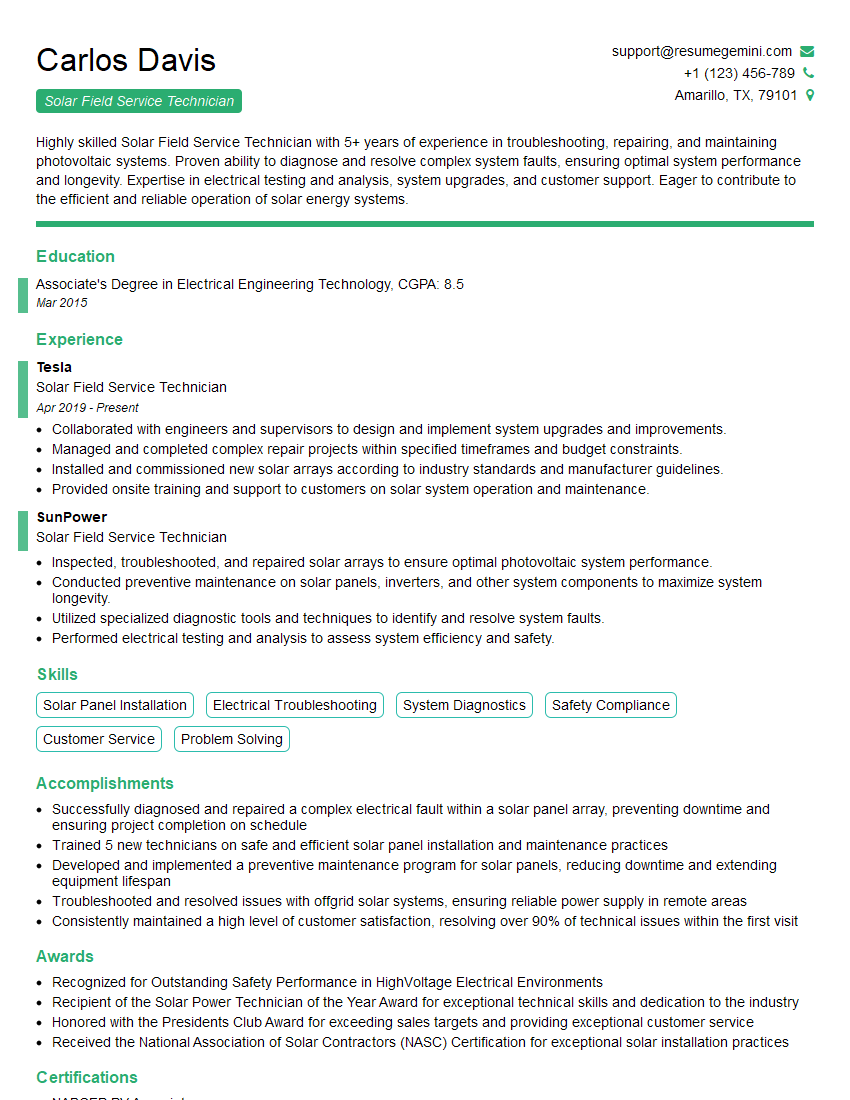
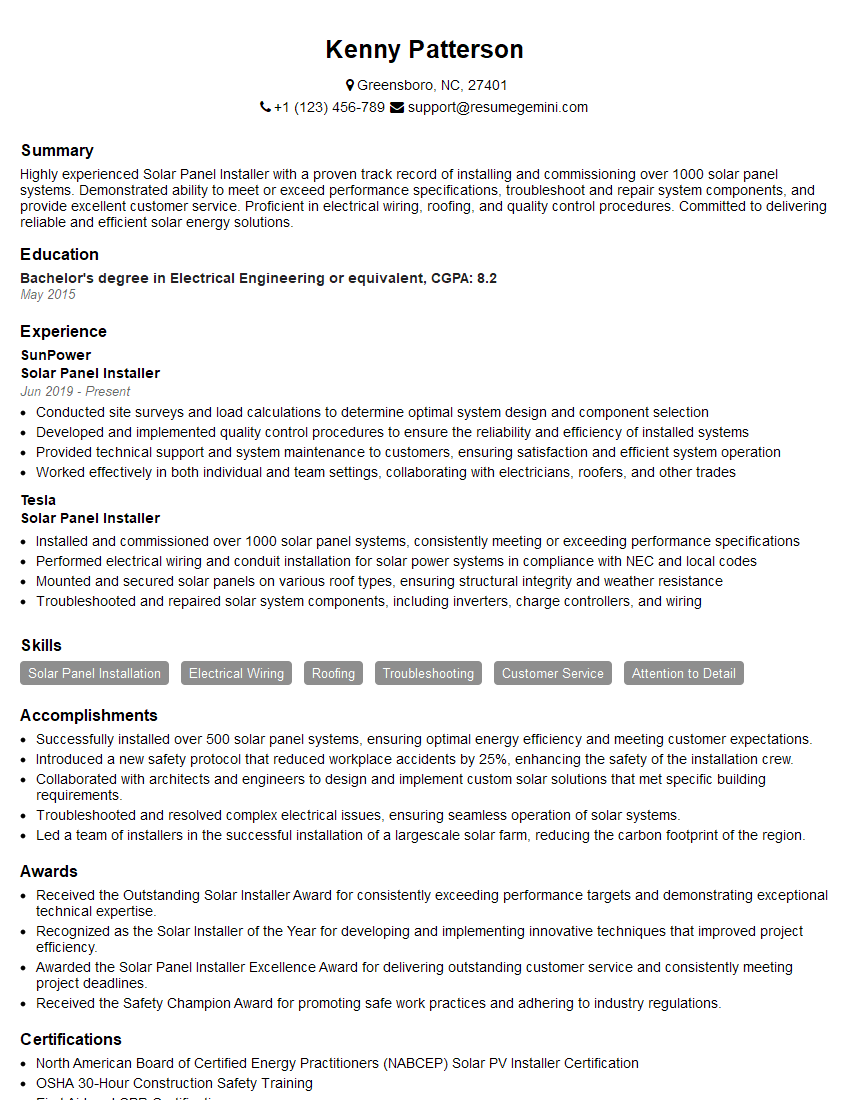
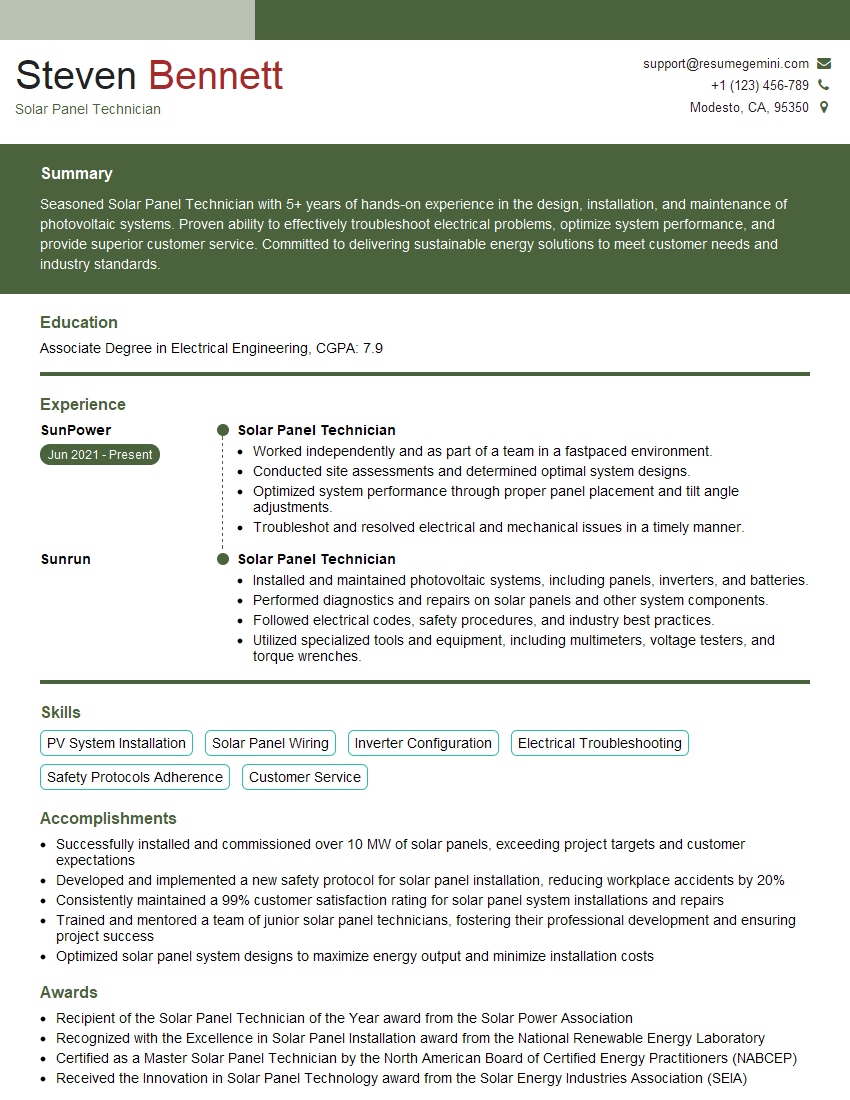
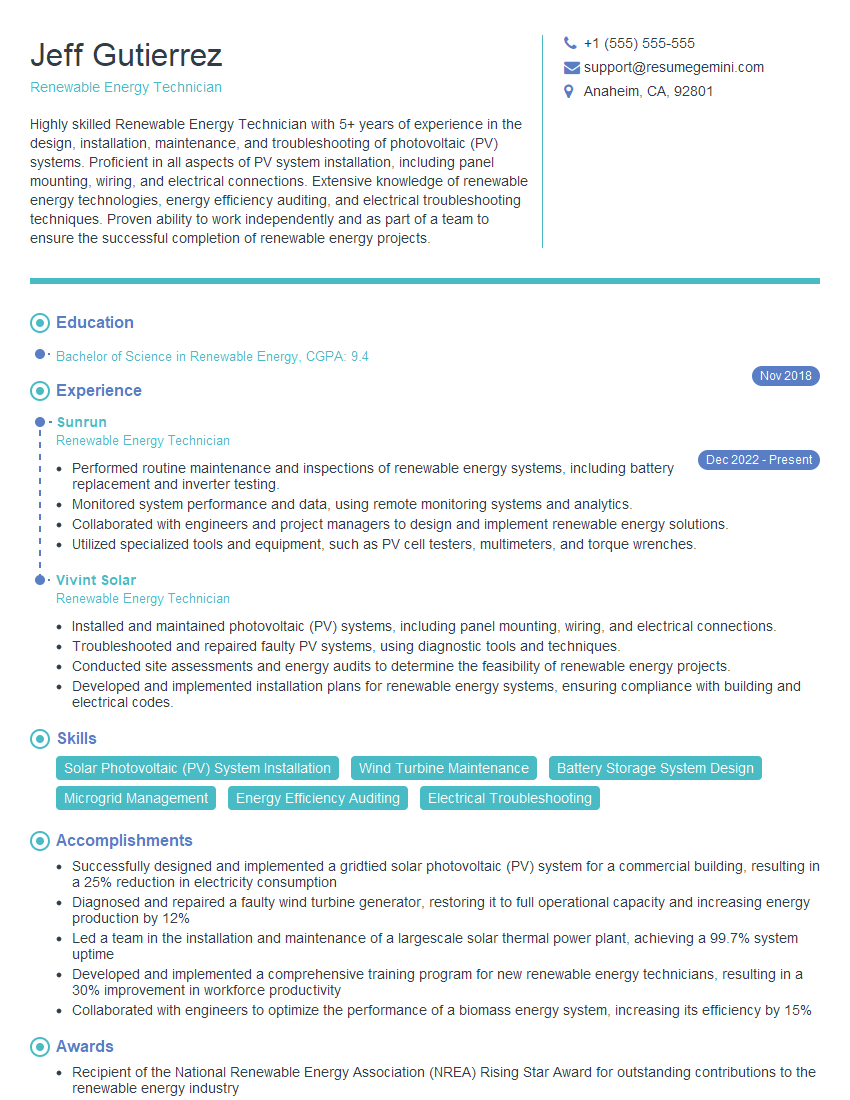
Mastering solar panel troubleshooting is key to unlocking exciting career opportunities in a rapidly growing industry. A strong understanding of these concepts will significantly boost your interview success and open doors to rewarding roles. To maximize your chances, creating a compelling and ATS-friendly resume is crucial. ResumeGemini can help you craft a professional resume that highlights your skills and experience effectively. They offer examples of resumes specifically tailored to the Solar Panel Troubleshooting field to help you get started. Take advantage of this valuable resource to present yourself in the best possible light to potential employers.

Explore more articles
Users Rating of Our Blogs
Share Your Experience
We value your feedback! Please rate our content and share your thoughts (optional).
What Readers Say About Our Blog
To the interviewgemini.com Webmaster.
Very helpful and content specific questions to help prepare me for my interview!
Thank you
To the interviewgemini.com Webmaster.
This was kind of a unique content I found around the specialized skills. Very helpful questions and good detailed answers.
Very Helpful blog, thank you Interviewgemini team.