Unlock your full potential by mastering the most common Total Ankle Replacement interview questions. This blog offers a deep dive into the critical topics, ensuring you’re not only prepared to answer but to excel. With these insights, you’ll approach your interview with clarity and confidence.
Questions Asked in Total Ankle Replacement Interview
Q 1. Describe the surgical technique for a total ankle replacement.
Total ankle replacement (TAR) surgery involves replacing the damaged articular surfaces of the ankle joint with prosthetic components. The procedure typically begins with an incision over the front of the ankle. The surgeon then carefully dissects the tissues to expose the joint. The damaged cartilage and bone from the tibia, talus, and sometimes the fibula are meticulously removed using specialized instruments. This creates a precise surface for the implantation of the prosthetic components. The tibial and talar components are then inserted, often with the help of specialized jigs for accurate placement and alignment. These components are usually made of metal alloys and highly cross-linked polyethylene. Once the components are securely positioned, the surgeon closes the incision in layers, ensuring meticulous hemostasis (stopping bleeding) and proper tissue apposition. Post-operatively, the patient is typically immobilized in a splint or cast and begins physical therapy to regain range of motion and strength.
Imagine it like rebuilding a worn-out hinge on a door. The damaged parts of the hinge (the ankle bones) are removed and replaced with a new, artificial hinge (the prosthetic components) to restore smooth and pain-free movement.
Q 2. What are the indications for total ankle replacement?
Total ankle replacement is indicated for patients with severe ankle arthritis that hasn’t responded to conservative treatments like physical therapy, medication, or injections. Specific indications include:
- Severe osteoarthritis of the ankle joint, causing significant pain and functional limitations.
- Rheumatoid arthritis affecting the ankle, leading to joint destruction.
- Post-traumatic arthritis following a significant ankle injury.
- Failed previous ankle surgeries.
- Severe ankle pain that impacts daily activities and quality of life.
Essentially, the goal is to alleviate debilitating pain and restore ankle function in individuals whose quality of life is severely compromised by their ankle condition. Patients should have realistic expectations regarding the potential benefits and limitations of the procedure.
Q 3. What are the contraindications for total ankle replacement?
Several factors can contraindicate TAR. These include:
- Severe infection around the ankle or in the body.
- Inadequate bone stock (insufficient healthy bone to support the implant).
- Significant peripheral vascular disease (poor blood circulation in the legs and feet).
- Uncontrolled diabetes.
- Severe neurological deficits affecting the lower extremity.
- Significant active inflammatory arthritis that is not well controlled.
- Patient’s inability to comply with post-operative rehabilitation.
These contraindications reflect situations where the risk of complications significantly outweighs the potential benefits of the surgery. A thorough pre-operative assessment is crucial to identify and manage these factors.
Q 4. Discuss the different types of total ankle replacement implants.
There are various designs of total ankle replacement implants available. They differ primarily in the materials used, the way the components articulate (move against each other), and the type of fixation. Some common types include:
- Posteriorly Stabilized Implants: These designs use a peg-in-hole mechanism to provide stability, with the main movement controlled by the talar and tibial components.
- Anteriorly Stabilized Implants: In this design, a cam mechanism provides stability in the anterior direction.
- Mobile-Bearing Implants: These implants allow for more complex movements and are designed to distribute forces more evenly across the joint surface.
The choice of implant depends on several factors, including the patient’s anatomy, the nature of the arthritis, and the surgeon’s preference. Each design has its own advantages and disadvantages, and the decision is made on a case-by-case basis.
Q 5. Explain the advantages and disadvantages of different implant designs.
The advantages and disadvantages of different implant designs often depend on the specific patient and their activity levels. For example:
- Posteriorly stabilized implants are generally easier to insert and provide good stability, but might have a higher risk of polyethylene wear over time.
- Anteriorly stabilized implants might offer better range of motion, but the cam mechanism can potentially be more susceptible to failure.
- Mobile bearing implants potentially offer greater longevity and more natural joint kinematics, but are more complex to implant and require more precise surgical technique.
It’s crucial to remember that implant design choice is a collaborative decision between the surgeon and patient, taking into account the patient’s individual needs, activity level, and anatomical considerations.
Q 6. How do you assess a patient’s suitability for a total ankle replacement?
Assessing a patient’s suitability for TAR involves a multi-faceted approach:
- Detailed history and physical examination: This helps identify the nature and severity of the ankle arthritis, any associated medical conditions, and the patient’s functional limitations.
- Imaging studies: X-rays, CT scans, and sometimes MRI are used to evaluate the extent of joint damage, the quality of the bone, and to assess the suitability of the patient’s anatomy for a TAR.
- Laboratory tests: Blood tests are performed to assess overall health, rule out infection, and evaluate for any other underlying medical conditions.
- Functional assessment: This evaluates the patient’s ability to perform daily activities and their level of physical function.
- Patient expectations: It’s crucial to have realistic discussions with patients about the potential benefits and limitations of the surgery. The patient’s goals and expectations should align with the potential outcomes.
This comprehensive assessment helps to determine if TAR is appropriate, what type of implant is most suitable, and to manage any potential risks.
Q 7. What are the common complications associated with total ankle replacement?
While TAR is a successful procedure, complications can occur. These include:
- Infection: A serious complication that can require further surgery and antibiotics.
- Implant loosening or failure: This can lead to pain and decreased function.
- Malunion or nonunion: Improper healing of the bone after surgery.
- Nerve injury: Damage to the nerves around the ankle, leading to numbness or weakness.
- Deep vein thrombosis (DVT) or pulmonary embolism (PE): Blood clots in the leg or lungs, respectively.
- Wound healing problems: Delayed healing or wound infection.
- Ankle stiffness or instability: Limited range of motion or instability of the joint post-operatively.
Many of these complications can be minimized through careful patient selection, meticulous surgical technique, and diligent post-operative care. Open communication with the patient throughout the process is key to managing expectations and addressing concerns.
Q 8. How do you manage post-operative pain and swelling?
Post-operative pain and swelling after a total ankle replacement are common, but manageable. We employ a multi-modal approach, focusing on both pharmacological and non-pharmacological interventions. Immediately post-surgery, patients receive intravenous pain medication, transitioning to oral analgesics as tolerated. This often includes a combination of opioids and non-steroidal anti-inflammatory drugs (NSAIDs), carefully titrated to manage pain effectively while minimizing side effects. We also emphasize non-pharmacological strategies such as regular ice application, elevation of the leg, and early mobilization as soon as the patient is comfortable. Pain management is individualized; a patient’s pain level is assessed regularly, and the analgesic regimen is adjusted accordingly. For example, some patients may find excellent pain relief with NSAIDs alone, while others may require a short course of opioid therapy. Physical therapy plays a crucial role in reducing swelling through range-of-motion exercises and lymphatic drainage techniques.
Q 9. Describe your approach to infection prevention and control in total ankle replacement.
Infection prevention and control are paramount in total ankle replacement surgery. We meticulously adhere to strict protocols, beginning with preoperative skin preparation using antiseptic solutions and adhering to surgical scrubbing guidelines. The operating room environment is maintained with laminar flow and HEPA filtration to minimize airborne contamination. Prophylactic antibiotics are administered intravenously before the incision is made and continued for 24 hours post-operatively. Surgical instruments are meticulously sterilized, and all team members adhere to rigorous sterile technique. Post-operatively, patients are closely monitored for any signs of infection, such as redness, swelling, increased pain, or fever. Any suspected infection necessitates immediate investigation with blood cultures, wound cultures, and imaging studies (e.g., ultrasound, MRI). If an infection is confirmed, prompt and aggressive treatment with intravenous antibiotics and, if necessary, surgical debridement is initiated. We also educate patients about wound care and infection prevention measures to facilitate adherence to the prescribed home care regimen after discharge. This collaborative approach significantly minimizes the risk of infection.
Q 10. What are the rehabilitation protocols for total ankle replacement?
Rehabilitation following total ankle replacement is crucial for optimal functional outcome. It’s a phased approach starting in the immediate post-operative period. The initial phase, typically in the hospital, focuses on pain control, range-of-motion exercises, and minimizing swelling. Patients are encouraged to begin weight-bearing as tolerated, often with the assistance of a walker or crutches. Once discharged, patients begin a structured outpatient physical therapy program. This program progressively increases the intensity and complexity of exercises, aimed at restoring strength, flexibility, and proprioception (balance and coordination). The exercises progress from passive range-of-motion to active assisted exercises and eventually to weight-bearing exercises. Patients typically attend physical therapy sessions multiple times a week for several months. The duration and intensity of rehabilitation are individualized based on the patient’s progress and overall health. A successful rehabilitation program restores a patient’s functional ability to their pre-operative level, allowing for a return to normal activities of daily living. For example, a patient might start with simple exercises like ankle pumps in bed, gradually working up to walking on varied terrains and eventually resuming activities such as jogging or hiking.
Q 11. How do you assess the success of a total ankle replacement?
Assessing the success of a total ankle replacement involves a multi-faceted approach, combining clinical evaluation and imaging. Clinically, we assess pain levels, range of motion, functional ability (e.g., ability to walk, climb stairs, perform activities of daily living), and patient satisfaction. We use validated outcome measures, such as the Ankle Osteoarthritis Scale (AOS) and the Foot and Ankle Ability Measure (FAAM), to quantify improvements objectively. Radiographic assessment, using X-rays, is crucial to evaluate implant positioning, bone integration, and the presence of any complications like osteolysis or loosening. We usually take X-rays at regular intervals post-operatively, such as at 6 weeks, 3 months, 6 months, and then annually. A successful total ankle replacement is typically characterized by significant pain reduction, improved range of motion and function, and radiographic evidence of stable implant integration. However, it’s important to remember that individual expectations and functional goals vary, and success is defined in relation to those individual goals.
Q 12. Discuss the role of imaging (X-ray, CT scan) in pre-operative planning and post-operative assessment.
Imaging plays a pivotal role throughout the total ankle replacement process. Pre-operatively, weight-bearing anteroposterior and lateral X-rays of the ankle are essential for assessing the severity of osteoarthritis, evaluating the bone stock available for implant placement, and identifying any pre-existing conditions like deformities or bone spurs. A CT scan may be used to obtain more detailed 3D images for complex cases, facilitating precise pre-operative planning and surgical template creation. Post-operatively, X-rays are used to assess implant positioning, bone integration, and the presence of any complications, as mentioned earlier. In cases of suspected complications such as infection or loosening, MRI scans can provide further detailed information about soft tissues and bone marrow. The use of imaging is tailored to the individual patient’s needs and clinical presentation, ensuring optimal decision-making at every stage of the treatment journey.
Q 13. What are the potential long-term complications of total ankle replacement?
While total ankle replacement offers significant benefits, potential long-term complications exist. These include loosening or wear of the implant components, which can lead to pain and reduced function. Osteolysis (bone resorption around the implant) is another possibility. Infection, though rare due to meticulous infection control protocols, can have severe consequences. Other potential long-term complications include implant failure, stiffness (limited range of motion), and nerve or tendon irritation. The incidence of these complications varies depending on factors such as patient age, activity level, bone quality, and surgical technique. Regular follow-up appointments, including clinical examination and imaging studies, are essential for early detection and management of any potential long-term complications. For example, if a patient experiences increasing pain or a decrease in range of motion, further investigation through imaging may be warranted to evaluate the implant and identify any issues.
Q 14. How do you manage patients with revision total ankle replacement needs?
Managing patients requiring revision total ankle replacement is a complex undertaking. Revision surgery is often more challenging than the primary procedure, due to factors such as scar tissue, bone loss, and potential infection. Pre-operative planning is crucial, often involving detailed imaging studies (CT scans, MRI) to evaluate the extent of bone loss and the status of surrounding tissues. The surgical approach must be carefully tailored to the specific circumstances of the revision, potentially involving bone grafting or the use of specialized implants. Infection is a significant concern in revision surgeries, and aggressive antibiotic therapy and meticulous surgical technique are critical. Post-operative rehabilitation follows similar principles to primary surgery but may require a more extended and intensive program, depending on the extent of the revision. Patient selection for revision surgery is carefully considered, weighing the potential benefits against the risks. In certain cases, alternative treatment options such as arthrodesis (fusion) might be considered if a successful revision is not feasible. We aim to improve the patient’s quality of life, even if a perfect restoration of function might not be fully achievable.
Q 15. Describe your experience with different surgical approaches (anterior, lateral, posterior).
Total ankle replacement (TAR) can be approached through three main surgical routes: anterior, lateral, and posterior. Each approach offers unique advantages and disadvantages concerning surgical exposure, soft tissue dissection, and potential complications.
- Anterior Approach: This approach involves an incision on the front of the ankle. It offers excellent visualization of the joint and minimizes disruption of the posterior tibial tendon, a crucial stabilizer. However, it can be technically challenging in patients with significant ankle arthritis or previous surgery.
- Lateral Approach: The incision is made on the outer side of the ankle. This approach offers good visualization, particularly useful in certain deformity corrections, and tends to be less disruptive to the tendons compared to the posterior approach. However, it may compromise the peroneal tendons, requiring careful dissection.
- Posterior Approach: This approach involves an incision on the back of the ankle. It allows excellent access to the posterior tibial tendon, but it carries a higher risk of injuring this crucial tendon and the sural nerve, which can cause numbness in the outer aspect of the foot. It’s often considered a less preferred approach unless the other methods are unsuitable.
My experience encompasses all three approaches. The choice depends heavily on the individual patient’s anatomy, the severity of the arthritis, any pre-existing conditions, and the surgeon’s preference and expertise. I carefully weigh the pros and cons for each patient to select the optimal approach for the best possible outcome.
Career Expert Tips:
- Ace those interviews! Prepare effectively by reviewing the Top 50 Most Common Interview Questions on ResumeGemini.
- Navigate your job search with confidence! Explore a wide range of Career Tips on ResumeGemini. Learn about common challenges and recommendations to overcome them.
- Craft the perfect resume! Master the Art of Resume Writing with ResumeGemini’s guide. Showcase your unique qualifications and achievements effectively.
- Don’t miss out on holiday savings! Build your dream resume with ResumeGemini’s ATS optimized templates.
Q 16. What are the challenges in performing a total ankle replacement in patients with diabetes?
Performing a TAR in patients with diabetes presents significant challenges due to several factors. Diabetes significantly impairs wound healing, increases the risk of infection, and can affect bone quality.
- Impaired Wound Healing: Diabetic patients often have poor circulation and neuropathy, making them susceptible to delayed wound healing and infections. Preoperative optimization of blood sugar control is crucial. We may utilize advanced wound care techniques, and closely monitor for signs of infection post-operatively.
- Increased Infection Risk: The risk of surgical site infection is significantly elevated in diabetic patients. Prophylactic antibiotics are always given, and strict aseptic surgical techniques are meticulously followed. We often perform culture-directed antibiotic therapy in the event of infection.
- Poor Bone Quality: Diabetes can contribute to osteopenia or osteoporosis, making the bone less dense and more susceptible to fractures. Careful implant selection and surgical techniques are crucial to ensure implant stability. We may consider augmentation techniques to improve bone fixation.
Managing these challenges requires a multidisciplinary approach, often involving endocrinology consultation to optimize diabetic control and close collaboration with wound care specialists. Detailed patient selection is crucial; we may sometimes deem TAR unsuitable for patients with poorly controlled diabetes or significant comorbidities.
Q 17. How do you address issues related to bone quality and osteoporosis in TAR?
Addressing bone quality issues, especially osteoporosis, is critical for the long-term success of a TAR. Poor bone quality reduces implant stability and increases the risk of loosening and failure.
- Preoperative Assessment: We conduct thorough preoperative assessments, including bone density scans (DEXA), to evaluate bone quality. This helps determine the need for supplemental procedures.
- Augmentation Techniques: Several techniques can improve bone quality and implant fixation. These include bone grafting (using the patient’s own bone or synthetic bone substitutes), the use of porous-coated implants which encourage bone ingrowth, and cement augmentation to improve fixation.
- Implant Selection: We carefully select implants based on the patient’s bone quality. Implants designed for osteoporotic bone offer better fixation and reduce the risk of loosening. We may use shorter stems or different designs that maximize bone contact.
- Postoperative Management: Postoperative weight-bearing restrictions are tailored to the patient’s bone quality. We may use a walker or crutches for a prolonged period to minimize stress on the implant.
For example, a patient with severe osteoporosis might require bone grafting before the TAR procedure to ensure adequate bone stock for secure implant fixation. The goal is to optimize bone-implant interaction for long-term stability and successful outcomes.
Q 18. Discuss the use of computer-assisted surgery in total ankle replacement.
Computer-assisted surgery (CAS) offers significant advantages in TAR, enhancing precision and accuracy. CAS systems use 3D imaging and robotic guidance to assist the surgeon during the procedure.
- Improved Accuracy: CAS helps to accurately position and size the implants, minimizing errors and improving the fit. This leads to better joint mechanics and function.
- Reduced Soft Tissue Damage: The precise cutting guides provided by CAS systems help reduce the amount of soft tissue dissection, minimizing trauma and potentially improving recovery times.
- Customized Implant Planning: CAS allows for pre-operative planning and the creation of patient-specific surgical guides. This ensures that the implants are precisely matched to the patient’s anatomy.
- Improved Implant Alignment: CAS aids in precise alignment of the implant components, improving joint kinematics and reducing stress on the joint.
While not every TAR procedure utilizes CAS, it can be particularly beneficial in complex cases or for surgeons seeking to maximize precision and reduce variability. The technology is continuously improving, making it increasingly accessible and effective. I find that CAS allows for more consistent, optimized results and potentially accelerates recovery.
Q 19. What are the different types of anesthesia used for total ankle replacement?
The choice of anesthesia for a TAR depends on various factors, including the patient’s overall health, preferences, and the complexity of the procedure. The two main options are regional and general anesthesia.
- Regional Anesthesia: This involves blocking the nerves that supply the lower leg and foot, allowing the patient to remain awake and comfortable during the procedure. Spinal or epidural anesthesia are common options.
- General Anesthesia: This induces a state of unconsciousness, eliminating pain and discomfort during the surgery. This is often preferred for patients with medical conditions that would make regional anesthesia challenging.
The anesthesiologist plays a crucial role in determining the most appropriate type of anesthesia based on a comprehensive assessment of the patient’s health. A combination of regional and general anesthesia, such as a spinal block with light sedation, might also be considered depending on the circumstances.
Q 20. Describe the role of the surgical team in total ankle replacement.
The surgical team in a TAR is multidisciplinary and includes several key members:
- Surgeon: The surgeon leads the operation, making critical decisions regarding surgical approach, implant selection, and managing any intraoperative complications.
- Anesthesiologist: This specialist manages the patient’s pain and ensures their physiological stability throughout the procedure.
- Surgical Nurses: They assist the surgeon, ensuring the sterile field is maintained, manage instruments and equipment, and monitor the patient’s vital signs.
- Operating Room Technicians: They assist with equipment setup and maintenance, ensuring everything runs smoothly during the operation.
Effective teamwork and communication among all team members are crucial to achieve optimal surgical outcomes. Clear roles and responsibilities are established to minimize errors and improve efficiency. The success of a TAR depends on a seamlessly coordinated team effort.
Q 21. How do you communicate with patients and their families about total ankle replacement?
Communication with patients and their families is paramount throughout the TAR process. This involves a combination of clear explanations, realistic expectations, and empathy.
- Preoperative Counseling: We thoroughly explain the procedure, including the risks, benefits, and potential complications. We discuss the rehabilitation process and what patients can expect during recovery.
- Patient Education Materials: We provide patients with informative pamphlets, videos, or online resources to further enhance their understanding. We encourage them to ask questions and address any concerns.
- Follow-up Appointments: Regular follow-up appointments allow for monitoring of progress, addressing any complications, and providing ongoing support. We involve family members as needed, providing them with the information they need to support the patient’s recovery.
- Empathy and Listening: We prioritize active listening and empathy, addressing emotional concerns and providing reassurance. Open communication fosters trust and confidence.
For example, I often show patients X-rays and 3D models of implants to illustrate the procedure and answer questions visually. I also share realistic recovery timelines and success rates to manage expectations effectively and ensure that patients are fully informed before proceeding.
Q 22. What are the current trends and advancements in total ankle replacement?
Current trends in total ankle replacement (TAR) focus on improving implant design, surgical techniques, and patient selection. Advancements include:
- Improved Implant Designs: We’re seeing more designs incorporating better articulation, increased material durability (like cobalt-chromium alloys and highly cross-linked polyethylene), and improved fixation methods to reduce loosening. Some implants even incorporate porous coatings to encourage bone ingrowth and enhance stability.
- Minimally Invasive Techniques: Smaller incisions are becoming more prevalent, leading to less soft tissue trauma, reduced pain, faster recovery, and potentially better cosmetic results. This often involves the use of specialized instrumentation and navigation systems.
- Patient Selection: More sophisticated imaging techniques and a greater understanding of the disease process allow for more precise patient selection. This helps to identify individuals who are most likely to benefit from TAR and avoid those with conditions that might hinder success, such as severe bone loss or uncontrolled infection.
- Enhanced Rehabilitation Protocols: We’re witnessing a shift towards more personalized rehabilitation programs tailored to individual patient needs and recovery rates. This includes incorporating early mobilization techniques and advanced therapeutic modalities to optimize functional outcomes.
- Robotics and Computer-Assisted Surgery: Robotics and computer-assisted surgery (CAS) are increasingly used to improve precision and accuracy during the procedure, potentially leading to better implant positioning and overall outcome.
These advancements are continually evolving, aiming to maximize the longevity and success of TAR procedures while minimizing complications.
Q 23. How do you manage a peri-operative fracture during a TAR procedure?
Managing a peri-operative fracture during a TAR procedure is a significant challenge. The approach depends heavily on the location and severity of the fracture. In general, the strategy is to prioritize fracture stability before proceeding with the TAR.
- Assessment: Thorough preoperative imaging (X-rays, CT scans) is crucial to assess the fracture’s location, type, and displacement.
- Fracture Management: Minor, stable fractures might be managed conservatively with internal fixation (plates, screws) prior to TAR, or potentially incorporated into the TAR itself. Severe or unstable fractures may require an initial period of fracture healing before TAR is even considered. This may involve external fixation to stabilize the joint before a definitive procedure can be performed.
- Surgical Technique Modification: The surgical approach to the TAR procedure might need to be modified to account for the fracture. This could involve alternative incision placements or different implant approaches.
- Post-operative Management: Post-operative management would be more intensive, requiring careful monitoring for fracture healing and potential complications related to both the fracture and the TAR.
The decision-making process is complex and requires careful consideration of various factors, often involving a multidisciplinary team approach including orthopedic surgeons, trauma surgeons and radiologists.
Q 24. Discuss your experience with different types of fixation techniques.
My experience encompasses various fixation techniques used in TAR. The choice of technique depends on factors like bone quality, patient characteristics, and implant design. These include:
- Cementless Fixation: This relies on bone ingrowth into the porous coating of the implant. It is usually preferred in younger, healthier patients with good bone quality. Success depends on adequate bone stock and a precise fit.
- Cemented Fixation: Here, bone cement is used to secure the implant. This is often preferred for patients with poor bone quality or where a more immediate stability is needed. However, cement failure is a potential long-term complication.
- Hybrid Fixation: This combines aspects of both cemented and cementless techniques. For instance, the tibial component might be cemented while the talar component is cementless.
I have experience using a variety of cementless implants, including those with hydroxyapatite coatings or trabecular metal designs, and cemented implants with different types of bone cements. The selection of the optimal fixation strategy is a key factor in achieving successful long-term outcomes.
Q 25. How do you differentiate between implant loosening and infection?
Differentiating between implant loosening and infection in a TAR is crucial for appropriate management. Both can present with similar symptoms like pain, swelling, and limited range of motion. However, there are key differences:
- Implant Loosening: This usually presents gradually with increasing pain, particularly with weight-bearing activities. Radiographic imaging (X-rays) might show lucency (radiolucent lines) around the implant indicating bone resorption. There is usually no systemic inflammatory response.
- Infection: Infection often presents with more acute symptoms including fever, localized warmth, redness, and purulent drainage. Radiographic findings might show osteolysis (bone destruction) but the key distinction comes from laboratory findings – elevated inflammatory markers (ESR, CRP), positive blood cultures, and positive cultures from fluid aspirated from the joint.
A thorough clinical examination, laboratory tests, and imaging studies are essential for accurate diagnosis. Sometimes, surgical exploration may be required to differentiate definitively between loosening and infection.
Q 26. What are your strategies for improving patient outcomes in total ankle replacement?
Improving patient outcomes in TAR involves a multi-faceted approach encompassing several key strategies:
- Pre-operative Optimization: Addressing any underlying medical conditions, such as diabetes or peripheral vascular disease, optimizing patient mobility and strength through physical therapy, and ensuring realistic expectations are set before surgery are crucial for successful outcomes.
- Surgical Technique Refinement: Employing meticulous surgical technique, precise implant placement, and minimizing soft tissue trauma all contribute to better functional outcomes. Using navigation systems or robotics can help to increase accuracy.
- Post-operative Rehabilitation: A structured, intensive rehabilitation program, started early post-operatively, helps patients regain strength, mobility, and function as quickly and effectively as possible. This usually involves physical and occupational therapy, focusing on range of motion, weight-bearing, and activities of daily living.
- Patient Education: Thorough patient education about the procedure, recovery expectations, and potential complications helps ensure patient compliance and reduces anxiety. This also assists in early detection of potential problems.
- Long-term Follow-up: Regular follow-up appointments allow for early detection and management of potential complications such as loosening, infection, or other issues, maximizing the longevity of the implant and the patient’s quality of life.
By focusing on these strategies, we can significantly improve the success and longevity of total ankle replacements, ultimately enhancing patient satisfaction and quality of life.
Q 27. How do you stay updated on the latest research and developments in TAR?
Staying updated on the latest research and developments in TAR is vital for providing optimal patient care. My strategies include:
- Regular Review of Peer-Reviewed Journals: I consistently read leading orthopedic journals, focusing on articles related to TAR techniques, implant designs, and outcomes research.
- Attendance at Professional Conferences and Meetings: Participation in national and international orthopedic conferences and meetings allows me to learn about the latest innovations and advancements directly from leading experts in the field.
- Membership in Professional Organizations: Active participation in relevant professional organizations such as the American Academy of Orthopaedic Surgeons provides access to continuing medical education materials and networking opportunities.
- Collaboration with Colleagues: Regular discussions and collaborations with colleagues specializing in foot and ankle surgery and related fields keeps me abreast of the newest techniques and insights.
- Review of Clinical Guidelines and Practice Parameters: Staying current on published guidelines and best practice recommendations ensures that my approach remains consistent with the latest scientific evidence.
This multi-pronged approach ensures I remain at the forefront of advancements in TAR, enabling me to provide the best possible care to my patients.
Q 28. Describe a challenging case involving a total ankle replacement and how you managed it.
One challenging case involved a 65-year-old female with severe rheumatoid arthritis, significant bone loss, and prior ankle surgeries. Preoperative imaging revealed significant deformity and compromised bone stock, raising concerns about implant stability. We initially considered the case unsuitable for TAR. However, after extensive discussion with the patient and careful assessment by a multidisciplinary team, we decided to proceed with a custom-made implant. This involved advanced preoperative planning including 3D-printed models of the patient’s anatomy and computer-assisted surgery to assist in precise implant placement.
The surgery itself was complex, requiring meticulous bone preparation and careful consideration of bone grafting techniques to address the bone loss. Post-operatively, the patient underwent a more rigorous rehabilitation program tailored to her specific needs. Despite the initial challenges, she achieved a remarkable recovery, with significant improvement in pain and function. This case highlighted the importance of patient selection, advanced planning, meticulous surgical technique, and a comprehensive rehabilitation program for optimal outcomes even in complex scenarios.
Key Topics to Learn for Total Ankle Replacement Interview
- Patient Selection Criteria: Understand the indications and contraindications for total ankle replacement, including patient comorbidities and anatomical considerations.
- Surgical Techniques: Familiarize yourself with different surgical approaches (anterior, posterior, lateral), implant designs, and instrumentation. Be prepared to discuss the advantages and disadvantages of each.
- Pre-operative Planning: Discuss the importance of meticulous pre-operative planning, including imaging interpretation (X-rays, CT scans), and the role of templating.
- Intra-operative Considerations: Understand the steps involved in the procedure, potential complications, and how to manage them. This includes soft tissue handling, bone preparation, implant placement, and wound closure.
- Post-operative Management: Be prepared to discuss post-operative rehabilitation protocols, including weight-bearing restrictions, physical therapy, and pain management strategies.
- Complications and Management: Familiarize yourself with common complications such as infection, instability, implant loosening, and nerve injury. Discuss methods for prevention and management.
- Alternative Procedures: Be prepared to discuss alternative treatment options for ankle arthritis, such as ankle arthrodesis or conservative management, and when these might be preferable to total ankle replacement.
- Long-Term Outcomes: Understand the factors influencing long-term success rates, including patient compliance, implant design, and surgical technique.
- Current Research and Trends: Stay updated on the latest advancements in total ankle replacement technology and surgical techniques.
Next Steps
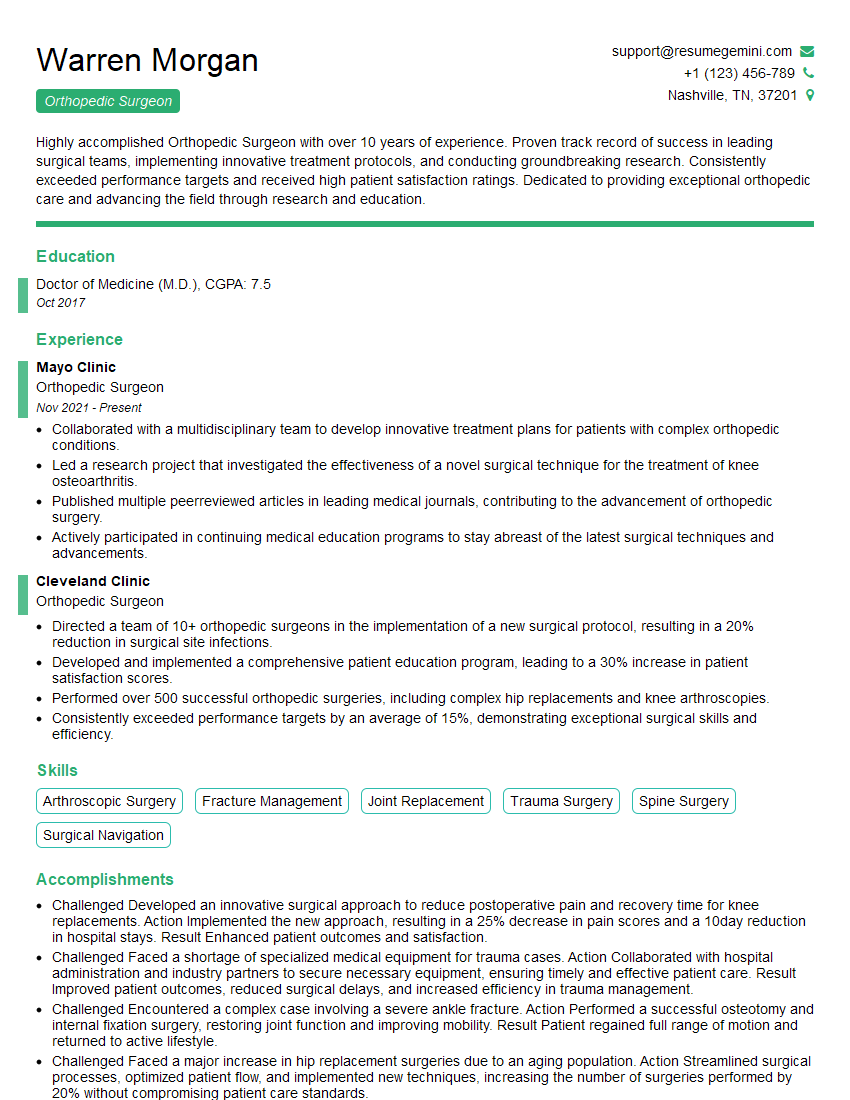
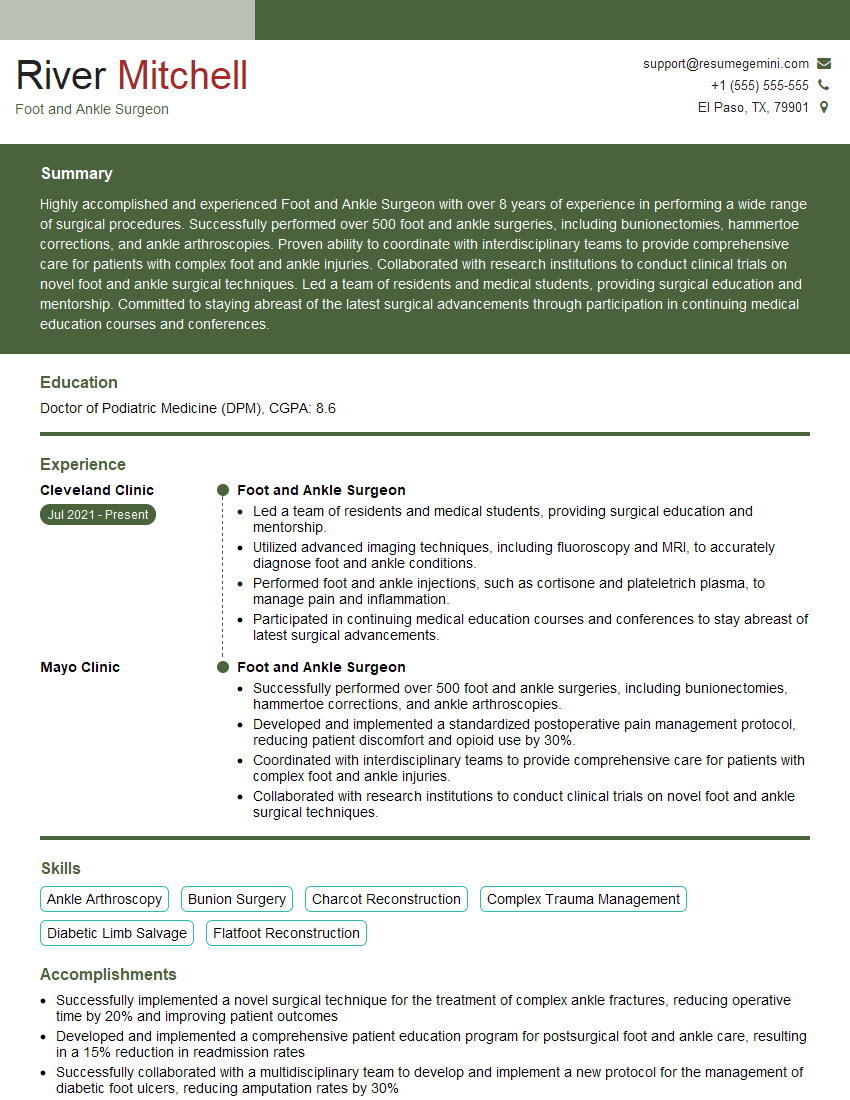
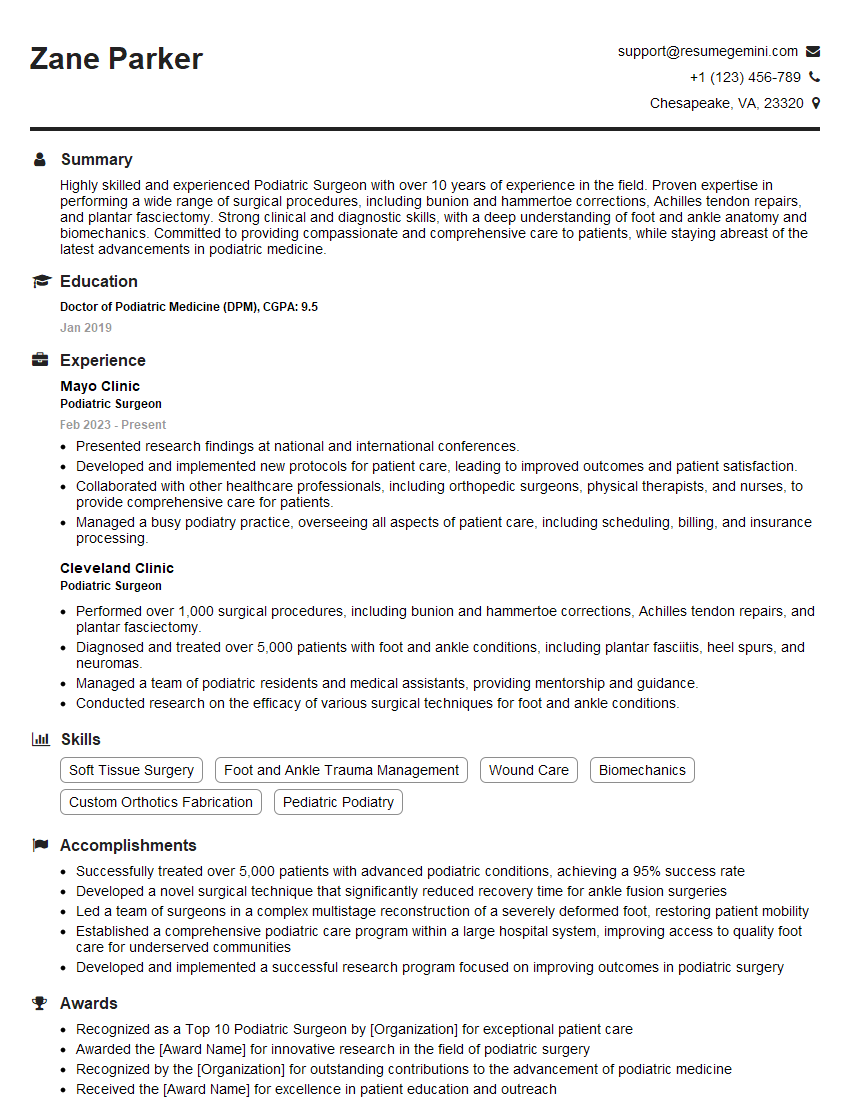
Mastering Total Ankle Replacement demonstrates a high level of expertise and commitment to this specialized field, significantly enhancing your career prospects. A well-crafted resume is crucial for showcasing your skills and experience to potential employers. Creating an ATS-friendly resume is key to getting your application noticed. ResumeGemini is a trusted resource to help you build a professional and impactful resume that highlights your qualifications. Examples of resumes tailored to Total Ankle Replacement are available to guide your resume creation process, ensuring you present yourself effectively to recruiters.
Explore more articles
Users Rating of Our Blogs
Share Your Experience
We value your feedback! Please rate our content and share your thoughts (optional).
What Readers Say About Our Blog
To the interviewgemini.com Webmaster.
Very helpful and content specific questions to help prepare me for my interview!
Thank you
To the interviewgemini.com Webmaster.
This was kind of a unique content I found around the specialized skills. Very helpful questions and good detailed answers.
Very Helpful blog, thank you Interviewgemini team.