Preparation is the key to success in any interview. In this post, we’ll explore crucial Troubleshooting and Repair of Solar Systems interview questions and equip you with strategies to craft impactful answers. Whether you’re a beginner or a pro, these tips will elevate your preparation.
Questions Asked in Troubleshooting and Repair of Solar Systems Interview
Q 1. Explain the process of troubleshooting a solar panel with low output.
Troubleshooting a solar panel with low output involves a systematic approach. Think of it like diagnosing a car with poor performance – you need to check various components one by one.
- Visual Inspection: Start by examining the panel for any obvious damage like cracks, hotspots (discolored areas), or debris accumulation. A simple cleaning can often resolve surprisingly significant performance issues.
- Check Wiring and Connections: Inspect all wiring for loose connections, corrosion, or damage. A loose wire can significantly reduce power output. I’ve seen many instances where a simple tightening resolved the problem.
- Measure Voltage and Current: Use a multimeter to measure the voltage and current at the panel terminals under full sunlight. Compare these readings to the panel’s specifications. A significant drop in either indicates a problem with the panel itself or its connections.
- Bypass Diodes: If the panel has bypass diodes (small components protecting the panel from shading), check their function. A faulty bypass diode will cause a section of the panel to be ineffective.
- Test with a Different Panel: If you suspect the panel is faulty, try swapping it with a known good panel to confirm. This isolates the problem.
- Shading Analysis: Shade even on a small portion of a panel can drastically reduce its overall output. Check for anything casting a shadow on the panel, even small leaves or branches.
For example, I once encountered a case where a bird had built a nest partially covering a panel, causing a 50% reduction in power output! A simple nest removal fixed the issue. Systematic troubleshooting allows you to pinpoint the exact cause of the low output quickly and efficiently.
Q 2. How do you diagnose a faulty solar inverter?
Diagnosing a faulty solar inverter involves a multi-step process combining visual inspection, data analysis, and testing. Think of the inverter as the ‘engine’ of your solar system; its proper functioning is critical.
- Check for Error Codes: Most inverters display error codes on their screen or through communication protocols. These codes often directly point to the fault, providing a specific diagnosis.
- Monitor AC Output: Use a multimeter to measure the AC output voltage and current. Compare these readings with the inverter’s rated output. A low or absent output often means a significant fault.
- Inspect for External Damage: Check the inverter for physical damage, loose connections, or signs of overheating (like discoloration or warping). Often, something as simple as a blown fuse can be the culprit.
- Check DC Input Voltage: Use a multimeter to measure the DC input voltage from the solar array. Low or absent DC input indicates an issue with either the array or the cabling between the array and the inverter.
- Communication Check: If the inverter has communication capabilities (e.g., WiFi or RS485), check for proper communication with the monitoring system. A lack of communication could indicate a fault in the inverter’s communication interface.
- Load Test: Carefully apply a known load to the inverter’s output to check for proper functioning under load. Improper operation under load can indicate internal problems.
For instance, I once diagnosed an inverter fault where an error code pointed to a failing internal component, requiring a replacement. However, in many cases, a simple connection check or fuse replacement is enough to solve the problem.
Q 3. Describe your experience with different types of solar inverters (string, micro, etc.)
I have extensive experience with various inverter types, each with its unique characteristics and troubleshooting approaches. Think of them as different ‘engines’ each with its own strengths and weaknesses.
- String Inverters: These are the most common type, connecting multiple solar panels in series (a string) and converting the DC power to AC. Troubleshooting focuses on checking the string voltage, current, and individual panel performance. If one panel is faulty within the string, it often impacts the entire string’s output. They are relatively inexpensive but less efficient when dealing with partial shading.
- Microinverters: Each panel has its own microinverter, which converts DC to AC individually. This eliminates the string limitation; shading on one panel does not affect the others. Troubleshooting is panel-specific, making it easier to isolate faulty panels. The cost is higher than string inverters.
- Power Optimizers: These sit between the panel and the inverter, maximizing the power output of each panel, even under partial shading conditions. Troubleshooting involves checking their communication with the inverter and individual panel voltage and current readings.
For example, I prefer microinverters for systems with significant shading due to their improved performance and easier troubleshooting. However, string inverters are still a cost-effective solution in many scenarios.
Q 4. What are the common causes of shading losses in a solar array?
Shading losses are a significant concern in solar array performance. Imagine a cloud covering part of a solar panel; the reduced sunlight drastically affects the overall output.
- Trees and Vegetation: Overhanging branches or nearby trees can cast significant shadows throughout the day, depending on the sun’s position.
- Buildings and Structures: Adjacent buildings or even parts of the house can shade the panels, especially during specific hours of the day.
- Other Solar Panels: In densely packed arrays, one panel can cast shadows onto another.
- Ground-Mounted Systems: Ground-mounted solar systems can be affected by shading from taller vegetation or nearby structures.
Identifying shading losses often involves observation and using specialized software tools that simulate sun paths throughout the year to highlight potential shading areas. Mitigation often involves pruning trees, adjusting panel angles, or using power optimizers or microinverters to minimize the impact of shading.
Q 5. How do you identify and resolve ground faults in a solar system?
Ground faults are serious safety hazards in solar systems. They involve a path for electricity to ground, creating a potential shock risk. Think of it as an unintended electrical shortcut.
- Ground Fault Detection Equipment: Use a ground fault detection device (GFDI) to identify the presence of a ground fault in the system. This device measures the current leakage to ground.
- Visual Inspection: Carefully inspect the grounding wire for any damage, corrosion, or loose connections. A faulty connection is a common cause of ground faults.
- Megger Test: Using a megger, a high-voltage insulation tester, measure the insulation resistance of cables and equipment to identify insulation breakdown, which can lead to ground faults.
- Isolate Sections: To locate the exact source of the fault, systematically disconnect sections of the system and retest until the ground fault disappears, thus pinpointing the affected area.
- Repair or Replace: Once the faulty component or connection has been identified, repair or replace it as needed and retest the entire system to ensure the fault is fully resolved.
Safety is paramount. Always disconnect the system from the grid and use appropriate PPE (personal protective equipment) when working on a suspected ground fault. In one instance, I traced a ground fault to a corroded grounding clamp, which, if left unaddressed, could have caused a significant safety hazard.
Q 6. Explain the safety procedures you follow when working on a solar system.
Safety is my top priority when working on solar systems. I follow strict procedures to avoid potential hazards: always treat the system as if it were energized.
- Lockout/Tagout (LOTO): Before commencing any work, I perform a proper lockout/tagout procedure to disconnect the system from the grid and prevent accidental energization. I’ll place the lock and tag on the main disconnect switch.
- Personal Protective Equipment (PPE): I always wear appropriate PPE, including safety glasses, gloves, and insulated tools, to protect myself from electrical shock, cuts, and other potential hazards. When on a roof, I would also employ fall protection gear.
- Arc Flash Protection: For high-voltage systems, arc flash protection is essential. It can involve specialized clothing and equipment to minimize the risks associated with electrical arc flash.
- Awareness of Surroundings: I’m always aware of my surroundings, including potential fall hazards, and other environmental factors that could pose a risk. Working on a hot roof can be dangerous and proper hydration and frequent breaks are imperative.
- System Knowledge: Before touching any component, I thoroughly familiarize myself with the system’s design, wiring, and any potential hazards. Understanding the system is critical for safe and efficient work.
Safety isn’t just a set of procedures; it’s a mindset. A careless mistake can have severe consequences, so attention to detail and adherence to safety protocols are non-negotiable.
Q 7. What are the different types of solar panel faults and how are they diagnosed?
Solar panels, like any other electronic device, can suffer various faults.
- Cell Damage: Physical damage to individual solar cells, such as cracks or hotspots, will significantly reduce power output. Visual inspection using infrared cameras can reveal hotspots. These require panel replacement.
- Bypass Diode Failure: A faulty bypass diode will cause a section of the panel to stop working. Electrical testing can determine the faulty diode.
- Wiring Issues: Problems in the panel’s internal wiring can affect its performance. Specialized testing is needed to identify these.
- Delamination: Separation of the panel’s layers reduces efficiency. Visual inspection or specialized testing can uncover this.
- Corrosion: Corrosion in connections or terminals leads to poor electrical contact. Cleaning or replacing the affected parts is needed.
Diagnosing these faults usually involves visual inspection, electrical testing with multimeters, and sometimes specialized equipment like infrared cameras. The choice of diagnostic method depends on the suspected fault and the available tools. For example, I once identified a delamination issue in a panel using an infrared camera, revealing a significantly lower temperature in the affected area. This allowed for targeted replacement rather than replacing the entire array.
Q 8. How do you test the voltage and current of a solar panel?
Testing the voltage and current of a solar panel is fundamental to diagnosing its health. We use a multimeter, a versatile tool that measures various electrical properties. First, ensure safety by disconnecting the panel from the system. Then, set the multimeter to measure DC voltage (because solar panels produce direct current). Place the probes on the positive (+) and negative (-) terminals of the panel, under direct sunlight. The reading you get should be the panel’s open-circuit voltage (Voc), which is the maximum voltage it produces without any load. To measure current (amperage), you need to create a load, either a resistive load specifically designed for this purpose or by connecting a dummy load. Set the multimeter to measure DC current. Connect the multimeter in series with the load to measure the current flowing through the panel. This will give you the short-circuit current (Isc), the maximum current the panel produces when shorted. Comparing these readings with the panel’s specifications helps determine if it’s performing optimally.
For example, a panel rated for 30V Voc and 5A Isc should provide readings close to these values under ideal sunlight. Significant deviations indicate a potential problem.
Q 9. Describe your experience with using multimeters and other diagnostic tools.
Multimeters are my bread and butter. I’m proficient with both analog and digital multimeters, using them to measure voltage, current, resistance, and continuity. Beyond multimeters, I regularly use clamp meters for non-invasive current measurements, infrared thermometers to detect hotspots indicating potential failures, and solar panel testers that provide comprehensive assessments of panel performance, including measuring diode characteristics and identifying shading issues. I’ve also utilized specialized software for data acquisition and analysis from inverters and monitoring systems to pinpoint intermittent issues or performance trends. For instance, a clamp meter helped me quickly identify a faulty wire in a string of solar panels by detecting an unexpectedly low current flowing through that particular section. The infrared thermometer has been crucial in identifying overheating inverters, preventing catastrophic failures.
Q 10. How do you interpret a solar system’s performance data?
Interpreting solar system performance data involves analyzing multiple metrics. Key indicators include daily energy production (kWh), voltage and current readings at various points in the system, inverter efficiency, and panel temperature. I look for trends and anomalies. For instance, consistently low daily energy production could point to shading issues, panel degradation, or inverter problems. A sudden drop in voltage could signal a problem in the wiring or a faulty component. I often use monitoring software to visualize this data graphically. This helps to quickly spot unexpected drops in power production. If a panel consistently underperforms compared to others in the array, that’s a clear indication for closer inspection. I correlate the data with weather conditions to rule out environmental factors.
For example, if the system consistently produces 10% less energy than expected, I would investigate panel shading, wiring issues, inverter health, or even soil conditions. I’d then use my diagnostic tools to pinpoint the specific problem area.
Q 11. Explain the process of replacing a damaged solar panel.
Replacing a damaged solar panel involves several steps prioritizing safety. First, always disconnect the system from the grid and the battery (if applicable) to prevent electrical shock. Next, I identify the faulty panel and its location within the array. Then, I carefully remove the clamps or connectors securing the panel’s wires, making sure to note their positions for easy reconnection. Depending on the mounting system, I’ll either detach the panel from the rails or remove the entire mounting structure. The new panel should match the specifications of the existing ones. Once the damaged panel is removed, I install the new panel, ensuring it’s securely mounted and properly aligned with the other panels. Finally, I reconnect the wiring, ensuring proper polarity, and visually inspect all connections before re-energizing the system. Throughout this process, I meticulously document every step.
Q 12. How do you troubleshoot issues with solar system wiring?
Troubleshooting solar system wiring begins with visual inspection for loose connections, damaged insulation, or signs of corrosion. I use a multimeter to check for continuity in the wiring, ensuring there are no breaks or open circuits. I also measure the voltage drop across various segments of the wiring to identify any unusual resistance indicating a problem. A clamp meter helps verify that the correct current is flowing through each section of the wiring. I systematically check each connection from the panels to the inverter and the inverter to the grid to eliminate any potential points of failure. For intermittent problems, I might use a thermal camera to detect heat signatures which could pinpoint a bad connection.
For instance, finding a significant voltage drop across a particular length of wire could highlight a high-resistance connection, potentially caused by corrosion or a loose terminal.
Q 13. What are the common causes of overheating in solar panels or inverters?
Overheating in solar panels is often caused by shading, dirt accumulation, or faulty bypass diodes. Shading prevents efficient energy conversion, causing the shaded cells to overheat. Dirt and debris block sunlight and trap heat. Bypass diodes, which protect the panel from shading, can fail, leading to localized overheating. In inverters, overheating commonly stems from poor ventilation, overloading, internal component failures, or inadequate cooling systems. High ambient temperatures can exacerbate these issues. Regular cleaning and proper ventilation are crucial preventative measures. Infrared thermal imaging is invaluable for detecting overheating hotspots.
Example: If I detect a significant temperature difference between panels, I suspect shading on the hotter panels. A consistently hot inverter requires a thorough inspection to find the root cause of overheating.
Q 14. How do you deal with a solar system experiencing arc faults?
Arc faults in solar systems are serious safety hazards. They are electrical discharges that can cause fires and damage equipment. The first step is to immediately disconnect the system from the grid and any batteries. Arc fault detection devices (AFDDs) are essential for detecting and interrupting these faults. I would then inspect the wiring, connectors, and components for any signs of arcing, such as burn marks or damage. A visual inspection is often followed by rigorous testing using appropriate safety equipment to check for continuity and insulation resistance. If the cause of the arc fault can’t be identified visually, I often use a specialized arc fault detection device to pinpoint the location of the problem more accurately. Repairing or replacing the damaged components is essential before re-energizing the system. Regular inspection and maintenance, including checking for loose connections and corrosion, can greatly reduce the risk of arc faults.
Q 15. Explain your experience with different types of solar mounting systems.
My experience encompasses a wide range of solar mounting systems, from the simplest roof-mounted systems to more complex ground-mounted and tracking systems. I’m proficient in working with various materials, including aluminum, steel, and even specialized composite materials designed for harsh environments. I understand the critical importance of proper system grounding and structural integrity to ensure safety and longevity. For example, I’ve worked extensively with tilt-up systems which offer optimized sun angle capture throughout the year, requiring precise calculations and installation to ensure even panel spacing and optimal performance. I’ve also installed ballasted systems, which are excellent for roofs unsuitable for penetration, requiring careful weight distribution calculations and ensuring stability against high winds. Finally, my experience includes working with tracker systems – single-axis and dual-axis – which maximize energy yield but require detailed understanding of motor controls and alignment. Proper installation is key across the board, from carefully checking every connection to ensuring the system is securely fastened and aligned for maximum energy efficiency.
Career Expert Tips:
- Ace those interviews! Prepare effectively by reviewing the Top 50 Most Common Interview Questions on ResumeGemini.
- Navigate your job search with confidence! Explore a wide range of Career Tips on ResumeGemini. Learn about common challenges and recommendations to overcome them.
- Craft the perfect resume! Master the Art of Resume Writing with ResumeGemini’s guide. Showcase your unique qualifications and achievements effectively.
- Don’t miss out on holiday savings! Build your dream resume with ResumeGemini’s ATS optimized templates.
Q 16. Describe your understanding of NEC codes related to solar installations.
My understanding of the National Electrical Code (NEC) articles related to solar installations is comprehensive. I am intimately familiar with the requirements for grounding, overcurrent protection, disconnecting means, and the various safety measures necessary to ensure compliance and prevent hazards. For instance, Article 690 specifically addresses photovoltaic (PV) systems, outlining the requirements for wiring, conduits, and equipment. I regularly refer to this code during the design, installation, and troubleshooting stages of every project to ensure complete adherence to safety standards. Understanding the NEC is not just about compliance; it’s about ensuring the system’s long-term safety and reliability and protecting against electrical hazards. I’ve faced situations where a previous installation didn’t meet NEC code, and my expertise allowed me to rectify the issues safely and effectively.
Q 17. How do you troubleshoot issues with communication between solar components?
Troubleshooting communication issues between solar components often involves a systematic approach. It starts with checking the physical connections – ensuring all cables are securely attached and undamaged. Then, I move on to examining the communication protocols, such as Modbus or RS485, to identify any errors in data transmission. Specialized tools like multimeters and communication analyzers can be used to check signal strength and data integrity. For instance, a weak signal might indicate a faulty cable or a problem with the communication interface on an inverter or solar panel. I would use a signal tracer and multimeter to isolate the problem. Sometimes, software glitches within the monitoring system can mimic hardware faults. Therefore, firmware updates or system reboots are also part of the troubleshooting process. I always document my findings, including the tests performed and their results, to trace the problem and prevent recurrence.
Q 18. What are the common causes of rapid degradation in solar panel performance?
Rapid degradation in solar panel performance can stem from several factors. Shading is a major culprit; even partial shading can significantly reduce the output of an entire string of panels due to the phenomenon of ‘bypass diodes’. Soiling from dust, bird droppings, or environmental pollutants also decreases efficiency. Another cause is potential induced degradation (PID), where voltage differences between the panel and ground lead to current leakage and reduced performance. Finally, manufacturing defects, such as micro-cracks or delamination, can also lead to rapid performance drops. Identifying the root cause requires a combination of visual inspection, electrical testing (measuring voltage and current under various conditions), and infrared thermography to detect hotspots which often indicate defects. Regular cleaning and maintenance, including checking for physical damage, are key to mitigating degradation.
Q 19. Describe your experience with battery storage systems in solar installations.
My experience with battery storage systems includes installations involving various battery chemistries like lithium-ion, lead-acid, and flow batteries. I’m familiar with the associated safety precautions, including proper ventilation, thermal management, and fire safety measures. I understand the importance of battery management systems (BMS) in monitoring voltage, current, and temperature to ensure optimal performance and prevent overcharging or discharging. Integration with solar inverters and home energy management systems (HEMS) is also a key aspect of my expertise. I’ve worked on projects where batteries were used for backup power, peak shaving, and time-of-use arbitrage, each requiring a different configuration and control strategy. Understanding the specific characteristics of each battery type and its impact on the overall system design is crucial for successful implementation and safe operation.
Q 20. How do you handle a situation where a solar system is not producing power?
When a solar system isn’t producing power, a systematic approach is essential. I begin with a visual inspection, checking for obvious issues like shading, debris on panels, or disconnected cables. Next, I would use a multimeter to check voltage and current at various points in the system, starting at the panels and working towards the inverter and the point of connection to the electrical grid. Low voltage at the panels might indicate a problem with the panels themselves, while low voltage at the inverter’s input could point to issues with cabling or the inverter itself. If the inverter shows errors, I consult the system’s manual and troubleshooting guides to determine potential fixes. This systematic approach, combined with detailed documentation and use of testing equipment, helps me isolate the problem quickly and efficiently, from simple issues like a tripped breaker to more complex faults that need specialized tools and techniques to troubleshoot.
Q 21. Explain your understanding of bypass diodes in solar panels.
Bypass diodes are crucial safety features within solar panels. Each solar cell within a panel is essentially a small diode; if one cell fails due to shading, cracking, or other damage, the entire panel won’t stop working. Bypass diodes allow current to bypass a faulty cell, preventing that single damaged cell from stopping the flow of electricity to the rest of the panel. Think of it like a detour on a highway: If one lane is closed, the bypass diodes create alternative pathways for the electrical current. This protects the panel from overheating and maximizes power output. The number of bypass diodes in a panel varies depending on its size and configuration, and their proper functioning is critical for maintaining optimal panel performance. Testing the bypass diodes involves checking the voltage drop across them under specific conditions – a malfunctioning bypass diode will exhibit higher than normal voltage drop.
Q 22. How do you diagnose and resolve issues related to the DC and AC sides of a solar system?
Diagnosing and resolving issues in a solar system involves understanding the distinct roles of the DC (Direct Current) and AC (Alternating Current) sides. The DC side, from the solar panels to the inverter, handles the raw power generated by the sun. The AC side, from the inverter to your home’s electrical panel, provides the power in a usable format.
DC Side Troubleshooting: Issues here often manifest as reduced power output. My diagnostic process begins with a visual inspection for shading, damaged panels (cracked cells, soiling), or loose connections. I use a multimeter to measure the voltage and current at each panel and string, identifying any underperforming components. For example, if one panel shows significantly lower voltage than others in a string, it’s likely faulty and needs replacement. I also check the DC disconnect box for tripped breakers or loose wiring.
AC Side Troubleshooting: Problems on this side usually involve power not reaching the home’s electrical system. I’d start by checking the inverter’s display for error codes, which usually pinpoint the specific issue. A multimeter is again crucial, this time to measure the AC voltage output of the inverter and check for proper connection to the panel. If the inverter seems fine, I’d then move to the breaker panel to verify proper operation of the solar system’s breaker. Finally, I’d check the wiring between the inverter and the panel for any damage or loose connections.
Resolution involves replacing faulty components, repairing or replacing damaged wiring, and ensuring proper grounding. Thorough testing with the multimeter after each repair step is vital to ensure the problem is resolved and the system is safe.
Q 23. What is your experience with using thermal imaging cameras for solar system diagnostics?
Thermal imaging cameras are indispensable tools for solar system diagnostics. They allow for non-invasive detection of hotspots, which are often indicative of underlying problems. Hotspots can be caused by various factors, including cell damage within a solar panel, poor connections (high resistance leading to heat generation), and shading.
My experience includes using thermal imaging cameras to identify failing solar panels long before noticeable performance degradation occurs. A thermal image shows temperature variations across the panel surface. A consistently hotter area compared to neighboring cells signals a potential problem. This allows for proactive panel replacement, preventing larger-scale system failures. I also use thermal imaging to quickly detect issues in combiner boxes and other junction points, where overheating can be a fire hazard.
For instance, I once used a thermal camera on a large solar array where a client reported a gradual decrease in production. The thermal image revealed a single panel with a significant hotspot. Replacing that single panel completely restored the system’s performance. Without the camera, identifying the faulty panel would have been far more time-consuming and costly, requiring individual testing of each panel.
Q 24. Explain your understanding of solar irradiance and its impact on system performance.
Solar irradiance refers to the amount of solar radiation reaching a particular surface area. It’s measured in watts per square meter (W/m²). It’s the primary driver of a solar system’s performance; higher irradiance leads to greater power output. Factors influencing irradiance include time of day, weather conditions (cloud cover, atmospheric haze), season, and geographical location.
Irradiance significantly impacts system performance because the power output of a solar panel is directly proportional to the irradiance it receives. On a sunny day with high irradiance, a system will generate its peak power. Conversely, cloudy conditions result in reduced irradiance and lower output. Understanding irradiance is crucial for accurately assessing a system’s performance, predicting energy production, and troubleshooting potential issues. For example, if a system is underperforming despite apparent clear conditions, it indicates an issue somewhere in the system itself (not irradiance), such as faulty panels or wiring.
Many solar monitoring software applications provide real-time irradiance data along with system performance figures, enabling efficient system analysis and diagnostics. This allows me to correlate changes in irradiance with the system’s response, aiding in pinpointing the root cause of any performance issues.
Q 25. How do you perform a thorough inspection of a solar system before starting repairs?
Before starting any repair, a thorough inspection is paramount for safety and efficiency. My inspection process follows these steps:
- Visual Inspection: This involves carefully examining all components, from the solar panels and wiring to the inverter and mounting hardware. I check for any visible damage, such as cracks, corrosion, loose connections, or signs of animal interference.
- Electrical Safety Check: I confirm the system is completely de-energized before any hands-on work. This involves using a non-contact voltage tester to verify the absence of voltage in all circuits. Safety is my top priority.
- Performance Data Review: If available, I review performance data from the monitoring system. This helps identify specific components or areas showing anomalies and guides my focus during the inspection.
- System Documentation: Reviewing system schematics and documentation is critical to understand the system’s design and components.
- Infrared Thermography: A thermal imaging camera aids in detecting hotspots and other thermal anomalies that may indicate hidden problems.
This comprehensive approach ensures that I have a complete understanding of the system’s condition before undertaking any repairs, maximizing the effectiveness of my work and minimizing the risk of further damage or safety hazards.
Q 26. Describe a challenging solar system repair you successfully completed.
One challenging repair involved a system experiencing intermittent power outages. Initial diagnostics pointed to the inverter, but replacing it didn’t resolve the issue. The system was located in a remote area with limited access, adding to the complexity. After meticulously checking all wiring and connections, I noticed a subtle discoloration on a section of underground wiring. Further excavation revealed damage to the wiring caused by rodent activity.
Repairing the underground wiring in this remote location required careful planning and execution. I had to coordinate with the utility company to safely de-energize the system and ensure safe access. The damaged section of the wiring was replaced with new, properly shielded cable. After successfully completing the repair and thorough testing, the intermittent power outages ceased, demonstrating the importance of meticulous inspection and understanding of potential environmental impacts.
Q 27. What software or tools do you use for solar system diagnostics and data analysis?
My toolkit for solar system diagnostics and data analysis includes a variety of software and hardware. For hardware, this includes multimeters (both DC and AC), clamp meters for current measurement, thermal imaging cameras, and non-contact voltage testers. These provide the raw data needed for effective troubleshooting.
Software plays a vital role in data analysis and system monitoring. I frequently use dedicated solar monitoring software (examples include Aurora, PVsyst, etc.) that provides detailed system performance data, including power production, voltage and current readings, and error logs. This data allows for in-depth analysis to pinpoint performance issues. I also utilize spreadsheet software (like Excel or Google Sheets) for organizing and analyzing data, creating reports, and tracking repairs. Furthermore, specialized software packages from inverter manufacturers often provide diagnostic tools and error code information.
Q 28. How do you ensure the safety of yourself and others while troubleshooting and repairing solar systems?
Safety is my absolute top priority when troubleshooting and repairing solar systems. My safety protocols include:
- Lockout/Tagout Procedures: Before working on any part of the system, I always implement proper lockout/tagout procedures to ensure the system is completely de-energized. This prevents accidental energization and electric shock.
- Personal Protective Equipment (PPE): I consistently use appropriate PPE, including safety glasses, insulated gloves, and arc flash protective clothing where necessary.
- Grounding and Bonding: I ensure all tools and equipment are properly grounded to prevent electrical shock. I also use grounding mats to protect myself from stray voltages.
- Working at Heights Safety: When working on elevated systems, I utilize fall protection equipment and comply with all relevant safety regulations.
- Awareness of Environmental Hazards: I’m vigilant about potential hazards like weather conditions, sharp objects, and potential exposure to hazardous materials.
- Teamwork and Communication: Whenever possible, I work with a colleague for added safety. Clear communication with colleagues and clients about the work being done is critical.
By adhering to these safety procedures and staying informed about evolving safety regulations, I ensure a safe working environment for myself and others involved.
Key Topics to Learn for Troubleshooting and Repair of Solar Systems Interview
- Solar Panel Diagnostics: Understanding voltage, current, and power measurements; identifying faulty panels through visual inspection and electrical testing; utilizing multimeters and other diagnostic tools.
- Inverter Troubleshooting: Diagnosing common inverter faults (e.g., communication errors, over-temperature protection, ground faults); understanding inverter configurations and settings; performing firmware updates and troubleshooting software issues.
- Battery System Analysis: Assessing battery health through voltage checks and load testing; identifying issues with battery connections and cabling; understanding battery chemistry and charging characteristics.
- Wiring and Cabling Inspection: Identifying damaged or corroded wiring; understanding grounding and bonding requirements; tracing circuits and locating faults using specialized tools.
- Safety Procedures: Understanding and adhering to relevant safety regulations and best practices when working with high-voltage DC systems; proper use of personal protective equipment (PPE).
- System Optimization and Performance: Analyzing system performance data; identifying energy losses and areas for improvement; understanding the impact of shading and other environmental factors on system output.
- Common Solar System Faults and Solutions: Developing a systematic approach to troubleshooting; understanding the root causes of common problems; applying logical problem-solving techniques to identify and rectify faults.
- Understanding Solar System Schematics and Drawings: Interpreting electrical diagrams and blueprints; effectively using schematic diagrams for troubleshooting purposes.
Next Steps
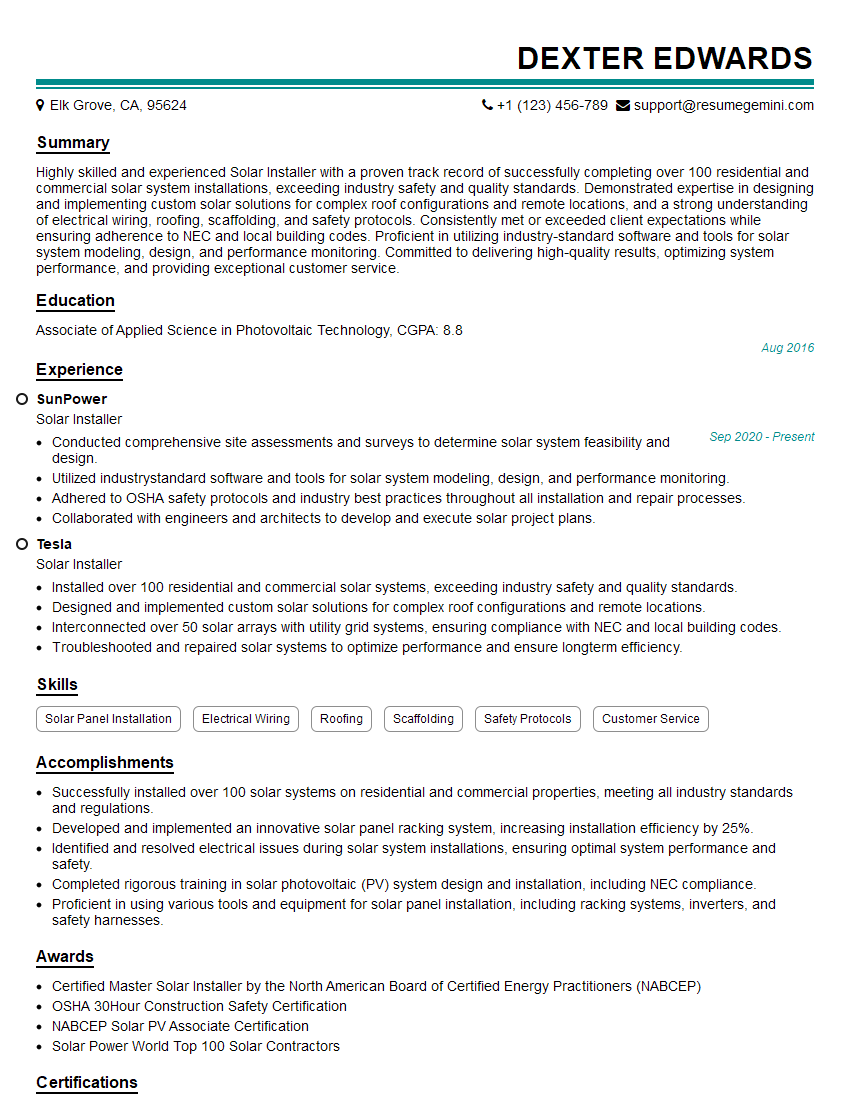
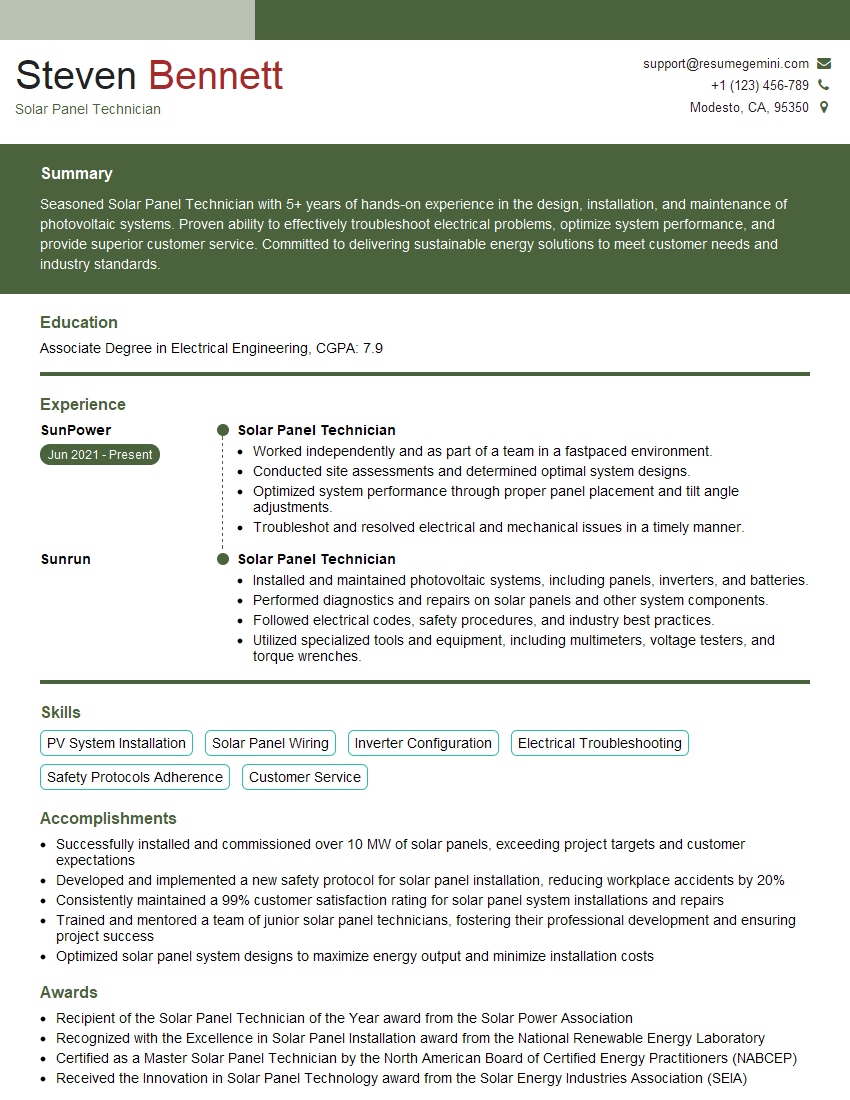
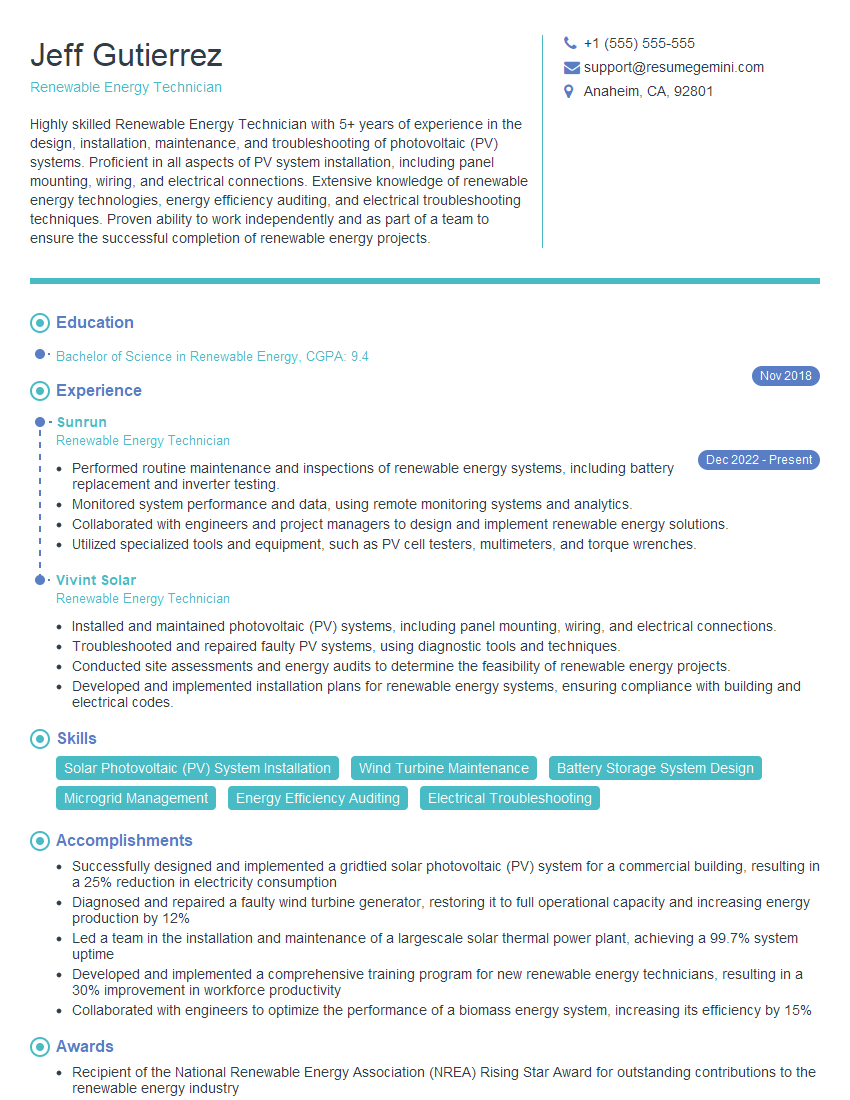
Mastering the troubleshooting and repair of solar systems is crucial for a successful and rewarding career in the rapidly growing renewable energy sector. This expertise opens doors to diverse roles with excellent earning potential and the satisfaction of contributing to a sustainable future. To maximize your job prospects, crafting a compelling and ATS-friendly resume is paramount. ResumeGemini is a trusted resource that can help you build a professional resume that highlights your skills and experience effectively. ResumeGemini provides examples of resumes tailored to Troubleshooting and Repair of Solar Systems to help guide you. Invest the time to create a strong resume – it’s your first impression with potential employers.
Explore more articles
Users Rating of Our Blogs
Share Your Experience
We value your feedback! Please rate our content and share your thoughts (optional).
What Readers Say About Our Blog
To the interviewgemini.com Webmaster.
Very helpful and content specific questions to help prepare me for my interview!
Thank you
To the interviewgemini.com Webmaster.
This was kind of a unique content I found around the specialized skills. Very helpful questions and good detailed answers.
Very Helpful blog, thank you Interviewgemini team.