The right preparation can turn an interview into an opportunity to showcase your expertise. This guide to Troubleshooting and Repairing PV Systems interview questions is your ultimate resource, providing key insights and tips to help you ace your responses and stand out as a top candidate.
Questions Asked in Troubleshooting and Repairing PV Systems Interview
Q 1. Describe the process for troubleshooting a low-performing PV array.
Troubleshooting a low-performing PV array involves a systematic approach. Think of it like diagnosing a car problem – you need to check each component to isolate the issue. First, you’d visually inspect the array for obvious problems like shading from trees, debris on panels, or damaged wiring. Then, I use a multimeter to measure the voltage and current at various points in the system: at the panel’s output, the combiner box, and finally, at the inverter input. A significant voltage drop between these points indicates a problem in that section. For instance, if the voltage at the panel is high but drops dramatically at the combiner box, we know there’s an issue with the cabling or connections between the two. Data loggers or monitoring systems are incredibly helpful in tracking system performance over time to identify trends and potential issues before they become major problems. A consistent, unexplained drop in power generation can be the first sign of things like micro-cracks in the panels or degradation of the inverter’s efficiency. Comparing the actual output to the expected output based on solar irradiance and panel specifications helps to quantify the underperformance and guide the troubleshooting process.
For instance, I once worked on a system where the output was consistently low. A visual inspection revealed some panels were partially shaded by overgrown trees. After trimming the branches, the system’s performance improved dramatically. In another case, a faulty connection at a combiner box was identified using a multimeter, and a simple repair restored the output to the expected level.
Q 2. How do you diagnose a faulty solar inverter?
Diagnosing a faulty solar inverter also uses a methodical approach, beginning with safety checks, of course! First, I’d check the inverter’s display for any error codes. Most inverters provide diagnostic information that can pinpoint the problem. If there are no codes, I’d check the input voltage and current using a multimeter, comparing these readings to the inverter’s specifications. Low input voltage could indicate issues with the PV array or its wiring, while low input current might suggest a problem within the array itself. The output voltage and current measurements would help to determine whether the inverter is processing the input power correctly. If these are significantly lower than expected, the inverter itself may be the culprit. Furthermore, I’d check the DC and AC disconnects to ensure they’re properly engaged. A visual inspection for any signs of overheating, burning, or damage is essential. I might also check the cooling fans for proper function; overheating is a common inverter failure mode.
For instance, one time an error code on the inverter indicated a ground fault. Tracing the wiring helped locate a corroded connection, resolving the problem. In another instance, an inverter’s performance gradually degraded over time. Monitoring its performance showed that its efficiency was declining, indicating the need for a replacement. This highlights the importance of regular system monitoring.
Q 3. Explain the different types of solar panel faults and their common causes.
Solar panel faults can range from minor to catastrophic. Common faults include:
- Cell damage: Physical damage like cracks, hotspots (caused by shading or cell defects) leading to reduced output or complete failure. This can be caused by hail, impacts, or manufacturing defects.
- Bypass diode failure: Bypass diodes are crucial in protecting the panel from shading. If one fails, a section of the panel will become ineffective, leading to power reduction. This is often indicated by hot spots.
- Delamination: Separation of the layers within the panel, leading to reduced efficiency and potentially hotspots. This can result from manufacturing flaws or harsh environmental conditions.
- Wiring problems: Loose or corroded connections within the panel or its junction box can cause reduced or intermittent output. This can arise from environmental exposure or poor initial installation.
- PID (Potential Induced Degradation): An electrochemical process that degrades the panel’s performance over time. This issue is more prevalent in certain environments and often shows as a gradual performance decrease.
Diagnosing these issues requires visual inspection using thermal imaging cameras (to detect hotspots), electrical testing with a multimeter, and sometimes specialized equipment to identify PID or delamination. Regular maintenance is key to catching these problems before they cause significant power loss.
Q 4. What safety precautions are crucial when working on a PV system?
Safety is paramount when working on PV systems. The first and most crucial step is to always de-energize the system. This includes disconnecting the DC side at the array combiner box and the AC side at the inverter and the main breaker. Lockout/tagout procedures must be strictly adhered to, preventing accidental re-energization. Always assume the system is live until verified otherwise. Personal protective equipment (PPE) is essential, including insulated gloves, safety glasses, and long-sleeved shirts. When working at heights, appropriate fall protection gear is required. Proper grounding is vital to prevent electrical shock. Never work alone; a second person should be present to provide assistance in case of an emergency. Furthermore, always consult the system’s safety data sheet and relevant safety regulations before commencing work.
Q 5. How do you test the functionality of a solar charge controller?
Testing a solar charge controller involves checking its voltage and current readings. First, ensure the controller is properly connected to the battery bank and the PV array. Using a multimeter, measure the battery voltage to confirm it’s within the operating range of the charge controller. Next, check the PV array voltage. A low PV voltage could indicate a problem with the array, while a high voltage might suggest a problem with the controller itself. Then, monitor the controller’s output current. If it’s not charging the battery appropriately, it may indicate a faulty controller. The controller’s display, if present, may show charging status, voltage, and current information. Comparing these readings to the specifications of the controller will indicate its functionality. Some advanced controllers have communication interfaces allowing for more comprehensive diagnostics. It’s essential to check the controller’s temperature as overheating can be an indicator of a problem.
For example, I once had a case where the controller wasn’t charging the battery. A simple inspection revealed that a fuse within the controller had blown, a quick replacement solved the problem. In another instance, low input current from the array pointed to a connection issue within the array itself, not a failing controller.
Q 6. Describe your experience with different types of solar panel technologies (monocrystalline, polycrystalline, thin-film).
My experience encompasses all three major solar panel technologies: monocrystalline, polycrystalline, and thin-film. Monocrystalline panels, made from single-crystal silicon, offer the highest efficiency and often have a sleek black appearance. However, they can be more expensive to manufacture. Polycrystalline panels, made from multiple silicon crystals, are less efficient but more cost-effective. They typically have a blueish appearance. Thin-film panels are made by depositing thin layers of photovoltaic material onto a substrate. They are lightweight, flexible, and suitable for specific applications, but generally have the lowest efficiency of the three. Each technology has its strengths and weaknesses, and the best choice depends on the specific application, budget, and aesthetic considerations. I’ve worked with all three types extensively and understand their unique characteristics, including their performance under different environmental conditions and their susceptibility to specific faults. For example, I’ve found that thin-film panels are more susceptible to degradation in high-temperature environments, while monocrystalline panels tend to maintain higher efficiency levels over their lifespan.
Q 7. What are the common causes of ground faults in a PV system?
Ground faults in PV systems are a serious safety hazard and can significantly reduce system performance. Common causes include:
- Damaged or corroded grounding wires: Exposure to the elements or poor installation can lead to deterioration of grounding wires, creating a high-resistance path to ground, or even a complete break.
- Faulty grounding connections: Loose or improperly made connections at the array, combiner box, inverter, or main panel can lead to ground faults.
- Insulation failure: Damaged or degraded insulation on wires can allow current to flow to ground, causing a fault. This is particularly problematic in damp or humid environments.
- Water ingress: Moisture intrusion into junction boxes or other components can create conductive paths to ground.
- Damaged equipment: A damaged panel, inverter, or other component could have internal shorts causing current leakage to the ground.
Detecting ground faults requires specialized equipment such as a ground fault detector. Regular visual inspections and thermal imaging can help identify potential problem areas. Proper grounding techniques during installation and regular system maintenance are crucial to prevent ground faults. A poorly grounded system is not only dangerous but also less efficient.
Q 8. How do you interpret data from a solar monitoring system?
Interpreting data from a solar monitoring system is crucial for maintaining optimal PV system performance. These systems typically provide real-time and historical data on various parameters. I start by looking at the overall system power output, comparing it to expected generation based on solar irradiance and system size. A significant drop suggests a problem.
Next, I delve into individual components. I check the voltage and current readings of each string of panels. Inconsistencies can pinpoint a faulty panel, a shading issue, or a problem with the wiring. I also monitor inverter performance, looking for any signs of clipping (indicating the inverter is overloaded), or low efficiency. The monitoring system often provides information on temperature, allowing me to identify potential overheating issues.
For example, if I see consistently low voltage from a specific string while other strings perform normally, I’d suspect a problem within that string – possibly a shaded panel or a faulty connection. The system’s historical data helps me identify trends and potential degradation over time, allowing for proactive maintenance.
Q 9. Explain the process of replacing a damaged solar panel.
Replacing a damaged solar panel involves careful steps to ensure safety and system integrity. First, I completely disconnect the DC side of the system, ensuring the system is de-energized. This is paramount for safety to prevent electric shock. Then, I use appropriate tools to remove the damaged panel, being mindful not to damage adjacent panels or the mounting system. This might involve unscrewing clamps or releasing connectors, depending on the mounting system.
Next, I carefully inspect the replacement panel to ensure it’s compatible with the existing system in terms of voltage, power output, and physical dimensions. Once confirmed, I securely mount the new panel using the same method as the old one, ensuring a strong and stable connection. Then I reconnect the DC wiring using the correct connectors and wire sizes, ensuring proper insulation. I carefully inspect the connections for any loose wires or damage.
Finally, I re-energize the system and monitor its performance using the monitoring system to verify that the new panel is generating as expected and there are no other issues. I document all work performed, including the date, panel replacement information and any observations made. This thorough approach ensures a safe and efficient repair.
Q 10. How do you troubleshoot problems related to DC and AC wiring in a PV system?
Troubleshooting DC and AC wiring in a PV system requires systematic approach and the use of proper safety equipment. I always start by de-energizing the relevant part of the system before commencing any work. For DC wiring, I use a multimeter to check for continuity and voltage drops along the strings. A significant voltage drop indicates a high resistance, which could be due to loose connections, corroded wires or a faulty cable. I visually inspect the wiring for any signs of damage, such as burns, cuts or insulation breakdown.
For AC wiring, I’ll check the voltage and current at various points in the AC side of the system using a multimeter. Low voltage or high current could indicate problems with the inverter, wiring, or the connection to the grid. I’d also measure the AC ground resistance to ensure proper grounding. I use specialized tools like a clamp meter to measure current without breaking the circuit.
For example, if I find a high resistance in a DC string, I would systematically check each connection within the string, cleaning and tightening them as needed. If the problem persists, I might need to replace a section of cable or even a faulty panel. Similarly, in the AC side, inconsistent voltage readings might point towards loose connections at the inverter or a problem with the grid connection. Proper documentation and use of safety precautions are vital throughout the troubleshooting process.
Q 11. What are the common causes of shading issues and how do you address them?
Shading issues are a common problem in PV systems, significantly reducing energy production. They occur when any object, like trees, buildings, or even other panels, casts a shadow over the solar panels. Even partial shading on a single cell within a panel can reduce the overall output of the entire panel, a phenomenon known as the bypass diode effect. The severity depends on the duration and extent of shading.
Addressing shading issues begins with a thorough site assessment. I identify shading sources and their impact throughout the day. This often involves studying satellite imagery, conducting on-site inspections at different times of the day, and sometimes using specialized shading analysis software. Solutions vary, from simple trimming of overhanging branches to more complex measures.
For example, if a tree is casting a shadow over part of the array, trimming the branches might be sufficient. If buildings are the cause, more significant changes like relocating the array or using a different panel orientation could be needed. In some cases, using microinverters or power optimizers can mitigate the impact of shading by allowing individual panels or even strings to operate independently.
Q 12. Describe your experience with different types of solar inverters (string, micro, power optimizers).
I have extensive experience working with various inverter types: string inverters, microinverters, and power optimizers. String inverters are the most common and cost-effective, connecting multiple panels in series. They’re simple to install but vulnerable to shading issues affecting the entire string. Microinverters, on the other hand, are located on each individual panel, optimizing power generation even with partial shading. This makes them more efficient in complex shading scenarios.
Power optimizers are a compromise between the two, offering some level of individual panel optimization but at a lower cost than microinverters. They sit between the panels and the string inverter, maximizing energy harvest from each panel even with partial shading. The choice of inverter type is crucial and depends on factors like budget, shading potential, and desired efficiency. For example, in a system with significant shading, microinverters or power optimizers would be superior to string inverters, despite the higher initial cost.
My experience includes troubleshooting various issues related to each type, from firmware updates and communication errors to power output discrepancies. Understanding the specific capabilities and limitations of each inverter technology enables me to select the best solution for each client and effectively diagnose and resolve problems.
Q 13. How do you identify and resolve issues related to battery storage in a PV system?
Troubleshooting battery storage in PV systems often involves monitoring voltage, current, and state of charge (SOC). Low SOC could be due to excessive discharge, poor charging, or battery degradation. I’d check the battery’s connections, ensuring clean and tight contacts. Loose connections can lead to voltage drops and increased resistance, hindering charging and discharging. I also inspect the battery management system (BMS) for any error codes or malfunction. The BMS is the brain of the battery system, monitoring and managing its operation.
Voltage readings outside the specified range indicate potential cell imbalance or faults within the battery pack. I use specialized tools to analyze individual cells within the battery pack if necessary. Temperature monitoring is also crucial. Overheating can severely shorten battery lifespan, while sub-optimal temperatures can reduce its efficiency. Regular inspection, maintaining a clean environment, and ensuring proper ventilation are vital. For example, if the BMS reports a cell imbalance, I would investigate to determine the cause – it could be a faulty cell or a problem with the BMS itself.
Depending on the diagnosis, the solution might involve replacing faulty cells, re-calibrating the BMS, addressing ventilation issues, or even replacing the entire battery pack. Regular maintenance, such as checking connections and monitoring performance using the system’s monitoring software, helps prevent major issues and prolongs battery life.
Q 14. What are the common causes of overheating in solar panels or inverters?
Overheating in solar panels or inverters can significantly reduce efficiency and shorten their lifespan. In solar panels, overheating often stems from poor ventilation, shading, or faulty bypass diodes. Excessive heat can damage the solar cells, reducing power output. I check for any obstructions blocking airflow around the panels. I also inspect the panels for any signs of physical damage or soiling that might impede heat dissipation.
In inverters, overheating can result from overloading, malfunctioning components, or poor ventilation. Overloading can happen when the inverter is drawing more power than its rated capacity. I check the inverter’s operating temperature using the monitoring system. Excessive heat can cause the inverter to shut down to prevent damage. I investigate potential causes for the overload, which could involve issues with the PV array or the loads on the AC side. For both panels and inverters, I ensure proper ventilation and shading mitigation. In some cases, I might recommend upgrading to a higher-capacity inverter or adding fans to improve cooling.
For example, if a panel is significantly hotter than others, I’d examine it closely for any signs of damage or shading. If an inverter consistently overheats, I’d investigate the load profile and the PV array’s output to see if it’s consistently overloaded.
Q 15. How do you perform a visual inspection of a PV system?
A visual inspection is the first and arguably most crucial step in PV system troubleshooting. It’s like a doctor’s initial examination – it helps identify obvious problems before diving into more complex diagnostics. I start by observing the entire system from a distance, checking for any obvious damage like broken panels, loose connections, or signs of shading. Then, I move closer for a detailed examination.
- Panel Inspection: I carefully examine each panel for cracks, discoloration, hotspots (areas significantly warmer than others, indicating cell damage), or debris accumulation (leaves, snow, bird droppings). I also check for any signs of physical damage, like hail impacts.
- Wiring and Connections: I inspect all wiring, checking for loose or corroded connections, damaged insulation, or signs of overheating. I pay particular attention to the connection points at panels, combiner boxes, and the inverter.
- Mounting System: I assess the structural integrity of the mounting system, looking for any signs of rust, loose bolts, or movement. A compromised mounting structure can lead to panel damage or even system failure.
- Inverter and other components: I examine the inverter for any signs of overheating, unusual noises, or error codes displayed on the screen. I also check the condition of the ground fault protection device (GFPD) and other safety equipment.
By thoroughly documenting these visual observations, I create a baseline for further troubleshooting. A good visual inspection often reveals the source of the problem immediately, saving valuable time and resources.
Career Expert Tips:
- Ace those interviews! Prepare effectively by reviewing the Top 50 Most Common Interview Questions on ResumeGemini.
- Navigate your job search with confidence! Explore a wide range of Career Tips on ResumeGemini. Learn about common challenges and recommendations to overcome them.
- Craft the perfect resume! Master the Art of Resume Writing with ResumeGemini’s guide. Showcase your unique qualifications and achievements effectively.
- Don’t miss out on holiday savings! Build your dream resume with ResumeGemini’s ATS optimized templates.
Q 16. What tools and equipment are essential for troubleshooting and repairing PV systems?
Troubleshooting and repairing PV systems require a specialized toolkit. Think of it like a surgeon’s operating room – you need the right instruments for the job. My essential toolkit includes:
- Multimeter: Essential for measuring voltage, current, and resistance. This helps pinpoint issues in the electrical circuitry.
- Clamp Meter: Measures current without interrupting the circuit, especially useful for measuring high currents in the PV array.
- Thermal Camera: Detects hotspots on panels or in connections, often an early indicator of problems like cell damage or loose connections.
- Insulation Resistance Tester (Megger): Measures the insulation resistance of cables, helping to identify potential grounding problems.
- Solar Irradiance Meter: Measures the amount of sunlight reaching the panels – this is crucial for assessing performance and identifying shading issues.
- Non-Contact Voltage Tester (NCVT): A critical safety tool to verify that circuits are de-energized before working on them.
- Screwdrivers (various types): For working with various panel and racking components.
- Safety Glasses and Gloves: Absolutely crucial for personal protection.
- Diagnostic Software and Communication Cables: Many inverters have built-in diagnostic capabilities which can be accessed with specific software and communication cables.
Beyond these core tools, specialized equipment might be needed depending on the specific task. For example, a lift or drone might be necessary for inspecting large roof-mounted systems.
Q 17. How do you ensure compliance with relevant safety standards when working on a PV system?
Safety is paramount when working on PV systems. It’s not just about following regulations; it’s about protecting myself and others. My approach adheres strictly to the relevant safety standards, such as those from OSHA (Occupational Safety and Health Administration) and NEC (National Electrical Code), alongside any manufacturer’s guidelines.
- Lockout/Tagout (LOTO) Procedures: Before working on any part of the system, I always perform a complete lockout/tagout procedure to ensure the system is completely de-energized. This prevents accidental energization during repairs.
- Personal Protective Equipment (PPE): I always wear appropriate PPE, including safety glasses, insulated gloves, and arc flash protective clothing when working near energized components.
- Grounding Procedures: Proper grounding is vital to prevent electrical shocks. I ensure all equipment and personnel are properly grounded before commencing work.
- Awareness of High Voltage: PV systems can operate at voltages that are lethal. I never assume a circuit is safe; I always double-check with my NCVT and follow LOTO procedures diligently.
- Working at Heights Safety: If working on elevated structures, I use appropriate fall protection equipment and adhere to all relevant safety regulations.
Regular safety training and adherence to best practices ensure a safe working environment and compliance with all applicable regulations.
Q 18. Explain your experience with using diagnostic software for PV systems.
I have extensive experience with various diagnostic software packages used for PV system monitoring and troubleshooting. These tools provide invaluable data and help in identifying problems that might be impossible to detect using only manual methods.
For example, I’ve used software like SMA Sunny Portal, SolarEdge Monitoring Portal, and others to monitor real-time performance data, such as power output, voltage, current, and frequency. This data helps identify anomalies or trends indicating potential issues. Some software packages also include advanced features like:
- String-level monitoring: Allows for identifying which specific string within the array is underperforming, significantly reducing troubleshooting time.
- Performance analysis and reporting: These tools generate reports that highlight potential problems, energy losses, and system efficiency, providing a comprehensive picture of the system’s health.
- Predictive maintenance capabilities: Some advanced software can predict potential equipment failures, allowing for proactive maintenance and preventing costly downtime.
My experience with these tools has enabled me to diagnose issues more efficiently, reduce downtime, and improve the overall reliability of PV systems. I am proficient in interpreting data from various software packages and correlating this data with visual inspections and other diagnostic tests to accurately pinpoint the source of any problem.
Q 19. Describe your experience with different types of PV system mounting systems.
I’m familiar with a wide range of PV mounting systems, each with its own strengths and weaknesses. The choice of mounting system depends on factors like roof type, ground conditions, and project requirements.
- Roof-mounted systems: These are commonly used for residential and commercial installations. I have experience with various types, including rail systems (often aluminum), roof-integrated systems, and ballasted systems. Each requires different installation techniques and considerations regarding roof structure integrity.
- Ground-mounted systems: I’ve worked on many ground-mounted systems, using different foundation types such as concrete footings, ground screws, and driven piles. These systems often involve larger-scale projects and require careful site assessment and engineering considerations.
- Tracking systems: I’ve worked with both single-axis and dual-axis tracking systems, which use motors to optimize panel orientation and maximize energy production. These systems require more sophisticated maintenance, often involving careful calibration and troubleshooting of mechanical components as well as electronics.
My experience allows me to properly assess the integrity and functionality of various PV mounting systems. This includes identifying potential structural weaknesses, corrosion issues, or component failure that could impact system performance or safety.
Q 20. How do you troubleshoot communication errors between the solar inverter and monitoring system?
Communication errors between the solar inverter and monitoring system are frustrating but often solvable. These errors can manifest as missing data, incorrect readings, or a complete loss of communication. My troubleshooting approach involves a systematic process:
- Check physical connections: The first step is to verify all physical connections between the inverter and the monitoring system (whether wired or wireless). Loose connections, damaged cables, or faulty ports can disrupt communication.
- Verify network settings: If the communication is network-based (Ethernet, Wi-Fi), I check the network settings on both the inverter and the monitoring system. This includes IP addresses, subnet masks, and gateway settings. Incorrect settings can prevent communication.
- Check for firmware updates: Outdated firmware on either the inverter or the monitoring system can cause incompatibility and communication issues. I check for and install the latest updates as needed.
- Consult documentation: The manufacturer’s documentation for both the inverter and monitoring system provides valuable information on troubleshooting communication errors and may offer specific diagnostic codes or steps.
- Examine inverter logs: Most modern inverters keep detailed logs of events, including communication errors. Analyzing these logs can pinpoint the cause and provide valuable troubleshooting information.
In cases where the problem persists, I may need to consult with the inverter or monitoring system manufacturer for further assistance. Sometimes, replacing a faulty communication module might be necessary.
Q 21. What are the common causes of arc faults in PV systems?
Arc faults, which are dangerous electrical events involving a sustained electrical arc, can occur in PV systems due to a variety of reasons. These faults can damage components, create fire hazards, and even lead to system failure. Common causes include:
- Degraded insulation: Over time, the insulation on PV cables or connectors can degrade due to UV exposure, moisture, or extreme temperatures, leading to arcing between conductors.
- Loose or corroded connections: Poor connections create high resistance and can generate heat, increasing the risk of arcing. Corrosion, often caused by moisture, worsens this problem.
- Damaged or faulty components: Defective panels, inverters, or other components can exhibit internal faults that create arcing.
- Bypass diodes malfunction: Bypass diodes are designed to allow current to flow around a shaded or damaged cell in a panel. If these diodes fail, arcing can occur.
- Micro-cracks in cells: Tiny cracks in solar cells can create conductive paths, increasing the risk of arcing.
Arc fault detection devices (AFDDs) are important safety features to mitigate this risk. They detect the characteristic electrical signature of an arc fault and shut down the system before significant damage can occur. Regular inspection and maintenance of the system are crucial in preventing arc faults.
Q 22. How do you perform an insulation resistance test on a PV array?
Insulation resistance testing on a PV array is crucial for ensuring safety and identifying potential faults. It measures the resistance between the conductive parts of the system and the ground, indicating how well the insulation is preventing leakage current. A low insulation resistance suggests a problem, like damaged insulation on a cable or a compromised panel.
The process typically involves using a megohmmeter (or insulation resistance tester) which applies a high voltage DC to the system and measures the resulting current leakage. We disconnect the array from the inverter and disconnect the positive and negative busbars, then use a megohmmeter to test the insulation resistance between each PV string (positive and negative to ground) and between strings. We usually test at 500 or 1000V DC. Acceptable resistance values vary depending on system design and local codes; values below a specific threshold typically necessitate repairs. For example, a reading of less than 1 MΩ on a 1000V system might signal damaged insulation or a ground fault that needs immediate attention. Always ensure safety precautions are in place like locking out and tagging out the system before testing.
For example, during a recent test, one string showed a very low resistance value (below 0.5 MΩ). This led to further investigation, revealing a cracked cable within the conduit leading to a partial ground fault. Replacing the damaged cable resolved the issue.
Q 23. Explain your experience with repairing damaged PV cables.
Repairing damaged PV cables requires careful attention to detail and adherence to safety regulations. The process depends on the nature and extent of the damage. Minor damage like superficial cuts on the outer sheath may only require replacing the affected section with heat-shrink tubing and sealant. However, more serious damage including internal wire breakage or significant sheath damage necessitates complete cable replacement.
Before any repair, I always disconnect the affected cable from the system, ensuring it’s properly locked out and tagged out. I then assess the damage. If a cable splice is required, I use crimping connectors specifically designed for photovoltaic applications, ensuring good mechanical and electrical contact. I always use UV-resistant materials, ensuring long-term durability of the repair. Each connection is carefully tested to verify proper continuity and resistance. For example, I had to replace a cable run underground that had been damaged by rodents. I carefully excavated the damaged area, removed the faulty section, and installed a new, appropriately sized and shielded cable following best practices for underground cable installations.
Q 24. How do you determine the root cause of a performance issue in a PV system?
Diagnosing performance issues in PV systems requires a systematic approach. I start with visual inspections, checking for obvious issues like shading, soiling, damaged modules, or loose connections. Then, I move to data analysis, examining the inverter’s performance data (DC power, AC power, voltage, current), using monitoring tools to identify trends and anomalies.
I use a combination of techniques. For example, I might use an infrared camera to identify hotspots in modules which could be indicative of cell failures or bypass diode activation. I’ll also measure string voltages and currents to isolate underperforming areas. If a module is suspected, I perform I-V curve tracing to accurately pinpoint the problem. Finally, environmental factors like ambient temperature and solar irradiance are factored in. A combination of these techniques often helps isolate the root cause. For example, I once encountered a system with low power output. Through analysis and visual inspection, I determined it was caused by several modules significantly shadowed by a recently grown tree, reducing their overall production.
Q 25. How do you handle emergency situations, such as electrical shocks, while working on a PV system?
Safety is paramount when working with PV systems. Emergency procedures for electrical shocks involve immediate action to minimize risk. The first step is ensuring the system is de-energized through proper lockout and tagout procedures before commencing any work. In the unlikely event of an electrical shock, immediate disconnection of the power source is critical.
We use personal protective equipment (PPE), including insulated gloves, safety glasses, and arc-flash suits where appropriate. It is critical that we follow all safety procedures and know exactly how to isolate every section of the system and use safety equipment. A first aid kit, emergency contact information and a plan for emergency response are essential. In the case of a shock, we immediately call for emergency medical services, administer appropriate first aid if possible, and ensure the area is secured to prevent further accidents. Regular safety training and updates are vital to maintaining high safety standards.
Q 26. What are your strategies for maintaining efficient troubleshooting and repair times?
Efficient troubleshooting and repair hinges on effective planning and a methodical approach. I use diagnostic tools that provide real-time data, allowing for quick identification of problem areas. A comprehensive understanding of the system’s design and components is essential for rapid diagnosis. Using a systematic approach, starting with the most probable causes and working my way through potential faults, is key. Thorough documentation speeds up future troubleshooting. Keeping a well-organized inventory of common spare parts reduces downtime. For example, keeping a record of past repairs is incredibly valuable. I use a digital system to store images, test results, and notes about work performed, facilitating rapid diagnosis on return visits or similar scenarios.
Q 27. Describe your experience with different types of grounding systems used in PV installations.
I’ve worked with various grounding systems in PV installations. These typically involve grounding the array, the inverter, and other system components to earth. The common methods include ground rods driven into the earth, grounding grids, and connection to existing building grounding systems.
The design and implementation of the grounding system should always comply with relevant electrical codes and standards. For example, grounding rods should be installed to the appropriate depth and spaced according to local regulations to ensure low impedance. I’ve encountered systems using both single-point grounding (connecting all ground wires to a single point) and multiple-point grounding (connecting ground wires at multiple points). The choice depends on various factors such as soil conductivity and the system design. Poor grounding can lead to safety hazards and potential system damage, hence careful design and regular inspections are essential.
Q 28. How do you document your troubleshooting and repair procedures?
Documentation is crucial for traceability, future reference, and accountability. I meticulously document all troubleshooting and repair procedures using a combination of methods. I create detailed written reports that include date, time, location, problem description, diagnostic steps undertaken, repair work carried out, parts used, test results, and any relevant photos or diagrams.
Digital tools are invaluable in maintaining organized records. I typically use software to create service reports, generate comprehensive test results, and store visual records. This digital system is readily accessible to the client and any subsequent service personnel, ensuring seamless continuation of work and transparency. A systematic approach to documentation, including standardized report templates, ensures consistency and clarity, reducing ambiguity and misunderstandings.
Key Topics to Learn for Troubleshooting and Repairing PV Systems Interview
- PV System Components and Functionality: Understanding the roles of solar panels, inverters, charge controllers, batteries (if applicable), and racking systems. Be prepared to discuss their individual functions and how they interact within the complete system.
- Electrical Safety Procedures: Demonstrate a thorough understanding of safe working practices, including lockout/tagout procedures, arc flash protection, and working at heights. Practical application includes describing your experience adhering to these safety protocols.
- Troubleshooting Techniques: Explain your approach to diagnosing system faults. This includes using multimeters, infrared cameras, and other diagnostic tools. Discuss your problem-solving methodology – systematic approaches are key.
- Common PV System Faults and their Solutions: Be ready to discuss common issues like shading effects, faulty wiring, inverter malfunctions, and panel degradation. For each, explain how you would identify the problem and implement a solution.
- DC and AC System Diagnostics: Differentiate between diagnosing issues in the DC (panels to inverter) and AC (inverter to grid) sides of the system. Highlight your experience with relevant testing methods for each.
- Performance Monitoring and Data Analysis: Explain how you would interpret data from monitoring systems to identify potential issues or performance degradation. Practical application could include describing your experience using monitoring software.
- Repair and Maintenance Procedures: Discuss your experience with replacing faulty components, performing preventative maintenance, and documenting repairs. Highlight your experience with different types of PV systems (residential, commercial, utility-scale).
- NEC Codes and Regulations: Demonstrate familiarity with relevant National Electrical Code (NEC) standards and safety regulations related to PV system installation and maintenance.
Next Steps
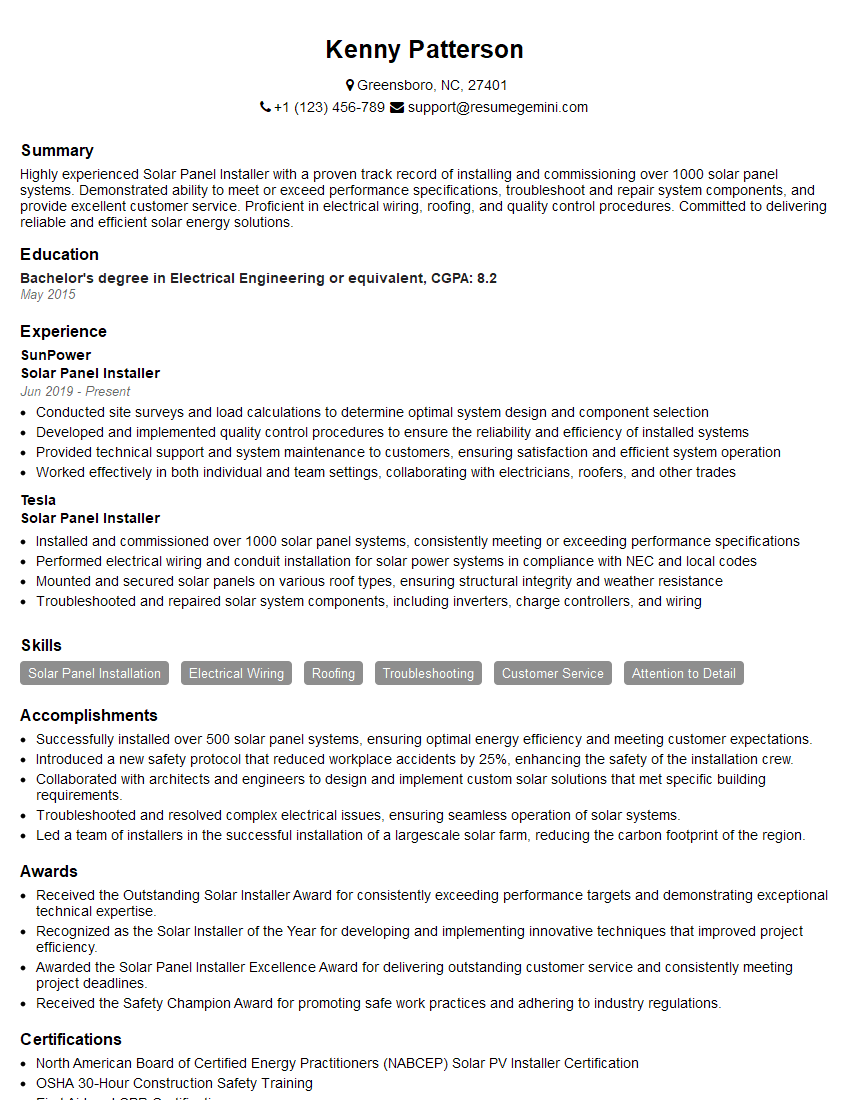
Mastering troubleshooting and repairing PV systems is crucial for career advancement in the rapidly growing renewable energy sector. It opens doors to highly skilled, well-compensated positions and demonstrates a commitment to a sustainable future. To maximize your job prospects, creating a strong, ATS-friendly resume is essential. ResumeGemini is a trusted resource that can help you build a professional and impactful resume, highlighting your skills and experience effectively. Examples of resumes tailored specifically to Troubleshooting and Repairing PV Systems are available, allowing you to adapt your own to best showcase your qualifications.

Explore more articles
Users Rating of Our Blogs
Share Your Experience
We value your feedback! Please rate our content and share your thoughts (optional).
What Readers Say About Our Blog
To the interviewgemini.com Webmaster.
Very helpful and content specific questions to help prepare me for my interview!
Thank you
To the interviewgemini.com Webmaster.
This was kind of a unique content I found around the specialized skills. Very helpful questions and good detailed answers.
Very Helpful blog, thank you Interviewgemini team.