The right preparation can turn an interview into an opportunity to showcase your expertise. This guide to Understanding of PV System Maintenance and Repair interview questions is your ultimate resource, providing key insights and tips to help you ace your responses and stand out as a top candidate.
Questions Asked in Understanding of PV System Maintenance and Repair Interview
Q 1. Explain the process of testing solar panel voltage and current.
Testing solar panel voltage and current is crucial for assessing their performance and identifying potential issues. We use a multimeter, a device that measures electrical properties. For voltage, we connect the multimeter’s probes to the positive (+) and negative (-) terminals of the panel, ensuring the multimeter is set to the appropriate DC voltage range (typically 20-1000V). The reading indicates the panel’s open-circuit voltage (Voc), which is highest when the panel isn’t supplying power. For current, we need to load the panel – simulating real-world conditions. This usually involves connecting a load resistor (calculated based on the panel’s specifications) or using a specialized solar panel tester. The multimeter, now set to the appropriate DC current range (typically 10A or higher), measures the short-circuit current (Isc) when the panel is fully shaded. Comparing these readings to the panel’s specifications helps determine its health and potential problems like shading or cell damage. For example, a significantly lower voltage or current than expected suggests a problem.
Practical Example: Let’s say a 300W panel should have a Voc of around 40V and an Isc of 9A. If we measure a Voc of only 30V and an Isc of 7A, it’s a clear indication that the panel is underperforming, possibly due to shading, dirt accumulation, or internal damage. Further diagnostics would be necessary.
Q 2. Describe the common causes of solar panel degradation and how to mitigate them.
Solar panel degradation, the gradual loss of power output over time, is an inevitable process, but its rate can be influenced by several factors. The most common causes include:
- Temperature: High operating temperatures accelerate degradation. Mitigation: Employing strategies like improved ventilation, increased spacing between panels, and using lighter colored mounting structures.
- UV radiation: Prolonged exposure to UV light can damage the panel’s encapsulant and cells. Mitigation: Using high-quality encapsulants with good UV resistance.
- Potential Induced Degradation (PID): This phenomenon, mainly affecting crystalline silicon panels, causes leakage current leading to power loss. Mitigation: Using ground fault protection, proper grounding, and selecting panels with better PID resistance.
- Shading: Even partial shading of a single cell can significantly reduce the output of the entire panel. Mitigation: Careful panel placement and orientation to avoid shading, and implementing bypass diodes within the panels.
- Microcracks: These tiny fractures in the cells can reduce performance. Mitigation: Careful handling during installation and cleaning, avoiding physical impact.
Regular monitoring of the system’s performance using performance monitoring software helps track degradation and pinpoint issues early.
Q 3. How do you diagnose a faulty inverter?
Diagnosing a faulty inverter involves a systematic approach. We first check for obvious signs like error codes displayed on the inverter’s screen. These codes often point towards specific problems. Then, we use a multimeter to measure the DC input voltage from the solar array and the AC output voltage from the inverter. Low or absent input voltage suggests problems with the array or cabling. Low or absent output voltage points towards inverter malfunction. We check the ground connection to make sure the system is correctly earthed. We also check for over-temperature protection – inverters often shut down at high temperatures. We inspect the breaker and fuses related to the inverter to see if any have tripped. If error codes persist or readings are significantly outside of normal operating parameters, further investigation may require advanced diagnostic tools, specialized testing, or contacting a qualified technician.
Example: If the inverter displays an ‘Over-Temperature’ error, we need to check the ambient temperature, the inverter’s ventilation, and ensure its cooling system is functioning correctly.
Q 4. What safety precautions are essential when working with PV systems?
Safety is paramount when working with PV systems. Always assume the system is energized unless you’ve explicitly de-energized it. Key precautions include:
- Lockout/Tagout (LOTO): This procedure ensures the system is completely disconnected and cannot be re-energized accidentally. Never bypass safety measures.
- Personal Protective Equipment (PPE): Always wear safety glasses, gloves, and appropriate footwear to protect yourself from sharp edges, UV radiation, and electrical hazards.
- Arc Flash Protection: High-voltage systems pose a significant arc flash risk. Consult relevant safety standards and use appropriate protective clothing if dealing with high-voltage circuits.
- Grounding: Ensure proper grounding of the system to prevent electric shock. Use insulated tools to avoid contact with live wires.
- Awareness of surroundings: Be mindful of potential fall hazards, especially when working on rooftops.
- Training and qualifications: Only qualified and trained personnel should work on PV systems. Never attempt repairs or maintenance without proper training.
Q 5. Describe the different types of solar panel faults and their troubleshooting methods.
Solar panel faults vary, and troubleshooting depends on the type of fault. Some common types include:
- Hot Spots: These are localized areas of high temperature, often caused by shading or cell damage. Troubleshooting: Visual inspection for discolored or unusually hot areas, infrared thermography can help locate them. Repair may involve replacing the affected panel.
- Bypass Diode Failure: If a bypass diode fails, it can lead to reduced power output. Troubleshooting: Measuring the voltage across individual bypass diodes using a multimeter. A failed diode will show a significantly higher voltage drop than others.
- Cell Cracks or Damage: Physical damage to cells can drastically reduce efficiency. Troubleshooting: Visual inspection, close examination of the panel surface, may require replacing the damaged panel.
- Delamination: Separation between the cells and the encapsulant reduces efficiency. Troubleshooting: Visual inspection for bubbling or lifting of the encapsulant layer.
- Wiring Issues: Loose connections or broken wires can interrupt current flow. Troubleshooting: Visual inspection, checking all connections and wiring for continuity and proper termination.
Systematic testing using multimeters, infrared cameras, and electroluminescence (EL) imaging are useful tools for diagnosing solar panel faults.
Q 6. How often should a PV system undergo preventative maintenance?
Preventative maintenance frequency depends on several factors, including environmental conditions (e.g., high humidity, dust, salt spray), and the system’s location. However, a good guideline is to perform visual inspections at least twice a year, usually in spring and fall. These inspections should check for soiling, debris, loose connections, and any signs of damage. A more thorough inspection, including performance testing using a multimeter and potentially advanced diagnostic tools, should be carried out annually or every other year. The frequency may increase in harsh environments.
Example: In desert areas with significant dust accumulation, more frequent cleaning might be required, maybe every 3 months.
Q 7. What are the key components of a PV system and their typical lifespan?
A typical PV system comprises several key components, each with its own lifespan:
- Solar Panels: 25-30 years (though some degradation is expected). Regular cleaning and avoiding physical damage extend their life.
- Inverter: 10-15 years. Overheating can significantly reduce lifespan. Regular maintenance, including cleaning and proper ventilation, are important.
- Mounting System: 25-30 years or more with proper corrosion protection. Material selection and proper installation significantly impact durability.
- Wiring and Cabling: 25-30 years or more, provided they are UV-resistant and properly installed. Exposure to moisture or rodents can shorten lifespan.
- Battery (if applicable): 5-15 years, depending on battery chemistry and use. Regular charge/discharge cycles and temperature management influence the lifespan.
It’s important to note that component lifespans are estimates, and actual lifespan varies based on several factors. A well-maintained system tends to extend the lifespan of all components significantly.
Q 8. Explain the importance of grounding in a PV system.
Grounding in a PV system is crucial for safety and system performance. It provides a low-resistance path for fault currents to flow to the earth, preventing dangerous voltage buildup on the system’s metallic components. This protects both personnel and equipment from electrical shocks and damage. Think of it as a safety valve for electricity. Without proper grounding, a fault could lead to equipment failure, fire hazards, or even electrocution.
A properly grounded system diverts fault currents away from sensitive equipment and people, thereby minimizing damage and ensuring safety. Grounding is typically achieved through a grounding rod driven into the earth, connected to the system’s grounding busbar, and then further connected to all metal parts of the PV array, mounting structure, and inverter. Regular inspection of the grounding system is essential for maintaining its integrity and effectiveness.
Q 9. How do you identify and rectify issues with solar panel wiring?
Identifying issues with solar panel wiring requires a systematic approach. First, I’d visually inspect all wiring for any signs of damage such as cuts, abrasions, loose connections, or corrosion. This often reveals obvious problems. Next, I’d use a multimeter to check for continuity and voltage at various points in the circuit, starting from the panels and working my way to the inverter. A break in continuity suggests a broken wire, while unexpected voltage drops can pinpoint a faulty connection or component.
For example, if a panel shows significantly less voltage than others in a string, it suggests a problem within that panel’s wiring or the panel itself. Similarly, a high resistance reading between two points indicates a poor connection. To rectify issues, I’d first disconnect the affected section of wiring. Then, I’d carefully repair or replace any damaged wiring, ensuring all connections are secure and properly crimped. Always ensure to adhere to safety procedures and disconnect the system from the power source before working on it.
Q 10. Describe your experience with using diagnostic tools for PV systems.
I have extensive experience utilizing various diagnostic tools for PV systems. These include multimeters for measuring voltage, current, and resistance; clamp meters for measuring current without breaking the circuit; thermal cameras to detect hot spots indicating faulty connections or cells; and specialized PV system analyzers that provide comprehensive system diagnostics. I’ve used these tools to troubleshoot everything from individual panel issues to inverter malfunctions and array-level problems.
For instance, a recent project involved a system producing lower-than-expected power. Using a thermal camera, we identified a hot spot on one panel, indicating a potential cell failure. This was confirmed by using a PV analyzer to isolate the problematic panel. Replacing this single panel restored the system’s performance. This highlights how diagnostic tools enable precise identification and resolution of problems, maximizing system efficiency and lifespan.
Q 11. How do you interpret the data from a solar system monitoring system?
Solar system monitoring systems provide invaluable data regarding a PV system’s performance. I interpret this data by analyzing key metrics such as daily and cumulative energy production, voltage and current levels, inverter efficiency, and panel-level performance. Deviations from expected values help identify potential problems. For example, a consistent drop in energy production over time might indicate aging panels or shading issues.
Analyzing this data allows for proactive maintenance and identifies potential issues before they escalate into major problems. Trends in performance help optimize system operation and predict future maintenance needs. I use this data to create reports that highlight system performance, identify areas for improvement, and recommend necessary maintenance or repairs. Software tools help automate data analysis and generate visual representations, making it easier to identify trends and anomalies.
Q 12. What are the different types of inverters and their applications?
Inverters are crucial components of a PV system, converting the DC power generated by solar panels into usable AC power for homes or businesses. There are several types, each with its applications:
- String Inverters: These are the most common type, connecting multiple solar panels in series (a string). They are cost-effective but less efficient if one panel in the string fails.
- Microinverters: Each panel has its own microinverter, optimizing individual panel performance and mitigating the impact of shading or panel failure. They are more expensive but offer higher efficiency and better monitoring capabilities.
- Power Optimizers: These devices are placed between the panels and the inverter, maximizing energy harvest from each panel. They offer a balance between cost and efficiency.
- Central Inverters: These large inverters are suitable for large-scale solar farms. They are highly efficient but less fault-tolerant than other types.
The choice of inverter depends on factors like system size, budget, desired efficiency, and the level of monitoring required. I select inverters based on a thorough assessment of the specific needs of each project.
Q 13. Describe your experience with repairing or replacing solar panels.
I have extensive experience in repairing and replacing solar panels. Repairing typically involves identifying the faulty component, whether it’s a cracked cell, a damaged bypass diode, or a broken connection. Minor repairs, like fixing a cracked frame, might be feasible, while more severe damage necessitates panel replacement. Replacing a panel is a straightforward procedure, involving disconnecting the wiring from the faulty panel, carefully removing the panel, and installing the new one, ensuring proper connections and grounding.
In one instance, a client experienced significantly reduced power output. After thorough diagnostics, we identified several panels with cracked cells due to hail damage. We replaced the damaged panels, resulting in a significant restoration of system performance. Safety is paramount during these procedures; working at heights requires appropriate safety measures, and always disconnecting the system from the power source before commencing any work.
Q 14. How do you handle a situation where a PV system is producing significantly less power than expected?
When a PV system underperforms, a systematic troubleshooting approach is crucial. I begin with a thorough inspection of the system, checking for obvious issues like shading, loose connections, dirty panels, or damaged wiring. Then, I utilize monitoring data to identify potential bottlenecks, whether at the panel, inverter, or array level. For example, a significant drop in voltage across a section of the array indicates a problem within that section.
Next, I deploy diagnostic tools such as multimeters, thermal cameras, and PV system analyzers to pinpoint the exact cause of the underperformance. If the problem lies with individual panels, replacement or repair may be necessary. If the inverter is faulty, it might need repair or replacement. Addressing issues with shading may involve tree trimming or adjusting panel orientation. The solution is always tailored to the specific root cause and involves a meticulous and systematic approach to ensure the system’s optimal performance.
Q 15. What are the common causes of overheating in PV systems and how to prevent them?
Overheating in PV systems is a serious concern, potentially leading to reduced efficiency, performance degradation, and even fire hazards. Several factors contribute to this. Think of a solar panel like a tiny power plant; if it can’t dissipate heat effectively, it’ll overheat.
- Shading: Partial shading of a panel creates hotspots where current is concentrated, leading to excessive heat. Imagine one cell in a panel being blocked by a bird – that cell will bear more of the load than its neighbours, overheating.
- Poor Ventilation: Inadequate airflow around panels restricts heat dissipation. This is particularly problematic in densely packed arrays or those mounted close to building surfaces.
- Faulty Connections: High resistance in wiring or connectors generates heat due to the Joule effect (I²R losses). This is like a kink in a garden hose restricting water flow and generating friction heat.
- Ambient Temperature: High external temperatures exacerbate the problem, making heat dissipation more challenging. Think of trying to cool down an oven during a heatwave – it’s harder than on a cool day.
Preventing overheating involves proactive measures. These include:
- Careful System Design: Optimizing panel spacing and orientation to maximise airflow and minimize shading.
- Regular Cleaning: Keeping panels free of dirt and debris improves their efficiency and reduces heat buildup.
- Proper Wiring and Connections: Using high-quality connectors and ensuring tight, clean connections minimizes resistive heating.
- Monitoring System Temperature: Employing monitoring systems to detect and alert us to unusual temperature increases.
Career Expert Tips:
- Ace those interviews! Prepare effectively by reviewing the Top 50 Most Common Interview Questions on ResumeGemini.
- Navigate your job search with confidence! Explore a wide range of Career Tips on ResumeGemini. Learn about common challenges and recommendations to overcome them.
- Craft the perfect resume! Master the Art of Resume Writing with ResumeGemini’s guide. Showcase your unique qualifications and achievements effectively.
- Don’t miss out on holiday savings! Build your dream resume with ResumeGemini’s ATS optimized templates.
Q 16. How do you clean solar panels effectively without causing damage?
Cleaning solar panels is crucial for maintaining optimal performance, but improper cleaning can cause damage. Think of it like washing a delicate window – you need a gentle touch.
Effective Cleaning Method:
- Soft Water: Use deionized or distilled water to avoid leaving mineral deposits that can spot the panels and reduce efficiency. Tap water can leave unsightly marks.
- Soft Brush or Sponge: A soft-bristled brush or a non-abrasive sponge is essential to avoid scratching the panels’ surface. Never use anything harsh, like steel wool!
- Gentle Approach: Avoid excessive scrubbing or pressure. Simply rinse the panels with the soft water to remove any loose dirt, followed by a gentle wipe using the brush or sponge. Less is more.
- Avoid Harsh Chemicals: Never use abrasive cleaners, detergents, or solvents. These can damage the anti-reflective coating on the panels, reducing their efficiency.
- Safety First: Always prioritize safety. If the panels are on a roof, use appropriate safety harnesses and fall protection equipment. If you’re unsure, hire a professional.
Regular cleaning, ideally every 3-6 months (depending on the climate and environment), is crucial for maintaining peak performance. A dirty panel is a less efficient panel.
Q 17. Explain the importance of regular inspection and cleaning of PV systems.
Regular inspection and cleaning of PV systems are paramount for ensuring optimal performance, safety, and longevity. Think of it as preventative maintenance for your energy system.
Importance of Regular Inspection:
- Early Detection of Faults: Regular checks allow us to identify issues like loose connections, damaged wiring, or module failures early, preventing further damage and ensuring continued operation.
- Performance Monitoring: By monitoring performance data, we can identify gradual efficiency drops resulting from dirt accumulation, shading issues, or other problems.
- Safety Concerns: Inspections help identify potential safety hazards, such as damaged modules, exposed wiring, or grounding problems, ensuring a safe operating environment.
Importance of Regular Cleaning:
- Efficiency Improvement: Clean panels absorb more sunlight, leading to improved energy production and higher system output. Dirt accumulation acts like a filter, reducing sunlight reaching the cells.
- Reduced Heat Buildup: Clean panels are less prone to overheating as the dirt layer does not trap heat.
- Longevity of System: Regular cleaning extends the lifespan of the panels by preventing excessive heat damage and the build-up of corrosive elements.
Q 18. Describe your experience with different types of solar panel mounting systems.
I have extensive experience with various solar panel mounting systems, including:
- Roof-mounted systems: These are the most common, utilizing various methods like rail systems, integrated racking, and ballast systems. I’m experienced in installing and maintaining all of these, considering factors like roof type and load capacity.
- Ground-mounted systems: These systems use ground-mounted racks that are either fixed or adjustable, depending on the client’s needs and local regulations. I’ve worked on projects involving large-scale ground mounts for commercial applications.
- Building-integrated photovoltaics (BIPV): These systems integrate solar panels directly into the building’s structure, serving as building materials such as roofing tiles or façade elements. I’ve handled the installation and maintenance of BIPV systems that require specialized handling and care.
My experience covers aspects from initial site assessment and design considerations to installation, ensuring structural integrity and adherence to safety regulations. Each system presents unique challenges; for instance, ground mounts require detailed soil analysis, while BIPV systems necessitate close coordination with the building architect.
Q 19. What are the common causes of arc faults in PV systems and how to mitigate them?
Arc faults in PV systems are dangerous electrical events that can cause fires and equipment damage. They involve a sudden, high-current discharge across an insulator, like a spark. Think of it as a short circuit on a much larger scale.
Common Causes:
- Degradation of Insulation: Ageing, weathering, or physical damage to wire insulation can lead to arcing. Think of cracked rubber on an old car’s wire.
- Loose Connections: Poorly connected components create high resistance, causing heat buildup and eventual arcing. It’s like a loose bulb that gets too hot.
- Moisture Ingress: Water entering connectors or enclosures creates conductive pathways, leading to arcing. Moisture is the enemy of electrical systems.
- Bypass Diodes Failure: Faulty bypass diodes can cause significant current imbalances, resulting in arcing. These are safety devices, so their failure is critical.
Mitigation Strategies:
- Regular Inspection and Maintenance: Visual inspection of components, paying attention to signs of degradation or damage. Tightening all connections reduces the risk of arcing.
- Use of Arc Fault Circuit Interrupters (AFCIs): These devices can detect and interrupt arc faults, preventing fires. They are a key safety component for any PV system.
- Proper Grounding and Bonding: Effective grounding protects against voltage surges and minimizes the risk of arcing.
- High-Quality Components: Using high-quality components with reliable insulation ensures system durability and reduces the risk of failure. Don’t cut corners on quality.
Q 20. Describe your experience with working at height and with fall protection equipment.
Working at height is an inherent part of PV system maintenance and repair. Safety is paramount, and I have extensive experience and training in working safely at heights. I am always careful and use appropriate safety equipment. I know that complacency is the enemy of safety.
My experience includes:
- Proper Use of Fall Protection Equipment: I’m proficient in using harnesses, lanyards, and anchorage points to ensure a secure working environment at all times. The type of equipment depends on the specific work task and environment.
- Risk Assessment and Planning: Before any work at height, I conduct a thorough risk assessment, identifying potential hazards and implementing appropriate control measures. This includes checking the structural integrity of the roof or work surface.
- Awareness of Environmental Conditions: I carefully consider weather conditions, such as wind speed and rain, and postpone work if conditions are unsafe. Working in hazardous conditions should always be avoided.
- Rescue Plan: Every job at height includes a detailed rescue plan in case an emergency arises, considering the location, equipment, and available resources. One should never work alone at height.
Safety is not just a procedure, it’s a mindset. My experience ensures I approach each job with a comprehensive understanding of potential hazards and the necessary precautions. I always prioritize safety and adherence to best practices, and I am certified in working at height.
Q 21. How do you ensure compliance with relevant safety standards and regulations?
Compliance with relevant safety standards and regulations is crucial for the safe and efficient operation of PV systems. I ensure compliance through several measures. It is not just about meeting the minimum requirements, but exceeding them whenever possible.
My Compliance Measures Include:
- Staying Updated on Regulations: I regularly review and stay abreast of all relevant codes, standards, and best practices applicable to PV system installation, operation, and maintenance, including those of relevant governing bodies.
- Adherence to Codes: I always adhere to local and national electrical codes and regulations, including those relating to grounding, wiring, and safety procedures.
- Documentation: I maintain detailed records of all inspections, maintenance activities, and repairs conducted, including any non-conformances found and remedial actions taken. This ensures clear traceability.
- Proper Training and Certification: I’m committed to ongoing professional development and hold relevant certifications to demonstrate my competency and commitment to safety and best practices.
- Use of Approved Equipment: I always use equipment that meets relevant safety standards and is appropriately tested and maintained.
Compliance is not just a box to tick; it’s a commitment to ensure the safety of myself, colleagues, and the public, and the long-term reliability of the PV systems I work on.
Q 22. Explain the difference between DC and AC components in a PV system.
A photovoltaic (PV) system has two main voltage types: Direct Current (DC) and Alternating Current (AC). Think of it like this: the solar panels themselves generate DC electricity, like a battery. This DC power needs to be converted to AC power, which is what we use in our homes and businesses.
- DC Components: These are the parts that deal with the direct current produced by the solar panels. This includes the solar panels themselves, the combiner boxes (which consolidate power from multiple panels), and the DC wiring connecting everything to the inverter. Imagine them as the raw energy producers and initial conduits.
- AC Components: These handle the alternating current, the electricity usable by appliances. This includes the inverter (which converts DC to AC), the AC wiring, and the circuit breaker panel connecting to the main grid or the house’s electrical system. These are the components that deliver usable power.
Understanding the difference is crucial for troubleshooting. A problem in the DC side might manifest as a lower overall system output, while an AC side issue might lead to problems with power reaching your home or the grid.
Q 23. How do you identify and handle electrical hazards in a PV system?
Electrical hazards in PV systems are serious and require strict adherence to safety protocols. High voltages, both DC and AC, are present, and improper handling can lead to electrocution, arc flash, or fire.
- Identification: We identify hazards through a thorough visual inspection, checking for damaged wiring, loose connections, exposed conductors, and signs of overheating. We also use specialized equipment like voltage detectors and insulation testers to confirm the absence of voltage before working on any part of the system.
- Handling: Our approach involves using appropriate Personal Protective Equipment (PPE), including insulated gloves, safety glasses, and arc flash suits when working with higher voltage systems. We always follow lockout/tagout procedures to de-energize circuits before any maintenance or repair work. We never assume a circuit is de-energized; we always double-check with our test equipment. Working at height requires additional fall protection measures.
For example, before working on a combiner box, we would first use a voltage detector to ensure it is de-energized. Then, we use a lock-out/tag-out procedure to physically prevent the system from being accidentally turned back on. Only then do we begin our inspection and repairs.
Q 24. Describe your experience with working on both grid-tied and off-grid PV systems.
I have extensive experience working on both grid-tied and off-grid PV systems. The key difference lies in how they interact with the electrical grid.
- Grid-Tied Systems: These systems are connected to the utility grid. They feed excess power back to the grid when generation exceeds consumption, and draw power from the grid when production is insufficient. Maintenance on these systems typically involves monitoring performance, addressing panel faults, and ensuring proper grid interconnection. I’ve worked on numerous installations, ranging from small residential setups to larger commercial projects.
- Off-Grid Systems: These systems are independent of the utility grid. They typically include battery banks to store energy for use at night or during periods of low sunlight. Maintenance is more complex, involving monitoring battery health, checking charge controllers, and ensuring the proper functioning of backup generators (if any). I have experience maintaining remote off-grid systems, where problem-solving is critical due to limited accessibility. This often involves a deeper understanding of battery chemistry and energy management strategies.
In both cases, my approach always prioritizes safety and efficiency. I meticulously document all procedures, ensuring compliance with relevant safety codes and regulations.
Q 25. What are the common causes of micro-cracks in solar panels and their effect on performance?
Micro-cracks in solar panels are tiny fractures in the solar cells, often invisible to the naked eye. They significantly reduce the panel’s efficiency and output.
- Common Causes: These cracks can result from various factors including physical damage during installation (dropping panels), hail, thermal stress (expansion and contraction due to temperature changes), and manufacturing defects. Even minor impacts can propagate micro-cracks over time.
- Effect on Performance: Micro-cracks disrupt the flow of electrons, reducing the amount of electricity the panel can generate. The effect can range from a slight reduction in output to a complete failure of the cell, depending on the severity and location of the crack. Often, the reduction is gradual, and the owner may not notice a significant drop in performance until the problem is severe.
Infrared (IR) thermography is a valuable tool for detecting micro-cracks. By detecting temperature variations across the panel’s surface, it can pinpoint faulty cells even before a visual inspection reveals the damage. Electroluminescence (EL) testing is another method that helps visualize these defects.
Q 26. Explain the procedure for performing a thorough visual inspection of a PV system.
A thorough visual inspection is the cornerstone of PV system maintenance. It’s a systematic approach to identify potential problems before they escalate.
- Overall System Assessment: Start with a general overview of the entire system, checking for signs of damage, debris accumulation, or unusual conditions.
- Panel Inspection: Examine each solar panel individually, looking for cracks, discoloration, hotspots (indicated by excessive heat), soiling, or physical damage. Look carefully at the edges and corners for any signs of breakage.
- Wiring and Connections: Inspect all wiring for damage, loose connections, corrosion, and proper insulation. Check for any signs of overheating or burning. Pay special attention to all the junction boxes.
- Mounting System: Assess the mounting system for stability and corrosion. Look for loose bolts, cracks, or rust. Ensure proper grounding is in place.
- Inverter and other components: Examine the inverter, charge controller (in off-grid systems), and other components for signs of damage, overheating, or unusual sounds. Check for any error codes displayed on the equipment.
- Documentation: Take photos or videos of any issues identified. Record the date, time, and location of the inspection along with detailed descriptions of any findings.
This detailed visual inspection helps to identify potential problems early, enabling proactive maintenance to prevent costly repairs later on.
Q 27. How do you manage and prioritize multiple maintenance tasks?
Managing multiple maintenance tasks requires a systematic approach.
- Prioritization: I prioritize tasks based on their urgency and impact. Safety issues always take precedence. Tasks impacting system performance are next, followed by routine maintenance. I utilize a task management system to track and organize all scheduled and unscheduled maintenance activities.
- Scheduling: I create a schedule that balances preventative maintenance with addressing immediate issues. Predictive maintenance techniques, such as using system monitoring data to anticipate potential problems, enhance efficiency.
- Resource Allocation: I coordinate resources, including personnel, tools, and spare parts, to ensure efficient execution of tasks. This also involves ensuring I have the necessary permits and safety certifications for the specific work.
For example, a faulty inverter causing significant power loss would take priority over a routine cleaning of solar panels. I use a system with color-coded flags to mark urgency (red=critical, yellow=high priority, green=routine) in my schedule. This helps prioritize work and ensures efficient allocation of resources.
Q 28. Describe your experience with documenting maintenance activities and generating reports.
Accurate and detailed documentation is essential for efficient maintenance and system longevity.
- Maintenance Logs: I maintain comprehensive logs of all maintenance activities, including the date, time, task performed, materials used, personnel involved, and any findings or recommendations. This includes documenting any repairs, replacements, or adjustments made to the system.
- Performance Data: I collect performance data, such as system output, inverter efficiency, and energy production, to track system performance over time. This is crucial for identifying trends and detecting potential problems.
- Reporting: I generate reports summarizing the maintenance performed, highlighting any issues identified, and making recommendations for future maintenance or repairs. These reports are important for informing clients about the state of their PV systems and guiding future decisions regarding system upgrades or replacements.
I use software to help with data analysis and report generation, ensuring both efficiency and accuracy. Clear and concise reporting assists in effective communication with clients and facilitates a smooth and transparent process.
Key Topics to Learn for Understanding of PV System Maintenance and Repair Interview
- Safety Procedures and Regulations: Understanding OSHA standards, lockout/tagout procedures, and safe work practices in PV system environments.
- PV Module Inspection and Testing: Practical application of visual inspection techniques, IR thermography, and electroluminescence imaging to identify faulty modules.
- Inverter Operation and Troubleshooting: Diagnosing inverter malfunctions, understanding error codes, and performing necessary repairs or replacements.
- DC and AC Wiring Systems: Troubleshooting wiring issues, understanding grounding and bonding, and ensuring compliance with electrical codes.
- Performance Monitoring and Data Analysis: Utilizing monitoring systems to track PV system performance, identifying anomalies, and optimizing energy production.
- Battery Storage System Maintenance (if applicable): Understanding battery chemistry, charging/discharging cycles, and safety procedures related to battery systems.
- Preventive Maintenance Schedules and Procedures: Developing and implementing effective maintenance plans to maximize system lifespan and efficiency.
- Common PV System Faults and their Solutions: Troubleshooting various system failures, including shading issues, connection problems, and component degradation.
- Documentation and Reporting: Maintaining accurate records of maintenance activities, inspections, and repairs.
- Understanding of different PV technologies: Monocrystalline, polycrystalline, thin-film, and their specific maintenance needs.
Next Steps
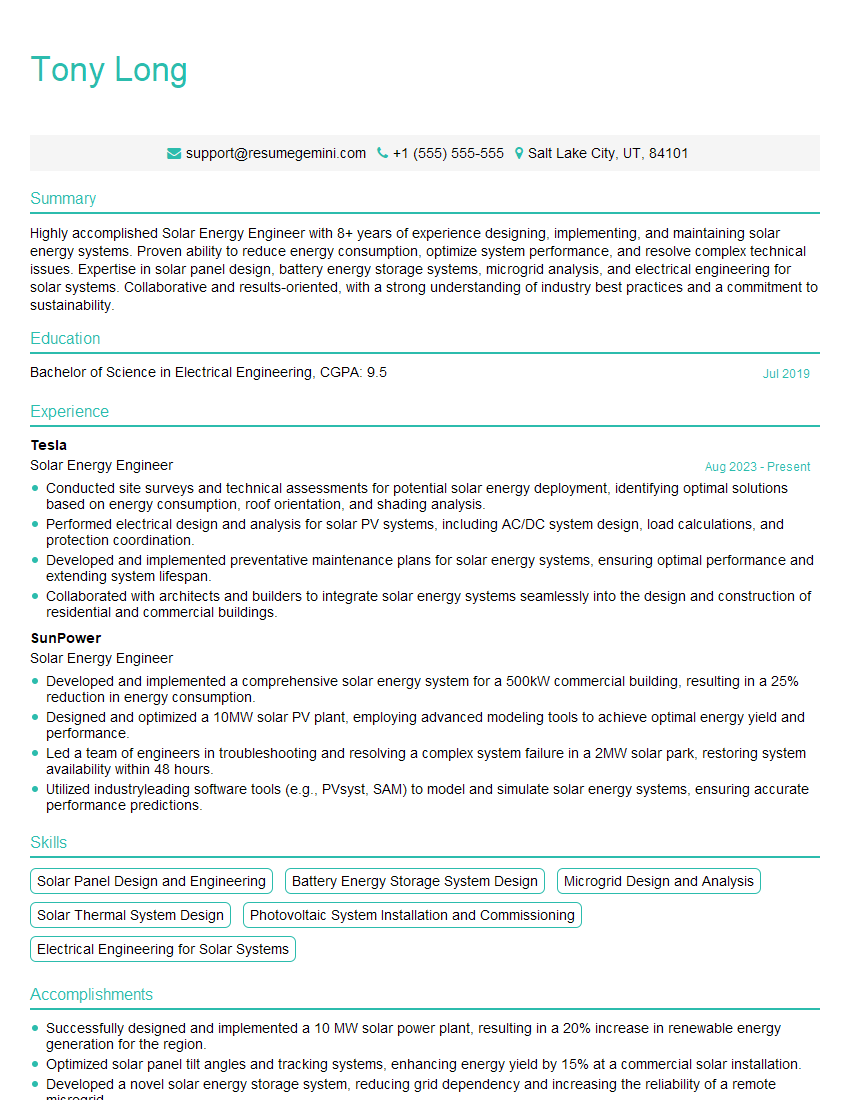
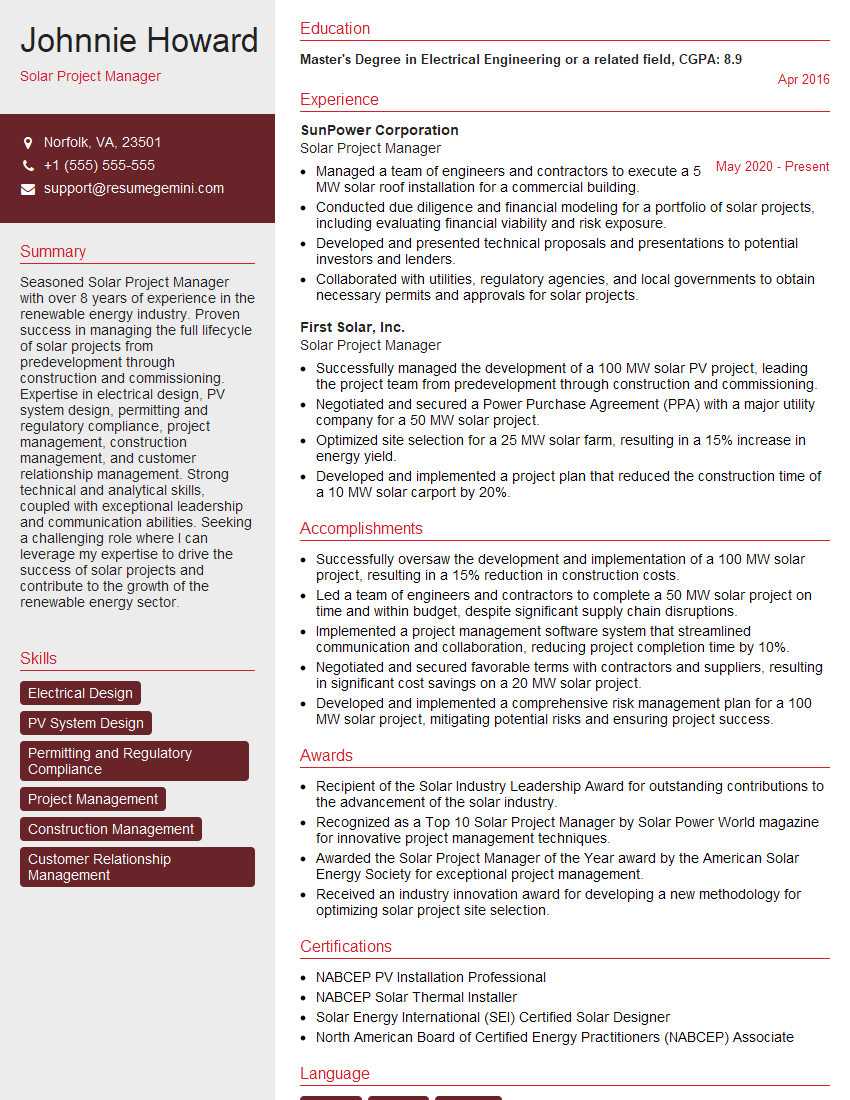
Mastering the understanding of PV system maintenance and repair is crucial for career advancement in the rapidly growing renewable energy sector. This expertise opens doors to highly sought-after roles with excellent growth potential and competitive salaries. To maximize your job prospects, creating a strong, ATS-friendly resume is essential. ResumeGemini can help you build a professional and impactful resume that highlights your skills and experience effectively. ResumeGemini provides examples of resumes tailored to the Understanding of PV System Maintenance and Repair field, giving you a head start in showcasing your qualifications to potential employers.

Explore more articles
Users Rating of Our Blogs
Share Your Experience
We value your feedback! Please rate our content and share your thoughts (optional).
What Readers Say About Our Blog
To the interviewgemini.com Webmaster.
Very helpful and content specific questions to help prepare me for my interview!
Thank you
To the interviewgemini.com Webmaster.
This was kind of a unique content I found around the specialized skills. Very helpful questions and good detailed answers.
Very Helpful blog, thank you Interviewgemini team.