Feeling uncertain about what to expect in your upcoming interview? We’ve got you covered! This blog highlights the most important Understanding of solar energy fundamentals interview questions and provides actionable advice to help you stand out as the ideal candidate. Let’s pave the way for your success.
Questions Asked in Understanding of solar energy fundamentals Interview
Q 1. Explain the difference between photovoltaic and solar thermal systems.
Photovoltaic (PV) and solar thermal systems are both ways to harness solar energy, but they do so in fundamentally different ways. PV systems directly convert sunlight into electricity using the photovoltaic effect, while solar thermal systems use sunlight to heat a fluid, which can then be used for heating water, space heating, or even electricity generation (via a heat engine).
Think of it like this: PV systems are like solar-powered batteries, directly generating electricity. Solar thermal systems are more like solar ovens, using the sun’s heat to do work.
A good analogy is comparing a solar panel to a solar water heater. The solar panel (PV) generates electricity, whereas the solar water heater uses the sun’s heat to warm water.
Q 2. Describe the working principle of a photovoltaic cell.
A photovoltaic cell works based on the photovoltaic effect, where photons (light particles) from sunlight strike a semiconductor material, typically silicon. This material is structured with a p-n junction, creating an electric field. When a photon hits the semiconductor, it excites an electron, freeing it from its atom. This free electron is then pushed by the electric field towards the positive side of the junction, creating a flow of electrons, which is an electric current.
In simpler terms, sunlight knocks electrons loose in the silicon, and this movement of electrons is what produces electricity. Multiple cells are connected in series and parallel to form a solar panel, increasing voltage and current output.
Q 3. What are the different types of solar panels available?
Several types of solar panels exist, primarily categorized by their cell technology:
- Monocrystalline Silicon: These panels use single-crystal silicon wafers, resulting in high efficiency and a dark, uniform appearance. They are the most efficient but also typically the most expensive.
- Polycrystalline Silicon: Made from multiple silicon crystals, these panels are less efficient but cheaper than monocrystalline panels. They have a characteristic speckled blue appearance.
- Thin-Film Solar Panels: These panels use thin layers of photovoltaic material deposited on a substrate, such as glass or plastic. They are lighter, more flexible, and can be less efficient than crystalline silicon panels, but offer cost advantages in certain applications.
- Amorphous Silicon (a-Si): A type of thin-film technology, often used in smaller, less demanding applications.
- Cadmium Telluride (CdTe): Another thin-film technology known for its cost-effectiveness and high efficiency for its thickness.
- Copper Indium Gallium Selenide (CIGS): A thin-film technology that is known for its high efficiency potential and ability to perform well in low-light conditions.
The choice of panel type depends on factors like budget, space constraints, and energy needs.
Q 4. Discuss the advantages and disadvantages of different solar panel technologies (e.g., monocrystalline, polycrystalline, thin-film).
Each solar panel technology has its own set of advantages and disadvantages:
- Monocrystalline:
- Advantages: Highest efficiency, longest lifespan, best performance in low-light conditions.
- Disadvantages: Most expensive, higher manufacturing energy requirements.
- Polycrystalline:
- Advantages: Lower cost than monocrystalline, readily available.
- Disadvantages: Lower efficiency, shorter lifespan than monocrystalline.
- Thin-Film:
- Advantages: Flexible, lightweight, can be less expensive, potentially suitable for integration into buildings.
- Disadvantages: Typically lower efficiency, may be less durable than crystalline silicon panels, performance can be temperature sensitive.
Choosing the right technology involves a trade-off between cost, efficiency, and lifespan based on the specific application and budget.
Q 5. Explain the concept of solar irradiance and its impact on solar panel performance.
Solar irradiance refers to the amount of solar energy that reaches a given surface area per unit of time. It’s measured in watts per square meter (W/m²). Solar irradiance is a crucial factor in determining the performance of solar panels. Higher irradiance means more sunlight, which leads to higher energy output from the panels.
Factors affecting irradiance include time of day (highest at midday), weather conditions (cloudy days have lower irradiance), season (higher in summer), and geographical location (closer to the equator generally has higher irradiance).
For example, a panel rated at 300W might only generate 200W on a cloudy day due to lower irradiance.
Q 6. How do you calculate the energy output of a solar panel system?
Calculating the energy output of a solar panel system involves several factors:
- Panel Rated Power (Wp): The peak power output of a single panel under standard test conditions (STC).
- Number of Panels: The total number of panels in the system.
- System Efficiency: Accounts for losses in the system (wiring, inverters, etc.). Typically around 75-85%.
- Average Daily Solar Irradiance (kWh/m²/day): The average amount of solar energy received per square meter per day in a specific location.
- Panel Surface Area (m²): The surface area of a single panel.
The formula for calculating daily energy output (in kWh) can be approximated as follows:
Daily Energy Output (kWh) ≈ (Wp * Number of Panels * System Efficiency * Average Daily Solar Irradiance * Panel Surface Area) / 1000
Note that this is a simplified calculation; more accurate estimations require detailed solar resource data and specialized software.
Q 7. What are the key components of a solar power system?
A typical solar power system consists of these key components:
- Solar Panels (PV Modules): Convert sunlight into direct current (DC) electricity.
- Charge Controller: Regulates the flow of electricity from the panels to the batteries, preventing overcharging and damage.
- Batteries (for off-grid systems): Store energy for use when the sun isn’t shining. Grid-tied systems do not typically require batteries.
- Inverter: Converts the DC electricity from the panels or batteries into alternating current (AC) electricity suitable for household appliances.
- Mounting System: Securely attaches the panels to the roof or ground.
- Wiring and Connectors: Connect all components of the system.
- Monitoring System (optional): Tracks the system’s performance and provides data on energy production.
The specific components and their configurations vary depending on the type of system (grid-tied, off-grid, hybrid).
Q 8. Describe the role of inverters in a solar PV system.
In a solar PV system, the inverter plays a crucial role as the bridge between the direct current (DC) electricity generated by the solar panels and the alternating current (AC) electricity used in homes and businesses. Solar panels produce DC power, which is not directly compatible with our electrical grid or most household appliances. The inverter converts this DC power into usable AC power, matching the voltage and frequency of the grid. Think of it like a translator for your solar panels, allowing them to communicate with your home’s electrical system.
Inverters also perform other important functions, including monitoring the system’s performance, maximizing energy output (often through MPPT, discussed below), and providing safety features like disconnecting the system in the event of a grid failure.
Different types of inverters exist, including string inverters (one inverter for multiple panels in series), microinverters (one per panel), and power optimizers (small inverters integrated into each panel). The choice of inverter depends on the size and configuration of the solar PV system.
Q 9. Explain the concept of maximum power point tracking (MPPT).
Maximum Power Point Tracking (MPPT) is a crucial technique used in solar PV systems to maximize the energy harvest from solar panels. Solar panels don’t produce their maximum power output at a single voltage and current level. Instead, their power output varies with the amount of sunlight and the temperature. The maximum power point (MPP) represents the specific voltage and current combination at which the panel generates the most power at any given moment.
MPPT algorithms are embedded within the inverter. They constantly monitor the voltage and current from the panels and adjust the operating point of the panel(s) to stay as close as possible to the MPP. Think of it as a sophisticated controller constantly fine-tuning the panel’s performance to get the most juice possible. This is particularly important in variable weather conditions where sunlight fluctuates frequently.
Without MPPT, the power output would be significantly lower, resulting in less electricity generation and a less efficient solar PV system. This is like leaving money on the table in a solar energy system investment.
Q 10. How do you size a solar PV system for a given energy demand?
Sizing a solar PV system involves carefully calculating the required panel capacity to meet a given energy demand. This requires a detailed energy audit of the household or business. It starts with estimating the daily or annual energy consumption. You’ll need data on your electricity bills to get a baseline. This will be expressed in kilowatt-hours (kWh).
Next, you consider the solar irradiance in your location (the amount of sunlight your area receives). This varies significantly depending on geographical location, time of year, and weather patterns. This information is available from solar resource maps and online databases. You’ll also need to factor in the efficiency of the solar panels and the inverter.
A simple calculation might look like this: (Annual energy consumption in kWh) / (Average daily solar irradiance in kWh/kWp * System efficiency * Number of peak sun hours) = System size (kWp).
It’s crucial to work with a qualified solar installer who will use specialized software to make accurate calculations considering various factors like shading, panel orientation, roof inclination, and more. They can design a system that optimizes energy production while accounting for safety regulations and building codes. This process isn’t just about mathematical equations; it also involves detailed site assessments.
Q 11. What are the different types of solar energy storage systems?
Solar energy storage systems are essential for utilizing solar energy even when the sun isn’t shining. Several types exist, each with its own advantages and disadvantages.
- Battery-based storage: This is the most common type, utilizing batteries (typically lithium-ion) to store excess solar energy generated during the day and release it at night or during periods of low solar irradiance. Battery storage can range from small residential systems to large-scale utility systems.
- Pumped hydro storage: This method utilizes excess solar energy to pump water uphill to a reservoir. When energy is needed, the water flows downhill, turning turbines to generate electricity. It’s a large-scale solution, suitable for power grids.
- Thermal energy storage: This involves storing solar energy as heat, often using molten salts or other materials with high thermal capacity. This heat can later be used to generate electricity via a thermal power plant or directly for heating purposes. This system is less common for residential use.
- Compressed air energy storage (CAES): This method involves compressing air using excess solar energy and storing it in underground reservoirs. When energy is needed, the compressed air is released to drive turbines, generating electricity. This is also suitable for large-scale energy storage.
The best type of storage system depends on the specific application, scale, and cost considerations.
Q 12. Explain the concept of net metering.
Net metering is a billing mechanism that allows solar PV system owners to feed excess solar energy they generate back into the electricity grid. Instead of receiving only compensation for the electricity directly consumed from the grid, net metering credits the solar energy that is exported to the grid. This means that at the end of the billing cycle, the system owner only pays for the net electricity consumed – the difference between the energy used and the energy fed back into the grid.
Imagine a seesaw; the energy you consume is on one side, and the energy you send back to the grid is on the other. Net metering balances the seesaw, letting you only pay for the difference, like a fair trade of energy. This incentivizes solar energy adoption by offering a way to offset energy costs and reduce reliance on the grid.
However, net metering policies and regulations vary significantly by location. Some areas have generous net metering programs, while others have more limited or no such programs.
Q 13. Discuss the environmental impact of solar energy.
Solar energy offers a significantly cleaner alternative to fossil fuels, dramatically reducing the environmental impact of electricity generation. Unlike fossil fuels, solar energy produces no greenhouse gas emissions during operation. This helps mitigate climate change by reducing carbon dioxide emissions. Moreover, solar energy reduces air and water pollution associated with coal and natural gas power plants.
However, the manufacturing process of solar panels involves some environmental impacts. The production of certain materials and the disposal of end-of-life panels raise concerns about resource depletion and potential pollution. Minimizing these impacts requires responsible manufacturing practices, recycling programs, and research into more sustainable materials. While solar energy production has an initial carbon footprint during manufacturing and installation, over its lifetime, its environmental impact is greatly reduced compared to fossil fuel based energy generation.
Overall, the environmental benefits of solar energy far outweigh the environmental costs associated with its production and deployment.
Q 14. What are the different types of solar trackers?
Solar trackers are mechanisms designed to optimize the energy production of solar panels by adjusting their orientation throughout the day to follow the sun’s path. They maximize the amount of sunlight hitting the panels’ surface, leading to a significant increase in energy generation.
- Single-axis trackers: These trackers rotate on a single axis, typically east-west, following the sun’s movement from east to west throughout the day.
- Dual-axis trackers: These advanced trackers rotate on two axes, allowing them to constantly adjust the panel’s angle to face the sun directly, maximizing energy capture at various times of the day and seasons. These offer the highest energy generation potential.
- Fixed-tilt systems: While not strictly trackers, these systems represent a simpler alternative where the panels are mounted at a fixed angle, typically optimized for the average solar incidence angle in the particular location. These systems are more cost-effective but produce less energy than trackers.
The choice of tracker depends on several factors such as budget, land availability, the cost of electricity, and the desired level of energy production. Dual-axis trackers offer the greatest energy output, but single-axis trackers provide a good balance between cost and efficiency.
Q 15. How does shading affect the performance of a solar PV system?
Shading significantly impacts solar PV system performance because it creates hotspots. Imagine a solar panel as a team of workers; if even one worker is idle (shaded), the entire team’s productivity (power output) decreases. Even a small shadow cast on a portion of a panel can reduce the power output of the entire panel due to the way they are wired in series. This is because the current flowing through the string is limited by the shaded cell, causing a significant voltage drop across the whole string. The effect is more pronounced with partial shading than complete shading of the whole panel. This is because a partially shaded panel will still generate some current, but the voltage will be limited by the shaded cells. The reduced voltage across the partially shaded panel will lead to less power output for the entire string.
Minimizing shading requires careful site selection and panel placement. Consider using tools that simulate shading patterns throughout the year to optimize placement. For example, a nearby tree or building’s shadow might only affect your panels during certain hours of the day, or certain times of the year. Therefore, strategic planning is key. East-west orientation, rather than north-south, can minimize the effect of midday shadows from high angle sun.
Career Expert Tips:
- Ace those interviews! Prepare effectively by reviewing the Top 50 Most Common Interview Questions on ResumeGemini.
- Navigate your job search with confidence! Explore a wide range of Career Tips on ResumeGemini. Learn about common challenges and recommendations to overcome them.
- Craft the perfect resume! Master the Art of Resume Writing with ResumeGemini’s guide. Showcase your unique qualifications and achievements effectively.
- Don’t miss out on holiday savings! Build your dream resume with ResumeGemini’s ATS optimized templates.
Q 16. What are the common causes of solar panel degradation?
Solar panel degradation is the gradual loss of power output over time. Think of it like the aging of any technology; performance naturally decreases over its lifespan. Several factors contribute:
- PID (Potential Induced Degradation): This occurs due to electrical potentials developing between the panel’s components, leading to current leakage and power loss. This is often exacerbated by high humidity and temperature.
- Soiling: Dust, dirt, bird droppings, and other debris accumulate on the panels, reducing their ability to absorb sunlight. Regular cleaning is crucial.
- UV Degradation: Prolonged exposure to ultraviolet (UV) radiation from the sun can degrade the panel’s materials, impacting its efficiency over time. The encapsulant material in the panel plays a crucial role in protecting against this.
- Thermal Cycling: Repeated temperature fluctuations (heating and cooling) due to daily and seasonal changes can cause stress on the panel’s materials, leading to micro-cracks and degradation.
- Manufacturing Defects: Some panels may have inherent manufacturing flaws that lead to premature degradation.
Regular monitoring and preventative maintenance can help mitigate degradation. Cleaning, thermal imaging to identify hotspots, and proper installation practices are important preventative measures. A well-designed system with quality components will minimize these effects.
Q 17. Explain the concept of capacity factor in solar power plants.
The capacity factor of a solar power plant represents the ratio of its actual energy output over a period to its maximum possible output during that same period. It tells you how efficiently a power plant is operating. Imagine a car with a maximum speed of 100 mph; if it only averages 30 mph over a trip, its capacity factor is 30%.
For solar plants, the capacity factor is usually low (around 15-25%) compared to other energy sources like nuclear or coal because solar energy is intermittent; it’s only available when the sun shines. Various factors influence it: weather conditions (cloud cover), geographical location (latitude and solar irradiance), system efficiency, and maintenance schedule. A higher capacity factor is desirable as it indicates better energy utilization and return on investment.
The capacity factor is calculated as follows:
Capacity Factor = (Actual energy output / (Installed capacity * Total operating time)) * 100%Q 18. Describe the different types of grid connection options for solar PV systems.
Solar PV systems can be connected to the grid in several ways:
- On-grid (Grid-tied): This is the most common configuration. Excess power generated is fed back into the grid, and the system draws power from the grid when solar energy is insufficient. This requires a grid connection permit.
- Off-grid (Standalone): These systems operate independently of the grid, usually incorporating batteries for energy storage. They are useful in remote locations without grid access, but require more upfront investment for the battery system.
- Hybrid systems: These systems combine on-grid and off-grid capabilities. They can utilize grid power when needed, store excess energy, and sell excess power to the grid. This setup offers flexibility and resilience.
The choice of grid connection depends on several factors, including location, energy needs, budget, and local regulations.
Q 19. Discuss the challenges associated with integrating renewable energy sources into the grid.
Integrating renewable energy sources, like solar, into the grid presents several challenges:
- Intermittency: Solar and wind power are inherently intermittent, meaning their output fluctuates depending on weather conditions. This necessitates advanced forecasting and grid management techniques.
- Grid stability: The variability of renewable energy sources can impact grid stability, requiring sophisticated grid balancing mechanisms.
- Infrastructure upgrades: Existing grids may not be adequately equipped to handle the influx of renewable energy. Upgrades and expansions are often needed.
- Storage limitations: Effective energy storage solutions are crucial to manage the intermittent nature of renewables. Battery technology continues to advance, but cost and scalability are still major challenges.
- Transmission and distribution: Integrating renewable energy resources often requires new transmission and distribution infrastructure to transport power from remote locations to populated areas.
Addressing these challenges requires a multi-faceted approach, including advancements in energy storage technologies, smarter grids, and effective grid management strategies. International collaborations and standardization of technologies and practices will also be critical to overcoming these obstacles.
Q 20. What are the safety precautions associated with working with solar panels?
Working with solar panels requires strict adherence to safety precautions:
- DC Voltage: Solar panels operate at high DC voltages that can be lethal. Always use appropriate personal protective equipment (PPE) such as insulated gloves and eye protection.
- Ground Fault Protection: Ensure the system has proper grounding to prevent electrical shocks.
- Working at Heights: If working on a rooftop, use proper fall protection equipment.
- Weather Conditions: Avoid working during storms or extreme weather conditions.
- Proper Tools: Use insulated tools designed for working with electrical systems.
- Lockout/Tagout Procedures: Implement lockout/tagout procedures to prevent accidental energization of the system during maintenance.
- Fire Safety: Be aware of potential fire hazards associated with electrical systems and have appropriate fire suppression equipment on hand.
Always consult relevant safety regulations and guidelines before undertaking any work on a solar PV system. Proper training is vital.
Q 21. How do you troubleshoot common problems in a solar PV system?
Troubleshooting a solar PV system involves a systematic approach:
- Visual Inspection: Start by visually inspecting the panels, wiring, and inverters for any obvious damage, loose connections, or debris.
- Check the Inverter: Verify the inverter is functioning correctly. Most inverters provide diagnostic information through a display or communication interface. Look for error codes.
- Measure Voltage and Current: Use a multimeter to measure the voltage and current at various points in the system to identify any voltage drops or short circuits.
- Check the Wiring: Inspect all wiring for any loose connections or signs of damage. Look for any corrosion or breaks.
- Test the Panels: If individual panels are suspected of malfunctioning, use a multimeter to test their output voltage and current. This can reveal bad cells or modules.
- Review Monitoring Data: If the system has monitoring capabilities, review the performance data to identify trends and pinpoint potential issues. Unusual drops in performance can indicate a problem.
- Consult Documentation: Refer to the system’s design and installation documents for troubleshooting information.
If you can’t resolve the issue yourself, contact a qualified solar technician.
Q 22. Explain the difference between DC and AC power in the context of solar energy.
Solar panels generate electricity as direct current (DC), while most homes and businesses use alternating current (AC). Think of it like this: DC is like water flowing constantly in one direction, while AC is like water flowing back and forth. DC power from solar panels is relatively low voltage and is suitable for charging batteries directly. However, most appliances and devices operate on AC power. Therefore, a crucial component in most solar systems is an inverter, which converts DC power from the solar panels into usable AC power for your home.
In simpler terms: DC is a constant flow of electrons in one direction, whereas AC is a flow of electrons that periodically reverses direction.
Practical Application: Understanding this difference is crucial for designing and installing solar systems. You must select the correct inverter to match the DC output of your panels to the AC requirements of your load.
Q 23. What are the different types of solar charge controllers?
Solar charge controllers are vital for protecting your batteries from overcharging and damage. They regulate the flow of electricity from your solar panels to your batteries. There are primarily two main types:
- Pulse Width Modulation (PWM) Charge Controllers: These controllers are simpler and less expensive. They work by turning the solar panel’s power on and off rapidly, regulating the voltage and preventing overcharging. However, they are less efficient than MPPT controllers, meaning some energy may be lost during the conversion process.
- Maximum Power Point Tracking (MPPT) Charge Controllers: These advanced controllers constantly monitor the solar panel’s voltage and current to operate at its maximum power point. They adjust the voltage and current to optimize charging efficiency, resulting in higher energy output, especially in varied sunlight conditions. While more expensive upfront, MPPT controllers provide a better return on investment over the long run.
In summary: Choosing between PWM and MPPT depends on budget and desired efficiency. For optimal performance, particularly in situations with fluctuating sunlight, MPPT controllers are preferred.
Q 24. Describe the role of batteries in off-grid solar systems.
In off-grid solar systems, batteries act as an energy storage solution. They store the excess solar energy generated during the day, allowing you to use electricity at night or during periods of low sunlight. Think of them as a reservoir for your solar power. This is critical for maintaining a consistent power supply independent of the grid.
Key Roles:
- Energy Storage: Storing excess energy for nighttime or cloudy-day use.
- Voltage Regulation: Maintaining a stable voltage supply to your appliances.
- Load Management: Balancing the demand for energy with the available supply.
Practical Considerations: Battery selection is crucial; factors like capacity (measured in Amp-hours or Ah), voltage, chemistry (lead-acid, lithium-ion, etc.), and depth of discharge (DoD) influence system design and cost. Proper battery maintenance is essential for extending their lifespan.
Q 25. What are the economic factors to consider when designing a solar PV system?
Designing a cost-effective solar PV system requires careful consideration of several economic factors:
- Initial Investment Costs: This includes the cost of solar panels, inverters, batteries (if applicable), mounting hardware, wiring, labor, and permits.
- Operational Costs: These are the ongoing costs of maintaining the system, such as cleaning panels, replacing batteries, and potential repair or replacement of components.
- Incentives and Rebates: Government incentives, tax credits, and rebates can significantly reduce the initial investment cost. Research available incentives in your region.
- Financing Options: Explore various financing options like loans, leases, or power purchase agreements (PPAs) to determine the most financially viable option.
- Energy Production and Savings: Calculate the estimated energy production of your system and compare it to your current electricity bill to determine the potential savings.
- Return on Investment (ROI): Estimate the payback period – how long it will take for your savings to offset the initial investment.
Example: A detailed financial model should be developed to compare different system configurations and financing options, considering factors like system size, panel efficiency, and expected energy consumption.
Q 26. Discuss the impact of government policies on the solar energy industry.
Government policies play a significant role in shaping the solar energy industry’s growth and development. Policies can either accelerate or hinder adoption through various mechanisms:
- Incentives and Subsidies: Tax credits, rebates, and feed-in tariffs (FITs) directly reduce the cost of solar energy systems, making them more attractive to consumers and businesses.
- Renewable Portfolio Standards (RPS): These mandates require electricity providers to generate a certain percentage of their power from renewable sources, such as solar.
- Net Metering Policies: These allow homeowners with solar panels to sell excess electricity back to the grid, offsetting their energy bills.
- Building Codes and Regulations: Regulations requiring solar panels or energy-efficient building design in new constructions can boost demand.
- Import Tariffs and Trade Policies: Tariffs and trade agreements can influence the cost and availability of solar equipment.
Impact: Supportive policies stimulate innovation, increase market competition, and drive down the cost of solar energy, making it a more viable and widespread source of power. Conversely, unfavorable policies can stifle growth and hinder the industry’s progress.
Q 27. How do you estimate the lifetime cost of a solar PV system?
Estimating the lifetime cost of a solar PV system involves considering both upfront and ongoing expenses over its expected lifespan (typically 25-30 years). A thorough cost estimation should include:
- Initial Capital Costs: This includes all costs associated with purchasing, installing, and permitting the system.
- Maintenance Costs: These are annual or periodic costs related to cleaning panels, inspecting wiring, and replacing components.
- Replacement Costs: This involves the cost of replacing major components like inverters or batteries over the system’s lifetime.
- Financing Costs: Include interest payments if you financed your system.
- Insurance Costs: Factor in potential insurance costs for damage or theft.
- Decommissioning Costs: Account for the costs associated with safely removing and disposing of the system at the end of its life.
Method: Create a spreadsheet or use specialized software to project these costs over the system’s lifespan, incorporating expected inflation and potential changes in maintenance requirements. This helps in making informed decisions and accurately assessing the overall economic viability of the solar investment.
Q 28. Explain the concept of Levelized Cost of Energy (LCOE).
Levelized Cost of Energy (LCOE) is a metric used to compare the cost of electricity generated from different energy sources over their entire lifespan. It represents the average cost per unit of electricity (e.g., kilowatt-hour, kWh) generated throughout the system’s operational life, considering all relevant costs.
Calculating LCOE: The LCOE calculation involves summing up the total discounted costs (initial investment, operation & maintenance, fuel, financing, replacement costs, etc.) over the project’s lifetime, then dividing by the total electricity generated over that period. It takes into account the time value of money.
Formula (simplified):LCOE = (Total Discounted Costs) / (Total Discounted Electricity Generation)
Practical Application: LCOE is a valuable tool for comparing the cost-effectiveness of different renewable energy technologies (solar, wind, etc.) as well as conventional energy sources like coal or natural gas, facilitating informed investment decisions and policy-making.
Key Topics to Learn for Understanding of Solar Energy Fundamentals Interview
- Photovoltaic Effect: Understand the fundamental principles behind how sunlight is converted into electricity in solar cells. Explore different types of solar cells (crystalline silicon, thin-film, etc.) and their efficiency characteristics.
- Solar Energy Systems: Familiarize yourself with the components of a typical solar energy system, including solar panels, inverters, batteries (for off-grid systems), charge controllers, and racking systems. Be prepared to discuss the function of each component and how they interact.
- System Design and Sizing: Understand the process of designing and sizing a solar energy system to meet specific energy demands. This includes considering factors like energy consumption, solar irradiance, shading, and available roof space.
- Energy Storage: Explore different energy storage technologies used in conjunction with solar systems, such as battery banks, pumped hydro, and thermal storage. Understand their advantages and disadvantages.
- Grid Integration: Learn about the process of connecting a solar energy system to the electrical grid, including net metering and other grid interconnection requirements.
- Environmental Impact and Sustainability: Be prepared to discuss the environmental benefits of solar energy, its lifecycle assessment, and its contribution to a sustainable energy future.
- Troubleshooting and Maintenance: Understand common problems and troubleshooting techniques related to solar energy systems. This includes identifying and resolving issues with panels, inverters, and other system components.
- Economic Aspects: Familiarize yourself with the economic considerations of solar energy, including installation costs, payback periods, and potential financial incentives (tax credits, rebates).
Next Steps
Mastering the fundamentals of solar energy is crucial for a successful career in this rapidly growing field. A strong understanding of these concepts will significantly enhance your interview performance and open doors to exciting opportunities. To further boost your job prospects, creating a well-structured, ATS-friendly resume is essential. ResumeGemini is a trusted resource that can help you build a professional resume that highlights your skills and experience effectively. We provide examples of resumes tailored to the solar energy sector, helping you present yourself in the best possible light to potential employers.
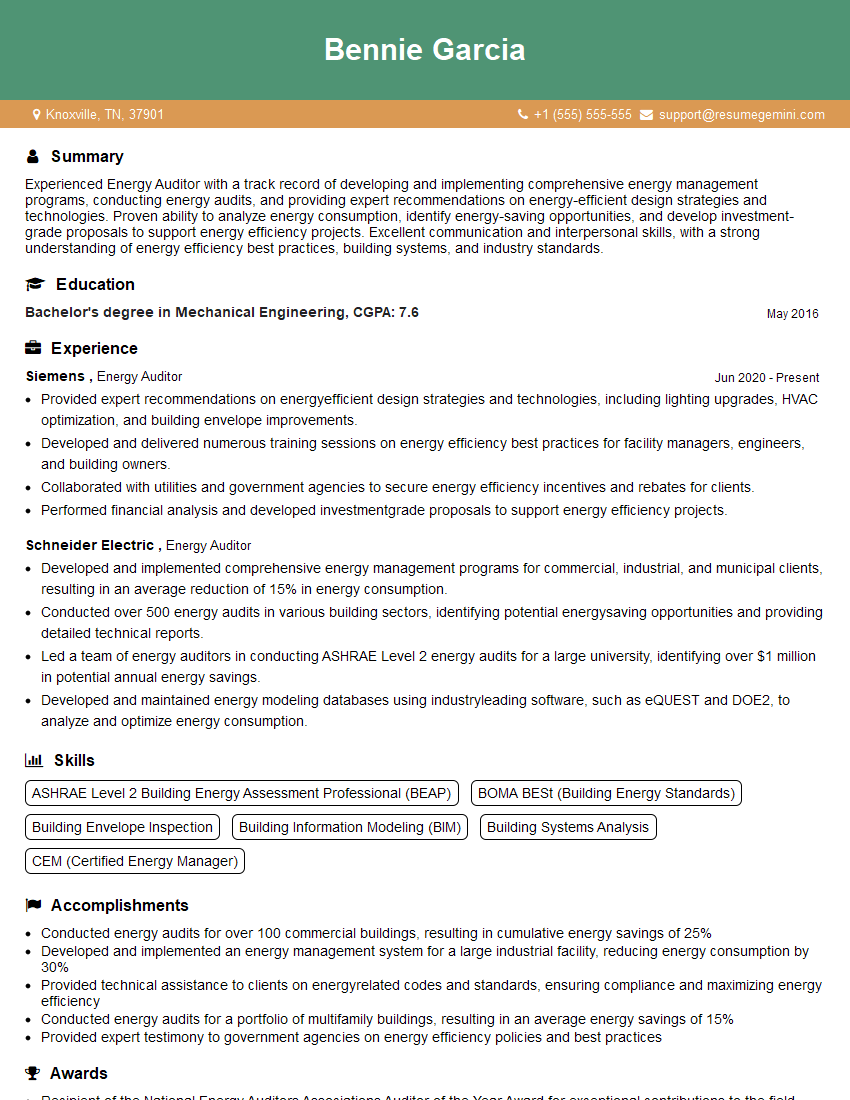
Energy Auditor Resume Sample
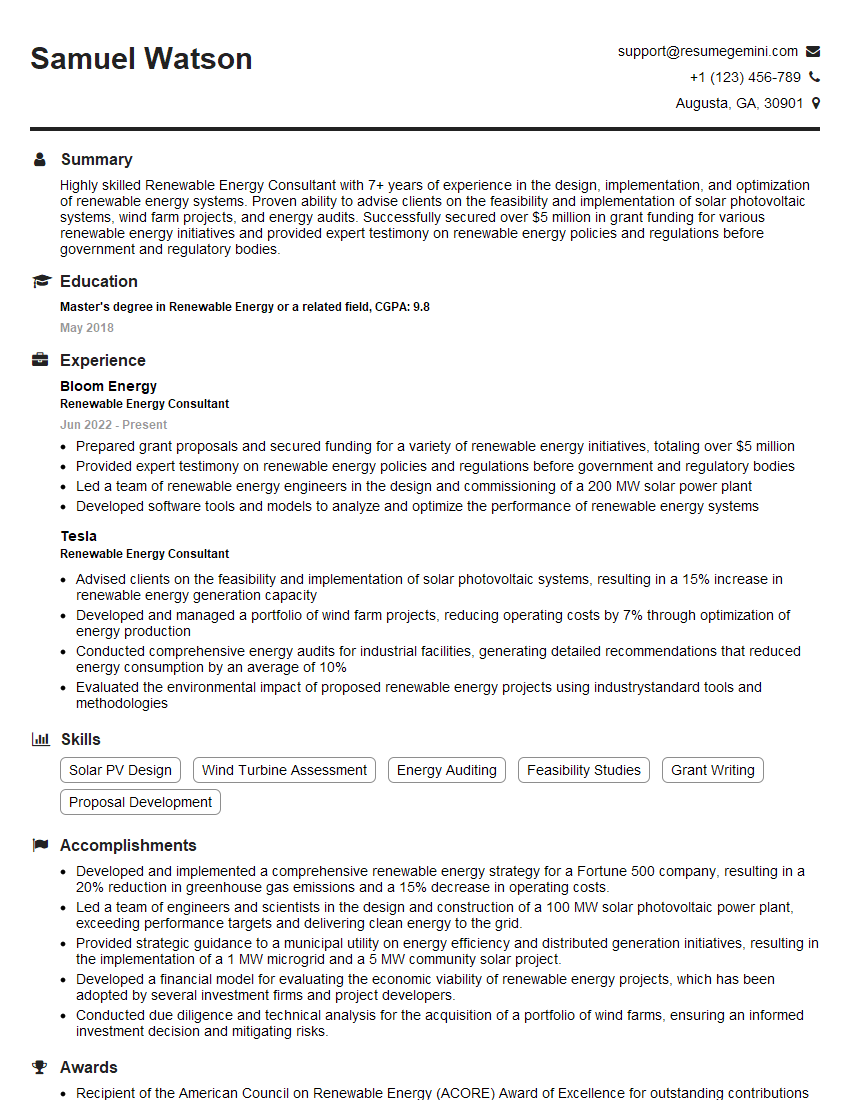
Renewable Energy Consultant Resume Sample
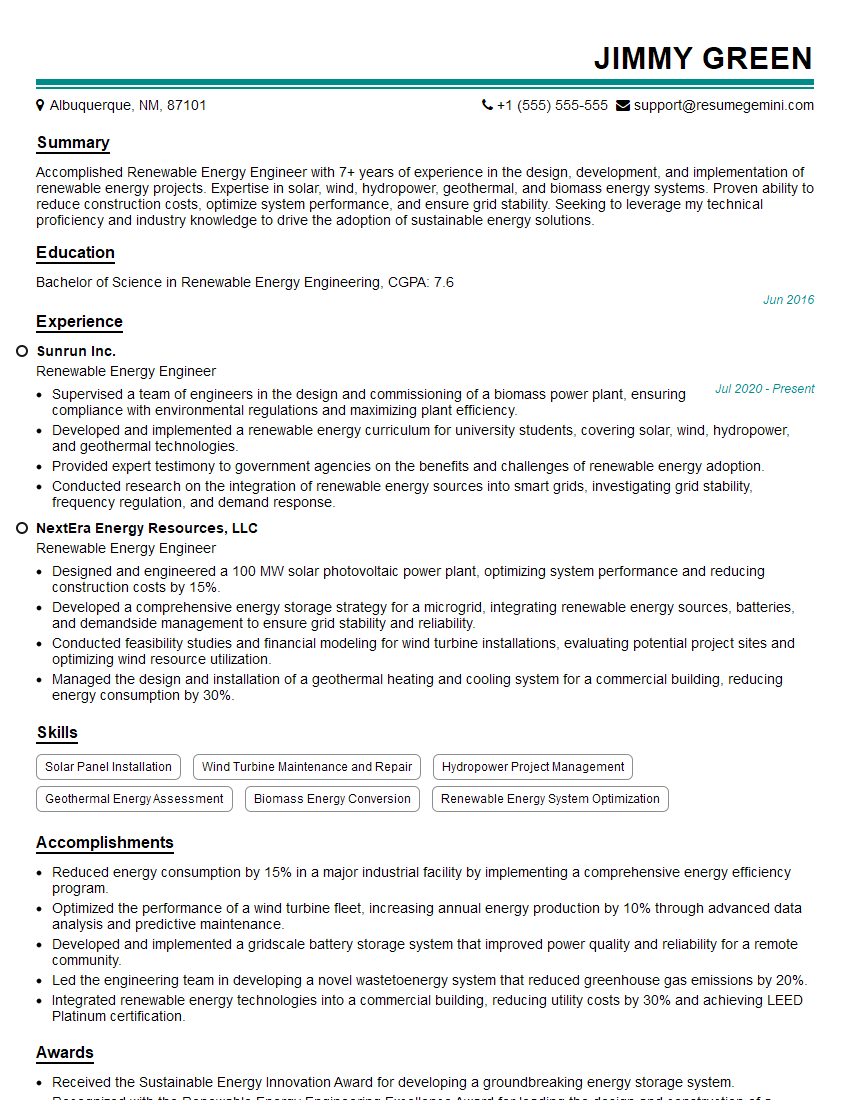
Renewable Energy Engineer Resume Sample
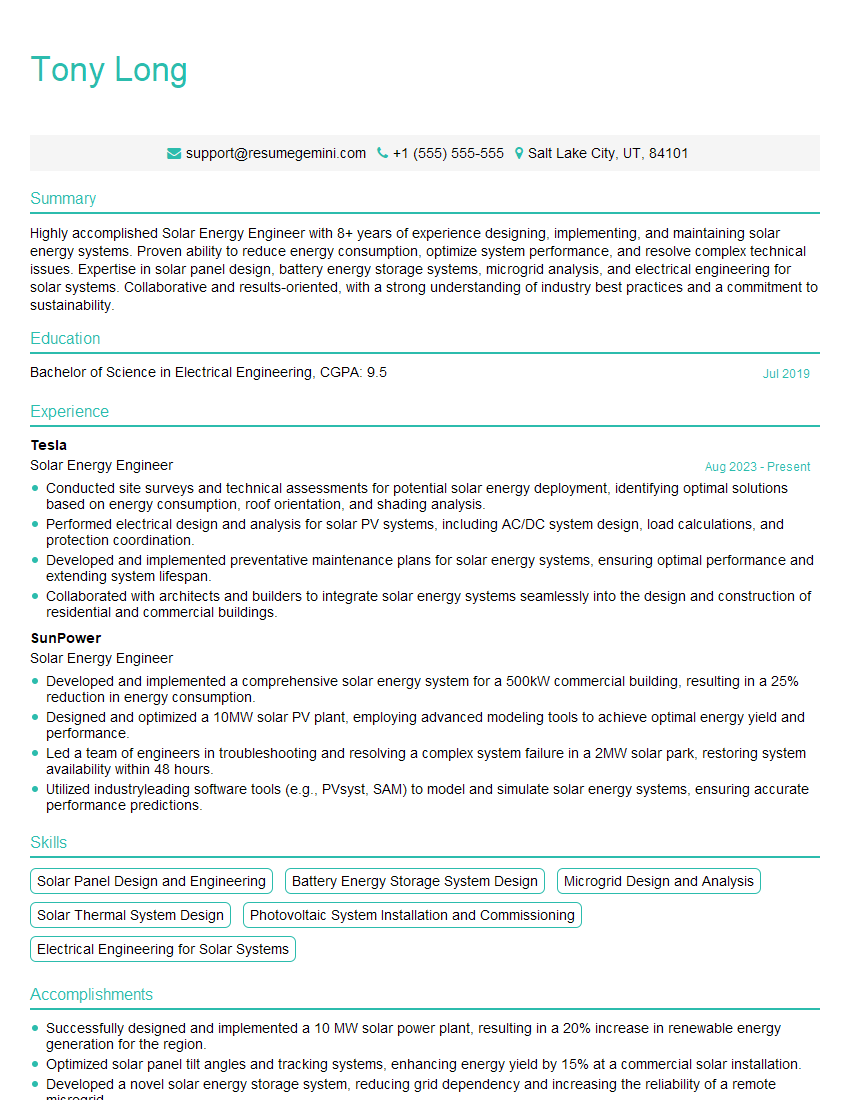
Solar Energy Engineer Resume Sample
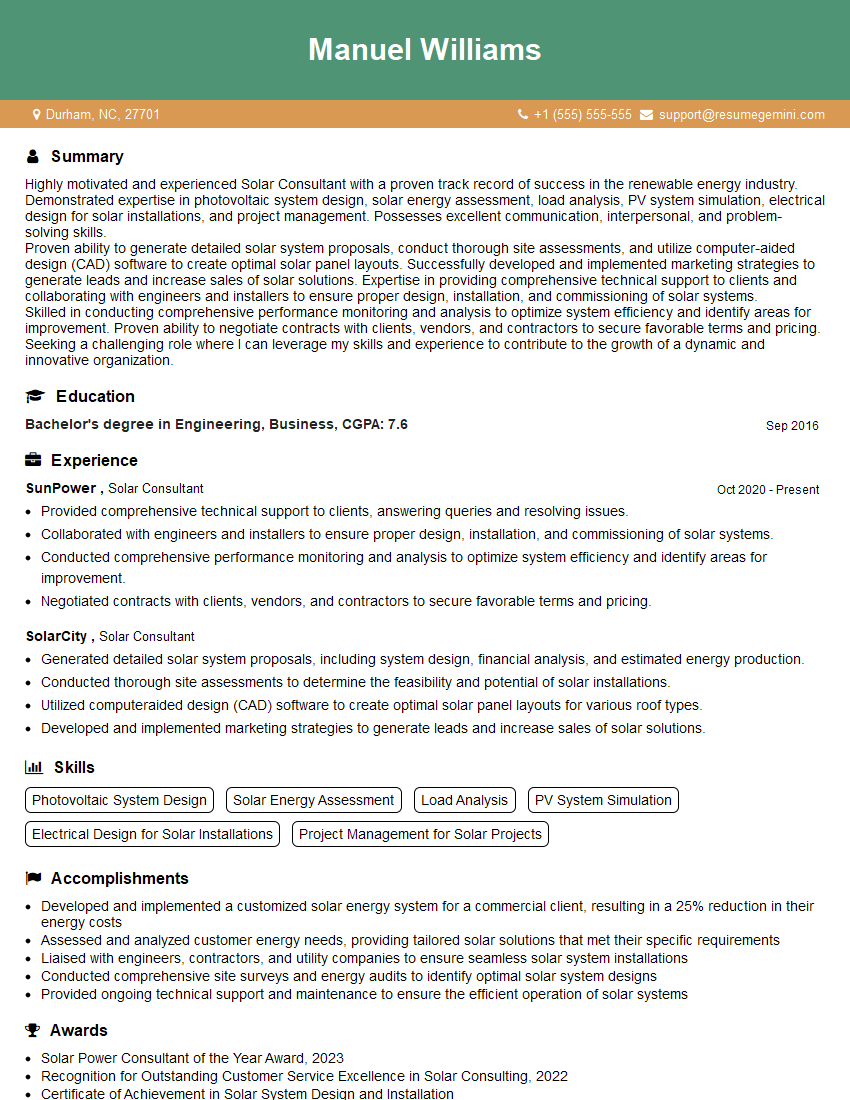
Solar Consultant Resume Sample

Solar System Designer Resume Sample
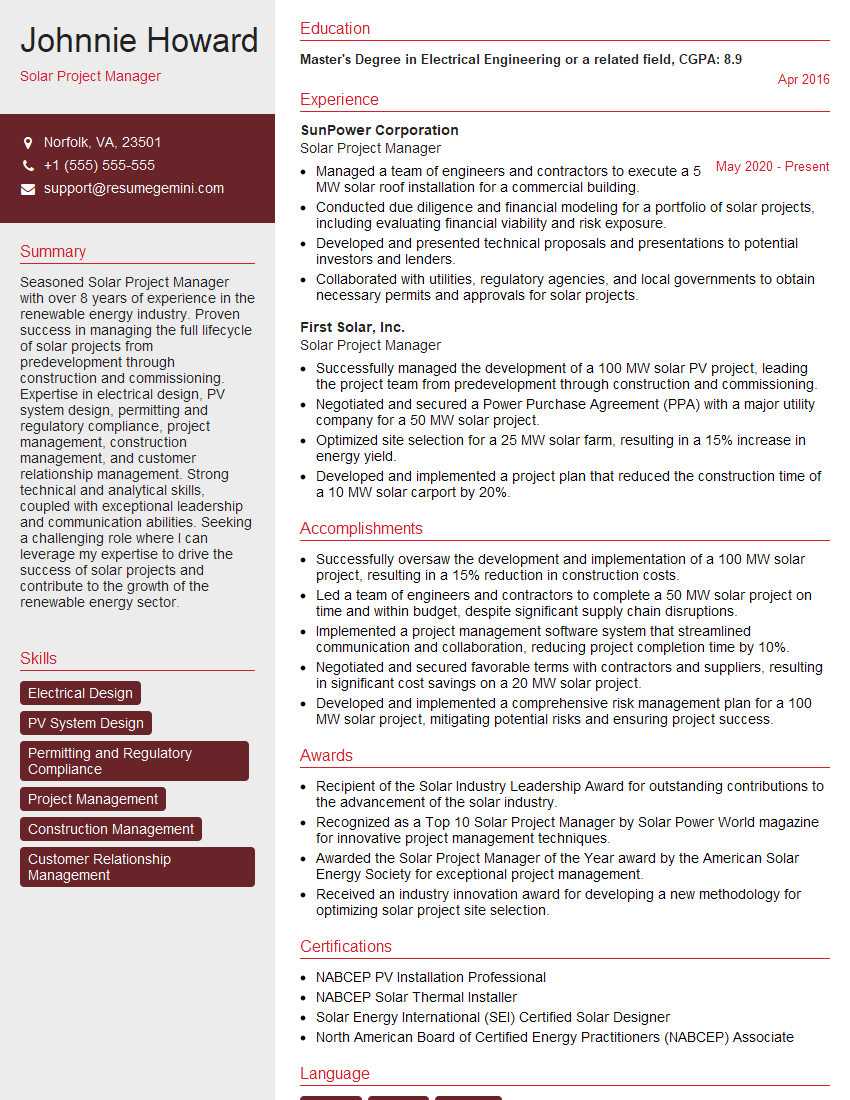
Solar Project Manager Resume Sample
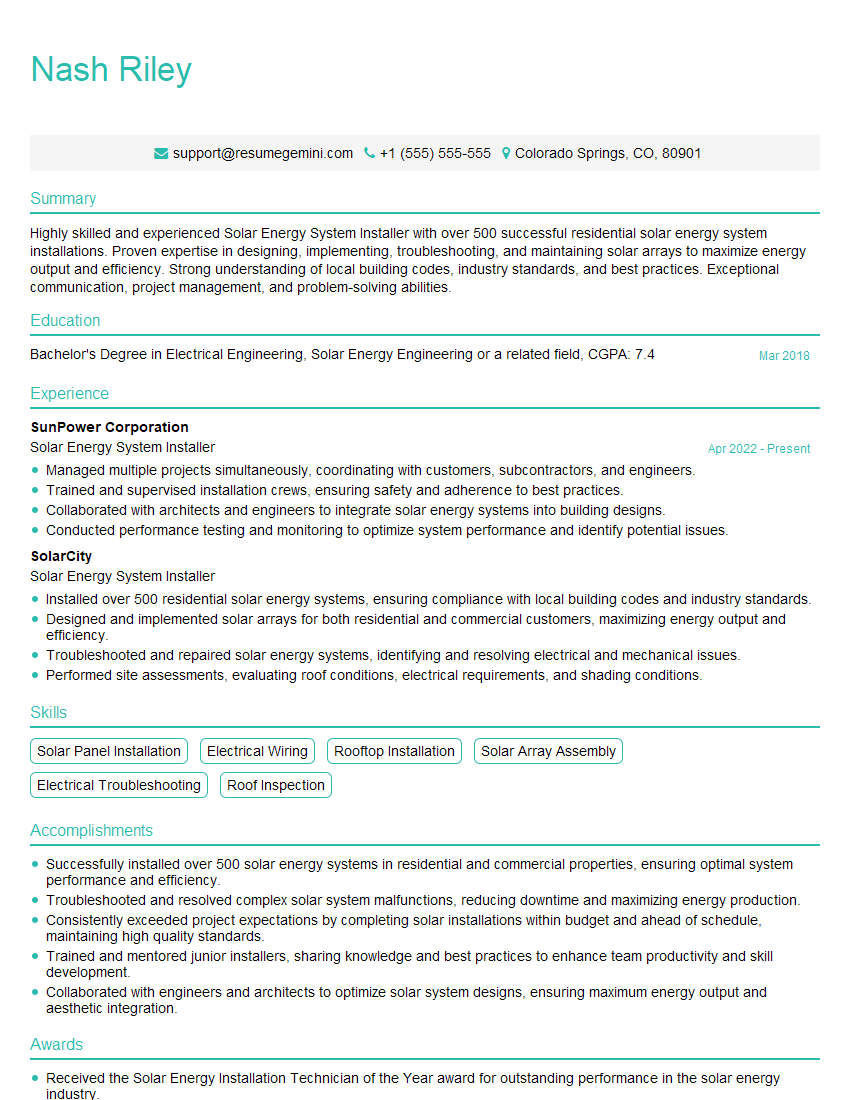
Solar Energy System Installer Resume Sample

Solar Energy Technician Resume Sample
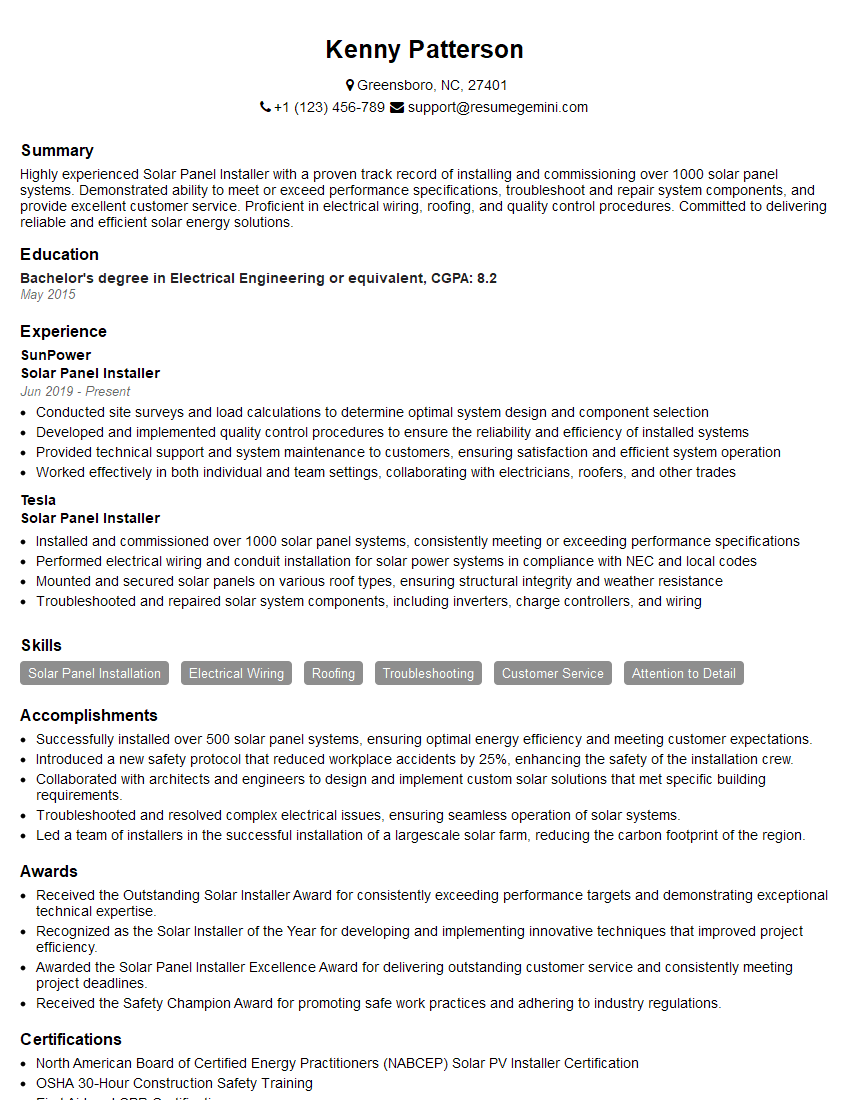
Solar Panel Installer Resume Sample
Explore more articles
Users Rating of Our Blogs
Share Your Experience
We value your feedback! Please rate our content and share your thoughts (optional).
What Readers Say About Our Blog
To the interviewgemini.com Webmaster.
Very helpful and content specific questions to help prepare me for my interview!
Thank you
To the interviewgemini.com Webmaster.
This was kind of a unique content I found around the specialized skills. Very helpful questions and good detailed answers.
Very Helpful blog, thank you Interviewgemini team.