Unlock your full potential by mastering the most common Visitor Management and Group Control interview questions. This blog offers a deep dive into the critical topics, ensuring you’re not only prepared to answer but to excel. With these insights, you’ll approach your interview with clarity and confidence.
Questions Asked in Visitor Management and Group Control Interview
Q 1. Describe your experience implementing a visitor management system.
Implementing a visitor management system (VMS) involves a systematic approach, starting with a thorough needs assessment. This determines the scale of the system, the required features (e.g., pre-registration, photo ID capture, integration with existing security systems), and the budget. My experience includes deploying both cloud-based and on-premise VMS solutions. For instance, in a previous role at a large manufacturing facility, we implemented a cloud-based VMS that allowed for pre-registration of visitors, automated check-in/out processes using kiosks, and real-time tracking of visitor locations within the facility. This significantly improved security and streamlined the process. In another project for a smaller law firm, we opted for a simpler, on-premise system tailored to their specific needs, emphasizing controlled access to sensitive areas.
The implementation process itself typically involves:
- Needs Analysis and System Selection: Identifying the specific requirements and choosing a suitable VMS.
- System Configuration and Customization: Setting up the system to align with the organization’s security policies and workflows.
- Training and Support: Educating staff on the system’s usage and providing ongoing technical support.
- Integration with existing systems: Connecting the VMS with other security systems (e.g., access control, surveillance) for enhanced security.
- Testing and Deployment: Thoroughly testing the system and rolling it out in phases to minimize disruption.
Q 2. How do you handle large groups of visitors efficiently and safely?
Managing large visitor groups efficiently and safely requires meticulous planning and coordination. Think of it like orchestrating a large event – everything needs to be planned in advance.
- Pre-registration and Scheduling: Requiring group leaders to pre-register and provide details of all attendees enables efficient planning and allocation of resources (e.g., guides, meeting rooms).
- Designated Check-in Points and Staff: Establishing dedicated check-in points with sufficient staff to expedite the registration process avoids bottlenecks. Consider using multiple kiosks or mobile check-in devices for large groups.
- Guided Tours and Escorts: Providing designated escorts or guided tours ensures visitors stay within designated areas, preventing unauthorized access. Clear signage and maps are essential.
- Emergency Procedures: Having clearly defined emergency procedures and evacuation plans, practiced regularly with staff, is crucial for the safety of all involved.
- Communication: Utilizing clear communication channels (e.g., group chat apps, announcements) keeps everyone informed about schedules, instructions and any changes.
For example, when managing a large conference at a previous organization, we used a combination of pre-registration, designated check-in areas, and color-coded lanyards to quickly identify attendee groups and direct them to their sessions. This streamlined the process and prevented confusion.
Q 3. What methods do you use to ensure visitor compliance with security protocols?
Ensuring visitor compliance with security protocols involves a multi-pronged approach that combines technology, clear communication, and consistent enforcement. The key is to make compliance simple and understandable.
- Clear Signage and Instructions: Posting clear and concise signs outlining security procedures throughout the facility is paramount. Visual aids can be incredibly effective.
- Training and Communication: Regular training for staff on security protocols and visitor management best practices is essential. Visitors should also receive clear instructions, either before arrival or upon check-in.
- Technology-Based Enforcement: Using a VMS with features like photo ID verification, access control restrictions, and visitor tracking enhances compliance. Real-time monitoring can quickly identify any deviations from protocol.
- Regular Audits and Reviews: Regularly reviewing security logs and conducting periodic audits to identify areas for improvement helps maintain high levels of compliance.
- Consequences for Non-Compliance: Having clear and consistently enforced consequences for violations, such as revoking access, helps deter non-compliance.
For instance, at a hospital, we implemented a system where visitors had to wear visitor badges, pass through security checkpoints and sign in/out. Clear signage, combined with regular staff training on the protocol, ensured high compliance.
Q 4. Explain your experience with visitor registration and badging processes.
Visitor registration and badging processes are critical for security and accountability. Efficiency and user-friendliness are key to successful implementation. My experience encompasses various approaches tailored to different settings.
- Pre-registration: Utilizing online pre-registration portals simplifies the check-in process for both visitors and staff. This allows for verification of identity and purpose of visit in advance.
- Kiosks and Mobile Check-in: Deploying self-service kiosks or mobile check-in applications streamlines the on-site registration process, especially for high-volume settings. This reduces wait times and enhances visitor experience.
- Photo ID Capture and Verification: Integrating photo ID capture into the registration process enables better identification and verification, enhancing security.
- Badge Printing and Issuance: Utilizing a system that automatically prints and issues visitor badges with relevant information (name, photo, visit purpose, expiry time) enhances accountability and visibility.
- Data Management and Reporting: The system should have robust data management capabilities, generating reports on visitor activity for security and operational purposes.
In a previous role at a corporate office, we implemented an online pre-registration portal linked to a kiosk at the reception, simplifying the process and providing real-time data on visitor traffic and access.
Q 5. How would you address a security breach involving unauthorized visitors?
Addressing a security breach involving unauthorized visitors requires a swift and methodical response. The goal is to contain the situation, identify the cause, and prevent future occurrences.
- Immediate Containment: The first step is to immediately isolate the unauthorized visitors and prevent further access. This may involve contacting security personnel and implementing emergency procedures.
- Investigation and Root Cause Analysis: A thorough investigation should be carried out to determine how the breach occurred (e.g., system failure, human error, compromised credentials). Analyzing logs and security footage is crucial.
- Review and Remediation of Security Protocols: Based on the findings of the investigation, necessary adjustments should be made to security protocols and procedures to prevent future breaches. This may involve strengthening access controls, improving staff training, or upgrading the VMS.
- Reporting and Documentation: Detailed documentation of the breach, investigation, and remedial actions should be maintained for future reference and auditing purposes.
- Communication: Internal and external communication is critical. Relevant stakeholders should be informed about the breach and the actions taken to address it.
Imagine a situation where an unauthorized individual gained access to a restricted area. We would immediately alert security, conduct a thorough investigation, review access logs to identify vulnerabilities, and implement stricter access controls and staff training to prevent similar incidents.
Q 6. Describe your experience managing visitor access control systems.
Managing visitor access control systems involves integrating the VMS with physical access control measures to regulate visitor movement within a facility. This ensures that visitors only access authorized areas.
- Integration with Access Control Systems: Connecting the VMS with existing access control systems (e.g., card readers, turnstiles) allows for automated control over visitor access to different zones within the building. Visitors receive temporary access credentials based on their authorized areas.
- Access Level Management: The system should allow for granular access level control, defining which areas different visitor types are permitted to enter. For example, contractors may have access to specific work areas, while general visitors may only access public areas.
- Real-time Monitoring and Alerts: The system should provide real-time monitoring of visitor movements, with alerts triggered if visitors attempt to access unauthorized areas.
- Auditing and Reporting: Comprehensive auditing capabilities ensure that all access events are logged and can be reviewed for security and operational purposes.
- System Maintenance and Updates: Regularly updating the access control system and VMS software is essential to maintain security and prevent vulnerabilities.
For instance, in a data center, we integrated the VMS with the access control system to restrict visitor access to secure server rooms, providing temporary access cards only to authorized personnel.
Q 7. How do you ensure the safety and security of visitors and employees?
Ensuring the safety and security of both visitors and employees is a paramount concern. It requires a holistic approach combining physical security, procedural measures, and employee training.
- Physical Security Measures: Implementing robust physical security measures such as surveillance cameras, security personnel, and well-lit areas enhances the safety and security of the facility.
- Emergency Procedures and Drills: Developing and regularly practicing emergency procedures (fire evacuation, security breaches) is crucial for both visitors and employees.
- Visitor Training and Orientation: Providing clear instructions and guidance to visitors regarding security protocols, emergency procedures, and facility-specific safety measures is essential.
- Employee Training: Regular training for employees on security awareness, emergency procedures, and visitor management protocols enhances overall security. They should be empowered to identify and report potential threats.
- Security Systems Integration: Integrating various security systems (e.g., access control, surveillance, fire alarm) creates a unified security system that enhances situational awareness and response capabilities.
Imagine a hospital environment. We would implement strict access controls, regular security patrols, clear signage for emergency exits, and comprehensive staff training on emergency response protocols to ensure the safety of both patients (visitors) and staff.
Q 8. What are some common challenges in visitor management, and how have you overcome them?
Common challenges in visitor management often revolve around security, efficiency, and compliance. For instance, unanticipated visitor volume can overwhelm reception, leading to long wait times and frustration. Another challenge is ensuring that all visitors are properly identified and authorized, preventing unauthorized access. Finally, maintaining accurate records for compliance and reporting can be tedious and error-prone.
To overcome these, I’ve implemented several strategies. In one role, we introduced an online visitor pre-registration system, significantly reducing wait times and improving the overall experience. This also allowed us to pre-screen visitors and flag potential security risks. To address record-keeping, we transitioned to a visitor management software that automated data entry, reporting, and record archiving, minimizing errors and freeing up staff time. In another instance, we implemented a tiered access system, aligning visitor access with their purpose of visit, enhancing security without compromising efficiency.
Q 9. How familiar are you with various visitor management software and technologies?
My familiarity with visitor management software and technologies is extensive. I’ve worked with a range of solutions, from simple sign-in kiosks to sophisticated cloud-based systems offering features like visitor pre-registration, badge printing, and integration with security systems. I’m proficient with solutions like TrakSYS, Proxyclick, and Envoy, and have experience evaluating and selecting software based on specific organizational needs and budget constraints. This includes understanding the technical specifications, comparing features, and assessing the system’s scalability and ease of use. I am also familiar with various technologies like facial recognition for improved security and integration with access control systems to streamline access processes.
Q 10. How do you handle difficult or irate visitors?
Handling difficult or irate visitors requires a calm, empathetic, and professional approach. My first step is to actively listen to their concerns without interruption, acknowledging their frustration. I then try to understand the root cause of their dissatisfaction. This may involve clarifying procedures, offering apologies for any shortcomings, or escalating the issue to the appropriate personnel if needed. It’s crucial to maintain a respectful demeanor, even when faced with hostility. I find de-escalation techniques, such as using calming language and offering solutions, are very effective. If the situation remains tense, I prioritize the safety and security of everyone involved, possibly involving security personnel if necessary.
For example, I once dealt with a visitor who was upset about a lengthy wait. By acknowledging their frustration and explaining the unexpected high volume of visitors, and offering them refreshments while they waited, I was able to diffuse the situation. Clear communication and a genuine effort to resolve their problem made all the difference.
Q 11. Describe your experience with emergency procedures related to visitor management.
Emergency procedures are an integral part of visitor management. My experience includes developing and implementing comprehensive emergency plans that address various scenarios, such as fire, evacuation, and security breaches. These plans involve clear communication protocols, designated assembly points, and procedures for quickly accounting for all visitors and staff. I’ve conducted regular drills and training sessions to ensure that everyone is familiar with these procedures and knows how to react appropriately in an emergency situation. This also includes integrating the visitor management system with the emergency response system to facilitate rapid evacuation and account for all visitors.
For instance, in one organization, I developed a system of color-coded emergency cards, given to every visitor, with clear instructions and maps, simplifying communication during evacuations.
Q 12. How do you track and report visitor data and statistics?
Tracking and reporting visitor data and statistics is crucial for analysis and improving visitor management processes. I utilize visitor management software to automatically collect and store data such as visitor names, organizations, purpose of visit, and entry/exit times. This data is used to generate various reports, including daily visitor logs, monthly summaries, and customized reports based on specific needs. These reports provide valuable insights into visitor trends, peak hours, and the effectiveness of different visitor management strategies. Data is usually anonymized when it is used for broader trend analysis, maintaining visitor privacy.
For example, analyzing visitor data from a particular event revealed a significant increase in visitors during the lunch hour. This information allowed us to adjust staffing levels and improve the visitor flow during that period.
Q 13. How do you maintain visitor logs and records according to compliance requirements?
Maintaining visitor logs and records according to compliance requirements is paramount. I ensure compliance with relevant regulations (e.g., GDPR, HIPAA) by implementing data security measures, including access controls, data encryption, and secure data storage. Visitor data is retained for a specific period in line with legal and organizational requirements, and secure data disposal methods are employed upon expiry. Regular audits are conducted to ensure adherence to these policies. Visitor management software plays a crucial role by automating many of these compliance tasks.
For example, we implemented a data retention policy compliant with GDPR, ensuring the deletion of personal visitor data after a specified period, unless further retention is legally required.
Q 14. How would you develop and implement a new visitor management policy?
Developing and implementing a new visitor management policy involves a structured approach. I begin by conducting a needs assessment, identifying the organization’s specific requirements and challenges related to visitor management. This would involve surveying key stakeholders and reviewing existing security and compliance guidelines. Then, I draft a policy document that outlines clear procedures for visitor registration, access control, security protocols, and data management. This policy is reviewed and approved by relevant stakeholders before implementation. Training sessions for staff are crucial to ensure they understand and implement the new policy effectively. Finally, ongoing monitoring and evaluation are necessary to assess the policy’s effectiveness and make any necessary adjustments.
For example, in one project, I collaborated with security and legal teams to craft a new policy that not only improved visitor flow but also enhanced security, incorporating biometric scanning and real-time alerts for unauthorized access attempts.
Q 15. What metrics do you use to measure the effectiveness of your visitor management program?
Measuring the effectiveness of a visitor management program relies on a multifaceted approach, going beyond simple visitor counts. We utilize key performance indicators (KPIs) to track efficiency and security.
- Visitor Satisfaction: We regularly conduct surveys and gather feedback to assess visitor experience. High satisfaction scores indicate a well-run program. For example, a recent survey showed a 92% satisfaction rate, highlighting the positive impact of our streamlined check-in process.
- Security Incidents: A low number of security breaches or unauthorized access attempts demonstrates the program’s effectiveness in protecting the facility and its assets. We track this meticulously, analyzing trends to identify potential vulnerabilities.
- Compliance Rate: We monitor adherence to security protocols, such as badge scanning and sign-in procedures. A high compliance rate indicates successful training and enforcement.
- Processing Time: We measure the average time it takes to process a visitor from arrival to access. Shorter processing times demonstrate efficiency and a positive visitor experience. Implementing a new digital check-in system reduced processing time by 40%.
- Cost-Effectiveness: We track the program’s overall cost, including technology, staffing, and training, to ensure it remains within budget. We regularly analyze cost per visitor to ensure optimal resource allocation.
By tracking these metrics, we can identify areas for improvement and demonstrate the program’s value to the organization.
Career Expert Tips:
- Ace those interviews! Prepare effectively by reviewing the Top 50 Most Common Interview Questions on ResumeGemini.
- Navigate your job search with confidence! Explore a wide range of Career Tips on ResumeGemini. Learn about common challenges and recommendations to overcome them.
- Craft the perfect resume! Master the Art of Resume Writing with ResumeGemini’s guide. Showcase your unique qualifications and achievements effectively.
- Don’t miss out on holiday savings! Build your dream resume with ResumeGemini’s ATS optimized templates.
Q 16. Explain your experience managing visitor parking and transportation.
Managing visitor parking and transportation requires a comprehensive approach considering both convenience and security.
In my previous role, we implemented a system with designated visitor parking areas, clearly marked with signage and ample lighting. We used a reservation system for large groups, minimizing congestion and ensuring adequate space. We also partnered with a ride-sharing service to provide transportation options for visitors arriving from the airport or public transport. This offered a cost-effective and convenient alternative for those not driving. For particularly large groups, we coordinated with local transportation companies to ensure safe and efficient arrival and departure.
Real-time monitoring of parking availability through a digital dashboard enabled us to proactively address any capacity issues. We also integrated parking information into our visitor management system, allowing us to track arrival and departure times, further enhancing security and efficiency. For example, we utilized license plate recognition technology to automatically check-in visitors who pre-registered their vehicles.
Q 17. How do you ensure compliance with relevant health and safety regulations for visitors?
Ensuring compliance with health and safety regulations is paramount. We develop and implement comprehensive procedures aligned with OSHA (Occupational Safety and Health Administration), local fire codes, and other relevant regulations.
- Emergency Procedures: Clear evacuation plans and emergency contact information are readily available to all visitors. We conduct regular drills to ensure preparedness.
- Safety Training: Visitors receive clear instructions on safety protocols, including emergency exits, fire safety, and handling hazardous materials (where applicable). We provide tailored training depending on the visitor’s purpose and the areas they’ll access.
- Accessibility: We ensure the facility is accessible to visitors with disabilities, following ADA (Americans with Disabilities Act) guidelines. This includes providing ramps, elevators, and accessible restrooms.
- Health Protocols: Depending on the current health climate, we implement and strictly enforce measures like temperature checks, mask mandates, and hand sanitizing stations. We also ensure adequate ventilation and cleaning protocols.
- Incident Reporting: A robust system for reporting and investigating safety incidents allows us to identify and mitigate risks promptly.
Regular audits and inspections are conducted to verify our adherence to all relevant regulations. We maintain detailed records of safety training, inspections, and incidents.
Q 18. Describe your experience with background checks or security screenings for visitors.
Background checks and security screenings vary significantly depending on the sensitivity of the information or assets being protected. For high-security environments, we might require extensive background checks, possibly involving third-party services. For less sensitive areas, a simple identity verification might suffice.
In one instance, we implemented a system where visitors were required to present government-issued photo identification upon arrival. Their information was then verified against a watchlist database before granting access. We also utilized a secure digital visitor log to track all visitors, their purpose of visit, and the areas they accessed. For specific high-risk areas, more rigorous screening, including metal detectors and bag checks, might be necessary.
Training is essential for all personnel involved in conducting background checks and screenings to ensure consistency, accuracy, and compliance with data privacy regulations.
Q 19. How do you coordinate with other departments to ensure smooth visitor experiences?
Smooth visitor experiences depend heavily on inter-departmental coordination. I actively collaborate with various departments to anticipate and address potential challenges.
- IT Department: Close collaboration ensures the seamless integration of visitor management systems with other technologies, such as access control and building management systems. For instance, integrating the visitor management system with the company’s calendar helps schedule meetings and ensure timely access for guests.
- Reception/Front Desk: Clear communication channels and standardized procedures are vital for a consistent and efficient visitor experience. Regular meetings help refine processes and resolve any issues that arise.
- Security Department: Joint training and regular communication ensure alignment on security protocols and incident response. This fosters a sense of shared responsibility for visitor safety and security.
- Host Departments: We work closely with the departments hosting visitors to understand their specific needs and ensure visitors are directed to the appropriate person or location promptly. This often involves pre-registration and scheduling features within the visitor management system.
Regular meetings, shared communication platforms, and clearly defined roles and responsibilities are key to successful interdepartmental coordination.
Q 20. How do you handle situations where visitors refuse to comply with security protocols?
Handling situations where visitors refuse to comply with security protocols requires a calm and professional approach.
Our first step is to clearly explain the reasons behind the protocols, emphasizing security and safety. We strive to find a solution that balances security requirements and visitor needs while maintaining a respectful atmosphere. If compliance is still refused, we escalate the situation to a supervisor and, if necessary, involve security personnel. The visitor’s refusal is documented, and appropriate action is taken, which may include denying entry or contacting law enforcement if necessary. Each instance is reviewed to improve future protocols and address any systemic issues that contributed to the non-compliance.
We train our staff in de-escalation techniques to ensure all interactions are handled professionally and courteously, regardless of the visitor’s behavior. This prevents unnecessary conflict while upholding security standards.
Q 21. What is your experience with visitor access control using smart cards or other technology?
I have extensive experience integrating smart card technology and other advanced access control systems into visitor management programs.
In a previous project, we implemented a system where visitors were issued temporary smart cards upon arrival. These cards provided access to specific areas based on pre-defined permissions. The system tracked card usage, providing valuable data for security analysis and reporting. We also used biometric authentication, such as fingerprint scanning, in high-security areas. The smart card system integrated seamlessly with our visitor management software, streamlining check-in and access control processes. This enhanced security and reduced the risk of unauthorized access significantly. It also provided valuable data for reporting and analytics, allowing us to identify trends and improve security measures proactively.
The selection of technology depends heavily on the organization’s needs and budget. We carefully evaluate various options, considering factors such as scalability, security, ease of use, and integration with existing systems.
Q 22. Explain how you ensure data privacy and security related to visitor information.
Data privacy and security are paramount in visitor management. We adhere to strict protocols to protect visitor information. This begins with using a secure visitor management system (VMS) that complies with relevant data protection regulations like GDPR and CCPA. This means ensuring the system is encrypted, utilizes strong password policies, and has regular security audits.
We only collect necessary data – typically name, contact information, and purpose of visit – and we clearly communicate our data collection practices in our visitor registration process. Data is stored securely, access is limited to authorized personnel only, and we have procedures for data retention and disposal. For example, we might use a system with role-based access control, where receptionists have access to visitor logs, but only security personnel can view sensitive details. We also conduct regular employee training on data protection best practices.
Furthermore, we anonymize data whenever possible for reporting purposes, ensuring individual identities remain protected. Incident response plans are in place to address data breaches swiftly and effectively, notifying relevant authorities and affected individuals as required.
Q 23. How do you train staff on proper visitor management procedures?
Staff training is crucial for effective visitor management. We start with a comprehensive training program covering all aspects of visitor procedures. This includes the use of our VMS, check-in/check-out procedures, handling visitor inquiries, security protocols (e.g., recognizing suspicious behavior, emergency procedures), and data privacy policies.
Training isn’t a one-time event. We conduct regular refresher courses and incorporate new procedures as needed. We use a variety of training methods, including online modules, hands-on practice sessions with the VMS, and role-playing scenarios. We assess staff understanding through quizzes and practical assessments to ensure competence. Continuous feedback and performance reviews further reinforce proper procedures. For example, we’ll simulate a security breach scenario to see how staff respond and improve their reaction time.
Q 24. Describe a time you had to adapt your visitor management strategies due to unexpected circumstances.
During a major power outage, our primary VMS was inaccessible. We had to quickly adapt our strategies. Our pre-planned contingency plan immediately kicked in. We transitioned to a manual sign-in system, using paper logs and pre-printed visitor badges. We assigned additional security personnel to monitor the manual check-in process, ensuring no unauthorized access. This involved communicating the temporary change clearly to both visitors and staff. Once power was restored, we meticulously transferred the information from the paper logs into the VMS. This incident highlighted the importance of having a robust backup system and well-defined contingency plans for unexpected events.
Q 25. How would you improve the efficiency of a current visitor management system?
Improving the efficiency of a VMS often involves streamlining processes and integrating with other systems. For example, we could integrate the VMS with our access control system to automate the issuance of building access passes upon visitor registration. This reduces manual steps and potential errors. We could also integrate the VMS with our calendar system to automatically schedule meetings and send reminders to visitors and hosts.
Self-service kiosks can speed up the check-in process, freeing up reception staff for other tasks. Analyzing visitor data can help identify bottlenecks and optimize procedures. For instance, if check-in times are consistently long during peak hours, we might consider adding more kiosks or adjusting staff schedules. Regularly reviewing and updating the VMS to incorporate new features and technologies is also vital for maintaining efficiency.
Q 26. What are your preferred methods for communicating with visitors?
Clear and efficient communication with visitors is key. We use a multi-channel approach. Email is ideal for sending confirmations, reminders, and important information prior to their visit. Text messaging offers a quick way to provide updates or address urgent matters. The VMS itself provides a platform for communicating relevant details during the check-in process. A well-designed welcome area with clear signage also contributes to effective communication. During the visit, staff interactions are crucial; friendly, informative, and helpful staff can resolve any issues and ensure a positive visitor experience.
Q 27. How do you handle lost or stolen visitor badges?
Lost or stolen badges require immediate action to ensure security. Our procedure begins with reporting the incident to security. The lost badge is immediately deactivated within the VMS, rendering it invalid. We might contact the visitor to inform them and issue a replacement if necessary, perhaps with stricter identification verification. Depending on the sensitivity of the location, an internal investigation might be conducted to assess any potential security risks. Regular audits of badge usage help identify any suspicious activity or patterns that could indicate a security breach.
Q 28. Describe your experience with managing large-scale events with high visitor volumes.
Managing large-scale events requires meticulous planning and coordination. We start by assessing the expected volume of visitors and the available resources. This determines the number of check-in stations, staff needed, and the type of VMS deployment. We might utilize multiple kiosks, mobile check-in devices, and pre-registration options to reduce queues. Clear signage, wayfinding systems, and trained volunteers are crucial for directing visitors and providing assistance. We also establish clear communication channels, perhaps using public address systems or event apps to provide updates and address concerns. Post-event analysis is essential to identify areas for improvement and refine our strategies for future events.
Key Topics to Learn for Visitor Management and Group Control Interview
- Visitor Registration and Tracking Systems: Understanding various software and manual methods for efficiently managing visitor data, including check-in/check-out procedures, and data security protocols.
- Security Protocols and Compliance: Implementing and adhering to security procedures, including visitor identification verification, access control measures, and emergency protocols. Knowledge of relevant regulations and best practices.
- Group Management Strategies: Developing and executing efficient strategies for managing large groups of visitors, including scheduling, coordination, and communication. This includes optimizing flow and minimizing disruptions.
- Reporting and Analytics: Utilizing data collected from visitor management systems to generate reports, identify trends, and improve overall efficiency. Understanding key performance indicators (KPIs) related to visitor experience and security.
- Communication and Customer Service: Mastering effective communication techniques to provide excellent customer service to visitors, handling inquiries, and resolving issues professionally.
- Problem-solving and Conflict Resolution: Developing strategies for addressing unexpected issues and conflicts, maintaining a calm and professional demeanor, and ensuring visitor safety and satisfaction.
- Technology Integration: Familiarity with various technological tools used in visitor management, such as access control systems, video surveillance, and visitor management software. Understanding integration with other systems (e.g., HR, security).
Next Steps
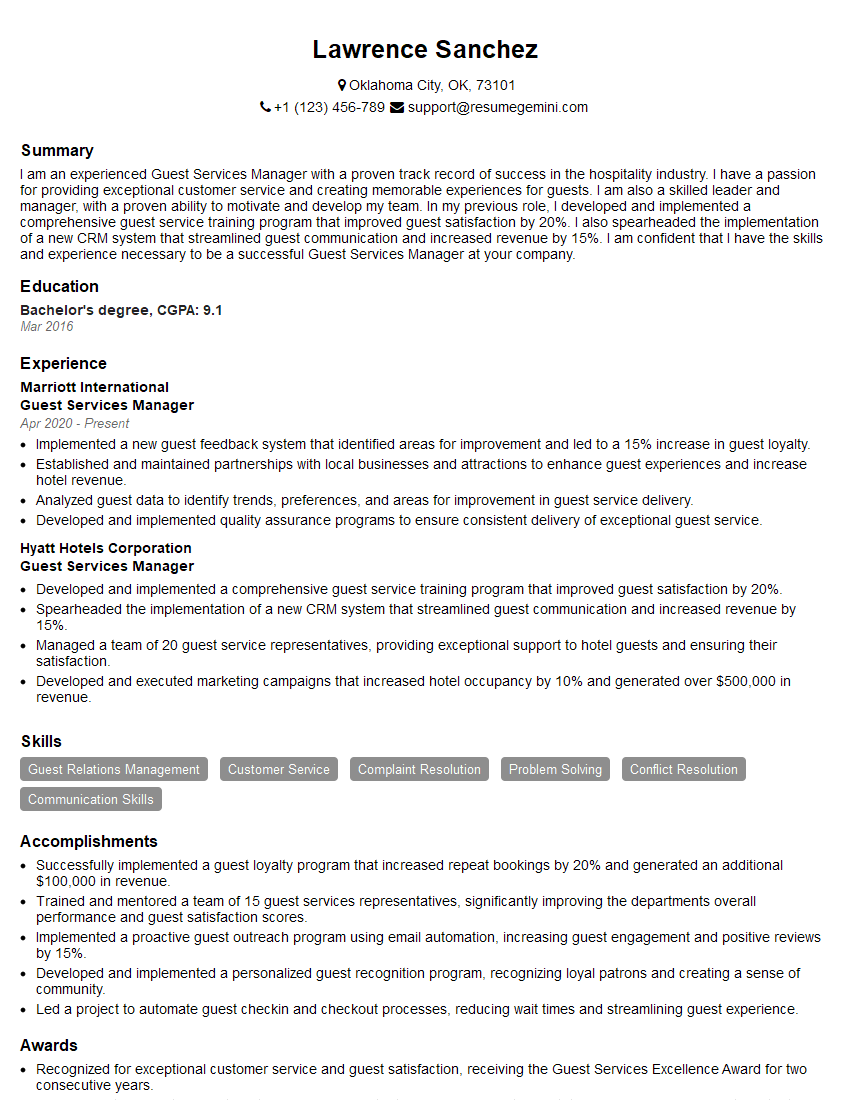
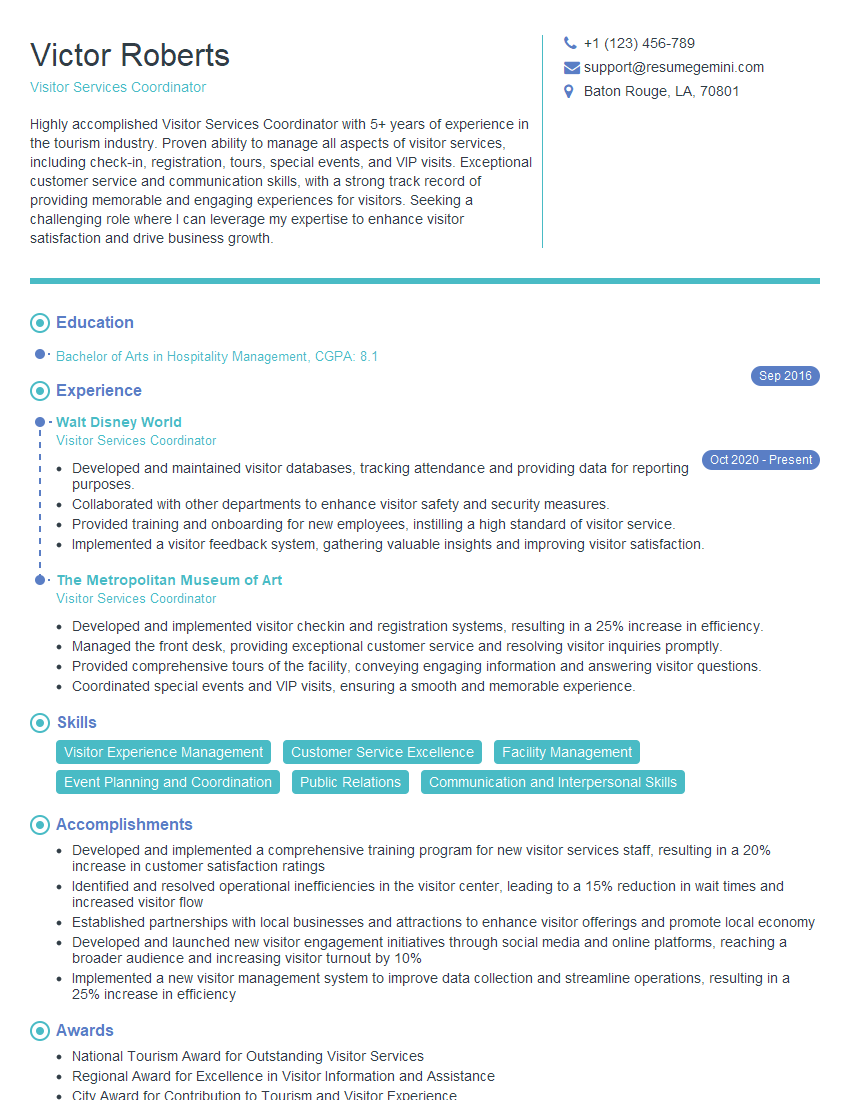
Mastering Visitor Management and Group Control opens doors to exciting career opportunities in diverse sectors, offering excellent prospects for growth and advancement. An impactful resume is key to showcasing your skills and experience effectively to potential employers. Building an ATS-friendly resume significantly increases your chances of getting noticed. ResumeGemini is a trusted resource to help you craft a professional and compelling resume that highlights your qualifications. Examples of resumes tailored to Visitor Management and Group Control are available to guide you through the process.
Explore more articles
Users Rating of Our Blogs
Share Your Experience
We value your feedback! Please rate our content and share your thoughts (optional).
What Readers Say About Our Blog
To the interviewgemini.com Webmaster.
Very helpful and content specific questions to help prepare me for my interview!
Thank you
To the interviewgemini.com Webmaster.
This was kind of a unique content I found around the specialized skills. Very helpful questions and good detailed answers.
Very Helpful blog, thank you Interviewgemini team.