Are you ready to stand out in your next interview? Understanding and preparing for Work Order Tracking interview questions is a game-changer. In this blog, we’ve compiled key questions and expert advice to help you showcase your skills with confidence and precision. Let’s get started on your journey to acing the interview.
Questions Asked in Work Order Tracking Interview
Q 1. Explain your experience with different Work Order Management Systems (WOMS).
Throughout my career, I’ve worked with a variety of Work Order Management Systems (WOMS), ranging from simple spreadsheet-based solutions to sophisticated, cloud-based CMMS platforms. My experience includes implementing and managing systems like custom-built internal solutions using SQL databases and scripting languages, and commercial off-the-shelf (COTS) software such as SAP PM and ServiceNow. Each system presents unique challenges and opportunities. For instance, spreadsheet-based systems, while simple to implement, often lack the scalability and reporting capabilities of more robust platforms. In contrast, enterprise-level solutions like SAP PM offer powerful features but require significant investment in training and infrastructure. I’ve learned to adapt my approach based on the specific context and needs of each organization, focusing on maximizing efficiency and minimizing errors regardless of the underlying technology.
In a previous role, we migrated from a legacy system reliant on paper-based work orders to a cloud-based WOMS. This involved data migration, user training, and process optimization. The transition improved reporting significantly and allowed for real-time tracking of work orders, boosting team productivity by 20% within six months. I’ve found success by focusing on careful planning, stakeholder engagement, and a phased rollout to minimize disruption.
Q 2. Describe your process for prioritizing work orders.
Prioritizing work orders involves a multi-faceted approach that combines urgency, impact, and resource availability. I typically use a system that incorporates several factors. First, I categorize work orders based on severity: emergency, high, medium, and low. Emergency orders, like equipment failures causing safety hazards, always take precedence. Next, I consider the impact – a work order affecting a critical system will generally take priority over one affecting a non-critical area, even if both are of similar urgency. Finally, resource allocation plays a key role. I assess the skills and availability of technicians to ensure efficient assignment and minimize delays. This might involve using a weighted scoring system or a Kanban board to visually track progress and prioritize work orders dynamically.
For example, if we have a critical server outage (high urgency, high impact) and a minor maintenance request on a printer (low urgency, low impact), the server outage will always be tackled first, even if the printer request came in earlier. This prioritization framework ensures that critical issues are addressed promptly, minimizing downtime and maintaining operational efficiency.
Q 3. How do you handle conflicting priorities among work orders?
Conflicting priorities are inevitable in a dynamic work environment. When faced with such situations, I utilize a structured approach to resolve conflicts fairly and efficiently. This approach involves clearly documenting all work orders, including their priority levels and dependencies. Next, I engage in open communication with all stakeholders (technicians, managers, clients) to explain the situation and the reasoning behind the prioritization decisions. Collaboration is crucial; sometimes a minor adjustment in scheduling or resource allocation can alleviate the conflict. In cases where conflicts remain, I escalate the issue to management for resolution, presenting a clear and concise overview of the competing priorities and the potential consequences of each decision.
Imagine a scenario where two high-priority work orders require the same technician. One is crucial for meeting a client deadline, while the other is critical for maintaining production. I’d involve both the client and the production manager in a collaborative discussion to find a mutually acceptable solution. This might involve re-allocating resources, adjusting deadlines, or breaking down the tasks to be handled by different team members.
Q 4. What metrics do you use to track Work Order efficiency?
Tracking Work Order efficiency relies on a suite of key metrics. These metrics give insights into performance, helping identify areas for improvement. I routinely monitor:
- Mean Time To Repair (MTTR): This metric measures the average time taken to resolve a work order. A lower MTTR indicates greater efficiency.
- Work Order Backlog: The number of outstanding work orders provides an overview of workflow and potential bottlenecks.
- First-Time Fix Rate: This shows the percentage of work orders resolved on the first attempt, reducing rework and improving efficiency.
- Technician Utilization Rate: Tracks how effectively technicians are utilizing their time. High utilization suggests efficient scheduling, while low utilization might indicate capacity issues or scheduling inefficiencies.
- Customer Satisfaction (CSAT): This measures client happiness with the service provided, reflecting the overall effectiveness of the work order process.
Regularly reviewing these metrics allows for data-driven decision-making, enabling the identification of areas for improvement and optimization of the work order process. For instance, a high MTTR might indicate a need for additional training or improved parts management.
Q 5. How do you ensure accurate and timely completion of work orders?
Ensuring accurate and timely completion of work orders involves a combination of proactive measures and robust processes. Clear communication is paramount. Work orders must be detailed, with clear instructions and all necessary information provided to the technicians. I utilize a system of regular check-ins and progress updates, using both the WOMS system and direct communication to monitor progress. This helps identify potential roadblocks early on, enabling proactive intervention.
We also implement a rigorous verification process. After completion, technicians provide a detailed report of work performed, including parts used and any relevant information. Supervisors review these reports to ensure accuracy and compliance with standards. Using a digital WOMS, with built-in checklists and digital signatures, strengthens accuracy and traceability. Furthermore, regular training of technicians on relevant procedures, troubleshooting techniques and the use of the WOMS further enhances efficiency and minimizes errors.
Q 6. Describe your experience with CMMS software (e.g., Fiix, UpKeep, IBM Maximo).
My experience with CMMS software encompasses several platforms, including Fiix, UpKeep, and IBM Maximo. Each offers unique strengths. Fiix, for instance, stands out for its user-friendly interface and mobile accessibility, while UpKeep excels in its streamlined preventative maintenance capabilities. IBM Maximo, being a more comprehensive enterprise solution, provides extensive reporting and integration options, ideal for larger organizations with complex needs.
In a past project, we implemented Fiix to replace a fragmented system of spreadsheets and email communication. This transition significantly improved visibility into maintenance activities, reduced downtime, and improved communication between technicians and management. The choice of CMMS depends heavily on the organization’s size, budget, and specific requirements. My experience allows me to evaluate the suitability of different platforms and guide organizations in selecting the best option to meet their needs.
Q 7. How do you handle emergency work orders?
Emergency work orders demand immediate attention and a deviation from the standard prioritization process. These orders, typically triggered by critical equipment failures or safety hazards, require a rapid response protocol. The process involves:
- Immediate escalation: The emergency work order is immediately escalated to the appropriate personnel, bypassing the standard routing process.
- Rapid assessment: A quick assessment of the situation is conducted to determine the severity and impact of the issue.
- Resource allocation: The most skilled and available technician is immediately dispatched to address the emergency.
- Real-time monitoring: Progress is monitored closely, with regular updates from the technician on-site.
- Post-emergency review: Following resolution, a thorough review of the incident is conducted to identify root causes and potential preventative measures.
For instance, if a power outage affects critical equipment, the emergency protocol kicks in immediately. The on-call technician is notified, and all other work is temporarily paused to address this critical issue. Following the resolution, a review helps prevent similar outages in the future, perhaps by upgrading the electrical system.
Q 8. What strategies do you employ to minimize work order backlog?
Minimizing work order backlog requires a multifaceted approach focusing on proactive planning, efficient resource allocation, and continuous process improvement. Think of it like managing a busy restaurant kitchen – you need to streamline the order flow, ensure staff have the right tools, and anticipate peak demand.
- Prioritization and Triage: Implementing a system to prioritize urgent work orders (e.g., safety hazards) over less critical ones is crucial. This might involve a scoring system based on urgency and impact.
- Resource Optimization: Analyzing technician availability, skill sets, and workload distribution allows for efficient task assignment. Tools like scheduling software can optimize routes and minimize travel time, reducing overall completion time.
- Preventive Maintenance: Proactive maintenance significantly reduces the number of reactive work orders. By regularly inspecting equipment and addressing potential issues before they escalate into major problems, we prevent costly downtime and emergency repairs.
- Process Improvement: Regularly reviewing and refining work order processes helps identify bottlenecks and inefficiencies. Lean methodologies like Kaizen can be implemented to eliminate waste and streamline workflows.
- Workload Forecasting: Predicting future work order volume allows for proactive staffing and resource allocation. Historical data analysis combined with seasonal trends can provide valuable insights for better planning.
For example, in a previous role, we implemented a color-coded prioritization system for work orders, immediately improving response times for critical issues and reducing overall backlog by 15% within three months.
Q 9. Explain your experience with reporting and analytics related to work orders.
My experience with work order reporting and analytics is extensive. I’m proficient in using data to identify trends, pinpoint problem areas, and make data-driven decisions to optimize processes. I’ve utilized various tools and techniques to extract meaningful insights from work order data.
- Key Performance Indicators (KPIs): I regularly track KPIs such as average work order completion time, backlog size, technician utilization rate, and customer satisfaction scores. These metrics provide a comprehensive overview of operational efficiency and areas for improvement.
- Data Visualization: I use dashboards and reports to visualize key performance indicators and trends. This allows for easy identification of patterns and anomalies, which can then be investigated further. For example, a sudden spike in average completion time could indicate a resource constraint or process bottleneck.
- Reporting Tools: I have experience with various reporting tools, ranging from simple spreadsheet software to sophisticated business intelligence platforms. The choice of tool depends on the specific requirements and data volume.
- Predictive Analytics: In some cases, I’ve used predictive analytics to forecast future work order volumes and resource needs. This enables proactive planning and resource allocation to avoid future bottlenecks.
For instance, by analyzing historical data on work order completion times, I identified a specific type of repair that consistently took longer than expected. This led to the development of a new training program for technicians, resulting in a 20% reduction in completion time for that specific repair.
Q 10. How do you identify and resolve bottlenecks in the work order process?
Identifying and resolving bottlenecks in the work order process requires a systematic approach that combines data analysis with process observation. Think of it like troubleshooting a clogged pipe – you need to locate the blockage and then clear it effectively.
- Data Analysis: Analyzing work order data to identify tasks with unusually long completion times or high failure rates is the first step. This could point towards specific technicians, equipment, or processes requiring attention.
- Process Mapping: Mapping the entire work order process visually helps identify areas of inefficiency or unnecessary delays. This often reveals hidden bottlenecks not immediately apparent from data alone.
- Root Cause Analysis: Once a bottleneck is identified, a root cause analysis is performed to understand the underlying reasons. This might involve interviewing technicians, reviewing documentation, or analyzing equipment performance data.
- Corrective Actions: Based on the root cause analysis, appropriate corrective actions are implemented. These could range from additional training for technicians to process improvements, equipment upgrades, or improved inventory management.
- Monitoring and Evaluation: After implementing corrective actions, it’s crucial to monitor the effectiveness of the changes and make further adjustments if needed.
For example, in one project, we used process mapping to identify a bottleneck in the parts procurement process. By streamlining the process and implementing a better inventory management system, we reduced the average work order completion time by 10%.
Q 11. What is your experience with mobile work order applications?
My experience with mobile work order applications is significant. I understand the benefits of using mobile technology to enhance efficiency and communication in the field. I’ve worked with several different platforms and understand their strengths and weaknesses.
- Increased Efficiency: Mobile applications allow technicians to access work orders, update their status, and submit completed work directly from the field, eliminating the need for manual data entry and reducing delays.
- Improved Communication: Mobile apps facilitate real-time communication between dispatchers and technicians, allowing for quick updates and immediate responses to changing priorities.
- Real-Time Tracking: GPS tracking capabilities allow for real-time monitoring of technician location and progress, optimizing routes and improving response times.
- Digital Signatures and Documentation: The ability to capture digital signatures and upload photos or videos directly from the field enhances accuracy and provides verifiable proof of work completion.
- Integration with other systems: Successful mobile work order applications seamlessly integrate with existing enterprise resource planning (ERP) or customer relationship management (CRM) systems, ensuring data consistency and providing a holistic view of operations.
In a previous role, we transitioned from a paper-based work order system to a mobile app, resulting in a 25% reduction in work order completion time and a significant improvement in technician productivity.
Q 12. How do you ensure proper communication with technicians regarding work orders?
Effective communication with technicians is crucial for successful work order management. This involves utilizing various methods to ensure information is conveyed clearly, accurately, and in a timely manner.
- Clear and Concise Work Order Instructions: Work orders should be detailed, yet easy to understand, clearly specifying the required tasks, materials, and safety procedures. Ambiguous instructions lead to errors and delays.
- Multiple Communication Channels: Using a combination of methods such as mobile app notifications, email, and text messages ensures technicians receive updates promptly, regardless of their availability or preferred communication style.
- Real-Time Updates and Feedback: Providing technicians with real-time updates on changes to work orders or priority shifts is critical. Encouraging feedback from technicians on challenges or issues encountered helps improve future work order planning.
- Regular Team Meetings: Holding regular team meetings helps foster a collaborative environment and allows for open communication regarding challenges and best practices.
- Centralized Communication Platform: Utilizing a centralized platform for communication, such as a dedicated mobile app or company intranet, ensures all communication related to a work order is easily accessible and tracked.
For example, we implemented a system of daily briefings using the mobile app to provide technicians with updates on prioritized tasks and any schedule changes, significantly improving their efficiency and reducing missed appointments.
Q 13. How do you track parts and materials related to work orders?
Tracking parts and materials related to work orders is vital for efficient inventory management, cost control, and accurate billing. This involves integrating inventory management with the work order system.
- Inventory Management System: A robust inventory management system is crucial for tracking parts and materials. This system should accurately reflect current stock levels and automatically update inventory after each work order is completed.
- Automated Ordering: Automated ordering systems can be implemented to automatically reorder parts when stock levels fall below a predetermined threshold, preventing delays due to material shortages.
- Barcode or RFID Tracking: Using barcodes or RFID tags to track parts and materials throughout the entire process enhances accuracy and reduces manual data entry errors.
- Real-time Visibility: Real-time visibility into parts and materials availability allows dispatchers to assign work orders effectively and avoid delays caused by missing parts.
- Cost Tracking: Accurate tracking of parts and materials used per work order is essential for accurate cost accounting and efficient budgeting.
In a previous role, we integrated our work order system with our inventory management system, providing technicians with real-time visibility into part availability. This eliminated situations where technicians arrived on-site without the necessary materials, reducing wasted travel time and increasing overall efficiency.
Q 14. How do you handle work order discrepancies or errors?
Handling work order discrepancies or errors requires a systematic approach that focuses on quick identification, thorough investigation, and corrective actions to prevent future recurrence. Think of it as quality control for your work order processes.
- Error Reporting System: Implementing a clear and accessible system for reporting work order discrepancies or errors is the first step. This could involve a dedicated form or a section within the work order management software.
- Thorough Investigation: Each reported error should be investigated thoroughly to determine the root cause. This could involve reviewing work order documentation, interviewing technicians, and analyzing system logs.
- Corrective Actions: Based on the root cause analysis, appropriate corrective actions should be implemented to prevent similar errors from happening again. This may involve retraining technicians, improving work order instructions, or updating software.
- Documentation and Tracking: All discrepancies and errors, along with the corrective actions taken, should be documented and tracked to monitor trends and identify areas requiring ongoing improvement.
- Feedback Loops: Establishing feedback loops with technicians and other stakeholders helps identify potential issues early on and prevents minor errors from escalating into major problems.
For example, we implemented a system where technicians could easily report discrepancies through the mobile app, and these reports triggered an automated workflow for investigation and resolution. This resulted in a significant reduction in the number of unresolved issues and improved data accuracy.
Q 15. Describe your experience with work order scheduling and optimization.
Work order scheduling and optimization is crucial for maximizing efficiency and minimizing downtime. It involves strategically assigning tasks to the right resources at the optimal time, considering factors like technician skills, equipment availability, and task dependencies. My approach involves a multi-step process:
- Prioritization: Using techniques like MoSCoW (Must have, Should have, Could have, Won’t have) to prioritize urgent and critical work orders.
- Resource Allocation: Utilizing scheduling software to allocate technicians based on their skills, location, and availability, minimizing travel time and maximizing utilization.
- Constraint Management: Considering constraints such as material availability, equipment downtime, and regulatory requirements during scheduling.
- Optimization Algorithms: Employing algorithms that consider various factors to find the most efficient schedule, potentially minimizing overall completion time or cost.
- Real-time Monitoring and Adjustment: Continuously monitoring progress and making adjustments as needed to accommodate unexpected delays or changes in priorities. This might involve rescheduling tasks or reassigning resources.
For example, in a previous role, I implemented a new scheduling system that reduced average work order completion time by 15% by optimizing technician routes and incorporating real-time updates.
Career Expert Tips:
- Ace those interviews! Prepare effectively by reviewing the Top 50 Most Common Interview Questions on ResumeGemini.
- Navigate your job search with confidence! Explore a wide range of Career Tips on ResumeGemini. Learn about common challenges and recommendations to overcome them.
- Craft the perfect resume! Master the Art of Resume Writing with ResumeGemini’s guide. Showcase your unique qualifications and achievements effectively.
- Don’t miss out on holiday savings! Build your dream resume with ResumeGemini’s ATS optimized templates.
Q 16. How do you manage work order costs and budgets?
Managing work order costs and budgets requires a multifaceted approach that starts long before a work order is even created. It involves:
- Accurate Cost Estimation: Developing detailed cost estimates for each work order, including labor, materials, and equipment costs. This often involves creating a database of standard costs for common tasks and materials.
- Budgeting and Forecasting: Creating realistic budgets based on historical data, anticipated workload, and cost projections. Regularly monitoring actual costs against the budget and adjusting as needed.
- Inventory Management: Implementing a robust inventory management system to minimize waste and ensure materials are available when needed, avoiding costly delays or substitutions.
- Performance Monitoring: Tracking key performance indicators (KPIs) such as cost per work order, material usage, and labor costs to identify areas for improvement and cost savings.
- Vendor Management: Negotiating favorable contracts with vendors to secure competitive pricing on materials and services.
For instance, by implementing a more efficient inventory management system, I was able to reduce material waste by 10%, resulting in significant cost savings.
Q 17. How familiar are you with different work order routing strategies?
I am familiar with several work order routing strategies, each with its own advantages and disadvantages. The choice of strategy often depends on the specific context and goals. Some common strategies include:
- Nearest Neighbor: Assigning work orders to the technician closest to the location, minimizing travel time. Simple, but may not be optimal for overall efficiency.
- Shortest Path: Determining the shortest route for a technician to complete multiple work orders, considering travel times between locations. More efficient than nearest neighbor but can be computationally expensive for a large number of work orders.
- Priority-Based Routing: Prioritizing work orders based on urgency, criticality, or customer importance. Ensures that the most important tasks are completed first.
- Skill-Based Routing: Assigning work orders to technicians with the appropriate skills and expertise. Ensures that the work is done correctly and efficiently.
Often, a hybrid approach combining several strategies is the most effective. For example, I might prioritize urgent work orders and then use a shortest path algorithm to route the remaining tasks.
Q 18. Describe your experience with integrating work order systems with other business systems.
Integrating work order systems with other business systems is crucial for creating a seamless workflow and improving data visibility. I have experience integrating work order systems with:
- Customer Relationship Management (CRM) systems: Providing real-time updates on work order status to customers and improving customer satisfaction.
- Enterprise Resource Planning (ERP) systems: Integrating work order data with inventory management, accounting, and procurement systems for improved financial control and operational efficiency.
- Geographic Information Systems (GIS): Visualizing work orders on a map to optimize routing and dispatching.
- Inventory Management Systems: Automating the ordering of parts and materials based on work order requirements.
In a previous role, I integrated our work order system with our CRM, enabling automated customer notifications and significantly reducing the number of customer inquiries about work order status.
Q 19. How do you measure the effectiveness of your work order management process?
Measuring the effectiveness of a work order management process involves tracking key performance indicators (KPIs). Some important KPIs include:
- Work order completion time: Tracking the time it takes to complete work orders from initiation to closure.
- Work order backlog: Monitoring the number of outstanding work orders.
- Technician utilization rate: Measuring the percentage of time technicians are actively working on work orders.
- Customer satisfaction: Gathering feedback from customers on their experience with the work order process.
- Cost per work order: Tracking the total cost associated with each work order.
- First-time fix rate: Measuring the percentage of work orders resolved on the first attempt.
Regularly reviewing these KPIs allows for identification of bottlenecks and areas for improvement in the work order management process.
Q 20. What is your experience with preventative maintenance and its impact on work orders?
Preventative maintenance (PM) is crucial for reducing the number of reactive work orders and minimizing downtime. It involves regularly scheduled inspections and maintenance activities to prevent equipment failures before they occur. My experience shows that a well-structured PM program directly impacts work orders in several ways:
- Reduced Reactive Work Orders: By proactively addressing potential issues, PM significantly reduces the number of unplanned work orders caused by equipment failures.
- Improved Equipment Lifespan: Regular maintenance extends the lifespan of equipment, reducing the need for replacements and associated costs.
- Predictable Maintenance Costs: PM allows for budgeting and planning of maintenance expenses, making cost forecasting more accurate.
- Increased Operational Efficiency: Minimizing unplanned downtime leads to increased operational efficiency and productivity.
- Better Safety: Regular inspections identify and address potential safety hazards, reducing risks of accidents and injuries.
For example, in one project, implementing a robust PM program reduced unplanned downtime by 20% and reduced the number of reactive work orders by 30% within six months.
Q 21. How do you ensure compliance with safety regulations related to work orders?
Ensuring compliance with safety regulations related to work orders is paramount. This involves:
- Establishing Safety Procedures: Developing clear and concise safety procedures for all types of work orders, incorporating relevant industry standards and regulations.
- Training and Certification: Ensuring that technicians are adequately trained and certified to perform the work safely.
- Risk Assessments: Conducting risk assessments for each work order to identify potential hazards and develop mitigation strategies.
- Permitting and Authorizations: Implementing a system for obtaining necessary permits and authorizations before commencing work, particularly for high-risk tasks.
- Regular Inspections and Audits: Conducting regular safety inspections and audits to ensure compliance with safety regulations and identify areas for improvement.
- Incident Reporting and Investigation: Implementing a system for reporting and investigating workplace incidents to identify root causes and prevent recurrence.
- Using Safety Management Software: Employing software to track safety training, inspections, and permits, providing an auditable record of compliance.
Strict adherence to these safety measures protects workers, minimizes liabilities, and prevents costly accidents.
Q 22. What is your experience with using KPIs to track work order performance?
Key Performance Indicators (KPIs) are crucial for monitoring the efficiency and effectiveness of our work order processes. I’ve extensively used KPIs to track various aspects of performance, from the time it takes to complete a work order (cycle time) to the number of work orders completed per technician (productivity). Other vital KPIs include customer satisfaction ratings related to work order resolution, the percentage of work orders completed on time and within budget, and the number of outstanding or overdue work orders.
For example, in a previous role, we tracked the average resolution time for high-priority work orders. By analyzing this KPI, we identified a bottleneck in our parts procurement process. We implemented a new system for expedited part ordering, which reduced the average resolution time by 15%, significantly improving customer satisfaction.
I also utilize dashboards and reporting tools to visualize these KPIs, allowing for easy identification of trends and areas needing improvement. This data-driven approach ensures that we continuously optimize our work order management system.
Q 23. How do you train new employees on the work order management system?
Training new employees on our work order management system is a structured, multi-phased process. It begins with an overview of the system’s functionality and purpose, emphasizing the importance of accurate data entry and timely updates. We then move onto hands-on training, using a combination of simulated work orders and real-world scenarios. This allows them to practice navigating the system and applying their knowledge in a safe environment.
The training includes detailed explanations of each work order status (e.g., ‘open,’ ‘in progress,’ ‘pending parts,’ ‘closed’), how to properly assign work orders, and the importance of clear communication with customers and other technicians. We also cover troubleshooting common issues and escalation procedures. Throughout the training, we incorporate regular quizzes and assessments to ensure comprehension and identify areas where additional support might be needed. Finally, new employees are paired with experienced technicians for shadowing and mentorship during their initial weeks on the job.
Q 24. Explain your process for closing out work orders and generating reports.
Closing out work orders and generating reports is a critical step in maintaining accurate records and ensuring accountability. Once a work order is completed, a technician verifies the work, completes a final inspection checklist, and obtains customer sign-off (where applicable). This confirmation is then entered into the system, officially marking the work order as ‘closed’.
The system automatically generates various reports based on the closed work orders, including summaries of completed work, costs incurred, and technician performance metrics. These reports are essential for billing, performance evaluation, and identifying trends in work order types and costs. I utilize report customization features to tailor the output to specific needs, such as generating reports for specific time periods, technicians, or work order categories. We also use data analysis software to delve deeper into the reports and identify opportunities for process optimization.
Q 25. Describe a challenging work order situation and how you resolved it.
One challenging situation involved a critical system failure that resulted in a large backlog of work orders. The failure impacted our ability to track and manage work orders effectively, leading to significant delays and customer frustration. My approach involved a three-pronged strategy.
- Immediate Response: We quickly implemented a temporary, manual system for tracking work orders to prevent further delays while the main system was being restored.
- Root Cause Analysis: Once the system was back online, we conducted a thorough investigation to identify the root cause of the failure and implement preventative measures to avoid future occurrences.
- Communication and Recovery: We proactively communicated with affected customers, explaining the situation and outlining a plan to address the backlog. We prioritized the most critical work orders and worked overtime to clear the backlog efficiently.
Through a combination of rapid response, careful analysis, and transparent communication, we successfully mitigated the impact of the system failure and restored normal operations. Customer satisfaction scores rebounded quickly once the backlog was addressed.
Q 26. How do you handle customer complaints related to work orders?
Handling customer complaints regarding work orders requires a calm, empathetic, and solution-oriented approach. I begin by actively listening to the customer’s concerns, ensuring I fully understand their perspective. Then, I gather all relevant information related to the work order, including service history and technician notes.
Depending on the nature of the complaint, I may offer immediate solutions such as rescheduling the work, dispatching a different technician, or offering a partial refund. For more complex issues, I will investigate the situation thoroughly and provide a detailed response to the customer within a reasonable timeframe. Throughout the process, I maintain clear and consistent communication with the customer, keeping them updated on the progress of the investigation and resolution. Documentation of the complaint and the resolution process is crucial for both customer record-keeping and identifying patterns in recurring issues.
Q 27. What is your experience with different work order statuses and their implications?
Work order statuses are vital for tracking the progress of a work order and ensuring efficient workflow management. Different systems may use slightly different terminology, but common statuses include: ‘Open’ (work order created), ‘Assigned’ (work order assigned to a technician), ‘In Progress’ (work being performed), ‘Pending Parts’ (waiting for necessary materials), ‘Pending Approval’ (requires managerial approval), ‘Completed’ (work finished), and ‘Closed’ (work order finalized).
Understanding the implications of each status is crucial for effective management. For example, a high number of work orders in the ‘Pending Parts’ status could indicate supply chain issues, while a large backlog of ‘Open’ work orders might point to insufficient staffing or inefficient scheduling. Regular monitoring of these statuses helps identify potential bottlenecks and allows for timely intervention to prevent delays and improve overall efficiency.
Q 28. How do you stay current with best practices in work order management?
Staying current with best practices in work order management is an ongoing process. I achieve this through a multi-faceted approach.
- Industry Publications and Conferences: I regularly read industry publications, attend conferences, and participate in webinars related to work order management and facility maintenance. This allows me to stay abreast of new technologies, best practices, and emerging trends.
- Professional Networks: I actively participate in professional networks and online communities dedicated to work order management, engaging in discussions and exchanging ideas with other professionals in the field.
- Continuous Learning Platforms: I utilize online learning platforms and training courses to enhance my skills and knowledge in relevant areas such as data analytics, project management, and customer relationship management.
- Benchmarking: I regularly benchmark our work order management system against industry standards and best practices, seeking opportunities for improvement and optimization.
By staying informed and engaged, I ensure that our processes remain efficient, effective, and aligned with industry standards.
Key Topics to Learn for Work Order Tracking Interview
- Work Order Lifecycle Management: Understanding the complete flow of a work order, from creation and assignment to completion and closure. This includes understanding different statuses and transitions.
- Prioritization and Scheduling: Learn about various prioritization methods (urgency, impact, etc.) and how scheduling algorithms impact work order completion times. Practical application involves discussing scenarios requiring efficient task allocation.
- Reporting and Analytics: Explore how data from work orders is used to generate reports on key performance indicators (KPIs) such as completion rates, turnaround times, and resource utilization. Consider analyzing potential bottlenecks and suggesting improvements.
- Data Integrity and Accuracy: Discuss the importance of accurate data entry and its impact on reporting and decision-making. Consider practical applications of data validation and error handling.
- Integration with other systems: Explore how work order tracking systems integrate with other business systems like inventory management, CRM, or accounting software. Discuss the benefits and challenges of such integrations.
- Problem-Solving and Troubleshooting: Be prepared to discuss scenarios involving delayed work orders, resource conflicts, or system malfunctions. Demonstrate your problem-solving skills by outlining your approach to identifying root causes and proposing solutions.
- Software and Technologies: Familiarize yourself with common Work Order Tracking software and technologies used in the industry. Research specific platforms mentioned in job descriptions.
Next Steps
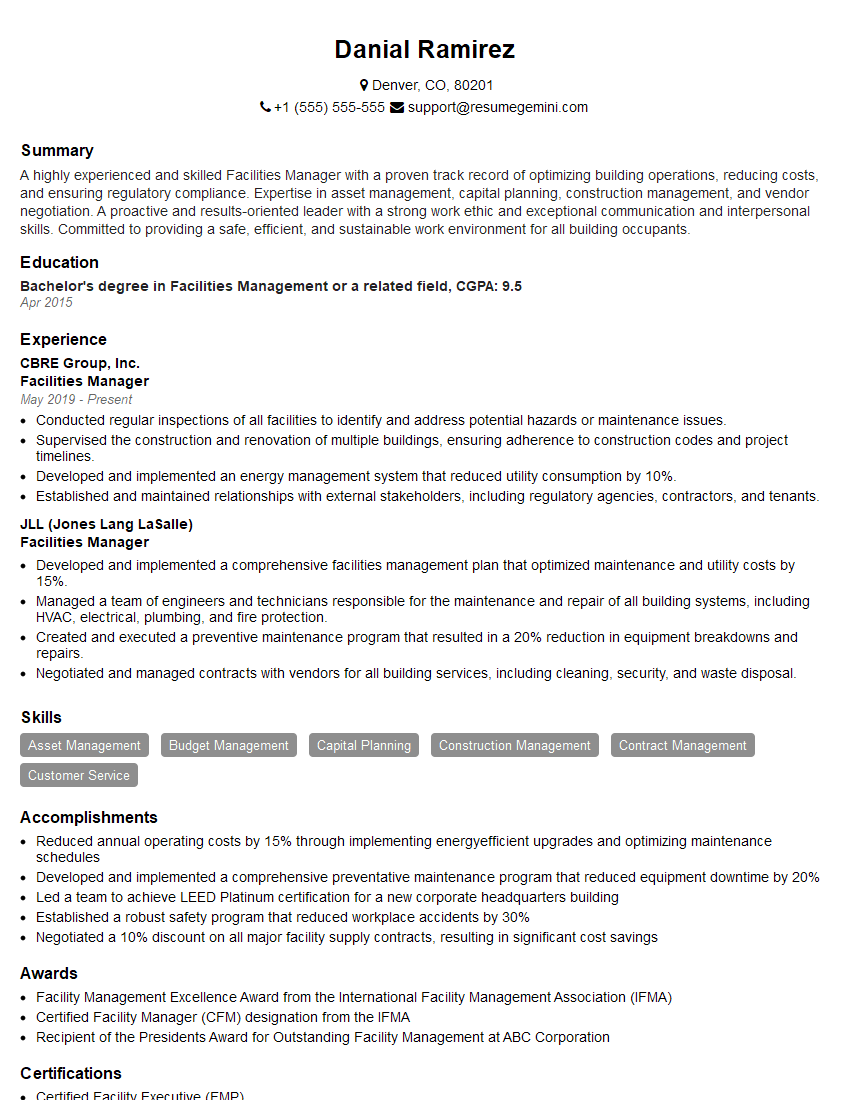
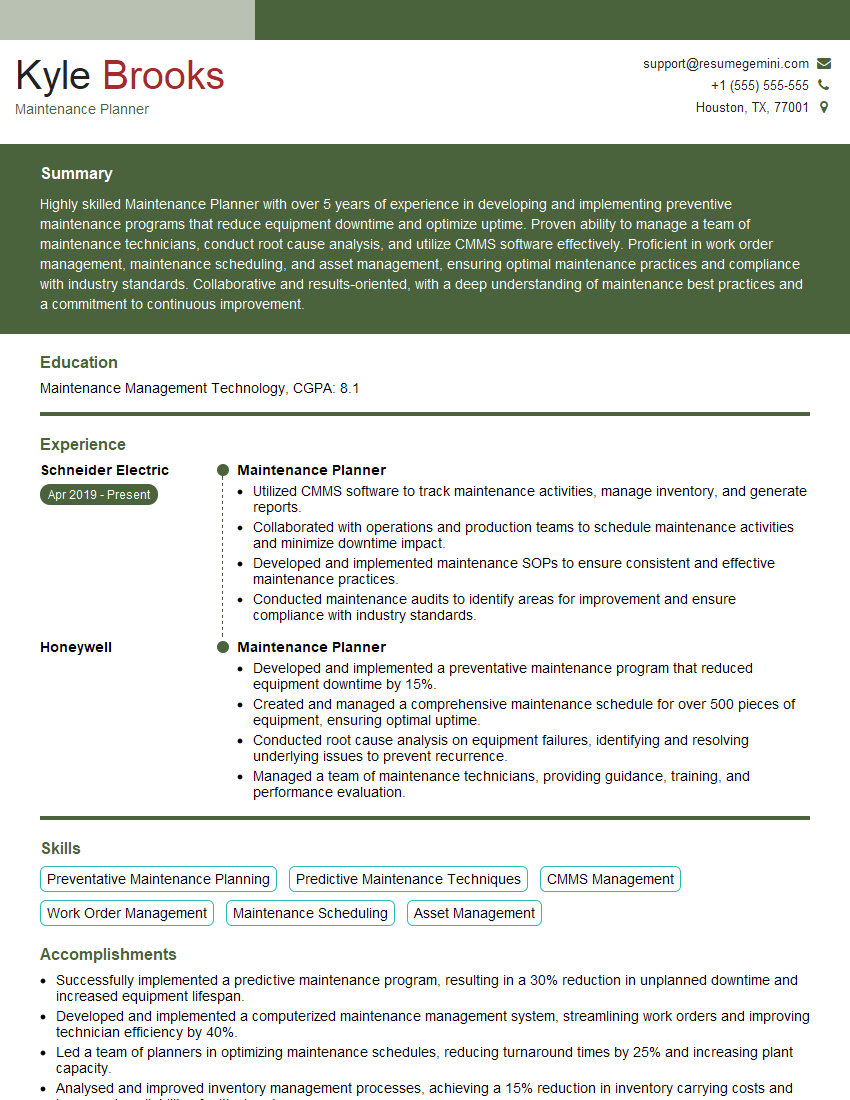
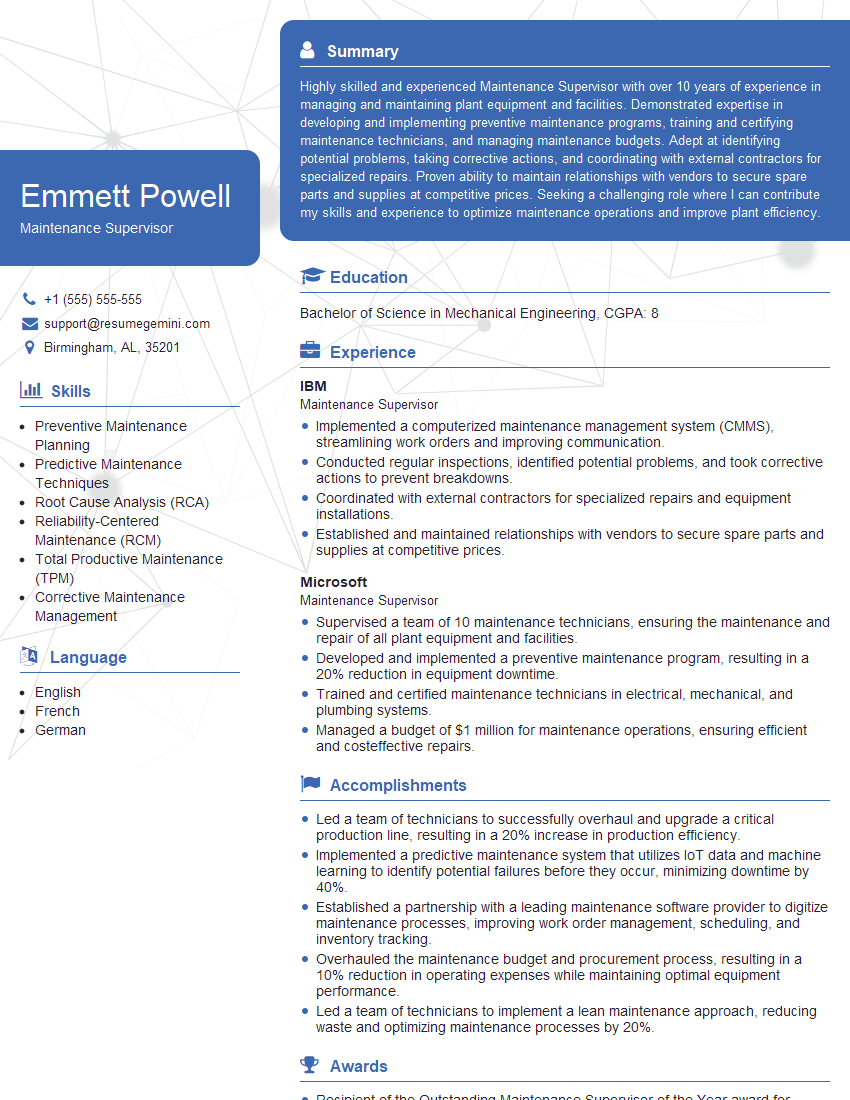
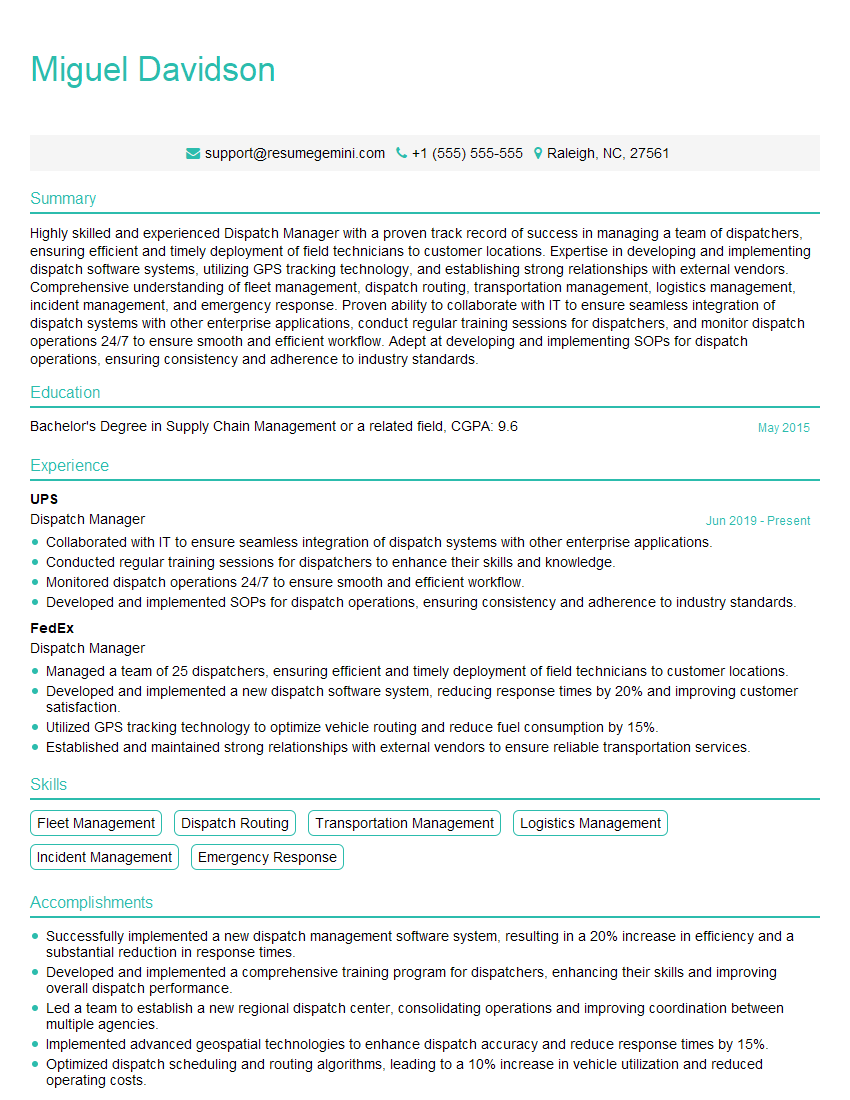
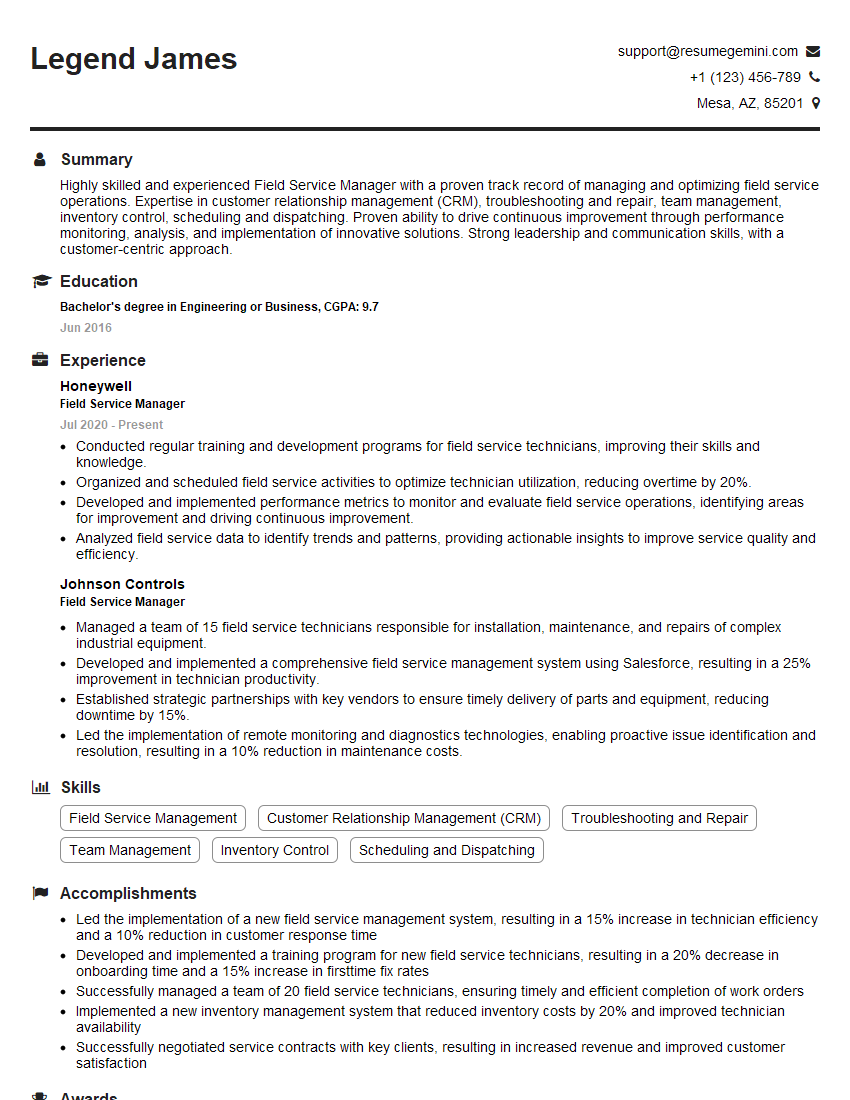
Mastering Work Order Tracking opens doors to exciting career opportunities in operations, maintenance, and project management. A strong understanding of these concepts will significantly enhance your interview performance and overall career prospects. To maximize your chances, create an ATS-friendly resume that highlights your relevant skills and experience. We highly recommend using ResumeGemini to build a professional and impactful resume. ResumeGemini provides tools and resources to help you create a resume that stands out, and we offer examples of resumes tailored to Work Order Tracking to help guide you.


Explore more articles
Users Rating of Our Blogs
Share Your Experience
We value your feedback! Please rate our content and share your thoughts (optional).
What Readers Say About Our Blog
To the interviewgemini.com Webmaster.
Very helpful and content specific questions to help prepare me for my interview!
Thank you
To the interviewgemini.com Webmaster.
This was kind of a unique content I found around the specialized skills. Very helpful questions and good detailed answers.
Very Helpful blog, thank you Interviewgemini team.