Preparation is the key to success in any interview. In this post, we’ll explore crucial Writing and Communicating Demographic Information interview questions and equip you with strategies to craft impactful answers. Whether you’re a beginner or a pro, these tips will elevate your preparation.
Questions Asked in Writing and Communicating Demographic Information Interview
Q 1. Explain the difference between qualitative and quantitative demographic data.
Qualitative and quantitative demographic data represent different aspects of a population. Quantitative data focuses on numerical measurements and statistical analysis, providing objective insights. Think of it like counting the number of people in each age group in a city. Qualitative data, on the other hand, explores the ‘why’ behind the numbers, delving into attitudes, beliefs, and experiences. This is like conducting interviews to understand why certain age groups might prefer living in specific neighborhoods.
- Quantitative: Uses numerical data like population size, age, income, etc., often presented in charts and graphs. Analysis involves statistical tests like regression or t-tests.
- Qualitative: Uses textual or visual data from interviews, focus groups, or open-ended surveys. Analysis involves thematic analysis, identifying recurring patterns and meanings in the data.
For example, a quantitative study might show that 60% of a city’s population is under 35. A qualitative study could then explore the reasons behind this, perhaps revealing that young people are drawn to the city’s vibrant job market and cultural scene.
Q 2. How would you present complex demographic data to a non-technical audience?
Presenting complex demographic data to a non-technical audience requires clear, concise communication that avoids jargon. I use storytelling and visuals to make the data engaging and understandable. Instead of presenting raw numbers, I focus on the key takeaways and their implications. For instance, instead of saying ‘the median age increased by 2.5 years,’ I might say ‘our community is getting older, with more residents entering retirement age, impacting healthcare and social services needs.’
- Visualizations: I utilize charts, maps, and infographics to present data visually. Simple bar charts, pie charts, and maps are highly effective. I avoid overly complex visualizations.
- Storytelling: I weave a narrative around the data, highlighting trends and their impact on people’s lives. I use real-life examples and relatable scenarios to make the data more meaningful.
- Analogies: I use everyday analogies to explain complex concepts. For example, I might compare population distribution to the arrangement of furniture in a room.
Imagine explaining the impact of an aging population on social security. I wouldn’t just present graphs showing declining worker-to-retiree ratios. Instead, I’d use a human-centered narrative, highlighting the concerns of both retirees and younger generations. This makes the issue more relatable and encourages engagement.
Q 3. Describe your experience with various data visualization tools.
I’m proficient in a variety of data visualization tools, including Tableau, Power BI, and R with ggplot2. Each tool offers unique strengths. Tableau and Power BI excel at creating interactive dashboards and reports, ideal for presenting findings to stakeholders. R, with ggplot2, provides greater control over the visualization process and allows for customized creations – particularly useful for academic publications or more complex analyses.
- Tableau: Excellent for interactive dashboards, quick visualizations, and easy data connection.
- Power BI: Similar to Tableau, with strong integration with Microsoft products.
- R (ggplot2): Provides highly customizable and publication-quality graphics, useful for advanced analysis and specific needs.
For example, when analyzing census data, I might use Tableau to create an interactive map showing population density across a region, allowing users to zoom in and out for a detailed view. For academic research, I might leverage R’s capabilities to create more nuanced statistical graphs and visualize complex relationships within the data.
Q 4. What are some common biases in demographic data, and how do you account for them?
Demographic data can be susceptible to various biases. Sampling bias occurs when the sample doesn’t accurately represent the population, leading to skewed results. For instance, if a survey relies heavily on online responses, it might exclude individuals without internet access, misrepresenting the overall population’s views. Response bias can occur when respondents provide inaccurate or misleading information due to social desirability bias or other factors.
- Sampling Bias: Address this by employing appropriate sampling techniques, such as stratified random sampling, to ensure diverse representation.
- Response Bias: Minimize this through carefully designed questionnaires, anonymity, and clear instructions. Triangulation, using multiple data sources, helps cross-validate findings.
- Measurement Bias: Inconsistent or flawed measurement tools can introduce bias. This requires using standardized, validated instruments and rigorously testing data collection methods.
To account for these biases, I employ rigorous data cleaning and validation techniques. I examine data for outliers and inconsistencies, and I use statistical methods to assess the potential impact of biases on the findings. Transparency is key; I always clearly document my methodology and limitations.
Q 5. How do you ensure accuracy and reliability in your demographic data analysis?
Ensuring accuracy and reliability requires a multi-pronged approach. Data quality is paramount. I carefully scrutinize data sources, verifying their credibility and methodologies. Data cleaning is crucial – I identify and correct inconsistencies, handle missing data appropriately (e.g., imputation or exclusion), and manage outliers.
- Source Validation: Verify data sources using multiple sources, cross-referencing information.
- Data Cleaning: Thoroughly clean the data, addressing inconsistencies and missing values.
- Statistical Checks: Perform statistical checks to identify outliers and potential errors.
- Peer Review: Sharing work with colleagues for review helps identify potential oversights.
For instance, if analyzing income data, I would check for data entry errors, consider whether to impute missing values using statistical methods, and assess the distribution to identify and understand extreme values. A clear audit trail of all data processing steps ensures transparency and reproducibility.
Q 6. What statistical methods are you proficient in using for demographic analysis?
My statistical toolkit includes a range of methods suited for demographic analysis. I’m proficient in descriptive statistics (mean, median, standard deviation) to summarize data, inferential statistics (hypothesis testing, confidence intervals) to make inferences about the population, and regression analysis (linear, logistic) to model relationships between variables.
- Descriptive Statistics: Summarizing and describing key features of the data.
- Inferential Statistics: Making generalizations about the population from sample data (e.g., t-tests, ANOVA, chi-square tests).
- Regression Analysis: Modeling relationships between variables (e.g., predicting income based on education level).
- Spatial Statistics: Analyzing data with geographic location (e.g., analyzing crime rates across different neighborhoods).
For example, I might use regression analysis to explore the relationship between education level and income, or a chi-square test to assess the association between ethnicity and health outcomes. The choice of statistical method depends on the research question and the nature of the data.
Q 7. Describe your experience working with large datasets.
I have extensive experience working with large datasets, frequently exceeding millions of rows. My approach involves leveraging efficient data management techniques and programming skills. I utilize SQL and programming languages like R and Python to efficiently process and analyze these datasets.
- Database Management: Using SQL to manage and query large datasets within relational databases.
- Data Wrangling: Employing programming (R or Python) to clean, transform, and prepare data for analysis.
- Data Sampling: When computationally intensive, using appropriate sampling methods to generate representative subsets for analysis.
- Distributed Computing: For extremely large datasets, utilizing cloud computing resources or parallel processing techniques for efficient analysis.
For example, when analyzing a national-level survey dataset, I would use SQL to extract relevant subsets of the data, then leverage R or Python’s data manipulation capabilities for cleaning and preparing the data for statistical modeling. For exceptionally large datasets, I might consider using cloud computing platforms to distribute the computational load and improve processing speed.
Q 8. How do you handle inconsistencies or missing data in demographic information?
Handling inconsistencies and missing data in demographic information is crucial for maintaining data integrity and drawing accurate conclusions. My approach involves a multi-step process:
- Identification and Documentation: I meticulously identify all inconsistencies and missing data points, documenting their nature and extent. This often involves comparing data from multiple sources and using data validation techniques.
- Data Imputation (if appropriate): For missing data, I carefully consider the best imputation method. Simple methods like using the mean or median might be suitable for some variables, but for others, more sophisticated techniques like multiple imputation or regression imputation might be necessary to minimize bias. The choice depends on the data’s nature and the potential impact on the analysis.
- Sensitivity Analysis: After imputation (if performed), I conduct a sensitivity analysis to assess how the results change depending on the imputation method. This helps to understand the uncertainty introduced by missing data.
- Data Cleaning and Transformation: I clean the data to address inconsistencies, such as standardizing formats and correcting errors. This might involve using data cleaning tools or scripting languages like Python with libraries like Pandas.
- Transparency and Reporting: Finally, I clearly document all data handling procedures and limitations in the final report. This ensures transparency and allows readers to critically assess the findings.
For example, if a survey has a high percentage of missing income data, I might use multiple imputation to fill in the gaps, but I would also discuss the limitations of this approach in the report. This might include information on the assumptions made during the imputation and the potential impact on conclusions.
Q 9. Explain your process for creating effective demographic reports.
Creating effective demographic reports involves a structured approach:
- Define Objectives and Audience: I begin by clearly defining the report’s objectives and the target audience (e.g., executives, policymakers, researchers). This determines the level of detail, the type of visualizations, and the overall tone of the report.
- Data Selection and Cleaning: I select the relevant demographic variables, ensuring the data is accurate, consistent, and properly cleaned. This involves identifying and addressing issues like outliers, missing values, and inconsistencies.
- Data Analysis and Interpretation: I analyze the data using appropriate statistical methods to identify key trends, patterns, and insights. This might involve descriptive statistics, correlation analysis, regression analysis, or other techniques as necessary.
- Visualization and Presentation: I create clear and concise visualizations, such as charts, graphs, and maps, to effectively communicate the findings. I use appropriate visual aids to convey complex information in a readily digestible format.
- Report Writing and Storytelling: I write a narrative that summarizes the key findings, explains their implications, and supports them with evidence. I tell a compelling story using the data, making it engaging and relevant for the intended audience.
- Review and Iteration: I review the report to ensure clarity, accuracy, and consistency before finalizing and distributing it. This step includes seeking feedback from colleagues or stakeholders.
For instance, a report for executives might focus on high-level summaries and key recommendations, while a report for researchers might delve into more technical details and methodology.
Q 10. How do you identify key trends and insights from demographic data?
Identifying key trends and insights from demographic data requires a combination of statistical analysis and domain expertise. My process typically includes:
- Descriptive Statistics: I start with descriptive statistics (means, medians, standard deviations, frequencies) to get an overall understanding of the data distribution and identify initial patterns.
- Data Visualization: Creating visualizations (e.g., histograms, scatter plots, maps) helps to uncover patterns and relationships that might not be immediately apparent from numerical data.
- Correlation and Regression Analysis: I use correlation and regression analysis to identify relationships between different demographic variables. For example, I might explore the relationship between age and income or education level and employment status.
- Trend Analysis: I analyze the data over time (if available) to identify trends and changes in demographic patterns. This often involves using time series analysis techniques.
- Segmentation and Clustering: For more complex analyses, I may use techniques like segmentation or clustering to group individuals with similar characteristics. This helps to identify distinct subgroups within the population and understand their unique traits.
- Comparative Analysis: Comparing demographic data across different groups (e.g., geographic regions, age groups, ethnic groups) can reveal significant disparities and inequalities.
For example, analyzing census data might reveal a growing elderly population in a specific region, leading to insights into the need for healthcare resources and senior housing.
Q 11. What is your experience with different data collection methods (e.g., surveys, census data)?
I have extensive experience with various data collection methods, each with its strengths and weaknesses:
- Surveys: I’m proficient in designing, administering, and analyzing survey data. This includes choosing appropriate sampling methods, developing clear and unbiased questions, and managing the data collection process. I’m experienced with both online and paper-based surveys. The strength lies in the ability to gather specific information, but limitations include response bias and sampling error.
- Census Data: I’m well-versed in using census data, understanding its strengths and limitations. Census data provides a comprehensive picture of the population, but it might lack detail on certain aspects and data lag can be a concern.
- Administrative Data: I frequently work with administrative data from government agencies or organizations, recognizing the potential biases and limitations associated with these data sources. Such data often provide longitudinal information on a specific aspect, such as birth and death certificates or hospital records.
- Big Data Sources: I am familiar with working with large datasets from sources like social media or mobile devices. However, accessing, cleaning, and analyzing these data sources often requires specialized skills and tools, including considerations of privacy and ethical implications.
My approach involves selecting the most appropriate method based on the research question, available resources, and ethical considerations. I always strive to utilize multiple data sources whenever possible to triangulate findings and mitigate biases.
Q 12. How do you ensure your demographic reports are both accurate and accessible?
Ensuring accuracy and accessibility in demographic reports is paramount. My approach involves:
- Rigorous Data Validation: I use multiple methods to validate the accuracy of the data, including checks for consistency, plausibility, and completeness. This involves both automated checks and manual review where needed.
- Clear and Concise Reporting: I present findings in a clear, concise, and easy-to-understand manner, avoiding technical jargon whenever possible. This involves using plain language, effective visualizations, and a well-structured report layout.
- Data Transparency: I provide sufficient detail about the data sources, methodology, and limitations in the report. This enhances the credibility and allows readers to critically assess the findings.
- Accessibility Considerations: I ensure the report is accessible to a wide audience by using clear and consistent formatting, providing alternative text for images, and considering the needs of users with disabilities. This might include using accessible document formats such as PDF/UA.
- Peer Review: I often seek feedback from colleagues to review reports before dissemination for accuracy and clarity.
For example, using alternative text for charts and graphs ensures that visually impaired individuals can understand the information.
Q 13. How do you tailor your communication style to different audiences (e.g., executives, policymakers)?
Tailoring communication style to different audiences is essential for effective communication. My approach adapts to the specific needs and knowledge of the audience:
- Executives: For executives, I focus on high-level summaries, key findings, and actionable recommendations. I use concise language, strong visuals, and highlight the implications for strategic decision-making.
- Policymakers: For policymakers, I emphasize the policy relevance of the findings and provide data-driven evidence to support recommendations for policy changes. I present the information clearly, concisely, and in a format easily digestible for policy discussions.
- Researchers: For researchers, I provide a more detailed and technical presentation, including a thorough description of the methodology, statistical analysis, and limitations of the study. This might involve using more academic language and focusing on nuanced interpretations.
- General Public: For the general public, I use plain language, avoiding technical jargon, and focusing on clear, concise explanations of the key findings. I often use analogies or real-world examples to make the information more relatable.
Essentially, my communication adapts to the audience’s level of understanding and their specific needs in using demographic information. For instance, while an executive needs a quick overview of trends to inform strategic decisions, a researcher needs a thorough description of the methodologies to evaluate the findings’ reliability.
Q 14. What are some ethical considerations when working with demographic data?
Ethical considerations when working with demographic data are crucial. These include:
- Privacy and Confidentiality: I always prioritize the privacy and confidentiality of individuals whose data I use. This includes adhering to all relevant data protection laws and regulations, using anonymization or aggregation techniques when necessary, and obtaining informed consent whenever possible.
- Data Security: I implement robust security measures to protect the data from unauthorized access, use, or disclosure. This might include secure data storage, access control mechanisms, and encryption techniques.
- Bias and Fairness: I’m mindful of potential biases in data collection, analysis, and interpretation. This involves critically examining data for biases and using appropriate methods to mitigate their effects. I strive to avoid perpetuating stereotypes or harmful assumptions.
- Transparency and Accountability: I maintain transparency in all aspects of my work, ensuring that my methods are clearly documented and that the findings are presented honestly and accurately. I am accountable for the quality and ethical implications of my work.
- Avoiding Misrepresentation: I am careful to avoid misrepresenting or overinterpreting the data. This includes avoiding making causal inferences when only correlations exist, and providing a full picture of the data including its limitations.
Ignoring these ethical considerations can lead to misleading or harmful conclusions that can perpetuate inequality and injustice. For example, using biased data to create discriminatory algorithms or making unsubstantiated claims based on incomplete information are serious ethical breaches.
Q 15. Describe your experience using demographic data for market research.
Demographic data is crucial for effective market research. It allows us to segment the market into meaningful groups based on shared characteristics like age, gender, income, location, education, and ethnicity. This segmentation enables targeted marketing campaigns, product development tailored to specific needs, and a deeper understanding of consumer behavior.
For example, when launching a new skincare line, I wouldn’t rely on broad generalizations. Instead, I’d analyze demographic data to identify specific age groups (e.g., millennials interested in sustainable products), their income levels (to determine appropriate pricing), and their location (to plan distribution and advertising). This allows for laser-focused marketing efforts, maximizing ROI.
Another example would be using census data to understand the population density and demographics in a specific area before opening a new retail store. This helps determine the optimal location to maximize foot traffic and sales.
Career Expert Tips:
- Ace those interviews! Prepare effectively by reviewing the Top 50 Most Common Interview Questions on ResumeGemini.
- Navigate your job search with confidence! Explore a wide range of Career Tips on ResumeGemini. Learn about common challenges and recommendations to overcome them.
- Craft the perfect resume! Master the Art of Resume Writing with ResumeGemini’s guide. Showcase your unique qualifications and achievements effectively.
- Don’t miss out on holiday savings! Build your dream resume with ResumeGemini’s ATS optimized templates.
Q 16. How do you interpret and communicate the significance of demographic trends?
Interpreting demographic trends involves analyzing changes in population characteristics over time and understanding their implications. This often means looking beyond simple numbers to identify underlying patterns and shifts in behavior. Communicating these trends effectively involves clear, concise language, avoiding jargon, and using compelling visualizations like charts and graphs.
For instance, an increasing median age might suggest a rising demand for age-related products or services. A shift in urban-rural population distribution could signal opportunities in underserved markets. I ensure the significance is clear by relating the trends to real-world consequences – for example, how a shrinking workforce could impact the economy or how changes in family structures affect housing demand.
Q 17. Describe a time you had to explain complex demographic data to a skeptical audience.
During a presentation to a board of directors about a proposed marketing campaign targeting a younger demographic, several members expressed skepticism about the strategy’s effectiveness. They felt our analysis overestimated the purchasing power of the target group.
To address their concerns, I broke down our methodology. I showed them the data sources, including not just purchasing data but also social media engagement metrics and lifestyle surveys confirming their higher than expected disposable income when considering factors like smaller family sizes and reduced housing costs. Visually, I presented clear charts comparing the financial behavior of our target group against other groups. This combination of transparency and strong visuals convinced them of our approach.
Q 18. What software programs are you proficient in for analyzing and visualizing demographic data?
My proficiency extends across several software programs crucial for demographic analysis and visualization. I’m highly skilled in using SPSS and R for statistical analysis and data manipulation, enabling me to perform complex calculations and identify significant correlations within large datasets. I also leverage Tableau and Power BI for creating visually appealing and insightful dashboards and reports that effectively communicate findings to diverse audiences. Finally, I’m comfortable with data cleaning and management using Excel and Python (with libraries like Pandas).
Q 19. How do you stay current with the latest trends and developments in demographic analysis?
Staying current in this field is essential. I regularly subscribe to publications such as the Pew Research Center and the United Nations Population Division reports. I also actively participate in professional organizations like the American Statistical Association, attending conferences and webinars to learn about new techniques and methodologies. Furthermore, I monitor influential demographic blogs and actively participate in online communities dedicated to data analysis and market research.
Q 20. How do you determine the appropriate sample size for a demographic study?
Determining the appropriate sample size for a demographic study depends on several factors, most importantly the desired level of precision and the variability within the population. There’s no one-size-fits-all answer. The larger the sample, the more accurate the results but at increased cost and time.
I typically use statistical power analysis to calculate the required sample size. This involves specifying the desired confidence level (e.g., 95%), the margin of error, and an estimate of the population variability. Software like G*Power is commonly used for these calculations. I also consider the characteristics of the population being studied; a more diverse population might require a larger sample size to ensure representation.
Q 21. How do you ensure your visualizations are clear, concise, and effective?
Effective data visualization is key to clear communication. I adhere to principles of simplicity, clarity, and accuracy. I avoid clutter and use appropriate chart types for the data. For instance, bar charts are great for comparisons, while line charts showcase trends over time. Maps are excellent for geographical data.
I always ensure that charts have clear labels, titles, and legends. I also prioritize the selection of a visually consistent color scheme to avoid confusion. Before finalizing any visualization, I conduct user testing to ensure that the information is easily understood by my intended audience regardless of their statistical background. A well-designed visualization should tell a story without requiring extensive explanation.
Q 22. Explain your experience with creating interactive data visualizations.
Creating interactive data visualizations is crucial for effectively communicating complex demographic information. My experience involves leveraging various tools like Tableau, Power BI, and even custom D3.js solutions to transform raw data into engaging and insightful visuals. For example, I once used Tableau to create an interactive map showing population density changes over time across a specific region, allowing users to filter by age group, ethnicity, and income level. This interactive element significantly enhanced understanding compared to static charts or tables.
I focus on selecting the most appropriate visualization type for the data and the intended audience. For instance, a choropleth map is ideal for geographically displaying data, while bar charts are suitable for comparisons. I also incorporate features like tooltips, legends, and interactive filters to enable users to explore the data at their own pace and uncover patterns. The key is to ensure the visualization is both aesthetically pleasing and functionally intuitive, leading to clear and impactful communication.
Q 23. Describe your process for developing data-driven narratives.
Developing data-driven narratives involves more than just presenting numbers; it’s about weaving a compelling story around the data. My process begins with a deep understanding of the data itself – exploring its strengths, limitations, and potential biases. Then, I identify the key insights and findings that need to be communicated. This often involves identifying trends, correlations, and anomalies.
Next, I structure the narrative to guide the audience through the data in a logical and engaging manner. I typically start with a strong introduction that sets the context, followed by a detailed exploration of the key findings, using visuals and supporting evidence to strengthen the narrative. Finally, I conclude by summarizing the key takeaways and emphasizing the implications of the findings. For instance, when analyzing census data to understand the impact of urban sprawl, I might begin by showing the overall population growth, then drill down into specific age cohorts and their residential patterns, weaving in relevant contextual information like infrastructure development and economic opportunities.
Q 24. How do you effectively communicate uncertainty and limitations in your demographic analysis?
Transparency regarding uncertainty and limitations is paramount in demographic analysis. I address this by explicitly stating the data sources and their potential biases, acknowledging sampling errors and margins of error. For example, if using survey data, I will clearly state the response rate and any potential non-response bias. I use visualizations to effectively convey uncertainty—for example, using error bars on charts to show the range of potential values.
Furthermore, I avoid overstating the conclusions and carefully choose my language to avoid making definitive statements when the data only supports tentative conclusions. It’s critical to maintain intellectual honesty and to be upfront about the constraints of the analysis. This builds trust with the audience and demonstrates a commitment to rigorous methodology.
Q 25. How do you handle conflicting demographic data from different sources?
Handling conflicting demographic data requires a systematic and critical approach. I begin by carefully examining the source of each dataset, assessing its methodology, data collection techniques, and potential biases. This often involves comparing the definitions used for variables like age, ethnicity, or income, ensuring consistency across datasets.
Next, I analyze the discrepancies between the datasets. Are the differences statistically significant? If so, I attempt to identify the reason behind the conflict. Is one dataset more reliable based on its methodology? Does the conflict highlight potential data quality issues? Sometimes reconciliation isn’t possible, and I would explain the conflicting findings and their potential implications rather than trying to artificially resolve the conflict. Ultimately, the goal is to present a transparent and nuanced understanding of the data, acknowledging limitations and uncertainties.
Q 26. What is your experience with geographic information systems (GIS) and its application to demographic data?
Geographic Information Systems (GIS) are invaluable for analyzing and visualizing demographic data spatially. My experience includes using ArcGIS and QGIS to map population distribution, analyze spatial patterns, and create interactive maps showcasing demographic trends. For instance, I’ve used GIS to analyze the spatial correlation between crime rates and socio-economic indicators within a city, revealing crucial insights that would be invisible in tabular data alone.
Beyond mapping, I utilize GIS functionalities like spatial analysis tools to conduct proximity analysis, overlaying demographic data with other geospatial datasets such as land use or transportation networks. This allows for a deeper understanding of how demographic factors relate to the geographical environment. This spatial perspective enhances the understanding and communication of demographic information, providing crucial context for planning and decision-making.
Q 27. Describe your experience in using demographic projections for future planning.
Demographic projections are essential for long-term planning across various sectors. My experience involves using demographic modeling software and techniques to project future population size, age structure, and other key demographic variables. This frequently entails using cohort-component models that consider factors like fertility rates, mortality rates, and migration patterns.
For example, I’ve worked on projects projecting the future demand for healthcare services based on the projected aging population of a specific region. This informed the development of strategic plans for hospital capacity and healthcare workforce allocation. It’s crucial to acknowledge the inherent uncertainty in projections. I always present multiple scenarios (e.g., high, medium, and low growth projections), emphasizing the assumptions and limitations of the models used. This ensures that the projections are interpreted responsibly and inform robust and adaptable future planning.
Q 28. How do you ensure data privacy and security when working with sensitive demographic information?
Data privacy and security are paramount when working with sensitive demographic information. My approach aligns with best practices and relevant regulations (e.g., GDPR, HIPAA). This involves anonymizing data whenever possible, removing or masking personally identifiable information (PII) like names, addresses, and social security numbers. Data is stored securely using encrypted databases and access is strictly controlled through role-based access controls (RBAC).
Furthermore, all analyses are conducted in a secure environment. I adhere to strict protocols for data handling, and maintain detailed documentation of all data processing steps. When sharing data or reports, I ensure that appropriate access controls are in place to protect sensitive information. Regular security audits are crucial to ensure compliance with relevant regulations and to minimize the risk of data breaches.
Key Topics to Learn for Writing and Communicating Demographic Information Interview
- Data Privacy and Ethical Considerations: Understanding legal frameworks and ethical guidelines related to handling sensitive demographic data. This includes learning how to anonymize data when necessary and ensuring compliance with relevant regulations.
- Effective Data Visualization: Mastering techniques to present complex demographic data clearly and concisely through charts, graphs, and tables. This includes choosing the most appropriate visualization method for different datasets and audiences.
- Clear and Concise Communication: Developing the ability to translate complex demographic information into easily understandable language for diverse audiences. This involves tailoring your communication style to the specific needs and knowledge levels of your intended recipients.
- Data Interpretation and Analysis: Developing strong analytical skills to identify trends, patterns, and insights within demographic datasets. This includes understanding statistical methods and drawing meaningful conclusions from the data.
- Bias and Representation in Data: Recognizing potential biases within demographic data and understanding how these biases can impact interpretations and conclusions. This involves critically evaluating data sources and methodologies.
- Report Writing and Presentation Skills: Mastering the art of creating well-structured, professional reports and delivering compelling presentations based on demographic data. This includes understanding the principles of effective storytelling with data.
Next Steps
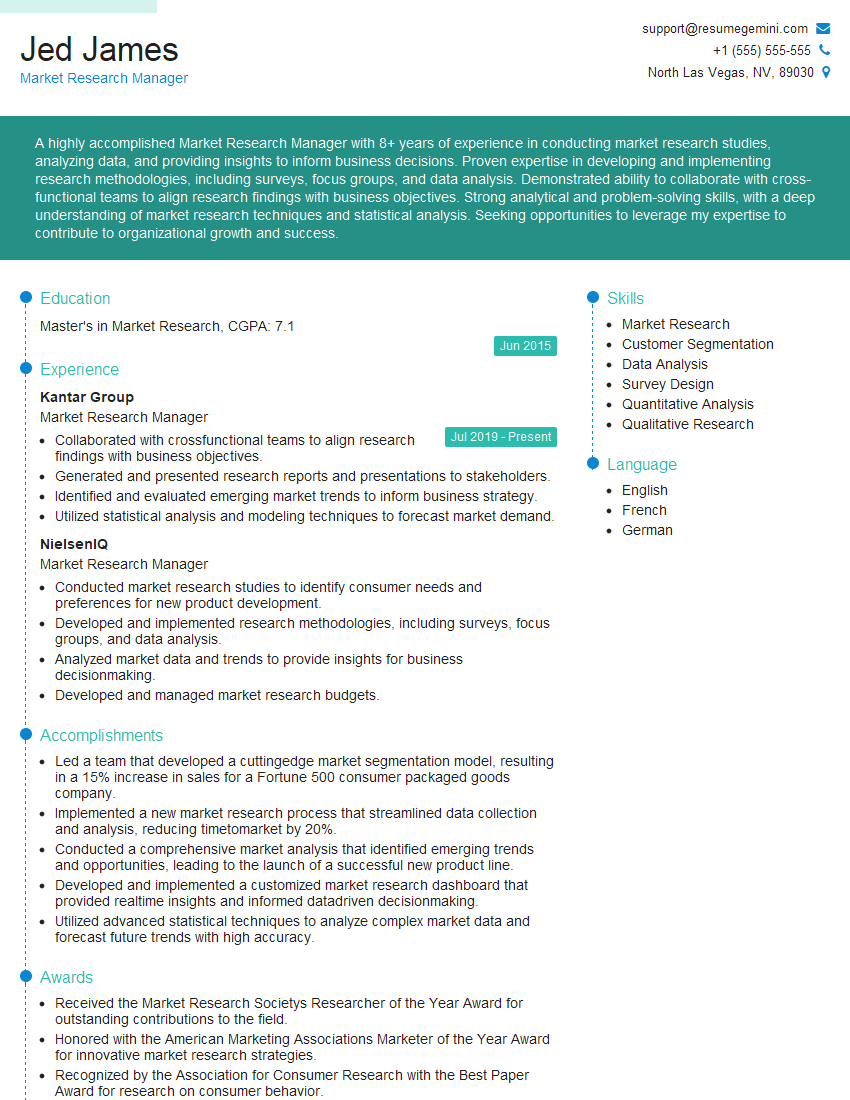
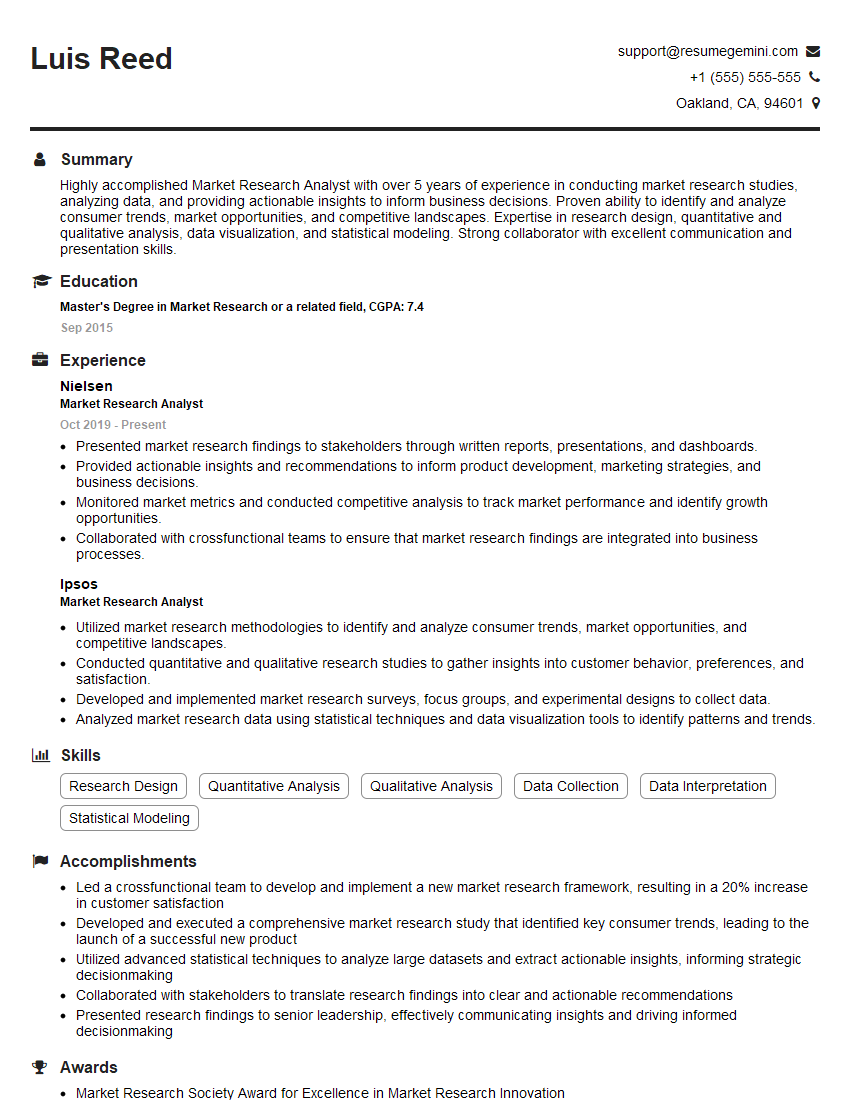
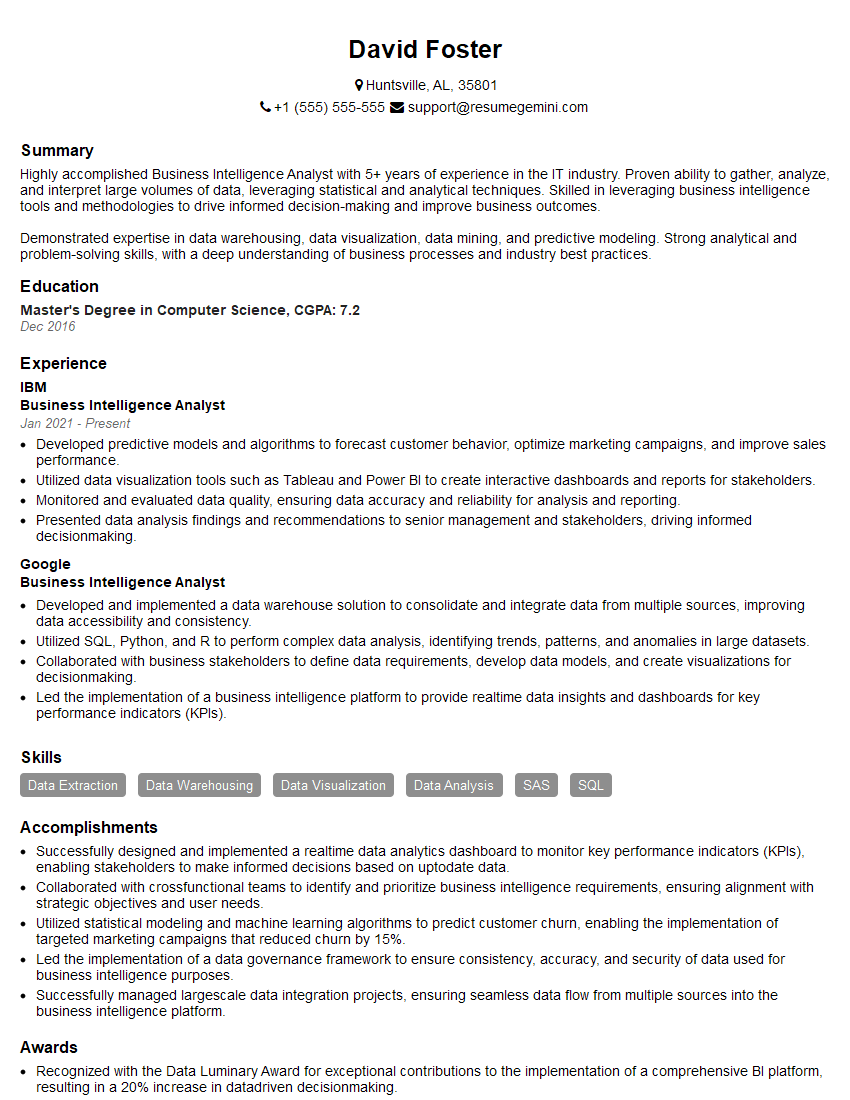
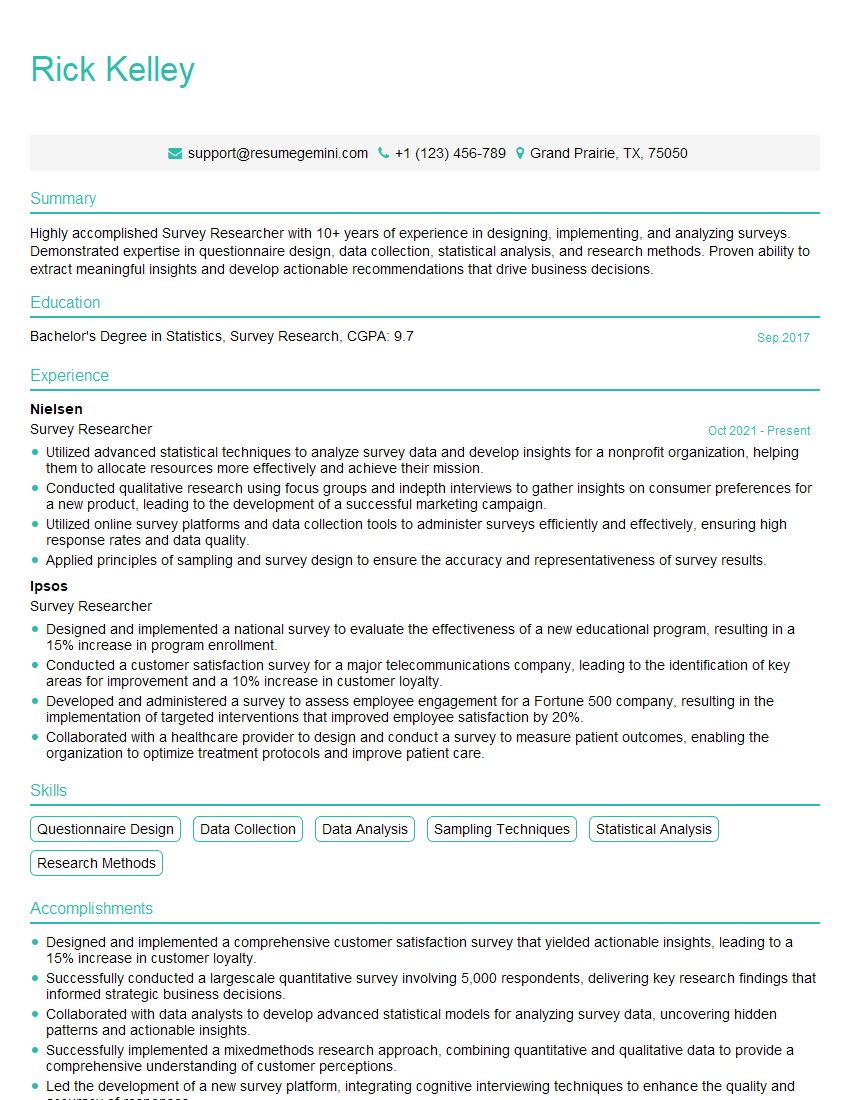
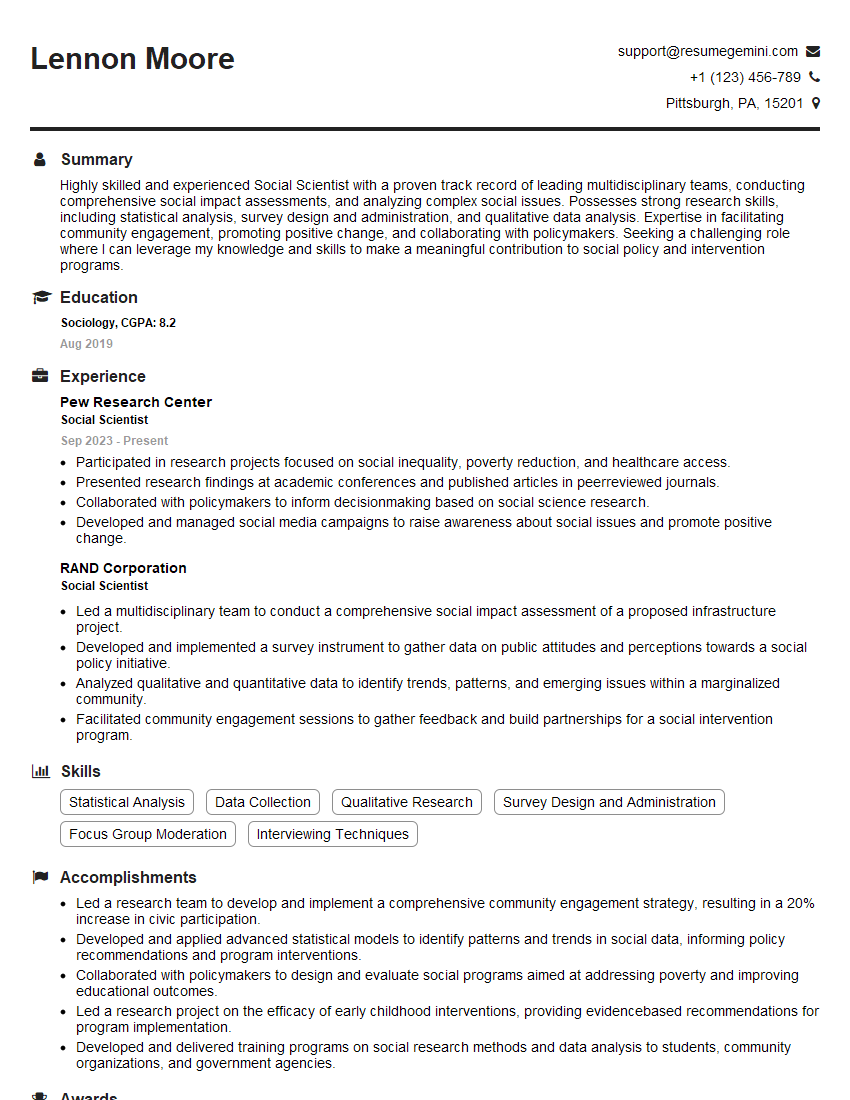
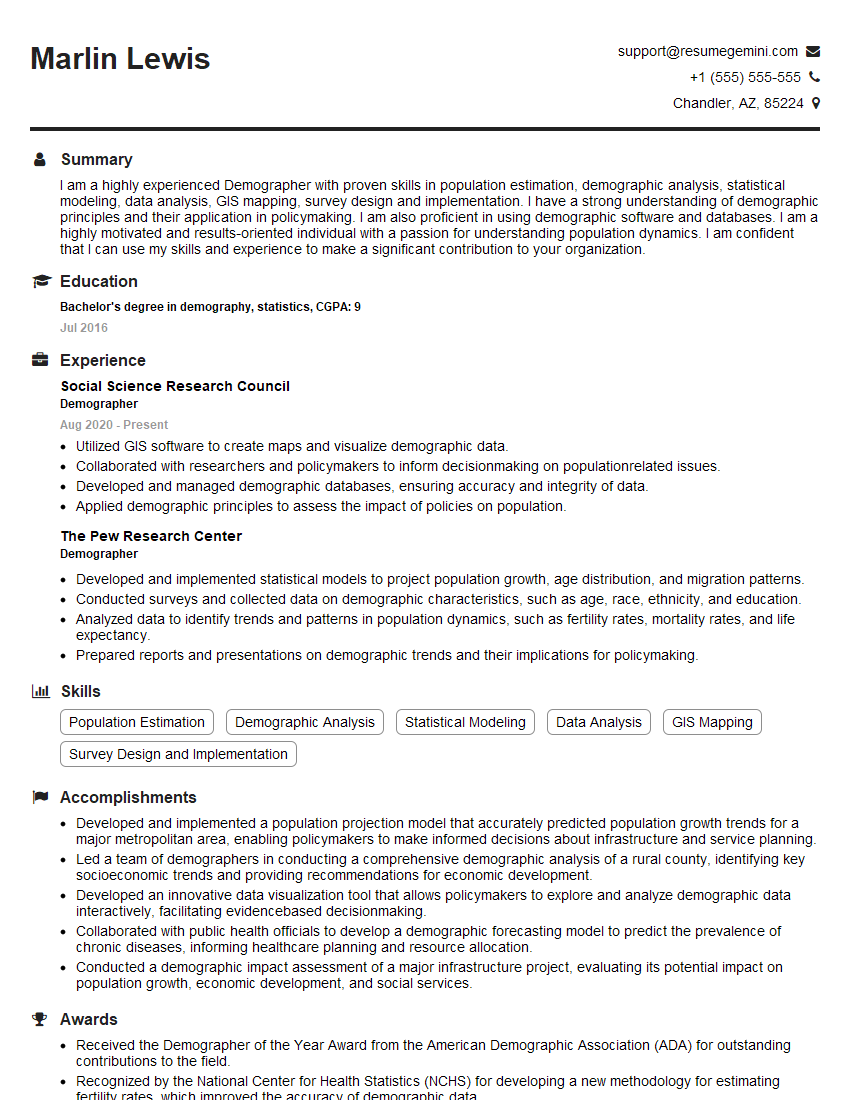
Mastering the art of writing and communicating demographic information is crucial for career advancement in many fields, opening doors to exciting opportunities and enhancing your professional impact. A strong resume is your first impression; creating an ATS-friendly resume is essential to maximizing your job prospects. ResumeGemini can help you build a compelling and effective resume that showcases your skills and experience in this vital area. We offer examples of resumes tailored to Writing and Communicating Demographic Information to guide you, ensuring your application stands out.

Explore more articles
Users Rating of Our Blogs
Share Your Experience
We value your feedback! Please rate our content and share your thoughts (optional).
What Readers Say About Our Blog
To the interviewgemini.com Webmaster.
Very helpful and content specific questions to help prepare me for my interview!
Thank you
To the interviewgemini.com Webmaster.
This was kind of a unique content I found around the specialized skills. Very helpful questions and good detailed answers.
Very Helpful blog, thank you Interviewgemini team.