Are you ready to stand out in your next interview? Understanding and preparing for Heavy Equipment Troubleshooting and Repair interview questions is a game-changer. In this blog, we’ve compiled key questions and expert advice to help you showcase your skills with confidence and precision. Let’s get started on your journey to acing the interview.
Questions Asked in Heavy Equipment Troubleshooting and Repair Interview
Q 1. Describe your experience diagnosing hydraulic system failures.
Diagnosing hydraulic system failures requires a systematic approach. It’s like detective work, where you need to follow the clues to pinpoint the problem. I start by visually inspecting the system for leaks, damaged hoses, or loose fittings. Then, I’ll check fluid levels and quality. Low fluid levels often indicate a leak, while discolored fluid might suggest contamination.
Next, I’ll use diagnostic tools, such as pressure gauges and flow meters, to measure the system’s pressure and flow rates. These readings help identify if there’s insufficient pressure, restricted flow, or internal leakage within components like pumps, valves, or cylinders. For example, a low pressure reading in a hydraulic cylinder might indicate a failing pump or a blockage in the line. A slow response time in a hydraulic system may indicate a restriction in the hydraulic line or a problem with the hydraulic valve. I often use a combination of these methods, depending on the complexity of the system and the specific symptoms presented.
Troubleshooting a hydraulic system on a bulldozer, for example, might involve checking the main lift cylinder pressure. If the pressure is low, I’d move on to inspecting the lines for leaks, the pump for output, and the control valves for proper operation, systematically eliminating possible causes until the fault is found.
Q 2. Explain the process of troubleshooting a faulty diesel engine.
Troubleshooting a faulty diesel engine is a multi-step process. Think of it as a medical diagnosis for the engine. First, I gather information: What are the symptoms? Does the engine crank but not start, run rough, lack power, or produce excessive smoke? I’ll then visually inspect the engine for obvious problems, like loose connections, leaks, or damaged parts.
Next, I’ll use diagnostic tools, such as code readers, to check for any stored trouble codes within the engine’s electronic control unit (ECU). These codes can provide valuable clues about the potential problem. In addition to electronic diagnostics, I’ll check basic parameters like fuel pressure, compression, and air intake restriction. Low fuel pressure could indicate a faulty fuel pump, while low compression might suggest worn piston rings or a damaged cylinder head. Restricted airflow might be caused by a dirty air filter.
I might also check the glow plugs (in cold weather starts), the starter motor, and the battery. A thorough diagnostic process will often involve system-level checks before diving deeper into specific components. For example, a lack of power could point towards a fuel delivery problem or an issue with the turbocharger. Once the root cause is identified, I perform the necessary repairs or replacements.
Q 3. How do you identify and repair electrical issues in heavy equipment?
Identifying and repairing electrical issues in heavy equipment requires a combination of knowledge and careful systematic troubleshooting. I use a multimeter to test voltage, current, and continuity. For example, I can check the voltage at the battery terminals and compare that to the voltage at the starter motor. A drop in voltage indicates a problem in the wiring or connections between the battery and starter. A lack of voltage might point to a blown fuse or a faulty relay.
I also use wiring diagrams, which are like roadmaps for the electrical system. These diagrams show the flow of electricity through various components. I might trace a circuit from the switch to the light or a motor to find the point where the circuit is interrupted. Sometimes, it requires more advanced diagnostic tools, like a scan tool to test sensors or actuators. I can isolate short circuits by checking for resistance.
Safety is paramount. Before working on any electrical components, I always disconnect the battery to prevent shocks. When dealing with high-voltage systems, additional safety precautions must be followed.
Q 4. What are the common causes of overheating in heavy equipment engines?
Overheating in heavy equipment engines is a common problem that can lead to serious damage. Several factors can cause overheating, and the root cause needs to be identified for effective repair. Think of the cooling system as a circulatory system for the engine – if any part of it is impaired, it can lead to overheating.
Common causes include:
- Insufficient coolant levels: This is often due to leaks in the radiator, hoses, or water pump.
- Faulty thermostat: A malfunctioning thermostat can prevent proper coolant flow.
- Clogged radiator: Dirt, debris, and scale buildup restrict coolant flow.
- Malfunctioning cooling fan: The fan might not be working correctly, or might be clogged or damaged.
- Problems with the water pump: A damaged water pump fails to circulate coolant efficiently.
- Head gasket failure: A blown head gasket allows coolant to mix with engine oil, reducing cooling capacity and potentially leading to severe engine damage.
Identifying the exact cause requires a thorough inspection, often involving pressure testing the cooling system and checking for leaks or blockages.
Q 5. Describe your experience with preventative maintenance schedules for heavy equipment.
Preventative maintenance is crucial for extending the lifespan of heavy equipment and preventing costly breakdowns. It’s like regular check-ups for a vehicle – essential for longevity and safety. I follow manufacturer-recommended schedules, which vary depending on the equipment type and operating conditions. These schedules typically involve:
- Regular fluid changes (engine oil, hydraulic oil, transmission oil, coolant): Used oil degrades over time, reducing lubrication and increasing wear.
- Filter replacements (air, fuel, oil): Filters remove contaminants that could damage engine and other system components.
- Visual inspections for leaks, wear and tear, or damage:
- Component checks and adjustments (belts, hoses, linkages): Checking for wear and ensuring proper tension or adjustment.
- Lubrication of critical components:
For example, a preventative maintenance schedule for an excavator might include weekly grease fittings lubrication and monthly checks on hydraulic oil levels and component condition. Detailed records are kept for each piece of equipment to track service history and ensure that maintenance tasks are completed on time. This proactive approach significantly reduces the likelihood of unexpected failures and keeps the equipment running efficiently.
Q 6. How do you interpret diagnostic codes from heavy equipment onboard systems?
Interpreting diagnostic codes from heavy equipment onboard systems is essential for efficient troubleshooting. These codes, often displayed on a diagnostic screen or retrieved with a scan tool, provide clues about malfunctions within various systems. Each code corresponds to a specific problem, typically relating to a malfunctioning sensor, actuator, or module. I use manufacturer’s service manuals which are crucial for decoding specific codes. They typically offer descriptions and suggested troubleshooting steps for each code.
For example, a code such as P0171 (lean fuel condition) in a diesel engine indicates a problem with the air/fuel ratio. This could result from several issues, such as a vacuum leak, a faulty mass airflow sensor, or a problem with the fuel injectors. Understanding the code’s context, considering the symptoms, and using the service manual to guide the troubleshooting process are essential steps in resolving the issue. I’ve found that using a combination of diagnostic code reading, symptom identification, and testing ensures that the diagnosis and the subsequent repair are accurate and effective.
Q 7. Explain your experience with repairing or replacing components such as transmissions, axles, or differentials.
Repairing or replacing major components like transmissions, axles, and differentials requires specialized skills and tools. This involves a combination of mechanical expertise, diagnostic skills, and a deep understanding of the component’s internal workings. The process usually starts with a thorough diagnosis to confirm the component’s failure.
For example, a noisy transmission might require disassembly to inspect gears, bearings, and synchronizers. I’ve worked on repairing transmissions by replacing worn components like bearings, synchronizers, and seals. Replacing an axle in a wheel loader might involve removing the wheel, brake assembly, and then carefully removing and replacing the axle, ensuring proper alignment and securing with the correct torque values. Differential repairs are often more complicated, potentially involving gear replacement or shimming adjustments. Safety is critical when working on heavy components and specialized tools and lifting equipment might be necessary.
In all these cases, detailed service manuals and component specifications are essential for proper repair or replacement, ensuring that the equipment is restored to its original specifications and functionality. I always prioritize precision and accuracy to ensure a long service life for the repaired components.
Q 8. What safety procedures do you follow when working on heavy equipment?
Safety is paramount when working on heavy equipment. My approach follows a strict protocol encompassing several key phases. First, I always begin by conducting a thorough site survey to identify potential hazards like uneven terrain, overhead obstructions, or nearby traffic. Next, I ensure the equipment is properly secured – this includes engaging parking brakes, lowering all attachments to the ground, and disabling the ignition. Then, I don’t start until I’ve donned all necessary personal protective equipment (PPE): safety glasses, hearing protection, gloves, steel-toed boots, and, depending on the task, a hard hat and high-visibility clothing. Prior to any work, I carefully review the equipment’s operational and safety manuals to refresh my understanding of specific hazards and safety procedures. Finally, if working with others, I always maintain clear communication and coordination to prevent accidents. For example, I’d use hand signals for maneuvering, establishing clear work zones, and constantly assessing the work area to prevent injury and/or damage. I view safety as a continuous process, never an afterthought.
Q 9. How do you handle emergency repairs in the field?
Emergency repairs in the field demand quick thinking and a systematic approach. My first priority is always safety. I secure the area and assess the immediate risks. Then, I start by using my diagnostic skills to determine the root cause of the failure. This often involves visual inspection, listening for unusual sounds, and testing various systems, making sure to prioritize anything posing a safety risk. If it’s a simple fix like a hose replacement or a loose connection, I’ll execute the repair using on-hand tools and parts. If the damage is more extensive and requires specialized tools or parts, I would initiate the process of acquiring these, possibly contacting a supplier or depot, documenting the emergency repair and arranging for more comprehensive repair work after stabilizing the situation. For example, I once had to perform a field repair on a hydraulic line leak on a backhoe. Using a specialized hydraulic hose repair kit, I temporarily patched the leak, preventing further system damage and allowing the operator to resume minimal operation until a proper repair could be implemented. Documentation is key: I always thoroughly record the emergency repair, including the nature of the problem, the temporary fix, and the suggested longer-term solution.
Q 10. Describe your experience with welding and fabrication techniques relevant to heavy equipment repair.
Welding and fabrication are essential skills in heavy equipment repair. I’m proficient in various welding techniques, including shielded metal arc welding (SMAW), gas metal arc welding (GMAW), and gas tungsten arc welding (GTAW). My experience covers repair and fabrication of components such as bucket teeth, grader blades, and structural members. I can select the appropriate welding process based on the material thickness and required weld quality. For example, I’ve repaired severely damaged excavator buckets using SMAW due to its ease of use and ability to work on varied thickness of steel. I am also adept at using cutting and grinding tools to prepare components before welding, and follow all relevant safety protocols, like proper ventilation and eye protection. Fabrication often involves making custom parts to replace those that are beyond economical repair. I create these parts using blueprints and measurements using a variety of materials, ensuring both functionality and durability. Having the knowledge to correctly read and interpret blueprints, alongside my skills in bending, cutting, and welding to create durable and functional components, is essential to the role.
Q 11. What experience do you have with different types of heavy equipment (e.g., excavators, loaders, bulldozers)?
My experience encompasses a wide range of heavy equipment, including excavators, loaders, bulldozers, graders, and cranes. I’ve worked on various makes and models, from older, more mechanically-driven units to newer, technologically advanced machines. I’m familiar with their operating principles, mechanical systems (hydraulic, powertrain, etc.), and common points of failure. For instance, I’ve troubleshooted hydraulic system leaks in excavators, diagnosed engine performance issues in loaders, and repaired undercarriage components on bulldozers. This experience extends to preventative maintenance tasks on all of these equipment types, ensuring operational readiness and extending machine lifespan. Understanding the nuances of each type of machine is crucial; a backhoe operates differently than a bulldozer, and diagnosing an issue requires knowledge of each machine’s particular function and structure.
Q 12. How familiar are you with various types of engine fuel systems (e.g., diesel, gasoline)?
I’m well-versed in various engine fuel systems, particularly diesel and gasoline engines commonly used in heavy equipment. My understanding extends from basic fuel delivery systems (inlet, lines, filters, injectors/carburetors) to advanced electronic fuel injection systems, including common rail injection systems that use high-pressure injection to atomize the fuel. I understand how different fuel types affect engine performance and maintenance requirements. For example, I know that diesel fuel systems require more robust filters and different maintenance intervals compared to gasoline engines. I can troubleshoot issues such as fuel leaks, low fuel pressure, fuel contamination, and injector problems. Troubleshooting issues requires a methodical approach. One systematic way would be to follow the fuel path from the tank to the engine, checking each component along the way for leaks, obstructions, or malfunctions. Electronic diagnostics tools provide more insights into the function of the various fuel system sensors, and whether these values are within the correct range.
Q 13. What troubleshooting tools and equipment are you proficient with?
My proficiency includes a wide array of diagnostic and repair tools. I am adept at using digital multimeters (DMMs) for electrical system testing, pressure gauges to check hydraulic and pneumatic systems, engine diagnostic scanners (both dedicated equipment-specific and OBD-II scanners) for engine control system analysis, and mechanical measuring tools such as micrometers and calipers for precise measurements during repair or component replacement. Beyond this, I’m skilled in using specialized heavy equipment diagnostic software and am comfortable working with and interpreting data from onboard computers. This can involve accessing fault codes, reviewing operational parameters, and interpreting sensor data to pin-point a malfunction. I’m proficient with various hand tools including wrenches, sockets, hammers, and specialized tools unique to heavy equipment such as hydraulic line crimping tools and bearing pullers. Knowing how to effectively use these tools, and how to appropriately interpret the data from diagnostic tools, is critical in successful troubleshooting and repair.
Q 14. Describe a time you had to diagnose a complex mechanical issue in heavy equipment.
I once encountered a complex issue on a large wheel loader experiencing intermittent power loss. Initial inspections revealed no obvious mechanical faults. Using the diagnostic scanner, I identified a sporadic fault code related to the engine’s speed sensor. However, the sensor itself seemed to function properly. The problem turned out to be a faulty wiring harness connection, which was intermittently breaking contact due to chafing against a metal component of the loader’s chassis. To solve this, I first meticulously inspected the entire harness and located the damaged section. Then, using heat-shrink tubing and proper connector repair techniques, I addressed the chafing issue and ensured a secure connection. This involved cleaning the connectors, wrapping them with heat-shrink tubing for insulation and protection, and securing the harness to prevent future problems. After completing this repair, the intermittent power loss ceased, showcasing the importance of a thorough inspection and systematic approach in diagnosing complex issues where the obvious may not be the culprit. Documentation of these types of issues is critical, ensuring the issue can be corrected, and will not recur again.
Q 15. How do you maintain accurate records of repairs and maintenance?
Maintaining accurate repair and maintenance records is crucial for efficient operations and preventative maintenance. I utilize a multi-pronged approach. Firstly, I meticulously document every repair or maintenance task performed on a standardized form. This includes the equipment ID, date, time, description of the work, parts used (with part numbers), labor hours, and any relevant observations. Secondly, I use digital tools whenever possible; I’m proficient with various CMMS (Computerized Maintenance Management Systems) which allow for easy data entry, generation of reports, and tracking of maintenance schedules. For instance, I’ve used systems like UpKeep and Fiix to track maintenance on a fleet of excavators and bulldozers, helping us predict potential failures and schedule preventative maintenance before costly breakdowns. Finally, I ensure all records are properly filed both digitally and physically (in a secure, organized manner) to facilitate easy retrieval for audits or future reference. This systematic approach ensures traceability and accountability, leading to improved equipment uptime and reduced downtime costs.
Career Expert Tips:
- Ace those interviews! Prepare effectively by reviewing the Top 50 Most Common Interview Questions on ResumeGemini.
- Navigate your job search with confidence! Explore a wide range of Career Tips on ResumeGemini. Learn about common challenges and recommendations to overcome them.
- Craft the perfect resume! Master the Art of Resume Writing with ResumeGemini’s guide. Showcase your unique qualifications and achievements effectively.
- Don’t miss out on holiday savings! Build your dream resume with ResumeGemini’s ATS optimized templates.
Q 16. How do you prioritize tasks when multiple pieces of equipment require attention?
Prioritizing tasks in heavy equipment repair demands a strategic approach. My process centers around a combination of factors: equipment criticality, urgency, safety, and cost. I employ a risk assessment matrix. For example, a malfunctioning braking system on a loader demands immediate attention (high risk, high urgency), while routine lubrication might be scheduled for later (low risk, low urgency). I use a combination of visual inspection and diagnostic tools to evaluate the severity of the issue. If a machine is essential for a critical project with a tight deadline, I prioritize that repair over routine maintenance on a less critical piece of equipment. I also factor in safety considerations; repairs posing immediate safety risks are always prioritized. Finally, I communicate clearly with management about the priority and projected completion timelines of various tasks.
Q 17. Describe your experience with computerized maintenance management systems (CMMS).
I possess extensive experience with CMMS (Computerized Maintenance Management Systems). I’ve successfully implemented and utilized various systems throughout my career to manage preventative maintenance schedules, track repair history, manage inventory, and generate reports on equipment performance. My experience includes working with both cloud-based and on-premise systems. For example, in my previous role, we transitioned from a paper-based system to a cloud-based CMMS (IBM Maximo), resulting in a significant improvement in our maintenance efficiency. The CMMS allowed for real-time tracking of work orders, automated scheduling of preventative maintenance, and improved communication between technicians and management. I am comfortable with data entry, report generation, and troubleshooting within the CMMS environment. I understand the importance of data accuracy and regularly audit the system to ensure data integrity.
Q 18. Explain your understanding of different types of hydraulic fluids and their applications.
Hydraulic fluids are the lifeblood of heavy equipment, and understanding their types and applications is crucial. Different fluids are designed for specific applications and operating conditions. Common types include: Mineral oil-based hydraulic fluids are widely used due to their cost-effectiveness and good performance in moderate conditions; Synthetic hydraulic fluids offer superior performance at extreme temperatures and provide better protection against wear and oxidation; Biodegradable hydraulic fluids are environmentally friendly and used where spills are a concern; and Fire-resistant hydraulic fluids are essential in high-risk applications to minimize fire hazards. The choice of fluid depends on factors like the operating temperature range, the type of equipment, and environmental regulations. For instance, a high-pressure hydraulic system on an excavator operating in extreme heat would necessitate a synthetic high-temperature fluid. Selecting the wrong fluid can lead to premature equipment failure, reduced efficiency, and increased maintenance costs.
Q 19. What are your strengths and weaknesses in heavy equipment repair?
My strengths lie in my diagnostic skills and problem-solving abilities. I’m adept at quickly identifying the root cause of malfunctions, even in complex systems. I possess a strong understanding of hydraulics, pneumatics, and electrical systems, and I am highly proficient in using diagnostic tools. For example, I once diagnosed a seemingly intractable problem with a hydraulic excavator’s swing system by systematically testing each component and ultimately pinpointing a faulty pressure relief valve. A weakness I’m actively working on is my delegation skills. While I am highly capable of completing tasks independently, I recognize the value of effectively delegating tasks within a team environment to improve overall efficiency. I am participating in a leadership training program to improve in this area.
Q 20. How do you stay updated on the latest technologies and techniques in heavy equipment repair?
Staying current in this rapidly evolving field requires a proactive approach. I regularly attend industry conferences and workshops. I subscribe to relevant trade publications such as Heavy Equipment Engineering and Construction Equipment, and actively participate in online forums and professional organizations like the Society of Automotive Engineers (SAE). I also seek out manufacturer-provided training and certification programs on new equipment and technologies. This continuous learning ensures I remain proficient in the latest repair techniques and technologies, including advanced diagnostic tools and computer-aided design (CAD) software for equipment repair and modification.
Q 21. How do you handle working in adverse weather conditions?
Working in adverse weather conditions is a routine part of this job. My approach involves thorough preparation and risk mitigation. Before commencing work, I meticulously assess the weather forecast and take necessary precautions. This includes wearing appropriate protective gear, using safety harnesses and fall protection equipment in high winds or icy conditions, using insulated tools in extremely cold weather, and adjusting work schedules to avoid the worst of the weather if feasible. I also ensure that all equipment is in proper working order and is well-maintained to minimize the risk of accidents. Safety is paramount, and I always prioritize my safety and the safety of my team above all else. If conditions become too hazardous to continue work safely, I will halt operations and reschedule accordingly.
Q 22. Describe your experience working with different types of lubricants and their application.
Lubricants are the lifeblood of heavy equipment, reducing friction and wear. My experience encompasses a wide range, from engine oils (like SAE 15W-40 and synthetic blends) crucial for internal combustion engines, to hydraulic fluids (typically AW-type) powering hydraulic systems, and greases (lithium-based, molybdenum disulfide, etc.) for lubricating bearings and joints. The selection depends heavily on the specific application and operating conditions. For instance, a high-temperature grease is essential for components operating under extreme heat, such as those near exhaust manifolds.
Application methods also vary. Engine oil is pumped through a system, hydraulic fluid is pumped through dedicated lines, and grease is applied using grease guns, often with specialized fittings for different equipment. I’m proficient in all these methods, ensuring the correct lubricant reaches the specified component in the right quantity. For example, I once diagnosed a failing hydraulic pump due to improper viscosity of the hydraulic fluid; switching to the correct fluid immediately resolved the problem.
Q 23. How do you ensure compliance with environmental regulations during repair work?
Environmental compliance is paramount. My approach involves strict adherence to all relevant local and national regulations concerning the handling, storage, and disposal of used oils, lubricants, and other hazardous materials. This includes the proper use of spill kits, containment measures to prevent contamination of soil and waterways, and careful documentation of all waste disposal activities. I ensure that all spent fluids are collected in designated containers and transferred to licensed recycling centers or disposal facilities. We use environmentally friendly cleaning agents whenever possible, and I meticulously follow the manufacturer’s guidelines for proper fluid draining and replacement.
Furthermore, we continuously monitor and adapt to evolving environmental regulations, attending training sessions and staying up-to-date on best practices to minimize our environmental footprint. Regular inspections of our workshop ensure that all procedures align with these regulations.
Q 24. What is your experience with using technical manuals and schematics?
Technical manuals and schematics are indispensable tools for accurate diagnosis and repair. I’m highly proficient in interpreting wiring diagrams, hydraulic schematics, and component breakdowns to pinpoint the root cause of a malfunction. I use them to understand component interactions, identify part numbers, and follow step-by-step repair procedures.
For instance, when troubleshooting a complex electrical fault in an excavator’s swing system, I systematically followed the wiring diagram to trace the circuit, isolating the faulty component. Similarly, I often rely on exploded diagrams to understand the assembly sequence during repairs, ensuring correct reassembly and preventing future issues. My experience extends to both paper manuals and digital versions, including using electronic diagnostic tools that interface with machine’s onboard computer systems.
Q 25. Explain your understanding of different types of bearings and their applications in heavy equipment.
Bearings are critical components in heavy equipment, minimizing friction and enabling smooth rotation. I’m familiar with various types, including ball bearings (used in high-speed applications like wheel hubs), roller bearings (ideal for heavy radial loads, common in track rollers), and tapered roller bearings (handling both radial and thrust loads, prevalent in transmissions).
The selection depends heavily on the load, speed, and operating environment. A ball bearing might be suitable for a high-speed fan, while a roller bearing would be better suited for a heavily loaded axle. I’ve experienced situations where using an incorrect bearing type led to premature failure, highlighting the importance of selecting the correct component based on the manufacturer’s specifications. Understanding bearing tolerances, clearances, and lubrication requirements is crucial for proper installation and long-term performance.
Q 26. How do you troubleshoot issues with braking systems in heavy equipment?
Troubleshooting braking systems involves a systematic approach. I begin by visually inspecting brake pads, drums, or discs for wear, damage, or leaks. Then, I check the brake lines for leaks, ensuring proper fluid levels in the hydraulic system. If it’s an air brake system, I will inspect for air leaks using an air pressure gauge and check the functionality of air compressor, valves and relay. I then test the brake pedal or lever for responsiveness and firmness.
A lack of braking power could indicate worn brake components, low fluid levels, air leaks in the air system, or a problem with the master cylinder or other hydraulic components. Electrical issues can also affect braking performance in modern machines, so I test sensors, switches and solenoids as required. My experience includes using diagnostic scanners to identify fault codes related to the braking system. A methodical approach helps pinpoint the problem, ensuring that the repair addresses the root cause rather than just the symptoms.
Q 27. How familiar are you with different types of clutches and their operation?
I’m familiar with various types of clutches, including dry friction clutches (common in manual transmissions), wet clutches (used in automatic transmissions and some hydraulic systems), and centrifugal clutches (used in applications requiring automatic engagement at a certain speed). Each has unique operating principles and maintenance requirements.
Dry clutches rely on friction material to transmit torque; wear and tear are common issues, necessitating regular inspections and replacements. Wet clutches, lubricated by oil, typically last longer but require attention to oil level and quality. Centrifugal clutches rely on centrifugal force for engagement, and troubleshooting often involves checking for proper weight and engagement. Understanding how each clutch type functions, including engagement and disengagement mechanisms, is key to effective diagnosis and repair. My experience ranges from repairing simple single-plate clutches to the more complex multi-plate clutches found in heavy-duty transmissions.
Q 28. Describe your experience with the repair and maintenance of various undercarriage components.
Undercarriage components, including tracks, rollers, sprockets, and idlers, are subject to significant wear and tear. My experience includes diagnosing and repairing issues such as track link breakage, roller wear, sprocket damage, and idler misalignment. I perform regular inspections to assess wear patterns and identify potential problems before they lead to major failures.
Track tension is crucial; I’m adept at adjusting track tension using appropriate methods to prevent premature wear and maintain optimal performance. I use specialized tools for track removal and installation, ensuring proper alignment and preventing damage to the undercarriage components. Repairing components often involves welding, machining, or replacing worn parts. Prevention is key: Identifying and addressing underlying problems like improper ground conditions or overloading helps extend the life of these vital components.
Key Topics to Learn for Heavy Equipment Troubleshooting and Repair Interview
- Hydraulic Systems: Understanding hydraulic principles, component function (pumps, valves, cylinders), troubleshooting common hydraulic failures (leaks, low pressure), and preventative maintenance.
- Electrical Systems: Diagnosing electrical faults in heavy equipment, working with wiring diagrams, troubleshooting starting systems, alternators, and other electrical components. Practical application: Identifying the root cause of a malfunctioning indicator light.
- Engine Diagnostics: Understanding internal combustion engines, diagnosing engine performance issues (poor fuel economy, lack of power), utilizing diagnostic tools and interpreting engine codes. Practical application: Troubleshooting a diesel engine experiencing rough running.
- Engine Repair: Performing routine engine maintenance, understanding overhaul procedures, and diagnosing and repairing major engine components.
- Transmission Systems: Understanding automatic and manual transmissions, diagnosing transmission issues (shifting problems, leaks), and performing repairs or replacements. Practical application: Identifying the cause of a transmission slipping under load.
- Undercarriage Components: Troubleshooting and repairing issues with tracks, wheels, and suspension systems. Practical application: Diagnosing and repairing a track that’s constantly coming off.
- Safety Procedures: Demonstrating knowledge of lockout/tagout procedures, safe working practices around heavy machinery, and understanding relevant safety regulations. This is crucial for any interview.
- Preventative Maintenance: Explaining the importance of scheduled maintenance, understanding lubrication schedules, and identifying potential problems before they become major repairs.
- Diagnostic Tools and Equipment: Demonstrating familiarity with common diagnostic tools (scanners, multimeters, pressure gauges) and their proper use.
- Problem-Solving Methodology: Articulating a systematic approach to troubleshooting, including identifying symptoms, isolating the problem, and implementing effective solutions.
Next Steps
Mastering Heavy Equipment Troubleshooting and Repair opens doors to a rewarding career with excellent growth potential. This skillset is highly sought after, leading to diverse opportunities and competitive salaries. To maximize your job prospects, it’s vital to create an ATS-friendly resume that showcases your expertise effectively. ResumeGemini is a trusted resource that can help you build a professional and impactful resume tailored to highlight your skills in this field. Examples of resumes tailored to Heavy Equipment Troubleshooting and Repair are available to guide you.
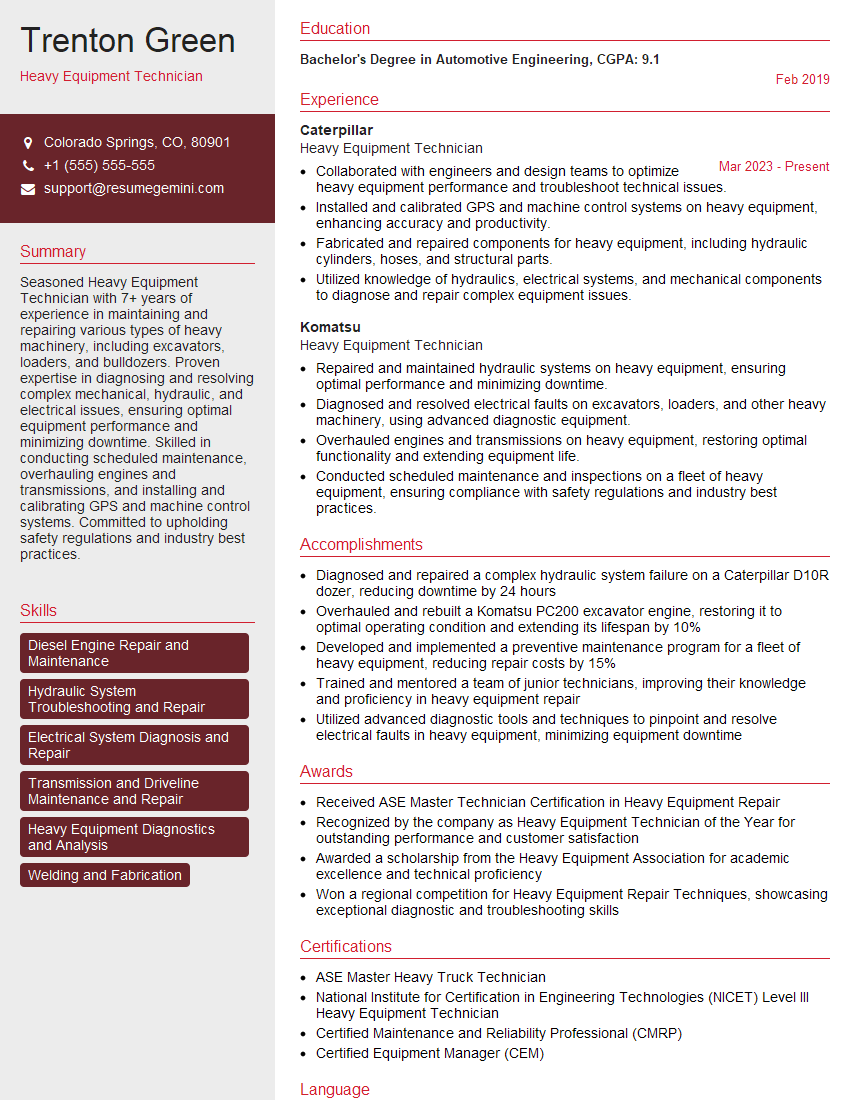
Heavy Equipment Technician Resume Sample

Hydraulic Mechanic Resume Sample

Diesel Mechanic Resume Sample
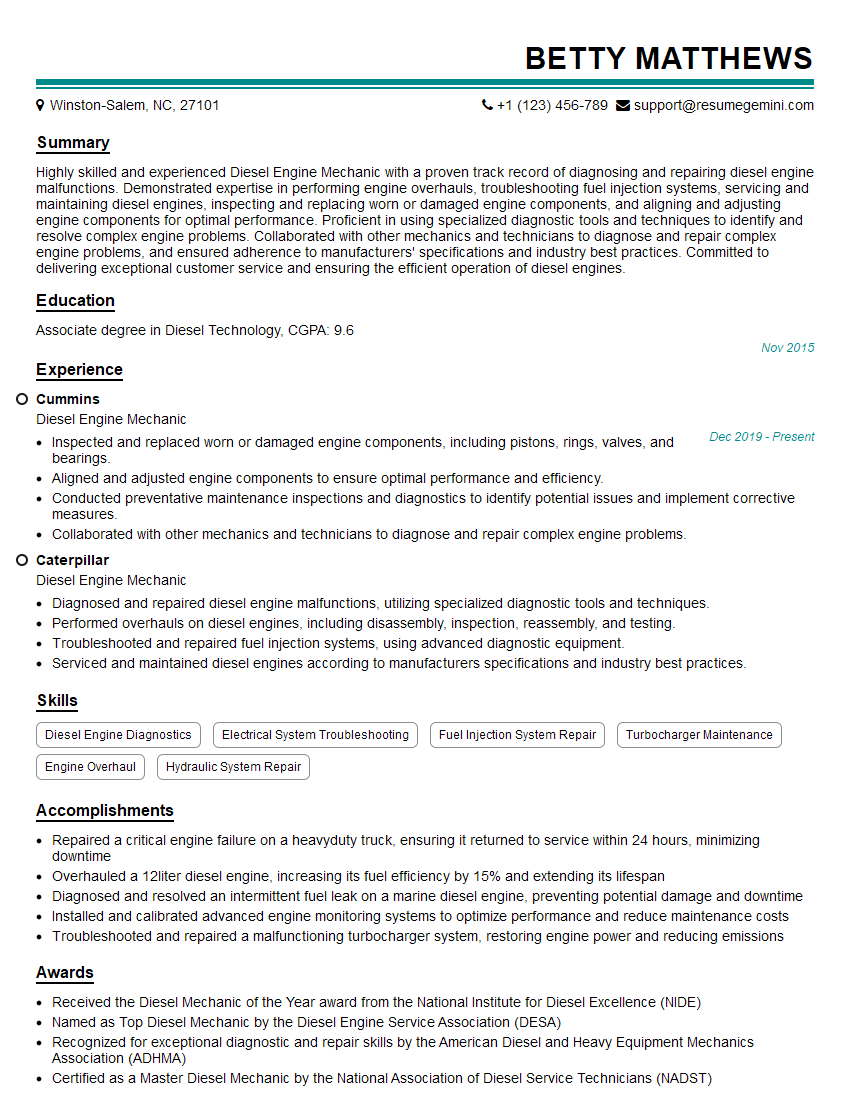
Diesel Engine Mechanic Resume Sample

Agricultural Equipment Mechanic Resume Sample

Construction Equipment Mechanic Resume Sample
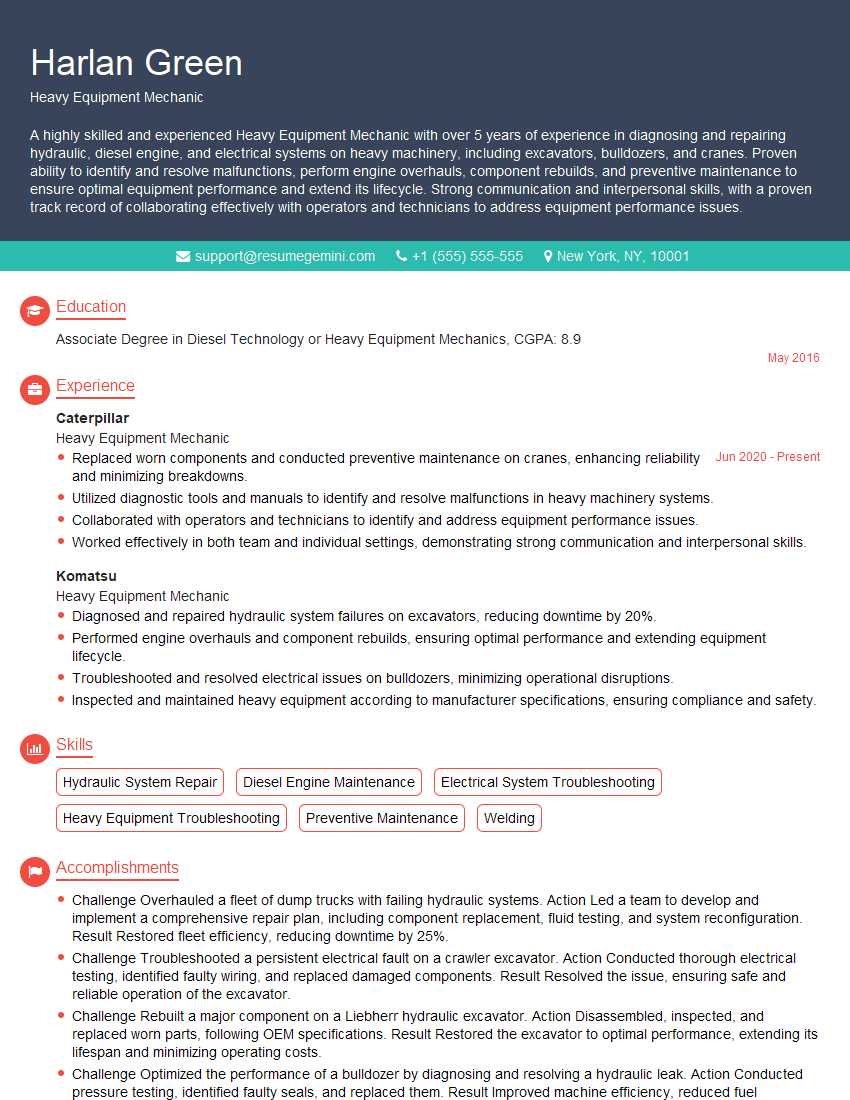
Heavy Equipment Mechanic Resume Sample

Mobile Equipment Mechanic Resume Sample
Explore more articles
Users Rating of Our Blogs
Share Your Experience
We value your feedback! Please rate our content and share your thoughts (optional).
What Readers Say About Our Blog
To the interviewgemini.com Webmaster.
Very helpful and content specific questions to help prepare me for my interview!
Thank you
To the interviewgemini.com Webmaster.
This was kind of a unique content I found around the specialized skills. Very helpful questions and good detailed answers.
Very Helpful blog, thank you Interviewgemini team.