The thought of an interview can be nerve-wracking, but the right preparation can make all the difference. Explore this comprehensive guide to Knowledge of Woodworking Principles and Processes interview questions and gain the confidence you need to showcase your abilities and secure the role.
Questions Asked in Knowledge of Woodworking Principles and Processes Interview
Q 1. Describe the different types of wood commonly used in woodworking and their properties.
Wood selection is crucial in woodworking. Different woods possess unique properties influencing their suitability for various projects. Here are some common types:
- Oak: A hardwood known for its strength, durability, and beautiful grain. Excellent for furniture, flooring, and cabinetry. It’s relatively hard and resists wear and tear.
- Maple: Another hardwood, maple is prized for its fine, even grain and light color. It’s often used for furniture, cutting boards (especially hard maple), and musical instruments because of its density and stability.
- Cherry: A hardwood with rich reddish-brown tones that deepen with age. Popular for fine furniture and cabinetry due to its attractive appearance and workability.
- Pine: A softwood, pine is readily available, relatively inexpensive, and easy to work with. Commonly used for construction, framing, and less demanding projects. Its softer nature makes it prone to dents.
- Walnut: A luxurious hardwood with rich dark brown tones and distinctive grain patterns. Highly valued for fine furniture and veneer due to its beauty and strength.
- Mahogany: A reddish-brown hardwood known for its durability, rich color, and fine grain. Often used in high-end furniture and boat building.
This is just a small selection; countless other species exist, each with its own characteristics.
Q 2. Explain the process of selecting appropriate wood for a specific project.
Choosing the right wood is paramount. Consider these factors:
- Project Requirements: What’s the intended use? A sturdy table needs strong wood like oak; a delicate carving might call for softer basswood.
- Aesthetics: What look are you going for? The grain, color, and finish of the wood will significantly impact the final appearance. A dark, dramatic look might require walnut, while a lighter, cleaner look may suit maple.
- Budget: Exotic hardwoods like mahogany and ebony are far more expensive than common softwoods like pine. Your budget will dictate what’s feasible.
- Workability: Some woods are easier to work with than others. Beginner woodworkers might find softwoods more manageable. Hardwoods require sharper tools and more experience.
- Availability: Consider the accessibility of the wood in your region. Sourcing sustainable and locally harvested wood is also an environmentally responsible choice.
For example, building a rustic outdoor bench might use pressure-treated pine for its durability and weather resistance. A fine dining table, however, might demand the elegance and durability of cherry or oak.
Q 3. What are the key differences between hardwoods and softwoods?
Hardwoods and softwoods differ significantly in their properties:
- Hardwoods: Come from deciduous trees (those that lose their leaves annually). They tend to be denser, harder, more durable, and more expensive. Their grain patterns are often more complex and visually appealing. Examples include oak, maple, cherry, walnut, mahogany.
- Softwoods: Come from coniferous trees (evergreens). Generally softer, less dense, easier to work with, and less expensive than hardwoods. Their grain is typically more uniform. Examples include pine, fir, cedar, spruce.
The terms ‘hard’ and ‘soft’ are relative. Some softwoods can be quite hard, and some hardwoods relatively soft. The key differences lie in the cellular structure of the wood and the type of tree it originates from.
Q 4. Describe various joinery techniques (e.g., mortise and tenon, dovetail, biscuit joinery).
Joinery techniques create strong, lasting connections between wood pieces. Here are a few examples:
- Mortise and Tenon: A strong and classic joint. A tenon (a projection) is cut on one piece and fits into a mortise (a hole) in another. Variations exist, including through tenons, blind tenons, and wedged tenons.
- Dovetail Joint: A very strong joint, known for its interlocking finger-like projections. Excellent for drawer construction and other applications where strength and visual appeal are important. Through dovetails and half-blind dovetails are common types.
- Biscuit Joinery: Uses oval-shaped biscuits (thin wood wafers) inserted into slots cut in adjoining pieces. Provides a strong and relatively quick joint, especially suitable for frame and panel construction and cabinetmaking. It’s easier to execute than mortise and tenon or dovetail joints.
The choice of joinery depends on the project’s requirements and the woodworker’s skill level. Dovetail joints are visually striking but require precision; biscuit joinery is quicker and easier for less demanding projects.
Q 5. Explain the importance of proper wood preparation before construction.
Proper wood preparation is vital for a successful project. It ensures a strong, stable, and aesthetically pleasing final product. This involves several steps:
- Acclimation: Allowing the wood to adjust to the temperature and humidity of your workshop prevents warping and cracking during and after construction. This typically involves storing wood for several days or weeks.
- Planing and Smoothing: Removing imperfections, such as tear-out from sawing, and creating smooth surfaces for better glue adhesion and a superior finish.
- Jointing and Sizing: Achieving perfectly flat and square surfaces for accurate joinery and assembly. A jointer and planer are often used for this purpose.
- Cutting to Dimensions: Precise cutting is crucial for proper fit and overall project accuracy.
Skipping these steps can lead to joints that don’t fit properly, warped pieces, and an unsatisfactory finished product. Investing time in proper preparation pays off in the long run.
Q 6. What are the different types of wood finishes and their applications?
Many wood finishes offer protection and enhance the wood’s appearance. Here are a few:
- Oil Finishes: (e.g., linseed oil, tung oil) Penetrate the wood, enhancing its natural beauty and providing some protection. They offer a more natural look than other finishes but may require more frequent maintenance.
- Varnish: Forms a hard, protective layer on the wood’s surface. Provides excellent durability and resistance to scratches and water damage. Available in gloss, semi-gloss, and satin finishes.
- Lacquer: Dries quickly and creates a durable, smooth surface. Offers good protection but may be less forgiving of imperfections than other finishes.
- Polyurethane: A durable and versatile finish available in various sheens. Provides excellent protection from water, scratches, and wear.
- Shellac: A natural resin-based finish known for its buildable nature and amber tones. It is relatively easy to repair, making it suitable for antique furniture restoration.
Each finish has unique properties, making it suitable for different applications and aesthetic preferences.
Q 7. How do you select the appropriate finish for a given project?
Choosing the right finish depends on several factors:
- Durability Requirements: For high-traffic areas like floors or kitchen countertops, a highly durable finish like polyurethane is essential. A less demanding project might use a simpler oil finish.
- Aesthetic Preferences: Do you prefer a high-gloss, sleek look or a more natural, matte finish? This will determine the sheen level of the finish.
- Type of Wood: Some woods are more porous than others. A penetrating oil may be suitable for porous woods, while a film-forming finish like varnish may be better for denser woods.
- Environmental Concerns: Some finishes contain VOCs (volatile organic compounds) that can be harmful to the environment and human health. Consider low-VOC or water-based alternatives.
For example, a delicate wooden jewelry box might be finished with shellac for its beauty and ease of repair. A child’s sturdy toy might require polyurethane for maximum durability.
Q 8. Describe the process of applying a wood finish, including sanding and sealing.
Applying a wood finish is a multi-step process crucial for protecting and enhancing the beauty of your woodworking project. It begins with proper surface preparation and culminates in a durable, attractive finish. The process involves sanding to create a smooth surface, sealing the wood to prevent stain bleed-through, and then applying the finish itself (be it varnish, lacquer, oil, etc.).
- Sanding: This involves progressively using finer grits of sandpaper (e.g., 120, 180, 220, and even finer) to remove imperfections and create a smooth, even surface. Start with coarser grit to remove scratches and then move to finer grits to achieve a polished look. Always sand in the direction of the wood grain to avoid creating scratches. Think of it like gently smoothing a piece of silk.
- Sealing (Optional, but Recommended): A wood sealer, like a sanding sealer or dewaxed shellac, prevents the wood from absorbing the finish unevenly, leading to blotchiness or uneven color. It also helps to raise the grain, allowing for a final sanding before the topcoat. This step is especially important for porous woods.
- Applying the Finish: This step depends on your chosen finish. Each has unique application techniques: Varnish and lacquer are typically applied in thin, even coats, allowing each to dry completely before applying the next. Oil finishes are rubbed into the wood, allowing it to soak in. Always follow the manufacturer’s instructions for the best results. Think of this as applying makeup—thin, even layers are key for a flawless result.
For example, when finishing a cherry wood table, I might use a dewaxed shellac sealer followed by several coats of polyurethane varnish. For a rustic, natural look on a pine shelf, I might opt for a tung oil finish.
Q 9. What safety precautions are crucial when using woodworking tools and machinery?
Safety in woodworking is paramount. A single lapse in concentration can lead to serious injury. My approach to safety is proactive, encompassing every step of the process.
- Personal Protective Equipment (PPE): This is non-negotiable. Safety glasses or a face shield are crucial to protect your eyes from flying debris. Hearing protection is essential when using loud machinery like table saws and planers. A dust mask is necessary to prevent inhalation of wood dust, which can be a serious respiratory hazard. Appropriate clothing, such as long sleeves and pants, prevents exposed skin from injury.
- Machine Safety: Before using any power tool, ensure it is properly adjusted and maintained. Never reach over a blade or rotating bit. Use push sticks and feather boards when necessary to maintain safe distance from blades. Keep your work area clear of clutter and distractions. Always turn off and unplug machines before making adjustments or cleaning.
- Tool Safety: Always use hand tools correctly. Use clamps to secure your work and never force a tool beyond its capabilities. Inspect tools for damage before use and replace damaged parts. Keep tools sharp, as dull tools require more force and increase the risk of slipping.
- Shop Organization: A well-organized shop is a safe shop. Keep your tools and materials in designated areas, reducing the chance of trips and falls. Proper lighting is essential for visibility, minimizing the risk of accidents.
For instance, I always run a test cut on scrap wood before working on a finished piece to ensure the machine is set correctly, this reduces the risk of damaging my project and avoids injury from misaligned tools.
Q 10. Explain the process of using a planer, jointer, and table saw.
The planer, jointer, and table saw are fundamental woodworking machines, each with specific purposes and operating procedures. Improper use can result in serious injury.
- Planer: Used to smooth and thickness boards, ensuring they are of consistent thickness. The board is fed through the machine, with its cutters planing the wood to the desired thickness. Always ensure that the feed speed is appropriate for the wood’s hardness and the machine’s settings. Check the cutter heads for sharpness and make sure the machine is properly aligned.
- Jointer: Used to flatten and square the edges of boards. The board is passed over a rotating cutter head, creating a perfectly flat and straight edge. Always take multiple passes to avoid removing too much material in one go, and use a push block for safety.
- Table Saw: Used for crosscutting and ripping lumber. It’s a versatile tool that requires careful attention to detail. Always use the appropriate blade for the type of cut. Use a push stick or feather board to keep your hands a safe distance from the blade, especially when ripping thin pieces. Always ensure the blade is properly aligned and the fence is securely adjusted.
For example, when working with a large, warped board, I would first use the jointer to flatten one edge, then the planer to thickness it. Then, the table saw can be used to rip the board into smaller, usable pieces.
Q 11. How do you troubleshoot common woodworking problems?
Troubleshooting is an integral part of woodworking. Experience allows for quick identification and resolution of most common problems.
- Wood Movement: Wood expands and contracts with changes in humidity. Gaps appearing in joints often indicate this. The solution might involve re-gluing and clamping, or applying a finish that helps prevent excessive moisture absorption.
- Splitting: Wood can split during sawing or drilling due to improper alignment or stress. Preventing splitting involves using sharp blades and selecting the right drilling techniques, including pre-drilling pilot holes.
- Uneven Finish: Uneven finishes are typically caused by improper sanding or application of finish. Addressing this requires further sanding to smooth the surface and re-applying the finish in thin, even coats.
- Weak Joints: Weak joints are often a result of poor glue application or inadequate clamping. The solution could involve using a stronger adhesive or improving the clamping technique.
- Dimensional Errors: Inaccurate measurements can result in misaligned parts. Careful planning, accurate measurements, and double-checking before cutting or assembling are important steps to prevent errors.
For instance, if I encounter a wobbly table leg, I’d check for loose screws or damaged joints. The solution may involve tightening screws or repairing or replacing the damaged joint.
Q 12. Describe your experience with different types of woodworking hand tools.
My experience with hand tools spans decades, encompassing a variety of tools essential for precise woodworking. I consider them extensions of my hands, each with unique applications and demanding skillful technique.
- Chisels: Used for shaping wood, creating joints, and cleaning up cuts. Proper sharpening is crucial for efficient and safe use.
- Planes: Smooth wood surfaces, shaping edges, and creating precise planes. Different planes are suited for varying tasks – smoothing planes, block planes, and molding planes.
- Hand Saws: Used for crosscutting, ripping, and various other cuts. Maintaining sharp teeth is key for cleaner cuts and better control.
- Mallet and Hammers: Used for driving chisels, driving nails, and other tasks requiring controlled force.
- Measuring Tools: Accuracy is paramount, so I rely on a combination of rulers, measuring tapes, and squares for precise measurements.
For example, I once used a combination of chisels and planes to carefully carve intricate details into a wooden sculpture, demonstrating the versatility and precision afforded by hand tools. The feeling of finely shaping wood with these tools is very satisfying.
Q 13. How do you read and interpret woodworking plans or blueprints?
Reading and interpreting woodworking plans requires careful attention to detail and a solid understanding of woodworking principles. I approach plans systematically.
- Overview: Start by reviewing the entire plan to understand the overall project and its components.
- Material List: Carefully examine the material list to ensure all necessary materials are available. Note the dimensions and types of wood specified.
- Cutting Diagrams: These diagrams usually show the dimensions and cuts needed for each piece. Use a pencil to annotate the diagrams, indicating cuts and assembly points.
- Assembly Drawings: These typically illustrate the assembly process, showing how various components fit together. Pay attention to joint types (e.g., mortise and tenon, dovetail, butt joints) and assembly sequences.
- Details: Carefully review any details regarding finish, hardware, and other specifications.
For example, when building a complex chest of drawers, I might create a detailed cutting list from the plan and meticulously check measurements before cutting each piece, labeling and organizing them for efficient assembly following the plan’s instructions. This prevents costly mistakes and guarantees accuracy.
Q 14. Explain your understanding of wood grain direction and its impact on project strength.
Understanding wood grain direction is critical for building strong and durable projects. Wood grain refers to the pattern formed by the fibers of the wood. It’s essentially the structure of the tree, impacting strength and stability.
- Strength: Wood is strongest when the force is applied parallel to the grain. Think of trying to break a pencil by bending it lengthwise vs. breaking it across. Applying force across the grain significantly weakens the wood, making it prone to splitting or breaking.
- Stability: The direction of the grain also impacts the wood’s stability and resistance to warping or shrinking. It’s crucial to ensure that the grain is properly aligned in load-bearing members or areas subjected to stress.
- Working with the Grain: When cutting, sanding, or shaping wood, it’s essential to work with the grain. This prevents tear-out and results in a smoother, more refined finish.
For example, when building a table leg, I’d ensure the wood’s grain runs lengthwise along the leg’s height, providing maximum strength and stability against the weight and potential forces applied to the table. Failing to consider grain direction could lead to a structurally weak and unstable leg that may collapse under stress.
Q 15. Describe your experience working with different wood species, including exotic woods.
My experience spans a wide range of wood species, from common domestic hardwoods like oak and maple to exotic varieties such as Brazilian cherry, mahogany, and zebrawood. Each species presents unique challenges and opportunities. For instance, oak, known for its strength and durability, requires careful consideration when routing and shaping due to its hardness. Conversely, softer woods like pine are easier to carve but less resistant to wear. Working with exotic woods demands extra attention to detail. Their often striking grain patterns and variations in density necessitate adjusting cutting techniques and finishes to achieve the best results. I’ve learned to identify the characteristics of each wood—its grain, density, tendency to warp, and how it reacts to different tools and finishes—to ensure optimal results in my projects. For example, when working with highly figured mahogany, I’d prioritize hand tools for delicate shaping to avoid tear-out and highlight the natural beauty of the wood.
Working with exotic woods also includes understanding their sustainability and sourcing. I prioritize ethically sourced wood whenever possible, ensuring that my work doesn’t contribute to deforestation or unsustainable practices.
Career Expert Tips:
- Ace those interviews! Prepare effectively by reviewing the Top 50 Most Common Interview Questions on ResumeGemini.
- Navigate your job search with confidence! Explore a wide range of Career Tips on ResumeGemini. Learn about common challenges and recommendations to overcome them.
- Craft the perfect resume! Master the Art of Resume Writing with ResumeGemini’s guide. Showcase your unique qualifications and achievements effectively.
- Don’t miss out on holiday savings! Build your dream resume with ResumeGemini’s ATS optimized templates.
Q 16. How do you measure and cut wood accurately?
Accurate measurement and cutting are fundamental to woodworking. My process begins with careful planning and precise marking. I use a combination of tools, including measuring tapes, squares, combination squares, and marking gauges, to ensure accuracy. For example, when cutting a board to a precise length, I’ll first mark the cut line with a pencil, using a square to ensure it’s perfectly perpendicular to the edge. Then, I utilize a miter saw or hand saw, depending on the project’s requirements, making sure the blade is properly aligned with my marking before cutting. To ensure accuracy, I always double-check measurements before making any irreversible cuts.
For complex cuts, I employ jigs and fixtures to guide my tools and ensure consistency. A simple miter box ensures perfectly angled cuts every time, while a crosscut sled on a table saw provides accurate and repeatable crosscuts. This precision is crucial for achieving tight-fitting joints and a professional finish. I always measure twice and cut once, a motto that has served me well throughout my career.
Q 17. Explain your experience with CNC woodworking machinery.
My CNC woodworking experience encompasses both programming and operation. I’m proficient in using various CAM (Computer-Aided Manufacturing) software packages to design and generate CNC toolpaths. This includes designing complex 3D models and translating them into instructions for the machine. I understand the importance of optimizing toolpaths for efficiency, minimizing machining time and material waste. I’ve worked with various CNC machines, including routers and laser cutters, executing projects ranging from intricate inlay work to the production of furniture components. I’m also skilled in troubleshooting common CNC issues, such as tool breakage, misalignment, and software errors.
For example, I recently used a CNC router to create a complex, repeating pattern on a set of cabinet doors. The intricate detail would have been nearly impossible to replicate by hand with the same precision and speed. My experience includes setting up and maintaining the machine, ensuring that all safety protocols are followed, and calibrating the machine for optimal performance.
Q 18. How do you maintain woodworking tools and equipment?
Maintaining woodworking tools and equipment is paramount for safety and efficiency. My routine includes regular cleaning and sharpening of hand tools. I use honing guides and sharpening stones to keep my chisels, planes, and carving tools razor-sharp. For power tools, I inspect them carefully before each use, checking for loose parts, damaged cords, and proper blade alignment. After each use, I remove sawdust and debris, lubricating moving parts as needed. I also adhere to recommended maintenance schedules provided by the manufacturers, performing tasks such as changing blades and belts, and replacing worn parts.
Regular maintenance prevents costly repairs and ensures the tools function optimally. A well-maintained tool not only works better, it is also safer to use. Ignoring maintenance can lead to accidents and ultimately compromise the quality of the finished product. For example, a dull chisel is more likely to slip, potentially causing injury, while a misaligned saw blade can create inaccurate cuts.
Q 19. Describe your experience with woodworking design software.
I’m experienced with several woodworking design software packages, including SketchUp, Fusion 360, and AutoCAD. These programs allow me to create detailed 3D models of my projects, including accurate dimensions and material specifications. This allows for precise planning, reducing errors and waste. Furthermore, I can generate detailed shop drawings and cut lists directly from the software, streamlining the construction process. The ability to visualize the project in 3D is invaluable, allowing for the detection of potential problems before starting construction.
For example, using Fusion 360, I designed a complex curved staircase. The software allowed me to model the intricate curves and angles, calculate the material requirements, and generate optimized CNC toolpaths for precise cutting of the individual components. This digital design process ensured a perfect fit and a high-quality final product.
Q 20. How do you manage a woodworking project from start to finish?
Managing a woodworking project from start to finish involves a structured approach. It begins with a thorough understanding of the client’s requirements and a detailed design phase. This involves creating detailed drawings, selecting appropriate materials, and developing a step-by-step construction plan. Then, I meticulously source the materials, ensuring quality and sufficient quantity. The construction phase follows the plan, employing efficient techniques and tools. Regular quality checks are performed to catch any errors early. Finally, the project is completed with finishing touches, including sanding, staining, or painting, followed by a thorough cleaning.
Throughout the process, clear communication with the client is crucial. I regularly update them on progress and address any concerns promptly. Project management software can assist in tracking tasks, materials, and deadlines, ensuring timely completion within budget. For example, on a recent custom furniture project, I used a Gantt chart to visualize the timeline and track individual tasks, making sure each step was completed according to schedule.
Q 21. What is your approach to problem-solving in a woodworking setting?
My approach to problem-solving in woodworking is systematic and analytical. When encountering a challenge, I start by identifying the root cause of the problem. This may involve careful inspection, measurement, or testing. Then, I brainstorm possible solutions, considering their feasibility and impact. I evaluate these options based on factors such as efficiency, cost, and safety. Finally, I implement the chosen solution and thoroughly test the outcome. If the initial solution doesn’t work, I iterate the process, refining my approach until a satisfactory resolution is found.
For instance, if a joint doesn’t fit properly, I would check my measurements, inspect the cut quality, and assess if the wood has warped. I might try adjusting the joint, using clamps for better alignment, or even reconsidering the joint design altogether. My problem-solving skills are honed through years of experience, and my ability to adapt and innovate allows me to overcome almost any woodworking challenge.
Q 22. Describe your experience with different types of wood adhesives.
My experience with wood adhesives spans a wide range, from the everyday PVA (polyvinyl acetate) glues to more specialized options like polyurethane and epoxy. PVA glues are excellent for general woodworking, offering good strength and water resistance once cured. Think of them as the workhorses of the shop – reliable and versatile for most joinery. However, they’re not ideal for exterior applications or projects requiring extreme durability. For exterior projects or where high water resistance is crucial, polyurethane glues are superior. They form a very strong, waterproof bond, making them perfect for outdoor furniture or marine applications. Epoxy, on the other hand, offers unparalleled strength and gap-filling capabilities, making it my go-to for complex repairs or situations where precise bonding is critical. For example, I recently used epoxy to repair a cracked antique table leg, achieving a seamless and incredibly strong join. Choosing the right adhesive depends entirely on the specific project and its intended use. I always consider factors like the type of wood, the joinery technique used, and the environmental conditions the finished piece will face.
Q 23. How do you ensure the quality of your woodworking projects?
Ensuring the quality of my woodworking projects involves a multifaceted approach that begins long before the first cut. It starts with selecting high-quality, properly dried lumber. I meticulously inspect each board for defects like knots, cracks, or warping, ensuring it’s suitable for the project’s demands. Precise measuring and careful marking are paramount. I utilize various measuring tools, from simple rulers to precision calipers, to guarantee accuracy. My joinery must be precise, using techniques appropriate to the wood and the project – a mortise and tenon joint for strength, a dovetail for aesthetics and stability, or a simple butt joint for less demanding situations. I pay close attention to detail during assembly, using clamps to ensure tight joints and proper alignment. Finally, thorough finishing is critical; sanding to a smooth, even surface and applying appropriate finishes protects the wood and enhances its beauty. Each stage is a quality control checkpoint, ensuring the final product meets – and exceeds – my expectations. For example, if I’m building a finely crafted chest of drawers, I’ll spend extra time on fitting the dovetails perfectly, and will not shy away from re-cutting if necessary to achieve that precise fit and flawless finish.
Q 24. What are the common causes of wood warping and how can they be prevented?
Wood warping is a common issue stemming primarily from uneven moisture content within the wood. Think of it like this: if one side of a board is drier than the other, it will shrink more, causing the board to warp or cup. Several factors contribute to this uneven drying: exposure to direct sunlight or heat, variations in humidity, and improper drying techniques during lumber processing. Another factor is the inherent stresses within the wood itself, arising from the way the tree grew. Preventing warping begins with selecting properly dried lumber. Kiln-dried lumber is ideal as it undergoes a controlled drying process. Storage is also crucial; lumber should be stored flat, away from direct sunlight and sources of heat, with good airflow to prevent moisture build-up. Acclimating the wood to the environment before use helps minimize shock and subsequent warping. Furthermore, designing projects to minimize stress on the wood, such as using through-tenons or appropriate joinery techniques, can help prevent warping. Proper finishing also assists, by protecting the wood from further moisture fluctuations.
Q 25. Describe your experience working with different types of wood veneers.
My experience with wood veneers is extensive. I’ve worked with various types, including hardwood veneers like cherry, walnut, and maple, and also more exotic varieties such as ebony or rosewood. The choice of veneer is often driven by aesthetic considerations and budget. For example, a beautiful figured walnut veneer can achieve the look of solid walnut at a more manageable cost. The application techniques vary, but generally involve using adhesives – typically contact cement or PVA glue – to bond the thin veneer sheets to a substrate like plywood or MDF. Proper preparation of the substrate is key; it must be smooth, clean, and free of imperfections. The veneer needs to be carefully applied and pressed to ensure a strong, even bond, often using a vacuum press or roller. Careful attention is paid to prevent air bubbles or wrinkles. I also have experience working with veneer patching and repair techniques, often using a combination of careful matching and careful adhesive application. The result, when done well, is a durable, attractive surface that perfectly mimics the look of solid wood, while potentially being more cost-effective and sustainable.
Q 26. Explain your understanding of wood drying and its impact on woodworking projects.
Wood drying is a critical step in woodworking. Wood is a hygroscopic material, meaning it absorbs and releases moisture from the surrounding atmosphere. The moisture content directly impacts the wood’s stability and strength. If wood is too wet, it’s prone to warping, shrinking, and cracking during the drying process, and later in use. If it’s too dry, it becomes brittle and prone to checking. Proper drying involves carefully reducing moisture content through controlled methods, such as air drying or kiln drying. Kiln drying is faster and more precise, but air drying can preserve certain qualities of the wood. Understanding wood drying’s impact is crucial because it directly affects the success of a project. Using improperly dried wood will almost certainly lead to problems. The dimensional changes that occur during drying can create significant issues, from minor cracking to warping that renders a piece unusable. Therefore, I always make sure to select properly dried wood, and when working with green wood, I take the time to understand how its moisture content will change and account for potential movement in the design and construction of the project.
Q 27. What is your experience with restoration and repair of antique wooden furniture?
Restoration and repair of antique wooden furniture is a specialized area requiring a deep understanding of woodworking techniques, along with patience and attention to detail. My experience includes working on pieces ranging from simple chairs to elaborate bureaus and tables. The process begins with a thorough assessment of the damage, carefully noting the type of wood, the type of joinery used, and the extent of the damage. This involves identifying the original construction methods so repairs can be made in a way that respects the piece’s history and integrity. Common repairs include tightening loose joints, replacing broken parts, and patching damaged areas. I often use traditional methods and materials, such as hide glue, to ensure the repairs are historically accurate and compatible with the existing structure. In some cases, I’ll need to recreate missing components, such as decorative elements or structural members. This may involve researching period-appropriate styles and techniques to ensure accuracy and authenticity. Once structural repairs are complete, the final step is refinishing, using methods appropriate for the age and type of finish. The objective is not just to repair the damage, but to preserve and enhance the piece’s value and beauty for future generations. For example, I once restored a heavily damaged antique rocking chair, carefully repairing its broken spindles and re-applying a historically-accurate finish, bringing this cherished piece back to life.
Q 28. How do you stay current with new trends and techniques in woodworking?
Staying current in woodworking requires a proactive approach. I regularly read woodworking magazines and online publications, keeping abreast of new tools, materials, and techniques. I actively participate in online woodworking forums and communities, exchanging ideas and experiences with other woodworkers. Attending woodworking classes and workshops allows me to learn advanced techniques from experienced professionals. Moreover, I frequently explore different woodworking styles and designs, broadening my understanding and skill set. Experimenting with different tools and materials in my own shop is a valuable way to stay sharp. I also actively seek out opportunities to collaborate with other woodworkers, sharing knowledge and pushing creative boundaries. This continuous learning process ensures that my woodworking skills and knowledge remain up-to-date, allowing me to handle any challenges with confidence and expertise.
Key Topics to Learn for Your Woodworking Principles and Processes Interview
Ace your upcoming interview by mastering these essential areas of woodworking knowledge. We’ve broken down the key concepts to help you feel confident and prepared.
- Wood Selection and Properties: Understanding different wood species, their grain patterns, hardness, workability, and suitability for various projects. Consider how these properties influence design choices and project outcomes.
- Joinery Techniques: Familiarize yourself with various joinery methods (e.g., mortise and tenon, dovetail, dado, rabbet) – their strengths, weaknesses, and appropriate applications. Be ready to discuss the practical implications of selecting different joinery for specific projects.
- Wood Finishing: Explore different finishing techniques (e.g., staining, painting, varnishing, lacquering) and their impact on the final product’s appearance and durability. Understand the importance of surface preparation and the application process for optimal results.
- Tool Selection and Use: Demonstrate knowledge of hand tools (chisels, saws, planes) and power tools (routers, planers, lathes). Discuss safety procedures and best practices for using each tool effectively and safely. Be prepared to explain how tool choice impacts precision and efficiency.
- Project Planning and Design: Showcase your ability to read and interpret blueprints, create sketches, and develop project plans. Highlight your understanding of material estimation, time management, and efficient workflow strategies.
- Woodworking Safety: Discuss relevant safety procedures, including proper use of personal protective equipment (PPE) and safe handling of tools and materials. Emphasize the importance of maintaining a clean and organized workspace.
- Troubleshooting and Problem-Solving: Be prepared to discuss how you approach challenges during a project. This could involve identifying defects in wood, resolving joinery issues, or adapting to unforeseen circumstances.
Next Steps: Unlock Your Career Potential
A strong understanding of woodworking principles and processes is crucial for career advancement in this field. To maximize your job prospects, create a compelling and ATS-friendly resume that highlights your skills and experience. ResumeGemini is a trusted resource that can help you build a professional resume that stands out. They even provide examples of resumes tailored specifically for woodworking professionals, showcasing the skills and experience valued in this industry. Take the next step and craft a resume that reflects your expertise and lands you your dream job.
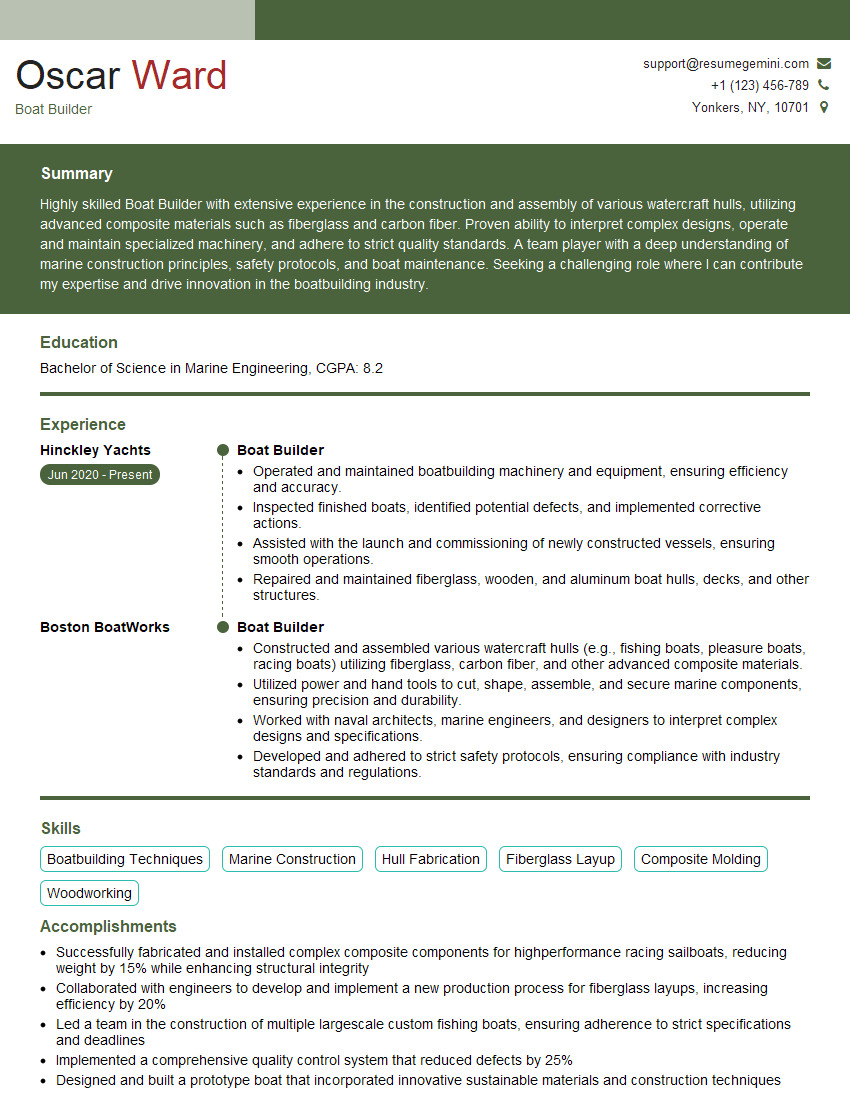
Boat Builder Resume Sample
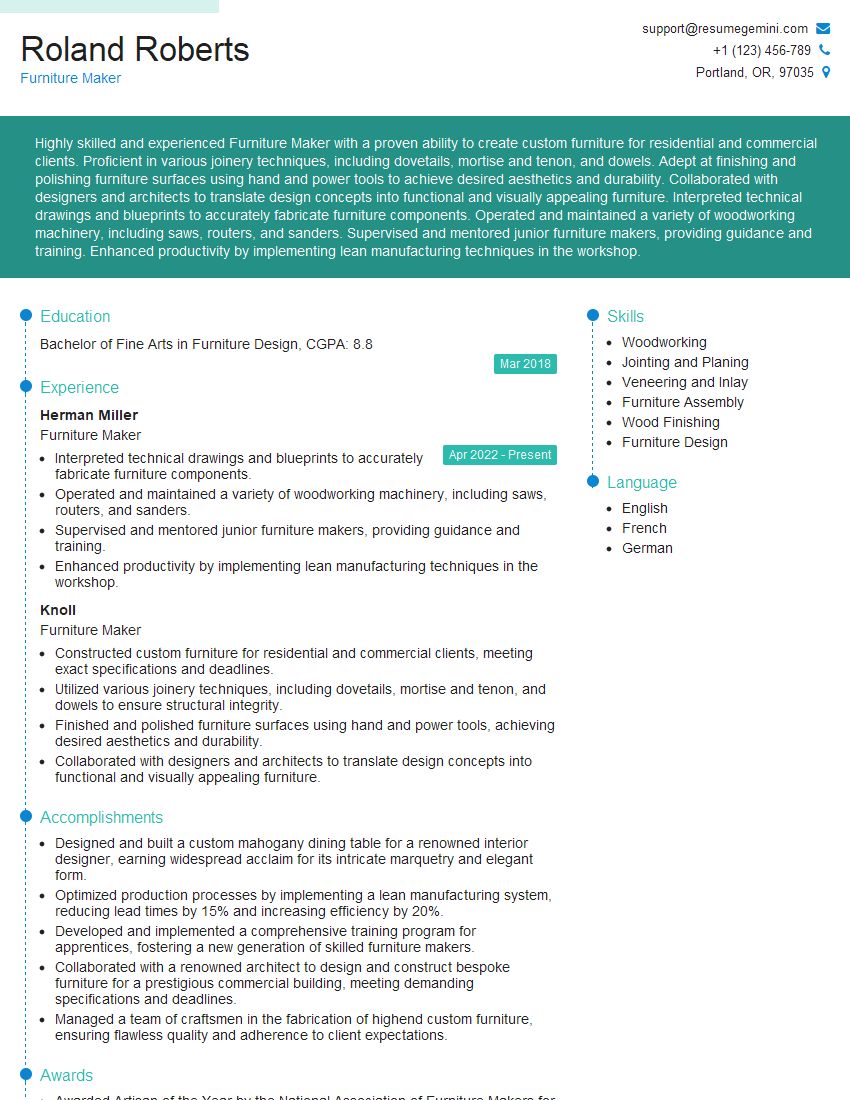
Furniture Maker Resume Sample

Luthier Resume Sample
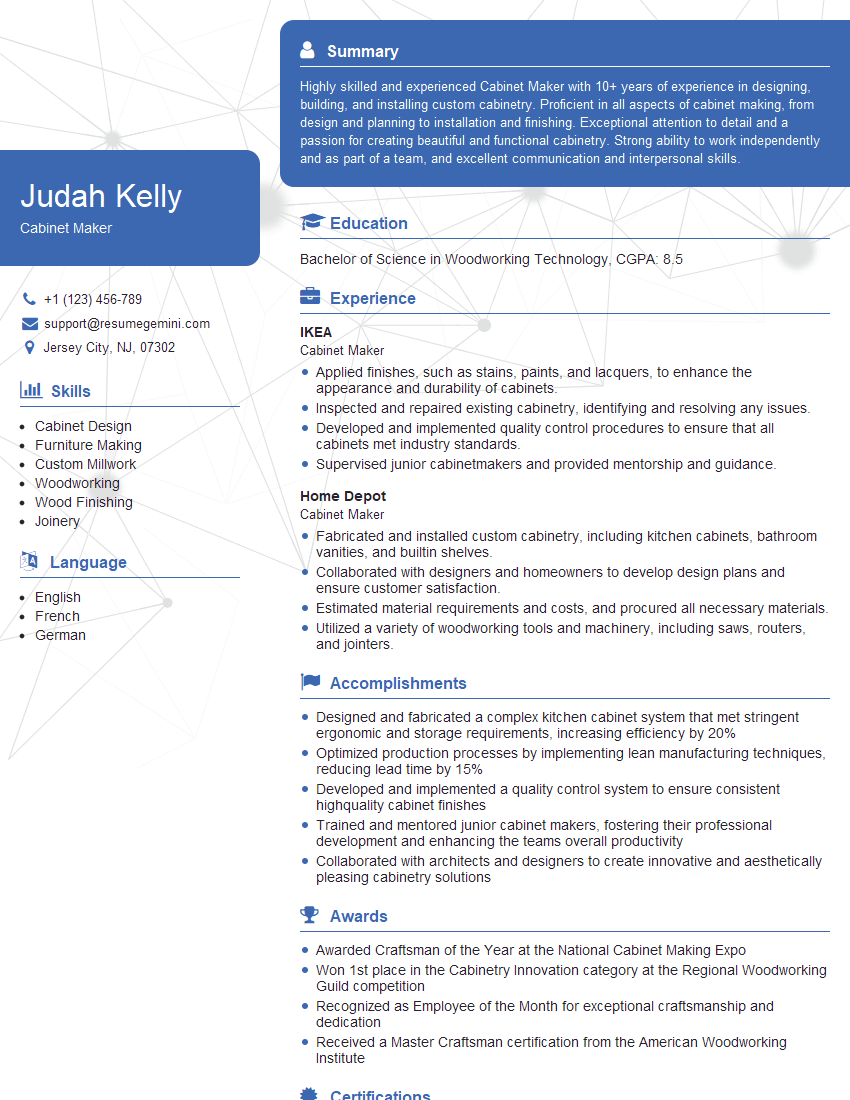
Cabinet Maker Resume Sample
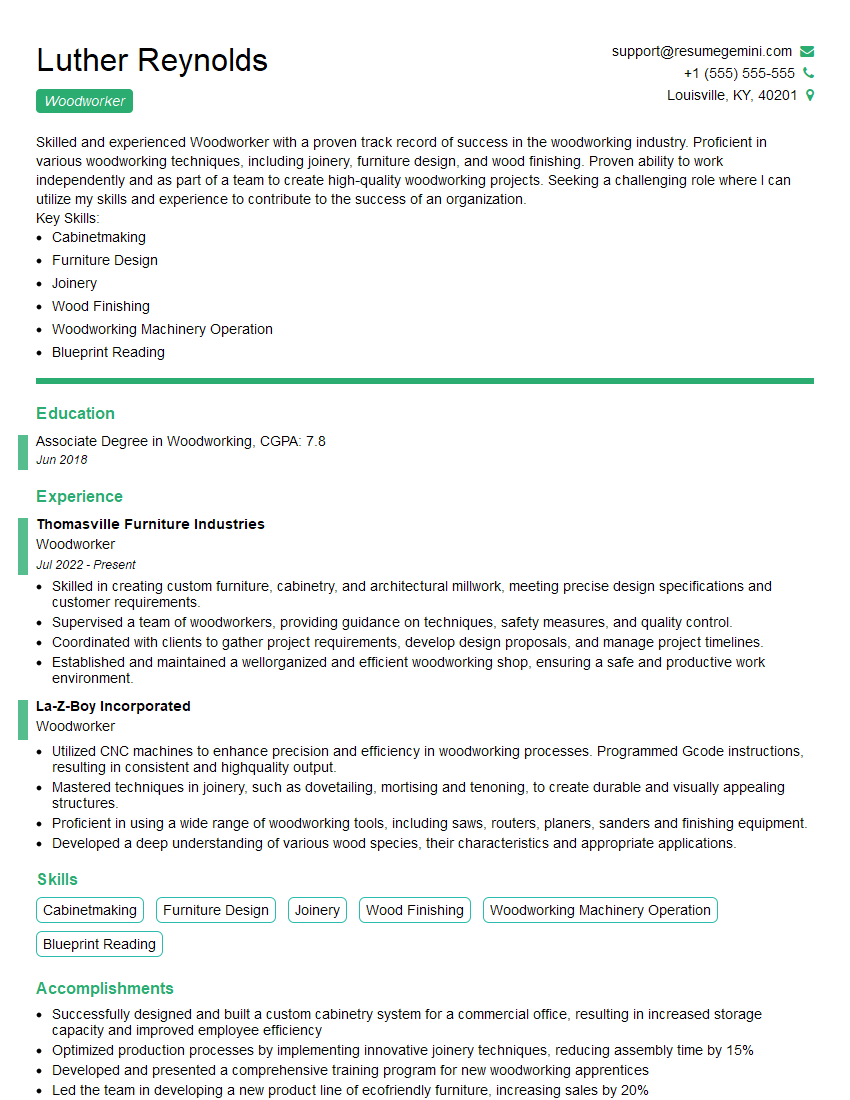
Woodworker Resume Sample

Carpenter Resume Sample

Timber Framer Resume Sample

Shop Foreman Resume Sample

Joiner Resume Sample
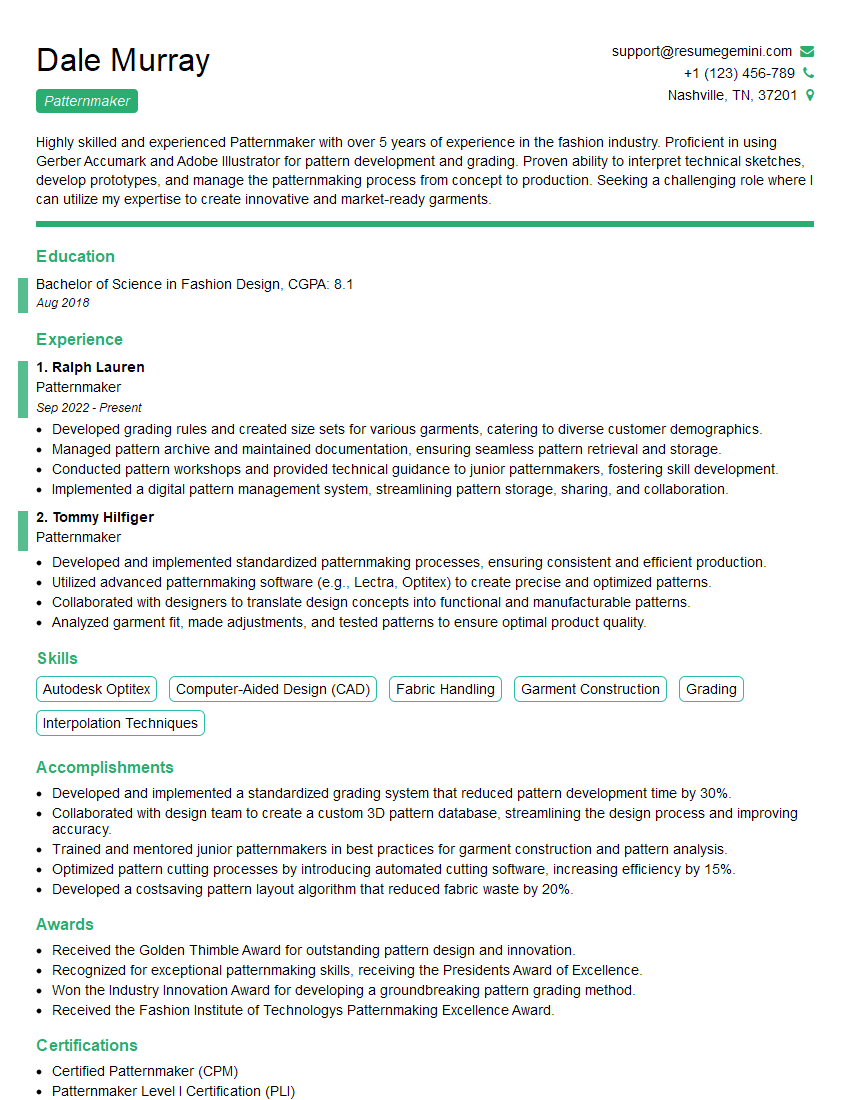
Patternmaker Resume Sample

Wood Machinist Resume Sample
Explore more articles
Users Rating of Our Blogs
Share Your Experience
We value your feedback! Please rate our content and share your thoughts (optional).
What Readers Say About Our Blog
To the interviewgemini.com Webmaster.
Very helpful and content specific questions to help prepare me for my interview!
Thank you
To the interviewgemini.com Webmaster.
This was kind of a unique content I found around the specialized skills. Very helpful questions and good detailed answers.
Very Helpful blog, thank you Interviewgemini team.