The right preparation can turn an interview into an opportunity to showcase your expertise. This guide to Paris Agreement Implementation interview questions is your ultimate resource, providing key insights and tips to help you ace your responses and stand out as a top candidate.
Questions Asked in Paris Agreement Implementation Interview
Q 1. Explain the key goals and principles of the Paris Agreement.
The Paris Agreement’s overarching goal is to limit global warming to well below 2, preferably to 1.5 degrees Celsius, compared to pre-industrial levels. This ambitious target is underpinned by several key principles. First, it acknowledges the shared but differentiated responsibilities and respective capabilities of each country, meaning developed nations, who historically emitted more greenhouse gases, bear a greater responsibility to reduce emissions and support developing countries. Second, the agreement promotes transparency and accountability through regular reporting of emissions and progress towards climate goals. Third, it emphasizes the importance of adaptation measures, recognizing the unavoidable impacts of climate change and the need for countries to prepare for and adapt to them. Finally, it highlights the critical role of climate finance in supporting developing nations’ efforts in mitigation and adaptation. Think of it like a global team effort to tackle a shared problem, where each member contributes based on their ability, but with the ultimate goal of benefiting everyone.
Q 2. Describe the Nationally Determined Contributions (NDCs) and their significance.
Nationally Determined Contributions (NDCs) are the heart of the Paris Agreement. They are essentially each country’s self-defined plan to reduce greenhouse gas emissions and adapt to climate change impacts. These plans are submitted by countries and outline their targets for emission reductions (mitigation) and their strategies for adapting to climate change. For example, a country might pledge to reduce its emissions by 30% by 2030 or invest in infrastructure to protect against sea-level rise. The significance of NDCs lies in their collective impact. While individual contributions might seem small, the sum of all countries’ NDCs determines the overall global progress toward the agreement’s temperature goals. Regular updates and improvements to NDCs are also crucial to enhance ambition and keep the world on track.
Q 3. How does the Paris Agreement address climate finance?
Climate finance is crucial for achieving the Paris Agreement’s goals, particularly for developing countries. Developed countries pledged to mobilize $100 billion annually by 2020 to support developing countries’ mitigation and adaptation efforts. This funding can take various forms, including grants, concessional loans, and investments in renewable energy projects, climate-resilient infrastructure, and capacity building. For instance, funding might be used to help a small island nation build seawalls to protect against rising sea levels or to assist a developing country in transitioning to solar energy. The Paris Agreement emphasizes the need to scale up climate finance beyond the $100 billion goal, recognizing the significantly greater investment required for a global green transition. Transparency and accountability in climate finance are also paramount to ensure funds are used effectively.
Q 4. What is the role of carbon markets in achieving Paris Agreement goals?
Carbon markets play a significant role in the Paris Agreement by providing a mechanism for reducing emissions cost-effectively. The agreement allows countries to use international carbon markets to achieve their NDCs. This involves trading emissions allowances or credits, where countries or companies that reduce emissions below their targets can sell the surplus ‘credits’ to those who are struggling to meet their targets. For example, a company exceeding its emission reduction goals could sell its extra credits to another company that has not met its targets. This creates an incentive for both emission reductions and economic efficiency. However, environmental integrity and avoidance of double counting are paramount to the success of carbon markets, requiring robust monitoring and verification systems.
Q 5. Discuss the challenges of monitoring, reporting, and verification (MRV) under the Paris Agreement.
Monitoring, Reporting, and Verification (MRV) is essential for transparency and accountability under the Paris Agreement. It ensures that countries are accurately tracking their emissions, implementing their NDCs, and making progress towards the agreed-upon goals. Challenges in MRV include the complexities of data collection and standardization across countries with varying levels of capacity. Accurate accounting for emissions from different sectors, particularly those related to land use, is also challenging. Furthermore, ensuring transparency and comparability of data across countries with different methodologies and reporting frameworks is a significant hurdle. Robust frameworks and international collaboration are needed to overcome these challenges and improve the effectiveness of MRV in tracking global progress towards climate goals. This is essentially a system of checks and balances, requiring international cooperation and mutual trust.
Q 6. Explain the concept of climate justice within the context of the Paris Agreement.
Climate justice is a core element of the Paris Agreement, recognizing that climate change disproportionately affects vulnerable populations and developing countries who contributed the least to the problem. It highlights the ethical and moral dimensions of climate change, emphasizing that solutions must be equitable and address the needs of those most impacted. This means that efforts to mitigate and adapt to climate change must consider the social and economic dimensions, ensuring that vulnerable communities are not left behind. For example, climate justice initiatives might focus on providing financial and technical support to vulnerable communities to adapt to the impacts of climate change or promoting equitable access to clean energy and resources. This ensures that climate action considers both environmental and social impacts, promoting a fairer and more equitable global response.
Q 7. How does the Paris Agreement incorporate adaptation measures?
The Paris Agreement explicitly recognizes the importance of adaptation measures, acknowledging that even with significant mitigation efforts, some impacts of climate change are unavoidable. The agreement encourages countries to develop and implement national adaptation plans to address these impacts. These plans might include measures such as building seawalls to protect coastal communities, developing drought-resistant crops, or improving early warning systems for extreme weather events. The Paris Agreement also highlights the need for international cooperation in supporting developing countries’ adaptation efforts through financial and technical assistance. For example, developed countries might support developing countries in building climate-resilient infrastructure or in developing adaptation strategies tailored to their specific vulnerabilities. This dual approach, involving both mitigation and adaptation, is critical to successfully tackling climate change.
Q 8. Describe different approaches to climate mitigation discussed under the Paris Agreement.
The Paris Agreement outlines a multitude of approaches to climate change mitigation, all aimed at reducing greenhouse gas emissions. These approaches can be broadly categorized, but often overlap in practice.
- Energy Transition: Shifting away from fossil fuels (coal, oil, and natural gas) towards renewable energy sources like solar, wind, hydro, and geothermal power. This involves investing in renewable energy infrastructure, improving energy efficiency, and phasing out fossil fuel subsidies. For example, many European countries are aggressively expanding their wind and solar capacity, while others are investing in smart grids to optimize energy distribution.
- Sustainable Transportation: Reducing emissions from the transportation sector through electrification of vehicles, promoting public transport, cycling, and walking, and improving fuel efficiency standards. Initiatives like the development of electric vehicle charging infrastructure and incentives for purchasing electric cars are prime examples.
- Industrial Processes: Implementing cleaner industrial processes, improving energy efficiency in manufacturing, and capturing carbon dioxide emissions from industrial sources. This includes developing and deploying carbon capture, utilization, and storage (CCUS) technologies in heavy industries like cement and steel production.
- Land Use and Forestry: Protecting and restoring forests, promoting sustainable agriculture and land management practices, and reducing deforestation. This involves initiatives such as reforestation projects, sustainable forestry certification schemes, and promoting climate-smart agriculture.
- Carbon Pricing Mechanisms: Implementing carbon taxes or cap-and-trade systems to put a price on carbon emissions, incentivizing businesses and individuals to reduce their carbon footprint. The European Union Emissions Trading System (EU ETS) serves as a prominent example of a cap-and-trade system.
It’s important to note that many countries employ a combination of these approaches, tailored to their specific circumstances and national priorities.
Q 9. What are the key differences between mitigation and adaptation strategies?
Mitigation and adaptation are two distinct but complementary strategies for addressing climate change. Mitigation focuses on preventing future climate change by reducing greenhouse gas emissions, while adaptation focuses on adjusting to the current and unavoidable impacts of climate change.
- Mitigation: Aims to lessen the severity of future climate change. Think of it as preventing the problem. Examples include transitioning to renewable energy, improving energy efficiency, and adopting sustainable land management practices.
- Adaptation: Aims to lessen the negative impacts of climate change that are already occurring or are unavoidable. Think of it as managing the consequences. Examples include building seawalls to protect against sea-level rise, developing drought-resistant crops, and improving early warning systems for extreme weather events.
While different, they are interconnected. Successful mitigation reduces the need for extensive adaptation measures in the future. However, some level of adaptation will be necessary regardless of mitigation efforts, given the existing greenhouse gas concentrations in the atmosphere.
Q 10. Explain the role of technology transfer and capacity building in achieving Paris Agreement goals.
Technology transfer and capacity building are crucial for achieving the Paris Agreement goals, especially for developing countries. These elements address the inequities inherent in climate change, where developing nations often bear the brunt of its impacts despite contributing less to the problem.
- Technology Transfer: This involves the sharing of climate-friendly technologies from developed to developing countries. This might include renewable energy technologies, energy-efficient appliances, or climate-resilient agricultural practices. Effective technology transfer necessitates not just providing the technology but also the knowledge and skills to operate and maintain it.
- Capacity Building: This focuses on strengthening the institutional, technical, and human resources within developing countries to enable them to implement climate mitigation and adaptation strategies effectively. This includes training personnel, developing national climate policies, and strengthening governance structures related to climate change.
The success of both relies heavily on international cooperation and financial support from developed nations to developing nations. Without these elements, many developing countries would lack the resources and expertise to participate meaningfully in global climate action.
Q 11. Discuss the importance of transparency and accountability in implementing the Paris Agreement.
Transparency and accountability are cornerstones of the Paris Agreement’s effectiveness. Without them, the agreement’s ambitious goals would be difficult, if not impossible, to achieve.
- Transparency: Countries are required to regularly report their greenhouse gas emissions, climate policies, and progress towards their nationally determined contributions (NDCs). This allows for international scrutiny and promotes peer learning. The transparency framework helps ensure that countries’ actions align with their stated commitments.
- Accountability: The agreement establishes mechanisms to review countries’ progress and hold them accountable for their commitments. This includes a global stocktake, a process to assess collective progress towards the goals of the agreement. Accountability mechanisms encourage countries to take their commitments seriously and to continually strive to enhance their climate action.
This system of transparency and accountability fosters trust among nations and facilitates international cooperation. Without it, the agreement would lack the credibility and drive necessary to address the global challenge of climate change effectively.
Q 12. How does the Paris Agreement relate to the Sustainable Development Goals (SDGs)?
The Paris Agreement is intrinsically linked to the Sustainable Development Goals (SDGs). Climate change significantly impacts the achievement of many SDGs, and addressing climate change is crucial for achieving sustainable development more broadly.
For instance, climate change threatens food security (SDG 2), water resources (SDG 6), and human health (SDG 3). Mitigation and adaptation actions can contribute positively to other SDGs, such as affordable and clean energy (SDG 7), sustainable cities and communities (SDG 11), and responsible consumption and production (SDG 12). The interconnectedness of climate action and sustainable development highlights the importance of an integrated approach that considers both environmental and social dimensions.
Many of the actions required to meet the Paris Agreement’s goals, such as transitioning to renewable energy or promoting sustainable agriculture, directly support the achievement of several SDGs. A holistic approach that integrates climate action with broader sustainable development goals leads to more impactful and equitable outcomes.
Q 13. What are some key indicators used to measure progress towards Paris Agreement goals?
Measuring progress towards the Paris Agreement goals requires a multifaceted approach using various indicators. There’s no single metric, but rather a suite of indicators providing a comprehensive picture.
- Greenhouse gas emissions: Tracking national emissions, both total emissions and emissions per capita, is essential to assess progress in reducing emissions.
- Renewable energy capacity: Monitoring the growth of renewable energy sources (solar, wind, hydro, etc.) indicates the progress of the energy transition.
- Energy efficiency improvements: Measuring changes in energy consumption per unit of economic output shows how effectively resources are used.
- Deforestation rates: Tracking changes in forest cover provides insights into the success of forest conservation and reforestation efforts.
- Climate finance flows: Monitoring the amount of financial support provided to developing countries for climate action is crucial to assess the implementation of financial commitments.
- Adaptation measures implemented: Tracking the number and type of adaptation measures implemented (e.g., drought-resistant crops, early warning systems) indicates the effectiveness of adaptation efforts.
These indicators, along with others, are used in the global stocktake to assess collective progress and identify areas needing further action. Data collection and reporting methodologies are continuously refined to enhance the accuracy and comparability of indicators.
Q 14. What are the potential economic impacts of implementing the Paris Agreement?
The economic impacts of implementing the Paris Agreement are complex and multifaceted. While upfront investments are required, the long-term economic benefits generally outweigh the costs.
- Potential Costs: The transition to a low-carbon economy will require significant upfront investments in renewable energy infrastructure, energy efficiency improvements, and adaptation measures. Some industries reliant on fossil fuels may face economic challenges during the transition.
- Potential Benefits: Implementing the Paris Agreement can lead to substantial economic benefits, including job creation in the renewable energy sector, improved public health from reduced air pollution, increased energy security through diversification of energy sources, and reduced damages from climate change impacts (e.g., avoided losses from extreme weather events).
The overall economic impact will depend on the pace and nature of the transition, the policies implemented, and the level of international cooperation. A well-managed transition, supported by appropriate policies and financial mechanisms, can unlock significant economic opportunities while minimizing potential disruptions. Delaying action, however, will likely result in far greater economic costs associated with unmitigated climate change.
Q 15. Describe the role of international collaboration in implementing the Paris Agreement.
The Paris Agreement’s success hinges on international collaboration. It’s not a single nation’s fight; climate change is a global challenge demanding a global response. Collaboration manifests in several key ways:
- Nationally Determined Contributions (NDCs): Each country submits its own plan to reduce emissions. While these are nationally determined, their collective impact shapes the global effort. Stronger NDCs, informed by shared scientific data and technological advancements, drive progress.
- Technology Transfer and Financial Support: Developed nations are obligated to support developing nations with finance and technology to help them adapt to climate change and transition to cleaner energy. This crucial element ensures equitable participation.
- Global Stocktake: Every five years, countries assess their collective progress towards the Agreement’s goals. This process facilitates learning, identifies gaps, and inspires more ambitious action. It’s like a global progress report, enabling adjustments to improve our trajectory.
- International Partnerships: Numerous collaborations exist between nations, organizations, and businesses. Examples include initiatives focused on renewable energy deployment, carbon capture, and adaptation strategies. These partnerships leverage diverse expertise and resources for greater impact.
In essence, international collaboration in the Paris Agreement isn’t just about signing an agreement; it’s about a continuous process of shared responsibility, mutual support, and collective action.
Career Expert Tips:
- Ace those interviews! Prepare effectively by reviewing the Top 50 Most Common Interview Questions on ResumeGemini.
- Navigate your job search with confidence! Explore a wide range of Career Tips on ResumeGemini. Learn about common challenges and recommendations to overcome them.
- Craft the perfect resume! Master the Art of Resume Writing with ResumeGemini’s guide. Showcase your unique qualifications and achievements effectively.
- Don’t miss out on holiday savings! Build your dream resume with ResumeGemini’s ATS optimized templates.
Q 16. What are some of the major obstacles to effectively implementing the Paris Agreement?
Despite its ambitious goals, the Paris Agreement faces significant obstacles:
- National Interests vs. Global Goals: Balancing national economic priorities with the urgent need for global climate action remains a central challenge. Some nations may prioritize short-term economic gains over long-term climate sustainability.
- Insufficient Funding: Developed countries haven’t met their promised financial commitments to support developing nations’ climate efforts. This funding gap hinders adaptation measures and the transition to clean energy in many vulnerable countries.
- Lack of Enforcement Mechanisms: The Paris Agreement lacks strong enforcement mechanisms, relying primarily on peer pressure and international scrutiny. This can make it difficult to hold countries accountable for their commitments.
- Political Instability and Conflicts: Political instability and armed conflicts in several regions can severely hamper climate action efforts, diverting resources and attention away from crucial environmental concerns.
- Technological Challenges: While technology offers solutions, scaling up and deploying these technologies cost-effectively remains a challenge. The transition to renewable energy sources requires substantial investments and infrastructure development.
These obstacles highlight the complexities involved in tackling climate change. Overcoming them demands political will, robust financial mechanisms, technological innovation, and a shared commitment from all stakeholders.
Q 17. Discuss innovative solutions to addressing challenges in Paris Agreement implementation.
Innovative solutions are crucial for overcoming the challenges in Paris Agreement implementation:
- Carbon Pricing Mechanisms: Implementing effective carbon pricing, such as carbon taxes or emissions trading schemes, can incentivize emissions reductions by making pollution costly.
- Investing in Renewable Energy Technologies: Significant investments in research, development, and deployment of renewable energy technologies like solar, wind, and geothermal are essential. This includes supporting innovation and driving down costs.
- Nature-Based Solutions: Protecting and restoring natural ecosystems, such as forests and wetlands, can act as significant carbon sinks, helping to remove CO2 from the atmosphere. This strategy complements technological solutions.
- Sustainable Finance Initiatives: Developing innovative financial instruments, such as green bonds and climate-resilient investments, can channel capital towards climate-friendly projects.
- Digital Technologies: Utilizing digital technologies like remote sensing, data analytics, and artificial intelligence can enhance monitoring, improve efficiency, and accelerate progress in climate action.
- Strengthening International Cooperation: Fostering stronger partnerships between countries, organizations, and businesses to facilitate technology transfer, knowledge sharing, and capacity building is paramount.
These solutions require a multi-faceted approach, combining technological advancements with policy innovation and international cooperation.
Q 18. How can businesses contribute to achieving the goals of the Paris Agreement?
Businesses play a vital role in achieving the Paris Agreement’s goals. Their contributions can be substantial and multifaceted:
- Reducing Emissions: Companies can reduce their carbon footprint through energy efficiency measures, switching to renewable energy sources, investing in carbon capture technologies, and improving supply chain sustainability.
- Developing and Deploying Green Technologies: Businesses can drive innovation by developing and deploying clean technologies, such as electric vehicles, energy-efficient appliances, and sustainable materials.
- Sustainable Supply Chains: Implementing sustainable practices throughout their supply chains, reducing emissions from production, transportation, and waste management.
- Transparency and Reporting: Businesses should enhance transparency by disclosing their environmental impact and progress towards emissions reduction targets. This fosters accountability and encourages best practices.
- Advocating for Climate Policies: Businesses can advocate for supportive climate policies at the national and international levels, fostering a regulatory environment conducive to climate action.
- Investing in Climate-Resilient Infrastructure: Investing in infrastructure that is resilient to the impacts of climate change, such as extreme weather events and sea-level rise.
Companies that embrace sustainability not only contribute to environmental protection but also gain a competitive advantage, attract investors, and enhance their brand reputation.
Q 19. Explain the concept of a ‘just transition’ in the context of the Paris Agreement.
A ‘just transition’ refers to ensuring that the shift towards a low-carbon economy is equitable and inclusive. It acknowledges that the transition away from fossil fuels will have significant impacts on workers and communities dependent on these industries. A just transition prioritizes:
- Protecting Workers’ Rights: Supporting workers in transitioning to new jobs and providing retraining opportunities to help them adapt to the changing labor market. This might include reskilling programs for those in coal mining transitioning to renewable energy sectors.
- Addressing Economic Disparities: Mitigating the economic and social impacts of the transition on communities heavily reliant on carbon-intensive industries. This could involve providing financial assistance to affected communities.
- Promoting Social Equity: Ensuring that the benefits of the low-carbon transition are shared broadly and that vulnerable populations are not disproportionately affected.
- Engaging Stakeholders: Involving workers, communities, and other stakeholders in the planning and implementation of the transition to ensure their voices are heard and their needs are addressed.
A just transition is not merely an ethical imperative; it’s crucial for ensuring the social and political acceptance of climate action. Without it, resistance to climate policies may hinder progress.
Q 20. Describe the role of different stakeholders (governments, businesses, civil society) in Paris Agreement implementation.
Successful implementation of the Paris Agreement requires a collaborative effort among diverse stakeholders:
- Governments: Governments play a central role in setting national climate targets, developing and implementing policies, providing financial support, and fostering international cooperation. They set the regulatory framework within which businesses and civil society operate.
- Businesses: Businesses are key actors in reducing emissions, driving innovation, creating green jobs, and investing in sustainable solutions. Their actions influence emissions across supply chains and the broader economy. Their role is crucial in the transition to a low-carbon economy.
- Civil Society: Civil society organizations, including NGOs, environmental groups, and community-based organizations, play a crucial role in raising awareness, advocating for climate action, monitoring government and business actions, and engaging local communities.
- International Organizations: Organizations like the UN Framework Convention on Climate Change (UNFCCC) provide a forum for international negotiations, monitoring progress, and facilitating collaboration. They are essential for coordinating global efforts.
- Individuals: Ultimately, individual choices, lifestyle changes, and political engagement play a significant role in shaping the societal demand for climate action.
Effective collaboration between these stakeholders is essential for creating the enabling environment, driving innovation, and fostering a sense of shared responsibility required for achieving the Paris Agreement’s goals.
Q 21. How can the Paris Agreement be strengthened to achieve its objectives more effectively?
Strengthening the Paris Agreement requires several key actions:
- More Ambitious NDCs: Countries need to submit more ambitious NDCs that reflect the urgency of the climate crisis and align with the goal of limiting global warming to well below 2°C, preferably 1.5°C.
- Enhanced Financial Support: Developed countries must meet their financial commitments to support developing countries in their climate efforts. This requires increasing funding and ensuring it reaches the intended recipients effectively.
- Strengthening Transparency and Accountability: Mechanisms for tracking and verifying countries’ progress towards their NDCs need to be strengthened to ensure transparency and accountability.
- Improved Technology Transfer: Mechanisms for technology transfer from developed to developing countries should be improved to facilitate the adoption of clean technologies.
- Addressing Loss and Damage: The Paris Agreement needs to strengthen its mechanisms for addressing the loss and damage associated with climate change impacts, particularly in vulnerable countries.
- Integrating Climate Action into Other Policy Areas: Climate action should be mainstreamed across different policy areas, such as energy, transport, and agriculture. This requires a holistic approach to ensure synergies and avoid unintended consequences.
- Fostering Public Engagement: Greater public engagement and awareness are crucial to build political will and foster support for ambitious climate action.
Strengthening the Paris Agreement is an ongoing process demanding continuous engagement, adaptation, and a sustained commitment from all stakeholders. It requires a long-term vision and consistent effort to effectively address the climate challenge.
Q 22. What are some examples of successful Paris Agreement implementation strategies?
Successful Paris Agreement implementation strategies vary across nations, reflecting diverse contexts and capabilities. However, some common threads emerge. Renewable energy expansion is a prime example; countries like Denmark and Germany have shown significant success in transitioning to renewable sources, decreasing reliance on fossil fuels and reducing emissions. This involves substantial investments in wind and solar power infrastructure, coupled with supportive policy frameworks, such as feed-in tariffs and carbon pricing mechanisms.
Another successful strategy is carbon pricing. Systems like the European Union Emissions Trading System (EU ETS) put a price on carbon emissions, incentivizing businesses to reduce their environmental footprint. While challenges remain in ensuring effectiveness and avoiding carbon leakage, the EU ETS demonstrates the potential for market-based mechanisms to drive emissions reductions. Furthermore, many nations are successfully implementing energy efficiency programs, encouraging businesses and individuals to adopt more energy-efficient technologies and practices, lowering overall energy consumption and subsequently greenhouse gas emissions. These include building codes mandating energy-efficient construction and government subsidies for energy-efficient appliances.
Finally, effective climate adaptation strategies are crucial. Countries like the Netherlands, facing rising sea levels, have implemented comprehensive adaptation plans including flood defenses and improved water management. These showcase the importance of proactive measures to mitigate climate change’s negative impacts. The success of these strategies hinges on strong political will, robust policy frameworks, and public engagement.
Q 23. Discuss the role of data and technology in achieving Paris Agreement goals.
Data and technology are indispensable for achieving the Paris Agreement’s goals. Accurate, comprehensive data on greenhouse gas emissions is the foundation for effective policy-making. This involves robust monitoring, reporting, and verification (MRV) systems, utilising satellite imagery, sensor networks, and data analytics to track emissions sources and assess their impact. Technology also plays a crucial role in mitigating climate change. Advancements in renewable energy technologies, such as solar photovoltaics and wind turbines, are rapidly decreasing costs and increasing efficiency. This is complemented by energy storage solutions like batteries, addressing the intermittency of renewable energy sources. Smart grids leverage data and technology for optimized energy distribution, reducing waste and enhancing grid reliability.
Furthermore, innovative technologies like carbon capture, utilization, and storage (CCUS) offer potential pathways for reducing emissions from large industrial sources. Machine learning and artificial intelligence (AI) are increasingly used for climate modeling, predicting extreme weather events, and optimising climate adaptation strategies. Effective data management and sharing are critical, fostering collaboration and transparency amongst nations. Open-source platforms and international data initiatives facilitate the sharing of climate data and best practices, enhancing global cooperation and informed decision-making. Imagine a world where AI-powered tools predict droughts months in advance, enabling farmers to adapt their practices and minimize crop losses—that’s the power of technology in implementing the Paris Agreement.
Q 24. Explain the challenges of achieving global cooperation on climate change.
Achieving global cooperation on climate change presents significant challenges. The foremost obstacle is the inherent tension between national interests and global needs. Countries may prioritize their economic growth and development goals over immediate climate action, especially developing nations aiming to improve living standards. This often leads to disagreements over responsibility and burden-sharing—developed nations historically responsible for a larger share of emissions often face pressure to provide financial and technological support to developing nations for mitigation and adaptation.
Differing political systems and priorities also create obstacles. Internal political dynamics within nations can hinder the implementation of ambitious climate policies. For instance, strong lobbying by fossil fuel industries can influence policy decisions against stricter emission targets. Furthermore, the long-term nature of climate change and the delayed effects of mitigation efforts make it difficult to garner immediate public and political support for costly actions. Lack of trust and transparency between nations, particularly in regards to commitments and actions, further undermines global cooperation. Overcoming these challenges requires strong international diplomacy, building trust, establishing clear and equitable agreements, and fostering a sense of shared responsibility.
Q 25. How can we ensure equity and fairness in the implementation of the Paris Agreement?
Ensuring equity and fairness in Paris Agreement implementation is paramount for its success and for building global trust. The principle of ‘common but differentiated responsibilities and respective capabilities’ (CBDR-RC) is central to this. It acknowledges that developed countries, historical emitters, bear greater responsibility for climate change and should provide financial and technological support to developing countries, which often have limited resources to mitigate and adapt to climate change. This support should be provided in a transparent and predictable manner.
A crucial aspect of equity is recognizing the vulnerability of developing countries to climate change impacts, such as sea-level rise, droughts, and extreme weather events. Fairness requires prioritizing adaptation measures in these vulnerable regions and ensuring they have access to resources and technologies to build resilience. Equitable climate policies should also consider the differing capacities of nations. A one-size-fits-all approach is ineffective; climate actions must be tailored to each country’s specific context, considering their economic, social, and environmental circumstances. Establishing transparent mechanisms for monitoring and evaluating progress on equity-related commitments enhances accountability and fosters trust between nations. The Green Climate Fund, while facing challenges, represents an important effort to channel financial resources to developing countries. Successful implementation demands continuous dialogue and negotiation, ensuring a balanced approach that addresses the diverse needs and circumstances of all nations.
Q 26. Describe the impact of climate change on specific sectors (e.g., agriculture, energy).
Climate change significantly impacts various sectors. In agriculture, changing weather patterns, including more frequent droughts and floods, reduce crop yields and threaten food security, particularly in regions heavily reliant on rain-fed agriculture. Increased temperatures and altered rainfall patterns can also impact livestock productivity and spread pests and diseases. This necessitates adapting farming practices, developing drought-resistant crops, and improving water management.
The energy sector is also profoundly affected. Extreme weather events can damage energy infrastructure, leading to power outages and disruptions. Rising sea levels threaten coastal power plants and oil refineries. The transition to renewable energy sources is crucial to reduce greenhouse gas emissions from the energy sector, but it also requires adaptation strategies to address the challenges of intermittency and grid stability. Other sectors, like tourism and coastal communities, face significant risks from sea-level rise, coastal erosion, and extreme weather events. These impacts underscore the importance of integrated climate action across sectors, ensuring that adaptation and mitigation strategies are aligned and coordinated.
Q 27. Discuss the potential benefits of implementing the Paris Agreement.
Implementing the Paris Agreement offers substantial benefits, both environmentally and economically. The most significant benefit is mitigating the worst impacts of climate change, reducing the risks of catastrophic events such as sea-level rise, extreme weather events, and biodiversity loss. This translates to protecting human lives, ecosystems, and infrastructure.
Economically, the transition to a low-carbon economy creates new opportunities, stimulating innovation and growth in renewable energy, energy efficiency, and sustainable technologies. Investing in green infrastructure generates jobs and boosts economic competitiveness. Improved air quality resulting from reduced emissions improves public health, leading to decreased healthcare costs. Furthermore, climate action can enhance national security by reducing resource scarcity conflicts and promoting regional stability. For example, a transition to sustainable agriculture strengthens food security and reduces vulnerabilities to climate change impacts. Finally, the Paris Agreement’s implementation fosters international cooperation and builds a stronger sense of global community, leading to enhanced collaboration on other shared challenges.
Q 28. What are some promising new technologies that could contribute to Paris Agreement goals?
Promising new technologies hold significant potential for achieving Paris Agreement goals. Advancements in solar energy technologies, such as perovskite solar cells, offer the potential for more efficient and cost-effective solar power generation. Similarly, innovations in wind turbine design are improving energy capture and reducing the environmental impact of wind farms. Next-generation batteries with higher energy density and longer lifespans are crucial for enhancing the reliability of renewable energy systems. Carbon capture, utilization, and storage (CCUS) technologies are showing progress in capturing CO2 emissions from industrial processes and either storing them underground or utilizing them in other products.
Further advancements in direct air capture (DAC) technologies, although currently expensive, offer a pathway for removing CO2 directly from the atmosphere. Smart grids, enabled by AI and machine learning, optimize energy distribution and improve grid stability by integrating renewable energy sources. Precision agriculture techniques, utilising sensors and data analytics, optimize resource use, reduce emissions, and enhance food production. Finally, breakthroughs in materials science and nanotechnology may lead to more efficient and sustainable materials and processes. These technological advances, coupled with policy support and investment, can accelerate the transition to a low-carbon economy and aid in achieving the ambitious goals of the Paris Agreement.
Key Topics to Learn for Paris Agreement Implementation Interview
- National Determined Contributions (NDCs): Understanding their formulation, targets, and reporting mechanisms. Explore the variations in approaches across different nations.
- Mitigation Strategies: Analyze various approaches to reducing greenhouse gas emissions, including renewable energy transition, energy efficiency improvements, and carbon capture technologies. Consider their feasibility and cost-effectiveness in different contexts.
- Adaptation Measures: Examine strategies for adapting to the impacts of climate change, such as sea-level rise, extreme weather events, and water scarcity. Focus on practical implementation and community-based approaches.
- Climate Finance: Gain a thorough understanding of the financial mechanisms supporting climate action, including the Green Climate Fund and other international funding initiatives. Analyze the challenges in mobilizing and allocating funds effectively.
- Carbon Markets and Trading Schemes: Learn about the different types of carbon markets, their effectiveness, and their role in achieving emission reduction targets. Consider the potential for market-based solutions to drive climate action.
- Monitoring, Reporting, and Verification (MRV): Understand the importance of accurate and transparent data collection and reporting in tracking progress towards climate goals. Explore the challenges in establishing robust MRV systems globally.
- International Cooperation and Diplomacy: Analyze the role of international agreements and collaborations in driving effective climate action. Consider the challenges in achieving consensus among diverse stakeholders.
- Policy Design and Implementation: Explore the design and implementation of effective climate policies at national and sub-national levels. Consider factors such as policy instruments, stakeholder engagement, and institutional capacity.
- Technological Innovation and Deployment: Understand the role of technological advancements in mitigating and adapting to climate change. Consider the barriers to innovation and strategies for accelerating technology deployment.
- Climate Justice and Equity: Analyze the ethical dimensions of climate change and the importance of ensuring equitable distribution of burdens and benefits of climate action, particularly considering the vulnerability of developing countries.
Next Steps
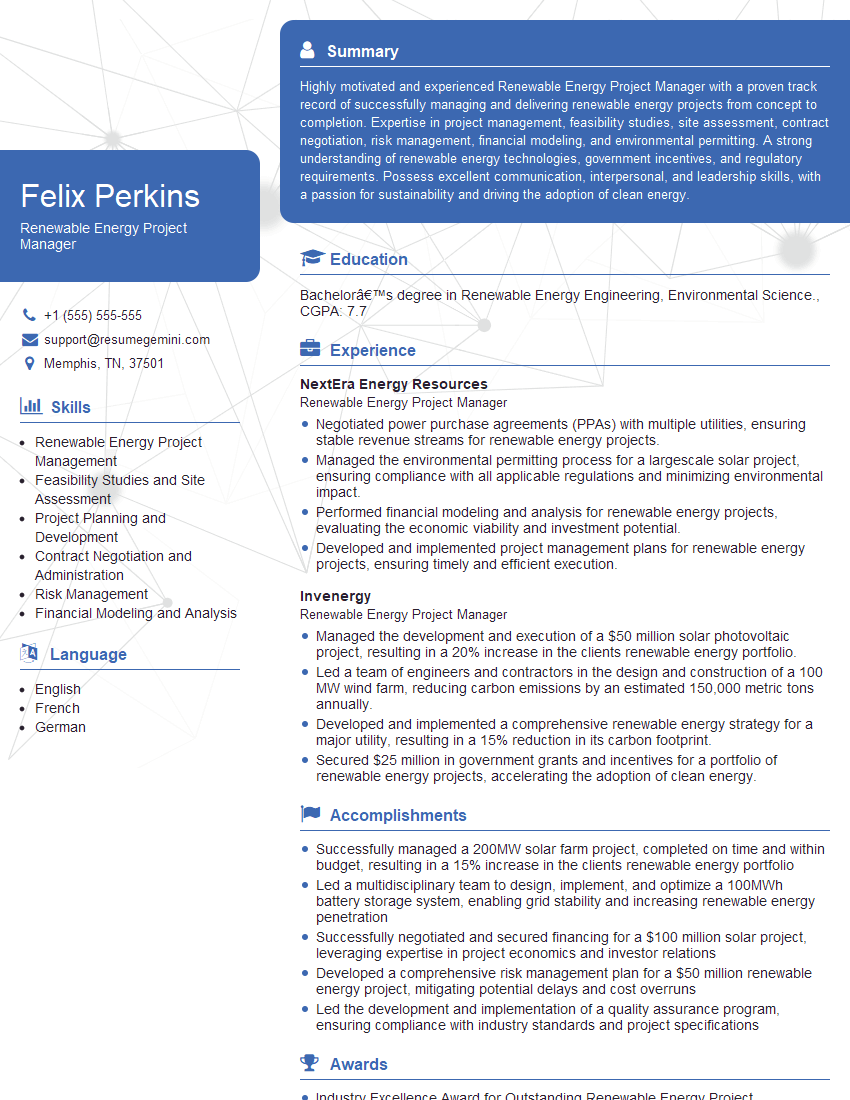
Mastering Paris Agreement Implementation is crucial for a successful career in environmental policy, sustainability, and international development. It demonstrates a commitment to addressing one of the most pressing global challenges. To maximize your job prospects, create an ATS-friendly resume that highlights your relevant skills and experience. ResumeGemini is a trusted resource to help you build a professional and impactful resume. Examples of resumes tailored to Paris Agreement Implementation are available to guide you, showcasing how to effectively present your qualifications for these in-demand roles.


Explore more articles
Users Rating of Our Blogs
Share Your Experience
We value your feedback! Please rate our content and share your thoughts (optional).
What Readers Say About Our Blog
To the interviewgemini.com Webmaster.
Very helpful and content specific questions to help prepare me for my interview!
Thank you
To the interviewgemini.com Webmaster.
This was kind of a unique content I found around the specialized skills. Very helpful questions and good detailed answers.
Very Helpful blog, thank you Interviewgemini team.