Feeling uncertain about what to expect in your upcoming interview? We’ve got you covered! This blog highlights the most important Pouring Molding Materials interview questions and provides actionable advice to help you stand out as the ideal candidate. Let’s pave the way for your success.
Questions Asked in Pouring Molding Materials Interview
Q 1. Explain the different types of molding materials and their applications.
Molding materials span a wide range, each suited to specific applications. The choice depends heavily on factors like the desired final product properties (strength, durability, heat resistance), production volume, and cost. Here are some key examples:
- Epoxy Resins: Known for their excellent mechanical strength, chemical resistance, and dimensional stability. Commonly used in high-precision parts, tooling, and electronics.
- Polyester Resins: Offer a good balance of strength, flexibility, and cost-effectiveness. Widely used in fiberglass reinforced plastics (FRP), boat hulls, and automotive parts.
- Polyurethane Resins: Versatile materials with varying properties depending on the specific formulation. They can be rigid or flexible, and are used in a vast array of applications, including casting, foam production, and coatings.
- Silicone Rubbers: Exhibit excellent heat resistance and flexibility, making them ideal for high-temperature applications, molds for other materials, and medical devices.
- Concrete and Gypsum: These are common choices for larger-scale projects, providing high strength and durability at relatively low cost. They are used in construction and architectural models.
The selection process involves careful consideration of the final part’s requirements. For instance, if high-temperature resistance is critical, silicone rubber would be preferred over polyester resin. If cost is a major factor, concrete might be the best option for a large, simple part.
Q 2. Describe the process of preparing a mold for pouring.
Mold preparation is crucial for a successful pour. A poorly prepared mold can lead to defects and ruin the casting. The process generally involves these steps:
- Mold Design and Construction: This involves creating a mold cavity with the desired shape and dimensions. Materials used for molds include wood, metal, plaster, and silicone rubber, depending on the application and complexity.
- Cleaning: Thoroughly clean the mold to remove any dust, debris, or release agent residue from previous uses. This ensures a smooth surface and prevents imperfections in the final casting.
- Surface Treatment (if necessary): Some molds require surface treatment to enhance release properties or improve the surface finish of the casting. This could involve applying a release agent or polishing the mold surface.
- Mold Assembly: For multi-part molds, ensure precise alignment and secure clamping to prevent leakage during pouring.
- Preheating (optional): Depending on the material, preheating the mold can improve flow and reduce the risk of thermal shock during the pouring process. This is especially important with temperature-sensitive materials like some types of epoxy resins.
Imagine baking a cake – you wouldn’t use a dirty, un-greased pan. Similarly, a clean and properly prepared mold is essential for a flawless casting.
Q 3. What are the common defects encountered in pouring molding, and how can they be prevented?
Several defects can occur during pouring molding. Understanding their causes is key to prevention:
- Air Bubbles: Trapped air can cause voids and weaken the final product. Prevention involves degassing the molding material and slowly pouring to minimize air entrainment.
- Shrinkage: As the material cures, it may contract, leading to cracks or warping. Careful selection of material and controlled curing conditions can minimize shrinkage.
- Poor Surface Finish: This can result from a dirty mold, improper release agent use, or material defects. Careful mold preparation and surface treatment are crucial.
- Incomplete Filling: This can be caused by insufficient material, high viscosity, or mold design issues. Careful calculation of material volume and mold design optimization are vital.
- Cracking: Can occur due to rapid cooling, excessive shrinkage, or internal stresses. Controlled curing and appropriate mold design minimize this risk.
Systematic troubleshooting, starting with visual inspection of the mold and the casting, followed by analyzing the pouring process, usually pinpoints the root cause of defects. Keeping detailed records of each pour is valuable for identifying recurring problems.
Q 4. How do you ensure the proper viscosity of the molding material?
Viscosity, or the material’s resistance to flow, is critical for proper filling of the mold. Too high a viscosity leads to incomplete filling, while too low a viscosity can result in excessive air entrainment. Viscosity is controlled through several methods:
- Temperature Control: Heating the material typically reduces its viscosity, improving flow. Conversely, cooling increases viscosity.
- Material Formulation: The manufacturer specifies optimal mixing ratios and additives to achieve the desired viscosity. Precise adherence to these guidelines is essential.
- Additives: Specific additives can be incorporated to modify the viscosity of the material, allowing for fine-tuning to match the mold’s complexity.
- Mixing Techniques: Thorough and proper mixing ensures uniform viscosity throughout the batch. Insufficient mixing can lead to inconsistent flow properties.
Imagine pouring honey versus water. Honey, being highly viscous, requires more care and perhaps some warming to pour smoothly. Similarly, adjusting the viscosity of molding materials is essential for consistent and successful castings.
Q 5. What safety precautions are necessary when working with molding materials?
Safety is paramount when working with molding materials. The specific precautions depend on the material used, but some general guidelines apply:
- Personal Protective Equipment (PPE): Always wear appropriate PPE, including safety glasses, gloves, and respiratory protection, to protect against skin and eye irritation, inhalation hazards, and potential splashes.
- Ventilation: Adequate ventilation is crucial to prevent the buildup of harmful vapors or dust. Working in a well-ventilated area or using a respirator is often necessary.
- Fire Safety: Some molding materials are flammable, so keep fire extinguishers readily available and follow proper fire safety protocols.
- Material Safety Data Sheets (MSDS): Always consult the MSDS for the specific material to understand its hazards and appropriate handling procedures.
- Spill Response: Have a plan in place for handling spills and cleaning up any material that is accidentally spilled or splashed.
Treating all materials with respect and following established safety procedures is crucial to preventing accidents and ensuring a safe working environment.
Q 6. Explain the importance of degassing in pouring molding.
Degassing is the process of removing trapped air bubbles from the molding material before pouring. This is vital because air bubbles can weaken the final casting, create unsightly imperfections, and compromise its structural integrity. Trapped air weakens the structure because it occupies space that should be filled with the molding material, creating weak points and potential failure points. The method of degassing depends on the material. Common methods include:
- Vacuum Degassing: Placing the material under vacuum to draw out trapped air bubbles. This is very effective for many resin systems.
- Pressure Degassing: Applying pressure to force out air bubbles. This method is less common but can be effective for certain materials.
- Slow Pouring Techniques: Pouring slowly and carefully minimizes the introduction of air bubbles during the pouring process itself.
Think of it like making a cake batter – you wouldn’t want to bake it with large air bubbles trapped inside. Degassing ensures a dense and strong final product, free from defects.
Q 7. Describe different methods for curing molding materials.
Curing is the process by which the molding material transitions from a liquid or semi-liquid state to a solid, hardened state. The method depends entirely on the material. Some common curing methods include:
- Ambient Curing: The material cures at room temperature without the need for external heat or catalysts. This is a simple and cost-effective method, but it may require longer curing times.
- Heat Curing: The material is cured by applying heat, often in an oven or using heat lamps. This accelerates the curing process and improves mechanical properties.
- UV Curing: Ultraviolet (UV) light initiates the curing process, which is extremely fast and used in many industrial applications.
- Chemical Curing: The material contains catalysts or hardeners that initiate the curing reaction. Careful mixing and timing are crucial for this method.
Each material has specific curing requirements, often detailed by the manufacturer. Deviation from these guidelines can lead to incomplete curing, resulting in weak or brittle castings. The choice of curing method depends on the material’s properties, time constraints, and available equipment.
Q 8. How do you control the temperature during the curing process?
Controlling the temperature during the curing process of poured molding materials is critical for achieving the desired physical and mechanical properties of the final part. This is typically achieved through a combination of methods, depending on the material and the size and complexity of the mold.
For smaller molds and less temperature-sensitive materials, a simple, controlled environment like an oven might suffice. We might program the oven to follow a specific temperature profile, gradually increasing the temperature to the optimal curing temperature and then holding it for the necessary duration before slowly cooling down. This prevents thermal shock that could crack the molded part.
Larger molds, however, often require more sophisticated techniques. Water baths or circulating fluid systems can provide more precise temperature control throughout the mold volume. Sensors embedded within the mold itself or in the material can provide real-time temperature feedback, allowing for adjustments to the heating/cooling system as needed. Think of it like baking a cake – you wouldn’t just throw it in a hot oven and leave it! Precise control over temperature is key.
For thermoset resins which undergo a chemical change during curing, the temperature profile is particularly critical as deviations can lead to incomplete curing (resulting in a weaker part) or premature curing (leading to defects).
Q 9. How do you inspect a finished molded part for defects?
Inspecting a finished molded part for defects is a crucial step in quality control. This often involves a multi-stage process combining visual inspection with more sophisticated techniques.
Visual inspection is the first and most common method. We carefully examine the part for obvious flaws such as: surface imperfections (scratches, blemishes, or sink marks), dimensional inaccuracies (deviations from the design specifications), air bubbles trapped within the material, or evidence of incomplete curing (soft spots or areas with a different color).
Beyond visual inspection, we can employ more advanced techniques such as: dimensional measurement using calipers or CMM (Coordinate Measuring Machine) for precise dimensional accuracy; ultrasonic testing to detect internal flaws such as voids or cracks; and dye penetrant testing to reveal surface-breaking cracks or porosity.
The specific inspection methods will depend on the material, the application of the part and the required tolerances. For example, a high-precision part for aerospace application would require much more stringent inspection than a simple decorative item.
Q 10. What are the different types of molds used in pouring molding?
Pouring molding utilizes a wide range of mold types, each selected based on the complexity of the part, production volume, and material properties. Some common types include:
- Open molds: These are simple molds, often made from inexpensive materials like wood or plaster, suitable for low-volume production of simple shapes. Think of pouring wax into a simple container.
- Closed molds: These molds usually consist of two or more parts that clamp together, providing better control over the shape and surface finish of the molded part. They are commonly used for more complex shapes and higher volume production.
- Pressure molds: These molds apply pressure to the material during the pouring process to eliminate air bubbles and improve the part’s density and strength. This is essential for materials that tend to trap air.
- Vacuum molds: Similar to pressure molds but utilize vacuum instead of pressure to remove air bubbles and improve the final product quality. This method is especially helpful for materials prone to entrapped air.
- Multiple-cavity molds: These molds contain multiple cavities, enabling simultaneous production of several identical parts. This significantly increases production efficiency.
The choice of mold type is a critical design consideration, influencing factors like cost, production speed, and the quality of the final product.
Q 11. Explain the importance of mold release agents.
Mold release agents are crucial in pouring molding because they prevent the cured material from adhering to the mold surface. Without them, it would be extremely difficult, if not impossible, to remove the part from the mold without damaging either the part or the mold itself. Think of trying to remove a freshly baked cake from a pan without greasing it – a disaster!
The use of release agents is essential for maintaining the integrity of the mold, ensuring consistent part quality, and increasing production efficiency. They also contribute to a smoother surface finish on the molded part, reducing the need for extensive post-processing.
A good release agent is not only effective in preventing adhesion but also needs to be compatible with both the mold material and the poured material. Incorrect selection can result in residual release agent on the part or mold damage.
Q 12. How do you select the appropriate mold release agent for a specific material?
Selecting the appropriate mold release agent involves careful consideration of several factors. The most important factors are:
- The molding material: Different materials require different release agents. For example, a release agent suitable for epoxy resin might not be suitable for polyurethane.
- The mold material: The release agent must be compatible with the mold material to prevent damage or degradation of the mold itself. Silicone molds, for instance, might require a different release agent than metal molds.
- The desired surface finish: Some release agents leave a more significant residue than others, impacting the surface finish of the molded part. For high-gloss finishes, minimal residue release agents are preferred.
- Temperature and cure time: The release agent needs to withstand the temperatures and cure times of the molding process without degrading or compromising its effectiveness.
Often, manufacturers of molding materials provide recommendations on suitable release agents. In the absence of such recommendations, small-scale testing is vital to determine the best release agent for a specific combination of molding material and mold.
Q 13. Describe the process of cleaning and maintaining molds.
Cleaning and maintaining molds is essential for ensuring the longevity of the molds and the quality of the molded parts. This typically involves a multi-step process.
Cleaning: Immediately after demolding, any residual material or release agent is removed from the mold surface. This often involves using appropriate solvents or cleaning agents, carefully selected to avoid damaging the mold material. Compressed air can also be used to remove loose particles. For intricate molds, specialized cleaning tools or techniques may be required. The choice of cleaning method is heavily dependent on the type of mold material and the specific materials used in the molding process.
Maintenance: Regular inspection of the mold for signs of wear, damage, or corrosion is crucial. Damaged areas might need repair or replacement. Lubrication of moving parts in complex molds might be needed to ensure smooth operation. Proper storage of the molds in a clean, dry environment helps to prevent deterioration.
Consistent and thorough cleaning and maintenance procedures are essential for prolonging mold lifespan and reducing downtime. Neglecting this step can lead to increased production costs and compromised part quality.
Q 14. What are the common problems associated with mold shrinkage?
Mold shrinkage is a common problem in pouring molding where the cured part is smaller than the mold cavity. This occurs due to the material’s contraction during the curing process. Several problems stem from this:
- Dimensional inaccuracies: The final part will not meet its design specifications, potentially affecting its functionality.
- Stress and cracking: Uneven shrinkage can create internal stresses in the part, leading to cracks or warpage.
- Loss of precision: Parts requiring tight tolerances will be unusable due to dimensional discrepancies.
- Assembly issues: Shrinkage can cause mating parts to not fit correctly.
Minimizing mold shrinkage involves using materials with lower shrinkage rates, employing controlled curing cycles (gradual cooling), and using appropriate mold designs that account for the anticipated shrinkage. Precise control over the curing process is vital in this respect.
Q 15. How do you measure the dimensional accuracy of a molded part?
Measuring the dimensional accuracy of a molded part is crucial for ensuring quality and functionality. We typically use a combination of methods, depending on the part’s complexity and required precision. For simple parts, a standard caliper or micrometer provides sufficient accuracy for measuring linear dimensions like length, width, and thickness. More complex shapes might require a coordinate measuring machine (CMM) which uses probes to take multiple measurements across the part’s surface, creating a 3D model that can be compared to the CAD design for deviations.
For example, if we’re molding a small plastic gear, a caliper might suffice to check the overall diameter and tooth height. However, if we’re producing a complex automotive part, a CMM is essential to guarantee accurate dimensions and tolerances across all surfaces, including intricate curves and angles. Statistical process control (SPC) is also crucial; we collect data from multiple samples to identify trends and variances, allowing us to adjust the molding process for greater consistency. Any deviation from the design specifications is carefully documented and analyzed to identify root causes for potential adjustments in the mold or molding process.
Career Expert Tips:
- Ace those interviews! Prepare effectively by reviewing the Top 50 Most Common Interview Questions on ResumeGemini.
- Navigate your job search with confidence! Explore a wide range of Career Tips on ResumeGemini. Learn about common challenges and recommendations to overcome them.
- Craft the perfect resume! Master the Art of Resume Writing with ResumeGemini’s guide. Showcase your unique qualifications and achievements effectively.
- Don’t miss out on holiday savings! Build your dream resume with ResumeGemini’s ATS optimized templates.
Q 16. How do you troubleshoot problems related to air bubbles in the molded part?
Air bubbles in molded parts are a common problem, often leading to defects in strength and aesthetics. Troubleshooting involves systematic investigation of several potential sources. Firstly, we’d examine the material itself; some materials are more prone to trapping air than others. Proper degassing of the material before pouring is paramount; using a vacuum degassing chamber is frequently employed to remove trapped air. The molding process itself also matters; insufficient venting in the mold cavity can trap air. We ensure adequate venting channels in the mold design to allow air to escape as the material fills the cavity. Mold temperature is another factor; higher temperatures can reduce viscosity, making it easier for air to escape. Finally, the pouring technique itself; a slow, controlled pour is often preferred to minimize air entrapment. It’s a process of elimination, starting with the simplest solutions (like confirming proper venting) and moving to more involved changes (like re-designing the mold or altering the degassing procedure).
For instance, if we repeatedly find air bubbles in a certain section of a part, we might focus on improving vent design in that specific area of the mold. Similarly, if bubbles are consistent across multiple parts, we might analyze the material’s degassing process, perhaps increasing the vacuum time or adjusting the temperature to lower viscosity.
Q 17. Explain the concept of flow and fill in pouring molding.
Flow and fill in pouring molding describe how the liquid material moves and fills the mold cavity. Flow refers to the material’s ability to move through the mold’s channels and into the cavity under the applied pressure or gravity. Fill describes the complete occupation of the mold cavity by the material, ensuring a complete and defect-free part. Several factors influence flow and fill, including the material’s viscosity (thickness), the mold’s design (channels, gates, runners), the temperature of the material, and the pouring pressure (if any). Poor flow can lead to incomplete filling, leaving voids or short shots, while poor fill can result in trapped air or other defects.
Imagine pouring water (low viscosity) versus honey (high viscosity) into a mold. Water flows easily and fills the mold quickly. Honey, on the other hand, moves much slower and requires more time or perhaps even pressure to fill every crevice. Similarly, a mold design with narrow channels will restrict flow, possibly leading to incomplete filling or uneven distribution of the material. Optimizing flow and fill requires careful consideration of all these interacting factors.
Q 18. How do you determine the appropriate pressure for injection molding?
Determining the appropriate injection pressure depends on several critical factors including the material properties, the mold design, and the desired part quality. The injection pressure must be high enough to ensure complete filling of the mold cavity and to overcome the material’s viscosity and the pressure drop in the flow channels, but not so high as to damage the mold or cause defects like flash (excess material escaping the mold) or warping. We usually start with manufacturer recommendations for the specific material being used. Then we conduct a series of trial runs at gradually increasing pressures, carefully examining the resulting parts for defects. Specialized molding equipment often includes pressure sensors and data logging capabilities that help us monitor and adjust the pressure during the molding process. Careful examination of the parts for defects (like short shots, sinks, or air traps) guides the pressure adjustments. We often create a Pressure vs. Part Quality curve to visually determine the optimal pressure.
For example, molding a thin-walled part will likely require a lower pressure to prevent damage. A thicker part might require a higher pressure for complete filling. Experimental testing and careful analysis of the results is key for finding the sweet spot.
Q 19. What is the role of a degassing chamber in the pouring process?
A degassing chamber is a critical component in many pouring molding processes, particularly when working with materials prone to trapping air bubbles. Its primary role is to remove dissolved or entrained gases from the molding material before it’s introduced into the mold. This is achieved by placing the material under vacuum conditions, reducing the pressure and allowing dissolved gases to escape. This leads to a more homogeneous, bubble-free product. The effectiveness of the degassing chamber depends on factors like vacuum level, degassing time, material temperature, and the chamber’s design. Improper degassing can result in significant defects in the final product, reducing its strength and aesthetics.
Think of it like shaking a soda bottle before opening it: the dissolved carbon dioxide comes out as bubbles. The degassing chamber provides a controlled environment for this gas release before the material is poured, ensuring that the bubbles don’t form within the molded part itself.
Q 20. Describe the different types of curing ovens used in pouring molding.
Curing ovens in pouring molding are designed to provide a controlled thermal environment for the chemical reaction (curing) of the molding material. Various oven types exist, each with its strengths and weaknesses. Common types include:
- Convection ovens: These use fans to circulate heated air around the parts, providing even temperature distribution. They are cost-effective and suitable for many materials.
- Forced convection ovens: Similar to convection ovens, but with more powerful fans, resulting in faster and more uniform heating.
- Infrared (IR) ovens: These use infrared radiation to heat the parts directly. This method is effective for faster curing in some applications but may cause uneven heating if not carefully controlled.
- Vacuum ovens: Combine vacuum with heating. This removes volatiles from the material during curing, leading to denser and more defect-free parts. Very effective for materials prone to gas release during curing.
The choice of oven depends on the material properties, curing temperature, and cycle time requirements. Precise temperature control and monitoring are critical for consistent results.
Q 21. Explain the concept of post-curing and its importance.
Post-curing is a process where the molded parts are subjected to further heat treatment after the initial curing in the oven. Its importance lies in achieving complete cross-linking of the polymer chains and improving the material’s final properties. Initial curing might not fully complete the chemical reaction, leading to lower mechanical strength, dimensional stability, and chemical resistance. Post-curing helps to improve these properties by allowing the remaining reactive sites to fully react. The post-curing conditions (time and temperature) are typically determined by material specifications and the desired final properties. For example, high-performance materials often benefit significantly from post-curing to achieve their optimal strength and durability.
Think of it as baking a cake: the initial baking sets the basic structure, but additional baking time ensures that it’s fully cooked and doesn’t crumble easily. Similarly, post-curing strengthens the molded part and enhances its overall performance.
Q 22. How do you calculate the amount of material needed for a specific mold?
Calculating the amount of material needed for a specific mold involves understanding the mold’s volume and the material’s density. It’s essentially a volume-based calculation. First, you need precise measurements of the mold cavity. This often involves using CAD software for complex shapes or carefully measuring the length, width, and depth of simpler molds. For irregular shapes, you might need to break down the mold into smaller, manageable volumes and sum them. Once you have the total volume (often in cubic centimeters or cubic inches), you need the density of your pouring material. This information is typically provided by the material’s manufacturer, usually expressed in grams per cubic centimeter (g/cm³) or pounds per cubic foot (lb/ft³).
The calculation is straightforward: Volume × Density = Mass. This will give you the mass of material needed. Remember to account for any shrinkage the material might undergo during curing. This shrinkage factor varies depending on the specific resin and is usually provided in the material’s datasheet as a percentage. You would add this percentage to the calculated mass to ensure you have enough material.
Example: Let’s say you have a mold with a volume of 500 cubic centimeters and you’re using a resin with a density of 1.2 g/cm³. The calculation would be: 500 cm³ × 1.2 g/cm³ = 600 g. If the resin has a 2% shrinkage, you’d add 2% of 600g (12g) to the total, resulting in a need for approximately 612g of resin.
Q 23. What are the environmental considerations related to pouring molding materials?
Environmental considerations in pouring molding are crucial. Many pouring molding materials, especially epoxy and polyurethane resins, contain volatile organic compounds (VOCs) that can contribute to air pollution. Proper ventilation is paramount during mixing and curing to minimize VOC exposure. Disposal of leftover materials and cured parts is also important. Cured resins are often non-biodegradable and require special disposal methods, possibly through hazardous waste facilities. Some resins contain hazardous substances that can pose risks to human health and the environment if not handled correctly. The use of personal protective equipment (PPE), such as gloves, masks, and eye protection, is essential to safeguard the health of those involved in the process.
Sustainable options are increasingly important. Manufacturers are developing bio-based resins with lower VOC content and reduced environmental impact. Choosing these eco-friendly alternatives is crucial for minimizing the ecological footprint. Recycling or repurposing cured parts, where feasible, can also contribute to sustainability. Proper documentation of material use, waste generation, and disposal methods is crucial for compliance with environmental regulations.
Q 24. Describe your experience with different types of resin systems.
My experience encompasses a wide range of resin systems, including epoxy, polyurethane, polyester, and silicone. Epoxy resins are known for their strength, chemical resistance, and excellent adhesion. I’ve used them extensively in high-performance applications requiring durability and precision. Polyurethane resins offer a broad spectrum of properties, from flexible elastomers to rigid foams. I’ve worked with both, choosing the specific type based on the desired hardness, elasticity, and other physical characteristics of the final product. Polyester resins are commonly used for their cost-effectiveness in applications like fiberglass reinforced plastics. I’ve experienced variations in curing times and need for catalysts depending on the type and the final application.
Silicone resins stand out for their heat resistance and flexibility. I’ve used them in applications demanding temperature extremes or requiring mold release properties. Selecting the appropriate resin system is always dictated by the application’s specific requirements, including mechanical strength, chemical resistance, thermal properties, curing time, and cost considerations. My experience also involves working with different curing agents and additives to modify the resin properties, like color, viscosity, and curing speed.
Q 25. Explain the importance of quality control in pouring molding.
Quality control is absolutely essential in pouring molding to ensure consistent product quality and prevent costly defects. It starts with meticulous material selection and handling. Careful weighing and mixing of components are crucial to achieve the desired material properties. Consistent temperature control during the mixing and curing process is another critical factor. Temperature fluctuations can affect the curing process, potentially leading to defects such as voids, shrinkage, or incomplete curing. Regular inspection of the mold itself is important, to prevent imperfections from being transferred to the finished product.
During the curing process, monitoring temperature and time is vital. Post-cure inspection involves visual examination for surface imperfections and dimensional accuracy checks to ensure compliance with specifications. Documentation of all steps is essential for traceability and problem-solving. Statistical process control (SPC) methods can be implemented for long-term monitoring and identification of potential issues. Using a well-defined quality control plan helps ensure consistent, high-quality results and minimizes defects.
Q 26. How do you handle variations in material properties?
Variations in material properties, like viscosity or curing time, can significantly impact the final product. The first step is to identify the source of the variation. This often involves checking the material’s lot number and comparing it to previous batches. Variations can stem from supplier changes or even inconsistencies in storage conditions. Temperature plays a significant role in material properties, so checking the storage and working temperatures is crucial. The manufacturer’s datasheet should be consulted for acceptable ranges of these properties.
If variations are outside the acceptable range, corrective actions are necessary. This could involve adjusting the pouring technique, modifying the curing process parameters (temperature or time), or using additives to modify the resin’s properties. Thorough documentation of these variations and corrective measures is essential to prevent recurrence. In some instances, replacing the batch of material might be the most effective solution. A well-defined process with detailed specifications and standard operating procedures is critical to minimize the effect of such variations and to ensure consistent outcomes.
Q 27. Describe a time you had to troubleshoot a molding process issue.
During a large-scale production run of custom silicone parts, we experienced a significant increase in the number of parts with internal voids. The initial reaction was to suspect the resin itself. However, after meticulously checking the material’s properties against specifications and eliminating the possibility of a faulty batch, we turned our attention to the process itself. We carefully reviewed our standard operating procedures and realized that a recent change in the mixing process (specifically, the mixing speed and time) had been introduced without thorough testing.
We systematically reverted to the previous mixing procedure. After implementing this change, the voiding issue significantly decreased. The root cause analysis revealed that the faster mixing speed, while seemingly efficient, had incorporated too much air into the mix, resulting in the voids during the curing process. This experience highlighted the importance of rigorous testing and validation of any process changes, no matter how seemingly minor they might be. The lesson learned was the value of systematic troubleshooting and careful documentation of all process parameters.
Q 28. What are your preferred methods for documenting molding processes?
My preferred methods for documenting molding processes involve a combination of digital and physical records. For each project, a detailed process document is created, outlining the material specifications, mixing ratios, curing parameters (temperature, time, pressure), mold preparation, and post-cure handling. This document serves as a master recipe and is kept digitally for easy access and version control. I utilize spreadsheets to record batch-specific information, including material lot numbers, date of production, environmental conditions, and any deviations from the standard process. I also include any quality control data, like dimensional measurements, visual inspection results, and any observations during the process.
Physical records, such as sample parts from each batch, are retained for long-term reference. Photographs or videos of the process steps, especially critical steps like mixing and pouring, can also be included in the documentation for better visualization. This combination of digital and physical records provides comprehensive documentation for traceability, auditing, and future reference. The goal is to maintain a complete and auditable record of every step in the molding process, enabling efficient troubleshooting and continuous process improvement.
Key Topics to Learn for Pouring Molding Materials Interview
- Material Properties: Understanding the rheological properties (viscosity, flow behavior) of various molding materials (e.g., resins, polymers, metals) and how they influence the molding process.
- Mold Design and Manufacturing: Knowledge of different mold types (e.g., single-cavity, multi-cavity, injection molds), materials used in mold construction, and manufacturing techniques.
- Pouring Techniques: Mastering various pouring methods, including gravity pouring, pressure pouring, and vacuum assisted pouring, and understanding their applications and limitations.
- Process Control and Optimization: Familiarity with parameters affecting the molding process (e.g., temperature, pressure, curing time) and techniques for process optimization and quality control.
- Defect Analysis and Troubleshooting: Ability to identify common defects (e.g., porosity, shrinkage, warping) and troubleshoot problems during the molding process.
- Safety Procedures and Regulations: Understanding relevant safety protocols, handling procedures for specific materials, and compliance with industry regulations.
- Post-Processing Techniques: Knowledge of finishing operations, such as trimming, cleaning, and surface treatments, required after the molding process.
- Material Selection and Compatibility: Understanding factors influencing material selection (e.g., cost, performance requirements, recyclability) and ensuring compatibility between materials and molds.
- Automation and Robotics in Pouring Molding: Familiarity with automated pouring systems and robotic integration in the molding process.
Next Steps
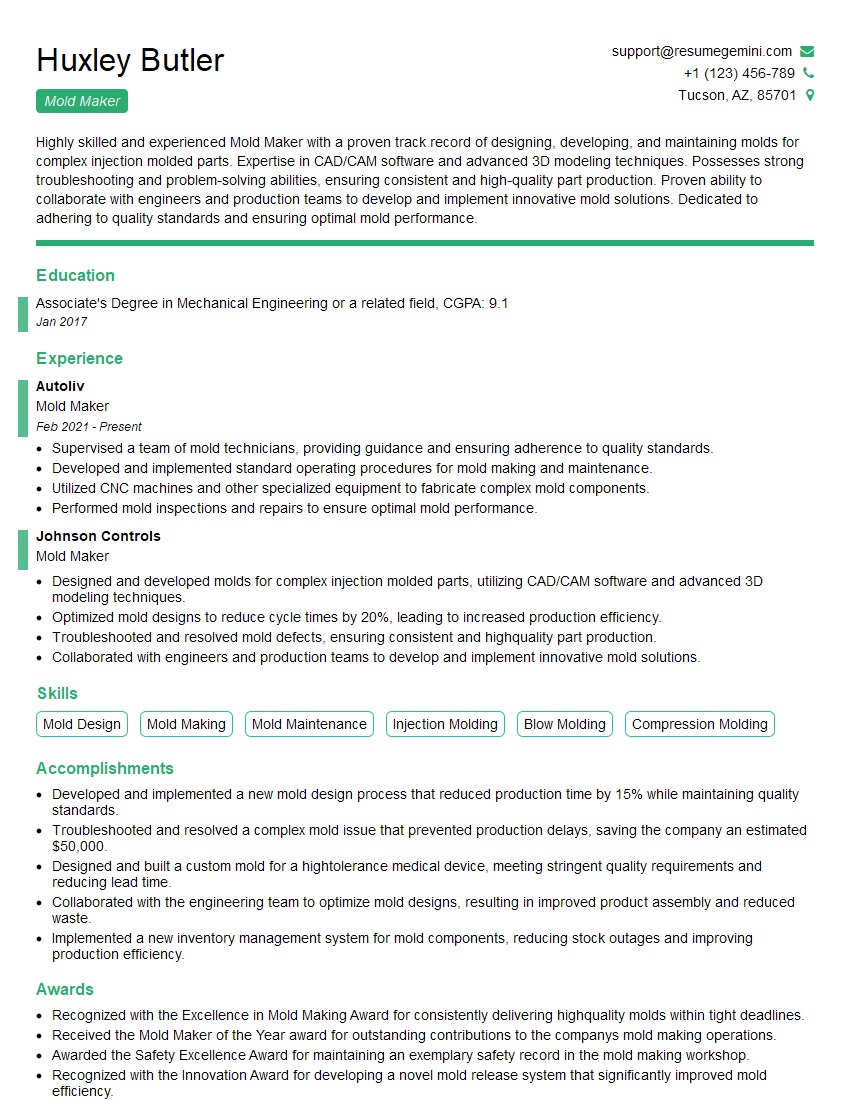
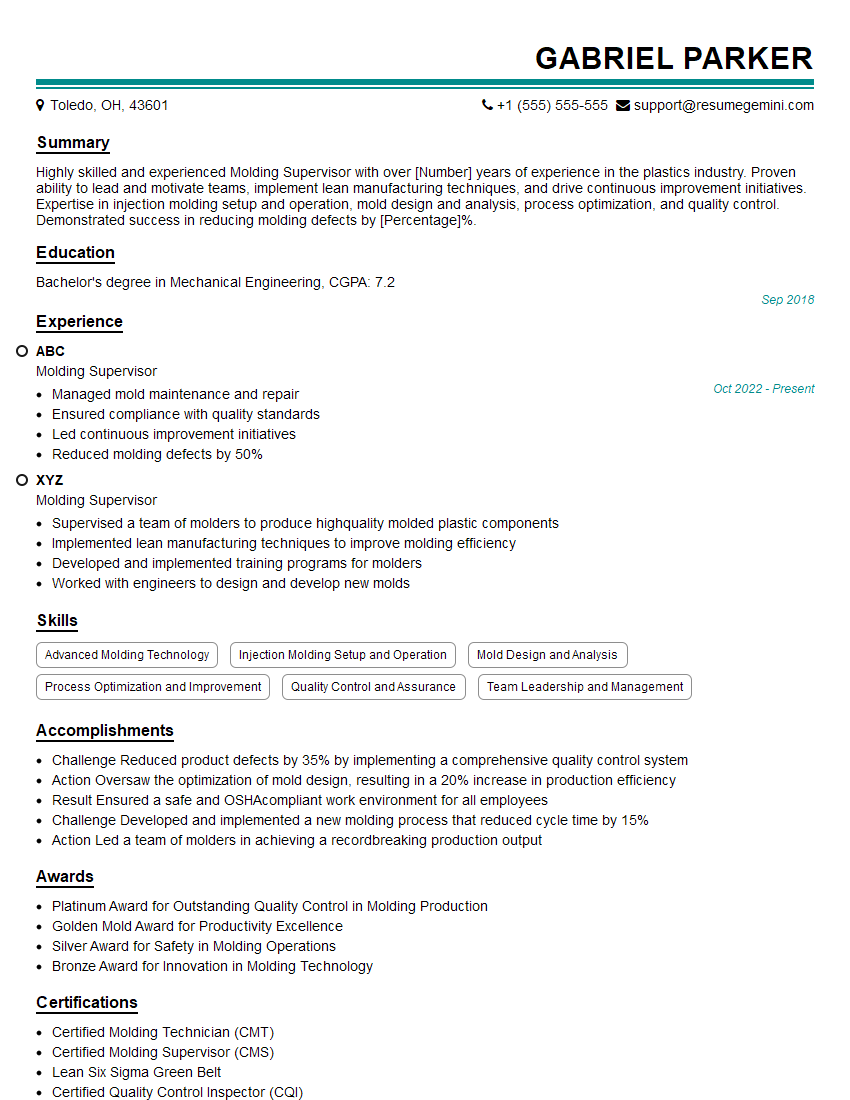
Mastering the intricacies of Pouring Molding Materials significantly enhances your career prospects in manufacturing, materials science, and related fields. A strong understanding of these processes demonstrates valuable technical skills and problem-solving abilities highly sought after by employers. To maximize your job search success, focus on creating an ATS-friendly resume that effectively showcases your skills and experience. ResumeGemini is a trusted resource to help you build a professional and impactful resume that stands out from the competition. Examples of resumes tailored to Pouring Molding Materials are available to guide you through this process, ensuring your qualifications are presented in the most effective way.

Explore more articles
Users Rating of Our Blogs
Share Your Experience
We value your feedback! Please rate our content and share your thoughts (optional).
What Readers Say About Our Blog
To the interviewgemini.com Webmaster.
Very helpful and content specific questions to help prepare me for my interview!
Thank you
To the interviewgemini.com Webmaster.
This was kind of a unique content I found around the specialized skills. Very helpful questions and good detailed answers.
Very Helpful blog, thank you Interviewgemini team.