Preparation is the key to success in any interview. In this post, we’ll explore crucial Endovascular Aneurysm Repair (EVAR) interview questions and equip you with strategies to craft impactful answers. Whether you’re a beginner or a pro, these tips will elevate your preparation.
Questions Asked in Endovascular Aneurysm Repair (EVAR) Interview
Q 1. Describe the indications and contraindications for EVAR.
Endovascular aneurysm repair (EVAR) is a minimally invasive procedure used to treat abdominal aortic aneurysms (AAAs). Indications for EVAR primarily center around the presence of an AAA that poses a significant risk of rupture. This risk is often assessed by the size of the aneurysm and the patient’s overall health. Generally, an AAA larger than 5.5cm in diameter or one that is rapidly expanding warrants consideration for EVAR. Patient-specific factors such as age, overall health, and presence of comorbidities also play a critical role.
Contraindications, however, are equally important. These include: inability to access the femoral arteries (the usual access points), significant tortuosity or angulation of the iliac arteries, inadequate sealing zones preventing proper endograft deployment, severe comorbidities that significantly increase surgical risk, and certain anatomical characteristics that make EVAR unsuitable (like short necks or a significantly infrarenal aortic neck). For instance, a patient with severe peripheral artery disease rendering femoral access impossible would be a contraindication. Careful preoperative imaging and assessment are crucial in determining suitability for EVAR.
Q 2. What are the different types of endografts used in EVAR?
A variety of endografts are available, each tailored to specific patient anatomies and aneurysm characteristics. These are broadly categorized by their design and features. Common types include:
- Aorto-uni-iliac: These are used when one iliac artery is involved in the aneurysm.
- Aorto-bi-iliac: These cover both iliac arteries, the most frequently used type.
- Branched endografts: Designed to treat aneurysms extending into the renal arteries, providing separate branches for renal perfusion.
- Fenestrated endografts: Similar to branched endografts, but with fenestrations (small openings) aligned with the renal arteries, offering more flexibility in placement.
- Custom-made endografts: Tailored to individuals with particularly challenging anatomies that don’t fit the standard endograft sizes.
The choice of endograft depends on a thorough preoperative assessment of the patient’s anatomy, including the size and shape of the aneurysm, the length and diameter of the iliac arteries and the location of the renal arteries. Imagine choosing a puzzle piece – the endograft must fit the patient’s unique vascular anatomy perfectly.
Q 3. Explain the pre-operative assessment and planning for EVAR.
Preoperative assessment and planning are paramount to successful EVAR. This involves a multi-step process:
- Detailed history and physical examination: Evaluating overall health, cardiovascular status, and identifying any potential complications.
- Advanced imaging: Computed tomography angiography (CTA) is essential to assess the aneurysm’s size, shape, location, and the suitability of the surrounding vessels for endograft placement. This provides a roadmap of the patient’s vasculature.
- Laboratory tests: Complete blood count, coagulation studies, and renal function tests are performed to assess the patient’s overall fitness for surgery.
- Vascular access assessment: Confirming the patency and suitability of the femoral arteries for endograft insertion.
- Endograft selection: Based on the CTA findings and the patient’s anatomy, the appropriate endograft size and type are chosen.
- Preoperative counseling: Thoroughly discussing the procedure, risks, benefits, and potential complications with the patient and their family.
This detailed preparation significantly reduces the risk of complications and ensures optimal outcomes. A thorough preoperative assessment is like meticulously planning a complex journey; every detail matters.
Q 4. Describe the procedural steps involved in performing an EVAR.
The EVAR procedure is typically performed under general or regional anesthesia. The key steps involve:
- Femoral artery access: Small incisions are made in the groin to access the femoral arteries.
- Sheath insertion: Introducer sheaths are placed into the femoral arteries to provide a pathway for the endograft.
- Endograft delivery: The endograft is advanced into the aorta under fluoroscopic guidance, carefully navigating its way to the target location.
- Endograft deployment: The endograft is then deployed, expanding to seal the aneurysm neck, preventing blood flow from entering the aneurysm sac.
- Post-deployment imaging: A post-deployment CTA is essential to ensure the endograft is correctly positioned and there are no immediate complications such as endoleaks.
- Wound closure: The incisions are then closed.
Precision and careful monitoring are critical throughout the procedure. Imagine threading a needle through a complex maze – that level of precision is required to successfully deploy the endograft.
Q 5. What are the potential complications of EVAR?
While EVAR is a less invasive procedure than open surgery, several potential complications can arise:
- Endoleak: This is the most significant complication, where blood leaks past the endograft into the aneurysm sac. It is further classified into Type I-V based on the location of the leak.
- Migration of the endograft: The endograft may shift from its intended position, potentially compromising its effectiveness.
- Infection at the access site: Infection can occur at the puncture sites used for femoral artery access.
- Renal artery injury: Rarely, the renal arteries may be damaged during the procedure, necessitating intervention.
- Neurological complications: In rare cases, neurological complications such as stroke or spinal cord ischemia can occur.
- Aortic rupture: Although rare, the risk of aortic rupture exists, especially in patients with very fragile aortas.
Careful preoperative planning, meticulous surgical technique, and close postoperative monitoring are crucial in mitigating these risks. Each complication requires specific management strategies.
Q 6. How do you manage type I endoleak?
Type I endoleak represents a leak at the proximal or distal attachment site of the endograft to the native aorta. This is a serious complication because it poses a significant risk of aneurysm expansion and rupture. Management strategies depend on the severity and location of the leak:
- Surgical repair: In many instances, open surgical intervention or a secondary endovascular procedure (such as placement of a covered stent) is required to seal the leak.
- Secondary endovascular intervention: This may involve placing a covered stent to reinforce the sealing zone of the endograft.
Prompt diagnosis and treatment are crucial, as untreated Type I endoleaks can have life-threatening consequences. Imagine a leaky dam; immediate repair is essential to prevent catastrophic failure.
Q 7. How do you manage type II endoleak?
Type II endoleak signifies retrograde flow into the aneurysm sac from lumbar or other collateral arteries. This type of endoleak is typically less dangerous than Type I, as the leak itself is usually from smaller vessels and the risk of rapid aneurysm expansion is less significant. However, monitoring is still necessary, as it can eventually contribute to aneurysm growth. Management strategies include:
- Observation: In many cases, conservative management involves regular surveillance imaging (typically CTA scans) to monitor aneurysm size. If the aneurysm remains stable, intervention isn’t necessary.
- Embolization: If the aneurysm expands despite observation, an embolization procedure using coils or other agents can seal the leak sites.
The approach to Type II endoleaks is more conservative due to the lower risk of immediate rupture compared to Type I. However, careful monitoring is crucial to detect any increase in aneurysm size.
Q 8. How do you manage type III endoleak?
Type III endoleaks are characterized by leakage at the distal end of the endograft, often due to inadequate sealing of the graft against the infrarenal aorta. Management hinges on identifying the cause and addressing it effectively. This often involves a less invasive approach first.
- Conservative Management (Surveillance): Smaller, self-limiting Type III endoleaks might be monitored closely with CT scans. If the leak remains stable or shrinks, intervention may not be immediately necessary.
- Endovascular Repair: This is typically the primary treatment. It involves deploying additional endografts or coils to seal the leak. This can be done through the existing access points, minimizing the need for additional procedures. We’d carefully select the appropriate device based on the anatomy visualized during the procedure.
- Open Surgical Repair: In cases where endovascular techniques fail or the endoleak is massive and causing complications, open surgery might be necessary. This is generally a last resort due to increased invasiveness and associated risks.
For example, I recently managed a patient with a small Type III endoleak that was stable on follow-up imaging. We opted for conservative management with regular monitoring, and the leak eventually resolved spontaneously.
Q 9. How do you manage type IV endoleak?
Type IV endoleaks, resulting from graft porosity or material defects, are usually less challenging to treat than Type IIIs. The approach depends on the size and location of the leak.
- Observation: Small, asymptomatic Type IV endoleaks may not require immediate intervention, especially if they remain stable during follow-up imaging.
- Endovascular Embolization: This is the most common approach. Using coils or other embolic agents, we can occlude the leak site through the existing femoral access site, effectively sealing the porous area and preventing further bleeding.
- In certain complex cases, we might use a combination of embolic agents like coils and liquid embolics such as Onyx, for better filling and sealing.
- Graft Replacement: While uncommon, graft replacement might be considered if the leak is significant or if conservative measures fail to control it. This is often a much more invasive surgical approach.
Imagine a porous section of the endograft as a sieve. Embolization is like patching the holes in the sieve, preventing fluid from leaking through.
Q 10. What are the imaging modalities used to assess EVAR outcomes?
Post-EVAR assessment relies heavily on imaging to monitor for complications and ensure the procedure’s success. The gold standard is Computed Tomography Angiography (CTA).
- Computed Tomography Angiography (CTA): CTA provides detailed images of the treated aneurysm and surrounding vasculature. It’s crucial for detecting endoleaks, identifying any migration of the endograft, and assessing the patency of the renal arteries.
- Digital Subtraction Angiography (DSA): Although less frequently used now due to the increased use of CTA, DSA remains a valuable tool during the procedure itself. It offers real-time visualization, allowing for precise placement of the endograft and immediate assessment of its effectiveness.
- Ultrasound: Duplex ultrasound is often used as a less invasive initial screening tool, particularly for follow-up after the initial CTA, helping identify potential complications early on. It’s not as detailed as CTA, but it’s convenient and readily available.
The choice of modality often depends on the clinical scenario and available resources. Early post-procedure assessment commonly utilizes CTA, while follow-up monitoring might involve ultrasound or CTA depending on the patient’s risk profile and the initial findings.
Q 11. Describe the post-operative management of EVAR patients.
Post-operative management of EVAR patients focuses on minimizing complications and ensuring a smooth recovery. It involves a multi-faceted approach:
- Pain Management: Effective pain control is paramount. This may involve a combination of oral analgesics and potentially epidural analgesia, tailored to the individual’s needs.
- Hemodynamic Monitoring: Close monitoring of blood pressure is essential, especially in the immediate postoperative period, to minimize the risk of rebleeding and other complications. Maintaining optimal hemodynamics promotes proper healing.
- Antithrombotic Therapy: Patients are typically prescribed antiplatelet or anticoagulant medications to prevent thrombosis (blood clot formation) at the graft site or within the endograft itself. The specific medication and dosage are determined based on several factors, such as pre-existing medical conditions.
- Infection Prevention: Strict aseptic techniques and prophylactic antibiotics are used to prevent infections related to the procedure and surgical site.
- Regular Follow-up: Scheduled imaging studies (CTA or ultrasound) are vital to monitor for endoleaks, stent migration, or other complications.
For instance, we typically advise patients to avoid strenuous activity for several weeks post-procedure to allow adequate healing and reduce the risk of complications.
Q 12. What are the long-term risks and benefits of EVAR?
EVAR offers significant long-term benefits, but it also carries potential risks.
- Benefits:
- Reduced mortality compared to open surgical repair, especially in high-risk patients.
- Minimally invasive procedure, resulting in shorter hospital stays, faster recovery times, and less postoperative pain.
- Improved quality of life compared to open repair.
- Risks:
- Endoleaks: Leakage of blood around the endograft, requiring further intervention.
- Graft migration: Displacement of the endograft, potentially compromising aneurysm exclusion.
- Thrombosis: Blood clot formation within the endograft, obstructing blood flow.
- Renal artery occlusion: Rare but potentially catastrophic complication.
- Infection.
The long-term outcome is highly individualized and depends on several factors, including the patient’s overall health, the complexity of the aneurysm, and the skill of the interventionalist. Careful patient selection and meticulous technique are critical to maximizing benefits and minimizing risks.
Q 13. How do you choose the appropriate endograft size and type?
Choosing the appropriate endograft size and type is crucial for successful EVAR. Preoperative planning is paramount.
- Preoperative Imaging: Detailed CTA and 3D reconstructions are essential to accurately assess the aneurysm anatomy, including the diameter and length of the infrarenal aorta, the neck length and angle, and the presence of any significant iliac artery disease.
- Endograft Sizing: The endograft must be appropriately sized to ensure complete aneurysm exclusion and prevent endoleaks. This involves careful measurements from the pre-operative imaging studies to select an endograft that fits snugly without causing undue stress on the vessel wall.
- Endograft Type: The choice of endograft depends on several factors including aneurysm morphology, the surgeon’s experience, and available devices. Various designs offer advantages in specific anatomical situations. For example, fenestrated or branched endografts are used for aneurysms involving renal arteries.
- Software Planning: Many manufacturers offer specialized software that allows for virtual planning of the procedure, which assists in optimizing endograft size and position before the procedure begins.
Imagine fitting a custom-made sock. The sock (endograft) must be the right size and shape to fit perfectly (correctly exclude the aneurysm) without causing discomfort or strangulation. Precise measurement and careful planning are essential.
Q 14. Explain the concept of sealing zones in EVAR.
Sealing zones in EVAR refer to the areas of the aorta where the endograft makes contact and seals against the native vessel wall. Adequate sealing is essential to prevent endoleaks and ensure the procedure’s success.
- Proximal Sealing Zone: This is the area where the proximal end of the endograft seals against the infrarenal aorta. A well-defined, long, and straight proximal neck is ideal for secure sealing.
- Distal Sealing Zone: This is where the distal end of the endograft seals against the infrarenal aorta. The quality of this seal is equally crucial as the proximal seal and is often more challenging to achieve.
- Importance of Sealing Zones: The length and quality of these sealing zones significantly affect the success rate of EVAR. Inadequate sealing can lead to endoleaks. We use various techniques to optimize sealing, such as using appropriately sized endografts and deploying them with precision.
Think of the endograft as a stopper sealing a bottle (the aorta). The sealing zones are the areas of contact between the stopper and the bottle’s neck, ensuring a leak-proof seal. Any gap or imperfection in these zones can lead to leakage.
Q 15. Describe your experience with different endovascular access techniques.
Endovascular access for EVAR typically involves gaining access to the femoral artery, most commonly through a percutaneous approach in the groin. This involves a small puncture in the skin, followed by the advancement of a sheath (a flexible tube) into the artery. The precise technique varies based on patient anatomy and procedural needs.
Percutaneous Femoral Access: This is the most common approach, using ultrasound guidance to precisely locate the femoral artery and minimize the risk of complications like hematoma or pseudoaneurysm formation. The size of the sheath is carefully selected based on the planned devices and the patient’s vascular anatomy. For example, a smaller sheath might be used for a less complex case, while larger sheaths might be necessary for larger aneurysms or challenging vessel anatomy.
Alternative Access Sites: While less frequent, alternative access sites can include the brachial artery in the arm or the common carotid artery in the neck. These alternative sites are usually considered when femoral access is deemed unsuitable due to severe peripheral arterial disease or prior groin surgery. Choosing the appropriate access site is crucial for a safe and effective procedure. Careful consideration of the patient’s anatomy and potential risks is vital in making this determination.
Management of Access Site Complications: Post-procedure management of the access site is crucial to prevent complications. This includes meticulous hemostasis (controlling bleeding), careful monitoring for hematoma formation, and ultrasound surveillance in high-risk cases. We often use compression techniques and, in rare cases, might require surgical intervention to control bleeding.
Career Expert Tips:
- Ace those interviews! Prepare effectively by reviewing the Top 50 Most Common Interview Questions on ResumeGemini.
- Navigate your job search with confidence! Explore a wide range of Career Tips on ResumeGemini. Learn about common challenges and recommendations to overcome them.
- Craft the perfect resume! Master the Art of Resume Writing with ResumeGemini’s guide. Showcase your unique qualifications and achievements effectively.
- Don’t miss out on holiday savings! Build your dream resume with ResumeGemini’s ATS optimized templates.
Q 16. How do you manage bleeding complications during EVAR?
Bleeding complications during EVAR are a serious concern. Management strategies are multifaceted and depend on the location and severity of the bleed.
Immediate Management: The first priority is immediate pressure to the access site to control bleeding. Ultrasound is used to assess the extent of the hematoma and identify the source of the bleed. Sometimes, local hemostatic agents, such as collagen sponges or thrombin-soaked materials, might be placed directly at the bleeding site to promote clotting. If the bleeding is severe and uncontrolled by these methods, we may proceed with surgical exploration and repair.
Delayed Complications: Pseudoaneurysms (false aneurysms) and arteriovenous fistulas (AVFs) are potential delayed complications that can develop at the access site. These typically require specific intervention, which can range from ultrasound-guided compression to embolization (blocking the bleeding vessel using coils or other materials) or surgical repair. The approach depends on size, location and symptoms.
Prevention: Prophylactic measures play a key role in reducing bleeding risks. These include careful sheath selection, meticulous technique during access and device deployment, and appropriate post-procedure compression of the access site.
Q 17. How do you manage neurological complications during EVAR?
Neurological complications during EVAR, though rare, are potentially devastating. They can range from transient ischemic attacks (TIAs) to permanent strokes. Prevention and prompt management are paramount.
Preoperative Assessment: Thorough preoperative evaluation, including a careful neurological examination and potentially advanced imaging such as cerebral angiography, helps identify patients at higher risk. This helps us tailor the procedure appropriately.
Intraoperative Monitoring: During the procedure, we use real-time imaging and other monitoring techniques to assess for any signs of neurological compromise such as changes in mental status or focal neurological deficits. Any change will cause an immediate reassessment of the procedure.
Management of Neurological Deficits: If neurological deficits occur, immediate treatment is crucial. This might include supportive measures, such as maintaining blood pressure and oxygenation, and administration of antiplatelet agents or anticoagulants (in appropriate situations), as well as advanced neurointerventional techniques to restore blood flow in the affected cerebral vessels.
Prevention Strategies: Careful manipulation of the devices within the aorta, frequent monitoring of blood pressure, and adequate hydration can reduce the risk of emboli that may travel to the brain.
Q 18. What are the limitations of EVAR compared to open surgical repair?
While EVAR has revolutionized the treatment of abdominal aortic aneurysms (AAAs), it has limitations compared to open surgical repair (OSR).
Iliac Vessel Anatomy: EVAR requires adequate iliac artery anatomy to allow for stent graft deployment. Patients with significant iliac artery disease (stenosis or occlusion) may not be suitable candidates for EVAR. This is where OSR retains its superiority.
Aneurysm Morphology: The shape and size of the aneurysm itself can influence EVAR suitability. Certain aneurysm shapes or sizes may make it difficult or impossible to place a stent graft successfully.
Endoleaks: Endoleaks, which are leaks of blood around the stent graft, are a common complication of EVAR and may necessitate further interventions, sometimes even conversion to OSR.
Device-related complications: Device-related problems like stent graft migration or fracture are potential issues.
Longer-term surveillance: Patients undergoing EVAR require regular follow-up imaging to monitor for endoleaks and other complications. This is a major logistical difference compared to OSR.
Q 19. How do you counsel patients about the risks and benefits of EVAR?
Patient counseling is a critical aspect of EVAR. The process involves a detailed explanation of the procedure, potential benefits, and inherent risks.
Benefits: I explain the advantages of EVAR, such as smaller incisions, reduced pain and shorter hospital stay, faster recovery times, and lower perioperative mortality in low-risk patients compared to open surgery.
Risks: I clearly outline the potential risks, including endoleaks, bleeding, infection, renal failure, and neurological complications. I use clear, straightforward language, avoiding medical jargon. For example, instead of saying ‘paraparesis’, I would say ‘weakness in the legs’. I often use visual aids such as diagrams to facilitate understanding.
Shared Decision Making: I emphasize that the decision to proceed with EVAR is a shared one. I encourage patients to ask questions and express their concerns. I help them weigh the risks and benefits based on their individual circumstances and preferences.
Realistic Expectations: I set realistic expectations about recovery and long-term follow-up. I discuss the need for ongoing surveillance imaging to monitor for complications. A shared understanding of the long-term prognosis aids in patient adherence and improves outcomes.
Q 20. Describe your experience with complex EVAR cases (e.g., Iliac limb occlusion).
Complex EVAR cases, such as those involving iliac limb occlusion, require specialized skills and techniques. These cases often necessitate the use of advanced endovascular tools and strategies.
Iliac Occlusion: Iliac artery occlusion presents a significant challenge. Various techniques may be used to restore flow, such as balloon angioplasty, stenting, or even bypass procedures using a covered stent graft. Careful pre-procedural planning, often involving 3D rotational angiography and advanced imaging techniques, is crucial to optimizing the strategy for achieving successful aneurysm exclusion.
Other Complex Cases: Other complex cases might include juxtarenal aneurysms (those near the kidneys), infrarenal aneurysms with tortuous vessels, or aneurysms in patients with significant comorbidities. Each situation requires careful assessment and a customized approach. I have a wealth of experience tackling these challenges, ensuring patients receive the best possible care.
Multidisciplinary Approach: Complex cases often benefit from a multidisciplinary team approach, including vascular surgeons, interventional radiologists, and other specialists. This collaborative environment optimizes patient outcomes and ensures the patient receives expert advice from relevant specialists.
Q 21. Explain your understanding of the role of 3D rotational angiography in EVAR.
3D rotational angiography plays a vital role in EVAR pre-operative planning and intra-operative decision-making. It provides a detailed three-dimensional reconstruction of the patient’s vascular anatomy.
Preoperative Planning: 3D rotational angiography allows for precise assessment of the aneurysm’s size, shape, and location, as well as the anatomy of the iliac arteries and other relevant vessels. This detailed information helps determine the feasibility of EVAR, choose the appropriate stent graft size and design, and plan the optimal approach to the procedure. For example, identifying critical vessel branches helps avoid accidental occlusion.
Intraoperative Guidance: During the procedure, 3D rotational angiography helps guide device placement, ensuring precise positioning of the stent graft and minimizing the risk of complications such as endoleaks. Real-time 3D imaging gives the interventionalist a much better understanding of the device positioning in relation to the aneurysm and critical surrounding anatomy.
Postoperative Assessment: 3D rotational angiography can also be used post-procedure to confirm the successful exclusion of the aneurysm and to identify any potential complications, such as endoleaks, early detection of which allows timely management.
Q 22. What are the current advances and future trends in EVAR?
Advances in EVAR are constantly improving patient outcomes and expanding treatment options. Recent developments include the use of fenestrated and branched endografts, which allow treatment of complex aneurysms involving renal or visceral arteries that were previously considered inoperable. This minimizes the need for open surgery in high-risk patients.
Personalized stent grafts are another exciting area, using advanced imaging techniques (like CT angiography and 3D printing) to create custom-made devices that perfectly fit the patient’s anatomy. This leads to more precise placement and reduced risk of complications.
Future trends point toward minimally invasive approaches, further reducing the invasiveness of the procedure. We can also expect to see improvements in biocompatible materials, resulting in longer-lasting, more durable endografts. Research into drug-eluting endografts aims to inhibit neointimal hyperplasia (narrowing of the artery) and reduce the risk of endoleaks.
Finally, the integration of artificial intelligence (AI) and machine learning is expected to play a significant role in pre-operative planning, intra-operative guidance, and post-operative surveillance, allowing for more accurate predictions, improved treatment strategies, and better patient outcomes.
Q 23. How do you assess the patency of the endograft post-procedure?
Post-procedure patency assessment is crucial. We primarily rely on post-operative CT angiography (CTA), which provides a detailed three-dimensional visualization of the endograft and surrounding vasculature. This allows us to assess for any signs of endoleaks (leakage of blood around the graft), migration of the endograft, or any other complications.
We meticulously analyze the CTA images, looking for specific features. For instance, a type I endoleak, which is leakage from the proximal or distal attachment sites of the endograft, would appear as contrast material flowing outside the intended pathway of blood flow. This evaluation also includes measuring the diameter of the treated artery and assessing for any signs of stenosis or occlusion. Additionally, we monitor for signs of complications, such as limb ischemia or rupture.
Beyond CTA, other imaging modalities like ultrasound may be used in specific circumstances or for follow up depending on the circumstances.
Q 24. Describe your experience with different types of endoleaks and their management strategies.
Endoleaks are a significant concern post-EVAR, representing leakage of blood near the endograft. They are classified into different types, each with its own management strategy.
- Type I: Leakage from the proximal or distal attachment sites of the endograft. This requires immediate intervention, often involving additional endograft placement or open surgery to seal the leak.
- Type II: Leakage from retrograde filling of a branch vessel. These usually resolve spontaneously, but may require targeted embolization if they enlarge significantly.
- Type III: Leakage from a defect in the graft fabric. This requires re-intervention with additional endograft deployment to cover the defect.
- Type IV: Leakage due to porosity of the graft fabric. This is usually less concerning and can often be managed conservatively with close monitoring.
- Type V: Endotension which is due to continued aneurysmal expansion from incomplete sealing of the neck during the procedure. This is usually addressed with additional endograft deployment.
My approach to managing endoleaks depends heavily on the type and size of the leak, the patient’s overall health, and the anatomical situation. A carefully considered management plan is crucial to minimizing morbidity and mortality.
For instance, a large type I endoleak would necessitate urgent intervention, possibly involving an additional procedure to reinforce the seal. On the other hand, a small type II endoleak might be safely monitored with serial imaging scans.
Q 25. Discuss the importance of patient selection in EVAR.
Patient selection is paramount in EVAR. A careful assessment is crucial to ensure the procedure is safe and effective and to minimize the risk of complications. We assess several factors:
- Aneurysm morphology: The size, shape, and location of the aneurysm are crucial. EVAR is generally more suitable for aneurysms of a certain size and shape. For instance, certain neck lengths and angles may prevent proper endograft placement.
- Vessel anatomy: The diameter and condition of the iliac and aortic arteries influence the suitability of EVAR. Significant disease in these vessels can complicate the procedure.
- Patient’s overall health: Patients with significant co-morbidities such as renal insufficiency, cardiac disease, or significant bleeding risks might be poor candidates for the procedure. Preoperative risk assessment is extremely important.
- Surgical risk factors: Open surgical repair carries significant risks in some patients; those who have a high surgical risk might be better candidates for EVAR even if EVAR risks are also present.
Choosing the right patients for EVAR is critical to achieving the best possible outcome. Careful consideration and comprehensive assessment prevent complications and ensure a successful outcome.
Q 26. How do you handle unexpected intraoperative challenges during an EVAR procedure?
Unexpected challenges during EVAR are not uncommon. Our response depends heavily on the nature of the challenge. For example:
- Difficult access to the femoral artery: This can be addressed using alternative access sites, like the trans-brachial or trans-axillary approaches. Careful pre-operative planning minimizes this risk.
- Inadequate endograft positioning: Using intraoperative imaging (fluoroscopy and/or ultrasound) aids in real-time adjustments during endograft placement. Specialized tools and techniques are often used to address this challenge.
- Endoleak during the procedure: This would usually necessitate immediate modification of the procedure plan, such as deploying additional endografts, embolizing small leaks, or considering conversion to open surgery if the situation requires it.
- Severe bleeding complications: This necessitates immediate intervention to control bleeding, often involving various haemostatic techniques or potentially surgical repair. It is crucial to maintain a calm and coordinated approach.
Our team’s experience and expertise are fundamental to managing these unforeseen circumstances effectively. A well-coordinated team approach with rapid response capabilities is essential.
Q 27. Describe your knowledge of different stent graft designs and their suitability for various anatomical situations.
Stent graft designs vary widely, catering to diverse anatomical situations. Some common designs include:
- Straight grafts: Suitable for patients with relatively straight aortic and iliac arteries.
- Angled grafts: Designed to accommodate angulated vessels.
- Tapered grafts: Account for variations in vessel diameter.
- Fenestrated and branched grafts: Allow for preservation of visceral and renal arteries in complex aortic aneurysms.
The choice of stent graft depends on individual patient anatomy. For instance, a patient with significant aortic angulation would benefit from an angled or custom-made graft, while a patient with a straight aorta might only need a standard straight graft. Careful pre-operative planning using high-resolution imaging is crucial to selecting the appropriate graft to minimize complications and optimize outcomes.
Advanced imaging techniques, such as CT angiography, help us visualize the arteries in three dimensions, allowing for precise measurements and selection of the appropriate stent graft design. This helps minimize procedural complexity and improves the overall success rate of the procedure.
Q 28. Explain your approach to post-operative surveillance and follow-up for EVAR patients.
Post-operative surveillance is crucial for long-term success. It involves a combination of clinical examinations, imaging studies, and close monitoring for any signs of complications. The frequency of follow-up is initially high to ensure the initial healing process is going well. This often involves monitoring for symptoms such as abdominal or back pain, pulsatile masses, or signs of endoleak.
Imaging studies play a critical role, starting with a CTA within a few days of the procedure and then follow-up CTAs at scheduled intervals as deemed necessary. The intervals between subsequent scans are adjusted based on the individual patient’s situation, the presence or absence of any leaks detected, and their overall clinical status.
Close monitoring for any signs or symptoms indicating potential complications is extremely important. I emphasize patient education in recognizing potential problems and the importance of immediately reporting any concerning symptoms. This combination of imaging and clinical follow-up helps ensure early detection and management of any complications, improving long-term outcomes for the patient.
Key Topics to Learn for Endovascular Aneurysm Repair (EVAR) Interview
- Aneurysm Anatomy and Pathophysiology: Understand the different types of aneurysms, their formation, and the associated risk factors. Consider the impact of location and size on treatment strategies.
- EVAR Procedure Techniques: Master the steps involved in an EVAR procedure, including patient selection, pre-operative planning, device deployment, and post-operative management. Be prepared to discuss different stent-graft types and their applications.
- Imaging Modalities in EVAR: Demonstrate a thorough understanding of CT angiography, digital subtraction angiography (DSA), and other imaging techniques used for diagnosis, planning, and post-procedure assessment. Be ready to interpret relevant findings.
- Complications and Management: Discuss potential complications associated with EVAR, such as endoleaks, migration, and limb ischemia. Be prepared to explain how these complications are diagnosed and managed.
- Patient Selection Criteria: Explain the factors considered when selecting patients for EVAR versus open surgical repair. This includes considering patient anatomy, comorbidities, and overall health status.
- Device Selection and Sizing: Discuss the principles of stent-graft selection and sizing, including the importance of achieving proper apposition and coverage of the aneurysm neck.
- Post-operative Care and Follow-up: Outline the key aspects of post-operative care, including pain management, activity restrictions, and follow-up imaging. Be ready to discuss long-term surveillance strategies.
- Emerging Technologies and Future Directions in EVAR: Stay abreast of the latest advancements in EVAR technology, such as new stent-graft designs and minimally invasive approaches. Show your commitment to continuous learning.
Next Steps
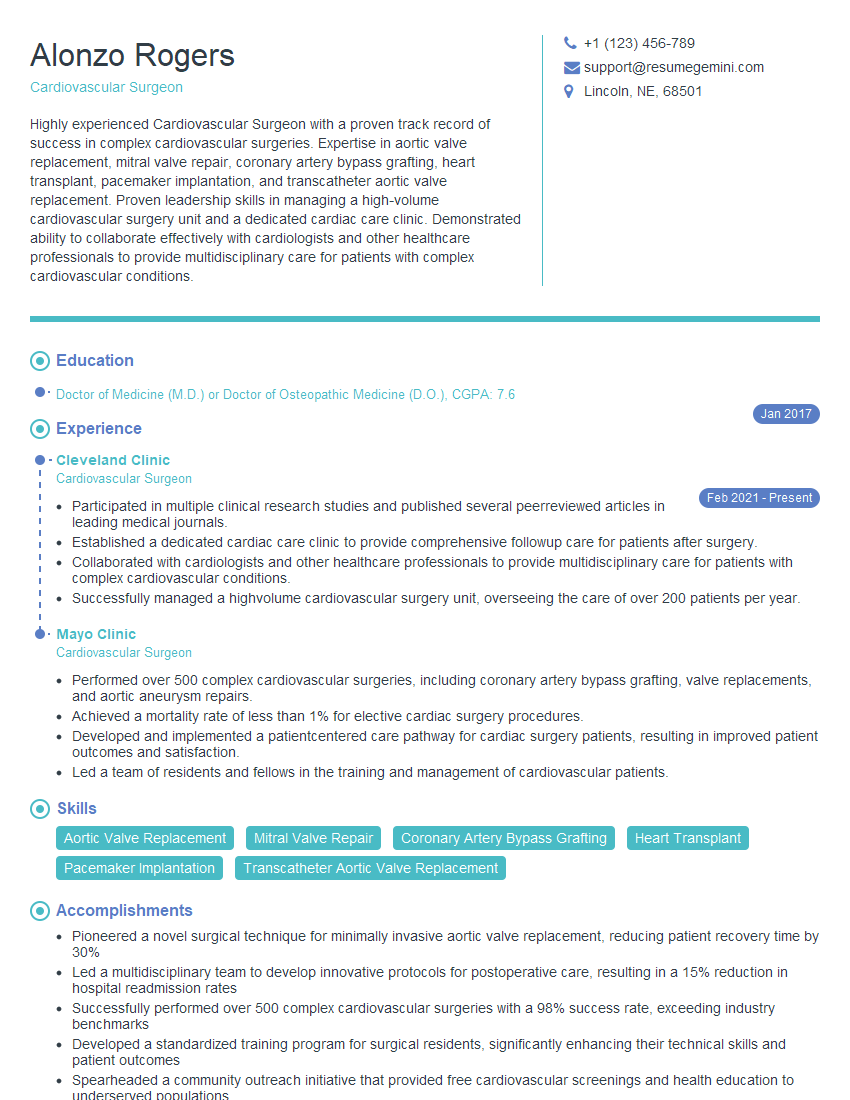
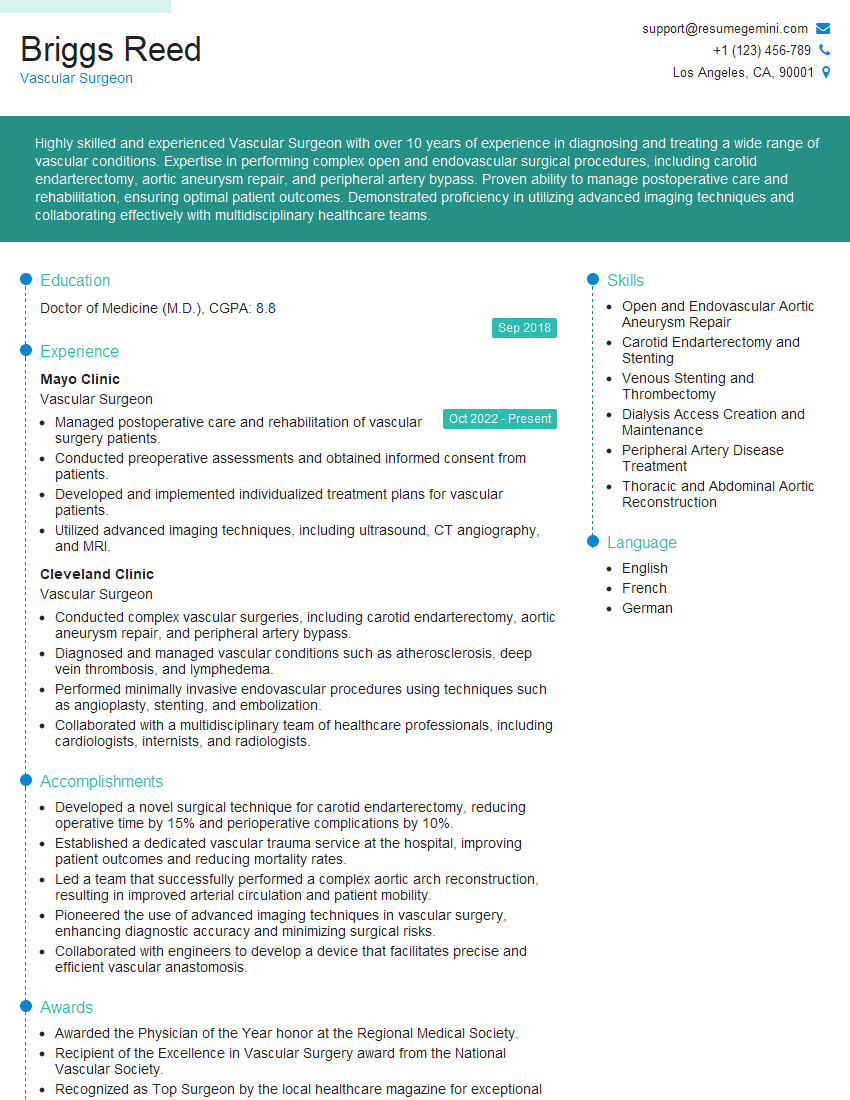
Mastering Endovascular Aneurysm Repair (EVAR) is crucial for advancing your career in interventional radiology or vascular surgery. A strong understanding of this complex procedure will significantly enhance your job prospects and open doors to exciting opportunities. To maximize your chances of landing your dream role, creating a compelling and ATS-friendly resume is essential. ResumeGemini is a trusted resource that can help you craft a professional resume tailored to highlight your EVAR expertise. We provide examples of resumes specifically designed for EVAR specialists to give you a head start. Invest in yourself and your career – build a resume that stands out!
Explore more articles
Users Rating of Our Blogs
Share Your Experience
We value your feedback! Please rate our content and share your thoughts (optional).
What Readers Say About Our Blog
To the interviewgemini.com Webmaster.
Very helpful and content specific questions to help prepare me for my interview!
Thank you
To the interviewgemini.com Webmaster.
This was kind of a unique content I found around the specialized skills. Very helpful questions and good detailed answers.
Very Helpful blog, thank you Interviewgemini team.