Interviews are more than just a Q&A session—they’re a chance to prove your worth. This blog dives into essential Monitoring Molding Machines interview questions and expert tips to help you align your answers with what hiring managers are looking for. Start preparing to shine!
Questions Asked in Monitoring Molding Machines Interview
Q 1. Describe your experience monitoring molding machine parameters such as temperature, pressure, and cycle time.
Monitoring molding machine parameters like temperature, pressure, and cycle time is crucial for ensuring consistent product quality and efficient production. I’ve extensively used various data acquisition systems and process control software to track these parameters in real-time. This involves setting up sensors at critical points in the molding process (e.g., melt temperature, mold cavity pressure, injection speed). I then analyze this data to identify trends and anomalies. For example, a consistent drop in melt temperature might indicate a problem with the heating system, while fluctuating pressure could signal a leak in the mold. I use statistical process control (SPC) charts to visualize the data, allowing for quick identification of deviations from target values and immediate intervention if necessary. This proactive approach minimizes defects, optimizes the molding process, and prevents costly downtime.
For instance, in one project involving injection molding of a complex automotive part, I implemented a system that monitored melt temperature with a precision of ±1°C. By consistently maintaining the temperature within the optimal range, we reduced the number of defective parts by 15% and improved the cycle time by 5%. This highlights the importance of meticulous parameter monitoring and adjustment.
Q 2. What are the common causes of molding defects, and how would you troubleshoot them?
Molding defects stem from a variety of sources, broadly categorized into material-related issues, machine-related issues, and process-related issues. Troubleshooting involves a systematic approach.
- Material Issues: These include poor material quality (e.g., degradation, contamination), incorrect material selection, or inconsistent moisture content. Troubleshooting involves checking the material’s Certificate of Compliance, verifying storage conditions, and performing moisture content tests.
- Machine Issues: Problems with the molding machine itself (e.g., worn injection screws, faulty heaters, leaking hydraulic lines) are common. Troubleshooting typically involves a thorough visual inspection, checking pressure gauges, and potentially conducting diagnostic tests using the machine’s built-in diagnostics.
- Process Issues: These are related to improper process settings, such as incorrect injection pressure, mold temperature, or clamping force. Troubleshooting this involves reviewing the process parameters, comparing them against historical data, and making adjustments based on the nature of the defect. For example, short shots (incomplete filling of the mold) often require increasing the injection pressure or speed. Flash (excess material escaping the mold) may necessitate reducing the injection pressure or improving mold clamping force.
I use a structured approach to troubleshooting, starting with visual inspection, checking machine logs, then moving to more in-depth diagnostics. This often involves using root-cause analysis techniques, such as the 5 Whys, to identify the underlying problem. Think of it like detective work: you gather clues (data from sensors, visual inspection), examine the evidence (machine logs, defect analysis), and draw conclusions (root cause). This ensures effective problem solving and prevents recurrence.
Q 3. Explain your experience with preventative maintenance on molding machines.
Preventative maintenance (PM) is crucial for maximizing uptime and preventing costly repairs. My experience includes developing and implementing PM schedules for a variety of molding machines. This involves a combination of routine inspections, lubrication, cleaning, and component replacement. The schedule is tailored to the specific machine type and its operating conditions. For example, injection molding machines might require daily checks of the hydraulic oil level, weekly lubrication of moving parts, and monthly cleaning of the barrel and screw.
I use a computerized maintenance management system (CMMS) to track PM activities, generate work orders, and monitor the overall health of the equipment. Regular PM significantly reduces unplanned downtime, extends the lifespan of the equipment, and improves the overall quality and consistency of the molded parts. In one instance, implementing a comprehensive PM program resulted in a 20% reduction in unplanned downtime and a 10% increase in machine efficiency.
Q 4. How do you identify and address issues related to material consistency in the molding process?
Maintaining consistent material properties is paramount for producing high-quality molded parts. Inconsistent material can lead to variations in part dimensions, appearance, and mechanical properties. Identifying issues often begins with thorough material testing at regular intervals. This includes checking the melt flow index (MFI), moisture content, and color variations. I utilize laboratory equipment such as rheometers and moisture analyzers to perform these tests.
Addressing issues requires careful investigation into potential sources of variation. This may involve evaluating the material supplier, optimizing storage conditions (temperature, humidity), and improving material handling practices. In one case, we improved material consistency by implementing a new material drying system, which reduced the moisture content and minimized variations in the MFI. This directly led to a decrease in the number of defective parts and improved process stability.
Q 5. Describe your experience with different types of molding machines (e.g., injection, blow, compression).
My experience encompasses various molding techniques, including injection molding, blow molding, and compression molding. Each process presents its unique challenges and requires specialized expertise.
- Injection Molding: I’m proficient in operating and maintaining various injection molding machines, from small benchtop models to large, high-tonnage machines. I’m familiar with different types of screws and barrels, as well as various molding processes such as gas assist and overmolding.
- Blow Molding: I understand the principles of extrusion blow molding and injection blow molding and can troubleshoot issues related to parison formation, blow pressure, and mold cooling.
- Compression Molding: I’m experienced in setting up and operating compression molding machines, paying close attention to mold temperature, pressure, and cure time.
This breadth of experience allows me to adapt quickly to different molding technologies and effectively troubleshoot diverse problems. The core principles of process control and quality assurance remain consistent across all molding techniques, but the specific parameters and challenges vary. Understanding these nuances is key to optimal performance.
Q 6. How do you ensure the quality and consistency of molded parts?
Ensuring the quality and consistency of molded parts involves a multi-faceted approach that begins with meticulous process control. This includes accurate monitoring and control of all relevant machine parameters, as previously discussed.
Beyond machine parameters, I utilize statistical process control (SPC) to track and analyze part dimensions, weight, and other critical characteristics. This allows for early detection of variations and preventative actions to maintain consistency. Regular quality inspections, both in-process and on finished parts, are crucial. These inspections often involve visual examination, dimensional measurements, and material testing to ensure compliance with specifications. I’m experienced in using various measuring tools (e.g., calipers, CMMs) and implementing quality control plans such as acceptance sampling and control charts. Implementing and adhering to robust quality control procedures is the key to delivering consistent, high-quality molded parts.
Q 7. What are the key safety protocols you follow when operating and maintaining molding machines?
Safety is paramount when operating and maintaining molding machines. I strictly adhere to all safety protocols, including:
- Lockout/Tagout Procedures: Before performing any maintenance or repair work, I always ensure the machine is properly locked out and tagged out to prevent accidental startup.
- Personal Protective Equipment (PPE): I consistently use appropriate PPE, including safety glasses, hearing protection, and gloves, as required by the specific task.
- Emergency Shut-off Procedures: I’m familiar with the location and operation of all emergency stop buttons and other safety devices.
- Regular Machine Inspections: I routinely inspect the machines for any signs of damage or wear, addressing any potential hazards immediately.
- Training and Awareness: I actively participate in safety training programs and stay informed about best practices in machine safety.
Furthermore, I emphasize the importance of proper training for all operators and maintenance personnel. A safe work environment is a productive work environment, and I firmly believe that consistent adherence to safety protocols is non-negotiable.
Q 8. What is your experience with molding machine automation and robotics?
My experience with molding machine automation and robotics spans over ten years, encompassing various roles from technician to senior engineer. I’ve worked extensively with integrating robotic arms for part loading and unloading, automated sprue pickers, and vision systems for quality control. This includes programming and troubleshooting robotic systems using languages like RAPID (ABB robots) and KRL (KUKA robots). For example, I led a project implementing a collaborative robot (cobot) to handle delicate parts, improving cycle times by 15% and reducing human error significantly. This involved careful risk assessment and programming to ensure worker safety.
Further, I have hands-on experience with implementing automated systems for material handling, such as conveyor belts and automated storage and retrieval systems (AS/RS), ensuring seamless integration with the molding machines. I am also proficient in integrating SCADA systems to monitor and control multiple automated systems within a molding cell.
Q 9. How do you interpret and analyze data from molding machine sensors and monitoring systems?
Interpreting data from molding machine sensors and monitoring systems is crucial for proactive maintenance and process optimization. I utilize a multi-faceted approach. First, I review historical trends to identify patterns and potential issues before they escalate. For example, consistently increasing clamp tonnage might indicate mold wear or material degradation. Then, real-time data from pressure, temperature, and position sensors allows for immediate reaction to abnormal situations.
I utilize statistical process control (SPC) charts to analyze data and identify deviations from established norms. These charts help visually identify trends, and I use control limits to trigger alerts when processes stray outside acceptable ranges. Further, I leverage data analytics software to correlate data from multiple sensors and identify root causes of malfunctions. This might involve analyzing pressure fluctuations in relation to temperature changes to pinpoint a hydraulic leak or a problem in the heating system. Finally, I create dashboards to visualize key performance indicators (KPIs), such as cycle time, scrap rate, and machine uptime, facilitating clear communication and decision-making.
Q 10. Explain your experience with troubleshooting electrical and hydraulic systems on molding machines.
My expertise in troubleshooting electrical and hydraulic systems on molding machines is comprehensive. I’m proficient in diagnosing and repairing faults in electrical circuits, using multimeters, oscilloscopes, and other diagnostic tools to identify short circuits, open circuits, and faulty components. For instance, I recently resolved a production stoppage caused by a faulty proximity sensor by tracing the signal path, identifying the damaged wiring, and replacing the sensor.
Similarly, I have extensive experience with hydraulic systems, including troubleshooting leaks, identifying pump failures, and resolving issues with valves and actuators. I utilize pressure gauges, flow meters, and hydraulic schematics to pinpoint problems. In one instance, I diagnosed a slow injection speed by systematically checking pressure readings at various points in the hydraulic circuit, eventually identifying a clogged filter. My approach always prioritizes safety, ensuring proper lockout/tagout procedures before working on live electrical or hydraulic components.
Q 11. Describe a time you had to resolve a critical molding machine malfunction.
During a critical production run, our main molding machine experienced a sudden shutdown. The error message was vague, and initial attempts to restart the machine failed. The pressure sensor was indicating abnormally high pressure within the clamping system. Instead of immediately dismantling the machine (which would have caused significant downtime), I systematically reviewed the sensor readings, correlated them with the hydraulic system pressure, and checked the clamping system for any mechanical obstructions. It turned out a small piece of debris had lodged itself in the clamping mechanism, causing excessive pressure and triggering the emergency shutdown.
My systematic approach, coupled with careful examination of the system’s behavior and historical data, quickly identified the problem. Removing the debris restored functionality within minutes, minimizing production losses. This incident underscored the value of thorough diagnosis, avoiding rushed solutions, and leveraging system data for effective troubleshooting.
Q 12. What is your experience with process optimization in the molding process?
Process optimization in molding involves identifying inefficiencies and implementing changes to improve speed, quality, and cost-effectiveness. My experience includes implementing Lean Manufacturing principles such as Value Stream Mapping to identify bottlenecks in the molding process. I then use this analysis to propose and implement solutions, including optimizing injection parameters (injection pressure, velocity, and hold pressure), cycle time reduction techniques, and improved mold design.
For example, by analyzing injection parameters and cycle time data, I was able to reduce cycle time by 8% without compromising part quality. This involved carefully adjusting injection speed and hold pressure, and streamlining the cooling process. Another instance involved implementing a new mold design, resulting in a 12% reduction in the scrap rate. Continuous monitoring and adjustment of parameters using statistical process control (SPC) are central to my optimization strategy.
Q 13. How familiar are you with different types of resins and their impact on the molding process?
I possess a strong understanding of various types of resins and their impact on the molding process. This includes knowledge of different resin types (e.g., ABS, PP, PC, TPE) and their properties (e.g., viscosity, melting point, thermal stability). My experience allows me to select the appropriate resin for a given application and adjust molding parameters accordingly. For example, a higher viscosity resin requires greater injection pressure and slower injection speeds to prevent short shots.
Understanding the relationship between resin properties and molding parameters is critical. Factors such as moisture content, colorants, and fillers also play a role. I utilize material data sheets and consult with resin suppliers to ensure consistent material quality. Additionally, I have experience working with engineering resins that demand more specialized processing techniques and adjustments in the molding machine parameters.
Q 14. What are your skills in using Computer Numerical Control (CNC) machines or similar programmable equipment?
My skills in using CNC machines and similar programmable equipment are extensive. While I don’t directly program CNC machines for mold creation, I’m highly proficient in interpreting CNC programs and understanding the machining processes involved in mold manufacturing. This enables effective communication and collaboration with mold makers, ensuring the mold design is suitable for the molding process and the machine’s capabilities.
I also have experience working with programmable logic controllers (PLCs) which are essential to molding machine operation. I understand ladder logic programming and can troubleshoot PLC programs to resolve machine malfunctions. This knowledge is vital for efficient maintenance, process optimization, and ensuring safe operation. I’m also familiar with HMI (Human Machine Interface) programming and configuration, allowing for better operator interaction and control of the molding processes.
Q 15. How do you manage and document machine downtime and maintenance activities?
Managing and documenting machine downtime and maintenance is crucial for optimizing production and preventing costly failures. We use a computerized maintenance management system (CMMS) to track all downtime events. This system allows us to record the exact time the machine went down, the reason for the downtime (e.g., planned maintenance, unscheduled repair, material shortage), and the time it took to resume operation. We categorize downtime into different types: preventative maintenance (PM), corrective maintenance, and idle time.
For each downtime event, we meticulously document the issue, the actions taken to resolve it, parts replaced (including part numbers and suppliers), and the labor hours involved. This detailed record is essential for analysis. We generate reports that show downtime frequency, causes, and duration, which we use to identify recurring problems and implement preventative measures. For example, if we notice frequent downtime due to a specific component failure, we can investigate whether a better quality part or improved maintenance procedures are needed.
Our documentation process includes digital photos and videos of machine issues to aid in future troubleshooting. We also utilize a work order system for assigning maintenance tasks and tracking their completion. This provides a complete audit trail of all maintenance activities, crucial for compliance and improvement initiatives.
Career Expert Tips:
- Ace those interviews! Prepare effectively by reviewing the Top 50 Most Common Interview Questions on ResumeGemini.
- Navigate your job search with confidence! Explore a wide range of Career Tips on ResumeGemini. Learn about common challenges and recommendations to overcome them.
- Craft the perfect resume! Master the Art of Resume Writing with ResumeGemini’s guide. Showcase your unique qualifications and achievements effectively.
- Don’t miss out on holiday savings! Build your dream resume with ResumeGemini’s ATS optimized templates.
Q 16. Explain your experience with Statistical Process Control (SPC) and its application to molding.
Statistical Process Control (SPC) is fundamental to maintaining consistent product quality in molding. I’ve extensively used control charts, specifically X-bar and R charts (for monitoring the average and range of a measured characteristic), to track key process parameters like clamping force, injection pressure, melt temperature, and cycle time. By plotting these parameters over time, we can quickly identify trends and deviations from established control limits.
For example, if the melt temperature consistently drifts outside the upper control limit, it indicates a potential problem with the heating system or material degradation, prompting us to investigate and correct the issue. SPC helps us prevent defects by identifying potential problems before they lead to mass production of non-conforming parts. We also use capability analysis (Cp and Cpk) to assess the process’s ability to meet specified tolerances and identify opportunities for improvement.
Moreover, I’ve implemented process capability studies to determine the process’s inherent variability and its ability to meet customer specifications. This helps in setting realistic control limits and improving overall process efficiency. I am proficient in using statistical software packages like Minitab and JMP to analyze data and generate reports.
Q 17. Describe your understanding of different molding techniques and their applications.
My experience encompasses various molding techniques, including injection molding (the most common), compression molding, blow molding, and rotational molding. Each technique has unique applications and advantages.
- Injection Molding: This is the workhorse of the industry, ideal for high-volume production of complex parts with intricate details. I’ve worked extensively with various injection molding processes, including gas-assisted molding for lighter parts and two-shot molding for parts with multiple materials.
- Compression Molding: Suited for large parts or those requiring high-strength properties, such as thermosets. This technique is often used for automotive components and large electrical insulators.
- Blow Molding: Primarily used for creating hollow parts, like bottles and containers, from thermoplastic materials. I have experience optimizing blow molding parameters for achieving consistent wall thickness and minimizing defects.
- Rotational Molding: This process creates large, hollow parts with uniform wall thickness. It’s excellent for creating tanks, toys, and furniture components.
The choice of molding technique depends on factors like the part geometry, material properties, desired production volume, and cost considerations. For instance, a high-volume production of small, intricate plastic parts would likely favor injection molding, while creating a large, hollow storage tank would benefit from rotational molding.
Q 18. What are your skills in using data acquisition systems to collect and analyze molding data?
I’m proficient in using various data acquisition systems (DAS) to monitor and analyze molding data. My experience includes working with both standalone data loggers and integrated systems that connect directly to the molding machine’s PLC (Programmable Logic Controller). I’m familiar with systems from various manufacturers, and I can configure them to collect data on a wide range of parameters including:
- Injection pressure and velocity
- Mold temperature and cooling rates
- Clamping force
- Cycle time
- Screw speed and position
- Material flow rates
Collected data is typically stored in databases for subsequent analysis. I use statistical software packages to analyze this data, identify trends, and generate reports to optimize the molding process, minimize defects, and improve overall efficiency. For example, I can use data analysis to determine the optimal injection pressure and cooling time for a specific part and material combination, resulting in higher quality parts and reduced cycle time.
Q 19. How familiar are you with different types of molds (e.g., single cavity, multi-cavity)?
I’m very familiar with various mold types. My experience covers single-cavity molds, which produce one part per cycle, and multi-cavity molds, which produce multiple parts simultaneously. Multi-cavity molds significantly improve production efficiency but require careful consideration of factors like runner balance and gate locations to ensure consistent part quality across all cavities.
Beyond the basic single and multi-cavity designs, I’ve worked with other mold types including:
- Family molds: These molds produce several different but related parts in a single cycle, optimizing production efficiency.
- Progressive molds: Used for creating parts with complex shapes or features, often involving multiple stages of molding within a single mold.
- Stack molds: Stack molds increase production efficiency by combining multiple mold cavities vertically.
Understanding the specific strengths and limitations of each mold type is crucial for selecting the optimal mold design for any given application. For example, a high-volume production of a simple part would benefit from a multi-cavity mold, whereas a complex part requiring precise control over specific features might be better suited to a single-cavity or progressive mold.
Q 20. How would you perform a root cause analysis for a recurring molding defect?
Performing a root cause analysis (RCA) for a recurring molding defect requires a systematic approach. I typically use a structured methodology such as the ‘5 Whys’ or a Fishbone diagram (Ishikawa diagram).
Step-by-step approach:
- Gather Data: Collect data on the defect (type, frequency, location, time of occurrence), machine parameters at the time of the defect (pressure, temperature, cycle time), and material properties.
- Identify Potential Causes: Use a Fishbone diagram to brainstorm potential causes grouped by categories (material, machine, method, man, measurement, environment). The 5 Whys technique can be used to delve deeper into each potential cause.
- Analyze Data: Evaluate the gathered data to determine the most likely cause(s) of the defect.
- Verify Root Cause: Conduct experiments or tests to confirm the root cause identified in the previous step.
- Implement Corrective Actions: Based on the verified root cause, develop and implement corrective actions to eliminate the defect. This might involve adjusting machine parameters, changing materials, modifying the mold, improving operator training, or implementing better process controls.
- Monitor for Effectiveness: After implementing the corrective actions, monitor the process to ensure the defect is eliminated and does not reappear. SPC charts are crucial at this stage.
For instance, a recurring sink mark defect might be traced, through this process, to insufficient melt temperature, leading to a corrective action of adjusting the machine’s heating system.
Q 21. What safety precautions do you take when working with high-pressure systems in molding machines?
Safety is paramount when working with high-pressure systems in molding machines. My approach incorporates several key precautions:
- Lockout/Tagout (LOTO) Procedures: Before performing any maintenance or repair work on the machine, I always adhere to strict LOTO procedures to prevent accidental energization. This involves isolating power sources and physically locking out the machine’s controls.
- Personal Protective Equipment (PPE): I consistently use appropriate PPE, including safety glasses, hearing protection, and heat-resistant gloves. The specific PPE depends on the task; for example, when handling hot molds, I’d use additional thermal protective gear.
- Regular Inspections: I regularly inspect the machine for any signs of leaks, worn components, or damage. This proactive approach helps identify potential hazards before they lead to accidents.
- Emergency Shutdown Procedures: I’m thoroughly familiar with the machine’s emergency shutdown procedures and can quickly shut down the machine in case of any unexpected event.
- Training and Awareness: Continuous training and awareness programs keep me updated on safety regulations and best practices. I also actively participate in safety meetings and contribute to improving safety procedures in the workplace.
In addition to these individual precautions, our facility maintains a safe working environment with clear safety signage, emergency equipment, and well-defined safety protocols. This collaborative approach ensures a safe and productive workplace.
Q 22. How do you ensure the proper alignment and clamping of molds?
Ensuring proper mold alignment and clamping is crucial for producing high-quality parts and preventing machine damage. It’s like building a house – you need a solid foundation. We start with a visual inspection, checking for any signs of damage or wear on the mold itself or the machine components. Then, we use precision measuring tools, like dial indicators and height gauges, to verify that the mold halves are perfectly aligned. This ensures consistent cavity depth and prevents flash (excess material) or short shots (incomplete filling of the cavity).
Clamping is just as vital. We need to ensure sufficient clamping force to prevent the mold from opening prematurely under the pressure of the molten plastic. This pressure can be immense, depending on the material and part design. Inadequate clamping can lead to flash or even mold damage. We use the machine’s clamping system and monitor the clamping pressure – usually displayed on the machine’s interface – to ensure it’s within the specified parameters. We also regularly check the clamping cylinders and hydraulics for leaks or any malfunction.
For example, on a recent job with a complex multi-cavity mold, we noticed a slight misalignment during the initial setup. Using the dial indicator, we identified a 0.005-inch discrepancy. A quick adjustment to the mold base, verified again with measurements, solved the problem and avoided producing defective parts.
Q 23. What is your experience with mold changeovers and setup procedures?
Mold changeovers are a regular part of my routine. Think of it like changing a tire – it’s a process that needs to be done efficiently and safely. My experience encompasses a wide range of mold types and sizes, from simple single-cavity molds to complex multi-cavity molds with inserts. My approach follows a standardized procedure to minimize downtime and ensure safety.
The procedure typically begins with securing the machine, then safely removing the existing mold. This often involves disconnecting hydraulic lines, ejector pins, and cooling lines – all procedures that I’ve undergone rigorous safety training for. Next, we thoroughly clean the machine’s platens (the clamping surfaces) to ensure proper seating for the new mold. The new mold is then installed, carefully aligned using the same precision measuring tools as described before, and the machine components are reconnected. The entire process concludes with a trial run, meticulously monitored for leaks, proper functionality, and part quality.
I use checklists and documented procedures, and maintain detailed records for each changeover, which helps ensure consistent quality and aids in troubleshooting any future problems.
Q 24. Describe your experience with troubleshooting issues related to mold temperature control.
Mold temperature control is critical. Imagine baking a cake – you need the oven at the right temperature to get a perfect result. Inconsistent mold temperatures can lead to poor part quality, including warping, sink marks (indentations on the surface), and even material degradation. Troubleshooting mold temperature issues requires a systematic approach.
I start by checking the temperature sensors and controllers for accurate readings. Then, I inspect the heating and cooling lines for blockages or leaks. Often, issues arise from a buildup of scale or debris within the cooling lines – think of it like clogged arteries. Regular maintenance and flushing are crucial. Sometimes, issues stem from the controller itself. For instance, I once resolved an issue with erratic temperature fluctuations by identifying and replacing a faulty temperature sensor.
I’m proficient in using various temperature control systems, including those employing water, oil, or electric heaters, and troubleshooting their associated problems, which can range from faulty relays to problematic thermostat settings. I’m always careful to document all troubleshooting steps and solutions to avoid repetition of the same problem.
Q 25. How do you identify and manage material waste in the molding process?
Material waste is a significant concern in plastic molding, affecting both cost and environmental sustainability. My approach to minimizing waste is proactive, focusing on preventive measures and continuous improvement. It starts with proper machine setup and parameter optimization.
I closely monitor the machine’s parameters, such as injection pressure, speed, and melt temperature, to ensure optimal filling of the mold cavity. This minimizes short shots, the leading cause of material waste. We also carefully control the material feed rate to avoid overfilling, which leads to flash. Regular mold maintenance, ensuring proper alignment and sealing, prevents leaks and minimizes material loss.
We also employ practices like collecting and reprocessing scrap material, whenever possible. Regular analysis of production data identifies trends in material usage, allowing proactive adjustments and process improvements to reduce waste. Data-driven analysis helps us target specific problem areas, leading to quantifiable reductions in waste.
Q 26. How do you contribute to a team environment in a molding machine operation?
In a molding machine operation, teamwork is essential. We’re all working towards the same goal – producing high-quality parts efficiently. My role involves actively collaborating with operators, maintenance technicians, and quality control personnel. I believe in open communication and readily share my expertise to improve the team’s overall knowledge and problem-solving capabilities.
I often participate in team meetings, contributing my insights from machine monitoring and data analysis to identify areas for improvement. I actively assist my colleagues when needed, providing training and support on machine operation and troubleshooting. I believe in fostering a collaborative environment where everyone feels comfortable sharing ideas and concerns, which is crucial for continuous improvement.
For instance, I recently helped a new operator understand the nuances of machine parameter adjustments, which improved their efficiency and reduced their error rate. This kind of knowledge sharing benefits everyone, improving the overall quality and productivity of our operations.
Q 27. What software are you proficient in for monitoring and controlling molding machines?
I’m proficient in several software packages used for monitoring and controlling molding machines. My experience includes using SCADA (Supervisory Control and Data Acquisition) systems such as Ignition and Wonderware, which provide real-time monitoring of machine parameters, including temperature, pressure, and cycle times. These systems allow for remote monitoring and control, enabling proactive identification of potential problems.
I also have experience with PLC (Programmable Logic Controller) programming software, specifically Rockwell Automation’s RSLogix 5000. This allows me to understand and modify the machine’s control logic, to optimize performance and troubleshoot issues. This deeper understanding helps me find solutions when problems go beyond the typical user interface.
Furthermore, I utilize data analysis software, such as Microsoft Excel and specialized statistical packages, to analyze production data, identify trends, and make data-driven decisions to improve process efficiency and part quality. Essentially, I use a combination of real-time monitoring and historical data analysis to optimize the molding process.
Q 28. How do you stay updated on industry best practices and new technologies in plastics molding?
Staying updated on industry best practices and new technologies is crucial in the dynamic field of plastics molding. I actively engage in several strategies to maintain my knowledge. This includes regularly attending industry conferences and workshops, which provide opportunities to learn about new technologies, best practices, and networking with industry experts.
I subscribe to industry publications and online resources, such as Plastics Technology and other trade magazines, which keep me abreast of the latest advancements. I also actively participate in professional organizations like the SPE (Society of Plastics Engineers), engaging in webinars and online forums that offer continuous learning opportunities.
Moreover, I actively seek out opportunities to learn from colleagues and mentors within the industry. Staying connected with the industry’s pulse ensures I adapt to evolving technologies, regulations, and customer demands, allowing me to contribute innovative solutions to challenges.
Key Topics to Learn for Monitoring Molding Machines Interview
- Machine Operation & Safety Procedures: Understanding the mechanics of molding machines, including startup, operation, and shutdown procedures. Familiarize yourself with all relevant safety protocols and emergency procedures.
- Quality Control & Inspection: Learn how to identify and address defects in molded parts. This includes understanding quality control metrics, using measuring tools, and implementing corrective actions.
- Troubleshooting & Maintenance: Develop your ability to diagnose and resolve common machine malfunctions. Understanding preventative maintenance schedules and procedures is crucial.
- Data Analysis & Reporting: Become proficient in interpreting machine data to identify trends, potential problems, and areas for improvement. Practice creating clear and concise reports summarizing machine performance.
- Material Handling & Processing: Gain a solid understanding of the different materials used in molding, their properties, and how to handle them effectively to ensure optimal machine performance and part quality.
- Process Optimization & Efficiency: Explore techniques for improving the overall efficiency of the molding process, such as cycle time reduction, waste minimization, and improved material utilization.
- Automation & Control Systems (if applicable): If the role involves automated systems, familiarize yourself with the control systems, programming languages (if any), and troubleshooting techniques for automated equipment.
Next Steps
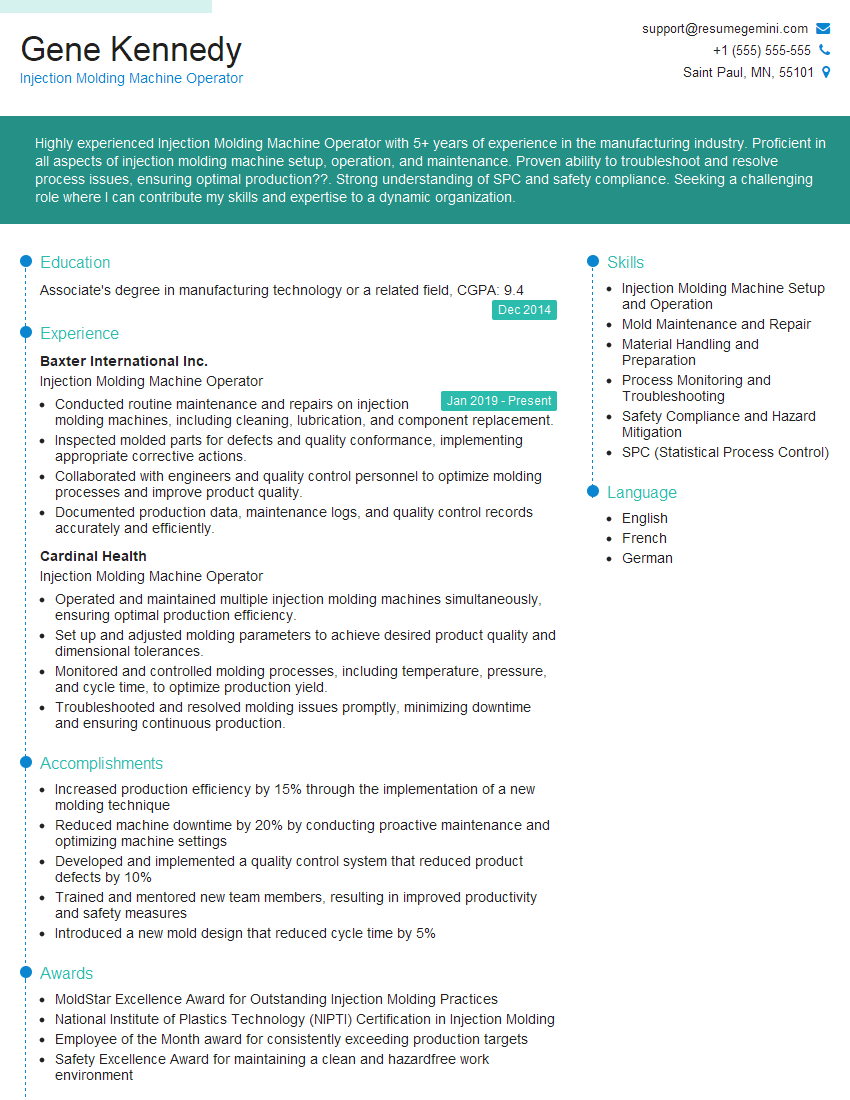
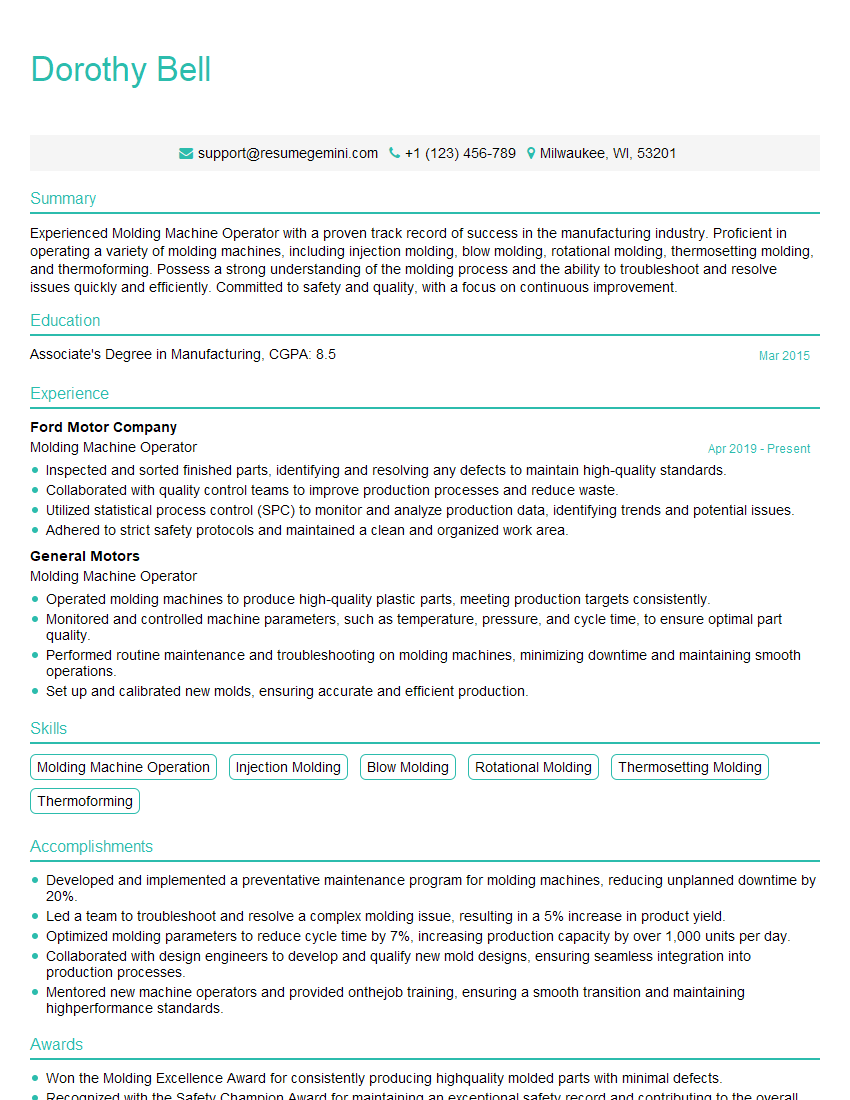
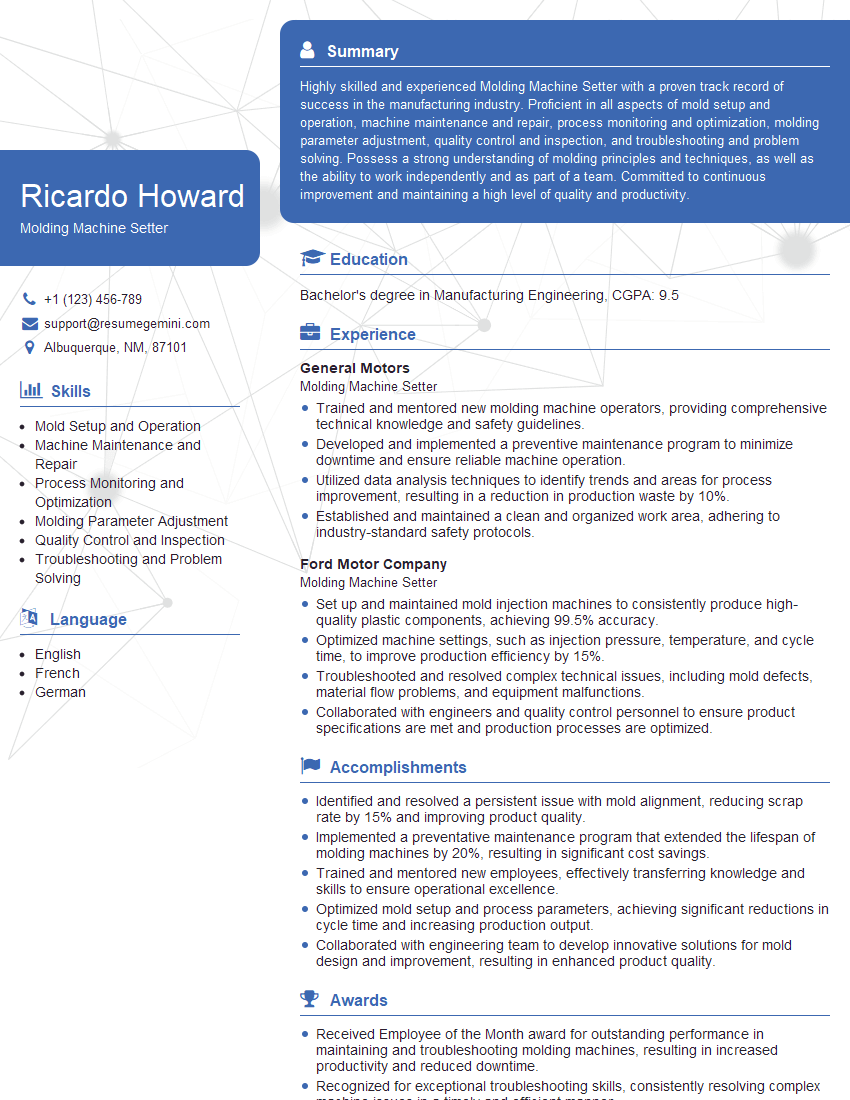
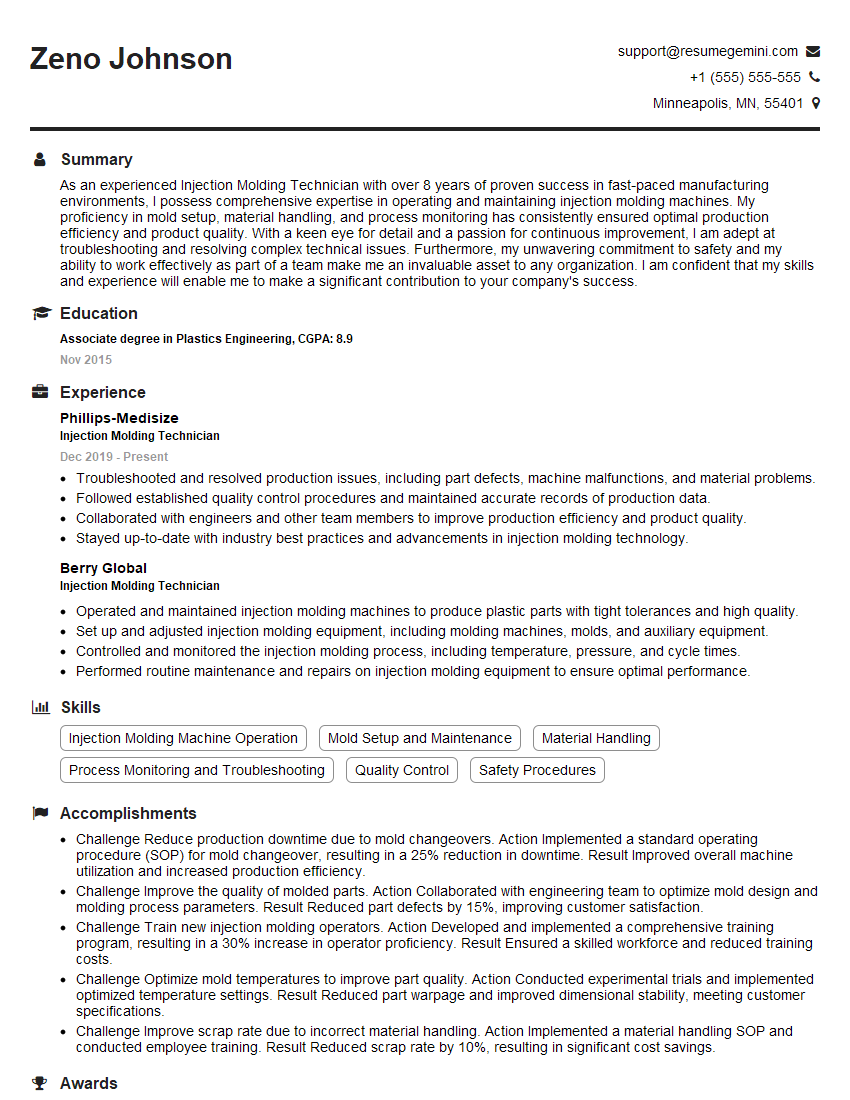
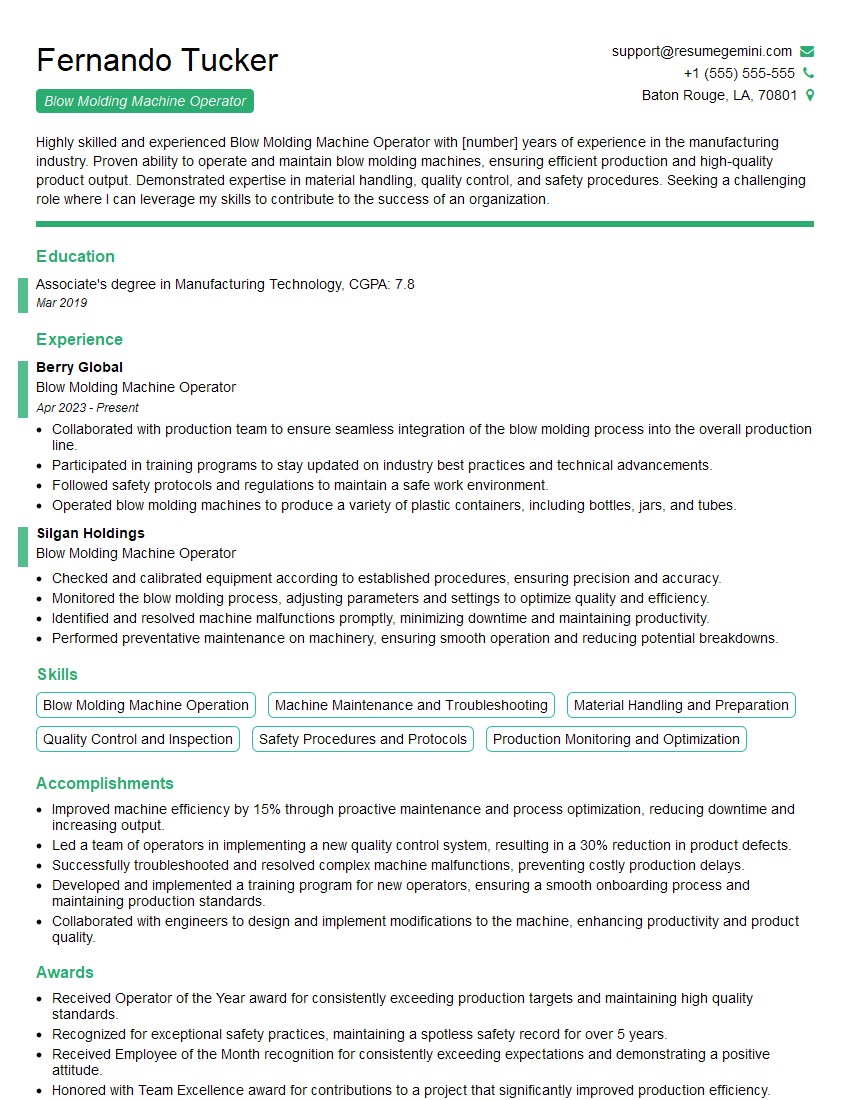
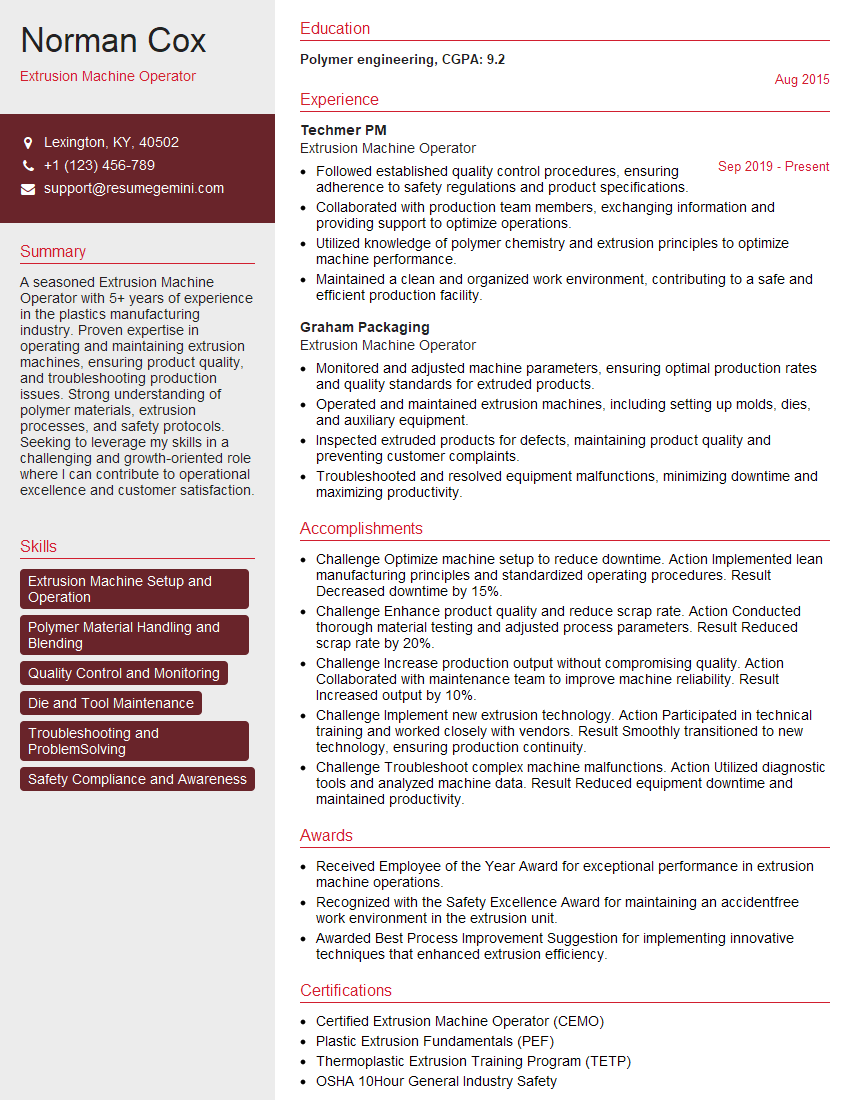
Mastering the intricacies of monitoring molding machines opens doors to exciting career advancements within manufacturing and related industries. A strong understanding of these processes demonstrates valuable technical skills and problem-solving abilities, highly sought after by employers. To significantly improve your job prospects, create an ATS-friendly resume that effectively highlights your qualifications. ResumeGemini is a trusted resource that can help you build a professional and impactful resume tailored to your specific skills and experience. Examples of resumes specifically tailored for Monitoring Molding Machine positions are available through ResumeGemini, giving you a head start in your job search.
Explore more articles
Users Rating of Our Blogs
Share Your Experience
We value your feedback! Please rate our content and share your thoughts (optional).
What Readers Say About Our Blog
To the interviewgemini.com Webmaster.
Very helpful and content specific questions to help prepare me for my interview!
Thank you
To the interviewgemini.com Webmaster.
This was kind of a unique content I found around the specialized skills. Very helpful questions and good detailed answers.
Very Helpful blog, thank you Interviewgemini team.