Cracking a skill-specific interview, like one for Advanced Mathematical and Calculation Skills, requires understanding the nuances of the role. In this blog, we present the questions you’re most likely to encounter, along with insights into how to answer them effectively. Let’s ensure you’re ready to make a strong impression.
Questions Asked in Advanced Mathematical and Calculation Skills Interview
Q 1. Explain the concept of eigenvalues and eigenvectors.
Eigenvalues and eigenvectors are fundamental concepts in linear algebra with broad applications in various fields. Imagine a linear transformation, like stretching or rotating a vector. Eigenvectors are special vectors that, when this transformation is applied, only change in scale (magnitude), not direction. The factor by which they scale is the eigenvalue.
More formally, for a square matrix A, an eigenvector v satisfies the equation Av = λv, where λ is the eigenvalue. The eigenvalue represents how much the eigenvector is stretched or compressed by the transformation. Finding eigenvalues and eigenvectors is crucial in understanding the properties of a linear transformation.
Example: Consider a matrix representing a rotation by 90 degrees. No vector (other than the zero vector) will remain in the same direction after this rotation, thus this transformation will not have real eigenvalues. However, consider a matrix representing a simple scaling operation (e.g., doubling the length of a vector). The eigenvectors would be any vector, and the eigenvalue would be 2, as all vectors would be scaled by a factor of 2.
Applications: Eigenvalue analysis is used extensively in areas like principal component analysis (PCA) for dimensionality reduction, solving systems of differential equations, stability analysis of systems (e.g., determining if a dynamical system is stable or unstable), and quantum mechanics (eigenvalues representing energy levels).
Q 2. Describe different types of regression analysis and their applications.
Regression analysis is a statistical method used to model the relationship between a dependent variable and one or more independent variables. Different types exist, each suited to specific data characteristics:
- Linear Regression: Models a linear relationship between the dependent and independent variables. Simple linear regression involves one independent variable, while multiple linear regression involves two or more. It’s used for prediction and understanding the influence of independent variables on the dependent variable.
y = β0 + β1x1 + β2x2 + ... + βnxn + ε - Polynomial Regression: Models a non-linear relationship using polynomial functions. Useful when the relationship is curved rather than a straight line.
- Logistic Regression: Used for predicting categorical outcomes (e.g., 0 or 1, success or failure). It models the probability of an event occurring.
- Ridge Regression and Lasso Regression: These are regularization techniques used to prevent overfitting in linear regression models, particularly when dealing with high-dimensional data. They add penalty terms to the regression equation.
Applications: Linear regression can predict house prices based on size and location, logistic regression can predict the likelihood of customer churn, and polynomial regression can model the growth of a population over time.
Q 3. How do you handle missing data in a dataset?
Missing data is a common challenge in data analysis. The optimal approach depends on the type of missing data (missing completely at random (MCAR), missing at random (MAR), or missing not at random (MNAR)) and the amount of missing data. Strategies include:
- Deletion: Removing rows or columns with missing values. This is simple but can lead to bias if data is not MCAR.
- Imputation: Replacing missing values with estimated values. Methods include mean/median/mode imputation (simple but can distort variance), k-Nearest Neighbors imputation (finds similar data points to estimate missing values), and multiple imputation (creates multiple plausible imputed datasets to account for uncertainty).
- Model-based imputation: Using a model (like regression) to predict missing values based on other variables. This is more sophisticated than simple imputation and can be very effective.
The choice of method depends on the context. If the missing data is a small percentage and MCAR, deletion may be acceptable. Otherwise, imputation methods are generally preferred. Understanding the mechanism of missingness is crucial for choosing the appropriate handling strategy.
Q 4. What are the assumptions of linear regression?
Linear regression makes several key assumptions that should be checked before interpreting results. Violating these assumptions can lead to inaccurate or misleading conclusions:
- Linearity: The relationship between the dependent and independent variables is linear.
- Independence: Observations are independent of each other.
- Homoscedasticity: The variance of the errors is constant across all levels of the independent variables.
- Normality: The errors are normally distributed.
- No multicollinearity: Independent variables are not highly correlated with each other.
Checking these assumptions involves visual inspection of residual plots (scatter plots of residuals vs. predicted values), statistical tests (e.g., Breusch-Pagan test for homoscedasticity), and Q-Q plots to assess normality. Violations can be addressed using transformations of variables, different regression techniques (e.g., robust regression), or other data preprocessing methods.
Q 5. Explain the central limit theorem.
The Central Limit Theorem (CLT) is a cornerstone of statistical inference. It states that the distribution of the sample means of a sufficiently large number of independent and identically distributed (i.i.d.) random variables, regardless of the underlying distribution, will approximate a normal distribution.
Imagine repeatedly taking samples from a population and calculating the mean of each sample. The CLT says that if you plot the distribution of these sample means, it will look like a bell curve (normal distribution), even if the original population wasn’t normally distributed. This holds true as the sample size increases.
Crucially: The CLT doesn’t require the original population to be normal; it only states that the *sampling distribution of the mean* will be approximately normal for large sample sizes (generally, n ≥ 30). This is essential because it allows us to use normal distribution-based methods for inference, even when we don’t know the distribution of the population.
Q 6. What is the difference between correlation and causation?
Correlation and causation are often confused but are distinct concepts. Correlation refers to a statistical relationship between two variables: as one changes, the other tends to change as well. This relationship can be positive (both increase together), negative (one increases as the other decreases), or zero (no relationship). Causation, on the other hand, implies that one variable directly influences or causes a change in another.
Example: Ice cream sales and crime rates might be positively correlated (both tend to be higher in the summer). However, this doesn’t mean that eating ice cream *causes* crime. Both are likely influenced by a third variable, namely hot weather.
Correlation does not imply causation. While correlation can suggest a potential causal relationship, it doesn’t prove it. Establishing causation requires additional evidence, such as controlled experiments or strong theoretical reasoning to demonstrate a direct causal link. Spurious correlations (relationships that appear causal but are not) are quite common.
Q 7. How do you calculate the probability of an event?
Calculating the probability of an event depends on the nature of the event and the available information.
- Classical Probability: If all outcomes are equally likely, the probability of an event A is calculated as: P(A) = (Number of favorable outcomes) / (Total number of possible outcomes). For example, the probability of rolling a 6 on a fair die is 1/6.
- Empirical Probability: Based on observed frequencies. If an event A occurs ‘m’ times in ‘n’ trials, the empirical probability is P(A) = m/n. For example, if it rained 10 days out of 30 days, the empirical probability of rain is 10/30 = 1/3.
- Subjective Probability: Based on personal judgment or belief. Used when objective data is scarce. For instance, estimating the probability of a new product being successful.
- Conditional Probability: Probability of an event A given that another event B has already occurred. Denoted as P(A|B) and calculated as: P(A|B) = P(A and B) / P(B).
Understanding the type of probability and employing the appropriate formula or method is crucial for accurate calculation. For complex scenarios, statistical modeling and simulations might be necessary.
Q 8. Describe different probability distributions and their uses.
Probability distributions describe the likelihood of different outcomes in a random event. They are crucial for modeling uncertainty and making predictions in various fields. Several key distributions exist, each with specific properties and applications:
- Normal Distribution (Gaussian): This bell-shaped curve is ubiquitous. Many natural phenomena, like human height or test scores, approximately follow a normal distribution. Its symmetry around the mean makes it highly useful for statistical inference. For example, understanding the normal distribution of manufacturing tolerances helps ensure quality control.
- Binomial Distribution: This describes the probability of getting a certain number of successes in a fixed number of independent Bernoulli trials (each trial has only two outcomes, like success/failure, heads/tails). For example, the probability of getting exactly 3 heads in 5 coin flips is calculated using the binomial distribution.
- Poisson Distribution: This models the probability of a given number of events occurring in a fixed interval of time or space when events occur independently at a constant average rate. Examples include the number of customers arriving at a store per hour or the number of typos on a page.
- Exponential Distribution: This describes the time between events in a Poisson process. For instance, the time until the next machine failure in a factory, assuming failures occur randomly at a constant rate, follows an exponential distribution.
- Uniform Distribution: This assigns equal probability to all outcomes within a specified range. A simple example is rolling a fair six-sided die: each number (1-6) has a probability of 1/6.
The choice of distribution depends heavily on the nature of the data and the problem being addressed. Misapplying a distribution can lead to inaccurate conclusions.
Q 9. Explain Bayes’ theorem and provide an example.
Bayes’ theorem is a fundamental result in probability theory that describes how to update the probability of a hypothesis based on new evidence. Mathematically, it’s expressed as:
P(A|B) = [P(B|A) * P(A)] / P(B)Where:
- P(A|B) is the posterior probability of event A given that event B has occurred.
- P(B|A) is the likelihood of event B occurring given that event A has occurred.
- P(A) is the prior probability of event A.
- P(B) is the prior probability of event B (often calculated as P(B) = P(B|A)P(A) + P(B|¬A)P(¬A)).
Example: Imagine a medical test for a disease. Let’s say:
- P(Disease) = 0.01 (1% of the population has the disease – prior probability)
- P(Positive Test|Disease) = 0.95 (95% chance of a positive test if you have the disease – likelihood)
- P(Positive Test|No Disease) = 0.05 (5% chance of a false positive – likelihood)
We want to find P(Disease|Positive Test), the probability of having the disease given a positive test result. Using Bayes’ theorem:
First, calculate P(Positive Test):
P(Positive Test) = P(Positive Test|Disease)P(Disease) + P(Positive Test|No Disease)P(No Disease) = (0.95 * 0.01) + (0.05 * 0.99) = 0.059
Now, calculate P(Disease|Positive Test):
P(Disease|Positive Test) = (0.95 * 0.01) / 0.059 ≈ 0.16
Even with a positive test, the probability of actually having the disease is only about 16%. This highlights the importance of considering prior probabilities and the test’s accuracy when interpreting results.
Q 10. What are the different methods for hypothesis testing?
Hypothesis testing involves evaluating evidence to determine whether to reject a null hypothesis (a statement of no effect or difference). Common methods include:
- t-tests: Compare the means of two groups. Used when the data is approximately normally distributed and the sample size is relatively small.
- ANOVA (Analysis of Variance): Compares the means of three or more groups. More efficient than performing multiple t-tests.
- Chi-square tests: Analyze categorical data to assess the independence of two categorical variables or to test for goodness-of-fit to a theoretical distribution.
- Z-tests: Similar to t-tests but used when the population standard deviation is known and sample sizes are large.
- Non-parametric tests: Used when data does not meet the assumptions of parametric tests (e.g., normality). Examples include the Mann-Whitney U test (for comparing two groups) and the Kruskal-Wallis test (for comparing three or more groups).
The choice of test depends on the type of data, the number of groups being compared, and whether the data meets the assumptions of the chosen test.
Q 11. Explain the concept of statistical significance.
Statistical significance refers to the probability of observing results as extreme as, or more extreme than, those obtained in a study, assuming the null hypothesis is true. It’s usually quantified using the p-value. A small p-value (typically less than 0.05) indicates that the observed results are unlikely to have occurred by random chance alone, leading us to reject the null hypothesis. However, statistical significance doesn’t necessarily imply practical significance (i.e., whether the effect size is meaningful in a real-world context).
Think of it like this: If you flip a coin 10 times and get 8 heads, it might be statistically significant (unlikely by chance), but practically, it’s not a major deviation from what we expect. On the other hand, if you get 999 heads out of 1000 flips, that’s both statistically and practically significant.
Q 12. How do you perform a t-test?
A t-test compares the means of two groups. There are different types:
- Independent samples t-test: Compares the means of two independent groups (e.g., comparing the test scores of students who received different teaching methods).
- Paired samples t-test: Compares the means of two related groups (e.g., comparing the blood pressure of the same individuals before and after taking medication).
Steps to perform a t-test:
- State the hypotheses: Define the null and alternative hypotheses (e.g., null hypothesis: there is no difference in means between the two groups).
- Set the significance level (alpha): This is usually set at 0.05.
- Calculate the t-statistic: This involves calculating the difference in means, the standard error of the difference, and then dividing the difference by the standard error. The formula varies slightly depending on whether you are performing an independent or paired samples t-test.
- Determine the degrees of freedom: This depends on the sample sizes of the two groups.
- Find the p-value: Using a t-distribution table or statistical software, find the probability of observing a t-statistic as extreme as, or more extreme than, the one calculated, given the degrees of freedom.
- Make a decision: If the p-value is less than alpha, reject the null hypothesis; otherwise, fail to reject the null hypothesis.
Statistical software packages like R or SPSS simplify the calculation of t-statistics and p-values.
Q 13. How do you perform an ANOVA test?
ANOVA (Analysis of Variance) tests for differences in means across three or more groups. It partitions the total variation in the data into variation between groups and variation within groups. The F-statistic is the ratio of these two variances.
Steps to perform an ANOVA:
- State the hypotheses: The null hypothesis is that all group means are equal. The alternative hypothesis is that at least one group mean is different.
- Set the significance level (alpha): Typically 0.05.
- Calculate the F-statistic: This involves calculating the sum of squares between groups (SSB), the sum of squares within groups (SSW), and the degrees of freedom for each. The F-statistic is then calculated as (MSB/MSW), where MSB is the mean square between groups (SSB/degrees of freedom between groups) and MSW is the mean square within groups (SSW/degrees of freedom within groups).
- Determine the p-value: Use an F-distribution table or statistical software to find the p-value associated with the calculated F-statistic and degrees of freedom.
- Make a decision: If the p-value is less than alpha, reject the null hypothesis. This indicates that there is a statistically significant difference in at least one pair of group means. Further post-hoc tests (like Tukey’s HSD) are then often used to determine which specific group means differ significantly.
As with t-tests, statistical software significantly streamlines the ANOVA process.
Q 14. Explain the difference between Type I and Type II errors.
Type I and Type II errors are both errors in hypothesis testing that can lead to incorrect conclusions.
- Type I error (false positive): Rejecting the null hypothesis when it is actually true. In simpler terms, this is concluding there’s a difference or effect when there isn’t one. The probability of making a Type I error is denoted by alpha (α), usually set at 0.05.
- Type II error (false negative): Failing to reject the null hypothesis when it is actually false. This is concluding there’s no difference or effect when there actually is one. The probability of making a Type II error is denoted by beta (β). The power of a test (1-β) represents the probability of correctly rejecting a false null hypothesis.
Imagine a trial:
- Type I error: Convicting an innocent person.
- Type II error: Acquitting a guilty person.
The balance between these two types of errors is crucial. Reducing the probability of one often increases the probability of the other. The appropriate balance depends on the context and the costs associated with each type of error.
Q 15. What is the difference between parametric and non-parametric tests?
Parametric and non-parametric tests are statistical methods used to analyze data and draw inferences. The key difference lies in their assumptions about the data’s underlying distribution.
Parametric tests assume that the data follows a specific probability distribution, most commonly the normal distribution. They use parameters (like mean and standard deviation) of this distribution to make inferences. Examples include t-tests, ANOVA, and Pearson correlation. These tests are powerful when their assumptions hold true, leading to more precise results.
Non-parametric tests, on the other hand, make no assumptions about the data’s distribution. They work with the ranks or order of data points instead of their actual values. This makes them robust to outliers and suitable for data that’s not normally distributed. Examples include Mann-Whitney U test, Wilcoxon signed-rank test, and Spearman correlation. Although generally less powerful than parametric tests when normality assumptions are met, they offer greater flexibility.
Imagine you’re comparing the average height of two groups. A parametric t-test would be appropriate if you assume the heights are normally distributed within each group. However, if the height data is skewed or contains outliers, a non-parametric Mann-Whitney U test might be a more reliable choice.
Career Expert Tips:
- Ace those interviews! Prepare effectively by reviewing the Top 50 Most Common Interview Questions on ResumeGemini.
- Navigate your job search with confidence! Explore a wide range of Career Tips on ResumeGemini. Learn about common challenges and recommendations to overcome them.
- Craft the perfect resume! Master the Art of Resume Writing with ResumeGemini’s guide. Showcase your unique qualifications and achievements effectively.
- Don’t miss out on holiday savings! Build your dream resume with ResumeGemini’s ATS optimized templates.
Q 16. Describe different clustering algorithms.
Clustering algorithms group similar data points together into clusters. Several algorithms exist, each with strengths and weaknesses.
- K-means clustering: Partitions data into k clusters, where k is predefined. It iteratively assigns points to the nearest centroid (mean) and updates centroids until convergence. It’s simple and efficient but sensitive to initial centroid placement and assumes spherical clusters.
- Hierarchical clustering: Builds a hierarchy of clusters. Agglomerative (bottom-up) approaches start with each point as a cluster and merge the closest pairs iteratively. Divisive (top-down) approaches start with one cluster and recursively split it. It provides a visual representation of cluster relationships (dendrogram) but can be computationally expensive for large datasets.
- DBSCAN (Density-Based Spatial Clustering of Applications with Noise): Groups points based on density. It identifies core points (densely surrounded by other points) and expands clusters around them. It handles clusters of arbitrary shapes and identifies outliers effectively but requires tuning of parameters (epsilon and minimum points).
- Gaussian Mixture Models (GMM): Assumes data is generated from a mixture of Gaussian distributions. It estimates the parameters of these distributions (means, covariances) using expectation-maximization (EM) algorithm. It can model complex cluster shapes but is computationally more intensive than k-means.
Choosing the right algorithm depends on the data’s characteristics, the desired cluster shape, and computational constraints. For example, k-means is a good starting point for its simplicity, while DBSCAN is preferable for datasets with non-spherical clusters and noise.
Q 17. Explain the concept of dimensionality reduction.
Dimensionality reduction is the process of reducing the number of random variables under consideration by obtaining a set of principal variables. It’s crucial for handling high-dimensional data, which often suffers from the curse of dimensionality (increased computational cost, decreased model accuracy, and increased noise). Dimensionality reduction techniques aim to capture the most important information in the data using fewer variables.
Principal Component Analysis (PCA): A linear transformation that projects data onto a lower-dimensional subspace while preserving as much variance as possible. It finds principal components, which are orthogonal directions of maximum variance. PCA is widely used for visualization, feature extraction, and noise reduction.
t-distributed Stochastic Neighbor Embedding (t-SNE): A non-linear dimensionality reduction technique that emphasizes local neighborhood structures. It’s excellent for visualizing high-dimensional data in 2D or 3D, revealing clusters and relationships that might be hidden in the original space, but less suitable for high-dimensional data analysis.
Linear Discriminant Analysis (LDA): A supervised dimensionality reduction technique that aims to maximize the separation between different classes. It’s used for classification tasks and feature extraction.
In image processing, dimensionality reduction can significantly reduce storage requirements and processing time without substantial loss of image quality.
Q 18. How do you handle outliers in a dataset?
Outliers are data points that significantly deviate from the rest of the data. Handling them requires careful consideration as they can skew results and affect model accuracy.
- Identification: Visual inspection (scatter plots, box plots), statistical methods (Z-score, IQR), and anomaly detection algorithms.
- Removal: A simple but potentially risky approach, only justified if outliers are due to errors or are clearly irrelevant.
- Transformation: Applying logarithmic or other transformations to reduce the influence of outliers.
- Winsorizing/Trimming: Replacing extreme values with less extreme ones or removing a certain percentage of extreme values.
- Robust methods: Using statistical methods less sensitive to outliers, like median instead of mean, or robust regression techniques.
The best approach depends on the context. If outliers are genuine data points reflecting rare events, removing them would lose valuable information. Instead, robust methods or transformations are preferred. If outliers are due to errors, removal is appropriate.
Q 19. What is the difference between supervised and unsupervised learning?
Supervised and unsupervised learning are two fundamental paradigms in machine learning, differing primarily in how they use data for training.
Supervised learning uses labeled data, where each data point is associated with a known outcome or target variable. The algorithm learns to map inputs to outputs based on these labeled examples. Examples include regression (predicting continuous values) and classification (predicting categorical values). Think of it like a teacher supervising a student’s learning process by providing correct answers.
Unsupervised learning uses unlabeled data, where the target variable is unknown. The algorithm aims to discover patterns, structures, or relationships within the data without explicit guidance. Clustering and dimensionality reduction are examples. This is like letting a student explore and learn independently, discovering patterns on their own.
Consider predicting house prices. Supervised learning would use a dataset with house features (size, location) and their corresponding prices. Unsupervised learning might cluster houses based on similar features, without knowing their prices.
Q 20. Explain the concept of overfitting and underfitting.
Overfitting and underfitting are common problems in machine learning that result from a model’s inability to generalize well to unseen data.
Overfitting occurs when a model learns the training data too well, including its noise and outliers. This leads to high accuracy on the training set but poor performance on new, unseen data. It’s like memorizing the answers to a test instead of understanding the underlying concepts.
Underfitting occurs when a model is too simple to capture the underlying patterns in the data. This leads to poor performance on both the training and test sets. It’s like trying to explain a complex phenomenon with a simplistic model.
Techniques to address these problems include regularization (adding penalties to the model’s complexity), cross-validation (evaluating model performance on multiple subsets of the data), and using simpler or more complex models, respectively.
Q 21. Describe different model evaluation metrics.
Model evaluation metrics quantify a model’s performance. The choice depends on the task and the desired outcome.
- Classification: Accuracy, precision, recall, F1-score, ROC AUC.
- Regression: Mean Squared Error (MSE), Root Mean Squared Error (RMSE), Mean Absolute Error (MAE), R-squared.
- Clustering: Silhouette score, Davies-Bouldin index.
Accuracy measures the overall correctness of predictions, while precision and recall focus on the accuracy of positive predictions and the ability to identify all positive instances, respectively. The F1-score balances precision and recall. MSE and RMSE measure the average squared and root squared differences between predicted and actual values in regression. R-squared represents the proportion of variance explained by the model.
Choosing the right metric is crucial. For instance, in medical diagnosis, high recall (minimizing false negatives) is more important than high precision.
Q 22. How do you choose the right algorithm for a given problem?
Choosing the right algorithm is crucial for efficient problem-solving. It’s like selecting the right tool for a job – a hammer won’t work for screwing in a screw. The selection process involves several key considerations:
- Understanding the problem: What type of problem are you facing? Is it classification, regression, clustering, or something else? Defining the problem clearly is the first step.
- Data characteristics: What kind of data do you have? Is it structured, unstructured, large, small, noisy, or clean? The algorithm’s suitability depends heavily on data properties.
- Computational resources: How much processing power and memory do you have available? Some algorithms are computationally expensive and may not be feasible with limited resources.
- Interpretability vs. Accuracy: Do you need a highly accurate model, or is interpretability more important? Simple algorithms are often more interpretable but may be less accurate than complex ones.
- Scalability: Will the algorithm need to handle increasing amounts of data in the future? Scalability is a key factor for long-term success.
For example, if you have a large dataset and need a fast, scalable solution for classification, you might choose a decision tree or a support vector machine (SVM). If interpretability is paramount, a simpler linear regression might be preferred. If you have a small dataset with complex relationships, a neural network might be considered.
Q 23. Explain the concept of gradient descent.
Gradient descent is an iterative optimization algorithm used to find the minimum of a function. Imagine you’re standing on a mountain and want to get to the bottom. You can’t see the whole mountain, so you take small steps downhill, always following the steepest direction. That’s essentially what gradient descent does.
It works by calculating the gradient (slope) of the function at the current point. The gradient indicates the direction of the steepest ascent; we move in the opposite direction (negative gradient) to descend towards a minimum. We repeat this process, adjusting our position iteratively until we reach a point where the gradient is close to zero, indicating a local minimum.
Mathematically, it involves updating parameters (θ) using the formula:
θ = θ - α * ∇f(θ)Where:
- θ represents the parameters.
- α is the learning rate (step size).
- ∇f(θ) is the gradient of the function f at point θ.
The learning rate controls how big of a step we take downhill. A small learning rate may lead to slow convergence, while a large learning rate may overshoot the minimum and fail to converge.
Q 24. Describe different optimization techniques.
Optimization techniques aim to find the best possible solution to a problem, often by minimizing or maximizing a function. Gradient descent is one such technique, but many others exist. Here are a few:
- Gradient Descent Variants: Stochastic Gradient Descent (SGD), Mini-batch Gradient Descent, Momentum, Adam, RMSprop – each addresses challenges like slow convergence or oscillations in standard gradient descent.
- Newton’s Method: Uses second-order derivatives (Hessian matrix) for faster convergence, but it’s computationally more expensive.
- Quasi-Newton Methods: Approximate the Hessian matrix to reduce computational cost compared to Newton’s method (e.g., BFGS, L-BFGS).
- Linear Programming: Solves optimization problems with linear objective functions and linear constraints.
- Nonlinear Programming: Handles problems with nonlinear objective functions or constraints.
- Simulated Annealing: A probabilistic technique that allows for escaping local minima.
- Genetic Algorithms: Inspired by natural selection, they evolve a population of potential solutions.
The choice of optimization technique depends on the problem’s characteristics, like the function’s complexity, the dimensionality of the data, and the available computational resources.
Q 25. How do you perform time series analysis?
Time series analysis involves analyzing data points collected over time to understand patterns, trends, and seasonality. It’s used in many fields, from finance (predicting stock prices) to meteorology (forecasting weather). The process usually involves these steps:
- Data Preprocessing: Cleaning the data, handling missing values, and potentially transforming the data (e.g., differencing to remove trends).
- Exploratory Data Analysis (EDA): Visualizing the data using plots like time series plots, autocorrelation plots, and partial autocorrelation plots to identify patterns.
- Model Selection: Choosing an appropriate model based on the identified patterns. Common models include ARIMA (Autoregressive Integrated Moving Average), exponential smoothing methods, and Prophet.
- Model Fitting and Evaluation: Fitting the chosen model to the data and evaluating its performance using metrics like Mean Absolute Error (MAE), Root Mean Squared Error (RMSE), or Mean Absolute Percentage Error (MAPE).
- Forecasting: Using the fitted model to make predictions about future values.
For example, you might use ARIMA to predict future sales based on historical sales data, accounting for seasonal fluctuations and trends. Exponential smoothing is suitable for situations with less pronounced seasonality.
Q 26. Explain the concept of stochastic processes.
A stochastic process is a collection of random variables indexed by time or some other parameter. Think of it as a sequence of random events unfolding over time. Each event is a random variable, and the entire sequence forms the stochastic process.
Examples include:
- Stock prices: The price of a stock fluctuates randomly over time.
- Weather patterns: Daily temperature, rainfall, etc., are random variables that change over time.
- Queue lengths: The number of customers waiting in a queue varies randomly.
The key characteristic of a stochastic process is its randomness; future values are uncertain and cannot be predicted with certainty. However, we can often model their behavior using probability distributions and statistical methods to understand their properties, such as their mean, variance, and autocorrelation. Markov chains, Brownian motion, and Poisson processes are important examples of stochastic processes with specific properties that allow for the development of analytical models.
Q 27. What is your experience with statistical software packages (e.g., R, Python, SAS)?
I have extensive experience with several statistical software packages. My primary tools are R and Python, leveraging libraries like pandas, NumPy, Scikit-learn, and statsmodels in Python, and similar capabilities within R. I’ve utilized these extensively for data manipulation, statistical modeling, visualization, and machine learning tasks. While I haven’t used SAS extensively, I have familiarity with its fundamental concepts and capabilities, and I am confident in quickly adapting to its use if required for a specific project.
I am proficient in using these tools to perform a wide variety of analyses, from basic descriptive statistics to complex multivariate models and simulations, including optimization algorithms. I’m also comfortable working with large datasets and managing computationally intensive tasks effectively.
Q 28. Describe a challenging mathematical problem you solved and how you approached it.
One challenging problem I tackled involved optimizing a complex logistics network for a large e-commerce company. The problem involved finding the optimal distribution of warehouses and transportation routes to minimize overall shipping costs while meeting customer demand constraints. The network involved hundreds of warehouses, thousands of delivery routes, and millions of customer orders, making it computationally very demanding.
My approach involved a combination of techniques. First, I used a heuristic approach – a greedy algorithm – to quickly find a reasonably good initial solution. Then, I refined this solution using a metaheuristic optimization algorithm – Simulated Annealing – to explore a wider search space and escape local optima. The Simulated Annealing algorithm helped balance the trade-off between exploration of the search space and exploitation of good solutions already found. I also implemented parallel processing techniques to significantly reduce computation time. The final solution yielded a significant cost reduction compared to the original system, resulting in substantial savings for the company.
Key Topics to Learn for Advanced Mathematical and Calculation Skills Interview
- Linear Algebra: Understand matrix operations, eigenvalues and eigenvectors, and their applications in data analysis and machine learning. Practice solving systems of linear equations and understanding vector spaces.
- Calculus (Differential and Integral): Master derivatives, integrals, and their applications in optimization problems, modeling dynamic systems, and understanding rates of change. Practice applying various integration techniques.
- Probability and Statistics: Develop a strong understanding of probability distributions, hypothesis testing, statistical significance, regression analysis, and their applications in data interpretation and decision-making. Be prepared to discuss various statistical methods.
- Numerical Methods: Familiarize yourself with numerical techniques for solving equations, approximating integrals, and handling large datasets. Understand the limitations and accuracy of different methods.
- Discrete Mathematics: Grasp concepts like graph theory, combinatorics, and logic, essential for algorithm design and optimization in computer science applications. Practice applying these concepts to problem-solving.
- Optimization Techniques: Explore linear programming, nonlinear programming, and other optimization algorithms used to find optimal solutions in various fields, such as operations research and machine learning. Understand different optimization approaches and their applications.
- Algorithmic Thinking and Problem Solving: Develop your ability to break down complex mathematical problems into smaller, manageable steps and translate them into efficient algorithms. Practice coding solutions to mathematical problems.
Next Steps
Mastering advanced mathematical and calculation skills opens doors to exciting and high-demand careers in fields like data science, finance, engineering, and research. To maximize your job prospects, it’s crucial to present your qualifications effectively. Creating an ATS-friendly resume is key to getting your application noticed by recruiters and hiring managers. We strongly recommend using ResumeGemini to build a professional and impactful resume that highlights your expertise in advanced mathematical and calculation skills. ResumeGemini provides examples of resumes tailored to this field, helping you showcase your abilities and experience effectively. Take the next step in your career journey and build a resume that makes you stand out.

Pricing Analyst Resume Sample
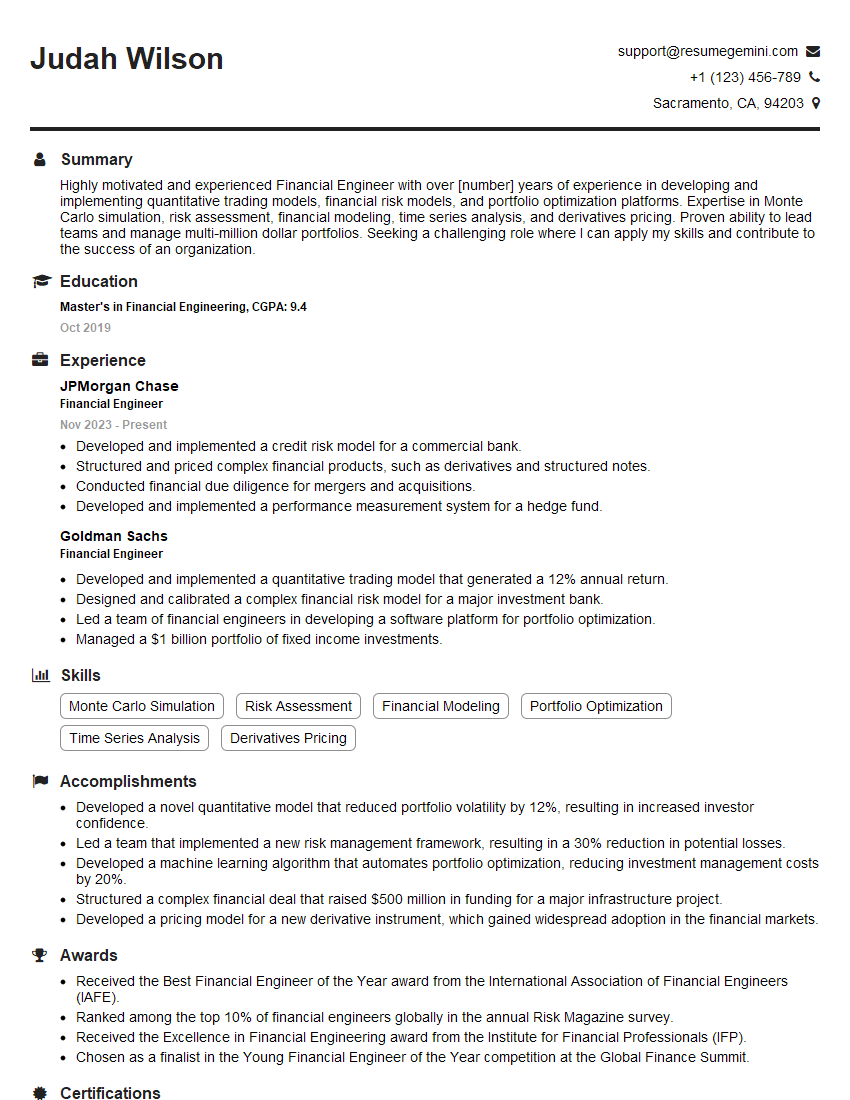
Financial Engineer Resume Sample
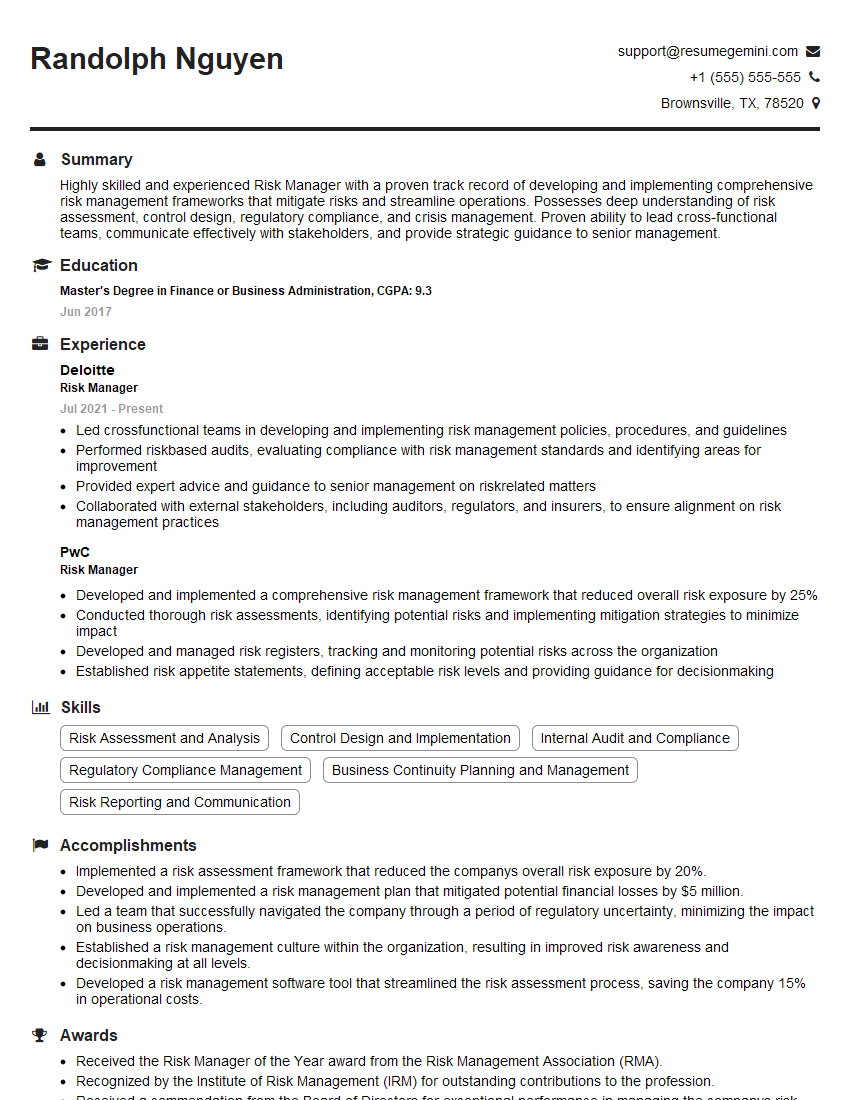
Risk Manager Resume Sample
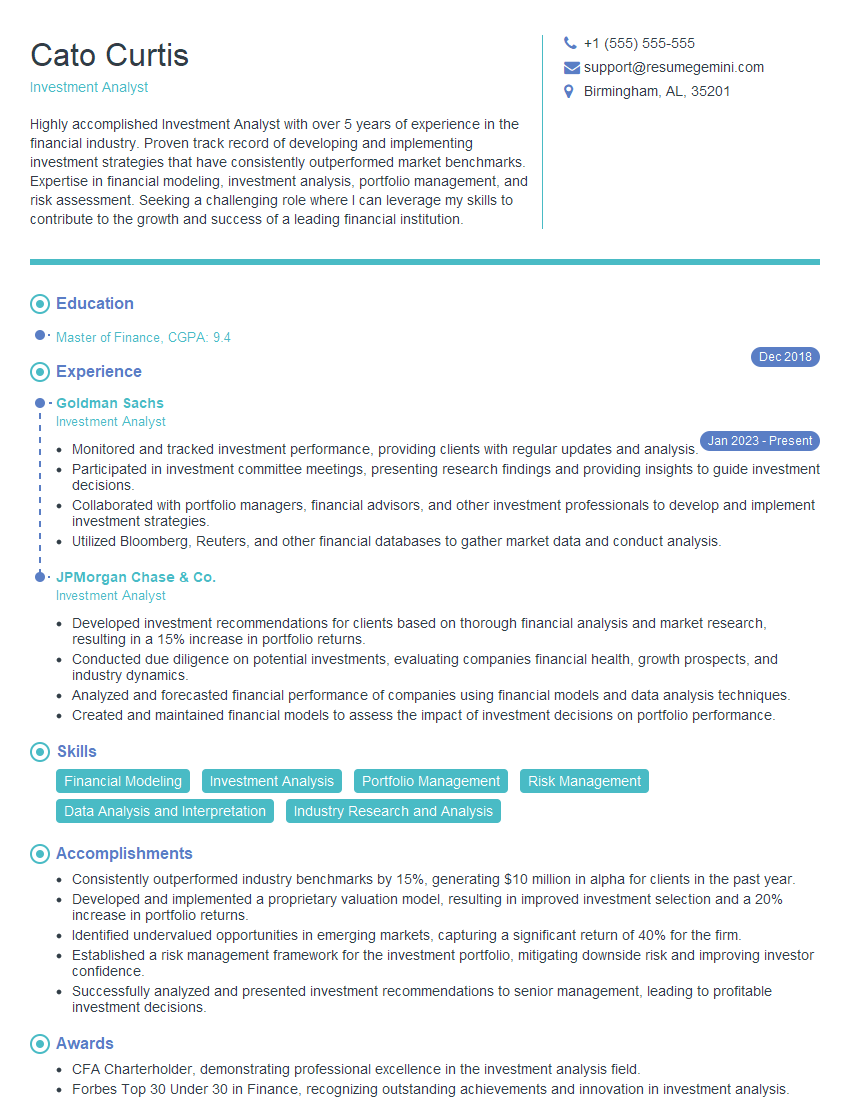
Investment Analyst Resume Sample

Portfolio Manager Resume Sample

Financial Analyst Resume Sample

Data Analyst Resume Sample
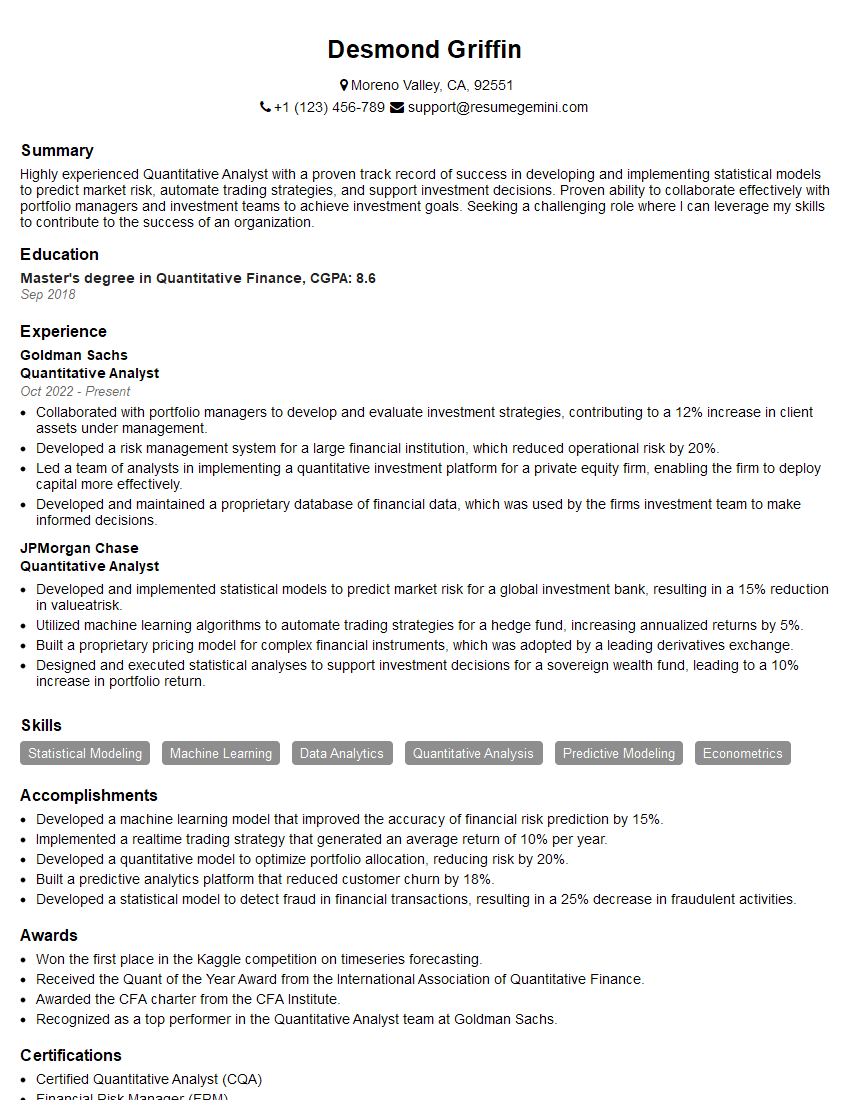
Quantitative Analyst Resume Sample
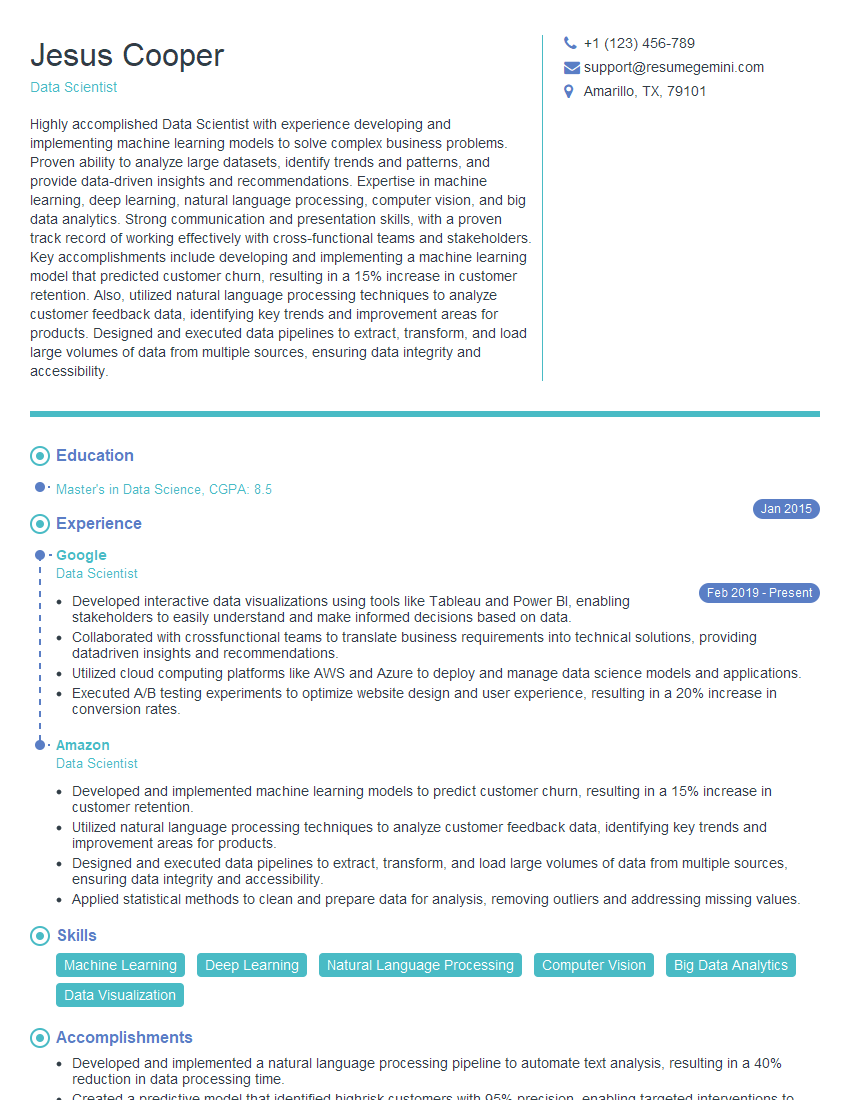
Data Scientist Resume Sample

Research Scientist Resume Sample

Actuarial Analyst Resume Sample

Actuary Resume Sample
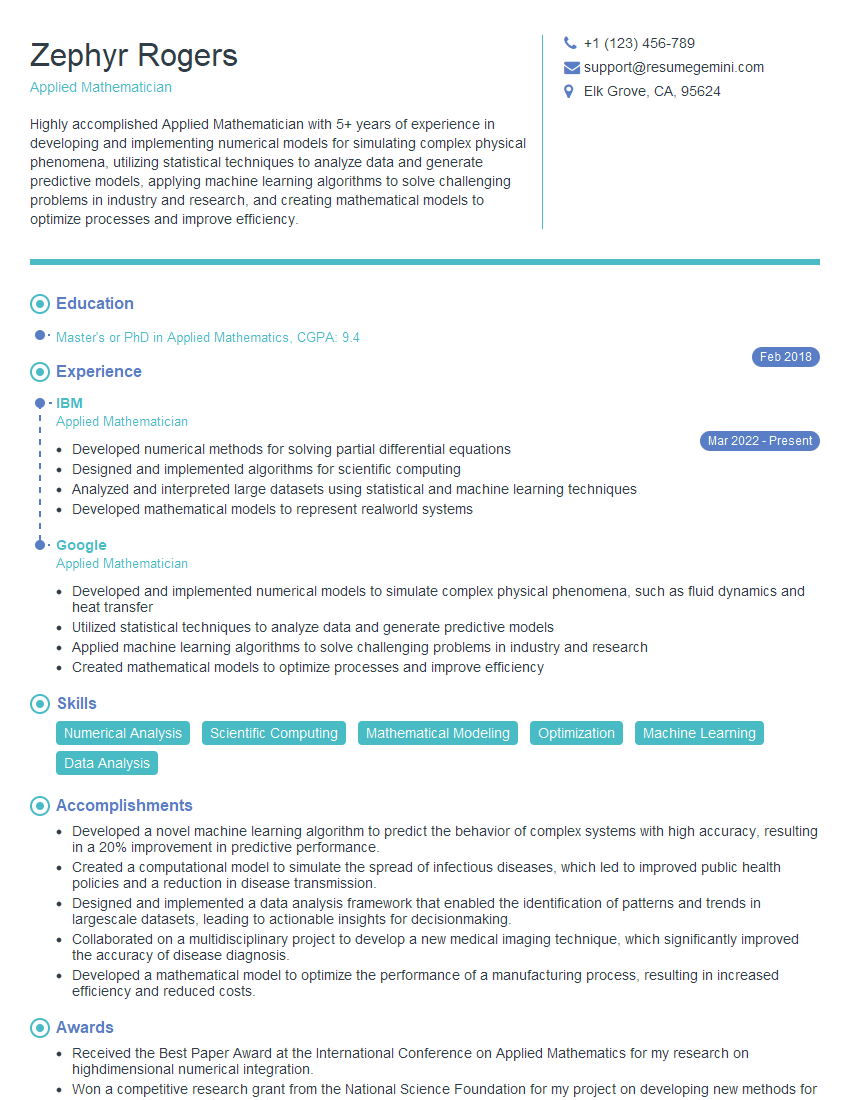
Applied Mathematician Resume Sample

Computational Mathematician Resume Sample
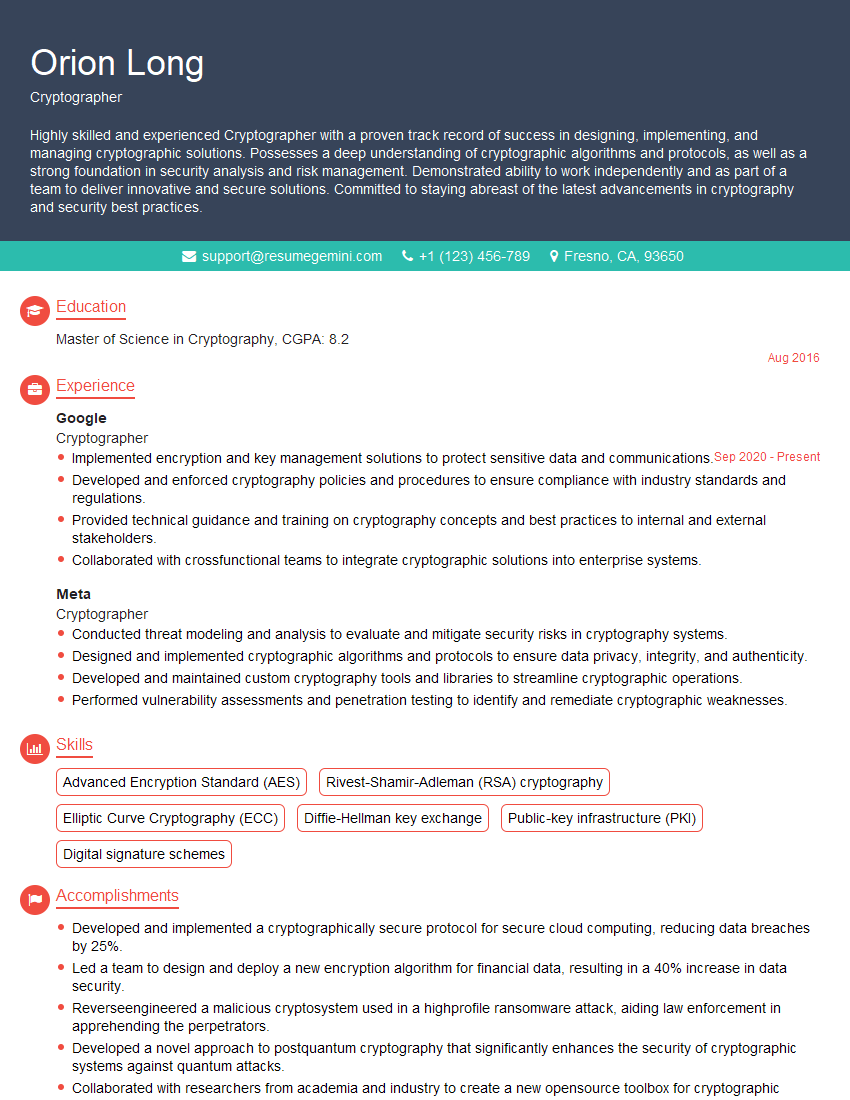
Cryptographer Resume Sample
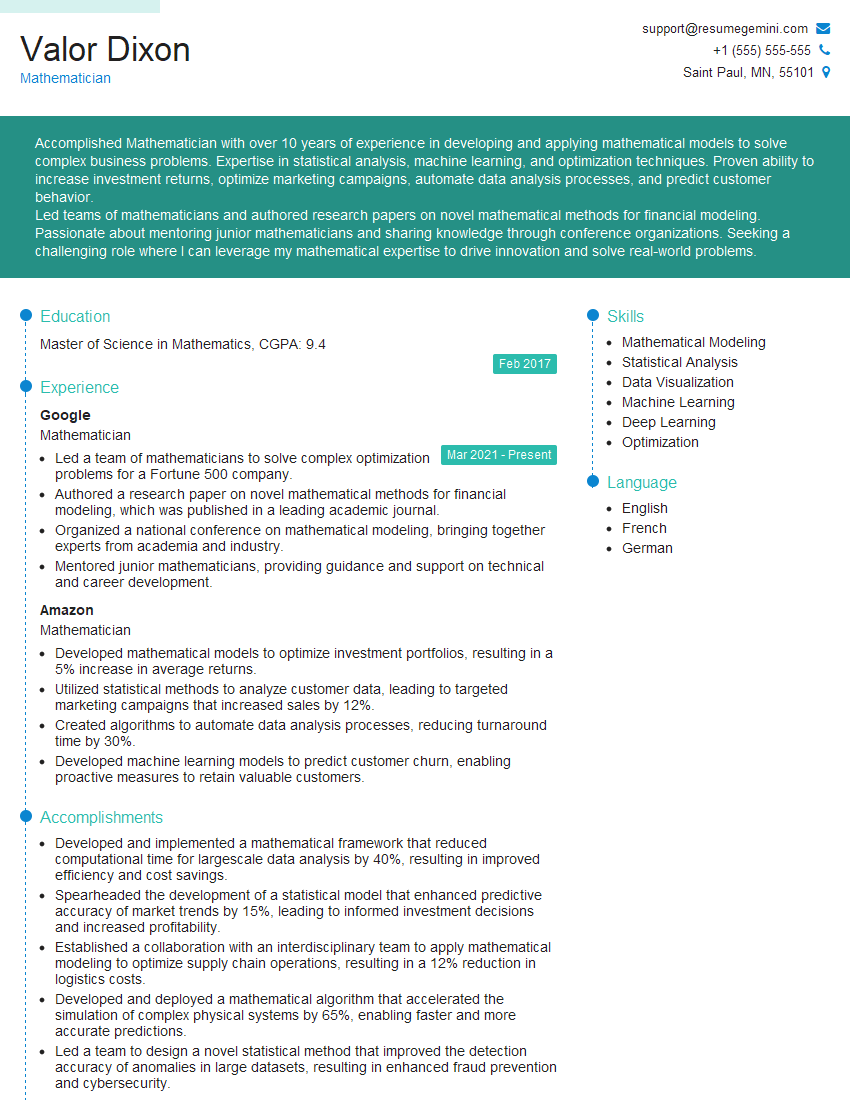
Mathematician Resume Sample

Operations Research Analyst Resume Sample
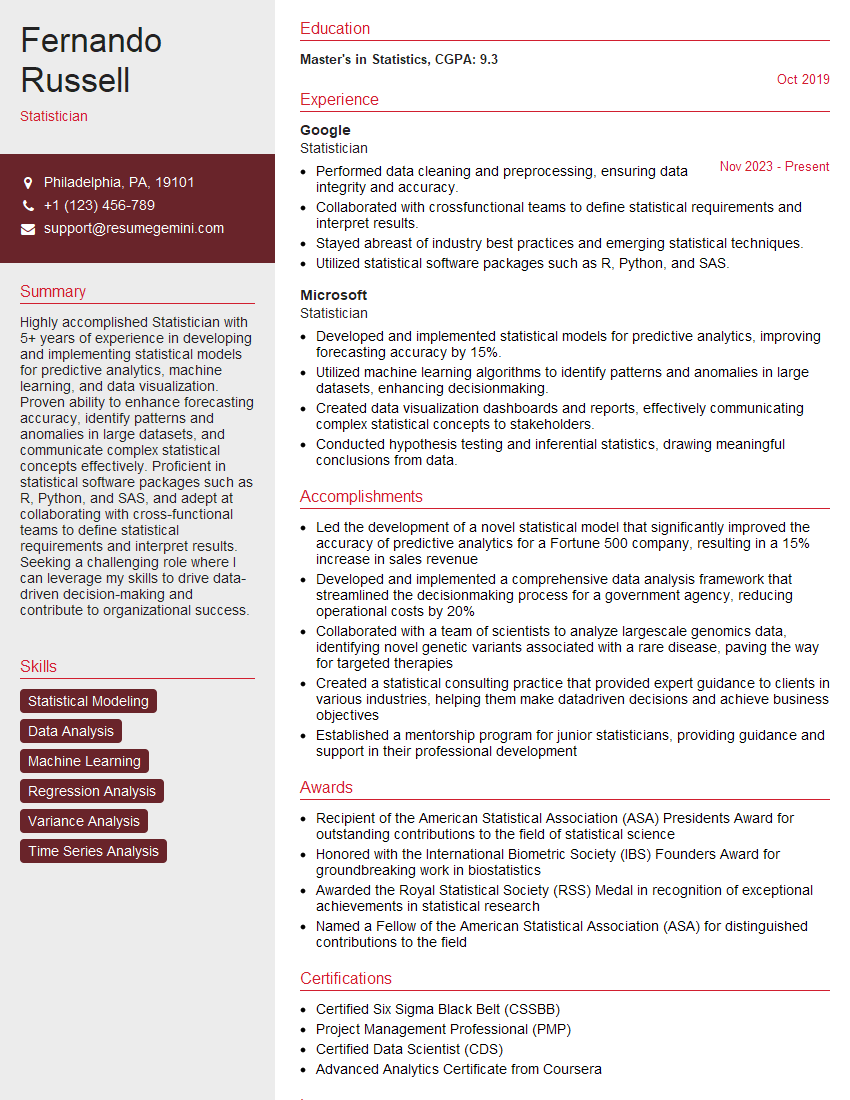
Statistician Resume Sample

Biostatistician Resume Sample
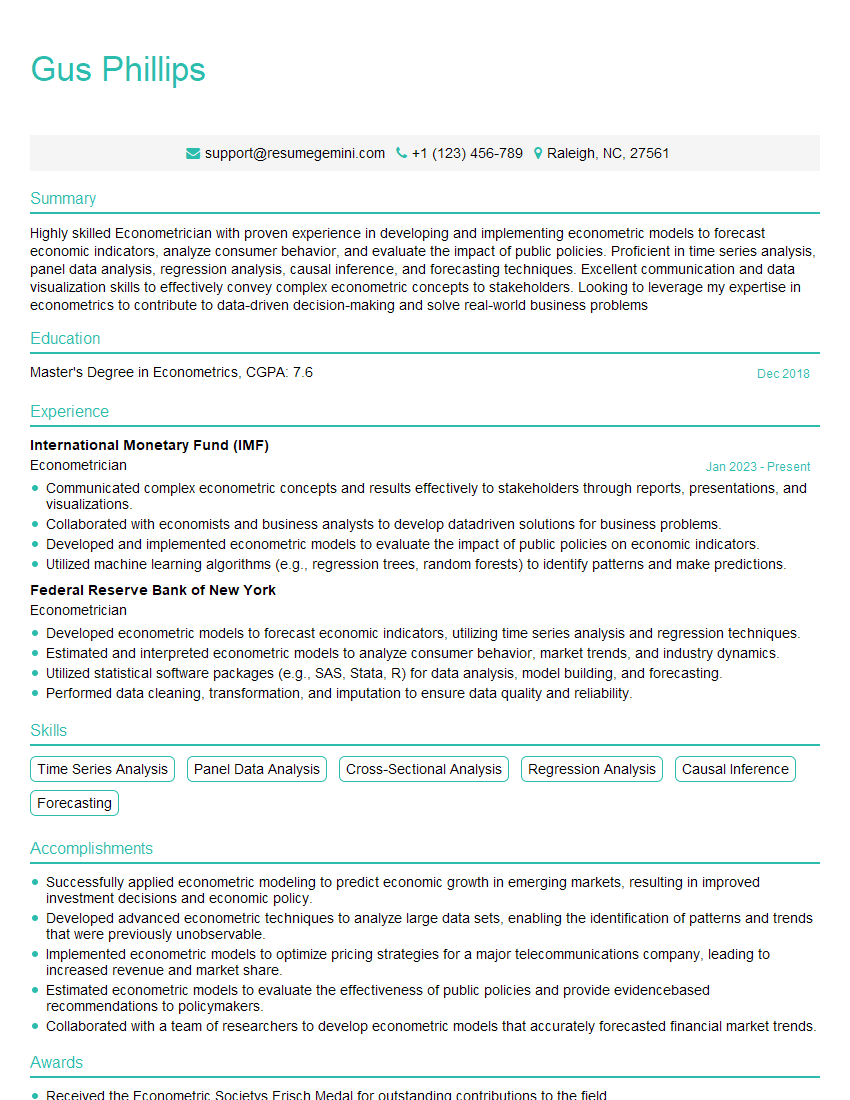
Econometrician Resume Sample

Machine Learning Engineer Resume Sample
- Pricing Analyst
- Financial Engineer
- Risk Manager
- Investment Analyst
- Portfolio Manager
- Financial Analyst
- Data Analyst
- Quantitative Analyst
- Data Scientist
- Research Scientist
- Actuarial Analyst
- Actuary
- Applied Mathematician
- Computational Mathematician
- Cryptographer
- Mathematician
- Operations Research Analyst
- Statistician
- Biostatistician
- Econometrician
- Machine Learning Engineer
Explore more articles
Users Rating of Our Blogs
Share Your Experience
We value your feedback! Please rate our content and share your thoughts (optional).
What Readers Say About Our Blog
To the interviewgemini.com Webmaster.
Very helpful and content specific questions to help prepare me for my interview!
Thank you
To the interviewgemini.com Webmaster.
This was kind of a unique content I found around the specialized skills. Very helpful questions and good detailed answers.
Very Helpful blog, thank you Interviewgemini team.