Are you ready to stand out in your next interview? Understanding and preparing for Maintaining Molding Tools interview questions is a game-changer. In this blog, we’ve compiled key questions and expert advice to help you showcase your skills with confidence and precision. Let’s get started on your journey to acing the interview.
Questions Asked in Maintaining Molding Tools Interview
Q 1. Describe your experience with preventative maintenance on molding tools.
Preventative maintenance is the cornerstone of extending the lifespan and ensuring the optimal performance of molding tools. It’s far more cost-effective to prevent problems than to react to failures. My approach focuses on a proactive, scheduled maintenance program, combining visual inspections with data-driven analysis where applicable.
This includes regular cleaning of the tool to remove any residue or debris that could cause damage or contamination. I meticulously inspect for wear and tear on critical components like cavities, ejector pins, and guide bushings. Lubrication is key; I use the correct lubricants specified by the manufacturer to reduce friction and prevent seizing. Finally, I maintain detailed records of all maintenance activities, noting any anomalies or potential issues. For instance, if I detect slight wear on an ejector pin during a routine inspection, I might schedule a minor adjustment or replacement before it leads to a production halt. This prevents costly downtime and potential product defects.
Q 2. How do you identify and troubleshoot common molding tool problems?
Identifying and troubleshooting molding tool problems requires a systematic approach. I typically start with a thorough visual inspection, looking for obvious signs of damage such as cracks, scratches, or excessive wear. Then, I analyze the molded parts themselves. Variations in dimensions, surface defects (like flash or sink marks), or inconsistent ejection can pinpoint issues with the tool.
For example, consistent flash (excess material) might suggest a problem with the mold’s closing mechanism or insufficient clamping pressure. Similarly, ejector pin marks or deformation of the part could point to problems with the ejector system. To further diagnose, I may use specialized equipment such as a surface roughness tester or a CMM (coordinate measuring machine) to gather precise data. In complex situations, I might collaborate with engineers to analyze mold flow simulations or other diagnostic methods.
Q 3. What are the different types of molding tools you’re familiar with?
Over my career, I’ve worked with a wide variety of molding tools, including:
- Injection Molding Tools: These are the most common type, used to create parts from molten plastic. They come in various sizes and complexities, from simple single-cavity molds to intricate multi-cavity molds with complex internal structures.
- Compression Molding Tools: These tools are used to shape materials under high pressure and heat, often used for rubber or thermoset plastics. They usually have simpler designs than injection molding tools.
- Blow Molding Tools: These are used for creating hollow plastic parts, such as bottles. They involve a process where air pressure inflates a heated plastic tube within the mold.
- Rotational Molding Tools: In this process, a mold is rotated while containing heated plastic which coats the mold’s inner surface. These tools are often larger and are generally used for making larger, hollow parts.
My experience encompasses various materials and complexities within each category.
Q 4. Explain your process for repairing damaged molding tools.
Repairing damaged molding tools is a delicate process that requires precision and expertise. The first step always involves a detailed assessment of the damage. Minor scratches or surface imperfections might be addressed through polishing or grinding. More significant damage, like cracked cavities or broken ejector pins, requires more extensive repair, possibly involving welding or machining.
For instance, if a cavity has a small crack, I might carefully weld it using specialized welding techniques appropriate for the tool material. If an ejector pin is broken, I might replace it with a new one, ensuring it is correctly fitted and aligned. Throughout the repair process, I meticulously document each step. After repair, a thorough inspection and test run are essential to verify that the tool is functioning correctly and producing parts to the required specifications. In some cases, especially with severely damaged tools, complete replacement might be more cost-effective than repair.
Q 5. How do you maintain the cleanliness and lubrication of molding tools?
Cleanliness and lubrication are paramount for mold tool maintenance. Regular cleaning removes residue, preventing corrosion and contamination. I use appropriate solvents and cleaning agents specific to the material of the mold and the type of residue present, paying attention to environmental concerns and proper disposal. After cleaning, I thoroughly dry the tool to prevent rust formation.
Lubrication is crucial to reduce friction and wear. I apply specialized mold release agents and lubricants to the moving parts, such as slides, ejector pins, and guide bushings, following the manufacturer’s recommendations. The type of lubricant varies depending on the material of the tool and the operating conditions. Over-lubrication can lead to problems, so precision is paramount. Regular lubrication scheduling minimizes friction and ensures smooth operation.
Q 6. What safety procedures do you follow when maintaining molding tools?
Safety is my top priority. When maintaining molding tools, I always follow strict safety procedures, including:
- Lockout/Tagout: Before starting any maintenance, I always disconnect the power supply and lock the equipment to prevent accidental activation.
- Personal Protective Equipment (PPE): I consistently wear appropriate PPE, including safety glasses, gloves, and hearing protection, to protect myself from potential hazards.
- Proper Handling Techniques: I use appropriate lifting techniques to avoid injuries when handling heavy tool components.
- Emergency Procedures: I am familiar with emergency procedures in case of accidents, injuries, or equipment malfunctions.
Regular safety training and adherence to company safety protocols are critical in maintaining a safe working environment.
Q 7. What types of materials are commonly used in molding tools, and how do you care for each?
Molding tools are made from a variety of materials, each requiring specific care:
- Steel: The most common material, requiring regular cleaning and lubrication to prevent rust and corrosion. Proper heat treatment is essential for maintaining hardness and dimensional stability.
- Aluminum: Lighter and easier to machine than steel but more prone to scratching and wear. Requires careful handling and appropriate lubricants.
- Hardened Steel: Used for high-wear components, offering exceptional durability but needing precise machining techniques for maintenance and repair.
- Specialty Alloys: Specific alloys may be employed to achieve particular properties like higher temperature resistance or corrosion resistance. Their maintenance often follows manufacturer’s specialized recommendations.
Understanding the material properties is critical. For example, the use of harsh solvents on aluminum tools can lead to damage, while using incorrect lubricants on hardened steel might compromise its surface hardness. Regular inspection, meticulous cleaning, and appropriate lubrication techniques specific to the materials ensures the longevity and effectiveness of the molding tools.
Q 8. Describe your experience with using measuring tools and gauges for mold inspection.
Accurate measurements are fundamental to mold inspection and maintenance. I’m proficient in using a wide range of tools, including dial indicators, micrometers, calipers, and surface roughness testers. For instance, a dial indicator allows precise measurement of cavity depth and parallelism, ensuring the mold produces parts within specified tolerances. Micrometers provide incredibly accurate measurements of critical dimensions such as core pins and ejector pins. Calipers are used for quick, general dimensional checks. Surface roughness testers, on the other hand, help assess the surface finish of the molded part, which is directly influenced by the mold’s condition. I always double-check my measurements and use appropriate tools for the specific task – using a caliper to measure a tiny detail would be inaccurate compared to using a micrometer. My experience extends to using optical comparators for more complex dimensional analysis and checking for potential issues like warpage or deformation.
Q 9. How familiar are you with different types of mold steels and their properties?
My knowledge of mold steels encompasses various grades, each with unique properties crucial for optimal mold performance and longevity. I’m familiar with common materials like P20 (a general-purpose tool steel), H13 (a hot-work tool steel ideal for high-temperature applications), and S7 (a shock-resistant tool steel). Each steel possesses different characteristics regarding hardness, wear resistance, toughness, and machinability. For example, H13 is preferred for molds producing high-volume parts under high temperatures because of its superior heat resistance. Conversely, P20 is a good choice for less demanding applications due to its ease of machining and relatively lower cost. The selection of the appropriate steel depends heavily on the specific application requirements; the material properties and costs should be considered together to make an optimal choice. Incorrect selection can lead to premature failure or substandard product quality.
Q 10. What are the signs of tool wear, and how do you address them?
Recognizing the signs of tool wear is critical for preventive maintenance. Common indicators include surface scratches and pitting (often from abrasive materials), erosion of cavity surfaces (leading to dimensional inaccuracies), wear on ejector pins (resulting in parts sticking), and cracking or deformation of the mold components. I address these issues using various methods. For surface scratches, polishing or lapping might suffice. More severe erosion often requires EDM (Electrical Discharge Machining) repair or even replacement of the affected component. Worn ejector pins are typically replaced. Cracking usually necessitates a more extensive repair or, unfortunately, mold replacement. The approach is always tailored to the severity of the damage, with a keen eye on cost-effectiveness; a small scratch can be easily polished, while a cracked mold base necessitates a more drastic solution. Regular inspection with appropriate measuring tools helps catch wear early, preventing catastrophic failures.
Q 11. How do you document your maintenance procedures and findings?
Maintaining thorough and accurate documentation is key to efficient mold maintenance. I typically utilize a combination of methods. Firstly, a detailed inspection report is created after each inspection, noting all findings, including measurements, images (both macro and micro), and assessments of wear and tear. Secondly, a dedicated maintenance log meticulously tracks all performed maintenance activities, the date, the personnel involved, the parts replaced or repaired, and any other relevant details. Software solutions often support this documentation, allowing for better data management and analysis. This system allows for easy traceability and aids in preventative maintenance planning. For instance, identifying a pattern of wear on a particular component allows us to predict when future maintenance might be required and plan accordingly. For highly critical components, I even employ 3D scanning to have a digital backup that allows for future replication and quicker repairs.
Q 12. Explain your understanding of mold temperature control and its impact on the molding process.
Mold temperature control is paramount for consistent part quality and mold longevity. Inconsistent temperatures can lead to warping, sink marks, short shots, and other defects in the molded parts. The ideal temperature depends on the material being molded; different polymers require different processing temperatures. For example, materials like ABS need higher processing temperatures than PP. Temperature is controlled through various heating and cooling systems built into the molding machine. Thermocouples and temperature controllers precisely regulate temperatures throughout the molding cycle. Poor temperature control can cause issues such as insufficient flow causing short shots, excessively high temperatures resulting in material degradation, or uneven cooling creating warpage. Regular calibration of the temperature control system and monitoring of temperature profiles during the molding process are essential to ensure consistent quality and prevent premature mold wear.
Q 13. Describe your experience with hydraulic and pneumatic systems in molding machinery.
I have extensive experience with hydraulic and pneumatic systems in molding machines. Hydraulic systems provide the clamping force for the mold, while pneumatic systems are often used for ejection and other auxiliary functions. Understanding their operation is crucial for troubleshooting and maintenance. I’m proficient in diagnosing leaks, identifying pump failures, and performing routine maintenance, including checking fluid levels, filter replacements, and pressure adjustments. In the pneumatic systems, I’m familiar with checking air pressure regulators, replacing air filters and cylinders, and troubleshooting leaks and valve malfunctions. For instance, a leaking hydraulic cylinder could compromise clamping force, leading to damaged parts. An improperly adjusted pneumatic ejection system could lead to parts sticking in the mold. Preventive maintenance and regular inspections are crucial in preventing costly downtime and ensuring safe operation.
Q 14. How familiar are you with different types of mold cavities and their functionality?
Mold cavities are the heart of the molding process, defining the shape and features of the final part. I’m familiar with various types, including single-cavity molds (producing one part per cycle), multi-cavity molds (producing multiple parts simultaneously), and family molds (producing several different parts). Each type offers advantages and disadvantages depending on production volume and part complexity. Single-cavity molds are simpler and cheaper for low-volume production, while multi-cavity molds are more efficient for mass production. Family molds are ideal when multiple related parts need to be produced. I understand the functionality of various features within the cavities, including gates, runners, sprues, and cooling channels. The design and condition of these elements directly impact part quality and mold performance. For instance, improperly designed gates can lead to flow issues, while insufficient cooling channels can lead to warping or sink marks. Careful consideration of these aspects is crucial in mold design and maintenance.
Q 15. How do you manage and prioritize multiple maintenance tasks efficiently?
Efficiently managing multiple maintenance tasks involves a structured approach. I utilize a computerized maintenance management system (CMMS) to schedule and track all tasks. This system allows me to prioritize based on several factors: criticality (e.g., a broken ejection system halts production immediately, taking precedence over a minor scratch), urgency (due dates, production schedules), and impact (potential downtime costs).
I also employ a prioritized task list, often color-coded (red for critical, yellow for urgent, green for routine), visually highlighting what needs immediate attention. Regularly reviewing and adjusting this list is crucial, as priorities can shift based on unforeseen circumstances. For instance, a sudden increase in tool wear might necessitate shifting focus from preventative maintenance to corrective measures.
- CMMS: Enables efficient scheduling, tracking, and reporting of all maintenance activities.
- Prioritized Task List: Provides a clear visual representation of task urgency and criticality.
- Regular Review and Adjustment: Adapts to changing production needs and unforeseen issues.
Career Expert Tips:
- Ace those interviews! Prepare effectively by reviewing the Top 50 Most Common Interview Questions on ResumeGemini.
- Navigate your job search with confidence! Explore a wide range of Career Tips on ResumeGemini. Learn about common challenges and recommendations to overcome them.
- Craft the perfect resume! Master the Art of Resume Writing with ResumeGemini’s guide. Showcase your unique qualifications and achievements effectively.
- Don’t miss out on holiday savings! Build your dream resume with ResumeGemini’s ATS optimized templates.
Q 16. What are your methods for improving the overall efficiency and lifespan of molding tools?
Improving the efficiency and lifespan of molding tools requires a multi-pronged approach focusing on preventative maintenance, optimized operating parameters, and proper tool storage. Preventative maintenance includes regular inspections for wear and tear, lubrication of moving parts, and cleaning to remove debris. This proactive approach prevents small issues from escalating into major problems, minimizing downtime and extending tool life.
Optimizing operating parameters, such as injection pressure and temperature, is equally critical. Incorrect settings can accelerate wear, leading to premature failure. Regular monitoring and adjustment based on material properties and molding specifications are essential. Finally, proper tool storage, shielded from environmental factors like excessive heat, humidity, and dust, protects against corrosion and damage.
Think of it like caring for a car – regular oil changes (lubrication), careful driving (optimized parameters), and keeping it garaged (proper storage) all contribute to its longevity and efficient performance.
Q 17. Describe your experience with mold refurbishment and repair procedures.
My experience with mold refurbishment and repair encompasses a wide range of procedures, from minor repairs like crack welding and polishing to major overhauls involving component replacements and surface treatments. I’m proficient in using various techniques, including EDM (Electrical Discharge Machining) for precise material removal and laser welding for joining dissimilar materials.
For example, I once repaired a severely damaged cavity in a high-pressure injection mold. The process involved carefully removing the damaged section using EDM, creating a precise replica using CNC machining, and then welding the new section to the mold using laser welding. Afterward, the mold underwent rigorous inspection and testing before returning to production. Each procedure is carefully documented, ensuring traceability and allowing for continuous improvement of repair techniques.
- EDM (Electrical Discharge Machining): Used for precise material removal.
- Laser Welding: Used for joining dissimilar materials.
- CNC Machining: Used for creating precise replicas of damaged components.
Q 18. How do you work collaboratively with other maintenance personnel?
Collaborative teamwork is essential in mold maintenance. I believe in open communication and shared responsibility. I regularly attend team meetings to discuss ongoing projects, share best practices, and address any challenges we face. We utilize a shared database for storing maintenance records, schematics, and repair procedures, facilitating easy access to information for all team members.
For example, when faced with a complex repair, I will consult with other technicians specializing in different areas, such as electricians or hydraulics experts, to leverage their specialized knowledge. This cross-functional approach ensures a comprehensive and effective solution. Regular training and knowledge sharing sessions also help to maintain a high level of proficiency within the team.
Q 19. How do you handle urgent maintenance requests efficiently?
Handling urgent maintenance requests efficiently requires a structured and prioritized approach. When an urgent request comes in, I immediately assess its severity and potential impact on production. Based on this assessment, I immediately initiate the necessary repairs. This might involve deploying a quick fix, coordinating with other technicians, or ordering replacement parts.
Effective communication is key – keeping production managers and other stakeholders informed of the situation and the expected resolution time. I also utilize the CMMS to track urgent requests, monitor progress, and ensure accountability. For example, if a critical mold breaks during production, I immediately prioritize the repair, potentially by working overtime or engaging outside specialist contractors to minimize downtime.
Q 20. Explain your experience with using Computer Numerical Control (CNC) machines in mold maintenance.
My experience with CNC machines in mold maintenance is extensive. I utilize CNC milling and EDM machines for precision machining operations, such as creating replacement parts, repairing damaged sections, and modifying existing molds. The precision and repeatability of CNC machining are critical for ensuring the dimensional accuracy and functionality of the repaired or modified tool.
For instance, I regularly use CNC milling to create custom jigs and fixtures for mold maintenance tasks. This ensures consistent and precise work. I also program and operate CNC EDM machines to perform complex operations such as creating intricate shapes and textures on mold surfaces. This ensures that the repaired or modified mold maintains its original design specifications and functions as intended.
Q 21. Describe your problem-solving approach when faced with a complex molding tool issue.
My approach to solving complex molding tool issues follows a structured problem-solving methodology. First, I thoroughly document the issue, gathering all relevant information, including error messages, production logs, and visual inspection results. I then conduct a root cause analysis, identifying the factors contributing to the problem. This often involves systematically eliminating possible causes through testing and experimentation.
After identifying the root cause, I develop several potential solutions, evaluating their feasibility and cost-effectiveness. I might utilize CAD software to simulate different repair strategies and assess their impact on the mold’s performance. Once a solution is selected, I implement it, carefully documenting each step. Finally, I verify the effectiveness of the solution through rigorous testing and monitoring.
Think of it like detective work – careful observation, systematic investigation, and testing until the culprit is found and the case is solved.
Q 22. What types of software are you familiar with using for mold design or maintenance?
My experience encompasses several software applications crucial for mold design and maintenance. For CAD (Computer-Aided Design), I’m proficient in industry-standard software like SolidWorks and Autodesk Inventor, using them to create and modify mold designs, analyze designs for potential issues, and generate manufacturing documentation. For CAM (Computer-Aided Manufacturing), I’m skilled in Mastercam and PowerMILL, essential for programming CNC machines used in mold construction and maintenance. Additionally, I utilize CAE (Computer-Aided Engineering) software such as Moldflow to simulate the molding process and predict potential problems like warping or sink marks, allowing for preventative design adjustments. Finally, I’m familiar with ERP (Enterprise Resource Planning) systems for managing tooling inventory and maintenance schedules, ensuring efficient tracking and resource allocation.
For example, in a recent project involving a complex injection mold for a medical device, I used SolidWorks to design the mold, Moldflow to simulate the filling process, and Mastercam to program the CNC machining of the mold components. This integrated approach ensured the mold was both efficiently manufactured and functioned as designed.
Q 23. How do you ensure the safety and quality of the products manufactured using the tools you maintain?
Ensuring both safety and quality is paramount in mold maintenance. Safety is addressed through rigorous adherence to safety protocols, including the use of proper PPE (Personal Protective Equipment) like safety glasses, gloves, and hearing protection during all maintenance activities. Regular machine inspections and preventative maintenance are crucial to identify and mitigate potential hazards before they cause accidents. Quality is maintained through precision cleaning, meticulous inspection using measuring tools (e.g., calipers, micrometers), and adherence to strict tolerances during repairs or refurbishment. This ensures that the molds produce parts consistently within specifications, minimizing defects.
For instance, before any maintenance begins, a thorough risk assessment is conducted, identifying any potential hazards and establishing control measures. After a maintenance procedure, the mold undergoes a detailed inspection to verify that it meets quality standards and operates correctly. We use documented procedures and checklists to ensure consistency and traceability.
Q 24. Explain your experience with different types of molding processes, such as injection molding, blow molding, or compression molding.
My experience spans various molding processes. Injection molding is the most common and involves injecting molten plastic into a mold cavity. I have extensive experience troubleshooting issues such as short shots, flash, and weld lines in injection molds. Blow molding involves inflating a heated plastic tube within a mold to create hollow parts like bottles. My experience here focuses on maintaining the molds used for this process, focusing on air pressure regulation and proper heating to achieve consistent wall thickness. Compression molding, used for larger, less intricate parts, requires a different maintenance approach centered on ensuring proper pressure and temperature control to prevent defects like surface imperfections. I’m also familiar with other processes like rotational molding and thermoset molding, adapting my maintenance strategies accordingly.
A memorable example involved resolving consistent short shots in an injection mold for a high-volume automotive part. Through careful analysis of the process parameters and a detailed inspection of the mold, I identified a small burr obstructing the flow of molten plastic. Removing the burr resolved the issue, highlighting the importance of meticulous attention to detail in maintaining mold quality.
Q 25. What are your knowledge of different types of resin and their effect on the mold?
Understanding resin properties is crucial for effective mold maintenance. Different resins have varying melting points, viscosities, and thermal expansion coefficients. These properties significantly influence mold design and maintenance requirements. For example, high-viscosity resins may require more robust mold designs and more frequent cleaning to prevent buildup within the cavity. Resins with high thermal expansion could lead to warping or distortion if the mold isn’t designed and maintained correctly. I am familiar with a wide range of resins, including ABS, Polypropylene, Polyethylene, and various engineering plastics, and understand how their properties impact mold design and the maintenance strategies required to keep them performing optimally. Understanding the resin’s chemical composition also helps predict potential degradation of the mold material over time and enables appropriate preventative measures.
I once encountered a situation where a mold designed for a specific type of polycarbonate was being used with a different, less compatible resin. This resulted in significant mold damage due to chemical incompatibility. This incident reinforced the importance of verifying the resin compatibility before use.
Q 26. Describe your understanding of statistical process control (SPC) and its application in mold maintenance.
Statistical Process Control (SPC) is a crucial tool in mold maintenance. It involves using statistical methods to monitor and control the manufacturing process, identifying variations and potential problems before they lead to significant defects or downtime. In mold maintenance, SPC charts track key parameters like mold temperature, injection pressure, and cycle time. By regularly monitoring these parameters, we can identify trends and patterns, allowing for timely adjustments to prevent issues like excessive wear, degradation, or unexpected part variations. Control charts (like X-bar and R charts) help establish control limits and quickly identify points outside these limits, signaling a need for corrective action. This proactive approach reduces scrap, rework, and overall costs.
For instance, in a recent project involving a high-precision injection mold, we implemented SPC charts to monitor the cavity pressure. The charts helped us detect a subtle increase in pressure over time, indicating a potential problem with the mold’s cooling system. We addressed the issue before it led to significant defects, ensuring continued production of high-quality parts.
Q 27. What are your strategies for reducing downtime caused by mold maintenance?
Minimizing downtime requires a multi-pronged approach. Preventative maintenance is key; this includes regular inspections, lubrication, and cleaning of the molds, preventing minor issues from escalating into major problems. Implementing a robust preventative maintenance schedule, often based on the mold’s usage and the type of resin used, significantly extends mold lifespan and reduces the frequency of major repairs. Having spare parts readily available also minimizes downtime during repairs. Furthermore, efficient repair procedures and well-trained technicians allow for quick resolution of issues. Finally, proactive monitoring via SPC helps identify potential problems early, allowing for preventative actions and reducing unexpected shutdowns.
An example of this is a system I implemented where a comprehensive database of mold components was maintained, enabling quick access to spare parts during unexpected breakdowns. This approach reduced downtime by approximately 30%.
Q 28. How do you stay current with new technologies and best practices in molding tool maintenance?
Staying current is vital in this rapidly evolving field. I actively participate in industry conferences and workshops, attending seminars and presentations on the latest technologies and best practices in mold maintenance. I subscribe to relevant industry publications and journals to keep abreast of advancements in materials, techniques, and technologies. I also engage in online learning platforms and training courses provided by mold manufacturing equipment suppliers. Furthermore, I regularly network with other professionals in the field to share knowledge and best practices. This continuous learning ensures that I remain proficient in using the most efficient and effective methods for mold maintenance and repair.
For instance, I recently completed a training course on using advanced laser-based surface measurement techniques for mold inspection, which significantly enhanced our inspection capabilities and improved accuracy.
Key Topics to Learn for Maintaining Molding Tools Interview
- Molding Tool Materials and Properties: Understanding the different materials used in molding tools (e.g., steel, aluminum, etc.) and their respective properties (strength, durability, heat resistance) is crucial. This includes knowing how material selection impacts tool lifespan and performance.
- Preventive Maintenance Procedures: Learn the standard procedures for inspecting, cleaning, and lubricating molding tools. This includes understanding schedules and the importance of proactive maintenance to prevent costly downtime.
- Troubleshooting Common Molding Tool Issues: Develop your ability to diagnose and solve common problems such as wear and tear, cracks, pitting, and misalignment. This includes understanding the root causes of these issues and implementing effective solutions.
- Tool Repair and Restoration Techniques: Familiarize yourself with various repair methods, including welding, grinding, polishing, and the use of specialized coatings to extend tool life. Understand when repair is feasible versus replacement.
- Safety Procedures and Regulations: Knowing and adhering to all relevant safety regulations and procedures during tool maintenance is paramount. This includes the proper use of personal protective equipment (PPE) and safe handling of tools and machinery.
- Quality Control and Inspection Methods: Learn about different methods used to inspect molding tools for defects and ensure they meet quality standards. This could include dimensional checks, surface finish inspections, and material analysis.
- Documentation and Record Keeping: Understand the importance of accurate and thorough record-keeping for maintenance activities. This includes documenting inspections, repairs, and any issues encountered.
- Advanced Tooling Technologies: Explore familiarity with modern technologies used in molding tool maintenance, such as automated inspection systems or specialized software for tool design and management.
Next Steps
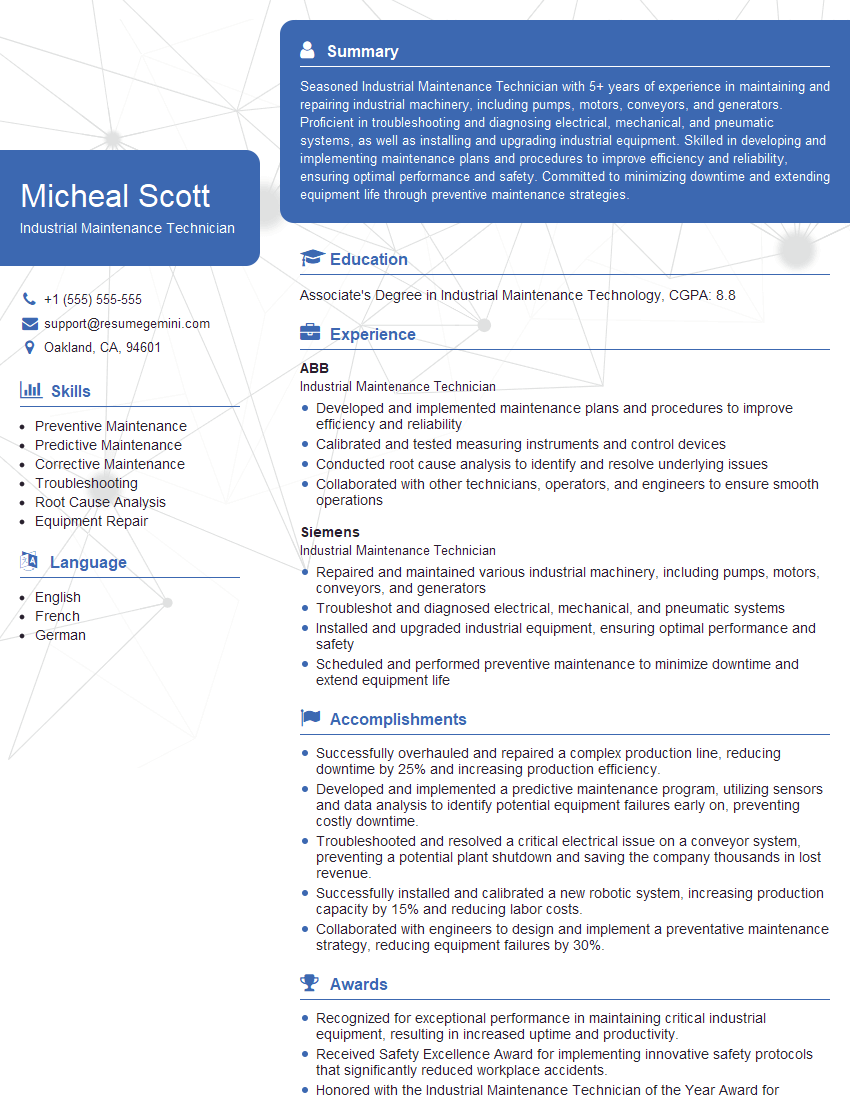
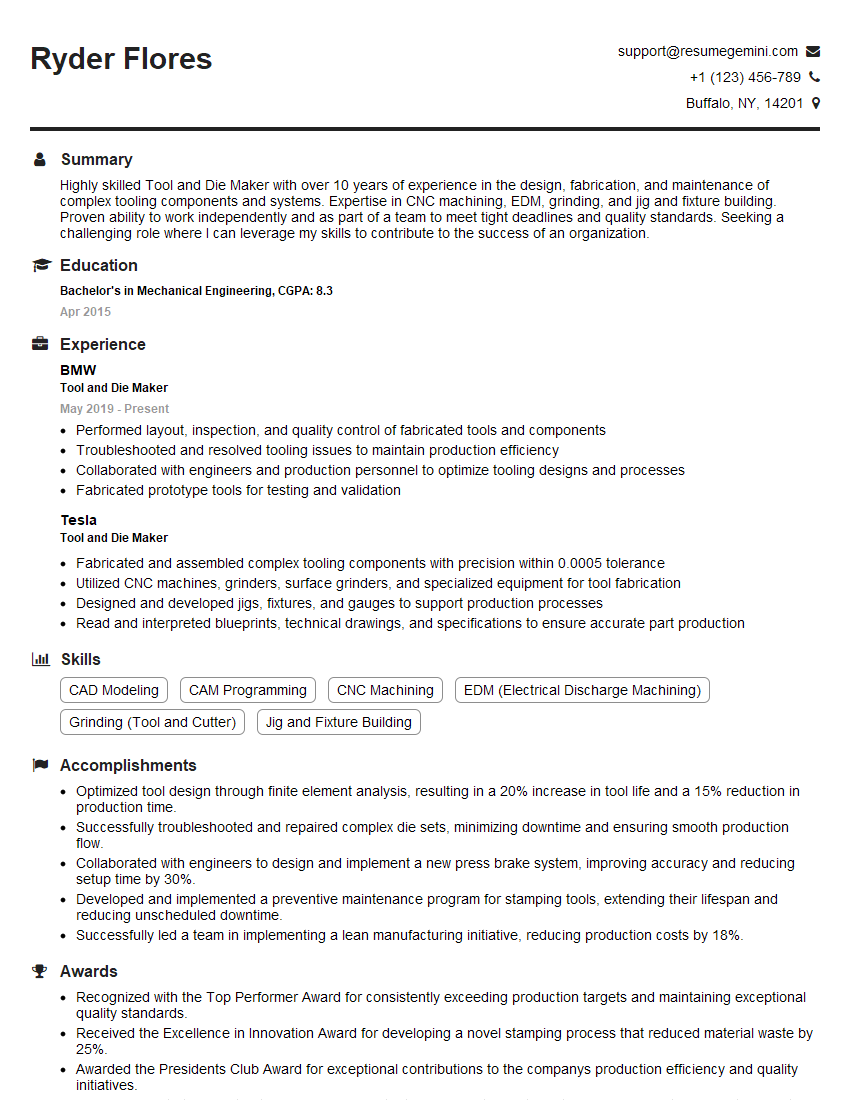
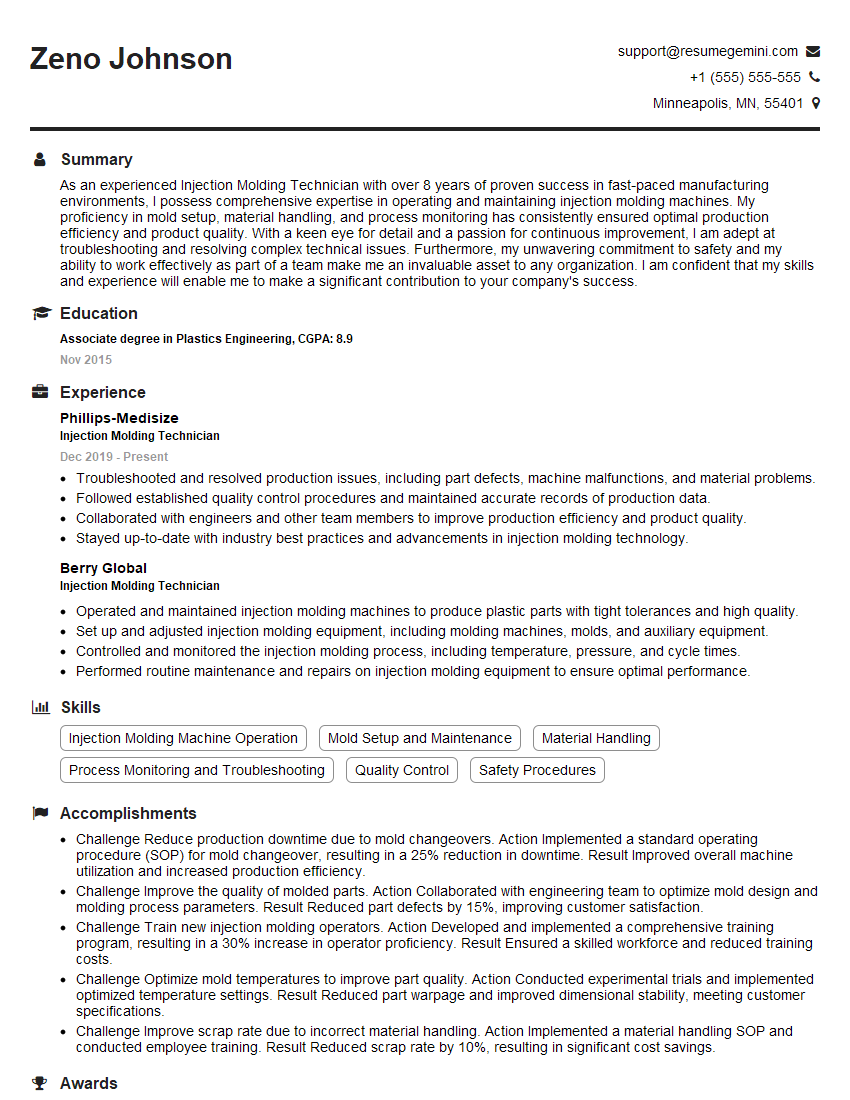
Mastering the art of maintaining molding tools is highly valuable and directly translates to increased efficiency, reduced downtime, and higher quality output in manufacturing. This skillset is in constant demand, leading to excellent career prospects and opportunities for advancement. To significantly boost your job search, focus on creating an ATS-friendly resume that highlights your relevant skills and experience. ResumeGemini is a trusted resource to help you build a professional and impactful resume. They provide examples of resumes tailored to Maintaining Molding Tools, ensuring yours stands out from the competition.
Explore more articles
Users Rating of Our Blogs
Share Your Experience
We value your feedback! Please rate our content and share your thoughts (optional).
What Readers Say About Our Blog
To the interviewgemini.com Webmaster.
Very helpful and content specific questions to help prepare me for my interview!
Thank you
To the interviewgemini.com Webmaster.
This was kind of a unique content I found around the specialized skills. Very helpful questions and good detailed answers.
Very Helpful blog, thank you Interviewgemini team.