Preparation is the key to success in any interview. In this post, we’ll explore crucial Customer Relations and Troubleshooting interview questions and equip you with strategies to craft impactful answers. Whether you’re a beginner or a pro, these tips will elevate your preparation.
Questions Asked in Customer Relations and Troubleshooting Interview
Q 1. Describe your experience handling difficult customer interactions.
Handling difficult customer interactions requires a blend of empathy, active listening, and problem-solving skills. My approach centers on understanding the customer’s perspective, validating their feelings, and then collaboratively working towards a solution. I start by actively listening without interruption, ensuring I fully grasp the issue and the customer’s emotional state. I use phrases like, “I understand your frustration,” or “I can see why you’re upset,” to acknowledge their feelings. Then, I calmly reiterate the issue to confirm my understanding and ensure we’re on the same page. Following this, I systematically investigate the problem, offering potential solutions and working with the customer to choose the best course of action. For example, if a customer is angry about a delayed shipment, I’ll first apologize for the inconvenience, then explain the reason for the delay (if possible), and finally offer options such as expedited shipping, a discount, or a full refund depending on the situation and company policy. Finally, I always follow up to ensure they are satisfied with the resolution.
In one instance, a customer was extremely irate about a faulty product. Instead of getting defensive, I listened patiently to their concerns, apologized for the inconvenience, and offered a replacement product immediately. I followed up with a personal email to ensure they received the replacement and were satisfied. This proactive approach transformed a potentially negative experience into a positive one, strengthening customer loyalty.
Q 2. How do you prioritize multiple customer issues simultaneously?
Prioritizing multiple customer issues requires a structured approach. I use a combination of urgency and impact to determine the order of tasks. I employ a triage system, identifying issues based on their severity and the potential impact on the customer and the business. Issues that require immediate attention, such as critical system outages impacting many users, take precedence. I use tools like ticketing systems to categorize and manage these issues, assigning priorities (high, medium, low) based on urgency and impact. I also leverage time management techniques such as timeboxing to allocate specific time slots to address specific issues. For instance, if I have three customers needing help, one with a critical billing issue, another with a minor technical query, and a third needing general information, I’d tackle the billing issue first, then the technical query, and finally the general information request.
Imagine a scenario with five simultaneous chat requests. I might use a color-coded system in my ticketing system, red for urgent, yellow for medium, and green for low priority. I start with the red issues, moving down the list. I also make use of canned responses and quick solutions for routine issues to free up time for the more complex problems.
Q 3. Explain your approach to troubleshooting a complex technical problem.
My approach to troubleshooting complex technical problems is systematic and data-driven. I begin by gathering as much information as possible from the customer, including detailed descriptions of the issue, error messages (if any), and steps they’ve already taken. Then, I employ a structured troubleshooting methodology, often following a decision tree approach. This involves systematically checking and eliminating potential causes one by one. I might start with the most obvious solutions (e.g., checking network connectivity, restarting the system) before moving to more complex solutions. I use tools like remote desktop access, system logs, and debugging tools to pinpoint the root cause. Throughout this process, I keep the customer informed of my progress and any potential solutions. If I’m unable to resolve the issue, I document all steps taken and escalate to the appropriate technical team.
For example, if a customer reports an application error, I’d start by asking about their operating system, browser version, and recent activities before checking the application logs for error messages. I’d then try basic troubleshooting steps, and if unsuccessful, I would escalate to a senior technician who has access to more advanced diagnostic tools.
Q 4. What metrics do you use to measure your customer service success?
Measuring customer service success involves a multi-faceted approach, utilizing both quantitative and qualitative metrics. Key quantitative metrics include:
- Customer Satisfaction (CSAT) scores: Surveys measuring customer happiness after an interaction.
- Net Promoter Score (NPS): Gauging customer loyalty and likelihood to recommend.
- First Contact Resolution (FCR): Percentage of issues resolved on the first contact.
- Average Handle Time (AHT): Average time spent resolving each issue.
- Ticket Resolution Time: Time taken to resolve a customer’s ticket.
Qualitative metrics are equally important, including customer feedback from surveys, reviews, and direct interactions. Analyzing this data provides insights into customer experience, areas for improvement, and potential issues. By tracking these metrics over time, we can identify trends, measure progress, and make data-driven improvements to our processes and service offerings.
Q 5. How do you handle a situation where you cannot immediately resolve a customer’s issue?
When I cannot immediately resolve a customer’s issue, my priority is to ensure the customer feels heard, understood, and informed. I begin by acknowledging the complexity of the issue and expressing my commitment to finding a solution. I provide a realistic timeframe for resolution and keep the customer updated on my progress through regular communication (email or phone). I assign a unique reference number to the issue and document all actions taken. This ensures transparency and builds trust. Importantly, I set clear expectations and offer alternative solutions if appropriate, such as temporary workarounds or alternative services. For example, if I’m dealing with a complex technical problem that requires involvement from another department, I’ll explain this to the customer, and offer an estimated time for a response or update.
Imagine a complex software bug. I can’t fix it immediately, so I’d explain that I’m escalating it to the development team, give them a ticket number, and provide a realistic timeframe for an update (e.g., ‘We expect a fix within 24-48 hours’). I’d also offer any applicable workarounds in the meantime.
Q 6. Describe a time you had to escalate a customer issue. What was your process?
Escalating a customer issue involves a structured process. I first ensure I’ve exhausted all possible solutions within my scope of authority. If the problem persists, I meticulously document the issue, including all steps taken, customer interactions, and any relevant system logs or data. I then escalate the issue to the appropriate team (e.g., technical support, management, or a specialist department) through the designated channels, often using a formal ticketing system. My escalation includes all relevant documentation and a clear summary of the issue, outlining the steps already taken and the current status. I also inform the customer about the escalation and provide the contact details of the person or team handling the issue. I follow up with both the customer and the escalated team to ensure timely resolution.
I once had to escalate a security breach reported by a customer. I meticulously documented everything, then escalated through the proper channels to the security team, keeping the customer updated every step of the way. The security team resolved the issue swiftly, and my thorough documentation aided in a rapid and efficient resolution.
Q 7. How do you stay calm and professional under pressure when dealing with upset customers?
Maintaining composure and professionalism under pressure when dealing with upset customers is crucial. My approach focuses on empathy, active listening, and de-escalation techniques. I start by acknowledging the customer’s emotions and validating their feelings without getting defensive. I use calming language and avoid interrupting. I focus on understanding their concerns and finding common ground. I might use phrases like, “I understand your frustration,” or “I appreciate you bringing this to our attention.” I then focus on collaboratively finding a solution, presenting options, and working towards a mutually acceptable outcome. Taking deep breaths, maintaining a calm tone, and using a positive and reassuring attitude helps diffuse the situation. If the conversation becomes overly aggressive or abusive, I will politely but firmly explain that I cannot tolerate abusive language and may have to disconnect the call to protect my well-being.
In a past role, a very upset customer accused us of fraud. Instead of reacting defensively, I listened patiently, apologized for their negative experience, and worked through their concerns step-by-step with them, ultimately proving the transaction was legitimate through documentation. By remaining calm and empathetic, I de-escalated the situation and retained the customer’s trust.
Q 8. What software or tools are you proficient in for tracking and resolving customer issues?
I’m proficient in several software and tools for tracking and resolving customer issues. My experience spans from simple ticketing systems to sophisticated CRM platforms. For instance, I’ve extensively used Zendesk for managing customer tickets, tracking their progress, and ensuring timely resolution. Its features like automated workflows and reporting dashboards are invaluable for efficient issue management. I’m also comfortable with Jira, which is particularly useful for tracking bugs and technical issues, allowing for collaboration between support teams and development.
Beyond dedicated ticketing systems, I utilize spreadsheets (like Google Sheets or Excel) for simple tracking, particularly when dealing with smaller-scale projects or ad-hoc issues. This allows for quick data entry and customizable reporting. For more complex data analysis and reporting related to customer trends, I leverage tools like Tableau or Power BI to visualize data and identify patterns that help proactively address issues.
Q 9. What is your experience with CRM software?
My CRM experience is extensive, encompassing several popular platforms including Salesforce, HubSpot, and Zoho CRM. I’m adept at using CRM systems to manage customer interactions, track communication history, and analyze customer data to improve service. For example, in a previous role using Salesforce, I customized dashboards to monitor key metrics like customer satisfaction (CSAT) scores, average resolution time, and ticket volume. This data-driven approach helped identify areas for improvement in our processes and allowed us to proactively address potential issues.
Beyond basic data entry and management, I’m skilled in using CRM functionalities to automate tasks, such as sending automated follow-up emails or assigning tickets to the appropriate support agents based on skillset and availability. This automation frees up time for more complex issues and provides consistent customer service.
Q 10. How do you build rapport with customers?
Building rapport with customers is crucial for effective troubleshooting. I start by actively listening to their concerns, acknowledging their frustration, and showing empathy. Using phrases like, “I understand your frustration,” or “I can see why this is concerning,” immediately validates their feelings. I then strive to communicate clearly and concisely, avoiding technical jargon unless absolutely necessary. If I need to use technical terms, I explain them in simple, understandable language.
Furthermore, I personalize the interaction whenever possible, addressing the customer by name and using their preferred communication method. Showing genuine interest in their problem and taking ownership of the situation builds trust and demonstrates commitment to finding a solution. For example, if a customer describes a frustrating experience, I might say something like, “Let’s work together to resolve this and ensure it doesn’t happen again.”
Q 11. How do you identify the root cause of a recurring customer issue?
Identifying the root cause of recurring customer issues requires a systematic approach. I typically start by gathering data on the affected users, the steps they take before encountering the issue, and the error messages they receive. I then analyze this data to look for patterns. This might involve creating frequency charts or using data analysis tools to pinpoint commonalities.
Once I’ve identified a pattern, I typically use a process of elimination to test various hypotheses. This may involve recreating the issue in a controlled environment, examining logs and system reports, and consulting with other team members or developers. A crucial part of this is thorough documentation of each step, including the results of each test, ensuring a clear audit trail. The goal is to not just fix the immediate problem but to find and address the underlying cause to prevent future occurrences.
Q 12. Describe your experience with remote troubleshooting techniques.
My experience with remote troubleshooting techniques is comprehensive. I’m proficient in using screen-sharing tools like Zoom, TeamViewer, and GoToMeeting to guide users through troubleshooting steps. I also utilize remote desktop access when appropriate to directly investigate the problem on the user’s machine. In addition to visual tools, I’m skilled in guiding users through diagnostic commands or processes via phone or chat.
A key aspect of remote troubleshooting is clear communication. I ensure I explain each step clearly and patiently, confirming the user’s understanding at every stage. I use analogies and simple language to make technical concepts easily understandable. For instance, when explaining network connectivity issues, I might compare the internet connection to a road network, explaining how different parts of the network can affect speed and access.
Q 13. How familiar are you with different communication channels (email, phone, chat)?
I’m highly familiar with various communication channels – email, phone, and chat. Each offers unique advantages and challenges. Email is excellent for detailed explanations and providing written documentation. Phone calls allow for immediate feedback and a more personal touch, ideal for complex issues needing immediate clarification. Chat is well-suited for quick questions and real-time support, often providing a more convenient option for the customer.
My approach is to adapt my communication style to suit the chosen channel and the customer’s preferences. For example, I use a more formal tone in emails and provide comprehensive written instructions. On the phone, I prioritize clear verbal communication and active listening. In chat, I use concise, yet informative responses, ensuring quick resolution.
Q 14. How do you document customer interactions and solutions?
Documenting customer interactions and solutions is a critical aspect of my workflow. I use a consistent and detailed approach. My documentation includes the customer’s name, contact information, a summary of the issue, the steps taken to resolve the problem, and the final outcome. I also note any relevant system information, error messages, or workarounds implemented. This detailed documentation serves several purposes.
Firstly, it provides a clear record of the interaction for future reference. If the customer contacts us again with a similar issue, the documented history allows for quick identification and resolution. Secondly, it contributes to the knowledge base, helping other support agents resolve similar issues efficiently. Thirdly, it’s crucial for tracking metrics and identifying trends, allowing us to proactively improve our services and processes. I usually use the built-in documentation features within the CRM or ticketing system, but I’ll sometimes use a separate document when appropriate.
Q 15. What is your approach to proactively preventing customer issues?
Proactive customer issue prevention is about anticipating problems before they arise and implementing strategies to mitigate them. It’s far more efficient and cost-effective than reacting to complaints after the fact. My approach involves a multi-pronged strategy focusing on:
- Understanding Customer Needs: Thorough market research, customer surveys, and analyzing feedback help identify pain points and potential issues. For example, if feedback consistently points towards difficulties navigating a website’s checkout process, we’d prioritize improvements there.
- Improving Product/Service Quality: Regular quality checks, testing, and continuous improvement processes minimize defects and malfunctions. If we find a recurring bug in a software application, we’d immediately address it to prevent customer frustration.
- Proactive Communication: Keeping customers informed about updates, maintenance, or potential disruptions prevents misunderstandings and builds trust. For instance, sending out email notifications before planned website downtime minimizes negative impact.
- Knowledge Base and FAQs: A comprehensive and easily accessible knowledge base addresses common questions and concerns, reducing the need for individual support requests. This self-service approach empowers customers and frees up agents to handle more complex issues.
- Training and Empowerment of Staff: Well-trained staff are better equipped to handle potential problems effectively. Regular training on product knowledge, customer service skills, and conflict resolution is crucial.
Career Expert Tips:
- Ace those interviews! Prepare effectively by reviewing the Top 50 Most Common Interview Questions on ResumeGemini.
- Navigate your job search with confidence! Explore a wide range of Career Tips on ResumeGemini. Learn about common challenges and recommendations to overcome them.
- Craft the perfect resume! Master the Art of Resume Writing with ResumeGemini’s guide. Showcase your unique qualifications and achievements effectively.
- Don’t miss out on holiday savings! Build your dream resume with ResumeGemini’s ATS optimized templates.
Q 16. How do you handle customer feedback, both positive and negative?
Handling customer feedback, both positive and negative, is vital for continuous improvement and building strong customer relationships. I approach it systematically:
- Positive Feedback: Express sincere gratitude, acknowledge the specific positive comments, and share the feedback with relevant teams. This reinforces positive behavior and motivates employees. For example, if a customer praises a particular team member’s helpfulness, I would make sure that commendation is acknowledged within the team.
- Negative Feedback: Listen attentively and empathetically, without interrupting. Acknowledge the customer’s frustration and validate their feelings. Avoid getting defensive. The goal is to understand the problem, not to argue. Once understood, I would outline the steps to solve the issue and follow up to ensure resolution. I’d also analyze the feedback to identify systematic problems and areas for improvement.
- Feedback Mechanisms: Implement multiple feedback channels, including surveys, online reviews, and direct communication methods. This provides diverse perspectives and ensures all voices are heard. We’d regularly analyze this feedback using tools like sentiment analysis software to better understand trends and issues.
Q 17. How do you manage customer expectations?
Managing customer expectations is crucial for preventing disappointment and building trust. My strategy centers around:
- Clear Communication: Set realistic expectations from the outset by clearly communicating service levels, timelines, and limitations. Over-promising and under-delivering is a recipe for disaster.
- Transparency: Keep customers informed about the progress of their requests and any potential delays. Open and honest communication builds trust, even if the news isn’t positive.
- Under-promise and Over-deliver: Aim to exceed expectations whenever possible. This creates positive surprises and fosters loyalty. If I know a task will take three days, but I can complete it in two, I deliver on day two.
- Proactive Problem Solving: Identify and address potential issues before they escalate. This shows foresight and prevents unexpected delays or disappointments.
Q 18. How do you handle conflicting customer requests?
Conflicting customer requests require careful negotiation and diplomacy. My approach involves:
- Active Listening: Understand the needs and concerns of each party involved. Ask clarifying questions to ensure a complete understanding of the situation.
- Finding Common Ground: Identify areas of agreement and build on them. Look for win-win solutions that address the core needs of both customers.
- Prioritization and Explanation: If a compromise is necessary, explain the rationale clearly and transparently. Prioritize based on factors like urgency, impact, and feasibility. For example, prioritizing a critical system error fix over a feature request.
- Escalation if Necessary: If the conflict cannot be resolved at the initial level, escalate it to a manager or supervisor for further assistance.
- Documentation: Maintain a record of the interaction, including the steps taken and the final resolution. This helps avoid future conflicts and provides valuable data for analysis.
Q 19. What is your understanding of customer satisfaction and loyalty?
Customer satisfaction and loyalty are intrinsically linked. Customer satisfaction is a measure of how pleased a customer is with a product or service. Loyalty, on the other hand, reflects the ongoing commitment of a customer to a particular brand or company. High satisfaction is a strong predictor of loyalty, but it’s not guaranteed.
I understand that achieving high levels of both requires a holistic approach: consistently exceeding customer expectations, building strong relationships, creating a positive brand experience, and actively addressing feedback and concerns. Loyal customers are valuable assets because they generate repeat business, provide positive word-of-mouth referrals, and are less price-sensitive. Acquiring new customers is significantly more expensive than retaining existing ones.
Q 20. How do you use data to improve your customer service strategies?
Data plays a crucial role in improving customer service strategies. By analyzing various data points, we can identify trends, anticipate issues, and personalize the customer experience. For example:
- Customer Feedback Analysis: Sentiment analysis of surveys, reviews, and social media comments reveals areas needing improvement.
- Call Center Metrics: Analyzing call volume, resolution times, and customer satisfaction scores highlights bottlenecks and opportunities for process optimization. A high volume of calls regarding a specific product feature, for instance, indicates a need for improved documentation or product redesign.
- Website Analytics: Tracking website traffic, bounce rates, and conversion rates helps identify usability issues and areas for improvement in the online customer experience. High bounce rates on a particular page could point to poor design or confusing navigation.
- CRM Data: Analyzing customer interactions, purchase history, and preferences allows for personalized communication and targeted offers. For example, segmenting customers based on their purchase history to offer relevant product recommendations.
Using data-driven insights enables us to make informed decisions, allocate resources effectively, and continuously improve the customer experience.
Q 21. Describe a time you went above and beyond for a customer.
During a major system outage that affected many customers, one client, a small business owner, was particularly distressed as their online store was down, impacting their sales during a crucial period. While my team worked tirelessly to restore the system, I recognized the immediate impact on this client. I went beyond simply providing updates on the outage. I personally contacted the client, explained the situation in detail, apologized sincerely, and offered to help them manually process orders through alternative channels until the system was restored.
I spent several hours that night working with the client, processing orders manually and providing reassurance. This significantly mitigated the impact of the outage on their business. The client was immensely grateful, expressing their appreciation for my proactive approach and personal involvement. This experience reinforced the value of empathy and going the extra mile to demonstrate genuine care for customers in times of crisis. Their subsequent loyalty and positive word-of-mouth referrals were a direct result of that exceptional customer service.
Q 22. How do you handle situations where a customer is abusive or aggressive?
Handling abusive or aggressive customers requires a calm and professional approach. My priority is de-escalation, aiming to shift the interaction from conflict to resolution. I would first listen actively and empathetically, acknowledging their frustration without validating abusive behavior. I’d use phrases like, “I understand your frustration,” or “I hear your concerns.” Then, I’d calmly reiterate company policies and procedures relevant to their complaint, explaining the steps I can take to help. If the abuse continues, I wouldn’t hesitate to invoke company policies on unacceptable behavior, which might involve warning them, ending the call, or transferring the interaction to a supervisor. The goal is to maintain professional composure while setting clear boundaries. For example, if a customer is using profanity, I might say, “I understand you’re upset, but I’m unable to continue this conversation while that language is being used. Let’s try to discuss this respectfully.” This approach prioritizes both the customer’s needs (to the extent possible) and my own safety and well-being.
Q 23. How do you adapt your communication style to different customers?
Adapting my communication style is crucial for effective customer service. I believe in tailoring my approach to individual customer preferences and communication styles. Some customers prefer a formal and concise interaction, while others appreciate a more casual and conversational tone. I assess their communication style early on – their language, tone, and pace – and adjust accordingly. For example, with a senior executive, I’d use more formal language and provide concise, data-driven information. With a younger, tech-savvy customer, I might use more informal language and incorporate relevant technical terms or online resources. Observing body language and listening carefully for cues, like hesitation or confusion, allows me to further adjust my communication in real-time. Active listening is key; mirroring their language and pace helps build rapport and creates a more comfortable interaction. The overarching goal is to create a connection and ensure clear and effective communication for each individual customer.
Q 24. What are some common customer service challenges and how do you overcome them?
Common customer service challenges include long wait times, technical difficulties, conflicting information, and frustrated or angry customers. To overcome these, I employ several strategies. For long wait times, proactive communication is essential. I’d let the customer know the estimated wait time and offer options like a callback or scheduling a later appointment. When facing technical difficulties, I utilize my troubleshooting skills and available resources to find the solution efficiently. If I cannot resolve the issue immediately, I’d provide alternative solutions or escalate the problem to the appropriate team. Inconsistent information requires rigorous adherence to company policies and procedures to ensure I’m providing accurate information. If I encounter conflicting data, I’d take the time to verify the information before responding to the customer, potentially involving colleagues if needed. Finally, handling frustrated or angry customers requires empathy and de-escalation techniques, as discussed previously. A structured approach, clear communication, and access to resources are vital in overcoming these challenges effectively. Using a CRM (Customer Relationship Management) system with knowledge base articles also helps me quickly access accurate information and track interactions consistently.
Q 25. Explain your understanding of SLAs (Service Level Agreements).
Service Level Agreements (SLAs) are formal agreements between a service provider and a customer, outlining the specific service levels, performance metrics, and responsibilities of both parties. They are crucial for managing expectations and ensuring service quality. Key components of an SLA usually include response time (time to acknowledge a request), resolution time (time to resolve an issue), availability (uptime of a service), and performance metrics (e.g., call resolution rate, customer satisfaction score). For example, an SLA might specify that a customer service request receives acknowledgment within 1 hour and a resolution within 24 hours. Understanding SLAs enables me to prioritize tasks, manage my workload effectively, and consistently meet customer expectations. Failure to meet SLAs can have consequences, such as financial penalties for the service provider or diminished customer satisfaction.
Q 26. What is your experience working with ticketing systems?
I have extensive experience working with various ticketing systems, including Zendesk, Jira Service Desk, and Salesforce Service Cloud. My skills encompass creating, updating, and resolving tickets, managing ticket queues, prioritizing urgent issues, and effectively utilizing ticket tagging and categorization for efficient search and retrieval. I understand the importance of maintaining detailed records in the ticketing system to ensure accurate tracking of customer interactions and troubleshooting steps. Furthermore, I’m proficient in using reporting and analytics features within these systems to identify trends, assess team performance, and improve customer service processes. For instance, tracking ticket resolution time helps identify bottlenecks and areas for improvement in our processes. Experience with these systems has allowed me to improve efficiency, maintain meticulous records, and provide a consistent and high-quality customer service experience.
Q 27. How do you ensure the accuracy and completeness of your customer interactions?
Ensuring accuracy and completeness in customer interactions is paramount. My approach involves several key steps: firstly, active listening to fully understand the customer’s issue, asking clarifying questions to confirm understanding, and taking detailed notes throughout the interaction. Secondly, I rely on company knowledge bases and internal resources to verify the information I provide to customers, ensuring accuracy. Thirdly, I confirm every detail with the customer before concluding the interaction, summarizing the agreed-upon solution and next steps. For complex issues, I may involve other team members to ensure a thorough and accurate resolution. Finally, I meticulously document every interaction within the ticketing system, including all steps taken, solutions implemented, and any relevant customer data. This comprehensive approach minimizes errors, provides a clear audit trail, and ensures that consistent and reliable service is delivered.
Q 28. Describe your process for following up with customers after resolving an issue.
Following up after resolving an issue is crucial for ensuring customer satisfaction and building loyalty. My process typically involves a brief follow-up email or phone call, depending on the nature of the interaction and the customer’s preference. This follow-up confirms that the issue has been resolved to their satisfaction and provides an opportunity to address any lingering concerns. I might also include in the follow-up a survey to gather feedback on the customer service experience. This proactive approach shows that we value our customers and their feedback. For example, if I resolved a technical problem, I might follow up with an email asking if they’re experiencing any further issues and thanking them for their patience. This not only addresses any outstanding issues but also builds a stronger customer relationship.
Key Topics to Learn for Customer Relations and Troubleshooting Interview
- Active Listening and Empathy: Understanding the customer’s perspective and demonstrating genuine care are crucial. Practical application includes paraphrasing customer concerns to confirm understanding and showing patience throughout the interaction.
- Effective Communication (Verbal & Written): Clearly and concisely conveying information, both verbally and in written correspondence (emails, reports). This includes adapting communication style to the customer’s needs and level of technical understanding.
- Problem-Solving Methodologies: Employing structured approaches like the 5 Whys or root cause analysis to identify and resolve customer issues efficiently. Practical application involves systematically gathering information, exploring possible solutions, and documenting the resolution process.
- De-escalation Techniques: Handling upset or frustrated customers with calm, professional responses. This involves using calming language, acknowledging their feelings, and offering solutions promptly.
- Technical Troubleshooting Skills (depending on the role): Depending on the specific job, this may include knowledge of relevant software, hardware, or systems. Prepare to discuss your troubleshooting process and ability to utilize available resources (documentation, support teams).
- Customer Relationship Management (CRM) Systems: Familiarity with CRM software and databases used to track customer interactions and manage accounts. Prepare to discuss how you use CRM systems to enhance customer experience and improve efficiency.
- Compliance and Regulations: Understanding relevant industry regulations and company policies related to customer data privacy, security, and ethical conduct.
Next Steps
Mastering Customer Relations and Troubleshooting is vital for career advancement in many fields. Strong interpersonal skills and problem-solving abilities are highly sought after, opening doors to leadership roles and increased earning potential. To maximize your job prospects, creating an ATS-friendly resume is crucial. ResumeGemini is a trusted resource to help you build a professional and effective resume that highlights your skills and experience. We provide examples of resumes tailored to Customer Relations and Troubleshooting to guide you through the process.
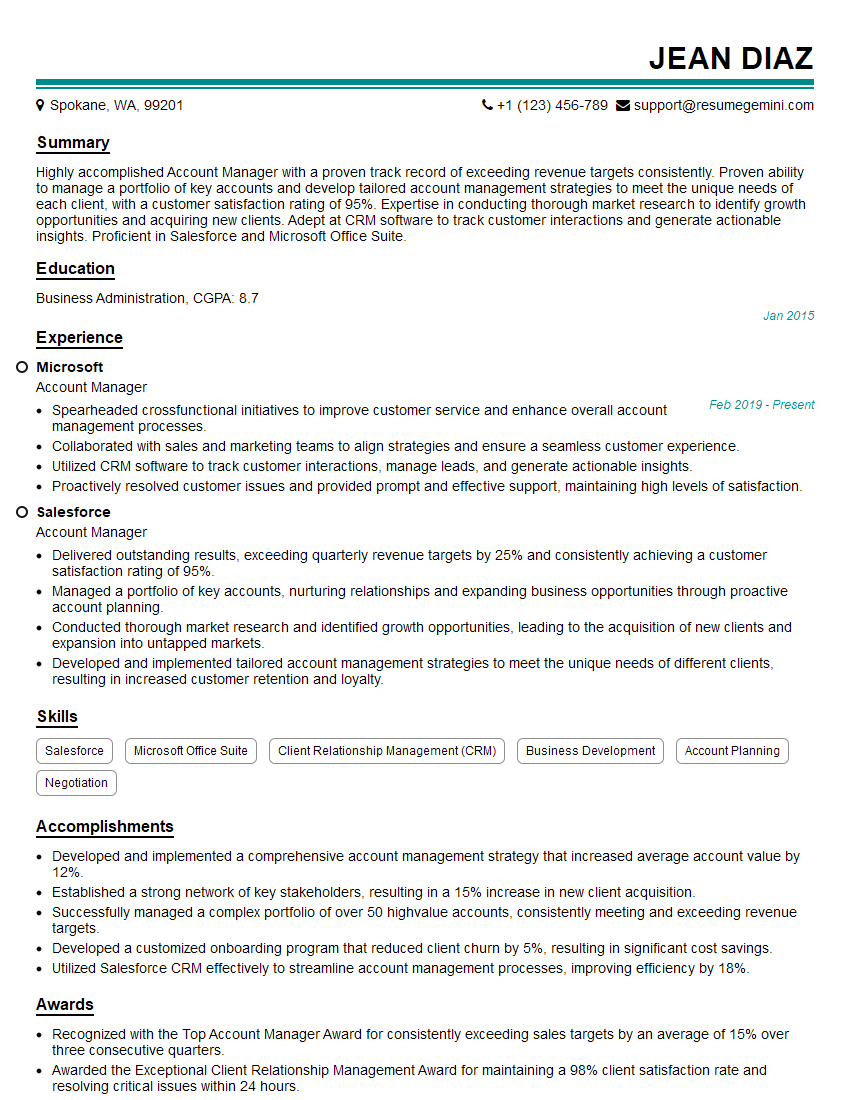
Account Manager Resume Sample

Customer Service Manager Resume Sample
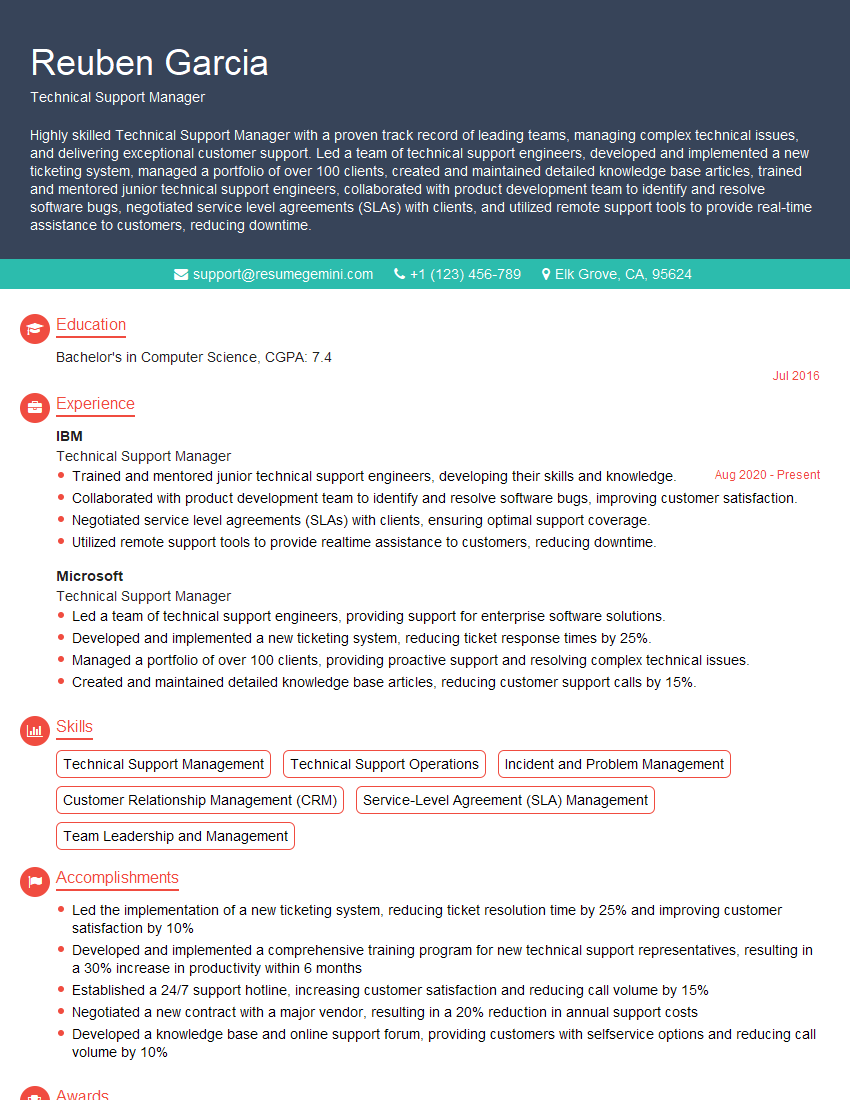
Technical Support Manager Resume Sample
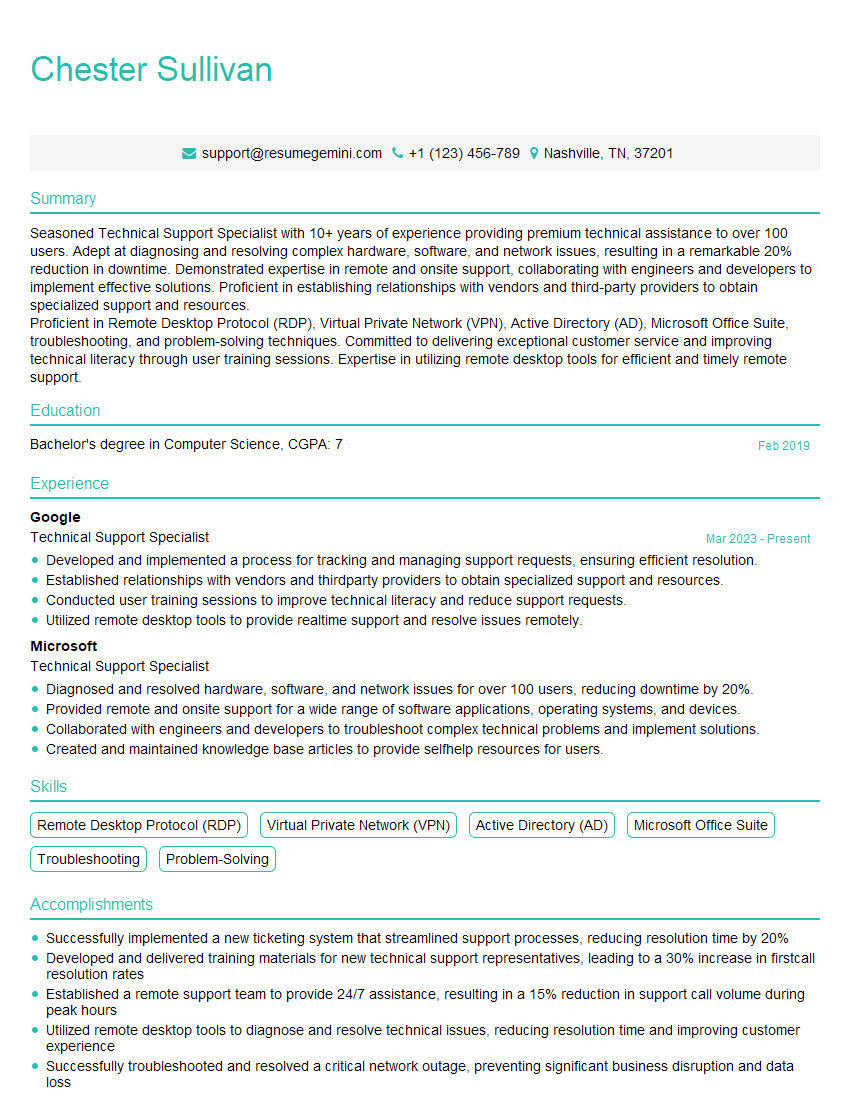
Technical Support Specialist Resume Sample
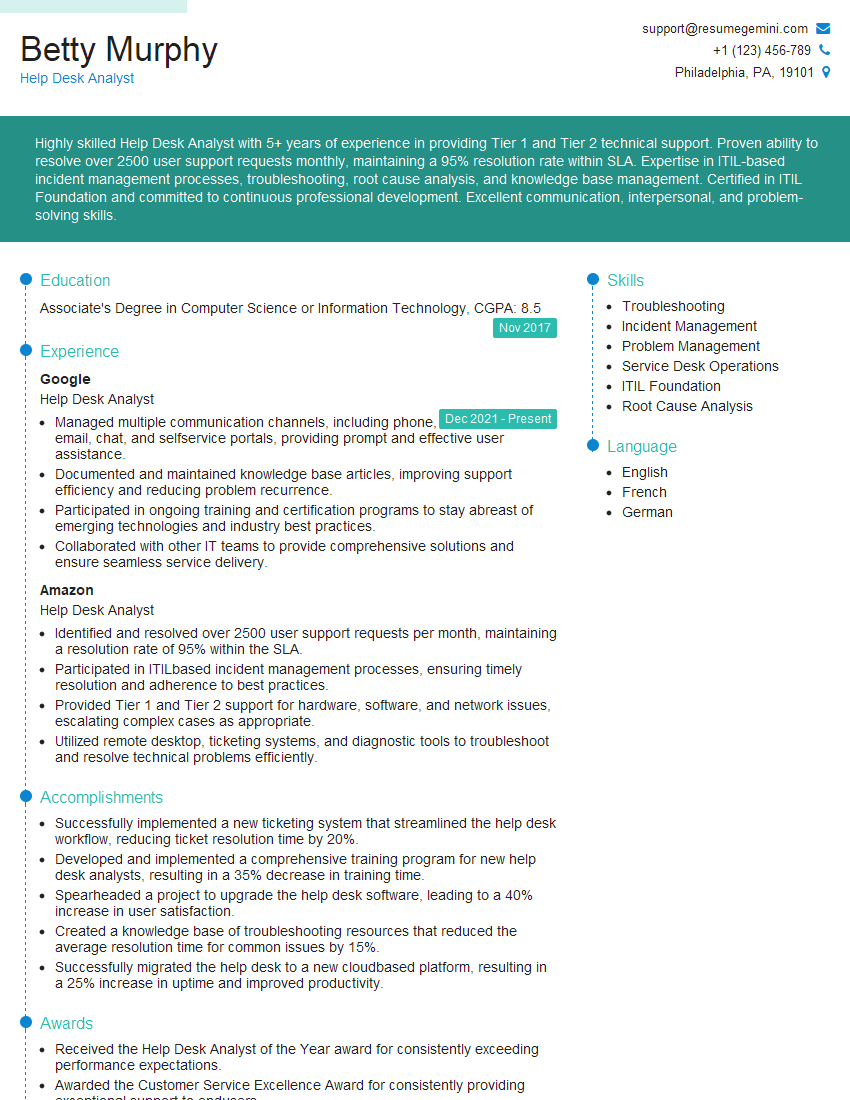
Help Desk Analyst Resume Sample
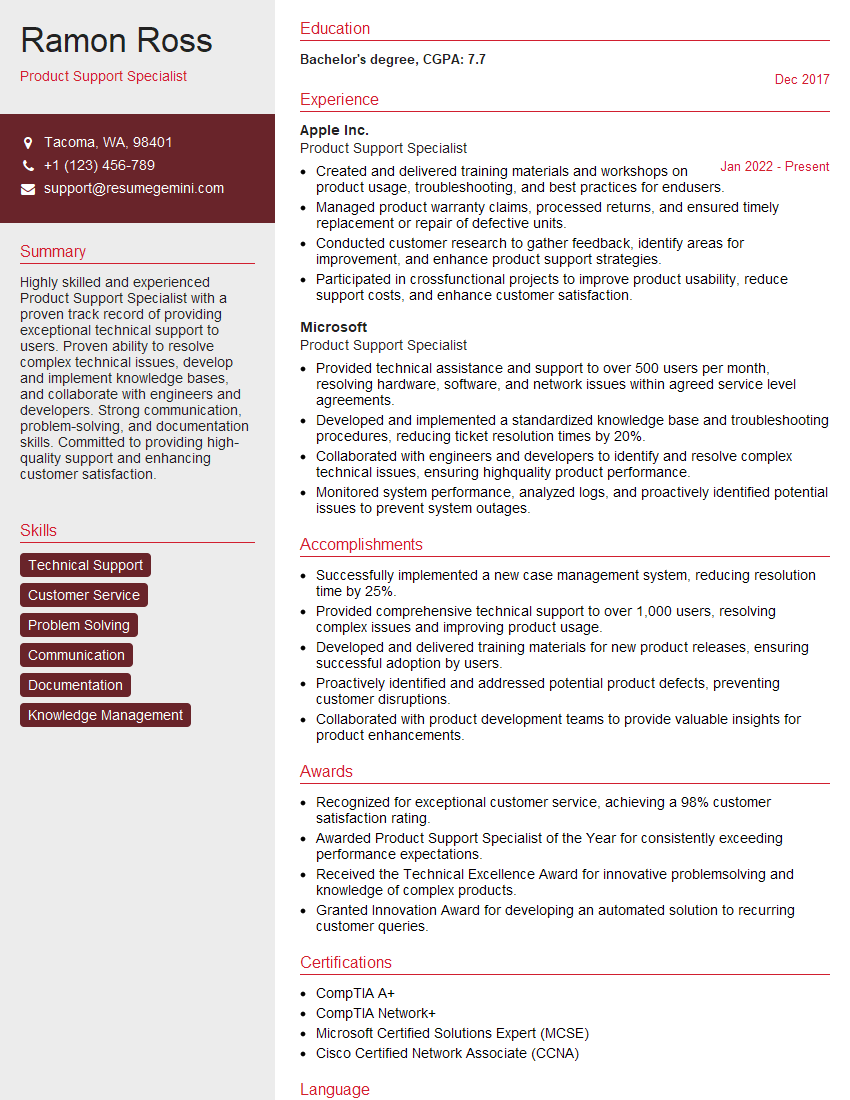
Product Support Specialist Resume Sample
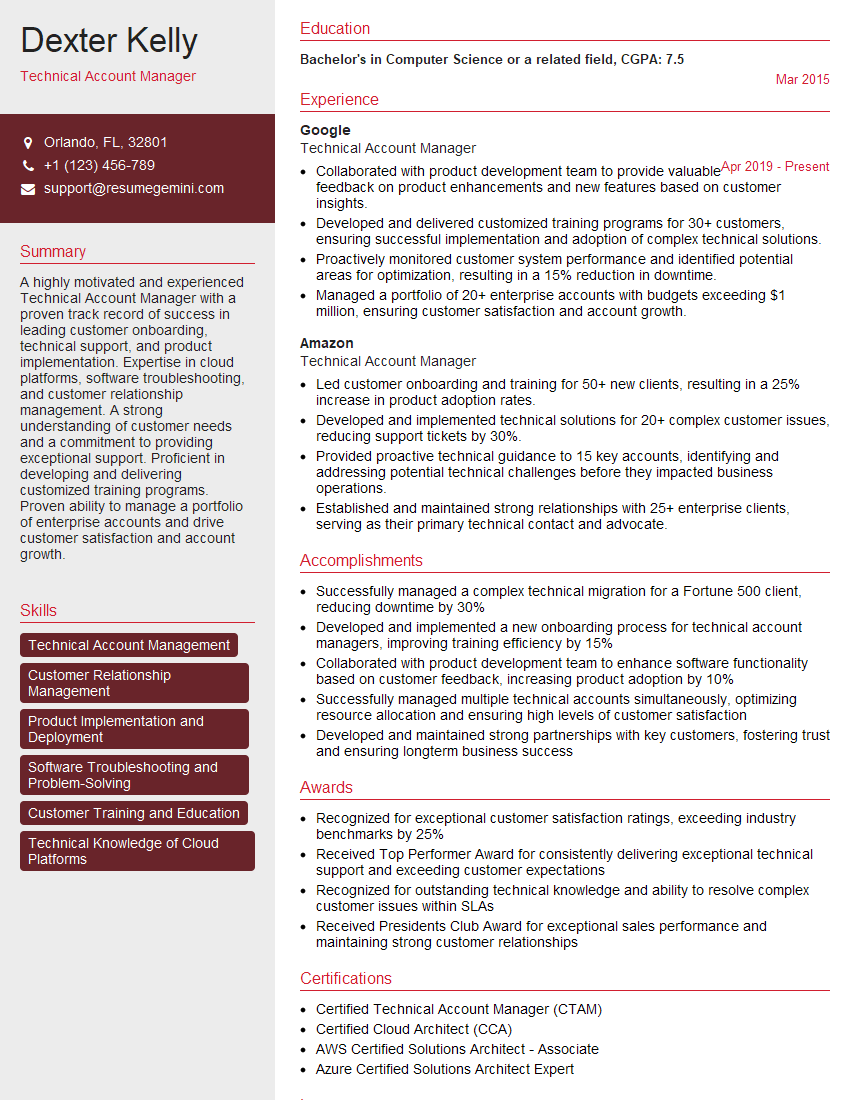
Technical Account Manager Resume Sample
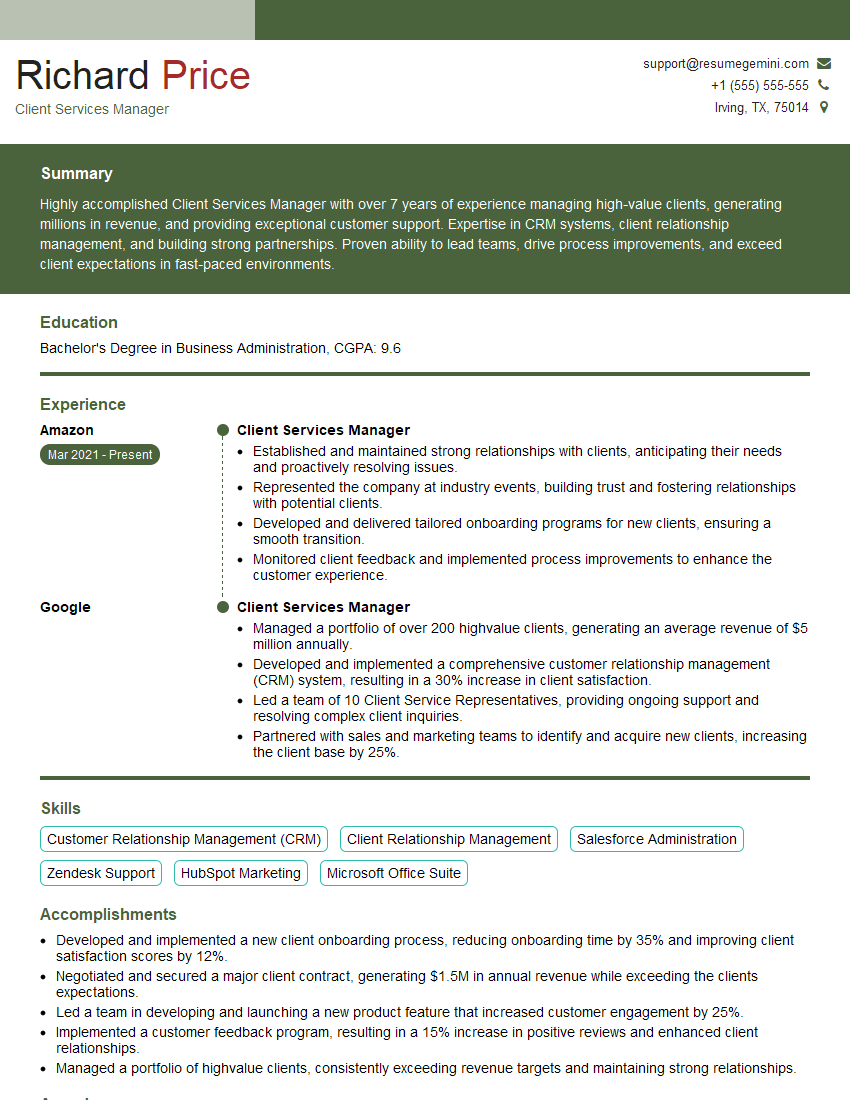
Client Services Manager Resume Sample
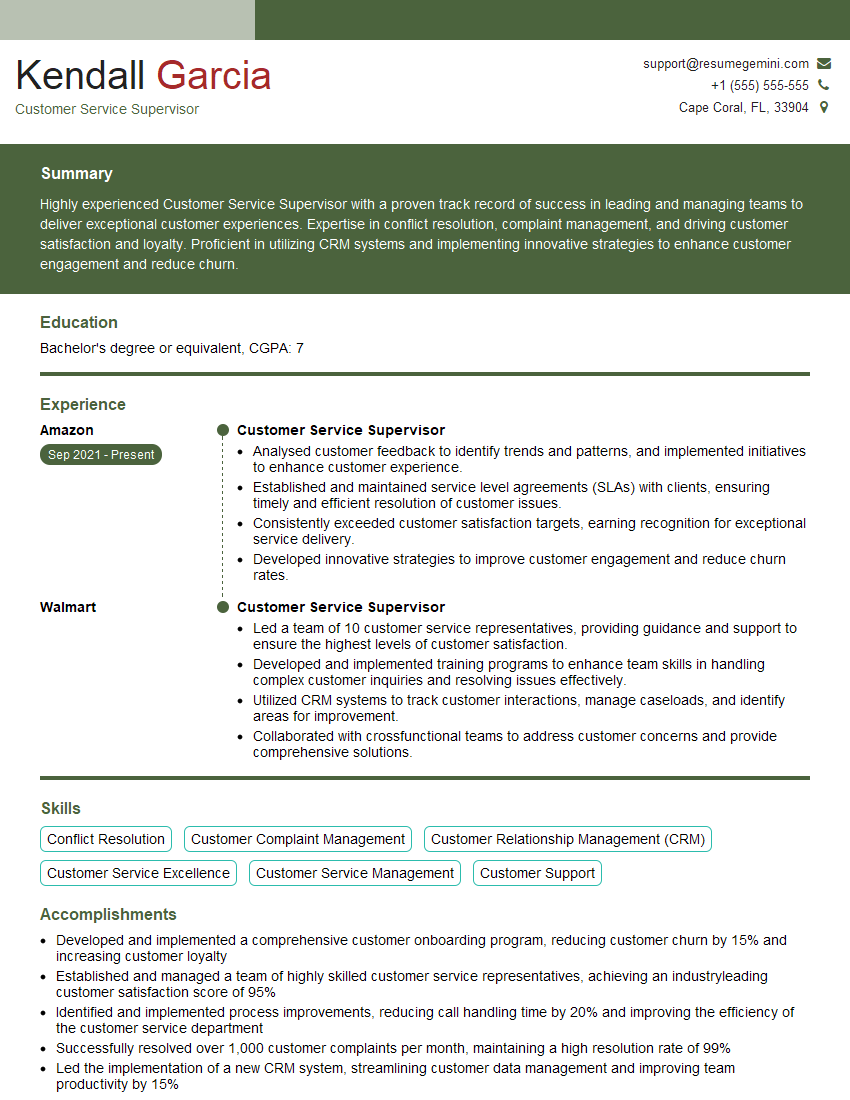
Customer Service Supervisor Resume Sample
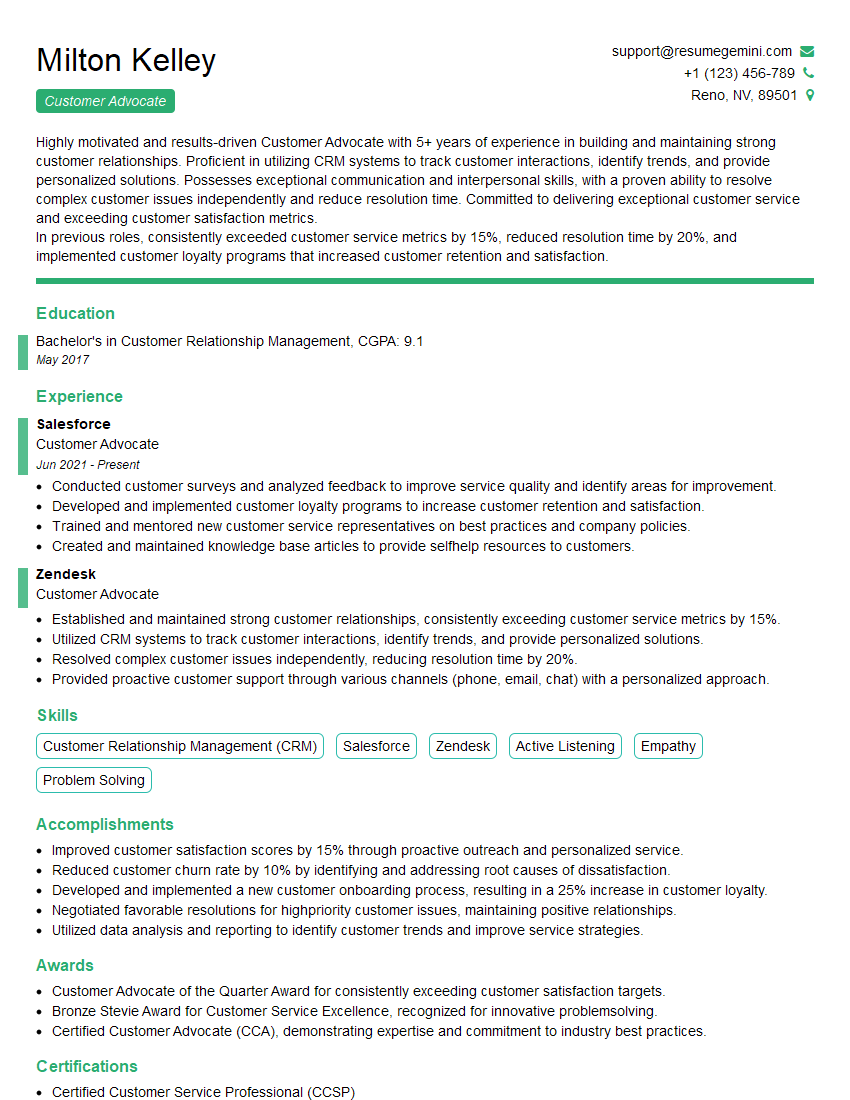
Customer Advocate Resume Sample
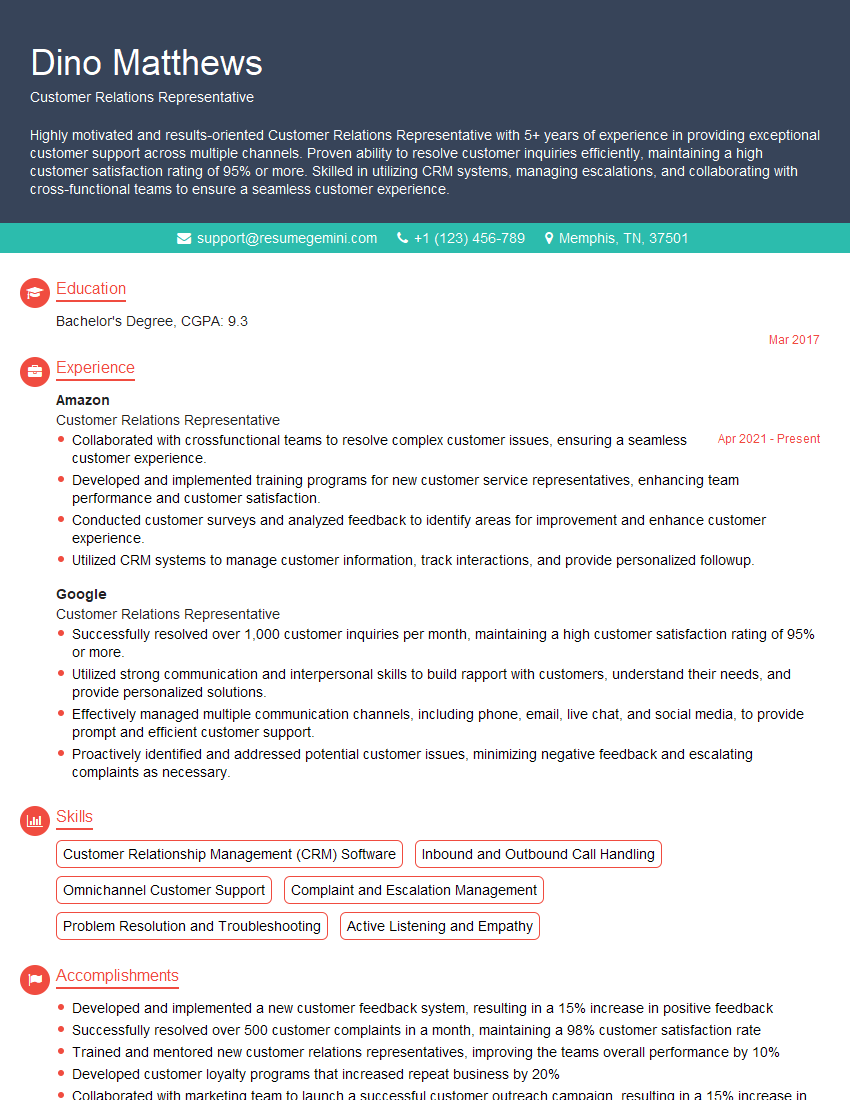
Customer Relations Representative Resume Sample
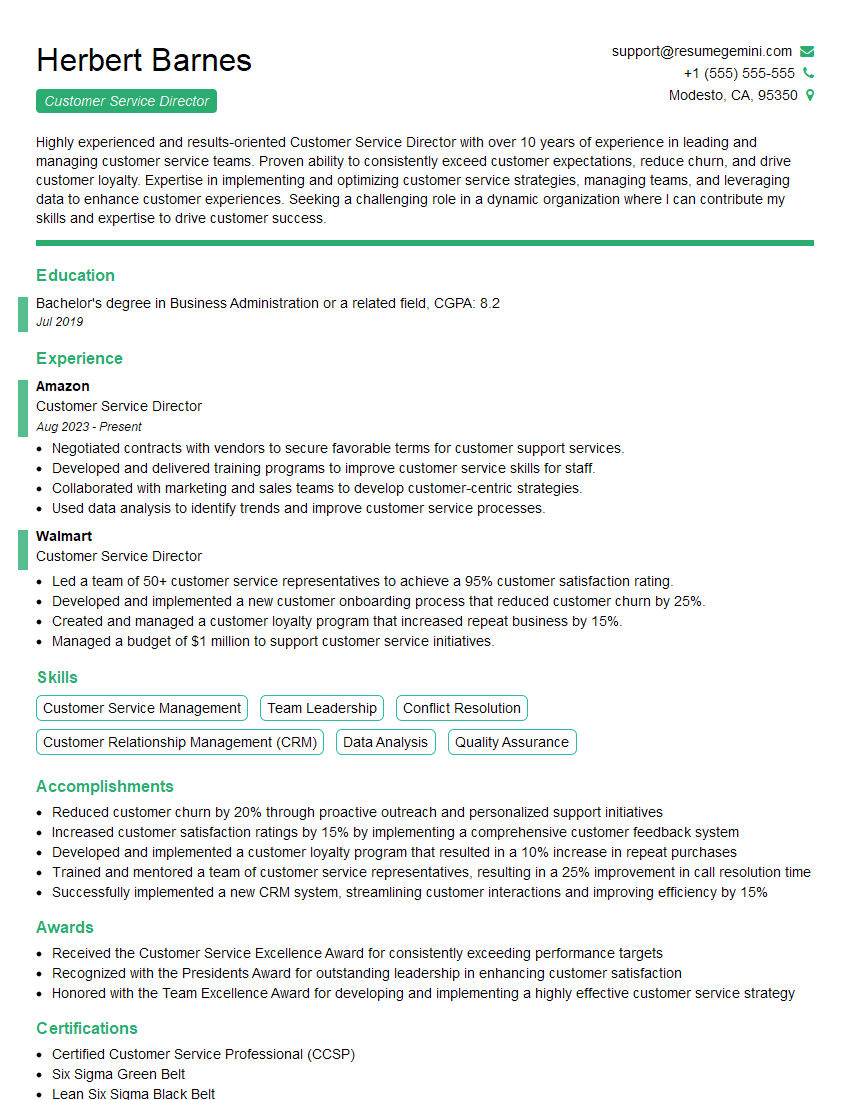
Customer Service Director Resume Sample
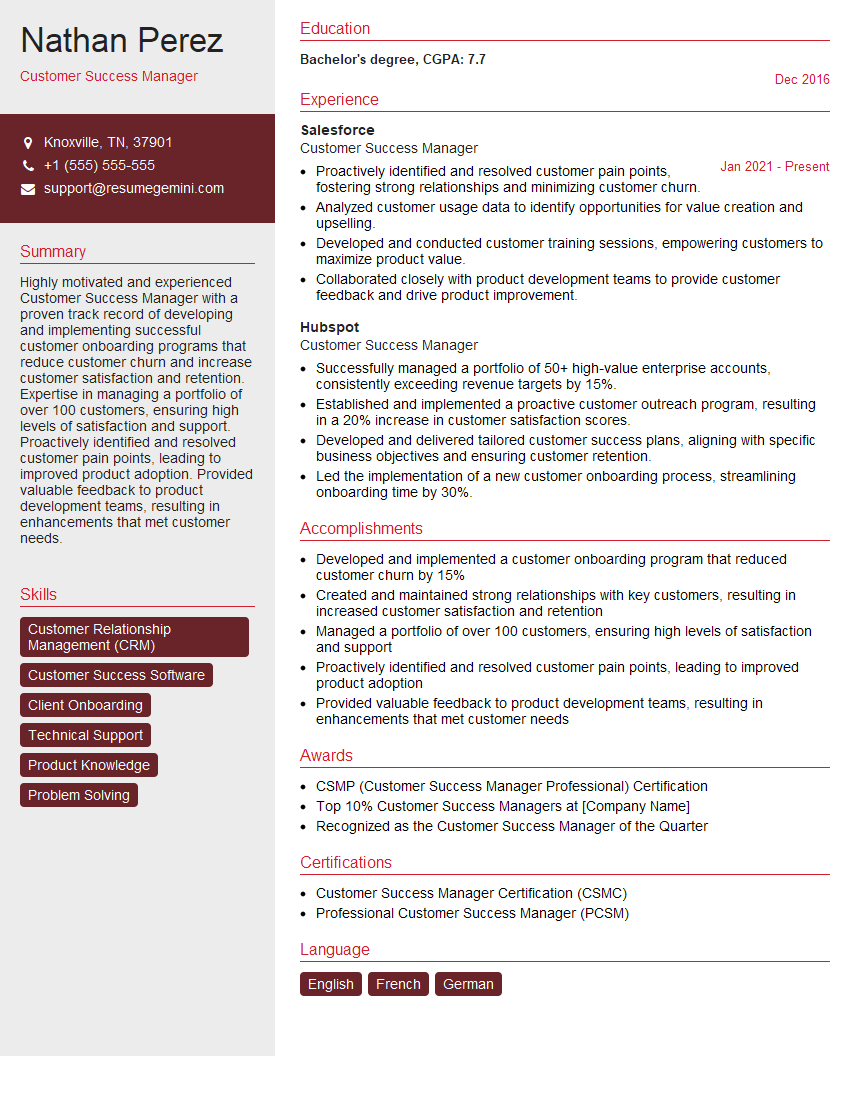
Customer Success Manager Resume Sample
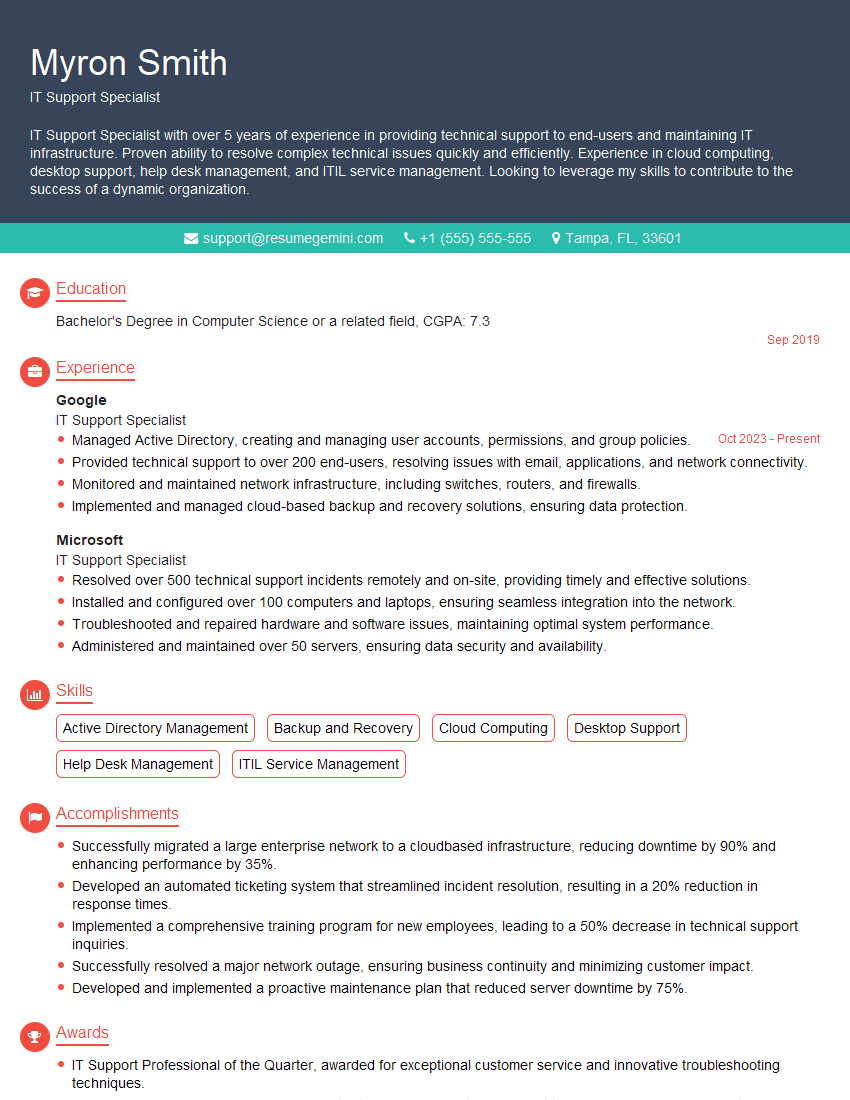
IT Support Specialist Resume Sample
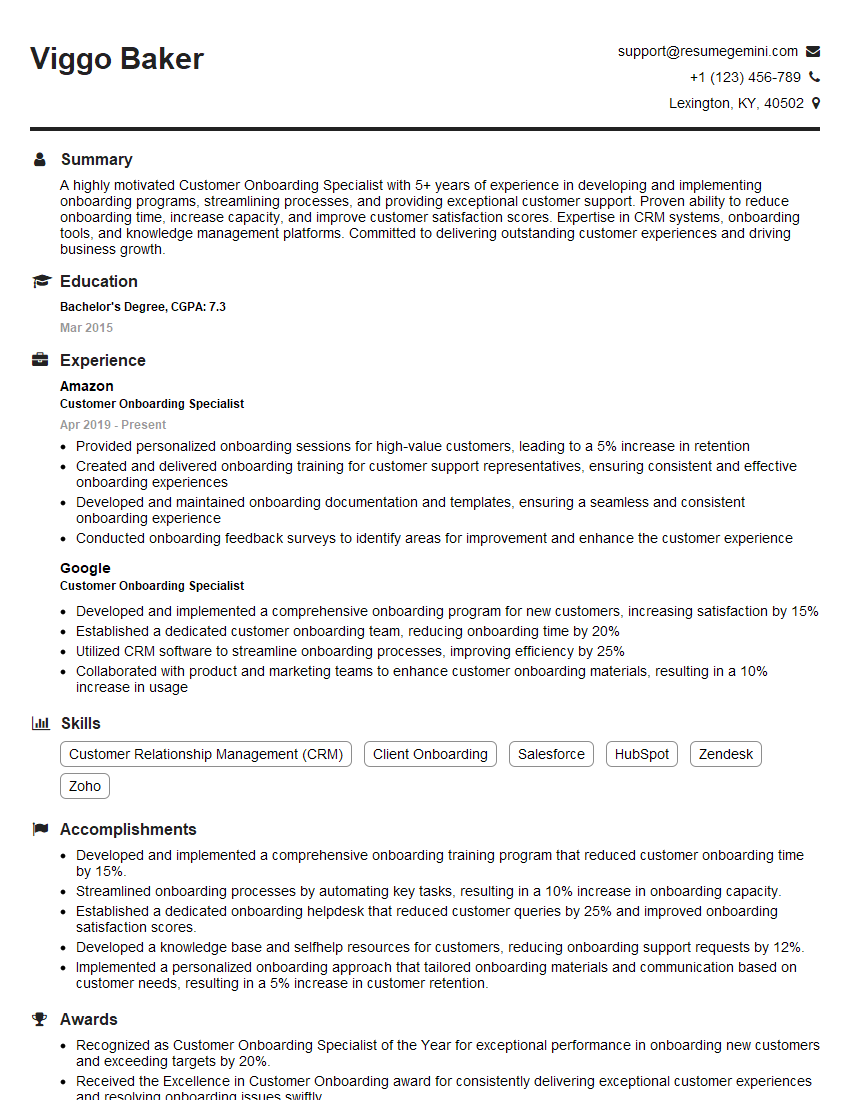
Customer Onboarding Specialist Resume Sample
- Account Manager
- Customer Service Manager
- Technical Support Manager
- Technical Support Specialist
- Help Desk Analyst
- Product Support Specialist
- Technical Account Manager
- Client Services Manager
- Customer Service Supervisor
- Customer Advocate
- Customer Relations Representative
- Customer Service Director
- Customer Success Manager
- IT Support Specialist
- Customer Onboarding Specialist
Explore more articles
Users Rating of Our Blogs
Share Your Experience
We value your feedback! Please rate our content and share your thoughts (optional).
What Readers Say About Our Blog
To the interviewgemini.com Webmaster.
Very helpful and content specific questions to help prepare me for my interview!
Thank you
To the interviewgemini.com Webmaster.
This was kind of a unique content I found around the specialized skills. Very helpful questions and good detailed answers.
Very Helpful blog, thank you Interviewgemini team.