Interviews are opportunities to demonstrate your expertise, and this guide is here to help you shine. Explore the essential Rafter Cutting interview questions that employers frequently ask, paired with strategies for crafting responses that set you apart from the competition.
Questions Asked in Rafter Cutting Interview
Q 1. Explain the different types of rafters used in construction.
Rafters are structural members that support a roof’s weight. Several types exist, each suited to different architectural styles and load requirements. Common types include:
- Common Rafters: These are the simplest type, running from the ridge to the outer wall. They’re ideal for simple gable roofs.
- Hip Rafters: These run from the ridge to the corner of a hipped roof (a roof with sloping sides on all four sides). They are angled to meet at the corners.
- Valley Rafters: These are used where two sloping roof sections meet to form an internal angle (a valley). They are crucial for managing water runoff.
- Jack Rafters: Shorter rafters that run from the hip or valley rafter to the edge of the roof. They are positioned between the main rafters and help maintain consistent roof covering.
- Ridge Boards: Though not technically rafters, these horizontal members form the apex of the roof, where common and hip rafters meet. They’re essential for overall roof stability.
Choosing the right type depends heavily on the roof design. For instance, a complex mansard roof will necessitate a combination of common, hip, and valley rafters, while a simple shed roof only needs common rafters.
Q 2. Describe the process of calculating rafter length using the Pythagorean theorem.
The Pythagorean theorem (a² + b² = c²) is fundamental to calculating rafter length. ‘a’ represents the horizontal run (half the width of the building), ‘b’ represents the rise (the vertical height from the wall plate to the ridge), and ‘c’ represents the rafter length (the hypotenuse).
Example: Let’s say a building is 20 feet wide, and the roof rise is 6 feet.
- Run (a): 20 feet / 2 = 10 feet
- Rise (b): 6 feet
- Rafter Length (c): √(10² + 6²) = √(100 + 36) = √136 ≈ 11.66 feet
This calculation provides the length of a single rafter. Remember to account for overhang and bird’s mouth cuts, which will add to the total length of the lumber needed. Using a construction calculator or specialized software can simplify this process, but understanding the underlying principle is crucial for accurate estimations.
Q 3. How do you account for roof pitch when cutting rafters?
Roof pitch, expressed as a ratio (e.g., 5:12, meaning 5 inches of rise for every 12 inches of run), directly impacts rafter angles. The steeper the pitch, the steeper the rafter angle. This angle needs to be precisely transferred to the rafter cuts.
A speed square or rafter square is invaluable for this process. These tools have markings that correspond to different pitches, allowing you to accurately set the angle for the birdsmouth and plumb cuts. The angle determined by the pitch will also dictate the angle of the cuts you make to create the correct slope on the roof. Always double-check your angle and measurements before making any cuts.
Failing to account for pitch will lead to rafters that are incorrectly angled, resulting in an uneven roof and potential structural issues.
Q 4. What are common mistakes to avoid when cutting rafters?
Several common mistakes plague rafter cutting. Avoiding these pitfalls ensures a structurally sound roof.
- Inaccurate Measurements: Careless measuring leads to improperly sized rafters, impacting roof alignment and stability.
- Incorrect Angle Cuts: Using the wrong angle for the plumb cut or birdsmouth results in a poorly fitting rafter, creating gaps or overhang issues.
- Neglecting Overhang: Forgetting to account for roof overhang results in rafters that are too short, leaving the edge of the roof vulnerable to the elements.
- Improper Bird’s Mouth Cut: A badly cut birdsmouth will fail to properly seat the rafter on the wall plate, leading to instability.
- Ignoring Plumb Cut: Failing to account for the plumb cut (the vertical cut along the top of the rafter) will lead to the rafter not being perfectly aligned with the roof’s slope.
Using accurate tools, taking your time, and meticulously double-checking measurements are essential to avoiding these mistakes. Always remember that a small error in cutting rafters can have significant consequences for the entire roof structure.
Q 5. Explain the importance of accurate measurements in rafter cutting.
Accurate measurements are paramount in rafter cutting; they’re the foundation of a structurally sound and aesthetically pleasing roof. Even small errors can accumulate and lead to significant problems.
Consequences of Inaccurate Measurements:
- Uneven Roofline: Inconsistent rafter lengths create an uneven roofline, impacting both the appearance and the structural integrity.
- Roof Leaks: Improperly fitting rafters can create gaps that compromise the roof’s weather resistance, leading to leaks and water damage.
- Structural Instability: Rafters that are not properly aligned and spaced can weaken the entire roof structure, potentially leading to collapse.
Investing time in precise measurement ensures the roof’s longevity, safety, and aesthetic appeal. It is much easier and cheaper to remedy measuring errors before a roof is built.
Q 6. How do you ensure the proper alignment and spacing of rafters?
Proper alignment and spacing of rafters are vital for a stable and efficient roof. Here’s how to achieve this:
- Use a Level: Ensure the wall plates are perfectly level before starting. This provides a consistent base for rafter placement.
- Spacing: Maintain consistent spacing between rafters based on the design and building codes. This distributes the load evenly.
- Layout Lines: Use chalk lines on the wall plates to guide rafter placement and ensure consistent spacing. This helps maintain straight and parallel rafters.
- Temporary Bracing: Temporarily brace rafters until the sheathing is installed. This prevents them from shifting and maintaining the layout.
- Ridge Board Alignment: The ridge board must be perfectly aligned and level to ensure all rafters are aligned correctly.
Precise layout and bracing are critical for a roof that’s not only structurally sound but also visually appealing. A roof with uneven spacing or misaligned rafters looks unprofessional and increases the risks of structural issues.
Q 7. Describe different methods for cutting rafter birdsmouths.
The birdsmouth is the notched cut at the bottom of a rafter that sits on the wall plate. Several methods exist for cutting it:
- Using a Speed Square and Saw: This is a common method, using a speed square to mark the angles and a saw to cut them. It requires precision in marking and cutting.
- Using a Circular Saw and Jig: A jig simplifies the process by providing a template for consistent cuts. This improves accuracy, especially when cutting multiple rafters.
- Using a Chop Saw (Mitre Saw): This power tool allows for quick and precise cuts, ideal for large-scale projects, though requires some setup.
- Using a Rafter Table or Cutting Station: Some advanced setups utilize specialized tables or stations, providing a mechanized and efficient method of cutting birdsmouths.
Regardless of the method, the key is to ensure that the birdsmouth accurately fits the wall plate, providing a secure and stable base for the rafter. The accuracy of this cut is critical to the overall integrity of the roof structure.
Q 8. How do you handle different roof pitches and complexities?
Handling varying roof pitches and complexities in rafter cutting requires a thorough understanding of geometry and trigonometry. The steeper the pitch, the more acute the angles become, demanding precise calculations and cuts. I approach this by first carefully reviewing the architectural plans to determine the roof pitch (usually expressed as a ratio, like 7/12, meaning a 7-inch rise for every 12-inch run). Then, I use this information to calculate the necessary angles for the rafters using a combination of speed square, calculators, and specialized rafter framing squares. For complex roofs with hips, valleys, and dormers, I break down the project into smaller, manageable sections, focusing on one area at a time. This includes carefully laying out the rafters on a flat surface before making any cuts to ensure accuracy and minimize waste. For example, on a recent project with a complex gambrel roof, I started by calculating the angles for the common rafters, then moved on to the hip and valley rafters, using the appropriate techniques for each. This methodical approach ensures accurate cuts and a structurally sound roof.
Q 9. Explain the use of a speed square in rafter cutting.
A speed square is an indispensable tool in rafter cutting. It’s essentially a combination square with a built-in protractor, allowing for quick and accurate marking of angles. Its primary use lies in finding and marking the plumb cut (the angle cut at the top of the rafter to meet the ridge board) and the birdsmouth cut (the angled cut at the bottom of the rafter that sits on the wall plate). For example, if the roof pitch is 7/12, you’d use the speed square to locate the 7/12 pitch mark on the square’s scale and use it as a guide to mark the plumb cut on the rafter. The birdsmouth cut is typically a 45-degree angle or another calculated angle depending on the wall plate design. The speed square also helps in marking other crucial cuts like the seat cut (allowing the rafter to rest on the wall plate) and the heel cut (the end cut of the rafter). Accurate use of the speed square directly translates to properly fitting and structurally sound rafters.
Q 10. What safety precautions are essential when working with rafters?
Safety is paramount when working with rafters. This begins with appropriate personal protective equipment (PPE), including safety glasses or a face shield to protect against flying debris, hearing protection when using power tools, and work gloves to prevent cuts and splinters. Working at heights requires fall protection, such as harnesses and lifelines, especially for steeper roofs. Proper handling of power tools is critical; ensuring they’re in good working order, using them according to manufacturer instructions, and maintaining a secure footing are essential. Additionally, never work alone; always have a spotter or colleague nearby, especially when dealing with heavy timbers. Furthermore, being mindful of overhead obstructions and potential hazards in the workspace is crucial for preventing accidents. Clear communication and planning are paramount in maintaining a safe work environment.
Q 11. How do you deal with different types of wood when cutting rafters?
Different types of wood have varying properties affecting rafter cutting. Some, like Douglas fir, are strong and durable but can be more difficult to cut precisely, demanding sharp tools and careful technique. Softer woods, like pine, are easier to work with but might require more attention to ensure they don’t splinter or break. Before cutting, I carefully assess the wood’s grain and knots, planning the cuts to minimize stress and potential weaknesses. Harder woods might require slower, more deliberate cutting, while softer woods may be susceptible to tear-out, necessitating the use of a sharp blade and possibly a backer board to support the wood during cutting. I also consider the wood’s moisture content, as damp wood can be more challenging to work with and prone to warping. Choosing the right saw blade for the specific wood type is crucial for achieving clean, accurate cuts.
Q 12. Explain your experience with various rafter designs (e.g., hip, valley, gable).
My experience encompasses a wide range of rafter designs. Gable roofs, with their simple, triangular shape, form the basis of understanding. I’ve worked extensively on these, mastering the accurate calculation and cutting of common rafters. Hip and valley rafters pose greater challenges due to their angled intersections. I’ve handled the intricate calculations required for these, employing techniques like the use of rafter framing squares and specialized software to ensure precise angles. My experience also extends to more complex designs such as gambrel and mansard roofs, which involve multiple pitches and require a deeper understanding of geometry and structural principles. Each design requires a distinct approach, careful planning, and a meticulous eye for detail. For instance, working on a recent hip roof project, I had to carefully consider the intersection of multiple rafters to ensure water runoff and structural integrity. The experience provided a deeper appreciation for the importance of meticulous planning and execution in such complex designs.
Q 13. Describe your experience using different cutting tools (e.g., saws, power tools).
My tool proficiency covers a range from traditional hand saws to modern power tools. Hand saws, while requiring more physical effort, offer precise control, especially in tight spaces. Power miter saws provide speed and efficiency for repetitive cuts, but demand caution to avoid kickback and ensure accurate angle settings. Circular saws are versatile for on-site cuts, but require careful handling to achieve straight, clean cuts. I use a combination of tools depending on the project. For instance, on a recent project involving intricate cuts on a Victorian-style roof, I used a hand saw for the fine details and a power miter saw for the repetitive cuts on common rafters. The correct tool selection depends greatly on the project’s scope, the wood’s properties, and the required precision. Safety practices are always paramount regardless of the tool used.
Q 14. How do you interpret architectural drawings to determine rafter cuts?
Interpreting architectural drawings is the foundation of accurate rafter cutting. I begin by carefully reviewing the plan’s details, focusing on dimensions, roof pitch, and any special features. The roof plan typically provides crucial information like the overall dimensions, the number of rafters, and the location of hips, valleys, and ridges. Section views provide critical details on rafter lengths and angles. I use this information, combined with my knowledge of building codes and best practices, to create a detailed cutting list. The use of specialized software and calculators aids in precise angle calculations, especially for complex roof designs. For example, when reading blueprints with multiple valleys, I would first identify the angle of each slope and then use trigonometric functions or specialized software to calculate the proper cuts for each rafter, considering the complexities introduced by the valleys and their influence on the surrounding rafters.
Q 15. Explain the concept of plumb and level in relation to rafter installation.
Plumb and level are fundamental to accurate rafter installation. ‘Plumb’ refers to the vertical alignment; a plumb rafter is perfectly upright, perpendicular to the ground. ‘Level’ refers to the horizontal alignment; a level rafter runs parallel to the ground. Think of it like building a perfectly square house: you need both plumb and level to ensure every wall (or rafter) is in its correct position. In rafter installation, plumb ensures the rafters are properly supported and won’t sag, while level ensures the roof plane is consistent, preventing water runoff problems. We use plumb bobs and levels to check both during installation. Improper plumb can lead to uneven roofline, while improper level can lead to water pooling and potential structural damage.
Career Expert Tips:
- Ace those interviews! Prepare effectively by reviewing the Top 50 Most Common Interview Questions on ResumeGemini.
- Navigate your job search with confidence! Explore a wide range of Career Tips on ResumeGemini. Learn about common challenges and recommendations to overcome them.
- Craft the perfect resume! Master the Art of Resume Writing with ResumeGemini’s guide. Showcase your unique qualifications and achievements effectively.
- Don’t miss out on holiday savings! Build your dream resume with ResumeGemini’s ATS optimized templates.
Q 16. How do you ensure the structural integrity of a rafter system?
Structural integrity in a rafter system relies on several key aspects: proper design, correct cutting and placement of rafters, appropriate connection methods, and the use of high-quality materials. The design phase involves careful calculations to determine the correct size and spacing of rafters based on the roof’s span, slope, and anticipated snow and wind loads. Accurate cutting is crucial; even a slight error can weaken the entire system. Rafters must be securely connected to the ridge board, wall plates, and any supporting members using strong fasteners and appropriate joinery techniques. Regular inspection for any signs of damage or weakness is also vital. I always triple-check my calculations and use robust techniques like properly sized hurricane ties to guarantee a durable roof structure. For instance, on a recent project with a complex gambrel roof, I meticulously ensured all connections met or exceeded building code requirements to withstand significant wind pressures.
Q 17. Describe your experience with complex rafter layouts.
I’ve worked on numerous projects with complex rafter layouts, including hip roofs, gambrel roofs, and complex mansard roofs with varying slopes and angles. These projects necessitate a deep understanding of geometry, trigonometry, and advanced framing techniques. For example, on a recent hip roof project with multiple valleys and intersecting planes, I utilized specialized software to create accurate rafter layouts. This allowed me to prefabricate many components off-site, increasing efficiency and precision. Each cut and connection was carefully calculated and double-checked to ensure the overall structural integrity. The experience gave me the opportunity to hone my skills in creating intricate roof designs and to effectively manage large teams to achieve accurate and safe construction. I find these projects particularly rewarding because they push me to develop innovative and practical solutions.
Q 18. What are the implications of incorrect rafter cuts?
Incorrect rafter cuts have significant implications, ranging from minor aesthetic issues to major structural failures. Even slight errors in cuts can lead to uneven roof lines, making the roof look unprofessional and potentially causing water damage. More serious errors can result in rafters not properly fitting together, creating weak points within the structure and potentially leading to collapse under heavy loads (snow, wind). These issues can also cause problems with the installation of sheathing and roofing materials. In extreme cases, errors in rafter cuts could lead to the need for significant repair or even complete roof replacement, resulting in substantial cost overruns and project delays. Accuracy is paramount in rafter cutting.
Q 19. How do you handle unexpected problems during rafter installation?
Unexpected problems are an inherent part of construction. My approach involves thorough planning and preparation to minimize surprises, but when issues arise, I remain calm and systematically address them. This involves careful assessment of the situation, identifying the root cause, and devising a solution that maintains structural integrity and meets project requirements. I always document the problem and its solution, and consult with my team and, if necessary, structural engineers to ensure the correct course of action. For instance, if I encountered unexpected rotted timber, I would immediately inspect the extent of the damage, source replacement timber of equivalent quality, and carefully integrate it into the existing structure, making sure all connections were adequately strengthened.
Q 20. Describe your experience with working in teams on rafter projects.
Teamwork is crucial in rafter installation. I’ve worked on many projects requiring collaborative efforts, involving carpenters, roofers, and engineers. Effective communication and clear task assignment are key. I value open communication, where everyone feels comfortable voicing concerns and suggesting improvements. I ensure that every team member understands their role and responsibilities. I also emphasize safety protocols, ensuring everyone works safely and efficiently. A recent large-scale project involved coordinating a team of six carpenters, each responsible for a specific aspect of rafter installation. Clear communication and well-defined roles resulted in a highly efficient and safe process, finishing ahead of schedule. The key is clear, consistent communication and mutual respect amongst team members.
Q 21. How do you manage your time effectively during rafter cutting?
Effective time management in rafter cutting involves meticulous planning, precise execution, and efficient use of tools and resources. I begin by carefully reviewing blueprints and calculations to fully understand the scope of work. I then break down the project into manageable tasks, estimating the time required for each. I prioritize tasks based on their dependency and criticality. I use checklists to ensure all steps are followed meticulously. Throughout the process, I monitor progress regularly and adjust my schedule as needed to accommodate unforeseen delays. The use of prefabrication techniques, where feasible, can significantly improve efficiency. Finally, I continuously look for ways to optimize my workflow and improve my efficiency.
Q 22. Explain the process of checking rafter cuts for accuracy.
Checking rafter cuts for accuracy is paramount to a structurally sound roof. It involves a multi-step process, combining precise measurements with visual inspection. Think of it like assembling a complex jigsaw puzzle – each piece (rafter) must fit perfectly.
Pre-Cut Verification: Before any cutting, I meticulously check my calculations against the blueprints. This includes verifying the rafter length, angles (including the plumb cut, seat cut, and bird’s mouth cut), and the overall dimensions.
Using a Speed Square and Framing Square: After cutting, I use a speed square to double-check the plumb and seat cuts, ensuring they are perfectly perpendicular. The framing square helps verify the bird’s mouth cut, ensuring a precise fit onto the top plate and ridge board. Any discrepancies, even a fraction of an inch, can compromise the entire structure.
Dry Fit: Before fastening, I always perform a dry fit. This means carefully placing the rafters in their intended position without fastening to see how they fit together. This allows me to identify and correct any minor imperfections before final installation. It’s like a test run before the main event.
Measuring and Comparing: I meticulously measure the actual cut against my calculated dimensions. I use a high-quality measuring tape and make sure to check multiple points along the rafter to account for any slight warping of the lumber.
If any discrepancies are found, I carefully reassess the calculations and make the necessary adjustments. Accuracy is non-negotiable in this phase.
Q 23. How do you adapt to changing project requirements involving rafters?
Adapting to changing project requirements regarding rafters requires flexibility and problem-solving skills. Imagine you’re building with LEGOs; you might need to adapt your design mid-build to incorporate a new element. Similarly, with rafters, changes can include alterations to the roof pitch, addition of dormers, or changes in the type of roofing material.
Open Communication: The first step is clear and open communication with the architect, project manager, and other stakeholders. Understanding the reason for the change and its implications is crucial.
Recalculation and Adjustment: Once the changes are understood, I recalculate the rafter lengths, cuts, and overall design to accommodate the new requirements. This often involves using specialized software or mathematical formulas to ensure precision.
Material Adjustments: The changes might necessitate adjustments to the quantity and type of lumber required. I carefully assess the materials needed and ensure they are available before proceeding.
On-Site Adjustments: Sometimes, adjustments must be made on-site. This calls for experience and the ability to make accurate cuts and modifications while maintaining the integrity of the structure.
Throughout the process, documentation is vital. I meticulously update the plans and keep a record of all changes made, ensuring everyone is on the same page. This minimizes errors and potential rework.
Q 24. Describe your experience with different types of roofing materials and their impact on rafter design.
Different roofing materials significantly impact rafter design. Think of the rafters as the skeleton of the roof; the roofing material is the skin. The weight, dimensions, and structural properties of the roofing material will determine the rafter size, spacing, and overall design.
Asphalt Shingles: Relatively lightweight, asphalt shingles generally require less robust rafter design. The spacing between rafters can often be wider.
Tile Roofing: Much heavier than asphalt shingles, tile roofing requires stronger rafters, closer spacing, and potentially larger dimensions. The added weight needs to be supported efficiently.
Metal Roofing: Metal roofing can be relatively lightweight, but it’s crucial to account for wind uplift forces. The design should ensure the rafters are adequately anchored to resist high winds.
My experience encompasses working with various materials, including clay tile, slate, metal panels, and synthetic roofing materials. This understanding allows me to choose the appropriate rafter size, spacing, and connection methods to ensure the roof is both structurally sound and aesthetically pleasing, while aligning with building codes and best practices.
Q 25. How do you ensure the proper connection between rafters and other structural members?
Proper connection between rafters and other structural members is critical for the overall stability of the roof. It’s like the joints in your body; strong, stable joints are essential for movement and support. Weak joints can lead to structural failures.
Ridge Board Connection: Rafters are typically connected to the ridge board using a variety of techniques, including toenailing, using metal connectors, or a combination of both. The method used depends on the size and type of lumber and the overall design of the roof.
Wall Plate Connection: The connection to the wall plates (the horizontal members that sit atop the walls) is crucial. This is usually achieved using a bird’s mouth cut, allowing the rafters to rest securely on the wall plates. This connection needs to transfer loads effectively.
Collar Ties and Ceiling Joists: In larger spans, collar ties and ceiling joists work in conjunction with rafters to provide additional support and prevent sagging. These components are strategically placed to enhance the overall structural stability.
Metal Connectors: Modern construction often employs metal connectors to enhance the strength and stability of the connections between rafters and other structural elements. These connectors significantly improve load transfer capabilities.
I always choose appropriate connection methods based on the specific project requirements, load calculations, and building codes, ensuring structural integrity and durability.
Q 26. Explain the importance of using proper fastening techniques for rafters.
Proper fastening techniques for rafters are vital for the long-term stability and safety of the roof. Think of it as the glue that holds the entire structure together. Inadequate fastening can lead to catastrophic failure, especially during extreme weather conditions.
Nail Size and Placement: The size and number of nails used should be appropriate for the size of the lumber and the anticipated loads. Nails must be driven straight to avoid splitting the lumber and compromising the connection.
Using appropriate fasteners: Beyond nails, I often use hurricane ties, joist hangers, and other specialized fasteners depending on the design and building code requirements. These modern fasteners ensure a superior level of connection strength and stability.
Spacing and Pattern: Nails should be evenly spaced and arranged in a pattern that distributes the load effectively. This prevents stress concentration in a single point.
Proper Hammering Technique: Even the way you hammer can make a difference. Consistent, controlled hammering prevents bending or damaging the nails.
My experience ensures I select the right fasteners and employ proper fastening techniques, adhering to building codes and best practices to create a structurally safe and durable roof.
Q 27. Describe your experience with troubleshooting rafter issues on a construction site.
Troubleshooting rafter issues on a construction site often requires a systematic approach, combining experience and problem-solving skills. It’s like being a detective, identifying the cause and finding the solution.
Visual Inspection: I start with a thorough visual inspection, looking for signs of damage, improper connections, or deviations from the plans. This often reveals the root cause.
Measuring and Analysis: Precise measurements are taken to identify any discrepancies in rafter lengths, angles, or spacing. This allows me to pinpoint deviations from the original design.
Load Calculations: If the problem is related to excessive loading, I might need to perform load calculations to verify the structural capacity of the existing system.
Collaboration: I collaborate with architects, engineers, and other members of the construction team to assess the situation and determine the best course of action.
Corrective Actions: Corrective actions can range from minor adjustments like replacing a faulty rafter to more extensive work such as modifying the entire rafter system. The solution is always tailored to the specific problem. Safety is the primary concern during this process.
One example is a project where improperly installed rafters were causing sagging. By carefully investigating, I identified the problem – inadequate fastening. The solution was to reinforce the existing connections using hurricane ties and additional nails, resulting in a strengthened and stable roof system. Documentation of the solution and approval from relevant parties is crucial.
Key Topics to Learn for Your Rafter Cutting Interview
- Understanding Rafter Geometry: Mastering the principles of right-angled triangles, including Pythagorean theorem and trigonometric functions, is crucial for accurate calculations.
- Common Rafter Cuts: Become proficient in identifying and executing various cuts, such as bird’s mouth cuts, plumb cuts, and seat cuts. Understand the implications of different roof pitches and styles.
- Calculating Rafter Lengths: Practice calculating the length of rafters based on roof span, rise, and run. Be comfortable using both traditional methods and modern digital tools.
- Understanding Hip and Valley Rafters: Learn how to calculate and cut rafters for complex roof designs involving hips and valleys. This demonstrates advanced problem-solving skills.
- Practical Application: Familiarize yourself with various construction techniques and scenarios where accurate rafter cutting is essential. Consider common challenges and solutions.
- Material Selection and Considerations: Understand the properties of different lumber types and their suitability for rafter construction. Discuss factors like moisture content and structural integrity.
- Safety Procedures: Highlight your understanding of safe working practices when using power tools and handling lumber. This demonstrates responsibility and professionalism.
- Problem-Solving and Troubleshooting: Be prepared to discuss how you would approach common problems encountered during rafter cutting, such as inaccurate measurements or material defects.
Next Steps
Mastering rafter cutting is a highly valuable skill, opening doors to exciting opportunities in construction and carpentry. A strong understanding of these principles will significantly enhance your career prospects and showcase your expertise to potential employers. To make sure your qualifications shine, creating a professional, ATS-friendly resume is critical. ResumeGemini is a trusted resource to help you build a compelling resume that highlights your skills effectively. Examples of resumes tailored to the Rafter Cutting field are available to help guide you.
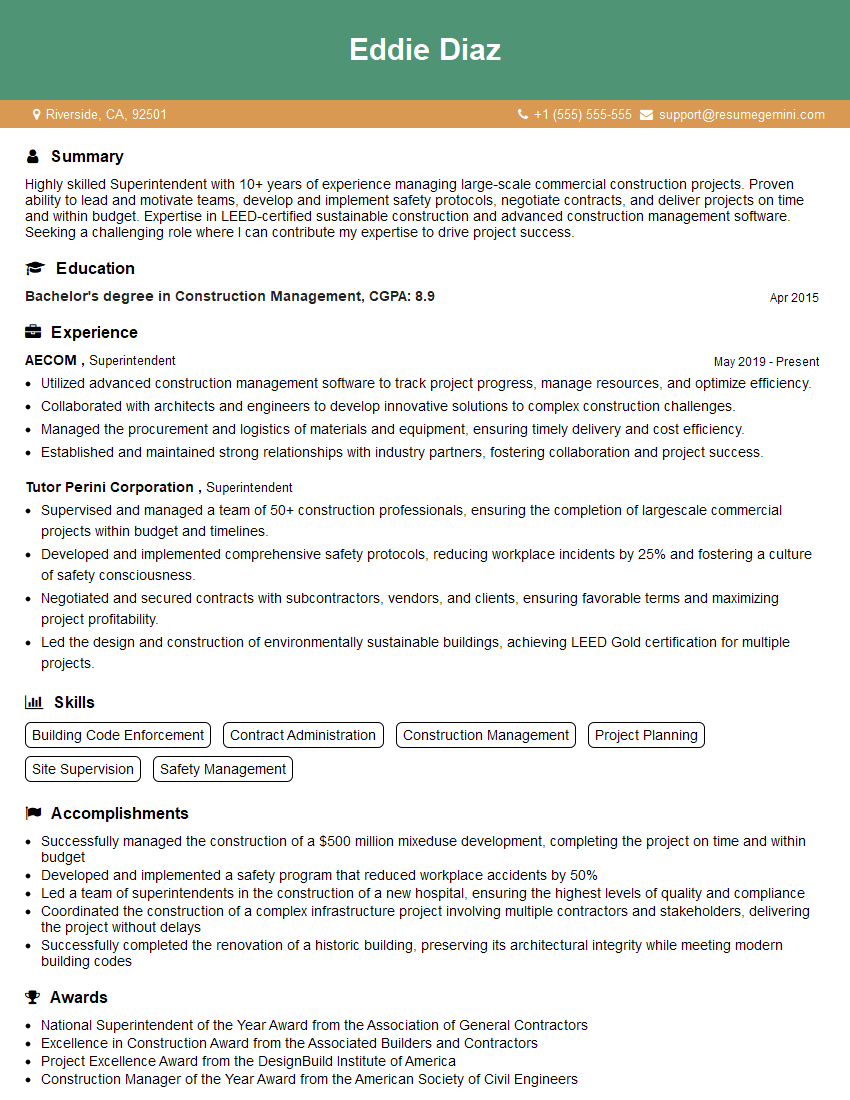
Superintendent Resume Sample
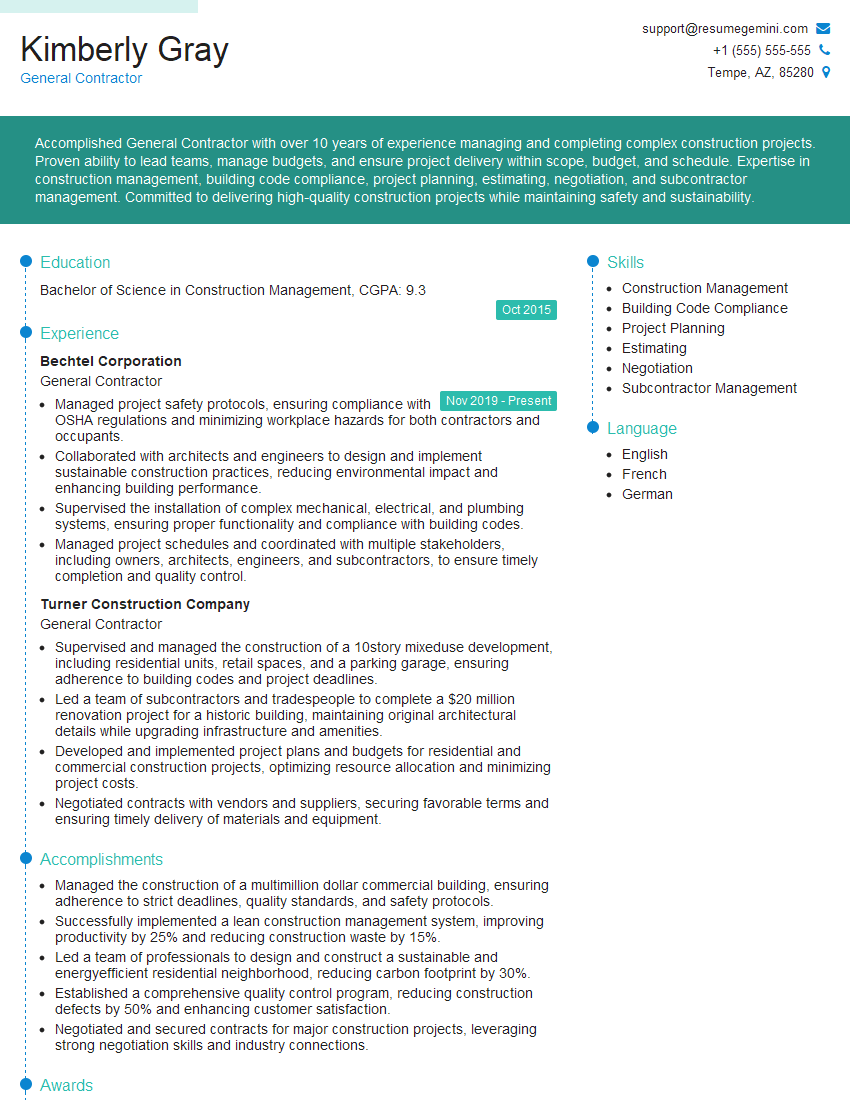
General Contractor Resume Sample
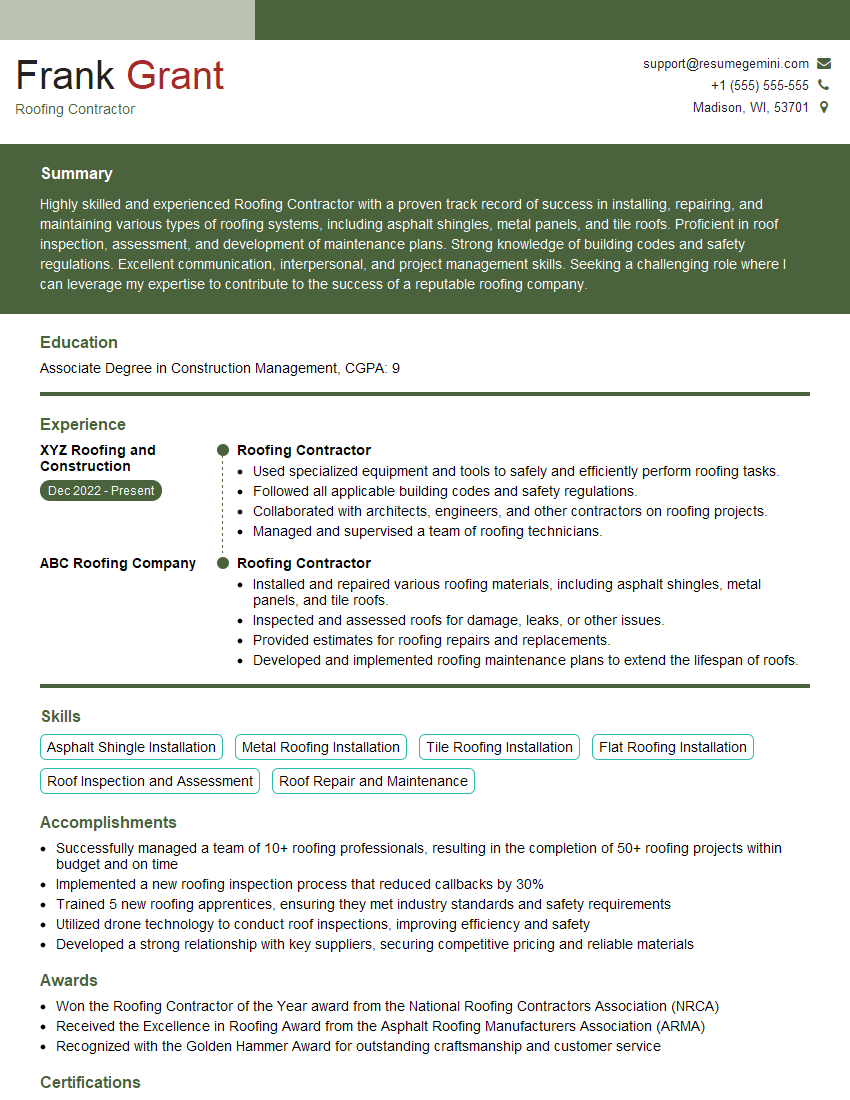
Roofing Contractor Resume Sample
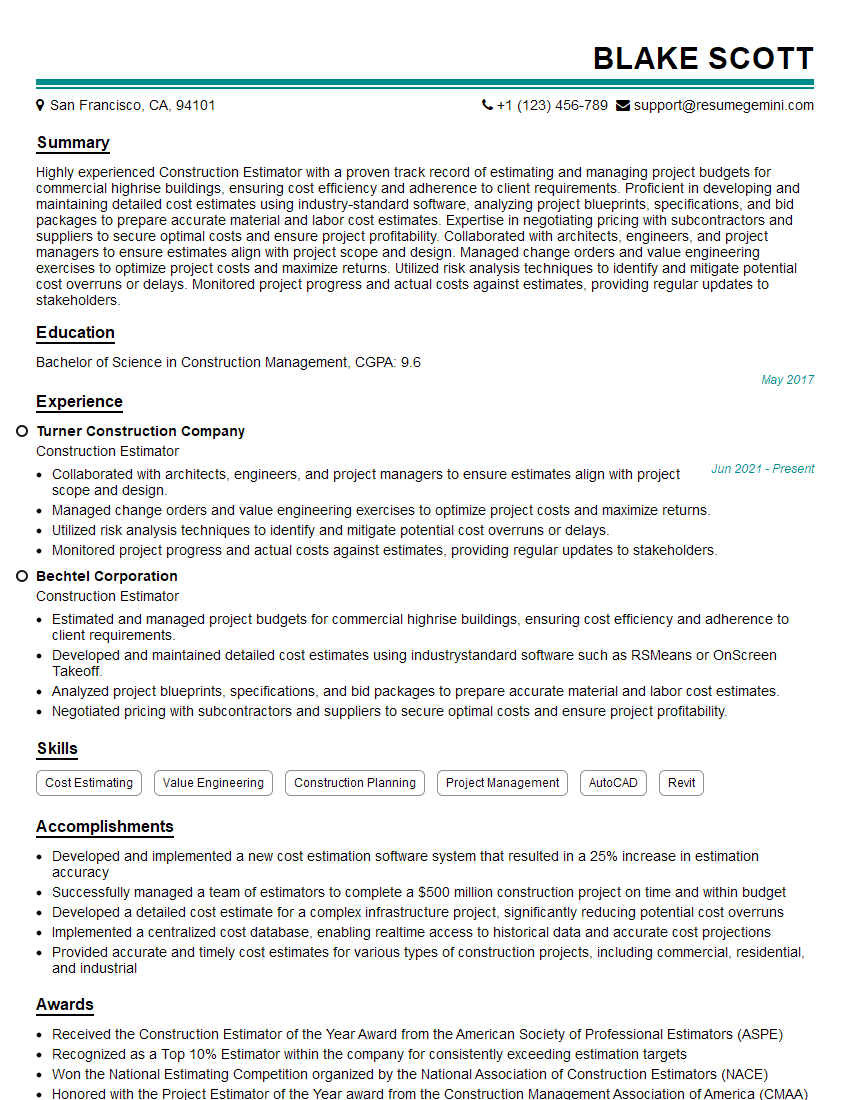
Construction Estimator Resume Sample
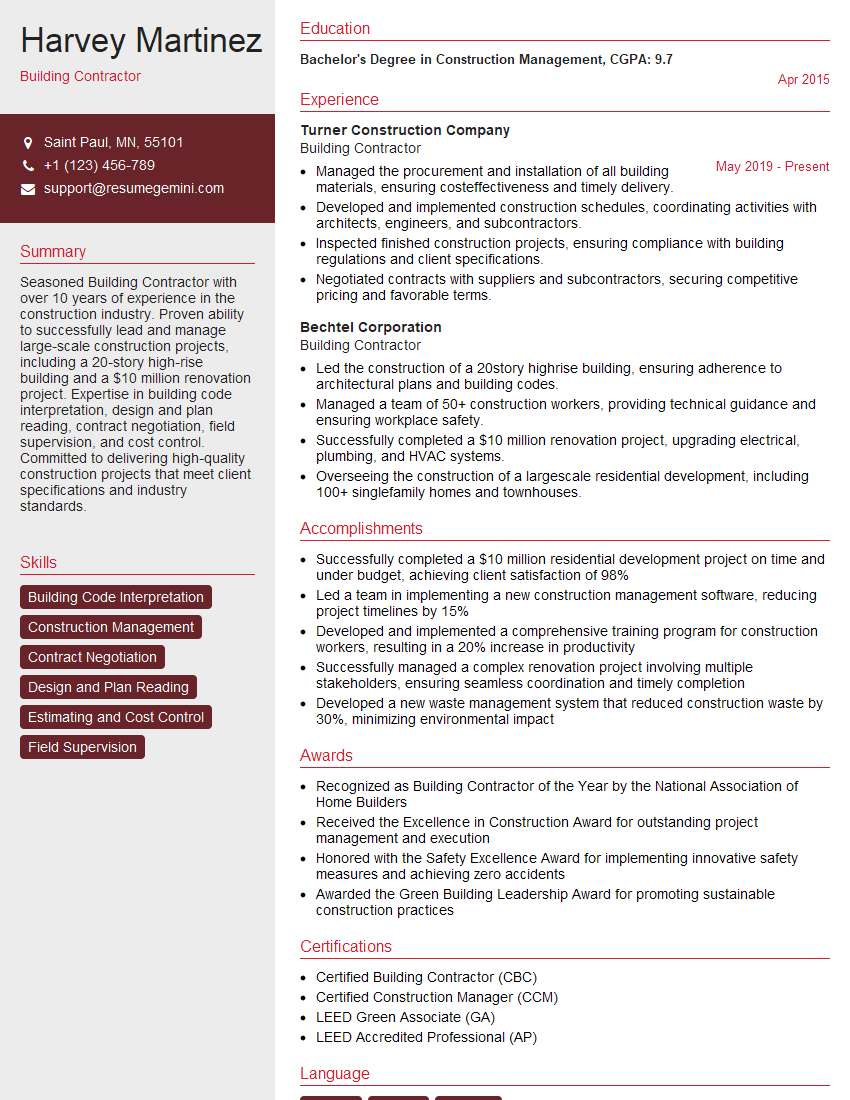
Building Contractor Resume Sample
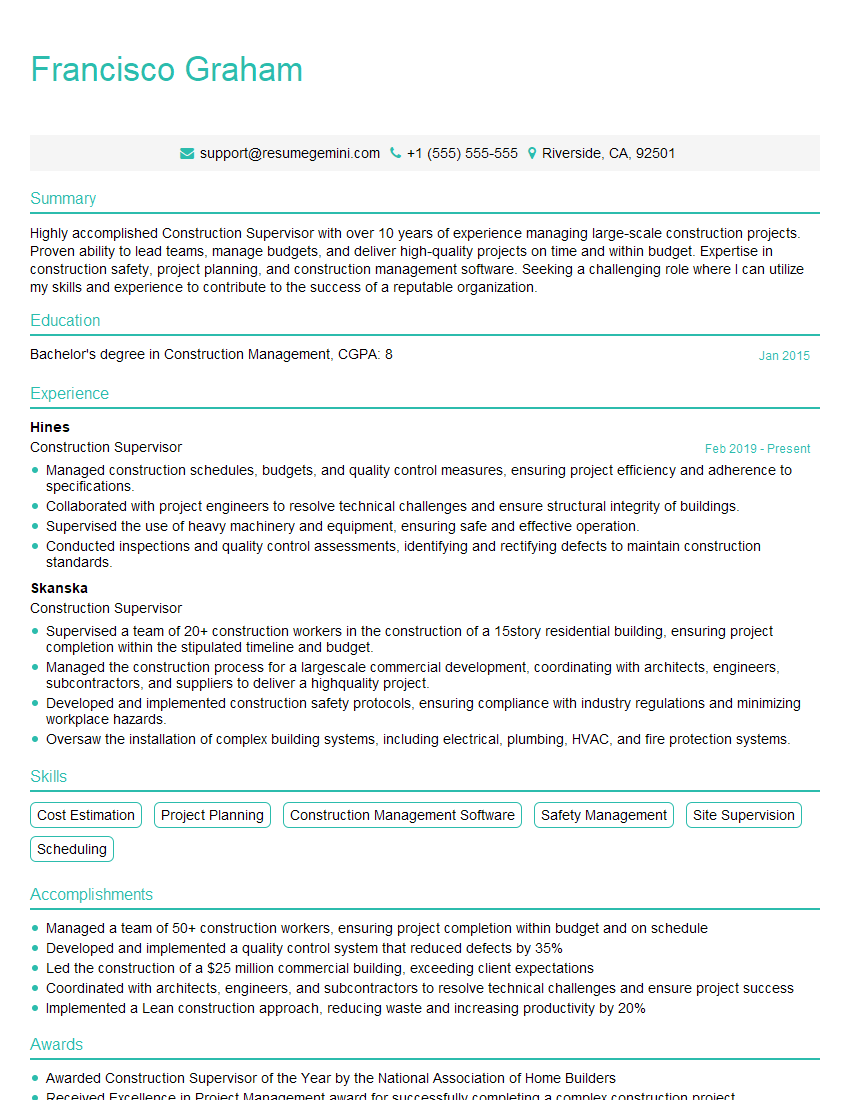
Construction Supervisor Resume Sample
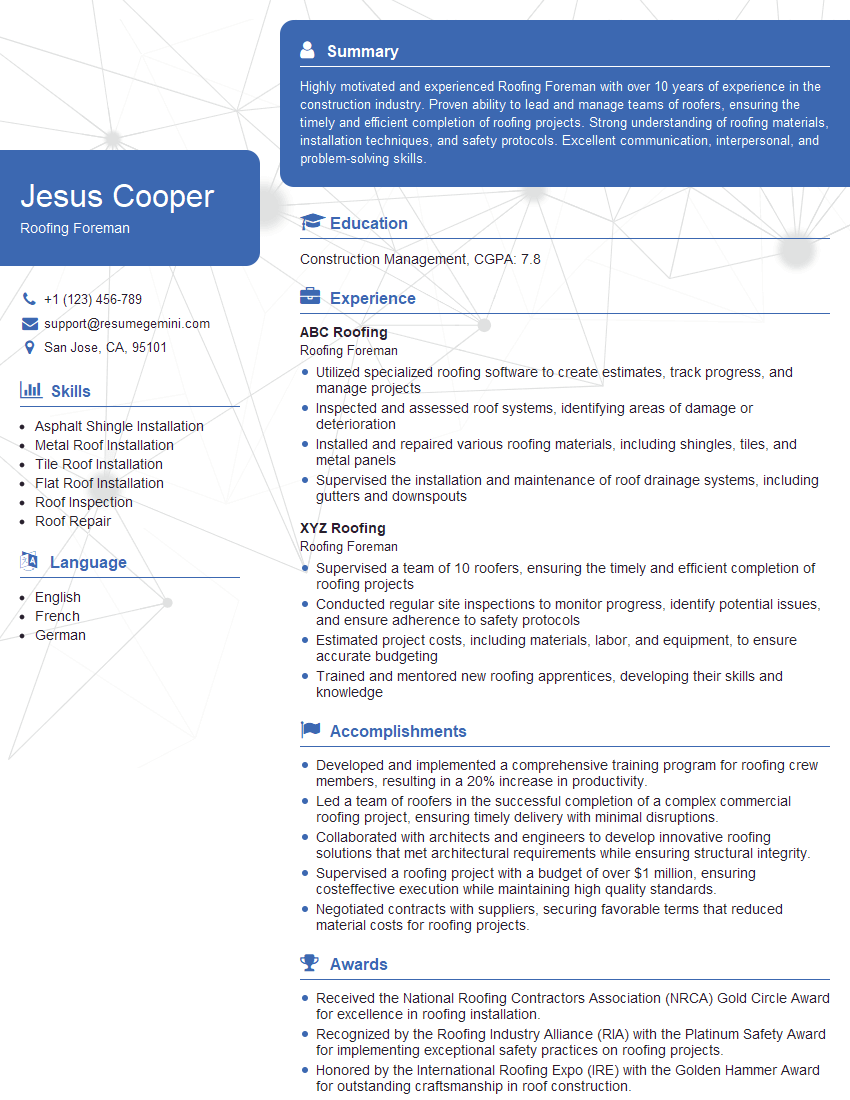
Roofing Foreman Resume Sample

Site Supervisor Resume Sample
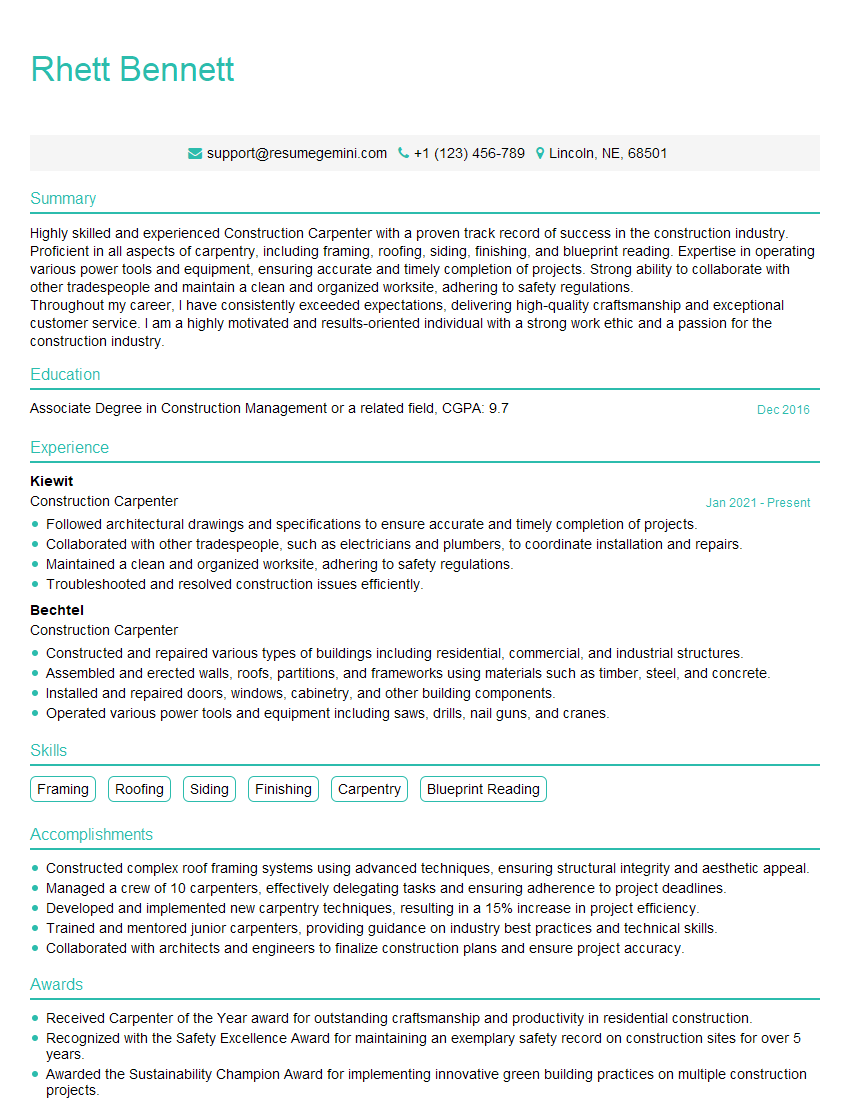
Construction Carpenter Resume Sample

Finish Carpenter Resume Sample
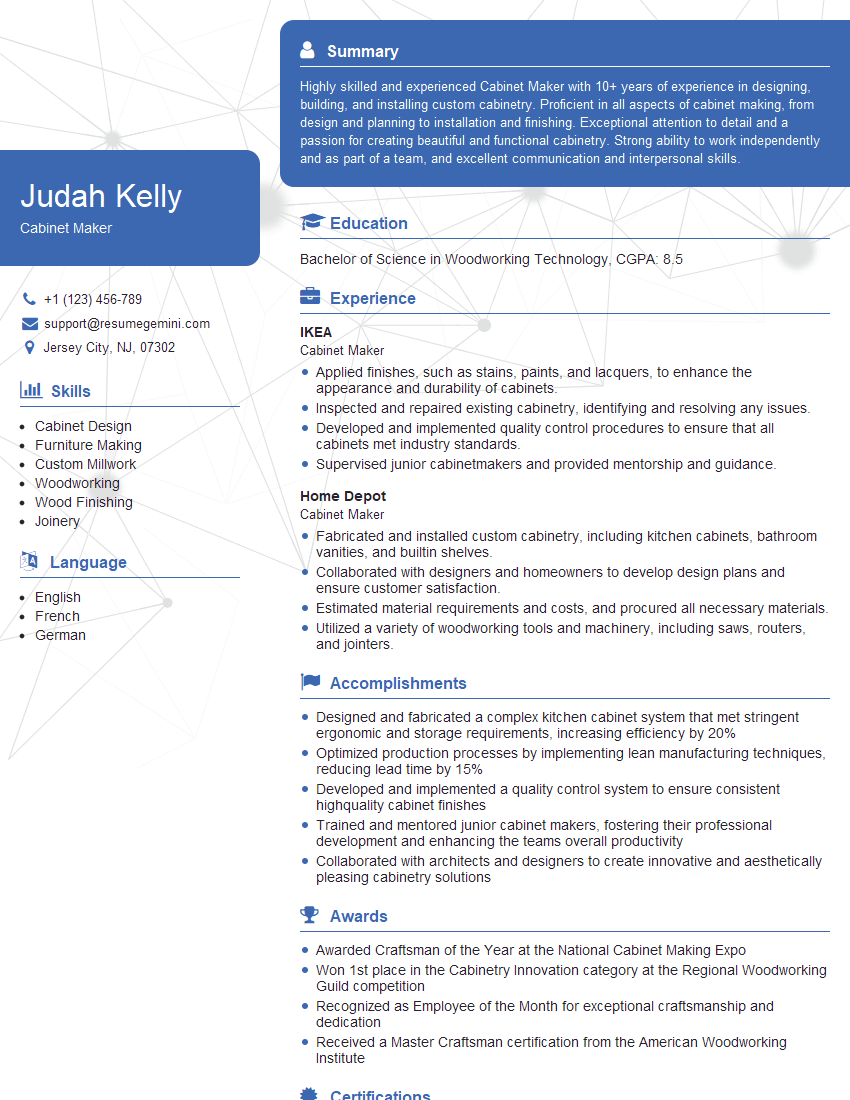
Cabinet Maker Resume Sample
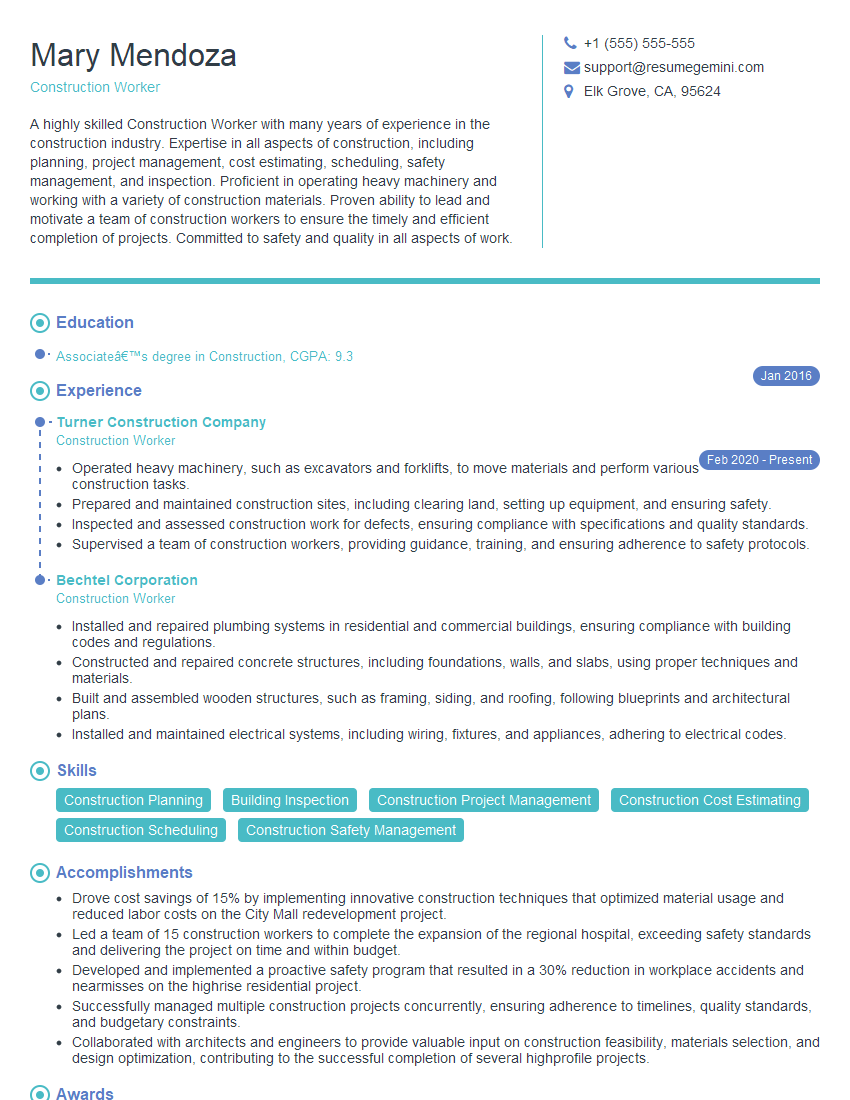
Construction Worker Resume Sample
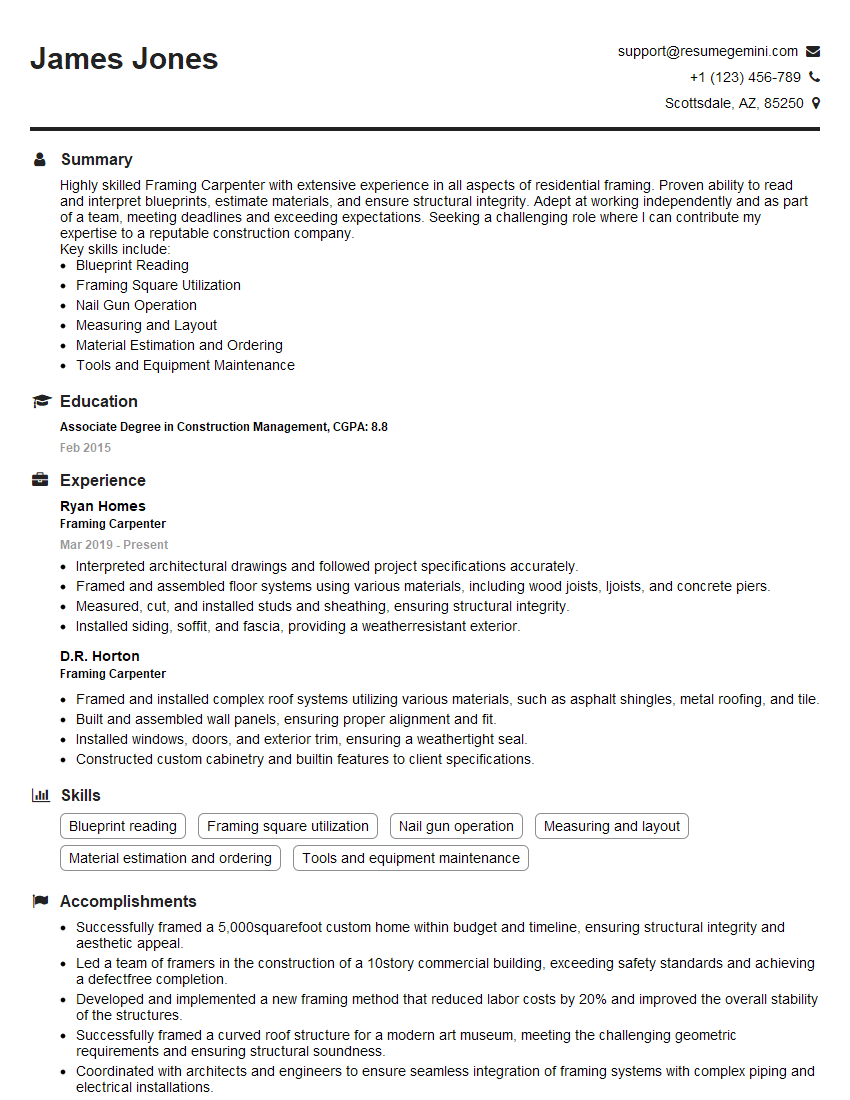
Framing Carpenter Resume Sample
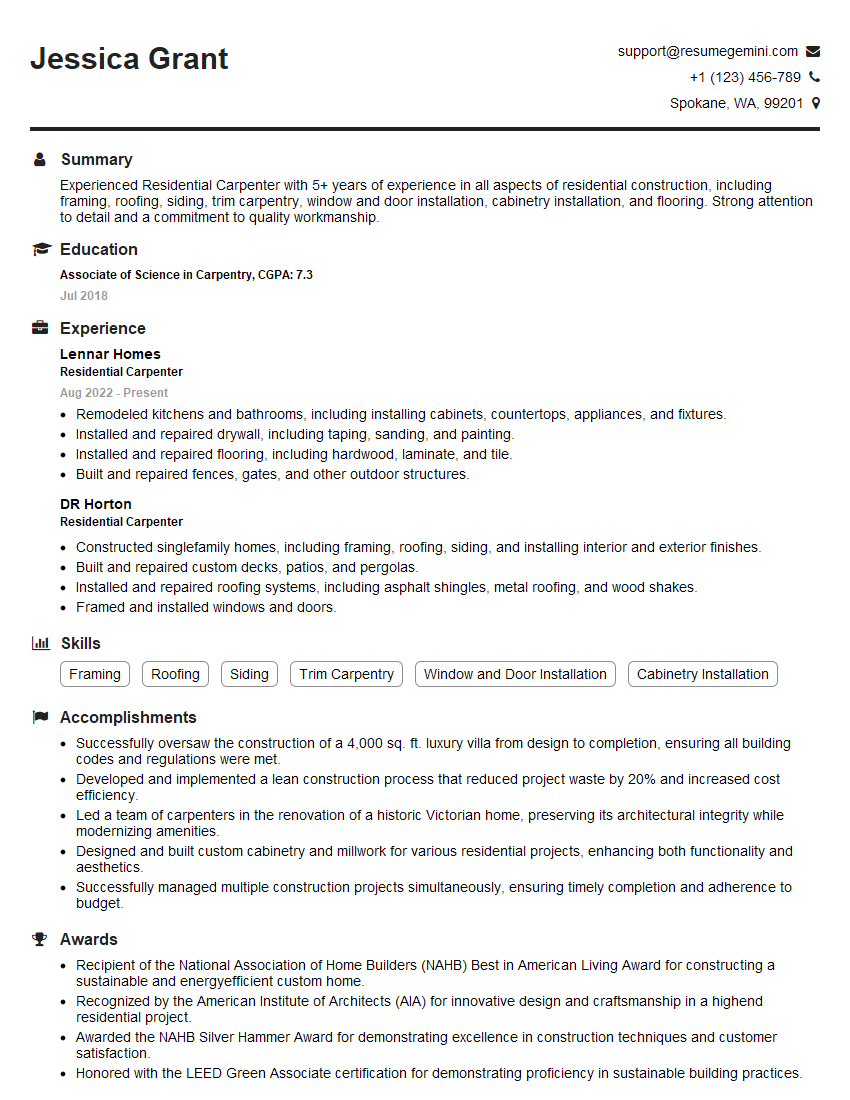
Residential Carpenter Resume Sample
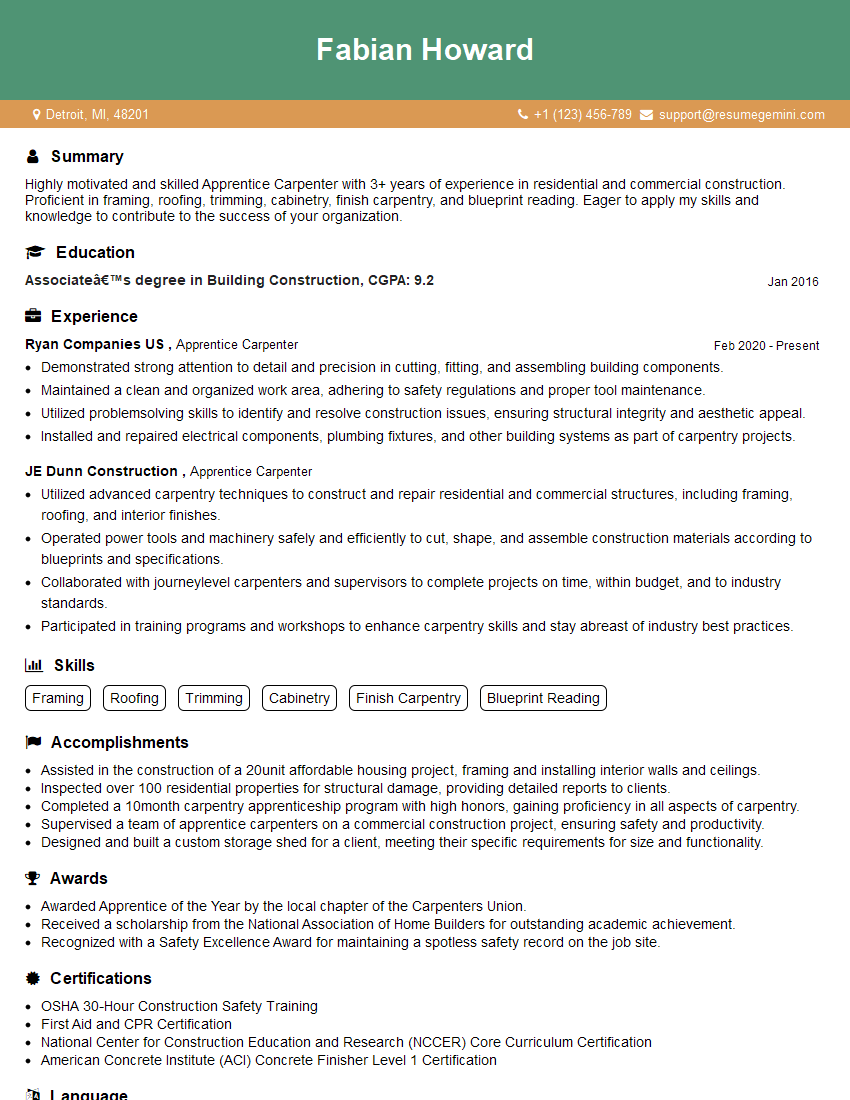
Apprentice Carpenter Resume Sample

Carpenter Resume Sample
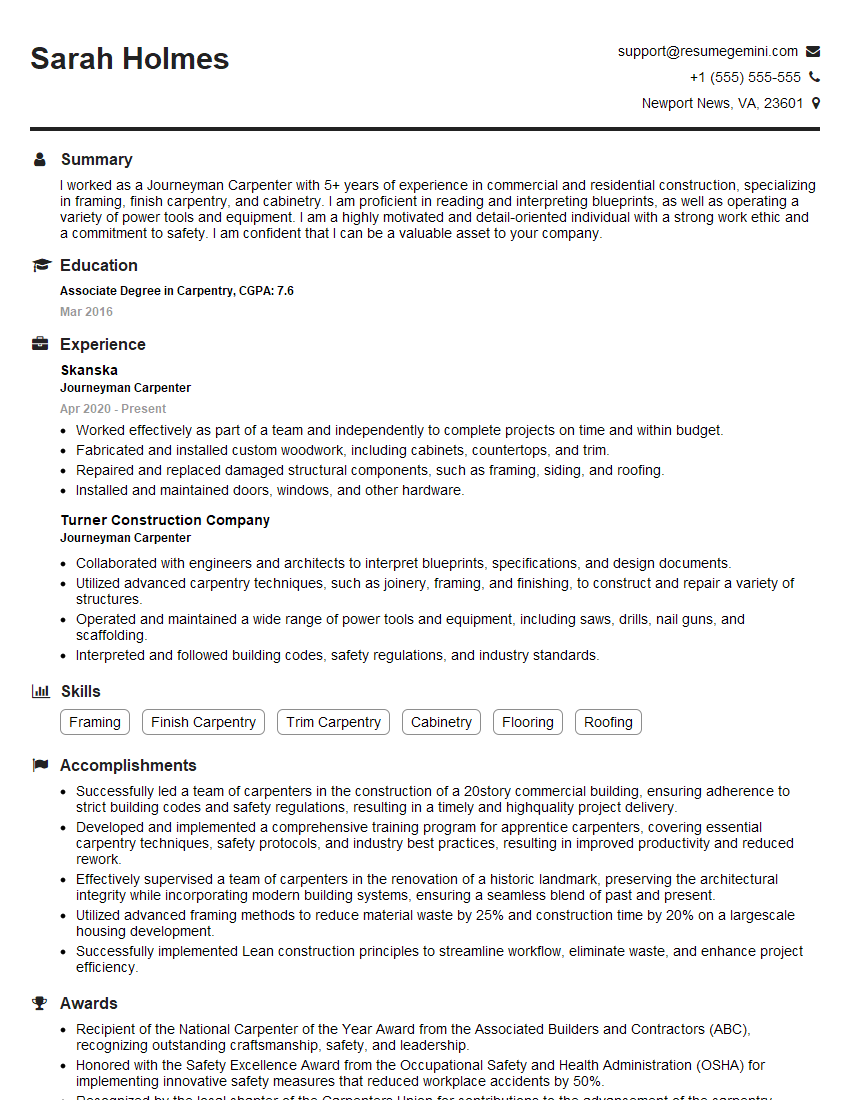
Journeyman Carpenter Resume Sample
- Superintendent
- General Contractor
- Roofing Contractor
- Construction Estimator
- Building Contractor
- Construction Supervisor
- Roofing Foreman
- Site Supervisor
- Construction Carpenter
- Finish Carpenter
- Cabinet Maker
- Construction Worker
- Framing Carpenter
- Residential Carpenter
- Apprentice Carpenter
- Carpenter
- Journeyman Carpenter
Explore more articles
Users Rating of Our Blogs
Share Your Experience
We value your feedback! Please rate our content and share your thoughts (optional).
What Readers Say About Our Blog
To the interviewgemini.com Webmaster.
Very helpful and content specific questions to help prepare me for my interview!
Thank you
To the interviewgemini.com Webmaster.
This was kind of a unique content I found around the specialized skills. Very helpful questions and good detailed answers.
Very Helpful blog, thank you Interviewgemini team.