Feeling uncertain about what to expect in your upcoming interview? We’ve got you covered! This blog highlights the most important Work Permit Issuance and Management interview questions and provides actionable advice to help you stand out as the ideal candidate. Let’s pave the way for your success.
Questions Asked in Work Permit Issuance and Management Interview
Q 1. Explain the process of obtaining a work permit in [Specific Country].
The process of obtaining a work permit varies significantly depending on the specific country. Let’s assume we’re discussing obtaining a work permit in Canada as an example. Generally, it involves these key steps:
Job Offer: You typically need a confirmed job offer from a Canadian employer who has first attempted to fill the position with Canadian citizens and permanent residents (this is crucial for many skilled worker programs). This offer usually includes details about your position, salary, and duration of employment.
Employer’s Labour Market Impact Assessment (LMIA): Your employer needs to apply for an LMIA from Employment and Social Development Canada (ESDC). This assessment determines if hiring you would negatively impact the Canadian labor market. A positive LMIA is often a prerequisite for a work permit application.
Work Permit Application: Once the LMIA is approved (if required), you can apply for a work permit online through Immigration, Refugees and Citizenship Canada (IRCC). You’ll need to gather various documents, including your passport, job offer, LMIA (if applicable), proof of education, and police clearance certificates.
Biometrics: You might be required to provide biometrics (fingerprints and photograph) as part of the application process.
Processing and Decision: IRCC will process your application, which can take several weeks or months. You’ll receive a notification once a decision is made.
Work Permit Issuance: If approved, your work permit will be issued. This document allows you to legally work in Canada for the specified period and under the conditions outlined in your permit.
Remember that this is a simplified overview. Specific requirements vary based on your nationality, occupation, and the type of work permit applied for. Consulting an immigration lawyer or authorized representative is highly recommended.
Q 2. What are the common grounds for work permit refusal?
Work permit applications can be refused for several reasons, often related to:
Inadequate documentation: Missing or incomplete application forms, insufficient proof of education, lack of supporting documents for the job offer, etc.
Negative LMIA (if applicable): The employer’s application for an LMIA might be refused if ESDC determines the job could be filled by a Canadian citizen or permanent resident. This is a common reason for work permit refusal.
Misrepresentation or fraud: Providing false information in the application, forging documents, or engaging in any fraudulent activities during the application process.
Health and safety concerns: Medical conditions that could pose a risk to public health or safety might lead to refusal.
Security concerns: Criminal records or any security-related issues can result in the application being refused.
Insufficient qualifications or experience: Not meeting the requirements outlined in the job offer or demonstrating the necessary skills and qualifications for the job.
It’s essential to be completely honest and thorough when completing a work permit application to avoid rejection.
Q 3. Describe the different types of work permits available.
Work permits are categorized differently depending on the country. In Canada, for instance, we see various types, including:
Temporary Foreign Worker Program (TFWP) permits: These are for workers coming to Canada temporarily to fill specific labor shortages. Subcategories exist based on skill level (high-skilled, low-skilled).
International Experience Canada (IEC) permits: These are for young adults (generally aged 18-35) who want to work and travel in Canada for a limited time.
Post-Graduation Work Permits: Allow international graduates from designated Canadian educational institutions to gain Canadian work experience after completing their studies.
Open work permits: These provide more flexibility and allow individuals to work for any employer in Canada within specified conditions.
Specific occupation permits: Certain jobs or industries might have dedicated work permit categories based on specific skill demands.
Each type has specific eligibility criteria, application procedures, and conditions.
Q 4. How do you ensure compliance with immigration regulations?
Ensuring compliance with immigration regulations requires a multi-faceted approach:
Thorough knowledge of regulations: Staying up-to-date with changes in immigration laws and policies is paramount.
Accurate record-keeping: Maintaining detailed records of all work permit applications, approvals, renewals, and any related correspondence is essential for audits and compliance checks.
Regular audits and internal reviews: Conducting regular internal audits to verify the accuracy of work permit information and identify potential compliance issues.
Training and education: Providing training to staff involved in work permit management on immigration laws and procedures.
Collaboration with immigration authorities: Maintaining open communication with immigration authorities and promptly addressing any concerns or queries.
Using reputable immigration consultants: If you need external assistance, always use vetted and reputable immigration consultants or lawyers to ensure all your actions are legally sound.
Non-compliance can lead to significant penalties, including fines and even legal action.
Q 5. What is your experience with work permit renewals?
My experience with work permit renewals involves understanding that each renewal is a unique process. I handle them by first carefully reviewing the existing permit’s conditions and expiry date. Then, I assess the employee’s continued eligibility. This includes verifying whether the job role remains consistent with the permit’s conditions and assessing any potential changes in the employee’s circumstances (e.g., change of address, marital status). I then prepare a comprehensive renewal application, ensuring all required documents are up-to-date and complete. This might involve obtaining updated employer letters, proof of continued employment, and potentially new medical examinations. I meticulously review the application before submitting it to ensure a smooth and timely process. A critical aspect is understanding that applications for renewal are often subject to the same scrutiny as initial applications and it is crucial to be ahead of deadlines to avoid disruptions to the individual’s work authorization.
Q 6. How do you handle urgent work permit applications?
Handling urgent work permit applications requires a proactive and efficient approach. I prioritize these applications by immediately identifying the urgency’s cause (e.g., expiring permit, imminent travel, critical job requirement). I then expedite the documentation gathering process, potentially contacting relevant parties to obtain information quickly. I leverage express processing options offered by the immigration authorities, if available, and communicate transparently with the applicant and the employer to keep them informed about the application’s status. Proactive communication helps manage expectations and minimizes potential disruptions. While speed is essential, accuracy and compliance with regulations remain paramount, even in urgent situations.
Q 7. Explain the process of transferring a work permit to a new employer.
Transferring a work permit to a new employer typically involves several steps: First, the new employer needs to confirm they can sponsor the employee, potentially involving a new LMIA process. Next, the employee will need to inform the relevant immigration authorities about the change of employer, submitting an application for a new work permit reflecting the new employment details. The application typically requires evidence of the new employment offer, including job details and salary, along with all other necessary documentation. The existing work permit might be temporarily extended to bridge the transition period. It’s crucial that the process begins well in advance of the existing permit’s expiry to prevent any gaps in authorized work status. Throughout the process, transparent communication is crucial between the employee, the old employer, the new employer, and the immigration authorities.
Q 8. What are the key differences between a work visa and a work permit?
While the terms are often used interchangeably, a work visa and a work permit are distinct. A work visa is a government-issued document that grants an individual permission to enter a country for the purpose of working. Think of it as the ‘ticket’ to get in. A work permit, on the other hand, is authorization to work within that country once you’ve entered. It’s the actual ‘permission slip’ to legally take employment. You need both. For example, someone might obtain a US H-1B visa (the entry permission) and then need an individual state work permit (the authorization to work in that specific state). The specific requirements and processes vary widely by country.
Q 9. How do you manage work permit applications for multiple employees?
Managing multiple work permit applications requires a systematic approach. I typically use a project management system to track each application’s status. This involves creating individual profiles for each employee, noting their required documents (passports, educational certificates, employment history, etc.), deadlines, and assigned case managers. I employ a checklist system to ensure all necessary documentation is submitted and follow up regularly with immigration authorities. Batching applications where possible (e.g., for employees with similar profiles and destinations) can streamline the process and potentially save on costs. Utilizing a specialized immigration software solution can also aid in centralizing and managing the entire process more effectively. Finally, regular communication with both employees and the immigration authorities is crucial.
Q 10. What is your experience with audits related to work permit compliance?
I have extensive experience with work permit compliance audits. In my previous role, we underwent several audits by both internal and external agencies. These audits typically involved reviewing employee files for completeness and accuracy, verifying that work permits were valid and aligned with job descriptions, and ensuring adherence to all relevant regulations. I’ve developed a robust system of internal controls to mitigate risks, including regular self-audits and employee training. During past audits, I’ve proactively addressed any discrepancies found, providing clear documentation and evidence of compliance. This proactive approach has always resulted in successful audits, minimizing any disruption to our operations.
Q 11. How do you stay updated on changes in immigration laws and regulations?
Staying updated on immigration laws and regulations is paramount. I subscribe to specialized legal newsletters, attend industry conferences and webinars, and actively monitor government websites for changes. I maintain a network of contacts within immigration law firms and government agencies to receive timely alerts on significant updates. I also use legal research databases to gain detailed insights into specific changes that may impact our work permit processes. This proactive approach ensures that our processes remain compliant and efficient.
Q 12. Describe your experience with international relocation assistance.
I have significant experience assisting employees with international relocation. This involves coordinating visa applications, arranging housing and transportation, facilitating the opening of bank accounts, and assisting with cultural orientation programs. I also manage the logistics of shipping personal belongings and coordinating with local providers for various services. In one instance, I successfully coordinated the relocation of a family from Asia to the US, including enrolling their children in school and managing their healthcare needs. A crucial part of this is ensuring a smooth and stress-free transition, which significantly improves employee retention and productivity.
Q 13. How do you prioritize work permit applications based on urgency and complexity?
Prioritizing work permit applications requires a balanced approach. I use a system that considers both urgency and complexity. Applications with imminent deadlines for job starts or those with complex requirements (e.g., those involving specialized skills or needing additional approvals) are prioritized. I use a matrix system that assigns a score based on these factors. Applications with high urgency and high complexity scores are tackled first. This ensures that we avoid potential delays and mitigate risks associated with critical hires. Regular communication with stakeholders keeps everyone informed about the progress and any potential roadblocks.
Q 14. What is your experience with managing work permit costs and budgets?
I’m adept at managing work permit costs and budgets. This involves meticulous tracking of all expenses, from application fees and legal consultation to relocation costs and administrative overhead. I develop detailed budgets at the start of each project, forecasting all potential costs. Regular monitoring against the budget allows for timely intervention if expenses exceed projections. Negotiating favorable rates with service providers (such as legal firms and relocation agencies) helps to keep costs in check. The goal is to maintain a balance between efficiency and cost-effectiveness, minimizing unnecessary expenses without compromising compliance or service quality.
Q 15. Explain the process of appealing a work permit denial.
Appealing a work permit denial involves a multi-step process that usually begins with reviewing the denial letter to understand the specific reasons for the rejection. This is crucial because it allows for a targeted appeal. The next step is to gather all supporting documentation that addresses the reasons for denial. This may include updated financial statements, new employment offers, or additional evidence of qualifications. The appeal itself is typically submitted through a formal process, often involving specific forms and fees, as outlined by the relevant immigration authority. It’s essential to ensure meticulous adherence to all deadlines and procedural requirements outlined in the denial letter or the governing agency’s guidelines. For example, if the denial was based on insufficient proof of funds, the appeal would need to include strong evidence of financial stability, such as bank statements and sponsorship letters. Finally, it’s often beneficial to consult with an immigration lawyer to ensure the appeal is properly constructed and presented.
Imagine it like this: You’ve applied for a loan, and the bank rejected your application due to a low credit score. To appeal, you’d need to demonstrate improvements in your credit history, perhaps by providing proof of debt repayment or a letter from a credit counselor. Similarly, with a work permit appeal, you need to address the specific deficiencies identified in the initial denial.
Career Expert Tips:
- Ace those interviews! Prepare effectively by reviewing the Top 50 Most Common Interview Questions on ResumeGemini.
- Navigate your job search with confidence! Explore a wide range of Career Tips on ResumeGemini. Learn about common challenges and recommendations to overcome them.
- Craft the perfect resume! Master the Art of Resume Writing with ResumeGemini’s guide. Showcase your unique qualifications and achievements effectively.
- Don’t miss out on holiday savings! Build your dream resume with ResumeGemini’s ATS optimized templates.
Q 16. How do you handle discrepancies in application documents?
Handling discrepancies in application documents requires a methodical approach. First, I would carefully document each discrepancy, noting the specific document and the nature of the inconsistency. Then, I would investigate the source of the error. This could involve contacting the applicant to clarify the information, verifying information with external sources, or comparing the document to other supporting evidence. If the discrepancy is minor and easily rectified, I’d work with the applicant to correct it. However, if the discrepancy is significant or suggests potential fraud, a more thorough investigation is necessary which may involve escalating the issue to the relevant authorities. For example, a mismatch between stated qualifications and official transcripts would trigger further scrutiny. Maintaining a detailed record of the discrepancy, the investigation, and the resolution is critical for accountability and compliance.
Think of it like a detective investigating a case – each piece of evidence needs to be meticulously examined and compared to other findings. Ignoring discrepancies can lead to serious consequences, so thoroughness is paramount.
Q 17. How do you build and maintain relationships with government agencies?
Building and maintaining strong relationships with government agencies is crucial for effective work permit management. This involves regular communication, proactive engagement, and a clear understanding of their policies and procedures. Attending industry events, participating in working groups, and establishing personal contacts within the agencies helps build trust and facilitates a smoother process for applications. Providing accurate and timely information, promptly responding to inquiries, and demonstrating a commitment to compliance builds a positive reputation. Finally, demonstrating respect for their expertise and workflow is key to fostering productive collaborations. For instance, regular briefings on processing times and upcoming policy changes help maintain a healthy working relationship.
It’s like building any other strong relationship—it takes time, effort, and mutual respect. Open communication and a consistent track record of reliability are invaluable.
Q 18. What are the common challenges in obtaining work permits for specific professions?
Obtaining work permits for certain professions presents unique challenges. Highly skilled occupations often require extensive vetting of qualifications and experience, sometimes involving credential assessments that can be lengthy and complex. Occupations with labour market shortages may have specific requirements related to employer sponsorship and job offer letters. Certain professions might be subject to stricter security checks or background investigations. Other challenges include language proficiency requirements and the need for specialized licenses or certifications. For example, securing a work permit for a medical doctor would necessitate rigorous verification of medical credentials, licensing requirements, and possibly further language proficiency tests.
The process can be likened to navigating a complex maze; each profession has its own set of hurdles and regulations to overcome. Understanding these unique challenges upfront is crucial for effective planning and preparation.
Q 19. Describe your experience with using immigration management software.
I have extensive experience using various immigration management software systems. This includes experience with case management modules for tracking applications, document storage and retrieval systems for maintaining audit trails, and reporting tools for generating performance metrics. I’m proficient in utilizing software that facilitates online application submission, automates data entry, and performs data validation checks to ensure accuracy. My experience also encompasses using software that integrates with various databases and allows for efficient data sharing across different departments. For example, I’ve used systems that allow employers to electronically submit work permit applications, reducing paper-based processes and improving overall efficiency. This streamlining has improved accuracy, reduced processing times, and enabled more efficient tracking and monitoring of applications.
Using this software is similar to utilizing a powerful organizational tool—it significantly enhances efficiency and effectiveness in managing the complex process of work permit issuance.
Q 20. How do you ensure data security and privacy related to work permit information?
Ensuring data security and privacy in work permit information is paramount. This is achieved through a multi-layered approach. First, access to sensitive data is restricted to authorized personnel only, employing role-based access controls. We employ robust encryption methods to protect data both in transit and at rest. Regular security audits and vulnerability assessments are conducted to identify and mitigate potential risks. We adhere strictly to all applicable data privacy regulations and guidelines, ensuring compliance with laws such as GDPR and CCPA. Data retention policies are in place to manage the lifecycle of information, safely disposing of data when no longer required. Employee training on data security protocols and privacy best practices is an integral part of our security strategy.
Imagine this as safeguarding a valuable asset – multiple locks, secure storage, and regular checks are all necessary to protect the information from unauthorized access.
Q 21. What is your experience with employer sanctions related to immigration compliance?
My experience with employer sanctions related to immigration compliance includes understanding the legal frameworks and procedures involved in investigations and penalties. This includes familiarity with the types of sanctions that can be imposed, ranging from fines and back taxes to business closures and criminal prosecution. I understand the due process involved, which includes providing employers with opportunities to present their case and ensuring fair and impartial decision-making. I have experience analyzing compliance audit reports, identifying areas of non-compliance, and assisting employers in developing corrective action plans to prevent future violations. For example, I’ve helped employers develop comprehensive I-9 compliance programs and provided training to their HR personnel to ensure proper documentation and record-keeping practices.
This is essentially about proactive compliance – it’s about understanding the rules and working with employers to avoid potentially costly and damaging penalties.
Q 22. Describe your experience in coordinating with legal counsel on immigration matters.
My experience coordinating with legal counsel on immigration matters is extensive. I’ve worked closely with immigration lawyers throughout my career, leveraging their expertise to navigate complex legal landscapes and ensure compliance. This collaboration typically involves:
- Early consultation: We discuss the specifics of each case early on, identifying potential legal hurdles and strategizing to mitigate risks. For instance, if a prospective employee’s background presents a potential challenge, we’ll discuss potential solutions with legal counsel before even submitting an application.
- Document review: Legal counsel reviews all application documents for accuracy and completeness, ensuring they meet the stringent requirements of the relevant immigration authorities. This ensures we avoid costly delays or rejections.
- Legal updates: Immigration law is constantly evolving. Legal counsel keeps me informed of any changes or updates, enabling proactive adjustments to our processes and ensuring continued compliance.
- Contingency planning: We develop contingency plans to address potential challenges, such as application denials or appeals processes. This proactive approach minimizes disruption and maximizes the chances of a successful outcome.
This collaborative approach ensures that we are always working within the bounds of the law while achieving the best possible outcomes for both the employer and the employee.
Q 23. How do you ensure that all work permit documentation is accurate and complete?
Ensuring accurate and complete work permit documentation is paramount. My approach involves a multi-step process:
- Comprehensive checklist: I utilize a detailed checklist tailored to the specific immigration regulations of each relevant jurisdiction. This checklist covers every required document and piece of information.
- Data validation: I meticulously verify every piece of information provided, ensuring its accuracy and consistency. This includes cross-referencing information from different sources to avoid discrepancies.
- Regular audits: I conduct regular audits of our documentation processes to identify any areas for improvement. This proactive approach ensures the ongoing accuracy and completeness of our records.
- Digital record keeping: All documents are stored securely in a digital system, allowing for easy access and version control. This promotes transparency and minimizes the risk of losing crucial information.
- Training: I provide regular training to my team, emphasizing the importance of accurate and complete documentation. This ensures everyone is equipped to maintain the highest standards.
This systematic approach minimizes errors, ensuring compliance and reducing the risk of delays or rejections. Think of it as building a house – you can’t afford to miss a single brick. Similarly, missing one document in a work permit application can lead to delays and complications.
Q 24. What is your experience with different immigration systems and processes?
My experience encompasses a wide range of immigration systems and processes. I’ve worked with systems in North America, Europe, and Asia, including:
- US-based systems: I’m proficient in navigating the complexities of the USCIS (United States Citizenship and Immigration Services) system, including H-1B, L-1, and other non-immigrant visa categories.
- Canadian immigration: I’m well-versed in the Canadian immigration system, including the various work permit programs and LMIA processes (Labour Market Impact Assessment).
- European Union Blue Card: I have experience with the EU Blue Card program, understanding its requirements and application procedures.
- Asia-Pacific systems: My experience also extends to various Asian countries, where I’ve managed work permit applications and navigated unique local regulations and processes.
This diverse experience enables me to adapt quickly to different regulatory environments and provides me with a broad perspective on best practices. Understanding the nuances of different systems is crucial for successful work permit management on a global scale.
Q 25. Describe a situation where you had to solve a complex work permit issue.
One particularly challenging case involved a highly skilled software engineer whose initial work permit application was denied due to a minor discrepancy in the supporting documentation. The discrepancy was seemingly insignificant, but the immigration authorities were inflexible. To solve this, I:
- Thoroughly reviewed the denial letter: I identified the exact reason for the rejection and meticulously examined the application documents to pinpoint the error.
- Consulted legal counsel: I worked with immigration lawyers to understand the best course of action and prepare a strong appeal.
- Gathered additional evidence: We assembled compelling evidence to address the discrepancy, providing additional documentation and clarifications to demonstrate the applicant’s qualifications and intent.
- Prepared a detailed appeal: We prepared a detailed and persuasive appeal letter, highlighting the applicant’s valuable contributions and explaining why the initial denial was unjust.
- Followed up diligently: We consistently monitored the progress of the appeal, ensuring timely responses and proactively addressing any further questions.
Ultimately, the appeal was successful, demonstrating the importance of a proactive and thorough approach to resolving complex work permit issues. This experience reinforced the value of strong communication, meticulous attention to detail, and a collaborative approach involving legal counsel.
Q 26. How do you maintain accurate records of work permit applications and approvals?
Maintaining accurate records is crucial for compliance and efficiency. My approach involves:
- Dedicated database system: I utilize a robust database system specifically designed to manage work permit applications and approvals. This system tracks key information such as application dates, supporting documents, communication logs, and approval statuses.
- Version control: The system maintains version control of all documents, enabling us to track changes and ensure the most up-to-date information is available.
- Automated reminders: Automated reminders are set up to ensure timely follow-up on pending applications and renewals.
- Secure access control: Access to the database is restricted to authorized personnel, ensuring confidentiality and data security.
- Regular backups: Regular backups are conducted to prevent data loss and ensure business continuity.
This robust system provides a centralized and readily accessible repository for all work permit related information, streamlining processes and ensuring accuracy.
Q 27. Explain your understanding of the various immigration sponsorship options.
My understanding of immigration sponsorship options is comprehensive. Different countries offer various sponsorship pathways, each with specific requirements and eligibility criteria. Some common examples include:
- Employer sponsorship: Employers can sponsor foreign workers based on skill shortages and labor market needs. This often involves demonstrating that the position cannot be filled by a local worker.
- Intra-company transfers: Multinational companies can transfer employees from one branch to another, often through a streamlined process.
- Family sponsorship: Citizens or permanent residents can sponsor family members for immigration.
- Investor programs: Some countries offer immigration pathways based on significant financial investment in their economies.
- Skilled worker programs: These programs prioritize individuals with specific skills and qualifications that are in demand within the country.
The specific requirements and processes for each sponsorship option vary significantly by country. A deep understanding of these nuances is essential for successful sponsorship applications.
Q 28. How do you advise employers on immigration compliance best practices?
Advising employers on immigration compliance is a crucial part of my role. My advice focuses on:
- Proactive compliance: I emphasize the importance of staying ahead of regulatory changes and proactively addressing potential compliance issues. This often involves subscribing to updates from relevant immigration authorities and conducting regular internal audits.
- Due diligence: I advise employers to conduct thorough due diligence on all prospective employees to ensure they meet the eligibility requirements for work permits. This includes verifying educational credentials, work experience, and other relevant information.
- Clear policies and procedures: I recommend the development of clear internal policies and procedures related to immigration compliance. These policies should clearly define the responsibilities of different stakeholders and outline the steps involved in the work permit application process.
- Training and education: I provide training and education to employers and their HR teams on immigration laws, regulations, and best practices. This ensures that everyone is aware of their responsibilities and how to avoid potential issues.
- Regular review and updates: I recommend regular reviews of immigration policies and procedures to ensure they remain current and effective.
By following these best practices, employers can minimize their risk of non-compliance, avoid penalties, and maintain a productive and compliant workforce.
Key Topics to Learn for Work Permit Issuance and Management Interview
- Legal Frameworks and Regulations: Understanding national and international laws governing work permits, including eligibility criteria, application processes, and compliance requirements. Practical application: Analyzing a hypothetical case to determine permit eligibility based on specific regulations.
- Application Processing and Review: Mastering the complete lifecycle of a work permit application, from initial submission to final approval or rejection. This includes data entry, verification, and communication with applicants. Practical application: Developing efficient workflows to streamline application processing and minimize delays.
- Data Management and Reporting: Efficiently managing large volumes of applicant data, ensuring data accuracy and security, and generating regular reports on permit issuance trends and compliance. Practical application: Designing a database system to track application statuses and generate insightful reports.
- Stakeholder Management and Communication: Effectively communicating with applicants, employers, government agencies, and other stakeholders throughout the work permit process. Practical application: Handling challenging applicant inquiries and resolving conflicts professionally.
- Compliance and Auditing: Ensuring adherence to all relevant regulations and conducting regular audits to identify and address any compliance gaps. Practical application: Developing and implementing internal control procedures to prevent fraud and ensure accurate record-keeping.
- Technological Tools and Systems: Familiarity with relevant software and databases used in work permit management. Practical application: Troubleshooting technical issues and suggesting improvements to existing systems.
Next Steps
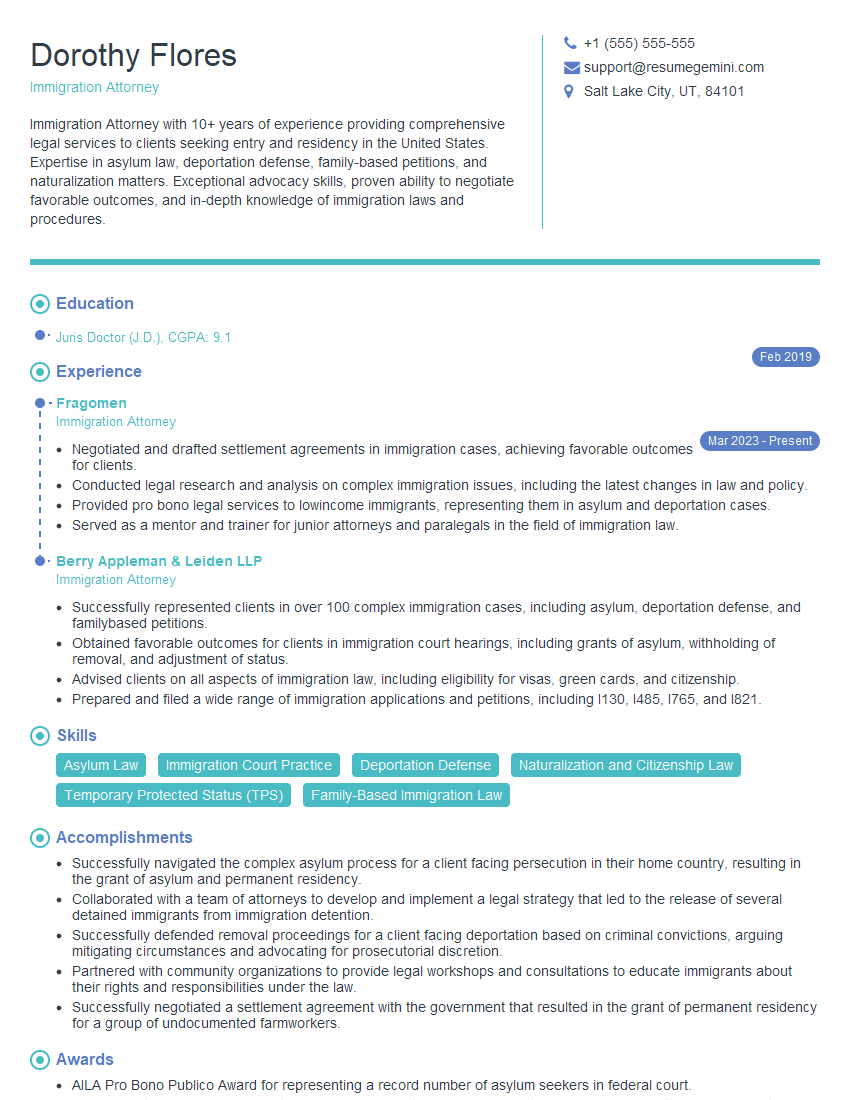
Mastering Work Permit Issuance and Management opens doors to rewarding careers in immigration services, human resources, and government agencies. A strong understanding of these processes significantly enhances your professional value and marketability. To maximize your job prospects, invest in creating an ATS-friendly resume that showcases your skills and experience effectively. ResumeGemini is a trusted resource that can help you build a professional and impactful resume, tailored to highlight your expertise in this field. Examples of resumes tailored to Work Permit Issuance and Management are available to help guide your preparation. Take the next step towards your dream career today!
Explore more articles
Users Rating of Our Blogs
Share Your Experience
We value your feedback! Please rate our content and share your thoughts (optional).
What Readers Say About Our Blog
To the interviewgemini.com Webmaster.
Very helpful and content specific questions to help prepare me for my interview!
Thank you
To the interviewgemini.com Webmaster.
This was kind of a unique content I found around the specialized skills. Very helpful questions and good detailed answers.
Very Helpful blog, thank you Interviewgemini team.