Unlock your full potential by mastering the most common Familiar with Endangered Species Act (ESA) interview questions. This blog offers a deep dive into the critical topics, ensuring you’re not only prepared to answer but to excel. With these insights, you’ll approach your interview with clarity and confidence.
Questions Asked in Familiar with Endangered Species Act (ESA) Interview
Q 1. Explain the key provisions of the Endangered Species Act.
The Endangered Species Act (ESA) of 1973 is a landmark environmental law in the United States designed to protect and recover imperiled species and the ecosystems upon which they depend. Its key provisions revolve around preventing extinction and promoting species recovery. This is achieved through several core mechanisms:
- Listing of Endangered and Threatened Species: The Act empowers the U.S. Fish and Wildlife Service (FWS) and the National Marine Fisheries Service (NMFS) to identify and list species as either endangered (facing imminent extinction) or threatened (likely to become endangered in the foreseeable future).
- Critical Habitat Designation: The agencies are required to designate critical habitat areas essential for the conservation of listed species. This is crucial for both species preservation and the protection of their essential resources.
- Prohibition of “Taking”: The ESA makes it illegal to “take” listed species. Taking encompasses a broad range of actions, from killing or harming an animal to harming its habitat. This broad definition is crucial for effective protection.
- Recovery Plans: The Act mandates the development of recovery plans for listed species. These plans outline the actions necessary to improve the species’ status and ultimately remove them from the list.
- Consultation Requirements (Section 7): Federal agencies are required to consult with FWS and NMFS to ensure their actions don’t jeopardize listed species or their habitats.
In essence, the ESA provides a robust legal framework for species protection, combining species listing, habitat protection, and regulatory requirements to safeguard biodiversity.
Q 2. Describe the process of listing a species under the ESA.
The process of listing a species under the ESA is a data-driven, scientific undertaking. It starts with a petition submitted to the FWS or NMFS. This petition typically provides scientific evidence demonstrating the species’ threatened or endangered status. The agencies then conduct a thorough status review, analyzing the best available scientific and commercial data. This often involves considerable fieldwork, population surveys, and extensive literature review.
This review results in a proposed rule that goes through a period of public comment and further scientific scrutiny. After this, the agency makes a final determination, either listing the species or denying the petition. The entire process is carefully documented and available to the public, upholding transparency and accountability. The process can be lengthy, often taking several years due to the complexity involved and extensive data analysis required.
For example, the listing of the California condor involved years of research, showing declining populations and habitat loss. Once listed, protective measures could be implemented to boost the population.
Q 3. What are the critical habitat designations, and how are they determined?
Critical habitat designations, under the ESA, identify specific geographic areas essential for the conservation of a listed species. These areas contain physical or biological features essential to the conservation of the species, and their designation is critical for the species’ survival and recovery. These aren’t necessarily the species’ entire range, but rather specific areas containing key elements.
Determining critical habitat involves a rigorous scientific process. The agencies analyze data on the species’ biology, ecology, and distribution, identifying areas that support key life history stages (breeding, foraging, migration). The agencies also consider factors like threats to the species and existing land uses. The final designation is often a balance between conservation needs and potential economic impacts.
For instance, a critical habitat might include specific nesting sites for a bird species, crucial foraging grounds, or migration corridors. The designation often aims to protect these essential areas from harmful activities, allowing the species to recover.
Q 4. Explain the concept of ‘taking’ under the ESA.
The term “taking” under the ESA has a broad legal definition that goes beyond simply killing a listed species. It includes harming, harassing, pursuing, hunting, shooting, wounding, trapping, capturing, or collecting a listed species, or attempting to do any of those actions.
Importantly, “taking” also encompasses actions that significantly modify or destroy a species’ habitat, even if it doesn’t directly involve harming individuals. This broad interpretation reflects the understanding that habitat degradation can be just as harmful to a species as direct harm. This might include activities like dam construction that alters river flow affecting a fish species’ spawning grounds or deforestation that destroys nesting sites.
For example, even unintentionally disturbing a nesting site of an endangered bird can be considered a “taking,” highlighting the stringent protections the ESA provides.
Q 5. Discuss the role of Section 7 consultations in ESA compliance.
Section 7 of the ESA mandates consultation between federal agencies and the FWS or NMFS to ensure that federal actions don’t jeopardize listed species or their critical habitats. This consultation process is vital in ensuring that federal projects (like highway construction, dam building, or land management initiatives) don’t negatively impact endangered or threatened species. Essentially, it integrates species conservation into federal decision-making.
The process typically involves the federal agency identifying any actions that may affect a listed species. They then consult with the relevant agency (FWS or NMFS) to assess potential impacts. This assessment may involve biological assessments and formal consultations, leading to the development of measures to minimize or mitigate any negative effects. If no adverse effect is anticipated, the agency can proceed with the project; if potential jeopardy is found, modifications might be necessary or the project might be abandoned.
For example, a highway project near a critical habitat of a threatened species would require consultation. This may involve adjustments to the project’s route or implementation of mitigation measures such as habitat restoration.
Q 6. How does the ESA interact with other environmental regulations?
The ESA interacts with other environmental regulations in several ways, often creating a synergistic effect for conservation. The Clean Water Act, the National Environmental Policy Act (NEPA), and the Migratory Bird Treaty Act all work together to protect species and their habitats.
The ESA’s broad “taking” provision frequently overlaps with the requirements of other environmental laws, demanding thorough environmental reviews. NEPA, for example, requires environmental impact assessments for federal actions. This assessment may need to address potential ESA compliance issues, incorporating potential impacts on listed species. Similarly, Clean Water Act permits may need to consider ESA compliance and the preservation of aquatic habitats for listed species.
The cumulative effects of various environmental regulations can create stronger protections for species, preventing habitat loss and degradation from different sources. Essentially, the ESA acts as an overarching umbrella of protection, frequently integrating with and influencing other laws.
Q 7. Describe the different recovery strategies employed under the ESA.
The ESA employs various recovery strategies tailored to each species’ specific needs and threats. These strategies are outlined in species-specific recovery plans and generally focus on increasing populations, improving habitat quality, and reducing threats. Some commonly employed strategies include:
- Habitat restoration and protection: This involves restoring degraded habitats, protecting crucial areas, and creating new habitat where possible.
- Captive breeding and reintroduction programs: These programs are essential for species with severely depleted populations. They involve breeding the species in captivity and later releasing them back into the wild.
- Population augmentation: This may involve supplemental stocking or translocation of individuals to boost population numbers.
- Addressing threats: This often entails reducing threats like pollution, invasive species, or habitat loss. It may involve collaboration with other organizations and agencies.
- Monitoring and research: Continuous monitoring of the species’ population and habitat is crucial for evaluating the effectiveness of the recovery plan and adjusting strategies as needed.
The selection of recovery strategies is often a complex process, taking into account scientific findings, economic considerations, and stakeholder input. The ultimate goal is to achieve species recovery and ultimately delist the species from the ESA, signifying successful conservation efforts.
Q 8. What are the economic considerations associated with ESA compliance?
ESA compliance can impose significant economic costs on various sectors. These costs arise from the restrictions placed on land use, development, and resource extraction to protect endangered species and their habitats.
- Direct Costs: These include the expenses associated with habitat restoration, species monitoring, and the implementation of mitigation measures. For example, a construction project might need to redesign its plans to avoid impacting a critical nesting site for an endangered bird, leading to increased construction time and material costs.
- Indirect Costs: These can be less tangible but equally significant. For instance, restrictions on logging in a particular forest could impact timber companies’ profits, while limitations on water usage to protect aquatic species could affect agricultural output and the profitability of farming operations.
- Opportunity Costs: The ESA can lead to the forgone economic benefits from developments or projects that are deemed incompatible with endangered species protection. This might involve the loss of potential revenue from a mining operation or the delay in the construction of a dam.
- Regulatory Compliance Costs: Businesses must invest time and resources in navigating the complex regulatory framework of the ESA, including obtaining permits and adhering to stringent reporting requirements. This adds an administrative burden and necessitates specialized expertise.
Balancing economic development with conservation is a key challenge in ESA implementation. Careful cost-benefit analyses, mitigation strategies, and collaborative approaches between regulatory agencies and stakeholders are crucial to address these economic considerations effectively.
Q 9. Explain the significance of the ‘God Squad’ in ESA decision-making.
The ‘God Squad,’ officially known as the Endangered Species Committee, is a cabinet-level group that can grant exemptions to the ESA’s prohibitions when certain conditions are met. Its primary purpose is to weigh the economic and other national interests against the preservation of endangered species. Imagine a situation where a critical infrastructure project, such as a dam, threatens a listed species. The God Squad would weigh the economic value of the project against the potential loss of the endangered species, potentially authorizing the project if suitable mitigation is in place.
The committee’s decision-making process is highly scrutinized due to its potential to override the ESA’s protections. They consider factors such as the species’ status, the potential impacts of the proposed action, and the availability of reasonable and effective alternatives. The high bar for granting exemptions ensures that they are used sparingly and only in truly exceptional circumstances.
For example, in the past, the God Squad weighed in on projects affecting the snail darter and other species that ultimately resulted in compromises between construction and conservation efforts.
Q 10. What are the potential penalties for violating the ESA?
Violating the ESA can result in serious penalties, including:
- Criminal Penalties: These can range from fines to imprisonment, depending on the severity and intent of the violation. For example, knowingly harming an endangered animal or destroying its habitat can lead to significant criminal charges.
- Civil Penalties: These involve substantial fines and potential court orders to remedy the violation, which might include habitat restoration or the payment of restitution. This could result from violating a permit condition or illegally taking a listed species.
- Injunctive Relief: Courts can issue injunctions to stop illegal activities that are harming endangered species. This is a powerful tool to prevent further damage.
- Citizen Suits: The ESA allows private citizens to sue individuals or entities for violating the Act. Successful lawsuits can result in both civil penalties and injunctive relief.
The penalties are designed to deter illegal actions and incentivize compliance with the Act. The severity of the penalty is often determined by factors like the degree of harm caused, the intent of the violator, and the violator’s history of compliance.
Q 11. How do you assess habitat suitability for endangered species?
Assessing habitat suitability involves a multi-faceted approach, combining field studies with scientific analysis. The goal is to determine if a particular area provides the essential resources for a species’ survival and reproduction.
- Field Surveys: This involves directly observing the habitat to identify key features such as vegetation type, water availability, presence of prey species, and the absence of threats such as predators or pollutants. For example, surveying for nesting sites or foraging areas.
- Species-Specific Requirements: We must understand the specific ecological needs of the species in question, including its habitat preferences, dietary needs, breeding behavior, and tolerance levels for various environmental conditions. This involves reviewing existing literature and research on the species.
- Spatial Analysis: Geographic Information Systems (GIS) are commonly used to analyze environmental data such as elevation, temperature, rainfall, and proximity to other essential resources, creating models that predict the suitability of various areas.
- Modeling: Habitat suitability models are created using statistical techniques to integrate various environmental variables and species’ requirements. These models can help identify areas with high habitat suitability and prioritize conservation efforts.
The assessment process is iterative and adaptive, meaning that our understanding of habitat suitability might evolve as we gather more data and refine our models.
Q 12. Describe your experience with population viability analyses.
Population viability analysis (PVA) is a crucial tool for assessing the long-term survival prospects of endangered species populations. My experience includes conducting and interpreting PVAs using various software packages such as Vortex and RAMAS.
A PVA involves building a computer model that simulates the population’s dynamics over time, incorporating factors such as birth rates, death rates, environmental stochasticity (random fluctuations), and demographic stochasticity (random variations in births and deaths). The model produces predictions about the probability of extinction within a specified time frame. The results of a PVA inform conservation management decisions, helping to identify critical threats and prioritize management actions to improve the population’s survival probability. For instance, I’ve worked on studies analyzing the effect of habitat loss and fragmentation on the population growth rate of several endangered species, informing habitat restoration priorities.
The process also involves sensitivity analyses to determine which parameters (e.g., survival rates, fertility) are most influential in determining population viability, focusing conservation efforts on the most impactful factors.
Q 13. How do you incorporate climate change into ESA-related planning?
Climate change poses a significant threat to endangered species, necessitating its integration into ESA-related planning. The process involves:
- Climate Change Projections: We utilize climate models to predict future changes in temperature, precipitation, and other relevant variables affecting the species’ habitat and range.
- Species Vulnerability Assessments: We assess how sensitive the species is to projected climate change impacts, considering factors such as its physiological tolerances, habitat requirements, and dispersal capabilities. For instance, some species have limited abilities to shift their range in response to shifting climate zones.
- Habitat Suitability Modeling Under Climate Change: We incorporate climate change projections into habitat suitability models, allowing us to predict how suitable habitats will change over time and identify potential future refugia. This might involve incorporating future climate data into existing models.
- Climate Change Adaptation Strategies: Based on the vulnerability assessment and future habitat projections, we develop conservation strategies to mitigate the negative impacts of climate change. This might include habitat restoration or assisted migration to facilitate range shifts.
- Protected Area Planning: The design and management of protected areas should take climate change into account. Expanding reserve boundaries or creating corridors to facilitate species movement might be part of the adaptation strategy.
Integrating climate change considerations is crucial for the long-term effectiveness of conservation planning under the ESA, as ignoring its impacts can lead to the failure of conservation efforts.
Q 14. What are the challenges in monitoring endangered species populations?
Monitoring endangered species populations is challenging due to several factors:
- Difficult to Detect: Many endangered species are rare and elusive, making them difficult to find and count. They might live in remote locations or have cryptic behaviors that make observation challenging.
- Large Geographic Ranges: Some species have extensive ranges, necessitating extensive monitoring efforts across multiple areas, often with limited resources.
- Cost and Time: Comprehensive monitoring programs are costly and time-consuming. This can be a challenge given limited funding and personnel. We often rely on sophisticated methods that require specialist skills and equipment.
- Methodological Challenges: Developing robust and accurate monitoring methods can be technically difficult, particularly for rare and elusive species. We often have to employ various methods for tracking the species, like camera traps or genetic analysis, which can have limitations and need validation.
- Data Analysis: Analyzing monitoring data to assess population trends and identify threats requires expertise in statistical methods. Understanding the complexities of population dynamics and distinguishing natural fluctuations from threats is often difficult.
Overcoming these challenges requires innovative monitoring technologies, strategic sampling designs, and effective data management strategies. Collaboration among scientists, managers, and local communities is essential for successful monitoring programs.
Q 15. How would you address conflicts between endangered species protection and human activities?
Balancing endangered species protection with human activities requires a multifaceted approach focusing on mitigation, compromise, and collaboration. The core principle is to find solutions that minimize impacts on listed species while accommodating necessary human endeavors. This often involves careful habitat management, strategic land-use planning, and the implementation of protective measures.
Habitat Conservation Plans (HCPs): These are legally binding agreements between landowners and the US Fish and Wildlife Service (FWS) or NOAA Fisheries. They allow for some development or other activities impacting listed species in exchange for commitments to conserve the species and its habitat elsewhere. For example, an HCP might allow limited logging in a forest in exchange for the landowner protecting a larger area of critical habitat for an endangered bird species.
Incidental Take Permits (ITPs): ITPs allow for a limited amount of accidental harm (incidental take) to listed species as a result of otherwise lawful activities. Stringent conditions must be met, and mitigation measures must be included to minimize the harm. For example, a construction project near a nesting area for an endangered turtle could obtain an ITP if it implements measures to protect the nesting area during construction, such as relocating nests or installing fencing.
Conservation Banks: These are areas of land set aside permanently for the conservation of listed species. Developers can purchase credits from these banks to offset the impacts of their projects on endangered species, thus providing incentives for habitat protection and creation. For instance, a developer building a road through crucial habitat can offset the habitat loss by purchasing credits from a conservation bank that has restored habitat for the same species.
Successful conflict resolution hinges on open communication, scientific data, and a commitment to finding mutually beneficial outcomes. The goal is not to halt all human activity, but to ensure that development proceeds responsibly and sustainably.
Career Expert Tips:
- Ace those interviews! Prepare effectively by reviewing the Top 50 Most Common Interview Questions on ResumeGemini.
- Navigate your job search with confidence! Explore a wide range of Career Tips on ResumeGemini. Learn about common challenges and recommendations to overcome them.
- Craft the perfect resume! Master the Art of Resume Writing with ResumeGemini’s guide. Showcase your unique qualifications and achievements effectively.
- Don’t miss out on holiday savings! Build your dream resume with ResumeGemini’s ATS optimized templates.
Q 16. Explain your experience with Geographic Information Systems (GIS) in ESA projects.
GIS is an indispensable tool in ESA projects. I have extensively used GIS to map species distributions, identify critical habitat, assess potential threats, and monitor conservation efforts. My experience includes:
Species Distribution Modeling: Using GIS software and species occurrence data to create models predicting where species are likely to occur, helping prioritize conservation efforts. This often involves using techniques like MaxEnt or other species distribution models.
Habitat Suitability Analysis: Analyzing environmental variables (e.g., elevation, vegetation type, proximity to water) in a GIS environment to determine areas most suitable for a given species. This assists in identifying critical habitat areas and prioritizing their protection.
Overlapping Analysis: Identifying overlaps between species ranges, human development, and infrastructure to assess potential conflict areas and develop mitigation strategies. This is crucial for predicting potential impacts of new developments.
Monitoring and Evaluation: Tracking changes in habitat quality and species populations over time using GIS. This helps to evaluate the effectiveness of conservation efforts and adapt strategies as needed. This often involves the use of remote sensing data, such as satellite imagery.
For example, I recently used ArcGIS to model the potential range expansion of a threatened plant species under changing climate conditions, helping to inform the development of a conservation plan focusing on future habitat needs.
Q 17. Describe your experience with environmental impact assessments (EIAs) under ESA.
EIAs are critical under the ESA because they require a thorough assessment of how a proposed project might impact listed species and their habitats. My experience includes conducting and reviewing EIAs for a wide range of projects, including infrastructure development, energy production, and forestry. This involves:
Species Surveys: Conducting field surveys to determine the presence or absence of listed species within the project area. This might involve specialized techniques like camera trapping or acoustic monitoring.
Habitat Mapping: Mapping existing habitats using GIS and identifying areas of critical habitat that may be affected by the project.
Impact Assessment: Evaluating the potential impacts of the project on listed species, including direct and indirect effects. This includes considering both the magnitude and the likelihood of impact.
Mitigation Planning: Developing measures to minimize or avoid impacts on listed species and their habitats. This might involve habitat restoration, relocation of species, or alternative project designs.
A recent EIA I worked on for a wind farm project required extensive surveys for a federally listed bat species. We identified critical habitat overlap and incorporated mitigation measures into the project design to minimize bat mortality.
Q 18. How do you determine the effectiveness of conservation efforts for endangered species?
Determining the effectiveness of conservation efforts requires a robust monitoring and evaluation program that incorporates both population and habitat data. This often involves using a combination of quantitative and qualitative methods.
Population Monitoring: Tracking changes in population size, distribution, and genetic diversity over time. Methods include mark-recapture studies, population counts, and genetic analysis.
Habitat Monitoring: Assessing changes in habitat quality, extent, and connectivity. Methods include remote sensing, field surveys, and vegetation sampling.
Demographic Analysis: Analyzing population vital rates (e.g., birth rates, death rates, survival rates) to understand population trends and identify limiting factors.
Adaptive Management: Regularly evaluating the effectiveness of conservation actions and adapting strategies based on monitoring data. This cyclical approach ensures that interventions remain relevant and effective over time.
For instance, we evaluated a habitat restoration project by comparing population growth rates of an endangered bird species before and after habitat improvements. Statistical analysis of the data demonstrated a significant positive response.
Q 19. Explain the difference between threatened and endangered species designations.
Under the ESA, “endangered” and “threatened” are legal designations reflecting different levels of risk of extinction. An endangered species is in danger of extinction throughout all or a significant portion of its range. A threatened species is likely to become endangered in the foreseeable future.
The key difference lies in the immediacy of the threat. Endangered species face a much higher and more immediate risk of extinction than threatened species. Both designations trigger protection under the ESA, but the level of urgency for conservation action is typically higher for endangered species.
Q 20. Describe your experience with permitting processes under the ESA.
My experience with ESA permitting involves navigating the complex regulatory processes associated with obtaining Incidental Take Permits (ITPs) and other permits under Section 7 and 10 of the ESA. This involves:
Preparing Permit Applications: Compiling comprehensive information on the project, potential impacts on listed species, and proposed mitigation measures to support a permit application.
Working with FWS or NOAA Fisheries: Engaging in collaborative consultations with the relevant agency to address any concerns and develop appropriate permit conditions. This often involves presenting technical data and engaging in negotiations.
Monitoring and Reporting: Implementing monitoring programs to track impacts on listed species and reporting progress to the agency as required by the permit conditions. This may also include submitting periodic reports on compliance.
For example, I assisted a developer in obtaining an ITP for a road construction project near a critical habitat for an endangered salamander. We worked closely with the FWS to develop a robust mitigation plan that included stream restoration and relocation of salamanders.
Q 21. How do you engage stakeholders in ESA-related decision-making?
Engaging stakeholders is crucial for successful ESA implementation. My approach emphasizes transparency, inclusivity, and collaborative decision-making. This involves:
Identifying Key Stakeholders: Identifying all individuals and groups potentially impacted by or interested in ESA decisions. This includes landowners, developers, conservation organizations, government agencies, and local communities.
Open Communication: Establishing clear and consistent communication channels to provide information, solicit input, and address concerns.
Collaborative Workshops and Meetings: Facilitating workshops and meetings to foster dialogue, identify common ground, and reach consensus on conservation strategies.
Conflict Resolution: Developing and implementing strategies to address disagreements and find mutually acceptable solutions.
In a recent project involving the recovery of an endangered fish species, I organized community meetings to explain the scientific findings and obtain input on the proposed management plan. This participatory process resulted in a more effective and widely supported plan.
Q 22. How would you handle a situation where a project threatens an endangered species habitat?
My approach to a project threatening endangered species habitat begins with a thorough assessment. This involves identifying the species at risk, the nature of the threat (habitat destruction, fragmentation, pollution, etc.), and the project’s scope. Then, I would engage in consultations with relevant stakeholders – the project developers, government agencies (like the US Fish and Wildlife Service or NOAA Fisheries), conservation groups, and local communities. The goal is to collaboratively explore mitigation and avoidance strategies. This could include:
- Habitat modification: Designing the project to minimize habitat disturbance, potentially creating buffer zones or habitat restoration areas.
- Translocation: If feasible and ethically sound, relocating individuals to a suitable, protected habitat.
- Mitigation banking: Creating or restoring habitat elsewhere to compensate for unavoidable habitat loss. This requires careful consideration of ecological equivalence.
- Incidental take permits: These permits, issued by the USFWS or NOAA Fisheries, allow for limited, unavoidable impacts under a strict set of conditions aimed at minimizing harm.
- Project redesign: Working with the developers to explore alternative project designs that minimize or avoid habitat impact entirely.
Ultimately, the best approach depends on the specific circumstances, but the core principle is to find solutions that balance economic development with the conservation of endangered species. A failure to adequately address the impacts could result in legal challenges under the ESA, potential fines, and project delays.
Q 23. Explain your experience with conservation genetics and its application in ESA implementation.
Conservation genetics plays a crucial role in implementing the ESA. My experience involves using genetic data to understand population structure, genetic diversity, and inbreeding levels of endangered species. This information is vital for several reasons:
- Population viability analysis: Genetic data helps to predict the likelihood of a population persisting over time, considering factors like inbreeding depression and genetic bottlenecks.
- Prioritizing conservation efforts: Understanding genetic diversity can guide management decisions, such as identifying populations that need the most urgent attention or determining suitable locations for translocation.
- Monitoring recovery efforts: Genetic data can track the effectiveness of conservation interventions by assessing changes in population size, genetic diversity, and fitness over time.
- Informing captive breeding programs: Genetic management of captive populations is crucial to maximize genetic diversity and avoid inbreeding.
For example, I’ve worked on a project analyzing the genetic diversity of a small, isolated population of a threatened bird species. The results revealed surprisingly low genetic diversity, indicating a high risk of inbreeding depression. This informed the decision to implement a captive breeding program to increase genetic diversity and bolster the wild population.
Q 24. What are your views on the effectiveness of the ESA in protecting endangered species?
The ESA has been undeniably successful in preventing the extinction of many species, but its effectiveness is a complex issue. It’s a powerful tool, but its success depends on many factors including funding, political will, and effective implementation. On the positive side, numerous species have been saved from extinction, and their habitats have been protected. However, the ESA also faces criticism. Some argue that it’s overly burdensome on landowners, leading to litigation and slowing economic development. Others believe its focus is too narrow, not fully accounting for ecosystem-level impacts or climate change.
A key challenge is the time it can take to list a species as endangered or threatened, often delaying critical intervention. Also, enforcement can be difficult, especially with limited resources and political support. Improvements could include streamlining the listing process, increasing funding, fostering greater collaboration among stakeholders, and incorporating a more holistic approach that recognizes the importance of ecosystem health.
Q 25. Describe your familiarity with the various legal interpretations of the ESA.
My familiarity with legal interpretations of the ESA encompasses a wide range of court decisions, including landmark cases that have shaped its application. I understand the key concepts of ‘critical habitat’, ‘taking’ (harming or killing listed species), and the ‘God Squad’ process which allows for exemptions in certain situations. I’m also aware of the differing judicial interpretations of the ‘takings’ clause and the ongoing debate about balancing property rights with conservation. I understand that the definition and application of terms like ‘habitat’ and ‘harm’ have been subjects of significant legal interpretation. The ESA’s language is often ambiguous, leading to a vast body of case law that helps to clarify its application in diverse contexts. In my work, I ensure all actions are compliant with the current legal interpretations of the ESA and anticipate potential legal challenges.
Q 26. Discuss your experience with using data analysis to inform ESA management decisions.
Data analysis is indispensable in ESA implementation. I’ve used various statistical techniques to analyze population trends, habitat suitability, and the effectiveness of conservation measures. This includes spatial analysis (GIS mapping), demographic modeling, and statistical modeling to assess the impact of various factors on endangered species populations. For example, I’ve used occupancy modeling to estimate species abundance and distribution, and time series analysis to examine trends in population size over time. This data-driven approach helps to inform adaptive management strategies, allowing us to adjust our conservation efforts based on the evidence. Data visualizations are also crucial for communicating the results of these analyses to a wider audience of stakeholders, including policymakers and the public.
Q 27. How do you prioritize conservation efforts when resources are limited?
Prioritizing conservation efforts with limited resources requires a strategic approach. I use a combination of quantitative and qualitative methods. Quantitatively, I might use species-specific risk assessment tools which often incorporate factors such as population size, genetic diversity, habitat loss rates, and threats. These tools provide a numerical ranking of species or habitats based on their conservation need. Qualitatively, I consider factors such as the species’ ecological role, its potential for recovery, and the feasibility of implementing effective conservation actions. Sometimes, focusing on umbrella species – those whose protection indirectly benefits many other species – is a cost-effective strategy. In all cases, transparency and stakeholder engagement are crucial. Prioritization decisions should be clearly communicated, justifying the choices based on available data and evidence.
Q 28. Describe a challenging ESA project you worked on and how you resolved it.
One challenging project involved protecting a rare plant species whose habitat was threatened by a proposed highway expansion. The initial environmental impact assessment underestimated the plant’s range and population size. My team and I conducted a thorough field survey, utilizing advanced mapping techniques (GIS) and statistical modeling to precisely determine the plant’s distribution and estimate its population size. This revealed a much larger population than initially thought, extending beyond the original project footprint. This new data was presented to the highway authority, prompting a redesign of the highway alignment to avoid the majority of the plant’s habitat. We also implemented a mitigation plan to compensate for unavoidable habitat loss through habitat restoration in a suitable nearby location. Ultimately, this involved successful negotiation and collaboration with the highway authority, demonstrating that robust data collection and effective communication can lead to favorable outcomes, even in complex and challenging scenarios.
Key Topics to Learn for Familiar with Endangered Species Act (ESA) Interview
- The ESA’s Purpose and Scope: Understand the Act’s overarching goals, its definition of “endangered” and “threatened” species, and the critical habitat designation process.
- Listing and Delisting Procedures: Familiarize yourself with the scientific basis for listing species, the criteria used, and the process for delisting species once recovery goals are met. Understand the role of public comment and stakeholder engagement.
- Section 7 Consultation: Learn about the process of interagency consultation required when federal agencies may affect listed species or their critical habitat. Understand the different consultation types and their implications.
- Recovery Planning: Grasp the importance of developing and implementing recovery plans, including identifying recovery goals, threats to the species, and actions needed to promote their survival and recovery.
- Enforcement and Penalties: Understand the legal mechanisms for enforcing the ESA and the potential penalties for violations. This includes understanding the role of citizen suits.
- Practical Applications: Consider how the ESA impacts various sectors, such as land management, development, and resource extraction. Think about real-world case studies and examples of successful conservation efforts under the ESA.
- Current Issues and Challenges: Stay updated on current debates and challenges surrounding the ESA, including its effectiveness, economic impacts, and ongoing political considerations. This demonstrates proactive engagement with the field.
Next Steps
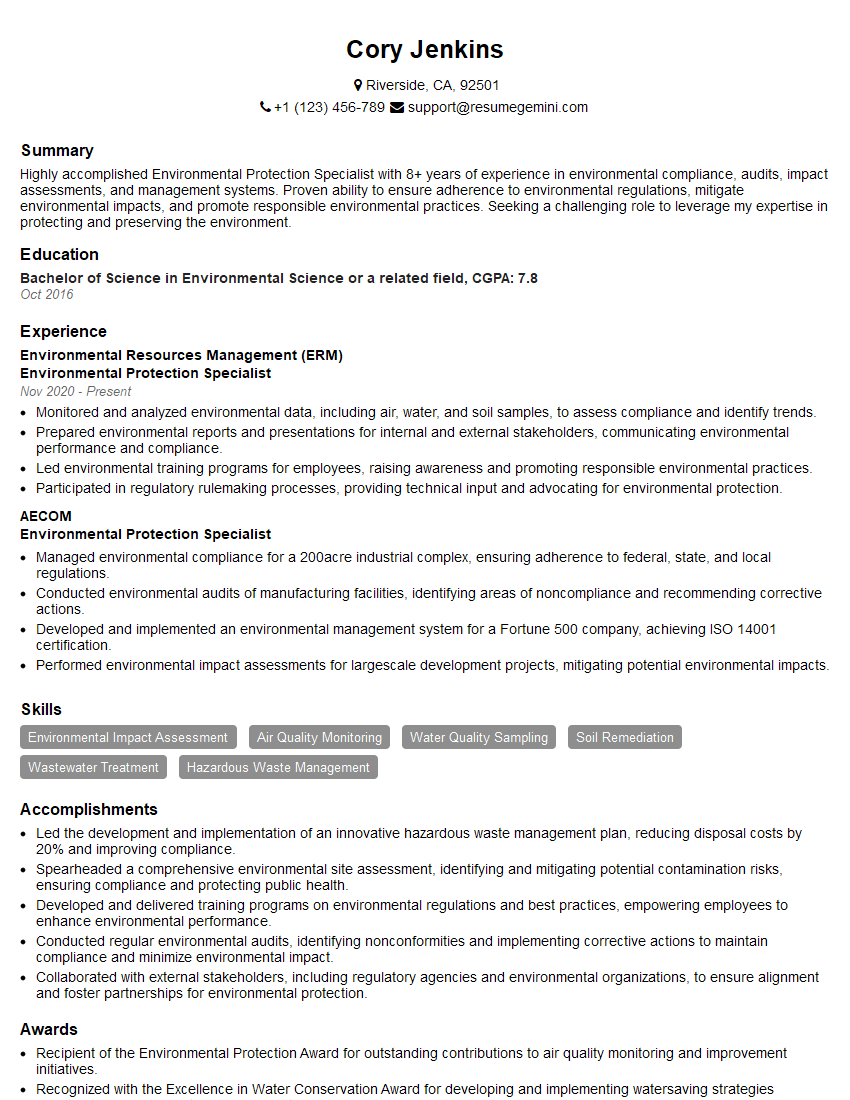
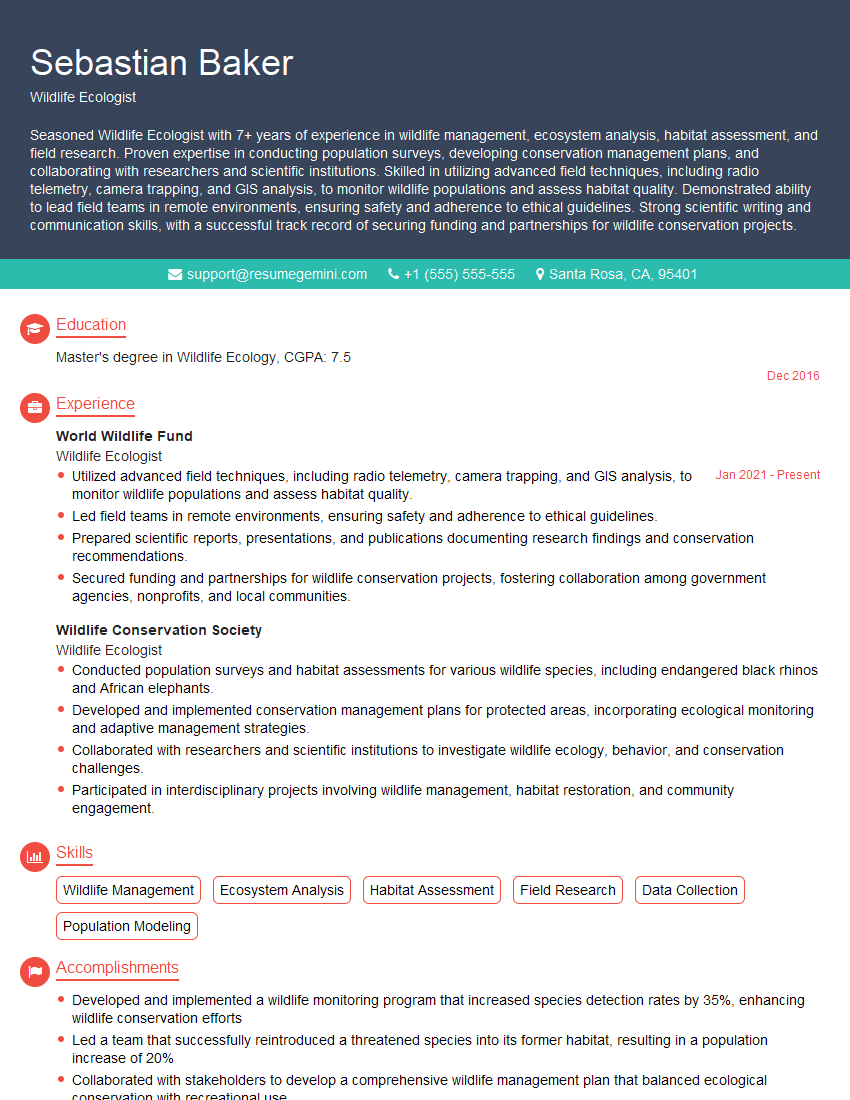
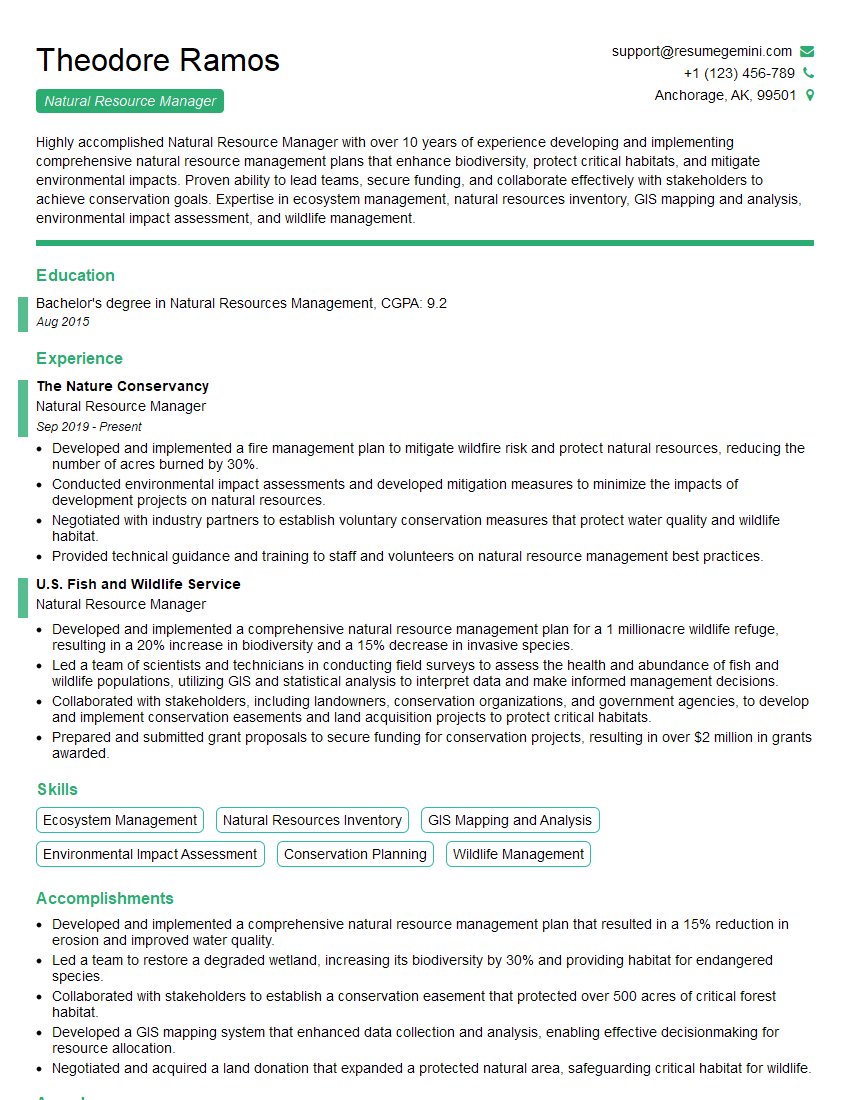
Mastering the Endangered Species Act is crucial for career advancement in conservation, environmental law, and related fields. A strong understanding of the ESA demonstrates your commitment to environmental protection and your ability to navigate complex regulatory frameworks. To significantly boost your job prospects, create a compelling and ATS-friendly resume that highlights your relevant skills and experience. ResumeGemini is a trusted resource that can help you build a professional and effective resume tailored to the specific requirements of ESA-related positions. Examples of resumes tailored to the ESA are available within ResumeGemini to guide you.

Explore more articles
Users Rating of Our Blogs
Share Your Experience
We value your feedback! Please rate our content and share your thoughts (optional).
What Readers Say About Our Blog
To the interviewgemini.com Webmaster.
Very helpful and content specific questions to help prepare me for my interview!
Thank you
To the interviewgemini.com Webmaster.
This was kind of a unique content I found around the specialized skills. Very helpful questions and good detailed answers.
Very Helpful blog, thank you Interviewgemini team.