Feeling uncertain about what to expect in your upcoming interview? We’ve got you covered! This blog highlights the most important Experience with NEPA and CEQA compliance interview questions and provides actionable advice to help you stand out as the ideal candidate. Let’s pave the way for your success.
Questions Asked in Experience with NEPA and CEQA compliance Interview
Q 1. Explain the key differences between NEPA and CEQA.
NEPA (National Environmental Policy Act) and CEQA (California Environmental Quality Act) are both landmark environmental laws requiring federal and California state agencies, respectively, to assess the environmental impacts of their actions. However, key differences exist. NEPA applies nationwide to federal actions, while CEQA applies only within California to state and local government actions. NEPA’s focus is broader, aiming to inform national environmental policy, whereas CEQA is more project-specific, targeting environmental protection at a state level. NEPA’s procedural requirements are less rigid than CEQA’s, which features a more detailed tiered system of environmental documents and a more robust public participation process. For example, under NEPA, a categorical exclusion can quickly clear a project, while CEQA may require a more thorough Initial Study. This difference reflects the size and complexity of each governmental sphere.
Q 2. Describe the process of preparing an Environmental Impact Report (EIR).
Preparing an Environmental Impact Report (EIR) is a comprehensive process. It begins with an Initial Study to determine the potential for significant environmental impacts. If significant impacts are identified, a full EIR is required. The process involves:
- Scoping: Defining the project’s boundaries and the range of environmental issues to be addressed. This often involves public workshops and agency consultation.
- Impact Analysis: Thoroughly investigating the potential environmental impacts across various areas like air quality, water resources, biological resources, and socioeconomics. This may include field studies, modeling, and expert consultation.
- Mitigation Measures: Identifying feasible ways to reduce or avoid significant adverse impacts. This is a crucial part, as it shows a commitment to environmental responsibility.
- Alternatives Analysis: Exploring reasonable alternatives to the proposed project and comparing their potential impacts. This is important to show that the chosen project is the least environmentally damaging feasible option.
- Draft EIR Preparation: Compiling the findings into a comprehensive report. This is a very time-consuming process, usually involving a multidisciplinary team.
- Public Review and Comment Period: Providing an opportunity for public comment on the draft EIR. Responses to these comments are incorporated into the final EIR.
- Final EIR Preparation and Certification: Incorporating public comments and completing a final version, which is then certified by the lead agency.
Q 3. What are the significant thresholds for triggering NEPA review?
NEPA review is triggered by the undertaking of a federal action that significantly affects the quality of the human environment. This is determined by considering several factors, including:
- Magnitude of the action: Size and scope of the project. A large dam would trigger review far more easily than a small park renovation.
- Geographic context: Location and surrounding environment. Construction near sensitive ecosystems (wetlands, endangered species habitats) increases the likelihood of review.
- Cumulative impacts: The combined impact of the proposed project and other past, present, or future projects in the area. This considers the aggregate effect.
- Federal involvement: Any level of federal funding, permitting, or oversight usually mandates NEPA review. A federal permit for a privately funded project would be subject to NEPA.
Q 4. How do you determine the scope of an environmental impact assessment?
Determining the scope of an environmental impact assessment is crucial for efficiency and effectiveness. It involves carefully considering the project’s:
- Geographic boundaries: Defining the area potentially affected by the project. This is not only the immediate area but also areas impacted by indirect effects (e.g., increased traffic from a new shopping center).
- Temporal boundaries: Assessing impacts over the project’s lifespan, including construction and operation phases. Short-term versus long-term effects are carefully delineated.
- Environmental resources: Identifying all potentially affected resources, such as water quality, air quality, wildlife, cultural resources, and socioeconomic conditions. Each resource relevant to the project must be addressed.
- Regulatory requirements: Considering all applicable laws, regulations, and policies. These may vary regionally and can influence which factors require a high degree of analysis.
- Stakeholder input: Engaging with stakeholders (communities, agencies, and interest groups) early in the process to understand their concerns and perspectives. This helps define the scope based on identified concerns.
Q 5. Explain the concept of ‘mitigation’ within the context of NEPA/CEQA.
Mitigation, in the context of NEPA/CEQA, refers to measures taken to avoid, reduce, or compensate for significant adverse environmental impacts. These measures are designed to minimize the project’s negative footprint and ensure environmental protection. There are various types of mitigation, such as:
- Avoidance: Preventing impacts altogether by changing the project design or location. For instance, re-routing a road to avoid a wetland.
- Minimization: Reducing the magnitude or duration of impacts. Implementing noise barriers to reduce construction-related noise pollution is an example.
- Reclamation/Restoration: Repairing or restoring damaged or degraded areas after construction. Re-vegetating a disturbed area is one example.
- Compensation/Mitigation Banking: Offsetting unavoidable impacts by purchasing credits from a mitigation bank. This might involve contributing funds to wetland restoration in a different location to compensate for wetland loss at the project site.
Q 6. What are the different types of environmental documents required under NEPA and CEQA?
NEPA and CEQA require various environmental documents depending on the project’s potential impact. Under NEPA, these include:
- Categorical Exclusion (CE): Used for projects that do not individually or cumulatively have a significant effect on the human environment.
- Environmental Assessment (EA): Determines whether an EIS is necessary. If no significant impact is found, a Finding of No Significant Impact (FONSI) is issued.
- Environmental Impact Statement (EIS): A comprehensive document analyzing a project’s potential environmental impacts, alternatives, and mitigation measures.
- Initial Study (IS): Determines whether a negative declaration or EIR is necessary.
- Negative Declaration (ND): Indicates that a project will not have significant environmental impacts.
- Environmental Impact Report (EIR): The equivalent of an EIS under NEPA.
Q 7. How do you identify and assess potential environmental impacts of a project?
Identifying and assessing potential environmental impacts involves a systematic approach that generally includes:
- Project Description: Clearly outlining the project’s features, location, and operational characteristics.
- Environmental Baseline Studies: Gathering data on existing environmental conditions. This may involve field surveys, literature reviews, and modeling.
- Impact Identification: Determining the potential environmental effects of the project. This should consider both direct and indirect effects as well as short-term and long-term consequences. Brainstorming sessions and checklists can help here.
- Impact Assessment: Evaluating the significance of the identified impacts. This is often based on professional judgment, but also incorporates scientific analysis, regulatory thresholds, and public concern.
- Cumulative Impacts Analysis: Assessing the combined effects of the project with other past, present, and reasonably foreseeable future projects. This is particularly crucial for projects in already stressed environments.
Q 8. Describe your experience with the categorical exclusion process under NEPA.
The categorical exclusion (CATEX) process under NEPA allows federal agencies to determine that a proposed action does not individually or cumulatively have a significant effect on the human environment and therefore does not require an Environmental Assessment (EA) or Environmental Impact Statement (EIS). It’s a crucial time-saver, streamlining the NEPA process for projects with minimal environmental impact.
My experience involves identifying projects that meet the criteria for categorical exclusions outlined in agency-specific regulations and NEPA implementing regulations (40 CFR 1508.4). This requires a thorough understanding of the proposed action, its potential environmental impacts, and the applicable CATEX categories. For example, I’ve worked on projects involving minor maintenance on existing federal facilities, where the nature of the work and its limited scope clearly fell under established CATEX criteria. The process involves preparing a concise documentation that justifies the CATEX determination, including a consideration of context and intensity, and ensuring this documentation is properly documented and archived.
A key aspect is understanding the ‘no significant impact’ finding; this isn’t a subjective judgment. It requires a systematic review, considering both direct and indirect effects, and often involves consultation with environmental specialists to ensure a robust and defensible decision.
Q 9. How do you handle conflicts between environmental regulations and project goals?
Balancing environmental regulations and project goals is a fundamental challenge in my work. It often involves creative problem-solving and collaboration. My approach involves early and continuous communication with stakeholders, including environmental agencies, project managers, and affected communities. The goal is to find solutions that minimize environmental impacts while achieving project objectives. This might involve modifying project designs, implementing mitigation measures, or exploring alternative approaches.
For instance, I worked on a highway expansion project where initial plans significantly impacted a wetland ecosystem. Through collaboration, we redesigned the project to minimize wetland encroachment, utilizing innovative construction techniques and incorporating compensatory mitigation measures to restore an equivalent area of wetland elsewhere. This resulted in a project that met transportation needs while adhering to environmental regulations.
Sometimes, complete project goals are unattainable while meeting environmental standards. In such cases, a rigorous cost-benefit analysis is conducted, thoroughly documenting trade-offs and justifying the final decision based on a clear understanding of legal requirements and public interest.
Q 10. What is your experience with public comment periods in NEPA/CEQA compliance?
Public comment periods are vital for ensuring transparency and public participation in environmental review processes under NEPA and CEQA. My experience includes developing and implementing public notification strategies, managing the collection and analysis of comments, and preparing responses to those comments. This involves understanding the legal requirements for public notice, such as the timing, methods of notification, and the format for submitting comments.
I’ve managed public comment periods for various projects, from small-scale developments to large-scale infrastructure projects. This includes setting up online portals, distributing physical notices, holding public meetings, and coordinating with community organizations. Analyzing the comments requires careful attention to detail, identifying recurring themes, and summarizing the feedback objectively. Responding to comments is equally crucial, demonstrating thoughtful consideration of the public’s concerns and explaining the basis for decisions made.
Effective public engagement builds trust and fosters a collaborative approach to environmental decision-making, ultimately leading to more sustainable and equitable outcomes.
Q 11. Explain your understanding of the National Environmental Policy Act (NEPA).
The National Environmental Policy Act (NEPA) of 1969 is a landmark environmental law that established a national policy for the environment. It requires federal agencies to integrate environmental values into their decision-making processes by assessing the potential environmental impacts of their actions before making decisions.
Key aspects of NEPA include:
- Environmental Impact Statements (EIS): Detailed analyses of significant environmental impacts for major federal actions.
- Environmental Assessments (EA): Brief analyses to determine whether an EIS is needed.
- Categorical Exclusions (CATEX): Categories of actions that do not require an EA or EIS.
- Public Participation: Opportunities for public involvement throughout the NEPA process.
NEPA doesn’t prescribe specific environmental outcomes; instead, it mandates a thorough evaluation process to inform decision-making, ensuring that environmental considerations are given appropriate weight.
Q 12. Explain your understanding of the California Environmental Quality Act (CEQA).
The California Environmental Quality Act (CEQA) is California’s equivalent of NEPA. It requires state and local agencies to identify and mitigate the significant environmental effects of their projects before approving them. While similar in principle to NEPA, CEQA has its own unique requirements and procedures.
Key differences and similarities:
- Focus: Both aim to ensure environmental protection, but CEQA focuses specifically on California’s unique environmental conditions.
- Process: CEQA utilizes a similar tiered system to NEPA, including Environmental Impact Reports (EIRs) similar to EISs, and Initial Studies (IS) similar to EAs.
- Legal Framework: While similar in purpose, the legal specifics and interpretation differ between the two Acts.
Understanding the nuances of CEQA, including its specific thresholds for significance and mitigation requirements, is essential for projects in California.
Q 13. How familiar are you with the different levels of environmental review?
NEPA and CEQA both utilize a tiered system of environmental review, ranging from minimal to extensive analysis. The level of review depends on the potential environmental impact of the proposed action.
Under NEPA:
- Categorical Exclusion (CATEX): No further review needed.
- Environmental Assessment (EA): Determines whether an EIS is necessary.
- Environmental Impact Statement (EIS): Comprehensive analysis of significant impacts.
Under CEQA:
- Categorical Exemption: No further review needed.
- Negative Declaration: Project won’t have significant environmental impacts.
- Mitigated Negative Declaration: Project will have significant impacts that can be mitigated.
- Environmental Impact Report (EIR): Comprehensive analysis of significant impacts.
My experience encompasses all levels of review, enabling me to tailor the appropriate level of analysis to each project, optimizing efficiency while ensuring compliance.
Q 14. Describe your experience with environmental impact statements (EIS) and environmental assessments (EA).
Environmental Impact Statements (EISs) and Environmental Assessments (EAs) are crucial components of the NEPA process, while Environmental Impact Reports (EIRs) and Initial Studies (IS) play similar roles under CEQA. My experience includes preparing, reviewing, and commenting on these documents for a variety of projects.
EAs/ISs are shorter documents that determine whether a more extensive review (EIS/EIR) is needed. They analyze the potential environmental impacts and identify whether those impacts are significant. If the impacts are deemed insignificant, the agency can issue a Finding of No Significant Impact (FONSI) or a Negative Declaration.
EISs/EIRs, on the other hand, are far more extensive and detailed. They comprehensively analyze the potential environmental impacts of a proposed project, including direct, indirect, and cumulative effects. They present a range of alternatives, including the ‘no-action’ alternative, and analyze the environmental consequences of each. They also propose mitigation measures to lessen any significant adverse impacts. The process often involves extensive public outreach and consultation with experts from different fields. I’ve been involved in all stages – from scoping meetings to final document production – ensuring compliance with all applicable regulations.
Preparing these documents requires collaboration with various specialists (e.g., biologists, hydrologists, air quality experts), ensuring a thorough and scientifically sound analysis.
Q 15. How do you ensure compliance with NEPA/CEQA throughout a project’s lifecycle?
Ensuring NEPA/CEQA compliance throughout a project’s lifecycle requires a proactive, integrated approach. It’s not a checklist to be completed at the end, but a process woven into every stage, from initial planning to project completion and even post-project monitoring.
- Early Engagement: We begin by conducting thorough early environmental assessments to identify potential impacts. This involves site visits, environmental resource inventories, and preliminary consultations with relevant regulatory agencies. This allows us to proactively identify and mitigate potential issues early, preventing costly delays later.
- Scoping & Planning: Based on the initial assessment, we develop a robust environmental compliance plan. This plan outlines the required studies, analyses, and documentation, aligning with both NEPA (National Environmental Policy Act) and, if applicable, CEQA (California Environmental Quality Act) requirements. For example, we’d determine if an Environmental Assessment (EA) or Environmental Impact Statement (EIS) is needed under NEPA, or an Initial Study or Environmental Impact Report under CEQA.
- Document Preparation & Review: We prepare high-quality, technically sound documentation that meticulously addresses all relevant environmental concerns. This might include a biological assessment, noise study, air quality analysis, or cultural resources survey. Each document undergoes rigorous internal review, ensuring accuracy and completeness.
- Agency Coordination & Public Involvement: We engage actively with regulatory agencies throughout the process, seeking clarity, addressing questions, and negotiating potential issues. We also ensure public participation through opportunities for comment and input, often holding public hearings or workshops to incorporate community perspectives.
- Mitigation & Monitoring: Mitigation measures to reduce or eliminate identified environmental impacts are incorporated into the project design. Post-project monitoring then ensures the effectiveness of these mitigations and confirms compliance with the approved environmental documents.
For instance, in a recent highway expansion project, early engagement identified a sensitive bat habitat. Our proactive planning resulted in minor route adjustments and the incorporation of mitigation measures, avoiding significant delays and potential litigation.
Career Expert Tips:
- Ace those interviews! Prepare effectively by reviewing the Top 50 Most Common Interview Questions on ResumeGemini.
- Navigate your job search with confidence! Explore a wide range of Career Tips on ResumeGemini. Learn about common challenges and recommendations to overcome them.
- Craft the perfect resume! Master the Art of Resume Writing with ResumeGemini’s guide. Showcase your unique qualifications and achievements effectively.
- Don’t miss out on holiday savings! Build your dream resume with ResumeGemini’s ATS optimized templates.
Q 16. What are the key legal requirements for preparing a compliant NEPA/CEQA document?
The key legal requirements for preparing compliant NEPA/CEQA documents are multifaceted and depend on the project’s potential environmental impacts. However, some common threads include:
- Detailed Project Description: A comprehensive description of the project, its location, and its potential impacts is fundamental. This needs to be clear, concise, and readily understandable by technical and non-technical audiences.
- Thorough Environmental Analysis: This is the heart of the document and must include an assessment of all potentially significant impacts, applying appropriate methodologies and data. For example, we might use specialized software to model air quality impacts or utilize GIS to assess habitat fragmentation.
- Consideration of Alternatives: NEPA and CEQA require the evaluation of reasonable alternatives to the proposed project, demonstrating a good-faith effort to minimize environmental impacts. This often includes a “no-action” alternative for comparison.
- Mitigation Measures: Identification and detailed description of feasible and effective mitigation measures to reduce or avoid significant adverse environmental impacts are crucial. Mitigation measures must be quantifiable and demonstrably effective.
- Compliance with all relevant laws and regulations: The document must adhere to all applicable federal, state, and local environmental laws and regulations. This includes Endangered Species Act compliance, Clean Water Act compliance, and potentially many other specific regulations.
- Transparency & Public Disclosure: NEPA/CEQA documents must be made available to the public, allowing for review and comment. This supports transparency and ensures that impacted communities have an opportunity to participate in the decision-making process.
Failure to adequately address these requirements can result in project delays, legal challenges, and potentially even project cancellation.
Q 17. What are your strategies for managing environmental risks and liabilities?
Managing environmental risks and liabilities requires a multi-pronged strategy that integrates risk assessment, mitigation, and robust compliance procedures. The goal is to proactively identify potential problems, minimize their likelihood, and develop contingency plans to address any unforeseen events.
- Proactive Risk Assessment: We identify and evaluate potential environmental risks throughout the project lifecycle. This involves a comprehensive review of site conditions, potential impacts, and applicable regulations. Tools like Failure Modes and Effects Analysis (FMEA) can be valuable in identifying and prioritizing risks.
- Comprehensive Mitigation Planning: Once risks are identified, we develop and implement effective mitigation strategies. This goes beyond simply listing measures; it includes detailed plans, specifications, and schedules for their implementation. For example, we might develop detailed erosion and sediment control plans, or specify particular types of construction equipment to minimize noise impacts.
- Robust Compliance Program: A strong compliance program is essential. This involves the implementation of clear procedures, regular monitoring, and thorough documentation. We maintain detailed records of all environmental compliance efforts, ensuring we can demonstrate compliance to regulatory agencies, and to provide evidence of our due diligence.
- Insurance & Bonding: Appropriate insurance and surety bonds can provide financial protection against unforeseen environmental liabilities. This is crucial to mitigate the financial risks associated with potential environmental damage or non-compliance.
- Contingency Planning: Even with the best planning, unexpected events can occur. Having a well-defined contingency plan to address environmental incidents or emergencies is crucial. This might include protocols for responding to spills, controlling erosion, or dealing with unexpected discoveries of hazardous materials.
For instance, during a remediation project on a former industrial site, our robust risk assessment identified the potential for the release of hazardous substances. We developed a comprehensive plan that included specialized excavation techniques, worker safety protocols, and emergency response procedures, preventing any environmental incidents.
Q 18. Describe your experience working with environmental regulatory agencies.
My experience working with environmental regulatory agencies spans many years and various projects. I’ve developed strong working relationships based on open communication, transparency, and a commitment to collaborative problem-solving.
- Effective Communication: I consistently ensure clear and concise communication with agencies. This includes providing timely updates, proactively addressing questions, and submitting well-prepared permit applications and reports. I’ve found that proactively addressing potential concerns often reduces delays and misunderstandings.
- Understanding Agency Expectations: I have a deep understanding of the specific requirements, priorities, and procedures of agencies like the EPA, the California Department of Fish and Wildlife, and the regional water quality control boards. This knowledge enables me to navigate the regulatory landscape effectively and efficiently.
- Negotiation & Conflict Resolution: I’ve successfully negotiated project modifications and addressed agency concerns through constructive dialogue. In cases of disagreement, I’ve utilized collaborative processes like mediation to find mutually agreeable solutions. Sometimes, a little give-and-take is necessary to achieve a successful outcome.
- Building Trust & Rapport: I emphasize building strong, trusting relationships with agency staff. This ensures open communication, efficient review processes, and greater receptivity to project proposals. Having a good working relationship can be invaluable in navigating complex environmental regulations.
For example, in a recent project, we faced an unusual regulatory challenge involving an endangered species. Through proactive communication and collaboration with the US Fish and Wildlife Service, we developed and implemented innovative mitigation strategies that ensured both project success and species protection.
Q 19. How do you stay up-to-date on changes in NEPA and CEQA regulations?
Staying current with changes in NEPA and CEQA regulations is crucial for maintaining compliance and providing clients with the best possible advice. My approach is multi-faceted and includes:
- Subscription to Professional Journals and Newsletters: I regularly read publications that cover environmental law, policy, and regulation. This ensures I am aware of recent court decisions, legislative changes, and agency guidance updates. These sources often provide insightful analysis and practical applications of recent changes.
- Attendance at Professional Conferences and Workshops: Networking and learning directly from experts and practitioners at conferences is immensely valuable. These events allow for the exchange of knowledge and best practices related to compliance issues.
- Agency Website Monitoring: I regularly check the websites of relevant federal and state environmental agencies for updates to regulations, guidance documents, and policy changes. Often, agencies will provide informative summaries of changes or frequently asked questions.
- Participation in Professional Organizations: Membership in professional organizations, such as the Association of Environmental Professionals (AEP), offers access to networking opportunities, professional development resources, and updates on relevant legislative and regulatory changes.
- Collaboration with Legal Counsel: When faced with complex or ambiguous regulatory questions, I collaborate with specialized environmental law firms for legal counsel. Their expertise provides a crucial layer of assurance in interpreting and applying regulatory requirements.
Keeping abreast of regulatory changes is not just a matter of compliance; it is a key component of providing accurate and timely advice to our clients and ensuring their projects are successful.
Q 20. Describe your experience with environmental data analysis and interpretation.
My experience with environmental data analysis and interpretation is extensive, encompassing various data types and analytical techniques. I leverage this expertise to generate credible and reliable environmental assessments.
- Data Collection & Management: I have experience collecting environmental data through various methods, including field surveys, remote sensing, and GIS mapping. This data is meticulously managed and organized using appropriate databases and software for easy retrieval and analysis.
- Statistical Analysis: I’m proficient in employing statistical techniques to analyze environmental data, such as trend analysis, hypothesis testing, and correlation analysis. This is critical for determining significance and drawing valid conclusions from environmental data sets.
- Spatial Analysis (GIS): I utilize Geographic Information Systems (GIS) to analyze spatial patterns and relationships in environmental data. This is invaluable for tasks such as habitat mapping, impact assessment, and the visualization of environmental data.
- Modeling & Simulation: I have experience using environmental models to predict the potential impacts of projects on various environmental parameters, such as air quality, water quality, and noise levels. These models provide quantitative insights which are critical for decision-making.
- Data Interpretation & Report Writing: The ability to effectively interpret environmental data and present findings in a clear and concise manner is crucial. This includes preparing well-structured reports that are accessible to both technical and non-technical audiences.
For example, in a recent project, we used GIS to analyze the potential impacts of a proposed development on sensitive wetlands. The spatial analysis revealed that the project could fragment wetland habitat, leading to the adoption of mitigation measures to avoid significant environmental impacts.
Q 21. How do you communicate complex environmental information to non-technical audiences?
Communicating complex environmental information to non-technical audiences requires a skillful blend of clarity, simplicity, and visual aids. My approach emphasizes translating technical jargon into plain language and employing visuals to enhance understanding.
- Plain Language: I avoid technical jargon whenever possible, replacing it with clear and concise language that is easily understood. If technical terms are necessary, I always provide clear definitions.
- Visual Aids: I utilize maps, charts, graphs, and other visual aids to present complex data in a digestible format. Visualizations make it much easier for audiences to grasp key concepts and patterns.
- Analogies & Metaphors: I employ relatable analogies and metaphors to explain complex concepts in a way that resonates with non-technical audiences. This helps to build understanding and create a connection between the information and the audience’s existing knowledge.
- Interactive Presentations: For larger groups, I incorporate interactive elements into presentations, such as Q&A sessions and hands-on activities. This allows for direct engagement and encourages audience participation.
- Tailored Communication: I always tailor my communication to the specific audience. I consider their background, knowledge level, and interests when crafting presentations and materials. This ensures the information is both relevant and accessible.
For instance, when presenting to a community group about a potential air quality impact, I used a simple bar graph to illustrate projected pollutant levels compared to acceptable standards. I also used the analogy of a congested freeway to explain the concept of air pollution buildup.
Q 22. What are your skills in using environmental modeling and GIS software?
My proficiency in environmental modeling and GIS software is extensive. I’m highly skilled in using tools like ArcGIS, QGIS, and various hydrological and air quality modeling packages. This includes not only the technical aspects of data input, analysis, and visualization, but also the crucial ability to interpret the results within the context of NEPA/CEQA requirements. For example, I’ve used ArcGIS to create detailed habitat suitability maps for endangered species, informing mitigation strategies within a CEQA document. I’ve also employed hydrological models to assess potential impacts of a proposed development on surface water runoff and flooding, and integrated these results into a NEPA Environmental Impact Statement (EIS). My experience extends to using these tools to model cumulative impacts, a critical aspect of both NEPA and CEQA review.
Beyond the software itself, I understand the limitations and uncertainties inherent in modeling. I’m adept at selecting the appropriate model for a given scenario, validating model outputs against field data, and communicating the results and associated uncertainties to both technical and non-technical audiences. This is vital for transparent and defensible environmental compliance.
Q 23. Describe your experience with environmental permitting processes.
My experience with environmental permitting processes encompasses the entire lifecycle, from initial project conception and scoping through permit acquisition and post-permitting monitoring. I’ve successfully navigated the complexities of obtaining federal and state permits under both NEPA and CEQA. This includes preparing and submitting permit applications, responding to agency comments, and attending and participating in public hearings. I’m familiar with the intricacies of different permit types, including but not limited to Clean Water Act Section 404 permits, Endangered Species Act consultations, and air quality permits. For instance, I managed the acquisition of a 404 permit for a large-scale infrastructure project, successfully addressing concerns from regulatory agencies regarding potential impacts on wetlands. My approach emphasizes proactive communication with regulatory agencies, ensuring compliance with all applicable laws and regulations and a transparent process.
Q 24. How do you incorporate sustainability principles into environmental compliance strategies?
Sustainability is central to my approach to environmental compliance. I don’t view compliance as merely a regulatory hurdle, but as an opportunity to promote environmentally responsible and sustainable outcomes. I incorporate sustainability principles into my strategies by actively seeking opportunities to minimize environmental impacts, enhance resource efficiency, and promote long-term environmental stewardship. For example, in a recent project, we explored using sustainable building materials to reduce carbon emissions and construction waste, effectively addressing several CEQA thresholds. We also investigated options for incorporating renewable energy sources, and explored opportunities for habitat restoration as part of project mitigation measures. This often includes developing innovative solutions that minimize the project’s footprint and maximize its positive contribution to the environment. I leverage tools like Life Cycle Assessments (LCA) to evaluate the overall environmental impacts of different project alternatives.
Q 25. How would you approach a situation where a project’s environmental impacts are unclear?
When a project’s environmental impacts are unclear, a thorough and systematic approach is essential. My strategy begins with a comprehensive scoping process to identify all potentially significant impacts. This might involve literature reviews, site visits, and consultations with subject matter experts (SMEs). If needed, I recommend initiating a more detailed environmental investigation, including targeted field studies, such as biological surveys or water quality monitoring, to gather the necessary data to adequately evaluate potential impacts. This data informs a robust analysis, which may include additional modeling to help clarify areas of uncertainty. The goal is to gather enough information to make informed decisions and develop appropriate mitigation measures. If substantial uncertainty remains, I advocate for a phased approach, allowing for adaptive management and monitoring to reduce risk and refine mitigation strategies as we gain more data during project implementation. This approach ensures transparency and minimizes potential negative consequences. This methodology is crucial for complying with the NEPA and CEQA requirements of thorough investigation and analysis.
Q 26. Describe a situation where you had to resolve a conflict regarding environmental compliance.
In one project, a disagreement arose between the project proponent and a local community group concerning the potential impact of a proposed road on a sensitive riparian habitat. The community group expressed concerns that weren’t adequately addressed in the initial environmental documentation. To resolve the conflict, I facilitated a series of meetings involving all stakeholders – the project proponent, the community group, and relevant regulatory agencies. This facilitated open communication and collaboration. We created a platform for open dialogue, fostering mutual understanding and trust. I used collaborative mapping and visualization tools to present data and analysis in a clear and accessible manner to all stakeholders, including those without a scientific background. Through this transparent process, we jointly developed a revised mitigation plan that addressed the community’s concerns while still allowing the project to proceed. This involved a collaborative design of a wildlife crossing structure that minimized road impacts on the riparian area, demonstrating a commitment to ecological preservation. This experience underscored the importance of stakeholder engagement in successful environmental compliance.
Q 27. How do you ensure the accuracy and completeness of NEPA/CEQA documentation?
Ensuring the accuracy and completeness of NEPA/CEQA documentation requires a rigorous and systematic approach. I implement a quality assurance (QA) and quality control (QC) plan throughout the entire process. This involves peer reviews by other qualified professionals, thorough fact-checking, and meticulous attention to detail. We utilize checklists and templates to ensure all required elements are included and consistently formatted. Data transparency and traceability are paramount – I ensure that all data sources are clearly identified and referenced, and all analyses are thoroughly documented and explained. We employ a version control system to track changes and maintain a clear audit trail of document development. I also prioritize clarity and accessibility in our writing, tailoring the language to the intended audience, while still remaining technically accurate. The goal is to produce a document that is not only compliant but also readily understandable by regulators, stakeholders, and the public. This process minimizes the risk of errors and ensures that the documentation effectively communicates the project’s potential environmental impacts and mitigation measures.
Key Topics to Learn for NEPA and CEQA Compliance Interviews
- NEPA Fundamentals: Understanding the National Environmental Policy Act’s purpose, scope, and key provisions. This includes knowing the different levels of environmental review (e.g., Categorical Exclusion, Environmental Assessment, Environmental Impact Statement).
- CEQA Fundamentals: Grasping the California Environmental Quality Act’s framework, its similarities and differences compared to NEPA, and the various types of environmental documents required (e.g., Initial Study, Negative Declaration, Environmental Impact Report).
- Environmental Impact Assessment Methodologies: Familiarize yourself with the process of identifying potential environmental impacts, developing mitigation measures, and assessing alternatives. Understanding impact significance criteria is crucial.
- Practical Application: Gain experience with real-world scenarios. Think about how you would apply NEPA and CEQA principles to different project types (e.g., infrastructure projects, renewable energy developments, land use planning).
- Public Participation and Stakeholder Engagement: Understand the importance of engaging with the public and stakeholders throughout the environmental review process. Know how to effectively communicate complex environmental information.
- Permitting and Compliance: Gain a working knowledge of how NEPA and CEQA compliance integrates with the broader permitting process and how to ensure ongoing compliance.
- Legal and Regulatory Landscape: Familiarize yourself with recent updates, court cases, and interpretations of both NEPA and CEQA regulations.
- Problem-Solving and Critical Thinking: Practice analyzing complex environmental scenarios, identifying potential conflicts, and proposing creative solutions. Be ready to discuss your approach to problem-solving in an interview setting.
Next Steps
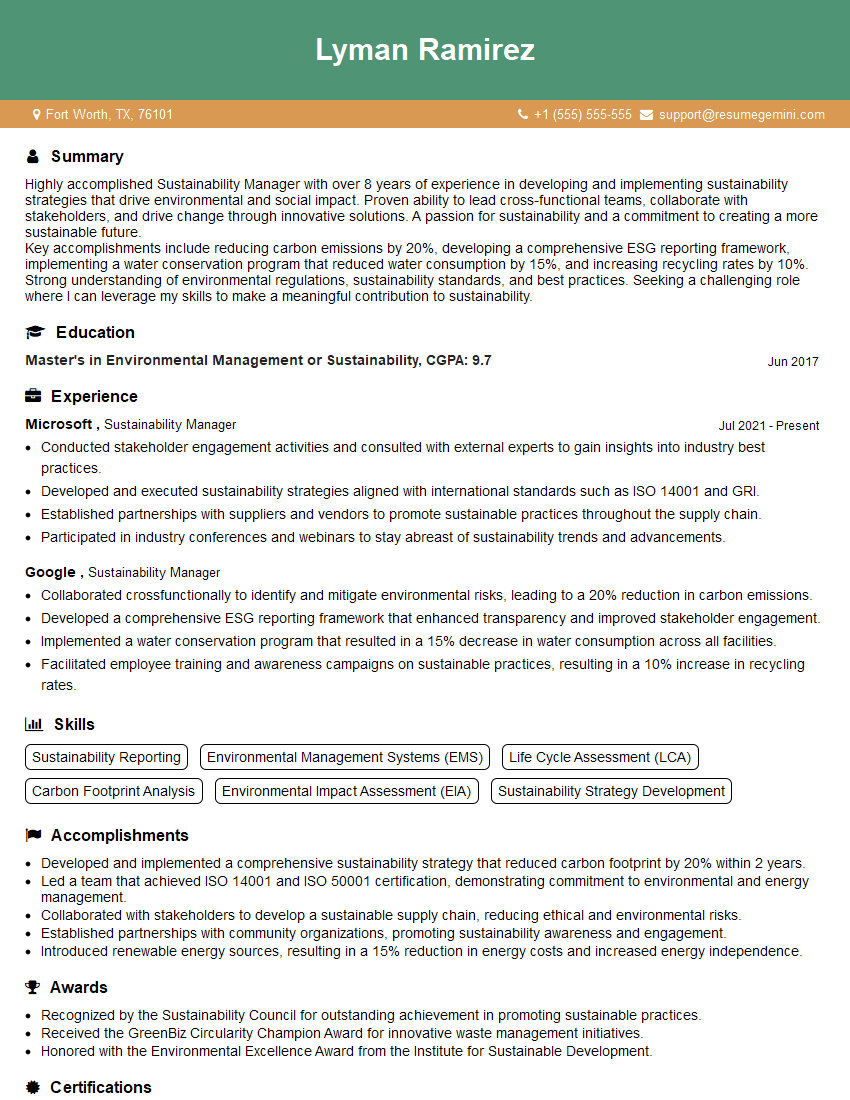
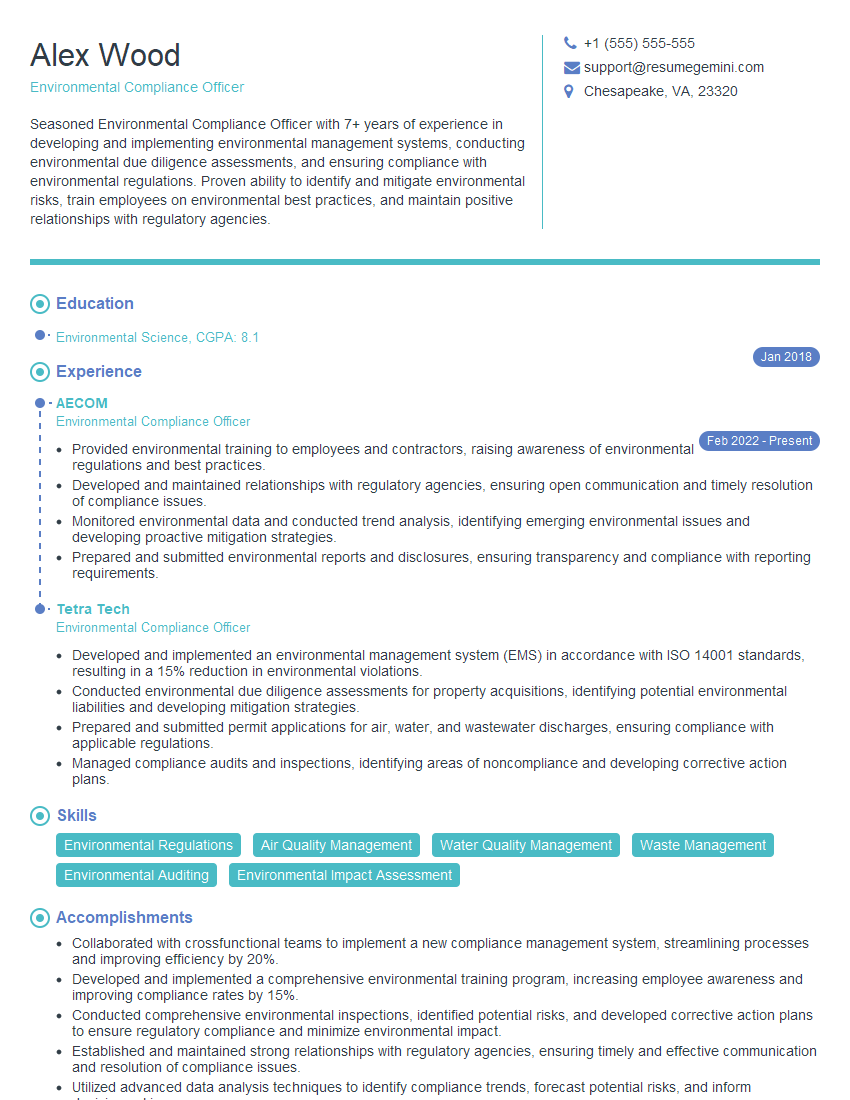
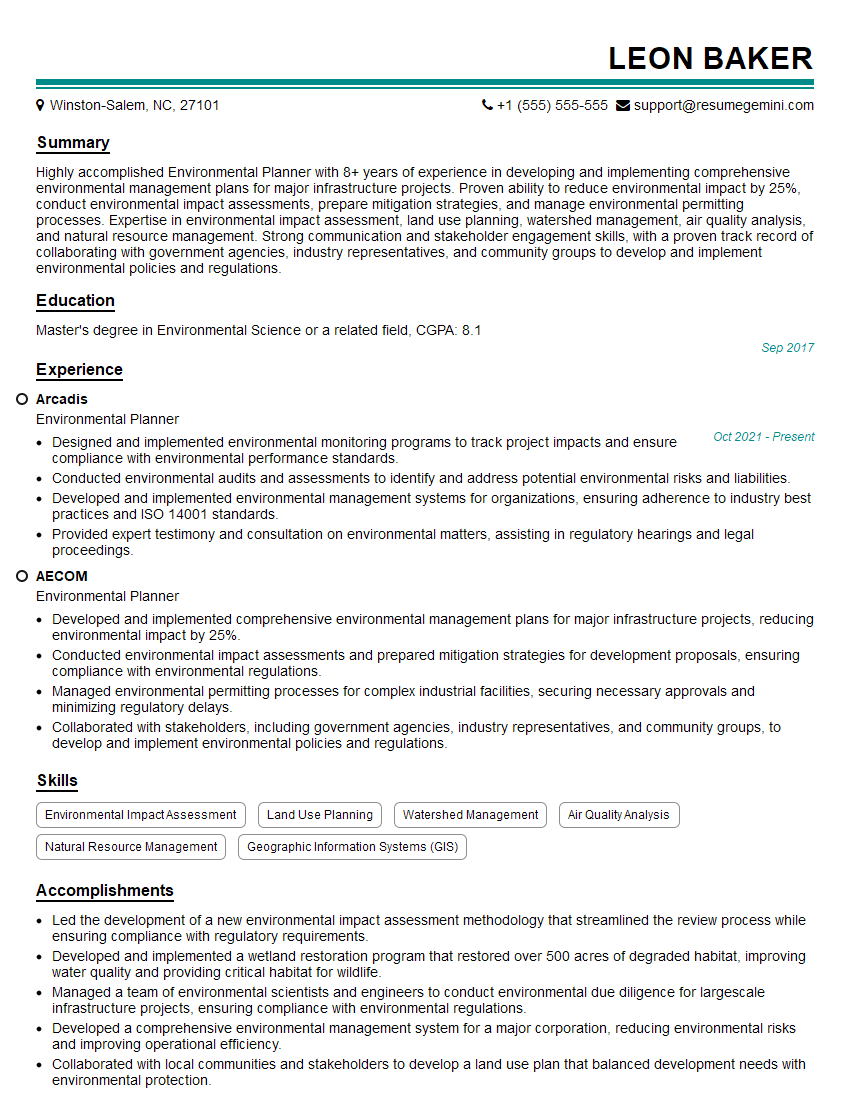
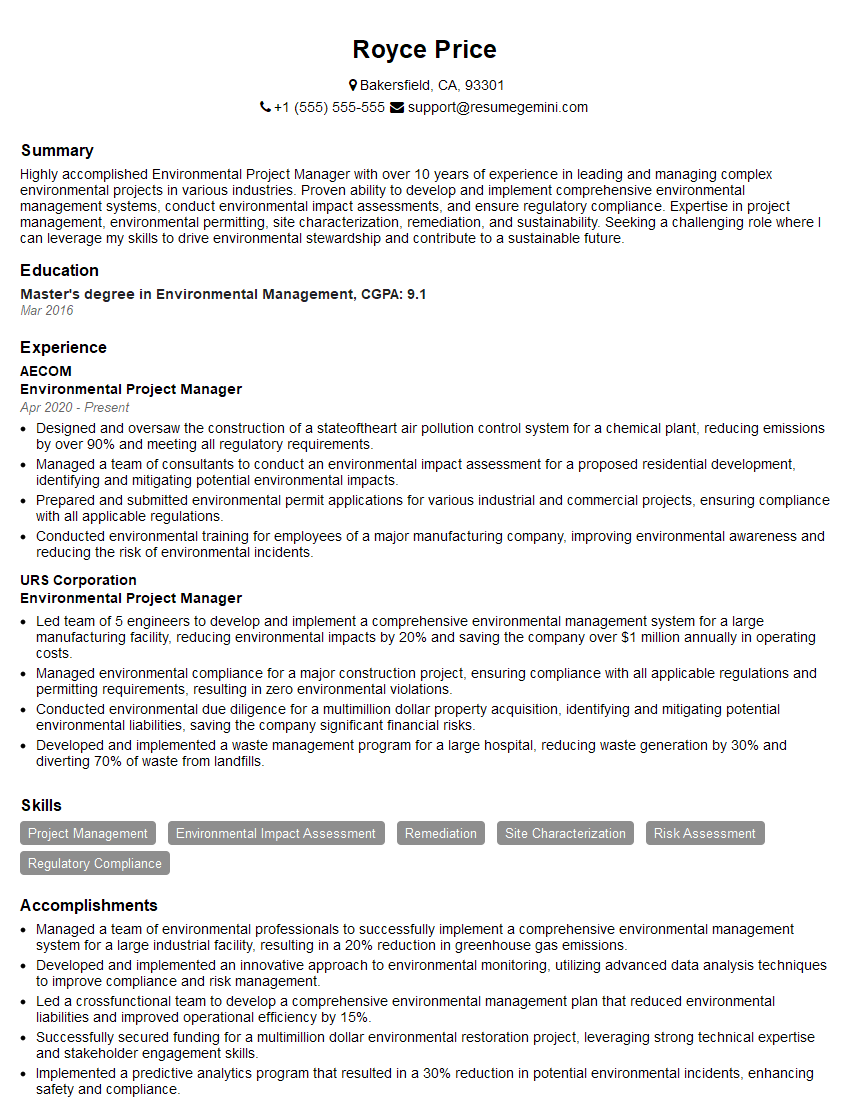
Mastering NEPA and CEQA compliance significantly enhances your career prospects in environmental consulting, engineering, and government agencies. Demonstrating this expertise is critical for securing your dream role. To maximize your chances, craft an ATS-friendly resume that highlights your skills and experience effectively. ResumeGemini is a trusted resource that can help you build a professional and impactful resume tailored to your specific needs. Examples of resumes tailored to NEPA and CEQA compliance experience are available to guide you. Use these resources to showcase your capabilities and land that interview!

Explore more articles
Users Rating of Our Blogs
Share Your Experience
We value your feedback! Please rate our content and share your thoughts (optional).
What Readers Say About Our Blog
To the interviewgemini.com Webmaster.
Very helpful and content specific questions to help prepare me for my interview!
Thank you
To the interviewgemini.com Webmaster.
This was kind of a unique content I found around the specialized skills. Very helpful questions and good detailed answers.
Very Helpful blog, thank you Interviewgemini team.