Are you ready to stand out in your next interview? Understanding and preparing for Experience in habitat restoration and enhancement interview questions is a game-changer. In this blog, we’ve compiled key questions and expert advice to help you showcase your skills with confidence and precision. Let’s get started on your journey to acing the interview.
Questions Asked in Experience in habitat restoration and enhancement Interview
Q 1. Describe your experience with different habitat restoration techniques.
My experience encompasses a wide range of habitat restoration techniques, tailored to specific ecosystem needs. For example, in riparian restoration, I’ve utilized techniques like channel stabilization with bioengineering methods (live staking and root wads) to reduce erosion and improve water quality. In prairie restoration, prescribed burns are crucial for managing invasive species and promoting native plant diversity. I’ve also worked extensively with wetland restoration, employing techniques such as hydrologic manipulation (managing water levels) and soil amendment to create suitable conditions for wetland vegetation. In coastal habitats, we’ve implemented oyster reef restoration projects to enhance biodiversity and coastal protection. Each technique requires a nuanced understanding of the site’s specific ecology and challenges.
- Hydrologic Restoration: Manipulating water levels to mimic natural hydrological regimes. This is particularly important in wetlands and riparian areas.
- Bioengineering: Using living plants to stabilize slopes and stream banks, reducing erosion.
- Soil Amendment: Improving soil quality through the addition of organic matter or other soil components.
- Seedling/Seedling Planting: Direct planting of native species to establish vegetation cover.
- Prescribed Burning: Controlled burns to manage vegetation and promote biodiversity (requires careful planning and permits).
Q 2. Explain the process of conducting a site assessment for habitat restoration.
A thorough site assessment is the cornerstone of successful habitat restoration. It involves a multi-faceted approach combining field observations, historical data analysis, and laboratory testing. The process typically begins with a desktop review, examining aerial photographs, soil maps, and historical land use records to understand the site’s history and potential challenges. On-site investigations then follow, involving detailed vegetation surveys, soil sampling, and water quality analysis. We also assess hydrology, topography, and the presence of invasive species. Finally, we consider potential threats, such as pollution or future development, which could impact the project’s long-term success. Imagine it like diagnosing a patient – before prescribing treatment, you need a complete understanding of their medical history and current condition.
- Desktop Study: Review of historical maps, aerial imagery, and relevant literature.
- Field Survey: On-site vegetation assessment, soil sampling, and hydrological measurements.
- Laboratory Analysis: Soil testing for nutrients, contaminants, and other parameters.
- Invasive Species Assessment: Identification and quantification of invasive species.
- Hydrologic Assessment: Evaluation of water flow, water table depth, and drainage patterns.
Q 3. How do you determine the appropriate plant species for a specific restoration project?
Choosing the right plant species is crucial for restoration success. We begin by identifying the reference ecosystem—what the site *should* look like based on its historical vegetation and soil characteristics. This involves research into local flora and consultation with botanists and ecologists. We consider factors such as soil type, moisture regime, light availability, and the desired ecological functions (e.g., erosion control, wildlife habitat). Native species are always preferred as they are adapted to local conditions and support native wildlife. We often employ a mix of species to ensure resilience and diversity. For example, in a coastal dune restoration project, we might select species known for their tolerance of salt spray and sand movement. In a prairie restoration, we’d choose a diverse mix of grasses and forbs to support pollinators and other wildlife. The selection process is very much about understanding the specific ecological context and choosing plants that are best suited for it.
We frequently use seed mixes tailored specifically to the project site, sourced from local ecotypes to enhance genetic diversity and adaptability. Proven native species are preferred. Seed provenance – the origin of the seeds – is critical to success.
Q 4. What are the key challenges in wetland restoration?
Wetland restoration presents unique challenges due to the complex interactions between hydrology, soil chemistry, and vegetation. One major challenge is managing water levels to create appropriate conditions for wetland plants. Inadequate water management can lead to plant mortality or the establishment of undesirable species. Another challenge is dealing with soil conditions. Wetland soils are often saturated and may contain high levels of organic matter or contaminants, making it difficult for plants to establish. Invasive species are also a major problem in wetlands. Many invasive plants, like phragmites, can rapidly dominate wetland habitats, outcompeting native vegetation. Finally, obtaining necessary permits and navigating regulatory requirements is often a significant hurdle. The Clean Water Act and other regulations need careful adherence to ensure compliance and a successful project.
- Hydrological Challenges: Maintaining appropriate water levels for desired vegetation.
- Soil Challenges: Addressing nutrient deficiencies, contamination, and compaction.
- Invasive Species Management: Controlling the spread of invasive plants.
- Regulatory Compliance: Navigating complex permit requirements.
Q 5. How do you monitor the success of a habitat restoration project?
Monitoring is crucial to assess the success of a restoration project and make adaptive management decisions. We establish a baseline of conditions before the project starts, against which future results are compared. Monitoring involves regular field visits to assess vegetation cover, species composition, soil conditions, and water quality. We use a variety of quantitative and qualitative methods, including vegetation surveys, soil sampling, and water quality tests. Data collection may also involve remote sensing techniques, such as aerial photography or satellite imagery. For example, we might quantify the cover of native versus invasive species, or measure changes in soil organic matter. This data allows us to determine whether our restoration efforts are meeting our goals and helps us identify areas where we need to make adjustments. Regular reporting and adaptive management are essential aspects of successful monitoring. It’s about continuous learning and improvement to ensure long-term ecological success. We typically establish a long-term monitoring plan (5-10 years or more), checking in regularly on key indicators to see if our project is succeeding.
Q 6. Explain your experience with invasive species management in restoration projects.
Invasive species are a significant threat to habitat restoration projects. My experience includes a variety of control methods, chosen based on the specific species and site conditions. Mechanical removal is often used for smaller infestations, involving manual pulling or cutting of invasive plants. Herbicide application may be necessary for larger infestations, but is always carefully planned to minimize impacts on non-target species. Biological control, using natural enemies such as insects or pathogens, can be effective but requires thorough research and careful consideration of potential ecological impacts. Integrated pest management (IPM) strategies are commonly employed, which involves a combination of control methods. In one project, we combined prescribed burning with herbicide treatment to control invasive reed canary grass in a wetland, while another involved the use of a biological control agent to suppress an invasive beetle. Thorough monitoring is essential after invasive species management to assess its effectiveness and detect any re-establishment.
Q 7. Describe your familiarity with relevant environmental regulations (e.g., Clean Water Act).
I am intimately familiar with the Clean Water Act (CWA) and other relevant environmental regulations. The CWA is pivotal in wetland restoration projects, requiring permits for activities that may discharge pollutants into waters of the United States. I understand the permitting process, including the preparation of necessary documentation and environmental assessments. This includes experience navigating Section 404 permits under the CWA, as well as working with other relevant federal, state, and local regulations. My work always adheres to these regulations, ensuring compliance and minimizing potential environmental impacts. Understanding and complying with environmental regulations is paramount to responsible and successful habitat restoration.
Beyond the CWA, I’m also familiar with regulations related to endangered species protection (Endangered Species Act), habitat conservation plans, and state-specific environmental laws.
Q 8. What are the different types of erosion control methods used in habitat restoration?
Erosion control is paramount in habitat restoration, as it prevents further land degradation and allows for successful plant establishment. Methods vary depending on the site’s specific conditions, but generally fall into several categories:
- Mechanical Methods: These involve physical barriers to slow water flow and trap sediment. Examples include contour plowing (creating furrows across slopes), terracing (creating level platforms on slopes), check dams (small barriers in waterways), and wattles (filled tubes of biodegradable material).
- Vegetative Methods: Planting vegetation is a crucial, long-term solution. We use native species suited to the site’s conditions, as they are best adapted to prevent erosion and promote biodiversity. This includes using grasses, shrubs, and trees strategically placed to stabilize the soil. Hydro-seeding (spraying a slurry of seed and mulch) can be particularly effective on large areas.
- Chemical Methods: In some cases, soil stabilizers or binders might be used, though these are generally considered a secondary method. They temporarily improve soil cohesion until vegetation establishes. We always prioritize environmentally friendly options with minimal impact on non-target species.
- Structural Methods: These are larger-scale measures like retaining walls, gabions (wire cages filled with rock), and riprap (large rocks placed along a slope or bank). They are often used in more severely degraded areas or where immediate protection is needed.
Choosing the right combination of methods often involves a phased approach; for instance, we might start with mechanical methods for immediate stabilization, followed by vegetative methods for long-term sustainability.
Q 9. How do you incorporate community involvement into habitat restoration projects?
Community engagement is crucial for successful and sustainable habitat restoration. It not only increases buy-in but also provides valuable local knowledge and ensures long-term stewardship.
- Community Workshops and Educational Events: We organize workshops to educate the community about the project goals, ecological principles, and the importance of native species. These provide hands-on opportunities for participation.
- Volunteer Programs: We recruit volunteers to assist with various tasks such as planting, weeding, monitoring, and data collection. This fosters a sense of ownership and responsibility.
- Partnerships with Local Organizations: Collaborating with local schools, nature centers, and community groups expands reach and provides access to resources and expertise.
- Public Forums and Open Houses: Regular updates and feedback sessions keep the community informed about project progress and address their concerns.
- Citizen Science Initiatives: Engaging community members in data collection and monitoring can provide valuable insights and contribute to scientific understanding.
For example, in a recent riparian restoration project, we partnered with a local high school’s environmental club, who helped with planting native trees and monitoring water quality, leading to increased community engagement and educational opportunities.
Q 10. What is your experience with grant writing and funding acquisition for restoration projects?
I have extensive experience in securing funding for habitat restoration projects. This involves a multi-step process:
- Identifying Funding Opportunities: I thoroughly research potential funding sources including government agencies (e.g., EPA, USFWS), private foundations, and corporate grants. I carefully review grant guidelines to ensure project eligibility.
- Developing Compelling Grant Proposals: I craft persuasive proposals that clearly articulate project goals, methodologies, budgets, and expected outcomes. Strong narratives, data-driven justification, and clear articulation of community benefits are crucial for success.
- Budget Development and Management: I create detailed and realistic budgets, justifying all expenses and demonstrating fiscal responsibility. This also includes developing a monitoring plan to track expenditures and ensure accountability.
- Building Relationships with Funders: Networking and building strong relationships with potential funders increases the likelihood of successful grant applications. This involves attending conferences, submitting letters of intent, and engaging in follow-up communication.
- Grant Reporting and Compliance: Meticulous reporting and adherence to grant agreements are essential for maintaining credibility and securing future funding. This includes providing regular progress updates and final reports.
For instance, I successfully secured a $500,000 grant from the National Fish and Wildlife Foundation to restore a degraded wetland area, leveraging my experience in writing compelling proposals and building strong relationships with grant reviewers.
Q 11. Explain your experience with GIS software and its application in restoration planning.
GIS (Geographic Information Systems) software is indispensable in habitat restoration planning. It allows for spatial analysis and visualization, greatly improving project design and implementation.
- Site Assessment and Mapping: GIS enables detailed mapping of the restoration site, including topography, hydrology, vegetation, and soil types. This provides a comprehensive understanding of the site’s conditions.
- Habitat Suitability Modeling: We use GIS to model habitat suitability for target species, predicting where restoration efforts will be most effective. This optimization improves efficiency and reduces wasted resources.
- Prioritization of Restoration Sites: GIS helps us prioritize areas for restoration based on factors such as ecological importance, threat levels, and feasibility. This ensures that resources are allocated effectively.
- Monitoring and Evaluation: GIS is crucial for tracking project progress and assessing restoration success. We use it to map vegetation changes, monitor erosion, and assess the effectiveness of different restoration techniques over time.
- Data Management and Visualization: GIS provides a centralized platform for managing and visualizing diverse spatial data, facilitating collaboration among project stakeholders.
In a recent project, we used ArcGIS to map the distribution of invasive species and identify optimal locations for their removal, greatly improving the efficiency and effectiveness of our restoration efforts. We then used this data to create detailed maps for our volunteers, ensuring coordinated efforts.
Q 12. Describe your understanding of ecological succession and its role in restoration.
Ecological succession is the predictable sequence of community changes over time, leading to a relatively stable climax community. Understanding this process is vital for habitat restoration.
Restoration projects aim to either accelerate or redirect natural succession towards a desired ecological state. For example, a degraded grassland might be restored by removing invasive species and planting native grasses and forbs. Over time, the community will naturally progress through stages of succession, eventually resulting in a more diverse and resilient grassland ecosystem.
However, it’s crucial to avoid aiming for an unrealistic endpoint. Instead, the aim is often to establish key species and processes that will then drive natural succession towards a more desirable state. This might involve techniques like assisted migration (introducing plants adapted to future climate conditions) or managing disturbance regimes (e.g., controlled burns) to promote desired plant communities.
Understanding the various stages of succession, potential barriers to succession, and the factors influencing its trajectory is key to successful and sustainable habitat restoration. Ignoring these natural processes often leads to projects that require ongoing, costly management, rather than self-sustaining ecosystems.
Q 13. How do you address soil issues during habitat restoration projects?
Soil health is fundamental to successful habitat restoration. Addressing soil issues often involves a multifaceted approach:
- Soil Testing and Analysis: We begin by thoroughly assessing soil properties, including pH, nutrient content, organic matter, and texture. This informs the specific strategies required.
- Soil Amendments: Based on the analysis, we might add amendments such as compost, manure, or lime to improve soil structure, fertility, and pH. This improves conditions for plant growth.
- Erosion Control: As discussed previously, controlling erosion is crucial for preventing further soil loss and maintaining soil stability. This can involve a variety of methods from contour plowing to the planting of cover crops.
- Remediation of Contaminated Soils: In cases of soil contamination, we utilize appropriate remediation techniques, which could range from bioremediation (using microorganisms to break down contaminants) to soil excavation and replacement. This often necessitates specialized expertise and adherence to strict regulatory guidelines.
- Improving Soil Drainage: Poor drainage can hinder plant growth. We might incorporate techniques like creating drainage ditches or improving soil aeration to address these issues.
For example, in a project restoring a degraded forest, we amended the soil with compost to improve its structure and nutrient content, and then planted appropriate tree seedlings. The improved soil conditions helped to facilitate successful plant establishment and promote the development of a healthy forest ecosystem.
Q 14. What is your experience with water quality monitoring and management in restoration projects?
Water quality monitoring and management are critical components of many habitat restoration projects, particularly those involving wetlands, riparian areas, or aquatic ecosystems.
- Establishing Baseline Data: Before restoration begins, we conduct comprehensive water quality assessments to establish baseline conditions. This includes measuring parameters like pH, dissolved oxygen, temperature, nutrient levels, and turbidity.
- Monitoring During and After Restoration: We regularly monitor water quality throughout the project to assess the effectiveness of restoration efforts and identify any potential problems. This allows for adaptive management strategies if necessary.
- Implementing Best Management Practices: We incorporate best management practices to minimize negative impacts on water quality. This might include controlling erosion, reducing nutrient runoff, and preventing pollution from construction activities.
- Addressing Specific Water Quality Issues: Depending on the specific issues identified, we might implement strategies such as bioremediation (using biological processes to remove pollutants), constructed wetlands (engineered wetlands to treat wastewater), or riparian buffers (vegetated areas to filter runoff).
- Data Analysis and Reporting: We analyze the collected water quality data to assess the success of restoration efforts and inform future management decisions. Results are regularly documented and reported to relevant stakeholders.
In a recent river restoration project, we monitored water quality parameters to track the effectiveness of riparian buffer planting in reducing nutrient levels and improving overall water quality. The data collected demonstrated a significant improvement in water quality following the restoration activities, demonstrating the success of our approach.
Q 15. Describe your experience with different types of soil testing and analysis.
Soil testing is fundamental to successful habitat restoration. It informs decisions about soil amendments, plant selection, and overall project feasibility. My experience encompasses a range of tests, including:
Particle Size Analysis (Texture): Determining the proportions of sand, silt, and clay dictates drainage, water retention, and nutrient availability. For example, a sandy soil requires different management strategies than a clay soil – we might need to incorporate organic matter to improve water retention in sandy soils, and improve drainage in clay soils.
pH Testing: Measuring soil acidity or alkalinity is crucial. Different plants thrive in different pH ranges. Knowing the pH allows us to adjust it through lime applications (to raise pH) or sulfur (to lower pH) to create optimal conditions for target species.
Nutrient Analysis: Determining levels of essential nutrients like nitrogen, phosphorus, and potassium is key. Deficiencies need to be addressed through fertilization tailored to the specific plant community we are aiming to establish.
Organic Matter Content: Organic matter improves soil structure, water retention, and nutrient availability. We use various methods, such as loss-on-ignition, to measure it. Low organic matter often necessitates incorporating compost or other organic amendments.
Salinity Testing: In coastal or irrigated areas, high salinity can inhibit plant growth. Measuring salt levels helps us determine if remediation (e.g., flushing with fresh water) is needed.
I also have experience interpreting the results of these tests and translating them into practical management recommendations.
Career Expert Tips:
- Ace those interviews! Prepare effectively by reviewing the Top 50 Most Common Interview Questions on ResumeGemini.
- Navigate your job search with confidence! Explore a wide range of Career Tips on ResumeGemini. Learn about common challenges and recommendations to overcome them.
- Craft the perfect resume! Master the Art of Resume Writing with ResumeGemini’s guide. Showcase your unique qualifications and achievements effectively.
- Don’t miss out on holiday savings! Build your dream resume with ResumeGemini’s ATS optimized templates.
Q 16. What are some common challenges you’ve faced in habitat restoration projects and how did you overcome them?
Habitat restoration is rarely straightforward. Some common challenges include:
Invasive Species: Controlling invasive plants often requires persistent effort. For example, in one project, we used a combination of herbicide application (carefully targeted to minimize non-target impacts), manual removal, and the introduction of competitive native species to outcompete the invasives.
Funding Limitations: Restoration projects can be expensive. We address this by developing phased approaches, prioritizing high-impact activities, and exploring grant opportunities.
Unforeseen Site Conditions: Unexpected soil conditions, subsurface obstructions, or weather events can delay or alter project plans. Adaptive management strategies are vital; we use regular monitoring to adjust our approach as needed and have contingency plans in place.
Community Engagement: Gaining support and collaboration from stakeholders is essential. We achieve this through effective communication, community workshops, and incorporating local knowledge into project design.
Overcoming these challenges requires a flexible, problem-solving approach, strong communication skills, and a deep understanding of ecological principles.
Q 17. What software and tools are you proficient in that relate to habitat restoration?
I’m proficient in several software and tools used in habitat restoration:
GIS Software (ArcGIS, QGIS): For mapping, spatial analysis, and data visualization. This is crucial for site assessment, monitoring progress, and managing spatial data related to plant communities and species distributions.
Remote Sensing Software (ENVI, ERDAS IMAGINE): For analyzing aerial and satellite imagery to assess habitat condition and track changes over time. For example, we can use NDVI (Normalized Difference Vegetation Index) to monitor vegetation health.
Database Management Systems (Access, FileMaker Pro): For organizing and managing project data, including species inventories, site measurements, and budget tracking.
Statistical Software (R, SPSS): For analyzing ecological data and testing hypotheses. This helps in evaluating the effectiveness of restoration efforts.
GPS and Surveying Equipment: For precise site measurements and data collection in the field.
Q 18. Describe your approach to managing budgets and timelines on restoration projects.
Managing budgets and timelines effectively is critical. My approach involves:
Detailed Budgeting: Developing a comprehensive budget that accounts for all costs, including labor, materials, equipment, and contingency funds.
Phased Implementation: Breaking down the project into manageable phases with defined timelines and deliverables. This facilitates better control and allows for adjustments based on progress and available funds.
Regular Monitoring and Reporting: Tracking expenses, progress, and potential issues regularly. This allows for proactive adjustments to keep the project on track and within budget.
Contingency Planning: Allocating funds and time to address unforeseen challenges or delays. This prevents major setbacks.
Communication: Maintaining open communication with stakeholders to ensure transparency and manage expectations.
I view budget and timeline management as an iterative process that requires continuous monitoring and adaptation.
Q 19. How do you prioritize different restoration tasks within a project?
Prioritizing restoration tasks depends on various factors, including ecological urgency, project goals, and available resources. I use a framework that incorporates:
Ecological Risk Assessment: Identifying the most threatened species or habitats that require immediate attention.
Project Goals and Objectives: Focusing on tasks that directly contribute to achieving the overall goals of the restoration project.
Resource Availability: Prioritizing tasks that can be completed with available resources (funding, personnel, equipment).
Sequential Dependencies: Recognizing tasks that must be completed before others can begin. For example, controlling invasive species is often a prerequisite for planting native vegetation.
Adaptive Management: Regularly reassessing priorities based on monitoring results and new information.
This approach ensures that the most important and feasible tasks are addressed first, maximizing the impact of the restoration effort.
Q 20. Describe your understanding of adaptive management techniques in restoration ecology.
Adaptive management is a crucial aspect of successful restoration. It’s an iterative, science-based approach that involves:
Hypothesis Formulation: Developing hypotheses about the effectiveness of different restoration techniques.
Implementation and Monitoring: Implementing restoration actions and carefully monitoring the results to evaluate their effectiveness.
Data Analysis and Evaluation: Analyzing monitoring data to assess whether the hypotheses were supported or refuted.
Adaptive Management Decisions: Modifying restoration strategies based on the monitoring results. This might involve adjusting techniques, altering treatment areas, or even abandoning ineffective approaches.
Documentation and Communication: Thoroughly documenting all aspects of the process, including hypotheses, methods, data, and decisions. This is crucial for learning and improving future restoration projects.
For instance, if a particular planting technique proves unsuccessful based on monitoring, we would adapt our methods in subsequent phases, perhaps experimenting with different species, planting densities, or site preparation techniques.
Q 21. What is your experience with working in diverse and challenging environmental conditions?
My experience spans diverse and challenging environments, including:
Arid and semi-arid regions: Working in these environments requires careful consideration of water availability, soil erosion control, and plant selection suited to drought conditions. We might use techniques like water harvesting or drought-resistant species.
Wetlands: Restoring wetlands involves understanding hydrology, water quality, and the specific needs of wetland plant communities. This can include creating or restoring natural water flows and controlling nutrient levels.
Coastal areas: Coastal restoration frequently deals with saltwater intrusion, erosion, and the impact of storms. Solutions might involve building sand dunes or planting salt-tolerant vegetation.
Mountainous terrain: Working in these areas requires adapting to steep slopes, challenging access, and potentially harsh weather conditions. Safety is paramount; we meticulously plan logistics and use appropriate equipment.
Adaptability is key in these diverse settings. We need to plan for challenges, adjust our approaches as needed, and prioritize safety in all circumstances. Each unique environment demands a tailored strategy, informed by a detailed understanding of the local ecology and environmental conditions.
Q 22. Describe your experience with stakeholder engagement and conflict resolution.
Stakeholder engagement is crucial for successful habitat restoration. It involves building consensus and managing expectations among diverse groups with potentially conflicting interests, such as landowners, government agencies, local communities, and environmental organizations. Conflict resolution is an inevitable part of this process.
My approach starts with proactive communication. I prioritize early and frequent communication, establishing clear lines of communication and using various methods like workshops, public forums, and individual meetings to understand each stakeholder’s perspective, concerns, and goals. I use active listening to understand diverse viewpoints, and leverage collaborative planning techniques like participatory GIS mapping to ensure everyone feels heard and involved in the decision-making process.
For example, in a wetland restoration project, I worked with a farming community initially opposed to the project due to perceived land use restrictions. Through a series of meetings and by highlighting the potential economic benefits such as improved water quality and ecotourism opportunities, we were able to address their concerns and build a supportive partnership. When conflicts arise, I employ mediation techniques, focusing on finding common ground and negotiating mutually acceptable solutions. I document agreements, track progress, and maintain open communication throughout the project to ensure continued cooperation and resolve any emergent issues promptly.
Q 23. What are your preferred methods for data analysis and reporting in restoration projects?
Data analysis and reporting are fundamental to effective habitat restoration. My preferred methods emphasize clarity, reproducibility, and accessibility. I typically use a combination of quantitative and qualitative data to get a holistic view of the project’s success.
Quantitative data analysis often involves statistical software such as R or Python. I utilize these tools for analyzing ecological data, such as species diversity indices, vegetation cover, and water quality parameters. For instance, I might use ANOVA to compare plant species richness across different restoration treatments. Visualizations, such as graphs and maps, are crucial for communicating this data effectively to stakeholders.
Qualitative data, gathered through observations, interviews, and focus groups, provides crucial context and insight into the social and ecological aspects of the project. This data is often synthesized using thematic analysis to identify key themes and patterns. I always ensure reports are written clearly and concisely, avoiding jargon, and tailored to the specific audience. The reports always include a clear summary of findings, methods, and recommendations for future action.
Q 24. How do you ensure the long-term sustainability of restored habitats?
Long-term sustainability is paramount in habitat restoration. It’s not just about achieving initial ecological goals, but also ensuring the restored habitat can maintain itself and withstand future disturbances. This requires a multi-faceted approach.
- Adaptive Management: Regular monitoring and evaluation are crucial. This allows for adjustments to restoration strategies based on ongoing data and new insights, making the project resilient to unexpected changes. For example, if a particular plant species isn’t thriving, we might adjust planting methods or species selection.
- Community Involvement: Engaging local communities is essential for long-term stewardship. Educating the community about the restored habitat and its importance fosters a sense of ownership and responsibility. This could involve volunteer monitoring programs or educational workshops.
- Financial Sustainability: Securing long-term funding is essential. This may involve exploring diverse funding sources, creating endowment funds, or integrating restoration into broader conservation initiatives. For instance, exploring opportunities for ecotourism or carbon sequestration projects can offer sustainable income streams.
- Addressing Invasive Species: Ongoing management of invasive species is critical to prevent them from undermining restoration efforts. This might involve physical removal, herbicide application, or biological control methods.
Essentially, long-term sustainability is about creating a self-sustaining ecosystem that is resilient to change and has community support.
Q 25. Describe your understanding of the ecological principles guiding restoration efforts.
Ecological principles are the foundation of effective habitat restoration. My understanding is rooted in the concepts of ecological succession, resilience, and connectivity.
- Ecological Succession: This is the process of community change over time. Restoration projects often aim to accelerate or guide natural succession towards a desired ecosystem state. For example, restoring a degraded forest might involve planting pioneer species that will eventually give way to climax species.
- Resilience: Restoring habitats with diverse plant and animal communities makes them more resistant to disturbances, such as droughts, floods, or disease. This involves creating a variety of habitats and incorporating redundant functions to ensure the ecosystem can still function if one component fails.
- Connectivity: Establishing ecological connections between restored and existing habitats is crucial for facilitating species dispersal, gene flow, and overall ecosystem health. This may involve creating wildlife corridors or restoring degraded riparian zones.
Understanding these principles guides the design and implementation of restoration projects, ensuring they are ecologically sound and have a high chance of success.
Q 26. What are your strengths and weaknesses in the context of habitat restoration?
My strengths lie in my ability to synthesize complex ecological information, communicate effectively with diverse stakeholders, and develop and implement comprehensive restoration plans. I am adept at problem-solving, finding creative solutions to challenging restoration problems, and adapting strategies based on monitoring data.
One of my weaknesses is my tendency to be detail-oriented, sometimes at the expense of broader strategic planning. I am actively working to improve this by focusing on higher-level planning and delegating tasks more effectively. This involves more proactive time management and setting clear priorities to ensure balance across the different aspects of a project.
Q 27. Explain your familiarity with different types of habitat restoration techniques (e.g., active vs. passive restoration).
Habitat restoration techniques span a spectrum, from active to passive interventions.
Active restoration involves direct manipulation of the habitat, such as planting trees, removing invasive species, or re-grading the land. This approach is often necessary in severely degraded sites requiring significant intervention to initiate ecological processes. For example, actively restoring a mined area might involve contouring the land, adding topsoil, and planting native vegetation.
Passive restoration, in contrast, involves minimal intervention, relying on natural processes to drive the recovery of the habitat. This approach is suitable for sites with less severe degradation, where natural recovery is feasible. An example would be removing a dam to allow a river to naturally reshape its channel and restore riparian vegetation.
The choice between active and passive methods depends on several factors, including the extent of degradation, the available resources, and the specific ecological goals of the project. Often, a combination of both approaches is most effective, taking advantage of the strengths of each.
Key Topics to Learn for Experience in Habitat Restoration and Enhancement Interviews
- Ecological Principles: Understanding fundamental ecological concepts like succession, biodiversity, trophic levels, and ecosystem services is crucial. Consider how these principles inform restoration strategies.
- Site Assessment and Planning: Discuss your experience in conducting thorough site assessments, identifying limiting factors, and developing comprehensive restoration plans. Include examples of methodologies used (e.g., GIS mapping, soil analysis).
- Restoration Techniques: Detail your practical experience with various restoration techniques such as invasive species removal, native plant propagation and planting, wetland restoration, streambank stabilization, and habitat creation.
- Monitoring and Evaluation: Explain your experience in establishing monitoring protocols, collecting data, analyzing results, and adapting restoration strategies based on monitoring findings. Showcase your ability to quantify success.
- Project Management: Describe your involvement in managing restoration projects, including budgeting, scheduling, team coordination, stakeholder communication, and permit acquisition.
- Regulatory Compliance: Demonstrate familiarity with relevant environmental regulations and permitting processes. Explain how you ensured compliance in your past projects.
- Problem-Solving and Adaptability: Highlight your ability to identify and solve unforeseen challenges during restoration projects. Provide specific examples of how you adapted to unexpected situations or overcame obstacles.
- Data Analysis and Reporting: Discuss your skills in analyzing ecological data, creating reports, and presenting findings to both technical and non-technical audiences. Mention any software proficiency (e.g., R, ArcGIS).
Next Steps
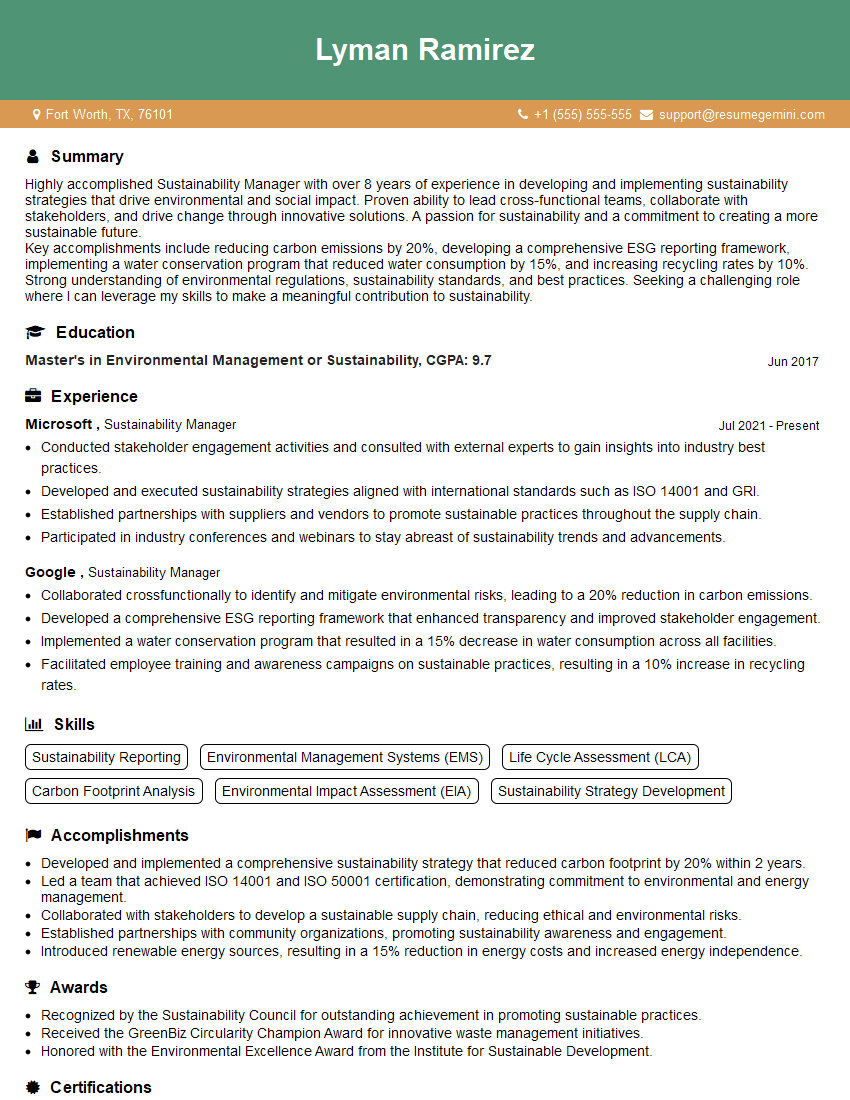
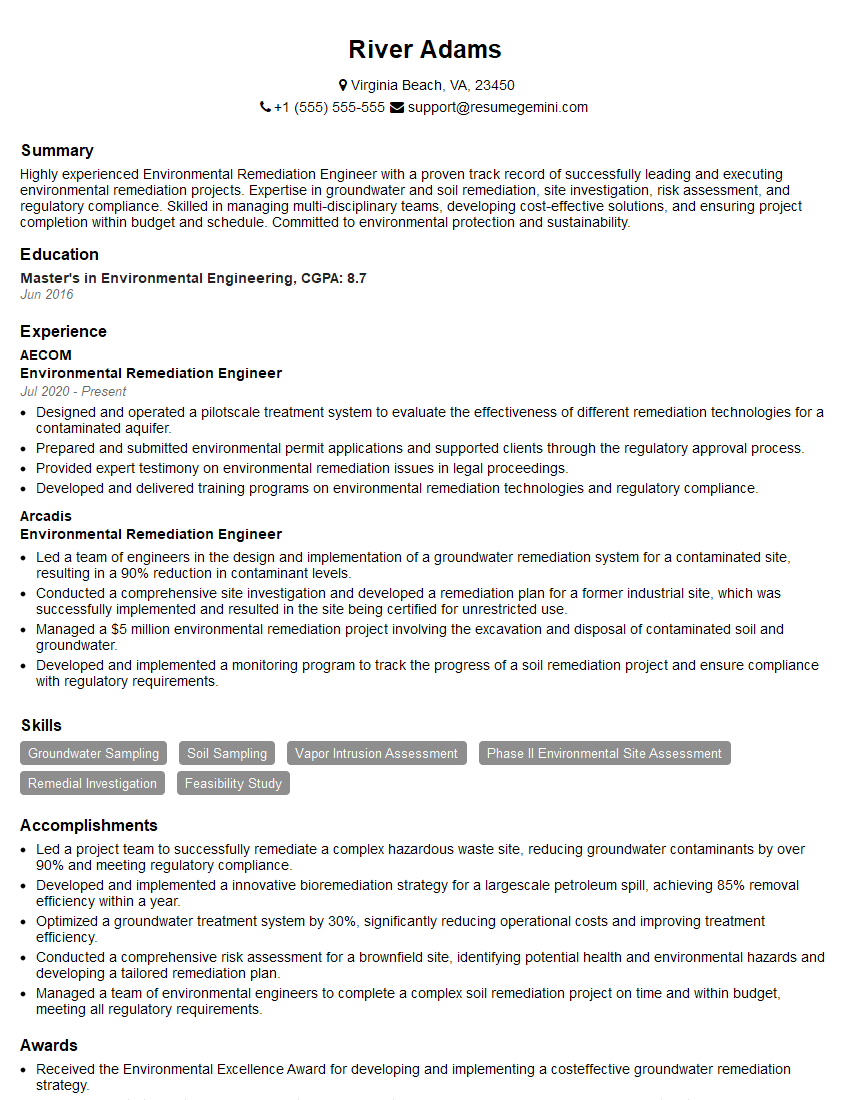
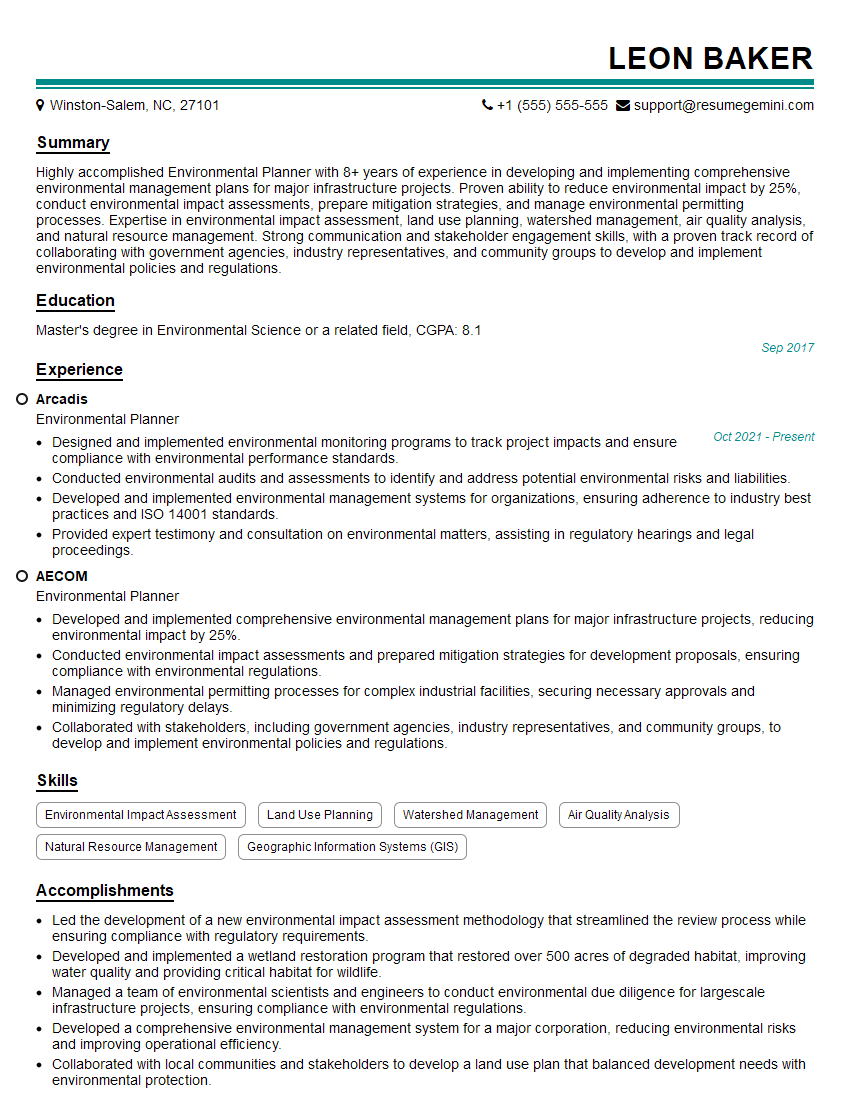
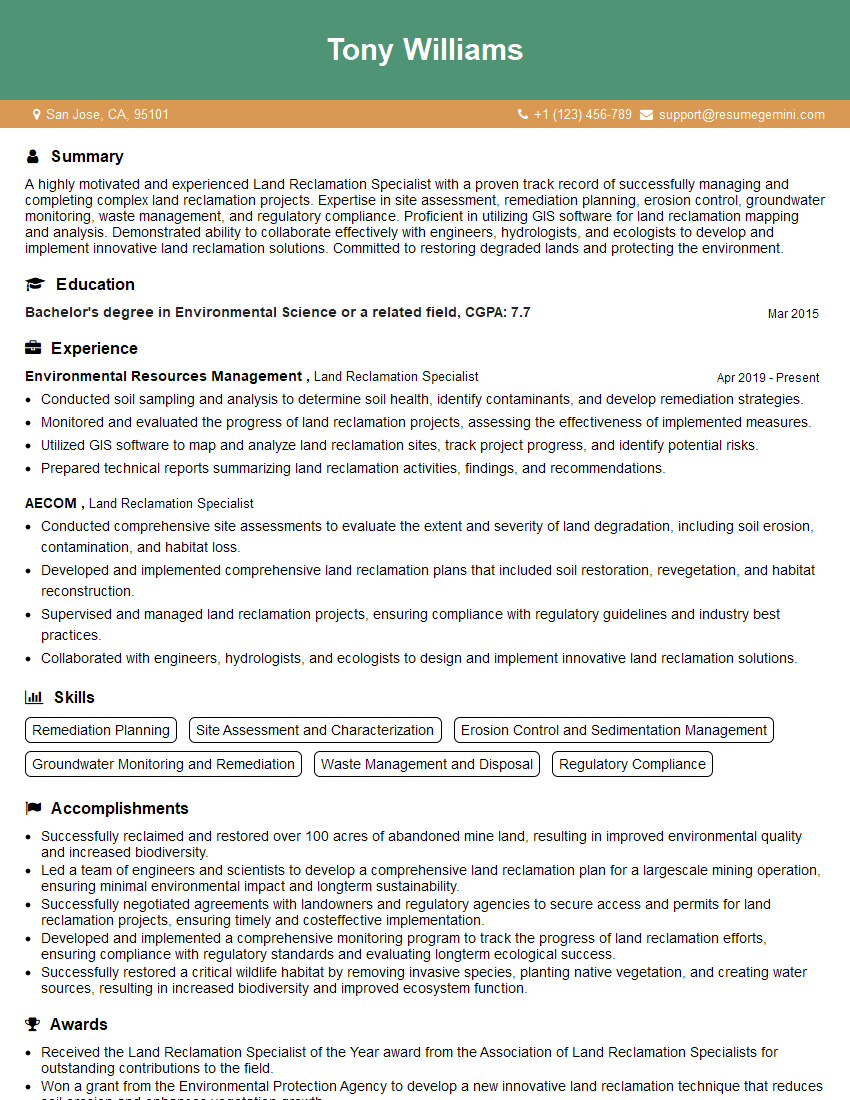
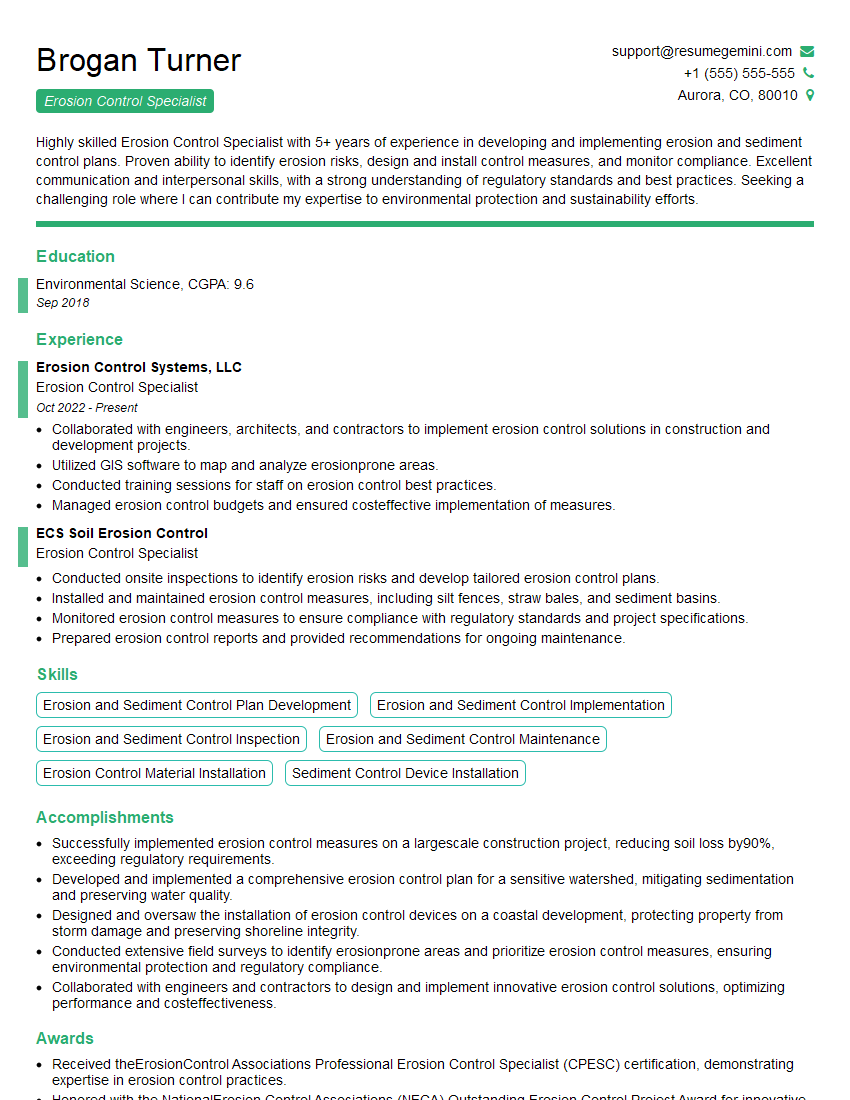
Mastering the art of habitat restoration and enhancement is essential for career advancement in environmental science and conservation. A strong understanding of these key areas will significantly improve your interview performance and open doors to exciting opportunities. To maximize your job prospects, focus on creating an ATS-friendly resume that showcases your skills and experience effectively. ResumeGemini is a trusted resource that can help you build a professional and impactful resume tailored to the specific requirements of habitat restoration positions. Examples of resumes tailored to this field are available to help you get started.
Explore more articles
Users Rating of Our Blogs
Share Your Experience
We value your feedback! Please rate our content and share your thoughts (optional).
What Readers Say About Our Blog
To the interviewgemini.com Webmaster.
Very helpful and content specific questions to help prepare me for my interview!
Thank you
To the interviewgemini.com Webmaster.
This was kind of a unique content I found around the specialized skills. Very helpful questions and good detailed answers.
Very Helpful blog, thank you Interviewgemini team.