Interviews are opportunities to demonstrate your expertise, and this guide is here to help you shine. Explore the essential Exterior Vehicle Washing interview questions that employers frequently ask, paired with strategies for crafting responses that set you apart from the competition.
Questions Asked in Exterior Vehicle Washing Interview
Q 1. What are the different types of car wash soaps and their applications?
Car wash soaps are categorized by their chemical composition and intended use. The right soap is crucial for effective cleaning without damaging the vehicle’s finish.
- High-Suds Wash Soaps: These create a lot of foam, which helps to lift and suspend dirt particles away from the paint surface. They’re generally good for regular washing, providing excellent lubricity (reducing friction during washing). Think of the foam as tiny cushions protecting your paint.
- Low-Suds Wash Soaps: These produce less foam but often have a higher concentration of cleaning agents. They’re excellent for heavily soiled vehicles, as they can cut through stubborn grime more effectively. They’re also popular with those using a two-bucket method (explained later).
- Waterless Wash Soaps: Designed for use without water, ideal for quick detailing or in situations where water is scarce. They usually contain lubricating agents to prevent scratching.
- pH-Neutral Soaps: Crucial for preserving the paint’s clear coat. Avoid soaps that are too acidic or alkaline, as these can damage the finish over time. Check the soap’s pH level before use.
For example, I usually use a high-suds soap for weekly washes, and a low-suds soap for vehicles that have been exposed to heavy mud or road salt.
Q 2. Explain the proper techniques for washing different vehicle surfaces (paint, glass, wheels).
Washing different vehicle surfaces requires a slightly different approach to avoid damage. The key is to use gentle, overlapping strokes.
- Paint: Always use two buckets – one with soapy water and one with clean water for rinsing your wash mitt. This prevents transferring dirt back onto the paint. Use a wash mitt or a high-quality microfiber wash pad, working in straight lines from top to bottom, rinsing frequently.
- Glass: Use a dedicated glass cleaner and a clean microfiber towel. Clean in a back-and-forth motion, ensuring you’re not spreading dirt. Avoid using the same towel you used on the paint to prevent scratching.
- Wheels: Wheels are often the dirtiest part of a car and require a stronger cleaning solution. Use a wheel cleaner specifically formulated to tackle brake dust and grime. Use a separate wash mitt or brush dedicated only to the wheels to avoid contaminating your paint wash mitt. Be sure to thoroughly rinse to remove all cleaning solution residue.
Imagine washing your paint like you’re painting a wall; smooth, even strokes prevent streaks and scratches.
Q 3. Describe your experience with various washing equipment (pressure washers, foam cannons, etc.).
I have extensive experience with various washing equipment. Each has its advantages and disadvantages.
- Pressure Washers: Extremely effective at removing loose dirt and grime, but improper use can damage the paint. It’s crucial to maintain the right distance and pressure setting. I use a pressure washer primarily for pre-washing, to loosen heavier dirt before the contact wash.
- Foam Cannons: These create a thick, clinging foam that pre-soaks the vehicle, softening dirt and grime, making the contact wash easier. The foam’s dwell time is key to its effectiveness – letting it sit for several minutes is vital. I find foam cannons are excellent for saving time and minimizing scratching during the wash.
- Rotary Wash Systems: These automated systems are efficient for high-volume washing operations. They need careful maintenance and regular inspection to prevent damage to vehicles. I’ve managed these systems in high-throughput settings and know the importance of consistent cleaning and lubrication to ensure proper operation.
I choose the equipment based on the vehicle’s condition and the available time and resources. For example, a foam cannon followed by a two-bucket hand wash is my preferred method for most vehicles.
Q 4. How do you handle various types of dirt and grime on vehicles?
Different dirt and grime require tailored approaches:
- Bug Splatter: A dedicated bug and tar remover is best. Let it dwell according to the manufacturer’s instructions before gently wiping.
- Bird Droppings: Act quickly! Bird droppings are acidic and can etch the paint. Rinse immediately with water, then use a gentle soap and a microfiber towel.
- Mud and Dirt: A pressure washer for pre-washing, followed by a thorough wash with a high-quality soap and wash mitt, is most effective.
- Tree Sap: Use a dedicated tar and sap remover. It often requires some patience and gentle scrubbing.
Understanding the composition of the contaminant is vital for effective removal. For example, I wouldn’t use a harsh abrasive cleaner on delicate paint, but a more aggressive approach is needed for stubborn road tar.
Q 5. What safety precautions do you take while using cleaning chemicals and equipment?
Safety is paramount! I always adhere to the following:
- Eye Protection: Always wear safety glasses or goggles when handling chemicals.
- Gloves: Use appropriate chemical-resistant gloves to protect hands.
- Ventilation: Work in a well-ventilated area to avoid inhaling chemical fumes.
- Proper Disposal: Dispose of cleaning chemicals according to local regulations.
- Equipment Safety: Regularly inspect pressure washer hoses and connections for leaks and damage.
A simple oversight can have serious consequences, so I’m diligent in following these practices every time I work.
Q 6. How do you prevent scratches and swirl marks during the washing process?
Preventing scratches and swirl marks requires careful technique and the right tools.
- Two-Bucket Method: This is crucial. One bucket for soapy water, one for rinsing the wash mitt. This prevents transferring grit back onto the paint surface.
- High-Quality Wash Mitt/Pads: Microfiber wash mitts are much gentler on paint than sponges or cheap cloths.
- Proper Washing Technique: Use gentle, overlapping strokes. Avoid scrubbing aggressively.
- Regularly Rinse: Rinse your wash mitt frequently to prevent build-up of dirt and grime.
- Drying Technique: Use a high-quality drying towel or air blower to prevent scratching.
Think of it like this: you’re not cleaning the dirt *off* the paint, you’re lifting and suspending it and then removing it with clean water.
Q 7. Explain your drying techniques and how to avoid water spots.
Drying is the final, critical step that can make or break the wash. Water spots are caused by mineral deposits left behind as water evaporates.
- High-Quality Drying Towels: Use large, absorbent microfiber drying towels. A waffle-weave towel is ideal for its absorbency and softness.
- Drying Technique: Use gentle, overlapping strokes, similar to washing. Don’t drag the towel across the surface. Start from the top and work your way down.
- Air Blowers: These are excellent for removing excess water before drying with towels, reducing the drying time and effort. Make sure the air pressure isn’t too high to avoid damage.
- Water Spot Prevention: Use a quick detailer spray or a drying aid to help repel water and prevent spotting. Also, washing in the shade can help to prevent water spots.
A properly dried vehicle looks and feels better, offering a superior shine. I always take extra care in this step.
Q 8. How do you maintain the cleanliness and organization of your wash bay?
Maintaining a clean and organized wash bay is paramount for efficiency and customer satisfaction. It’s about more than just aesthetics; it directly impacts the quality of the wash and the safety of the environment. My approach is threefold: Pre-wash Preparation, During-Wash Maintenance, and Post-Wash Cleanup.
- Pre-wash Preparation: This involves starting each day with a thorough sweep and cleaning of the entire bay. All equipment, including pressure washers, brushes, and drying aids, is inspected and prepared for use. Chemicals are checked for levels and proper dilution. This proactive approach prevents mid-wash interruptions and ensures we have everything we need.
- During-Wash Maintenance: This includes constantly monitoring the condition of the wash bay. Any spills are immediately cleaned up to prevent slips and hazards. Tools and equipment are kept in designated places to maintain workflow efficiency and prevent accidental damage. Regular rinsing of equipment prevents buildup of dirt and chemicals, maintaining optimal performance.
- Post-Wash Cleanup: After each vehicle, the wash bay is given a quick wipe down to remove any excess water or debris. At the end of the day, a more thorough cleaning takes place, including mopping the floor, emptying trash receptacles, and storing equipment properly. This ensures that the bay is pristine for the next day’s operations.
Think of it like running a kitchen – if your workspace is chaotic, your product (clean cars!) will suffer. A well-organized bay is efficient, safe and improves the overall customer experience.
Q 9. What are the common issues encountered while washing vehicles, and how do you solve them?
Common issues during vehicle washing range from minor inconveniences to more significant problems. The most frequent issues I encounter include:
- Bird droppings and stubborn bugs: These require pre-soaking with a dedicated insect remover to ensure complete removal without scratching the paint. I often use a two-step process: pre-soak, then gentle agitation with a soft-bristled brush.
- Tree sap and resin: These are sticky and require specialized cleaners to dissolve and lift them off the surface. Again, pre-soaking is key, followed by careful rinsing to prevent streaking.
- Mud and dirt: Heavy mud requires thorough pre-washing with a pressure washer at lower pressure to avoid scratching. I might use a dedicated wheel cleaner for wheel wells first to prevent spreading contaminants.
- Scratches and swirl marks: These are often caused by using abrasive materials or improper washing techniques. Careful washing with soft materials, using the two-bucket method (one with soapy water and the other with clean rinsing water) helps mitigate this risk. Proper drying techniques are also key.
Problem-solving involves identifying the specific contaminant, selecting the appropriate cleaning agent and technique, and always employing a methodical approach to minimize the risk of damage. Prevention is always better than cure, which is why I stress using the proper techniques and products from the outset.
Q 10. Describe your experience with different drying methods (air drying, microfiber towels).
I’m experienced with both air drying and microfiber towel drying methods, each having its pros and cons.
- Air drying: This is a convenient method, especially on sunny days. It’s environmentally friendly as it doesn’t require additional resources. However, it can leave water spots, particularly in hard water areas, and it’s not always practical in various weather conditions. It is also slower.
- Microfiber towels: These provide a streak-free finish and are very effective at absorbing water. They’re gentler on the paint than other drying methods, minimizing the risk of scratches. However, they require careful usage and cleaning to maintain their effectiveness. Regular washing is essential to prevent cross-contamination. I prefer high-quality, plush microfiber towels in various sizes for different vehicle areas.
My preference depends on the vehicle’s finish, weather conditions, and the client’s preferences. For premium vehicles or high-quality paintwork, I’ll typically use microfiber towels to ensure a flawless, scratch-free finish. For less demanding jobs in ideal conditions, air drying is acceptable.
Q 11. How familiar are you with various types of vehicle finishes (clear coat, matte)?
Familiarity with various vehicle finishes is crucial for providing a safe and effective wash. Different finishes require different approaches to avoid damage.
- Clear Coat: Most modern vehicles have a clear coat finish that protects the base coat. This is generally durable, but it can still be scratched by abrasive materials. I use gentle washing techniques, soft materials, and appropriate pH-neutral detergents to avoid damage to the clear coat.
- Matte Finish: Matte finishes are more delicate and require specialized cleaning products. Traditional car washes are inappropriate as they can damage the matte finish’s texture. I use special cleaners designed for matte finishes, which are generally more gentle and water-based to avoid dulling or streaking. I also avoid harsh scrubbing and aggressive drying.
- Other Finishes: I’m familiar with various other finishes such as pearlescent and metallic paints, each requiring a slightly different approach to washing and drying to ensure optimal results.
Understanding these differences ensures I customize my washing approach for each vehicle, protecting its unique finish and ensuring customer satisfaction.
Q 12. Explain your knowledge of environmentally friendly cleaning products.
I’m passionate about using environmentally friendly cleaning products. These are formulated to be less harmful to the environment and human health. They typically use biodegradable surfactants and avoid harsh chemicals.
- Biodegradable surfactants: These break down naturally in the environment, minimizing their impact on water systems and ecosystems. This contrasts with traditional surfactants which can be persistent pollutants.
- pH-neutral detergents: These are less corrosive than acidic or alkaline cleaners, reducing the risk of damage to the vehicle’s paintwork and minimizing environmental harm.
- Recyclable packaging: I opt for products with recyclable or reusable containers to minimize waste further.
Using these environmentally conscious products aligns with my commitment to sustainability while still delivering top-notch cleaning results. The choice reflects both my professional values and my responsibilities towards environmental protection.
Q 13. What is your experience with pre-soaking and degreasing agents?
Pre-soaking and degreasing agents are essential for effective vehicle cleaning, especially for heavily soiled vehicles.
- Pre-soaking: This softens ingrained dirt and grime, making them easier to remove during the washing process. It’s particularly effective on baked-on mud, bird droppings, and insect residue. I use a dedicated pre-soak product before starting the main wash, allowing it to dwell for a few minutes to penetrate the grime.
- Degreasing agents: These are specialized products designed to remove grease, oil, and other stubborn contaminants from the vehicle’s surfaces, especially wheels and engine bays. I select degreasers based on the type of contaminant and the surface being cleaned. Some are powerful, so I always follow the manufacturer’s instructions carefully and ensure appropriate ventilation.
The combination of pre-soaking and degreasing greatly reduces the effort and time required during the main wash, resulting in a more efficient and thorough cleaning process. It also minimizes the risk of scratching the paint during aggressive scrubbing.
Q 14. How do you handle customer complaints regarding the washing service?
Handling customer complaints is a vital part of providing excellent service. My approach prioritizes understanding the customer’s concerns, finding a fair resolution, and maintaining a professional and courteous demeanor throughout the process.
- Listen empathetically: I actively listen to the customer without interruption, allowing them to fully explain their dissatisfaction. I acknowledge their feelings and validate their concerns.
- Investigate thoroughly: I carefully examine the vehicle to assess the validity of the complaint. I ask clarifying questions to understand the specific issue and its cause. This investigation helps determine the appropriate course of action.
- Offer a solution: Based on the investigation, I offer a fair resolution, which might involve a re-wash, a partial refund, or other appropriate compensation depending on the severity of the problem and the cause. My goal is always customer satisfaction.
- Document the issue and resolution: I keep a detailed record of the complaint, the investigation, and the resolution. This aids in tracking patterns, improving services, and ensuring consistent quality control.
- Follow up: I follow up with the customer after the resolution to ensure they are satisfied and to address any remaining concerns.
Maintaining positive customer relationships is critical to the success of any business. Handling complaints professionally and fairly builds trust and loyalty.
Q 15. What is your experience with detailing different types of vehicles (cars, trucks, SUVs)?
My experience spans over eight years, encompassing a wide range of vehicles from compact cars to heavy-duty trucks and large SUVs. I’ve worked on various makes and models, understanding the unique cleaning needs of each. For instance, while a sleek sports car might require a focus on preserving its glossy paint, a rugged truck demands attention to its undercarriage and off-road grime. My approach is always tailored to the specific vehicle type and its condition.
- Cars: Focus on intricate detailing, paying close attention to tight spaces and maintaining the high-gloss finish.
- Trucks: Emphasis on undercarriage cleaning, removing mud, and addressing tougher stains. I use appropriate brushes and pressure settings to avoid damage.
- SUVs: A blend of car and truck detailing – careful attention to the bodywork and thorough cleaning of the wheel wells and tires.
Career Expert Tips:
- Ace those interviews! Prepare effectively by reviewing the Top 50 Most Common Interview Questions on ResumeGemini.
- Navigate your job search with confidence! Explore a wide range of Career Tips on ResumeGemini. Learn about common challenges and recommendations to overcome them.
- Craft the perfect resume! Master the Art of Resume Writing with ResumeGemini’s guide. Showcase your unique qualifications and achievements effectively.
- Don’t miss out on holiday savings! Build your dream resume with ResumeGemini’s ATS optimized templates.
Q 16. Describe your experience with wheel and tire cleaning techniques.
Effective wheel and tire cleaning is crucial for a complete vehicle wash. I use a multi-step process. First, I pre-soak the wheels and tires with a dedicated wheel cleaner to loosen brake dust and grime. This is followed by thorough scrubbing with appropriate brushes – a soft brush for delicate wheels and a more robust brush for tires. I always ensure I’m using brushes that won’t scratch the surfaces. After scrubbing, I thoroughly rinse everything, paying attention to remove all traces of cleaning solution. Finally, I apply a tire dressing to restore shine and protect the rubber. For stubborn stains, I may use a stronger degreaser but always test it in a small, inconspicuous area first.
For example, I once had a client with severely caked-on brake dust on their performance alloy wheels. A simple soak with a strong but pH-neutral wheel cleaner, followed by careful scrubbing with a soft-bristled detailing brush, removed the dirt effectively without damaging the finish.
Q 17. How do you determine the appropriate cleaning products based on the vehicle’s condition?
Choosing the right cleaning products is paramount to avoid damaging the vehicle’s finish. My assessment process starts with a visual inspection. I identify the type of paint (clear coat, matte, etc.), the presence of existing damage (scratches, swirl marks), and the level of soiling (light dust, heavy mud). This informs my product selection.
- Light soiling: A simple wash and wax solution suffices.
- Moderate soiling: I might use a stronger wash solution, possibly incorporating a pre-wash to loosen dirt.
- Heavy soiling or specific stains (e.g., bird droppings, tree sap): I’ll utilize specialized cleaning agents – always testing in a hidden area first – followed by thorough rinsing.
For example, a car with a delicate clear coat will necessitate the use of a pH-neutral soap, while a heavily soiled truck might benefit from a degreasing agent before the main wash.
Q 18. How do you manage your time efficiently to wash multiple vehicles in a given time frame?
Efficient time management is key. I use a systematic approach, breaking down the washing process into smaller, manageable tasks. I start by pre-soaking all vehicles simultaneously, allowing the cleaning solution to work while I focus on another aspect. I then wash in a methodical order, using a consistent approach for each car. I also prioritize tasks – for instance, if one vehicle requires intensive spot cleaning, I might allocate more time to it while quickly washing other less-soiled vehicles first. The key is organization and a streamlined workflow.
For instance, a typical day might involve a pre-wash for all vehicles, followed by a systematic wash and rinse for each vehicle, and finally a drying and finishing process. This approach minimizes wasted time and movement.
Q 19. Explain your experience with different types of wash equipment maintenance.
Regular maintenance of wash equipment is critical for both efficiency and longevity. I routinely inspect and clean all equipment, including pressure washers, hoses, and brushes. I regularly check the pressure washer’s pump for leaks and ensure proper pressure settings. Brushes are cleaned and disinfected after each use to prevent cross-contamination. I also regularly replace worn-out parts, such as nozzle tips and brush bristles. Preventative maintenance is key – catching small issues before they become major problems prevents costly downtime.
For example, I regularly lubricate the pressure washer pump to extend its lifespan, and I visually inspect the hoses for cracks or wear and tear, replacing them proactively to prevent unexpected failures during a wash.
Q 20. What are your preferred techniques for cleaning delicate areas of a vehicle (grills, emblems)?
Delicate areas require extra care. Grills and emblems are often intricate and can be easily damaged. I use soft-bristled brushes or detailing brushes, and I avoid high-pressure water directly onto these areas. I opt for a gentler, more targeted approach, using a detailing spray to loosen dirt before gently scrubbing. I often use microfiber towels to wipe away dirt instead of direct scrubbing. This minimizes the risk of scratching or damaging the delicate finishes. For very stubborn dirt, I might use a detailer’s clay bar after thoroughly rinsing the area.
Q 21. How do you handle difficult-to-reach areas of a vehicle during the washing process?
Reaching difficult-to-reach areas effectively requires the right tools and techniques. For tight spaces, I use various detailing brushes with varying lengths and stiffnesses. For undercarriage cleaning, I might use a pressure washer with specialized wands and extensions. For areas like door jambs, I use a detailing brush attached to an extension, combined with the right amount of detailing spray to help remove ingrained dirt. The key is to have the right tools and to adapt my approach to the specific challenge posed by each area of the vehicle.
Q 22. Describe your experience with using detailing brushes and applicators.
My experience with detailing brushes and applicators is extensive. I understand the importance of selecting the right tool for the job, considering factors like bristle stiffness, material (e.g., synthetic, natural boar hair), and size. For example, a soft-bristled brush is ideal for delicate areas like emblems and grilles, preventing scratches. Conversely, a more robust brush might be necessary for cleaning tire wells or heavily soiled areas. Applicators, such as microfiber applicators for wax or sealant application, are used to achieve even coats and avoid streaking. I’ve worked with a variety of brands and types over the years, and I can confidently choose and use the most appropriate tools to achieve a flawless finish for any vehicle.
I understand the difference between wash mitts, various types of brushes (wheel brushes, detailing brushes), and the use of different applicator pads for various products like waxes, sealants, and dressings. I pay close attention to detail, ensuring proper cleaning techniques to avoid cross-contamination and potential damage to the vehicle’s finish.
Q 23. How do you maintain a high level of quality and consistency in your work?
Maintaining high quality and consistency is paramount. My approach involves a multi-faceted strategy. First, I meticulously follow a standardized cleaning process, which includes pre-soaking, washing, rinsing, and drying steps. Each step is performed with precision, using the correct tools and techniques. Second, I regularly inspect my work throughout the process, checking for any missed spots or imperfections. Third, I utilize high-quality products that are proven to deliver excellent results consistently. Finally, I constantly seek opportunities for improvement through professional development and keeping up-to-date on the latest techniques and technologies in the industry. For example, I recently invested time in learning about new waterless wash techniques and have successfully incorporated it into my process to reduce water consumption and improve environmental friendliness.
Q 24. What is your experience with working in a team environment?
I thrive in team environments. In previous roles, I’ve collaborated effectively with colleagues to efficiently manage multiple vehicles, especially during peak hours or when dealing with large-scale projects like fleet washes. I’m comfortable delegating tasks, assisting teammates, and contributing to a positive and productive work environment. Open communication and cooperation are essential; I actively listen to my team members, offering assistance where needed and readily sharing my expertise. Teamwork makes the job smoother and lets us deliver outstanding results faster.
Q 25. What is your approach to dealing with unexpected issues or problems during the workday?
Unexpected issues are part of the job. My approach is to remain calm and assess the situation systematically. For example, if I discover a hidden scratch during the washing process, I immediately inform the customer, document the finding with a photograph, and work with them to find a suitable solution – perhaps suggesting a touch-up or referral to a body shop. I prioritize problem-solving and efficient communication to minimize disruption and maintain a positive customer experience. If faced with a product shortage, I’ll creatively find an alternative or adjust the service accordingly. Adaptability is key!
Q 26. How do you prioritize tasks and manage your workflow efficiently?
Prioritizing tasks and efficient workflow are crucial for productivity. I generally prioritize based on urgency and complexity. Time-sensitive jobs, such as those with tight deadlines, come first. I often use a checklist to track my progress and ensure that all steps in the cleaning process are completed. For example, I might begin with pre-rinsing all vehicles before moving to the wash phase, ensuring the most efficient use of water and time. I regularly evaluate my workflow to identify areas for improvement and streamline operations.
Q 27. Describe your experience working in fast-paced environments.
I am highly comfortable working in fast-paced environments. Previous roles have involved high-volume washing operations, where efficiency and accuracy are paramount. I’ve learned to work effectively under pressure, maintaining focus and precision even when faced with tight deadlines and multiple concurrent tasks. My ability to multitask and quickly adapt to changing demands is one of my greatest strengths. I stay organized and prioritize tasks effectively, ensuring all vehicles are processed efficiently and to the highest standards of quality, even when dealing with high traffic.
Q 28. How do you ensure customer satisfaction with the vehicle washing services?
Ensuring customer satisfaction is my top priority. I achieve this through proactive communication, attention to detail, and a commitment to exceeding expectations. I always explain the process clearly, answer questions thoroughly, and actively seek feedback. I pay close attention to the customer’s specific needs and preferences, ensuring that the service is tailored to their requirements. Following up with a courtesy call after the service to ensure they are happy is part of my routine. I believe that every interaction is an opportunity to build rapport and foster customer loyalty. Addressing any concerns promptly and professionally is crucial for maintaining a positive customer experience.
Key Topics to Learn for Exterior Vehicle Washing Interview
- Wash Bay Procedures and Safety: Understanding proper wash bay protocols, including equipment operation, chemical handling, and safety regulations (PPE, hazard identification).
- Washing Techniques: Mastering various washing techniques for different vehicle types and levels of soiling (e.g., pre-soaking, two-bucket method, high-pressure washing, spot-free rinsing).
- Cleaning Agents and Chemicals: Knowledge of different cleaning agents, their applications, and appropriate dilutions to effectively remove various contaminants while minimizing environmental impact.
- Vehicle Detailing Basics: Familiarity with basic detailing techniques, such as drying, polishing, and waxing, to enhance the finished product.
- Equipment Maintenance and Troubleshooting: Understanding routine maintenance procedures for washing equipment and common troubleshooting techniques to minimize downtime.
- Time Management and Efficiency: Demonstrating an understanding of efficient workflow processes to maximize throughput and minimize labor costs.
- Customer Service and Communication: Highlighting skills in interacting with clients, handling complaints, and maintaining a professional demeanor.
- Environmental Awareness: Demonstrating understanding of environmentally friendly practices and waste management within the wash bay operation.
Next Steps
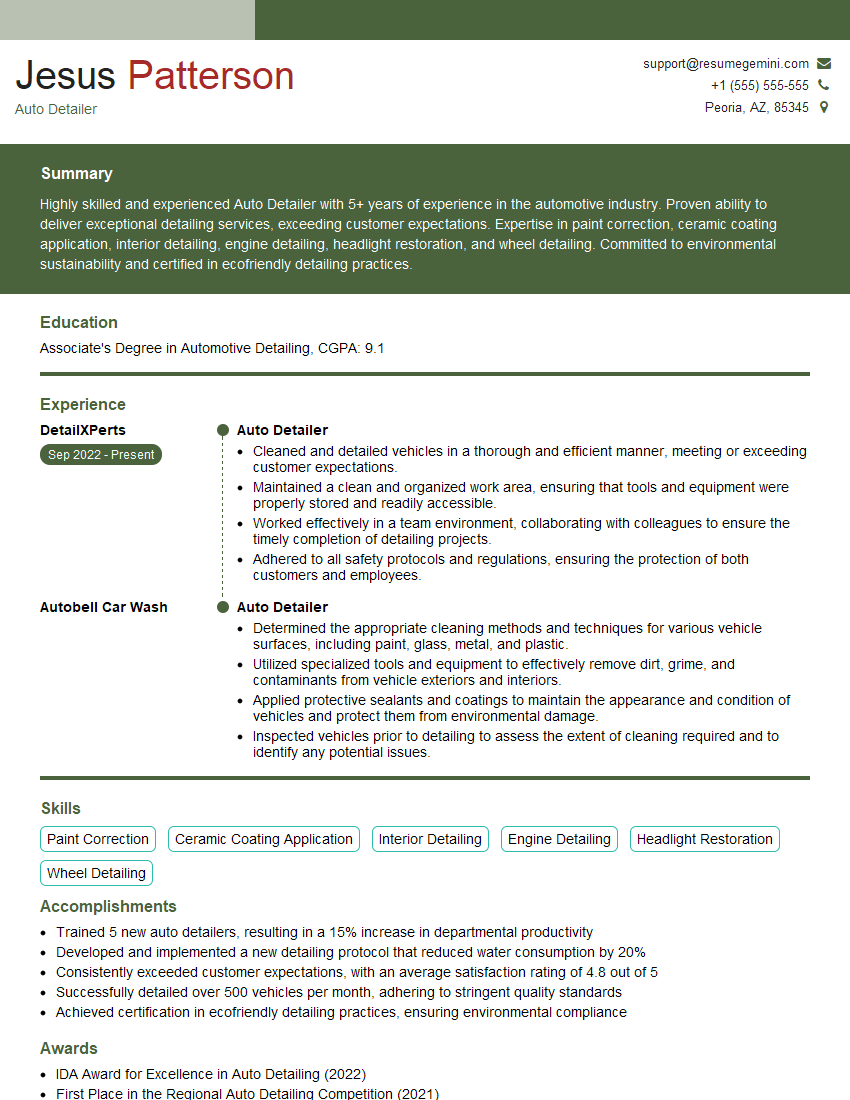
Mastering exterior vehicle washing opens doors to various career paths within the automotive detailing and car care industry, offering opportunities for growth and specialization. A strong, ATS-friendly resume is crucial for showcasing your skills and experience to potential employers. To significantly boost your job prospects, we highly recommend using ResumeGemini to craft a professional and impactful resume tailored to the specifics of this field. ResumeGemini provides examples of resumes specifically designed for Exterior Vehicle Washing positions, helping you create a document that effectively highlights your qualifications.
Explore more articles
Users Rating of Our Blogs
Share Your Experience
We value your feedback! Please rate our content and share your thoughts (optional).
What Readers Say About Our Blog
To the interviewgemini.com Webmaster.
Very helpful and content specific questions to help prepare me for my interview!
Thank you
To the interviewgemini.com Webmaster.
This was kind of a unique content I found around the specialized skills. Very helpful questions and good detailed answers.
Very Helpful blog, thank you Interviewgemini team.