Cracking a skill-specific interview, like one for Experience in using statistical software and data analysis techniques, requires understanding the nuances of the role. In this blog, we present the questions you’re most likely to encounter, along with insights into how to answer them effectively. Let’s ensure you’re ready to make a strong impression.
Questions Asked in Experience in using statistical software and data analysis techniques Interview
Q 1. Explain the difference between correlation and causation.
Correlation and causation are often confused, but they represent distinct relationships between variables. Correlation measures the strength and direction of a linear relationship between two variables. A strong positive correlation means that as one variable increases, the other tends to increase; a strong negative correlation means that as one variable increases, the other tends to decrease. However, correlation does not imply causation. Just because two variables are correlated doesn’t mean one causes the other.
Causation, on the other hand, implies that a change in one variable directly causes a change in another. Establishing causation requires demonstrating a causal link, often through controlled experiments or rigorous observational studies that account for confounding variables.
Example: Ice cream sales and crime rates are often positively correlated. This doesn’t mean that eating ice cream causes crime, or vice versa. The underlying factor is likely summer heat: both ice cream sales and crime rates tend to increase during hot summer months.
Q 2. What are the assumptions of linear regression?
Linear regression, a statistical method used to model the relationship between a dependent variable and one or more independent variables, relies on several key assumptions:
- Linearity: The relationship between the independent and dependent variables should be linear. This means a straight line can reasonably approximate the relationship.
- Independence: Observations should be independent of each other. This means that the value of one observation doesn’t influence the value of another.
- Homoscedasticity: The variance of the errors (residuals) should be constant across all levels of the independent variable(s). This means the spread of the data points around the regression line should be roughly uniform.
- Normality: The errors (residuals) should be normally distributed. This assumption is less critical with larger sample sizes due to the central limit theorem.
- No multicollinearity (for multiple linear regression): Independent variables should not be highly correlated with each other. High multicollinearity can inflate standard errors and make it difficult to interpret the individual effects of predictors.
Violations of these assumptions can lead to inaccurate or misleading results. Diagnostic plots, such as residual plots and Q-Q plots, are used to assess the validity of these assumptions.
Q 3. How do you handle missing data in a dataset?
Missing data is a common challenge in data analysis. The best approach depends on the pattern of missingness (missing completely at random (MCAR), missing at random (MAR), or missing not at random (MNAR)) and the amount of missing data. Here are several methods:
- Deletion: This involves removing rows or columns with missing values. Listwise deletion removes entire rows, while pairwise deletion uses all available data for each analysis. This approach is simple but can lead to significant loss of information and biased results, especially if the data is not MCAR.
- Imputation: This involves filling in missing values with estimated values. Common methods include mean/median/mode imputation, regression imputation, and multiple imputation. Multiple imputation is generally preferred as it accounts for uncertainty in the imputed values.
- Model-based approaches: Some statistical models can handle missing data directly, without the need for imputation. For example, maximum likelihood estimation can be used to estimate parameters even with missing values.
The choice of method should be carefully considered based on the context and the characteristics of the data. It’s crucial to document the chosen strategy and its potential impact on the results.
Q 4. Describe different methods for outlier detection.
Outlier detection is crucial for ensuring the robustness of statistical analyses. Outliers are data points that significantly deviate from the rest of the data. Methods include:
- Visual inspection: Creating scatter plots, box plots, and histograms can help visually identify outliers.
- Z-score: Data points with a Z-score greater than 3 or less than -3 (or other thresholds) are often considered outliers. This method assumes normality.
- Interquartile Range (IQR): Data points outside the range [Q1 – 1.5*IQR, Q3 + 1.5*IQR] are flagged as potential outliers. This method is less sensitive to non-normality.
- DBSCAN (Density-Based Spatial Clustering of Applications with Noise): A clustering algorithm that can identify outliers as points not belonging to any cluster.
Handling outliers requires careful consideration. Removing them should be done cautiously, with a clear justification. It’s often preferable to investigate the cause of the outliers and consider transforming the data or using robust statistical methods that are less sensitive to outliers.
Q 5. What are the strengths and weaknesses of different regression models (e.g., linear, logistic, polynomial)?
Different regression models have unique strengths and weaknesses:
- Linear Regression:
- Strengths: Simple to interpret, widely applicable, efficient computation.
- Weaknesses: Assumes linear relationship, sensitive to outliers, can’t model non-linear relationships.
- Logistic Regression:
- Strengths: Models probability of binary outcome, widely used in classification problems.
- Weaknesses: Assumes linearity in log-odds, sensitive to outliers, can’t handle multicollinearity well.
- Polynomial Regression:
- Strengths: Can model non-linear relationships, flexible in fitting complex curves.
- Weaknesses: Prone to overfitting, interpretation can be challenging, sensitive to outliers.
The choice of model depends on the nature of the data and the research question. It’s crucial to assess the model’s goodness of fit and diagnostic plots to evaluate its suitability.
Q 6. Explain the concept of p-values and their significance in hypothesis testing.
In hypothesis testing, the p-value represents the probability of observing results as extreme as, or more extreme than, the results actually obtained, assuming the null hypothesis is true. The null hypothesis is typically a statement of no effect or no difference. A small p-value (typically below a significance level, often 0.05) suggests that the observed results are unlikely to have occurred by chance alone, providing evidence against the null hypothesis. In such cases, the null hypothesis is often rejected.
Significance is determined by comparing the p-value to a pre-defined significance level (alpha). If the p-value is less than alpha, the result is statistically significant, indicating sufficient evidence to reject the null hypothesis. However, statistical significance doesn’t necessarily imply practical significance. A statistically significant result might be practically insignificant due to small effect size.
Q 7. What is the difference between Type I and Type II error?
In hypothesis testing, Type I error (false positive) occurs when the null hypothesis is rejected when it is actually true. Type II error (false negative) occurs when the null hypothesis is not rejected when it is actually false.
Example: Imagine a drug trial testing a new medication. A Type I error would be concluding that the drug is effective when it’s not. A Type II error would be concluding that the drug is ineffective when it actually is effective.
The probability of making a Type I error is denoted by alpha (α), and the probability of making a Type II error is denoted by beta (β). The power of a test (1-β) is the probability of correctly rejecting a false null hypothesis. There’s a trade-off between alpha and beta; reducing one often increases the other.
Q 8. How do you interpret a confusion matrix?
A confusion matrix is a visual representation of the performance of a classification model. It’s a table that summarizes the counts of true positive, true negative, false positive, and false negative predictions. Imagine you’re building a model to detect spam emails. The confusion matrix would show you how many spam emails were correctly identified (true positives), how many legitimate emails were correctly classified (true negatives), how many legitimate emails were wrongly flagged as spam (false positives), and how many spam emails were missed (false negatives).
Let’s say we have this confusion matrix:
Predicted     | Positive | Negative
---------------------------------
Actual Positive |    80     |    20
Actual Negative |    10     |    90
This matrix tells us:
- True Positives (TP) = 80: The model correctly identified 80 spam emails as spam.
- True Negatives (TN) = 90: The model correctly identified 90 legitimate emails as legitimate.
- False Positives (FP) = 10: The model incorrectly identified 10 legitimate emails as spam (Type I error).
- False Negatives (FN) = 20: The model incorrectly classified 20 spam emails as legitimate (Type II error).
From this, we can calculate metrics like accuracy, precision, recall, and F1-score to get a comprehensive understanding of the model’s performance.
Q 9. What is A/B testing and how is it used?
A/B testing is a controlled experiment where you compare two versions of something (A and B) to see which performs better. It’s widely used in web design, marketing, and product development. For example, you might want to test two different headlines for an email campaign to see which one generates more clicks. Or, you might A/B test two different website layouts to see which one leads to higher conversion rates.
The process typically involves:
- Defining a hypothesis: Formulate a clear hypothesis about which version you expect to perform better and why.
- Creating variations: Develop two versions (A and B) that differ only in the element you’re testing.
- Splitting traffic: Randomly assign users to either version A or B.
- Collecting data: Monitor key metrics (e.g., click-through rates, conversion rates) for both groups.
- Analyzing results: Use statistical tests (like a t-test or chi-squared test) to determine if the difference in performance is statistically significant.
A crucial aspect is ensuring a statistically significant sample size to avoid drawing false conclusions from random variations. It’s also important to monitor for confounding variables that might influence the results.
Q 10. Explain different methods for feature selection.
Feature selection is the process of choosing a subset of relevant features (variables) from a larger set for use in building a predictive model. Too many irrelevant or redundant features can lead to overfitting, reduced model accuracy, and increased computational cost. There are several methods:
- Filter methods: These methods rank features based on statistical measures of their relationship with the target variable, without considering the model being used. Examples include chi-squared test, correlation coefficient, mutual information.
- Wrapper methods: These methods use a specific model to evaluate the performance of different feature subsets. Examples include recursive feature elimination (RFE) and forward/backward stepwise selection. They’re computationally expensive but often yield better results.
- Embedded methods: These methods incorporate feature selection into the model building process itself. Examples include L1 regularization (LASSO) and tree-based methods (decision trees, random forests). LASSO adds a penalty term to the model’s objective function, effectively shrinking the coefficients of less important features to zero.
The choice of method depends on factors such as the size of the dataset, the nature of the features, and the complexity of the model. Often, a combination of methods is used.
Q 11. What are the different types of data and how do you handle each?
Data comes in various types, and understanding these types is crucial for proper data analysis and model building. Common types include:
- Numerical Data: Represents quantities. This can be further divided into:
- Continuous: Can take on any value within a range (e.g., height, weight, temperature).
- Discrete: Can only take on specific values (e.g., number of cars, number of children).
- Categorical Data: Represents categories or groups. This can be:
- Nominal: Categories have no inherent order (e.g., color, gender).
- Ordinal: Categories have a meaningful order (e.g., education level, customer satisfaction ratings).
- Text Data (Qualitative): Unstructured data in the form of text.
- Date/Time Data: Represents points in time.
Handling each type requires different techniques:
- Numerical: Statistical methods like regression, correlation, and hypothesis testing are appropriate. Outliers need to be addressed (e.g., removal or transformation).
- Categorical: Techniques like chi-squared tests, logistic regression, and decision trees are suitable. One-hot encoding or label encoding are often used for model input.
- Text: Requires natural language processing (NLP) techniques like tokenization, stemming, and TF-IDF to transform the text into numerical representations suitable for machine learning models.
- Date/Time: Needs to be correctly formatted and possibly converted into numerical representations (e.g., days since a reference date) for model usage.
Data cleaning and preprocessing are essential steps, regardless of the data type. This involves handling missing values, removing duplicates, and addressing inconsistencies.
Q 12. Describe your experience with statistical software packages (e.g., R, SAS, SPSS, Python with libraries like Pandas, Scikit-learn).
I have extensive experience with several statistical software packages. In my previous role, I heavily used R for data manipulation, statistical modeling, and visualization. I leveraged packages like dplyr for data wrangling, ggplot2 for creating publication-quality graphics, and caret for building and evaluating machine learning models. I’ve also worked with Python, utilizing libraries such as Pandas for data manipulation, Scikit-learn for model building (regression, classification, clustering), and Matplotlib and Seaborn for data visualization. My experience also includes using SPSS for basic statistical analysis and survey data processing. I am comfortable with a wide range of statistical techniques and can adapt my approach based on the specific requirements of the project.
For instance, in one project, I used R to analyze a large dataset of customer transactions to identify factors influencing customer churn. I employed various statistical models, including logistic regression and survival analysis, and visualized the results using ggplot2 to effectively communicate my findings to stakeholders.
Q 13. What are your preferred data visualization techniques and why?
My preferred data visualization techniques depend heavily on the type of data and the message I want to convey. However, I frequently use:
- Histograms and box plots: For exploring the distribution of numerical data.
- Scatter plots: To visualize the relationship between two numerical variables.
- Bar charts and pie charts: For showing the frequency or proportion of categorical data.
- Line charts: For displaying trends over time.
- Heatmaps: For visualizing correlation matrices or other types of two-dimensional data.
I find ggplot2 in R and Seaborn in Python particularly useful for creating elegant and informative visualizations. The key is to select the most appropriate visualization technique to clearly and concisely communicate insights to the audience. Avoid overly complex or cluttered charts; clarity and simplicity are paramount.
Q 14. How do you assess the accuracy of a model?
Assessing model accuracy depends on the type of model. For classification models, metrics like accuracy, precision, recall, F1-score, and AUC (Area Under the ROC Curve) are commonly used. Accuracy is simply the overall percentage of correct predictions. Precision measures the proportion of true positives among all positive predictions, while recall measures the proportion of true positives among all actual positives. The F1-score is the harmonic mean of precision and recall. AUC summarizes the model’s ability to distinguish between classes across different thresholds.
For regression models, common metrics include mean squared error (MSE), root mean squared error (RMSE), mean absolute error (MAE), and R-squared. MSE and RMSE measure the average squared and square root of the squared differences between predicted and actual values, respectively. MAE is the average absolute difference. R-squared represents the proportion of variance in the dependent variable explained by the model.
Beyond these basic metrics, techniques like cross-validation are crucial for assessing the model’s generalizability to unseen data and preventing overfitting. Proper evaluation should also include considering the business context and the costs associated with different types of errors (e.g., false positives vs. false negatives).
Q 15. Explain your experience with different data mining techniques.
Data mining techniques involve extracting useful patterns and insights from large datasets. My experience spans several key areas:
- Association Rule Mining: I’ve used Apriori and FP-Growth algorithms to discover interesting relationships between items in transactional data, like identifying products frequently purchased together in a supermarket. For example, I helped a client understand customer purchasing patterns to optimize product placement and targeted promotions.
- Classification: I have extensive experience with algorithms like Logistic Regression, Support Vector Machines (SVMs), Decision Trees (including Random Forests), and Naive Bayes. I used these to build predictive models, such as classifying customer churn or predicting loan defaults. A recent project involved classifying images of handwritten digits using a convolutional neural network (CNN).
- Clustering: I’m proficient in K-Means, hierarchical clustering, and DBSCAN. These were crucial in segmenting customer groups based on demographics and purchase behavior, allowing for personalized marketing campaigns. For instance, I clustered customers into distinct segments based on their website activity to tailor recommendations effectively.
- Regression: Linear and polynomial regression are fundamental tools in my arsenal, often applied in forecasting sales, predicting house prices, or modeling the relationship between various factors. A project I worked on used linear regression to predict energy consumption based on weather patterns.
My experience extends to using various software packages like R, Python (with libraries like scikit-learn and pandas), and SAS to implement these techniques.
Career Expert Tips:
- Ace those interviews! Prepare effectively by reviewing the Top 50 Most Common Interview Questions on ResumeGemini.
- Navigate your job search with confidence! Explore a wide range of Career Tips on ResumeGemini. Learn about common challenges and recommendations to overcome them.
- Craft the perfect resume! Master the Art of Resume Writing with ResumeGemini’s guide. Showcase your unique qualifications and achievements effectively.
- Don’t miss out on holiday savings! Build your dream resume with ResumeGemini’s ATS optimized templates.
Q 16. Describe a time you had to deal with a large, messy dataset.
During a project analyzing social media data, I encountered a massive, messy dataset with missing values, inconsistent data formats, and a significant amount of noise. My approach involved several steps:
- Data Cleaning: I started by identifying and handling missing values using imputation techniques (mean, median, K-NN imputation) based on the nature of the data. Inconsistent data formats were addressed by standardizing them using Python’s Pandas library.
- Noise Reduction: Outliers were detected using box plots and scatter plots, and appropriate methods were chosen based on their impact – some were removed, while others were treated with winsorization.
- Data Transformation: Feature scaling was applied using standardization or min-max scaling to improve the performance of machine learning algorithms. Categorical variables were encoded using one-hot encoding.
- Data Reduction: Due to the size of the dataset, I employed dimensionality reduction techniques like Principal Component Analysis (PCA) to reduce the number of features while preserving essential information. This drastically improved processing speed and model performance.
This systematic approach helped transform the raw, messy data into a usable format, allowing for effective analysis and model building.
Q 17. How do you handle imbalanced datasets?
Imbalanced datasets, where one class significantly outnumbers others, pose a challenge to machine learning models. They can lead to biased models that perform poorly on the minority class. My strategies to tackle this include:
- Resampling Techniques: Oversampling the minority class (SMOTE – Synthetic Minority Over-sampling Technique) or undersampling the majority class can balance the dataset. However, oversampling can lead to overfitting, while undersampling might lose valuable information. I carefully choose the method based on the dataset’s characteristics.
- Cost-Sensitive Learning: Adjusting the misclassification costs during model training can penalize errors on the minority class more heavily. This encourages the model to focus on correctly classifying the under-represented class.
- Ensemble Methods: Combining multiple models trained on different resampled datasets or using cost-sensitive learning can improve overall performance.
- Anomaly Detection Techniques: In some cases, the minority class might represent anomalies or outliers. Instead of classification, anomaly detection methods like Isolation Forests or One-Class SVM could be more appropriate.
The choice of technique depends on the specific problem and dataset. I always evaluate the performance of different approaches using metrics like precision, recall, F1-score, and AUC to choose the best solution.
Q 18. Explain the difference between supervised and unsupervised learning.
Supervised and unsupervised learning are two fundamental approaches in machine learning that differ in how they use data for training.
- Supervised Learning: This involves training a model on labeled data – data where the input features are paired with known output values (labels). The model learns to map inputs to outputs, allowing it to predict the output for new, unseen inputs. Examples include classification (predicting categories) and regression (predicting continuous values). Think of teaching a child to identify different fruits – you show them examples of apples, bananas, and oranges (labeled data), and they learn to distinguish them.
- Unsupervised Learning: Here, the model is trained on unlabeled data – data without known output values. The goal is to discover underlying patterns, structures, or relationships in the data. Clustering and dimensionality reduction are examples of unsupervised learning tasks. Imagine a child sorting toys by color and shape without prior instruction – they are discovering patterns in the data on their own.
The choice between supervised and unsupervised learning depends on the nature of the data and the goals of the analysis.
Q 19. What is regularization and why is it used?
Regularization is a technique used to prevent overfitting in machine learning models. Overfitting occurs when a model learns the training data too well, including the noise, and performs poorly on unseen data. Regularization adds a penalty term to the model’s loss function that discourages overly complex models.
- L1 Regularization (LASSO): Adds a penalty proportional to the absolute value of the model’s coefficients. This tends to shrink some coefficients to exactly zero, effectively performing feature selection.
- L2 Regularization (Ridge): Adds a penalty proportional to the square of the model’s coefficients. This shrinks the coefficients towards zero but rarely sets them to exactly zero.
By adding this penalty, regularization reduces the model’s complexity and improves its generalization ability. The strength of the penalty (the regularization parameter) is typically tuned using cross-validation.
For example, in linear regression, L2 regularization can prevent the model from fitting perfectly to noisy data by reducing the magnitude of its coefficients, leading to a more robust prediction model.
Q 20. What are your experiences with different dimensionality reduction techniques?
Dimensionality reduction techniques are crucial for dealing with high-dimensional datasets, reducing computational costs, and improving model performance by mitigating the curse of dimensionality. I have experience with several methods:
- Principal Component Analysis (PCA): This linear technique finds a set of orthogonal axes (principal components) that capture the maximum variance in the data. It’s useful for reducing the number of features while preserving most of the information. I used PCA to reduce the number of features in a customer segmentation project, significantly speeding up the clustering process.
- t-distributed Stochastic Neighbor Embedding (t-SNE): A non-linear technique excellent for visualizing high-dimensional data in lower dimensions (typically 2 or 3). It focuses on preserving local neighborhood structures in the data. I’ve used t-SNE to visualize clusters of documents in a text analysis project.
- Linear Discriminant Analysis (LDA): A supervised technique that finds linear combinations of features that best separate different classes. It is primarily used for dimensionality reduction in classification problems. I applied LDA for feature extraction in an image classification task, improving classification accuracy.
The choice of dimensionality reduction technique depends on factors such as the nature of the data (linearity, dimensionality), the goal of the analysis (visualization, feature extraction), and computational constraints.
Q 21. Explain your understanding of time series analysis.
Time series analysis involves analyzing data points collected over time to understand patterns, trends, and seasonality. My experience includes:
- Forecasting: I’ve used ARIMA (Autoregressive Integrated Moving Average) models, Exponential Smoothing methods, and Prophet (a forecasting model developed by Facebook) to predict future values of time-dependent variables. For instance, I built an ARIMA model to forecast sales for a retail company, incorporating seasonality and trend components.
- Decomposition: I’ve applied classical decomposition methods to separate a time series into its trend, seasonal, and residual components. This helps in understanding the underlying patterns driving the data and improves the accuracy of forecasting models.
- Anomaly Detection: Identifying unusual patterns or outliers in time series data is crucial for detecting anomalies in various applications, such as fraud detection or equipment failure prediction. I’ve employed techniques like change point detection algorithms and statistical process control methods.
Understanding the autocorrelation structure and stationarity of the time series is critical for applying appropriate modeling techniques. I use software packages like R (with packages like forecast and tseries) and Python (with libraries like statsmodels) to perform time series analysis.
Q 22. How do you evaluate the performance of a classification model?
Evaluating a classification model’s performance involves assessing its ability to correctly classify data points. We primarily use metrics that quantify the model’s accuracy and its potential for errors. These metrics are crucial for comparing different models and choosing the best one for a specific task.
Accuracy: The most straightforward metric, representing the percentage of correctly classified instances. However, accuracy can be misleading in imbalanced datasets (where one class has significantly more instances than others).
Precision: Measures the proportion of correctly predicted positive instances out of all instances predicted as positive. It answers: “Of all the instances predicted as positive, what percentage was actually positive?” High precision means fewer false positives.
Recall (Sensitivity): Measures the proportion of correctly predicted positive instances out of all actual positive instances. It answers: “Of all the actual positive instances, what percentage did the model correctly identify?” High recall means fewer false negatives.
F1-Score: The harmonic mean of precision and recall, providing a balanced measure considering both false positives and false negatives. It’s particularly useful when dealing with imbalanced datasets.
AUC-ROC (Area Under the Receiver Operating Characteristic Curve): A graphical representation of the model’s ability to distinguish between classes across different thresholds. A higher AUC-ROC indicates better classification performance.
Confusion Matrix: A table summarizing the model’s performance by showing the counts of true positives, true negatives, false positives, and false negatives. This provides a detailed breakdown of the model’s successes and failures.
For example, in a spam detection model, high precision is crucial to avoid mistakenly flagging legitimate emails as spam (false positives), while high recall is vital to ensure that most spam emails are correctly identified (avoiding false negatives). The choice of the most important metric depends on the specific application and its priorities.
Q 23. Explain your understanding of Bayesian statistics.
Bayesian statistics is a framework for reasoning under uncertainty. Unlike frequentist statistics which focuses on the frequency of events in repeated trials, Bayesian statistics uses probability to represent degrees of belief or uncertainty about events or parameters. It incorporates prior knowledge or beliefs about the parameters, which are then updated using observed data to obtain posterior probabilities.
The core of Bayesian statistics is Bayes’ theorem:
P(A|B) = [P(B|A) * P(A)] / P(B)Where:
P(A|B)is the posterior probability of event A given event B (what we want to find).P(B|A)is the likelihood of event B given event A.P(A)is the prior probability of event A (our initial belief).P(B)is the marginal likelihood of event B (a normalizing constant).
In a real-world scenario, imagine predicting customer churn. We might start with a prior belief about the churn rate (e.g., based on historical data). Then, we collect new data on customer behavior and use Bayes’ theorem to update our belief about the churn rate, resulting in a more accurate posterior probability. This approach allows us to incorporate prior knowledge and learn from new data iteratively.
Q 24. Describe your experience with data cleaning and preprocessing.
Data cleaning and preprocessing is a critical step in any data analysis project, often consuming a significant portion of the overall time. It involves handling missing values, outliers, inconsistencies, and transforming data into a suitable format for analysis. My experience encompasses a wide range of techniques.
Handling Missing Values: I use different strategies depending on the data and the context, such as imputation (replacing missing values with estimated values based on other variables, using mean, median, mode, or more sophisticated methods like k-nearest neighbors), or removal (deleting rows or columns with excessive missing data).
Outlier Detection and Treatment: I use methods like box plots, scatter plots, and Z-scores to identify outliers. Depending on the context, outliers can be removed, transformed (e.g., using log transformation), or winsorized (capping extreme values at a certain percentile).
Data Transformation: This might involve scaling variables (standardization or normalization), converting categorical variables into numerical representations (one-hot encoding, label encoding), or creating new features based on existing ones (feature engineering). The choice of transformation depends on the specific algorithm or model used.
Data Consistency: I ensure data consistency by checking for and correcting inconsistencies in data entry, formats, and units. This includes identifying and resolving duplicates.
For example, in a project involving customer purchase data, I had to deal with missing values in the ‘purchase amount’ column. Instead of simply removing rows with missing values, which would significantly reduce the dataset size, I used k-nearest neighbors imputation to estimate the missing values based on similar customers. This preserved data integrity while ensuring a more complete dataset for analysis.
Q 25. How do you communicate complex statistical findings to a non-technical audience?
Communicating complex statistical findings to a non-technical audience requires a clear, concise, and engaging approach. The key is to translate technical jargon into plain language, focusing on the implications and practical applications of the findings rather than intricate statistical details.
Use Visualizations: Charts and graphs are effective tools to convey complex information visually. Bar charts, line graphs, pie charts, and heatmaps can effectively communicate trends, patterns, and comparisons.
Analogies and Metaphors: Relating statistical concepts to everyday experiences makes them more relatable and understandable. For example, comparing the probability of an event to the chance of winning a lottery.
Storytelling: Frame the findings within a narrative, highlighting the context, the problem being addressed, and the solution offered by the data analysis.
Focus on Key Takeaways: Highlight the most important conclusions and implications of the analysis, avoiding unnecessary details. Summarize the key findings clearly and concisely.
Avoid Jargon: Replace statistical terms with simpler language. Instead of saying “p-value”, you could say “the likelihood that the observed results are due to chance.”
For example, when presenting the results of a customer satisfaction survey, instead of stating, “The ANOVA test revealed a statistically significant difference (p<0.05) between customer satisfaction scores for product A and product B," I would say, "Customers were significantly more satisfied with product A than product B." This is more straightforward and easier to understand for a non-technical audience.
Q 26. What are some common challenges in data analysis and how have you overcome them?
Data analysis often presents various challenges. Some common ones include:
Data Quality Issues: Inconsistent data formats, missing values, outliers, and errors in data entry are common. My approach involves thorough data cleaning and preprocessing, using techniques as described previously.
Data Bias: Data can reflect existing biases, leading to skewed results. I address this by carefully examining the data sources, identifying potential biases, and employing techniques to mitigate their impact, such as stratified sampling.
Interpretability: Complex models can be difficult to interpret. I prioritize model selection that balances predictive accuracy with interpretability, using simpler models whenever appropriate or employing techniques like SHAP values to explain model predictions.
Computational Limitations: Large datasets can require significant computational resources. I handle this by optimizing algorithms, using efficient data structures, and employing parallel computing techniques.
For example, in a project analyzing website traffic, I encountered significant biases in the data due to seasonal variations. To address this, I segmented the data by season and performed separate analyses for each season, allowing me to identify true underlying trends instead of being misled by seasonal fluctuations.
Q 27. Explain your understanding of different sampling techniques.
Sampling techniques are crucial when dealing with large datasets that are too expensive or time-consuming to analyze completely. They allow us to draw inferences about the entire population based on a representative subset.
Simple Random Sampling: Each member of the population has an equal chance of being selected. This is easy to implement but may not be representative if the population is heterogeneous.
Stratified Sampling: The population is divided into strata (subgroups), and random samples are drawn from each stratum. This ensures representation from all subgroups.
Cluster Sampling: The population is divided into clusters, and a random sample of clusters is selected. All members within the selected clusters are included in the sample. This is efficient but may lead to less precise estimates.
Systematic Sampling: Every kth member of the population is selected after a random starting point. This is simple but can be biased if there’s a pattern in the population.
Convenience Sampling: Selecting readily available subjects. This is easy but highly prone to bias and should be avoided when possible.
The choice of sampling technique depends on the research question, the characteristics of the population, and resource constraints. For example, in a customer survey, stratified sampling might be used to ensure representation from different demographics (age, location, income).
Q 28. Describe your experience working with different database systems (e.g., SQL, NoSQL).
My experience includes working with various database systems, both relational (SQL) and NoSQL databases. Each has its strengths and weaknesses, making them suitable for different tasks.
SQL Databases (e.g., MySQL, PostgreSQL, SQL Server): These are well-suited for structured data with well-defined relationships between tables. I’m proficient in writing SQL queries for data retrieval, manipulation, and analysis. SQL allows for complex joins and aggregations, enabling efficient data processing for structured data.
NoSQL Databases (e.g., MongoDB, Cassandra): These are more flexible and scalable and are ideal for handling unstructured or semi-structured data, large volumes of data, and high-velocity data streams. My experience includes working with NoSQL databases to handle large datasets and applications requiring high availability and scalability.
In a recent project involving analyzing social media data, I used MongoDB because of its ability to handle semi-structured JSON data efficiently. For a different project involving customer transaction data, I utilized a SQL database to leverage the relational structure and implement efficient joins and aggregations to analyze relationships between different types of transactions.
Key Topics to Learn for Experience in using statistical software and data analysis techniques Interview
- Descriptive Statistics: Understanding measures of central tendency (mean, median, mode), dispersion (variance, standard deviation), and their practical interpretations. Knowing when to apply each and why is crucial.
- Inferential Statistics: Grasping concepts like hypothesis testing, confidence intervals, and p-values. Be ready to discuss different statistical tests (t-tests, ANOVA, chi-square) and their appropriate applications.
- Regression Analysis: Familiarize yourself with linear and multiple regression, including interpreting coefficients, R-squared, and assessing model fit. Be prepared to discuss model assumptions and limitations.
- Data Visualization: Mastering the creation of effective visualizations (histograms, scatter plots, box plots) using software like R or Python. Understanding how to choose the right visualization for different data types is key.
- Data Cleaning and Preprocessing: Discuss your experience handling missing data, outliers, and data transformations. This is a vital practical skill in data analysis.
- Statistical Software Proficiency: Showcase your expertise in at least one statistical software package (e.g., R, Python with relevant libraries like Pandas and Scikit-learn, SAS, SPSS). Be ready to discuss specific functions and your workflow.
- Problem-Solving Approach: Practice articulating your thought process when approaching a data analysis problem. Highlight your ability to define the problem, choose appropriate techniques, and interpret results.
- Specific Statistical Methods (depending on the role): Depending on the job description, you may need to delve deeper into specific areas like time series analysis, machine learning algorithms, or Bayesian statistics. Tailor your preparation to the job requirements.
Next Steps
Mastering statistical software and data analysis techniques is paramount for career advancement in today’s data-driven world. It opens doors to exciting opportunities and allows you to contribute significantly to data-informed decision-making. To maximize your job prospects, focus on building an ATS-friendly resume that effectively showcases your skills and experience. ResumeGemini is a trusted resource to help you craft a professional and impactful resume that stands out. Examples of resumes tailored to highlight experience in statistical software and data analysis techniques are available to guide you. Take the next step towards your dream career today!
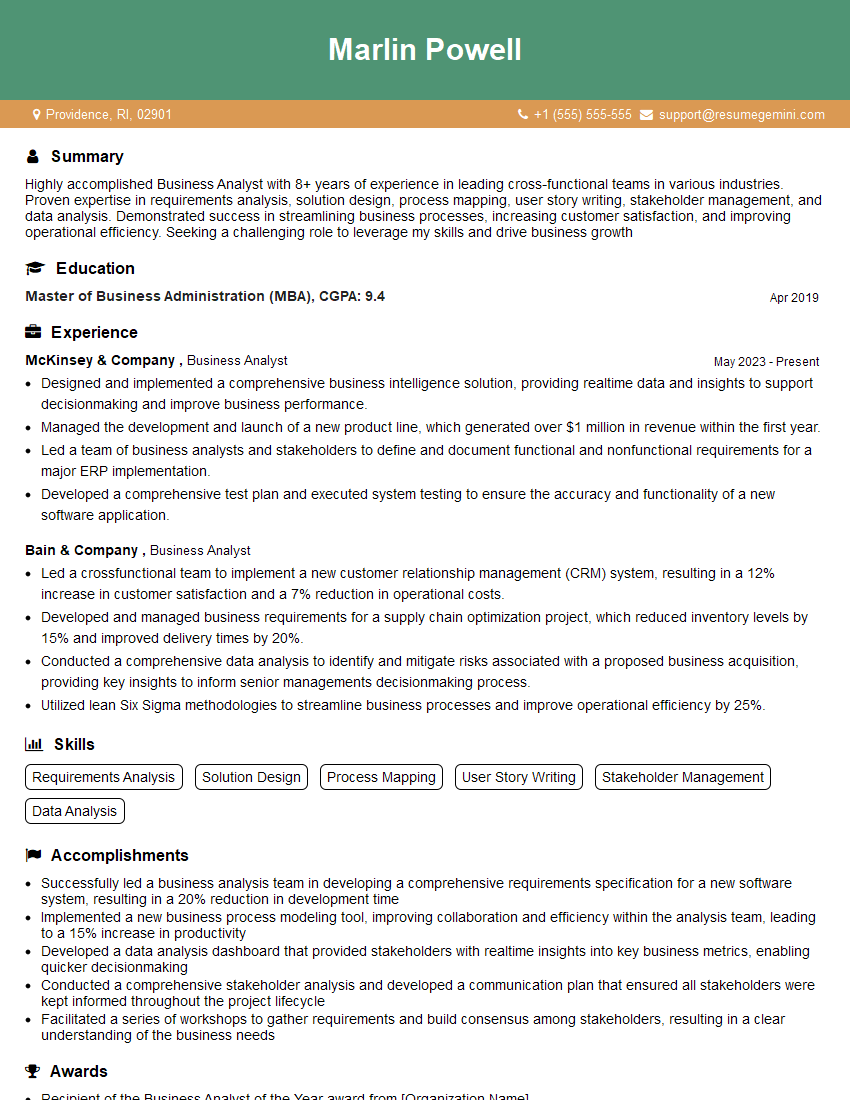
Business Analyst Resume Sample
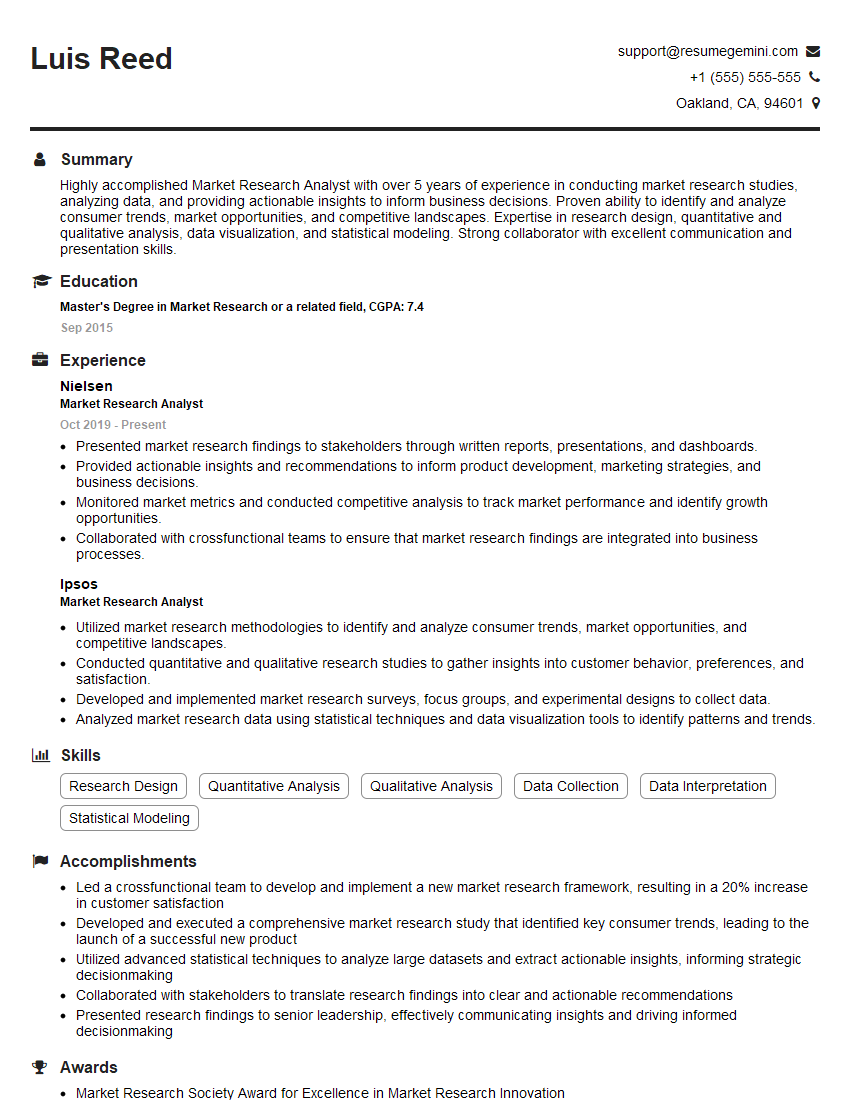
Market Research Analyst Resume Sample

Financial Analyst Resume Sample
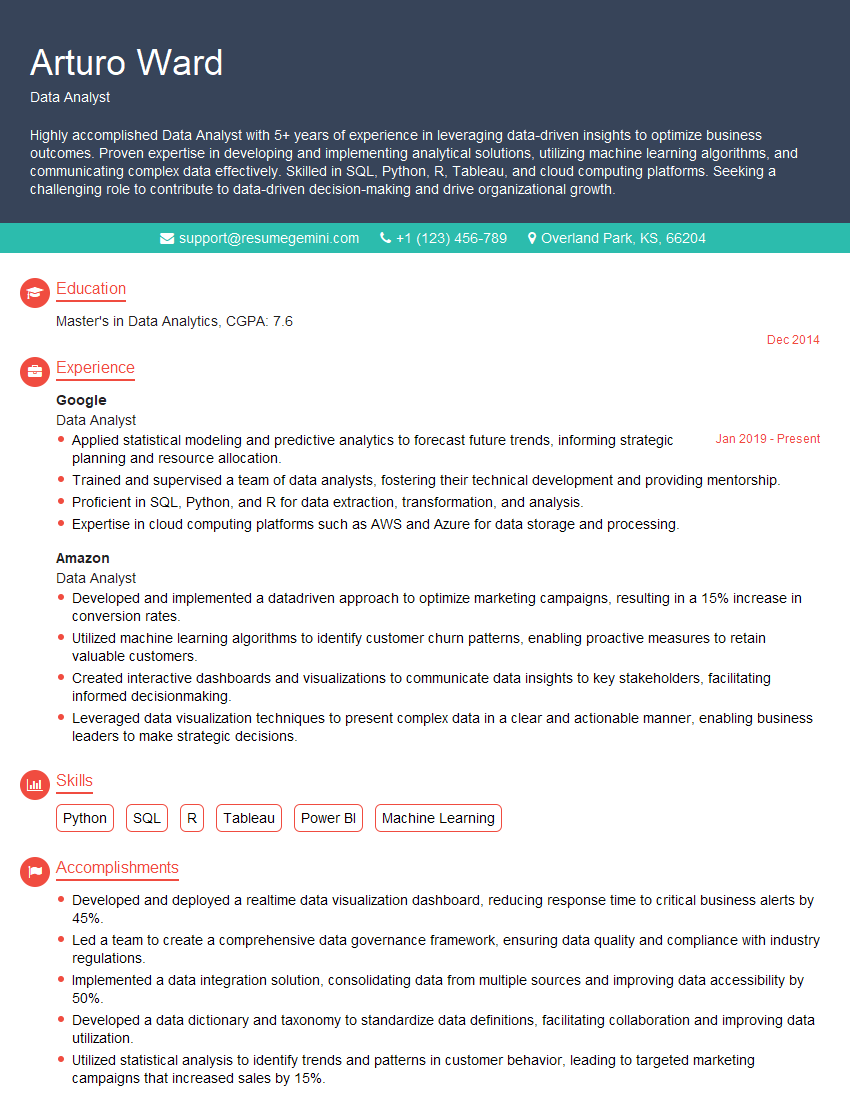
Data Analyst Resume Sample

Quantitative Analyst Resume Sample
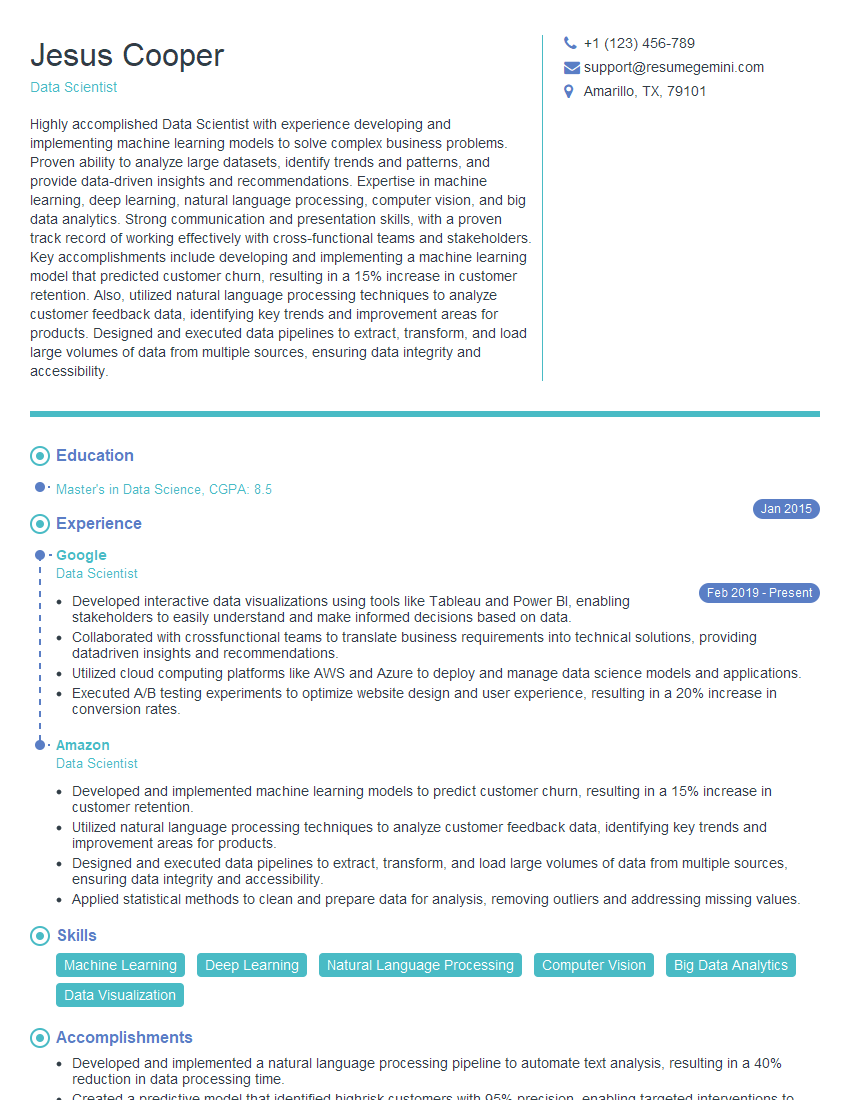
Data Scientist Resume Sample

Research Scientist Resume Sample

Actuary Resume Sample
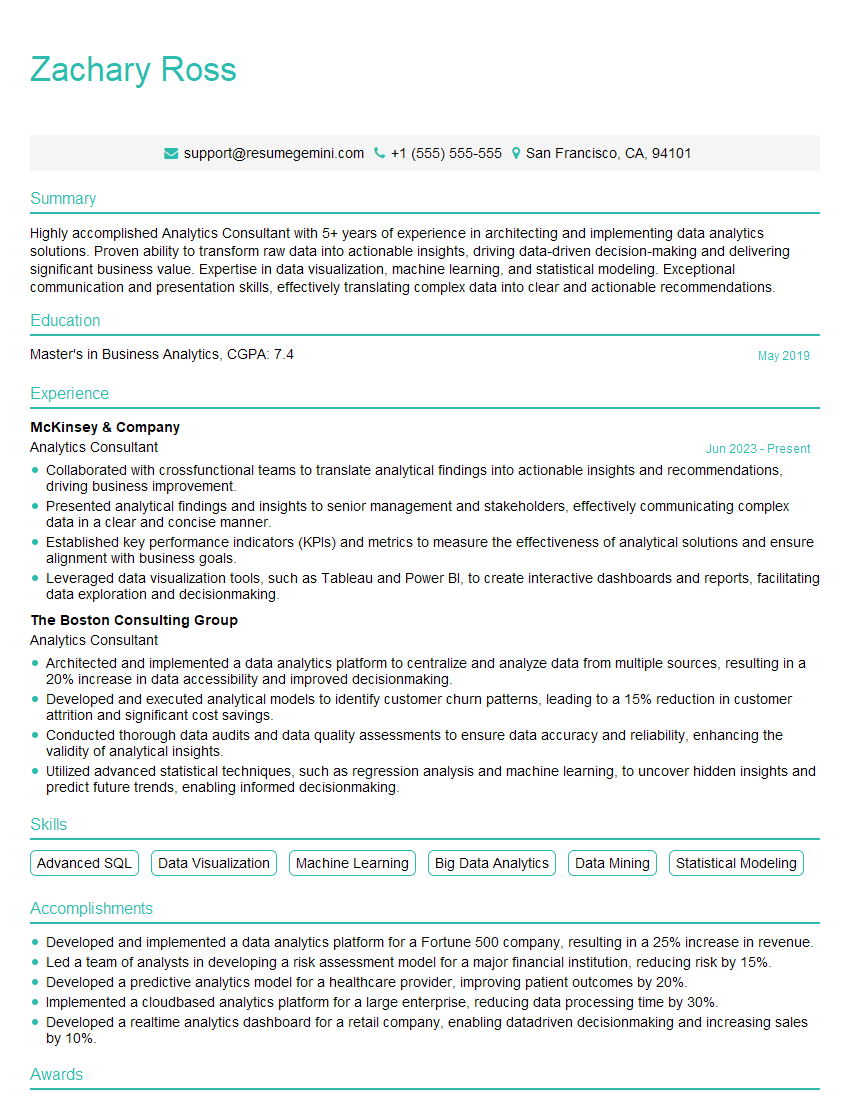
Analytics Consultant Resume Sample

Operations Research Analyst Resume Sample
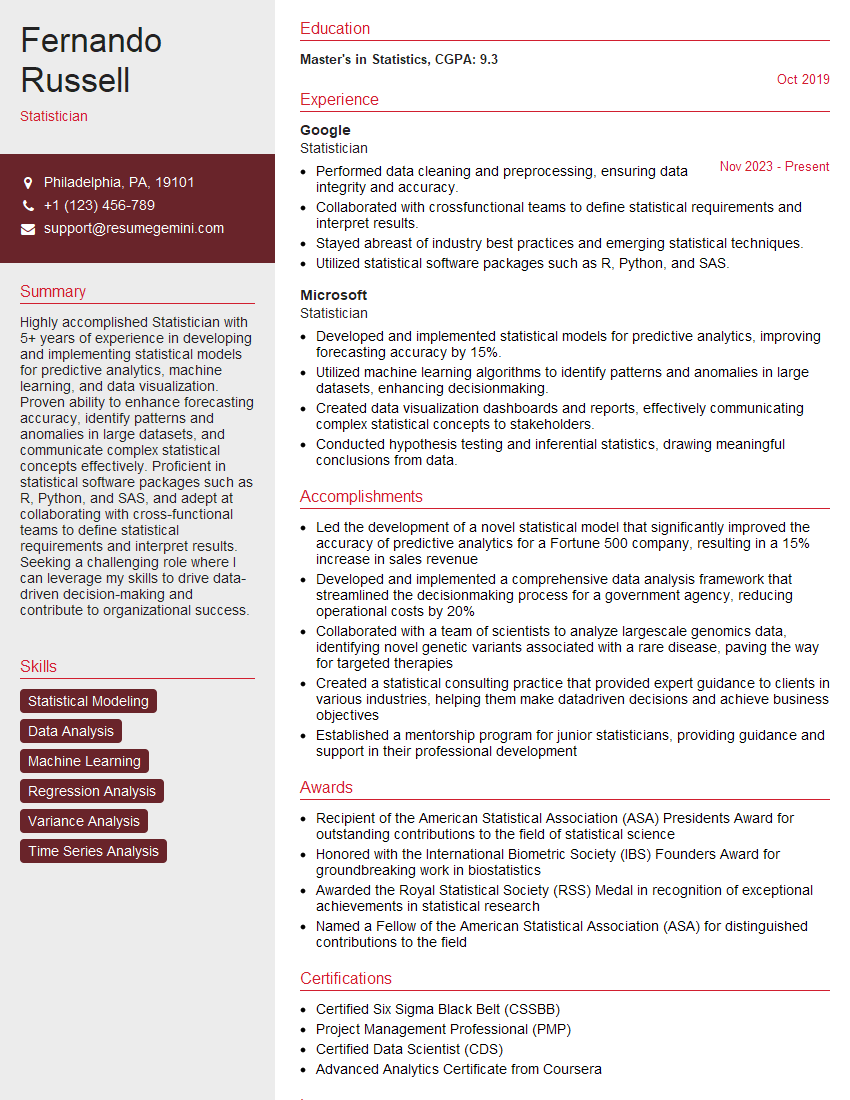
Statistician Resume Sample
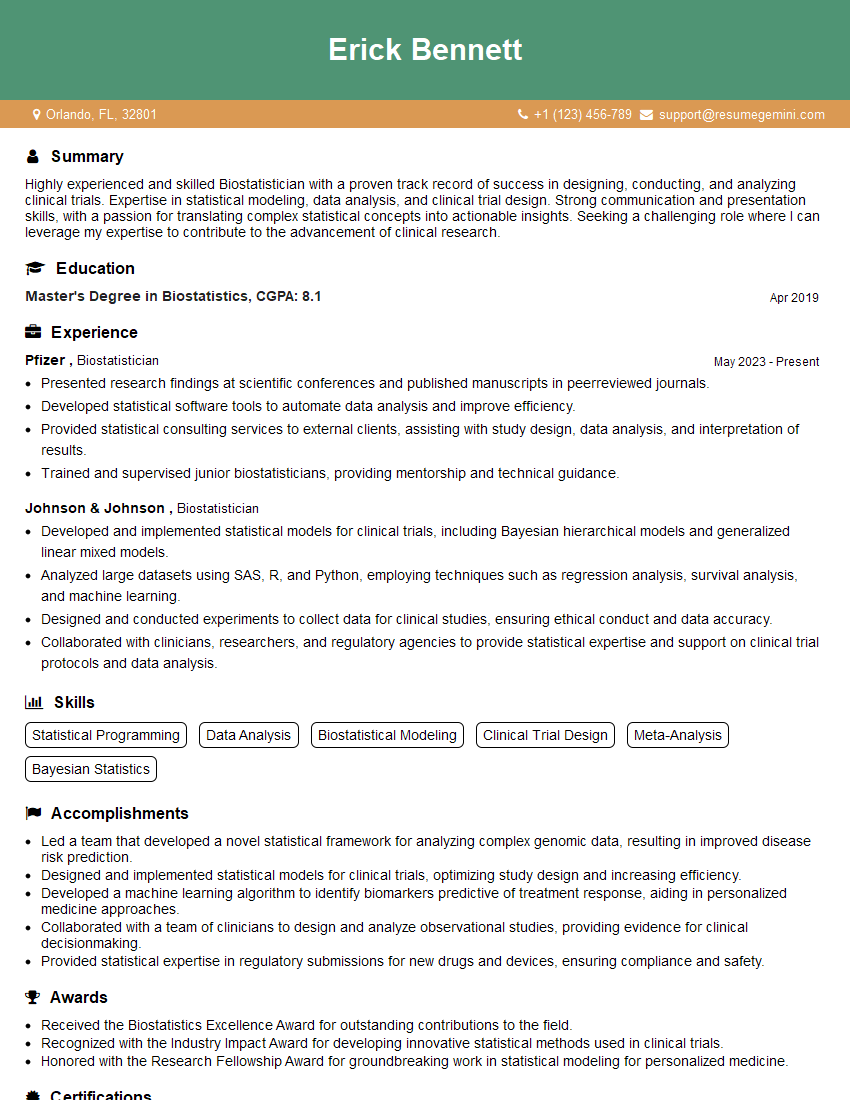
Biostatistician Resume Sample
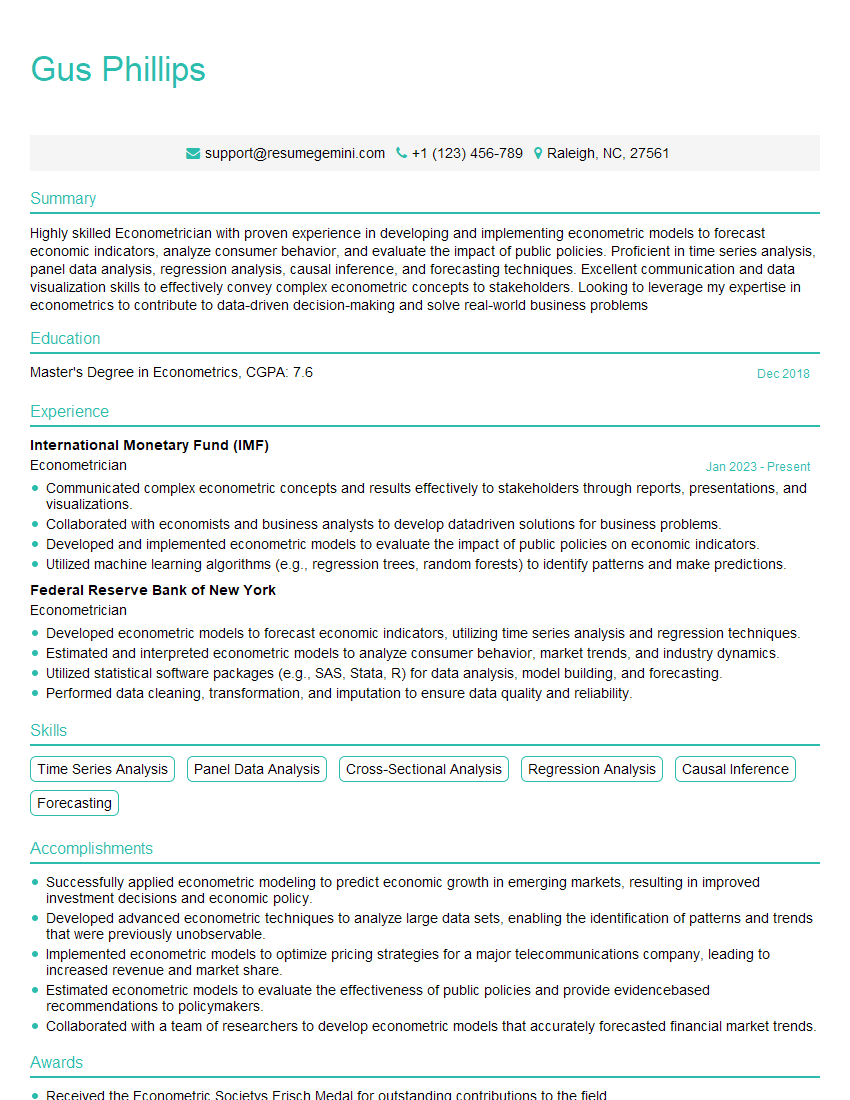
Econometrician Resume Sample
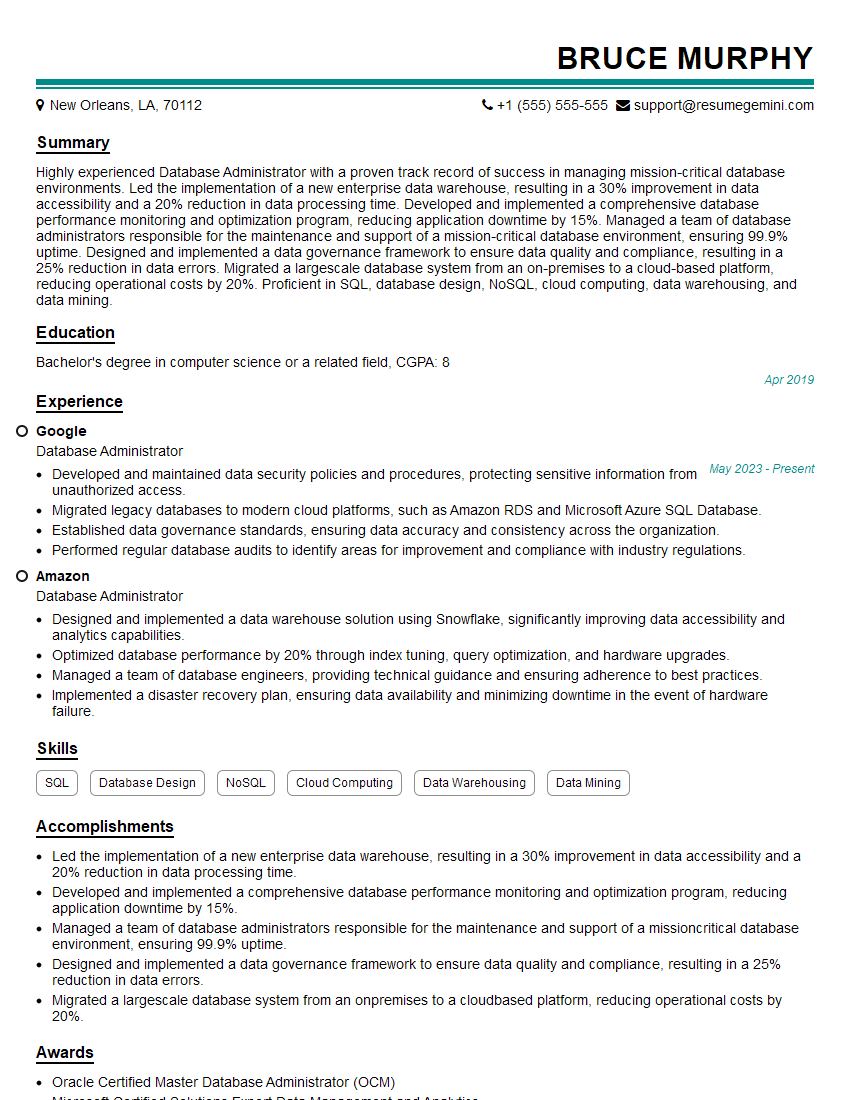
Database Administrator Resume Sample
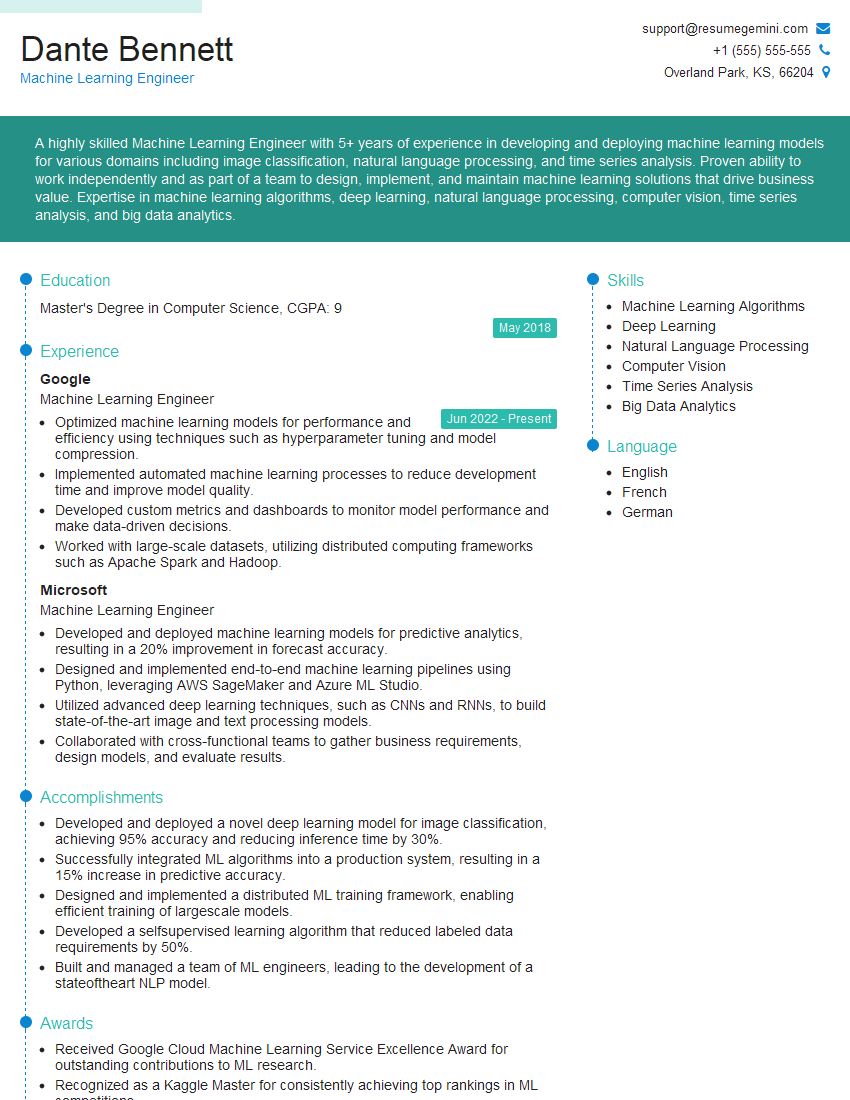
Machine Learning Engineer Resume Sample
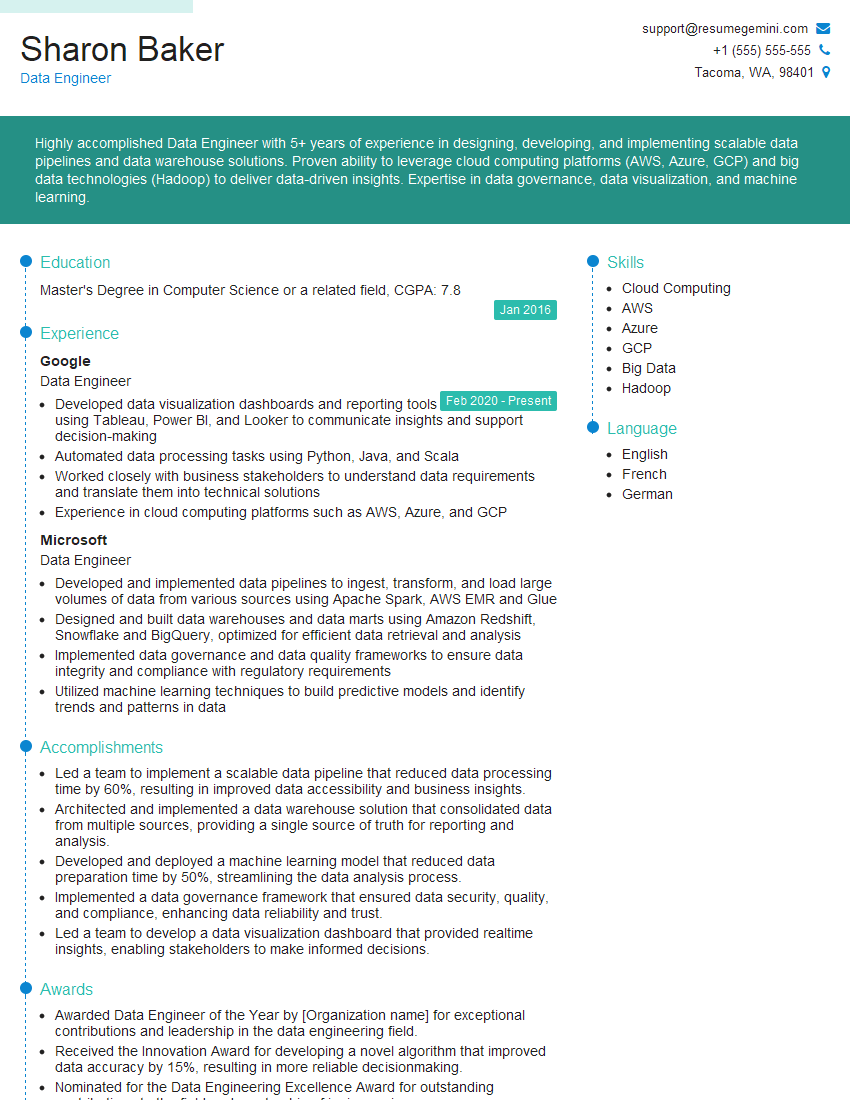
Data Engineer Resume Sample
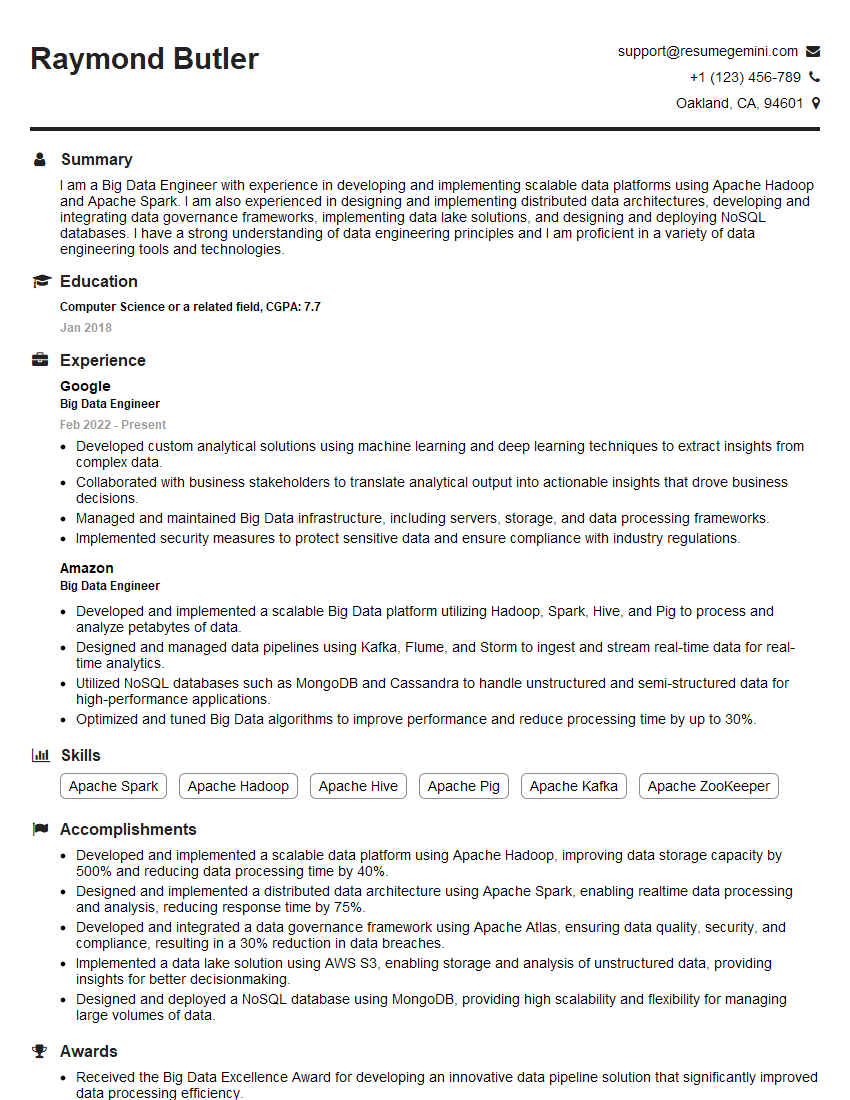
Big Data Engineer Resume Sample
- Business Analyst
- Market Research Analyst
- Financial Analyst
- Data Analyst
- Quantitative Analyst
- Data Scientist
- Research Scientist
- Actuary
- Analytics Consultant
- Operations Research Analyst
- Statistician
- Biostatistician
- Econometrician
- Database Administrator
- Machine Learning Engineer
- Data Engineer
- Big Data Engineer
Explore more articles
Users Rating of Our Blogs
Share Your Experience
We value your feedback! Please rate our content and share your thoughts (optional).
What Readers Say About Our Blog
To the interviewgemini.com Webmaster.
Very helpful and content specific questions to help prepare me for my interview!
Thank you
To the interviewgemini.com Webmaster.
This was kind of a unique content I found around the specialized skills. Very helpful questions and good detailed answers.
Very Helpful blog, thank you Interviewgemini team.