Unlock your full potential by mastering the most common Experience in environmental education and outreach interview questions. This blog offers a deep dive into the critical topics, ensuring you’re not only prepared to answer but to excel. With these insights, you’ll approach your interview with clarity and confidence.
Questions Asked in Experience in environmental education and outreach Interview
Q 1. Describe your experience developing and implementing environmental education programs.
Developing and implementing effective environmental education programs requires a multi-faceted approach. It starts with identifying a key environmental issue relevant to the target audience, whether it’s water conservation, climate change, or biodiversity loss. Next, I design a curriculum that incorporates various learning methods, including hands-on activities, interactive games, field trips, and guest speakers. For example, in a program focusing on water conservation, we might start with a classroom session on the water cycle, followed by a visit to a local water treatment plant and culminating in a student-led project to design a water-efficient garden for their school.
Program implementation involves careful logistical planning: securing necessary resources, recruiting volunteers, coordinating schedules, and ensuring accessibility for all participants. Post-program evaluation is crucial to measure effectiveness and make improvements for future iterations. I regularly use pre- and post-program surveys, observations, and feedback sessions to assess learning outcomes and overall program impact.
Q 2. How do you adapt your teaching methods to different age groups and learning styles?
Adapting teaching methods to diverse age groups and learning styles is paramount. For younger children (e.g., elementary school), I use storytelling, interactive games, and hands-on crafts to make learning fun and engaging. Visual aids, like colorful charts and diagrams, are essential. For older students (e.g., high school), I incorporate more complex concepts and critical thinking exercises, such as debates, research projects, and simulations. I might introduce them to citizen science initiatives or involve them in data analysis to enhance their understanding.
Recognizing different learning styles – visual, auditory, kinesthetic – is crucial. I diversify activities to cater to all learners. For instance, a lesson on composting might include a visual presentation, a discussion on the process, and a hands-on composting activity. Regular assessments and feedback mechanisms help me gauge understanding and adjust my teaching approach accordingly. Flexibility is key to success; being open to modifying the lesson plan based on the students’ needs and responses enhances learning outcomes.
Q 3. Explain your approach to engaging diverse communities in environmental initiatives.
Engaging diverse communities effectively in environmental initiatives requires understanding and respecting their unique cultural backgrounds, values, and perspectives. I begin by actively listening to community members’ concerns and priorities, building trust and rapport. Then, I co-create programs that are both relevant and meaningful to the community. For example, in a low-income community, focusing on practical strategies for reducing household energy consumption might be more impactful than a broader discussion on climate change.
Using culturally relevant examples and storytelling techniques can significantly enhance engagement. Partnering with local community leaders and organizations helps build credibility and ensures the program resonates with the target audience. Community events, workshops, and interactive activities can provide opportunities for active participation and foster a sense of ownership. Translation services and multilingual materials are vital to ensure inclusivity.
Q 4. What are some effective strategies for measuring the impact of environmental education programs?
Measuring the impact of environmental education programs involves a combination of quantitative and qualitative methods. Pre- and post-program surveys can assess changes in knowledge, attitudes, and behaviors. For example, questions could measure participants’ understanding of environmental concepts before and after the program. Focus groups and interviews can provide richer qualitative data on participants’ experiences and perspectives. Behavioral changes, such as reduced water or energy consumption, can also be tracked to gauge the program’s effectiveness in the real world.
Tracking program participation rates, volunteer engagement, and the reach of outreach materials provides additional insights. Analyzing student projects or community initiatives resulting from the program can demonstrate long-term impact. Regular monitoring and evaluation are vital for identifying areas for improvement and ensuring the program’s ongoing success. A combination of these methods provides a comprehensive evaluation of the program’s efficacy.
Q 5. How do you incorporate technology into your environmental education programs?
Technology plays a vital role in modern environmental education. Interactive simulations and online games can make learning more engaging and accessible. For instance, students can use online tools to model the effects of deforestation or explore different renewable energy sources. Geographic Information Systems (GIS) technology can be used to analyze environmental data and map ecological patterns. Mobile apps and online platforms can facilitate citizen science projects, allowing students to collect and contribute data to real-world research initiatives.
Video conferencing and virtual field trips can broaden the reach of education programs, making them accessible to remote communities. Social media platforms can be used for outreach, sharing educational content, and promoting engagement. However, it’s crucial to ensure that technology is used responsibly and ethically, addressing potential issues such as digital equity and internet access.
Q 6. Describe your experience with environmental outreach campaigns.
My experience with environmental outreach campaigns includes developing and implementing various strategies to raise awareness about environmental issues and promote pro-environmental behaviors. This often involves creating compelling communication materials, such as brochures, posters, and social media campaigns, designed to reach specific target audiences. For example, a campaign targeting young adults might use social media influencers and engaging video content, while a campaign targeting senior citizens might utilize community newsletters and presentations at senior centers.
Organizing events, such as workshops, community cleanups, and educational festivals, are also effective outreach methods. Public speaking opportunities, media engagement, and collaborations with local businesses and organizations help extend the campaign’s reach. Evaluating the effectiveness of an outreach campaign involves monitoring media coverage, assessing social media engagement, and tracking changes in public attitudes and behaviors related to the campaign’s objectives. Continuous adaptation and refinement are essential for maximizing impact.
Q 7. How do you develop partnerships with other organizations to support environmental education efforts?
Developing strong partnerships with other organizations is crucial for amplifying the impact of environmental education efforts. This involves identifying organizations with complementary goals and resources, such as local schools, community groups, government agencies, and non-profit organizations. I typically start by building relationships through networking events, attending conferences, and reaching out directly to potential partners.
Collaborations might involve co-creating educational programs, sharing resources, jointly organizing events, or leveraging each organization’s expertise to reach a wider audience. A formal partnership agreement outlining roles, responsibilities, and shared goals is usually necessary for successful collaboration. Regular communication, transparency, and mutual respect are vital for maintaining strong partnerships and ensuring the long-term success of collaborative environmental education initiatives.
Q 8. What are some challenges you’ve faced in environmental education, and how did you overcome them?
One of the biggest challenges in environmental education is reaching diverse audiences with varying levels of prior knowledge and engagement. For instance, I once worked on a project to educate inner-city youth about urban ecology. Initially, many students lacked interest, viewing environmental issues as irrelevant to their daily lives. To overcome this, we shifted our approach from abstract lectures to hands-on activities like urban gardening and community clean-ups. This allowed them to connect directly with their environment and see the tangible impact of their actions. Another challenge is combating misinformation and skepticism. I’ve found that addressing concerns directly with evidence-based information, presented clearly and respectfully, is key. Open dialogue and encouraging critical thinking skills, rather than simply presenting facts, can be much more effective.
Q 9. How do you assess the effectiveness of your outreach strategies?
Assessing the effectiveness of outreach strategies requires a multi-faceted approach. Pre- and post-program surveys are crucial for measuring changes in knowledge, attitudes, and behaviors. For example, we might ask participants to rate their understanding of a specific environmental concept before and after a workshop. Quantitative data like attendance numbers and social media engagement provide valuable insights into reach and impact. Qualitative data, such as feedback from focus groups or individual interviews, offer a deeper understanding of participants’ experiences and perspectives. For a recent community composting initiative, post-program surveys revealed a significant increase in participant understanding of composting principles and a noticeable change in their composting behaviors at home. Combining quantitative and qualitative methods paints a complete picture of program success.
Q 10. Describe your experience creating educational materials (e.g., brochures, presentations, lesson plans).
I have extensive experience creating educational materials catering to diverse audiences and learning styles. I’ve developed engaging brochures using simple language, compelling visuals, and clear calls to action. For example, a brochure on water conservation featured striking photos of local water sources paired with easy-to-follow tips for household water saving. My presentations often incorporate interactive elements, such as quizzes and group discussions, to enhance audience participation and retention. I’ve also designed numerous lesson plans, aligning with national curriculum standards, integrating hands-on activities, and providing assessments to gauge student understanding. These lesson plans often include diverse learning modalities such as visual aids, group projects, and outdoor explorations to cater to different learning preferences.
Q 11. How familiar are you with environmental regulations and policies?
I possess a strong understanding of environmental regulations and policies relevant to my work. I’m familiar with federal legislation like the Clean Air Act and the Clean Water Act, as well as state-level regulations pertaining to waste management and habitat protection. My understanding extends to international agreements like the Paris Agreement. This knowledge allows me to incorporate accurate and up-to-date information into my educational materials and programs, ensuring that participants are well-informed about the legal and regulatory frameworks that govern environmental protection. I regularly consult resources from governmental agencies and non-profit organizations to stay updated on policy changes. This knowledge is essential for creating relevant and effective environmental education programs.
Q 12. How do you address difficult or controversial environmental issues with diverse audiences?
Addressing controversial environmental issues requires sensitivity, respect, and a commitment to fostering productive dialogue. I begin by acknowledging the diverse perspectives present and validating participants’ concerns. For example, when discussing climate change, I acknowledge the range of opinions and uncertainties while emphasizing the scientific consensus and the potential impacts of inaction. I rely on evidence-based information, clearly presented, to inform the discussion. I encourage respectful communication by establishing clear ground rules for interaction and modeling respectful listening and response. Facilitating small-group discussions allows participants to share their views, learn from each other, and explore common ground. The goal is not to force consensus but to create a space for informed and respectful exchange of ideas.
Q 13. What are some innovative approaches to environmental education that you’re familiar with?
I’m familiar with several innovative approaches to environmental education. Gamification, using game mechanics to engage learners, is a powerful tool. I’ve incorporated game elements like points, badges, and leaderboards into environmental challenges, incentivizing participation and fostering a sense of competition and accomplishment. Citizen science projects, where participants contribute to real-world research, provide a tangible link between learning and action. For example, we might engage communities in monitoring local water quality or tracking bird populations. Storytelling and narrative-based approaches are also effective, using engaging stories to convey complex environmental concepts in a relatable way. Finally, incorporating technology, like virtual reality or augmented reality, allows for immersive experiences and greater accessibility to environmental education.
Q 14. Describe your experience with grant writing or fundraising for environmental education programs.
I have significant experience writing grant proposals and securing funding for environmental education programs. I’ve successfully secured grants from various sources, including government agencies, private foundations, and corporate sponsors. The process typically involves identifying suitable funding opportunities, crafting a compelling narrative that highlights the project’s impact and aligns with the funder’s priorities, and developing a detailed budget. I’ve learned to emphasize the program’s measurable outcomes and demonstrate the effectiveness of our past projects. Strong project management skills and accurate financial projections are crucial. Successful grant writing requires a blend of strong writing skills, understanding of grant priorities, and meticulous attention to detail.
Q 15. How do you evaluate and improve your own professional development in environmental education?
Professional development is crucial for staying current in the ever-evolving field of environmental education. I approach it systematically, focusing on continuous learning and self-reflection. This involves a multi-pronged approach:
- Formal Training: I actively seek out workshops, conferences, and online courses focusing on new pedagogical techniques, emerging environmental issues, and best practices in environmental communication. For example, I recently completed a course on using gamification in environmental education, significantly improving the engagement level in my programs.
- Mentorship and Networking: I actively participate in professional networks and seek mentorship from experienced educators. Sharing best practices and learning from others’ challenges broadens my perspective and identifies areas for improvement.
- Self-Assessment and Feedback: Regularly reviewing program evaluations, student feedback, and peer observations helps me identify areas of strength and weakness in my teaching methods and curriculum design. I then create a personalized development plan addressing these areas.
- Reflection and Research: I dedicate time to reflecting on my teaching practices, researching new approaches, and exploring relevant scholarly articles and publications. This allows me to stay up-to-date on research and adapt my strategies accordingly.
This ongoing commitment ensures I am delivering the most effective and engaging environmental education possible.
Career Expert Tips:
- Ace those interviews! Prepare effectively by reviewing the Top 50 Most Common Interview Questions on ResumeGemini.
- Navigate your job search with confidence! Explore a wide range of Career Tips on ResumeGemini. Learn about common challenges and recommendations to overcome them.
- Craft the perfect resume! Master the Art of Resume Writing with ResumeGemini’s guide. Showcase your unique qualifications and achievements effectively.
- Don’t miss out on holiday savings! Build your dream resume with ResumeGemini’s ATS optimized templates.
Q 16. How do you use data and metrics to inform your environmental education and outreach strategies?
Data and metrics are essential for measuring the effectiveness of environmental education and outreach programs. I use them to inform program design, track progress, and demonstrate impact. My approach involves:
- Pre- and Post-Program Assessments: I use surveys and quizzes to gauge participants’ knowledge and attitudes before and after a program. This helps measure changes in understanding and behavioral intentions.
- Attendance and Participation Tracking: Monitoring participation rates provides insights into program reach and engagement levels. For example, a drop-off in attendance might signal a need to revise program content or scheduling.
- Social Media Analytics: When using social media for outreach, I closely monitor metrics such as reach, engagement (likes, shares, comments), and website traffic to assess the effectiveness of my messaging and identify which content resonates most with the target audience.
- Program Evaluation Surveys: Detailed feedback from participants provides valuable insights into program strengths, weaknesses, and areas for improvement. This helps shape future program iterations.
By analyzing this data, I can refine my strategies, allocate resources effectively, and demonstrate the tangible impact of my environmental education efforts to stakeholders.
Q 17. Describe your experience in curriculum design for environmental education.
Curriculum design for environmental education requires a thoughtful approach that balances scientific accuracy with engaging pedagogy. My process involves:
- Needs Assessment: Identifying the specific learning objectives and the target audience’s prior knowledge is the first step. This informs the overall curriculum structure and content.
- Learning Objectives: Clearly defined, measurable learning objectives guide curriculum development. For example, a learning objective might be, “Students will be able to explain the water cycle and identify ways to conserve water.”
- Content Selection: I select relevant and accurate information, ensuring age-appropriateness and alignment with current scientific understanding. I use diverse resources, such as scientific literature, government reports, and reputable online sources.
- Activity Design: I incorporate diverse teaching methodologies, including hands-on activities, field trips, games, and technology integration. This ensures active learning and caters to various learning styles.
- Assessment Strategies: Assessments are built into the curriculum to track learning progress and measure the achievement of learning objectives. This may include quizzes, projects, presentations, and observations.
For instance, I recently designed a curriculum on climate change for middle school students, integrating interactive simulations, guest speakers, and community-based projects to enhance engagement and knowledge retention.
Q 18. How do you create engaging and interactive learning experiences in environmental education?
Creating engaging and interactive learning experiences is paramount in environmental education. I achieve this through various techniques:
- Hands-on Activities: Activities like nature walks, experiments, citizen science projects, and outdoor games promote active learning and sensory engagement. For example, a water quality testing project allows students to directly experience the impact of pollution.
- Gamification: Integrating game mechanics like points, badges, leaderboards, and challenges motivates participation and makes learning fun. I might use a scavenger hunt to teach students about local flora and fauna.
- Storytelling and Role-Playing: Engaging narratives and role-playing scenarios can make abstract concepts relatable and memorable. For instance, I’ve used role-playing to simulate a town hall meeting on a local environmental issue.
- Technology Integration: Using interactive simulations, virtual reality, and educational apps enhances engagement and provides access to diverse learning resources.
- Collaborative Projects: Group projects and community-based initiatives foster teamwork, communication skills, and a sense of shared responsibility towards environmental issues.
I constantly evaluate the effectiveness of these techniques and adapt them based on student feedback and program evaluations.
Q 19. What are your preferred methods for communicating complex environmental concepts to different audiences?
Communicating complex environmental concepts to diverse audiences requires tailoring the message to their existing knowledge, interests, and communication preferences. My approach involves:
- Audience Analysis: Understanding the audience’s background, age, education level, and cultural context is crucial for effective communication. A presentation to scientists will differ greatly from one to elementary school students.
- Visual Aids: Graphs, charts, maps, images, and videos make information more accessible and engaging. Visuals are particularly crucial for conveying complex data or scientific findings.
- Storytelling and Analogies: Relatable stories and analogies can help simplify complex concepts and make them more memorable. For instance, explaining the concept of the carbon cycle through a simple story about a plant and its environment.
- Interactive Presentations: Question-and-answer sessions, polls, and group discussions encourage audience participation and enhance understanding.
- Multiple Communication Channels: Employing various channels, including presentations, workshops, social media, blogs, and printed materials, caters to different learning preferences and ensures broader reach.
I adapt my communication style based on the audience, always striving for clarity, accuracy, and relevance.
Q 20. Describe your experience with environmental volunteer management.
Managing environmental volunteers requires effective organization, communication, and appreciation. My experience involves:
- Recruitment and Training: I develop clear volunteer descriptions, conduct thorough training sessions to equip volunteers with the necessary skills and knowledge, and establish clear roles and responsibilities.
- Scheduling and Coordination: I create efficient schedules, communicate effectively about project updates and changes, and ensure volunteers have the resources they need to complete their tasks.
- Supervision and Support: I provide regular support and feedback to volunteers, addressing their questions and concerns promptly. This ensures they feel valued and empowered.
- Recognition and Appreciation: I regularly acknowledge volunteers’ contributions through verbal praise, emails, newsletters, and celebratory events. This builds morale and fosters a sense of community.
- Safety Procedures: Establishing and enforcing safety protocols are critical, including risk assessments, providing necessary safety equipment, and conducting safety briefings.
For example, I managed a team of volunteers involved in a large-scale river cleanup project, ensuring their safety, coordinating their efforts, and fostering a positive and productive work environment.
Q 21. How do you ensure accessibility and inclusivity in your environmental education programs?
Ensuring accessibility and inclusivity is vital to make environmental education programs available and beneficial to everyone. My approach includes:
- Universal Design for Learning (UDL): I apply UDL principles to design programs that cater to diverse learning styles, abilities, and needs. This includes providing multiple means of representation, action and expression, and engagement.
- Accessibility Accommodations: I provide accommodations for individuals with disabilities, including using alternative formats for materials (e.g., large print, audio recordings), providing sign language interpreters, and ensuring physical accessibility of venues.
- Culturally Responsive Teaching: I incorporate diverse perspectives and experiences into my teaching, recognizing and valuing the cultural backgrounds of my participants. This ensures programs are relevant and engaging for everyone.
- Language Accessibility: I use clear and simple language, avoiding jargon, and provide translations or interpretations when necessary to ensure all participants understand the information.
- Inclusive Program Design: I design programs that are welcoming and supportive of all participants, regardless of their background or abilities. I actively work to create a safe and inclusive learning environment.
For instance, I’ve adapted nature walks to be wheelchair accessible, created visual aids for individuals with hearing impairments, and included diverse cultural perspectives in my curriculum.
Q 22. What are your strategies for addressing misinformation and skepticism about environmental issues?
Addressing misinformation and skepticism requires a multi-pronged approach focusing on building trust, providing accurate information, and fostering critical thinking skills. Instead of directly confronting skepticism, I prioritize building a foundation of understanding. This starts with actively listening to concerns and acknowledging the validity of their perspectives, even if they differ from scientific consensus.
Evidence-based communication: I use clear, concise language and credible sources like peer-reviewed studies and government reports to present factual information. I avoid jargon and explain complex concepts using relatable analogies. For example, explaining carbon sequestration using the analogy of a sponge absorbing water.
Interactive learning experiences: Hands-on activities, field trips, and citizen science projects allow individuals to directly experience environmental issues and develop a deeper understanding. For example, a water quality testing project can demonstrate the impact of pollution firsthand.
Addressing underlying biases: I acknowledge that skepticism often stems from factors beyond simply lacking information, such as political affiliations or personal experiences. Open dialogue and addressing these underlying concerns are crucial.
Promoting media literacy: I teach individuals how to critically evaluate information sources, identify biases, and recognize misinformation campaigns. This empowers them to become more discerning consumers of environmental information.
Q 23. Describe your experience working with diverse stakeholders in environmental education initiatives.
My experience working with diverse stakeholders includes collaborating with community leaders, educators, government agencies, businesses, and non-profit organizations. Effective collaboration requires recognizing and valuing the unique perspectives and priorities of each group. For example, when working on a community gardening project, I needed to balance the desires of residents, local businesses providing resources, and government agencies responsible for land use permits. This required active listening, compromise, and clear communication to achieve a common goal.
Building relationships: I invest time in getting to know stakeholders, understanding their concerns, and fostering mutual respect. Trust is essential for successful collaboration.
Inclusive communication: I utilize various communication methods to ensure all stakeholders can participate. This includes providing materials in multiple languages, using accessible formats, and actively soliciting input from diverse groups.
Shared decision-making: I believe in collaborative decision-making processes where all stakeholders have a voice in shaping the direction of initiatives. This can involve participatory planning sessions and community forums.
Q 24. How do you measure the effectiveness of environmental education and outreach programs against stated goals?
Measuring the effectiveness of environmental education programs requires a multifaceted approach combining quantitative and qualitative data. Simply measuring attendance isn’t sufficient; we need to assess changes in knowledge, attitudes, and behavior. Goals should be clearly defined at the outset, with measurable indicators in place.
Pre- and post-program assessments: Surveys or tests can assess changes in knowledge and understanding of environmental concepts.
Behavioral change assessments: Tracking changes in environmental behaviors, such as water conservation or waste reduction, is crucial. This could involve monitoring household water usage or waste recycling rates.
Focus groups and interviews: Qualitative data provides insights into participants’ experiences, perspectives, and changes in attitudes.
Long-term monitoring: Measuring the lasting impact of the program requires tracking changes over time. For instance, follow-up surveys can assess sustained behavioral changes months or years after the program concludes.
For example, if a goal is to reduce water consumption, we would measure water usage before and after the program, alongside participant feedback on their adopted water-saving practices. The effectiveness is then judged based on the extent of reduction and the feedback received.
Q 25. How do you stay up-to-date on current trends and research in environmental education and science?
Staying current in environmental education and science requires a continuous commitment to learning. I utilize several strategies to stay informed about the latest research, trends, and best practices.
Professional development: Attending conferences, workshops, and webinars allows me to learn from experts and network with colleagues in the field.
Reading scientific literature: I regularly read peer-reviewed journals and publications to stay abreast of the latest research findings.
Networking: Engaging with professional organizations like the North American Association for Environmental Education (NAAEE) provides access to resources, publications, and networking opportunities.
Online resources: Utilizing online databases, reputable websites, and educational platforms provides access to a wealth of information.
Q 26. What is your approach to conflict resolution in group settings related to environmental issues?
Conflict resolution in group settings requires a facilitative approach prioritizing active listening, empathy, and respect. My approach is based on collaborative problem-solving, focusing on finding common ground rather than imposing solutions.
Active listening: I ensure all voices are heard and understood, allowing individuals to express their perspectives without interruption.
Neutral facilitation: I avoid taking sides and act as a neutral facilitator, guiding the conversation towards constructive dialogue.
Identifying shared goals: I help participants identify common goals and values to build a foundation for collaboration.
Brainstorming solutions: I encourage creative brainstorming to generate multiple solutions that address the concerns of all stakeholders.
Mediation: If necessary, I employ mediation techniques to help conflicting parties find mutually agreeable solutions.
Q 27. Describe your experience using social media and other digital platforms for environmental outreach.
Social media and digital platforms are powerful tools for environmental outreach, allowing me to reach broader audiences and engage them in meaningful ways. I use a combination of platforms to tailor my approach to the specific audience and message.
Content strategy: I create engaging content, including images, videos, infographics, and blog posts, to share information and inspire action. For example, I might create a short video about composting or a visually appealing infographic on water conservation.
Platform selection: I use platforms like Instagram for visually appealing content, Twitter for quick updates and news sharing, and Facebook for creating community groups and fostering discussion.
Community engagement: I actively engage with followers, respond to comments and questions, and encourage participation in online discussions.
Data analytics: I monitor engagement metrics to evaluate the effectiveness of my outreach efforts and adapt my strategy as needed.
Q 28. How would you evaluate the success of an environmental education program?
Evaluating the success of an environmental education program goes beyond simply measuring participation numbers. A holistic evaluation considers the program’s impact on knowledge, attitudes, behaviors, and long-term sustainability. I use a mix of quantitative and qualitative data to get a complete picture.
Knowledge gain: Pre- and post-program assessments measure changes in participants’ understanding of key environmental concepts.
Attitude shifts: Surveys and interviews assess changes in participants’ attitudes towards environmental issues and their willingness to take action.
Behavioral change: Observing changes in environmental behaviors, such as waste reduction or energy conservation, directly measures the program’s effectiveness.
Community impact: Assessing the program’s influence on the broader community, such as changes in local environmental policies or community initiatives, demonstrates wider-reaching effects.
Program sustainability: Evaluating the program’s capacity to continue its positive impact beyond the initial project timeframe is crucial for long-term success. For instance, are the skills and knowledge transferred to other members of the community to sustain the initiative?
Key Topics to Learn for Experience in Environmental Education and Outreach Interview
- Curriculum Development & Delivery: Designing and implementing engaging educational programs for diverse audiences (children, adults, community groups). Consider different learning styles and age appropriateness.
- Program Evaluation & Assessment: Measuring the effectiveness of educational programs using quantitative and qualitative methods. This includes pre- and post-program assessments and tracking participant engagement.
- Community Engagement & Outreach Strategies: Developing and executing outreach initiatives to raise awareness about environmental issues and promote sustainable practices within communities. Think about stakeholder engagement and building partnerships.
- Environmental Education Theories & Best Practices: Understanding key pedagogical approaches and their application in environmental education, such as experiential learning, inquiry-based learning, and place-based education.
- Communication & Interpretation Skills: Effectively conveying complex environmental information to various audiences using clear, concise, and engaging language (written and verbal). This includes adapting communication style to different audiences.
- Resource Management & Budgeting: Managing program resources effectively, including budgeting, securing funding, and utilizing available tools and materials responsibly.
- Environmental Issues & Sustainability: Demonstrating a strong understanding of current environmental challenges (climate change, pollution, biodiversity loss) and potential solutions. This shows your depth of knowledge and passion for the field.
- Problem-solving & Adaptability: Describing your ability to troubleshoot challenges encountered in program implementation, such as unexpected weather conditions or changes in participant engagement.
Next Steps
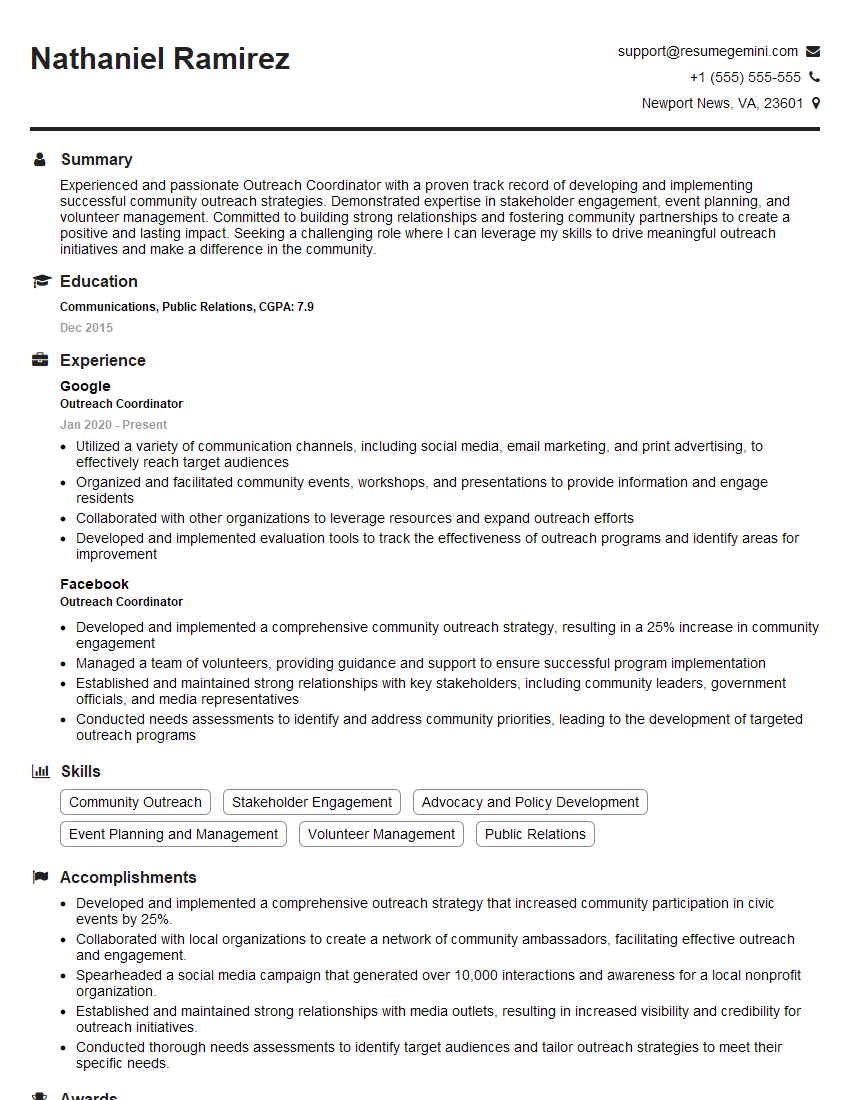
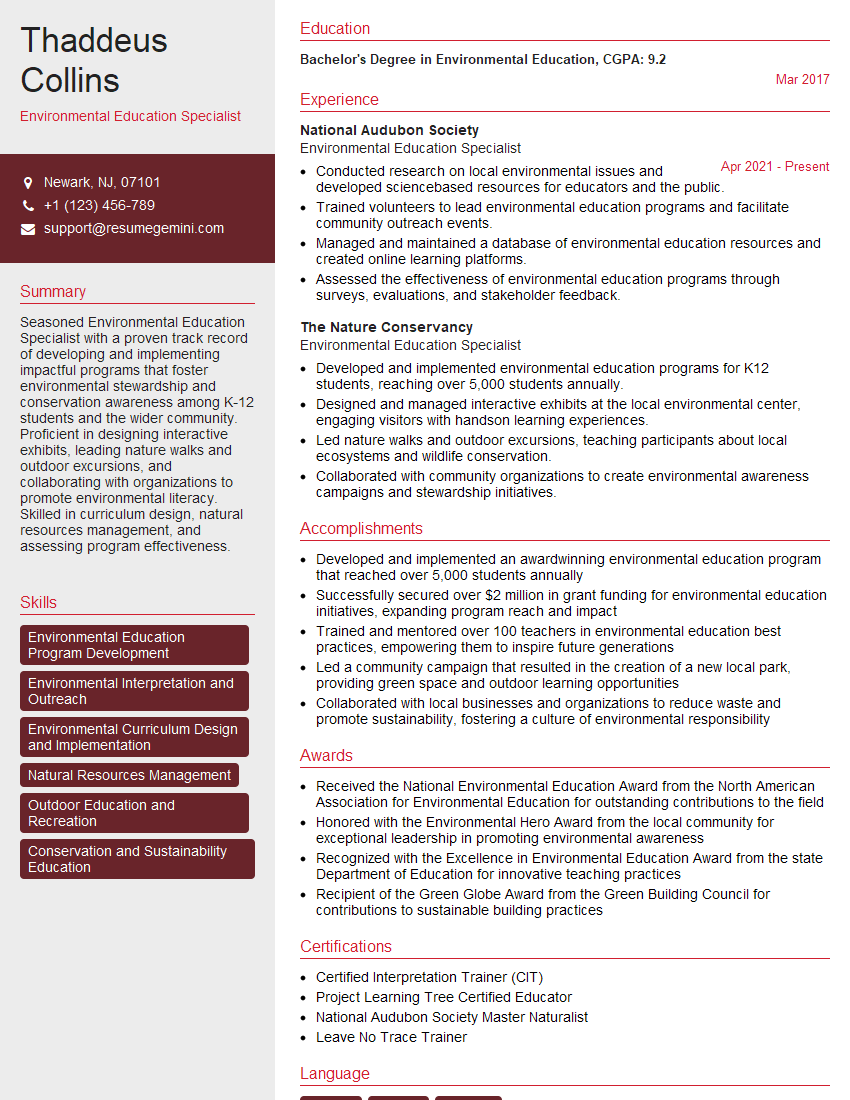
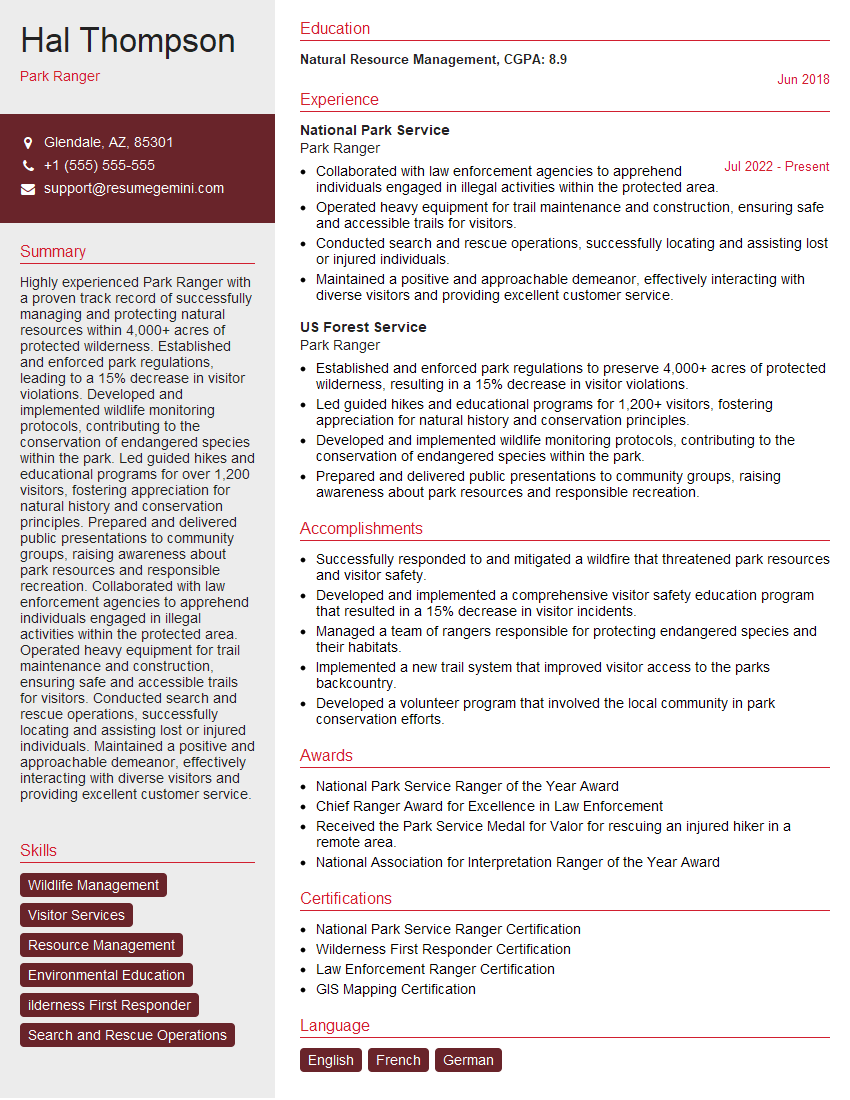
Mastering environmental education and outreach skills is crucial for a thriving career in this impactful field. It opens doors to diverse roles with increasing responsibility and impact. To maximize your job prospects, creating an ATS-friendly resume is essential. This ensures your qualifications are effectively highlighted to potential employers. ResumeGemini is a trusted resource for building professional resumes that stand out. They provide examples of resumes tailored to Experience in environmental education and outreach, giving you a head start in showcasing your expertise. Invest time in crafting a compelling resume – it’s your first impression with potential employers.



Explore more articles
Users Rating of Our Blogs
Share Your Experience
We value your feedback! Please rate our content and share your thoughts (optional).
What Readers Say About Our Blog
To the interviewgemini.com Webmaster.
Very helpful and content specific questions to help prepare me for my interview!
Thank you
To the interviewgemini.com Webmaster.
This was kind of a unique content I found around the specialized skills. Very helpful questions and good detailed answers.
Very Helpful blog, thank you Interviewgemini team.