Every successful interview starts with knowing what to expect. In this blog, we’ll take you through the top Obstetrical Ultrasound interview questions, breaking them down with expert tips to help you deliver impactful answers. Step into your next interview fully prepared and ready to succeed.
Questions Asked in Obstetrical Ultrasound Interview
Q 1. Describe the different types of obstetrical ultrasound examinations.
Obstetrical ultrasound encompasses various examinations, each serving a specific purpose throughout pregnancy. These can be broadly categorized as follows:
- First-trimester ultrasound: Typically performed between 6 and 14 weeks gestation, primarily for confirming pregnancy, dating the pregnancy, and assessing early fetal development and viability. This often includes assessing the gestational sac, yolk sac, and embryo/fetus.
- Second-trimester ultrasound (or anatomy scan): Conducted between 18 and 22 weeks gestation. Its main goal is a comprehensive assessment of fetal anatomy, screening for major structural anomalies. This detailed scan covers many organs and systems.
- Third-trimester ultrasound: Performed after 24 weeks gestation, focused on assessing fetal growth, placental position and function, amniotic fluid volume, and fetal well-being. It often addresses concerns arising from prior scans or the mother’s health.
- Doppler ultrasound: Utilized throughout pregnancy to assess blood flow in the umbilical artery, uterine arteries, and fetal vessels to assess placental perfusion and fetal health. Abnormal flow patterns can indicate problems like placental insufficiency.
- Biophysical profile (BPP): A combined assessment of fetal breathing movements, fetal movements, fetal tone, amniotic fluid volume, and non-stress test (NST) which is a measure of fetal heart rate reactivity to movement. This assesses the overall well-being of a high risk fetus.
The type and frequency of ultrasound examinations are determined by factors such as maternal age, medical history, previous pregnancy outcomes, and any detected abnormalities.
Q 2. Explain the procedure for performing a first-trimester ultrasound.
A first-trimester ultrasound typically involves a transabdominal approach, using a gel to facilitate sound wave transmission. The ultrasound transducer is moved across the abdomen to obtain images. Occasionally, a transvaginal approach is used for better visualization in early pregnancy, especially in cases where the uterus is retroverted or the pregnancy is difficult to visualize abdominally.
The procedure begins with confirming the presence of an intrauterine gestational sac. The sonographer will then measure the gestational sac diameter, which helps in estimating gestational age. The presence and size of the yolk sac and the embryo/fetus are meticulously assessed to confirm viability. Crown-rump length (CRL) measurement, a crucial metric for dating the pregnancy, is also taken. The sonographer will also check for the presence of a fetal heartbeat, a crucial indicator of viability. The entire process typically takes 15-30 minutes.
For example, if a small gestational sac is seen, with a relatively large yolk sac and no visible fetal pole, it may raise concerns about a possible blighted ovum or early miscarriage.
Q 3. How do you measure fetal gestational age using ultrasound?
Fetal gestational age estimation via ultrasound relies on several key biometric parameters, with crown-rump length (CRL) being the most accurate in the first trimester (up to 14 weeks). After 14 weeks, other measurements become more reliable. These include:
- Crown-rump length (CRL): Measured from the crown of the head to the bottom of the buttocks. This is the most accurate method in early pregnancy.
- Biparietal diameter (BPD): The widest diameter of the fetal head, measured across the parietal bones.
- Head circumference (HC): The circumference of the fetal head.
- Femur length (FL): Length of the fetal femur bone.
- Abdominal circumference (AC): The circumference of the fetal abdomen.
These measurements are compared to established growth charts specific to gestational age, which are built on large datasets. Ultrasound machines have software that automatically calculates gestational age based on inputted measurements. It’s important to note that these measurements provide estimates, not exact dates; there’s a margin of error involved. Multiple measurements and calculations are frequently used to improve accuracy.
Q 4. What are the key anatomical structures assessed during a fetal anatomy scan?
The fetal anatomy scan is a comprehensive assessment covering nearly all major fetal organs and structures. Key anatomical structures evaluated include:
- Head and brain: Shape and size of the head, presence of ventricles and major brain structures.
- Face: Features such as eyes, nose, mouth, and cleft lip/palate.
- Spinal column: Assessing the spine for any defects such as spina bifida.
- Heart: Four chambers of the heart, its position and major vessels.
- Lungs: Examining lung fields for any obvious abnormalities.
- Abdomen: Size and shape of the abdomen, stomach, and bladder.
- Extremities: Assessing the arms and legs for the presence and number of bones and the overall structure.
- Kidneys: Assessing the shape, size and location of the kidneys.
- Genitalia: Identifying the sex (if possible) and assessing the presence of appropriate external structures.
This detailed evaluation allows for the early detection of potential birth defects or anomalies, allowing for timely medical intervention and genetic counseling.
Q 5. Describe the biophysical profile (BPP) and its significance.
The biophysical profile (BPP) is a non-invasive assessment of fetal well-being, particularly useful in high-risk pregnancies. It combines five parameters:
- Fetal breathing movements: Presence and duration of rhythmic breathing movements.
- Fetal movements: Number of body or limb movements.
- Fetal tone: Presence of flexion and extension of fetal limbs.
- Amniotic fluid volume: The amount of amniotic fluid surrounding the fetus.
- Non-stress test (NST): Assessment of fetal heart rate reactivity to fetal movements.
Each parameter receives a score of 0 or 2, with a total score ranging from 0 to 10. A score of 8-10 is considered normal, indicating good fetal well-being. Lower scores may suggest potential fetal compromise and warrant further evaluation and possible intervention. For example, a low amniotic fluid index might indicate a problem with fetal urine production or placental function.
Q 6. Explain the role of Doppler ultrasound in obstetrics.
Doppler ultrasound uses sound waves to measure the velocity of blood flow within blood vessels. In obstetrics, it’s a crucial tool for evaluating placental perfusion, fetal circulation, and assessing the overall fetal well-being. Doppler studies are particularly valuable in high-risk pregnancies where there are concerns about fetal growth restriction, placental insufficiency, or other complications.
Specific applications include assessing the umbilical artery, uterine arteries, and ductus venosus. For example, abnormal umbilical artery Doppler waveforms may indicate placental insufficiency, a condition where the placenta doesn’t adequately supply the fetus with oxygen and nutrients.
Q 7. How do you interpret umbilical artery Doppler waveforms?
Interpretation of umbilical artery Doppler waveforms involves assessing the systolic/diastolic ratio (S/D ratio) and the pulsatility index (PI). These indices reflect the resistance to blood flow in the umbilical artery.
A normal umbilical artery waveform shows a relatively low S/D ratio and PI, indicating low resistance and good placental perfusion. Conversely, an abnormally high S/D ratio and PI suggest increased resistance to blood flow, which can be a sign of placental insufficiency, potentially leading to fetal growth restriction or hypoxia. This might present as an absent or reversed end-diastolic flow.
For example, an S/D ratio above 3.0 or a PI above 1.0 in the later stages of pregnancy might be considered abnormal and warrant close monitoring and further investigation.
It’s important to note that the interpretation of Doppler waveforms should always be considered in the context of other clinical findings and should not be used as a sole diagnostic tool.
Q 8. What are the indications for a transvaginal ultrasound?
Transvaginal ultrasound (TVUS) uses a probe inserted into the vagina to obtain high-resolution images of the pelvic organs. It’s superior to transabdominal ultrasound (using a probe on the abdomen) for visualizing early pregnancy, because it provides clearer images of the uterus and ovaries, especially in the first trimester.
- Early Pregnancy Concerns: Diagnosing ectopic pregnancies (pregnancy outside the uterus), confirming intrauterine pregnancies (pregnancy within the uterus), assessing fetal viability, and identifying early gestational sacs and embryos.
- Infertility Investigations: Evaluating ovarian morphology, tracking follicle growth during ovulation induction cycles, and assessing the uterine lining (endometrium).
- Postmenopausal Bleeding: Investigating the cause of bleeding, including evaluating the uterine lining and identifying endometrial polyps or cancer.
- Abnormalities in the Pelvis: Detecting pelvic masses, cysts, fibroids, or other abnormalities.
Think of it like this: if you need a close-up view of a tiny detail, a TVUS is like using a magnifying glass, providing a much sharper image than a transabdominal scan.
Q 9. Describe the common artifacts encountered in obstetrical ultrasound.
Several artifacts, or image distortions, can occur in obstetrical ultrasound. Understanding these is crucial for accurate interpretation. Some common ones include:
- Shadowing: This occurs behind highly reflective structures, like bone or calcifications, creating a dark area on the image. It’s like a shadow cast by a strong light source.
- Enhancement: The opposite of shadowing, this is a brighter area behind fluid-filled structures, making them appear more intense. It’s like a spotlight effect behind a transparent object.
- Refraction: Bending of the ultrasound beam as it passes through different tissue densities. This can cause slight misplacement of structures.
- Reverberation/Ring-down artifact: Multiple reflections of the sound wave between two strong reflectors, such as gas bubbles or the surface of a fetal structure. It looks like parallel lines extending from a structure.
- Acoustic shadowing (Posterior acoustic shadowing): Occurs behind a highly reflective object. This is a particularly important artifact to recognize when evaluating for certain conditions.
Recognizing these artifacts is vital to prevent misinterpretation. For instance, shadowing behind a structure might be misinterpreted as a mass when it’s simply a normal anatomical feature, such as the fetal spine.
Q 10. How do you handle a difficult or uncooperative patient during an exam?
Handling an uncooperative patient requires patience, empathy, and excellent communication skills. My approach involves:
- Building Rapport: Starting with a friendly introduction and explanation of the procedure, addressing the patient’s concerns and anxieties. A calm and reassuring demeanor is essential.
- Providing Clear Instructions: Giving simple, easy-to-understand instructions about what is expected of them. Explaining the purpose of the examination and the importance of their cooperation helps.
- Adjusting the Technique: If the patient is uncomfortable with a supine position, offering alternative positions (such as a lateral or semi-seated position) may help. Using a smaller transducer or adjusting the gel application can increase comfort.
- Employing Distraction Techniques: Engaging the patient in light conversation or offering them something to focus on, such as a photo or a toy (especially useful for children), might help them relax.
- Seeking Assistance: In cases of extreme difficulty, it is appropriate to seek assistance from a colleague or a nurse to help ensure a successful examination. In some cases, postponing the exam until the patient is more comfortable is the best approach.
Ultimately, the goal is to ensure the patient feels safe and respected while achieving a high-quality ultrasound examination.
Q 11. Explain the process for documenting ultrasound findings.
Accurate documentation is paramount in obstetrical ultrasound. My process includes:
- Patient Identification: Verifying the patient’s identity using two identifiers (name and date of birth) to ensure accuracy and prevent errors.
- Exam Details: Recording the date, time, and type of ultrasound performed (transabdominal, transvaginal, or both).
- Findings: Clearly documenting all findings, including measurements (e.g., fetal crown-rump length, biparietal diameter, femur length, etc.), location of the gestational sac, fetal heart rate, and any abnormalities observed.
- Image Labeling: Labeling all images with the patient’s name, date of exam, and appropriate anatomical landmarks or descriptions.
- Impression/Diagnosis: Providing a concise summary of the findings and a preliminary assessment.
- Digital Storage: Storing the ultrasound images and report securely in the patient’s electronic health record according to HIPAA guidelines.
A well-documented ultrasound report serves as a valuable record for future reference, facilitating effective communication and improving patient care. It’s important to use standardized terminology to enhance clarity and avoid ambiguity. I use PACS (Picture Archiving and Communication Systems) for efficient image management and storage.
Q 12. What are the ethical considerations related to obstetrical ultrasound?
Ethical considerations in obstetrical ultrasound are crucial. Key aspects include:
- Informed Consent: Obtaining fully informed consent from the patient before proceeding with the ultrasound, explaining the purpose, procedure, potential risks and benefits, and alternatives. This includes clarifying if there will be 3D/4D imaging.
- Patient Confidentiality: Maintaining strict confidentiality of patient information and ensuring that the images and reports are handled appropriately and securely.
- Image Interpretation: Ensuring accurate and unbiased image interpretation. It’s critical to avoid personal biases and to consult with colleagues for challenging cases.
- Non-Medical Uses: Avoiding the use of ultrasound for non-medical purposes such as entertainment or gender revelation before the patient is ready. Ultrasound shouldn’t be used for ‘keepsake’ purposes without clear medical indication.
- Sharing of Images: Obtaining consent before sharing images with others, including family members.
- Fetal Anomalies: Communicating findings of fetal anomalies sensitively and compassionately, ensuring adequate support and counseling is available for the parents.
Ethical practice in obstetrical ultrasound goes beyond technical expertise, emphasizing respect for patient autonomy and well-being.
Q 13. How do you manage a situation where you are unsure about a finding?
When uncertain about a finding, I prioritize patient safety and accurate diagnosis. My approach involves:
- Reviewing the Images: Carefully re-examining the images to ensure that all relevant views have been obtained and that no subtle details have been missed.
- Consulting Colleagues: Discussing the case with experienced colleagues or specialists, particularly radiologists with expertise in obstetrical ultrasound. A second opinion is invaluable in ambiguous situations.
- Further Investigation: If necessary, recommending additional imaging studies, such as a repeat ultrasound, MRI, or other diagnostic tests to clarify the findings.
- Documentation: Thoroughly documenting all aspects of the case, including the uncertainty and the steps taken to resolve it. Transparency in documenting uncertainties is key to avoid misinterpretation and legal issues.
- Communicating with Patients: Communicating openly and honestly with the patient about the uncertainty and the plan for further investigation. Providing reassurance and addressing their concerns is paramount.
Remember, it’s better to acknowledge uncertainty than to make an inaccurate diagnosis. Consulting with colleagues is a strength, not a weakness.
Q 14. Describe your experience with 3D/4D ultrasound.
I have extensive experience with 3D/4D ultrasound, using it to obtain detailed images of fetal anatomy and provide parents with a more comprehensive view of their unborn child. 3D ultrasound creates a three-dimensional static image, while 4D adds a temporal dimension, providing a real-time video of the fetus.
- Applications: These technologies are particularly useful in evaluating fetal facial features, diagnosing fetal anomalies, and assessing placental structure and position. For example, we use 3D ultrasound to better visualize cleft lip/palate or other facial anomalies not easily visible in a 2D image.
- Benefits for Patients: Many parents find 3D/4D imaging emotionally rewarding, allowing them to connect with their baby in a unique way. However, it is critical to emphasize that this is a supplemental technology and not a replacement for a thorough 2D anatomical survey.
- Limitations: 3D/4D ultrasound requires more time and expertise. The image quality can be affected by fetal position and maternal body habitus. As such, it is not always possible to obtain optimal images.
- Ethical considerations remain important: The main purpose should be a clinical one and not merely for entertainment. It is imperative to properly counsel patients on the clinical benefits and limitations.
While 3D/4D provides stunning images, appropriate use and careful counseling of patients remain crucial aspects of my practice.
Q 15. What are the limitations of ultrasound in assessing fetal development?
Ultrasound, while a powerful tool in obstetrics, has limitations in assessing fetal development. Its accuracy depends on several factors, and it’s crucial to remember that it provides a snapshot in time, not a complete picture.
- Operator Dependence: Image quality and interpretation heavily rely on the sonographer’s skill and experience. A less experienced sonographer might miss subtle anomalies or misinterpret findings.
- Fetal Position and Maternal Factors: The baby’s position in the uterus, maternal body habitus (size and composition), and the presence of amniotic fluid can all affect image clarity. For example, a posterior placenta can obscure visualization of fetal structures.
- Limitations in Assessing Soft Tissues: Ultrasound excels at visualizing structures with differing acoustic impedance, but it may not always clearly delineate soft tissues. Subtle brain malformations or minor cardiac defects might be missed.
- Accuracy of Biometric Measurements: While ultrasound is used to estimate fetal weight and gestational age, these are just estimations. The accuracy is affected by fetal position, amniotic fluid volume, and the specific formulas used.
- Resolution Limitations: Ultrasound resolution isn’t infinite; very small structures may be difficult or impossible to visualize. This is particularly relevant for early pregnancy dating.
For example, detecting subtle anomalies like a cleft lip might be challenging in the early second trimester, even with high-quality ultrasound. A multidisciplinary approach, often involving other imaging modalities like MRI, is crucial for complex cases.
Career Expert Tips:
- Ace those interviews! Prepare effectively by reviewing the Top 50 Most Common Interview Questions on ResumeGemini.
- Navigate your job search with confidence! Explore a wide range of Career Tips on ResumeGemini. Learn about common challenges and recommendations to overcome them.
- Craft the perfect resume! Master the Art of Resume Writing with ResumeGemini’s guide. Showcase your unique qualifications and achievements effectively.
- Don’t miss out on holiday savings! Build your dream resume with ResumeGemini’s ATS optimized templates.
Q 16. How do you ensure optimal image quality during an ultrasound examination?
Optimal image quality is paramount for accurate fetal assessment. It’s a multifaceted process involving proper technique, equipment maintenance, and attention to detail.
- Transducer Selection: Choosing the right transducer for the gestational age and the specific anatomical area being assessed is crucial. A higher frequency transducer provides better resolution for smaller structures, but penetrates less deeply. Conversely, lower frequency transducers penetrate deeper but provide less resolution.
- Gel Coupling: Sufficient coupling gel ensures effective sound wave transmission from the transducer to the patient’s abdomen. Air pockets create artifacts and severely degrade image quality.
- Patient Positioning: Proper positioning helps to optimize visualization. This might involve having the patient lie in different positions or utilizing specialized pillows to improve access to specific fetal structures.
- Gain and TGC Adjustments: The gain and time-gain compensation (TGC) settings on the ultrasound machine need to be adjusted to optimize brightness and contrast. Too much gain leads to noise; too little obscures detail.
- Harmonic Imaging: Utilizing harmonic imaging enhances image quality, particularly in obese patients or when the image is compromised by artifacts.
- Equipment Maintenance: Regular calibration and maintenance of ultrasound equipment are vital. Malfunctioning transducers or a poorly maintained machine directly impact image quality.
Imagine trying to take a clear picture with a blurry lens – the result is useless. Similarly, poor ultrasound technique leads to unclear images, potentially resulting in missed diagnoses or inaccurate measurements.
Q 17. Explain your troubleshooting skills related to ultrasound equipment malfunctions.
Troubleshooting ultrasound equipment is an essential skill. My approach is systematic and involves a combination of problem identification, investigation, and remediation.
- Systematic Approach: I start by identifying the specific problem, noting error messages, if any. Then, I carefully assess all aspects of the system including the transducer, cables, machine settings and the power supply.
- Checking Connections: I begin by checking all cable connections, ensuring they are securely fastened. Loose connections are a common cause of malfunction.
- Transducer Function: If the problem seems transducer-related, I’ll try a different transducer to see if the issue persists. I’ll also check for any physical damage to the transducer.
- System Settings: I’ll review the machine’s settings to ensure they are appropriate for the type of examination. Incorrect settings can lead to artifacts or poor image quality.
- Seeking Assistance: If the issue is beyond my ability to resolve, I seek assistance from a qualified biomedical engineer or the manufacturer’s technical support.
- Documentation: Meticulous documentation of the troubleshooting process, including the problem, steps taken, and resolution, is crucial for quality assurance and future reference.
I recall an instance where our machine suddenly displayed a “low voltage” error. Systematic checking led me to realize it was a blown fuse in the power supply unit, a simple yet potentially disruptive issue. A quick replacement solved the problem.
Q 18. What is your experience with various ultrasound transducer types?
My experience encompasses a wide range of ultrasound transducer types commonly used in obstetrics. Each transducer type has unique characteristics that suit different clinical needs.
- Abdominal Transducers: These are used for most obstetric scans, ranging from low-frequency transducers for deep penetration in later pregnancy to higher frequency ones for better resolution in early pregnancy.
- Transvaginal Transducers: These provide superior resolution for early pregnancy dating and visualizing pelvic structures. They are especially helpful in the first trimester for determining gestational age and detecting ectopic pregnancies.
- Endovaginal Transducers: Similar to transvaginal, these offer high resolution for visualizing the cervix and related structures.
- 3D/4D Transducers: These allow for three-dimensional and four-dimensional (real-time 3D) imaging, which are increasingly important for visualization and family bonding.
The selection of a transducer depends on various factors including gestational age, the clinical question, and patient factors like body habitus. For example, a transvaginal transducer is preferred in early pregnancy for better visualization of the gestational sac and embryo, while an abdominal transducer is used later on as the fetus grows larger.
Q 19. How do you calculate the estimated fetal weight (EFW)?
Estimating fetal weight (EFW) is done using biometric measurements obtained from the ultrasound scan and applying specific formulas. Several formulas exist, and the choice often depends on the ultrasound machine’s software and the gestational age.
The most common method uses multiple fetal parameters including:
- Biparietal Diameter (BPD): The widest diameter of the fetal head.
- Head Circumference (HC): The circumference of the fetal head.
- Femur Length (FL): The length of the fetal femur bone.
- Abdominal Circumference (AC): The circumference of the fetal abdomen.
These measurements are input into a formula, often incorporated into the ultrasound machine’s software, which then calculates the EFW. It’s essential to understand that EFW is an estimate, and accuracy varies depending on factors like fetal growth patterns and the accuracy of the measurements themselves. Significant deviations from expected weight often prompt further investigation.
The formula itself is complex and varies based on the specific software used, often involving exponential relationships between measurements and weight. I would avoid trying to give a specific formula here because it varies so greatly between systems.
Q 20. Explain the sonographic appearance of different fetal anomalies.
The sonographic appearance of fetal anomalies is highly variable, depending on the specific anomaly and the gestational age at which the scan is performed.
- Anencephaly: Absence of the cranial vault and brain tissue. Ultrasound shows a markedly abnormal skull shape with absent or severely underdeveloped cerebral hemispheres.
- Spina Bifida: Failure of the neural tube to close completely. This may appear as a defect in the spine, often with a collection of fluid (myelomeningocele).
- Hydrocephalus: Excess fluid in the ventricles of the brain, causing enlargement of the head. The ultrasound shows dilated ventricles and often increased head circumference.
- Cardiac Anomalies: Many heart defects are visible on ultrasound. These can range from simple septal defects to more complex anomalies, and the specific sonographic findings vary widely.
- Cleft Lip/Palate: A defect in the upper lip or palate which is sometimes visible as a disruption in the normal facial structures.
- Renal Anomalies: Abnormalities in kidney development, such as agenesis (absence of a kidney), hydronephrosis (dilation of the renal pelvis), or polycystic kidney disease are all detectable on ultrasound.
It’s important to note that subtle anomalies may be difficult to detect, even with expert interpretation. Therefore, the presence of an anomaly on ultrasound often requires confirmation with additional imaging (such as MRI) and genetic testing to provide a complete diagnosis and guide patient management.
Q 21. Describe your familiarity with different ultrasound machines and software.
My experience with ultrasound machines and software spans several leading brands, including GE, Siemens, and Philips. I’m proficient in using their various software packages, which provide image acquisition, processing, and analysis capabilities.
My familiarity extends to both 2D and 3D/4D ultrasound systems and the various functionalities each offers. This includes advanced features like Doppler imaging (measuring blood flow), M-mode (showing movement over time), and specialized applications tailored for specific obstetrical applications.
Software proficiency is extremely important, as different machines and software packages may utilize different measurement techniques and analysis tools. This directly impacts the accuracy and reliability of the data obtained. I stay current with updates and advancements in ultrasound technology through continuous professional development and participation in relevant conferences and workshops.
Proficiency in using different platforms and software packages allows me to adapt easily to different clinical settings and maximize the diagnostic potential of each technology.
Q 22. How do you maintain patient confidentiality during and after an ultrasound examination?
Maintaining patient confidentiality is paramount in obstetrical ultrasound. It’s a cornerstone of ethical practice and legal obligation. My approach is multi-faceted and begins even before the patient enters the room. I ensure that all identifying information on the ultrasound machine and any printed materials are securely handled and disposed of appropriately.
- Strict adherence to HIPAA regulations: This includes only accessing patient information relevant to the scan and never discussing patient details with unauthorized individuals.
- Secure storage of images and reports: Digital images and reports are stored on password-protected servers with access limited to authorized personnel only. Physical records are kept in locked cabinets.
- Verbal discretion: I never discuss a patient’s medical information in public areas or within earshot of others. Even seemingly innocuous comments can compromise confidentiality.
- Patient education: I always explain to patients how their information is protected and what steps are being taken to maintain confidentiality.
For example, I recently had a patient who was concerned about the privacy of her ultrasound images. I took the time to explain our digital security measures, emphasizing our commitment to protecting her personal health information. This open communication built trust and reassured her.
Q 23. What is your experience with performing guided procedures (e.g., amniocentesis)?
I have extensive experience performing guided procedures, most notably amniocentesis. This procedure involves inserting a needle into the amniotic sac to obtain a sample of amniotic fluid for genetic testing. My experience includes selecting the optimal needle insertion site using ultrasound guidance, ensuring accurate needle placement to minimize risks, and managing any potential complications.
The process requires meticulous attention to detail and a steady hand. Accurate visualization of the needle tip in real-time is crucial to avoid fetal injury and maternal complications. I use high-resolution ultrasound transducers with real-time imaging to precisely visualize the needle throughout the procedure. Post-procedure, I monitor the patient for any signs of bleeding or infection.
I’ve performed hundreds of these procedures, and I constantly strive to improve my technique and minimize the risk to both the mother and the fetus. I follow rigorous protocols to maintain sterility and adhere to best-practice guidelines to ensure patient safety. Successful outcomes, particularly the reassurance provided to anxious parents, are the most rewarding aspects of this work.
Q 24. Describe your understanding of radiation safety and ALARA principles.
Radiation safety is a critical aspect of medical imaging, and I strictly adhere to the ALARA principle – As Low As Reasonably Achievable. Obstetrical ultrasound uses sound waves, not ionizing radiation, making it a very safe modality. However, even with ultrasound, there are some safety considerations:
- Minimizing exposure time: I perform the examination efficiently and only for the duration necessary to obtain the required diagnostic information. Unnecessary prolonged scans are avoided.
- Using the lowest appropriate output power: I adjust the ultrasound machine’s settings to achieve optimal image quality while using the lowest power setting possible. High-intensity ultrasound can cause heating effects, although this is very rare at the intensities used in clinical practice.
- Thermal index (TI) and mechanical index (MI): I am aware of and monitor the thermal and mechanical indices displayed by the ultrasound machine. These parameters reflect the potential for heating and cavitation (formation of bubbles in tissue), respectively, and should be kept within safe limits.
- Appropriate transducer selection: I select the appropriate transducer based on the patient’s gestational age and the specific examination required. This ensures optimal image quality while minimizing exposure.
For instance, a low-frequency transducer might be preferred for deep penetration needed in late pregnancy, even though the resolution might be slightly lower. This is a trade-off to reduce the intensity required to get a good image.
Q 25. How do you stay up-to-date with advancements in obstetrical ultrasound technology?
Staying current with advancements in obstetrical ultrasound technology is crucial for providing optimal patient care. I employ several strategies to ensure I remain at the forefront of the field:
- Continuing Medical Education (CME): I actively participate in relevant CME courses, conferences, and workshops to learn about new technologies, techniques, and research findings.
- Professional memberships: I am a member of professional organizations like the American Institute of Ultrasound in Medicine (AIUM) which provide access to educational resources, journals, and networking opportunities.
- Peer reviewed journals and publications: I regularly read peer-reviewed journals like Ultrasound in Obstetrics & Gynecology and other relevant publications to stay informed about the latest research and technological advances.
- Industry-sponsored training sessions and webinars: I participate in workshops and webinars offered by ultrasound equipment manufacturers to learn about the features and capabilities of new ultrasound systems.
- Mentorship and collaboration: I engage in discussions with colleagues and mentors to share knowledge, experiences, and stay updated on best practices.
For example, I recently attended a workshop on 3D/4D ultrasound and learned about new techniques for visualizing fetal anatomy, which has enhanced my diagnostic capabilities.
Q 26. What is your experience with fetal echocardiography?
I have significant experience with fetal echocardiography, a specialized ultrasound technique used to assess the structure and function of the fetal heart. This is a complex procedure that requires specialized training and expertise. I use high-frequency transducers and sophisticated imaging techniques to visualize the four chambers of the fetal heart, the great vessels, and other cardiac structures. I can identify various congenital heart defects (CHDs) and guide management decisions.
My experience includes performing both basic and advanced fetal echocardiograms. I can identify a wide range of CHDs, including ventricular septal defects (VSDs), atrial septal defects (ASDs), tetralogy of Fallot, and transposition of the great arteries. I am proficient in using various imaging planes and techniques such as color Doppler and pulsed-wave Doppler to assess blood flow patterns and hemodynamics. Accurate interpretation of these images requires a deep understanding of cardiac anatomy, physiology, and fetal development.
Providing this specialized service offers parents invaluable information about their baby’s heart health, often alleviating significant anxiety and facilitating timely interventions when necessary. It is particularly rewarding to provide parents with accurate information about the prognosis of any detected abnormality.
Q 27. How would you explain complex ultrasound findings to a patient and their family?
Explaining complex ultrasound findings to patients and their families requires exceptional communication skills and a high degree of empathy. I employ a structured approach:
- Start with a friendly and reassuring demeanor: Creating a comfortable environment is essential before discussing potentially sensitive information.
- Use clear, simple language: Avoid medical jargon and explain concepts using relatable analogies. For instance, I might compare the fetal heart to a pump and explain how a defect disrupts the normal flow of blood.
- Show, don’t just tell: Use anatomical diagrams and ultrasound images to illustrate the findings visually. This can help patients better understand the anatomical structures involved.
- Answer questions patiently and honestly: Allow ample time for questions and answer them with patience and honesty. Addressing concerns directly can alleviate anxiety.
- Provide a written summary: A written summary of the findings and recommendations can aid recall and assist in discussions with other healthcare providers.
- Offer emotional support: Recognize that receiving complex medical information can be overwhelming. Offer emotional support and reassurance, and refer to appropriate support services if needed.
For example, when explaining a diagnosis of a fetal heart defect, I might start by acknowledging the emotional impact of the news and then present the information clearly and calmly. I would then explain the possible treatment options and offer support to help them cope with the diagnosis. My goal is not only to convey accurate medical information but also to provide emotional support and empower patients to participate in their healthcare decisions.
Key Topics to Learn for Obstetrical Ultrasound Interview
- Early Pregnancy Assessment: Understanding gestational age dating, viability assessment, and detection of multiple gestations. Practical application: Interpreting early pregnancy scans to diagnose ectopic pregnancies or identify potential complications.
- Fetal Anatomy: Mastering the systematic approach to fetal anatomical survey, including biometric measurements and identification of potential anomalies. Practical application: Differentiating normal variations from significant findings requiring further investigation.
- Placenta and Umbilical Cord: Thorough knowledge of placental location, assessment of placental maturity, and umbilical cord evaluation. Practical application: Identifying placental abnormalities like previa or abruption and understanding their clinical significance.
- Amniotic Fluid: Understanding amniotic fluid volume assessment and its implications. Practical application: Recognizing oligohydramnios or polyhydramnios and correlating findings with potential fetal or maternal complications.
- Fetal Biophysical Profile (BPP): Comprehensive understanding of BPP components and interpretation. Practical application: Applying scoring criteria and assessing fetal well-being based on ultrasound findings.
- Doppler Ultrasound in Obstetrics: Understanding the principles and applications of Doppler ultrasound in assessing fetal circulation and uterine blood flow. Practical application: Interpreting umbilical artery Doppler waveforms and identifying signs of fetal distress.
- Advanced Obstetrical Ultrasound Techniques: Familiarity with 3D/4D ultrasound and its applications. Practical application: Understanding the benefits and limitations of these advanced techniques in clinical practice.
- Image Optimization and Artifact Recognition: Understanding how to optimize ultrasound images for optimal visualization and recognizing common artifacts that may affect interpretation. Practical application: Troubleshooting image quality issues and differentiating artifacts from real pathologies.
- Ethical Considerations and Patient Communication: Understanding the ethical implications of obstetrical ultrasound and effective communication with patients about findings and implications. Practical application: Appropriately conveying complex information to patients and addressing their concerns.
Next Steps
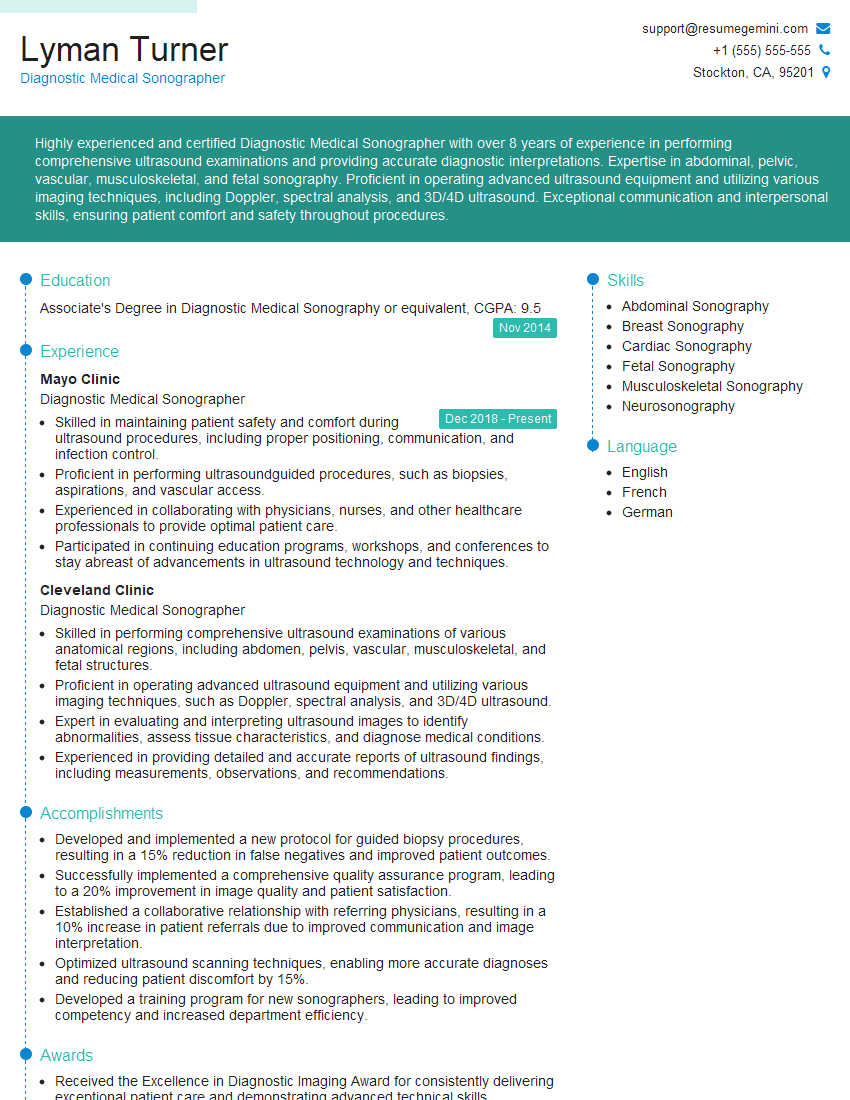
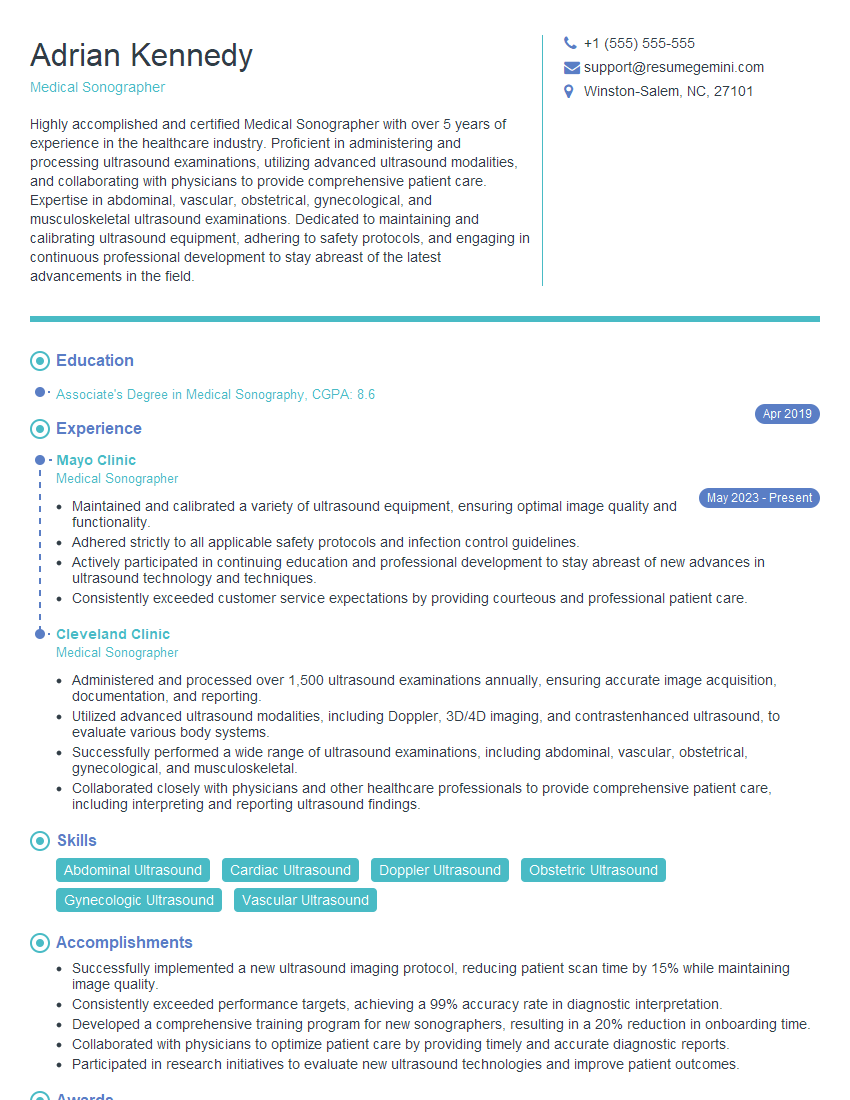
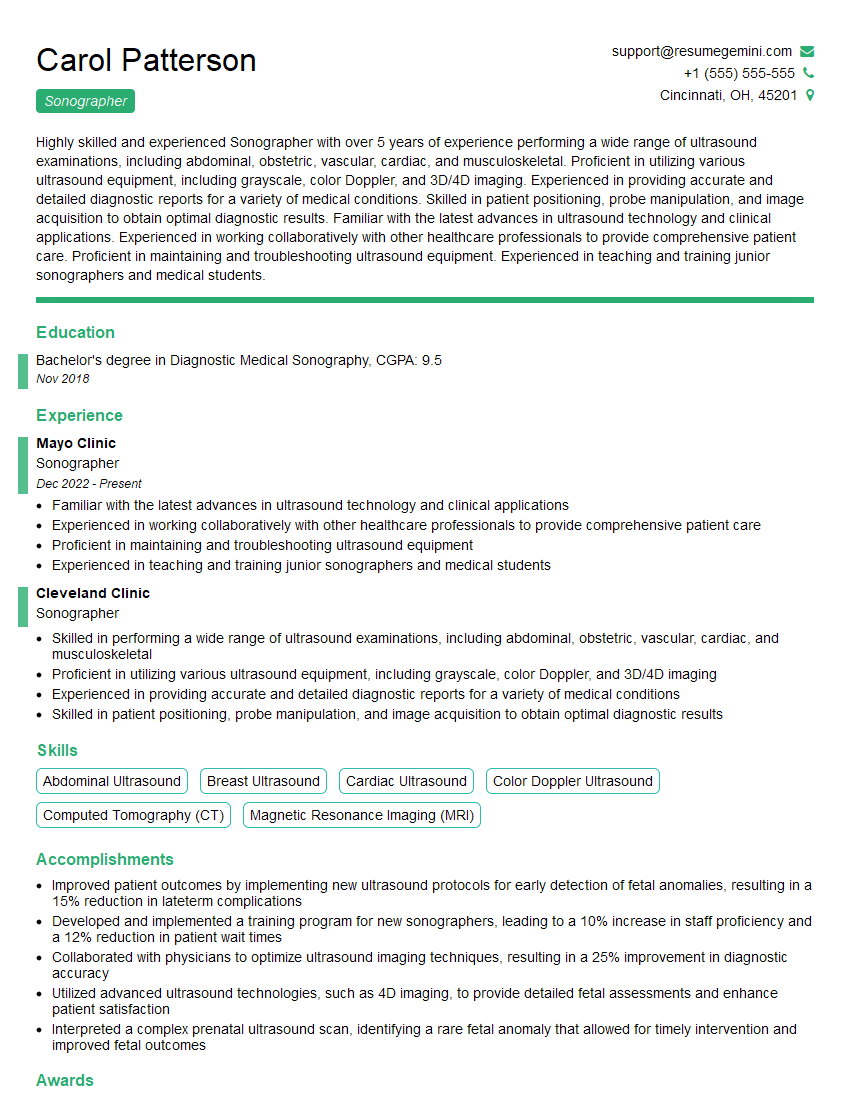
Mastering Obstetrical Ultrasound opens doors to rewarding careers offering diverse opportunities for professional growth and specialization. To maximize your job prospects, creating a strong, ATS-friendly resume is crucial. ResumeGemini is a trusted resource to help you build a professional resume that highlights your skills and experience effectively. Examples of resumes tailored to Obstetrical Ultrasound professionals are available to help you get started.
Explore more articles
Users Rating of Our Blogs
Share Your Experience
We value your feedback! Please rate our content and share your thoughts (optional).
What Readers Say About Our Blog
To the interviewgemini.com Webmaster.
Very helpful and content specific questions to help prepare me for my interview!
Thank you
To the interviewgemini.com Webmaster.
This was kind of a unique content I found around the specialized skills. Very helpful questions and good detailed answers.
Very Helpful blog, thank you Interviewgemini team.