Interviews are more than just a Q&A session—they’re a chance to prove your worth. This blog dives into essential Crossfall Grading interview questions and expert tips to help you align your answers with what hiring managers are looking for. Start preparing to shine!
Questions Asked in Crossfall Grading Interview
Q 1. What is crossfall grading and its purpose in construction?
Crossfall grading, also known as camber or slope, is the deliberate sloping of a surface, typically roads, pavements, or other horizontal planes, away from the centerline or high point. Its primary purpose is to facilitate efficient drainage, preventing water accumulation and potential damage to the infrastructure or hazards to users. Imagine a gently curved surface; rainwater won’t pool but will instead flow smoothly to the sides.
In construction, proper crossfall is crucial for extending the lifespan of pavements, preventing erosion, and ensuring safe passage for vehicles and pedestrians. Without it, standing water can lead to frost heave (damage from freezing and thawing), potholes, and hazardous driving conditions.
Q 2. Explain the relationship between crossfall and drainage.
Crossfall and drainage are inextricably linked. Crossfall creates a gradient that directs surface water away from the center of the paved area towards the edges, where it can be safely channeled into ditches, gutters, or other drainage systems. The steeper the crossfall, the faster the water flows away. However, it’s a balancing act; excessive crossfall can be uncomfortable for drivers and make cycling challenging. Think of it like a gently inclined roof; the rain runs off quickly and efficiently preventing pooling.
Q 3. Describe different methods for establishing crossfall grades.
Several methods exist for establishing crossfall grades:
- Stringline method: A simple, yet effective method involving stretching strings across the construction area at a specified gradient to guide the grading process. This is ideal for smaller projects.
- Automated grading equipment: Modern machines like motor graders and laser-guided systems automate the process, ensuring precision and efficiency, particularly crucial in large-scale projects.
- Using pre-fabricated materials: Some paving materials are manufactured with a built-in crossfall, simplifying the installation process.
- Manual leveling and grading: This traditional method relies on hand tools and careful measurement, suitable for small areas with less stringent accuracy requirements.
The choice of method depends largely on factors like project scale, budget, required accuracy, and site accessibility.
Q 4. What are the typical crossfall ranges for different applications (e.g., roads, pavements)?
Typical crossfall ranges vary depending on the application. These are guidelines, and specific design requirements might differ based on local regulations, rainfall patterns, and other site conditions:
- Roads: 1.5% to 4% crossfall is common. This ensures adequate drainage while maintaining a comfortable driving experience.
- Pavements (walkways): A gentler slope of 1% to 2% is usually sufficient for pedestrian areas.
- Ramps: Ramps require even gentler slopes, typically less than 5%, to ensure accessibility.
Steeper slopes can be used in areas with high rainfall or poor drainage. Always consult relevant design codes and standards.
Q 5. How do you account for existing ground conditions when designing crossfall?
Accounting for existing ground conditions is critical for successful crossfall design. A thorough site survey, including topographic surveys and soil analysis, is essential. Existing slopes and undulations must be incorporated into the design. This might involve:
- Cut and fill operations: Excavating high points and filling low points to create the desired crossfall.
- Compaction: Ensuring proper compaction of the base layers to prevent settling and uneven surfaces after construction.
- Drainage solutions: Incorporating subsurface drainage systems if the existing soil has poor drainage properties.
Ignoring existing ground conditions can lead to uneven settlement, inadequate drainage, and ultimately, premature failure of the infrastructure.
Q 6. Explain the importance of accurate surveying in crossfall grading.
Accurate surveying is the cornerstone of effective crossfall grading. Precise measurements of existing ground levels are crucial for determining cut and fill quantities, setting out the correct grades, and ensuring the final surface meets the design specifications. Errors in surveying can lead to significant issues including incorrect drainage, uneven surfaces, and costly rework.
Modern surveying technologies, such as GPS and total stations, provide high-precision data for creating detailed topographic maps, allowing for accurate modeling and planning of the crossfall grading. These technologies help mitigate the risk of errors commonly encountered with traditional methods.
Q 7. What are the common challenges encountered during crossfall construction?
Common challenges encountered during crossfall construction include:
- Maintaining consistent grades: Achieving and maintaining the specified crossfall throughout the entire project area can be challenging, especially on larger sites or with complex ground conditions.
- Soil compaction: Inadequate compaction of the base layers can lead to settlement and uneven surfaces.
- Managing drainage: Ensuring effective drainage by properly connecting to existing drainage systems or establishing new ones.
- Weather conditions: Rainfall or extreme temperatures can disrupt the construction process and affect the quality of the finished surface.
- Equipment limitations: The ability of grading equipment to accurately achieve and maintain the required crossfall.
Careful planning, proper quality control, and experienced contractors are essential to mitigate these challenges and ensure a successful project outcome.
Q 8. How do you ensure proper compaction during crossfall grading?
Proper compaction during crossfall grading is crucial for the long-term stability and performance of the graded surface. It prevents settling, ensures even drainage, and improves the longevity of any pavement or structures built upon it. We achieve this through a multi-step process.
- Appropriate Equipment Selection: We choose compactors based on the soil type and the required compaction level. This might include vibratory rollers for cohesive soils or sheepsfoot rollers for granular materials.
- Controlled Lifting and Placement: The soil should be lifted and placed in controlled lifts of appropriate thickness, as per the project specifications and soil type. This allows for optimal compaction with each pass of the compactor.
- Multiple Compaction Passes: We perform multiple passes with the chosen compactor, overlapping each pass to ensure complete coverage and achieve the desired density. We monitor compaction using methods like nuclear density gauges or sand cone tests to verify the compaction level meets project specifications.
- Moisture Content Control: Soil moisture content significantly impacts compaction. We aim for optimum moisture content, which allows for the best compaction and avoids over- or under-compaction. This often requires soil testing and potential adjustments to moisture content during construction.
For example, on a recent highway project, we used a vibratory roller for the subgrade and a pneumatic roller for the asphalt surface course. By closely monitoring moisture content and adjusting the number of roller passes, we achieved compaction levels exceeding 98% of the maximum dry density (MDD), ensuring a durable and stable road surface.
Q 9. How do you verify the accuracy of the constructed crossfall?
Verifying the accuracy of crossfall is critical for ensuring proper drainage and preventing ponding. We utilize a combination of methods to ensure precision.
- Stringline and Level: A simple but effective method involves stretching a stringline across the graded surface at various intervals and using a level to check the elevation at specified points along the stringline. This allows for precise measurement of the crossfall slope.
- Automated Leveling Equipment: More sophisticated methods involve using automated leveling equipment like total stations or laser levels. These provide rapid and accurate readings across wider areas, improving efficiency and reducing errors.
- Cross-Section Measurement: We frequently take cross-sectional measurements at regular intervals along the length of the graded area. This gives a detailed profile of the crossfall, allowing for easy identification of any deviations from the design specifications.
- Post-Construction Surveys: Following completion of the grading, a final survey is conducted to check the accuracy of the constructed crossfall. This survey verifies that the design specifications have been met and documents any necessary corrective actions.
We often use a combination of these methods, especially on larger projects. For example, on a large residential development, we used a total station to map the crossfall quickly and efficiently, identifying small discrepancies that were easily addressed before paving.
Q 10. What are the implications of incorrect crossfall grading?
Incorrect crossfall grading can have several serious implications, impacting both functionality and safety.
- Poor Drainage: Insufficient crossfall leads to water ponding on the surface, causing erosion, instability, and potential damage to pavement or structures.
- Reduced Pavement Life: Ponding water weakens the base and subbase materials, reducing the lifespan of any pavement constructed on top.
- Safety Hazards: Poor drainage creates slick surfaces that can lead to accidents, especially for drivers and pedestrians.
- Increased Maintenance Costs: Corrective measures for improper crossfall are costly and time-consuming, ranging from simple re-grading to extensive repairs.
- Structural Damage: In extreme cases, prolonged water accumulation can lead to significant structural damage to foundations and other underground infrastructure.
For instance, inadequate crossfall on a parking lot could lead to water damage to the pavement, creating potholes and posing a trip hazard. On a highway, inadequate drainage could cause road instability and even lead to pavement failure.
Q 11. Describe your experience with different types of grading equipment.
My experience encompasses a wide range of grading equipment, each suited to different applications and soil conditions.
- Motor Graders: I’m highly proficient with motor graders, using them for rough grading, fine grading, and establishing the initial crossfall. Their versatility makes them essential for large-scale projects.
- Bulldozers: Bulldozers are excellent for moving large volumes of earth efficiently, especially during initial site preparation. I’ve used them extensively for earthmoving and shaping the overall terrain before finer grading.
- Scrapers: Scrapers are indispensable for moving earth over longer distances efficiently. My experience involves employing them for large-scale earthworks and mass hauling.
- Compactors: As mentioned earlier, I’m experienced with various compactors, selecting the right type based on the material (soil, asphalt, etc.) and required compaction levels.
- GPS-guided Equipment: Increasingly, I’ve utilized GPS-guided equipment such as automated graders and excavators. These tools enhance precision and efficiency by automating grading operations.
My experience extends to different manufacturers’ equipment and I’m always up-to-date with the latest technologies and best practices in equipment operation and maintenance.
Q 12. How do you manage crossfall on sloped terrain?
Managing crossfall on sloped terrain requires a different approach than on level ground. The goal is to create a series of stable benches or terraces with appropriate crossfall to ensure drainage away from structures and prevent erosion.
- Contour Grading: We frequently use contour grading, which involves creating relatively level areas that follow the contours of the slope, minimizing earthwork and promoting stability.
- Terracing: On steep slopes, terracing is necessary. This creates a series of level platforms separated by retaining walls or swales, providing stability and controlling erosion.
- Increased Crossfall: The crossfall percentage on slopes is usually higher than on level ground to ensure effective drainage. We carefully consider the slope angle and soil type when determining the appropriate crossfall.
- Drainage Swales and Ditches: We use swales and ditches to channel water away from the graded areas, reducing erosion and potential damage.
- Erosion Control Measures: Erosion control measures are vital on slopes. These might include seeding, mulching, or using erosion control blankets to stabilize the soil.
For example, on a hillside residential development, we created a series of terraced lots, each with sufficient crossfall to drain water away from the houses. The use of retaining walls and erosion control measures prevented soil erosion and ensured the long-term stability of the development.
Q 13. How do you handle changes in design or unforeseen site conditions?
Handling design changes or unforeseen site conditions requires adaptability and meticulous planning. A flexible approach is key.
- Regular Site Meetings: Frequent site meetings with engineers and other stakeholders are crucial to discuss potential issues and make necessary adjustments promptly.
- Detailed Documentation: Maintaining thorough documentation of all changes, including updated plans, as-built drawings, and any deviations from the original design, is essential for transparency and accountability.
- Testing and Verification: We routinely perform testing and verification of any changes to ensure that they meet the specified requirements and maintain project quality.
- Adaptable Workforce: A skilled and adaptable workforce is crucial for handling changes and solving unexpected problems effectively.
- Communication: Clear and consistent communication with all involved parties is vital to ensure that everyone is informed and understands the impact of any changes.
For example, discovering unexpected bedrock during excavation necessitated a design change involving the use of specialized drilling equipment. By communicating the change to all stakeholders and adjusting the work schedule appropriately, we completed the project successfully despite the unforeseen challenge.
Q 14. What are the safety considerations associated with crossfall grading?
Safety is paramount in crossfall grading, and we employ various measures to ensure a safe working environment.
- Site Safety Plans: We develop comprehensive site safety plans that outline all potential hazards and the necessary precautions to mitigate risks. These plans are regularly reviewed and updated.
- Personal Protective Equipment (PPE): All personnel are required to wear appropriate PPE, including hard hats, safety glasses, high-visibility clothing, and safety boots.
- Traffic Control: If the work is near roads or other traffic areas, we implement strict traffic control measures to protect workers and the public.
- Equipment Safety Checks: Regular equipment inspections and maintenance are crucial to prevent malfunctions that could cause accidents.
- Worker Training: All workers receive training on safe operating procedures for the equipment they use and on recognizing and avoiding potential hazards.
- Emergency Procedures: We establish clear emergency procedures and ensure all workers are aware of them. We ensure access to appropriate emergency communication and response services.
A recent project involved working near a busy highway. We implemented a detailed traffic management plan, including lane closures, signage, and flaggers to ensure the safety of both our workers and the public using the highway.
Q 15. Explain your understanding of relevant building codes and regulations.
Building codes and regulations concerning crossfall grading are crucial for ensuring proper drainage and preventing water damage to structures. These codes vary by location but generally address minimum slopes, drainage pathways, and materials used. For example, the International Building Code (IBC) indirectly addresses this through its requirements for drainage around foundations and pavements, often specifying minimum slopes to prevent water accumulation. Local jurisdictions may have even stricter guidelines, especially in areas prone to flooding or with specific soil conditions. I’m familiar with the IBC and several state-specific amendments, and I always consult the most current, locally applicable codes before starting any project. My experience includes working with codes in California, where seismic considerations often influence grading design, and in Florida, where hurricane-proofing necessitates careful water management.
Understanding these codes isn’t just about compliance; it’s about ensuring the longevity and safety of the structure. For instance, inadequate crossfall can lead to foundation erosion, basement flooding, and even structural instability. A thorough understanding allows me to design effective and safe grading solutions that meet all regulatory requirements.
Career Expert Tips:
- Ace those interviews! Prepare effectively by reviewing the Top 50 Most Common Interview Questions on ResumeGemini.
- Navigate your job search with confidence! Explore a wide range of Career Tips on ResumeGemini. Learn about common challenges and recommendations to overcome them.
- Craft the perfect resume! Master the Art of Resume Writing with ResumeGemini’s guide. Showcase your unique qualifications and achievements effectively.
- Don’t miss out on holiday savings! Build your dream resume with ResumeGemini’s ATS optimized templates.
Q 16. How do you communicate crossfall requirements to the construction crew?
Communicating crossfall requirements effectively to the construction crew is critical for successful project execution. I use a multi-pronged approach:
- Clear, visual aids: I provide detailed drawings and plans showing crossfall slopes, locations of swales and drainage systems, and critical elevations. These drawings use clear annotations and consistent color-coding to highlight key elements.
- On-site demonstrations: Before starting work, I’ll often demonstrate the required slope using a level and a straight edge on the ground. This helps the crew understand the visual representation of the required grade.
- Regular communication and feedback: I conduct regular site visits to monitor progress and provide immediate feedback. This allows for early detection and correction of any deviations from the specified crossfall.
- Pre-construction meetings: I hold thorough pre-construction meetings with the foreman and key crew members to discuss plans, answer questions, and ensure everyone understands their role in achieving the desired crossfall.
- Use of technology: Employing laser levels and other surveying equipment empowers the team with precise measurements and real-time feedback on grade accuracy.
The key is to ensure the crew not only understands the *what* (the required slopes) but also the *why* (the implications of incorrect grading). I emphasize the importance of adhering to specifications to avoid rework and potential problems down the line.
Q 17. Describe your experience with using CAD software for crossfall design.
I’m proficient in using AutoCAD Civil 3D and other CAD software for crossfall design. These tools are invaluable for creating accurate and detailed plans, ensuring all elements are properly integrated and meet the required slopes. I utilize the software’s capabilities for:
- Generating digital terrain models (DTMs): Creating accurate representations of the existing site topography is crucial for effective crossfall design. DTMs help visualize the land and identify areas needing grading.
- Designing drainage systems: The software facilitates the design of swales, ditches, and other drainage infrastructure, ensuring proper connectivity and flow towards designated outfalls.
- Calculating cut and fill volumes: Accurately calculating the amount of earthwork required saves time and money. This feature helps estimate project costs and materials needed.
- Creating detailed grading plans: These plans clearly indicate the required slopes, elevations, and other critical information for the construction crew. I incorporate annotations and legends to make the plans easily understandable.
- 3D visualization: This helps to ensure the final design is both functional and aesthetically pleasing. It also allows for easier identification of potential issues before construction begins.
For example, in a recent project, using Civil 3D’s surface modeling capabilities, I was able to identify and resolve a potential drainage conflict early in the design phase, preventing costly rework during construction.
Q 18. What are the key elements of a comprehensive crossfall plan?
A comprehensive crossfall plan should include several key elements:
- Site survey data: This includes topographic surveys, soil reports, and any existing utility information.
- Existing conditions: A detailed assessment of the existing site, including vegetation, structures, and any other relevant features.
- Design criteria: This specifies the desired crossfall slopes (typically expressed as a percentage or ratio), drainage pathways, and the location of swales and ditches.
- Drainage design: A detailed plan showing the flow paths, inlets, outlets, and sizing of drainage infrastructure.
- Cut and fill calculations: Accurate estimations of the amount of earthwork required for grading.
- Grading details: Detailed drawings showing the final grades, elevations, and any other relevant information for construction.
- Erosion and sediment control measures: Plans to minimize soil erosion during and after construction.
- Material specifications: Details on the type of material (e.g., soil, gravel) to be used for grading.
- Quality control and inspection procedures: A plan for monitoring the grading work and ensuring compliance with the design specifications.
A well-structured plan minimizes errors and ambiguities, ensuring that the construction process runs smoothly and that the final result meets the design objectives.
Q 19. Explain the process of calculating crossfall using various methods.
Calculating crossfall involves determining the transverse slope of a surface to facilitate proper drainage. Several methods exist, depending on the complexity of the site and available data:
- Simple slope calculation: For relatively flat areas, a simple calculation using rise over run can be used. For example, a 2% crossfall means a 2-foot drop in elevation over 100 feet of horizontal distance. This is often expressed as a ratio (e.g., 1:50).
- Using surveying instruments: Precise measurements are taken using levels and total stations to determine elevations at various points. Software can then be used to generate contour lines and calculate precise slopes.
- Computer-aided design (CAD): Software like AutoCAD Civil 3D uses digital terrain models (DTMs) and allows for sophisticated analysis and design of crossfall, enabling more complex grading designs. This is particularly useful on irregular or steeply sloped terrain.
- Graphical methods: Cross sections of the terrain can be drawn and the slope can be visually determined. While less precise than other methods, it can provide a quick estimate.
The choice of method depends on the project requirements, available resources, and desired level of accuracy. Complex sites often require CAD software, while smaller projects may only need simple calculations.
For instance, calculating crossfall for a large parking lot typically involves using CAD software to create a DTM and design grading that directs water flow towards designated drainage points. In contrast, determining crossfall for a small patio might only require a simple rise-over-run calculation using a level.
Q 20. How do you incorporate sustainability aspects in crossfall design?
Sustainability is paramount in modern crossfall design. I integrate sustainable practices by considering:
- Minimizing earthworks: Careful planning and design can reduce the amount of cut and fill required, reducing the environmental impact of excavation and transportation of soil. I often explore options to work *with* the existing topography rather than significantly altering it.
- Protecting natural drainage patterns: Where possible, I try to preserve natural drainage patterns to minimize disruption to the local ecosystem. This can involve incorporating bioswales and other sustainable drainage systems.
- Using permeable pavements: These allow rainwater to infiltrate the ground, reducing runoff and replenishing groundwater. This reduces the need for extensive drainage systems.
- Erosion and sediment control: Implementing erosion control measures during construction, such as using silt fences and straw bales, protects water quality and minimizes environmental impact.
- Selecting local materials: Prioritizing locally sourced materials for grading reduces transportation costs and emissions.
- Water harvesting: Designing the crossfall to collect rainwater for reuse in irrigation or other purposes can promote water conservation.
A sustainable approach not only reduces environmental impact but also can lead to cost savings and improved site aesthetics. For example, using permeable pavements can eliminate the need for expensive underground drainage systems, while incorporating bioswales can create attractive and environmentally beneficial features.
Q 21. Describe your experience in solving crossfall-related issues on site.
I’ve encountered several crossfall-related issues on-site, requiring quick problem-solving. Here are a few examples:
- Unexpected subsurface conditions: Discovering unexpected rock formations or unstable soils during excavation required immediate adjustments to the grading plan, involving re-evaluation of the drainage design and potentially employing different excavation methods.
- Inaccurate initial surveying: Minor discrepancies in the initial site survey led to unexpected deviations from the planned crossfall. Addressing this involved precise re-surveying and minor adjustments to grading to correct the issues.
- Construction errors: Deviation from specified crossfall during construction led to ponding in certain areas. I worked with the contractor to rectify the issue by adjusting the grading and potentially re-working specific sections.
- Post-construction drainage problems: In one instance, poor drainage was noticed after construction. Investigations revealed that an improperly installed drainage system was causing water accumulation. I collaborated with the contractor to remedy the situation by improving the drainage network.
My approach to solving these issues involves a systematic process: Careful investigation to determine the root cause, followed by collaborative discussions with the construction team to implement appropriate solutions, and ensuring proper documentation of changes to the plans and the solutions implemented. The key is proactive monitoring and communication to address issues early, preventing them from escalating into more serious and costly problems.
Q 22. What software and tools are you proficient in for crossfall calculations?
For crossfall calculations, I’m proficient in several software packages and tools. My primary tools are AutoCAD Civil 3D and Bentley InRoads, both industry-standard software for designing and analyzing land grading. These programs allow for precise modeling of terrain, calculation of crossfall slopes, and generation of detailed grading plans. Beyond that, I also utilize specialized grading calculation spreadsheets that I’ve developed over the years, customized for specific project needs and soil conditions. These spreadsheets are vital for performing quick estimations and checking the accuracy of the software output. Finally, I’m comfortable using Total Station surveying equipment to accurately collect field data necessary for accurate grading design.
Q 23. How do you ensure quality control throughout the crossfall grading process?
Quality control in crossfall grading is paramount. My approach involves multiple layers of checks and balances. First, I meticulously review all input data – topographic surveys, site constraints, and design specifications – before commencing any calculations. After generating a preliminary design, I use both the software’s built-in analysis tools and my own independent calculations to verify the accuracy of crossfall slopes, ensuring they meet the design criteria. Then comes a thorough visual inspection of the 3D model, paying close attention to potential drainage issues and areas where the crossfall might be compromised. Finally, regular on-site visits during construction are crucial. I compare the actual grading with the design plans to identify and rectify any deviations early on, preventing costly rework later.
Q 24. How do you handle conflicts between design requirements and site constraints?
Conflicts between design requirements and site constraints are common in grading projects. My approach involves a collaborative problem-solving strategy. I start by thoroughly documenting all constraints – existing structures, utilities, environmental protection zones, etc. Then, I work with the design team to explore potential solutions. This often involves proposing design adjustments that accommodate the constraints without compromising essential functionality. For example, if a steep slope prevents achieving the desired crossfall, I may suggest installing a swale or terracing to manage drainage effectively. Compromise is essential; sometimes minor adjustments to the design are needed to meet site limitations, ensuring the project remains feasible and safe.
Q 25. How do you determine the optimal crossfall slope for different soil types?
Determining optimal crossfall slopes requires considering the soil type. Different soils have varying drainage characteristics, influencing the necessary slope to prevent erosion and ensure proper water flow. For example, sandy soils have high permeability and require less steep crossfall slopes compared to clay soils, which are less permeable and need steeper slopes to avoid waterlogging. I usually consult geotechnical reports to determine soil properties and apply established guidelines for crossfall design, such as those provided by local authorities or professional engineering organizations. Furthermore, I account for local rainfall patterns and the potential for runoff volume to further refine the crossfall design for each soil type. For instance, areas with high rainfall might need steeper slopes than those with lower rainfall.
Q 26. Describe your experience with different types of drainage systems related to crossfall.
My experience encompasses various drainage systems related to crossfall grading. I’ve worked on projects utilizing traditional open ditches, swales, and underground storm drains. The choice of system depends on factors like site topography, soil conditions, and environmental regulations. For instance, in areas with limited space, underground drainage systems are preferred, whereas open ditches or swales might be more appropriate for larger areas with gentle slopes. In environmentally sensitive areas, I often incorporate bioretention systems or permeable pavements to manage stormwater sustainably. I also have experience integrating drainage systems with crossfall design to optimize water flow and prevent erosion. For instance, creating a smooth transition between the crossfall and the drainage system inlet ensures efficient runoff conveyance.
Q 27. What are the potential environmental impacts of improper crossfall grading?
Improper crossfall grading can have significant environmental impacts. Insufficient crossfall can lead to waterlogging, harming vegetation and potentially creating breeding grounds for disease vectors like mosquitoes. Conversely, excessively steep crossfall can cause soil erosion, leading to sedimentation of nearby water bodies, degrading water quality and harming aquatic life. Runoff from poorly graded areas can carry pollutants into streams and rivers, further damaging ecosystems. Erosion can also lead to instability of slopes, causing landslides in extreme cases. Understanding these potential impacts is crucial, and proper grading is essential for environmental protection.
Q 28. How do you ensure compliance with relevant environmental regulations?
Ensuring compliance with environmental regulations is a top priority. I begin by conducting a thorough review of all relevant local, regional, and national environmental regulations applicable to the project site. These regulations often define permissible slopes, drainage requirements, and erosion and sediment control measures. I incorporate these requirements into the design from the outset. During construction, I conduct regular inspections to verify that the grading work complies with the approved plans and environmental regulations. I maintain detailed documentation of all site activities, including any deviations from the approved plans and the measures taken to address them. This rigorous approach helps ensure that the project meets all environmental standards and minimizes its impact on the surrounding environment.
Key Topics to Learn for Crossfall Grading Interview
- Fundamentals of Crossfall Grading: Understanding the definition, purpose, and significance of crossfall grading in various applications (e.g., road construction, landscaping).
- Calculating Crossfall: Mastering the methods and formulas used to determine the appropriate crossfall for different terrains and project requirements. This includes understanding the impact of factors like soil type and drainage.
- Practical Applications: Exploring real-world scenarios where crossfall grading is crucial, such as ensuring proper drainage, preventing erosion, and optimizing pavement longevity. Consider examples in different contexts.
- Tools and Technologies: Familiarity with relevant software, equipment, and surveying techniques used in crossfall grading projects. This could include CAD software or surveying instruments.
- Safety Considerations: Understanding and applying safety protocols and best practices related to crossfall grading operations.
- Problem-Solving and Troubleshooting: Developing the ability to identify and resolve common challenges encountered during crossfall grading projects, such as uneven terrain or unexpected drainage issues.
- Regulations and Standards: Understanding relevant industry standards, building codes, and regulations pertaining to crossfall grading.
- Crossfall Grading Design and Planning: Understanding the design process, including site analysis, data interpretation, and the creation of grading plans.
Next Steps
Mastering Crossfall Grading can significantly boost your career prospects in civil engineering, construction, and related fields. A strong understanding of these principles demonstrates valuable technical skills and problem-solving abilities highly sought after by employers. To maximize your chances of landing your dream job, focus on creating a compelling and ATS-friendly resume that highlights your relevant skills and experience. ResumeGemini is a trusted resource to help you build a professional and effective resume. Examples of resumes tailored to Crossfall Grading are available to guide you. Invest time in crafting a strong resume – it’s your first impression!
Transportation Engineer Resume Sample
Construction Manager Resume Sample

Construction Superintendent Resume Sample

Project Manager Resume Sample

Project Engineer Resume Sample

Estimator Resume Sample

Inspector Resume Sample
Landscape Architect Resume Sample
Surveyor Resume Sample

Civil Engineer Resume Sample

Drainage Engineer Resume Sample
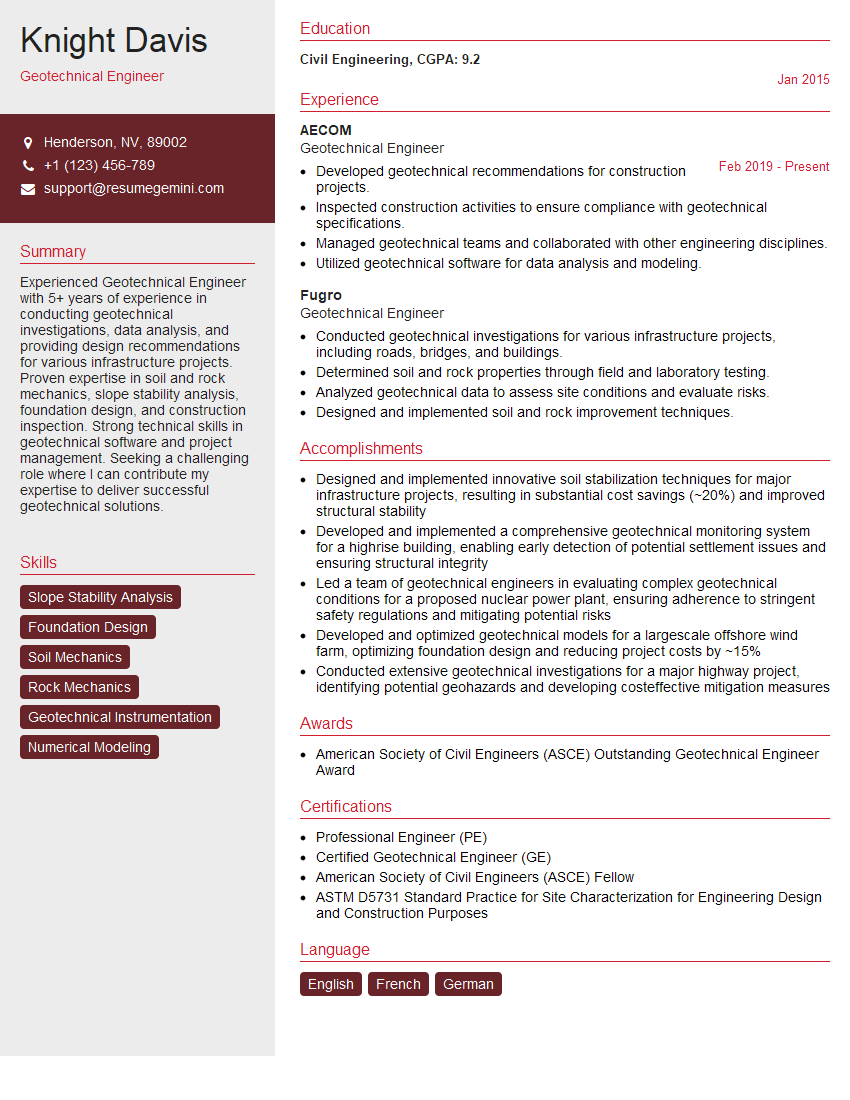
Geotechnical Engineer Resume Sample
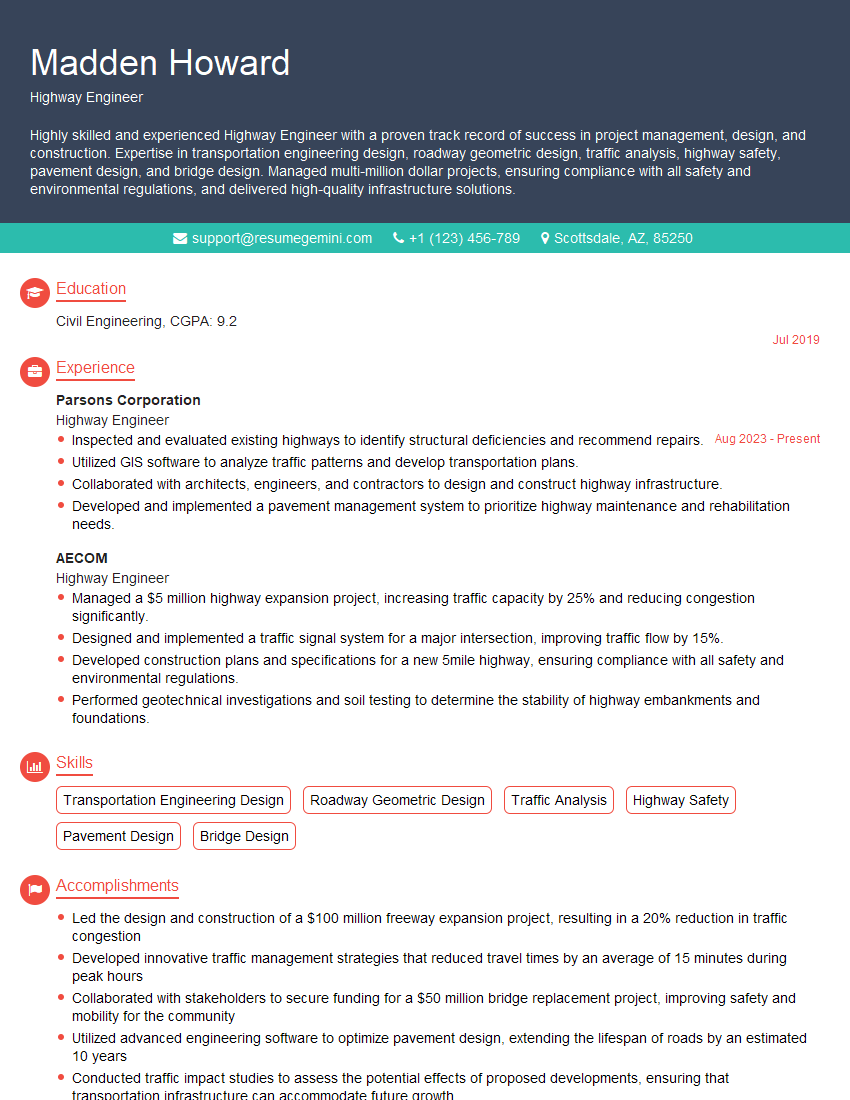
Highway Engineer Resume Sample
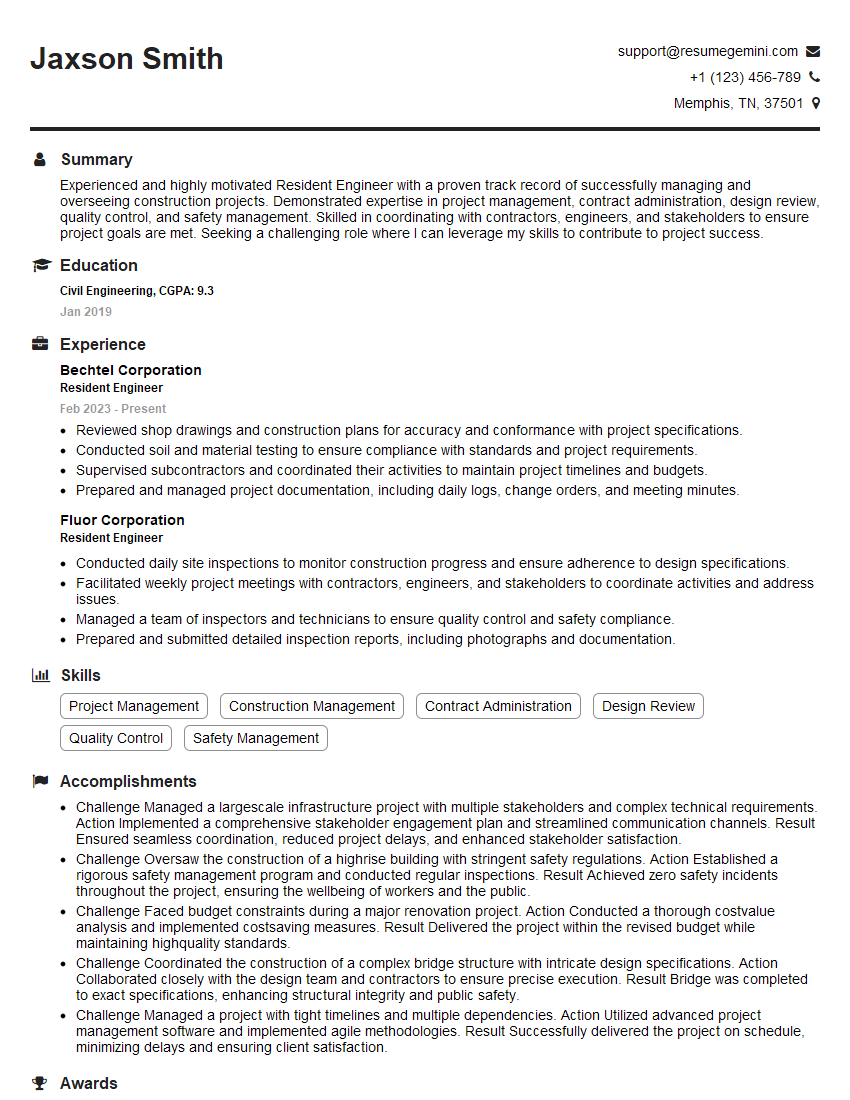
Resident Engineer Resume Sample

Field Engineer Resume Sample

Environmental Engineer Resume Sample

Construction Inspector Resume Sample

Survey Crew Chief Resume Sample

Site Supervisor Resume Sample

Quality Control Inspector Resume Sample
- Transportation Engineer
- Construction Manager
- Construction Superintendent
- Project Manager
- Project Engineer
- Estimator
- Inspector
- Landscape Architect
- Surveyor
- Civil Engineer
- Drainage Engineer
- Geotechnical Engineer
- Highway Engineer
- Resident Engineer
- Field Engineer
- Environmental Engineer
- Construction Inspector
- Survey Crew Chief
- Site Supervisor
- Quality Control Inspector
Explore more articles
Users Rating of Our Blogs
Share Your Experience
We value your feedback! Please rate our content and share your thoughts (optional).
What Readers Say About Our Blog
To the interviewgemini.com Webmaster.
Very helpful and content specific questions to help prepare me for my interview!
Thank you
To the interviewgemini.com Webmaster.
This was kind of a unique content I found around the specialized skills. Very helpful questions and good detailed answers.
Very Helpful blog, thank you Interviewgemini team.