The right preparation can turn an interview into an opportunity to showcase your expertise. This guide to Experience in wildlife conservation planning and implementation interview questions is your ultimate resource, providing key insights and tips to help you ace your responses and stand out as a top candidate.
Questions Asked in Experience in wildlife conservation planning and implementation Interview
Q 1. Describe your experience in developing a wildlife conservation plan.
Developing a comprehensive wildlife conservation plan is a multifaceted process requiring a deep understanding of the target species, their habitat, and the threats they face. It begins with a thorough assessment of the current situation, involving extensive fieldwork, data collection, and stakeholder engagement. For example, in a project focused on conserving the Amur leopard in the Russian Far East, we started by mapping the leopard’s range, identifying core habitats, and quantifying the existing threats, such as poaching and habitat loss due to logging.
Next, we defined specific, measurable, achievable, relevant, and time-bound (SMART) conservation objectives. For the Amur leopard, a primary objective was to increase the population size by a certain percentage within a specified timeframe. We then outlined strategies to achieve these objectives, including anti-poaching patrols, habitat restoration, community engagement programs to promote co-existence, and collaboration with local and national authorities.
Finally, the plan included a detailed implementation schedule, a budget, and a monitoring and evaluation framework to assess progress and make adaptive management adjustments as needed. The plan also specified indicators of success, such as changes in leopard population density, poaching incidents, and habitat quality. A robust monitoring system allows for tracking of these parameters over time, helping us to gauge our success and course-correct as necessary.
Q 2. Explain the process of conducting a habitat suitability analysis.
Habitat suitability analysis (HSA) is a crucial step in wildlife conservation planning, helping to identify areas most likely to support a given species. Think of it as finding the ‘perfect home’ for an animal. It involves integrating various environmental datasets to create a model predicting habitat quality. This usually starts with gathering data on factors known to influence the species’ distribution, such as vegetation type, elevation, proximity to water sources, and prey availability.
The process often involves using Geographic Information Systems (GIS) software to overlay these layers of data. For example, we might combine a vegetation map showing suitable forest cover with a topographic map to identify areas with specific elevation ranges. We might also incorporate climate data, human disturbance maps, and even information on prey species abundance. Each layer is weighted according to its importance to the species, based on existing literature and expert knowledge.
The resulting HSA map shows areas of high, medium, and low habitat suitability. These maps can be used to guide conservation efforts by prioritizing the protection and restoration of high-suitability areas and mitigating threats within those areas. For instance, an HSA might identify a crucial corridor connecting two fragmented populations, highlighting the need for conservation efforts to maintain connectivity.
Q 3. How would you assess the effectiveness of a conservation program?
Assessing the effectiveness of a conservation program requires a multi-pronged approach that goes beyond simply measuring population numbers. A robust evaluation needs both quantitative and qualitative data. Quantitative data could include population counts, changes in habitat quality (measured through vegetation surveys or remote sensing), reductions in poaching incidents, or increases in community participation in conservation activities.
Qualitative data, equally important, can be gathered through surveys and interviews with local communities, rangers, and other stakeholders to understand changes in attitudes, perceptions and behaviours. For instance, we might interview local farmers to assess changes in their attitudes towards wildlife after implementing community-based conservation programs. This helps understand the human dimension of conservation success.
Furthermore, a robust evaluation should incorporate a ‘before-after-control-impact’ design, comparing changes in the target area with similar areas that didn’t receive the conservation intervention. This allows for the isolation of the program’s impact, making it easier to attribute any observed changes to conservation efforts and enabling a more accurate assessment of the program’s efficacy.
Q 4. What are the key challenges in implementing wildlife conservation strategies?
Implementing wildlife conservation strategies is fraught with challenges, often stemming from the complexity of interacting factors. Funding limitations are a constant struggle, especially for long-term projects requiring sustained effort. Securing adequate financial resources to support research, on-the-ground activities, and monitoring can be extremely challenging.
Another significant challenge is habitat fragmentation and degradation, driven by human activities such as agriculture, urbanization, and infrastructure development. This can lead to population isolation, reduced genetic diversity, and increased vulnerability to threats. Addressing habitat loss often requires extensive negotiations with landowners and local communities, navigating complex legal frameworks and potentially facing significant opposition.
Poaching and illegal wildlife trade represent a major hurdle. Combating these illegal activities requires strong law enforcement, community engagement, and often international collaboration to disrupt criminal networks. Finally, a lack of political will and insufficient policy frameworks can significantly hinder conservation efforts, making it difficult to establish and enforce protective measures.
Q 5. Describe your experience with GIS software in wildlife conservation planning.
GIS software is indispensable in modern wildlife conservation planning. It’s the backbone of spatial data management and analysis. I have extensive experience using ArcGIS and QGIS for various tasks including species distribution modelling, habitat suitability analysis, and monitoring land-use change.
For instance, in a project involving African elephants, we used GIS to overlay elephant movement data (obtained via GPS collars) with land-use maps to identify areas of high elephant-human conflict. This enabled us to develop targeted strategies to mitigate conflict, such as installing electric fences or promoting alternative livelihoods for local communities. Similarly, we utilized remote sensing data and image processing techniques within GIS to monitor deforestation rates near protected areas, providing early warning signs of habitat loss.
Beyond spatial analysis, GIS enables efficient data management, visualization, and communication. We used GIS to create maps and reports that effectively communicate findings to stakeholders, securing support and fostering collaboration across different organizations and agencies involved in conservation.
Q 6. How do you prioritize conservation efforts when resources are limited?
Prioritizing conservation efforts with limited resources requires a strategic approach based on several factors. A crucial element is the use of triage – focusing on species or habitats that are most at risk of extinction, those with high conservation value, and those where conservation actions will have the greatest impact. The IUCN Red List provides a valuable framework for identifying critically endangered species and prioritizing them for action.
Cost-effectiveness analysis plays a key role. We evaluate the potential return on investment for different conservation interventions, identifying those that deliver the greatest benefits per unit of cost. This involves considering the effectiveness of various strategies and the associated costs of implementation. We would, for instance, prioritize a cost-effective anti-poaching strategy over a less efficient, more expensive one.
Furthermore, engaging in collaborative conservation initiatives is critical to maximizing the use of resources. By pooling resources and expertise with other organizations and agencies, we can broaden our reach, share the burden of costs, and achieve greater impact than any single entity could accomplish independently.
Q 7. Explain your understanding of the IUCN Red List and its implications for conservation.
The IUCN Red List is a globally recognized inventory of the conservation status of thousands of plant and animal species. It provides a vital framework for prioritizing conservation efforts. It categorizes species into different threat levels based on factors like population size, geographic range, habitat loss, and rate of population decline. The categories range from ‘Least Concern’ to ‘Extinct in the Wild’ and ‘Extinct.’
The Red List’s implications for conservation are profound. It serves as a primary tool for identifying species requiring immediate conservation action. Governments, conservation organizations, and other stakeholders use the Red List assessments to inform policy decisions, guide conservation planning, and prioritize funding allocation. For example, a species listed as ‘Critically Endangered’ would automatically trigger more intensive conservation efforts compared to a species listed as ‘Near Threatened.’
Beyond individual species, the Red List also assesses the conservation status of ecosystems and habitats, providing a broader context for understanding biodiversity loss and informing landscape-level conservation planning. It’s a crucial tool for tracking progress towards global conservation targets and measuring the effectiveness of conservation initiatives.
Q 8. What are the different approaches to habitat restoration, and when would you use each?
Habitat restoration employs various approaches tailored to specific degradation types and ecological goals. We categorize them broadly into:
- Passive Restoration: This involves minimizing human intervention, allowing natural processes to restore the habitat. Think of removing invasive species and letting the ecosystem recover naturally. This is ideal for areas with relatively intact ecological processes and resilient species. For example, ceasing logging in a degraded forest and letting natural regeneration take over.
- Active Restoration: This requires direct human intervention, such as replanting native vegetation, reintroducing key species, or manipulating hydrology. This is necessary where natural recovery is too slow or unlikely. An example would be reintroducing keystone species like wolves in Yellowstone National Park, which dramatically altered the ecosystem’s dynamics.
- Assisted Migration: Relocating species to areas where their habitat is shifting due to climate change. This is highly controversial and requires extensive risk assessment, as it can lead to unintended consequences, such as outcompeting native species. An example might involve moving a plant species north to adapt to a warmer climate.
The choice of approach depends on factors such as the extent of degradation, the availability of resources, the resilience of the ecosystem, and the species present. A thorough ecological assessment and feasibility study are crucial for selecting the most appropriate method.
Q 9. How do you incorporate community engagement in wildlife conservation initiatives?
Community engagement is paramount for successful wildlife conservation. It’s not just about informing people; it’s about building partnerships and shared ownership. My approach involves:
- Participatory Planning: Engaging local communities in the planning and implementation stages of conservation projects, ensuring their needs and perspectives are considered. This might include community workshops, focus groups and surveys to gather local knowledge and insights.
- Capacity Building: Providing training and resources to local communities, empowering them to actively participate in monitoring, protection, and management of wildlife. This could involve training local people as park rangers, citizen scientists or in sustainable livelihood practices.
- Benefit-Sharing: Ensuring that communities benefit directly from conservation efforts through income generation opportunities, improved access to resources, and enhanced livelihoods. This might involve promoting eco-tourism, sustainable harvesting of non-timber forest products or providing alternative income streams.
- Conflict Resolution: Addressing concerns and conflicts that may arise between conservation goals and community needs through open dialogue and mediation. This ensures local buy-in and minimize conflict over resource use.
For example, in a community living near a wildlife reserve, we might collaborate with them on establishing ecotourism ventures, creating jobs while simultaneously educating them on conservation practices and promoting responsible wildlife viewing.
Q 10. Describe your experience with monitoring wildlife populations.
My experience with wildlife population monitoring spans diverse techniques and species. I’ve employed methods such as:
- Camera trapping: Using motion-activated cameras to photograph and identify animals, providing data on species abundance, distribution, and behavior. This method is particularly useful in areas with elusive animals.
- Transect surveys: Systematically walking or driving along predetermined routes, recording sightings of animals and their signs (e.g., tracks, scat). This is valuable for assessing population densities and distributions, particularly for birds and other easily observable species.
- Mark-recapture studies: Capturing, marking, and releasing animals, then recapturing them later to estimate population size. This is crucial when needing more precise estimates of population size.
- Acoustic monitoring: Recording and analyzing animal vocalizations to determine species presence, abundance, and behavior. Useful for animals that are difficult to observe directly, such as bats and some birds.
Data analysis involves using statistical software (e.g., R, SPSS) to interpret results and make inferences about population trends. The choice of method depends on the target species, the available resources, and the research questions.
Q 11. How would you address human-wildlife conflict in a specific area?
Addressing human-wildlife conflict requires a multi-pronged approach focusing on both mitigation and conflict resolution. Let’s consider a hypothetical scenario: elephants raiding crops in a farming community.
- Understanding the Root Cause: We would first assess the reasons behind the conflict – is it habitat loss forcing elephants onto farmland? Lack of alternative food sources? Ineffective crop protection measures?
- Mitigation Measures: Implement strategies to minimize conflict. This might involve:
- Habitat restoration: Creating corridors to connect fragmented habitats, allowing elephants to access natural food sources.
- Crop protection: Providing farmers with beehive fences, electric fencing, or alternative farming methods.
- Community education: Educating farmers about elephant behavior and co-existence strategies.
- Compensation Programs: Establishing a mechanism for compensating farmers for crop losses, reducing resentment towards elephants.
- Community Engagement: Working closely with local communities to develop locally appropriate and sustainable solutions. This involves involving them in decision making processes and ensuring that the implemented solutions are community owned.
Ultimately, a successful solution must balance the needs of both humans and wildlife, creating a sustainable co-existence.
Q 12. What are the ethical considerations in wildlife conservation?
Ethical considerations in wildlife conservation are central to ensuring responsible and sustainable practices. Key ethical considerations include:
- Animal welfare: Minimizing harm to animals during research, monitoring, or management activities. This involves following strict guidelines and ensuring the use of humane methods.
- Species prioritization: Balancing the needs of different species and ecosystems, avoiding bias towards charismatic megafauna. All species have ecological value, and we need to carefully consider the trade-offs involved when prioritizing some over others.
- Indigenous rights: Respecting the rights and knowledge of indigenous and local communities who often have deep connections to the land and its resources. Collaboration and benefit sharing are vital.
- Conservation funding: Ensuring that conservation funds are used transparently and effectively to achieve their intended goals, without corruption.
- Genetic integrity: Avoiding the introduction of invasive species or the genetic pollution of native populations through assisted migration or captive breeding programmes.
Ethical considerations require ongoing reflection and dialogue to ensure that conservation efforts are both effective and morally sound.
Q 13. Explain the role of protected areas in biodiversity conservation.
Protected areas, such as national parks and wildlife reserves, play a crucial role in biodiversity conservation by:
- Habitat preservation: Protecting critical habitats from degradation and destruction, providing a refuge for wildlife and maintaining ecosystem services.
- Species protection: Safeguarding endangered and threatened species from poaching, habitat loss, and other threats.
- Ecosystem services: Maintaining essential ecosystem services such as water purification, carbon sequestration, and climate regulation.
- Research and monitoring: Providing opportunities for scientific research and monitoring of biodiversity trends, helping in informing conservation strategies.
- Education and tourism: Raising public awareness about biodiversity and its importance, providing opportunities for ecotourism and sustainable development.
The effectiveness of protected areas depends on factors such as their size, management effectiveness, and the level of community engagement. Well-managed protected areas are invaluable tools for safeguarding biodiversity in the face of increasing human pressures.
Q 14. How do you evaluate the ecological impact of development projects?
Evaluating the ecological impact of development projects requires a comprehensive approach that integrates various assessment methods. The process generally involves:
- Baseline studies: Conducting thorough ecological surveys before the project begins to establish the existing biodiversity, habitat quality, and ecosystem processes.
- Impact assessment: Identifying potential ecological impacts (positive and negative) of the project, including habitat loss, fragmentation, pollution, and disruption of ecological processes. Techniques like GIS mapping, species distribution modelling, and environmental impact assessments can help assess these.
- Mitigation planning: Developing strategies to minimize or avoid negative impacts, such as habitat restoration, creation of wildlife corridors, or implementation of pollution control measures.
- Monitoring and evaluation: Implementing a robust monitoring program to track changes in biodiversity, habitat quality, and ecosystem processes after the project starts. This allows adaptive management and evaluation of the project’s long-term ecological impact.
- Adaptive management: Adjusting project design or implementation based on the monitoring results. This allows making informed decisions to adjust mitigation measures or project designs as needed.
Employing rigorous scientific methods and incorporating stakeholder perspectives are critical for evaluating the ecological impact of development projects, ensuring they are environmentally sustainable.
Q 15. Describe your experience with data analysis in wildlife conservation.
Data analysis is the backbone of effective wildlife conservation. It allows us to move beyond anecdotal evidence and make informed, evidence-based decisions. My experience encompasses a wide range of techniques, from basic descriptive statistics to advanced spatial modeling. For instance, in a recent project involving elephant populations in Tsavo National Park, we used GPS tracking data to analyze elephant movement patterns, identifying crucial habitats and migration corridors. This involved analyzing large datasets using software like ArcGIS and R. We employed techniques such as kernel density estimation to map habitat use intensity and path analysis to understand the influence of various factors like water availability and human encroachment on elephant movement. This data was instrumental in developing a revised park management plan that minimized human-wildlife conflict and prioritized habitat protection.
Another example involved using capture-mark-recapture data to estimate population sizes of endangered primates in the rainforest. We employed statistical models to account for imperfect detection and estimate population trends over time. This helped us assess the effectiveness of ongoing conservation efforts and inform future management strategies. In short, my experience encompasses a full spectrum of analytical approaches, always tailored to the specific conservation challenge at hand.
Career Expert Tips:
- Ace those interviews! Prepare effectively by reviewing the Top 50 Most Common Interview Questions on ResumeGemini.
- Navigate your job search with confidence! Explore a wide range of Career Tips on ResumeGemini. Learn about common challenges and recommendations to overcome them.
- Craft the perfect resume! Master the Art of Resume Writing with ResumeGemini’s guide. Showcase your unique qualifications and achievements effectively.
- Don’t miss out on holiday savings! Build your dream resume with ResumeGemini’s ATS optimized templates.
Q 16. How do you communicate complex scientific information to a non-technical audience?
Communicating complex scientific information effectively to a non-technical audience is crucial for securing support for conservation initiatives. I employ several strategies to achieve this. First, I use clear, simple language, avoiding jargon whenever possible. If technical terms are unavoidable, I provide concise, easy-to-understand definitions. Second, I employ visual aids like maps, charts, and photographs to illustrate key findings and make the information more engaging. Third, I relate the scientific findings to the audience’s interests and concerns. For instance, when talking to local communities about deforestation, I might emphasize the impact on their livelihoods, such as reduced access to resources or increased risk of flooding.
For example, when presenting research on climate change impacts on a specific species to a group of policymakers, I might start by outlining the potential economic consequences of species extinction before diving into the ecological details. Storytelling is a powerful tool – I often incorporate anecdotes or personal experiences from the field to connect with the audience on an emotional level and make the information more memorable. Finally, I always ensure ample opportunity for questions and feedback, fostering a two-way conversation that ensures clarity and understanding.
Q 17. What are the main threats to biodiversity, and how can they be addressed?
Biodiversity faces a multitude of threats, many stemming from human activities. The most significant include habitat loss and degradation, driven by deforestation, agriculture, and urbanization. This directly reduces available space and resources for species, leading to population declines and even extinction. Climate change is another major threat, altering habitats, disrupting species interactions, and increasing the frequency and intensity of extreme weather events. Pollution, both air and water, contaminates ecosystems, harming wildlife and disrupting ecological processes.
Overexploitation of resources through unsustainable hunting, fishing, and harvesting of plants also significantly impacts biodiversity. Invasive species can outcompete native species, leading to their decline or even extinction. Finally, human-wildlife conflict can result in both wildlife and human casualties, and can necessitate habitat modification or removal of animals. Addressing these threats requires a multi-pronged approach involving habitat restoration, sustainable resource management, pollution control, combating climate change through mitigation and adaptation strategies, managing invasive species, and working collaboratively with local communities to mitigate human-wildlife conflict. Protected areas, along with community-based conservation initiatives, are crucial components of effective biodiversity conservation.
Q 18. Describe your experience with fundraising for conservation projects.
Fundraising is an essential skill for wildlife conservation, as many projects require substantial financial resources. My experience includes developing compelling grant proposals for various funding agencies, including government bodies, foundations, and corporations. This involves clearly articulating project goals, methodologies, anticipated outcomes, and budget justification. I’ve also successfully organized fundraising events, such as galas and auctions, to raise awareness and generate financial support for conservation projects.
A successful campaign I led involved securing funding from a major environmental foundation for a long-term community-based conservation program. The proposal highlighted the project’s potential for both ecological and socio-economic benefits, emphasizing sustainable practices and community empowerment. Building strong relationships with potential donors is also critical. This includes demonstrating transparency and accountability in the use of funds, and regularly communicating project progress and achievements to donors.
Q 19. How do you adapt conservation strategies to changing climate conditions?
Climate change presents significant challenges for wildlife conservation, necessitating adaptive strategies. This involves anticipating how climate change will impact species and ecosystems, and developing management plans to mitigate negative effects. For example, we might need to create wildlife corridors to allow species to shift their ranges in response to changing climatic conditions, or restore degraded habitats to enhance species’ resilience.
In a recent project focused on coral reef conservation, we incorporated climate change projections into our management plan, identifying areas that are likely to be less affected by rising sea temperatures and ocean acidification. We then prioritized conservation efforts in these areas, while also investing in coral reef restoration initiatives to enhance the resilience of existing reefs. This often involves collaborating with climate scientists to understand projected climate change impacts on specific species and habitats, and incorporating this information into conservation planning and management decisions. Assisted migration, where species are moved to more suitable habitats, may also become a necessary strategy in certain cases, requiring careful assessment and ethical consideration.
Q 20. What are the key principles of sustainable wildlife management?
Sustainable wildlife management adheres to several key principles, including maintaining ecological integrity, ensuring biodiversity, and promoting equitable resource use. This means managing wildlife populations within their carrying capacity, preventing overexploitation, and protecting essential habitats. It requires a holistic approach, considering the interconnectedness of species and ecosystems. Community involvement is crucial; local communities must be active participants in decision-making processes affecting their livelihoods and environment.
Adaptive management is essential; strategies should be flexible and adjusted based on monitoring data and new scientific information. Transparency and accountability are also paramount; decisions should be based on sound scientific evidence and communicated openly to all stakeholders. Finally, sustainable financing mechanisms are necessary to support long-term conservation efforts.
Q 21. Explain your understanding of wildlife corridors and their importance.
Wildlife corridors are strips of habitat that connect otherwise isolated populations of animals. They are vital for maintaining genetic diversity, facilitating species dispersal, and allowing animals to access resources and suitable habitats. Think of them as bridges or pathways across fragmented landscapes. Without these connections, populations can become isolated, leading to inbreeding, reduced genetic diversity, and increased vulnerability to extinction.
For instance, creating a corridor between two forest patches can allow a population of endangered primates to move between them, enabling gene flow and reducing the risk of local extinction. Establishing wildlife corridors often involves habitat restoration and land management strategies aimed at ensuring connectivity. This could involve reforestation, reducing human encroachment, or implementing measures to mitigate human-wildlife conflict along corridor routes. Effective corridor design requires careful consideration of species’ movement patterns, habitat requirements, and potential threats.
Q 22. Describe your experience working with different stakeholders in conservation.
Effective wildlife conservation hinges on collaboration. My experience involves working with a diverse range of stakeholders, including government agencies, local communities, NGOs, researchers, and private landowners. I’ve found that successful collaboration requires strong communication, mutual respect, and a shared understanding of conservation goals.
For example, in a project aimed at protecting a migratory bird species, I worked with local farmers to implement habitat restoration on their land. This involved negotiating agreements that compensated them for the loss of potential agricultural income while simultaneously benefiting the birds. We also held community workshops to educate residents about the ecological importance of the birds and the benefits of conservation. Similarly, I’ve collaborated with scientists to design monitoring programs, ensuring data collection is consistent with scientific rigor and meets community needs. Building trust and fostering open dialogue are critical elements in navigating diverse interests and perspectives.
Q 23. How do you incorporate traditional ecological knowledge in conservation planning?
Traditional Ecological Knowledge (TEK) is invaluable for conservation planning. It represents generations of accumulated understanding of ecosystems and species interactions. Incorporating TEK involves actively seeking out and integrating the knowledge of indigenous communities and local residents who have lived alongside the wildlife for many years.
My approach involves participatory mapping, where community members share their observations about wildlife distribution, habitat use, and traditional resource management practices. We use this information to inform the design of protected areas, habitat restoration projects, and sustainable resource use strategies. For instance, in a project focused on forest conservation, working with indigenous communities, who possessed knowledge of medicinal plants and their interactions with wildlife, allowed us to create a conservation plan that both protected biodiversity and preserved culturally significant sites. This collaborative approach not only improves conservation outcomes but also fosters respect and strengthens community engagement.
Q 24. What are the legal frameworks relevant to wildlife conservation in your region?
The legal frameworks governing wildlife conservation vary regionally, but generally involve a combination of national and international laws and regulations. In my region, key legislation includes the [Insert relevant legislation name for your chosen region, e.g., Endangered Species Act, Wildlife Conservation Act etc.], which establishes protected areas, regulates hunting and trade, and provides mechanisms for species protection.
Additionally, we must adhere to international treaties like CITES (Convention on International Trade in Endangered Species), which aims to control the international trade of endangered species. Understanding these legal frameworks is crucial for designing and implementing conservation projects that are legally sound and effective. Compliance with the law ensures the long-term viability of conservation efforts and avoids potential legal challenges. Furthermore, a strong understanding of the legal landscape enables us to effectively advocate for stronger conservation measures.
Q 25. Describe your experience in designing and implementing monitoring protocols.
Designing and implementing effective monitoring protocols is fundamental to assessing the success of conservation projects. My experience encompasses developing protocols that are scientifically sound, cost-effective, and feasible given the resources available.
This involves identifying key indicators (e.g., population size, habitat extent, species distribution) relevant to the conservation goals and selecting appropriate methods for data collection (e.g., camera trapping, transect surveys, GPS tracking). It’s important to ensure data is collected consistently and accurately, often involving training local personnel to implement the protocols. Data analysis and interpretation are also essential components, and I’m proficient in using statistical tools to assess trends and evaluate the effectiveness of conservation interventions. For example, in a project focusing on an endangered primate, we used camera traps to monitor population density and habitat use, enabling us to adapt our conservation strategy based on the collected data.
Q 26. How do you ensure the long-term sustainability of a conservation project?
Ensuring long-term sustainability of conservation projects requires a multi-faceted approach. It’s not enough to simply implement a project; we must build capacity within local communities and institutions to ensure that conservation efforts continue long after external funding ends.
This involves building local ownership by empowering community members to participate in all stages of the project, from planning to implementation and monitoring. We also focus on creating sustainable funding mechanisms, such as ecotourism initiatives or payments for ecosystem services. Capacity building is essential, training local personnel in data collection, conservation techniques, and project management. Finally, adaptive management is crucial. This involves regularly monitoring project progress, evaluating results, and adjusting strategies as needed to ensure the conservation goals are achieved.
Q 27. What are your strategies for dealing with unexpected challenges in the field?
Fieldwork always presents unexpected challenges. My strategy for dealing with them involves a combination of preparedness, adaptability, and problem-solving skills. Before undertaking fieldwork, we conduct thorough risk assessments and develop contingency plans to address potential issues, such as equipment failure, adverse weather conditions, or conflict with local communities.
When unforeseen challenges arise, my approach is to remain calm, assess the situation objectively, and utilize available resources to find solutions. This includes consulting with colleagues, seeking advice from local experts, and adapting our strategies as needed. For example, I once faced a situation where an unexpected flood damaged our research equipment. We quickly reassessed our data collection methods, adopting alternative techniques to ensure the project remained on track. Flexibility and resourcefulness are key to navigating the unexpected in field conservation.
Q 28. How do you stay current with advances in wildlife conservation research and technology?
Staying current with advances in wildlife conservation research and technology is essential for maintaining effectiveness. I achieve this through a combination of strategies.
I regularly review scientific literature, attending conferences and workshops to learn about the latest findings and best practices. I actively participate in professional networks, engaging with colleagues and researchers to share information and learn about innovative techniques. I also utilize online resources and databases to access relevant research publications and data. Furthermore, I actively explore and implement new technologies, such as GIS mapping, remote sensing, and DNA analysis, that can improve data collection, analysis, and conservation decision-making. Continuous learning is vital to remain at the forefront of this dynamic field.
Key Topics to Learn for Experience in Wildlife Conservation Planning and Implementation Interview
- Conservation Planning Frameworks: Understanding different approaches like systematic conservation planning, adaptive management, and participatory planning. Practical application includes describing your experience using specific frameworks in projects.
- Habitat Assessment and Modeling: Skills in using GIS software, remote sensing data, and ecological modeling to assess habitat suitability and predict species distribution. Practical application involves detailing your experience with specific software and the results achieved.
- Protected Area Management: Knowledge of protected area design, management strategies (e.g., zoning, law enforcement, community engagement), and monitoring techniques. Practical application might involve describing your role in the management of a specific protected area.
- Species Conservation Strategies: Experience developing and implementing conservation plans for specific threatened or endangered species, including population viability analysis and captive breeding programs. Practical application involves showcasing your work with particular species and the impact of your actions.
- Community Engagement and Stakeholder Collaboration: Skills in building relationships with local communities, indigenous groups, and other stakeholders. Practical application involves describing your approach to collaborative conservation and conflict resolution.
- Monitoring and Evaluation: Designing and implementing monitoring programs to assess the effectiveness of conservation interventions, analyzing data, and reporting results. Practical application involves discussing your experience using specific monitoring tools and interpreting results.
- Funding and Fundraising: Understanding grant writing, budgeting, and resource management in conservation projects. Practical application involves describing your experience securing funding and managing budgets effectively.
- Policy and Legislation: Familiarity with relevant environmental laws, regulations, and policies related to wildlife conservation. Practical application involves illustrating how your work has aligned with or influenced policy.
Next Steps
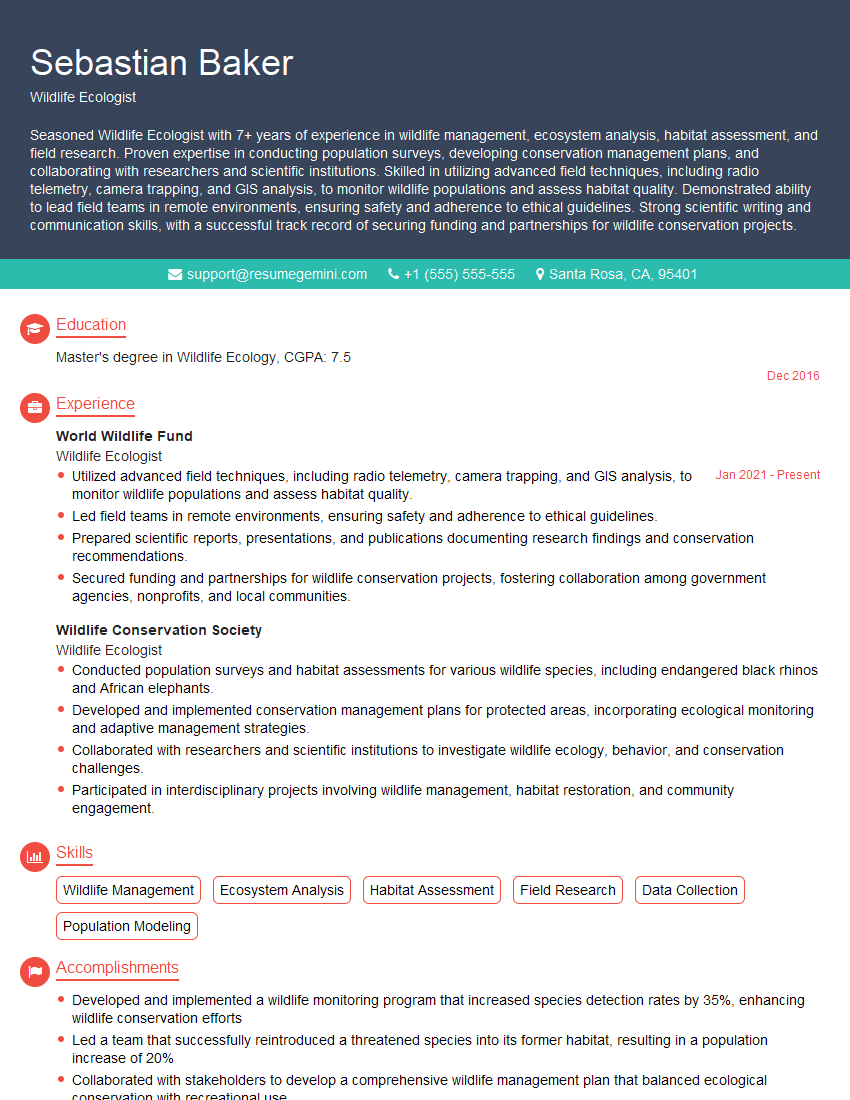
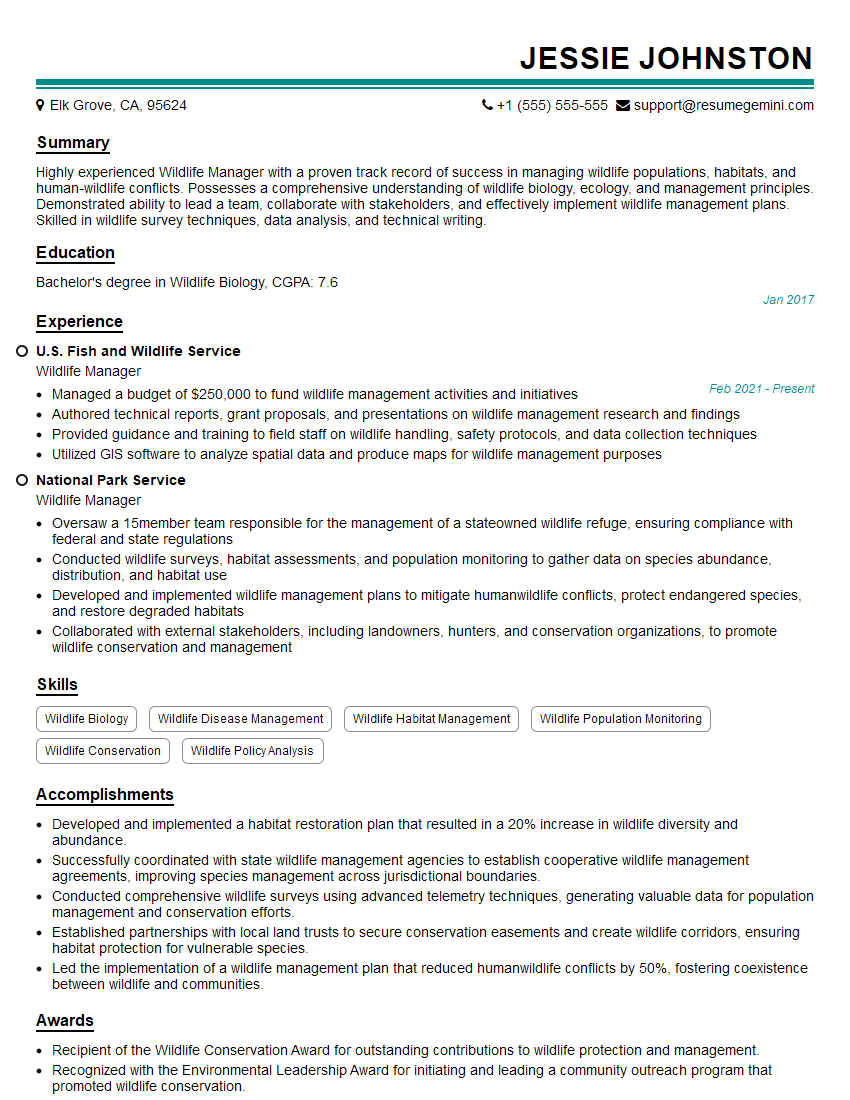
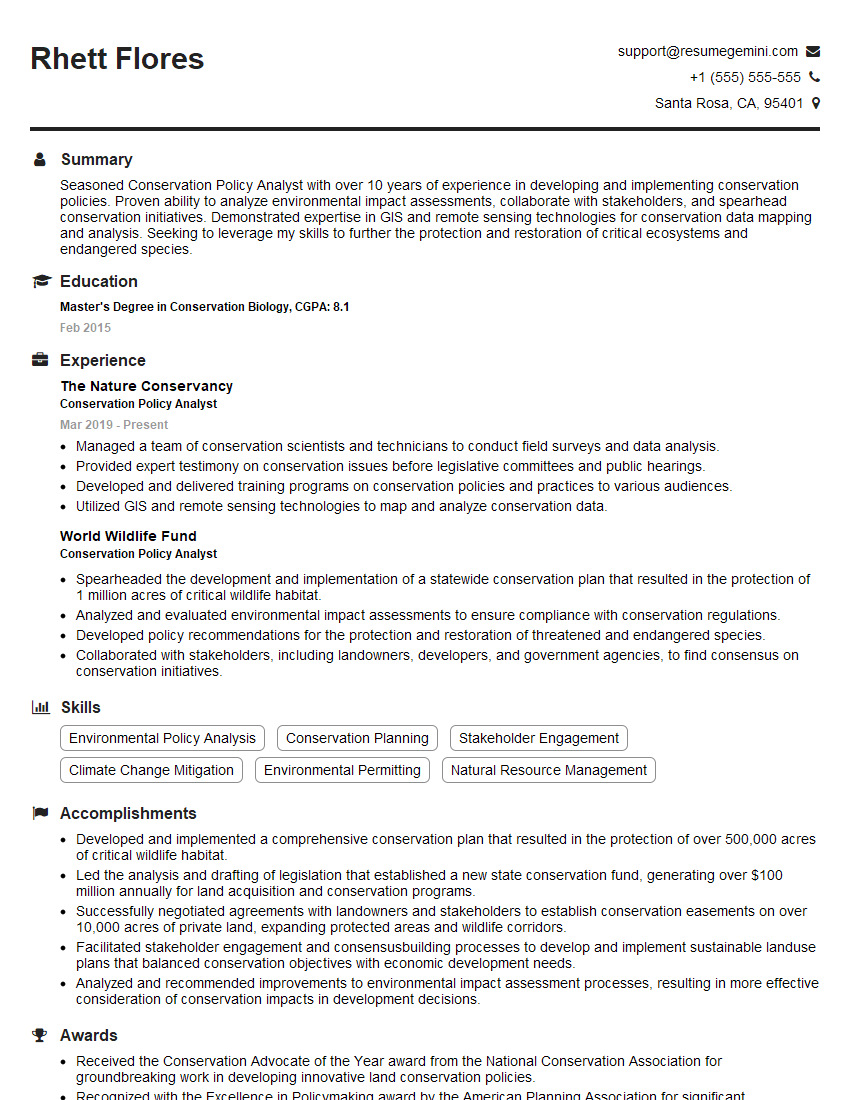
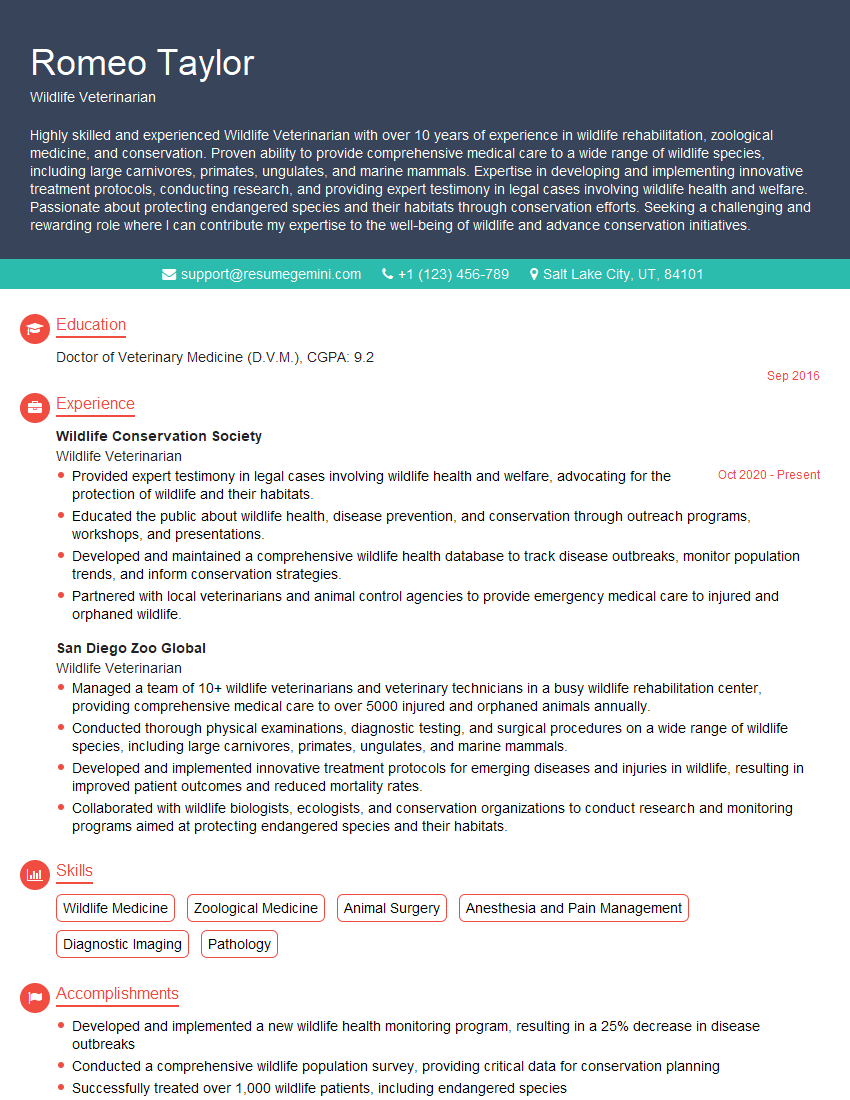
Mastering Experience in wildlife conservation planning and implementation is crucial for advancing your career in this vital field. A strong understanding of these topics will significantly enhance your interview performance and demonstrate your expertise to potential employers. Creating an ATS-friendly resume is essential for increasing your job prospects. ResumeGemini is a trusted resource that can help you build a professional and impactful resume tailored to highlight your skills and experience. Examples of resumes tailored to Experience in wildlife conservation planning and implementation are available, showcasing how to effectively present your qualifications.
Explore more articles
Users Rating of Our Blogs
Share Your Experience
We value your feedback! Please rate our content and share your thoughts (optional).
What Readers Say About Our Blog
To the interviewgemini.com Webmaster.
Very helpful and content specific questions to help prepare me for my interview!
Thank you
To the interviewgemini.com Webmaster.
This was kind of a unique content I found around the specialized skills. Very helpful questions and good detailed answers.
Very Helpful blog, thank you Interviewgemini team.