Feeling uncertain about what to expect in your upcoming interview? We’ve got you covered! This blog highlights the most important Dust Control and Extraction interview questions and provides actionable advice to help you stand out as the ideal candidate. Let’s pave the way for your success.
Questions Asked in Dust Control and Extraction Interview
Q 1. Explain the different types of dust collection systems.
Dust collection systems are crucial for maintaining a safe and clean work environment. They vary significantly depending on the application and the type of dust being collected. Broadly, they can be categorized into several types:
- Local Exhaust Ventilation (LEV): This system uses hoods or enclosures placed near the dust-generating source to capture dust at its point of origin. Think of a welding hood with an extraction system – it prevents the dust from ever entering the general workspace. This is often the most effective method for controlling specific dust sources.
- General Ventilation: This involves using fans and ductwork to circulate and dilute the air within a space, reducing the overall dust concentration. Imagine a large warehouse with ceiling fans – while effective for reducing overall dust levels, it’s not as efficient at removing dust from a specific source as LEV.
- Centralized Systems: These systems collect dust from multiple sources throughout a facility and transport it to a single collection point, often a dust collector or filter. This is commonly used in manufacturing plants or large workshops where numerous dust-generating processes are in operation. It’s like a central vacuum cleaner for the whole facility.
- Bag Houses (Fabric Filters): These systems use fabric bags to filter dust from the air. The dust is collected in the bags and periodically removed. This is frequently used in industries with large volumes of fine dust, like cement production.
- Cyclone Separators: Cyclones use centrifugal force to separate dust particles from the air stream. Heavier particles are thrown outwards and collected, while cleaner air exits. This is a common pre-filter for other systems, removing larger particles before they reach finer filters.
- Electrostatic Precipitators (ESPs): These systems use electrical charges to attract and collect dust particles on charged collection plates. They’re highly efficient at removing very fine particles, but require significant energy and maintenance.
The choice of system depends on factors such as dust type, concentration, particle size, and the specific application. A thorough risk assessment is crucial for determining the most suitable system.
Q 2. Describe the principles of negative pressure ventilation.
Negative pressure ventilation works on the principle of creating a lower air pressure inside a confined space compared to the surrounding atmosphere. This pressure difference causes air to flow *into* the space, carrying dust and other contaminants with it. This prevents the escape of dust into the general environment. Think of it like a vacuum cleaner: the vacuum creates a low-pressure zone inside, pulling air (and dirt) into it.
Here’s how it functions:
- Air Extraction: Powerful fans strategically placed extract air from the working area.
- Pressure Differential: This extraction creates a lower air pressure inside the workspace, ensuring that air flows inward, rather than outward.
- Containment: Proper sealing of openings and construction helps to maintain the negative pressure, preventing dust leakage.
- Dust Collection: The extracted air typically passes through a filtration system before being released back into the atmosphere.
Negative pressure is crucial in areas like demolition, asbestos abatement, and other operations involving hazardous dust generation. It ensures worker safety by preventing the spread of harmful particles.
Q 3. What are the common methods for controlling dust during demolition?
Controlling dust during demolition is critical to protect workers and the surrounding environment. Several methods are employed, often in combination:
- Water Suppression: This involves spraying water onto the demolition materials to reduce dust generation during demolition processes like breaking, crushing, and hauling. Think of it as keeping the materials damp to minimize airborne particles.
- Enclosure/Containment: Surrounding the demolition area with barriers, sheets, or enclosures helps to confine the dust, making it easier to capture using dust collection systems. This creates a controlled demolition zone.
- Demolition techniques: Choosing appropriate demolition techniques like hydraulic breakers or controlled implosion can minimize dust generation compared to methods that produce more vibration and shattering.
- Vacuuming/Cleaning: Using industrial vacuum cleaners to remove debris and dust frequently during the demolition process prevents accumulation and airborne dispersal.
- Local Exhaust Ventilation (LEV): As mentioned before, using LEV systems at the source of dust generation is highly effective. This could involve attaching a vacuum to demolition tools or using localized dust extraction hoods.
- Air Monitoring: Continuously monitoring air quality during demolition helps ensure that dust levels remain within safe limits. This allows for timely adjustments to control methods.
The specific methods used depend on the size and type of demolition project, the materials being demolished, and environmental factors.
Q 4. How do you select appropriate personal protective equipment (PPE) for dust control?
Selecting appropriate PPE for dust control is crucial for worker safety. The selection process should consider the type and concentration of dust, as well as the duration of exposure.
- Respiratory Protection: This is the most critical aspect. The choice of respirator depends on the type of dust. N95 respirators are suitable for many common dusts, while more advanced respirators are needed for hazardous substances like asbestos or silica. Proper fit testing is essential to ensure effectiveness.
- Eye Protection: Dust can irritate eyes and cause injury. Safety glasses or goggles are necessary to protect eyes from flying particles.
- Hearing Protection: Demolition activities can be very loud, so hearing protection like earplugs or muffs is important.
- Protective Clothing: Coveralls, gloves, and boots protect skin from dust and debris. Choosing appropriate materials based on the dust type and potential hazards is key.
It’s vital to ensure that the chosen PPE is correctly fitted, maintained, and used according to manufacturer instructions. Regular training and awareness programs for workers are essential for effective use of PPE.
Q 5. What are the OSHA regulations regarding dust exposure limits?
OSHA (Occupational Safety and Health Administration) sets permissible exposure limits (PELs) for various dusts in the workplace. These limits are expressed as a time-weighted average (TWA) concentration of airborne dust over an 8-hour workday. The specific PELs vary significantly depending on the type of dust, as different dusts pose different health risks. For example, the PEL for respirable crystalline silica is much lower than that for some less hazardous dusts.
OSHA also has requirements for monitoring air quality, providing employee training, and implementing control measures to ensure that exposures remain below the PELs. Failure to comply with these regulations can result in significant penalties for employers.
It is crucial to refer to the most up-to-date OSHA publications for the exact PELs and requirements, as these can change.
Q 6. Explain the importance of regular maintenance for dust collection equipment.
Regular maintenance of dust collection equipment is paramount for ensuring its effectiveness and prolonging its lifespan. Neglecting maintenance can lead to reduced efficiency, increased safety risks, and costly repairs. A regular maintenance schedule should include:
- Filter Cleaning or Replacement: Filters become clogged with dust, reducing airflow and efficiency. Regular cleaning or replacement according to manufacturer recommendations is crucial. This ensures optimal performance and prevents filter overloading.
- Fan Inspection and Lubrication: Fans are the heart of the system. Regular inspections for wear and tear, and lubrication as needed, ensure proper operation and prevent breakdowns.
- Ductwork Inspection: Leaks and blockages in ductwork can reduce efficiency and create safety hazards. Regular inspections are crucial to identify and repair any issues.
- Collection Hopper Cleaning: Dust collected in the hopper needs to be emptied regularly to prevent overflow and maintain system capacity.
- Motor and Electrical Component Checks: Regular checks for any wear or damage and prompt maintenance or replacement is necessary.
Maintaining detailed records of maintenance activities is essential to track performance and comply with regulations. A well-maintained system is safer, more efficient, and economically sound.
Q 7. How do you troubleshoot a malfunctioning dust collection system?
Troubleshooting a malfunctioning dust collection system requires a systematic approach. The problem could stem from many areas, so a logical process is needed.
Step 1: Identify the Problem Determine the specific issue. Is the system not pulling enough air? Is it leaking? Is the dust collection inadequate? Is there a strange noise from the system?
Step 2: Check the Obvious Inspect for readily apparent issues such as clogged filters, a full dust collection hopper, or power supply problems. A simple visual check often reveals the problem.
Step 3: Systematically Investigate If the problem isn’t obvious, systematically check each component: Inspect the filters for clogging or damage; Check fan operation (Is it spinning freely?); Examine ductwork for leaks or blockages; Test the motor and electrical connections; Verify the correct operation of any valves or dampers.
Step 4: Use Monitoring Equipment Use a pressure gauge or airflow meter to measure vacuum levels and airflow. Compare these readings to the manufacturer’s specifications. This quantifies the issue.
Step 5: Seek Professional Help If the problem persists, call in a qualified technician for diagnosis and repair. Attempting to repair complex systems without proper training can be dangerous.
Remember to always prioritize safety when troubleshooting. Turn off the power before inspecting or working on electrical components.
Q 8. Describe different types of dust extraction filters and their applications.
Dust extraction filters are crucial in removing particulate matter from the air. Different filter types offer varying levels of efficiency and are suited to specific applications depending on particle size, dust type, and airflow requirements.
- Bag Filters: These are widely used and relatively inexpensive. They consist of a fabric bag (often woven or non-woven) that traps dust particles. The bags can be cleaned or replaced as needed. Applications include woodworking shops, grain handling, and general industrial dust collection. The efficiency depends on the bag material and pore size; some achieve very high efficiency for fine dust.
- Cartridge Filters: These filters use cylindrical cartridges made of various materials (e.g., cellulose, polyester, PTFE) to capture dust. They offer high surface area and are often preferred for finer dust. Applications include pharmaceutical manufacturing, paint spraying, and food processing where high filtration efficiency is crucial.
- HEPA (High-Efficiency Particulate Air) Filters: HEPA filters are designed to remove at least 99.97% of particles with a size of 0.3 microns or larger. These are exceptionally effective in removing fine dust and are vital in environments requiring extremely clean air, such as hospitals or laboratories. They are commonly used in specialized dust collection systems for sensitive applications.
- Absolute Filters (ULPA): Even more efficient than HEPA filters, these remove 99.999% or more of 0.12 micron particles, making them suitable for extremely demanding cleanroom applications where even the smallest particles need to be removed.
The choice of filter depends on factors like the type and size of dust, airflow rate, desired efficiency, and the cost of operation and maintenance.
Q 9. What are the health risks associated with prolonged exposure to dust?
Prolonged exposure to dust poses significant health risks, impacting both the respiratory and other bodily systems. The severity depends on the type and concentration of dust, and the duration of exposure.
- Respiratory Diseases: This is the most significant risk, including silicosis (from silica dust), asbestosis (from asbestos fibers), black lung disease (from coal dust), and various forms of pneumoconiosis (from various mineral dusts). These diseases can lead to chronic coughing, shortness of breath, and reduced lung capacity.
- Allergic Reactions: Some dusts can trigger allergic reactions, resulting in rhinitis, asthma, and other respiratory sensitivities. Wood dust, for example, is a common allergen.
- Eye Irritation: Dust particles can irritate the eyes, leading to redness, itching, and discomfort. Proper eye protection is vital.
- Skin Irritation: Certain dusts can cause skin irritation, rashes, or even more severe dermatological conditions. The irritation is often mechanical (due to abrasive dust) or chemical (from irritant dust).
- Cancer: Some dusts, such as asbestos and crystalline silica, are known carcinogens and significantly increase the risk of lung cancer.
It’s vital to remember that even seemingly harmless dust can pose a cumulative health risk if exposure is prolonged and not properly managed. Regular health checks and preventative measures are crucial for workers in dusty environments.
Q 10. How do you assess the effectiveness of a dust control program?
Assessing the effectiveness of a dust control program requires a multi-faceted approach, combining quantitative and qualitative data. The goal is to determine whether the program is achieving its objectives in reducing worker exposure and environmental impact.
- Air Monitoring: Regular air sampling and analysis (as discussed in the next question) provide quantitative data on dust concentrations before, during, and after implementing control measures. A significant reduction in dust levels indicates effectiveness.
- Worker Health Monitoring: Regular medical examinations of workers exposed to dust, including lung function tests, can reveal early signs of respiratory problems and assess the effectiveness of the program in protecting worker health.
- Visual Inspections: Regular visual inspections of the worksite can identify areas where dust control measures are failing or need improvement. This helps pinpoint weaknesses in the program.
- Maintenance Logs: Keeping detailed records of maintenance performed on dust control equipment (filters, fans, etc.) ensures that the equipment is functioning optimally and contributes to the program’s effectiveness.
- Compliance Audits: Regular audits against relevant health and safety regulations ensure compliance and help identify areas needing attention.
By combining these methods, a comprehensive assessment can be conducted to determine the effectiveness of the dust control program. The data gathered should lead to continuous improvements and adjustments to optimize the program’s performance.
Q 11. Explain the process of air sampling and analysis for dust particles.
Air sampling and analysis for dust particles is a critical step in assessing worker exposure and environmental impact. It involves collecting air samples and then analyzing them to determine the concentration and size distribution of dust particles.
The process typically involves the following steps:
- Sampling Strategy: Develop a plan defining sampling locations, duration, and frequency based on the potential exposure pathways.
- Sample Collection: Use appropriate air sampling equipment, such as personal sampling pumps with a filter cassette (for personal exposure assessment) or isokinetic samplers (for area monitoring). The choice of sampler and filter depends on the type of dust and desired accuracy.
- Sample Analysis: After collecting the samples, the filters are analyzed in a laboratory. Common methods include gravimetric analysis (measuring the weight of collected dust), optical microscopy (analyzing particle size and morphology), and X-ray diffraction (identifying dust composition).
- Data Interpretation: The results from laboratory analysis are used to calculate dust concentrations (e.g., mg/m³), particle size distribution, and chemical composition. This data is then compared to relevant occupational exposure limits (OELs) or environmental standards.
Accurate air sampling and analysis are essential for assessing the effectiveness of dust control measures, identifying high-risk areas, and ensuring worker safety and environmental compliance.
Q 12. What are the different methods for controlling fugitive dust emissions?
Fugitive dust emissions refer to airborne dust generated from various sources, such as construction sites, unpaved roads, and industrial processes. Controlling these emissions is crucial for environmental protection and public health. Several methods exist to reduce fugitive dust:
- Water Spraying: This is a common and effective method for suppressing dust, especially on unpaved roads and construction sites. Water droplets help bind dust particles together, preventing them from becoming airborne. Different types of spray systems, from simple hand-held nozzles to sophisticated automated systems, are available.
- Chemical Dust Suppressants: These are specially formulated chemicals that are sprayed onto surfaces to bind dust particles and prevent them from becoming airborne. They are typically more effective and longer-lasting than water alone, but their use requires careful consideration of environmental impact.
- Covering and Enclosure: Covering exposed materials (e.g., stockpiles, construction materials) with tarps or constructing enclosures around dusty operations significantly reduces dust emissions.
- Pavement: Paving roads and other surfaces is a permanent solution to reduce dust generation. This is especially effective in high-traffic areas.
- Vegetation: Planting vegetation can help stabilize soil and reduce wind erosion, thus lowering dust generation. This is a more natural and sustainable method.
- Windbreaks: Establishing windbreaks using trees or barriers can reduce wind speeds near dust-generating sources, minimizing dust dispersion.
The best approach depends on the specific source of fugitive dust, the environmental conditions, and cost considerations.
Q 13. How do you calculate the required airflow for a dust collection system?
Calculating the required airflow for a dust collection system is crucial to ensure effective dust removal. The calculation depends on several factors, and a simplified approach might not be sufficiently accurate.
Professional software and engineering calculations are usually required for accurate airflow determinations. However, a basic estimation can be made using the following parameters:
- Dust Generation Rate (Q): This is the amount of dust generated per unit time (e.g., cubic meters per hour). This needs to be determined through dust loading measurements or estimations based on similar operations.
- Dust Concentration (C): This is the desired dust concentration at the outlet of the dust collection system. Lower concentrations indicate higher efficiency but require higher airflow.
- Air Velocity (V): This is the speed of the airflow within the ductwork. This should be kept high enough to prevent dust settling inside the ducts.
A simplified calculation can be expressed as: Airflow (m³/h) = Q / C
Important Note: This is a very simplified calculation. In reality, ductwork design, filter efficiency, pressure drop across the filter, and other factors significantly influence the required airflow. Professional engineers use specialized software and more complex equations incorporating factors like duct friction, fan efficiency, and pressure losses to accurately size the system. It’s crucial to consult with a specialist for proper design.
Q 14. What are the safety procedures for working with dust collection equipment?
Working with dust collection equipment requires strict adherence to safety procedures to minimize risks to workers and the environment. These procedures include:
- Lockout/Tagout Procedures: Before any maintenance or repair work, the equipment must be completely shut down and locked out to prevent accidental starting.
- Personal Protective Equipment (PPE): Workers should always wear appropriate PPE, including respirators (selected based on the type of dust), safety glasses or goggles, and hearing protection (as some equipment can be quite loud).
- Regular Inspections: Regular inspections of the equipment, including filters, ductwork, and fans, are necessary to identify potential hazards and ensure proper functionality. Maintenance records should be kept.
- Safe Handling of Dust: Dust collected in the system needs to be handled carefully. Dust bags or cartridges should be changed and disposed of properly according to regulations, preventing dust release into the environment.
- Training and Competency: Workers should receive adequate training on the safe operation, maintenance, and emergency procedures for dust collection equipment. Competency assessments should be conducted regularly.
- Emergency Procedures: Clear emergency procedures should be in place, including procedures for dealing with equipment malfunctions, dust spills, and potential health emergencies.
Following these safety procedures is vital to protect worker health and safety and maintain a safe and compliant work environment. Neglecting safety can lead to serious accidents and health problems.
Q 15. Explain the difference between HEPA and ULPA filters.
HEPA and ULPA filters are both high-efficiency particulate air filters used in dust control and extraction systems, but they differ in their filtration efficiency. HEPA (High-Efficiency Particulate Air) filters are designed to remove at least 99.97% of particles with a size of 0.3 microns or larger. Think of it like a very fine-mesh net capturing most airborne dust. ULPA (Ultra-Low Penetration Air) filters, however, are even more stringent, removing at least 99.9995% of particles of the same size. This makes them ideal for applications requiring exceptionally clean air, such as pharmaceutical manufacturing or semiconductor fabrication. The difference is subtle in percentage but significant in practical application – ULPA filters capture significantly more tiny particles than HEPA filters.
Imagine trying to clean up spilled flour: a HEPA filter is like using a good quality sieve, capturing most of the flour, while a ULPA filter is akin to using a highly advanced micro-filtration system that nearly eliminates all traces of flour.
Career Expert Tips:
- Ace those interviews! Prepare effectively by reviewing the Top 50 Most Common Interview Questions on ResumeGemini.
- Navigate your job search with confidence! Explore a wide range of Career Tips on ResumeGemini. Learn about common challenges and recommendations to overcome them.
- Craft the perfect resume! Master the Art of Resume Writing with ResumeGemini’s guide. Showcase your unique qualifications and achievements effectively.
- Don’t miss out on holiday savings! Build your dream resume with ResumeGemini’s ATS optimized templates.
Q 16. What are the common causes of dust explosions?
Dust explosions are a serious hazard in many industries. They occur when a mixture of combustible dust and air is ignited, resulting in a rapid pressure increase. Several factors contribute to these events:
- Presence of combustible dust: This is the primary requirement. Many seemingly innocuous materials, such as wood dust, metal powders, and grain, can form explosive mixtures when suspended in air.
- Sufficient dust concentration: There needs to be enough dust in the air to create an explosive mixture. This concentration varies depending on the material.
- Ignition source: An ignition source is necessary to initiate the explosion. This could include sparks from machinery, static electricity, hot surfaces, or even flames.
- Confinement or enclosure: While not strictly necessary, confinement can amplify the explosion’s force and destructive potential. A confined space allows the pressure to build up rapidly.
- Oxygen availability: Combustion requires oxygen, so sufficient oxygen must be present in the air.
For example, a grain elevator with accumulated dust and a faulty electrical component could create a catastrophic explosion.
Q 17. How do you prevent dust explosions?
Preventing dust explosions requires a multi-faceted approach focusing on eliminating or minimizing each contributing factor. Key preventive measures include:
- Good housekeeping: Regular cleaning to prevent dust accumulation is crucial. This involves proper sweeping, vacuuming, and removal of dust deposits from equipment and surfaces.
- Ventilation and dust extraction: Effective ventilation systems remove dust from the air, preventing the formation of explosive concentrations. Local exhaust ventilation (LEV) systems are particularly effective at capturing dust at its source.
- Explosion suppression systems: These systems detect the initial stages of an explosion and rapidly release extinguishing agents to suppress the flames before significant damage occurs.
- Explosion venting: This involves designing structures with weak points that rupture during an explosion, releasing pressure and directing the blast away from critical areas. This is a passive safety measure.
- Inerting: Reducing the oxygen concentration in the atmosphere can prevent combustion. This is often achieved by introducing nitrogen or other inert gases.
- Regular inspections and maintenance: Regular inspection of equipment, including electrical systems and ventilation components, helps to identify and address potential hazards proactively.
- Employee training: Training employees on safe work practices, including proper dust handling and emergency procedures, is essential.
Implementing these measures significantly reduces the risk of dust explosions. A layered approach is best – relying on multiple prevention methods simultaneously maximizes safety.
Q 18. Describe the process of designing a dust control system for a specific application.
Designing a dust control system requires a systematic approach, starting with a thorough assessment of the specific application. The process involves:
- Site assessment: Identify dust sources, types of dust generated, dust concentrations, and potential hazards. This often involves air sampling and particle size analysis.
- Selection of control methods: Choose appropriate control methods based on the site assessment. This could involve engineering controls (e.g., enclosure, LEV systems), administrative controls (e.g., work practices, training), or personal protective equipment (PPE).
- System design: Design the dust control system, specifying the type and size of equipment, ductwork layout, airflow rates, and filter selection. Computer modeling can be invaluable here.
- Equipment selection and procurement: Choose and procure equipment that meets the design specifications and industry standards. This should include appropriate safety features.
- Installation and commissioning: Install the system and test its effectiveness, ensuring it meets performance requirements and safety standards. This often involves monitoring dust levels post installation.
- Maintenance and monitoring: Develop a regular maintenance schedule and monitoring program to ensure the system’s ongoing effectiveness. This typically includes filter changes and equipment inspections.
For example, designing a system for a woodworking shop would differ significantly from one for a pharmaceutical facility, requiring different equipment and filtration levels to account for the different types of dust generated.
Q 19. What are the environmental considerations for dust control?
Environmental considerations in dust control are crucial for protecting human health and the environment. Key considerations include:
- Air quality: Dust emissions can contribute to air pollution, affecting air quality and potentially causing respiratory problems. Proper dust control minimizes these impacts.
- Water pollution: Dust settling on surfaces can wash into water bodies during rainfall, potentially contaminating water sources. Effective dust suppression minimizes this risk.
- Soil contamination: Dust deposition can contaminate soil, impacting soil quality and potentially affecting plant growth and ecosystem health.
- Waste disposal: Proper disposal of collected dust is essential to avoid secondary pollution. Dust should be handled and disposed of according to regulations.
- Noise pollution: Some dust control equipment, such as high-powered vacuum systems, can produce noise pollution. Noise reduction measures should be considered during system design.
Sustainable dust control practices consider the entire life cycle of the dust control system, from material selection and energy consumption to waste management, minimizing the environmental footprint.
Q 20. How do you comply with local and national regulations regarding dust emissions?
Compliance with local and national regulations regarding dust emissions is mandatory. This often involves:
- Permitting: Obtaining necessary permits for dust-generating activities. This varies depending on the location and type of activity.
- Emission monitoring: Regularly monitoring dust emissions to ensure they meet regulatory limits. This often involves using air monitoring equipment and reporting the results to the relevant authorities.
- Record keeping: Maintaining detailed records of dust emission monitoring data, maintenance activities, and other relevant information. This documentation is crucial for demonstrating compliance.
- Reporting: Submitting regular reports to the relevant authorities, detailing dust emission levels and any remedial actions taken.
- Following best practices: Adopting best practices in dust control, using appropriate technology, and following established guidelines.
Failure to comply with regulations can lead to penalties, including fines and legal action. Staying informed about changes in regulations is crucial.
Q 21. What experience do you have with different types of dust (e.g., silica, wood, metal)?
My experience encompasses a wide range of dust types, including silica, wood, and metal dusts. Each presents unique challenges and necessitates tailored control strategies:
- Silica dust: This is a particularly hazardous dust, posing significant health risks, including silicosis. Control measures for silica dust must be particularly rigorous, often involving specialized respiratory protection, high-efficiency filtration systems, and stringent housekeeping practices. I’ve worked on projects involving silica dust control in mining and construction settings.
- Wood dust: Wood dust is a combustible dust that can cause respiratory problems and pose fire and explosion risks. Effective control involves local exhaust ventilation, good housekeeping, and appropriate dust collection systems. I’ve consulted on wood dust control in furniture manufacturing and woodworking shops.
- Metal dusts: Metal dusts can also be combustible and present a variety of health and safety hazards. The control strategies depend on the specific metal and its properties. Examples include aluminum, iron, and zinc dusts, each having specific hazards and requiring customized control measures. I have experience with metal dust control in metal fabrication and machining facilities.
My experience enables me to assess the specific hazards associated with each dust type and develop effective and compliant control strategies.
Q 22. Describe your experience with various dust collection technologies (e.g., cyclones, baghouses, scrubbers).
My experience encompasses a wide range of dust collection technologies, each with its strengths and weaknesses. Let’s start with cyclones. These are centrifugal separators that use rotational force to separate heavier dust particles from the air stream. They’re relatively simple, robust, and require minimal maintenance, making them ideal for preliminary separation or handling larger volumes of coarser dust. However, their efficiency drops significantly with finer particles.
Baghouses, on the other hand, utilize fabric filter bags to capture dust. They’re highly efficient at removing even very fine particles, achieving emissions levels far below those possible with cyclones. However, they require more maintenance, including regular bag cleaning or replacement, and can be more expensive to install and operate. The choice between a cyclone and a baghouse often depends on the particle size distribution, the desired level of emission control, and the available budget.
Scrubbers use a liquid, typically water, to remove dust from the air. This is a particularly effective method for capturing very fine particles and even soluble gases. Venturi scrubbers, for instance, utilize high-velocity gas streams to create tiny water droplets that effectively capture dust particles. Wet scrubbers are effective but generate wastewater that requires treatment, which adds to operating costs and complexity. The selection of the optimal technology always involves careful consideration of factors like particle size, dust loading, desired emission limits, and environmental regulations.
Q 23. How do you manage a team involved in dust control and extraction?
Managing a dust control and extraction team requires a strong emphasis on safety, communication, and training. I foster a culture of open communication where team members feel comfortable raising concerns and suggesting improvements. Regular safety meetings are crucial to reinforce safe working practices, highlighting potential hazards and best practices. I believe in empowering my team, delegating tasks according to individual skills and experience, and providing regular feedback and performance evaluations.
Effective training is paramount. This includes not only the safe operation of equipment but also understanding the principles of dust control, recognizing potential hazards, and knowing how to respond to emergencies. I emphasize teamwork and collaboration, ensuring everyone understands their role in maintaining a safe and productive work environment. For instance, I might organize cross-training sessions to improve versatility and provide backup support during critical periods.
Q 24. How do you prioritize tasks and manage time effectively during emergencies related to dust?
During dust-related emergencies, rapid and effective action is critical. My approach involves a structured prioritization framework. First, I ensure the safety of personnel – evacuating the area if necessary and implementing emergency procedures. Then, I assess the situation, determining the source, extent, and severity of the dust release. This often involves using real-time monitoring data.
Next, I prioritize tasks based on their impact on safety and environmental compliance. For example, immediately shutting down the source of the dust release is usually the top priority, followed by containment and cleanup. I utilize clear communication channels to coordinate the response team, assigning specific tasks and responsibilities. Regular updates ensure everyone is aware of the progress and any changes to the plan. Post-incident reviews are vital for identifying areas for improvement and preventing future occurrences.
Q 25. What software or tools are you proficient in for dust control design or monitoring?
My proficiency spans several software and tools. I’m adept at using Computational Fluid Dynamics (CFD) software such as ANSYS Fluent or COMSOL Multiphysics for simulating airflow patterns and dust dispersion in industrial environments. This allows for optimizing the design of dust control systems before implementation. For monitoring, I frequently employ data acquisition systems capable of collecting real-time measurements of dust concentrations, airflow rates, and pressure differentials. This data is often analyzed using spreadsheet software and statistical packages to identify trends and assess system performance.
Furthermore, I have experience with specialized software for designing and analyzing baghouse systems, including calculating pressure drops and estimating filter bag lifetimes. Proficiency in CAD software is also essential for creating detailed system designs and layouts. My skills extend to the utilization of data management systems to maintain comprehensive records of dust control system operations and maintenance activities, ensuring compliance with relevant regulations.
Q 26. Describe a challenging dust control problem you solved. What was the solution and outcome?
One particularly challenging project involved controlling fugitive dust emissions at a large open-pit mining operation. The prevailing winds and extensive surface area created significant dust dispersion, impacting nearby communities. Initial attempts using conventional methods like water spraying proved insufficient.
Our solution involved a multi-pronged approach. First, we implemented a comprehensive wind modeling study to better understand the prevailing wind patterns and dust dispersal pathways. Then, we strategically located and sized additional water sprays, optimizing their placement based on the wind modeling data. Furthermore, we introduced dust suppressants to the soil surface, reducing the amount of dust generated during mining operations. Finally, we implemented a real-time dust monitoring network to provide continuous feedback on the effectiveness of our measures.
The outcome was a significant reduction in dust emissions, exceeding regulatory requirements and significantly improving air quality in the surrounding area. The project demonstrated the importance of a holistic approach, incorporating modeling, strategically placed controls, and continuous monitoring for effective dust control.
Q 27. How do you stay up-to-date with the latest advancements in dust control technology?
Staying current in this rapidly evolving field requires a multi-faceted approach. I actively participate in professional organizations like the Institute of Occupational Safety and Health (IOSH) and attend industry conferences and workshops. This provides valuable networking opportunities and exposure to cutting-edge technologies and best practices. I regularly review relevant trade journals and peer-reviewed publications, keeping abreast of the latest research findings and technological advancements.
Additionally, I utilize online resources, such as industry websites and databases, to access the latest industry standards and regulations. Continuous learning is a priority, and I actively seek out training courses on new technologies and emerging challenges in dust control. This proactive approach ensures that my expertise remains relevant and effective.
Q 28. Explain your understanding of risk assessment related to dust exposure.
Dust exposure risk assessment is a crucial aspect of dust control. It involves a systematic process of identifying, analyzing, and evaluating the potential health hazards associated with dust exposure in a workplace. The first step is to identify all dust sources and assess the types of dust present. This usually involves sampling and analysis to determine the concentration and composition of the dust, including the presence of respirable particles (those small enough to reach the alveoli in the lungs).
Once the dust characteristics are known, the next step is to evaluate the potential health risks. This depends on factors such as the concentration of dust, the duration of exposure, and the toxicity of the dust components. This information is used to determine the potential for developing respiratory illnesses, such as silicosis, asbestosis, or other lung diseases. The results of the risk assessment guide the selection and implementation of appropriate dust control measures, ensuring that the risks are minimized to acceptable levels, aligned with relevant regulations and best practices.
Key Topics to Learn for Dust Control and Extraction Interview
- Types of Dust and Their Properties: Understanding different dust types (e.g., silica, wood, metal) and their unique health and safety implications is crucial. This includes knowing their particle size distribution and how it affects control methods.
- Dust Control Methods: Explore various methods, including engineering controls (e.g., ventilation systems, local exhaust ventilation), administrative controls (e.g., work practices, training), and personal protective equipment (PPE). Be prepared to discuss the pros and cons of each and their applications in different settings.
- Extraction System Design and Operation: This includes understanding the principles of airflow, pressure differentials, ductwork design, and filter selection. Be ready to discuss practical considerations such as system maintenance, troubleshooting, and efficiency optimization.
- Health and Safety Regulations: Familiarity with relevant OSHA (or equivalent international) regulations concerning dust exposure limits, hazard communication, and worker safety is essential. Be prepared to discuss practical application of these regulations.
- Air Quality Monitoring and Measurement: Knowing how to monitor and measure dust levels using various instruments (e.g., real-time dust monitors, gravimetric analysis) and interpret the results is vital. Understand the importance of data analysis and reporting.
- Troubleshooting and Problem-Solving: Be ready to discuss scenarios involving malfunctioning equipment, inadequate dust control, or unexpected dust generation. Demonstrate your ability to identify the root cause and propose effective solutions.
- Sustainable Practices: Discuss environmentally friendly dust control and extraction methods, waste management, and the importance of reducing environmental impact.
Next Steps
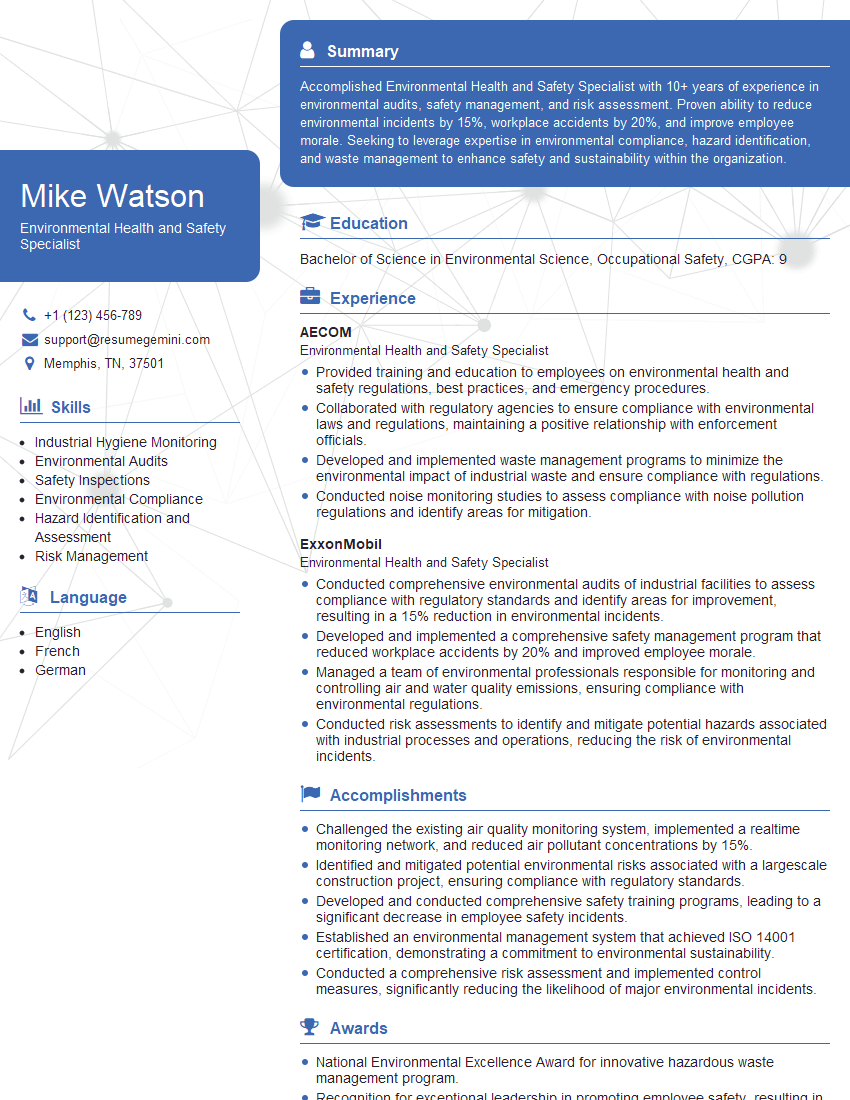
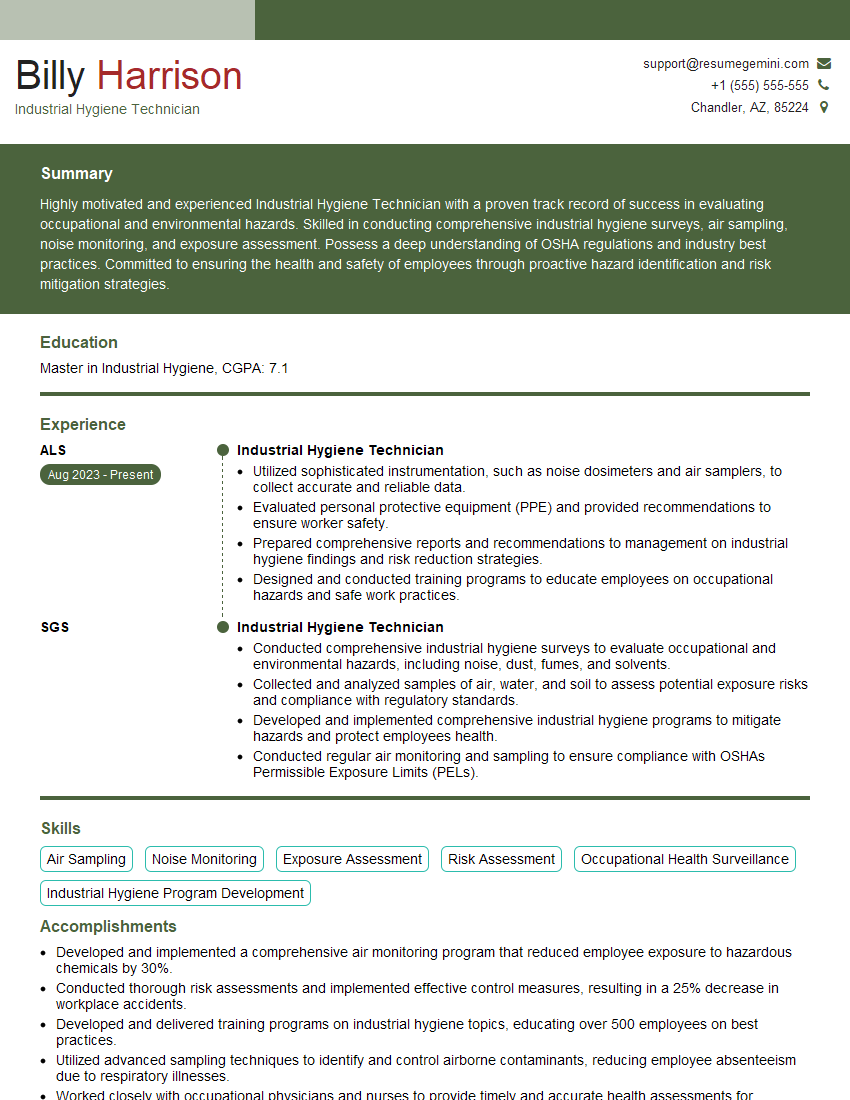
Mastering Dust Control and Extraction opens doors to exciting career opportunities in various industries. Demonstrating a strong understanding of these concepts significantly enhances your job prospects. To maximize your chances, create a compelling, ATS-friendly resume that highlights your skills and experience effectively. ResumeGemini is a trusted resource to help you build a professional resume that stands out. We provide examples of resumes tailored to the Dust Control and Extraction field to guide you in creating a winning application.

Explore more articles
Users Rating of Our Blogs
Share Your Experience
We value your feedback! Please rate our content and share your thoughts (optional).
What Readers Say About Our Blog
To the interviewgemini.com Webmaster.
Very helpful and content specific questions to help prepare me for my interview!
Thank you
To the interviewgemini.com Webmaster.
This was kind of a unique content I found around the specialized skills. Very helpful questions and good detailed answers.
Very Helpful blog, thank you Interviewgemini team.