The thought of an interview can be nerve-wracking, but the right preparation can make all the difference. Explore this comprehensive guide to Electronic Medical Record Management interview questions and gain the confidence you need to showcase your abilities and secure the role.
Questions Asked in Electronic Medical Record Management Interview
Q 1. Explain the differences between an EHR and an EMR.
While the terms are often used interchangeably, there’s a key distinction between an Electronic Health Record (EHR) and an Electronic Medical Record (EMR). Think of it like this: an EMR is a digital version of the paper chart in a doctor’s office, focusing primarily on the clinical data generated during a single visit or episode of care. An EHR, on the other hand, is a broader, more comprehensive record encompassing a patient’s entire medical history across multiple healthcare providers and settings.
EMR: Contains data specific to one healthcare provider’s encounters with a patient, like visit notes, lab results from that provider, and medication orders. It’s largely transactional in nature.
EHR: Is a longitudinal record, integrating information from various sources, including hospitals, specialists, pharmacies, and even patient-generated data like wearable sensor readings. It aims to provide a holistic view of a patient’s health over time, facilitating better care coordination and preventative medicine. For instance, an EHR might show a patient’s complete allergy history, vaccination records across multiple clinics, and chronic disease management plans from various specialists all in one place.
Q 2. Describe your experience with different EHR systems (e.g., Epic, Cerner, Meditech).
I’ve had extensive experience with several leading EHR systems, including Epic, Cerner, and Meditech. Each has its strengths and weaknesses.
- Epic: Known for its robust functionality and comprehensive features, but it can have a steeper learning curve and be expensive to implement.
- Cerner: Offers strong interoperability capabilities and a user-friendly interface for some modules. However, the system’s vastness might make navigation challenging for some users.
- Meditech: A customizable system often favored by smaller hospitals and clinics. It’s less complex than Epic or Cerner but may lack some advanced features.
My experience with these systems encompasses everything from initial system configuration and user training to ongoing system maintenance and troubleshooting. I’ve worked on projects involving data migration, report generation, and the development of custom workflows to optimize clinical processes within each system.
Q 3. How do you ensure the accuracy and completeness of patient data within an EHR?
Ensuring data accuracy and completeness within an EHR requires a multi-faceted approach. It starts with establishing robust data entry protocols and utilizing tools such as dropdown menus and automated alerts to minimize manual entry errors. For example, using coded clinical terminologies (like SNOMED CT or LOINC) reduces ambiguity and improves data standardization.
Furthermore, regular data audits are crucial. These audits can identify areas of weakness in data entry processes, inconsistencies in data collection, and potentially incomplete records. I’ve successfully implemented strategies involving data validation checks, automated alerts for missing information, and structured templates for different clinical scenarios to improve data quality. Regular training for clinical staff on proper data entry techniques is equally vital. Finally, reconciliation of data from different sources is essential to ensure a single source of truth for patient information.
Q 4. What methods do you use to maintain the security and privacy of patient information in an EHR?
Protecting patient information within an EHR is paramount. This involves implementing several layers of security. At the infrastructure level, we use robust firewalls, intrusion detection systems, and encryption technologies to safeguard data from unauthorized access. Access control measures, such as role-based permissions and strong password policies, limit access to sensitive data based on user roles and responsibilities.
Regular security audits and penetration testing are crucial for identifying vulnerabilities. Staff training on security best practices, including phishing awareness and the importance of data privacy, is equally essential. We must also adhere strictly to data disposal protocols, ensuring secure deletion or destruction of patient data when it’s no longer needed. Finally, regular audits against compliance standards like HIPAA are critical to maintaining a secure environment.
Q 5. Describe your experience with EHR data migration and implementation.
I have extensive experience with EHR data migration and implementation. This involves a detailed planning phase which considers several factors, including data mapping, data cleansing, and validation. Data mapping helps identify where the data will go in the new system. Data cleansing deals with identifying and correcting inaccuracies or inconsistencies in the existing data. Validation ensures the migrated data is accurate and complete.
The migration process itself might involve several steps, such as extracting data from the old system, transforming it to match the new system’s requirements, and then loading it into the new EHR. Post-implementation, thorough testing and user training are crucial to ensure a smooth transition. I’ve been involved in several successful migrations, minimizing downtime and ensuring data integrity throughout the process. For example, in one project we used a phased approach to migration, migrating data in segments to mitigate risk.
Q 6. How do you handle discrepancies or errors found in patient records?
Handling discrepancies or errors in patient records requires a methodical approach. First, the error needs to be identified and documented. Then, a thorough investigation is needed to determine the root cause of the error. This may involve reviewing the original source of the data, interviewing relevant personnel, or checking related documentation.
Once the root cause is identified, a correction process is implemented. This may involve amending the record, adding a note explaining the discrepancy, or potentially triggering an alert to the responsible clinician. In cases involving significant discrepancies, reporting mechanisms might need to be activated depending on the potential impact. All corrections should be documented, and the process should be reviewed to prevent similar errors in the future.
Q 7. Explain your understanding of HIPAA regulations and their application to EHR management.
HIPAA (Health Insurance Portability and Accountability Act) is a crucial US federal law governing the privacy and security of protected health information (PHI). In the context of EHR management, HIPAA compliance requires robust security measures to protect PHI from unauthorized access, use, or disclosure. This involves adhering to the Privacy Rule, which outlines standards for the use and disclosure of PHI, and the Security Rule, which sets standards for the electronic protection of PHI.
My understanding of HIPAA includes the various components of the law, including the permitted uses and disclosures of PHI, the patient’s rights regarding their information, and the responsibilities of healthcare providers. I am well-versed in implementing HIPAA-compliant policies and procedures for EHR systems, including access controls, audit trails, encryption, and breach notification protocols. Maintaining HIPAA compliance is a critical aspect of my role, ensuring the confidentiality, integrity, and availability of patient data.
Q 8. How do you ensure compliance with Meaningful Use requirements?
Ensuring Meaningful Use compliance involves meticulously following the established criteria set by the Centers for Medicare & Medicaid Services (CMS). This isn’t just about checking boxes; it’s about integrating these requirements into the very fabric of how we use the EHR. It’s a continuous process, not a one-time task.
- Meaningful Use Objectives: We focus on achieving objectives related to patient engagement (e.g., providing patients with online access to their records), clinical quality reporting (e.g., submitting data on key quality measures like diabetes control), and public health reporting (e.g., submitting data on infectious diseases). We monitor our progress continuously against these objectives using built-in EHR reporting tools and external dashboards provided by the CMS.
- Data Security and Privacy: This is paramount. We strictly adhere to HIPAA regulations, ensuring data encryption, access controls, and audit trails are meticulously maintained. Regular security audits and staff training on HIPAA best practices are integral to our compliance strategy. We employ robust measures like multi-factor authentication and regular security awareness training to mitigate risks.
- Documentation and Audit Trails: Maintaining accurate and complete documentation is vital. We implement processes to ensure all activities within the EHR are properly documented, including changes made to patient records, user access, and system configurations. This creates an easily auditable trail for demonstrating compliance.
- Vendor Selection & Support: Choosing an EHR vendor with a strong track record of Meaningful Use compliance is a critical first step. They should offer ongoing support and updates to help us stay ahead of any changes in regulations. Regular communication with our vendor ensures we’re always prepared for any necessary updates or modifications.
For example, at my previous practice, we implemented a patient portal that allowed for secure messaging and online access to lab results, directly contributing to our Meaningful Use score. We also invested in advanced analytics tools to track our progress towards meeting clinical quality reporting measures and identified areas for improvement proactively.
Q 9. Describe your experience with EHR reporting and data analysis.
My experience with EHR reporting and data analysis is extensive. I’m proficient in using various EHR systems’ reporting tools to extract, analyze, and visualize data to answer key clinical and operational questions. This goes beyond just generating reports; it involves interpreting the data to identify trends, patterns, and areas for improvement.
- Data Extraction: I can efficiently extract data from various sources within the EHR, including patient demographics, diagnoses, medications, procedures, and lab results. I’m adept at using query tools and report writers to create customized reports.
- Data Analysis: I leverage statistical methods and data visualization techniques to identify key trends and insights. This includes calculating relevant metrics, creating charts and graphs, and presenting findings clearly and concisely. For instance, I might analyze readmission rates to identify contributing factors or track the effectiveness of specific treatments.
- Reporting & Presentation: I’m comfortable presenting findings to both clinical and administrative staff, using clear and concise language appropriate to their understanding. My reports are visually appealing and easily digestible, ensuring stakeholders can readily understand the information and act upon it. For example, I’ve used data visualizations to effectively showcase improvements in patient care after the implementation of a new clinical protocol.
- Data Mining Techniques: I utilize advanced techniques to identify patterns and predictions. For instance, I might analyze patient data to predict which patients might be at risk for readmission, allowing for proactive intervention.
For example, I once used EHR data to analyze patient satisfaction scores, identifying areas where patient experience could be enhanced. This data-driven approach led to the implementation of several process improvements that significantly improved patient satisfaction.
Q 10. What is your experience with EHR workflow optimization and process improvement?
EHR workflow optimization is a passion of mine. It’s about streamlining processes to improve efficiency, reduce errors, and enhance the overall user experience. This involves understanding the current workflow, identifying bottlenecks, and implementing changes that eliminate unnecessary steps or redundancies.
- Workflow Analysis: I use various techniques, including process mapping and shadowing, to thoroughly understand the current workflow. This provides a baseline for identifying areas for improvement.
- Process Improvement Methodologies: I’m familiar with various process improvement methodologies, including Lean and Six Sigma, and apply them to optimize EHR workflows. This involves identifying waste, eliminating non-value-added steps, and standardizing processes.
- Technology Integration: I seek to leverage technology to streamline processes. For example, implementing automated alerts, integrating systems, or using templates to reduce manual data entry.
- Change Management: Successfully optimizing workflows requires effective change management. This involves communicating changes clearly to staff, providing adequate training, and addressing concerns to ensure a smooth transition.
In a previous role, I implemented a new system for managing patient referrals, reducing the processing time by 50% and eliminating duplicate entries. I also utilized templates to standardize documentation, leading to a reduction in charting errors and improved accuracy of patient data.
Q 11. How do you troubleshoot technical issues within an EHR system?
Troubleshooting technical issues in an EHR system requires a systematic and methodical approach. It’s not just about knowing the software, but also understanding the underlying infrastructure and how various systems interact.
- Gather Information: Begin by collecting detailed information about the issue, including the error messages, affected users, and the time the issue occurred. The more information you gather, the easier it will be to diagnose the problem.
- Check Basic Troubleshooting Steps: First check the obvious – network connectivity, computer restarts, and application updates. Sometimes the simplest solutions are overlooked.
- System Logs and Error Messages: Examine system logs and error messages for clues about the root cause of the problem. These logs provide valuable insights that can pinpoint the issue quickly.
- Escalation Process: If the issue can’t be resolved using internal resources, there should be a defined escalation process to notify the IT department or vendor support.
- Documentation: Always document the issue, the troubleshooting steps taken, and the resolution. This is essential for tracking recurring issues and preventing them in the future.
For instance, I once diagnosed a widespread login issue by checking the system logs and discovering a database connection problem. I was able to work with IT to resolve the issue quickly and prevent significant downtime.
Q 12. Explain your experience with training staff on the use of an EHR.
Training staff on an EHR requires a multifaceted approach that considers different learning styles and levels of technical expertise. It’s not simply about demonstrating features; it’s about fostering competency and building confidence.
- Needs Assessment: Begin with a needs assessment to determine the specific training needs of the staff. Consider their existing computer skills and their roles within the healthcare organization.
- Modular Training: Develop modular training programs that focus on specific functionalities. This makes learning more manageable and allows staff to focus on the aspects relevant to their roles.
- Variety of Methods: Employ various training methods, including online modules, hands-on training, and group discussions. This caters to diverse learning styles and keeps the training engaging.
- Ongoing Support: Provide ongoing support through regular check-ins, readily available documentation (cheat sheets, FAQs), and access to a help desk. This supports staff after the initial training is completed.
- Feedback & Evaluation: Collect feedback from staff to assess the effectiveness of the training program. Use this feedback to make improvements and ensure the training remains relevant and effective.
In a past role, I developed and delivered EHR training for over 50 clinicians and staff. By incorporating both online modules and hands-on sessions, we achieved a high level of proficiency and user satisfaction.
Q 13. How do you manage user access and permissions within an EHR system?
Managing user access and permissions in an EHR system is crucial for maintaining data security and complying with regulations like HIPAA. It’s about ensuring that each user only has access to the information they need to do their job.
- Role-Based Access Control (RBAC): We implement RBAC to assign permissions based on roles and responsibilities. This ensures that each user only has access to the data and functions relevant to their position.
- User Authentication: Strong authentication methods, such as multi-factor authentication, are essential to prevent unauthorized access. This adds an extra layer of security, making it significantly harder for unauthorized individuals to access the system.
- Regular Audits: Regular audits of user access and permissions are necessary to identify and address potential security vulnerabilities. This helps detect any inappropriate access granted or any potential security loopholes.
- Access Reviews: We conduct periodic access reviews to ensure that users still require the permissions they currently have. Inactive or terminated employees should have their access immediately revoked.
- Password Management: Strict password policies, including password complexity requirements and regular password changes, are implemented to enhance security.
For example, a nurse would only have access to patient charts and medication administration, while a billing clerk would only have access to billing information, ensuring strict data privacy and compliance.
Q 14. Describe your experience with EHR system upgrades and maintenance.
EHR system upgrades and maintenance are vital for ensuring system stability, security, and optimal performance. These activities can range from minor updates to major system overhauls and require careful planning and execution.
- Planning and Coordination: Successful upgrades require thorough planning and coordination with all stakeholders. This includes communicating the planned changes, scheduling downtime, and providing training to staff on any new features or changes in functionality.
- Testing and Validation: Before deploying any upgrades, comprehensive testing and validation are essential to ensure that the system functions correctly and that data integrity is maintained. This includes testing both the core functionality and integration with other systems.
- Data Backup and Recovery: Regular data backups are critical to minimize data loss in case of unexpected issues during upgrades or maintenance. A robust recovery plan should also be in place.
- Vendor Collaboration: Working closely with the EHR vendor during upgrades and maintenance is essential to address any unexpected issues or challenges. The vendor should provide technical support and guidance throughout the process.
- Post-Upgrade Monitoring: After the upgrade, continued monitoring is essential to identify and address any unforeseen problems. This includes monitoring system performance, user feedback, and error logs.
For example, in my previous role, we successfully managed a major EHR upgrade by following a detailed plan, testing rigorously, and coordinating closely with the vendor. This resulted in a smooth transition with minimal disruption to clinical operations.
Q 15. How do you ensure the integrity of EHR data backups and recovery?
Ensuring the integrity of EHR data backups and recovery is paramount for maintaining data availability and preventing data loss. It involves a multi-layered approach combining robust backup strategies, regular testing, and disaster recovery planning.
Regular Backups: We employ a tiered backup strategy, including daily incremental backups, weekly full backups, and monthly offsite backups. This ensures we have multiple recovery points in case of data corruption or system failure. We use both on-site and cloud-based solutions for redundancy.
Backup Verification: Regular testing is crucial. We perform periodic restores of backup data to a test environment to verify data integrity and the functionality of the recovery process. This proactively identifies and rectifies potential issues before they impact live systems.
Disaster Recovery Planning: A comprehensive disaster recovery plan (DRP) outlines procedures for recovering EHR data and restoring system functionality in the event of a major disaster, such as a natural catastrophe or a ransomware attack. This plan details roles, responsibilities, alternate sites, and communication protocols.
Data Encryption: Both data at rest and data in transit are encrypted to protect against unauthorized access and data breaches, even in the event of a backup compromise.
Version Control: We maintain version control of our database schema and application code, which allows for easy rollback to previous versions in case of critical updates that introduce errors.
For instance, during a recent server upgrade, our rigorous backup and recovery procedures ensured a seamless transition with minimal downtime. The pre-planned testing revealed a minor incompatibility, which we resolved before the actual upgrade, preventing a potential data loss scenario.
Career Expert Tips:
- Ace those interviews! Prepare effectively by reviewing the Top 50 Most Common Interview Questions on ResumeGemini.
- Navigate your job search with confidence! Explore a wide range of Career Tips on ResumeGemini. Learn about common challenges and recommendations to overcome them.
- Craft the perfect resume! Master the Art of Resume Writing with ResumeGemini’s guide. Showcase your unique qualifications and achievements effectively.
- Don’t miss out on holiday savings! Build your dream resume with ResumeGemini’s ATS optimized templates.
Q 16. What is your experience with EHR system integration with other healthcare systems?
I have extensive experience integrating EHR systems with various healthcare systems, including Picture Archiving and Communication Systems (PACS), laboratory information systems (LIS), and pharmacy systems. Successful integration requires a deep understanding of HL7 standards, FHIR APIs, and database connectivity.
HL7 Integration: I’ve worked extensively with HL7 messaging (e.g., ADT, ORM, ORU) to exchange patient demographics, orders, results, and other critical information between different systems. This involves configuring interfaces, mapping data elements, and troubleshooting connectivity issues.
FHIR APIs: I’m proficient in using FHIR APIs for more modern and flexible integration. This allows for real-time data exchange and facilitates the development of interoperable applications.
Database Connectivity: I’ve utilized database technologies like SQL to directly connect EHR systems with other databases, ensuring data consistency and accuracy. This often involves writing custom scripts and stored procedures.
Interface Engines: I have experience working with various interface engines that manage the flow of data between systems, such as Mirth Connect. These engines often require configuration and customization to meet specific needs.
In a previous role, I successfully integrated our EHR with a new LIS system, significantly improving the workflow by automating the process of retrieving lab results. This reduced manual data entry and eliminated the risk of transcription errors.
Q 17. Explain your understanding of different data formats used in EHR systems.
EHR systems utilize a variety of data formats to store and exchange information. Understanding these formats is vital for data interoperability and efficient data management.
HL7 (Health Level Seven): This is a widely used standard for exchanging clinical data between healthcare systems. It uses various message types (e.g., ADT, ORM, ORU) to represent different types of information.
DICOM (Digital Imaging and Communications in Medicine): This standard is used for storing, exchanging, and printing medical images. It’s essential for integrating PACS systems with the EHR.
FHIR (Fast Healthcare Interoperability Resources): A newer, RESTful standard built on web technologies that offers a more flexible and efficient approach to data exchange. It uses JSON or XML to represent data.
XML (Extensible Markup Language): A widely used markup language that can represent structured data. It’s often used in HL7 messaging and other EHR data formats.
JSON (JavaScript Object Notation): A lightweight data-interchange format that’s commonly used in web applications and increasingly prevalent in FHIR implementations.
Relational Databases (SQL): EHR data is often stored in relational databases using structured query language (SQL). Tables and relationships are used to organize and manage large amounts of data.
For example, understanding the nuances of HL7 ADT messages is critical for correctly capturing patient admissions and discharges, ensuring accurate billing and patient tracking. Misinterpretations can lead to billing errors or delays in patient care.
Q 18. Describe your experience with data cleansing and validation in an EHR.
Data cleansing and validation are crucial for maintaining the accuracy and integrity of EHR data. This process involves identifying and correcting errors, inconsistencies, and missing data.
Data Profiling: I begin by profiling the data to understand its structure, identify data quality issues, and assess the completeness of the data.
Data Standardization: I use data standardization techniques to ensure consistency in data formats and values. This includes things like standardizing addresses, dates, and medical codes.
Data Deduplication: Duplicate patient records are a common problem. I use deduplication techniques to identify and merge these records, ensuring data accuracy.
Data Validation: I implement validation rules to ensure data conforms to specific constraints. This includes checks for data type, range, and format.
Data Transformation: Sometimes, data needs to be transformed to fit specific requirements. This may involve data mapping or other transformation techniques.
In a previous project, we identified significant inconsistencies in patient address data. Through data cleansing and standardization, we were able to improve the accuracy of patient addresses, improving the efficiency of mailings and appointment reminders.
Q 19. How do you ensure the confidentiality of patient data during data exchange?
Ensuring patient data confidentiality during data exchange is a top priority. This requires a multi-faceted approach combining technical safeguards, policy adherence, and robust security protocols.
Encryption: Data is encrypted both in transit (using protocols like TLS/SSL) and at rest (using encryption technologies like AES). This ensures that even if data is intercepted, it remains unreadable without the decryption key.
Access Control: Strict access control measures are implemented to restrict access to patient data based on roles and responsibilities. Only authorized personnel have access to sensitive information.
Auditing: All data access and exchange activities are audited to track who accessed what data and when. This provides an audit trail for security and compliance purposes.
Data Minimization: Only necessary data is exchanged. We avoid unnecessary data transmission to minimize the risk of exposure.
Compliance with Regulations: All data exchange practices adhere to relevant regulations, such as HIPAA (in the US) or GDPR (in Europe). This includes complying with data breach notification requirements.
For example, when exchanging patient data with external laboratories, we use secure encrypted connections and limit the data shared to only the necessary test results, minimizing the risk of unauthorized disclosure.
Q 20. What is your approach to resolving conflicts between clinicians and the EHR system?
Conflicts between clinicians and the EHR system often stem from usability issues, workflow disruptions, or a lack of understanding of the system’s capabilities. Resolving these conflicts requires a collaborative and empathetic approach.
Active Listening: I begin by actively listening to the clinicians’ concerns and understanding their perspective. This is crucial for building trust and identifying the root cause of the problem.
Workflow Analysis: I analyze the existing workflows to identify areas where the EHR system might be creating inefficiencies or frustrations.
System Training and Support: Comprehensive training and ongoing support are crucial for clinicians to effectively utilize the EHR system. This includes customized training sessions and readily available support resources.
System Customization (where appropriate): If feasible, I work with the IT team to explore ways to customize the system to better align with the clinicians’ needs. This might involve adjusting system settings or configuring workflows.
Feedback Mechanisms: I establish clear channels for clinicians to provide feedback and report issues. This ensures that ongoing improvements can be made to the system.
For instance, when facing resistance to using a new order entry module, I engaged in one-on-one sessions with the clinicians to understand their concerns and address their specific questions. This improved adoption rates and facilitated a smoother transition to the new workflow.
Q 21. Explain your experience with auditing EHR activities.
Auditing EHR activities is critical for ensuring data integrity, security, and compliance. This involves tracking all actions performed within the EHR system.
Audit Trail Generation: The EHR system generates an audit trail automatically, recording user logins, data access, modifications, and deletions.
Audit Trail Review: Regular reviews of the audit trail are conducted to identify potential security breaches, data integrity issues, or compliance violations.
Alerting Mechanisms: We implement alerting mechanisms to notify us of suspicious activities, such as unusual access patterns or attempts to modify sensitive data.
Security Information and Event Management (SIEM): In some cases, we integrate the EHR audit trail with a SIEM system to correlate security events and gain a more comprehensive view of system activity.
Compliance Reporting: The audit trail provides the necessary data for generating compliance reports, demonstrating adherence to regulations like HIPAA or GDPR.
In a recent audit, we identified an unusual number of login attempts from an unknown IP address. This triggered an alert, prompting us to investigate and take appropriate security measures, preventing a potential breach.
Q 22. How do you manage and resolve EHR system downtime?
EHR system downtime is a critical issue, impacting patient care and operational efficiency. My approach to managing and resolving it is multifaceted and prioritizes minimizing disruption and ensuring data integrity. It starts with proactive measures:
- Redundancy and Failover Systems: Implementing redundant systems and failover mechanisms ensures that if one system goes down, another immediately takes over, minimizing downtime. This might involve having mirrored servers in different locations or utilizing cloud-based solutions with built-in redundancy.
- Regular Backups and Disaster Recovery Planning: Frequent data backups are crucial. A robust disaster recovery plan should detail the steps to restore systems and data in case of a major outage, including offsite backups and a tested recovery process.
- Preventive Maintenance: Scheduled maintenance, including software updates and hardware checks, helps prevent unexpected failures. This proactive approach is far more effective than reactive fixes.
During an actual downtime event, my strategy focuses on:
- Rapid Assessment and Diagnosis: Immediately identifying the root cause is paramount. This involves checking server logs, network connectivity, and application status. Working with IT support is crucial.
- Communication and Transparency: Keeping staff and stakeholders informed of the situation and estimated resolution time is key. Transparency builds trust and minimizes anxiety.
- Contingency Plans: Having alternative processes in place, such as manual charting or utilizing paper backups (if available and compliant), allows for continued patient care during downtime.
- Post-Incident Analysis: After the issue is resolved, a thorough root cause analysis is conducted to identify weaknesses in the system and prevent future occurrences. This includes documenting the event, implementing corrective actions, and updating the disaster recovery plan.
For example, during a previous role, a power outage impacted our EHR system. Our redundant power supply and failover system automatically switched to backup power, limiting downtime to under five minutes. Post-incident analysis revealed the need for improved battery backup capacity for longer outages, a change we immediately implemented.
Q 23. Describe your experience with using EHR reporting tools to generate clinical reports.
EHR reporting tools are indispensable for generating insightful clinical reports, enabling data-driven decision-making and improved patient outcomes. My experience encompasses using various EHR systems’ reporting capabilities to generate a wide array of reports, including:
- Patient demographics and clinical summaries: Creating comprehensive reports summarizing patient information for referral purposes or care coordination.
- Disease registries and prevalence reports: Tracking the prevalence of specific diseases and conditions within a patient population to support public health initiatives.
- Quality metrics and performance indicators: Generating reports on key performance indicators (KPIs) to assess the quality of care delivered, such as medication adherence rates or readmission rates. This often involves querying the data using SQL-like interfaces within the EHR.
- Financial reports: Creating reports that analyze billing and coding data to ensure accurate reimbursement.
I’m proficient in using both built-in reporting tools and external data analytics platforms to extract, analyze, and visualize data from EHR systems. I have experience working with various report formats, including PDF, CSV, and Excel, tailoring them to meet specific needs. For instance, I once developed a customized report that tracked the effectiveness of a new diabetes management program, leading to significant improvements in HbA1c levels among participating patients. This involved using the EHR’s reporting tools in conjunction with statistical software to perform detailed analysis and create compelling visualizations.
Q 24. How do you identify and address potential security vulnerabilities within an EHR system?
Security vulnerabilities in EHR systems pose significant risks, potentially leading to data breaches, HIPAA violations, and compromised patient privacy. My approach to identifying and addressing these vulnerabilities is proactive and comprehensive.
- Regular Security Audits and Penetration Testing: Conducting regular security audits and penetration testing helps identify vulnerabilities before malicious actors can exploit them. This often involves engaging external cybersecurity experts.
- Access Control and User Authentication: Implementing robust access control mechanisms, including role-based access control (RBAC), ensures that only authorized personnel can access sensitive patient data. Multi-factor authentication (MFA) adds an extra layer of security.
- Data Encryption: Encrypting both data at rest and in transit protects sensitive patient information from unauthorized access. This includes encrypting data on servers, databases, and during transmission over networks.
- Firewall and Intrusion Detection Systems: Utilizing firewalls and intrusion detection systems helps prevent unauthorized access to the EHR system and alerts administrators to suspicious activity.
- Security Awareness Training: Regular security awareness training for staff is crucial to educate them about phishing scams, social engineering tactics, and best practices for data security.
- Vulnerability Management: Staying up-to-date on known vulnerabilities and applying necessary patches and updates in a timely manner is vital. This includes monitoring security advisories and alerts from vendors.
For example, during a security audit, we identified a vulnerability in our EHR system’s web server. By promptly applying the necessary patch provided by the vendor, we successfully mitigated the risk before it could be exploited.
Q 25. Explain your understanding of HL7 and its role in EHR interoperability.
HL7 (Health Level Seven) is a family of international standards for the exchange, integration, sharing, and retrieval of electronic health information. It plays a crucial role in enabling EHR interoperability, allowing different healthcare systems and applications to communicate and share data seamlessly. This is vital for things like transferring patient records between hospitals, sharing lab results with physicians, or integrating data from different medical devices.
HL7 utilizes various messaging standards, including HL7v2 (primarily text-based messages), HL7v3 (a more complex, XML-based standard), and FHIR (Fast Healthcare Interoperability Resources), a newer, RESTful API-based standard gaining rapid adoption for its flexibility and ease of integration. Each standard defines the structure and content of messages, ensuring consistent and reliable data exchange.
The role of HL7 in EHR interoperability is significant because it facilitates:
- Data exchange between different EHR systems: Allowing seamless transfer of patient data, eliminating manual data entry and reducing errors.
- Integration with other healthcare applications: Enabling connectivity with pharmacy systems, billing systems, and other healthcare-related applications.
- Improved care coordination: Facilitating the sharing of patient information among healthcare providers, leading to better coordinated and more efficient care.
- Population health management: Enabling the aggregation of data from multiple sources to support population-level health analytics.
Understanding HL7 is crucial for anyone working with EHR systems, as it underpins the ability to integrate and exchange information efficiently and effectively. Without HL7 standards, the exchange of data would be chaotic and unreliable.
Q 26. How do you utilize data analytics to improve patient care using EHR data?
EHR data is a rich source of information that can be leveraged through data analytics to significantly improve patient care. My approach involves using various analytical techniques to identify trends, patterns, and insights that can inform clinical decision-making and improve outcomes.
- Predictive Modeling: Developing predictive models to identify patients at high risk of developing certain conditions (e.g., heart failure, diabetes), allowing for proactive interventions. This might involve using machine learning algorithms to analyze patient demographics, medical history, and lab results.
- Population Health Management: Analyzing aggregated EHR data to identify health disparities, track disease prevalence, and develop targeted interventions for specific patient populations.
- Quality Improvement: Using data analytics to identify areas where care can be improved, such as medication adherence rates or readmission rates. This data can help refine protocols and improve care pathways.
- Clinical Decision Support: Developing clinical decision support systems (CDSS) that provide clinicians with real-time recommendations and alerts based on patient data and clinical guidelines. For instance, a CDSS might alert a doctor to a potential drug interaction.
- Research and Development: Leveraging EHR data for research purposes to advance medical knowledge and improve treatment strategies.
For example, in a previous role, we used data analytics to identify patients with uncontrolled hypertension who were not consistently taking their prescribed medications. This allowed us to implement a targeted intervention program that included medication adherence support and patient education, resulting in a significant improvement in blood pressure control.
Q 27. Describe your experience with using an EHR system to support telehealth services.
EHR systems are essential for supporting telehealth services, enabling remote patient monitoring and virtual consultations. My experience includes utilizing EHRs to facilitate various telehealth functionalities:
- Secure Messaging: Using the EHR’s secure messaging system for communication between patients and clinicians, ensuring HIPAA compliance and protecting patient privacy.
- Remote Patient Monitoring (RPM): Integrating RPM devices with the EHR to collect physiological data (e.g., blood pressure, weight) from patients at home. This data is then automatically uploaded to the EHR for review by clinicians.
- Virtual Consultations: Using video conferencing integrated within the EHR to conduct virtual consultations with patients. This often includes features for sharing documents and recording the consultation for later review.
- e-Prescribing: Using the EHR’s e-prescribing capabilities to electronically send prescriptions to pharmacies, improving efficiency and reducing errors.
The benefits of using EHRs for telehealth are numerous, including enhanced accessibility of care, improved patient engagement, and reduced healthcare costs. For instance, in a previous project, we implemented a telehealth program using our EHR system to monitor patients with chronic heart failure, leading to fewer hospital readmissions and improved patient satisfaction.
Q 28. What are your strategies for staying current with changes and updates in EHR technology?
The field of EHR technology is constantly evolving, with new features, updates, and regulations being introduced regularly. To stay current, I employ a multi-pronged approach:
- Professional Development: Actively participating in continuing education opportunities, such as webinars, conferences, and workshops, to stay abreast of the latest trends and advancements in EHR technology.
- Industry Publications and Journals: Reading industry publications and journals to keep informed about new developments and research in EHRs and healthcare informatics.
- Vendor Websites and Training Materials: Regularly checking vendor websites for updates, patches, and training materials related to the EHR systems I use.
- Networking and Collaboration: Networking with other professionals in the field through professional organizations and online communities to share knowledge and best practices.
- Certifications and Credentials: Pursuing relevant certifications and credentials to demonstrate expertise and commitment to continuous learning. For example, obtaining certifications in specific EHR systems or data analytics.
This ongoing learning helps me to identify potential areas of improvement in our existing systems, stay compliant with evolving regulations, and adopt innovative solutions to enhance efficiency and effectiveness in using EHR technology.
Key Topics to Learn for Electronic Medical Record Management Interview
- Data Integrity and Security: Understanding HIPAA compliance, data encryption methods, and audit trail management. Practical application: Explain how you would handle a potential data breach scenario.
- Workflow Optimization: Analyzing and improving clinical workflows within the EMR system. Practical application: Describe a time you streamlined a process to improve efficiency.
- EMR Software Functionality: Mastering the specific features and functionalities of common EMR systems (e.g., Epic, Cerner). Practical application: Discuss your experience with different EMR systems and their respective strengths and weaknesses.
- Reporting and Analytics: Generating reports, analyzing data trends, and using data to inform clinical decision-making. Practical application: Explain how you would create a report to track a specific key performance indicator (KPI).
- Troubleshooting and Technical Support: Identifying and resolving technical issues with the EMR system. Practical application: Describe your approach to diagnosing and solving EMR-related problems.
- Interoperability and Data Exchange: Understanding the exchange of patient data between different healthcare systems. Practical application: Explain the importance of HL7 standards and their role in interoperability.
- User Training and Support: Providing effective training and ongoing support to healthcare professionals using the EMR system. Practical application: Describe your experience training users on new software or features.
Next Steps
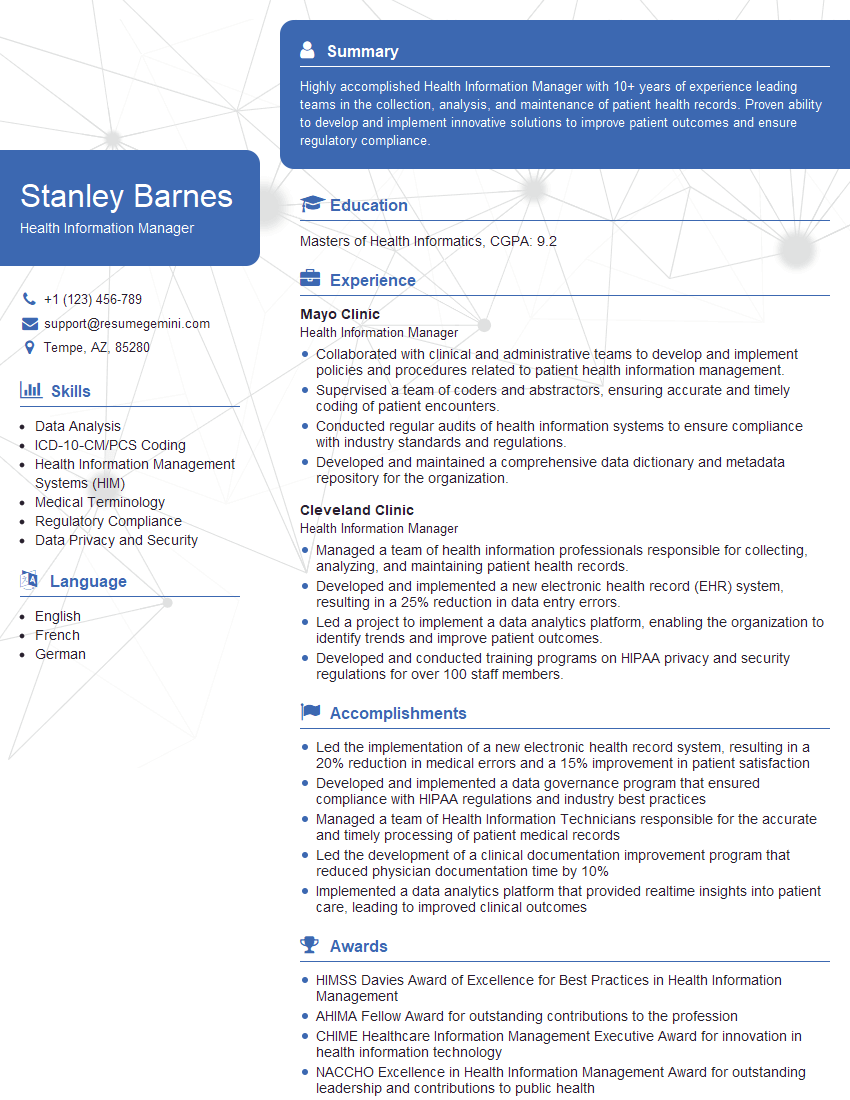
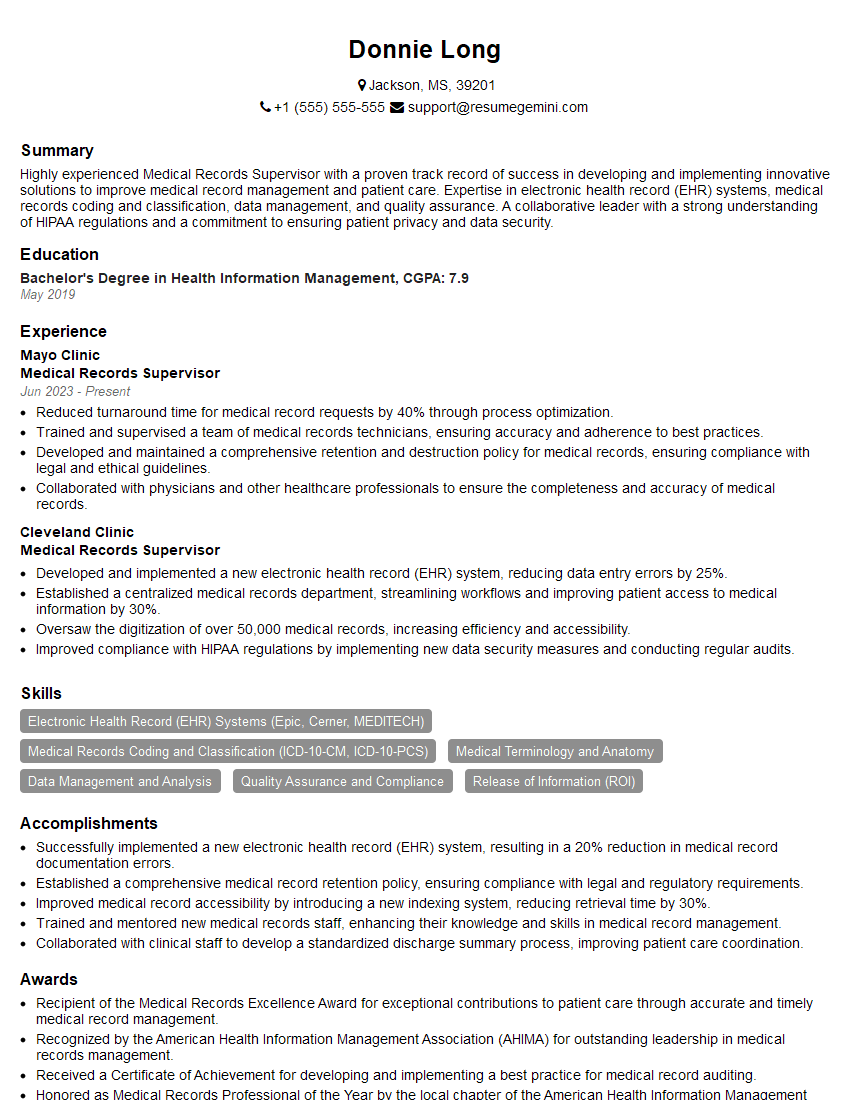
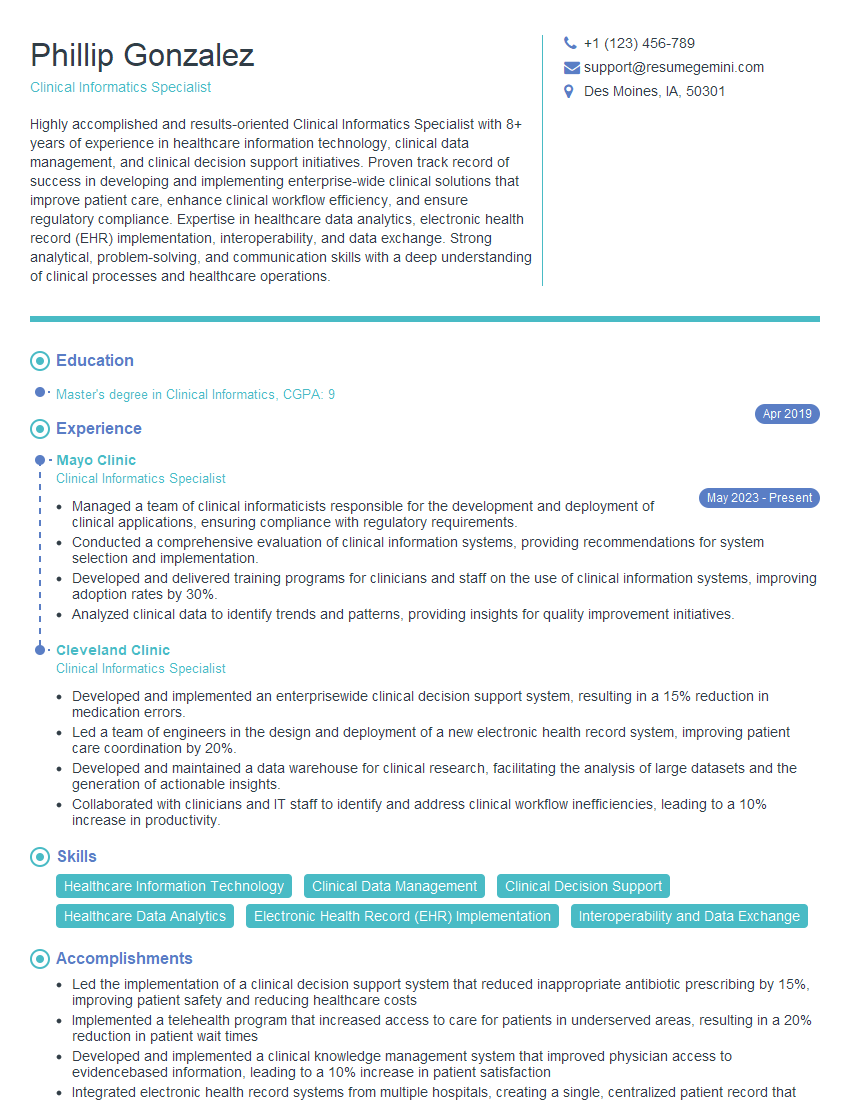
Mastering Electronic Medical Record Management opens doors to exciting career opportunities in a rapidly growing field, offering high demand and excellent growth potential. To maximize your chances of landing your dream role, crafting an ATS-friendly resume is crucial. A well-structured resume significantly increases your visibility to recruiters and hiring managers. We strongly encourage you to leverage ResumeGemini to build a professional and impactful resume that highlights your skills and experience in EMR management. ResumeGemini provides examples of resumes tailored to Electronic Medical Record Management, helping you create a document that truly showcases your capabilities. Invest time in crafting a strong resume – it’s your first impression and a key to your success!
Explore more articles
Users Rating of Our Blogs
Share Your Experience
We value your feedback! Please rate our content and share your thoughts (optional).
What Readers Say About Our Blog
To the interviewgemini.com Webmaster.
Very helpful and content specific questions to help prepare me for my interview!
Thank you
To the interviewgemini.com Webmaster.
This was kind of a unique content I found around the specialized skills. Very helpful questions and good detailed answers.
Very Helpful blog, thank you Interviewgemini team.