Every successful interview starts with knowing what to expect. In this blog, we’ll take you through the top Directional Lighting interview questions, breaking them down with expert tips to help you deliver impactful answers. Step into your next interview fully prepared and ready to succeed.
Questions Asked in Directional Lighting Interview
Q 1. Explain the difference between hard and soft directional lighting.
The difference between hard and soft directional lighting lies primarily in the size of the light source relative to the subject. Think of it like this: a tiny flashlight shining on an object creates a harsh, defined shadow – that’s hard lighting. A large softbox illuminating the same object produces softer, gentler shadows – that’s soft lighting. With directional lighting, the ‘size’ is simulated. A small, concentrated directional light will cast hard shadows with sharp edges, while a larger simulated source (often achieved through techniques like light wrapping or virtual softboxes in digital environments) will create soft shadows with gradual transitions.
In essence, hard directional lighting emphasizes contrast and texture, creating a dramatic and often stylized look. Soft directional lighting is more flattering, minimizing imperfections and producing a more even illumination. Consider a dramatic film noir scene versus a soft, romantic scene – the lighting choices directly contribute to the desired mood.
Q 2. Describe the effects of different light temperatures (Kelvin) on a scene.
Light temperature, measured in Kelvin (K), significantly impacts the perceived color and mood of a scene. Lower Kelvin values (e.g., 2000K-3000K) represent warmer colors, like candlelight or sunrise, evoking feelings of comfort and intimacy. As the Kelvin value increases, the light becomes cooler. For instance, 5000K-6500K represents daylight or a slightly overcast sky, often perceived as neutral or even slightly cool. Higher values (e.g., 10000K+) tend toward bluish tones, suggestive of a cold, sterile, or even futuristic setting.
Imagine a scene in a cozy living room. Using warm lighting (around 2700K) would instantly create a welcoming atmosphere, while the same scene lit with a cool 6000K light might feel stark and impersonal. Similarly, a science fiction film might utilize cool bluish tones to enhance a futuristic or otherworldly aesthetic.
Q 3. What are the key considerations when choosing a directional light source?
Choosing a directional light source involves careful consideration of several factors:
- Desired mood and style: Hard or soft light? Warm or cool tones? Dramatic contrast or even illumination?
- Subject matter: What are you trying to highlight? A person’s face? A textured wall? The overall effect will determine light position and intensity.
- Available resources: Are you working with natural light, studio strobes, or digital lighting tools? This impacts control and flexibility.
- Environmental conditions: Will ambient light affect the final result? How will your chosen directional light interact with existing light sources?
- Practical limitations: Are there physical obstructions that might limit light placement or angle?
For example, photographing a product might require soft, even lighting to showcase its details accurately. In contrast, a portrait shoot may benefit from a more dramatic setup using hard light to accentuate facial features.
Q 4. How do you control the intensity and spread of directional light?
The intensity and spread of directional light are controlled differently depending on the light source. With physical lights, intensity is adjusted via power settings (e.g., dimmer switches, power adjustments on strobes) and spread is controlled by using barn doors, softboxes, grids, or other modifiers to shape the light beam. In digital environments (e.g., using software like Blender, Cinema 4D, or Unreal Engine), these parameters are adjusted directly within the software’s lighting interface. Intensity is usually controlled by a simple intensity slider. The spread or ‘cone angle’ is adjusted via parameters that define the light’s fall-off from its center.
Example (Conceptual):intensity = 1.5; // Increase intensity by 50%coneAngle = 45; // Set cone angle to 45 degrees
Proper control of these parameters is crucial for creating the desired lighting effect. For instance, lowering the intensity can create a subtle highlight, whereas a wider cone angle would provide more diffuse illumination.
Q 5. Explain the use of reflectors and diffusers in directional lighting.
Reflectors and diffusers play a crucial role in shaping and modifying directional light. Reflectors, like umbrellas or bounce boards, redirect light to fill in shadows or create highlights. They soften the light by increasing its apparent size. Diffusers, such as softboxes or diffusion panels, scatter the light, softening the shadows and reducing contrast. The choice between a reflector and a diffuser depends on the desired effect: reflectors tend to give a more controlled and often brighter fill light, whereas diffusers produce a more evenly diffused, softer illumination.
Imagine photographing a portrait. Using a reflector to bounce light onto the subject’s face can fill in shadows under the eyes, creating a more even exposure. A diffuser on a strong directional light, on the other hand, would eliminate harsh shadows entirely and produce a more gentle, evenly lit portrait.
Q 6. What are the advantages and disadvantages of using natural directional light?
Natural directional light, such as sunlight, offers the advantages of being free and often aesthetically pleasing. It provides a readily available, dynamic light source that can create beautiful shadows and highlights. However, it is unpredictable and variable, affected by weather, time of day, and atmospheric conditions. This variability can make consistent lighting difficult to achieve. Additionally, it may not be available when and where you need it.
- Advantages: Free, often aesthetically pleasing, dynamic.
- Disadvantages: Unpredictable, variable, not always available.
Consider a landscape photographer. While natural sunlight provides stunning results, they must plan around the time of day and weather conditions to ensure the light is suitable for their photography. On the other hand, a studio photographer has complete control over their light sources, which is invaluable for consistent, predictable outcomes.
Q 7. How do you achieve a specific mood or atmosphere using directional lighting?
Achieving a specific mood or atmosphere using directional lighting involves careful control of light direction, intensity, temperature, and the use of modifiers. For example:
- Romantic mood: Soft, warm-toned (low Kelvin) light from a high angle, creating soft shadows and gentle illumination.
- Dramatic mood: Hard light (high contrast) from a low angle, creating deep shadows and dramatic highlights.
- Mysterious mood: Low-intensity, cool-toned (high Kelvin) light from a side angle, creating subtle shadows and a sense of unease.
- Cheerful mood: Bright, warm-toned light from multiple directions, creating a well-lit and vibrant scene.
A film director might use a dramatic backlight to silhouette a character, conveying a sense of mystery or isolation. Conversely, a commercial photographer might use soft, even lighting to highlight the positive attributes of a product. Understanding the relationship between lighting and emotion is key to successful lighting design.
Q 8. Describe your experience with various types of directional lighting fixtures (e.g., Fresnels, PARs, LEDs).
My experience with directional lighting fixtures spans a wide range, encompassing traditional instruments like Fresnel and PAR lights, as well as the increasingly prevalent LEDs. Fresnels, known for their smooth, adjustable beam, are ideal for creating soft, even washes or focused pools of light, making them versatile for both background illumination and key lighting. I’ve extensively used them in film and theatre productions, relying on their ability to precisely control spill and beam spread. PAR lights, with their more focused and intense output, are excellent for powerful accents, backlighting, or creating dramatic highlights. Their rugged construction makes them suitable for demanding environments. Finally, LEDs have revolutionized the industry with their energy efficiency, color temperature control, and long lifespan. I’ve worked extensively with LED panels and fixtures, appreciating their ability to precisely match color palettes and reduce energy consumption significantly. In one recent project, we replaced aging tungsten Fresnels with high-output LED panels, resulting in a 70% reduction in energy usage and a notable improvement in color consistency across the scene.
Q 9. Explain how to create depth and dimension in a scene using directional lighting.
Creating depth and dimension with directional lighting hinges on skillful manipulation of light and shadow. Think of it like sculpting with light; you’re using light to define forms and create the illusion of three dimensions on a two-dimensional surface. Key techniques include using a primary light source (key light) to illuminate your subject from a specific angle, creating a dominant highlight and shadow side. A fill light, typically softer and less intense than the key light, reduces the contrast of the shadows, preventing them from becoming too harsh. A back light, positioned behind the subject, separates it from the background, adding depth and contour. For instance, a back light can create a subtle rim light outlining the subject, making it ‘pop’ from the background. The strategic placement of these lights, varying their intensity and diffusion, determines the degree of depth and three-dimensionality achieved. A classic example is using a strong key light from above and to the side to create a defined shadow, then a softer fill light opposite it to soften the shadows under the eyes and create a more dimensional face.
Q 10. How do you manage shadows effectively in directional lighting setups?
Effective shadow management is crucial for a polished look in directional lighting. The goal isn’t to eliminate shadows altogether, but rather to control their shape, intensity, and placement. Techniques include using fill lights to soften harsh shadows, using gobos (templates that create patterned shadows) for creative effects, and carefully considering the background to avoid distracting or unwanted shadows. If shadows are too harsh, a diffusion filter can be used on the light source to soften its output. Alternatively, a reflector can be strategically placed to bounce light into the shadowed areas. For instance, in a portrait setup, a reflector positioned opposite the key light helps to subtly fill the shadows on the face, creating a more natural and flattering look. Conversely, strong, defined shadows can be used creatively; in a dramatic scene, a strong directional light with minimal fill can evoke a sense of tension or mystery.
Q 11. Describe the concept of three-point lighting and its application in directional lighting.
Three-point lighting is a fundamental lighting technique that uses three lights – a key light, a fill light, and a back light – to illuminate a subject. It’s applicable to virtually any directional lighting setup, providing a balanced and well-lit subject. The key light is the main light source, usually positioned at a 45-degree angle to the subject. The fill light, positioned on the opposite side of the key light, softens the shadows created by the key light. Finally, the back light, placed behind the subject, helps to separate it from the background and add depth. Consider a scene featuring an actor in a dimly lit room. A strong key light from the side will define the actor’s face, a fill light will prevent the shadows from being too dark, and a back light will separate the actor from the dark background, creating a sense of depth and drawing attention to the actor.
Q 12. What is the function of a barn door on a directional light fixture?
Barn doors are four hinged metal flaps attached to the front of a directional light fixture. They allow for precise control of the light’s spill, effectively shaping the beam and preventing unwanted light from spilling onto areas you don’t want illuminated. Each flap can be individually adjusted, enabling you to create a variety of beam shapes, block unwanted light from reflecting off nearby surfaces, or highlight a specific area within a scene. For example, in a product shoot, barn doors can precisely direct the light onto the product, preventing it from spilling onto the background and creating unwanted glare. This results in cleaner shots and better image quality.
Q 13. How do you work with different lighting gels and filters?
Lighting gels and filters alter the color and intensity of light. Gels are translucent sheets placed in front of the light source, modifying the color temperature or adding creative color effects. Filters, on the other hand, can reduce the intensity or modify the diffusion of the light. I frequently use gels to match the color of lighting within a scene, ensuring consistency and a realistic look. For instance, to create a warm, sunset look, I might use a CTO (Color Temperature Orange) gel to shift the color of a daylight-balanced fixture. Diffusion filters, such as silks or diffusers, are used to soften the harshness of light, reducing contrast and creating a more pleasing, less dramatic image. In a dramatic scene needing a particular colour mood, such as a cool, eerie feeling, a blue gel over the key light could achieve this.
Q 14. Explain your experience with lighting control systems and consoles.
My experience with lighting control systems and consoles encompasses both traditional dimmer boards and modern digital lighting consoles. I’m proficient in operating various types of consoles, programming lighting cues, and creating dynamic lighting sequences. Digital consoles offer precise control over individual fixtures, allowing for complex lighting designs and automated sequences. These systems are crucial in larger productions, where coordinating multiple fixtures and creating dynamic lighting effects is essential. For example, I’ve used ETC Ion consoles to program lighting cues for theatrical productions, precisely timing lighting changes to synchronize with the action on stage. Furthermore, I’m familiar with DMX (Digital Multiplex) protocols, which are the standard for communicating with lighting fixtures in professional settings.
Q 15. Describe your experience in troubleshooting lighting equipment and resolving technical issues.
Troubleshooting lighting equipment requires a systematic approach. My experience involves first identifying the problem – is it a blown bulb, a faulty ballast, a wiring issue, or a problem with the control system? I always begin with a visual inspection, checking connections and looking for obvious damage. Then, I use multimeters to test voltage and current, ensuring safety protocols are followed. For example, on a recent shoot, a Fresnel light suddenly went dark. My initial inspection revealed no loose connections. Using a multimeter, I quickly identified a blown fuse within the light’s ballast, which I replaced, restoring functionality. If the problem persists, I’ll consult the equipment’s manual and, if necessary, contact the manufacturer for support. I’m proficient with various lighting types including LED, HMI, and tungsten fixtures, and I can diagnose issues related to dimming, color temperature, and other technical aspects.
Career Expert Tips:
- Ace those interviews! Prepare effectively by reviewing the Top 50 Most Common Interview Questions on ResumeGemini.
- Navigate your job search with confidence! Explore a wide range of Career Tips on ResumeGemini. Learn about common challenges and recommendations to overcome them.
- Craft the perfect resume! Master the Art of Resume Writing with ResumeGemini’s guide. Showcase your unique qualifications and achievements effectively.
- Don’t miss out on holiday savings! Build your dream resume with ResumeGemini’s ATS optimized templates.
Q 16. How do you ensure safety on a lighting set?
Safety on a lighting set is paramount. My approach involves several key steps. First, a thorough risk assessment before setup identifies potential hazards, such as trip hazards from cables, potential for electrocution, or the risk of falling objects. I always ensure all equipment is correctly grounded and that cables are properly secured using gaff tape or cable ties. We establish clear communication protocols within the crew, using standardized hand signals and clear verbal instructions for moving lights and equipment. Regular safety checks are conducted throughout the shoot, ensuring that no cables are frayed or damaged and that lights are positioned securely. Protective eyewear is mandatory when working with intense light sources, and everyone on set is informed about the potential dangers. Finally, a designated safety officer oversees all procedures. It’s a collaborative process ensuring everyone goes home safe.
Q 17. What are your preferred methods for measuring light intensity?
Accurate light measurement is crucial for consistent results. My preferred methods include using a light meter, specifically a Sekonic light meter, which allows me to measure both illuminance (lux or foot-candles) and luminance (candelas per square meter or foot-lamberts). This provides a precise reading of the light falling on a subject, which is important for exposure control. For more detailed color analysis, I utilize a color meter which provides information on color temperature and color rendering index (CRI). I also rely on my experience and visual assessment in conjunction with the meter readings; understanding the behaviour of light sources helps me adjust settings effectively. For instance, I might know how much to compensate for a slightly lower CRI in the background lighting to maintain the overall colour balance.
Q 18. How do you collaborate effectively with other members of the lighting crew?
Effective collaboration is the cornerstone of a successful lighting crew. I believe in open communication and clear role definition. Pre-production meetings with the director of photography (DP) are crucial to establish the overall lighting vision, discuss specific lighting setups, and address any potential challenges. During the shoot, I maintain constant communication with the gaffer, electricians, and other crew members. This includes clearly communicating instructions, providing regular updates on the progress of the setup, and addressing any concerns promptly. I strive to create a positive and collaborative atmosphere where everyone feels comfortable contributing ideas and voicing concerns. Teamwork allows us to efficiently solve problems and deliver high-quality results.
Q 19. Describe your experience in planning and executing lighting designs for various projects.
My experience in lighting design spans various projects, from film and television productions to live events and commercial shoots. The process typically begins with a thorough understanding of the project’s needs – the story being told, the desired mood and atmosphere, and the director’s vision. I then develop a lighting plan, taking into account the location, available equipment, and budgetary constraints. This plan includes detailed diagrams, specifying the type, position, and intensity of each light source. I consider factors such as color temperature, light diffusion, and the use of modifiers (like softboxes or barn doors) to achieve the desired effect. For example, on a recent short film, I used a combination of key, fill, and backlight to create a dramatic contrast between the main character and the background, reflecting the character’s inner conflict. Post-production adjustments, such as color grading, are also considered during the planning phase.
Q 20. Explain your understanding of light falloff and how it impacts scene composition.
Light falloff refers to the decrease in light intensity as the distance from the light source increases. Understanding this is crucial for scene composition. The inverse square law governs falloff: the intensity is inversely proportional to the square of the distance. This means that doubling the distance reduces the intensity to a quarter. In practical terms, a subject closer to a light source will appear brighter than one further away. This can be used creatively to highlight certain elements or create a sense of depth. For instance, a spotlight shining on a character in the foreground creates separation from a dimly lit background, drawing the audience’s attention. Conversely, uncontrolled falloff can lead to uneven lighting, so careful placement and adjustment of lights, and the use of diffusers or reflectors, are vital to manage it effectively and achieve the desired look.
Q 21. How do you create a backlight effect using directional lighting?
Creating a backlight effect with directional lighting involves positioning a light source behind the subject, typically slightly above and to the side, to separate it from the background. The intensity of the backlight is key; it shouldn’t be overly bright, but rather used to create a subtle rim light or halo around the subject, defining its edges and adding a sense of depth. This lighting technique also requires careful control of light spill. The use of barn doors or flags can help prevent the light from spilling onto the foreground and washing out the scene. For example, in a portrait setting, a backlight could highlight the subject’s hair, creating a separation from the background and enhancing the subject’s three-dimensionality. The specific positioning and intensity will depend on the desired effect and the overall lighting scheme.
Q 22. What are the key differences between tungsten and LED directional lights?
Tungsten and LED directional lights, while both capable of producing directed beams, differ significantly in several key aspects. Tungsten lights, or incandescent lights, are traditional filament-based lights that produce light through resistive heating. LEDs, or Light Emitting Diodes, are semiconductor-based lights that produce light through electroluminescence.
- Energy Efficiency: LEDs are dramatically more energy-efficient than tungsten lights. They convert a much larger percentage of electricity into light, resulting in lower energy consumption and operating costs. Think of it like this: tungsten lights are like inefficient old engines, wasting a lot of energy as heat, whereas LEDs are like modern fuel-efficient vehicles.
- Lifespan: LEDs boast a far longer lifespan than tungsten bulbs. Tungsten filaments burn out relatively quickly, whereas LEDs can last for tens of thousands of hours. This translates to reduced maintenance and replacement costs.
- Heat Output: Tungsten lights generate substantial heat as a byproduct of their operation, while LEDs produce significantly less heat. This is crucial for safety and reduces the need for extensive cooling systems.
- Color Rendering: While both can offer a range of color temperatures, LEDs generally offer better color rendering (CRI) than tungsten, meaning colors appear more accurate and vibrant under LED light.
- Directional Control: Both can be designed for directional lighting, but LED technology allows for more precise control of the beam angle and intensity through optics and sophisticated designs.
In short, while tungsten lights offer a familiar warm glow, LEDs are the superior choice for most directional lighting applications due to their superior efficiency, longevity, and controllability.
Q 23. Explain the concept of color temperature mixing.
Color temperature mixing involves combining light sources of different color temperatures to achieve a desired overall color and ambiance. Color temperature is measured in Kelvin (K), with lower Kelvin values representing warmer colors (e.g., candlelight, around 1800K) and higher values representing cooler colors (e.g., daylight, around 6500K).
Mixing color temperatures allows for fine-tuning the atmosphere of a space. For instance, combining a warmer 2700K light source with a cooler 4000K light source can create a balanced and inviting atmosphere. Imagine a restaurant setting: warmer lights might be used in the dining area to create a cozy feel, while cooler lights might be used in the kitchen to maintain a bright and functional workspace.
This mixing can be done using multiple fixtures or by using lights with adjustable color temperature settings. It’s a crucial aspect of lighting design, as the right color temperature dramatically impacts mood and productivity.
Q 24. How do you adapt your lighting design for different environments (e.g., indoor vs. outdoor)?
Adapting lighting design for different environments requires considering several factors that vary significantly between indoor and outdoor settings.
- Indoor: Indoor lighting design focuses on creating a comfortable and functional space. Factors to consider include the size of the room, ceiling height, the type of activities performed in the space, and the desired ambiance. We carefully select fixtures that are energy efficient, aesthetically pleasing, and appropriate for the specific application, paying close attention to glare control and even light distribution.
- Outdoor: Outdoor lighting design demands a different approach, placing a strong emphasis on safety, security, and energy efficiency. Key considerations include the surrounding environment (e.g., trees, buildings), ambient light levels, and the need for glare reduction to minimize light pollution. We must also account for weather conditions, ensuring the fixtures are weatherproof and durable. For example, using motion sensors for security lighting and shielded fixtures to direct light downwards can minimize light trespass.
In essence, indoor lighting is about creating an inviting and functional atmosphere, while outdoor lighting is about safety, security, and responsible use of energy.
Q 25. How do you incorporate practical lights into a directional lighting scheme?
Incorporating practical lights into a directional lighting scheme requires careful planning and integration. Practical lights refer to the everyday lighting fixtures that provide general illumination, while directional lighting involves precisely focused beams for accentuation or highlighting specific features.
The key is to balance these two. For example, we might use recessed downlights or track lighting to provide overall ambient illumination. Then, we can strategically place directional spotlights to highlight artwork, architectural features, or plants. It’s important to ensure that the directional lights complement the ambient lighting, rather than competing with it. This coordination involves carefully considering the intensity, color temperature, and beam angle of each light source to create a harmonious and visually appealing effect.
Imagine a gallery: Recessed downlights provide general illumination, while carefully angled spotlights showcase individual pieces of art. The combination creates a balanced and engaging experience.
Q 26. Explain your experience with lighting safety regulations and standards.
Lighting safety is paramount in my work. I am thoroughly familiar with relevant regulations and standards, including those established by organizations like the International Electrotechnical Commission (IEC) and local building codes. These standards cover various aspects, from the selection of appropriate fixtures and wiring to ensuring proper installation and maintenance procedures.
My experience includes ensuring that all lighting installations comply with safety regulations, such as using appropriately rated wiring, grounding, and protection against electrical shocks. I understand the importance of using fixtures that are certified for their intended use and environment, especially when dealing with outdoor or hazardous locations. Regular inspections and maintenance are crucial aspects of maintaining a safe and functional lighting system. Ignoring these safety aspects can lead to serious hazards, including electrical fires and personal injury.
Q 27. Describe your process for creating lighting plots and schedules.
Creating lighting plots and schedules is a crucial part of my workflow. It involves a systematic process of planning and documenting the lighting design. I typically begin by thoroughly understanding the project’s requirements, including the client’s vision, the space’s function, and the desired ambiance.
The process usually involves:
- Site Survey: Thorough examination of the space to understand its dimensions, existing infrastructure, and architectural features.
- Conceptual Design: Developing a lighting concept that aligns with the project goals.
- Lighting Plot: Creating a detailed plan that shows the location, type, and specifications of each lighting fixture. This often involves using specialized software.
- Lighting Schedule: Defining the control system for the lights, including scenes, dimming levels, and timing. This might involve programming a lighting control system to automate operations.
- Renderings and Simulations: Using specialized software to create visual representations of the lighting design, allowing clients to visualize the final effect.
This detailed documentation ensures that the lighting system is installed correctly and functions as intended. It also serves as a valuable reference throughout the project’s lifecycle.
Q 28. What are some common challenges you face when working with directional lighting, and how do you overcome them?
Working with directional lighting presents unique challenges. One common issue is controlling glare. Poorly directed lights can create uncomfortable glare, reducing visual comfort and potentially causing eye strain. I address this by carefully selecting fixtures with appropriate shielding and beam angles, and by strategically positioning the lights to minimize direct light into the eyes. Another challenge is achieving even illumination, especially in large spaces. This requires careful planning and the potential use of multiple light sources to ensure consistent lighting levels throughout the area.
Another significant hurdle can be budget constraints. High-quality directional lighting fixtures can be expensive. To overcome this, we explore cost-effective solutions, such as using LED fixtures and optimizing lighting layouts to minimize the number of fixtures needed. Collaboration with the client to prioritize key areas for accent lighting is also important to ensure the best possible outcome while managing the budget.
Finally, managing light spill and light pollution is particularly important in outdoor settings. We mitigate this by using shielded fixtures, properly aiming lights, and choosing low-intensity options where possible.
Key Topics to Learn for Directional Lighting Interview
- Light Sources and Characteristics: Understanding the properties of different directional light sources (e.g., the sun, spotlights, key lights) including color temperature, intensity, and falloff.
- Shadow Control and Manipulation: Techniques for shaping and controlling shadows using light modifiers (e.g., barn doors, flags, softboxes) and their impact on mood and depth.
- Three-Point Lighting Setup: Mastering the fundamental three-point lighting technique (key light, fill light, backlight) and its variations for different scenarios.
- Color Theory and Lighting Design: Applying color theory principles to create harmonious and visually appealing lighting schemes that enhance the overall aesthetic.
- Practical Applications: Understanding how directional lighting is used in various fields such as photography, filmmaking, stage lighting, and architectural lighting.
- Problem-solving in Lighting Design: Troubleshooting common lighting challenges, such as uneven illumination, harsh shadows, and color imbalances. Developing creative solutions to achieve the desired lighting effect.
- Lighting Equipment and Technology: Familiarity with different types of lighting equipment (e.g., LEDs, HMI, tungsten) and their respective advantages and disadvantages.
- Health and Safety Considerations: Understanding and adhering to safety protocols related to working with lighting equipment, including proper handling and potential hazards.
Next Steps
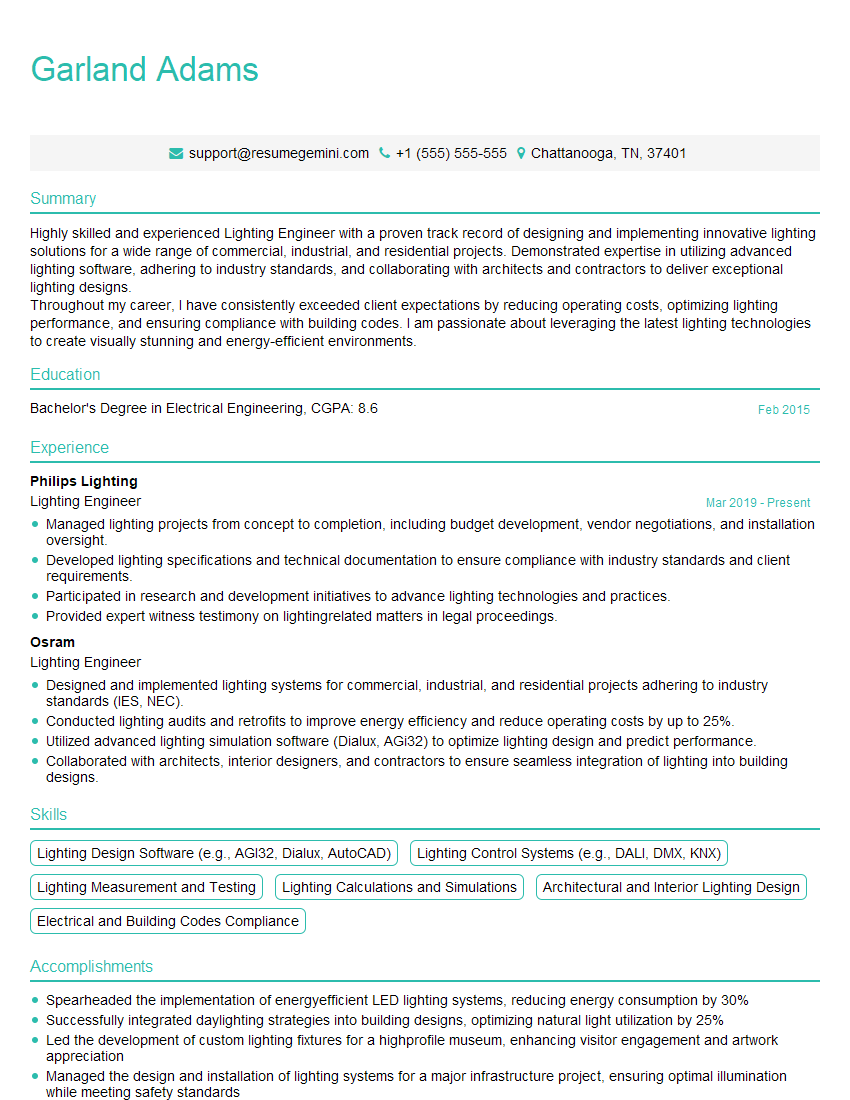
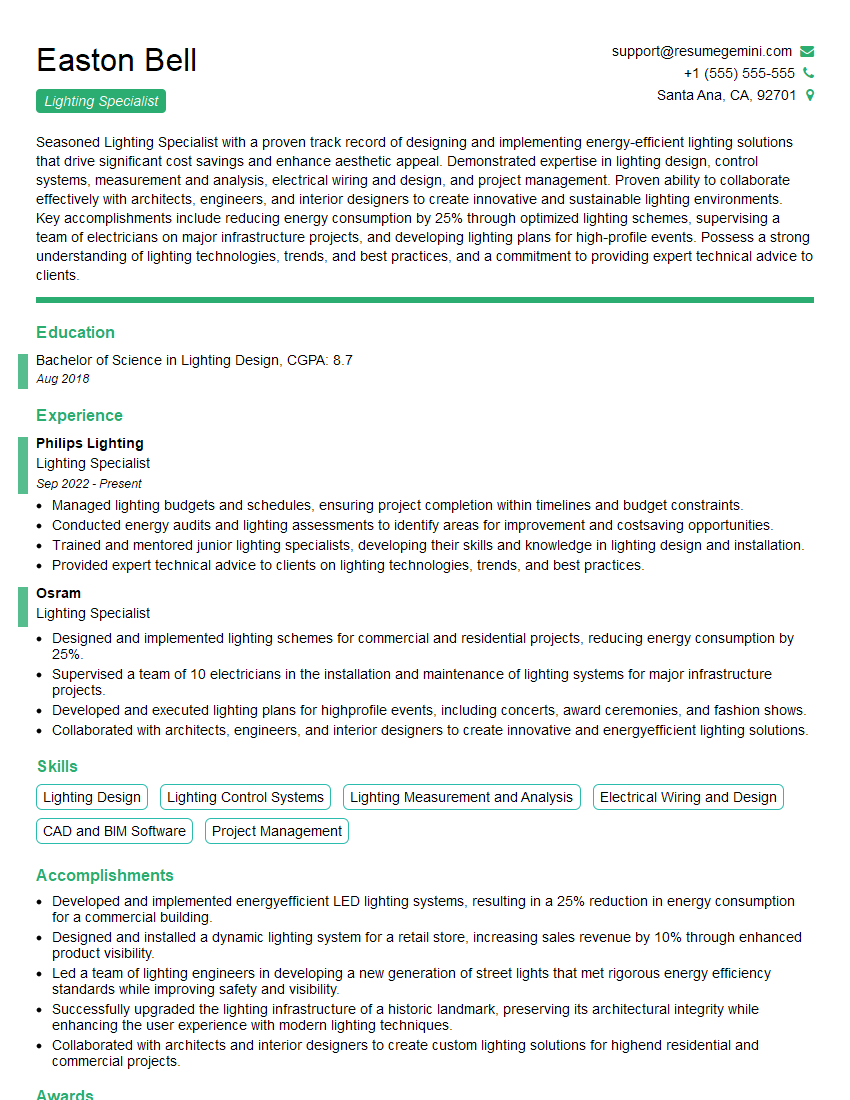
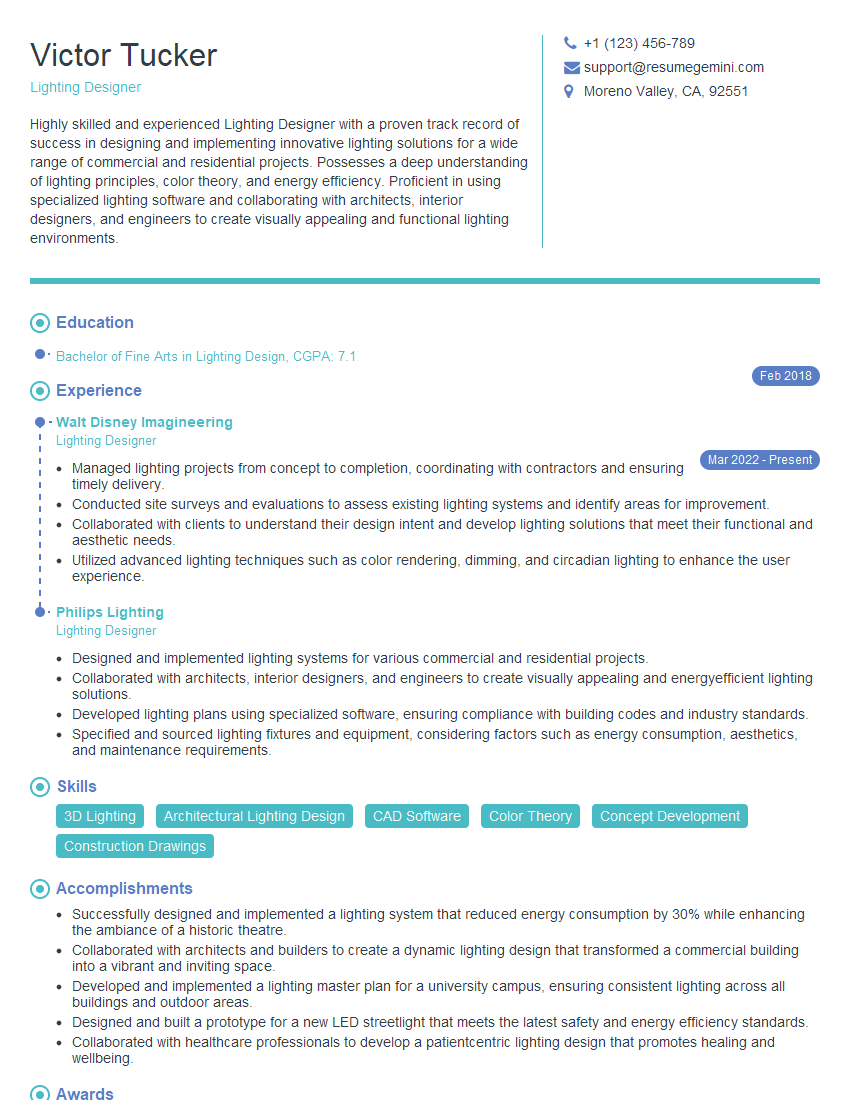
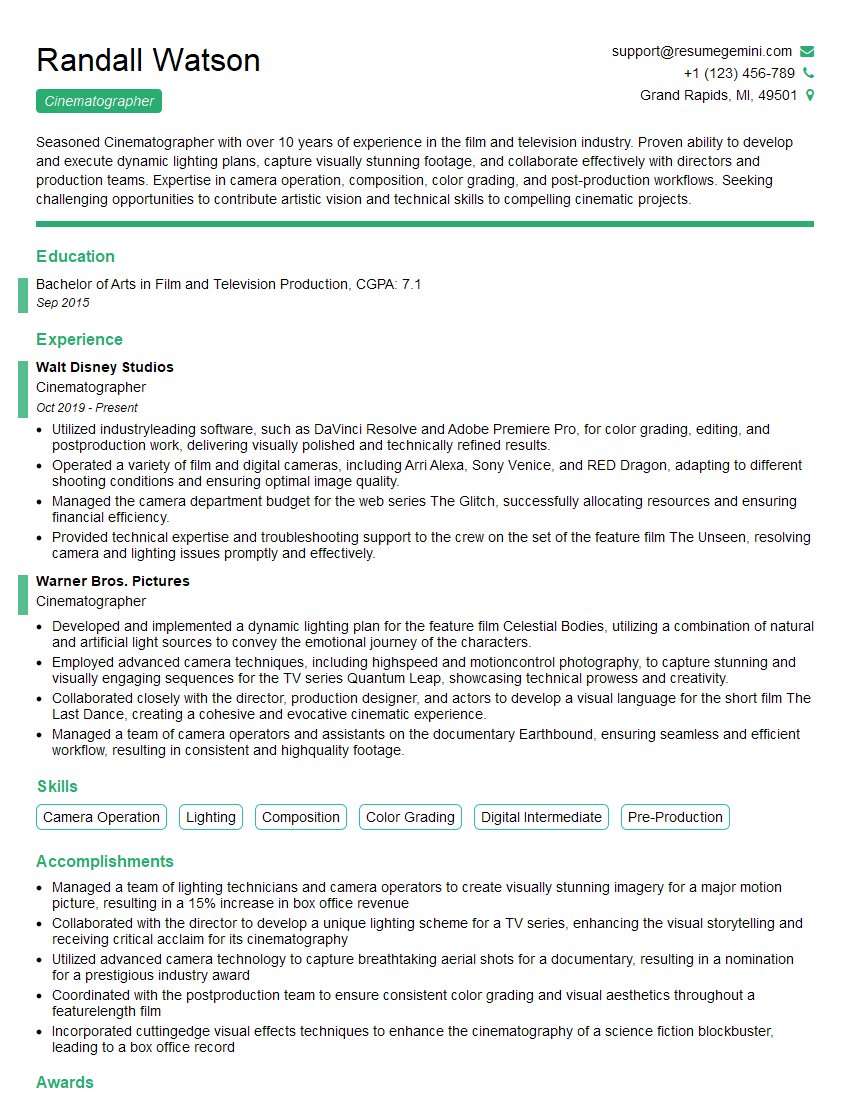
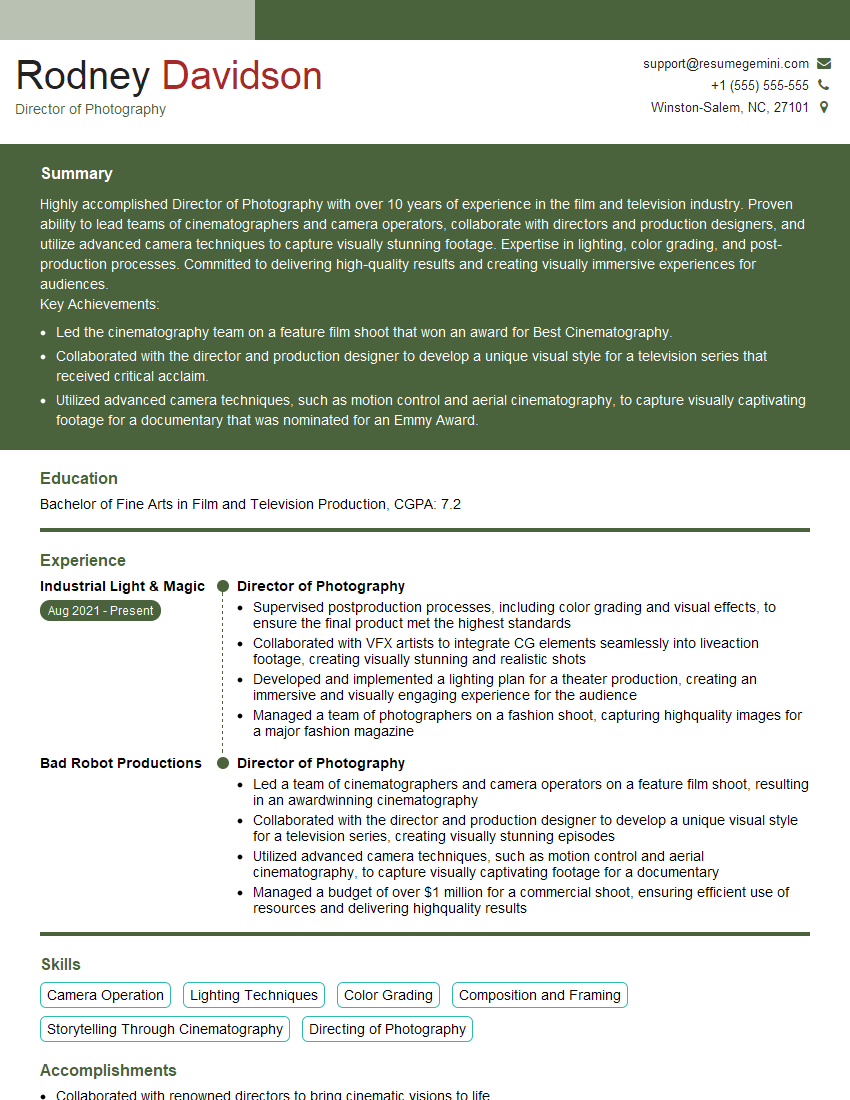
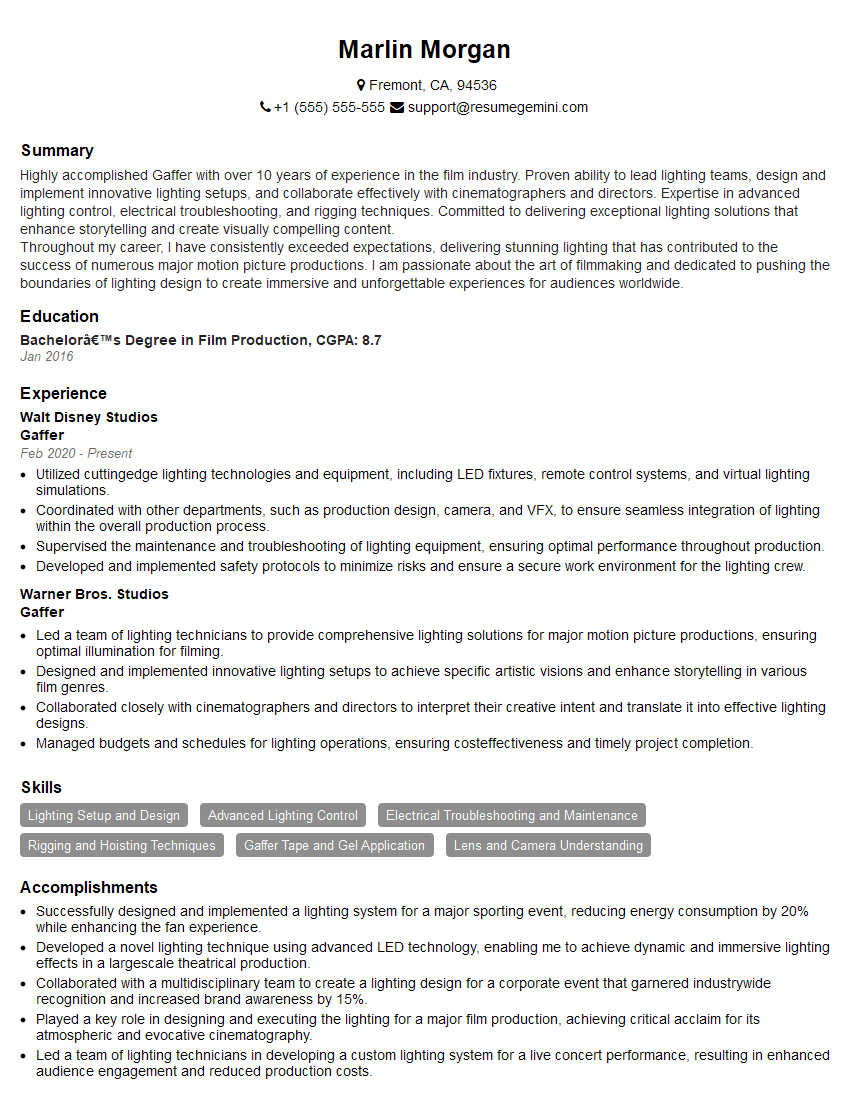
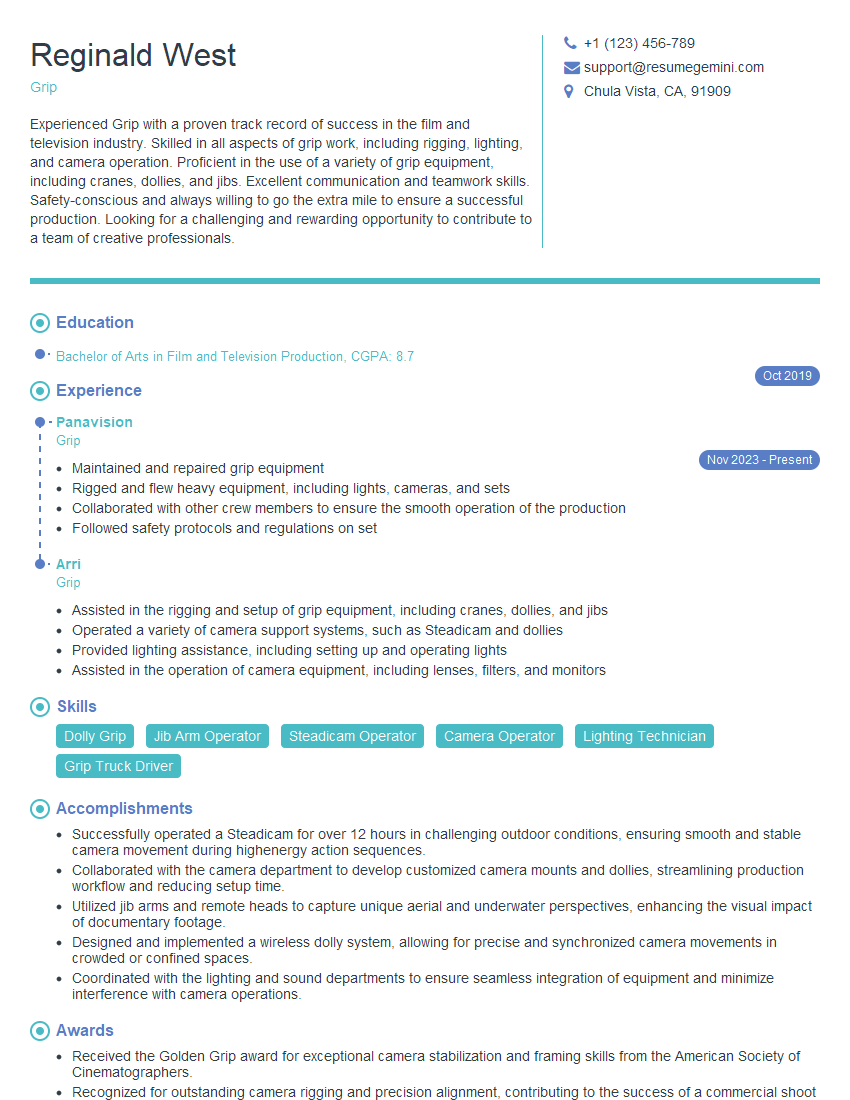
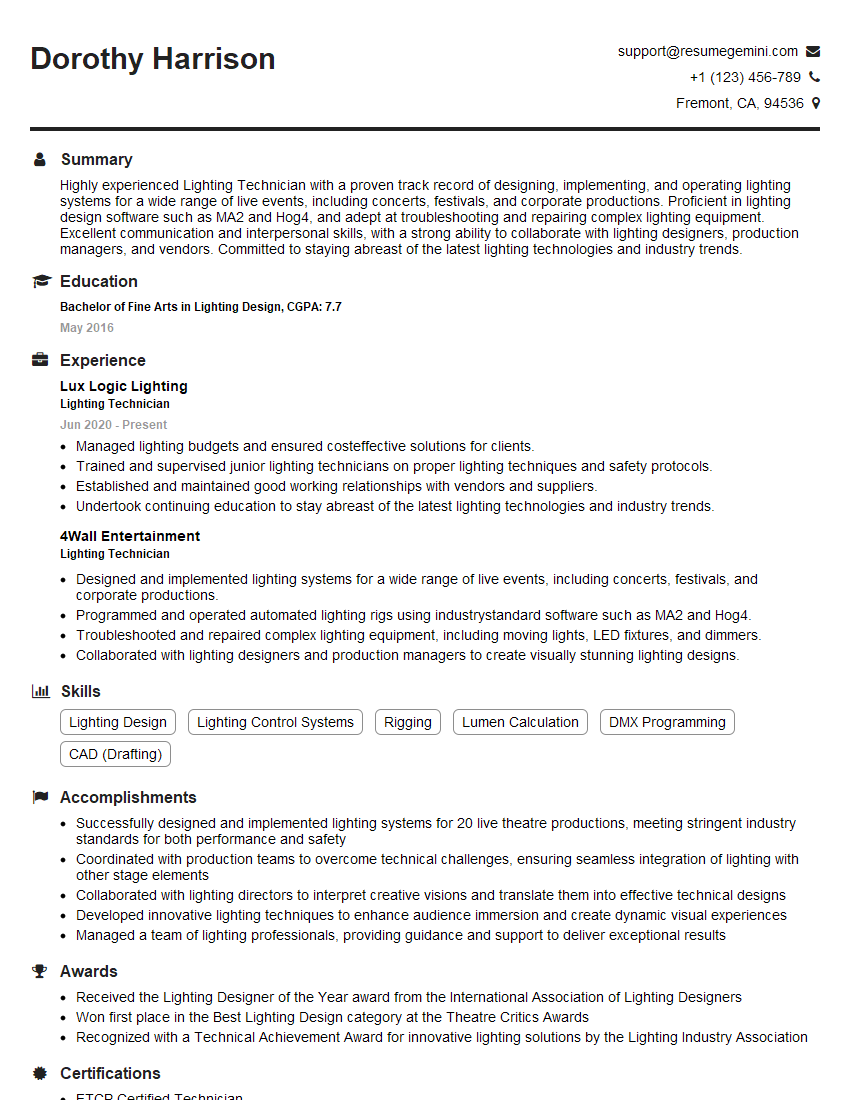
Mastering directional lighting is crucial for career advancement in many creative and technical fields. A strong understanding of lighting principles opens doors to exciting opportunities and allows you to contribute meaningfully to projects requiring sophisticated visual storytelling. To maximize your job prospects, creating an ATS-friendly resume is essential. This ensures your qualifications are clearly highlighted for recruiters and applicant tracking systems. We recommend using ResumeGemini to build a professional and impactful resume that showcases your expertise. ResumeGemini offers examples of resumes tailored specifically to Directional Lighting, helping you create a document that truly stands out.
Explore more articles
Users Rating of Our Blogs
Share Your Experience
We value your feedback! Please rate our content and share your thoughts (optional).
What Readers Say About Our Blog
To the interviewgemini.com Webmaster.
Very helpful and content specific questions to help prepare me for my interview!
Thank you
To the interviewgemini.com Webmaster.
This was kind of a unique content I found around the specialized skills. Very helpful questions and good detailed answers.
Very Helpful blog, thank you Interviewgemini team.