Interviews are opportunities to demonstrate your expertise, and this guide is here to help you shine. Explore the essential Instrumentation Technician Certification interview questions that employers frequently ask, paired with strategies for crafting responses that set you apart from the competition.
Questions Asked in Instrumentation Technician Certification Interview
Q 1. Explain the difference between analog and digital signals in instrumentation.
Analog and digital signals represent measured values differently. Think of it like this: an analog signal is like a smoothly changing dial on an old-fashioned radio, continuously representing the signal strength. A digital signal, on the other hand, is like a digital counter, representing the signal strength with discrete numbers.
Analog signals are continuous and vary smoothly over time. They directly reflect the physical quantity being measured, such as the voltage output of a thermocouple proportional to temperature. These signals can be susceptible to noise and interference, leading to inaccuracies.
Digital signals are discrete; they use binary code (0s and 1s) to represent the measured value. This makes them less prone to noise and allows for easier processing and transmission. A digital pressure transmitter, for instance, might convert a continuous pressure into a digital value for display and processing by a PLC. The conversion from analog to digital often involves an Analog-to-Digital Converter (ADC).
In instrumentation, the choice between analog and digital depends on the application’s requirements for accuracy, noise immunity, and processing capabilities. Higher precision applications often favour digital signals, while simpler systems might utilize analog signals due to their simpler implementation.
Q 2. Describe your experience with calibration techniques for various instruments.
My calibration experience spans a wide range of instruments, including pressure transmitters, temperature sensors (thermocouples, RTDs), and flow meters. Calibration ensures instruments provide accurate readings within specified tolerances. I’m proficient in using both manual and automated calibration techniques.
For instance, calibrating a pressure transmitter involves using a calibrated pressure source (e.g., a deadweight tester) to apply known pressures and comparing the transmitter’s output to the known values. Any deviation is documented and adjustments made as per the instrument’s specifications. For temperature sensors, I use calibration baths (dry-well or fluid baths) with certified temperature standards. I’m also familiar with various calibration software packages used for data logging and generating calibration certificates.
My approach always includes meticulous record-keeping, adhering to established procedures and safety protocols, and thorough documentation to ensure traceability and compliance with industry standards.
Q 3. How do you troubleshoot a malfunctioning pressure transmitter?
Troubleshooting a malfunctioning pressure transmitter requires a systematic approach. I begin by checking the obvious: power supply, wiring connections, and any obvious physical damage. Then, I move onto more in-depth checks.
- Verify Power Supply: Check voltage levels at the transmitter’s terminals.
- Inspect Wiring: Look for broken wires, loose connections, or short circuits.
- Check for Signal: Use a multimeter to measure the output signal from the transmitter. Compare this to the expected output based on the measured pressure. This confirms if the issue is the transmitter or a problem with signal transmission.
- Examine Calibration: If the signal is erratic, review the calibration history. Recent calibration might be the solution or reveal a problem that occurred after calibration.
- Check for Process Issues: Is there excessive vibration, extreme temperatures, or other process conditions that could damage the transmitter?
- Inspect the Sensor itself: Sometimes the diaphragm or other sensitive elements within the sensor itself might have been damaged or obstructed. A physical inspection is important, considering the pressure range and the process fluid.
By systematically eliminating possibilities, I can quickly pinpoint the cause of the malfunction. If the issue is beyond basic troubleshooting, I escalate it to relevant engineering personnel. Documentation of each step and findings are crucial for future reference and analysis.
Q 4. What are the common causes of thermocouple drift, and how do you address them?
Thermocouple drift, a gradual change in output voltage over time at a constant temperature, stems from several factors.
- Material Degradation: Oxidation or contamination of the thermocouple junction can affect its output. This is influenced by ambient conditions and the process fluids. For example, high temperature and corrosive gases or liquids can affect the junction.
- Mechanical Strain: Physical stress on the thermocouple wires, such as bending or vibration, can lead to drift.
- Temperature Cycling: Repeated exposure to extreme temperature cycles can cause a small amount of drift.
Addressing thermocouple drift involves preventative measures and corrective actions. Preventive measures include using high-quality thermocouples, proper installation to minimize stress and vibration, and selecting materials compatible with the process environment. If drift occurs, recalibration is necessary. In cases of severe drift, the thermocouple may need to be replaced. Regular inspections and preventive maintenance programs help mitigate drift and ensure accurate temperature measurements.
Q 5. Explain the principle of operation of a flow meter.
Flow meters measure the rate of fluid flow in a pipe or channel. Several types exist, each working on a different principle.
- Differential Pressure Flow Meters (e.g., orifice plate, Venturi meter): These meters create a pressure drop across a restriction in the flow path. The pressure drop is proportional to the square of the flow rate. The flow rate calculation involves using equations and flow coefficients specific to the flow meter design.
- Positive Displacement Flow Meters: These meters divide the flow into discrete units, counting the number of units to determine the total flow. Examples include nutating disc and rotary vane meters.
- Velocity Flow Meters (e.g., ultrasonic, vortex shedding): These meters measure the velocity of the fluid and use the pipe’s cross-sectional area to calculate the flow rate. Ultrasonic meters use sound waves to measure velocity, while vortex shedding meters use the frequency of vortices shed behind a bluff body.
- Mass Flow Meters: These meters measure the mass flow rate of the fluid, independent of temperature and pressure changes.
The choice of flow meter depends on factors like fluid properties (viscosity, density), flow range, accuracy requirements, and cost. For example, differential pressure flow meters are commonly used for large flow rates, while positive displacement meters are suitable for smaller, more precise measurements.
Q 6. Describe your experience with different types of control valves.
My experience encompasses various control valve types, each designed for specific applications.
- Globe Valves: These valves are versatile and widely used, offering good flow control and shut-off capabilities. They are suitable for a wide range of applications.
- Ball Valves: These valves provide quick on/off control but are less precise for throttling applications. Their simple design reduces maintenance needs and usually allows for full flow without much pressure loss.
- Butterfly Valves: These are suitable for large-diameter lines, offering good flow control but are generally not as precise as globe valves.
- Diaphragm Valves: They are used in applications with slurries or viscous fluids. The diaphragm separates the actuator from the fluid, preventing contamination.
Selecting the right control valve involves considering factors like flow rate, pressure drop, fluid characteristics, and control requirements. For example, a globe valve is often preferred for precise flow regulation, while a ball valve is suitable for simple on/off operation. Maintaining control valves involves regular inspection and lubrication to maintain efficiency and prevent leaks.
Q 7. What is your experience with Programmable Logic Controllers (PLCs)?
I have extensive experience with Programmable Logic Controllers (PLCs), including programming, troubleshooting, and maintenance. My experience includes using various PLC platforms (e.g., Allen-Bradley, Siemens) and programming languages (e.g., Ladder Logic, Structured Text).
I’ve worked on projects involving PLC integration with various instruments and field devices (sensors, actuators, control valves). This involved developing control logic to manage process parameters, automate operations, and implement safety interlocks. I am also proficient in using HMI (Human Machine Interface) software for programming the user interface to monitor and interact with the PLC.
Troubleshooting PLC programs often involves using diagnostic tools to identify faults in the logic, identifying faulty inputs or outputs, and reviewing historical data to pin-point the time of malfunction. My problem-solving skills allow me to effectively address issues and ensure efficient operation of the PLC-controlled systems.
Q 8. How do you interpret P&ID diagrams?
P&ID diagrams, or Piping and Instrumentation Diagrams, are the blueprints of a process plant. They show the flow of materials through the plant, the location of all equipment (including instruments), and how they are interconnected. Interpreting them involves understanding the symbols and conventions used. For example, a circle with a specific symbol inside might represent a pressure transmitter, a square might be a valve, and lines indicate piping and flow direction.
My interpretation process begins with identifying the main process flow. Then, I systematically trace each instrument, understanding its function within the larger process. I look for things like instrument tags (e.g., PT-101 for Pressure Transmitter 101), which are crucial for locating the instrument in the field. I also pay close attention to instrument loops – understanding how sensors, transmitters, controllers, and final control elements (valves, actuators) work together to maintain a process variable.
For instance, if I see a level transmitter connected to a control valve on a storage tank, I immediately understand it’s a level control loop. A low level signal from the transmitter triggers the valve to open, filling the tank; a high level signal triggers it to close. Analyzing these loops helps in troubleshooting and understanding the overall process functionality.
Q 9. Describe your experience with safety instrumented systems (SIS).
My experience with Safety Instrumented Systems (SIS) includes working on several projects involving emergency shutdown (ESD) and high-integrity pressure protection systems (HIPPS). I’m proficient in understanding SIS architecture, including safety instrumented functions (SIFs), logic solvers, and the associated hardware (e.g., pressure switches, temperature sensors). I’ve performed both preventive maintenance and troubleshooting on SIS equipment. This involves verifying the functionality of each component, conducting loop checks, and testing the logic solvers using simulated and real scenarios (where safety protocols are strictly followed).
A particular project involved troubleshooting a malfunction in the ESD system of a refinery. Through systematic analysis of the SIS logic solver’s diagnostic reports and field verification of sensors, I identified a faulty pressure transmitter as the root cause of a false alarm. Replacing the faulty transmitter ensured the safe and reliable operation of the system. This experience emphasized the critical importance of thorough testing and verification in SIS maintenance.
Q 10. Explain the concept of loop tuning and its importance.
Loop tuning is the process of adjusting the controller parameters (proportional gain (P), integral time (I), and derivative time (D) – known as PID control) to optimize the response of a control loop. The goal is to achieve a balance between speed of response, minimal overshoot, and good stability. An improperly tuned loop can lead to oscillations, sluggish response, or even instability, potentially causing safety hazards and production inefficiencies.
Imagine controlling the temperature of an oven. A poorly tuned loop might result in the temperature wildly fluctuating above and below the setpoint, leading to inconsistent product quality. Proper tuning, however, would result in a smooth, stable approach to the setpoint without excessive overshoot or undershoot. I use various tuning methods, including Ziegler-Nichols and trial-and-error, along with process knowledge, to determine the optimal settings. My experience includes using advanced control strategies when necessary to meet more demanding performance requirements.
Q 11. What are your troubleshooting skills for pneumatic instruments?
Troubleshooting pneumatic instruments involves a systematic approach. I start with a visual inspection, checking for leaks, damaged tubing, and obvious physical obstructions. Then, I use appropriate tools to measure pressure at various points within the pneumatic loop. This helps to isolate the problem – is it a pressure regulator issue, a faulty transmitter, or a leak in the air supply? I use gauges, flow meters, and specialized pneumatic test equipment depending on the instrument.
For example, if a pneumatic level transmitter fails to provide an accurate reading, I would first verify the air supply pressure and check for leaks in the tubing leading to the transmitter. I would then examine the transmitter itself, checking for diaphragm damage or any internal obstructions. If the issue is a faulty instrument, I follow the established maintenance procedures to safely replace or repair it.
Q 12. How do you handle emergency situations involving instrumentation failures?
Handling emergency situations involving instrumentation failures requires a calm and methodical approach. My first priority is to ensure safety. I immediately isolate the affected instrument or system to prevent further problems, then assess the impact of the failure on the overall process. This might involve activating emergency shutdown systems if necessary.
Once the immediate safety concerns are addressed, I work to identify the root cause of the failure. This involves analyzing alarms and diagnostic data, checking instrument readings, and if possible, testing the affected components. Communication is vital; I keep my supervisor and other relevant personnel informed of the situation and the actions being taken.
In a real-world scenario, a sudden pressure drop in a reactor could indicate a serious problem. I would immediately initiate the emergency shutdown protocol, then investigate the cause. A faulty pressure transmitter might be the culprit, but it could also indicate a leak or another more serious issue requiring immediate action.
Q 13. What safety procedures do you follow when working with high-voltage instrumentation?
Working with high-voltage instrumentation requires strict adherence to safety procedures. This begins with thorough training and certification. Before commencing any work, I always ensure the power is completely isolated and locked out/tagged out. I use appropriate personal protective equipment (PPE), including insulated gloves, safety glasses, and safety shoes. I perform thorough checks to verify that the power is indeed off before making any contact with the equipment.
Working with high-voltage equipment is never taken lightly. A single mistake can have severe consequences. I always follow the ‘lockout/tagout’ procedure religiously and double-check before proceeding. After completing the task, I follow established procedures for restoring power and ensuring the system is functioning correctly.
Q 14. Describe your experience with data acquisition systems.
My experience with data acquisition systems (DAS) involves the configuration, operation, and troubleshooting of various systems, both hardware and software. This includes working with different types of sensors, analog-to-digital converters (ADCs), and data logging software. I’m familiar with configuring data acquisition channels, setting sampling rates, and processing the acquired data. I also have experience with data analysis using dedicated software and exporting data into different formats.
One project involved implementing a DAS to monitor vibration levels on critical rotating machinery. This involved selecting the appropriate sensors, configuring the DAS hardware and software, and developing a system to continuously monitor and log the data. The data was then used for predictive maintenance, allowing for proactive intervention to prevent equipment failure.
Q 15. How do you maintain accurate documentation of instrumentation systems?
Maintaining accurate documentation for instrumentation systems is crucial for efficient troubleshooting, preventative maintenance, and regulatory compliance. It’s like keeping a meticulous medical record for a patient – without it, diagnosing problems and ensuring long-term health is incredibly difficult.
- Electronic Logbooks: I utilize computerized maintenance management systems (CMMS) to record all calibration data, maintenance activities (including dates, technicians involved, and parts used), and any modifications made to the instrumentation. This ensures easy access, searchability, and prevents data loss.
- Calibration Certificates: I meticulously maintain calibration certificates for all instruments, ensuring they are up-to-date and readily available for audits. These certificates are the proof of accuracy and reliability of the measurements.
- Loop Drawings and Schematics: I always reference and update loop drawings, which are detailed diagrams showing the connection of all components within a control loop. This aids in tracing signals and identifying potential fault locations.
- As-Built Drawings: These documents reflect the actual configuration of the system, which might differ from the initial design. Keeping these up-to-date is essential for accuracy.
- Standard Operating Procedures (SOPs): Detailed SOPs are created and followed for all routine tasks, calibration procedures, and troubleshooting steps. This ensures consistency and minimizes errors.
For example, during a recent calibration of a level transmitter, I documented the date, time, instrument serial number, calibration points, deviations from setpoints, corrective actions (if any), and finally, the updated calibration certificate number in the CMMS. This detailed record ensures traceability and facilitates future analysis.
Career Expert Tips:
- Ace those interviews! Prepare effectively by reviewing the Top 50 Most Common Interview Questions on ResumeGemini.
- Navigate your job search with confidence! Explore a wide range of Career Tips on ResumeGemini. Learn about common challenges and recommendations to overcome them.
- Craft the perfect resume! Master the Art of Resume Writing with ResumeGemini’s guide. Showcase your unique qualifications and achievements effectively.
- Don’t miss out on holiday savings! Build your dream resume with ResumeGemini’s ATS optimized templates.
Q 16. Explain your understanding of control loops and feedback mechanisms.
Control loops are the heart of automated process control. Imagine them as self-regulating feedback systems, constantly adjusting to maintain a desired process variable at a setpoint. Think of a thermostat controlling room temperature: the desired temperature is the setpoint. A sensor (like a thermometer) measures the actual temperature (process variable). If the actual temperature is too low, the control loop activates a heater (the final control element) to raise it. Once it reaches the setpoint, the heater shuts off. This constant monitoring and adjustment is the essence of a feedback mechanism.
A basic control loop consists of:
- Sensor: Measures the process variable (e.g., temperature, pressure, level).
- Transmitter: Converts the sensor’s signal into a standardized signal (e.g., 4-20 mA).
- Controller: Compares the measured value with the setpoint and calculates the necessary correction.
- Final Control Element: Actuates based on the controller’s output (e.g., valve, motor).
Feedback mechanisms are critical for ensuring stability and accuracy in the process. Different control strategies exist (PID, for example) to fine-tune the responsiveness of the loop and minimize oscillations.
For instance, in a water treatment plant, a level control loop maintains the water level in a tank using a level sensor, a transmitter, a PLC controller, and a control valve. The PLC continuously compares the measured level with the setpoint and adjusts the valve opening to maintain the desired level.
Q 17. Describe your experience with various types of sensors (temperature, pressure, level).
My experience encompasses a wide range of sensor technologies for temperature, pressure, and level measurement. Selecting the appropriate sensor depends heavily on factors such as application, accuracy requirements, process conditions, and cost.
- Temperature Sensors: I’ve worked extensively with thermocouples (various types like J, K, T), resistance temperature detectors (RTDs), and thermistors. Thermocouples are robust and suitable for high temperatures, while RTDs offer high accuracy and stability. Thermistors are best for precise temperature measurements within a limited range.
- Pressure Sensors: My experience includes working with various pressure transmitters – diaphragm seals, strain gauge, capacitive, and piezoelectric types. The choice depends on the pressure range, media compatibility, and accuracy requirements. I understand the importance of selecting appropriate diaphragm seal materials for corrosive or viscous media.
- Level Sensors: I’m proficient in using various level sensing technologies including ultrasonic, radar, differential pressure, capacitance, and float-type sensors. Ultrasonic sensors are ideal for non-contact measurements, while differential pressure transmitters are suitable for liquid level measurement in tanks.
In one project, we replaced an aging float-type level sensor in a chemical storage tank with an ultrasonic sensor. This improved the reliability and reduced maintenance costs, eliminating the mechanical issues associated with the float mechanism. The ultrasonic sensor also provided a safer and less intrusive solution, as it didn’t require direct contact with the chemical.
Q 18. What are your skills in using diagnostic tools for instrumentation?
Proficient use of diagnostic tools is paramount for efficient troubleshooting and resolving instrumentation issues. My skillset includes the use of various handheld instruments and software packages.
- Handheld Calibrators: I’m adept at using multi-function calibrators for checking and calibrating various field instruments like transmitters, temperature sensors, and pressure gauges. This involves generating test signals and comparing them to the instrument’s readings.
- Loop Testers: These help in tracing signals through the control loop, identifying breaks in the wiring, and checking signal strength. It’s like using a stethoscope for an electrical circuit.
- Data Acquisition Systems (DAS): I’m experienced in using DAS to monitor multiple process parameters simultaneously. This aids in identifying trends and correlations between different variables which assists in pinpointing root causes of problems.
- Process Control Software (e.g., HMI, SCADA): I’m skilled at using HMI (Human-Machine Interface) and SCADA (Supervisory Control and Data Acquisition) software to monitor process variables, review historical data, and perform diagnostic checks.
Recently, using a loop tester, I quickly isolated a faulty wire connection in a level transmitter circuit which was causing erratic readings. This prevented an unnecessary replacement of the entire transmitter.
Q 19. How do you ensure the accuracy and reliability of instrumentation readings?
Ensuring accurate and reliable instrumentation readings is achieved through a multi-faceted approach. It’s like ensuring the accuracy of a scale used in a bakery – a small error could result in significant losses over time.
- Regular Calibration: Scheduled calibration against traceable standards is crucial. The frequency depends on the instrument, its criticality, and the stability of its performance.
- Proper Installation and Maintenance: Correct installation according to manufacturer specifications, routine maintenance checks (cleaning, inspection), and prompt repairs ensure optimal performance.
- Environmental Considerations: Understanding the impact of environmental factors (temperature, vibration, humidity) on the instrumentation and taking necessary precautions (e.g., using temperature compensation) is crucial.
- Signal Integrity Checks: Ensuring the integrity of the signal path from the sensor to the controller is essential. This involves checking wiring, connections, and signal conditioning.
- Redundancy: In critical applications, using redundant sensors or instruments can ensure continuous operation even if one fails.
For instance, in a refinery, regular calibration of temperature transmitters in critical process units is essential to prevent safety hazards and ensure product quality. Failure to maintain accurate temperature readings can lead to process upsets or even explosions.
Q 20. Explain your experience with different types of communication protocols (e.g., Modbus, Profibus).
My experience includes working with various communication protocols used in industrial automation. Understanding these protocols is like understanding different languages in a global team – you need to be fluent to collaborate effectively.
- Modbus: A widely used serial communication protocol. I’m familiar with both RTU (Remote Terminal Unit) and ASCII modes, and understand its master-slave architecture.
- Profibus: A fieldbus protocol offering high speed and reliable communication in industrial environments. I understand its different profiles (DP, PA) and its use in complex automation systems.
- Ethernet/IP: I’m experienced with using Ethernet/IP, a common industrial Ethernet protocol, for high-speed communication and data exchange in distributed control systems.
- Foundation Fieldbus: This digital communication protocol allows for intelligent field devices and advanced diagnostics. I understand its capabilities and its application in complex process control.
In a recent project, I successfully integrated new instrumentation using Modbus RTU into an existing Profibus network, requiring careful configuration of communication settings and data mapping. This highlights the importance of understanding different protocols and their interoperability.
Q 21. How do you prioritize tasks when multiple instrumentation issues arise?
Prioritizing tasks when multiple instrumentation issues arise requires a systematic approach. I typically use a risk-based prioritization method to ensure critical issues are addressed promptly.
- Safety First: Issues that pose immediate safety risks (e.g., high-pressure leaks, hazardous gas leaks) are always the top priority. These require immediate action to prevent accidents.
- Production Impact: Issues affecting critical production processes or causing significant output loss are next in priority. Fixing these minimizes production downtime and potential financial losses.
- Regulatory Compliance: Issues that violate safety regulations or affect environmental compliance are prioritized to prevent legal repercussions.
- Severity and Urgency: I assess the severity of each issue (how significant the impact is) and the urgency (how quickly it needs to be addressed) to determine the priority.
I often use a matrix to visually organize tasks based on severity and urgency. This allows for a clear understanding of the order in which tasks need to be addressed. For example, a minor calibration issue on a non-critical instrument might be scheduled for later, while a major leak in a hazardous material line will be addressed immediately.
Q 22. Describe your experience working with different types of control systems (e.g., DCS, PLC).
My experience spans a wide range of control systems, primarily focusing on Distributed Control Systems (DCS) and Programmable Logic Controllers (PLCs). DCS, like those from Honeywell Experion or Emerson DeltaV, are typically used in large-scale, complex processes requiring high reliability and redundancy. I’m proficient in configuring, troubleshooting, and maintaining these systems, including loop tuning and alarm management. For example, I worked on a project optimizing a refinery’s crude distillation unit using a Honeywell DCS, resulting in a 5% increase in efficiency. PLCs, such as Allen-Bradley PLCs, are often found in smaller, discrete processes or individual machine control. My experience with PLCs includes programming using ladder logic, troubleshooting hardware failures, and integrating them with other systems. I’ve successfully implemented a PLC-based solution to automate a bottling line, significantly improving production speed and consistency.
Q 23. What software are you proficient in for instrumentation work?
My software proficiency includes a variety of instrumentation-specific packages. I’m highly skilled in using various HMI (Human Machine Interface) software packages, such as Wonderware Intouch and Rockwell FactoryTalk, for designing and configuring operator interfaces. I’m also proficient in engineering software packages like Emerson AMS Suite for configuring and maintaining field devices, and configuration software specific to particular PLC and DCS platforms. Furthermore, I’m comfortable using data acquisition and analysis software for data logging, trend analysis, and troubleshooting. This includes programs that allow me to interpret data from various sensors and actuators, and use it to make informed decisions regarding process optimization and maintenance.
Q 24. Explain your understanding of instrument specifications and datasheets.
Understanding instrument specifications and datasheets is crucial for proper selection, installation, and maintenance. Datasheets provide critical information like accuracy, range, response time, and environmental operating limits. For instance, a pressure transmitter datasheet will specify its accuracy (e.g., ±0.25%), indicating the permissible error in its measurement. The response time defines how quickly it reacts to changes. I carefully review these specifications to ensure the chosen instrument meets the process requirements. In one project, selecting a transmitter with a faster response time than initially specified was crucial for accurately controlling a fast-reacting process, preventing costly downtime.
Q 25. Describe your experience with preventive maintenance of instrumentation.
Preventive maintenance is vital for ensuring the reliability and longevity of instrumentation. My experience includes developing and implementing preventive maintenance schedules, performing calibrations, and conducting functional tests. This often involves using calibration equipment to verify the accuracy of instruments against known standards. For example, I regularly calibrate temperature sensors using traceable temperature baths and pressure transmitters using deadweight testers. I also perform visual inspections for signs of wear and tear, corrosion, or damage. A proactive approach to preventive maintenance helps to identify potential issues before they become major problems, preventing unplanned downtime and costly repairs.
Q 26. How do you ensure compliance with relevant safety standards and regulations?
Compliance with safety standards and regulations is paramount. I’m familiar with various standards, such as ISA (International Society of Automation) standards, and OSHA (Occupational Safety and Health Administration) regulations relevant to instrumentation and process safety. I meticulously follow lockout/tagout procedures before working on live equipment, always prioritizing safety. I understand the importance of intrinsically safe instrumentation in hazardous areas and ensure proper grounding and bonding techniques are used. Furthermore, I participate in safety meetings and contribute to incident investigations, using lessons learned to improve safety practices and prevent future occurrences.
Q 27. Describe a time you had to solve a complex instrumentation problem. What was your approach?
In one instance, a critical process control loop became unstable, causing significant production fluctuations. My approach involved a systematic troubleshooting methodology. First, I reviewed the historical data and alarm logs to identify trends and patterns. Then, I checked the instrument calibration and performed a thorough inspection of the wiring and connections. The problem turned out to be a faulty sensor, masked by an improperly configured alarm threshold. By meticulously following the troubleshooting steps and analyzing the available data, I quickly pinpointed the root cause and implemented the necessary corrective actions. This prevented prolonged production downtime and highlighted the importance of systematic troubleshooting and comprehensive data analysis.
Q 28. What are your career goals related to instrumentation technology?
My career goals involve expanding my expertise in advanced process control techniques, such as model predictive control (MPC) and advanced process control (APC). I also aspire to lead instrumentation and control teams, mentoring junior technicians and fostering a culture of continuous improvement in safety and efficiency. Ultimately, I aim to become a respected leader in the field, contributing to innovative solutions that optimize industrial processes and enhance operational performance.
Key Topics to Learn for Instrumentation Technician Certification Interview
- Measurement Principles: Understanding the underlying principles of various measurement techniques (e.g., pressure, temperature, flow, level) is crucial. This includes understanding accuracy, precision, and calibration methods.
- Instrument Calibration and Maintenance: Demonstrate your practical experience in calibrating, maintaining, and troubleshooting different types of instruments. Be prepared to discuss specific calibration procedures and troubleshooting techniques for common instrumentation problems.
- Process Control Systems: A strong understanding of control loops, feedback mechanisms, and different control strategies (e.g., PID control) is essential. Be ready to discuss practical examples of how you’ve worked with these systems.
- Instrumentation Diagrams and Schematics: Interpreting P&IDs (Piping and Instrumentation Diagrams) and other instrumentation schematics is a core skill. Practice reading and interpreting these diagrams to understand system flow and instrument placement.
- Safety Procedures and Regulations: Demonstrate your understanding of relevant safety regulations and procedures within the instrumentation field. Highlight your experience in maintaining a safe working environment.
- Troubleshooting and Diagnostics: Be prepared to discuss your approach to troubleshooting instrumentation problems. Explain your systematic methods for identifying and resolving issues, including the use of diagnostic tools.
- Data Acquisition and Analysis: Show your proficiency in collecting, analyzing, and interpreting data from instrumentation systems. This includes understanding data logging, reporting, and the use of relevant software.
- Specific Instrumentation Technologies: Depending on your experience, be ready to discuss your expertise with specific instrumentation technologies (e.g., pressure transmitters, flow meters, temperature sensors, etc.).
Next Steps
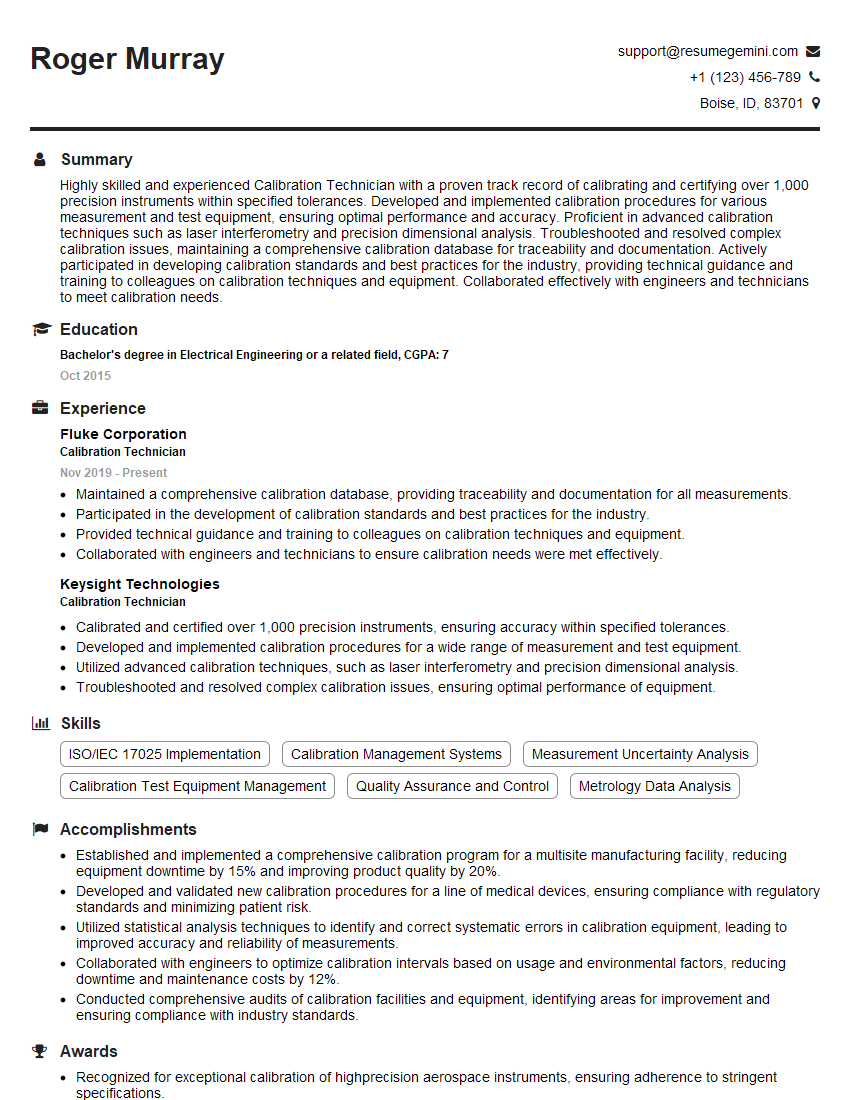
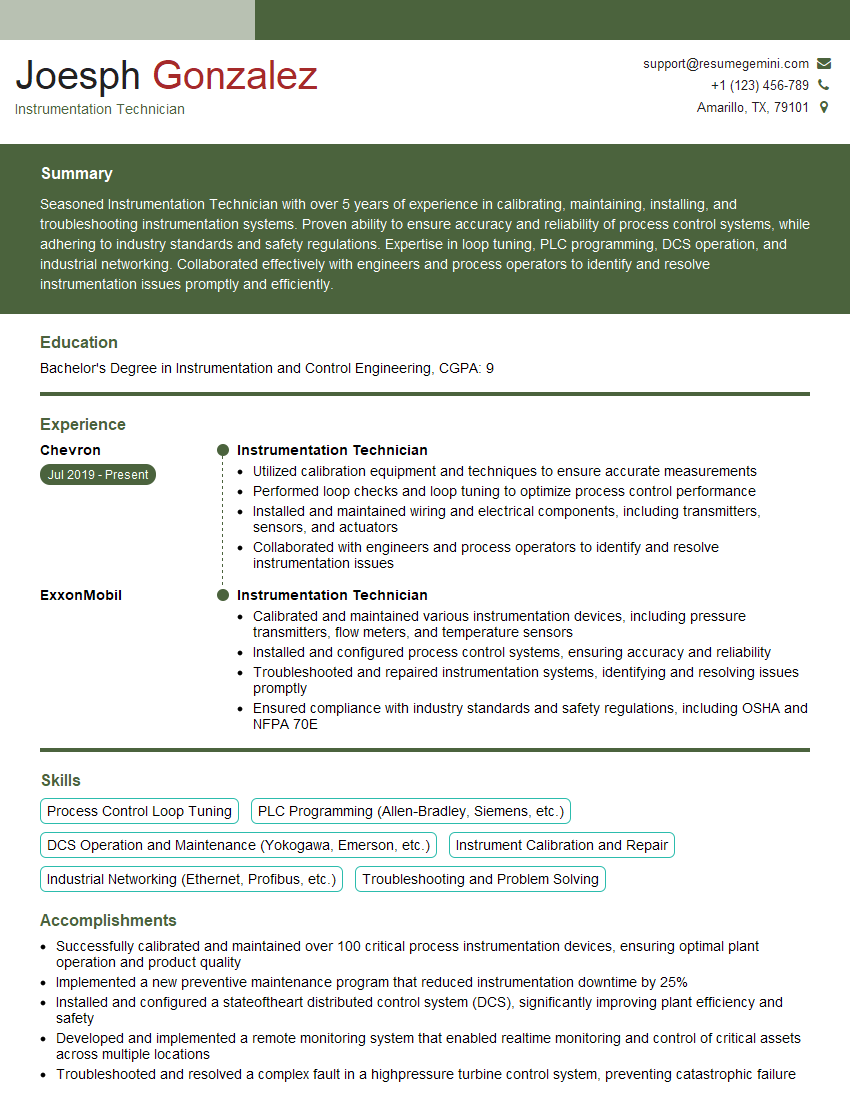
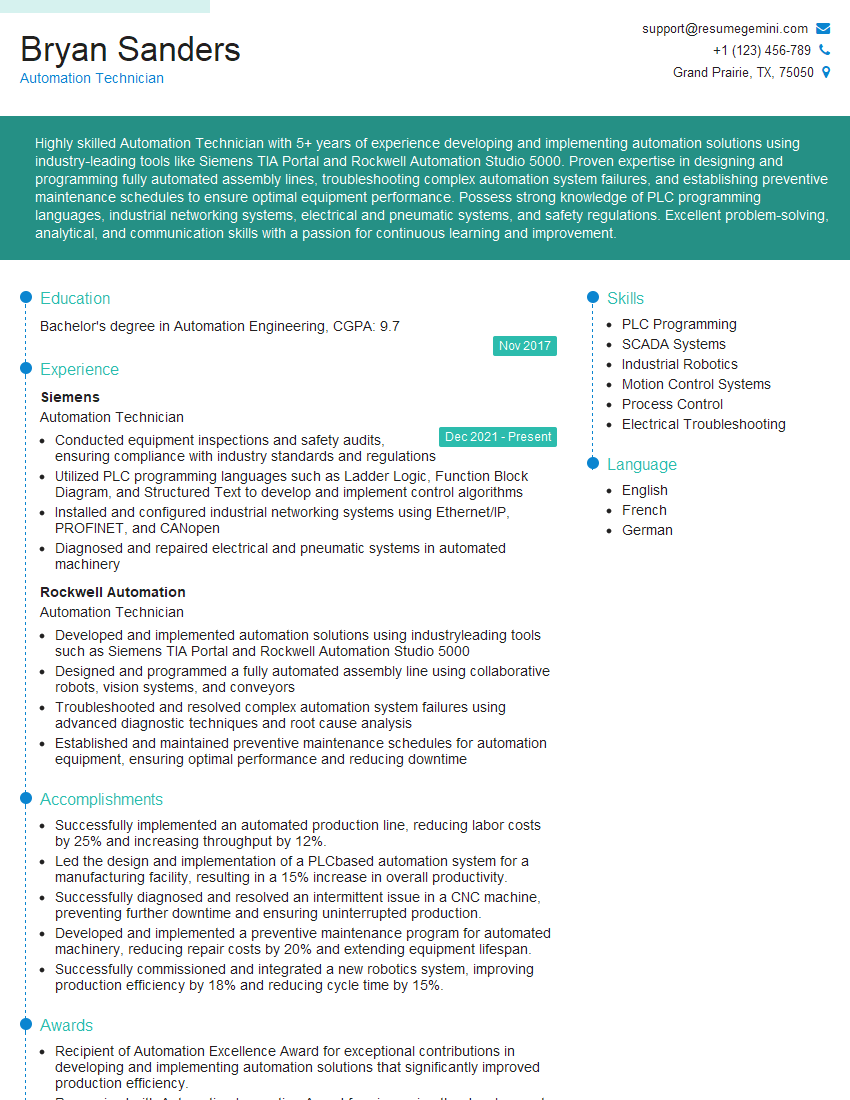
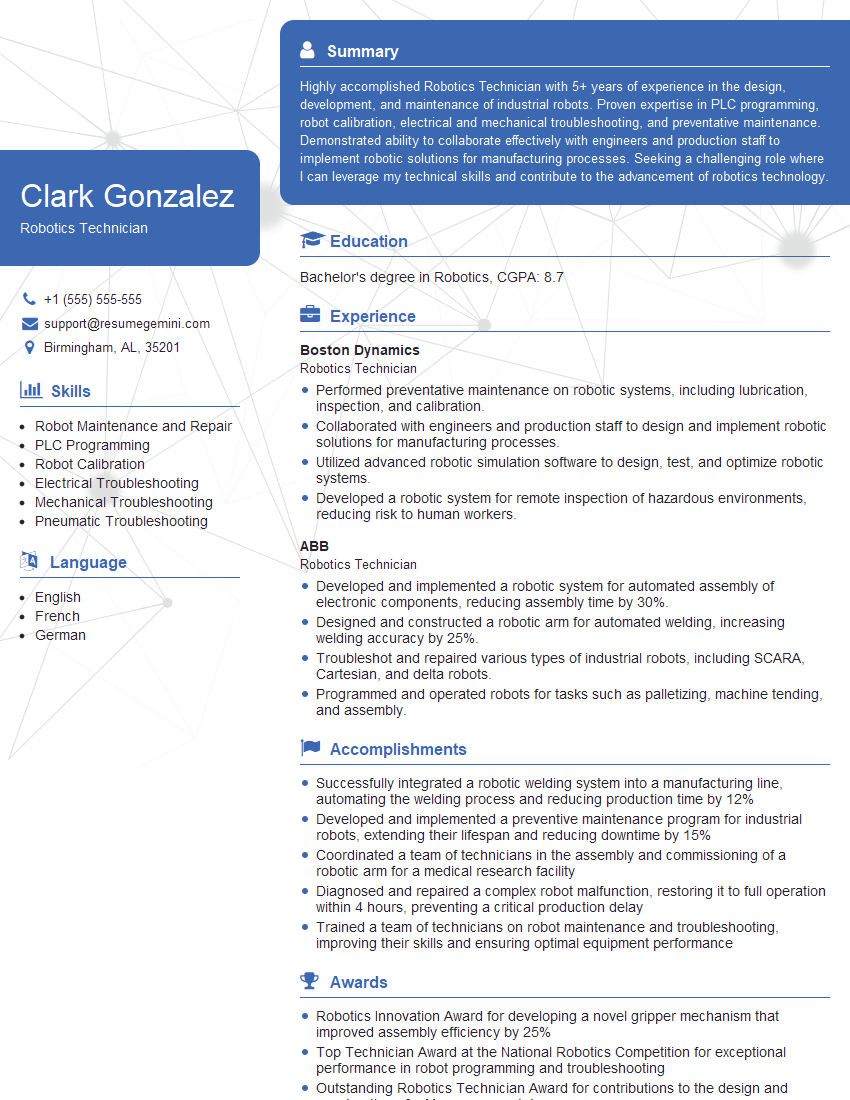
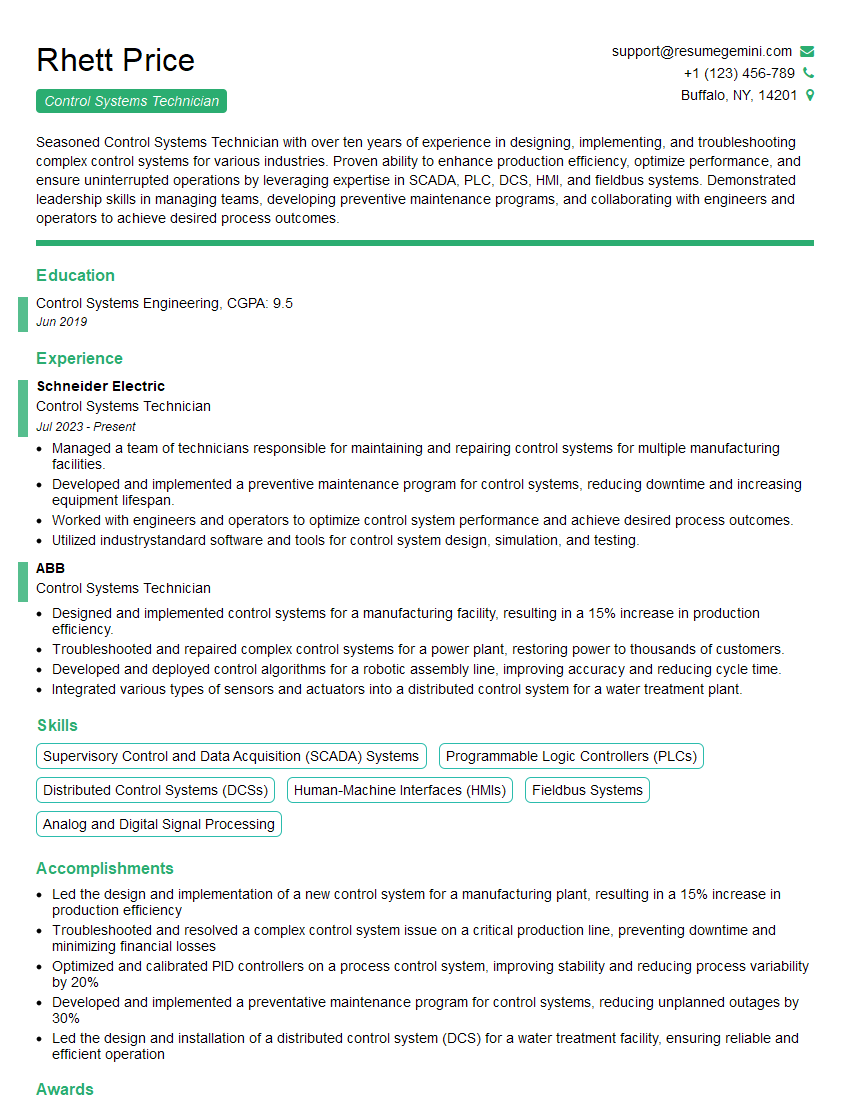
Mastering Instrumentation Technician Certification significantly enhances your career prospects, opening doors to higher-paying roles and greater responsibility within the process industries. To maximize your chances of landing your dream job, creating a strong, ATS-friendly resume is vital. ResumeGemini is a trusted resource that can help you build a professional and impactful resume tailored to the specific requirements of Instrumentation Technician roles. Examples of resumes tailored to Instrumentation Technician Certification are available to help guide your resume creation process.
Explore more articles
Users Rating of Our Blogs
Share Your Experience
We value your feedback! Please rate our content and share your thoughts (optional).
What Readers Say About Our Blog
To the interviewgemini.com Webmaster.
Very helpful and content specific questions to help prepare me for my interview!
Thank you
To the interviewgemini.com Webmaster.
This was kind of a unique content I found around the specialized skills. Very helpful questions and good detailed answers.
Very Helpful blog, thank you Interviewgemini team.