Every successful interview starts with knowing what to expect. In this blog, we’ll take you through the top Instream Habitat Enhancement interview questions, breaking them down with expert tips to help you deliver impactful answers. Step into your next interview fully prepared and ready to succeed.
Questions Asked in Instream Habitat Enhancement Interview
Q 1. Describe the process of conducting a stream habitat assessment.
A stream habitat assessment is a systematic process of evaluating the physical, chemical, and biological characteristics of a stream to determine its health and identify areas needing improvement. Think of it like a comprehensive health check-up for a river. It involves several key steps:
- Visual Assessment: A walk-through observation of the stream channel, banks, and riparian zone, noting features like channel morphology, bank stability, presence of woody debris, and overall water quality.
- Habitat Mapping: Creating detailed maps of the stream channel, showing different habitat types (e.g., riffles, pools, runs) and identifying areas of erosion or sedimentation. This often involves using GIS software and possibly drones for aerial imagery.
- Physical Measurements: Measuring parameters like water depth, velocity, substrate composition (gravel, sand, silt, etc.), and bankfull width. We use tools like wading rods, flow meters, and sediment samplers.
- Biological Sampling: Collecting samples of aquatic organisms (macroinvertebrates, fish) to assess the biodiversity and health of the stream ecosystem. The type of organisms present indicates the water quality and overall habitat condition.
- Water Quality Analysis: Testing water samples for parameters like dissolved oxygen, pH, temperature, and nutrient levels to gauge overall water quality and potential pollutants.
- Data Analysis and Interpretation: Synthesizing the collected data to create a comprehensive assessment report, which identifies habitat limitations, potential restoration needs, and prioritizes areas for action.
For example, during a recent assessment, we discovered a stretch of stream heavily impacted by erosion, leading to a loss of pool habitats critical for fish spawning. This was highlighted in the final report to guide restoration efforts.
Q 2. Explain the principles of geomorphic stream restoration.
Geomorphic stream restoration focuses on restoring the natural processes that shape a stream channel. It’s based on the understanding that streams are dynamic systems constantly evolving in response to natural forces. Instead of simply fixing immediate problems, this approach aims to restore the stream’s natural ability to self-regulate.
Key principles include:
- Understanding Natural Stream Processes: Identifying the natural channel patterns, sediment transport dynamics, and riparian vegetation of the stream. This involves studying historical data and comparing it to the current condition.
- Mimicking Natural Forms: Replicating natural channel features like riffles, pools, and meanders to enhance habitat diversity and improve ecological function. This might involve techniques like adding large woody debris or reshaping the stream channel.
- Restoring Sediment Dynamics: Addressing problems like excessive erosion or sedimentation by managing sediment supply and transport. This could involve stabilizing stream banks or removing accumulated sediment.
- Reconnecting the Floodplain: Where possible, restoring the connectivity between the stream channel and its floodplain to allow for natural flood processes, which are essential for habitat creation and nutrient cycling.
- Sustainable Design: Employing design solutions that are resilient to future disturbances and require minimal long-term maintenance. This involves considering climate change impacts and other potential stressors.
For instance, in one project, we restored a highly channelized stream by re-meandering the channel, creating pools and riffles, and planting native vegetation. This improved fish habitat and reduced erosion.
Q 3. What are the key indicators of healthy instream habitat?
A healthy instream habitat exhibits a variety of indicators, reflecting both physical and biological integrity. Think of it as a diverse and thriving community of plants and animals.
- Physical Habitat Diversity: Presence of a variety of flow types (riffles, pools, runs) and substrate types (gravel, cobble, bedrock), providing diverse microhabitats for different species.
- Stable Stream Banks: Banks that are well-vegetated and resistant to erosion, preventing sediment input to the stream.
- Abundant Large Woody Debris (LWD): Presence of fallen trees and branches within and along the stream channel, creating pools, cover, and complexity.
- High Water Quality: Sufficient dissolved oxygen, appropriate temperature, and low levels of pollutants.
- Healthy Riparian Zone: A well-developed and diverse riparian buffer strip, providing shade, organic matter, and bank stabilization.
- High Biodiversity: A diverse and abundant community of aquatic insects, fish, and other organisms reflecting a healthy ecosystem.
For example, a stream with stable banks, plenty of woody debris creating varied depths and velocities, and a thriving population of diverse macroinvertebrates indicates excellent habitat conditions.
Q 4. How do you determine the appropriate scale of an instream habitat restoration project?
Determining the appropriate scale of an instream habitat restoration project requires a careful assessment of several factors. It’s crucial to choose a scale that’s both effective and feasible.
- Problem Severity and Extent: The size of the degraded area and the severity of the habitat problems will dictate the scale. A small, localized problem might require a small-scale project, while widespread degradation might require a larger, more complex effort.
- Available Resources: The amount of funding, manpower, and materials available will significantly influence the project scale. Larger projects naturally require greater resources.
- Feasibility of Implementation: Consider practical constraints, such as land access, regulatory approvals, and potential impacts on adjacent land uses. Highly complex projects might be difficult or impossible to implement.
- Ecological Context: The broader ecological context and connectivity with upstream and downstream reaches should be considered. A project’s scale should be appropriate to the ecological scale of the problem and the stream reach.
- Monitoring and Evaluation Capabilities: The scale should allow for adequate monitoring and evaluation to assess the project’s effectiveness. Larger projects often require more sophisticated monitoring strategies.
For example, if a small segment of a stream is experiencing erosion, a small-scale bank stabilization project might suffice. However, if widespread degradation is affecting a significant portion of the river, a larger, multi-phased restoration effort would be necessary.
Q 5. Discuss different types of instream structures used for habitat enhancement.
Many instream structures are used to enhance habitat. These structures mimic natural features to create complexity and improve ecological function. Think of them as carefully placed habitat “improvements”.
- Large Woody Debris (LWD): Placement of logs, branches, and root wads to create pools, cover, and complexity. This is often the most cost-effective and ecologically beneficial technique.
- Rock Structures: Using rocks to create riffles, pools, and deflectors, enhancing flow diversity and creating resting places for fish. Design needs to ensure stability and appropriate size for the stream.
- Gabions: Wire cages filled with rocks, used to stabilize stream banks and create habitat features. These are durable and relatively easy to install.
- Jute Mats: Biodegradable mats used to stabilize stream banks and promote vegetation growth. These can be used in conjunction with other techniques.
- Cross-Vanes: Wooden or rock structures placed across the stream channel to reduce flow velocity and create deeper pools. Their placement is very important to avoid creating unwanted scouring.
The choice of structure depends on the specific habitat needs, the stream’s geomorphic setting, and the available resources. For instance, in a stream with eroding banks, gabions and jute mats might be used for bank stabilization, while LWD would provide additional habitat complexity.
Q 6. Explain the role of riparian vegetation in maintaining instream habitat.
Riparian vegetation, the plants growing along the stream banks, plays a crucial role in maintaining healthy instream habitat. It acts like a protective buffer and a source of essential resources.
- Bank Stabilization: Riparian plant roots bind the soil, reducing erosion and preventing sediment from entering the stream. This is crucial for maintaining water clarity and aquatic habitat stability.
- Shade Provision: Tree canopy reduces water temperature, which is particularly important for cold-water species like trout. Excessive sunlight can lead to increased water temperatures, harming aquatic life.
- Organic Matter Input: Leaves and other organic matter from riparian plants decompose, providing food for aquatic insects and other organisms, supporting the food web.
- Nutrient Cycling: Riparian vegetation plays a vital role in nutrient cycling, filtering pollutants and preventing excess nutrients from entering the stream, thus improving water quality.
- Habitat Complexity: Overhanging vegetation creates habitat complexity, providing cover and refuge for fish and other aquatic organisms.
For example, the loss of riparian vegetation can lead to increased stream temperatures, erosion, and a decline in aquatic biodiversity. Restoring riparian vegetation is often a critical component of successful stream restoration projects.
Q 7. What are the common challenges encountered during instream habitat restoration projects?
Instream habitat restoration projects often encounter several challenges. Careful planning and management are vital to mitigate these challenges.
- Funding Limitations: Securing sufficient funding can be a major hurdle, especially for large-scale projects. Creative funding strategies and stakeholder partnerships are often required.
- Permitting and Regulatory Issues: Navigating permitting processes and complying with environmental regulations can be time-consuming and complex. Engaging with regulatory agencies early in the planning process is crucial.
- Unpredictable Hydrological Conditions: Floods, droughts, and other hydrological events can impact the success of restoration efforts. Careful project design and consideration of climate change impacts are essential.
- Maintenance and Long-Term Management: Restoration projects often require ongoing maintenance to ensure long-term success. Developing a plan for long-term management is critical to sustainability.
- Community Engagement and Support: Lack of community involvement and support can hinder project success. Engaging local stakeholders and building consensus is essential.
- Monitoring and Evaluation Difficulties: Quantifying the effectiveness of restoration efforts can be challenging. Appropriate monitoring protocols and long-term data collection are necessary to assess the success of the project.
For instance, in one project, unexpected flooding washed away some of the newly installed rock structures, highlighting the importance of considering extreme hydrological events in the design phase.
Q 8. How do you mitigate the risks associated with instream habitat restoration?
Mitigating risks in instream habitat restoration is crucial for project success and long-term ecological benefits. It involves a multi-faceted approach that begins even before the project starts.
- Thorough Site Assessment: A detailed assessment identifies potential challenges like unstable banks, poor water quality, or invasive species. This allows us to tailor the restoration plan to minimize risks. For example, if the banks are prone to erosion, we might incorporate bioengineering techniques like live staking or the use of erosion control blankets.
- Adaptive Management: This iterative approach involves monitoring the project’s progress, evaluating its effectiveness, and making adjustments as needed. We might adjust planting densities or implement alternative methods if initial approaches aren’t working as expected. Think of it as constantly refining the recipe based on how the dish is turning out.
- Stakeholder Collaboration: Engaging landowners, local communities, and regulatory agencies from the outset ensures buy-in and helps identify potential conflicts or unforeseen issues early on. For example, coordinating with landowners helps prevent unintended impacts on their property or activities.
- Realistic Goals and Expectations: Setting achievable goals based on site-specific conditions and available resources is vital. We avoid overpromising and ensure the project aligns with the ecological capacity of the site.
- Post-Restoration Monitoring: This involves continued monitoring to detect any negative impacts or unintended consequences and allows for timely interventions. For instance, we might monitor water flow, sediment transport, and the survival rate of planted species.
By carefully considering these aspects, we can significantly reduce the risks associated with instream habitat restoration and increase the likelihood of achieving our conservation goals.
Q 9. Describe your experience with using GIS for instream habitat mapping and analysis.
GIS (Geographic Information Systems) is indispensable for instream habitat mapping and analysis. I have extensive experience using ArcGIS and QGIS to conduct detailed habitat assessments. My workflow typically involves:
- Data Acquisition: Gathering various data layers, including high-resolution aerial imagery, LiDAR data for elevation models, hydrological data (stream flow, water depth), and existing habitat maps.
- Habitat Mapping: Using image classification techniques and on-the-ground surveys to delineate different habitat types (e.g., riffles, pools, runs) and identify key features like woody debris and bank stability.
- Connectivity Analysis: Employing tools like network analysis to assess the longitudinal and lateral connectivity of the stream network. This helps identify bottlenecks and areas crucial for fish passage or sediment transport.
- Habitat Suitability Modeling: Combining various environmental factors to create habitat suitability maps for target species. This can involve using multi-criteria evaluation or species distribution models.
- Change Detection: Analyzing changes in habitat extent and quality over time using multi-temporal imagery. This is valuable for monitoring restoration projects and assessing their effectiveness.
For example, in one project, we used GIS to identify optimal locations for large woody debris placement to enhance pool habitat for salmonid populations. The visualization capabilities of GIS allowed us to clearly communicate our findings to stakeholders and justify restoration decisions.
Q 10. How do you monitor the effectiveness of instream habitat restoration projects?
Monitoring the effectiveness of instream habitat restoration projects is crucial to evaluate their success and inform future projects. We employ a variety of methods, depending on the specific restoration goals and site conditions.
- Physical Habitat Monitoring: This involves measuring key physical parameters like channel morphology (width, depth, slope), substrate composition, and the presence of large woody debris. We use techniques like cross-section surveys and underwater video to assess changes over time.
- Biological Monitoring: This focuses on assessing changes in the aquatic community, including fish populations, invertebrate communities, and algal assemblages. We use techniques such as electrofishing for fish surveys and benthic macroinvertebrate sampling to monitor biological responses to restoration.
- Water Quality Monitoring: We track changes in water quality parameters like dissolved oxygen, temperature, and nutrient levels, as these directly affect aquatic life. We use water quality sondes and laboratory analyses.
- Remote Sensing: Utilizing aerial photography, satellite imagery, and LiDAR to monitor changes in vegetation cover, channel morphology, and overall habitat condition over time.
- Statistical Analysis: Employing statistical methods to analyze the collected data and assess the significance of any changes observed. This helps determine the success of the restoration efforts.
For instance, in a riparian buffer restoration project, we monitored the growth of planted trees and shrubs, the establishment of native vegetation, and changes in streambank erosion rates to assess the effectiveness of the restoration.
Q 11. What are the key factors to consider when selecting appropriate native plant species for riparian buffers?
Selecting appropriate native plant species for riparian buffers is critical for successful instream habitat restoration. The selection process must consider several key factors:
- Site-Specific Conditions: Soil type, moisture levels, sunlight exposure, and elevation all influence plant species suitability. A species thriving in a dry, sandy environment won’t survive in a constantly saturated area.
- Hydrological Function: Choosing plants with deep root systems helps stabilize banks, reduce erosion, and improve water infiltration. Species with extensive root systems are crucial in areas with high erosion risk.
- Wildlife Value: Selecting plants that provide food and shelter for various wildlife species enhances biodiversity. For example, berry-producing shrubs attract birds and mammals.
- Water Quality Improvement: Some plants are particularly effective at filtering pollutants and improving water quality. These might be chosen in areas with impaired water quality.
- Climate Resilience: Selecting species with high tolerance to drought, floods, and extreme temperatures ensures long-term success, especially in the face of climate change.
- Availability and Cost: The availability of appropriate plant species from local nurseries and their cost will influence the feasibility of the project. Prioritizing locally sourced plants is crucial to maintaining genetic diversity and avoiding the introduction of invasive species.
By carefully evaluating these factors, we can create a resilient and diverse riparian buffer that provides multiple ecological benefits.
Q 12. Explain the concept of longitudinal connectivity in river systems.
Longitudinal connectivity refers to the unimpeded flow of water, sediment, and organisms along the length of a river system. It’s crucial for maintaining the ecological integrity of rivers.
Imagine a river as a continuous highway for aquatic life. Disruptions to this highway, such as dams or culverts that block fish passage, severely impact the river’s health. Maintaining longitudinal connectivity ensures:
- Fish Migration: Many fish species require access to different habitats throughout their life cycle (e.g., spawning grounds, feeding areas). Impeding their movement can lead to population decline.
- Sediment Transport: The natural movement of sediment is vital for maintaining river morphology and habitat diversity. Blockages can lead to sedimentation in some areas and erosion in others.
- Nutrient Cycling: Nutrients are transported along the river, and disruptions to flow can affect nutrient availability and ecosystem productivity.
- Genetic Diversity: Connectivity allows for gene flow between populations, maintaining genetic diversity and enhancing resilience to environmental changes.
Restoring longitudinal connectivity often involves removing barriers, improving fish passages, and restoring natural flow regimes.
Q 13. Discuss the importance of considering water quality parameters in instream habitat restoration.
Water quality is paramount in instream habitat restoration. Poor water quality can negate the benefits of even the most meticulously planned restoration projects. Key parameters to consider include:
- Dissolved Oxygen (DO): Low DO levels can suffocate aquatic life. Restoration efforts may involve strategies to improve aeration, such as adding instream structures or restoring riparian vegetation to shade the stream and reduce water temperature.
- Temperature: Elevated water temperatures can stress aquatic organisms. Riparian buffers provide shade, lowering water temperature. Careful consideration of placement and species selection is vital.
- Nutrients (Nitrogen and Phosphorus): Excess nutrients lead to eutrophication, resulting in algal blooms that deplete DO and harm aquatic life. Restoration efforts may involve reducing nutrient runoff from surrounding lands.
- pH: Extreme pH levels can be lethal to aquatic organisms. Identifying and addressing sources of pH alteration are crucial.
- Turbidity: High turbidity reduces light penetration, affecting aquatic plants and impacting visibility for fish. Controlling erosion and sediment input through bank stabilization is essential.
- Toxic Substances: The presence of heavy metals or pesticides can severely impact aquatic life. Identifying and addressing sources of pollution is paramount.
Before undertaking any instream habitat restoration, a thorough water quality assessment is needed. The restoration plan must address any water quality issues to ensure project success.
Q 14. How do you integrate stakeholder engagement in instream habitat restoration projects?
Stakeholder engagement is fundamental to successful instream habitat restoration. It ensures the project aligns with community needs and values, increases project support, and ultimately leads to better outcomes.
- Early and Continuous Engagement: Involving stakeholders from the initial planning stages is crucial. This includes landowners, local communities, anglers, environmental groups, and regulatory agencies.
- Transparent Communication: Openly sharing project information, including goals, methods, and potential impacts, builds trust and understanding.
- Collaborative Planning: Facilitating workshops and meetings to discuss project goals and incorporate stakeholder input into the project design.
- Conflict Resolution: Addressing potential conflicts proactively and finding solutions that meet diverse needs.
- Monitoring and Reporting: Regularly informing stakeholders about project progress and sharing monitoring results to demonstrate the project’s effectiveness and build confidence.
- Post-Project Evaluation: Involving stakeholders in evaluating the long-term impacts of the restoration project to learn lessons and adapt future efforts.
For example, engaging local anglers in a stream restoration project can provide valuable insights into fish habitat needs and ensure the restoration supports their recreational interests. This collaborative approach can lead to a more successful and sustainable project.
Q 15. What are the regulatory requirements for instream habitat restoration projects in your region?
Instream habitat restoration projects in my region (let’s assume a generic region with a mix of federal, state, and potentially local regulations) are subject to a complex web of rules and permits. This typically involves navigating environmental agencies at multiple levels. At the federal level, the Clean Water Act (CWA) is paramount, particularly Section 404, which governs the discharge of dredged or fill material into waters of the United States. This means any project altering streambeds requires a permit. State-level regulations often mirror or extend federal mandates, potentially adding specific requirements for water quality, endangered species protection, and stream morphology. Local ordinances may also play a role, focusing on issues like land use and water rights. For example, we might need permits from the Army Corps of Engineers, the Environmental Protection Agency, the state Department of Environmental Quality, and potentially county or city planning departments. The permitting process frequently involves detailed plans, environmental assessments (including biological surveys), and mitigation plans to offset any unavoidable environmental impacts. The complexity necessitates close collaboration with regulatory agencies throughout the project lifecycle.
Career Expert Tips:
- Ace those interviews! Prepare effectively by reviewing the Top 50 Most Common Interview Questions on ResumeGemini.
- Navigate your job search with confidence! Explore a wide range of Career Tips on ResumeGemini. Learn about common challenges and recommendations to overcome them.
- Craft the perfect resume! Master the Art of Resume Writing with ResumeGemini’s guide. Showcase your unique qualifications and achievements effectively.
- Don’t miss out on holiday savings! Build your dream resume with ResumeGemini’s ATS optimized templates.
Q 16. Explain the difference between natural channel design and conventional channel stabilization techniques.
Natural channel design (NCD) and conventional channel stabilization techniques represent fundamentally different approaches to managing streams. Conventional methods, often employed for flood control, tend to be structural and involve straightening channels, lining them with concrete, or creating rigid structures like levees. Think of it like trying to control a river by rigidly forcing it into a constrained space. This approach minimizes natural variability and often sacrifices habitat complexity for engineering efficiency. In contrast, NCD aims to mimic natural stream processes and morphology. It’s about working *with* the river’s natural tendencies rather than against them. This includes restoring meanders, creating pools and riffles, and using natural materials like large woody debris (LWD) to create a more diverse and resilient channel. Imagine nurturing the river’s natural path and character, allowing it to function more naturally, thus supporting a healthier ecosystem. NCD enhances habitat complexity, increases biodiversity, and often provides better long-term stability by promoting natural self-regulation. For instance, a conventional approach might involve channelization to reduce flooding, resulting in a straight, uniform channel devoid of habitat complexity. An NCD approach might involve widening the floodplain, creating meanders, and adding riparian vegetation, thus reducing flood risk while providing ample habitat.
Q 17. Describe your experience with various stream habitat assessment protocols (e.g., Rosgen, WHSR).
I’ve extensive experience using a variety of stream habitat assessment protocols, including the Rosgen classification system and the Watershed Health Scorecard (WHSR). Rosgen is a geomorphic approach, categorizing streams based on their morphology (shape and form) and providing insights into channel stability and potential restoration needs. It’s useful for identifying areas susceptible to erosion or degradation and guiding design choices during restoration projects. For instance, identifying a stream as a Rosgen type C (confined, typically incised) would lead to different restoration strategies compared to a type A (braided, typically wider). The WHSR, on the other hand, takes a more holistic approach, integrating biotic and abiotic factors to assess overall stream health. It provides a comprehensive picture of the ecological condition, helping us prioritize restoration efforts and track progress over time. I’ve used both methods in numerous projects, often employing WHSR in conjunction with Rosgen to get a more complete understanding of the stream’s condition and the effectiveness of restoration measures. In a recent project, for example, we used Rosgen to identify areas of bank erosion, and then used WHSR to assess the impact of the erosion on the overall ecological health, informing our design choices for bank stabilization and habitat enhancement.
Q 18. How do you address the impacts of urbanization on instream habitats?
Urbanization poses significant challenges to instream habitats. Increased impervious surfaces lead to higher runoff volumes and velocities, causing increased erosion and sedimentation, often resulting in channel incision. Stormwater runoff carries pollutants such as heavy metals, fertilizers, and pesticides, degrading water quality and harming aquatic life. Loss of riparian vegetation further exacerbates these impacts, reducing shading, eliminating habitat, and increasing water temperature. Addressing these impacts requires a multi-pronged approach. This might involve implementing low-impact development (LID) techniques in urban areas to reduce runoff volumes and improve water quality (e.g., rain gardens, bioswales, green roofs). Restoring or creating riparian buffers along streams can help filter pollutants, stabilize banks, and provide shade. In-stream structures, such as step-pools or cross-vanes, can help dissipate energy and reduce erosion. Finally, implementing nature-based solutions such as constructed wetlands can effectively treat stormwater before it reaches the stream. For example, a project I was involved in incorporated a series of bioswales and rain gardens upstream of a degraded urban stream, significantly reducing sediment and pollutant loads before the water entered the stream. This was followed by instream habitat restoration involving the addition of LWD, and the planting of riparian buffers, which contributed significantly to the restoration’s success.
Q 19. Discuss the role of erosion control in successful instream habitat restoration.
Erosion control is fundamental to successful instream habitat restoration. If erosion isn’t effectively addressed, restoration efforts will be undermined, and the restored habitat will likely degrade over time. Techniques like bioengineering (using live plants to stabilize banks), rock-riprap (placing rocks to protect banks), and other structural measures (such as gabions or engineered log jams) can prevent bank erosion. Properly designed and installed channel features such as step-pools and cross-vanes can also help dissipate energy and reduce erosion within the stream channel. The goal is to achieve a balance between stabilizing the channel and maintaining hydraulic diversity. For example, in one project, using a combination of willow stakes (bioengineering) and strategically placed rock riprap (structural measure) stabilized severely eroded banks, effectively preventing further degradation and providing the necessary substrate for riparian vegetation establishment. Neglecting this aspect could lead to the loss of newly created pools and riffles due to bank erosion, rendering the entire restoration effort futile. A thorough site assessment and appropriate design considering the unique hydrological characteristics of each stream are key to effective erosion control.
Q 20. Explain how climate change impacts instream habitats and how to consider this in restoration projects.
Climate change significantly impacts instream habitats. Changes in precipitation patterns (more intense rainfall events and prolonged droughts) affect streamflow regimes, causing increased flooding and more frequent low-flow conditions. Rising temperatures increase water temperatures, reducing dissolved oxygen levels and stressing aquatic organisms. Changes in snowmelt patterns also impact streamflow variability. Incorporating climate change considerations into restoration projects is crucial for long-term success. This involves assessing future climate projections for the specific region, modeling potential changes in streamflow and temperature, and selecting plant species and restoration techniques that are resilient to anticipated changes. For instance, we need to account for more intense flood events in our structural design and utilize plant species with higher drought tolerance. Climate change projections should be considered in modeling streamflow regimes which will impact how we design instream habitat enhancements. Employing species resilient to high temperatures and low flows should also be prioritised during restoration.
Q 21. What are the different types of instream flow regimes and their impacts on aquatic life?
Instream flow regimes describe the patterns of water flow in a stream over time, including its magnitude, frequency, duration, and timing. Different flow regimes support different aquatic life communities. For example, a regime with frequent high flows might favor species adapted to fast-flowing water, while a regime with prolonged low flows might favor species tolerant of low oxygen levels. There are various ways to categorize flow regimes; some commonly used methods consider the magnitude and frequency of flows, others use ecological indicators. Understanding the natural flow regime of a stream is essential for restoring and managing instream habitats. This involves analyzing historical flow data, modeling the impacts of altered flow regimes on aquatic organisms, and potentially implementing flow management strategies to mimic natural flow patterns. This might involve establishing minimum flows to ensure adequate habitat for aquatic life, creating artificial pools and riffles to add flow variability, or managing water releases from dams to mimic natural flow pulses. For instance, during a project involving a dam, we worked with the dam operator to adjust releases, better replicating the natural spring freshet, leading to enhanced spawning and rearing habitat for trout.
Q 22. How do you assess the potential impacts of a restoration project on downstream habitats?
Assessing the downstream impacts of a stream restoration project requires a holistic approach, considering the interconnectedness of aquatic ecosystems. We can’t just focus on the immediate project area; we need to understand how changes will propagate downstream.
My assessment typically involves:
- Hydrological Modeling: Using models to predict changes in flow regime, water temperature, and sediment transport downstream of the restoration site. This helps us anticipate potential impacts on downstream habitats, such as increased erosion or altered flow patterns.
- Habitat Suitability Analysis: We evaluate how changes in flow, sediment, and water quality will affect the suitability of the downstream habitat for key species. For example, will changes in sediment deposition create or destroy spawning grounds for salmon?
- Biological Monitoring: Pre- and post-restoration monitoring of key biological indicators (e.g., fish populations, macroinvertebrate communities) at several points downstream allows us to quantitatively assess the actual impacts of the project. We’d look for shifts in species composition, abundance, or health.
- Cumulative Effects Assessment: Considering the potential combined impacts of the restoration project with other existing or planned activities in the watershed. This ensures we avoid unintended consequences by accounting for all stressors on the system.
For example, in a project restoring a degraded riparian zone, increased shading from newly planted vegetation could lower water temperature downstream, potentially benefiting cold-water fish species. However, we’d also need to consider if reduced sunlight could negatively impact other organisms dependent on sunlight penetration.
Q 23. Discuss the use of bioengineering techniques in stream restoration.
Bioengineering techniques utilize living organisms to stabilize stream banks, improve habitat complexity, and enhance ecological functions. It’s a sustainable approach minimizing reliance on hard engineering solutions like concrete structures.
Common bioengineering techniques include:
- Live staking: Planting live willow, alder, or other fast-growing woody cuttings directly into the bank to stabilize it and provide erosion control. This creates a living, flexible structure that adapts to changing flow conditions.
- Brush layering: Placing interwoven branches and woody debris along the bank to trap sediment and promote vegetation growth. This helps build up the bank and create a more natural, irregular profile.
- Root waddles: Bundles of live or dead woody material secured along the bank to stabilize it and create habitats for aquatic insects. They mimic natural logjams and provide cover for fish.
- Erosion control blankets: Coir (coconut fiber) or jute mats are used to protect the soil from erosion while vegetation establishes. These mats biodegrade over time, leaving behind a healthy, vegetated bank.
I’ve used bioengineering extensively, for instance, in a project restoring a highly eroded stream bank. Using live staking and brush layering, we not only stabilized the bank but also increased the bank’s habitat complexity, benefiting fish and other aquatic organisms.
Q 24. Explain the principles of sediment management in instream habitat restoration.
Sediment management is critical in instream habitat restoration because excessive sediment can smother spawning gravels, bury aquatic invertebrates, and degrade water quality. The goal is to achieve a balance: enough sediment to support natural processes but not so much that it causes harm.
Principles of sediment management include:
- Reducing upland erosion: Addressing the root causes of excessive sediment entering the stream through best management practices in the watershed (e.g., restoring riparian buffers, improving agricultural practices). This is often the most effective long-term solution.
- Sediment trapping: Implementing structures like check dams, deflectors, or bioengineered features to trap sediment within the stream channel. These structures slow the flow, allowing sediment to settle out.
- Sediment removal: In severely impacted streams, carefully planned sediment removal may be necessary to restore degraded habitats. This must be done carefully to avoid causing further damage.
- Channel morphology restoration: Restoring natural channel geometry and processes can help manage sediment. A well-designed channel will naturally process sediment more effectively.
For example, in a project dealing with a stream highly impacted by agricultural runoff, we implemented a combination of riparian buffer restoration to reduce erosion and constructed small check dams to trap sediment before it reached critical habitats downstream. This multifaceted approach is usually the most effective.
Q 25. Describe your experience with project budgeting and cost estimation for stream restoration projects.
Project budgeting and cost estimation for stream restoration are crucial for successful project implementation. It’s not just about adding up material costs; it requires a thorough understanding of the project scope and potential unforeseen challenges.
My approach involves:
- Detailed design plans: Accurate quantities of materials, labor, and equipment are estimated based on comprehensive design plans. We use Geographic Information Systems (GIS) to map the project area and measure distances, slopes, and areas needing restoration.
- Contingency planning: A significant portion of the budget is allocated to unexpected expenses (e.g., adverse weather conditions, equipment malfunction, site-specific challenges). Experience shows that unforeseen issues inevitably arise.
- Labor cost analysis: We carefully consider labor rates, crew size, and project duration to estimate labor costs accurately. This includes specialized labor needed for techniques like bioengineering.
- Permitting and regulatory costs: Costs associated with obtaining necessary permits and complying with environmental regulations are included. This varies greatly depending on the jurisdiction and project complexity.
- Monitoring and evaluation costs: We budget for post-project monitoring to assess the project’s success and track long-term performance. This is essential for demonstrating effectiveness to stakeholders and justifying future investments.
For example, in a recent project, we developed a detailed spreadsheet that broke down costs by category (materials, labor, permits, etc.). This transparency ensured accountability and allowed stakeholders to understand the project’s financial framework. We used a contingency of 15% which proved crucial when unexpectedly high rainfall impacted the timeline.
Q 26. How do you communicate technical information about instream habitat restoration to non-technical audiences?
Communicating technical information about instream habitat restoration to non-technical audiences requires clear, concise language and relatable analogies. Avoiding jargon is essential, and focusing on the ‘why’ and the ‘so what’ is key.
My strategies include:
- Using visual aids: Photographs, maps, and diagrams effectively illustrate project concepts and outcomes. A picture is truly worth a thousand words when describing a degraded stream versus a restored one.
- Storytelling: Relating the project to the broader community benefits (e.g., improved water quality, enhanced recreation opportunities) increases engagement.
- Analogies and metaphors: Comparing complex concepts to everyday experiences makes them easier to understand. For instance, explaining sediment as ‘dirt clogging up a stream’ is more easily grasped than a detailed discussion of sediment transport.
- Interactive presentations: Engaging presentations with Q&A sessions allow for clarification and feedback. This fosters a two-way communication and builds trust.
For example, when presenting to a local community group, I used before-and-after photos to showcase the impact of the project on water clarity and fish habitat. I also explained how the project would improve local recreational fishing opportunities, making the project relevant and meaningful to them.
Q 27. Describe a time when you encountered a significant challenge during a stream restoration project and how you overcame it.
During a large-scale stream restoration project, we encountered unexpectedly high groundwater levels, causing significant challenges in implementing planned bank stabilization measures. The soil was far more saturated than our initial assessments predicted, making it difficult to work in the area and compromising the stability of our structures.
To overcome this, we:
- Re-evaluated the design: Our engineering team adapted the original design, incorporating techniques better suited to the saturated soil conditions. We opted for lighter structures and incorporated more drainage solutions to reduce water pressure.
- Engaged specialist consultants: We brought in geotechnical engineers to conduct a more thorough site assessment and provide advice on how to proceed safely and effectively.
- Adjusted the project timeline: We had to acknowledge the delays and revised the project schedule to accommodate the necessary modifications. This involved transparent communication with stakeholders.
- Implemented phased construction: Rather than attempting to work across the entire site at once, we adopted a phased approach, allowing us to tackle sections with less saturated conditions first and monitor their stability.
While the challenge caused delays and increased costs, the collaborative approach, adaptability, and transparent communication ensured that the project ultimately achieved its objectives while maintaining safety and quality.
Q 28. What are your career goals related to instream habitat enhancement?
My career goals center on advancing the field of instream habitat enhancement through innovative research, practical application, and collaborative partnerships. I aim to:
- Lead and mentor a team: I aspire to lead a team of passionate professionals focused on designing and implementing sustainable stream restoration projects.
- Develop novel restoration techniques: I’m committed to furthering the development of cost-effective and ecologically sound restoration techniques, particularly in response to climate change impacts.
- Promote sustainable watershed management: I want to contribute to a broader understanding of the interconnectedness of upland and aquatic ecosystems, promoting integrated watershed management practices.
- Expand knowledge sharing: I believe in fostering collaboration and knowledge-sharing within the scientific community and beyond to ensure the long-term sustainability of our aquatic resources.
Ultimately, I want to make a significant contribution to improving the health of our streams and rivers for present and future generations.
Key Topics to Learn for Instream Habitat Enhancement Interview
- River Morphology and Dynamics: Understanding natural river processes, including channel patterns, sediment transport, and flow regimes. This includes analyzing how these processes influence habitat.
- Habitat Assessment Techniques: Mastering various methods for evaluating existing instream habitat, such as habitat surveys, fish sampling, and physical habitat modeling. Be prepared to discuss the strengths and weaknesses of different approaches.
- Restoration Techniques and Principles: Gain a solid understanding of various habitat restoration methods, including channel modification, bank stabilization, and in-stream structures (e.g., deflectors, riffle structures). Understand the ecological principles behind these techniques.
- Project Planning and Implementation: Familiarize yourself with the stages involved in implementing instream habitat enhancement projects, from initial assessment and design to construction and monitoring. This includes understanding permitting processes and stakeholder engagement.
- Water Quality and its Influence on Habitat: Understand the relationship between water quality parameters (e.g., dissolved oxygen, temperature, nutrients) and aquatic life. Be ready to discuss how improvements in water quality can contribute to habitat enhancement.
- Monitoring and Evaluation: Learn about different monitoring methods used to assess the effectiveness of habitat restoration projects. This includes understanding data analysis techniques and reporting protocols.
- Sustainable Design and Long-Term Management: Discuss the importance of designing sustainable and resilient habitat solutions that consider long-term ecological and societal needs. Be prepared to talk about adaptive management strategies.
Next Steps
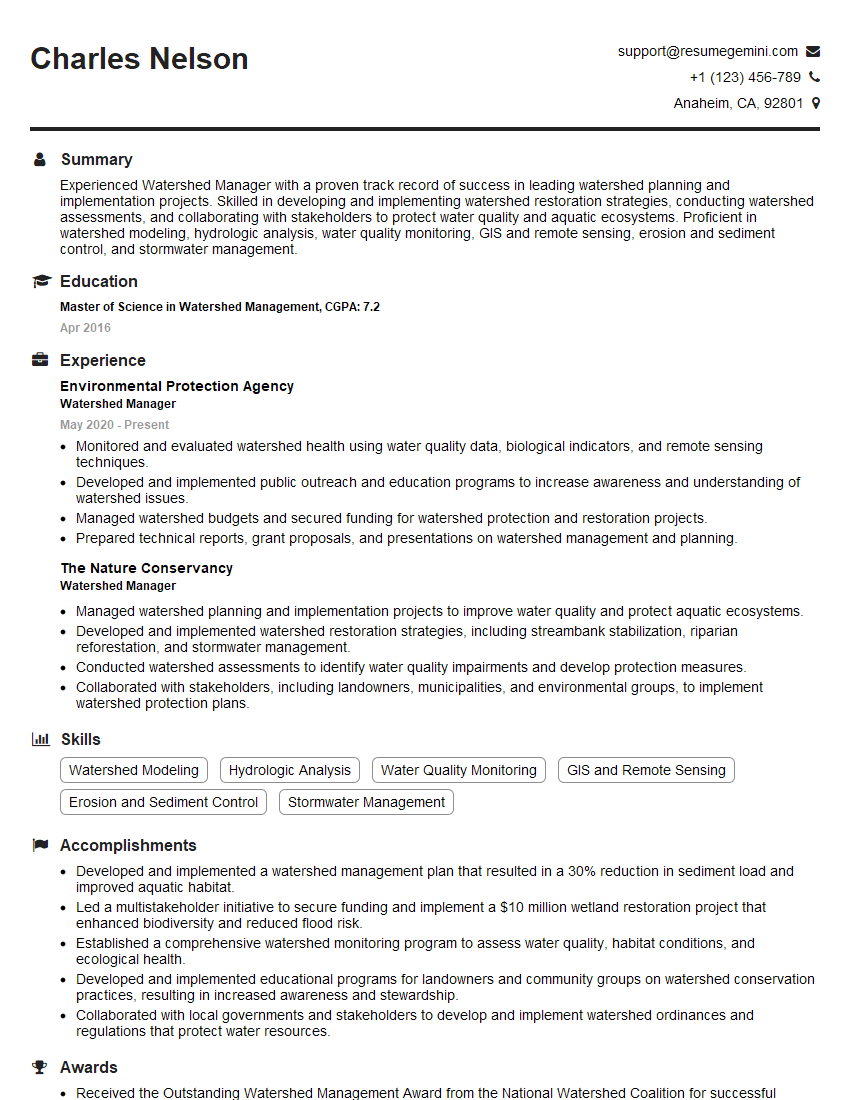
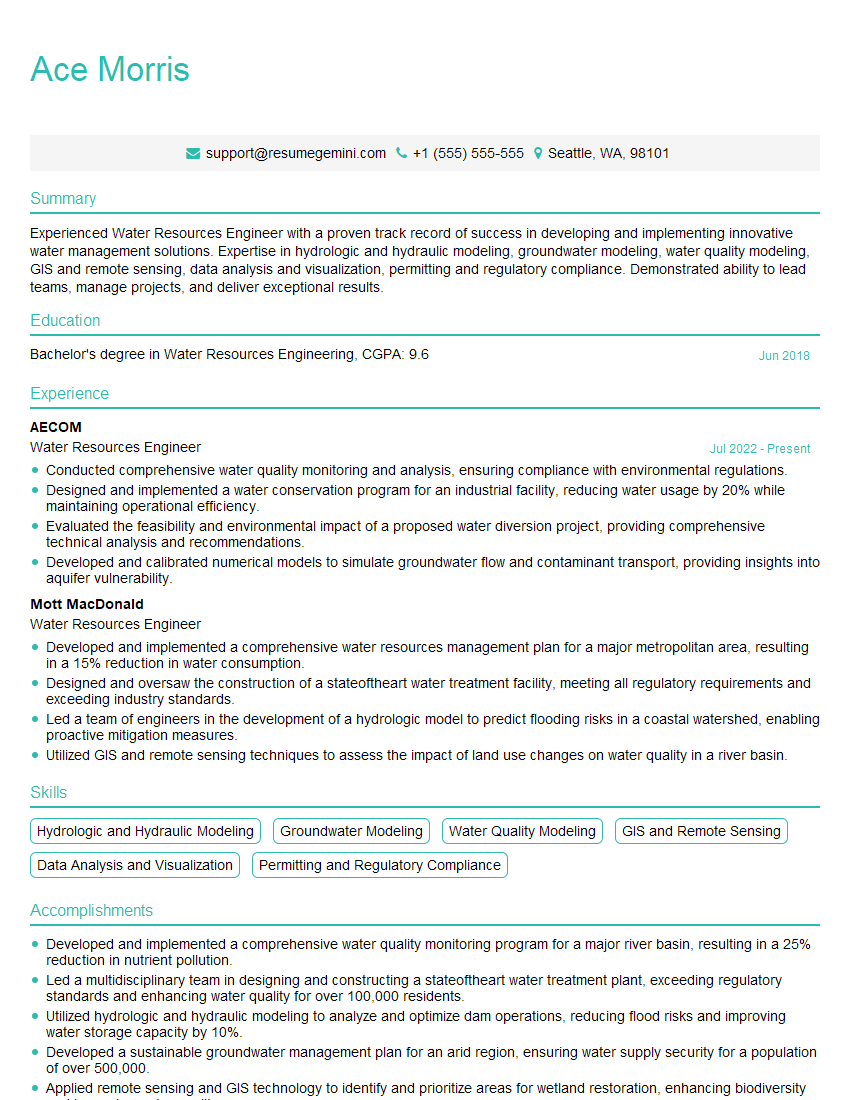
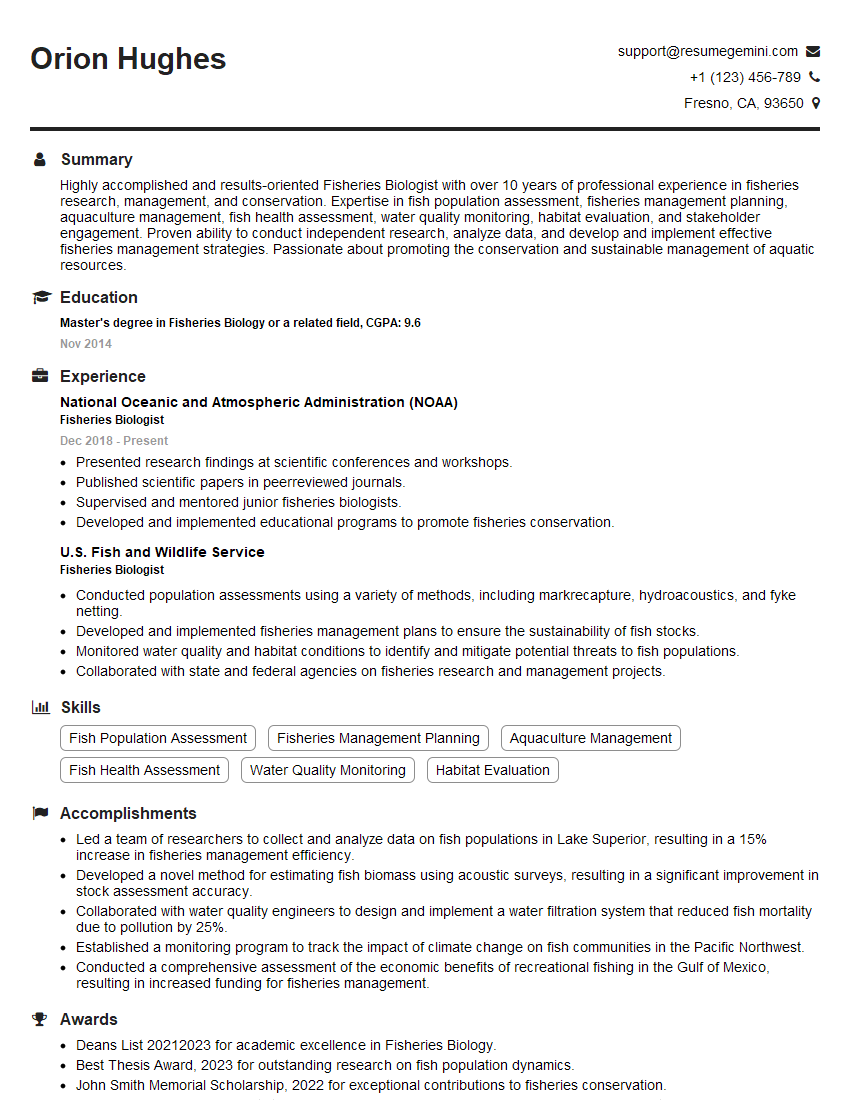
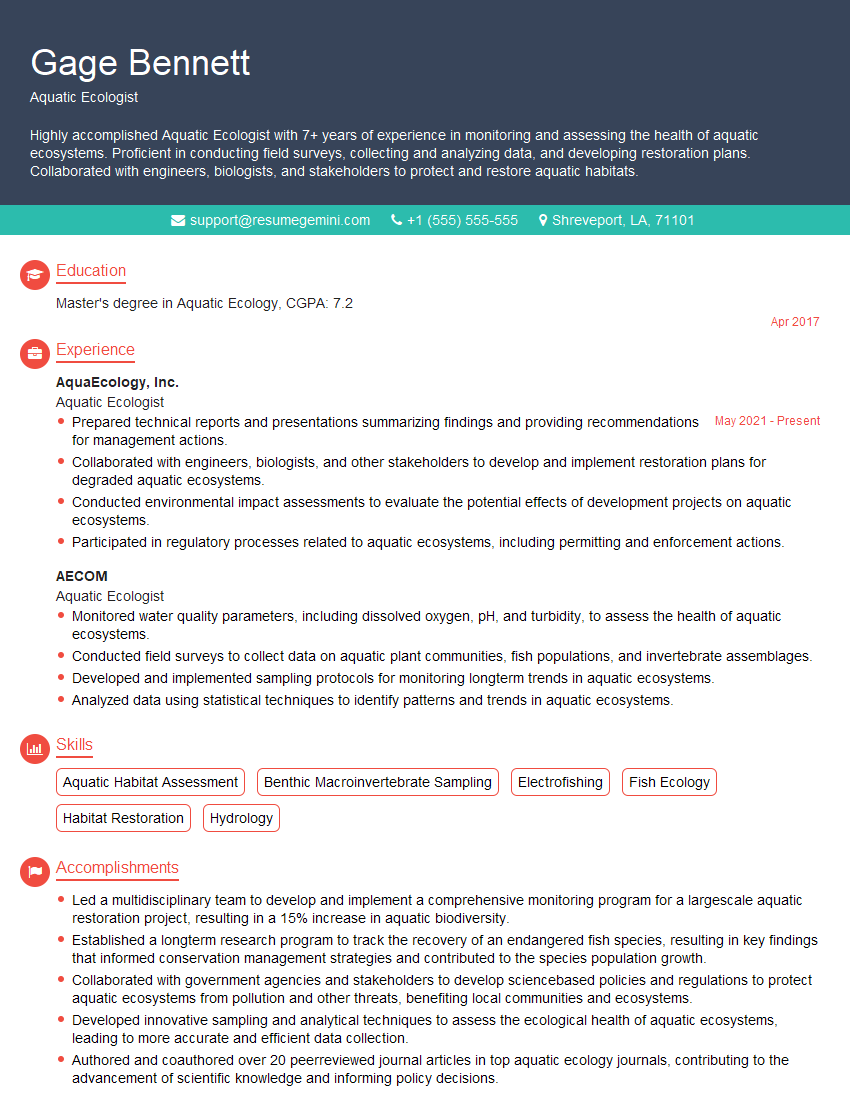
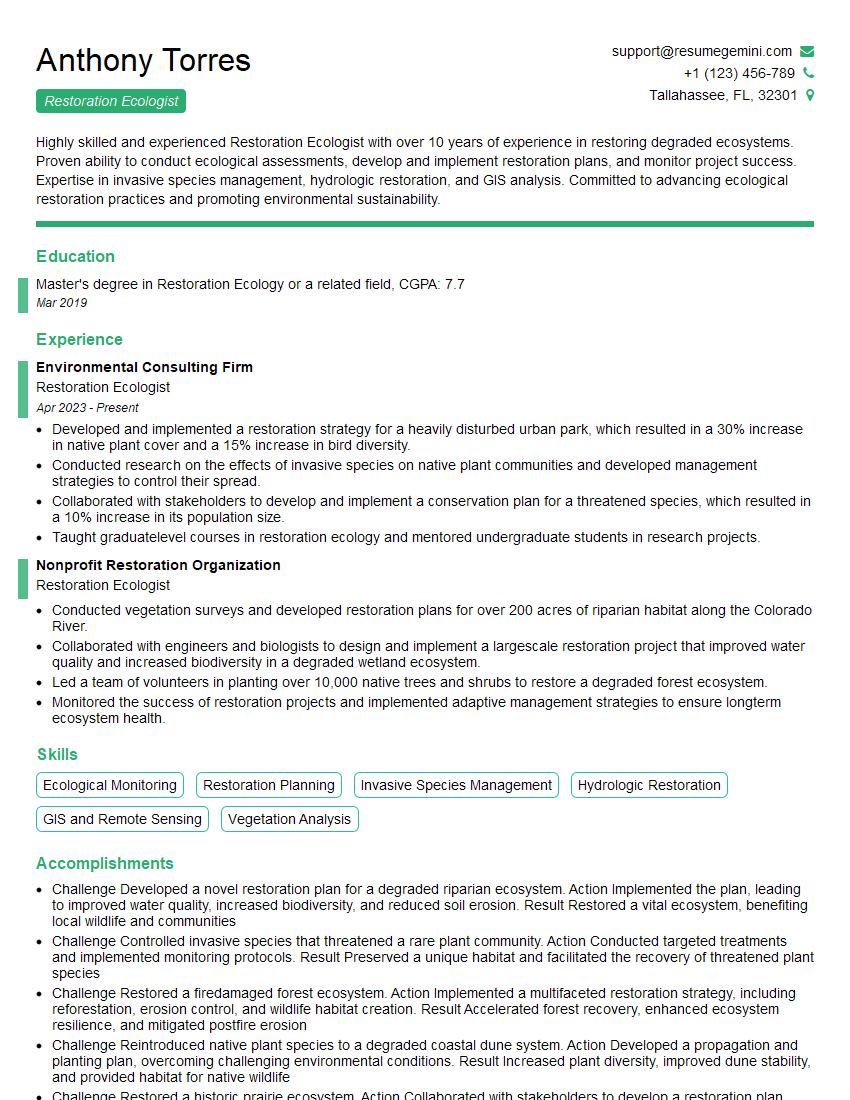
Mastering Instream Habitat Enhancement opens doors to a rewarding career contributing to environmental conservation and sustainable resource management. To maximize your job prospects, create an ATS-friendly resume that highlights your skills and experience effectively. ResumeGemini is a trusted resource to help you build a professional and impactful resume. Examples of resumes tailored to Instream Habitat Enhancement are available to guide you. Investing time in crafting a strong resume will significantly improve your chances of securing your dream role.
Explore more articles
Users Rating of Our Blogs
Share Your Experience
We value your feedback! Please rate our content and share your thoughts (optional).
What Readers Say About Our Blog
To the interviewgemini.com Webmaster.
Very helpful and content specific questions to help prepare me for my interview!
Thank you
To the interviewgemini.com Webmaster.
This was kind of a unique content I found around the specialized skills. Very helpful questions and good detailed answers.
Very Helpful blog, thank you Interviewgemini team.