The right preparation can turn an interview into an opportunity to showcase your expertise. This guide to Climate Change Vulnerability and Risk Analysis interview questions is your ultimate resource, providing key insights and tips to help you ace your responses and stand out as a top candidate.
Questions Asked in Climate Change Vulnerability and Risk Analysis Interview
Q 1. Define climate change vulnerability.
Climate change vulnerability refers to the degree to which a system is susceptible to, or unable to cope with, the adverse effects of climate change. It’s not just about the physical impacts of climate change (like sea-level rise or extreme weather), but also the capacity of a system – be it a community, ecosystem, or nation – to adapt to those impacts. Think of it like this: a sturdy house on a hill is less vulnerable to a flood than a flimsy shack in a low-lying area. Vulnerability is a complex interplay of factors, including exposure to climate hazards, sensitivity to those hazards, and the adaptive capacity to reduce or manage those risks.
- Exposure: The degree to which a system is exposed to climate change impacts (e.g., a coastal city exposed to sea-level rise).
- Sensitivity: The degree to which a system is negatively affected by climate change impacts (e.g., a community heavily reliant on agriculture suffering from drought).
- Adaptive Capacity: The ability of a system to adjust to climate change impacts (e.g., a country with strong infrastructure and early warning systems).
Q 2. Explain the difference between climate change adaptation and mitigation.
Climate change adaptation and mitigation are two distinct but interconnected strategies to address climate change. Mitigation focuses on reducing greenhouse gas emissions to limit the magnitude of future climate change. Think of it as preventing the problem. Examples include transitioning to renewable energy sources, improving energy efficiency, and adopting sustainable land-use practices. Adaptation, on the other hand, focuses on adjusting to the current and future impacts of climate change that are already unavoidable. This is about managing the consequences of a problem that’s already happening. Examples include building seawalls to protect against sea-level rise, developing drought-resistant crops, and implementing early warning systems for extreme weather events.
Imagine a coastal community facing rising sea levels. Mitigation would involve reducing emissions to slow the rate of sea-level rise. Adaptation would involve building seawalls or relocating vulnerable populations.
Q 3. Describe the key components of a climate risk assessment.
A climate risk assessment systematically identifies, analyzes, and evaluates the risks posed by climate change to a specific system. Key components include:
- Hazard identification: Identifying potential climate change impacts, such as increased frequency of heat waves, droughts, floods, or sea-level rise.
- Vulnerability assessment: Determining the susceptibility and adaptive capacity of the system to these hazards. This often involves considering social, economic, and environmental factors.
- Risk analysis: Combining hazard and vulnerability assessments to estimate the likelihood and potential consequences of climate change impacts. This may involve quantitative methods, like probability analysis, or qualitative methods, like expert elicitation.
- Risk management: Identifying and prioritizing options for reducing or managing climate-related risks, such as implementing adaptation measures or investing in climate-resilient infrastructure.
A robust climate risk assessment requires stakeholder engagement and should consider the uncertainties associated with future climate projections and societal responses.
Q 4. What are the common methods used to assess climate change impacts?
Assessing climate change impacts often involves a combination of methods. These can be broadly categorized as:
- Scenario-based modeling: Using climate models and downscaling techniques to project future climate conditions under different emission scenarios (e.g., Representative Concentration Pathways, or RCPs). These projections are then used to drive impact models, such as hydrological models for water resources or crop models for agriculture.
- Statistical analysis: Analyzing historical climate data to identify trends and correlations between climate variables and observed impacts. This can be used to estimate future impacts based on projected changes in climate variables.
- Empirical methods: Using expert judgment and case studies to assess the impacts of past climate events or similar events in other locations. This approach is useful when data is limited or when there’s a need to assess qualitative impacts.
- Integrated assessment models: Combining climate models with models of economic, social, and ecological systems to simulate the complex interactions between climate change and human and natural systems.
The choice of method depends on the specific context, available data, and the research question.
Q 5. How do you incorporate uncertainty into climate risk assessments?
Incorporating uncertainty is crucial for credible climate risk assessments. Uncertainty arises from multiple sources, including:
- Climate projections: Climate models have limitations and uncertainties in projecting future climate conditions.
- Impact models: Models used to assess impacts also have uncertainties due to simplification of complex processes.
- Socioeconomic factors: Future population growth, economic development, and technological advancements are difficult to predict accurately.
To handle uncertainty, we use several approaches:
- Probabilistic methods: Employing statistical techniques like Monte Carlo simulations to quantify the range of potential outcomes.
- Sensitivity analysis: Examining how changes in input parameters affect the results of the risk assessment.
- Scenario planning: Exploring a range of possible futures under different assumptions about climate change and other factors.
- Expert elicitation: Gathering expert opinions to assess the likelihood and impact of low-probability, high-consequence events.
Clearly communicating the uncertainties associated with the risk assessment is essential for informed decision-making.
Q 6. What are some key indicators of climate vulnerability?
Key indicators of climate vulnerability vary depending on the context (e.g., a nation, community, or ecosystem), but some common indicators include:
- Poverty and inequality: Poor and marginalized communities often have limited resources to cope with climate change impacts.
- Dependence on climate-sensitive resources: Communities reliant on agriculture, fishing, or forestry are particularly vulnerable to climate variability.
- Infrastructure deficiencies: Inadequate infrastructure (e.g., water systems, transportation networks) can exacerbate the impacts of climate change.
- Health outcomes: Increased heat waves, spread of infectious diseases, and malnutrition are all climate-related health risks.
- Environmental degradation: Loss of biodiversity, deforestation, and soil erosion can reduce resilience to climate change.
- Governance and institutional capacity: Effective governance and strong institutions are critical for implementing adaptation measures.
These indicators can be used to identify the most vulnerable populations and areas and prioritize adaptation efforts.
Q 7. Explain the concept of climate resilience.
Climate resilience refers to the capacity of a system (community, ecosystem, etc.) to absorb, adapt to, and recover from the impacts of climate change. It encompasses the ability to anticipate, prepare for, and respond to climate-related hazards, as well as the capacity to bounce back from adverse events and thrive in a changing climate. A resilient system is not only able to withstand shocks but also to learn and adapt over time, becoming stronger and more resistant to future shocks. It’s not simply about surviving, but about thriving despite climate change.
For example, a resilient agricultural system might incorporate drought-resistant crops, water-efficient irrigation techniques, and diverse farming practices to reduce its vulnerability to climate variability. Similarly, a resilient city might invest in flood defenses, early warning systems, and community-based adaptation programs to improve its capacity to cope with extreme weather events.
Q 8. Describe different approaches to climate change adaptation planning.
Climate change adaptation planning employs diverse approaches, each tailored to specific contexts and vulnerabilities. These strategies broadly fall under three categories: reactive, proactive, and anticipatory.
- Reactive Adaptation: This involves responding to immediate climate impacts. For example, after a severe flood, building flood defenses or relocating affected communities. It’s often costly and less efficient than preventative measures.
- Proactive Adaptation: This approach anticipates future climate risks based on projected changes. An example would be implementing drought-resistant crops or investing in early warning systems for heatwaves. This is more cost-effective in the long run.
- Anticipatory Adaptation: This focuses on creating flexible and resilient systems capable of adapting to a wide range of future climate scenarios. It involves building adaptive capacity and fostering innovation, such as developing climate-resilient infrastructure or promoting diversified livelihoods.
The choice of approach depends on factors such as the scale of the impact, available resources, and societal capacity. Often, a combination of these approaches is most effective.
Q 9. How do you prioritize adaptation measures in a resource-constrained environment?
Prioritizing adaptation measures in resource-constrained environments requires a strategic and data-driven approach. A common framework involves using a cost-benefit analysis alongside a risk assessment.
- Risk Assessment: Identify the most vulnerable populations and sectors, considering the likelihood and potential impacts of various climate hazards. This might involve mapping floodplains, analyzing drought risk to agriculture, or assessing the vulnerability of critical infrastructure.
- Cost-Benefit Analysis: Evaluate the costs and benefits of different adaptation options. This should consider both the direct costs (implementation, maintenance) and indirect costs (lost productivity, health impacts) as well as the benefits of risk reduction (avoided damages, improved well-being).
- Prioritization Matrix: Combine risk assessments and cost-benefit analyses into a prioritization matrix. This might rank adaptation options based on a combination of factors such as risk level, cost-effectiveness, and feasibility.
- No-regret measures: Identify and implement measures that provide benefits regardless of the severity of future climate change. For example, improving water management practices is beneficial even without significant climate change.
Engaging local communities is crucial to ensure that priorities align with local needs and capacities. Participatory approaches ensure ownership and increase the likelihood of successful implementation.
Q 10. What are the limitations of climate models in vulnerability assessments?
Climate models are essential tools in vulnerability assessments, but they have limitations. Their accuracy depends on the quality of input data and the complexity of the models themselves.
- Uncertainty in projections: Climate models provide probabilistic projections, not definitive predictions. The uncertainty increases with longer time horizons and smaller spatial scales.
- Model limitations: Models simplify complex processes, leading to potential biases and inaccuracies. For example, regional climate models might not accurately capture the intricacies of local topography or land use changes.
- Data limitations: The quality of climate model outputs depends heavily on the availability and quality of input data, such as historical climate records, greenhouse gas emission scenarios, and socioeconomic data.
- Downscaling challenges: Global climate models need to be downscaled to finer resolutions for regional or local assessments, introducing further uncertainties.
To address these limitations, vulnerability assessments should consider a range of climate projections and incorporate expert judgment and qualitative information along with quantitative model outputs. Scenario planning, incorporating different plausible futures, is a valuable strategy.
Q 11. How do you integrate climate risk into infrastructure planning?
Integrating climate risk into infrastructure planning is crucial for ensuring long-term resilience. It involves a systematic process that starts with risk assessment and extends through design and construction.
- Climate risk assessment: Identify potential climate hazards (e.g., sea-level rise, extreme precipitation, heat waves) and their potential impacts on infrastructure. This often involves using climate projections and vulnerability assessments.
- Design and construction standards: Incorporate climate risks into design codes and construction standards. This might include designing buildings to withstand stronger winds or incorporating flood defenses in infrastructure projects.
- Robust design: Incorporate redundancy and flexibility into infrastructure design to cope with unexpected events or changing climate conditions. For instance, designing roads with higher elevation for potential future flooding.
- Adaptive management: Establish a system for monitoring infrastructure performance and adapting to changing climate conditions. This may involve regular inspections, maintenance, or upgrades.
For instance, coastal infrastructure projects should incorporate projected sea-level rise into their design. This might involve building seawalls, elevating structures, or using climate-resilient materials.
Q 12. Explain the role of stakeholder engagement in climate change adaptation.
Stakeholder engagement is paramount for successful climate change adaptation. It ensures that adaptation measures are appropriate, effective, and equitable. It involves a participatory process that includes various actors at different stages.
- Identifying stakeholders: Identify all relevant actors, including government agencies, local communities, businesses, NGOs, and researchers.
- Participatory planning: Engage stakeholders in the planning and design of adaptation measures, ensuring their needs and priorities are considered. This might involve workshops, public consultations, and focus groups.
- Capacity building: Provide training and resources to stakeholders to enhance their understanding of climate change and adaptation options. This ensures informed participation.
- Knowledge sharing: Facilitate communication and knowledge sharing among stakeholders. This fosters collaboration and promotes a sense of shared responsibility.
For example, involving local communities in designing flood defenses can ensure the measures are practical and acceptable, leading to higher levels of community ownership and participation in maintenance.
Q 13. How do you communicate climate risks effectively to different audiences?
Effective communication of climate risks requires tailoring the message to the specific audience and context. Different audiences have varying levels of understanding, concerns, and engagement.
- Understand the audience: Consider the audience’s knowledge, values, and interests. Tailor the language, visuals, and content accordingly.
- Use clear and concise language: Avoid technical jargon. Use relatable analogies and examples to illustrate key concepts.
- Use visual aids: Incorporate maps, charts, graphs, and other visual aids to enhance understanding.
- Focus on local impacts: Highlight the specific risks and impacts relevant to the audience. This makes the information more meaningful and relevant.
- Emphasize solutions: Don’t just present the problem; also highlight adaptation options and potential benefits of action.
For instance, communicating climate risks to policymakers might involve presenting economic cost-benefit analyses, while communicating with farmers might focus on the impacts on crop yields and adaptation practices.
Q 14. What are some examples of successful climate change adaptation projects?
Many successful climate change adaptation projects demonstrate the power of proactive and integrated approaches.
- The Netherlands’ flood management system: The Netherlands’ long history of managing water has resulted in a highly sophisticated system of dikes, dams, and water management practices, demonstrating a successful long-term adaptation to sea-level rise and flooding.
- Climate-resilient agriculture in Australia: Australian farmers have adopted drought-resistant crops and improved water management techniques to mitigate the impacts of climate change on agriculture.
- Early warning systems for heatwaves: Many cities have implemented early warning systems for heatwaves, providing timely information to vulnerable populations and reducing heat-related illnesses and deaths.
- Ecosystem-based adaptation in Costa Rica: Costa Rica has invested in restoring and protecting its forests and coastal ecosystems, enhancing natural resilience to climate change impacts.
These projects demonstrate the importance of integrating diverse approaches, stakeholder engagement, and long-term planning in developing effective climate adaptation strategies.
Q 15. Describe your experience using GIS for climate change vulnerability mapping.
Geographic Information Systems (GIS) are indispensable tools for climate change vulnerability mapping. I’ve extensively used GIS software like ArcGIS and QGIS to overlay various datasets representing climate hazards, social vulnerability factors, and environmental characteristics. This allows for a spatial understanding of risk, visualizing areas most susceptible to climate impacts.
For instance, I’ve used GIS to map flood risk by overlaying projected flood inundation maps from climate models with population density data and elevation information. This process helps identify communities most at risk and informs targeted adaptation strategies. Another example involved using GIS to model the potential spread of vector-borne diseases under changing climate conditions, mapping areas with suitable climates for disease vectors and human population density to pinpoint vulnerable populations.
The power of GIS lies in its ability to integrate diverse datasets, allowing for complex analyses and the creation of visually compelling maps that effectively communicate risk to policymakers, stakeholders, and the public. I regularly employ spatial analysis techniques such as buffering, overlay analysis, and proximity analysis to enhance the precision and interpretability of my vulnerability maps.
Career Expert Tips:
- Ace those interviews! Prepare effectively by reviewing the Top 50 Most Common Interview Questions on ResumeGemini.
- Navigate your job search with confidence! Explore a wide range of Career Tips on ResumeGemini. Learn about common challenges and recommendations to overcome them.
- Craft the perfect resume! Master the Art of Resume Writing with ResumeGemini’s guide. Showcase your unique qualifications and achievements effectively.
- Don’t miss out on holiday savings! Build your dream resume with ResumeGemini’s ATS optimized templates.
Q 16. How do you analyze climate data to identify vulnerable populations?
Analyzing climate data to identify vulnerable populations requires a multi-faceted approach. I start by accessing climate projections from reputable sources such as the IPCC or national meteorological services. These projections include data on temperature changes, precipitation shifts, sea-level rise, and the frequency and intensity of extreme weather events.
This climate data is then integrated with socio-economic data including population demographics (age, income, health status), infrastructure characteristics (housing quality, access to healthcare), and governance factors (institutional capacity, access to information). For example, I might use data on the percentage of the elderly population, which is often more vulnerable to heat waves, combined with temperature projections to identify high-risk areas. Similarly, data on poverty levels can highlight populations who lack the resources to adapt to climate shocks.
Statistical methods such as regression analysis and spatial autocorrelation analysis are frequently used to identify correlations between climate variables and socio-economic vulnerability factors. This analysis helps pinpoint communities with high levels of climate exposure and low adaptive capacity, allowing for the development of targeted interventions.
Q 17. What are some common climate-related hazards and their impacts?
Climate-related hazards are numerous and their impacts are far-reaching. Some common hazards include:
- Heatwaves: Increased mortality, especially among vulnerable populations (elderly, infants, chronically ill).
- Floods: Damage to infrastructure, displacement of populations, waterborne diseases.
- Droughts: Crop failures, water scarcity, increased risk of wildfires.
- Storms (hurricanes, cyclones, typhoons): Destruction of property, loss of life, disruption of essential services.
- Sea-level rise: Coastal erosion, saltwater intrusion into freshwater resources, displacement of coastal communities.
- Wildfires: Destruction of property, air pollution, loss of biodiversity.
The impacts of these hazards are often interconnected and can exacerbate existing inequalities. For example, a drought can lead to food insecurity, which disproportionately affects low-income communities. Similarly, sea-level rise can displace vulnerable coastal populations, leading to social disruption and economic hardship.
Q 18. How do you assess the economic impacts of climate change?
Assessing the economic impacts of climate change involves quantifying the costs associated with both the damage caused by climate hazards and the investments needed to adapt to these changes. This is a complex undertaking, requiring a combination of quantitative and qualitative methods.
Quantitative methods include cost-benefit analysis of specific adaptation measures (e.g., building seawalls, investing in drought-resistant crops), damage assessments following extreme weather events, and econometric modeling to project the impact of climate change on various sectors (agriculture, tourism, infrastructure). For example, I might use econometric models to estimate the impact of increased temperatures on agricultural yields, resulting in economic losses.
Qualitative methods focus on understanding the non-market impacts of climate change, such as the loss of biodiversity, cultural heritage, and human well-being. These impacts are challenging to monetize but are crucial for a holistic understanding of the economic costs. For example, I might conduct interviews with affected communities to understand their experiences and losses following a climate-related disaster.
The overall goal is to provide decision-makers with a comprehensive economic assessment that accounts for both direct and indirect costs, informing policy choices aimed at mitigating and adapting to climate change.
Q 19. What is the role of scenario planning in climate risk management?
Scenario planning is a crucial tool in climate risk management. It involves developing plausible future scenarios based on different assumptions about climate change impacts and societal responses. These scenarios are not predictions, but rather tools to explore a range of possibilities and assess the robustness of different adaptation and mitigation strategies.
For example, we might develop a scenario where greenhouse gas emissions continue on a high trajectory, resulting in significant climate change impacts, and another scenario where ambitious mitigation efforts lead to lower emissions and reduced impacts. Each scenario guides the development of specific adaptation and mitigation plans. By considering different scenarios, decision-makers can prepare for a range of potential futures and make more informed choices, ensuring resilience under uncertainty.
Scenario planning improves decision-making by acknowledging the inherent uncertainty in climate projections and fostering proactive rather than reactive responses. It encourages strategic thinking about long-term risks and strengthens adaptive capacity by allowing stakeholders to anticipate and prepare for a broad spectrum of potential climate change outcomes.
Q 20. How do you use qualitative and quantitative data in your assessments?
Integrating qualitative and quantitative data is essential for a comprehensive climate vulnerability assessment. Quantitative data provides numerical information that can be statistically analyzed, such as climate projections, socio-economic indicators, and economic losses. This data provides a structured and objective foundation for the assessment.
However, quantitative data alone cannot fully capture the complexity of human experiences and social processes related to climate change. Qualitative data, such as interviews, focus groups, and case studies, provide rich insights into the lived experiences of vulnerable populations, their perceptions of risk, their coping mechanisms, and their priorities for adaptation. For instance, I might conduct interviews to understand how farmers are adapting to changing rainfall patterns or how communities are coping with the displacement caused by sea-level rise.
The combination of quantitative and qualitative data creates a more nuanced and complete understanding of climate vulnerability. The quantitative data provides a broad overview of the risk, while the qualitative data adds depth and context, enhancing the policy relevance and effectiveness of the assessment. Methods such as mixed-methods analysis are routinely used to synthesize the different kinds of data and build a comprehensive picture of climate vulnerability.
Q 21. Explain your understanding of climate vulnerability indices.
Climate vulnerability indices are composite measures that combine various indicators of exposure, sensitivity, and adaptive capacity to quantify the overall vulnerability of a specific region or population to climate change. They provide a standardized framework for comparing vulnerability across different locations or groups.
Exposure refers to the degree to which a system is subjected to climate hazards (e.g., frequency of floods, intensity of heatwaves). Sensitivity describes the degree to which a system is affected by exposure to climate hazards (e.g., dependence on rain-fed agriculture, presence of vulnerable populations). Adaptive capacity represents the ability of a system to adjust to actual or expected climate and its effects (e.g., access to resources, institutional capacity, social networks).
Many different vulnerability indices exist, each with its own specific set of indicators and weighting schemes. Examples include the Climate Change Vulnerability Index (CCVI) and the Global Climate Risk Index (CRI). The choice of index depends on the specific context, objectives, and available data. While indices provide a valuable tool for summarizing vulnerability, it’s crucial to remember their limitations. They can oversimplify complex realities and may not capture all relevant aspects of vulnerability. It’s essential to interpret index results carefully and consider the underlying data and assumptions.
Q 22. Describe your experience with climate risk modeling software.
My experience with climate risk modeling software spans several years and various platforms. I’m proficient in using tools like R with packages such as raster, sp, and dismo for spatial data analysis and climate projections. I’ve also worked extensively with ArcGIS, utilizing its geoprocessing tools and spatial analyst extensions to model flood risk, drought vulnerability, and wildfire susceptibility. Furthermore, I have experience using specialized climate modeling software such as the Integrated Climate Risk Assessment Framework (ICRAF) and similar platforms to simulate climate change impacts on various sectors. My experience isn’t limited to simply running the software; I also possess a strong understanding of the underlying statistical methods and assumptions inherent in these models, allowing me to critically evaluate the results and ensure the robustness of the analyses. For example, in a recent project assessing sea-level rise impacts on coastal communities, I used a combination of high-resolution Digital Elevation Models (DEMs) in ArcGIS and projected sea-level rise data from climate models within R to create detailed inundation maps. This allowed for precise identification of at-risk areas and informed the development of effective adaptation strategies.
Q 23. How do you evaluate the effectiveness of adaptation measures?
Evaluating the effectiveness of adaptation measures requires a multi-faceted approach combining quantitative and qualitative methods. Firstly, we need to clearly define indicators of success specific to the adaptation measure and the context. For instance, if the measure is a seawall, success might be defined as reduced flooding frequency or damage. Secondly, we need to establish baseline data before implementation to track changes. This often involves collecting data on vulnerability indicators, such as socioeconomic status, infrastructure quality, and existing disaster preparedness levels. Thirdly, we use monitoring and evaluation techniques. This could involve post-implementation surveys, remote sensing data analysis (for instance, comparing satellite imagery before and after a flood event), and statistical analysis to compare pre and post-intervention data on our defined indicators. Finally, we need to assess the measure’s broader impacts, considering unintended consequences and social equity. For instance, a seawall might protect some properties but exacerbate erosion elsewhere. Qualitative methods like interviews with affected communities can help capture this perspective. A good example would be evaluating a community-based early warning system. We would compare the number of lives saved, economic losses avoided, and community participation before and after implementing the system, combining quantitative data (e.g., casualty figures) with qualitative insights from interviews and community feedback forums.
Q 24. What are some ethical considerations in climate change vulnerability assessments?
Ethical considerations in climate change vulnerability assessments are crucial. We must ensure the process is fair, transparent, and doesn’t exacerbate existing inequalities. For example:
- Data justice: Ensuring access to and equitable representation of data from all communities, especially marginalized groups, is essential. Overlooking data from vulnerable populations can lead to biased assessments and inappropriate solutions.
- Power dynamics: Assessments should be participatory, involving those most affected in the design and implementation. Top-down approaches can undermine local knowledge and lead to ineffective or culturally insensitive solutions.
- Confidentiality and data privacy: Protecting the privacy of individuals and communities providing information is paramount. Data should be anonymized and used responsibly, complying with relevant regulations and ethical guidelines.
- Transparency and accountability: The methodology and findings of the assessment should be transparent and made publicly available. This ensures that the process is accountable and allows for scrutiny and validation.
- Distributive justice: Adaptation strategies should be designed to minimize further harm to vulnerable populations and address existing inequalities. This might involve resource allocation based on need and vulnerability rather than solely on economic factors.
Q 25. How do you incorporate climate change projections into long-term planning?
Incorporating climate change projections into long-term planning involves several key steps. First, we identify relevant climate variables and projections based on the specific sector and geographic location. For instance, for agricultural planning, we might focus on projected changes in temperature, precipitation, and extreme weather events. Secondly, we select appropriate climate scenarios (e.g., Representative Concentration Pathways or RCPs) reflecting different levels of future greenhouse gas emissions. Thirdly, we use downscaled climate data to ensure sufficient spatial resolution for local-level planning. Raw climate model outputs are usually coarse; downscaling techniques are needed to improve accuracy and spatial details. Then, we integrate these projections into existing planning models or develop new ones that incorporate climate-related risks and uncertainties. For example, we might use climate projections to modify infrastructure design standards, update water resource management plans, or develop climate-resilient agricultural practices. It is crucial to present the results in a clear and accessible manner, emphasizing uncertainties and communicating potential risks to stakeholders effectively. A clear example would be incorporating projected sea-level rise data into a coastal zone management plan. This would inform decisions on building setbacks, infrastructure placement, and protective measures.
Q 26. How do you address data gaps in climate vulnerability assessments?
Addressing data gaps in climate vulnerability assessments requires a combination of strategies. Firstly, we explore existing data sources comprehensively. This often involves searching various databases, contacting government agencies, collaborating with research institutions, and using remote sensing technologies. Secondly, we employ data imputation techniques to fill gaps in existing data. This might involve using statistical models to estimate missing values based on related variables or using spatial interpolation methods to estimate values in unsampled areas. Thirdly, we can use proxy indicators to infer the value of the missing data. For instance, if we lack direct measurements of soil erosion, we might use proxy indicators like land cover changes and rainfall intensity. Fourthly, and critically, we conduct primary data collection to fill the remaining gaps through field surveys, interviews, and participatory mapping exercises, often involving local communities. Finally, we explicitly acknowledge the uncertainties associated with data gaps in the final assessment, ensuring transparency and a realistic representation of the vulnerabilities. An example would be using satellite imagery and field surveys to assess deforestation rates in a region with limited historical forest cover data. We could combine this with climate model projections to estimate future deforestation risks and assess the vulnerability of local communities.
Q 27. Describe your experience working with interdisciplinary teams on climate-related projects.
My experience working with interdisciplinary teams on climate-related projects has been extensive and rewarding. I’ve collaborated with experts in various fields, including climatologists, hydrologists, economists, social scientists, and engineers. Effective interdisciplinary collaboration requires strong communication skills, a willingness to learn from others, and a shared understanding of the project goals. I’ve found that clearly defined roles and responsibilities, regular team meetings, and the use of collaborative platforms (e.g., shared online repositories and project management software) greatly enhance the efficiency and success of such collaborations. In one particular project assessing the impacts of climate change on water resources, I worked closely with hydrologists to analyze hydrological models, economists to estimate economic damages from water scarcity, and social scientists to understand community adaptation strategies. The diversity of perspectives within the team enabled a more holistic and insightful analysis than would have been possible through a disciplinary approach. By combining quantitative and qualitative data, we developed a comprehensive picture of the climate vulnerability of the region, leading to the development of sustainable water resource management strategies.
Q 28. Explain your understanding of the IPCC reports and their relevance to vulnerability assessments.
The Intergovernmental Panel on Climate Change (IPCC) reports are the most comprehensive and authoritative assessments of climate change science. They provide crucial information for vulnerability assessments by synthesizing the latest scientific findings on climate change impacts, adaptation, and mitigation. The IPCC reports are organized into different Working Groups: Working Group I focuses on the physical science basis of climate change, providing projections of future climate conditions, including temperature increases, sea-level rise, and extreme weather events. Working Group II focuses on the impacts, adaptation, and vulnerability of socio-ecological systems, providing regional and sectoral assessments of climate risks. Working Group III assesses climate change mitigation options. For vulnerability assessments, the findings from Working Groups I and II are particularly relevant. For example, the IPCC’s projections of future rainfall patterns inform assessments of drought risk in agriculture, while the IPCC’s analysis of sea-level rise informs assessments of coastal vulnerability. I regularly use the IPCC reports’ data, findings, and methodologies to inform my own vulnerability assessments, ensuring that my work is grounded in the best available scientific evidence and aligned with international standards and guidelines. In a recent project, data from the IPCC’s Fifth Assessment Report on projected temperature increases was used to refine our climate impact model for a specific region, leading to more accurate vulnerability assessments.
Key Topics to Learn for Climate Change Vulnerability and Risk Analysis Interview
- Climate Change Impacts and Projections: Understanding various climate change impacts (e.g., sea-level rise, extreme weather events, changes in precipitation patterns) and utilizing climate models and projections for risk assessments.
- Vulnerability Assessment Methodologies: Mastering frameworks like the IPCC framework and applying various vulnerability assessment methods (e.g., qualitative, quantitative, participatory approaches) to analyze the susceptibility of systems to climate change impacts.
- Risk Assessment and Management: Learning to identify, analyze, and evaluate climate-related risks, including hazard identification, vulnerability assessment, and consequence analysis. Familiarize yourself with risk management strategies and adaptation planning.
- Data Analysis and Modeling: Developing proficiency in handling climate data (e.g., using GIS software, statistical analysis), applying different modeling techniques (e.g., scenario planning, agent-based modeling) to simulate and project future risks.
- Stakeholder Engagement and Communication: Understanding the importance of effective communication and collaboration with stakeholders (e.g., policymakers, communities, businesses) throughout the risk assessment and management process.
- Specific Sectoral Applications: Exploring the application of Climate Change Vulnerability and Risk Analysis within specific sectors like water resources, agriculture, infrastructure, or coastal zones. This demonstrates practical experience and problem-solving abilities.
- Policy and Governance: Understanding the role of climate change policies and governance frameworks in shaping adaptation and mitigation strategies. This includes familiarity with international agreements and national climate action plans.
Next Steps
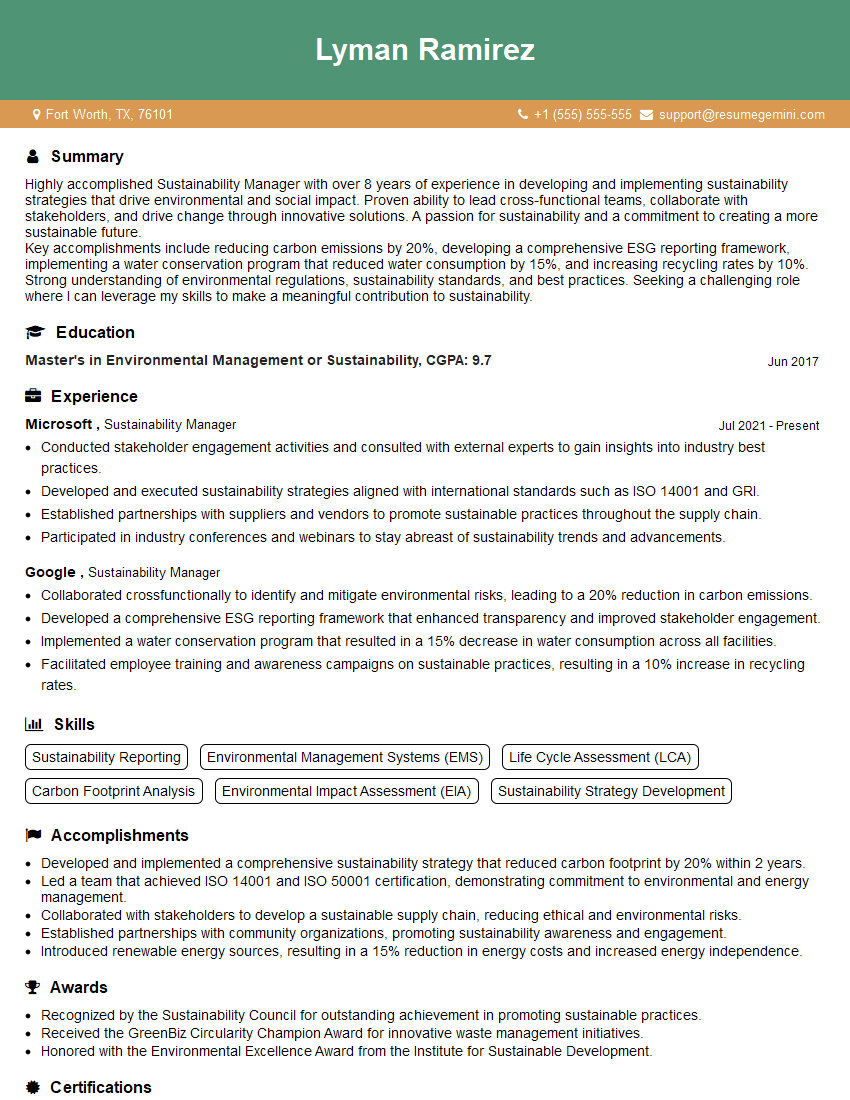
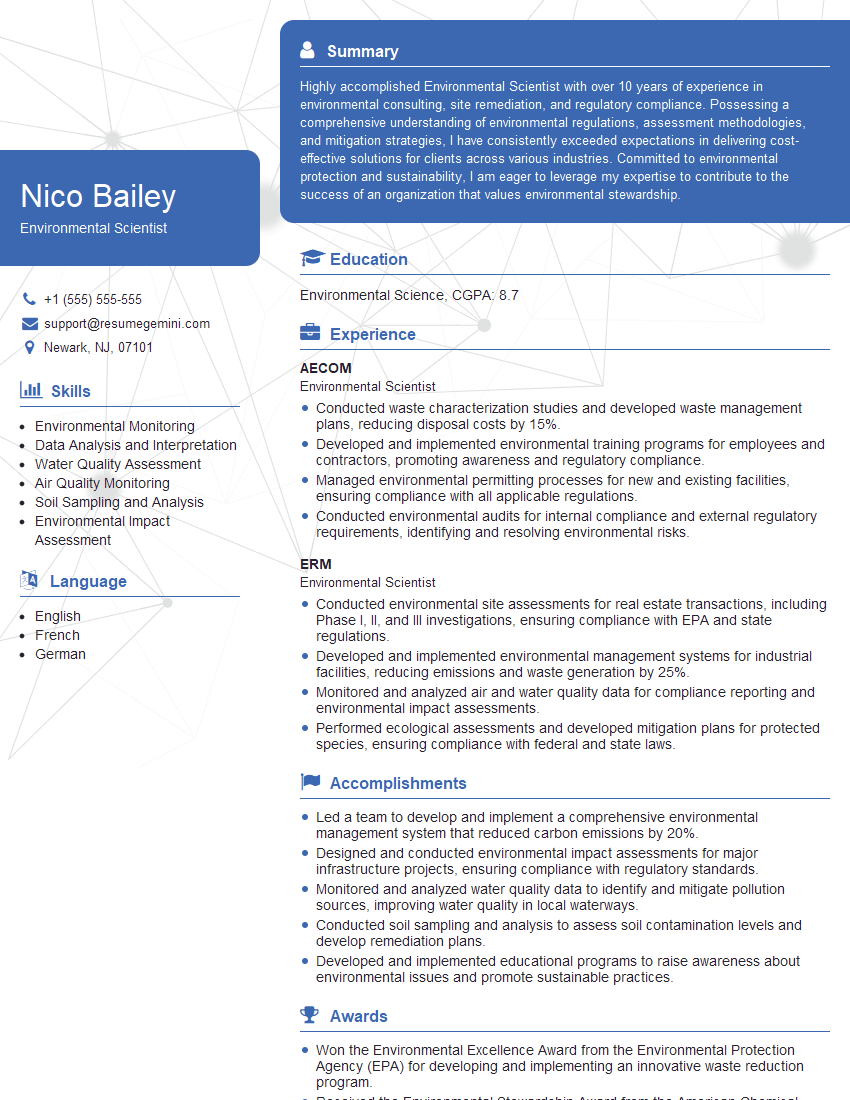
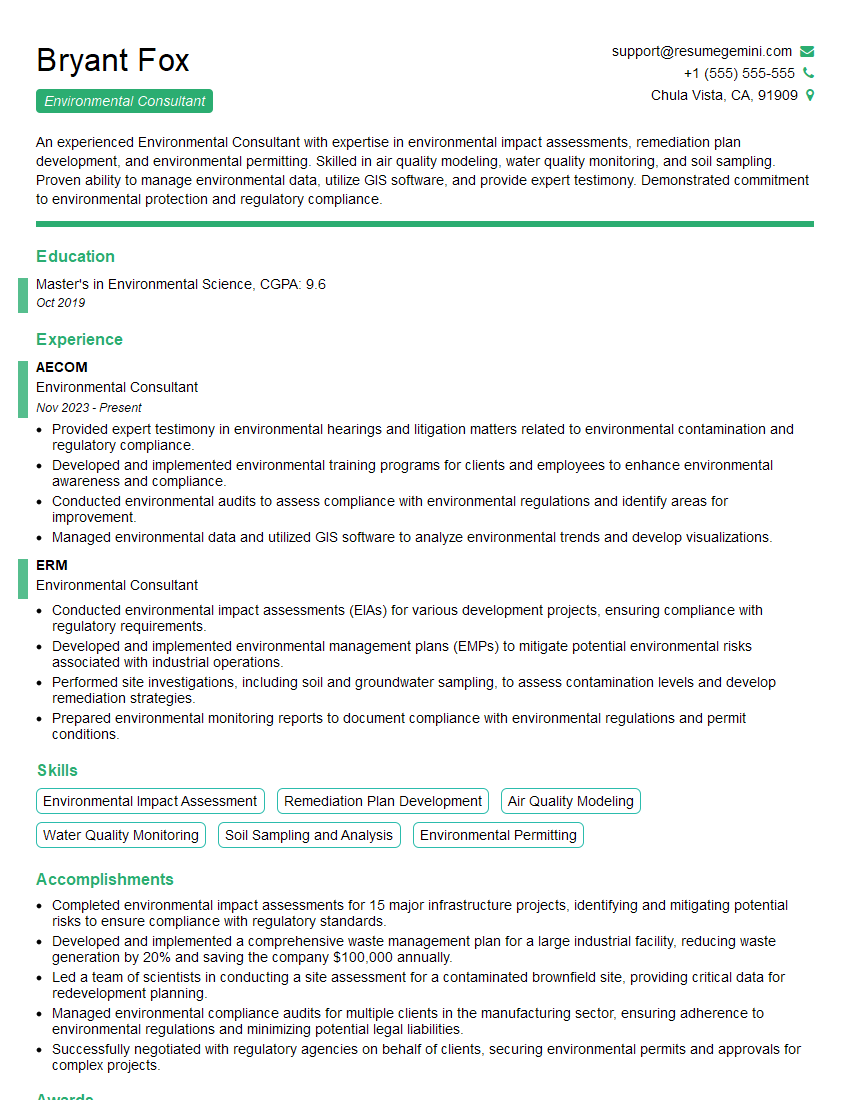
Mastering Climate Change Vulnerability and Risk Analysis is crucial for a successful career in environmental science, sustainability, and related fields. It positions you at the forefront of addressing one of the most pressing challenges of our time. To maximize your job prospects, a strong and ATS-friendly resume is essential. ResumeGemini is a trusted resource for building compelling resumes that effectively highlight your skills and experience. Take advantage of their tools and resources to create a professional resume that stands out. Examples of resumes tailored to Climate Change Vulnerability and Risk Analysis are available to help guide you. Make your expertise shine!

Explore more articles
Users Rating of Our Blogs
Share Your Experience
We value your feedback! Please rate our content and share your thoughts (optional).
What Readers Say About Our Blog
To the interviewgemini.com Webmaster.
Very helpful and content specific questions to help prepare me for my interview!
Thank you
To the interviewgemini.com Webmaster.
This was kind of a unique content I found around the specialized skills. Very helpful questions and good detailed answers.
Very Helpful blog, thank you Interviewgemini team.